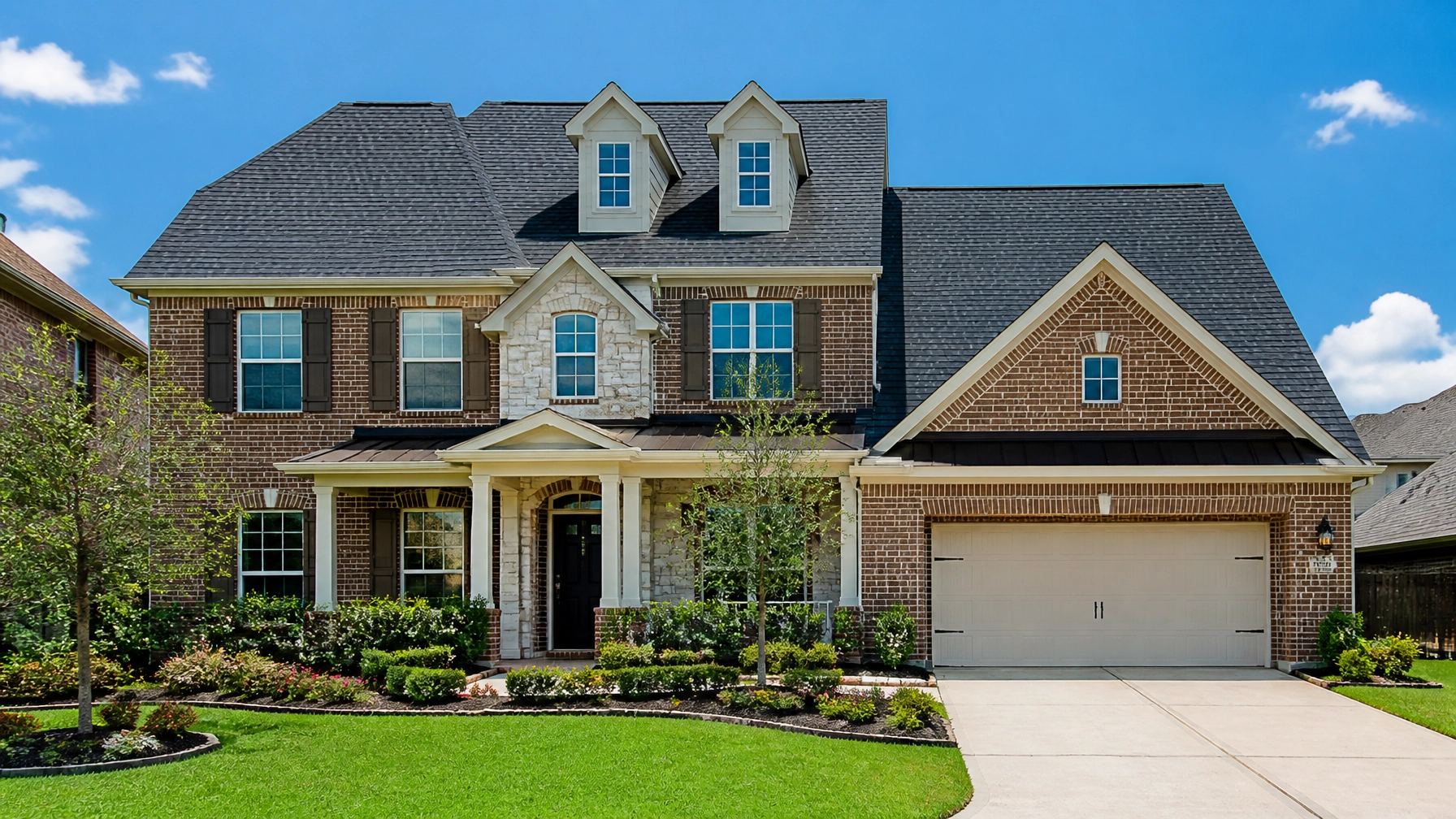
For Houston homeowners, 2026 has brought a new set of challenges to the roofing market. Between the rising costs of raw materials and the increasing frequency of Gulf Coast storm systems, a roof replacement is no longer a "set it and forget it" home improvement project. It is a major financial investment, often ranging between $10,500 and $16,000 for a standard 2,000-square-foot home in areas like Katy, Sugar Land, and The Woodlands.
Because Texas does not have a formal state-wide licensing requirement for roofing contractors, the burden of vetting falls entirely on the homeowner. Signing a contract with the wrong crew can lead to more than just a leaky roof: it can result in legal liens on your property or a denied insurance claim.
To ensure your investment is protected, you must move beyond "gut feelings" and ask these six technical, non-negotiable questions before signing any paperwork.
The Value of Accuracy: Start with Data
Before you even invite a contractor to your driveway, you should have a baseline for your project's scope. In 2026, savvy homeowners are using satellite roof estimates in Houston to get accurate measurements (90-95% accuracy) of their roof's square footage, pitch, and complexity.
Knowing your roof's "squares" (100-square-foot sections) allows you to spot-check contractor quotes immediately. If our instant roof estimate tool tells you that your home in The Woodlands is 28 squares and a contractor quotes you for 35, you’ve already caught a potential overcharge.

1. Are You Licensed with RCAT or Registered with the TDI? (Licensing)
In Texas, anyone with a truck and a ladder can call themselves a roofer. To filter out "storm chasers" who disappear after the job, you must ask about voluntary certifications.
- RCAT (Roofing Contractors Association of Texas): A licensed RCAT member has passed a rigorous examination on business ethics, safety, and residential roofing standards. They must maintain a fixed Texas business location and provide proof of financial responsibility.
- TDI (Texas Department of Insurance): If you live closer to the coast (near Clear Lake or Friendswood), ask if they are familiar with WPI-8 requirements. In designated catastrophe areas, a roof must be inspected by a TDI-appointed engineer to remain eligible for windstorm insurance.
Red Flag: If they say "Texas doesn't require licenses" as a reason for not having any credentials, they are technically right but professionally lacking.
2. Can You Provide a Line-Item Estimate Matching Xactimate? (Transparency)
Never accept a "lump sum" quote. A professional Houston roofing contractor should provide a detailed breakdown of costs.
Most insurance carriers use Xactimate, a standard pricing software that factors in current local labor rates and material costs. Ask if their estimate follows this format. Your quote should include specific line items for:
- (Tear-off) Removal of existing shingles.
- (Underlayment) Synthetic felt or ice/water shield.
- (Drip Edge) Essential for Houston’s heavy rains.
- (Ventilation) Ridge vents or solar fans to combat 100°F+ humidity.
A transparent estimate prevents "hidden fees" from appearing on your final invoice.
3. Who is Your Supplier and What Manufacturer Warranties are Offered? (Materials)
The quality of your roof is only as good as the supply chain behind it. In Houston, major suppliers like ABC Supply or SRS Distribution are the gold standard.
Ask specifically about the brand and product line. Are they using GAF Timberline HDZ (Popular) or Owens Corning Duration (Premium)?
- The Follow-up: "Are you a Factory-Certified Contractor for this brand?"
- Why it matters: Only certified contractors can offer "enhanced" or "system-plus" warranties that cover both materials and labor for 20-50 years. Without this, your "lifetime" warranty may only cover the shingles themselves, leaving you to pay for labor if they fail.

4. What is Your Pull Schedule and How Do You Pay Subcontractors? (Labor)
This is the most overlooked question in Texas roof replacement 2026. A "pull schedule" is the timeline for when the contractor "pulls" money from your deposit to pay for materials and labor.
- The Risk: If a contractor takes your deposit, buys the materials, but fails to pay the crew (often third-party subcontractors), those workers can legally place a mechanic’s lien on your home.
- The Solution: Ask if they provide a Lien Waiver upon final payment. This document is your legal "receipt" confirming that all suppliers and laborers have been paid in full, protecting your home's title.
5. How Do You Handle Unforeseen Decking Rot? (The Houston Factor)
Houston’s extreme heat and humidity are brutal on plywood decking. Often, rot isn't visible until the old shingles are removed.
Don't let this be a surprise "gotcha" charge. A reputable contractor will have a pre-negotiated price for decking replacement in the contract.
- Budget Check: In 2026, expect to pay $75–$110 per sheet of CDX plywood or OSB.
- The Question: "How many sheets are included in the base bid, and what is the per-sheet cost beyond that?"
If they find rot, they should stop and show you the damage (or send a photo) before installing new materials.

6. Do You Have a Physical Houston Address and Local References? (Reliability)
"Storm chasers" follow the hail. They set up temporary offices in hotel rooms and leave as soon as the work slows down.
Ask for a physical office address in the Greater Houston area: whether it's in the Energy Corridor, Pearland, or Conroe. Then, ask for three references from the last 6 months in your specific neighborhood (e.g., "Do you have any recent projects in Cinco Ranch or The Woodlands?").
Local contractors are incentivized to do good work because their reputation in the community is their primary source of leads.
Conclusion: Data Before Decisions
Hiring a contractor for a Houston roof replacement in 2026 doesn't have to be a gamble. By asking these six questions, you position yourself as an informed homeowner who values transparency over the lowest bid.
Remember: the cheapest quote is often the most expensive in the long run. Quality labor and high-grade materials have a floor price. If a bid seems too good to be true, it likely involves cutting corners on insurance, labor payments, or material quality.
Ready to start your project with a baseline you can trust? Get an instant, satellite-powered roof estimate in under 60 seconds. No credit card, no high-pressure calls: just the data you need to vet your Houston roofing contractor like a pro.
Explore more roofing tips and industry updates on our blog.
Leave a Reply