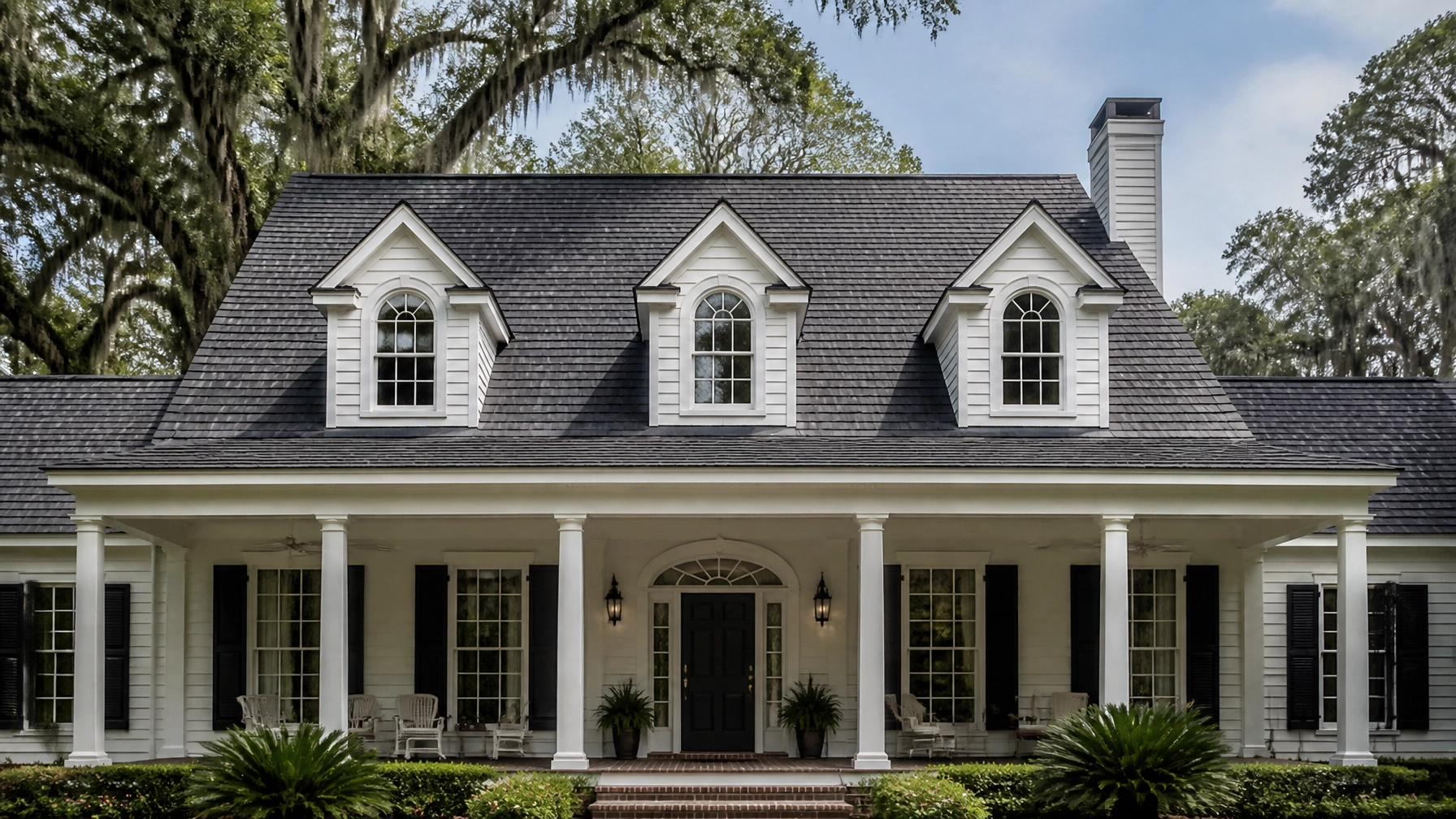
It’s July 20th in Savannah, and the "Hostess City of the South" is living up to its reputation for legendary heat. As of this afternoon, the mercury is pushing into the mid-90s, but with the humidity surging past 70%, the heat index is hovering near a stifling 100°F. While the skies are overcast, the heavy air carries the familiar scent of a brewing evening downpour, driven by south winds at 12-20 mph.
For Savannah homeowners, this isn't just "beach weather" at Tybee; it is a high-stress environment for your home's most critical defense: the roof. In the Coastal Empire, the combination of intense UV radiation, relentless humidity, and sudden thermal shifts creates a "perfect storm" that can degrade standard roofing materials 20-30% faster than in more temperate climates.
At Get My Roof Estimate Now, we use satellite technology to help Georgia homeowners understand the health and cost of their roofing systems in under 60 seconds. Today, we’re breaking down exactly what this July weather blitz is doing to your shingles and how you can protect your investment.
The Science of the "Bake": UV Damage and Thermal Shock
Savannah’s summer sun doesn't just illuminate; it radiates. Asphalt shingles are essentially a sandwich of fiberglass mat, oil-rich asphalt, and protective stone granules. When temperatures hit 95°F, your roof surface can easily reach 150°F or higher.
1. Asphalt Volatilization
The intense UV rays break down the essential oils in the asphalt. As these oils evaporate: a process called volatilization: the shingles become brittle. In a humid subtropical climate like ours, this process is accelerated. Once the shingle loses its flexibility, it can no longer expand and contract with the temperature swings of a Savannah summer.
2. Granule Loss (Popular/Budget Symptom)
Have you noticed "sand" in your gutters after one of our evening downpours? Those are protective granules. Their job is to shield the asphalt from UV light. When the asphalt dries out, it loses its grip on these granules. Once they wash away, the underlying asphalt is exposed to direct sunlight, leading to rapid "sunburn" and cracking.
3. Thermal Shock
Think about a typical Savannah afternoon: it’s 98°F at 4:00 PM, and by 5:30 PM, an isolated thunderstorm drops the temperature by 20 degrees in minutes. This rapid cooling causes shingles to contract violently. If they are already brittle from UV exposure, this "thermal shock" leads to split shingles and loosened fasteners.

The "Silent Killer": Humidity and Algae Growth
Savannah's average annual humidity exceeds 74%. In July, it often feels like you’re walking through a warm soup. While you can retreat into the A/C, your roof is constantly damp.
The Gloeocapsa Magma Factor
Those black streaks you see on roofs around Ardsley Park or The Landings aren't dirt or soot. It is a hardy type of blue-green algae called Gloeocapsa Magma. It thrives in the humid, shaded environments provided by Savannah’s lush oak canopy.
- The Damage: This algae feeds on the limestone filler used in many budget-grade shingles. As it eats the filler, it weakens the shingle structure.
- Heat Absorption: The dark streaks act like a heat magnet, absorbing even more solar radiation and further increasing your attic temperature and cooling costs.
Moisture and Wood Rot
High humidity prevents your roof from ever truly drying out. If there is even a minor compromise in your underlayment, moisture-laden air will find its way to the wooden roof deck. In Georgia, this often leads to localized wood rot or mold colonies long before a "leak" is ever visible on your ceiling.
The 150-Degree Attic: Why Ventilation is Non-Negotiable
If your roof is the shield, your attic ventilation is the cooling system. In Savannah, a poorly ventilated attic is essentially a convection oven.
When hot air is trapped in your attic, it "bakes" the shingles from the underside. Research shows that inadequate ventilation can cut the life of a 25-year architectural shingle down to just 15 or 18 years. To combat this, Savannah homes require a Balanced Ventilation System:
- Intake (Soffit Vents): Located under the eaves, these pull cool air into the attic.
- Exhaust (Ridge Vents): Installed at the very peak of the roof, these allow hot air to escape naturally. (Premium/Recommended)

Strategic Upgrades for the Coastal Georgia Climate
If you are planning a roof replacement or want to extend the life of your current one, consider these climate-specific upgrades:
| Feature | Category | Benefit in Savannah |
|---|---|---|
| Algae-Resistant Shingles | Popular | Copper-lined granules prevent black streaks and structural degradation. |
| Cool-Color Shingles | Technical | Reflects more UV rays, keeping attic temperatures up to 20% lower. |
| Synthetic Underlayment | Premium | Unlike felt paper, synthetic materials don't rot or absorb moisture. |
| Stainless Steel Fasteners | Coastal | Essential for homes near the salt air of the Wilmington River or Tybee. |
3 Tips for Savannah Homeowners This July
- Check Your Gutters: After an evening "blitz" storm, check for excessive granules. If your gutters look like a beach, your shingles are nearing the end of their life.
- Inspect the "North Side": Algae growth usually starts on the northern, shadiest side of your roof. Catching it early can save your shingles.
- Monitor Your Energy Bill: If your A/C is running 24/7 but the house feels warm, your attic might be over-pressurized with heat due to poor roof ventilation.
Ready for a Professional Perspective?
Savannah’s weather is beautiful, but it is brutal on your home. Don't wait for a major leak during hurricane season to find out your roof is failing.
At Get My Roof Estimate Now, we provide the transparency you deserve. Using advanced satellite imagery, we can measure your roof’s pitch, square footage, and complexity to give you an accurate price range: all without a contractor ever stepping foot on your lawn.
Get your free, 60-second roof estimate here.
Whether you are in Historic Downtown, Pooler, or Richmond Hill, knowing your numbers is the first step to a cooler, safer home.

Have you noticed black streaks on your roof this summer? Or is your A/C struggling to keep up with the July heat? Share your experiences in the comments below or share this post with a neighbor who might be planning a renovation!
Leave a Reply