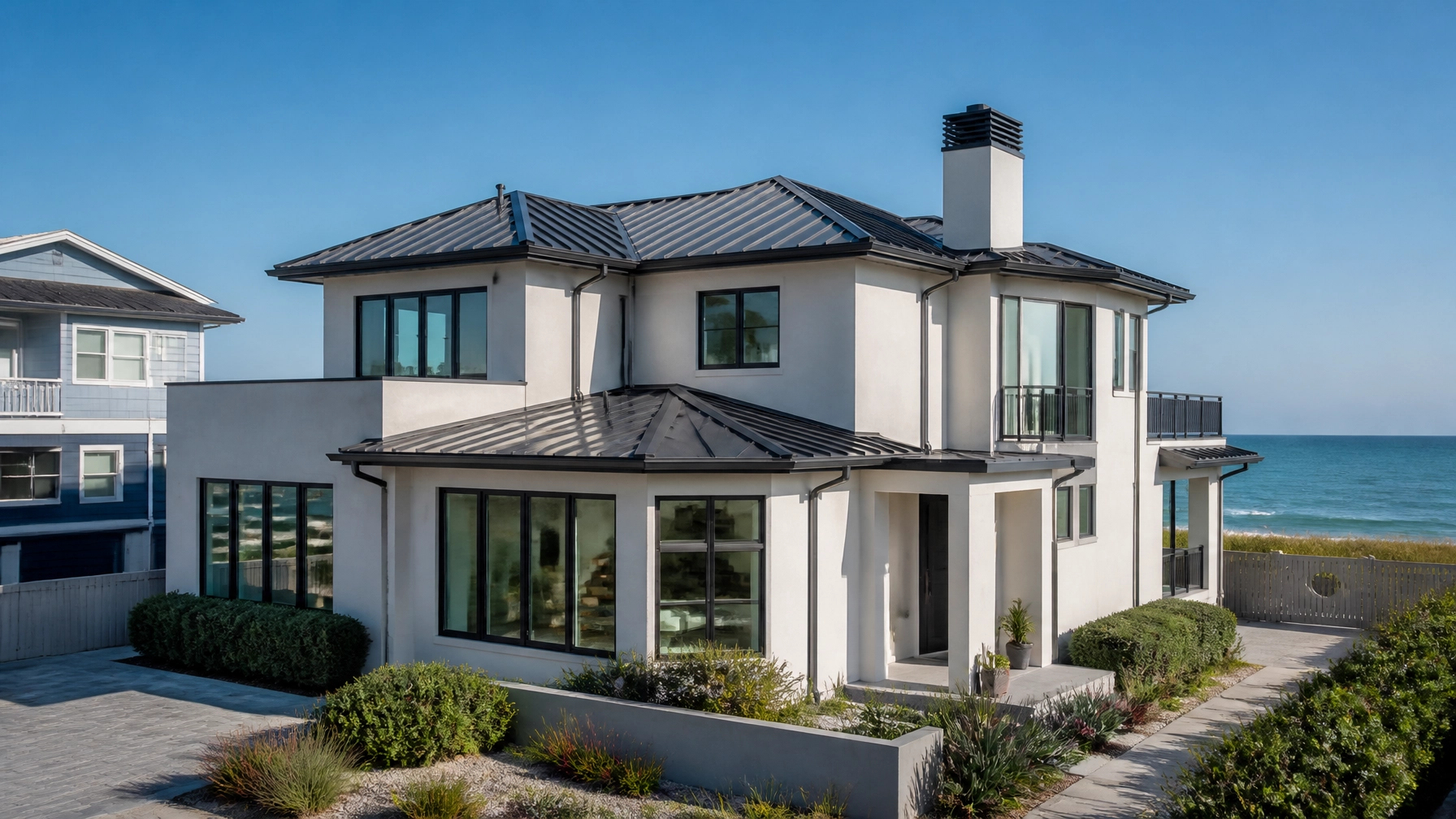
Choosing a new roof in Hampton Roads is not just about curb appeal; it is a critical engineering decision. Between the salty Atlantic breezes, the moisture funnel of the Chesapeake Bay, and the punishing 130–140 mph wind zone requirements enforced along coastal Virginia, your roof stands as the primary defense for your home. Following the severe summer storms of July 2026, many Virginia Beach homeowners are evaluating two dominant materials: high-performance architectural asphalt shingles (Popular) and standing seam metal roofing (Premium).
Whether your roof has reached its 20-year milestone or sustained weather fatigue, understanding the true 2026 installation costs, wind ratings, and corrosion resistance is essential before committing capital. Fortunately, you don't need to wait weeks for contractor visits to get started. You can use our Instant Roof Cost Calculator to evaluate exact satellite-derived measurements and localized pricing in under 60 seconds.
The Virginia Beach Climate Challenge: Wind, Salt, and Rain
Virginia Beach presents a uniquely aggressive environment for roofing materials. The combination of high humidity, frequent nor'easters, tropical storm systems sweeping up the coast, and relentless airborne salt spray places immense strain on exterior building products.
- Wind Zone Standards: The Virginia Uniform Statewide Building Code mandates rigorous wind resistance. Properties closer to the oceanfront and high-velocity hurricane zones (HVHZ) require materials rated for 130 to 140 mph winds, requiring enhanced fastener schedules and reinforced edge metal.
- Salt Spray Corrosion: Homes situated near the Chesapeake Bay or Atlantic coastline experience accelerated oxidation. Standard steel or cheap fasteners can rust prematurely, compromising roof integrity within a decade.
- Thermal Shock: Rapid temperature swings between humid summer days and sudden afternoon downpours cause materials to expand and contract constantly, testing sealant and shingle adhesion.
Option A: Architectural Asphalt Shingles (Popular)
Architectural shingles: also known as dimensional or laminated shingles: remain the most installed roofing material across single-family homes in Virginia Beach. Engineered with multiple bonded layers of asphalt over a heavy fiberglass mat, they offer a textured, dimensional look that mimics natural slate or wood shake.

Key Advantages
- Cost-Effective Entry Point: Significantly lower upfront material and installation expenses compared to metal or tile.
- Wind-Rated Options: High-end architectural lines paired with starter strip seals and six-nail installation patterns easily meet 110–130 mph local wind requirements.
- Repair Flexibility: If a severe squall dislodges a few tabs, localized repairs are fast, straightforward, and affordable.
Potential Drawbacks
- Lifespan in Coastal Zones: While rated for 25–30 years nationally, extreme UV exposure and coastal humidity in Hampton Roads typically shorten functional lifespans to 20–25 years.
- Algae Streaking: Blue-green algae thrive in humid coastal environments, requiring copper-infused granule treatments to prevent unsightly dark streaking.
Option B: Standing Seam Metal Roofing (Premium)
For homeowners seeking absolute resilience and a modern architectural aesthetic, standing seam metal roofing is the gold standard. Featuring vertical metal panels with concealed fasteners that snap or mechanically lock together above the deck, this system eliminates exposed screw holes where water infiltration typically begins.

Key Advantages
- Superior Wind Uplift Resistance: Engineered to withstand wind speeds exceeding 150 mph when properly installed with clip systems, making it ideal for coastal V-zones.
- Zero Maintenance & Longevity: High-grade aluminum or Kynar-coated Galvalume steel easily lasts 40 to 60+ years without cracking, warping, or rotting.
- Salt & Corrosion Defense: Marine-grade aluminum and specialized PVDF paint finishes resist salt spray corrosion far better than standard steel products.
- Energy Efficiency: Reflects solar radiant heat, lowering attic temperatures and reducing peak summer cooling bills in coastal Virginia.
Potential Drawbacks
- Higher Initial Investment: Requires specialized labor and precision fabrication, resulting in an upfront cost roughly double that of architectural shingles.
- Acoustic Considerations: Without adequate attic insulation and solid decking, heavy downpours can create noticeable interior sound.
Head-to-Head Comparison Table
| Feature | Architectural Asphalt Shingles (Popular) | Standing Seam Metal (Premium) |
|---|---|---|
| Estimated Cost (1,800 sq ft roof) | $10,500 – $16,500 | $22,000 – $38,000+ |
| Expected Lifespan | 20 – 25 years | 40 – 60+ years |
| Wind Resistance Rating | Up to 130 mph (with proper installation) | 150+ mph (concealed clip systems) |
| Corrosion Resistance | Moderate (susceptible to algae and granule loss) | Excellent (with Kynar / aluminum finishes) |
| Maintenance Needs | Periodic inspection after major storms | Minimal (occasional fastener and sealant checks) |
| Insurance Impact | Standard homeowner policy discounts | Potential wind-mitigation premium discounts |
Cost Breakdown for a Standard 1,800 Sq Ft Virginia Beach Home
When budgeting for a roof replacement in Virginia Beach, material choice is the single biggest cost driver. For a standard single-family home measuring approximately 1,800 square feet (roughly 18 roofing squares, including pitch factor), current 2026 pricing breaks down as follows:

Architectural Shingle Pricing (1,800 Sq Ft)
- Per Square Installed: $5.50 – $9.00 per square foot (reflecting coastal wind uplift upgrades, synthetic underlayment, and drip edge).
- Total Project Range: $10,500 to $16,500.
- Best For: Budget-conscious homeowners looking for reliable 25-year protection, classic aesthetics, and straightforward financing.
Standing Seam Metal Pricing (1,800 Sq Ft)
- Per Square Installed: $12.00 – $21.00 per square foot (depending on panel gauge, metal type, and roof complexity like valleys and dormers).
- Total Project Range: $22,000 to $38,000+.
- Best For: Long-term property owners, oceanfront or bay-adjacent homes requiring maximum wind and corrosion resistance, and modern architectural styles.
How to Choose the Right Material for Your Neighborhood
Your exact location within Hampton Roads should heavily influence your final decision:
- Chesapeake Bay & Oceanfront Proximity: If your property experiences direct maritime winds and heavy salt fog, investing in standing seam metal with marine-grade fasteners eliminates premature corrosion headaches.
- Suburban Tree-Covered Lots (e.g., Great Neck, Kempsville): If your home is shaded by mature oaks and pines, heavy tree debris can scratch metal paint finishes over time. In these neighborhoods, high-end architectural shingles with algae-resistant granules offer an ideal balance of cost and performance.
- Long-Term Ownership Horizon: If you plan on staying in your Virginia Beach home for the next 30 years, the lower lifetime cost-per-year of standing seam metal often justifies the higher initial outlay.
Get Instant Pricing with Zero Friction
Navigating roof replacement estimates shouldn't require endless sales calls or waiting weeks for an in-person contractor inspection. Get My Roof Estimate Now leverages high-resolution satellite imagery to measure your roof down to the inch, delivering an accurate, data-backed cost estimate in under 60 seconds: completely free and with no credit card required.
Ready to see how your home stacks up? Visit our Virginia Beach Roof Replacement Page or jump straight to our Instant Roof Cost Calculator to plan your project with confidence today.
Leave a Reply