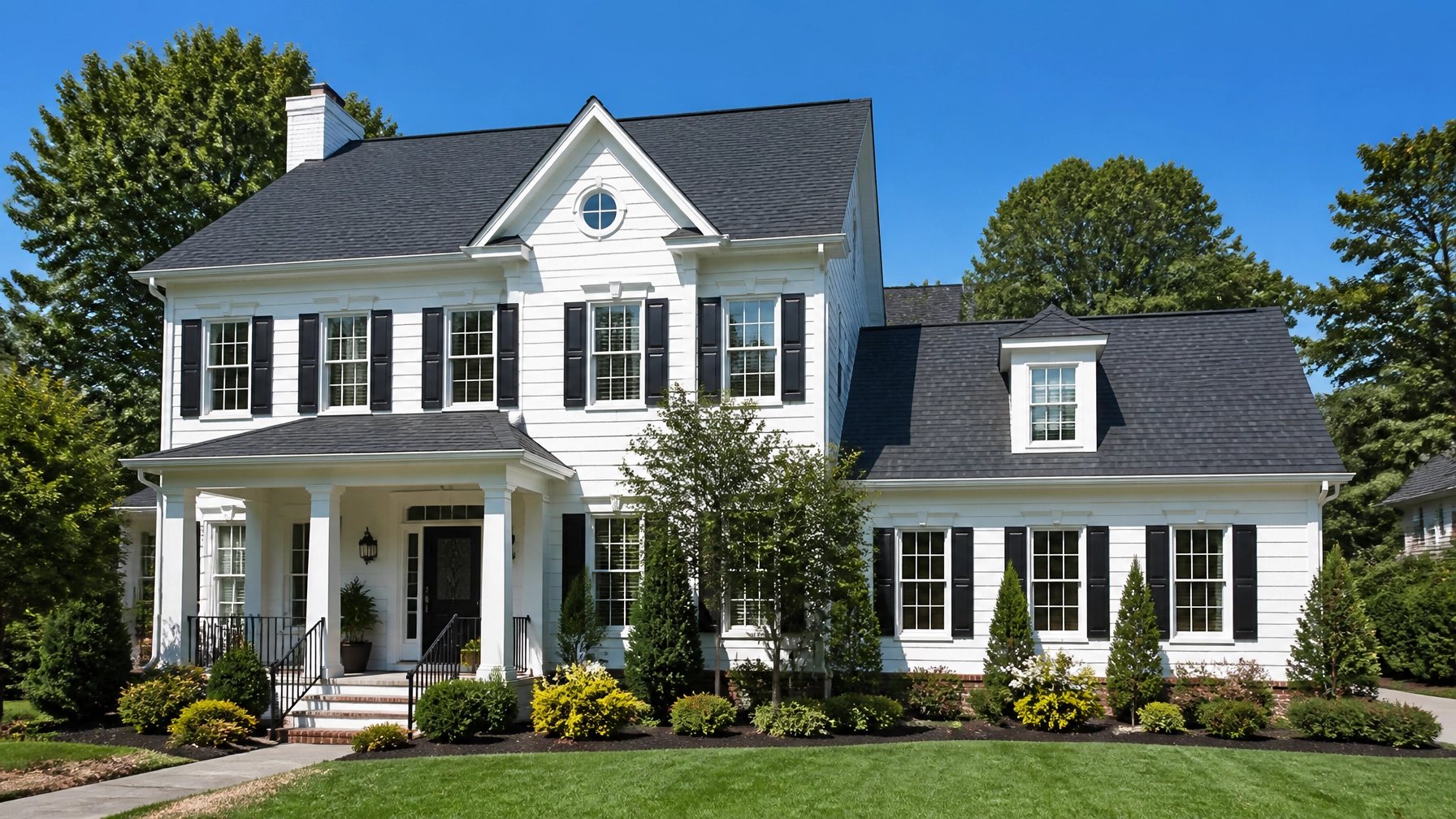
If you live in Charlotte, you know the drill: hot, humid summers punctuated by aggressive afternoon thunderstorms and the occasional hail event. Whether you’re in Myers Park, Ballantyne, or NoDa, your roof is the first line of defense against North Carolina’s unpredictable weather.
Most homeowners wait until they see a yellow stain on their ceiling before thinking about their roof. By then, it’s often too late for a simple fix. However, if your roof has been hit by a storm, your insurance company might be responsible for the full replacement cost.
Navigating a roofing claim can feel like a part-time job. This masterclass breaks down the process into five actionable steps to ensure you get the maximum payout for your roof replacement in the Queen City.
Step 1: Document the Evidence Immediately (Ground-Level Intelligence)
The moment a storm passes through Mecklenburg County, your window for a successful claim begins. While North Carolina law technically allows you up to three years to file a claim for storm damage, insurance companies are far more likely to approve a claim filed within 30 days of the "date of loss."
Start by documenting everything from the ground. Do not climb on your roof.
What to look for:
- Shingle Damage (Common): Look for shingles in your yard or "bruised" shingles (circular indentations from hail).
- Gutter Dents (Supporting): If your gutters have small pits or dents, it’s a high-probability indicator of hail impact.
- Interior Signs (Critical): Check your attic for damp insulation or your ceiling for bubbling paint.

Step 2: Get a Precision Estimate (The Tech-First Approach)
Before you even call your insurance agent, you need to know the numbers. Traditionally, this meant waiting days for a contractor to drive to your house and climb a ladder.
In Charlotte’s fast-moving real estate and renovation market, that’s too slow.
At Get My Roof Estimate Now, we use satellite-powered technology to provide an instant roof estimate in under 60 seconds. Our measurements are accurate to within inches, factoring in your roof’s size, pitch, and complexity.
Why get an estimate first?
- Authority: You enter the conversation with the insurance company knowing exactly what a fair replacement cost looks like.
- Speed: You can determine if the damage exceeds your deductible before you ever pick up the phone.
- Zero Risk: Our tool requires no credit card and provides a transparent price range (Budget to Premium) based on local Charlotte material and labor costs.

Step 3: Audit Your Policy (RCV vs. ACV)
Not all insurance policies are created equal. Before filing, you must understand how your insurer calculates the "value" of your roof.
- Replacement Cost Value (RCV – Popular): This is the gold standard. The insurance company pays the full cost to replace the roof today, minus your deductible.
- Actual Cash Value (ACV – Budget): The insurer pays the depreciated value of your roof based on its age. If your 20-year-old roof is at the end of its life, an ACV payout might only cover a fraction of a new one.
According to the North Carolina Department of Insurance, it is vital to review your "Declarations Page" to confirm your deductible. In North Carolina, some policies have a separate, higher deductible specifically for wind and hail damage.
Step 4: File the Claim and Manage the Adjuster Meeting
Once you have your satellite-accurate estimate, call your insurance company’s claims department. Provide the date of the storm and a brief description of the damage.
The insurer will send an adjuster to inspect the property. This is the most critical 30 minutes of the entire process.
Pro-Tips for the Adjuster Meeting:
- Be Present: Be home during the inspection.
- Share Your Data: Show the adjuster the photos you took and the estimate you generated. It sets a baseline for the scope of work.
- Ask for a "Full Scope": Don't just settle for a repair. If more than 25-30% of a slope is damaged, North Carolina building codes often require a full replacement to ensure structural integrity and shingle matching.

Step 5: Master the "Supplement" Game
Initial insurance checks are almost always lower than the final cost. This isn't necessarily a scam; it’s just how the industry works. They provide an estimate for what they can see.
Once the old roof is torn off, your contractor might find "hidden" damage, such as rotted decking or rusted flashing that needs replacement to meet local Charlotte building codes.
- The Supplement: Your contractor will submit "supplements" (additional line items) to the insurance company with photographic proof.
- The Final Payout: Once the job is complete and the final invoice is sent, the insurance company releases the remaining funds (the "recoverable depreciation" if you have an RCV policy).
Conclusion: Take Control of Your Roof Replacement
Getting insurance to pay for a new roof in Charlotte isn't about luck; it's about documentation and data. By using modern technology to get an instant, accurate estimate before you file, you position yourself as an informed homeowner who won't be underpaid.
Ready to see what your new roof should cost? Get your free satellite roof estimate now and take the first step toward a secure, storm-proof home.
Leave a Reply