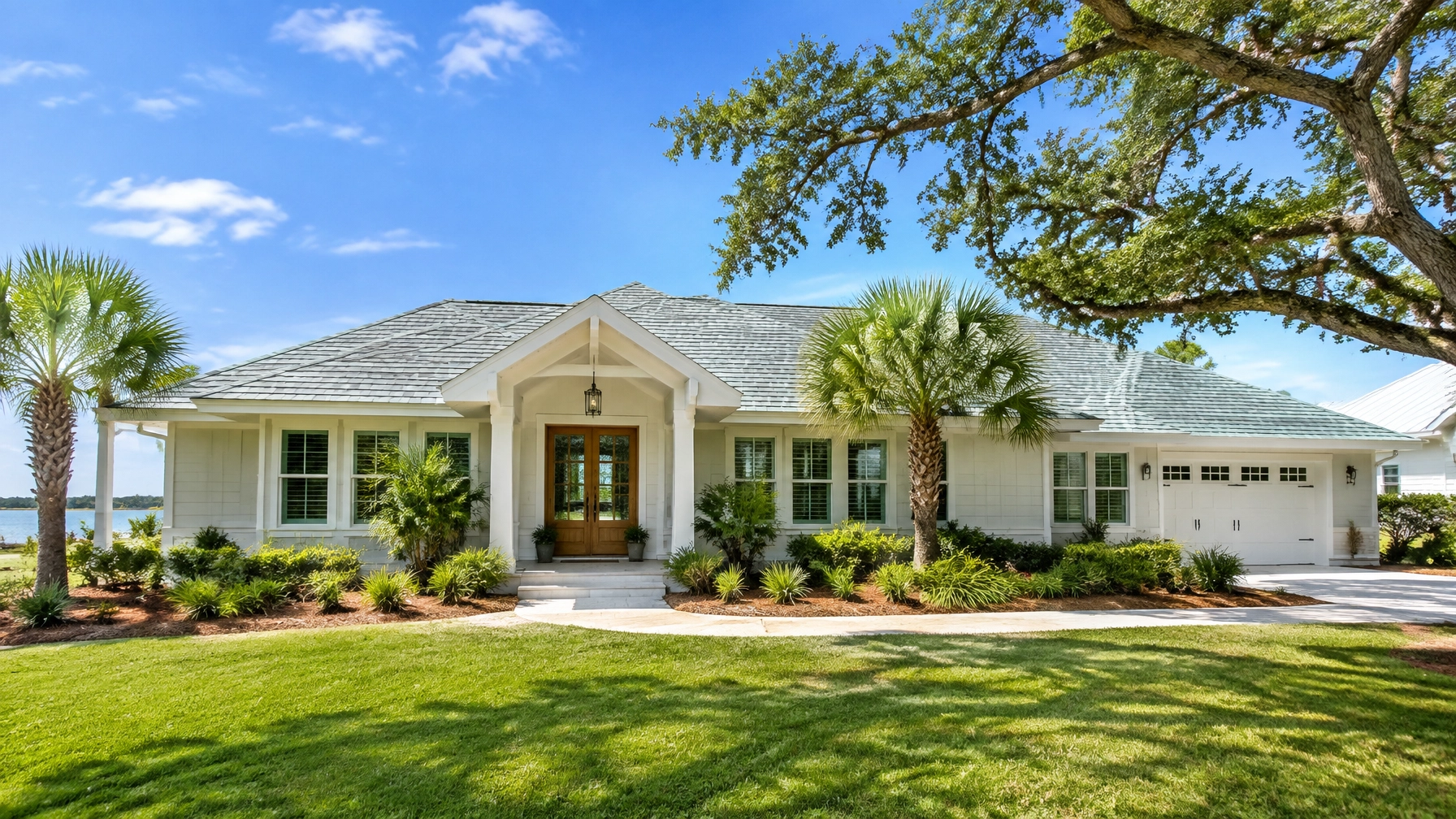
A 2026 Pensacola roof replacement typically costs $11,000–$18,000 for architectural shingles on a 2,000-square-foot roof. That equals roughly $450–$800 per roofing square installed. A roofing square equals 100 square feet.
For premium systems, expect approximately $13,000–$21,000 for Class 4 impact-resistant shingles and $24,000–$41,000 or more for standing-seam metal. Homes near the Gulf, including Gulf Breeze and Perdido Key, may carry a 10%–25% coastal premium because of salt air, wind exposure, access, and corrosion-resistant installation requirements.
Use our free roof cost calculator for general planning, or get a property-specific satellite estimate in about 60 seconds.
Quick 2026 Pensacola Roof Cost Comparison
| Roofing option | Positioning | Approximate installed cost for a 2,000 sq. ft. roof | Typical cost per square |
|---|---|---|---|
| 3-tab asphalt shingles | Budget | $8,500–$13,000 | $425–$650 |
| Architectural shingles | Popular | $11,000–$18,000 | $450–$800 |
| Class 4 impact-resistant shingles | Storm-Ready | $13,000–$21,000 | $550–$950 |
| Standing-seam metal | Premium | $24,000–$41,000+ | $1,200–$2,050+ |
Prices vary with roof pitch, valleys, dormers, tear-off, decking repairs, ventilation, permits, and material availability. Coastal properties may cost more.
1. How much does a roof replacement cost in Pensacola in 2026?
For a typical 2,000-square-foot roof:
- Architectural shingles (Popular): $11,000–$18,000
- Class 4 impact-resistant shingles (Storm-Ready): $13,000–$21,000
- Standing-seam metal (Premium): $24,000–$41,000+
- Beachfront or highly exposed homes: Add approximately 10%–25%
The home’s living area is not the same as its roof area. A 2,000-square-foot house may have more than 2,000 square feet of roofing because of pitch and overhangs.
Your final quote should identify:
- Roof size in squares
- Tear-off and disposal
- Underlayment and secondary water barrier
- Flashing and ventilation
- Decking repairs
- Permit and inspection costs
- Labor and warranty coverage

2. What is the best roofing material for Pensacola’s Gulf Coast climate?
Architectural shingles are the Popular choice because they balance cost, appearance, and performance. For stronger storm protection, consider Class 4 impact-resistant shingles. Standing-seam metal is the Premium choice for long service life and wind resistance.
Pensacola homeowners should also consider:
- 140 mph wind-zone requirements: Select properly rated roofing products and installation methods.
- Salt-air corrosion: Use corrosion-resistant fasteners, flashing, and metal components near the coast.
- Algae and moss: Choose algae-resistant shingles and keep branches trimmed away from the roof.
- Secondary water barrier: Ask for full-deck self-adhered underlayment or another code-compliant backup waterproofing system.
- Roof complexity: Valleys, skylights, chimneys, and multiple slopes increase labor and leak risk.
A Class 4 shingle may also help with impact resistance and, depending on the insurer, potential discounts. Confirm eligibility with your insurance company before paying for an upgrade.
3. Do I need a permit for a roof replacement in Pensacola?
Yes. A full roof replacement inside the City of Pensacola requires a building permit. Roofing repairs covering less than 100 square feet are generally exempt from permitting under the city’s exemption guidance.
For larger permitted work, expect:
- A roofing or building permit
- Inspection scheduling
- In-progress photos of sheathing, underlayment, and flashing
- A roofing inspection affidavit
- A recorded Notice of Commencement for qualifying projects, commonly jobs valued at $5,000 or more
- Permit and inspection fees of approximately $150–$500
Outside city limits, Escambia County handles permitting. Confirm the property’s jurisdiction before work begins through City of Pensacola Applications and Documents or Escambia County Building Services.
4. What Florida Building Code requirements apply to a reroof?
A Pensacola reroof must comply with the current Florida Building Code and local wind requirements. Your contractor should document the complete roof system: not just the shingle brand.
Common requirements and project benchmarks include:
- Wind-rated shingles or metal panels
- Six-nail shingle installation patterns where required
- Ring-shank nails
- Proper deck fastening and inspection
- Approved flashing and ventilation
- A secondary water barrier on reroof projects
- Manufacturer product approvals or applicable Florida approvals
Do not rely on a verbal promise that the roof is “hurricane ready.” Ask for the product specifications, fastening method, underlayment details, and inspection documentation in writing.
5. How do I verify a Florida roofing contractor?
Florida roofing work should be performed by a properly licensed contractor. Look for a DBPR Certified Roofing Contractor and verify that the license is current and active.
Before signing:
- Ask for the contractor’s license number.
- Search it through MyFloridaLicense Verify a License.
- Confirm the license classification and business name.
- Request general liability and workers’ compensation certificates.
- Confirm who will pull the permit.
- Review the written warranty and payment schedule.
A license search does not replace insurance verification. Ask the insurance agency to confirm coverage if the certificate is unclear.

6. Will homeowners insurance pay for a new roof?
Insurance generally covers sudden damage from a covered peril, such as hurricane wind, hail, or a fallen tree. It usually does not cover normal wear, deferred maintenance, algae, or age-related deterioration.
Important Pensacola insurance points include:
- A hurricane deductible may equal 2%–5% of Coverage A, depending on your policy.
- Older roofs may be settled at actual cash value (ACV) instead of replacement cost value (RCV).
- Roofs approximately 10–15 years old or older may receive stricter underwriting or coverage limitations.
- Florida generally requires notice of new or reopened claims within one year and supplemental claims within 18 months, subject to the applicable version of Florida Statute 627.70132.
- The often-mentioned 25% roof rule is not a universal insurance payout rule. It may relate to code, underwriting, or the portion of damage requiring replacement. Ask your insurer how it applies to your policy.
Avoid signing an assignment of benefits agreement without understanding it. Document damage and contact your insurer promptly.
7. Can the My Safe Florida Home program help pay for roof improvements?
Eligible homeowners may qualify for a My Safe Florida Home grant of up to $10,000 for approved wind-mitigation improvements.
Common eligibility requirements include:
- Owner-occupied, homesteaded single-family home
- Home built before 2008
- Insured value of $700,000 or less
- Completed wind-mitigation inspection
- Work performed by an appropriately licensed contractor
- Required homeowner match, unless qualifying as low-income
Funding rules and application availability can change. Check the official My Safe Florida Home program before starting work. Do not assume a new roof automatically qualifies; the program may focus on specific mitigation improvements such as roof-deck attachment, secondary water barriers, or opening protection.
8. What should Pensacola homeowners know after Hurricane Sally?
Hurricane Sally made landfall near the Florida-Alabama line in September 2020 and caused significant wind, rain, flooding, and roof damage across the Gulf Coast. Homes in areas such as East Hill, North Hill, Ferry Pass, West Pensacola, Gulf Breeze, and Perdido Key can experience different levels of exposure.
After a storm:
- Photograph missing, lifted, cracked, or displaced shingles.
- Photograph gutters, flashing, soffits, ceilings, and attic stains.
- Record the storm date and when damage was discovered.
- Use temporary repairs to limit additional water intrusion.
- Keep receipts for tarping and emergency work.
- Do not make permanent repairs before the insurer’s inspection unless necessary for safety.
- Report the claim promptly and keep copies of all communications.
Avoid walking on the roof after a storm. A ground-level inspection and satellite estimate can help you plan before arranging an in-person inspection.
9. How long does a roof last in Pensacola’s coastal climate?
Typical service-life ranges are:
- 3-tab shingles (Budget): 15–20 years
- Architectural shingles (Popular): 20–30 years
- Class 4 impact-resistant shingles: Approximately 25–35 years
- Standing-seam metal (Premium): 40–70 years or more
Heat, ultraviolet exposure, hurricanes, salt air, poor ventilation, and algae growth can shorten these ranges. Have the roof checked after major storms and keep gutters, valleys, and drainage paths clear.
10. Does a new roof add resale value in Pensacola?
A new roof can improve resale appeal, buyer confidence, and insurability. It may also reduce negotiation issues during inspection, especially when selling an older home in ZIP codes 32501–32509, 32514, 32526, or 32534.
The return on investment depends on:
- Roof material and installation quality
- Remaining warranty
- Insurance eligibility
- Neighborhood expectations
- Home condition overall
- Whether the roof solves a documented leak or storm concern
A new roof does not guarantee a dollar-for-dollar return. Keep the permit, inspection records, invoices, product information, and warranty documents for the next buyer.

11. How can I get an instant satellite roof estimate without a contractor visit?
Use Get My Roof Estimate Now to receive a preliminary roof replacement range in about 60 seconds.
The process is simple:
- Enter your Pensacola-area address.
- Confirm the satellite property view.
- Review the measured roof size, pitch, and complexity.
- Compare material options.
- See low, middle, and high price ranges.
The service is free, requires no credit card, and uses satellite-powered measurements designed for approximately 90%–95% accuracy. It can cover properties in neighborhoods such as Cordova Park, Scenic Heights, Ferry Pass, and West Pensacola, as well as Gulf Breeze and Perdido Key.
The estimate is a planning tool, not a substitute for a final contractor inspection. Hidden decking damage, ventilation problems, and code upgrades may only be confirmed on site.
Categories: Pensacola FL, Florida Roof Replacement, Roofing Costs, Permits, Insurance, Storm Protection, AEO FAQ
Tags: Pensacola FL, Escambia County roofing, Gulf Coast roof replacement, Florida roofing costs, roof permits, hurricane deductible, My Safe Florida Home, Class 4 shingles, metal roofing, coastal roofing, 140 mph wind zone, ZIP 32501-32509
Leave a Reply