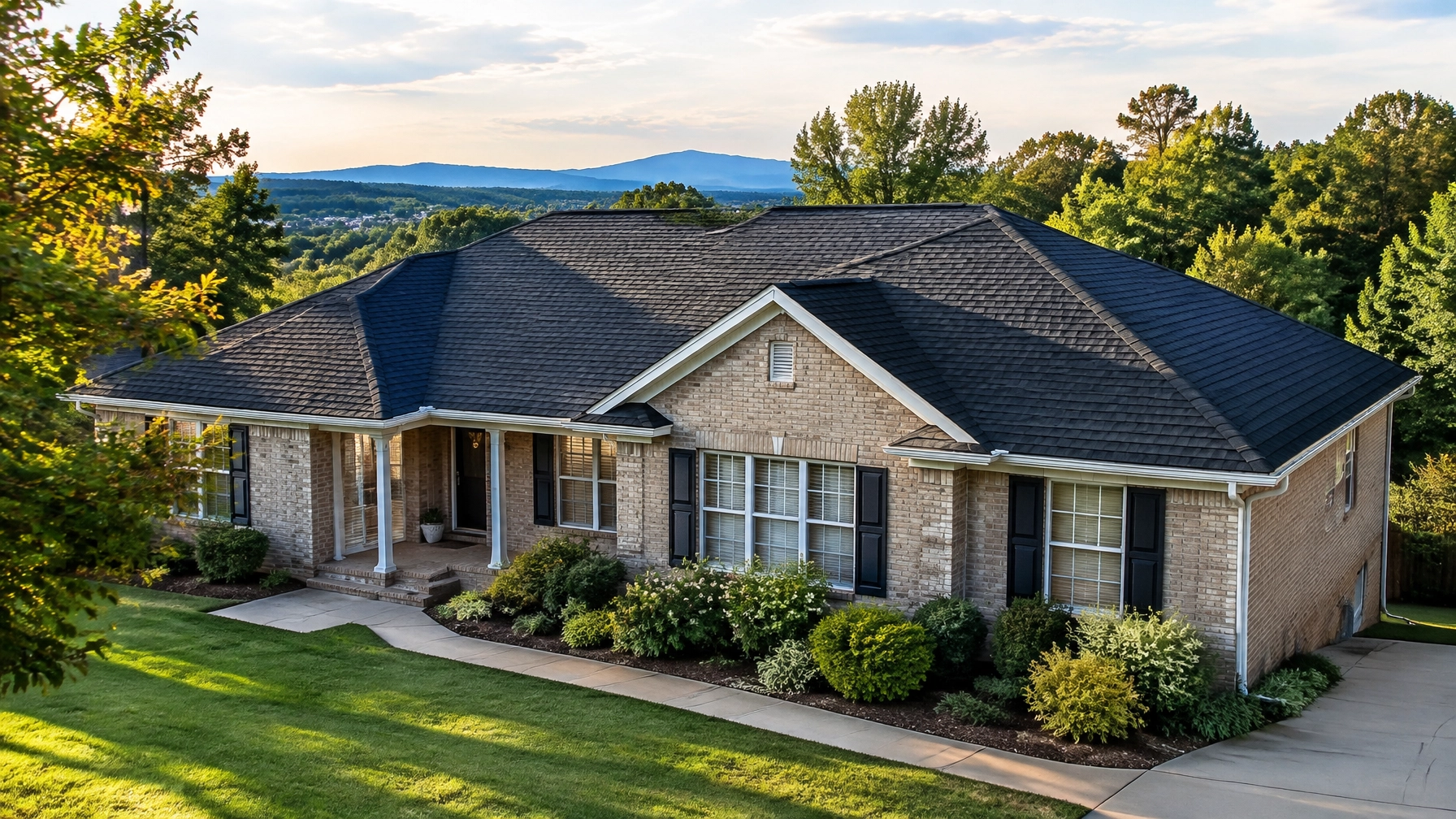
Knoxville is heading into a hot, mostly dry stretch. Sunday, September 13, brings morning clouds followed by a mostly sunny afternoon near 90°F, with a 0% chance of rain. Monday stays hot in the low 90s, with a heat index in the mid-90s. Tuesday remains mostly clear, hot, and steamy.
That short-term forecast is comfortable for outdoor plans. It also highlights the long-term conditions your roof must handle: intense summer sun, high humidity, frequent rainfall, occasional hail and wind, and repeated winter freezes.
For Knoxville homeowners, roof durability is not determined by one storm. It is shaped by years of thermal stress, moisture exposure, storm impacts, and freeze-thaw movement.
Quick Knoxville Forecast: September 13–19, 2026
The National Weather Service Knoxville-area point forecast provides the following outlook:
| Day | Expected conditions | Roof durability takeaway |
|---|---|---|
| Sunday, Sept. 13 | Morning clouds, mostly sunny afternoon, high near 90°F, dry, 0% rain chance | Strong sun increases surface temperatures and UV exposure |
| Monday, Sept. 14 | Mostly clear to partly sunny, low 90s, heat index in the mid-90s | Heat can accelerate aging in older shingles |
| Tuesday, Sept. 15 | Mostly clear, hot, and steamy; low 90s, feels mid-90s | Humidity slows drying and encourages algae growth |
| Wednesday–Thursday | Continued heat, highs in the low to mid-90s | Extended thermal cycling continues |
| Later in the week | Increasing moisture chances, with showers and thunderstorms possible | Wind, heavy rain, and hail become the main concerns |
A dry day does not reverse existing roof damage. It simply gives homeowners a useful inspection window. If your roof is safe to view from the ground, check it before the next round of moisture arrives.
Knoxville’s Climate Creates a Multi-Season Roofing Test
Knoxville has a humid subtropical climate. The city receives approximately 51.93 inches of precipitation annually, commonly rounded to 52 inches. Rain is spread through the year, while spring and summer thunderstorms can deliver short periods of heavy rainfall, strong wind, and hail.
The region also experiences:
- Roughly 50–90 days below freezing in a typical year, with about 66 freeze days in many climate summaries
- A median first freeze near November 2
- A median last freeze near April 1
- Approximately 4.6 inches of annual snowfall
- Frequent humidity in the Tennessee Valley
- Occasional hail measuring approximately 0.75–1.75 inches
- Thunderstorm wind damage that is generally more frequent than major hail damage
Knoxville is not exposed to the same hail frequency as the Great Plains. However, occasional severe storms can still damage shingles, gutters, flashing, siding, and roof-mounted equipment. The EF2 tornado that affected western Knox County in August 2023 is a reminder that significant wind events can occur in the region.
How Knoxville Weather Affects Roof Durability
1. Summer heat and UV exposure cause thermal stress
A roof can become significantly hotter than the surrounding air. On a 90°F day, dark asphalt shingles may reach much higher surface temperatures under direct sunlight.
Repeated heating and cooling can cause:
- Shingle brittleness
- Loss of flexibility around roof edges and penetrations
- Premature cracking
- Faster loss of protective oils in asphalt materials
- Increased granule shedding
- Expansion and contraction around flashing and sealants
UV radiation also gradually breaks down exposed roofing materials. A roof with little attic ventilation can experience even greater heat buildup because trapped attic air raises the temperature below the roof deck.
Proper ventilation does not make a roof immune to heat. It helps control attic temperatures and moisture, supporting more stable roof performance over time.
2. Freeze-thaw cycles fatigue shingles and flashing
Knoxville winters are moderate, but moderate does not mean harmless. Moisture can enter small cracks, exposed fastener areas, aging sealants, or deteriorated flashing. When temperatures fall below freezing, that moisture expands.
Repeated freeze-thaw movement can contribute to:
- Shingle surface fatigue
- Granule loss
- Cracking around pipe boots and vents
- Deterioration of caulking
- Movement at flashing joints
- Water entry beneath damaged shingles
- Decking damage if leaks go unnoticed
A roof does not need heavy snow to experience winter wear. Knoxville’s repeated transitions between wet, freezing, and thawing conditions can be enough to expose weak areas.
3. Hail can create damage that is not visible from the ground
Hail in the 0.75–1.75-inch range can bruise asphalt shingles, loosen granules, damage ridge caps, and dent metal components. Some impacts are obvious. Others are subtle and only become visible during a professional inspection.
After a hailstorm, look for:
- Circular impact marks
- Areas with missing or displaced granules
- Exposed fiberglass mat
- Cracked ridge caps
- Dented gutters and downspouts
- Damaged skylights, vents, or soft metals
- Shingles that appear lifted or uneven
Do not walk on a steep or wet roof to inspect it. Use binoculars from the ground or arrange a qualified inspection.

4. Thunderstorm winds test roof fastening and uplift resistance
Thunderstorm winds are among Knoxville’s most common severe-weather threats. Wind does not need to remove an entire roof to cause problems. It can lift a shingle edge, break the seal strip, or loosen flashing.
Damage often begins at vulnerable locations:
- Rake and eave edges
- Ridge caps
- Valleys
- Roof-to-wall transitions
- Chimney flashing
- Plumbing vents
- Dormers and other roof penetrations
Once a shingle loses its seal, future wind and rain can worsen the condition. A small lifted edge can eventually become a missing shingle or a leak path.
5. Rain and humidity encourage algae and moss
With approximately 52 inches of annual precipitation and frequent humidity, Knoxville roofs often remain damp longer than roofs in drier climates. Shaded slopes are especially vulnerable.
Algae commonly appears as dark streaks. Moss may develop where leaves, branches, and moisture remain on the roof surface.
Growth can:
- Reduce curb appeal
- Hold moisture against shingles
- Interfere with drainage
- Lift shingle edges
- Accelerate surface deterioration
- Signal inadequate sunlight or ventilation
Avoid pressure washing asphalt shingles. High-pressure water can remove granules and shorten the roof’s service life. Use a roofing professional or an approved low-pressure cleaning method.
Practical Roof-Durability Checklist for Knoxville Homeowners
Use the current dry stretch to complete a basic ground-level inspection.
Check for storm and age-related damage
Look for:
- Missing, curled, cracked, or lifted shingles
- Granules collecting heavily in gutters
- Dark impact marks or bruising
- Sagging rooflines
- Loose ridge caps
- Damaged vents or pipe boots
Inspect flashing and drainage
Pay particular attention to:
- Chimney flashing
- Valleys
- Skylights
- Roof-to-wall transitions
- Gutters and downspouts
- Areas where branches overhang the roof
Clean gutters help move Knoxville’s heavy rainfall away from the roof edge and foundation. They do not correct defective flashing or damaged shingles, so both systems need attention.
Consider impact-resistant materials
For homeowners replacing a roof, Class 4 impact-resistant shingles may be worth comparing with standard architectural shingles. They are designed to better withstand impact testing and may help reduce storm-related damage. Insurance savings vary by carrier, policy, and documentation requirements, so confirm available discounts before choosing a product.
Standing-seam metal roofing is another option. It can offer long service life, strong wind performance, and good heat reflectivity when properly designed and installed. The best roof depends on your budget, roof pitch, home style, drainage, and expected ownership period.

Roof Replacement, Curb Appeal, and Home Value
Roof condition affects more than weather protection. It also influences buyer confidence and inspection results.
Recent national estimates commonly place asphalt roof replacement ROI in the 60%–70% range, although actual results vary by market, material, installation quality, and the condition of the old roof. A replacement roof may also add roughly 2%–5% to a home’s value, but there is no guaranteed dollar-for-dollar return.
The strongest value benefits usually come when the existing roof is visibly worn or near the end of its service life.
A new roof can support:
- Better roof replacement resale value
- Stronger roof curb appeal home value
- Fewer inspection objections
- Less pressure for buyer repair credits
- Better buyer confidence
- More predictable ownership costs
For many homeowners, architectural asphalt shingles provide the best balance between cost, appearance, and service life. Metal may provide stronger long-term durability, but its higher upfront cost does not always produce a proportionally higher resale price.
The best roof for home value is usually one that fits the neighborhood, is correctly installed, has documented warranties, and solves the home’s actual weather risks. In Knoxville, that means prioritizing drainage, ventilation, wind resistance, algae resistance, and protection from occasional hail.

Get a Knoxville Roof Estimate in 60 Seconds
Roof size, pitch, complexity, material, tear-off requirements, and regional labor rates all affect replacement pricing. For a general planning range, the roof cost calculator lists typical 2026 replacement costs of approximately $9,000–$22,000, depending on the project.
For a property-specific estimate, Get My Roof Estimate Now uses satellite imagery to measure your roof and estimate pricing based on its actual size, pitch, and complexity.
There is no credit card requirement, no contractor visit needed upfront, and no obligation. Enter your Knoxville address to receive a free estimate in about 60 seconds, then use the information to plan repairs, compare materials, or evaluate your roof replacement ROI.
Weather references: National Weather Service Knoxville-area forecast and NWS Knoxville climate data. Roofing costs and estimates vary by property and local conditions.
Leave a Reply