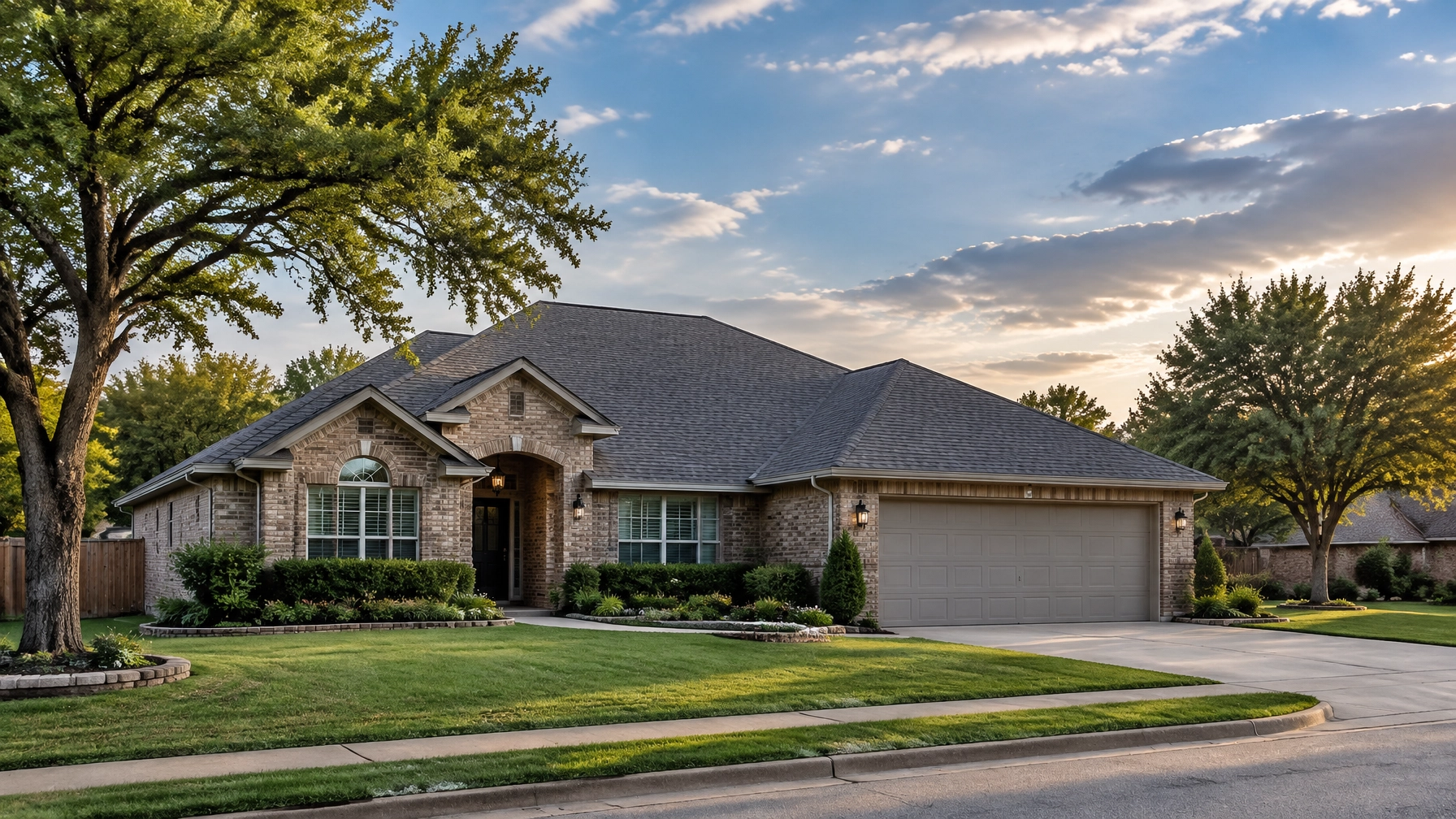
Fort Worth Roof Replacement Costs at a Glance
In 2026, replacing a typical 2,000-square-foot roof in Fort Worth costs approximately $7,250–$12,150 for architectural shingles. That equals about 20 roofing squares because one roofing square covers 100 square feet.
Your final price depends on roof pitch, complexity, tear-off requirements, decking condition, material choice, labor availability, and storm-related demand.
After a major hail event, prices can rise as local crews, materials, and disposal services become harder to schedule.
Fort Worth Roof Replacement Cost Comparison
| Roofing option | Category | Typical 2,000 sq. ft. cost | Approximate cost per square |
|---|---|---|---|
| 3-tab asphalt shingles | Budget | $6,000–$9,500 | $300–$475 |
| Architectural shingles | Popular | $7,250–$12,150 | $360–$610 |
| Class 4 impact-resistant shingles | Storm-Ready | $10,800–$20,000+ | $540–$1,000 |
| Standing-seam metal | Premium | $20,000–$40,000+ | $1,000–$2,500 |
For architectural shingles, many installed Fort Worth bids fall near $500–$650 per roofing square once tear-off, underlayment, flashing, ventilation, labor, and disposal are included. Use the table for budgeting: not as a substitute for a property-specific measurement.
For a faster starting point, use the Fort Worth roof estimate page or the roof cost calculator.

1. How much does a new roof cost in Fort Worth in 2026?
A typical Fort Worth roof replacement costs $7,250–$12,150 for architectural shingles on a 2,000-square-foot roof.
Expect a broader range of $6,000 to $40,000 or more depending on the material:
- Budget: 3-tab asphalt shingles
- Popular: Architectural shingles
- Storm-Ready: Class 4 impact-resistant shingles
- Premium: Standing-seam metal
Steep slopes, multiple roof sections, skylights, chimneys, valleys, and damaged decking can increase the total.
2. What roofing material is best for North Texas weather?
For Fort Worth’s heat, ultraviolet exposure, hail, wind, and temperature swings, the most practical choices are:
- Architectural shingles (Popular): Good appearance and value
- Class 4 shingles (Storm-Ready): Designed for improved impact resistance and may qualify for insurance discounts
- Standing-seam metal (Premium): Long service life and strong resistance to weather
Review the roofing materials guide before comparing estimates. A lighter-colored roof, proper attic ventilation, and quality installation can also help manage summer heat.
3. Do I need a roofing permit in Fort Worth?
The City of Fort Worth generally requires a building permit when re-roofing includes replacement of:
- Decking
- Lathing
- Sheathing
- Rafters
- Ridge boards
A shingle-only replacement on a single-family or two-family home typically does not require a permit when no decking is replaced.
However, Fort Worth requires a full tear-off for re-roofing; shingle overlays are prohibited. Drip edge must be installed if missing, and chimney crickets must be added where required if they were not previously present.
If a permit is needed, it must be handled through Fort Worth Development Services by a contractor registered with the city. A Tarrant County or neighboring-city permit is not valid inside Fort Worth city limits.
Some addresses are in unincorporated Tarrant County, where permitting follows county rules. Westover Hills has its own building official. Historic areas: including Fairmount, Ryan Place, Mistletoe Heights, Arlington Heights, and the Stockyards: may require a Certificate of Appropriateness for visible roof changes.
4. How much is a wind or hail insurance deductible in Texas?
Texas wind and hail deductibles are typically 1%–3% of the Coverage A dwelling limit.
For example:
- Home Coverage A: $400,000
- Wind/hail deductible: 2%
- Out-of-pocket deductible: $8,000
Texas is the only state where every homeowners carrier uses a percentage wind/hail deductible. Check your declarations page to confirm the percentage and dollar amount.
Many Texas policies also change roof coverage from replacement cost value (RCV) to actual cash value (ACV), or apply a roof payment schedule, once the roof reaches approximately 10–15 years old. The exact rule depends on your policy.
Document damage, contact your insurer promptly, and avoid signing an assignment of benefits or storm contract before reviewing the terms.
5. Did Fort Worth receive damaging hail in 2026?
Yes. The April 25–28, 2026 DFW outbreak produced significant hail activity.
According to the National Weather Service Fort Worth office, Fort Worth-area reports included:
- Up to 2.75-inch hail on April 26
- Approximately 2.00-inch hail in the wider DFW region on April 28
- Additional severe hail reports across North Texas
Fort Worth also experienced a June 6 hail event and hail map activity on September 11, 2026.
After a storm, look for:
- Granule loss in gutters
- Bruised, cracked, or missing shingles
- Dented gutters, vents, and flashing
- Soft spots on roof surfaces
- Ceiling stains or new attic leaks
Do not climb onto the roof yourself. Take ground-level photos and arrange a professional inspection.

6. How long does a roof last in Fort Worth?
Typical North Texas service lives are:
- 3-tab asphalt: 10–18 years
- Architectural shingles: 18–28 years
- Class 4 impact-resistant shingles: 25–35+ years
- Metal roofing: 40–60+ years
Intense UV exposure, extreme heat, hail, wind, and thermal cycling can shorten these ranges. Attic ventilation is critical because trapped heat and moisture accelerate shingle aging and can damage decking.
7. Are Texas roofers required to have a state license?
Texas does not have a general state roofing license, and TDLR does not issue a standard roofing contractor license.
The Roofing Contractors Association of Texas offers a voluntary RCAT credential. It is an industry credential: not a state license.
Before hiring, verify:
- Fort Worth contractor registration, when applicable
- General liability insurance
- Workers’ compensation coverage
- Recent local references
- Written warranty terms
- Experience with hail and wind claims
Always obtain three written quotes. Confirm that each quote lists tear-off, disposal, underlayment, flashing, ventilation, decking allowances, permits, and warranty coverage.
8. Is a Class 4 roof worth the extra cost?
A Class 4 impact-resistant roof can be worthwhile in Fort Worth because hail is a recurring North Texas risk.
The typical cost is $10,800–$20,000 or more for a 2,000-square-foot roof. Benefits may include:
- Improved impact resistance
- Longer expected service life
- Reduced likelihood of premature replacement
- Potential insurance discounts
Ask your insurance carrier whether a Class 4 rating qualifies for a premium reduction. The discount, if available, varies by carrier and policy.
9. Does a new roof increase resale value?
A new roof typically returns approximately 60%–80% of its cost at resale, with the national asphalt benchmark near 68%.
In Fort Worth, a new roof may add roughly 3%–6% to a home’s value and help prevent appraisal or negotiation reductions of approximately $4,000–$30,000. Buyers and lenders often treat an aging or visibly damaged roof as a major liability.
This matters in neighborhoods such as Berkeley Place, River Oaks, Westover Hills, the Cultural District, Fairmount, and Arlington Heights, where buyers may pay close attention to exterior condition and neighborhood character.
10. What should Fort Worth homeowners do after hail damage?
Use this sequence:
- Stay off the roof and keep away from damaged electrical equipment.
- Photograph visible damage from the ground.
- Check the attic and ceilings for moisture.
- Contact your insurer promptly.
- Get a professional roof inspection.
- Compare at least three written estimates.
- Ask contractors to separate storm damage from pre-existing wear.
- Do not sign a rushed contract with a door-to-door storm crew.
Storm damage may not be obvious from the ground. Hail can bruise shingle mats without immediately creating an interior leak.
11. Can I get an accurate Fort Worth roof estimate without a contractor visit?
Yes. Get My Roof Estimate Now uses satellite imagery to measure your roof and estimate pricing based on roof size, pitch, and complexity.
Enter your address to receive a free estimate in about 60 seconds:
- No contractor visit required upfront
- No credit card required
- No hidden fees
- Low, middle, and high pricing ranges
- Material comparisons for shingles, metal, and other options
- Connection with verified local contractors
The satellite estimate is a planning tool. A contractor should still confirm decking, flashing, ventilation, and storm damage before finalizing a replacement contract.
Get your free Fort Worth satellite roof estimate.

Quick Takeaway for Fort Worth Homeowners
For most 2,000-square-foot Fort Worth homes, architectural shingles cost about $7,250–$12,150 in 2026. Class 4 shingles cost more but may provide better hail protection and possible insurance savings. Permit requirements depend mainly on whether decking or structural roof components are replaced.
Before scheduling work, confirm your wind/hail deductible, document storm damage, verify contractor insurance and registration, and compare three written quotes. Start with a free, satellite-powered estimate so you know your roof’s approximate size and replacement range before contractors arrive.
Categories: Fort Worth TX, Texas Roof Replacement, Roofing Costs, Permits, Insurance, Storm Protection, AEO FAQ
Tags: Fort Worth roof replacement cost 2026, Fort Worth roofing estimate, Tarrant County roofing, North Texas hail damage, Texas wind hail deductible, Fort Worth roofing permits, Class 4 shingles Fort Worth, architectural shingles Texas, standing seam metal roof Fort Worth, Texas roofing contractors, roof cost per square, free satellite roof estimate
Leave a Reply