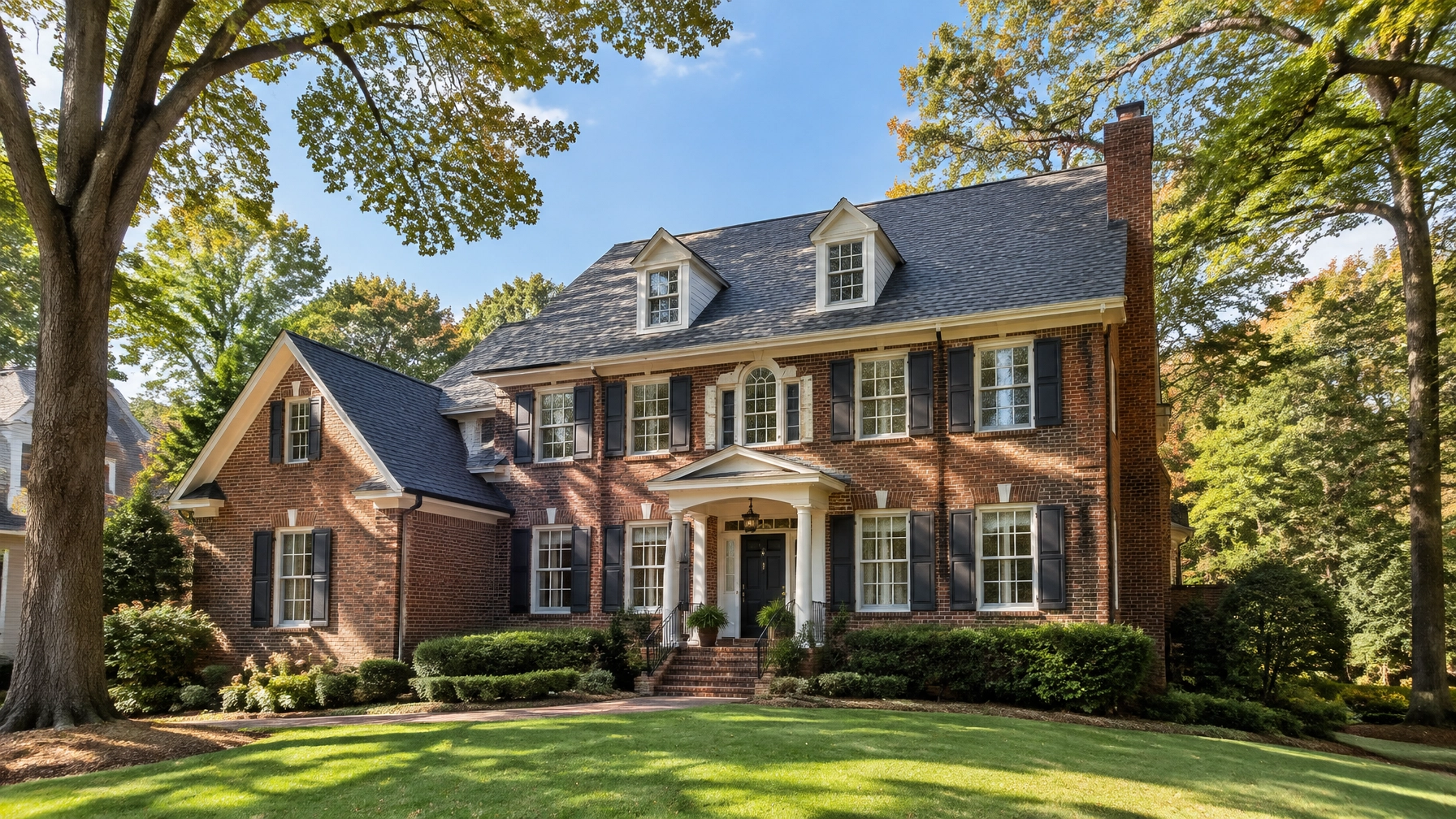
Image credit: Get My Roof Estimate Now, AI-generated illustrative image.
Richmond gets a welcome break from summer heat today, but Central Virginia homeowners should not mistake one comfortable morning for a low-stress roofing climate.
Tuesday, September 15, brings cool, crisp air, low humidity, and a mostly sunny sky. The high should remain in the 77–82°F range, with the first morning lows in the 50s since early June. Rain chances are near 0%, and Tuesday evening should settle into the mid-to-upper 50s.
That dry window is useful for roof inspections. It is also a reminder to prepare before late-week humidity, thunderstorms, winter freezes, and falling leaves return.
Richmond Weather Today and the Week Ahead
Tuesday, September 15
- Mostly sunny and comfortable
- High: 77–82°F
- Morning low: 50s
- Evening low: mid-to-upper 50s
- Humidity: Low
- Rain chance: 0%
Wednesday through Monday
- Wednesday: Mostly sunny, low humidity, mid-80s
- Thursday: Mostly sunny and warmer, upper 80s; a stray late-day shower is possible, mainly west of I-95 (20% chance)
- Friday: Partly sunny, hot, and humid, with afternoon and evening showers and thunderstorms (30% chance)
- Saturday: Mostly sunny, mid-80s
- Sunday: Scattered showers and storms, upper 80s (30% chance)
- Monday: Scattered showers and storms, mid-80s (40% chance)
Friday’s storms may produce wind, heavy rain, or isolated hail. Homeowners should inspect vulnerable roof areas before the pattern turns unsettled.

Image credit: Get My Roof Estimate Now, AI-generated illustrative image.
Why Richmond Roofs Need More Than a Visual Check
Richmond’s humid subtropical climate creates several recurring roofing challenges:
- Approximately 44–46 inches of annual rainfall
- Around 74 nights per year at or below freezing
- Summer heat that can exceed 95°F
- Humidity that encourages algae and organic growth
- Mature trees and falling branches in neighborhoods throughout the city
- Severe thunderstorms, straight-line winds, tornadoes, and occasional hail
The combination matters. Heat accelerates asphalt shingle granule loss. Rain exposes weak flashing and deteriorated sealants. Freezing temperatures allow absorbed moisture to expand and contract repeatedly. Over time, these freeze-thaw cycles can widen small cracks, loosen flashing, and damage roof edges.
Architectural shingles commonly last about 25–30 years in the Richmond area, but installation quality, attic ventilation, shade, roof pitch, and storm exposure can shorten or extend that range.
Richmond’s Severe Weather History Is a Roofing Benchmark
The June 22, 2022 destructive wind event
A severe thunderstorm moving along the I-95 corridor on June 22, 2022, showed how quickly a Richmond roof can be tested.
Measured wind gusts reached approximately 60 mph, while the National Weather Service determined that 80 mph winds were likely in some locations. Roughly 100,000 customers lost power across the Richmond metro area.
The storm also ripped the roof from an apartment complex near Arthur Ashe Boulevard and Broad Street. NWS Wakefield issued an 80 mph “Destructive” tag, one of only a small number of such warnings issued by the office since 2010.
That event does not mean every Richmond storm will remove a roof. It does show why loose shingles, poor nailing, exposed edges, and aging underlayment should be corrected before the next severe-weather warning.
Hurricane Isabel remains a regional reference point
Hurricane Isabel struck Virginia in September 2003. Richmond International Airport recorded wind gusts of approximately 73 mph, while Central Virginia experienced widespread fallen trees, power outages, and structural damage.
Wind damaged part of the roof at The Diamond, and falling trees caused additional damage throughout the region. Isabel remains a useful benchmark: even when a storm is no longer a hurricane by the time it reaches Richmond, tropical moisture and strong wind can still threaten roofs.
Tornadoes and hail are less common: but not irrelevant
There have been approximately 83 tornadoes within 25 miles of Richmond since 1950. Most were weaker EF0 or EF1 events, but the region has experienced more serious tornadoes.
On August 6, 1993, an F4 tornado caused four fatalities and approximately $27.5 million in damage in the Richmond-area track segment.
Hail is less frequent than in some other parts of the country, but it remains a risk. Verified reports of 1-inch-or-larger hail within 15 miles of Richmond are rare, yet a May 16, 2023, hail event demonstrated that roof damage can occur even without a major regional outbreak.
What Richmond Homeowners Should Check This Week
Use today’s dry weather to inspect from the ground or schedule a professional evaluation. Avoid walking on the roof unless you are trained and properly equipped.
Check for:
- Excessive granule loss in gutters or at downspout outlets
- Curling, cracked, lifted, or missing shingles
- Exposed nail heads
- Damaged pipe boots and vent flashing
- Cracked sealant around chimneys and skylights
- Open or deteriorated valleys
- Sagging roof sections
- Moss, algae, or dark streaks caused by persistent moisture
- Clogged gutters and downspouts
- Tree limbs touching or overhanging the roof
Oak-heavy neighborhoods such as Windsor Farms and Westover Hills deserve special attention. Leaves and small branches can block drainage, keep roof surfaces damp, and damage shingles during wind events.
For a replacement, consider Class 3 or Class 4 impact-resistant shingles where available. Ask about wind-rated installation, including products meeting ASTM D7158 Class H or ASTM D3161 Class F standards.
Proper attic ventilation is also important. It helps reduce heat and moisture buildup during Richmond’s humid summers. Before winter, consider ice-and-water protection at vulnerable eaves and valleys, especially on complex roofs or homes with limited attic insulation.
Historic Richmond Homes May Need Additional Approval
Homes in historic areas such as the Fan, Church Hill, Oregon Hill, and Jackson Ward may require review by Richmond’s Commission of Architectural Review (CAR).
A roof replacement that changes the visible material, color, or historic character may require a Certificate of Appropriateness. Homeowners should confirm requirements before signing a contract. Historic review can add approximately 2–6 weeks to the project schedule.
Natural slate can preserve the appearance of an older Richmond home, but it is substantially more expensive than asphalt. It also requires experienced installation and appropriate structural evaluation.
Review the City of Richmond’s Permits and Inspections information and Commission of Architectural Review resources before work begins.

Image credit: Get My Roof Estimate Now, AI-generated illustrative image.
2026 Richmond Roof Replacement Costs
For most Richmond-area homes, a full roof replacement in 2026 costs approximately $7,500–$14,500, depending on roof size, pitch, tear-off requirements, complexity, material, and structural repairs.
Typical installed pricing is:
| Roofing material | Approximate installed cost per square |
|---|---|
| 3-tab asphalt shingles (Budget) | $325–$425 |
| Architectural shingles (Popular) | $425–$625 |
| Flat TPO or EPDM (Low-slope) | $475–$775 |
| Synthetic slate (Premium) | $800–$1,200 |
| Standing-seam metal (Long-life) | $875–$1,350 |
| Natural slate (Historic/Premium) | $1,500–$3,000 |
One roofing square equals 100 square feet of roof surface. A satellite-based measurement can estimate the number of squares, roof pitch, and complexity before contractor appointments.
City of Richmond permit fees commonly fall around $100–$275, depending on project valuation. Historic properties may require CAR approval in addition to the building permit.
The best installation windows are generally late March through early June and mid-September through November, when temperatures are moderate and weather is more workable.
Roof Replacement, Resale Value, and Curb Appeal
A new roof can support both immediate appearance and long-term marketability. Homeowners researching new roof ROI and home value should focus on the full package:
- Architectural shingles improve curb appeal at a moderate cost.
- Metal roofing may offer stronger long-term durability and energy performance.
- Slate can complement historic or high-end homes but carries a much higher upfront cost.
- A properly documented replacement can reduce buyer concerns during resale.
- A clean, proportionate roofline improves overall roof curb appeal and home value.
There is no single best roof for home value. The right choice depends on the neighborhood, architecture, budget, expected ownership period, and local approval requirements. A roof replacement’s resale value is strongest when the material fits the home and the installation is properly documented.
Before hiring, verify the contractor through Virginia DPOR’s official License Lookup. Confirm an active Class A, B, or C contractor license with the appropriate roofing specialty. Also request current general liability and workers’ compensation insurance certificates.
Get a Richmond Roof Estimate in 60 Seconds
You do not need to wait for several contractor visits to establish a realistic budget.
Get My Roof Estimate Now uses satellite imagery to measure your roof and provide a free estimate based on size, pitch, complexity, material, and regional pricing. There is no credit card requirement, and results are available in about 60 seconds.
Use this crisp Tuesday to inspect your roof, clear your gutters, and plan before Friday’s heat and storms arrive.
Get your free instant satellite roof estimate at getmyroofestimatenow.com. If this Richmond roofing and weather update was useful, leave a comment and share it with a Central Virginia homeowner.

Image credit: Get My Roof Estimate Now, AI-generated illustrative image.
Leave a Reply