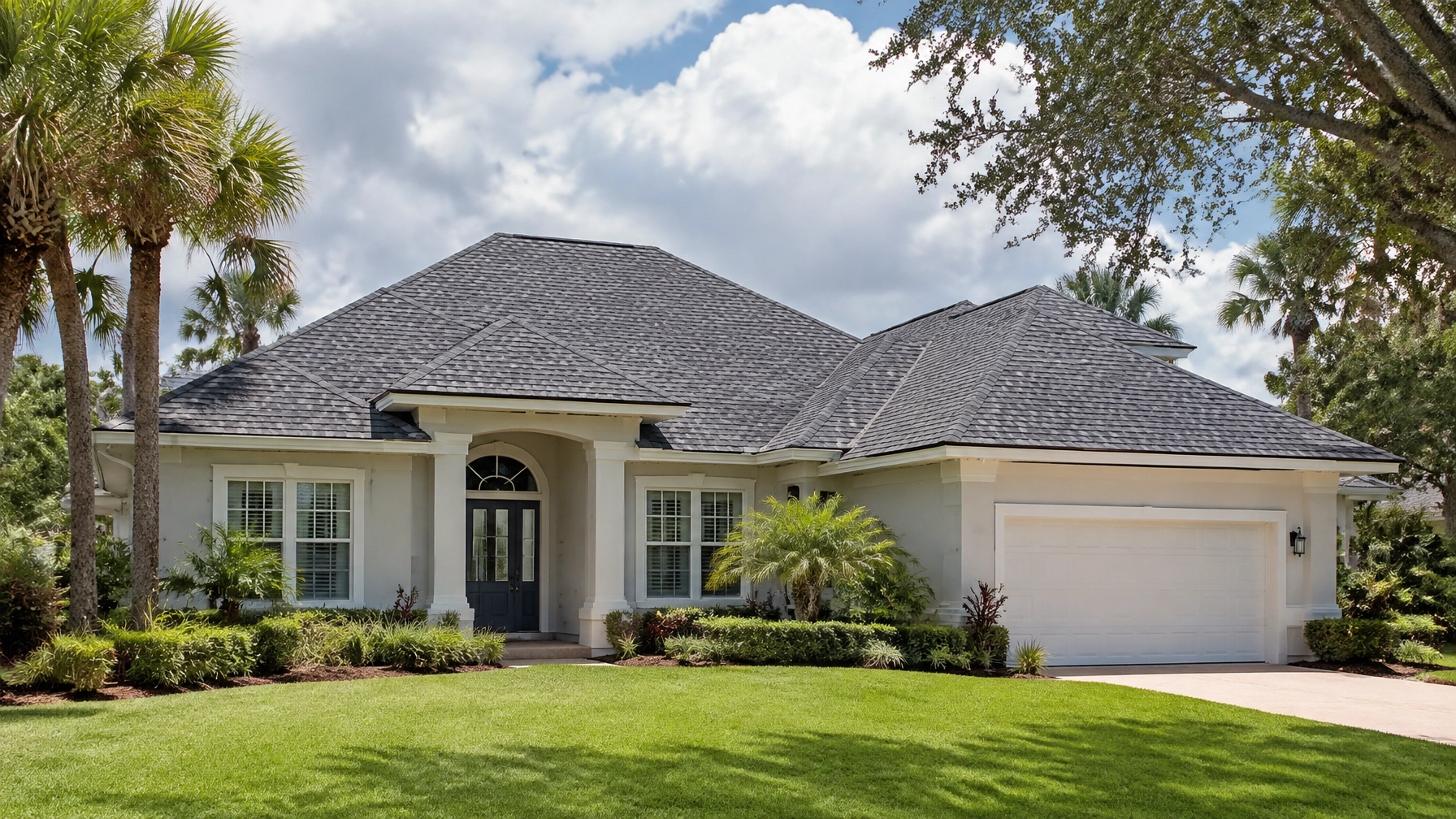
Jacksonville homeowners in the 32202 area can expect a breezy, partly cloudy Wednesday with a high near 88°F and a low near 70°F. Northeast winds should run 10–15 mph inland, increasing to 15–25 mph with gusts up to 35 mph near the beaches and St. Johns River.
The immediate threat is not a major storm. It is repeated exposure: wind uplift, salt air, intense sun, tropical moisture, hail, and occasional surge flooding. With Jacksonville’s residential wind design requirements reaching 125–130 mph, September is a practical time to check your roof’s condition and replacement cost.
Today’s Jacksonville Weather Snapshot
For Wednesday, September 16:
- High: Near 88°F
- Low: Near 70°F
- Sky: Partly cloudy with periods of sun
- Inland wind: Northeast at 10–15 mph
- Coastal and river wind: 15–25 mph, with gusts up to 35 mph
- Rain chance: Approximately 10–20%
- Air pattern: Drier air moving into northeast Florida
- Beach hazard: High rip-current risk through late Thursday night
The National Weather Service Jacksonville rip-current statement warns that stronger northeast winds can create dangerous currents even when the beach appears calm. Follow posted flags and lifeguard instructions.
For roofs, today’s wind is a useful stress test. Gusts do not need to reach hurricane strength to expose loose shingles, weak flashing, unsecured ridge caps, or deteriorated sealant.
The Week Ahead: Less Wind, More Moisture
Thursday should remain breezy, with temperatures in the 80s near the beaches and the upper 80s to low 90s inland.
From Friday through the weekend, winds should ease while tropical moisture returns. Rain chances are expected to rise. That combination can create problems for aging roofs:
- Wind-driven rain can enter beneath lifted shingles.
- Heavy showers can expose clogged gutters and poor drainage.
- Ponding water can worsen low-slope roof damage.
- Repeated wetting and drying can accelerate flashing and sealant failure.
If your roof is already 15–30 years old, do not wait for an interior leak before getting a replacement budget.

Tropics Watch: Quiet Does Not Mean Risk-Free
The National Hurricane Center is tracking a disorganized trough several hundred miles east of Bermuda. Its formation chance is currently:
- 10% through 48 hours
- 30% through seven days
It is not considered a current threat to the United States.
AccuWeather is also watching the northern Gulf for a possible late-week “homegrown” system. That possibility remains uncertain, but Jacksonville homeowners should remember that local roof damage does not require a landfalling hurricane. A line of thunderstorms, tropical squall, or isolated tornado can produce damaging wind in a short period.
The 2026 Atlantic season has produced five named storms and zero hurricanes so far. If no hurricane forms by September 22, the season will set a record for the latest first hurricane in the satellite era. The seasonal peak passed on September 10: but roof preparation should not depend on a named storm appearing on the forecast.
What Jacksonville’s Wind Code Means for Your Roof
Jacksonville is outside Florida’s designated High Velocity Hurricane Zone. However, the city still has serious wind-design requirements.
Under Jacksonville Code of Ordinances §320.103 and the 2023 Florida Building Code, typical Risk Category II residential buildings use:
- 125 mph ultimate design wind speed west of the demarcation line
- 130 mph ultimate design wind speed east of the demarcation line
The line generally follows the St. Johns River and then I-95. You can review the ordinance through Jacksonville’s municipal code.
A code-compliant roof is not simply a matter of choosing thicker shingles. The complete roof system matters:
- Correct nail placement and fastening
- Proper roof-to-wall connections
- Sealed roof deck where required
- Strong perimeter and corner attachment
- Adequate underlayment
- Correct flashing around walls, vents, and chimneys
- Wind-rated shingles or metal panels
- Proper installation by a licensed contractor
Jacksonville’s Recent Weather History Shows the Pattern
Jacksonville roofs face several different types of stress:
- Hurricane Matthew, October 2016: Major to locally extreme beach erosion occurred around Jacksonville Beach. Dunes were swept away, the pier was damaged, and inland tropical-storm-force winds contributed to downed trees and power outages.
- Hurricane Nicole, November 2022: Severe dune loss and storm-surge flooding affected the St. Johns River basin. Ground-floor units flooded, and river levels approached historic benchmarks.
- Hurricane Milton, October 2024: Duval County experienced tropical-storm-force gusts reported up to 64 mph, along with moderate river flooding.
- February 4, 2024 tornadoes: EF-1 damage near Peacock Ridge affected manufactured-home roofs, while an EF-0 was reported near Normandy Boulevard.
- October 27, 2025 hail: A notable Jacksonville hail event produced stones averaging approximately 1.7 inches and potentially affected nearly 8,000 properties.
Hail can bruise the shingle mat without creating an obvious hole. Look for circular marks, exposed fiberglass, missing granules, and dents in soft metal components.
Jacksonville Roof Durability Challenges
A roof in Duval County must handle more than high wind. Jacksonville’s hot-humid, subtropical climate contributes to:
- UV exposure and granule loss
- Thermal cycling between hot afternoons and cooler nights
- Algae streaking and surface staining
- Salt-air corrosion near the coast
- Wind uplift along edges and ridges
- Water intrusion around flashing
- Ponding on low-slope sections
- Storm debris and falling branches
A roof that looks acceptable from the driveway may still have weakened seal strips, brittle underlayment, or corroded fasteners.
2026 Jacksonville Roof Replacement Pricing
For a typical 2,000-square-foot roof, current Jacksonville planning ranges are:
| Roofing option | Price per square foot | Typical 2,000-square-foot replacement | Best fit |
|---|---|---|---|
| 3-tab asphalt shingles | Generally below architectural shingles | Budget-level option; confirm with a local quote | Basic, cost-conscious replacement |
| Architectural asphalt shingles | $4.50–$9.00 | $9,000–$24,000 | Popular balance of cost, appearance, and durability |
| Metal roofing | $7.00–$20.00 | $16,000–$38,000 | Premium longevity and storm-resistance goals |
Standing-seam metal sits at the premium end of the metal range. Your actual cost depends on roof squares, pitch, valleys, dormers, tear-off requirements, decking repairs, permits, access, and contractor rates.
You can compare general material assumptions with the Get My Roof Estimate Now roof cost calculator.

New Roof ROI, Resale Value, and Curb Appeal
A roof replacement is both a protective repair and a visible home improvement.
In Florida, a reasonable planning benchmark is 60–70% or more in direct roof replacement ROI, although the result varies by neighborhood, material, timing, and the condition of the old roof.
A new roof can improve:
- Roof replacement resale value: Buyers are less likely to request a large repair credit or delay closing.
- Roof curb appeal home value: Clean rooflines and modern shingles improve the first impression from the street.
- Home insurability: Buyers and lenders may be more comfortable with a newer, code-compliant roof.
- Buyer confidence: Hurricane-rated or impact-resistant materials provide a clear selling point.
- Maintenance predictability: A new roof reduces the likelihood of immediate leaks and emergency repairs.
For many Jacksonville homes, architectural shingles are the best roof for home value because they provide a noticeable visual upgrade without the cost of standing-seam metal. Metal can make more sense for homeowners planning to stay long-term or prioritizing extended service life.
ROI is not guaranteed. Avoid overspending on a roof material that is out of line with nearby homes. A local estimate helps establish an appropriate project range before you request contractor bids.
Insurance and Mitigation Savings
After a replacement or major roof upgrade, schedule a Florida wind mitigation inspection using the updated Form OIR-B1-1802, effective April 1, 2026.
The inspection can document features such as:
- Hip-roof geometry
- Reinforced roof-to-wall connections
- Roof-deck attachment
- A sealed roof deck
- Impact-rated openings
- Storm-resistant doors and windows
Depending on the insurer and the home’s features, documentation may support wind-mitigation credits. These forms are generally valid for five years, unless the home changes or the insurer requires an update.
Eligible homeowners should also review the My Safe Florida Home program, which offers free inspections and matching grants of up to $10,000 for qualifying hardening improvements. Program eligibility and funding rules can change, so verify current requirements before budgeting around a grant.
Quick Jacksonville Roof Checklist
After this windy stretch:
- Check the ground for shingle pieces or loose flashing.
- Look for lifted, torn, cracked, or missing shingles.
- Inspect gutters for heavy granule loss.
- Check metal vents, drip edges, and flashing for movement.
- Look for ceiling stains or damp attic insulation after rain.
- Secure patio furniture, umbrellas, tools, and loose decorations.
- Take date-stamped photos of the roof and exterior.
- Do not climb onto a wet or steep roof.
- Request an inspection if you see storm damage.
- Get a replacement estimate before the next tropical system develops.

Get a Jacksonville Roof Estimate in 60 Seconds
Knowing your roof’s size and replacement range gives you leverage before you speak with contractors, insurers, or a real estate agent.
Get My Roof Estimate Now uses satellite imagery to measure roof size, pitch, and complexity. The service is free, requires no credit card, and provides low-to-middle-to-high pricing options in under 60 seconds.
Start with an address-specific estimate today. Then compare the results with an in-person inspection from a verified, licensed, and insured local roofing contractor.
Categories: Weather, Roof Durability, Jacksonville Roofing
Tags: Jacksonville FL, Duval County, 32202, roof replacement ROI, new roof home value, roof curb appeal, Florida wind mitigation, hurricane-ready roofing, roof replacement cost, September 2026 weather
Leave a Reply