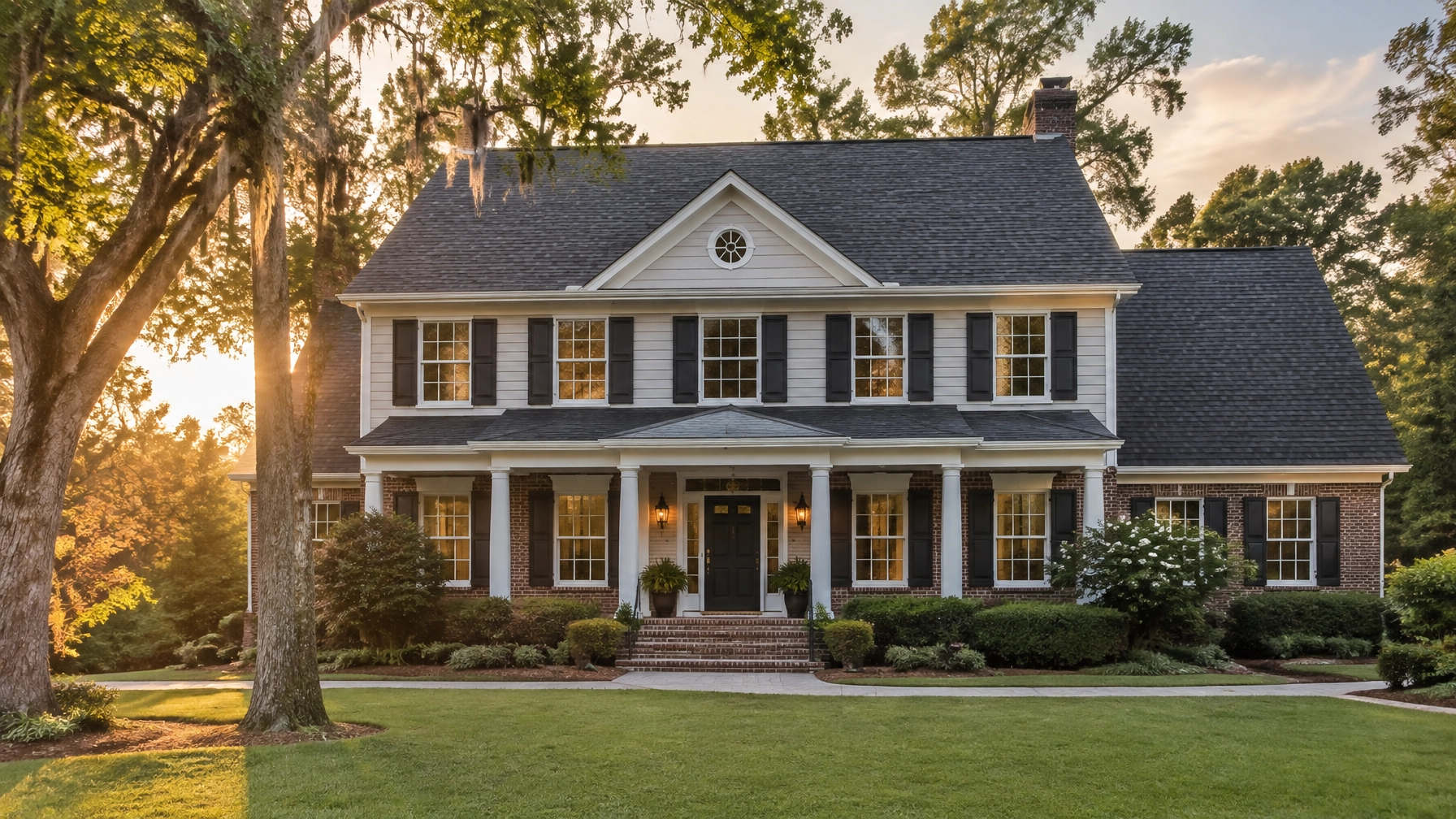
A new roof in Columbia, SC typically costs $8,600–$20,500 for architectural shingles on a 2,000-square-foot home, or about $4.30–$10.25 per square foot. A standing-seam metal roof generally costs $13,300–$34,000, depending on roof complexity, material grade, and installation requirements. For most Columbia homeowners, a typical architectural shingle project lands around $12,000–$16,000.
The potential resale impact is meaningful. Nationally, the 2025 Zonda Cost vs. Value Report estimates that asphalt shingle replacements recover about 68% of project cost at resale, compared with about 50% for metal roofing. A new roof can also contribute approximately 2%–4% to overall home value, especially when the existing roof is visibly worn or near the end of its service life.
Columbia’s mid-2026 market adds urgency. The city’s median sale price is approximately $280,000–$285,000, while Realtor.com’s median list price is about $247,000–$255,000. Values are up roughly 1%–2% year over year, and July inventory increased approximately 28.8% year over year. Buyers have more choices, which means condition and curb appeal matter more than they did in a tighter market.
The short answer: Is a new roof a good investment in Columbia?
Usually, yes: if the current roof is aging, damaged, visibly uneven, or likely to become a negotiation issue.
A replacement roof may help you:
- Protect the home from Columbia’s heat, storms, and humidity
- Improve first impressions and roof curb appeal home value
- Reduce buyer concerns during inspection
- Support a stronger asking price
- Avoid credits or repair concessions at closing
- Make the home easier to market in a more competitive inventory environment
The strongest roof replacement ROI usually comes from installing a roof that fits the home, neighborhood, and buyer expectations. Overspending on a premium material does not guarantee a proportional resale return.
Columbia’s climate makes roof condition especially visible
Columbia: the state capital and “Sizzling City” of the Midlands: has a humid subtropical climate. Roofs face:
- Intense summer heat and ultraviolet exposure
- Heavy thunderstorms and wind
- Hail events, including quarter-sized hail reported during Midlands storms around September 5 and September 11, 2026
- Wind gusts reaching approximately 60 mph during severe weather
- Moisture, algae growth, and occasional tropical-storm remnants
These conditions can shorten the useful life of aging shingles and make discoloration, granule loss, lifted shingles, and flashing failures more noticeable.
A roof that looks acceptable from the street may still have storm damage or aging beneath the surface. Before deciding between repair and replacement, document the roof’s condition and obtain a property-specific estimate.

Best roof for home value by Columbia neighborhood
The best roof for home value depends on the property’s price range, architecture, and expected holding period.
Shandon and historic downtown neighborhoods (Popular)
Shandon, ZIP code 29205, has older homes, established landscaping, and strong architectural character. Earlewood and Cottontown also include older bungalows where rooflines and material choices are highly visible.
Architectural shingles are typically the strongest resale choice because they:
- Match the expectations of mid-range buyers
- Provide a substantial appearance upgrade
- Cost less than metal
- Offer broad color and profile options
- Preserve the character of older homes without looking excessive
Shandon’s average home value is often around $473,000, so a high-quality shingle system can make sense. Avoid a basic, visibly thin product on a prominent historic-style home.
Forest Acres (Popular to Premium)
Forest Acres, ZIP code 29206, includes a broad range of homes, with values commonly ranging from approximately $280,000–$419,000.
A mid-grade or upgraded architectural shingle is usually the most balanced option. Consider:
- Algae-resistant shingles for humid conditions
- Reflective or lighter colors for heat management
- Impact-resistant products where hail exposure is a concern
- Upgraded ridge ventilation and flashing
The goal is to improve appearance and durability without installing a roof that is out of proportion to nearby homes.
Rosewood (Budget to Popular)
Rosewood homes often fall in the $250,000–$350,000 range. Architectural shingles generally provide the best roof replacement resale value here.
A premium metal roof may be difficult to recover at resale unless the property has a distinctive modern design or the owner plans to stay for decades. A clean, properly installed shingle roof is usually the more financially efficient choice.
Lake Murray and luxury properties (Premium)
Lake Murray-area homes in Chapin and nearby ZIP codes such as 29063, 29036, and 29169 can range from approximately $825,000 to more than $1 million for deep-water estates.
Standing-seam metal becomes more appropriate for:
- Lakefront or luxury homes
- Modern and contemporary architecture
- Long-term ownership
- Homes with demanding roof geometry
- Buyers who prioritize longevity and low maintenance
Metal may not produce the highest percentage ROI, but it can support the property’s positioning and reduce concerns about future replacement.
Material comparison: Which roof offers the best ROI?
| Roofing material | Columbia 2026 cost for a 2,000 sq. ft. home | Resale and ROI outlook | Best fit |
|---|---|---|---|
| Architectural shingles (Popular) | $8,600–$20,500; typical project $12,000–$16,000 | Strongest percentage ROI and broadest buyer appeal | Most Columbia neighborhoods |
| Class 4 impact-resistant shingles (Popular/Premium) | Usually above standard shingle pricing | May improve storm confidence and potentially support insurance discussions; confirm policy benefits | Hail-prone areas and long-term owners |
| Standing-seam metal (Premium) | $13,300–$34,000 | National benchmark is about 50% cost recouped; stronger lifestyle and longevity benefits than short-term resale ROI | Lakefront, luxury, modern homes |
| Coatings or specialty systems (Premium) | Project-specific | Can make sense for compatible low-slope roofs but may have narrower buyer appeal | Appropriate roof designs only |
The Zonda figures are national benchmarks based on standardized projects. Columbia’s actual results will depend on roof size, pitch, complexity, neighborhood, installation quality, and buyer expectations.

Insurance and storm damage: document before replacing
A typical South Carolina HO-3 policy generally covers sudden damage from covered perils such as wind and hail, subject to the policy’s deductible and exclusions. It generally does not cover ordinary wear and tear, aging, algae, or deferred maintenance.
If you suspect storm damage:
- Take dated photos from the ground.
- Photograph gutters, siding, windows, and interior water stains.
- Record the storm date and any emergency repairs.
- Arrange a professional inspection.
- Notify your insurer promptly.
- Review the policy’s claim deadline.
South Carolina homeowners are commonly advised to file wind or hail claims within one year of the loss, but your specific policy controls. Read the declarations page and claim conditions before assuming a deadline.
Do not authorize a full replacement solely because a salesperson identifies “hail damage.” Get written documentation distinguishing storm damage from normal deterioration.
Columbia roof permits and code requirements
A roof replacement generally requires a permit.
- Inside the City of Columbia: Apply through the city’s Tyler EnerGov Self Service Portal and permit resources.
- Unincorporated Richland County: Confirm the process with Richland County Building Permitting and Inspections. County guidance states that owner-builders may need to apply in person and complete a Statement of Disclosure.
- Permit and inspection records: Richland County provides eTrakit permit search access.
Your contractor should confirm the required permit, scope of work, inspections, and product documentation. Roof work must follow applicable 2021 IRC wind-uplift and nailing requirements, along with manufacturer installation instructions.
Ask whether the project includes:
- Decking inspection
- Proper shingle or panel fastening
- Underlayment and flashing replacement
- Drip-edge installation
- Final inspection
- Permit closure documentation
New roof ROI checklist for Columbia homeowners
Before signing a contract, confirm:
- The roof is measured in squares, not estimated from living area alone.
- You have a low-middle-high price range.
- Tear-off and disposal are included.
- The estimate identifies roof pitch and complexity.
- Decking replacement is priced as a clearly defined allowance.
- The material is algae- and UV-resistant.
- Class 4 impact resistance is considered where hail risk justifies it.
- The contractor is licensed and insured.
- The permit responsibility is stated in writing.
- Both material and workmanship warranties are explained.
- The selected roof fits the neighborhood and home architecture.
- You have compared the replacement cost with expected resale value.
Get a Columbia roof estimate in 60 seconds
You do not need to schedule multiple contractor visits just to establish a budget.
Get My Roof Estimate Now uses satellite-powered measurements to estimate your roof’s size, pitch, and complexity. In about 60 seconds, you can receive a free estimate with regional pricing and low-middle-high ranges.
There is:
- No cost
- No credit card requirement
- No contractor visit upfront
- No hidden fees
Use the roof cost calculator for a general starting point, or enter your Columbia address for a property-specific estimate before comparing materials and contractor proposals.
Final takeaway
For most Columbia homeowners, architectural shingles offer the strongest new roof ROI and roof replacement resale value. They improve appearance, satisfy buyer expectations, and typically recover a higher percentage of project cost than metal.
Class 4 shingles are a practical upgrade for storm exposure. Standing-seam metal is better suited to lakefront, luxury, modern, or long-hold properties where durability and design carry more weight than short-term resale percentage.
The right decision starts with accurate measurements, realistic local pricing, proper permitting, and a material choice that matches the home — not simply the most expensive option.
Leave a Reply