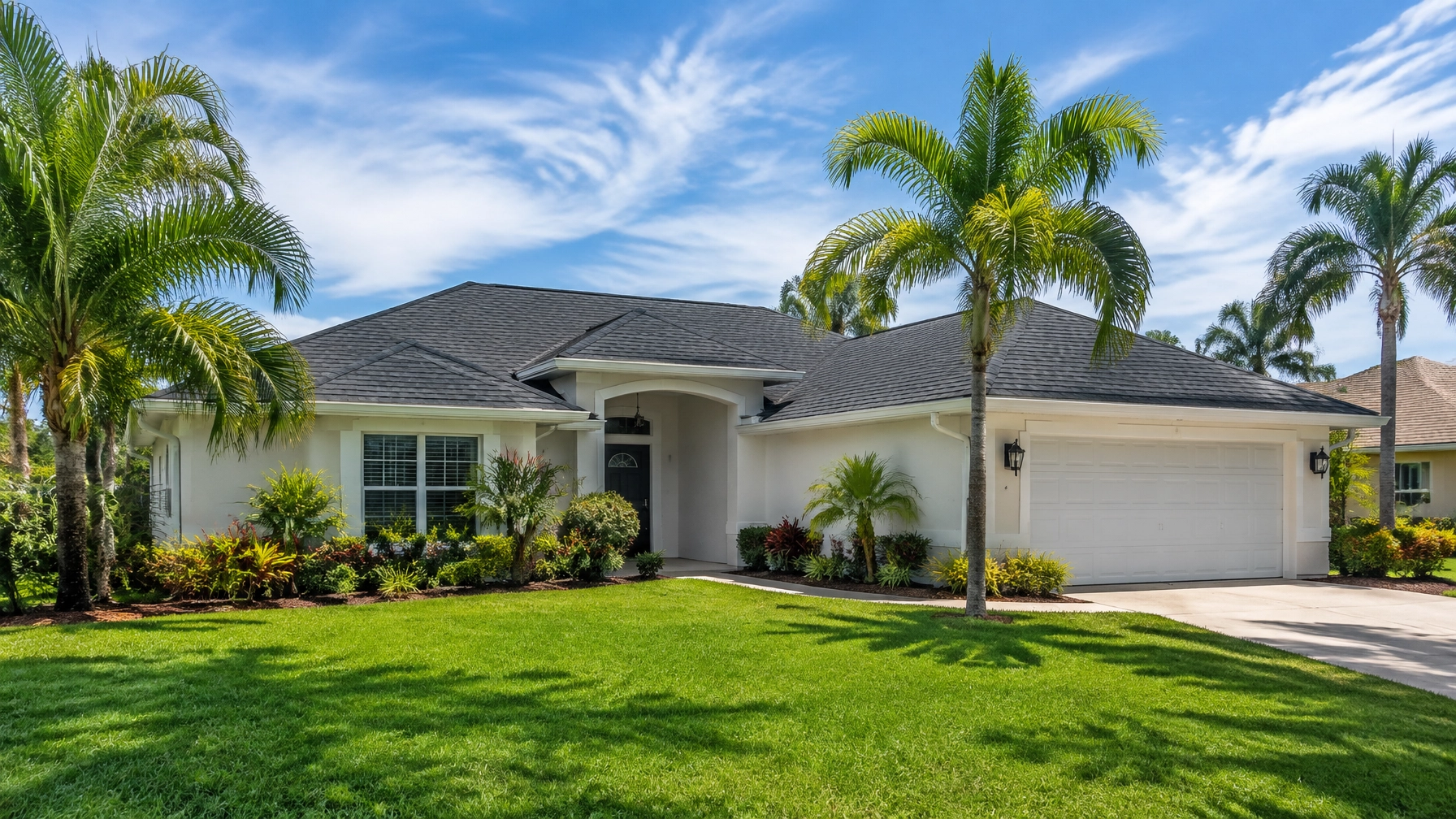
Tampa starts Wednesday, September 16, with muggy upper-70s temperatures, isolated showers, and a noticeable wind shift. By afternoon, north winds will push drier air into the area, with gusts reaching 25–30 mph and a high near 90°F.
That short stretch of lower humidity is helpful: but it does not remove Tampa’s long-term roofing risks. Gulf wind, storm surge, salt air, ultraviolet exposure, and repeated heat cycles all affect roof durability.
For Tampa homeowners, the practical question is not only, “Will it rain today?” It is also:
- Can your roof resist hurricane-force design pressures?
- Are fasteners and flashings corroding?
- Is your roof old enough to need replacement planning?
- What would a new roof cost before the next storm?
Here is the weather outlook and the roof-planning information to use this week.
Current Tampa Conditions: North Winds, Falling Dew Points, and a 90°F High
The Tampa Bay 28 / WFTS forecast calls for:
- A muggy start in the upper 70s
- A few isolated showers early
- A wind shift toward the north
- Drier air arriving during the afternoon and evening
- Isolated rain chances around 20–30%
- East-to-west flow across the Tampa Bay area
- North wind gusts of approximately 25–30 mph
- A high temperature near 90°F
- A Small Craft Advisory on Gulf waters
The falling dew points should make the afternoon feel less oppressive, even though temperatures remain hot. For roofing, the wind is the more immediate concern.
A 25–30 mph gust is not a hurricane. It can still expose weak points, including:
- Loose or lifted shingles
- Aging ridge caps
- Poorly secured flashing
- Unsealed pipe boots
- Damaged soffit or fascia
- Debris near roof valleys and drains
If you have visible roof damage, avoid climbing onto the roof during windy conditions. Use binoculars from the ground or schedule a professional inspection.
Thursday and Friday: Lower Humidity, Similar Heat
Thursday and Friday should remain relatively favorable for outdoor roof planning:
- Highs in the upper 80s to low 90s
- Rain chances near 20–30%
- Lower humidity than the recent muggy pattern
- Fewer widespread storms than typical mid-September conditions
This is a useful window to:
- Photograph your roof and exterior elevations
- Clear leaves from gutters
- Check attic access areas for water stains
- Review your insurance documents
- Get a replacement budget before storm activity increases
The weekend pattern is less settled.
Weekend Outlook: Moisture Returns and Storm Chances Increase
Moisture is expected to return over the weekend. Shower and thunderstorm chances should rise, with a potential for stronger storms as a low-pressure area approaches.
That does not mean every Tampa home will see severe weather. It does mean the risk profile becomes less predictable. Strong thunderstorms can produce:
- Sudden wind gusts
- Wind-driven rain
- Lightning
- Falling branches
- Localized roof leaks
- Brief tornadoes within broader storm bands
Complete exterior checks before the weekend if possible. Small roof defects become more expensive when rain gets beneath shingles, underlayment, or flashing.

2026 Hurricane Season: Below Normal Does Not Mean No Risk
NOAA and the Climate Prediction Center’s 2026 outlook gives the Atlantic season a 75% chance of being below normal, with an expected range of:
- 7–13 named storms
- 2–6 hurricanes
- 0–2 major hurricanes
The season passed its climatological peak on September 10, but Gulf Coast homeowners should not treat that date as a safety cutoff. Risk shifts later in the season toward the:
- U.S. East Coast
- Gulf of Mexico
- Caribbean
A very-low-chance watch area may develop in the northeastern Gulf between September 17 and 19. That is not a storm prediction or a reason to panic. It is a reminder to monitor the National Hurricane Center and local National Weather Service Tampa Bay forecasts.
Atlantic hurricane season continues through November 30.
A below-normal season can still produce a damaging storm for one specific neighborhood. Roof preparation should be based on your property’s condition: not only the seasonal storm count.
Tampa’s Wind Code: 140–160 mph Design Conditions
Tampa Bay is generally within a 140–160 mph ultimate design wind speed zone, depending on the exact location and code map used.
Under Florida Building Code Section 1609.3, residential structures must be designed for site-specific wind pressures based on the applicable ultimate wind speed. Roof components are also evaluated under standards based on ASCE 7, which addresses wind loads on structural and building components.
This does not mean your roof experiences 160 mph winds during an ordinary storm. It means the building code establishes design pressures intended to help the structure resist extreme wind events.
Important Tampa considerations include:
- Roof-to-wall connections
- Properly fastened shingles or panels
- High-wind-rated ridge caps
- Sealed roof edges
- Secure flashing
- Impact-rated openings in wind-borne debris areas
- Correct installation over the existing deck
A roof can use high-quality materials and still fail if installation is incomplete or fasteners are improperly placed.
Why Tampa’s Hurricane History Still Matters
Tampa Bay’s long hurricane record shows why preparation cannot focus only on direct landfalls.
The 1921 Tampa Bay hurricane, a Category 3 storm, remains the area’s benchmark direct major hurricane event. Historical accounts document destructive winds and approximately 10–11 feet of storm surge in parts of the bay.
More recently:
- Hurricane Ian in 2022 affected southwest Florida and demonstrated how regional storm conditions can vary dramatically across the state.
- Hurricane Helene in September 2024 produced record storm surge impacts around Tampa Bay and other Gulf Coast communities.
- Hurricane Milton in October 2024 made landfall near Siesta Key, causing widespread roof damage and tornadoes across Florida.
The lesson is straightforward: Tampa roofs face more than one type of storm threat. Wind, surge, tornadoes, rain, debris, and saltwater exposure can all affect the same property.
The National Weather Service Tampa Bay historical hurricane information provides additional context on the region’s past storms.
Salt Air, Humidity, UV, and Heat: Tampa’s Everyday Roof Stress
Tampa’s climate can shorten the service life of roof components even when no hurricane makes landfall.
Salt air and humidity
Salt-laden air can accelerate corrosion on:
- Metal flashing
- Exposed fasteners
- Drip edges
- Roof vents
- HVAC-related roof penetrations
- Gutters and downspouts
Homes closer to Tampa Bay, the Gulf beaches, and open waterfront areas generally face more salt exposure.
Ultraviolet and thermal stress
Long hot seasons expose asphalt shingles to strong ultraviolet radiation. Daily expansion and contraction can gradually contribute to:
- Brittle shingles
- Granule loss
- Cracking
- Curling edges
- Seal-strip deterioration
A roof may look acceptable from the driveway while its most vulnerable details are already aging.

Tampa Roof Replacement Costs in 2026
Tampa roofs commonly measure between 1,500 and 3,000 square feet, or roughly 15–30 roofing squares. A full replacement often falls between $12,000 and $30,000, depending on:
- Roof size
- Pitch and accessibility
- Number of roof planes
- Tear-off requirements
- Deck repairs
- Material choice
- Local labor
- Hurricane-rated installation details
Common material choices
- Architectural shingles (Popular): Approximately $9,000–$15,000 for many average-sized roofs. Good appearance and broad availability.
- Metal roofing (Premium): Often $20,000–$30,000 or more. Long service life, strong wind performance when properly installed, and good solar reflectivity.
- Synthetic roofing (Premium): Commonly $16,000–$32,000, depending on the product and roof complexity.
- Roof coatings (Budget): Approximately $6,000–$7,500 for suitable low-slope applications. Not appropriate for every roof or every existing material.
These are planning ranges, not final contractor bids. A satellite measurement can provide a strong starting point, while an in-person inspection is still important for hidden deck damage, ventilation issues, and storm-related defects.
Review roofing material options before comparing quotes.
Tampa Storm-Resilience Checklist
Use this checklist before the next major weather event:
- Inspect shingles for missing, cracked, or lifted areas.
- Check ridge caps and roof edges from ground level.
- Remove branches and debris from the roof and gutters.
- Confirm that downspouts direct water away from the foundation.
- Look for rust around exposed metal components.
- Check the attic for stains, damp insulation, or daylight.
- Photograph existing conditions for your records.
- Confirm your insurance deductible and roof-age requirements.
- Ask contractors about high-wind installation methods.
- Do not sign an emergency contract without reviewing the scope and price.
If your roof is more than 15–20 years old, planning ahead is usually less expensive and less stressful than waiting for a leak during storm season.
Get a Tampa Roof Estimate in 60 Seconds
You can get a free starting price before scheduling contractor visits.
Get My Roof Estimate Now uses satellite imagery to measure your roof’s size, pitch, and complexity. In about 60 seconds, you can see:
- Estimated roof size
- Low, middle, and high replacement ranges
- Material pricing for multiple options
- Tampa-area cost factors
- A path to verified, licensed, and insured local contractors
There is no credit card requirement and no obligation to hire anyone. Satellite measurements are typically 90–95% accurate, helping you budget before requesting detailed on-site proposals.
Tampa’s north wind shift and drier air make Wednesday through Friday a practical planning window. Get your address-specific estimate now, understand your likely replacement range, and prepare before the next round of Gulf weather arrives.
Leave a Reply