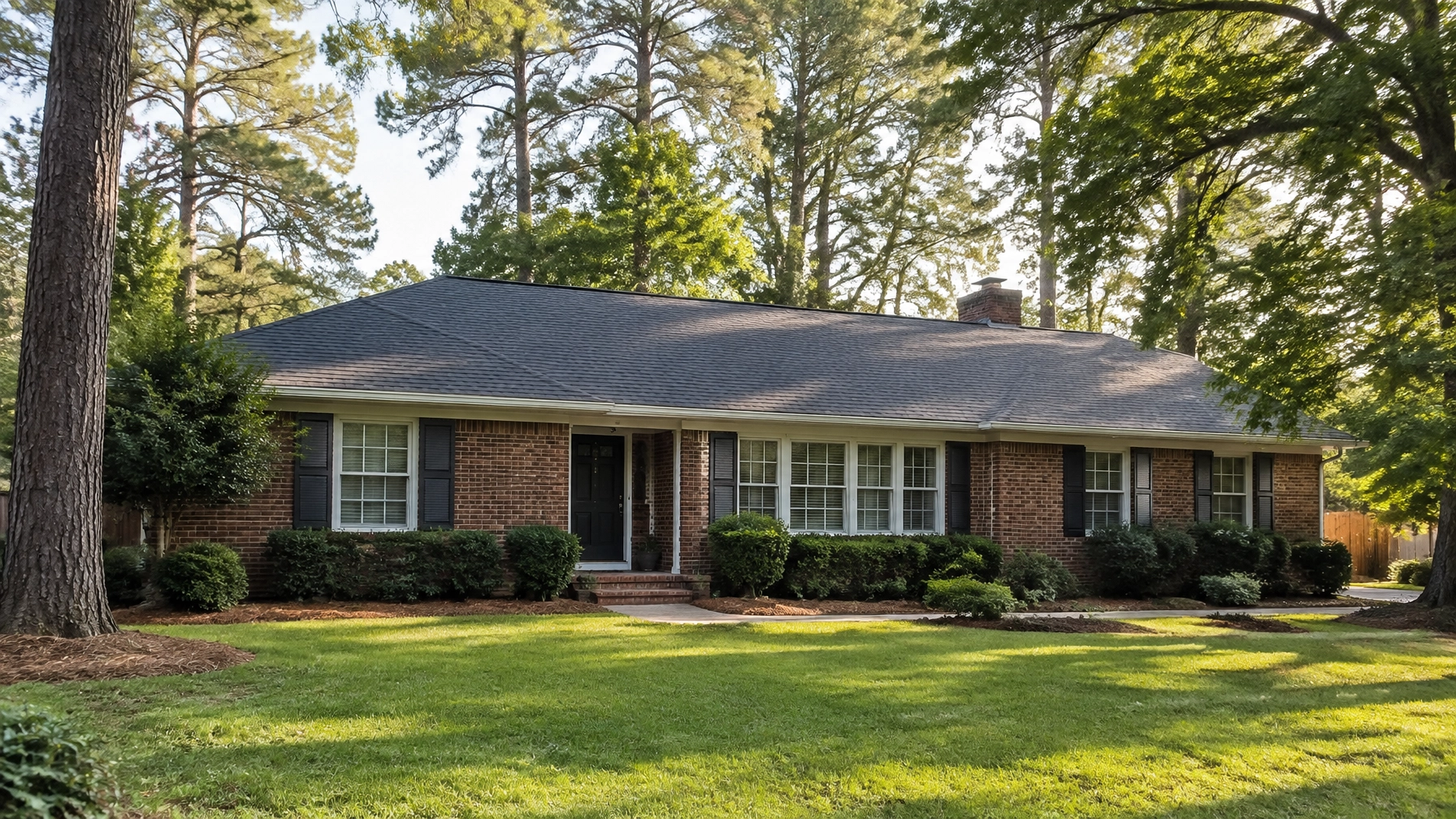
Columbia: better known as Soda City: is becoming a serious center for geospatial technology. From University of South Carolina GIS research to drone mapping, remote sensing, and GeoAI, the Midlands is developing better ways to understand physical structures from above.
That matters to homeowners because roof replacement estimates are becoming faster and more property-specific.
Instead of waiting days for multiple contractors to visit, homeowners can use satellite imagery to estimate roof size, pitch, and complexity in about 60 seconds. For a typical Columbia project, that can mean an immediate planning range of approximately $8,900 to $16,302 for an architectural shingle replacement, depending on roof size, labor, materials, and repairs.
Why Columbia Is a Natural Test Market for Roof Technology
The Midlands has a distinctive housing profile:
- Brick ranch and colonial homes built primarily from the 1970s through the 1990s
- Common roof areas between 1,500 and 3,000 square feet
- Mature pine and oak canopies that shade roof planes
- Heavy leaf and branch debris in valleys and gutters
- Hot summers, intense rainfall, thunderstorms, and occasional hail
These factors make roof measurement more complicated than simply looking at a home’s interior square footage.
A 2,000-square-foot house does not necessarily have a 2,000-square-foot roof. Pitch, overhangs, attached garages, dormers, valleys, and multiple roof sections all affect the final roof area.
Geospatial tools help convert that complexity into usable measurements.
USC’s Geospatial Ecosystem Supports Better Measurements
The University of South Carolina has built a strong foundation in GIS, remote sensing, and geospatial intelligence.
USC provides enterprise access to the ArcGIS platform, supporting spatial analysis, mapping, imagery, and data visualization across campus. Its geography programs also include remote sensing, drone mapping, photogrammetry, and spatial modeling.
The university’s GEOINT Certificate Program is aligned with the U.S. Geospatial Intelligence Foundation. Coursework includes GIS, cartography, remote sensing, LiDAR, and digital surface mapping: technical disciplines that support everything from infrastructure planning to property analysis.
USC’s Center for GIScience and Geospatial Big Data also works with:
- GeoAI and spatial data science
- Satellite and aerial imagery
- Remote sensing
- 3D modeling
- LiDAR and photogrammetry
- Hazard and environmental analysis
The broader Columbia ecosystem includes geospatial and mapping organizations such as ZillionInfo, Equinox Analytics, ND3 Inc., Aloft Geographic, and Beitz and Daigh Geographics. Their specialties range from GeoAI and object-based image analysis to commercial drone mapping, LiDAR, and Esri-based GIS services.
The result is a local technology environment that understands how to measure and interpret the built environment from above.

From GPS-Denied Drones to Roof Measurement
USC’s autonomous systems work shows how quickly aerial measurement technology is advancing.
The reported CAELUS project, developed through the university’s Center for Industry Solutions, focuses on low-cost autonomous drone operation in environments where GPS signals are unreliable or unavailable. That kind of research is relevant to structure inspection, mapping, and infrastructure assessment.
USC has also recently received a patent for a spectroscopy system that combines base stations and unmanned aerial vehicles for atmospheric monitoring. While that application is different from roof measurement, it demonstrates the same underlying trend: combining sensors, positioning systems, and aerial platforms to gather more precise information.
Columbia also hosts the South Carolina Interagency Drone Users Consortium’s annual government drone symposium. The event brings together public agencies, technology providers, and researchers working with unmanned aircraft, mapping systems, thermal sensors, and procurement standards.
For homeowners, the takeaway is simple: the technology used to map roads, inspect bridges, and monitor environmental conditions is also improving how roofs can be measured.
What Satellite Roof Measurements Actually Evaluate
A satellite-powered roof estimate typically analyzes several property-specific variables:
Roof size
Roofing is priced in squares, with one square equal to 100 square feet of roof surface. Satellite imagery can identify the roof footprint and calculate the total surface area.
Roof pitch
A steeper roof has more surface area than a low-slope roof covering the same floor plan. It also requires additional labor and safety equipment.
Roof complexity
Multiple planes, valleys, dormers, skylights, chimneys, and attached structures can increase installation time and material waste.
Regional pricing
Labor rates, disposal costs, permits, material availability, and contractor demand vary by location. A Columbia estimate should use Midlands pricing rather than a national average.
Our roof cost calculator can provide a general planning range. For a property-specific estimate, Get My Roof Estimate Now uses satellite imagery to measure the actual roof and returns results in under a minute.
The estimate is free, requires no credit card, and provides low-middle-high pricing ranges. Measurements are designed to be accurate within inches, generally reaching approximately 90%–95% accuracy before an on-site contractor confirms the final scope.
Columbia Roof Replacement Costs in 2026
For architectural shingles in the Columbia area, homeowners can use these planning benchmarks:
- Architectural shingles: approximately $350–$475 per square for basic replacement planning
- Installed architectural shingle projects: approximately $430–$760 per square
- Typical full replacement: about $8,900–$16,302 for many standard homes
- Larger or complex roofs: potentially higher, especially with steep pitches, multiple layers, or decking repairs
A quote should always show the roof’s square count. For example, a $12,000 proposal means something very different for a 20-square roof than for a 30-square roof.
Ask each contractor to identify:
- Total roof squares
- Tear-off and disposal charges
- Underlayment and flashing
- Ventilation work
- Decking replacement allowances
- Material grade and warranty
- Labor and workmanship coverage
- Permit costs
You can also compare asphalt shingles, metal, tile, and slate through our roofing materials guide.

Recent Storm Activity Makes Roof Data More Valuable
Storm history is another reason Columbia homeowners should document roof condition carefully.
On September 5, 2026, radar-based hail analysis estimated hail up to approximately one inch near Columbia. An official report from Columbia recorded smaller hail, illustrating why radar estimates and ground reports do not always match at a specific address.
Around September 11, severe thunderstorm warnings in the Midlands referenced potential 60 mph wind gusts, while additional hail activity was reported in nearby areas.
That does not mean every roof sustained covered damage. It does mean homeowners should inspect for:
- Bruised or missing shingles
- Exposed matting
- Damaged flashing
- Granules collecting in gutters
- Cracked ridge caps
- Loose vents or pipe collars
- Fallen branches or punctures
Under a standard HO-3 policy, sudden hail damage is commonly covered, subject to the policy’s exclusions, deductible, and roof settlement terms. Some policies pay replacement cost, while others settle older roofs on an actual cash value basis.
Before filing:
- Check whether your policy uses RCV or ACV for roof damage.
- Confirm your wind and hail deductible.
- Photograph the roof, gutters, siding, and nearby property.
- Record the storm date.
- File within the policy’s deadline, which is often about one year.
- Ask your insurer what documentation is required.
A satellite estimate can help establish the roof’s size and replacement budget. It does not replace an insurance adjuster’s coverage decision or a contractor’s physical inspection.
Protect Your Resale Value With the Right Roof
A new roof can influence more than immediate repair costs. It also affects buyer confidence, inspection results, curb appeal, and resale value.
National Cost vs. Value data places the typical asphalt shingle roof replacement ROI around 60%–70%, although the actual result depends on project cost, neighborhood standards, material selection, and market timing.
For Columbia homes, the best roof for home value is usually the roof that:
- Fits the architectural style
- Uses a material appropriate for the climate
- Has clean, consistent installation
- Includes proper ventilation and flashing
- Comes with clear documentation and transferable warranties
- Resolves visible storm or age-related concerns
A high-quality architectural shingle roof is often the practical choice for a brick ranch or colonial. Standing-seam metal may be a better long-term fit for a modern home or a homeowner prioritizing longevity and energy performance.
Roof replacement ROI is not just about recovering a percentage of the installation cost. A new roof can also reduce buyer objections, prevent inspection delays, and strengthen roof curb appeal home value.

Get Soda City Pricing Before Scheduling Contractor Visits
Columbia’s satellite and geospatial technology community is helping make property analysis faster and more precise. Homeowners can use that same technology to understand their roof before committing to appointments or proposals.
Start with the address. In about 60 seconds, you can receive a free estimate based on your roof’s measured size, pitch, complexity, material choice, and regional pricing.
Use the information to plan, compare licensed contractors, evaluate storm damage, and make a more informed decision about roof replacement resale value: without pressure and without a credit card.
Planning a roof replacement in Columbia or the Midlands? Get your free satellite-powered estimate at Get My Roof Estimate Now.
Remember to verify that any contractor you hire holds the appropriate South Carolina residential builder license or roofing specialty registration. Projects above $5,000 may involve additional licensing and bond requirements. You can confirm credentials through the South Carolina Residential Builders Commission.
Leave a Reply