Author: James Turner

  • 2026 Roof Replacement Cost in Athens, GA: Classic City Pricing, Permit Rules & Storm-Ready Tips

    2026 Roof Replacement Cost in Athens, GA: Classic City Pricing, Permit Rules & Storm-Ready Tips

    For a typical 2,000-square-foot home, the Athens, GA roof replacement cost in 2026 is approximately:

    Roofing option 2026 installed cost
    3-tab shingles (Budget) $7,000–$10,000
    Architectural shingles (Popular) $9,000–$17,200
    Class 4 impact-resistant shingles 10%–20% above architectural shingles
    Standing-seam metal (Premium) $18,000–$35,000+

    Most architectural shingle projects land between $10,500 and $16,500, or about $4.50–$8.00 per square foot. Remember that Athens homes often have larger measured roof areas: approximately 32 squares, with one square equal to 100 square feet. Your actual quote may therefore exceed a simple 2,000-square-foot home estimate.

    2026 Material Pricing in Athens

    Asphalt shingles increased approximately 4%–8% early in 2026, followed by manufacturer increases of roughly 6%–9% beginning June 1 from suppliers including GAF, Owens Corning, and CertainTeed. Metal pricing is also affected by Section 232 steel and aluminum tariffs.

    Roof pitch, valleys, dormers, decking repairs, tear-off requirements, ventilation, and chimney or skylight flashing can move your final price significantly.

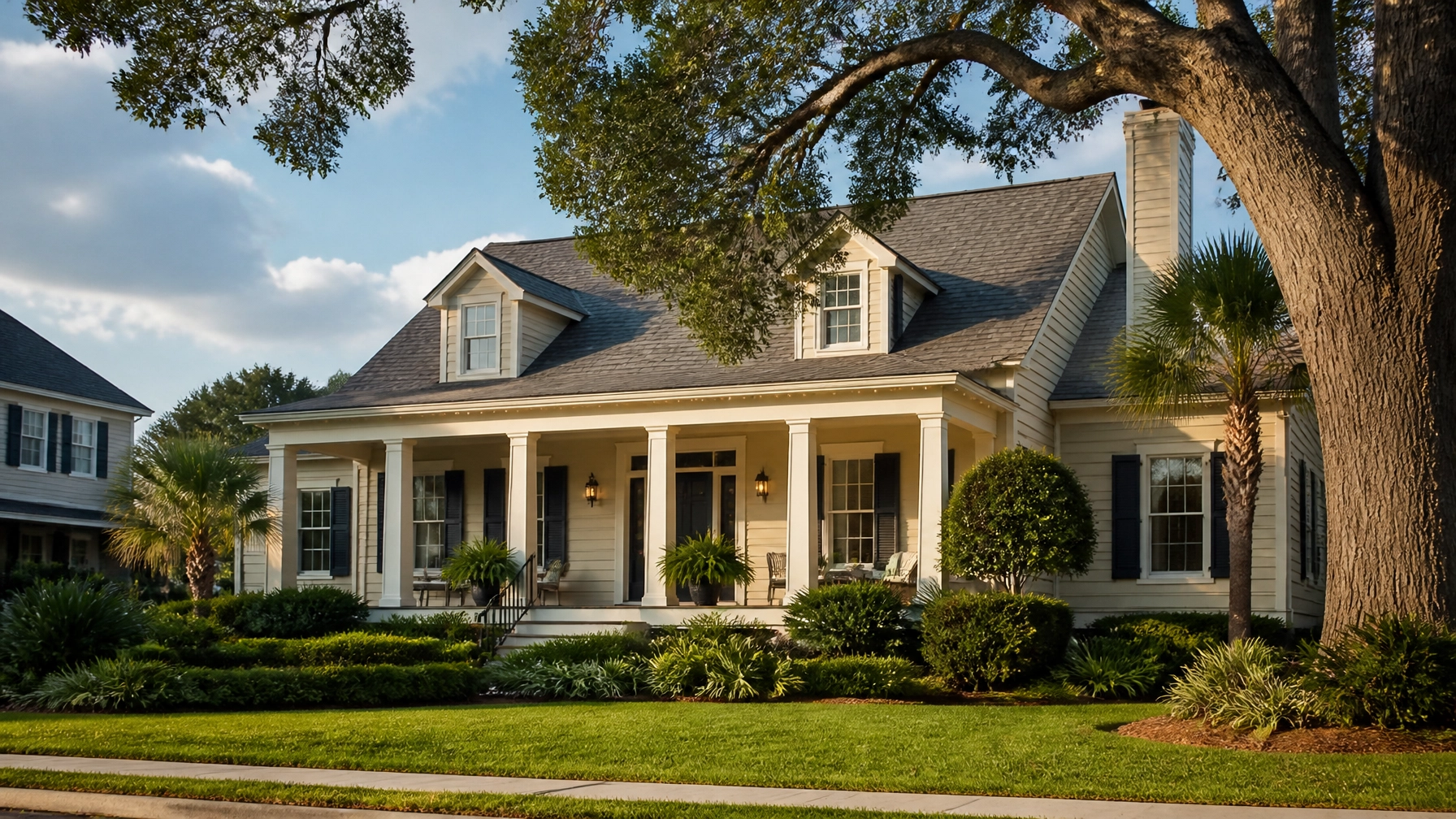
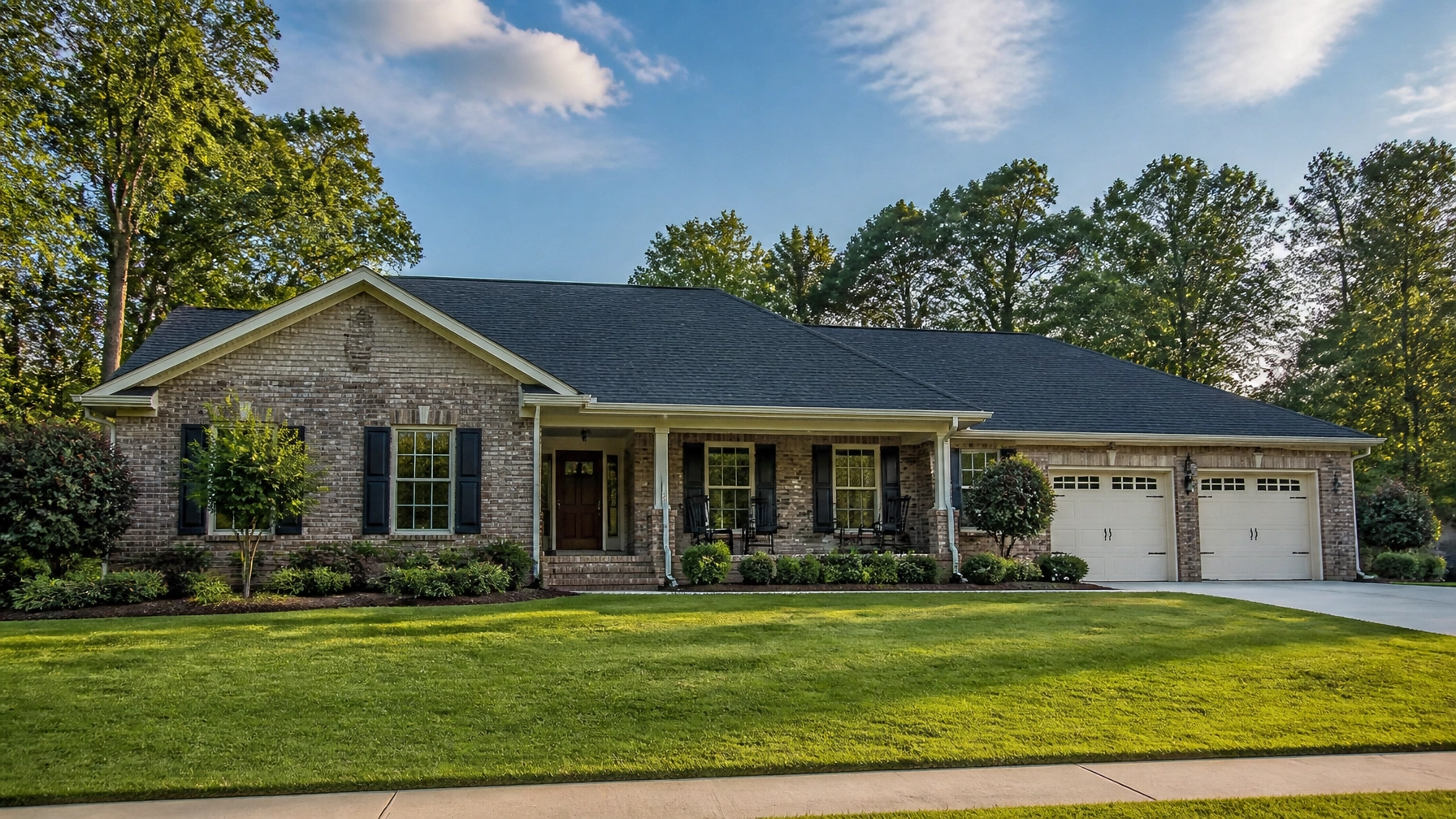
    New architectural shingle roof on a ranch-style Athens home

    Why Athens Roofs Need Storm-Ready Materials

    Athens has a humid subtropical climate with approximately 46–48 inches of rain annually. Common local concerns include:

    • Gloeocapsa magma algae streaks on north-facing slopes, sometimes appearing within 7–10 years
    • UV exposure and granule loss
    • Freeze-thaw cycling
    • Mature oak limbs and tree damage
    • Severe hail and wind events associated with the broader Dixie Alley region

    Hail and wind damage reports followed storms on March 7, July 10, July 19, and August 28, 2026. A July 24 wind event also reportedly caused downed trees and power lines.

    Class 4 impact-resistant shingles cost more but may reduce hail damage risk. Ask your insurer whether your policy offers a wind or hail premium credit. Georgia homeowners commonly see carrier-specific discounts ranging from 5%–30%, while 1%–2% wind or hail deductibles are common. Confirm eligibility and documentation requirements before installation.

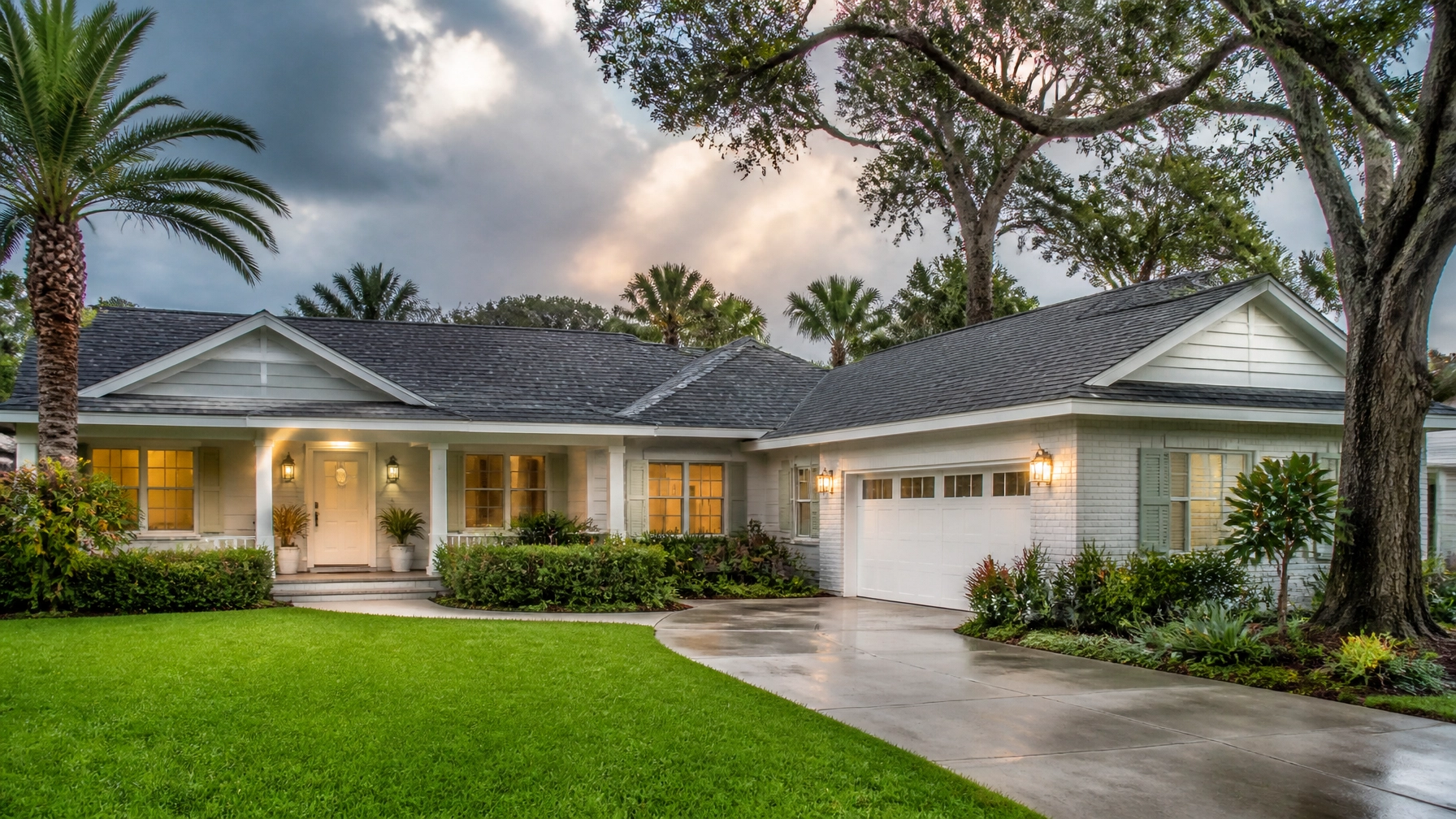
    Storm-ready Class 4 roofing details on a Georgia home

    Athens-Clarke County Permit Rules

    A full roof replacement generally requires a building permit from Athens-Clarke County Building Permits & Inspections. Permit fees are valuation-based and may range from approximately $85 to $850.

    You can apply:

    Plan for approximately one to two weeks for processing, followed by a required final inspection.

    Properties in historic areas: including Five Points, Boulevard, Cobbham, Dearing, and Downtown: may require a Certificate of Appropriateness before material or color changes are approved.

    The 2024 International Residential Code with Georgia amendments applies beginning January 1, 2026. Important roofing provisions include a 115-mph design wind speed, ASTM D7158 Class G shingles, and a six-nail fastening pattern.

    Georgia does not issue a statewide roofing license, but residential contractors performing work above $2,500 generally need the appropriate contractor license. Verify credentials through the Georgia Secretary of State, and confirm the contractor has an Athens-Clarke County occupational tax certificate.

    New Roof ROI in Athens, GA

    A replacement roof can return approximately 60%–70% of its cost with asphalt shingles and up to 80% with metal, depending on installation quality and market conditions. Athens’ median home value is roughly $326,000–$374,000, making roof condition important during inspections, appraisals, and resale.

    Local companies homeowners may research include Red Roofing & Gutters, Accent Roofing Service, Dr. Roof, Cecil Jennings Construction, and Perimeter Roofing. Compare certifications, insurance, warranties, references, and written scopes: not just price.

    How to Control Your 2026 Roofing Cost

    • Get at least three written quotes
    • Keep a 5%–15% contingency for decking and flashing repairs
    • Consider algae-resistant, copper- or zinc-infused shingles
    • Compare Class 4 shingles with potential insurance savings
    • Replace before peak severe-weather season
    • Avoid storm chasers requesting large upfront payments
    • Measure your roof before scheduling contractor visits

    Get an accurate starting point with a free, no-credit-card satellite estimate from Get My Roof Estimate Now. Your roof is measured from satellite imagery, and you receive location-based pricing in approximately 60 seconds. You can also compare options with the roof cost calculator.

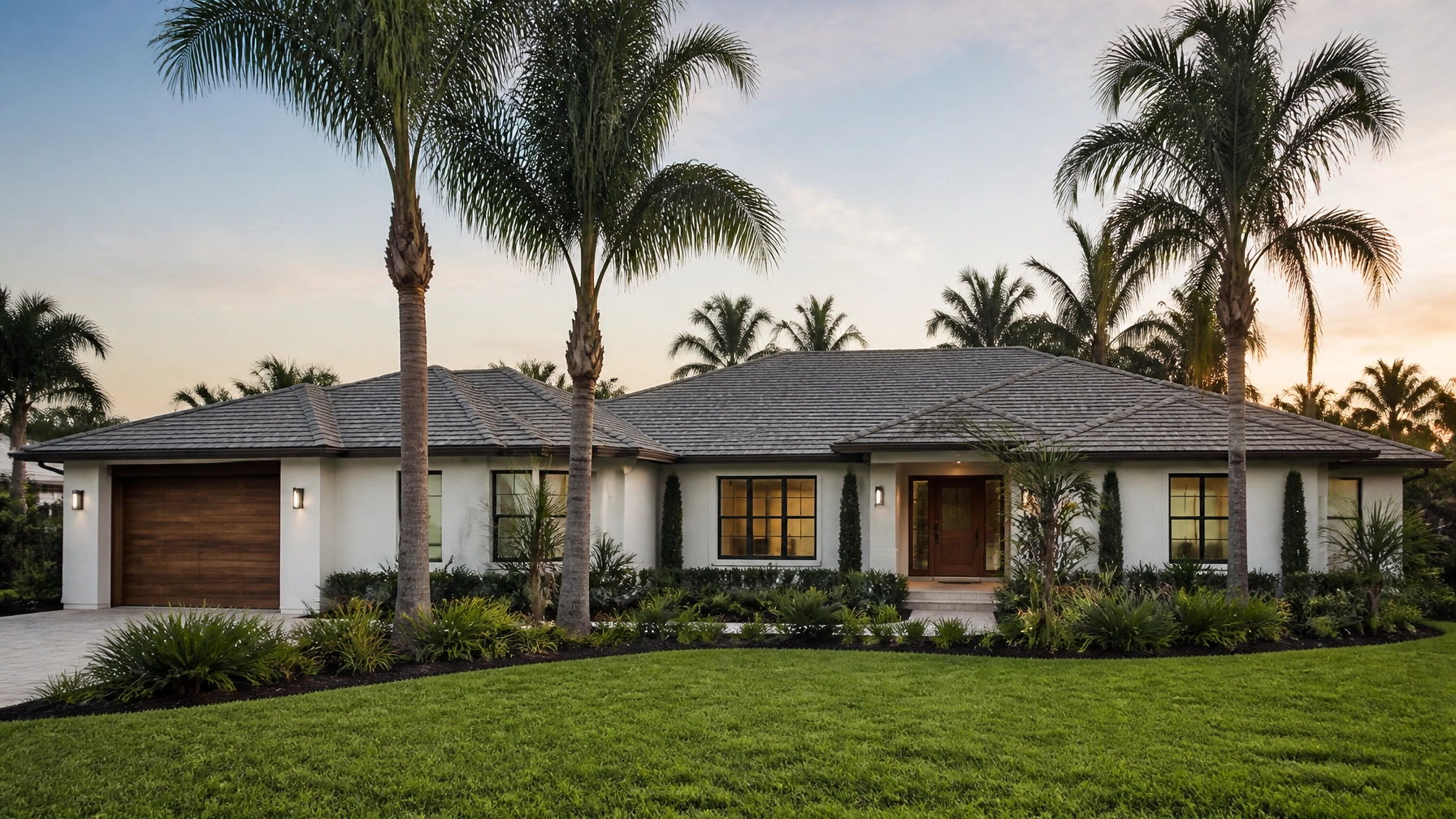
    Modern Athens home with a standing-seam metal roof

  • Daily Weather Blitz – Slot 5: Savannah, GA : September 8, 2026: Gusty 25 mph Coastal Winds, a Coastal Flood Advisory & What the Hostess City’s Salt Air, Humidity, and Hurricane-Season Weather Do to Your Roof’s Durability

    Daily Weather Blitz – Slot 5: Savannah, GA : September 8, 2026: Gusty 25 mph Coastal Winds, a Coastal Flood Advisory & What the Hostess City’s Salt Air, Humidity, and Hurricane-Season Weather Do to Your Roof’s Durability

    Savannah homeowners are facing a breezy, humid Tuesday with coastal wind gusts above 25 mph, isolated showers, and a Coastal Flood Advisory from 5–9 PM. The evening high tide is expected around 7 PM, when water levels near Fort Pulaski could reach Minor Flood Stage.

    For roofing, this is a useful reminder: Savannah’s salt air, high humidity, intense sun, and hurricane-season weather create year-round stress on roofing systems.

    Today’s forecast calls for:

    • High temperatures in the mid-to-upper 80s
    • Northeast to easterly winds with gusts of 25 mph or higher near the coast
    • Isolated coastal showers, mainly from midday through afternoon
    • 3–4 foot waves and a high rip current risk at the beach
    • Coastal flooding concerns during the evening high tide

    The National Weather Service Savannah forecast also shows higher rain chances Wednesday, with more southeasterly moisture, upper-80s temperatures, and gusts around 20–25 mph.

    Savannah Weather Outlook: Tuesday Through the Weekend

    Tuesday, September 8: Wind, Showers, and Coastal Flooding

    Today’s breezy conditions are not hurricane-force weather, but gusts over 25 mph can still expose weak points on an aging roof.

    Pay particular attention to:

    • Loose or lifted shingles
    • Rusting drip edge and flashing
    • Damaged vent boots
    • Clogged gutters and downspouts
    • Standing water on low-slope roof sections
    • Loose metal panels or exposed fasteners

    The Coastal Flood Advisory from 5–9 PM coincides with the evening high tide near 7 PM. Fort Pulaski may approach Minor Flood Stage. Floodwater does not need to cover a roof to create problems. It can back up around low roof edges, overflow clogged gutters, and saturate roof-to-wall transitions.

    At the beach, 3–4 foot waves and high rip current risk are also expected. Homeowners should avoid walking on wet roofs or attempting inspections during windy conditions.

    Wednesday: More Moisture and Higher Rain Chances

    Wednesday brings a stronger southeasterly moisture flow, upper-80s temperatures, and a higher chance of showers and thunderstorms. Wind gusts may reach 20–25 mph.

    This pattern can produce wind-driven rain. Even a small flashing defect can allow water into the attic or wall assembly when rain is pushed sideways beneath shingles, around chimneys, or behind siding.

    Thursday Through the Weekend: Low 90s and Daily Storm Potential

    Lower 90s return from Thursday into the weekend. Afternoon showers and thunderstorms remain possible each day.

    For Savannah roofs, repeated wetting and drying cycles matter. Moisture enters small defects, heat expands materials during the afternoon, and overnight humidity slows drying. Over time, this accelerates deterioration in shingles, wood decking, sealants, fasteners, and flashing.

    The National Hurricane Center currently reports no tropical cyclones in the Atlantic basin. That is good news, but September remains near the climatological peak of hurricane season. Use this quieter period to review your hurricane plan, secure outdoor items, and check your roof before the next threat develops.

    New coastal Georgia home with algae-resistant architectural shingles and corrosion-resistant flashing

    How Savannah’s Coastal Climate Shortens Roof Life

    Savannah roofs deal with more than ordinary rain and sunshine. Coastal exposure changes how roofing materials age.

    1. Salt Air Corrodes Metal Components

    Salt carried inland from the Atlantic and surrounding marshes can settle on:

    • Flashing
    • Drip edge
    • Roof vents
    • Gutters
    • Fasteners
    • Metal panels
    • Chimney caps

    Salt deposits hold moisture against metal surfaces. Over time, this promotes corrosion and weakens the parts that keep the roof watertight.

    The roofing field may still look acceptable while the metal components underneath are deteriorating. That is why coastal inspections should examine flashing, fasteners, and penetrations: not just visible shingles.

    Use corrosion-resistant materials such as:

    • Stainless steel or high-quality hot-dipped galvanized fasteners
    • Aluminum or stainless flashing where appropriate
    • Coastal-rated coatings on metal roofing
    • Properly sealed pipe boots and roof penetrations

    2. Humidity Encourages Algae and Moisture Damage

    Savannah humidity frequently reaches 74% or higher, especially during the warm season. Warm, damp conditions support algae growth, including Gloeocapsa magma, the organism associated with black streaks on asphalt shingles.

    Algae is often cosmetic at first, but persistent moisture can contribute to:

    • Granule loss
    • Surface discoloration
    • Moisture retention
    • Wood decking deterioration
    • Mold or rot in poorly ventilated attic assemblies

    Algae-resistant architectural shingles with copper-containing granules can slow black streaking and help preserve curb appeal.

    Balanced attic ventilation is equally important. Intake vents and exhaust vents should work together to release heat and moisture. Poor ventilation can leave the underside of the roof deck damp while increasing shingle temperatures.

    3. UV Exposure and Heat Make Shingles Brittle

    Savannah’s strong sun and long warm season accelerate asphalt aging. UV radiation breaks down roofing binders, while repeated heat cycles cause expansion and contraction.

    Over time, homeowners may notice:

    • Curling or cracked shingles
    • Missing granules in gutters
    • Brittle tabs
    • Exposed fiberglass mat
    • Deteriorated seal strips

    In Savannah’s climate, asphalt shingle lifespans can run 15–25% shorter than manufacturer ratings. A product marketed for 30 years should not automatically be expected to deliver 30 years of service in a coastal environment.

    Realistic Roofing Lifespans in Savannah

    Material selection and installation quality matter, but climate exposure also sets realistic expectations.

    Architectural Shingles (Popular)

    Architectural shingles typically last 20–30 years in Savannah when properly installed and maintained. Coastal exposure, poor ventilation, algae, and storm damage can push performance toward the lower end.

    Choose:

    • Algae-resistant granules
    • High-wind-rated products
    • Enhanced fastening patterns
    • Corrosion-resistant nails and flashing
    • Class 4 impact-rated options when available

    3-Tab Shingles (Budget)

    Three-tab shingles may last only 12–18 years in Savannah’s hot, humid, coastal conditions. They provide less dimensional strength and are generally not recommended for homeowners planning a long-term roof replacement.

    The lower upfront cost can be offset by earlier replacement and more frequent storm repairs.

    Standing Seam Metal (Premium)

    Standing seam metal roofing can last approximately 40–70 years with the correct substrate, coating, installation, and maintenance.

    For coastal Georgia, concealed-fastener systems are usually preferable to exposed-fastener panels. Exposed screws and washers are more vulnerable to corrosion and seal failure.

    Near saltwater or marsh exposure, ask whether aluminum or a marine-rated coated steel system is more appropriate for the property.

    Modern Savannah-area home with a standing seam metal roof beside coastal marsh landscaping

    2026 Savannah Roof Replacement Cost Guide

    The following are planning ranges for a typical 2,000-square-foot Savannah home. Actual roof surface area can be larger than the home’s living area because of pitch, overhangs, garages, porches, and roof complexity.

    Roofing system 2026 planning range Category
    Architectural shingles $4.50–$7.00 per sq. ft.; about $9,000–$17,000 Popular
    Screw-down metal with exposed fasteners About $14,000–$22,000 Mid-range
    Standing seam metal About $18,000–$38,000 Premium

    These figures can change based on tear-off requirements, roof pitch, decking repairs, valleys, dormers, permits, ventilation work, coastal-grade materials, and contractor availability.

    Use the company’s roof cost calculator for a general planning range, then compare it with a property-specific estimate.

    Practical Roof Protection Steps for Savannah Homeowners

    Before the next round of daily storms:

    1. Check flashing and penetrations. Look for rust, lifted edges, cracked sealant, or gaps around chimneys, vents, and skylights.
    2. Clean gutters and downspouts. Clogged drainage increases overflow and ponding risk during heavy showers.
    3. Verify attic ventilation. Excess heat and trapped moisture shorten shingle life.
    4. Inspect after strong weather. Look for missing shingles, exposed fasteners, dented metal, granule piles, and ceiling stains.
    5. Do not pressure-wash asphalt shingles. Aggressive cleaning can remove granules. Use a qualified roof professional for algae treatment.
    6. Review hurricane preparations. Secure outdoor items and know where to obtain official evacuation and storm information.
    7. Document the roof’s condition. Photos, invoices, warranties, and permits can help with insurance, resale, and future maintenance.

    Professional roofer inspecting flashing and gutters on a Savannah-area home after a storm

    Does a New Roof Improve Home Value?

    A roof replacement rarely returns every dollar through resale value, but it can protect marketability. National remodeling benchmarks commonly show that homeowners recover a substantial portion of replacement costs, often around 55–70%, depending on material, home value, local demand, and project quality.

    In Savannah, a documented roof replacement may also help by:

    • Reducing buyer inspection concerns
    • Limiting seller concessions
    • Supporting insurance eligibility
    • Improving curb appeal
    • Providing better wind and moisture resistance

    Architectural shingles usually offer the strongest short-term cost-to-value balance. Standing seam metal can make more sense for long-term owners who value durability, storm performance, and fewer future replacements.

    Get an Instant Savannah Roof Estimate

    You do not need to schedule multiple contractor visits just to establish a starting budget.

    With Get My Roof Estimate Now, you can enter your address and receive a free satellite-powered roof estimate in about 60 seconds. The system measures roof size, pitch, and complexity with approximately 90–95% accuracy, then provides low-to-high pricing ranges for common materials.

    There is:

    • No cost
    • No credit card required
    • No upfront contractor visit
    • No hidden fees

    When you are ready to plan your next step, start with an instant estimate at getmyroofestimatenow.com.

  • Daily FAQ Blitz – Slot 1: AEO FAQ Quick Answers for Sarasota, FL Homeowners (2026)

    Daily FAQ Blitz – Slot 1: AEO FAQ Quick Answers for Sarasota, FL Homeowners (2026)

    Sarasota homeowners planning a roof replacement in 2026 should budget approximately $9,500–$15,500 for architectural asphalt shingles, $22,000–$38,000 for standing-seam metal, or $29,000–$40,000 for concrete tile on a typical 2,000-square-foot roof. Sarasota is not in Florida’s High-Velocity Hurricane Zone, but Gulf Coast wind, salt air, UV exposure, humidity, tropical storms, and occasional hail still influence materials, permits, and installation costs.

    How much does a new roof cost in Sarasota, FL, in 2026?

    For a typical 2,000-square-foot roof, 2026 Sarasota planning ranges are:

    • Architectural asphalt shingles (Popular): $9,500–$15,500
      • Approximately $5.25–$7.75 per square foot
    • Standing-seam metal (Premium): $22,000–$38,000
      • Approximately $11–$19 per square foot
    • Concrete tile (Premium): $29,000–$40,000
      • Approximately $14.50–$20 per square foot

    These are planning ranges, not guaranteed quotes. Your final price can change based on:

    • Roof pitch and complexity
    • Number of valleys, hips, dormers, and penetrations
    • Tear-off and disposal requirements
    • Rotten or damaged roof decking
    • Underlayment and secondary water-resistance upgrades
    • Permit and inspection requirements
    • Material availability and local labor rates

    A roof is measured in squares. One roofing square equals 100 square feet of roof surface. The roof surface is usually larger than the home’s interior floor area.

    What is the cheapest roofing material in Sarasota?

    Architectural asphalt shingles (Budget-to-Popular) are generally the lowest-cost full-roof replacement option that still provides modern wind-rated performance when properly installed.

    Typical service lives are:

    • 3-tab shingles (Budget): 15–20 years
    • Architectural shingles (Popular): 25–30 years
    • Standing-seam metal (Premium): 40–70+ years

    Architectural shingles are popular in Sarasota because they offer a broad range of colors and styles without the upfront cost of metal or tile. Choose algae-resistant products and confirm that fasteners, flashing, underlayment, and installation methods are appropriate for Florida’s coastal environment.

    Is Sarasota, FL, in the High-Velocity Hurricane Zone?

    No. Sarasota is not in the High-Velocity Hurricane Zone, or HVHZ. Florida’s HVHZ provisions apply to Miami-Dade and Broward counties.

    However, Sarasota remains a coastal, high-wind market under the Florida Building Code. Your roof still needs to meet applicable wind-load, fastening, underlayment, flashing, and installation requirements.

    That means Sarasota homeowners should not assume a non-HVHZ location means ordinary installation is sufficient. Ask contractors about:

    • Wind-rated roofing assemblies
    • Approved fastening patterns
    • Corrosion-resistant fasteners and metal accessories
    • Secondary water resistance
    • Roof-to-wall connections
    • Hip versus gable roof performance

    Building to optional HVHZ-level standards may increase the cost of a Sarasota roof, but it is not automatically required simply because the property is near the Gulf Coast.

    New standing-seam metal roof on a Sarasota-style Gulf Coast home

    Does Florida’s 25% roofing rule apply to Sarasota homes?

    Yes, Florida’s 25% rule can affect roof replacement work in Sarasota.

    Under Florida Statutes Section 553.844, replacing more than 25% of a roof system or roof section within a 12-month period can require the affected roof section to comply with the current Florida Building Code.

    For a 2,000-square-foot roof, 25% represents approximately 500 square feet.

    The important exception is that if the existing roof system or roof section was built, repaired, or replaced in compliance with the 2007 Florida Building Code or a later edition, the repaired, replaced, or recovered portion may qualify for the statutory exception.

    Because the rule depends on the roof’s history, permit records, and the exact scope of work:

    • Do not assume a large repair can be handled as a minor patch.
    • Ask the contractor to determine whether the 25% threshold applies.
    • Confirm whether the roof was built under the 2007 or newer code.
    • Get the code interpretation in writing before signing a contract.

    Crossing the threshold can change a repair project into a larger code-compliance or full-replacement project.

    Do I need a permit to replace my roof in Sarasota?

    Yes. Sarasota-area roof replacements generally require a permit and inspections.

    The correct permitting office depends on the property’s jurisdiction:

    • Unincorporated Sarasota County: Sarasota County Building Division
    • City of Sarasota: City of Sarasota Development Services

    Typical inspections may include:

    • Deck or nail-off inspection when roof sheathing is exposed or replaced
    • Dry-in and flashing inspection
    • Roof-in-progress inspection
    • Final roof inspection

    Ask the roofer:

    • Who will pull the permit?
    • Which jurisdiction will issue it?
    • Which inspections are required?
    • Who schedules the inspections?
    • Will you receive copies of the approved permit and final inspection?

    Sarasota County provides permitting information through its Building Division. City properties should use the City of Sarasota Building & Permitting department.

    How do I check if a Sarasota roofing contractor is licensed?

    Verify the contractor through Florida’s official MyFloridaLicense.com DBPR license search.

    A Florida roofing contractor should hold one of the appropriate license types:

    • Certified Roofing Contractor: License number typically begins with CCC
    • Registered Roofing Contractor: Often identified as RRC, with authority limited by the contractor’s registration and local jurisdiction

    Before hiring, confirm:

    • The license is current and active
    • The license type is roofing
    • The license belongs to the company or properly qualifies the company
    • The contractor carries general liability insurance
    • Workers’ compensation coverage is available when required
    • The written estimate identifies permits, materials, warranties, and exclusions

    Do not rely only on a business card, truck lettering, or online review. Verify the license directly through DBPR.

    What roofing material is best for Sarasota’s coastal climate?

    The best material depends on your budget, roof design, maintenance expectations, and long-term plans.

    • Architectural shingles (Popular):

      • Lower initial cost
      • Many color choices
      • Usually 25–30 years of service
      • Select algae-resistant, wind-rated products
    • Standing-seam metal (Premium):

      • Typically 40–70+ years of service
      • Strong performance when correctly fastened
      • Reflective finishes can help manage heat
      • Use corrosion-resistant fasteners and compatible accessories near salt air
    • Concrete tile (Premium):

      • Distinctive Gulf Coast appearance
      • Durable in heat and severe weather
      • Higher installation cost
      • Requires attention to weight, underlayment, flashing, and structural capacity

    Sarasota’s salt air can accelerate corrosion. Corrosion-resistant fasteners, properly selected flashing, and careful installation details matter regardless of the roof covering.

    New concrete tile roof on a Sarasota, Florida coastal home

    Can a new roof lower my Florida insurance costs?

    It may help, but insurance savings are not automatic.

    A newer roof can improve documentation of wind-resistant features and may support insurance underwriting or mitigation credits. The potential benefit depends on the roof assembly, home construction, insurer, policy, and inspection results.

    Ask a qualified inspector about Florida’s OIR-B1-1802 Uniform Mitigation Verification Inspection Form. The inspection may document:

    • Roof covering and installation
    • Roof deck attachment
    • Roof-to-wall connections
    • Secondary water resistance
    • Hip roof features
    • Opening protection
    • Building-code construction information

    A sealed roof deck, improved roof-to-wall connections, and other verified mitigation features may support insurance credits. Submit the completed form to your insurer and ask how long it remains valid.

    A new roof can also help resale by giving buyers clearer information about the home’s condition, remaining service life, permits, and storm-resistance features.

    Can I get a Sarasota roof estimate without a contractor visit?

    Yes. Get My Roof Estimate Now provides a free preliminary roof replacement estimate using satellite imagery.

    Enter your Sarasota address and receive pricing in about 60 seconds, with:

    • No contractor visit required upfront
    • No credit card
    • No cost
    • Roof measurements based on satellite imagery
    • Pricing influenced by roof size, pitch, complexity, material, and regional costs
    • Low-to-high planning ranges
    • Connections to verified, licensed, and insured local contractors

    Start with the free satellite roof estimate. You can also compare assumptions with the roof cost calculator.

    A satellite estimate is useful for budgeting and comparing options. A contractor still needs to verify roof decking, flashing, attic ventilation, structural conditions, and other details before finalizing a construction proposal.

    Sarasota residential roof replacement with new shingles and coastal-grade flashing

    How long does a Sarasota roof replacement take?

    A straightforward asphalt-shingle replacement often takes one to three days once the permit, materials, and weather are ready.

    The project may take longer when the home has:

    • A steep or complex roof
    • Multiple layers requiring tear-off
    • Tile or heavy roofing materials
    • Damaged decking
    • Extensive flashing or ventilation work
    • Storm-related scheduling delays
    • Required inspections between installation stages

    Do not allow a crew to cover work that needs inspection. The contractor should coordinate the inspection sequence and confirm when each stage has passed.

    What should Sarasota homeowners do before requesting quotes?

    Use this short checklist:

    1. Check the roof’s approximate age and prior permit history.
    2. Photograph visible damage from the ground.
    3. Request an instant satellite estimate for a baseline.
    4. Compare at least two or three written contractor proposals.
    5. Verify each contractor through DBPR.
    6. Confirm the permit and inspection responsibilities.
    7. Ask about wind ratings, algae resistance, corrosion-resistant hardware, and warranties.
    8. Request a clear allowance for hidden decking damage.
    9. Ask whether a post-installation wind mitigation inspection makes sense.
    10. Keep permits, inspection approvals, invoices, warranties, and the final OIR-B1-1802 form.

    Categories: Sarasota FL, Florida Roofing, Gulf Coast, Home Improvement, AEO FAQ

    Tags: Sarasota roof replacement, Sarasota roofing costs 2026, Sarasota FL roof estimate, Florida 25 percent roofing rule, Florida roofing contractors, Florida Building Code, wind mitigation inspection, OIR-B1-1802, coastal roofing, architectural shingles, metal roofing, concrete tile, AEO FAQ

  • Daily Weather Blitz – Slot 8: Jacksonville, FL : September 8, 2026: A 99°F Heat-Index Tuesday With Gusty Onshore Winds, Afternoon Storms & What the River City’s Heat, Salt Air, and Hurricane-Season Weather Do to Your Roof’s Durability

    Daily Weather Blitz – Slot 8: Jacksonville, FL : September 8, 2026: A 99°F Heat-Index Tuesday With Gusty Onshore Winds, Afternoon Storms & What the River City’s Heat, Salt Air, and Hurricane-Season Weather Do to Your Roof’s Durability

    Image credit: Get My Roof Estimate Now : AI-generated image.

    At 2:56 p.m. EDT on Tuesday, September 8, 2026, Jacksonville International Airport reported mostly cloudy skies, 89.1°F, and a 99.1°F heat index.
    The dew point was 75°F, relative humidity was 63%, and northeast winds were blowing at 17 mph with gusts to 26 mph.

    Rainfall was light but present: a trace in the previous hour and 0.10 inches during the last 24 hours. The forecast called for occasional showers and thunderstorms shifting inland late this afternoon, followed by several days of hot, humid weather. By the weekend, Jacksonville temperatures are expected to climb back into the low 90s, with scattered afternoon storms continuing.

    There are currently no active tropical systems, but hurricane season runs through November 30. That makes today’s weather a useful reminder: Jacksonville roofs must handle more than ordinary rain. They face heat, humidity, ultraviolet exposure, salt air, wind-driven rain, and repeated storm cycles.

    What today’s weather means for Jacksonville roofs

    Jacksonville’s daily sea-breeze pattern creates a familiar roofing challenge:

    • Hot, humid mornings raise attic and roof-deck temperatures.
    • Northeast onshore winds carry moisture and salt inland.
    • Afternoon storms bring short bursts of heavy rain and wind.
    • Repeated wetting and drying can weaken flashing, sealants, and exposed fasteners.
    • High heat accelerates shingle aging and can increase attic moisture problems when ventilation is poor.

    The roof may look fine from the street while damage develops at vulnerable areas, including:

    • Valleys and roof-to-wall transitions
    • Pipe boots and plumbing vents
    • Skylight and chimney flashing
    • Ridge vents and soffit vents
    • Exposed metal near the coast
    • Shingles loosened by earlier wind events

    Jacksonville homeowners should also remember that wind-driven rain can enter through very small openings. A roof does not need to lose a large section of shingles to produce ceiling stains, wet insulation, or wood rot.

    Jacksonville Florida home with a standing-seam metal roof after rain and gusty coastal weather
    Image credit: Get My Roof Estimate Now : AI-generated image.

    Jacksonville roof replacement costs in 2026

    For a typical 2,000-square-foot Jacksonville home, current planning ranges vary by material, roof complexity, pitch, tear-off requirements, and local wind requirements.

    Roofing material Typical cost range Positioning
    3-tab asphalt shingles $7,900–$11,600 Budget
    Architectural shingles $9,300–$13,700 Most popular
    Impact-resistant shingles $10,600–$15,600 Enhanced storm protection
    Standing-seam metal $18,100–$26,700 Premium longevity
    Concrete tile $17,800–$26,100 Premium appearance and durability
    Clay tile $22,600–$33,300 High-end premium

    The broader Jacksonville market context for architectural shingles is approximately $9,500–$15,000, depending on the roof’s actual measured area, pitch, complexity, accessibility, and hidden deck damage.

    Our Jacksonville roofing estimate page lists a typical local replacement range of $8,000–$21,000, with architectural shingles often near the middle of that range.

    A satellite-based estimate is a practical starting point because roofers price by roofing squares, not simply by the home’s interior living area. One roofing square equals 100 square feet of roof surface. A 2,000-square-foot house may have significantly more than 2,000 square feet of actual roof area once slopes, overhangs, garages, porches, and multiple roof sections are measured.

    Choosing the best roof for a Jacksonville home

    Architectural shingles (Most popular)

    Architectural shingles remain the most common choice because they balance cost, appearance, and performance. They are available in many colors and profiles, and quality systems can provide strong wind resistance when installed correctly.

    They are often the best roof for home value when a homeowner wants broad buyer appeal without the higher upfront cost of metal or tile.

    Impact-resistant shingles (Storm-focused)

    Impact-resistant shingles cost more but can make sense for homeowners concerned about windborne debris, storm damage, and long-term insurance costs. Ask for documentation showing the product’s Florida approval, wind rating, and required installation method.

    Standing-seam metal (Premium)

    Metal roofing offers long service life, strong wind performance, and excellent heat-reflective potential. It can be a particularly logical choice for coastal or long-term homeowners, but fasteners, coatings, and exposed cut edges must be selected for Northeast Florida’s humid, salty environment.

    Concrete and clay tile (Premium)

    Tile provides a distinctive appearance and long service life. However, the roof structure must be suitable for its weight, and cracked or displaced tiles can become maintenance issues after storms. Clay tile is typically the most expensive option in this comparison.

    Jacksonville wind zones and the hurricane-season code question

    Jacksonville’s roof requirements vary by location. For planning purposes, the local wind design zones are commonly described as:

    • 125 mph ultimate wind speed west of the St. Johns River/I-95 demarcation
    • 130 mph ultimate wind speed east of that line
    • Coastal areas within the Wind-Borne Debris Region

    That distinction matters when selecting shingles, underlayment, fasteners, roof-deck attachment, and opening protection. A product’s marketing label is not enough. The complete roof system must be approved and installed for the property’s location and exposure.

    Jacksonville also has a long memory of hurricane damage. Hurricane Matthew in 2016 and Hurricane Irma in 2017 showed how far-reaching wind and rain impacts can be across Northeast Florida, including areas away from the immediate beach.

    Before approving a replacement, ask the contractor:

    • Is this product approved for my Jacksonville wind zone?
    • What fastening pattern will be used?
    • Will the roof deck require additional nailing?
    • Is a secondary water barrier included?
    • Are corrosion-resistant components specified near the coast?
    • Will the work qualify for a wind-mitigation inspection?

    Florida’s 25% roof replacement rule

    Florida’s 25% rule is important after storm damage and during partial repairs. When repairs or replacement exceed 25% of a roof section, the affected section generally must be brought into compliance with the current Florida Building Code.

    The practical implications are significant:

    • Several smaller repairs may add up over a rolling 12-month period.
    • A storm-damaged roof may require more than patching if the affected area crosses the threshold.
    • Current-code requirements can involve underlayment, deck attachment, flashing, and wind-rated materials.
    • Older roofs may face a larger upgrade requirement than newer roofs.

    Because Florida code provisions and local enforcement can change, confirm the current interpretation with the Florida Building Code authority, the City of Jacksonville permitting office, your insurance carrier, and a licensed contractor before deciding between repair and replacement.

    Roofing inspection on a Jacksonville home showing shingles, flashing, and roof-system details
    Image credit: Get My Roof Estimate Now : AI-generated image.

    Insurance discounts and wind mitigation

    Florida homeowners may receive insurance savings when a roof includes documented wind-mitigation features. Depending on the insurer, home, and inspection results, discounts are often discussed in the range of 15%–30%, although the actual reduction varies and may apply primarily to the wind portion of the policy.

    Potentially valuable features include:

    • Current-code roof covering
    • Improved roof-deck attachment
    • Secondary water barrier
    • Reinforced roof-to-wall connections
    • Hip-roof design
    • Protected windows and doors
    • Properly documented installation

    After replacement, ask whether a certified wind-mitigation inspection could document the improvements. Do not assume that a more expensive shingle automatically creates a discount. Insurance credits depend on the complete system and the insurer’s requirements.

    Pre-storm roof preparation for Jacksonville homeowners

    The current wet, hot pattern is a good time to complete a ground-level inspection before the next storm.

    Before the next storm

    • Look for missing, lifted, cracked, or curled shingles.
    • Clear leaves and pine needles from valleys and gutters.
    • Trim branches that can strike the roof.
    • Check that downspouts discharge away from the foundation.
    • Inspect visible flashing and pipe boots from the ground.
    • Photograph the roof and exterior for your records.
    • Confirm that your contractor and insurance contact information is current.

    During hurricane season

    Never climb onto the roof during or immediately after a storm. Instead:

    1. Photograph visible damage from the ground.
    2. Place containers under active leaks if it is safe.
    3. Move valuables away from wet areas.
    4. Call a licensed roofer for emergency protection.
    5. Contact your insurer before authorizing major work.
    6. Save invoices, photos, inspection reports, and permit records.

    Avoid permanent repairs when dangerous weather is approaching. Temporary tarping may reduce additional water damage, but it should be installed by professionals whenever possible.

    New roof ROI and Jacksonville resale value

    A roof replacement is not only a maintenance expense. It can affect buyer confidence, insurance eligibility, and the speed of a future sale.

    The strongest roof replacement ROI usually comes from a system that is:

    • Properly permitted
    • Installed to current code
    • Supported by a transferable material warranty
    • Documented with receipts and photos
    • Accompanied by a wind-mitigation report
    • Visually compatible with the home

    A new roof can improve roof curb appeal home value, especially when faded shingles, stains, or visible storm wear make the property look neglected. Buyers also tend to discount homes with an aging roof because they expect an immediate major expense.

    The best roof replacement resale value typically comes from a balanced upgrade rather than the most expensive material available. Architectural shingles are often the practical middle ground. Metal or tile may provide stronger long-term value for a coastal property or a homeowner planning to stay for decades, but the return depends on neighborhood expectations, installation quality, and remaining ownership time.

    In other words, the best roof for your home value is the one that matches the property, the local wind exposure, the buyer market, and your budget.

    Get a Jacksonville roof estimate in 60 seconds

    Jacksonville homeowners can get a free, no-obligation starting estimate using satellite imagery. The tool measures roof size and considers roof complexity to provide a fast planning range: without a contractor visit upfront and without a credit card.

    Get your free Jacksonville roof replacement estimate or review the local Jacksonville roofing cost guide.

    Do you live near the coast, the St. Johns River, Arlington, Mandarin, San Marco, or Jacksonville Beach? Share how today’s heat, wind, or storm pattern is affecting your roof: and pass this guide along to another Jacksonville homeowner preparing for hurricane season.

    Sources
  • Daily ROI Blitz – Slot 3: Ann Arbor, MI New Roof ROI ,  How a Tree Town Replacement Adds Home Value in 2026

    Daily ROI Blitz – Slot 3: Ann Arbor, MI New Roof ROI , How a Tree Town Replacement Adds Home Value in 2026

    If you are researching new roof ROI and home value in Ann Arbor, the practical answer is clear: a well-installed replacement roof can recover roughly 60%–70% of its cost at resale, while also improving buyer confidence, curb appeal, and inspection results.

    In 2026, a typical Ann Arbor architectural shingle replacement costs approximately $9,000–$18,700 for a 2,000-square-foot roof. Most mid-range projects land near $15,000. Standing-seam metal generally costs more, about $14,000–$35,000 or more depending on roof complexity.

    That investment matters in a competitive local market. Zillow reports an average Ann Arbor home value of approximately $536,000, up about 3% year over year as of July 31, 2026 (Zillow Ann Arbor Home Values). Realtor.com market data places the June median listing price near $550,000 (Realtor.com Ann Arbor market data).

    Homes in Burns Park, the Old West Side, Water Hill, Kerrytown, Downtown, Scio Township, and Pittsfield Township often attract buyers quickly. Many properties also have older roofs, mature tree canopies, and exposure to Michigan’s freeze-thaw cycles.

    Ann Arbor roof replacement ROI at a glance

    Project factor 2026 Ann Arbor benchmark
    Architectural shingles $4.50–$8.00 per sq. ft.
    Typical 2,000-sq.-ft. asphalt roof $9,000–$18,700
    Common mid-range asphalt project About $15,000
    Standard asphalt resale recovery About 60%–70%+
    Standing-seam metal $9–$21 per sq. ft.
    Typical metal project About $14,000–$35,000+
    Full replacement lifespan Approximately 20–30 years for asphalt

    Actual pricing depends on roof pitch, dormers, valleys, decking repairs, tear-off requirements, access, ventilation, and contractor availability. You can review national cost variables with the Get My Roof Estimate Now roof cost calculator.

    Why Ann Arbor’s climate makes roof condition important

    Ann Arbor’s humid continental climate is demanding. Homeowners must account for:

    • Freeze-thaw movement
    • Ice dams and snow loads
    • Hail and severe thunderstorms
    • High winds
    • Moss and algae under mature tree cover
    • Branch debris collecting on roof surfaces and in gutters

    The risks were especially visible in 2026. Ann Arbor experienced hail on March 6. On April 15, an EF-1 tornado affected the area, while straight-line winds near 70 mph contributed to roof damage at Yost Ice Arena. The City of Ann Arbor storm summary provides additional local context.

    For residential homes, a new roof is not only an appearance upgrade. It is also a form of defensive ROI: reducing the chance that a buyer, inspector, or insurer identifies active risk.

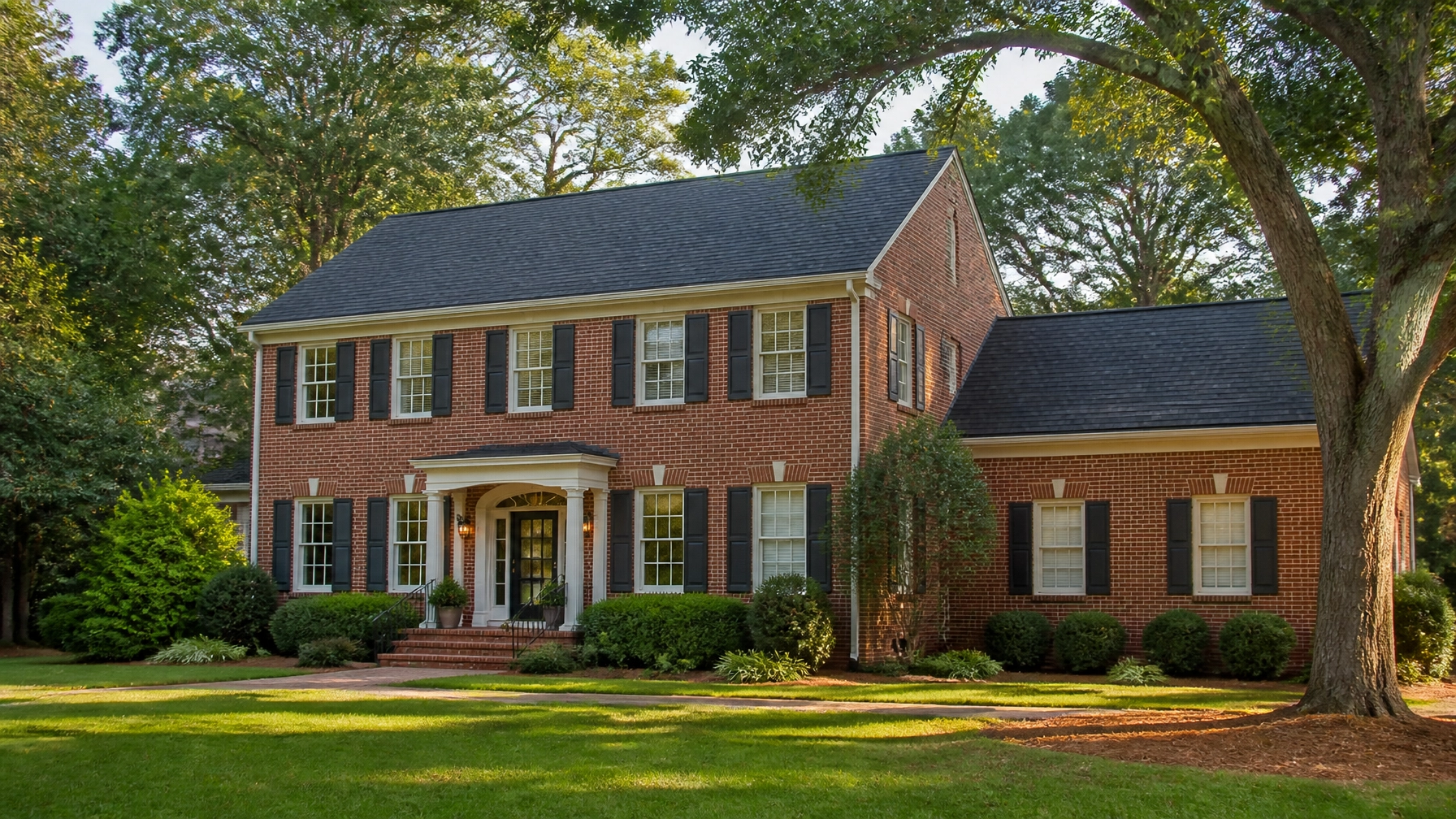
    Ann Arbor Craftsman home with new charcoal architectural shingles and clean roof flashing

    Three ways a new roof adds value

    1. Direct resale value

    A newer roof gives buyers a tangible improvement they can understand. If your roof replacement costs $15,000 and recovers 60%–70%, the supported resale value may increase by approximately:

    • 60% recovery: $9,000
    • 70% recovery: $10,500

    This does not mean your home automatically sells for the exact amount of the project. Appraisers and buyers consider the full property, comparable sales, roof quality, workmanship, and remaining useful life.

    2. Curb appeal and buyer appeal

    A clean, uniform roof can improve roof curb appeal and home value, especially on homes where the roof is highly visible from the street.

    This can matter in older Ann Arbor neighborhoods. Burns Park and the Old West Side contain many attractive, established homes where buyers pay close attention to exterior condition. A new architectural shingle roof can make the property look maintained rather than deferred.

    The strongest visual choices usually include:

    • Charcoal or weathered wood tones for colonials and Craftsman homes
    • Architectural shingles with dimensional shadow lines
    • Consistent flashing and ridge-cap details
    • Clean gutters and trimmed branches
    • Colors that complement brick, siding, and historic character

    3. Risk reduction during inspection

    A seller with a 20-year-old roof may face:

    • A buyer request for a large repair credit
    • A lower negotiated price
    • Delayed closing
    • Insurance concerns
    • A buyer walking away after inspection

    Replacing the roof before listing can reduce these objections. It may also make the listing easier to compare against competing homes with newer exterior systems.

    Worked ROI examples for Ann Arbor homeowners

    Example A: Mid-range asphalt replacement

    Assume a 2,000-square-foot roof requires a complete architectural shingle replacement.

    • Project cost: $15,000
    • Conservative recovery at 60%: $9,000
    • Strong recovery at 70%: $10,500
    • Unrecovered investment: approximately $4,500–$6,000

    The unrecovered portion may still purchase several years of weather protection, reduce inspection risk, and help the home compete in a seller-leaning market.

    Example B: Premium standing-seam metal

    Assume a more complex Ann Arbor roof receives standing-seam metal for approximately $28,000.

    At a 50%–60% resale recovery:

    • 50% recovery: $14,000
    • 60% recovery: $16,800

    Metal is often weaker for short-term resale ROI because the initial cost is high. It can be stronger for homeowners who plan to stay for decades and value longevity, lower maintenance, snow shedding, and long-term durability.

    Example C: Avoiding a buyer credit

    Suppose you list with an aging roof. During inspection, the buyer requests a $12,000 credit or a price reduction because the roof is near the end of its useful life.

    A replacement completed before listing may cost $15,000 but help you avoid the full credit, protect your negotiating position, and present the home as move-in ready. This is defensive ROI, not just a line-item increase in appraised value.

    Best roof for home value in Ann Arbor

    For most sellers, architectural asphalt shingles are the best roof for home value because they balance appearance, cost, availability, and buyer expectations.

    Material Context Best use Ann Arbor ROI view
    3-tab asphalt Budget Lowest initial cost Lower curb appeal and shorter expected life
    Architectural shingles Popular Most resale-focused replacements Usually the strongest short-term ROI
    Class 4 impact-resistant shingles Premium protection Hail and storm exposure May improve durability and qualify for insurance credits
    Standing-seam metal Premium longevity Long-term ownership Higher upfront cost; better long-horizon value
    Synthetic roofing Premium design Distinctive or specialty homes Evaluate carefully against neighborhood expectations

    Michigan Class 4 shingles rated under UL 2218 may qualify for 10%–25% insurance credits, depending on the carrier and policy. Confirm eligibility with your insurer before choosing the upgrade.

    National data supports the asphalt advantage. The 2025 Zonda-style Cost vs. Value benchmark lists a standardized asphalt replacement at approximately $31,871, with about $21,672 recovered, roughly 68%. A standardized metal roof cost about $51,865 and recovered approximately $25,933, or about 50% (2025 Cost vs. Value reference).

    These are national benchmarks, not guarantees for an individual Ann Arbor property.

    Code, permits, and historic-district details

    Before scheduling work, confirm the requirements for your jurisdiction.

    Inside the City of Ann Arbor, full roof replacement work should be reviewed through the city’s building-permit process and STREAM permitting system. Unincorporated properties in Washtenaw County may follow county requirements instead.

    Important checks include:

    • Repairs involving less than 25% of the roof area may be exempt in some situations.
    • A full tear-off is generally required when the roof has reached the maximum allowed two shingle layers.
    • Old West Side, Water Hill, Burns Park-area, and other historic properties may require a Certificate of Appropriateness.
    • Use a contractor who meets Michigan LARA Residential Builder or Maintenance & Alteration licensing requirements.
    • Keep the permit, final inspection record, invoice, warranty, and material documentation for resale.

    Michigan’s residential code also requires an ice barrier at eaves extending at least 24 inches past the interior wall line. Review the Michigan LARA code resources and confirm project details with your contractor.

    Roofing checklist before selling

    Use this checklist to improve your roof replacement resale value:

    • Confirm the roof’s installation date and remaining life.
    • Get a satellite-based size and cost range before requesting bids.
    • Compare at least two or three written contractor proposals.
    • Ask whether the quote includes tear-off, disposal, flashing, ventilation, permits, and decking repairs.
    • Inspect attic insulation and air sealing.
    • Target approximately R-49–R-60 attic insulation where appropriate; see ENERGY STAR insulation guidance.
    • Verify balanced soffit-to-ridge ventilation.
    • Use the National Weather Service ice-dam guidance for winter preparation.
    • Save product details, color information, warranties, permits, and paid invoices.
    • Ask your insurer whether Class 4 impact-resistant shingles affect premiums.

    Ann Arbor-area home with a standing-seam metal roof during a snowy Great Lakes winter

    FAQs

    What is the best roof for home value in Ann Arbor?

    Architectural asphalt shingles are usually the best choice for short-term resale value. They offer strong curb appeal at a lower cost than metal and fit the expectations of most Ann Arbor buyers. Class 4 shingles may be worth considering in hail- and tree-exposed areas.

    Does a new roof increase home value dollar-for-dollar?

    Usually, no. A roof often recovers about 60%–70% of its cost in resale value, not 100%. However, it can also reduce buyer credits, inspection problems, insurance concerns, and days on market.

    Should I replace my roof before selling?

    Replace it before selling if it is near the end of its useful life, has widespread damage, shows interior leaks, or is likely to trigger a large buyer credit. If the roof is still serviceable, a professional inspection and documented repairs may be more cost-effective.

    How long does a roof last in Michigan?

    Architectural asphalt shingles commonly last about 20–30 years in Michigan, depending on installation quality, ventilation, snow, ice dams, hail, and tree exposure. Metal roofing can last approximately 40–70 years with proper installation and maintenance.

    Get your Ann Arbor roof estimate in 60 seconds

    Before you make a resale decision, get a property-specific starting point. Enter your Ann Arbor address at Get My Roof Estimate Now.

    The free satellite-powered tool provides:

    • Roof measurements based on your property
    • Low, middle, and high replacement ranges
    • Material comparisons for shingles and metal
    • Results in under 60 seconds
    • No credit card required
    • Connections to verified, licensed, and insured local contractors

    A faster, clearer estimate helps you decide whether a new roof is a resale upgrade, a defensive repair, or a long-term investment in your Tree Town home.

  • Daily ROI Blitz – Slot 4: Newport News, VA New Roof ROI : How a Shipbuilding City Replacement Adds Home Value in 2026

    Daily ROI Blitz – Slot 4: Newport News, VA New Roof ROI : How a Shipbuilding City Replacement Adds Home Value in 2026

    A new roof in Newport News can cost approximately $11,900–$16,200 for a typical 2,000–2,400 square-foot home. That is a major investment, but it can also protect resale value, improve curb appeal, reduce buyer objections, and help a home compete in Hampton Roads’ tight 2026 housing market.

    The national Cost vs. Value benchmark reports roughly 68% resale recovery for an asphalt shingle roof replacement. Metal roofing typically shows a lower resale recovery: around 50% nationally — because its upfront cost is substantially higher.

    The practical takeaway is simple: a roof replacement is not only a repair. In Newport News, it can be a strategic investment in new roof ROI, home value, and sale readiness.

    Newport News Housing Market: Why Roof Condition Matters in 2026

    Mid-2026 market data place Newport News’ median sale price in the approximate $297,000–$318,000 range, depending on the reporting period and property category. See the latest Newport News market data from Redfin.

    The market remains competitive, with approximately 1.9 months of supply in some local snapshots. Homes commonly go pending in about 26–37 days, while well-priced, move-in-ready properties may attract attention within 3–15 days.

    That environment changes how buyers evaluate a roof.

    A visibly aging roof can lead to:

    • Buyer requests for repairs or credits
    • Lower offers based on expected replacement costs
    • Delayed closings during insurance or inspection reviews
    • Appraisal concerns if the roof appears near the end of its service life
    • More difficulty competing against homes with recent improvements

    A newer roof does not guarantee a specific dollar-for-dollar increase in value. However, it can reduce uncertainty: the factor that often causes buyers to negotiate aggressively.

    Newport News Roof Replacement Costs by Material

    The following planning ranges apply to a typical 2,000+ square-foot home. Final pricing depends on roof squares, pitch, complexity, tear-off requirements, ventilation, flashing, permits, and structural repairs.

    Roofing material Typical 2026 installed range ROI position Best fit
    3-tab asphalt shingles (Budget) $5,650–$11,550 Lower upfront cost Straightforward roofs and budget-focused replacements
    Architectural asphalt shingles (Popular) $11,900–$16,200 Strong resale balance Most Newport News homeowners
    Premium or designer shingles (Premium) $15,000–$22,000+ Higher curb appeal Higher-value homes and distinctive architectural styles
    Standing-seam or exposed-fastener metal (Premium) $18,000–$32,000+ Lower national resale recovery, strong durability Coastal exposure, long-term ownership, and modern designs

    A commonly cited asphalt shingle figure for a typical Newport News home is approximately $8,600, with project ranges near $5,650–$11,550 for simpler installations. More complete architectural shingle replacements: especially those involving tear-off, complex rooflines, upgraded ventilation, and coastal fastening — often fall within the $11,900–$16,200 range.

    For a more general planning comparison, use the company’s roof cost calculator. For a property-specific measurement, the Newport News roof estimate page provides a faster starting point.

    Newly installed dimensional asphalt shingle roof on a Virginia ranch home

    Which Roof Provides the Best Home Value?

    For most Newport News sellers, architectural asphalt shingles offer the best balance of cost, appearance, weather performance, and resale appeal.

    They are widely used because they provide:

    • A clean, updated appearance
    • Better dimensional styling than basic 3-tab shingles
    • Strong compatibility with Colonial, ranch, split-level, and traditional homes
    • Broad color selection
    • Easier buyer acceptance than unusual or highly specialized materials
    • A lower upfront cost than metal, slate, or tile

    The best roof for home value is not always the most expensive roof. It is usually the roof that fits the neighborhood, performs well in local weather, and does not look overbuilt for the property.

    Metal roofing can be a sensible choice for long-term ownership, coastal exposure, energy performance, or modern architecture. However, its higher installation cost may not be fully recovered at resale. The national 2025 Cost vs. Value report from JLC places asphalt shingle recovery near 68% and metal roofing recovery near 50%.

    Those are national benchmarks: not guarantees for one Newport News property. Local buyer preferences, installation quality, roof condition, and market timing still matter.

    Neighborhood-Specific ROI Considerations

    Newport News has a wide mix of housing stock and neighborhood character. The right roof decision should match the home and its setting.

    • Hilton Village: Traditional architecture and established streets benefit from proportionate, historically appropriate colors and roof profiles.
    • Hidenwood and Riverside: Mature neighborhoods often include larger or more complex rooflines. Accurate measurements matter because multiple ridges, dormers, and valleys can increase labor.
    • Port Warwick and City Center at Oyster Point: Clean, updated curb appeal can help homes compete with newer-feeling properties.
    • Denbigh and Menchville: Buyers may focus closely on maintenance history, storm readiness, and total ownership costs.
    • North Newport News near Fort Eustis: A durable, practical roof can strengthen buyer confidence, particularly when homes compete on affordability and condition.

    Avoid choosing a material based only on its advertised lifespan. A roof that looks appropriate, meets local wind requirements, and is professionally installed can produce better roof replacement resale value than a premium material that is visually out of place or difficult to insure.

    Coastal Wind and Salt-Air Requirements

    Newport News sits in a hurricane-prone Hampton Roads environment. Depending on the property’s exact location, exposure, and applicable code provisions, design wind speeds can approach the 130–140 mph range.

    A coastal roof replacement should be evaluated for more than shingles alone. Ask the contractor about:

    • High-wind-rated shingles or metal panels
    • Enhanced edge and perimeter fastening
    • Ring-shank nails where required or appropriate
    • Hurricane clips, straps, or other connectors where applicable
    • Wind-rated underlayment
    • Proper ridge, valley, wall, and chimney flashing
    • Sealed roof-deck protection near applicable tidal shorelines
    • Corrosion-resistant fasteners and flashing in salt-air environments
    • Adequate attic ventilation and moisture control

    The City of Newport News design criteria and the applicable Virginia building code should guide site-specific requirements. A contractor should verify the correct wind exposure and fastening schedule rather than relying on a generic Hampton Roads package.

    Salt air and humidity also accelerate corrosion. This is especially important for homes closer to the James River, harbor areas, or other exposed coastal locations. A roof can have an excellent wind rating and still experience premature problems if flashing, fasteners, drip edges, or metal accessories are poorly selected.

    New standing-seam metal roof on a modern coastal Virginia home

    Flood Risk Is Separate From Roof ROI: but Still Relevant

    Low-lying areas near the James River and harbor may face flood exposure. Flood risk does not usually determine the roof covering itself, but it affects the broader property-risk conversation.

    Homeowners should remember:

    • Standard homeowners insurance and flood insurance are separate products.
    • Flood damage may not be covered under a standard homeowners policy.
    • Wind damage may involve a separate coastal or hurricane deductible.
    • Buyers may ask about elevation certificates, flood zones, and insurance costs.
    • Roof upgrades should be coordinated with other resilience improvements.

    For roof ROI, the main point is confidence. A documented, properly installed roof can make a property easier to evaluate even when buyers are also reviewing coastal insurance and flood considerations.

    How a New Roof Protects Resale Value

    A roof replacement can support resale value in four practical ways:

    1. It reduces buyer concessions

    If a buyer expects to replace the roof soon, they may request a credit that exceeds the cost of a well-planned replacement. Completing the work before listing gives the seller more control over materials, timing, and documentation.

    2. It improves roof curb appeal and home value

    A clean roofline, consistent shingle color, new flashing, and finished trim can noticeably improve first impressions. Curb appeal is not cosmetic only; it signals that the home has been maintained.

    3. It supports insurance discussions

    Some insurers may offer eligibility advantages or premium benefits for newer, wind-rated, or impact-resistant roofing. Benefits vary by carrier, roof age, material, wind rating, and policy terms. Confirm any potential savings directly with your insurance provider.

    4. It removes a major inspection objection

    A roof near the end of its expected life can become one of the largest issues in a home inspection. A newer roof gives buyers a clearer maintenance outlook and may help prevent negotiations from focusing on hidden risk.

    Get an Instant Newport News Roof Estimate

    Before scheduling contractor visits, start with accurate measurements.

    Get My Roof Estimate Now uses satellite imagery to estimate roof size, pitch, and complexity. Enter your address and receive a free estimate in approximately 60 seconds: with no credit card required.

    You can use the estimate to:

    • Set a realistic replacement budget
    • Compare asphalt and metal options
    • Understand low, middle, and high price ranges
    • Plan before listing your home
    • Prepare better questions for licensed, insured contractors

    For a Newport News homeowner, a new roof is both a protection project and a resale decision. Start with the numbers, match the material to the home, and make coastal installation quality a priority.

  • Daily ROI Blitz – Slot 7: Charleston, SC New Roof ROI : How a Holy City Replacement Adds Home Value in 2026

    Daily ROI Blitz – Slot 7: Charleston, SC New Roof ROI : How a Holy City Replacement Adds Home Value in 2026

    Charleston homeowners are spending more than ever to protect one of their largest investments. In 2026, home values in the Charleston area generally range from about $512,000 countywide to approximately $679,000 in the city, depending on the data source, property type, and neighborhood.

    Annual appreciation has moderated to roughly 1%–4.3%, and homes commonly take 40–65 days to sell. That makes condition, curb appeal, insurance readiness, and buyer confidence especially important.

    A new roof can help on all four fronts.

    National remodeling data suggests that an asphalt shingle roof replacement recoups approximately 57%–68% of its cost at resale. Metal roofing typically recoups around 48%–65%, while offering a longer service life and stronger coastal-weather performance. In practical terms, a new roof can contribute roughly 3%–6% to overall home value, depending on the property, roof quality, and local buyer demand.

    Charleston roof replacement costs in 2026

    For a typical 1,800–2,200-square-foot Charleston home, current planning ranges are:

    • Architectural asphalt shingles (Popular): $11,000–$20,000
    • Standing seam metal (Premium): $18,000–$38,000+
    • Class 4 impact-rated shingles (Upgraded): Usually more than standard architectural shingles, but less than standing seam metal
    • FORTIFIED upgrades: Additional cost depends on roof deck condition, fastening, sealed-deck details, edge work, and certification requirements

    Your actual price depends on roof size, pitch, complexity, tear-off requirements, ventilation, flashing, permits, and local labor rates.

    Roofers measure in squares, with one square equal to 100 square feet of roofing. A 2,000-square-foot home does not always have a 2,000-square-foot roof. Steep pitches, hips, valleys, dormers, and multiple roof sections can significantly increase the measured area.

    Use the roof cost calculator for a starting range, or get a property-specific satellite estimate in about 60 seconds.

    Why roof condition matters to Charleston buyers

    Charleston buyers understand coastal weather. They look closely at:

    • Roof age
    • Wind ratings
    • Shingle condition
    • Missing or lifted materials
    • Rust around flashing and fasteners
    • Water stains in attics and ceilings
    • Insurance eligibility
    • Documentation for recent roof work

    A visibly aging roof creates uncertainty. Buyers may request a credit, lower their offer, or make the sale contingent on replacement. Some may avoid the home entirely if the roof is near the end of its useful life.

    A newer roof does not guarantee a dollar-for-dollar return. However, it can reduce negotiation friction and help your home compete against similar listings.

    In a market where homes may remain available for several weeks, a clean roofline and documented storm-resistant installation can make a meaningful difference.

    Charleston home with a new standing seam metal roof designed for coastal durability

    Which roof offers the best home value?

    The best roof for home value depends on your budget, expected ownership period, neighborhood, and coastal exposure.

    Architectural asphalt shingles (Popular)

    Architectural shingles usually deliver the strongest direct resale ROI percentage because the upfront cost is lower and the material is familiar to buyers.

    Benefits include:

    • Lower installation cost
    • Broad color and style selection
    • Easier repairs and replacement
    • Strong curb appeal when properly installed
    • Good resale value when the roof is new and documented

    For Charleston, specify a product rated for local wind conditions. Coastal installations may require a six-nail fastening pattern, approved underlayment, and corrosion-resistant fasteners. Installation must follow the product manufacturer’s instructions and local code requirements.

    Standing seam metal (Premium)

    Standing seam metal generally costs more upfront, but it is often the most durable coastal choice.

    Benefits include:

    • Long service life, often 40–70 years
    • Strong resistance to wind uplift when properly engineered
    • Less exposure to shingle blow-off
    • Excellent resistance to mildew and salt-air conditions
    • Distinctive appearance that can complement modern, historic, and Lowcountry homes

    Metal may not produce the highest percentage return at resale because of its higher installation cost. But buyers who plan to stay long term may value fewer replacement cycles, lower maintenance, and better storm performance.

    Class 4 impact-rated shingles (Upgraded)

    Class 4 impact-rated shingles can provide a practical middle ground. They cost less than standing seam metal while offering improved resistance to hail and impact damage compared with basic products.

    They may be worth considering if you want:

    • A familiar asphalt appearance
    • Better impact resistance
    • A moderate upgrade in durability
    • Lower upfront cost than metal

    Ask your insurer whether the specific product qualifies for an insurance credit. Discounts depend on the carrier, policy, installation, and documentation.

    Charleston’s wind zone changes the ROI calculation

    Coastal Charleston faces hurricanes, tropical storms, wind-driven rain, intense sun, humidity, and salt air. Parts of the coastal market are commonly discussed in the context of Wind Zone III conditions, with design wind speeds around 130–150 mph depending on the exact location and code classification.

    That affects more than the roof covering. It can influence:

    • Shingle fastening
    • Roof deck attachment
    • Edge metal and drip-edge installation
    • Underlayment
    • Flashing
    • Roof-to-wall connections
    • Fastener corrosion resistance
    • Sealed-deck details

    A new roof installed to minimum standards may not provide the same value as a properly documented, high-wind installation.

    When comparing estimates, ask each contractor:

    1. What wind rating does the roofing product carry?
    2. Will the shingles use six nails where required?
    3. What type of corrosion-resistant fasteners will be used?
    4. Will the roof deck be inspected and upgraded if needed?
    5. Is a sealed roof deck included?
    6. Who handles permits and inspections?
    7. Can the completed work support insurance or FORTIFIED documentation?

    The cheapest quote may not be the lowest-cost roof over time.

    Close exterior view of a newly reroofed Charleston residence with clean shingles and coastal-grade flashing

    FORTIFIED roofs can improve resale and insurance value

    The IBHS FORTIFIED standard is designed to improve a home’s performance during severe wind and rain events. A FORTIFIED Roof may include enhanced roof-deck attachment, a sealed roof deck, stronger edges, and approved high-wind roof coverings.

    In South Carolina, eligible FORTIFIED improvements may unlock insurance savings of approximately 10%–35% on the wind portion of the policy. The actual discount depends on your carrier, location, policy, and certification level. The discount does not necessarily apply to the entire homeowners insurance premium.

    Charleston homeowners should also review the SC Safe Home Mitigation Grant Program. Qualified projects may receive grants of up to $7,500 for certain roof retrofits that meet program and FORTIFIED requirements.

    Check the current rules before starting work. Grant applications, contractor requirements, documentation, income rules, and eligible expenses can change.

    How much value can a Charleston roof add?

    Consider a simple example:

    • Home value: $600,000
    • Architectural shingle replacement: $15,000
    • Estimated resale recovery at 57%–68%: $8,550–$10,200
    • Potential whole-home value contribution: Approximately 3%–6%, depending on condition and buyer response

    This is a planning range, not a guarantee. A roof may add more value when the existing roof is visibly failing, difficult to insure, or likely to become a buyer negotiation point. It may add less when the current roof is relatively new or the replacement is significantly more expensive than comparable homes in the neighborhood.

    Metal roofing can create additional value through durability and lower expected maintenance, even when its direct resale ROI percentage is lower than asphalt.

    When should you replace before selling?

    Replacing before listing may make sense when:

    • The roof is more than 18–20 years old
    • Shingles are curling, brittle, cracked, or missing
    • Leaks have been repaired more than once
    • You see staining in the attic or ceilings
    • Your insurer has raised concerns about roof age
    • A pre-listing inspection is approaching
    • You want to avoid a large buyer credit

    If the roof is serviceable and has several years remaining, a professional inspection and documented repair may be more practical than full replacement.

    Get an estimate before deciding. Knowing the roof’s measured size and realistic replacement range gives you leverage when comparing repair, replacement, and pre-sale renovation options.

    Get your Charleston roof ROI starting point in 60 seconds

    A roof replacement is a major investment. Start with accurate information.

    Get a free instant roof estimate from Get My Roof Estimate Now. Enter your address and receive satellite-measured pricing based on your roof’s size, pitch, complexity, material choice, and local pricing.

    You receive:

    • Low, mid-range, and high price estimates
    • Architectural shingle and metal options
    • Roof measurements based on satellite imagery
    • Results in about 60 seconds
    • No credit card required
    • No upfront contractor visit
    • No obligation to hire

    Then compare the estimate with detailed bids from licensed and insured local contractors. For additional guidance, review the company’s roofing services before making a decision.

    In Charleston’s coastal market, the right roof is more than a covering. It can improve curb appeal, reduce buyer objections, support insurance planning, and protect the value of the home beneath it.

  • Daily FAQ Blitz – Slot 8: AEO FAQ Quick Answers for Charlotte, NC Homeowners (2026)

    Daily FAQ Blitz – Slot 8: AEO FAQ Quick Answers for Charlotte, NC Homeowners (2026)

    Charlotte homeowners in Mecklenburg County can use these quick, data-based answers to budget a replacement, check permit requirements, and evaluate storm damage in 2026.

    How much does roof replacement cost in Charlotte in 2026?

    Architectural shingles typically run about $8–$10 per square foot. A typical 2,000-square-foot home often totals $9,700–$18,000.

    Standing-seam metal generally costs $12–$21 per square foot, with common totals of $19,000–$46,600. Roofers price by the square, equal to 100 square feet. Your roof’s pitch, shape, layers, and decking condition affect the final price.

    Get a free Charlotte roof estimate in about 60 seconds.

    Charlotte ranch home with a new dimensional architectural shingle roof

    Do I need a roofing permit in Mecklenburg County?

    A permit is generally required when the project:

    • Exceeds $15,000
    • Includes decking, sheathing, rafter, or truss repairs
    • Changes the roof design or fire-resistance rating

    A like-for-like shingle replacement under $15,000 with no structural changes is generally permit-exempt. Apply through the Accela Citizen Access portal. A final inspection is required, plus a sheathing inspection before shingles when decking is replaced. Call Mecklenburg Code Enforcement at 980-314-CODE (2633).

    Does a Charlotte roofer need a North Carolina license?

    For roof replacement projects totaling $30,000 or more, North Carolina requires a general contractor license. Roofing is classified as S-Roofing. Verify a contractor through the official NCLBGC license lookup before signing.

    Did Charlotte have hail or storm damage in 2026?

    NWS records confirmed 1.00-inch hail on August 11, 2026. Severe storms around August 28 brought damaging wind and fallen trees; no hail was reported that day. Photograph damage from ground level, do not climb onto the roof, contact your insurer, and review NWS storm records.

    Modern Charlotte home with a new standing-seam metal roof

    How does North Carolina’s roof-age insurance rule work?

    There is no single statewide 15-year cutoff. However, insurers often tighten underwriting at 15–20 years and may switch older roofs to actual cash value. The NC Rate Bureau’s 2027 homeowners program introduces a Roof Payment Schedule based on roof age and material. Ask your agent before filing a claim.

    How long do roofs last in Charlotte?

    Basic asphalt shingles last about 15–25 years. Architectural shingles typically last 25–30 years, while metal can last 40–70 years. Charlotte’s humidity, heat, wind, storms, and tree coverage can shorten these ranges.

    Does a new roof increase home value?

    Quality architectural shingles usually offer the best balance of cost, appearance, and resale value. A new roof can improve roof curb appeal home value, support roof replacement resale value, and contribute to new roof ROI home value. Metal costs more upfront but can support long-term value through durability. The best roof for home value depends on your neighborhood, including SouthPark, Dilworth, Plaza Midwood, Ballantyne, Matthews, Huntersville, and Mint Hill.

    Renovated Ballantyne-area home with a new architectural shingle roof

    Can I get an instant estimate without a contractor visit?

    Yes. Get My Roof Estimate Now uses satellite imagery to measure roof size, pitch, and complexity. Your estimate is free, requires no credit card, and typically arrives in about 60 seconds.

    Category: Roofing Costs & Home Value
    SEO tags: Charlotte roof replacement cost 2026, roof replacement ROI, new roof ROI home value, roof replacement resale value, roof curb appeal home value, best roof for home value, Charlotte roofing permits, Mecklenburg County roofing, NC roofer license, instant roof estimate

  • Daily Weather Blitz – Slot 2: Louisville, KY : September 8, 2026: A 92°F Tuesday Gives Way to Mid-90s Heat, a 103°F Heat Index, and a Thursday Soaker & What Derby City’s Heat-to-Storm, Hail-Ridden Summer Means for Your Roof

    Daily Weather Blitz – Slot 2: Louisville, KY : September 8, 2026: A 92°F Tuesday Gives Way to Mid-90s Heat, a 103°F Heat Index, and a Thursday Soaker & What Derby City’s Heat-to-Storm, Hail-Ridden Summer Means for Your Roof

    Louisville homeowners are moving from intense heat to a wet, stormy pattern this week.

    Tuesday, September 8, brings mostly sunny skies and a high near 92°F. Wednesday will be hotter, with a high near 95°F and heat index values reaching approximately 103°F. Then, a cold front arrives Thursday with a 90% chance of showers and thunderstorms and expected rainfall between one-half and three-quarters of an inch.

    That rapid shift matters to your roof. Heat expands roofing materials, wind tests fasteners and flashing, and heavy rain exposes weak valleys, pipe boots, gutters, and roof-decking areas. After a summer marked by hail and severe storms across Jefferson County, this is a practical week to evaluate your roof: not wait for the next leak.

    Louisville’s September 8–13 Weather Outlook

    According to the National Weather Service Louisville office and local forecasts from WLKY, the pattern looks like this:

    • Tuesday, September 8: Mostly sunny, high near 92°F. South winds around 5–7 mph. Partly cloudy overnight, with a low near 73°F.
    • Wednesday, September 9: Sunny and hot, high near 95°F. Southwest winds around 8–14 mph. Heat index values may reach 103°F.
    • Wednesday night: A 70% chance of showers and thunderstorms after approximately 2 a.m.
    • Thursday, September 10: Showers and possibly a thunderstorm, with a 90% chance of rain. High near 84°F and rainfall of roughly 0.50–0.75 inches.
    • Friday, September 11: Partly sunny and cooler, with a high near 85°F.
    • Weekend: Storm chances return at approximately 20–30%, with highs near 90°F.

    The heat spike itself does not usually damage a properly installed roof. The concern is the combination of heat, humidity, wind, saturated materials, and thunderstorms arriving soon afterward.

    What Louisville’s Hail-Ridden Summer Revealed

    Louisville’s summer of 2026 has produced repeated reminders that storm damage is not always obvious from the ground.

    Severe storms on August 16–17 knocked down trees across the metro area. MetroSafe logged 37 downed wires, 11 trees hitting buildings, and one roof collapse within 24 hours. In Klondike, one homeowner reportedly returned to find a tree through the roof.

    Hail also affected the area repeatedly in August, including reported events on:

    • August 7
    • August 11
    • August 14
    • August 22
    • August 26

    Some storm cells produced hail approaching 2 inches in diameter.

    Hail damage can look minor at first. A few bruised shingles may not leak immediately, but repeated impacts can weaken the mat beneath the granules. Wind can then lift or tear those compromised shingles during a later storm.

    Louisville ranch home with an impact-resistant architectural shingle roof, reinforced flashing, and clear gutters

    The Main Roofing Risks in the Ohio Valley

    Louisville roofs face several recurring weather stresses:

    Hail impact

    Hail can:

    • Remove protective granules
    • Crack or bruise asphalt shingles
    • Damage ridge caps and vents
    • Dent metal flashing
    • Break skylights or soft-metal components

    Look for circular dark spots, exposed fiberglass, chipped edges, and piles of granules near downspouts.

    Straight-line thunderstorm winds

    Strong winds often attack roof edges, rakes, ridges, and poorly fastened shingles first. Once one section lifts, wind-driven rain can enter beneath the roof covering.

    Heavy rain

    A roof may survive ordinary rainfall but leak during a storm because of:

    • Clogged gutters
    • Loose flashing
    • Failed pipe boots
    • Open valleys
    • Aging underlayment
    • Damaged roof decking

    Freeze-thaw cycles and ice dams

    Louisville winters bring freezing temperatures, thawing, and occasional ice formation. Ice dams can force water beneath shingles and into the roof edge. Proper attic insulation, balanced ventilation, and reinforced underlayment help reduce this risk.

    Storm-Ready Roofing Specifications for Louisville Homes

    If your roof is nearing replacement, discuss these details with your contractor.

    1. Choose impact-resistant shingles

    Class 4 impact-resistant shingles (Premium protection) are designed to better resist hail damage than standard products. Some Kentucky insurers may offer discounts for qualifying impact-resistant or fortified roofing systems. Homeowners commonly see potential savings in the 10%–35% range, but the exact discount depends on the insurer, policy, product certification, and installation documentation.

    Ask for the discount requirements before selecting materials.

    2. Use wind-rated products and installation

    Kentucky’s Residential Code requires roofing materials and installation to meet applicable wind standards. Ask whether the proposed shingles are labeled for ASTM D7158 Class G or Class H performance and whether the installation follows the manufacturer’s high-wind instructions.

    A strong installation should include:

    • Six-nail patterns where required by the manufacturer or roofing program
    • Corrosion-resistant roofing nails
    • Proper nail placement through the reinforced nail line
    • Ring-shank nails where specified for fortified construction
    • Adequate penetration into the roof sheathing
    • Secure starter strips and ridge caps

    The product alone is not the protection. Installation quality determines how the system performs.

    3. Install ice-and-water protection

    Use a self-adhered ice-and-water shield at vulnerable locations, including:

    • Eaves
    • Valleys
    • Roof-to-wall transitions
    • Around chimneys and skylights
    • Areas prone to wind-driven rain

    Local code requirements and FORTIFIED program specifications can vary, so confirm the scope with the contractor and the local authority having jurisdiction.

    4. Seal the roof deck

    A sealed roof deck or self-adhered underlayment can reduce water intrusion if hail or wind damages the shingles. It is especially valuable when paired with reinforced edges and properly installed flashing.

    5. Reinforce flashing and penetrations

    Ask your contractor to inspect or replace:

    • Step flashing
    • Valley flashing
    • Chimney flashing
    • Plumbing pipe boots
    • Vent flashings
    • Drip edges
    • Skylight flashing

    These components are frequent leak points after heavy storms.

    Don’t Ignore Attic Ventilation During a 103°F Heat Index

    A hot roof surface and poorly ventilated attic can accelerate shingle aging, increase cooling costs, and contribute to moisture problems.

    A storm-ready roof should have balanced ventilation:

    • Intake ventilation at the soffits
    • Exhaust ventilation at the ridge or upper roof
    • No blocked soffit vents
    • No excessive exhaust ventilation without sufficient intake

    The goal is steady airflow: not simply adding more roof vents. A qualified roofing professional should evaluate the entire attic system.

    2026 Louisville Roof Replacement Costs

    For a typical 2,000-square-foot Louisville home, 2026 replacement pricing commonly falls into these planning ranges:

    • Budget : around $10,000: Entry-level architectural or 3-tab-style shingles, standard complexity, and basic installation.
    • Most Popular : approximately $11,000–$16,000: Architectural shingles, upgraded underlayment, improved flashing, and more complete ventilation work. Architectural shingles commonly run about $4.50–$9.00 per square foot, depending on labor, tear-off, pitch, access, and material selection.
    • Premium : approximately $20,000–$36,000 or more: Standing-seam metal roofing, premium architectural products, Class 4 impact-resistant shingles, complex rooflines, fortified installation, and extensive decking or flashing work. Standing-seam metal may range from approximately $7–$18 per square foot.

    The final price depends on roof size: not just the home’s living area: along with pitch, layers, valleys, penetrations, accessibility, material, disposal, and regional labor rates.

    Premium Louisville home with a standing-seam metal roof, finished valleys, pipe boots, and reinforced flashing

    Kentucky Programs and Insurance Considerations

    Kentucky homeowners may be able to reduce the cost of resilience upgrades through the Strengthen Kentucky Homes program, which can provide grants of up to $10,000 toward qualifying FORTIFIED Roof improvements.

    Important points:

    • Apply and receive approval before beginning work.
    • Use an eligible contractor and FORTIFIED evaluator.
    • Confirm that the completed roof will meet certification requirements.
    • Plan for evaluator fees, permits, and any costs above the grant amount.
    • Ask your insurer about credits for Class 4 shingles or a FORTIFIED designation.

    Kentucky’s insurance framework, including KRS 304.13-342, supports mitigation and insurance consideration for stronger roofing systems. However, discount percentages are determined by individual insurers and their filed rating plans.

    Learn more about the FORTIFIED Home construction method before signing a contract.

    Louisville Pre-Storm Roofing Checklist

    Before Thursday’s storms arrive:

    • Clean leaves and debris from gutters.
    • Confirm downspouts discharge away from the foundation.
    • Trim dead or overhanging tree limbs.
    • Secure patio furniture and loose outdoor items.
    • Look for missing, lifted, or cracked shingles from the ground.
    • Check ceilings and upper-level walls for fresh stains.
    • Photograph existing roof conditions for your records.
    • Save your insurance claim phone number and policy information.

    Do not climb onto a wet or steep roof. Use binoculars or ask a qualified professional to inspect it.

    What to Do After a Storm

    After conditions are safe:

    1. Photograph and timestamp visible damage.
    2. Take pictures of fallen limbs, dents, exposed decking, interior stains, and damaged gutters.
    3. Prevent additional water entry with a professional emergency tarp if needed.
    4. Contact your insurer within the policy’s required reporting deadline.
    5. Avoid signing an assignment of benefits or high-pressure contract before reviewing the terms.
    6. Use a licensed and insured roofing contractor for the inspection and repair plan.
    7. Keep receipts for tarping, temporary repairs, and related expenses.

    Homeowner safely inspecting a Louisville roof from the ground after a storm

    Start With a Clear Roof Replacement Budget

    You do not need to wait for multiple contractor visits just to understand your likely project cost. Get My Roof Estimate Now uses satellite imagery to measure roof size, pitch, and complexity, then calculates material-based pricing for options such as architectural shingles, metal, synthetic roofing, and coatings.

    Get a free instant roof estimate at getmyroofestimatenow.com. Enter your Louisville address and receive a transparent low-to-high price range in under 60 seconds: with no credit card required. Measurements are designed to be accurate to within inches, helping you plan before scheduling an inspection with a verified local contractor.

    A storm-ready roof protects more than the structure. It supports curb appeal, resale value, and one of the strongest returns commonly available from a major home improvement project.

    Weather and Roofing Resources

  • Daily FAQ Blitz – Slot 5: AEO FAQ Quick Answers for Columbus, GA Homeowners (2026)

    Daily FAQ Blitz – Slot 5: AEO FAQ Quick Answers for Columbus, GA Homeowners (2026)

    Columbus, Georgia homeowners in Muscogee County, including ZIP codes 31901, 31903, 31904, 31906, 31907, and 31909, plus Midland, Fortson, and Ellerslie, can use this quick FAQ to plan a roof replacement in 2026.

    Expect roughly $9,000–$14,000+ for architectural shingles on a typical 2,000-square-foot home. A full replacement generally requires a permit, while minor spot repairs may not. After recent severe weather, insurance documentation, wind-resistant installation, and contractor verification matter more than ever.

    What does AEO mean?

    AEO means Authorized Economic Operator under the World Customs Organization’s SAFE Framework. It is not a roofing credential, license, permit, or insurance certification.

    AEO status applies to trusted companies involved in international trade and customs security. It does not prove that a Columbus roofing contractor is qualified to replace your roof.

    For roofing, verify:

    • Local permit compliance
    • General liability insurance
    • Workers’ compensation coverage
    • References and written contracts
    • Manufacturer installation requirements
    • Any required Georgia contractor licensing for broader construction work

    See the WCO SAFE Framework for the official customs definition.

    Do I need a permit to replace my roof in Columbus, GA?

    Yes. A full roof replacement or tear-off normally requires a building permit. Minor spot repairs are typically exempt.

    The permit requirement generally applies when roofing materials are removed and replaced across the roof or when the work affects the roof system, decking, structure, or code-required components.

    Columbus Inspections & Code is located at:

    420 East 10th Street, Columbus, GA
    Phone: 706-225-4126

    Start with the city’s Permits and Forms page. Columbus has moved many residential submissions to its online permit portal, so confirm the current submission method before visiting.

    The permit card must be posted at the job site during construction.

    How much is a Columbus roof permit?

    A typical renovation permit is about $100 when the project value is under $25,000.

    The city’s fee schedule effective July 1, 2024 lists renovation fees by project value. Larger or more complex projects may use a different calculation. Ask whether separate fees apply for plan review, inspections, structural repairs, or related work.

    Review the Columbus Inspections & Code fee schedule before signing a contract.

    How much does a new roof cost in Columbus in 2026?

    Architectural asphalt shingles typically cost about $4.50–$7.00 per square foot installed, or approximately $450–$700 per roofing square.

    One roofing square equals 100 square feet.

    For a 2,000-square-foot home, a practical planning range is approximately:

    • Architectural asphalt shingles (Popular): $9,000–$14,000+
    • Standing-seam metal (Premium): roughly $9.00–$16.00 per square foot, or about $18,000–$32,000+ for 2,000 square feet

    These are planning figures, not guaranteed quotes. Your final price may change based on:

    • Roof pitch and walkability
    • Number of roof planes and valleys
    • Chimneys, skylights, dormers, and penetrations
    • Tear-off layers
    • Damaged decking
    • Ventilation upgrades
    • Flashing replacement
    • Driveway or property access
    • Material availability and local labor conditions

    Use the company’s roof cost calculator to establish an initial budget before scheduling contractor visits.

    Two-story Colonial home in Columbus, Georgia with a new charcoal architectural shingle roof

    Does Georgia require a roofing contractor license?

    Georgia does not issue a separate state roofing-only license.

    Roofing-only contractors are generally exempt under O.C.G.A. § 43-41-17(g). That does not mean a contractor can skip local requirements. A roofing company should still:

    • Pull the required Columbus permit
    • Carry appropriate liability insurance
    • Carry workers’ compensation when required
    • Register locally when required
    • Follow Georgia building codes
    • Use qualified subcontractors

    If the company performs broader construction work, a Residential or General Contractor license may be required through the Georgia Secretary of State. Verify the contractor’s business information and ask exactly which parts of the project the company will perform.

    What wind requirements apply to Columbus roofs?

    Columbus follows Georgia amendments to the 2024 International Residential Code, including wind-load and verified nailing requirements.

    Ask the contractor for:

    • The manufacturer’s fastening pattern
    • The number and placement of nails per shingle
    • Underlayment and flashing specifications
    • Ventilation details
    • Product wind classifications

    For shingles, homeowners can ask whether the proposed product carries ASTM D7158 Class G or ASTM D3161 Class F ratings, where applicable. The exact product must be installed according to its manufacturer instructions and the approved permit documents.

    A stronger shingle does not compensate for poor fastening or incorrect installation.

    What should Columbus homeowners do after a severe thunderstorm?

    Inspect from the ground, document everything, and avoid climbing onto the roof.

    On September 6, 2026, a severe thunderstorm knocked out power to thousands of Columbus residents. Reports near Wynnton Road, Hilton Avenue, and Buena Vista Road indicated that nearly 6,000 customers lost power.

    After a storm:

    1. Photograph the home, roof edges, gutters, siding, windows, and nearby trees.
    2. Look for missing shingles, lifted edges, exposed underlayment, or damaged flashing.
    3. Check ceilings, attic areas, and upper walls for new stains or dampness.
    4. Look for granules in downspouts and gutters.
    5. Keep clear of downed lines and unstable trees.
    6. Do not climb onto a wet or damaged roof.
    7. Contact your insurer before permanent repairs if you may file a claim.
    8. Use only a qualified professional for emergency tarping or temporary protection.
    9. Keep receipts, photos, inspection notes, and contractor communications.

    A satellite-powered estimate can help you understand the roof’s size and likely replacement range before arranging an in-person inspection.

    Modern Southern Columbus-area home with a standing-seam metal roof

    Can a contractor pay or waive my insurance deductible in Georgia?

    No. Georgia contractors cannot pay, waive, absorb, or rebate a homeowner’s insurance deductible.

    Be cautious of offers such as:

    • “Free roof, insurance pays everything”
    • “We will cover your deductible”
    • “We will inflate the invoice and credit the deductible”
    • “You do not need to pay anything out of pocket”

    Georgia SB 132 does not authorize deductible waivers. Homeowners should pay the deductible required by their policy and keep all claim documentation.

    Also review whether your policy pays Replacement Cost Value (RCV) or Actual Cash Value (ACV) for the roof. Insurers are increasingly moving older roofs to ACV coverage through endorsements, which can substantially reduce the claim payment after depreciation.

    What changed under Georgia HB 1344?

    HB 1344 adds new insurance safeguards involving roof imagery and storm mitigation.

    Under the Georgia Insurance Affordability and Claims Integrity Act, homeowners should understand that:

    • Insurers must share date-stamped aerial or satellite images used for cancellation or nonrenewal decisions.
    • Homeowners receive at least 60 days to correct qualifying conditions.
    • The Georgia Storm Damage Mitigation Program begins January 1, 2027.
    • The program is expected to support matching or nonmatching grants for qualifying roof-hardening and storm-resistance improvements.

    Keep copies of insurer notices, imagery, inspection reports, and repair invoices. Program eligibility, application procedures, and grant amounts may depend on later administrative rules.

    Ground-level roof inspection view of a Columbus, Georgia suburban home after a thunderstorm

    Do historic Columbus homes need extra approval?

    Yes, exterior roof changes in designated historic areas may require a Certificate of Appropriateness before the building permit.

    Columbus MidTown and other historic properties may be reviewed by the Board of Historic and Architectural Review (BHAR). A Certificate of Appropriateness may be required when changing:

    • Roofing material
    • Roof color
    • Visible roof profile
    • Dormers, eaves, or other roof features
    • Street-facing exterior appearance

    Contact Columbus Planning or review the BHAR information page before ordering materials. For covered properties, COA approval should come first, followed by the building permit.

    How long should a Columbus roof last?

    Local heat, humidity, storms, and ventilation affect roof life.

    Typical service-life ranges are:

    • 3-tab shingles (Budget): 15–20 years
    • Architectural shingles (Popular): 20–25+ years
    • Metal roofing (Premium): 40–50+ years

    A roof approaching 15–20 years deserves a professional evaluation, especially after severe weather or when buying, selling, or refinancing a home.

    Columbus, GA roof replacement FAQ recap

    Question Quick answer
    What does AEO mean? Authorized Economic Operator under the WCO SAFE Framework: not a roofing license or credential.
    Is a full roof replacement permitted? Yes, a building permit is generally required.
    Are minor spot repairs permitted? They are typically exempt, but confirm with Columbus Inspections & Code.
    What does asphalt roofing cost? About $4.50–$7.00 per square foot installed in 2026.
    What is one roofing square? 100 square feet.
    Does Georgia have a roofing-only license? No separate state roofing license; broader construction work may require a state license.
    What should I ask about wind resistance? Request manufacturer fastening patterns and applicable ASTM D7158 or D3161 ratings.
    Can a contractor waive my deductible? No. Georgia law prohibits contractors from paying or absorbing it.
    What is the historic-district step? Obtain BHAR Certificate of Appropriateness approval before the building permit when required.
    How fast can I get a preliminary estimate? Get a free satellite-powered estimate in about 60 seconds.

    Get a free satellite-powered roof estimate at getmyroofestimatenow.com. There is no credit card, no contractor visit upfront, and no hidden fee: just a fast starting point for Columbus-area roof planning.