Category: Uncategorized

  • Daily ROI Blitz – Slot 4: Louisville, KY New Roof ROI : How a Derby City Replacement Adds Home Value in 2026

    Daily ROI Blitz – Slot 4: Louisville, KY New Roof ROI : How a Derby City Replacement Adds Home Value in 2026

    A new roof in Louisville typically costs about $8,101–$19,443, with a local median near $12,962. For a standard 1,500–3,000-square-foot home, a quality asphalt replacement often lands between $8,000 and $15,000.

    The direct resale recovery for asphalt shingles commonly falls near 60%–70%. That means a $12,962 roof may contribute approximately $7,777–$9,073 in recovered value at resale. The broader financial benefit can be higher when you account for avoided buyer concessions, deferred maintenance concerns, and interior water-damage repairs.

    For Louisville homeowners, the new roof ROI story is straightforward: replace a failing roof before it becomes a negotiation problem.

    Louisville’s 2026 housing market

    Louisville’s market is becoming more balanced. Buyers have more time to compare homes, and visible deferred maintenance can affect both offers and negotiations.

    Current 2026 benchmarks for Louisville and Jefferson County include:

    • Zillow Home Value Index: Approximately $284,065 as of June 2026.
    • Median listing price: Approximately $265,000.
    • Median days on market: Approximately 40 days.
    • Year-over-year home value growth: Approximately 5.4%.
    • Recent three-month growth: Near-flat at approximately 0.12%.
    • Market direction: Transitioning toward balanced and increasingly buyer-friendly conditions.

    See current market references from Zillow’s Louisville housing data and Redfin’s Louisville housing market page.

    In neighborhoods such as the Highlands, Crescent Hill, Clifton, St. Matthews, Jeffersontown, Middletown, Prospect, Old Louisville, Butchertown, Germantown, and NuLu, buyers often evaluate the roof before they focus on cosmetic updates.

    A new roof can help a listing in three ways:

    1. It removes a major inspection concern.
    2. It improves roof curb appeal and exterior presentation.
    3. It gives buyers confidence that they will not face an immediate five-figure project.

    Louisville roof replacement cost by material

    Roofing is priced in squares. One square equals 100 square feet of roof area. A 2,000-square-foot roof, for example, contains approximately 20 squares before accounting for waste and layout.

    Your final price depends on roof size, pitch, valleys, dormers, penetrations, tear-off requirements, decking condition, ventilation, and local labor rates.

    Material Price per square foot Approximate price per square Best fit
    3-tab asphalt (Budget) $3–$5 $300–$500 Lowest upfront cost
    Architectural asphalt (Popular) $4–$7 $400–$700 Most Louisville homeowners
    Designer asphalt (Premium) $6–$10 $600–$1,000 High-visibility or upscale homes
    Corrugated metal (Value metal) $5–$10 $500–$1,000 Durable budget metal option
    Standing-seam metal (Premium) $10–$16 $1,000–$1,600 Long service life and modern design

    For additional material guidance, review our asphalt shingles guide, metal roofing guide, and metal versus shingles comparison.

    You can also use the roof cost calculator to compare materials and project variables.

    Asphalt shingles: the most common value choice

    Architectural asphalt shingles are usually the strongest balance of cost, appearance, availability, and resale appeal. They typically last 25–30 years when properly installed and maintained.

    For a typical Louisville home, standard asphalt replacement pricing generally looks like this:

    • Budget: About $8,000–$10,000.
    • Popular: About $10,000–$15,000.
    • Complex or premium: About $15,000–$19,443 or more.

    Metal roofing: higher cost, longer service life

    Metal roofing can last 40–70 years, but it requires a larger initial investment. It may make sense for homeowners planning to stay in the property for a decade or longer.

    Metal can also improve energy performance and storm resistance. However, its resale recovery is not automatically higher than asphalt. The best roof for home value in Louisville is usually the material that fits the home, neighborhood, budget, and expected ownership period.

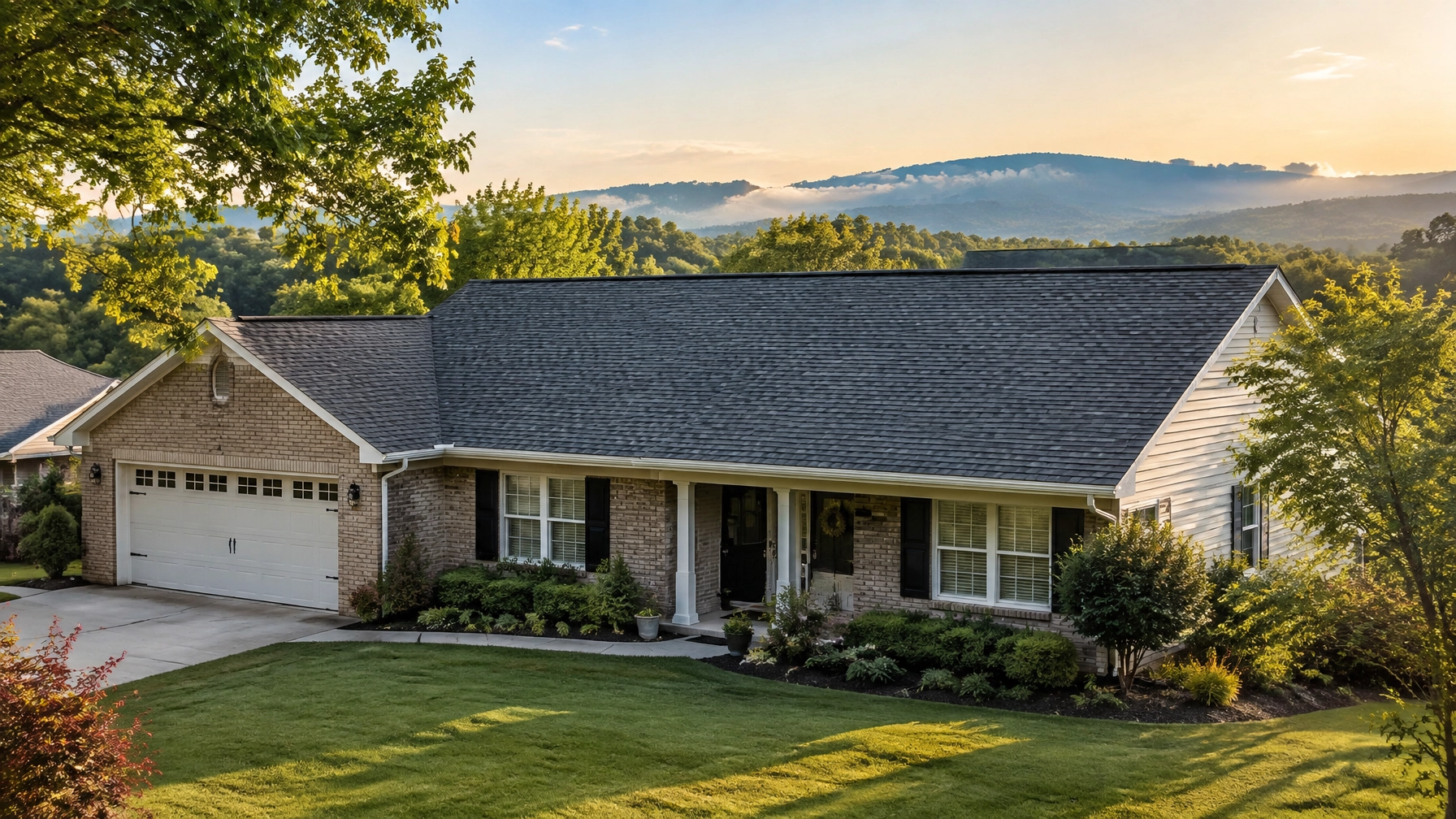
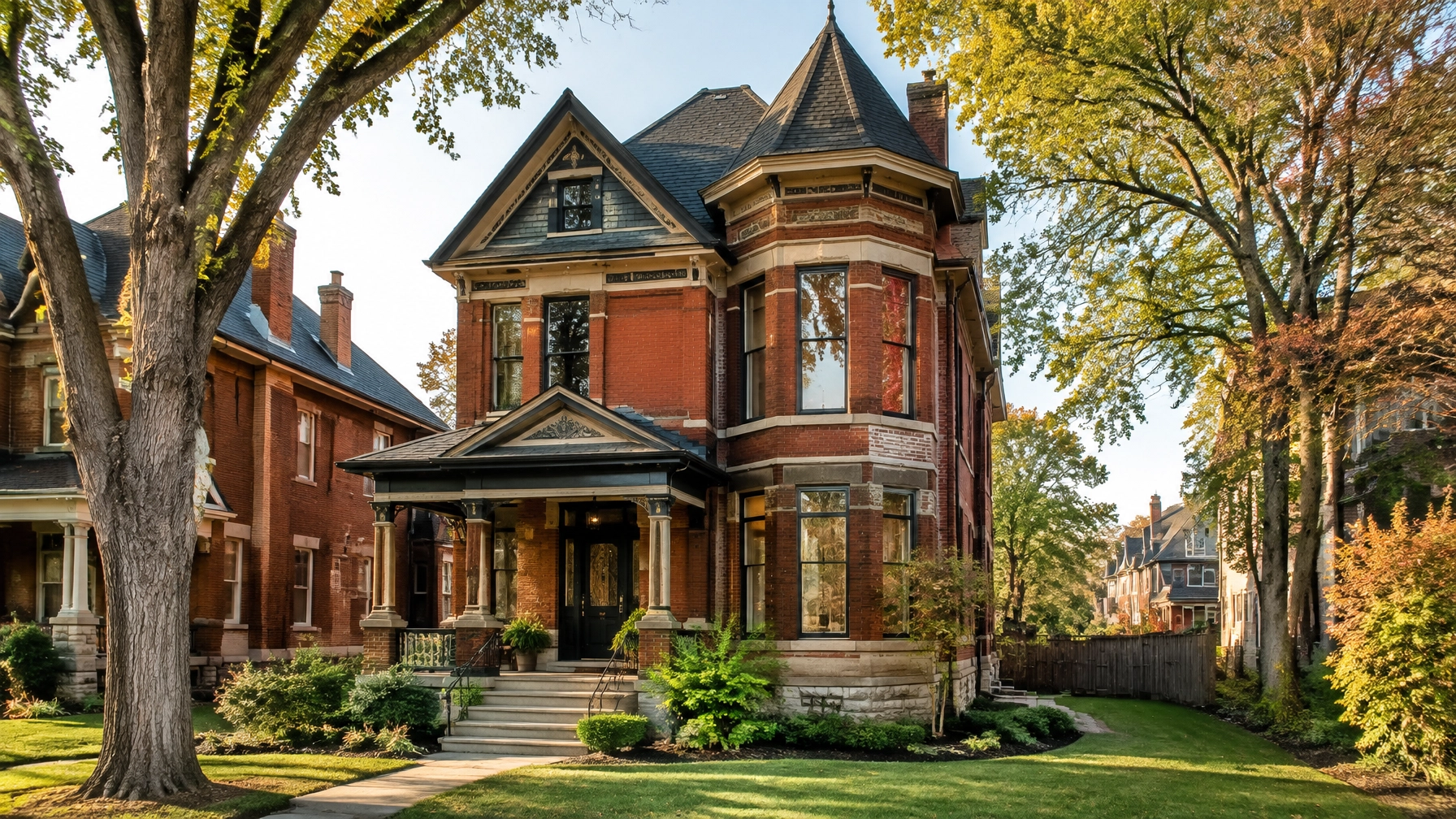
    Louisville Craftsman bungalow with a new dimensional asphalt shingle roof

    What is the new roof ROI in Louisville, KY?

    The new roof ROI in Louisville should be viewed as both a resale calculation and a risk-management decision.

    Direct financial benefits

    • Asphalt resale recovery: Commonly 60%–70% of the replacement cost.
    • Potential home value lift: Approximately 2%–4%, depending on condition, appearance, neighborhood, and buyer demand.
    • Avoided buyer concessions: Approximately $10,000–$20,000 when a buyer uses roof age or visible damage to negotiate.
    • Avoided interior repairs: Approximately $5,000–$15,000 for water-damaged ceilings, insulation, drywall, flooring, or framing.
    • Improved marketability: A new roof can reduce inspection friction and make the home easier to show.
    • Better curb appeal: Clean rooflines and coordinated colors support the overall exterior presentation.

    On a Louisville home valued near $284,065, a 2%–4% value lift would equal roughly $5,681–$11,363. This is not a guaranteed appraisal adjustment, and it should not be added mechanically to the 60%–70% resale recovery figure. These are different ways to measure benefit.

    The National Association of Realtors gives new roofing a 10/10 Joy Score. That is useful context, but the Joy Score measures homeowner satisfaction: not resale recovery. A roof can be highly satisfying while still recovering only part of its installed cost.

    Storm resistance matters in Louisville

    Kentucky is exposed to hail, straight-line wind, heavy rain, falling trees, and rapid weather changes.

    The May 16, 2026 Louisville storm included quarter-size hail in downtown Louisville, with hail up to 1.00 inch confirmed in Kentucky. Storm summaries also cite wind damage reaching approximately 65 mph in the event area.

    Other 2026 reports included:

    • March 16: Wind reports of approximately 60–64 mph.
    • June 18: Tree-on-roof damage.
    • August 16: Trees down and winds near 56 mph.

    When comparing roofing proposals, ask about:

    • Class 4 impact-resistant shingles.
    • High-wind installation methods.
    • Enhanced underlayment and leak barriers.
    • Proper flashing around chimneys, walls, and skylights.
    • Ridge and soffit ventilation.
    • Algae-resistant granules for Louisville’s humid conditions.
    • Manufacturer and workmanship warranties.

    A storm-resistant roof may cost more upfront, but it can reduce future damage risk and improve your insurance and maintenance position.

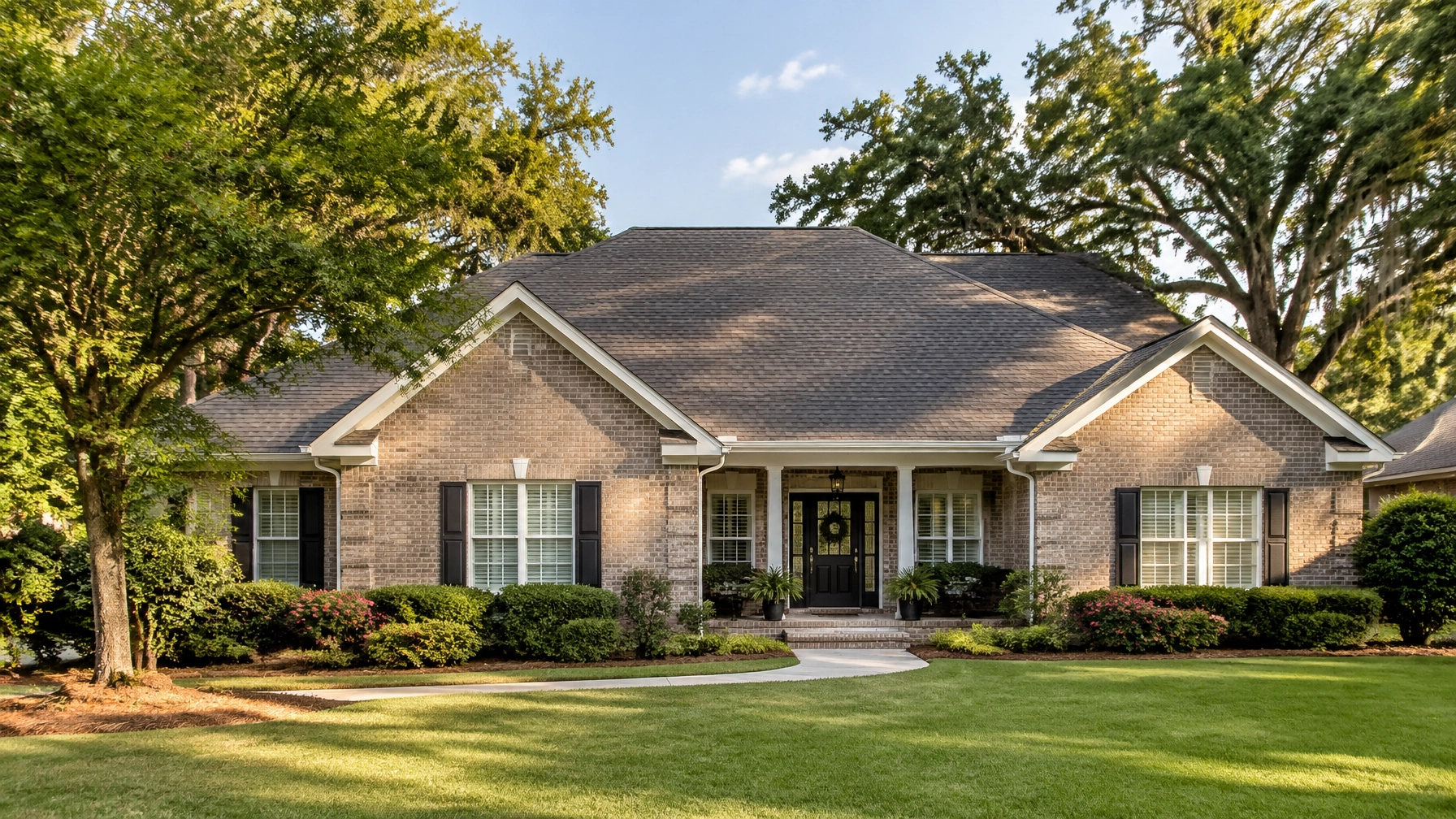
    Louisville suburban colonial home with a new dark standing-seam metal roof

    Kentucky insurance claim timelines and deductible guidance

    Kentucky insurers generally must acknowledge a claim promptly: often within 15 days of receiving notice. Once liability and the amount of loss are established and agreed, payment obligations generally apply to the undisputed amount.

    Kentucky’s insurance rules and statutes can be reviewed through the Kentucky Department of Insurance resources and Kentucky’s claims-handling regulations.

    Before filing a wind or hail claim:

    1. Photograph shingles, flashing, gutters, siding, windows, ceilings, and attic areas.
    2. Record the storm date and any visible damage.
    3. Arrange an independent inspection.
    4. Review your policy declarations page.
    5. Confirm whether your deductible is flat-dollar or percentage-based.
    6. Ask specifically whether wind and hail have a separate deductible.

    A percentage deductible is based on the dwelling coverage limit, not necessarily the repair estimate. For example, a 2% deductible on $300,000 of dwelling coverage equals $6,000.

    Do not assume every roof replacement qualifies for insurance coverage. Storm damage, wear, age, installation defects, and maintenance issues may be treated differently under your policy.

    Louisville roof replacement checklist

    1. Confirm the roof’s actual condition. Look for granule loss, curling shingles, exposed fasteners, soft decking, leaks, and damaged flashing.
    2. Check the roof age. Asphalt roofs near 20–30 years old deserve closer evaluation.
    3. Document storm damage. Take dated photos from the ground and attic.
    4. Review your policy. Identify wind/hail coverage, exclusions, and deductible type.
    5. Measure the roof accurately. Roof size, pitch, and complexity directly affect pricing.
    6. Compare materials. Evaluate architectural shingles, impact-rated options, metal, warranties, and lifecycle cost.
    7. Get itemized estimates. Require tear-off, disposal, ventilation, flashing, permits, and decking allowances to be listed.
    8. Verify the installer. Use a licensed, insured contractor and confirm workmanship warranty details.

    Get an instant Louisville roof estimate

    You do not need to schedule several contractor visits just to get a starting number.

    With Get My Roof Estimate Now, enter your Louisville address and receive a free, satellite-powered roof replacement estimate in under 60 seconds.

    The estimate uses roof size, pitch, complexity, material choice, and regional pricing to provide low, middle, and high ranges. There is:

    • No cost.
    • No credit card requirement.
    • No contractor visit needed upfront.
    • No hidden fees.

    Use the estimate to budget, compare options, prepare for a sale, or decide whether an inspection is the next step.

    Louisville new roof ROI FAQ

    1. How much does a new roof cost in Louisville in 2026?

    The local median is approximately $12,962, with a typical range of $8,101–$19,443. Standard asphalt roofing on a 1,500–3,000-square-foot home often costs about $8,000–$15,000.

    2. What is the roof replacement ROI in Kentucky?

    Asphalt shingle replacement commonly recovers about 60%–70% of its cost at resale. The total effective benefit may be higher when avoided buyer concessions and interior water-damage repairs are considered.

    3. Does a new roof increase home value in Louisville?

    It can. A new roof may contribute to an estimated 2%–4% home value lift, while also improving curb appeal, reducing inspection concerns, and strengthening buyer confidence.

    4. Are Class 4 shingles worth considering in Louisville?

    They may be. Louisville experiences hail and high-wind events, so Class 4 impact-resistant shingles can offer stronger protection. Ask your insurer whether they provide a discount and confirm the product’s actual rating.

    5. Should I file an insurance claim before replacing my roof?

    Document the damage and review your policy before filing. An independent inspection can help distinguish storm damage from normal aging. Also confirm your wind/hail deductible, especially if it is percentage-based.

    A new roof is not simply a repair expense. In Louisville’s changing 2026 market, it can protect value, reduce negotiation risk, and improve the home’s first impression.

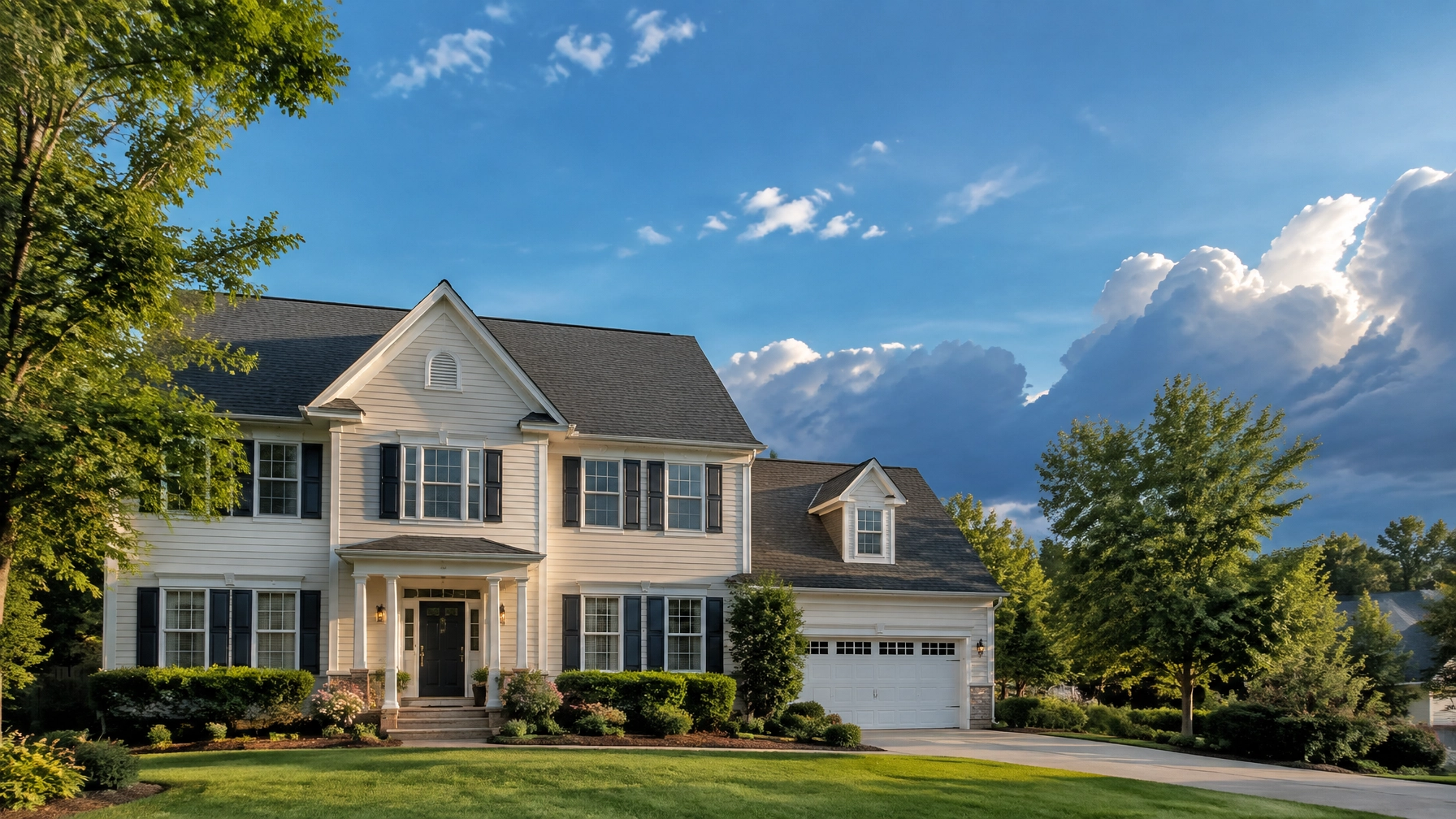
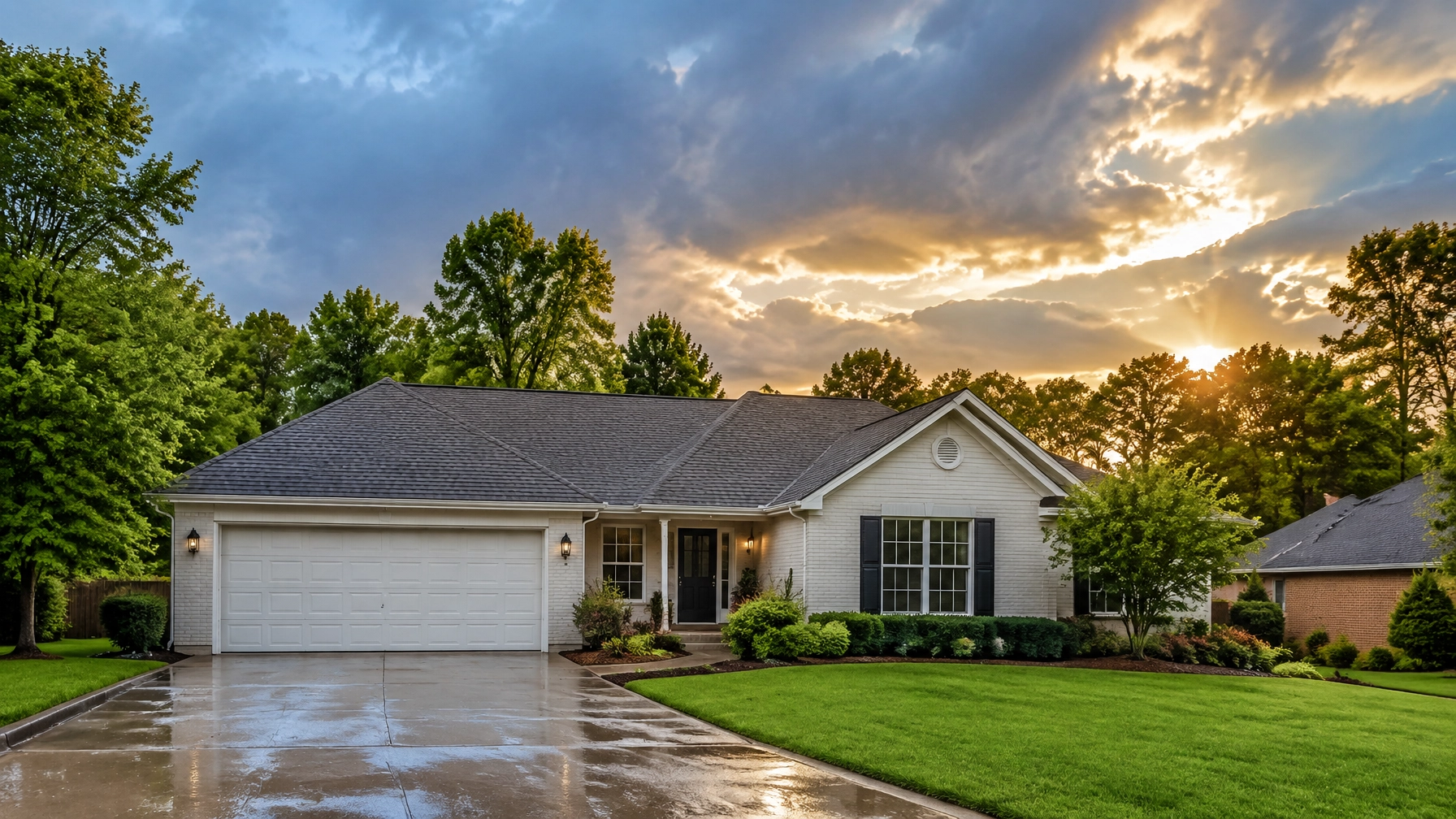
    Louisville ranch home with a new high-quality architectural shingle roof and strong curb appeal

  • Daily Weather Blitz – Slot 5: Raleigh, NC : September 11, 2026: A 96°F Friday With a 102°F Heat Index, a Weekend Soaker With 70–80% Storm Chances & What the Triangle’s September Heat, Hail Season, and Drought-to-Downpour Swing Do to Your Roof’s Durability

    Daily Weather Blitz – Slot 5: Raleigh, NC : September 11, 2026: A 96°F Friday With a 102°F Heat Index, a Weekend Soaker With 70–80% Storm Chances & What the Triangle’s September Heat, Hail Season, and Drought-to-Downpour Swing Do to Your Roof’s Durability

    Raleigh is heading into a sharp weather reversal.

    At midday Friday, September 11, 2026, the temperature at Raleigh-Durham International Airport (KRDU) is 91°F, with a 95°F heat index. This afternoon may reach 96°F, with the heat index climbing as high as 102°F. By Saturday, the Triangle shifts toward a stormier pattern, with a 70% chance of showers and thunderstorms, followed by an 80% chance Saturday night.

    That heat-to-heavy-rain swing matters for your roof. Raleigh-area homes are dealing with prolonged drought, intense summer sun, recent hail, high humidity, wind-driven storms, and seasonal temperature changes. Each stressor affects a different part of the roofing system: from shingle granules and flashing to attic ventilation and fasteners.

    Here is the current weather picture and what Raleigh homeowners should do next.

    Raleigh Weather Snapshot: Friday, September 11

    Current KRDU conditions around midday:

    • Temperature: 91°F
    • Sky: A few clouds
    • Heat index: 95°F
    • Humidity: 47%
    • Dew point: 68°F
    • Wind: West at 7 mph
    • Barometric pressure: 30.00 inches

    Friday afternoon forecast:

    • Mostly sunny
    • High near 96°F
    • Heat index up to 102°F
    • Light southwest wind

    A 102°F heat index falls in the National Weather Service’s “extreme caution” range for human heat safety. The heat index describes how hot conditions feel to people in the shade: it does not measure roof-surface temperature. Dark shingles exposed to direct sun can become substantially hotter than the surrounding air.

    If you need a roof inspection, gutter check, or storm documentation, avoid climbing during the hottest part of the day. Use the National Weather Service heat safety tools, and consider hiring a qualified professional for roof-level inspections.

    Weekend Forecast: A Fast Shift From Heat to Storms

    Period Raleigh-area forecast Roofing concern
    Friday afternoon Mostly sunny, 96°F; heat index up to 102°F Heat stress, thermal expansion
    Friday night 20% chance of showers or storms before 1 a.m.; low near 74°F Brief wind and moisture exposure
    Saturday 70% chance of showers and thunderstorms, mainly 2–4 p.m.; high near 90°F Hail, wind uplift, sudden downpours
    Saturday night 80% chance of showers and thunderstorms; low near 72°F Wind-driven rain and drainage stress
    Sunday 40% chance of showers; storms possible after 2 p.m.; high near 89°F Repeated wetting and drying
    Monday Sunny, high near 90°F Roof drying and renewed heat
    Tuesday Mostly sunny, high near 86°F Continued UV and thermal exposure

    Do not schedule roof work during an active storm window. If storms are expected, secure patio items, keep ladders away from exposed areas, and inspect the ground-level perimeter afterward for displaced shingles, fallen branches, and granules.

    Raleigh-area ranch home with a new impact-resistant shingle roof after a summer storm

    Raleigh’s Recent Hail and Wind Damage Deserve Attention

    A significant regional hail event occurred on September 4. Radar-based hail analysis associated with the Raleigh/Durham radar domain estimated hail up to 2.8 inches and approximately 36,000 properties with possible exposure across the broader multi-state coverage area.

    That figure should be interpreted carefully. It is a regional radar-based estimate: not a confirmed damage count inside Raleigh city limits. Still, it indicates that homeowners across Wake County and surrounding Triangle communities should take recent hail seriously.

    Storms on September 5 also brought downed trees in northeast Raleigh and thousands of power outages across the Raleigh-Durham area. The National Weather Service’s Raleigh local storm reports provide a useful record of reported storm impacts.

    After a hail or wind event, look for:

    • Circular or irregular bruises where granules have been knocked away
    • Fresh granule piles near downspouts
    • Cracked, creased, or missing shingles
    • Bent drip edges, vents, gutters, or flashing
    • Lifted tabs or exposed underlayment
    • Broken branches resting on roof planes
    • Water stains in the attic or on ceilings

    Avoid walking on the roof to check for damage. Hail bruising can be difficult to see from the ground, especially on older shingles. Photograph what you can safely document and arrange a professional inspection if you see warning signs.

    How Raleigh’s Heat and Drought-to-Downpour Pattern Affects Roof Durability

    1. Hail Causes Localized Bruising and Granule Loss

    Hail damage is not always an immediate leak. A shingle can lose protective granules or suffer mat damage while remaining temporarily watertight.

    Over time, exposed asphalt deteriorates faster under Raleigh’s strong sun. The result may be premature cracking, accelerated granule loss, and leaks around damaged areas.

    If your roof is more than 15 years old, compare its pre-storm condition with what you see now. Older shingles already have normal wear, so dated photos and professional documentation can help distinguish storm damage from general aging.

    2. Extreme Heat Drives Thermal Cycling

    Friday’s 96°F air temperature and 102°F heat index create uncomfortable conditions for people, but the roofing concern is repeated expansion and contraction.

    Roof components heat rapidly in direct sunlight and cool after sunset or during storms. Repeated thermal cycling can contribute to:

    • Nail pops
    • Shingle curling or cracking
    • Seal-strip failure
    • Movement around flashing and penetrations
    • Stress at valleys and roof transitions
    • Premature aging of underlayment and sealants

    Adequate attic ventilation and insulation can help manage heat buildup beneath the roof deck. They cannot prevent storm damage, but they can reduce avoidable heat stress and improve indoor comfort.

    3. Long-Term Drought Leaves Materials Dry, Then Rain Tests Weak Points

    Central North Carolina has experienced a persistent drought dating back to approximately August 2025. Conditions have fluctuated between moderate, severe, and extreme drought across the region as rainfall deficits accumulated.

    A dry period does not directly “break” a roof. The greater concern is the abrupt change from extended dryness to intense thunderstorms. Heavy rain quickly tests:

    • Clogged or undersized gutters
    • Aging pipe boots
    • Loose flashing
    • Weak sealants
    • Low spots and drainage paths
    • Previously hail-damaged shingles

    Drought followed by downpours can also increase runoff intensity around foundations and splash zones. Clean gutters and verify that downspouts discharge away from the home.

    4. Humidity Encourages Algae and Moss

    Warm, humid weather creates favorable conditions for algae streaks and moss, particularly on shaded north-facing roof slopes.

    Algae is usually cosmetic at first, but moss can hold moisture against shingle surfaces and gradually lift edges. Tree cover, poor airflow, and debris buildup make the problem worse.

    Do not pressure-wash asphalt shingles. Instead:

    • Trim branches that create constant shade
    • Remove leaves and pine needles carefully
    • Keep gutters clear
    • Use manufacturer-approved cleaning methods
    • Consider algae-resistant architectural shingles during replacement

    Modern Raleigh home with a standing-seam metal roof in bright September sunlight

    Practical Raleigh Roof Durability Checklist

    Use this checklist after the weekend storm cycle:

    • Inspect from the ground: Look for missing shingles, exposed underlayment, dents, and debris.
    • Check gutters and downspouts: Look for fresh granules, clogs, sagging, and poor discharge.
    • Review attic conditions: Watch for daylight, damp insulation, water marks, or excessive heat.
    • Document storm timing: Record the date, weather conditions, photos, and visible changes.
    • Do not delay obvious repairs: Small openings can become larger leaks during the next storm.
    • Ask about impact resistance: Class 4 impact-resistant shingles may be worth comparing in a hail-exposed area.
    • Compare materials realistically: Asphalt shingles generally cost less upfront, while metal offers a longer expected service life and may improve energy performance.
    • Measure before budgeting: Roof size, pitch, valleys, dormers, and penetrations can change the price substantially.

    For 2026 planning, national replacement averages commonly fall around $9,000–$22,000, but Raleigh pricing depends on roof size, material, pitch, complexity, tear-off requirements, and contractor availability. Asphalt shingles commonly run about $3–$7 per square foot installed. Metal roofing is often around $8–$16 per square foot installed.

    Does a New Roof Improve Home Value in Raleigh?

    A new roof can support new roof ROI home value in several ways:

    • Better curb appeal
    • Fewer inspection objections
    • Reduced concern about near-term replacement
    • Improved storm-readiness
    • Stronger buyer confidence
    • Potentially better energy performance with the right material and ventilation

    The best roof for home value is not automatically the most expensive roof. A properly installed architectural shingle roof may provide strong value for a traditional Raleigh home. Metal can be attractive for homeowners planning to stay longer, prioritizing longevity, or seeking a distinctive modern appearance.

    Roof replacement resale value depends on the neighborhood, roof age, material, installation quality, and buyer expectations. A new roof does not guarantee a specific return, but replacing a visibly failing roof can protect marketability and improve roof curb appeal home value.

    For a clear comparison, review the metal roofing versus asphalt shingles guide and the asphalt shingle guide.

    Get a Raleigh Roof Estimate in 60 Seconds

    You do not need to wait for multiple contractor visits just to understand your likely replacement budget.

    Get My Roof Estimate Now uses satellite imagery to measure your roof’s size, pitch, and complexity. Enter your address and receive a free estimate in about 60 seconds: without a credit card or upfront contractor appointment.

    You can compare low, middle, and high price ranges for options such as architectural shingles, metal roofing, synthetic materials, and coatings. The estimate helps you evaluate roof replacement ROI, plan for storm repairs, and decide whether replacement makes more sense than continued patching.

    Raleigh’s weather can change quickly. Your roof budget should not.
    ラックバック

  • Daily Weather Blitz – Slot 1: Atlanta, GA : September 11, 2026: A 50% Chance of Afternoon Storms With Low-90s Heat, Saturday’s Heavy Downpours & What the A-T-L’s Humidity, Hail Season, and Heat-to-Rain Swing Do to Your Roof’s Durability

    Daily Weather Blitz – Slot 1: Atlanta, GA : September 11, 2026: A 50% Chance of Afternoon Storms With Low-90s Heat, Saturday’s Heavy Downpours & What the A-T-L’s Humidity, Hail Season, and Heat-to-Rain Swing Do to Your Roof’s Durability

    Atlanta starts Friday, September 11, with temperatures mostly in the 70s across the metro area and readings in the 60s north of the city. Heat builds quickly, with afternoon highs reaching the upper 80s to low 90s. Deep moisture will fuel widespread showers and thunderstorms, with rain chances near 50% and peaking during the afternoon and evening.

    Rain-cooled neighborhoods may briefly fall into the 80s, but humidity will remain high. Friday’s UV index is 7.3, with sunrise at 7:18 a.m. and sunset at 7:49 p.m. The overnight low should settle near 72°F.

    Saturday brings the highest rain chances of the weekend, including potentially heavy morning downpours. Storm activity is expected to shift southeast of I-85 during the afternoon. A level 1 of 4 flash flood risk is in effect for parts of the region. Sunday should turn mostly dry as the low lifts away, although a few afternoon showers remain possible with highs near 90°F.

    For Atlanta homeowners, this is a useful reminder: heavy rain does not always create new roof problems. It often exposes problems that were already present.

    Why This Atlanta Weather Pattern Matters to Your Roof

    Atlanta’s humid subtropical climate creates several recurring roofing pressures:

    • Heat index stress: Repeated low-90s afternoons heat shingles, decking, flashing, and attic spaces.
    • Fast temperature changes: A hot roof can go from intense sun to cooling rain within minutes.
    • Heavy downpours: Concentrated rainfall tests gutters, valleys, flashing, and roof penetrations.
    • Gusty thunderstorms: Wind can lift loose shingles or move branches onto the roof.
    • Occasional hail: Atlanta’s convective storm season can produce hail, even when hail is not specifically forecast.
    • Persistent humidity: Warm, damp, shaded roof surfaces encourage algae, moss, and mildew growth.

    Friday’s forecast does not specifically call for widespread damaging hail. The more immediate concerns are heavy rain, wind gusts, clogged drainage, and existing roof wear. Saturday’s heavier downpours make today a good time for a quick ground-level check.

    Friday Pre-Storm Roof Inspection Checklist

    Do not climb onto a wet or steep roof. From the ground, windows, or a safe ladder position, look for the following:

    Check the roof surface

    • Missing, lifted, curled, or cracked shingles
    • Shingle pieces collecting in gutters or near downspouts
    • Exposed dark underlayment or bare roof deck
    • Sagging areas along the roofline
    • Damaged pipe boots, vents, skylights, or chimney flashing
    • Heavy dark streaking, moss, or thick organic growth

    A few dark streaks are usually algae staining, not an emergency. Missing shingles, visible gaps, and sagging sections require faster attention.

    Clear gutters and downspouts

    Remove leaves, pine needles, and roof granules from gutters before Saturday’s downpours. Confirm that downspouts discharge water several feet away from the foundation.

    A clogged gutter can overflow behind fascia boards, saturate siding, and send water toward the foundation. It can also create concentrated runoff near roof edges, where small weaknesses become interior leaks.

    Inspect nearby trees

    Atlanta’s mature trees add shade and curb appeal, but overhanging limbs can become storm hazards. Look for:

    • Dead or cracked branches over the roof
    • Limbs touching shingles or gutters
    • Loose branches that could fall during gusty storms
    • Excessive debris already collecting in valleys

    Use a qualified tree professional for dangerous or elevated limbs. Do not attempt major pruning near power lines.

    Atlanta colonial home with clean gutters, visible rooflines, and mature trees after rain

    Hail Damage vs. Normal Shingle Wear

    Hail damage is not always obvious from the ground. A professional inspection may be needed, especially after a strong storm. Common warning signs include:

    • Round bruises or dark impact marks on shingles
    • Random areas where protective granules are missing
    • Cracked or split shingles
    • Dents in soft metal components, including vents and gutters
    • Damaged screens, siding, window trim, or outdoor equipment
    • Shingles that appear displaced after strong wind

    Normal aging is usually more uniform. Granule loss may appear across broad portions of an older roof, while hail impacts tend to be scattered and irregular. Curling, brittleness, fading, and repeated repairs are more consistent with age and long-term heat exposure.

    Photograph damage from the ground and record the storm date. Avoid making permanent repairs before your insurance company or a qualified roofing professional documents the condition. If water is entering the home, use temporary protection and address the leak promptly.

    Humidity, Algae, and Moss on Atlanta Roofs

    Humidity does not destroy an asphalt shingle roof in a single weekend. Over months and years, however, repeated wetting and slow drying can shorten the roof’s effective service life.

    Algae commonly appears as dark gray or black streaks. Moss is thicker and may lift shingle edges as it grows. Both are more common on shaded roof slopes, especially beneath trees or on north-facing sections.

    Practical prevention steps include:

    • Keep gutters and valleys free of debris.
    • Trim branches to improve sunlight and airflow.
    • Choose algae-resistant architectural shingles during replacement.
    • Ask a roofing professional about properly placed zinc or copper strips.
    • Use a roof-safe cleaning method for existing growth.
    • Never pressure-wash asphalt shingles.

    Metal roofing can also be attractive in Atlanta because it resists rot, insects, and mildew and can reflect more solar heat. However, metal is not immune to large hail or falling branches. The material, coating, installation quality, and impact rating all matter.

    For a direct comparison, see our guide to metal roofing vs. asphalt shingles.

    Modern Atlanta home with a standing-seam metal roof and storm-cleared sky

    Atlanta Roof Replacement Costs in 2026

    For planning purposes, Atlanta homeowners commonly see roof replacement projects ranging from approximately $8,000 to $25,000. A typical roof may measure between 1,500 and 3,000 square feet, but roof area is not the same as the home’s interior square footage.

    Roofers price materials in squares. One roofing square equals 100 square feet of roof surface.

    A useful Atlanta planning range is:

    Price level Typical planning range Common configuration
    Budget $8,000–$12,000 Basic asphalt shingles, simpler roof design
    Popular $12,000–$18,000 Architectural shingles on a typical Atlanta home
    Premium $18,000–$25,000+ Metal, synthetic, designer materials, complex roofs, or extensive repairs

    Your actual cost depends on:

    • Roof size and number of squares
    • Pitch and accessibility
    • Valleys, dormers, skylights, and other roof complexity
    • Material selection
    • Tear-off and disposal requirements
    • Decking or structural repairs
    • Local labor, permits, and contractor availability
    • Regional pricing differences within the Atlanta market

    Architectural shingles remain the most common choice because they balance cost, appearance, and service life. Metal typically costs more upfront but may last 40–70 years and can reduce cooling demand when properly selected and installed. Synthetic roofing and specialized coatings may offer different combinations of durability, appearance, and energy performance.

    You can review broader 2026 assumptions in our roof cost calculator.

    Plan Before You Schedule Contractor Visits

    Atlanta homeowners do not need to wait for multiple in-person appointments to establish a realistic starting budget.

    Get My Roof Estimate Now uses satellite imagery to measure roof size, pitch, and complexity. The system is designed to produce measurements accurate to within inches, generally around 90%–95% accuracy, and returns a free estimate in about 60 seconds.

    The estimate can help you compare:

    • Architectural shingles
    • Metal roofing
    • Synthetic materials
    • Roof coatings
    • Low, middle, and high project cost ranges

    There is no credit card requirement, no upfront cost, and no contractor visit needed to receive the initial estimate. Once you understand the likely range, you can decide whether to schedule a professional inspection, pursue storm documentation, or plan a replacement around your timeline.

    Start with the Atlanta roof replacement estimate.

    Atlanta-area home roof with clean drainage details and bright morning light after heavy rain

    What to Expect Next Week

    Warm afternoons will continue into next week, but the persistent overnight warmth should finally ease. Morning lows are expected to fall to approximately 68°F on Wednesday and 67°F on Thursday, breaking the long streak of lows at or above 70°F.

    That shift may provide slightly better conditions for roof inspections and planned work. It does not eliminate the need to address current leaks, missing shingles, or drainage problems. Water intrusion can worsen quickly under insulation, decking, and interior finishes.

    Atlanta Weather Preparedness Checklist

    Before Friday afternoon storms and Saturday’s heavier rain:

    • Check for loose, missing, curled, or cracked shingles from the ground.
    • Clear leaves and debris from gutters.
    • Confirm downspouts direct water away from the foundation.
    • Look for dead limbs or branches touching the roof.
    • Check the attic and ceilings for new damp spots after rainfall.
    • Photograph suspected storm damage without climbing onto the roof.
    • Do not pressure-wash shingles or make permanent repairs before documentation.
    • Contact a licensed, insured roofing professional if you see active leaks or structural damage.
    • Compare replacement options using a satellite-measured estimate.
    • Get your free Atlanta roof estimate in 60 seconds at getmyroofestimatenow.com.

    A storm-ready roof is easier to manage when you know its condition and likely replacement cost before an emergency.

  • 2026 Roof Replacement Cost in Knoxville, TN: Marble City Pricing, Permit Rules & Hail-Ready Tips

    2026 Roof Replacement Cost in Knoxville, TN: Marble City Pricing, Permit Rules & Hail-Ready Tips

    A full roof replacement in Knoxville typically costs $8,000–$15,000 for asphalt shingles in 2026. A typical 2,000-square-foot roof generally falls into these planning ranges:

    • $7,000–$10,000 (Budget): 3-tab asphalt shingles
    • $8,500–$13,000 (Popular): Architectural asphalt shingles
    • $10,000–$15,000 (Hail-ready): Impact-resistant shingles
    • $16,000–$32,000 (Premium): Metal roofing

    These ranges include the estimated 4%–8% 2026 increase in labor, materials, disposal, and overhead. Your final Knoxville roof replacement cost depends on the measured roof area, pitch, layers being removed, ventilation, flashing, decking repairs, and contractor pricing.

    Knoxville Roof Replacement Cost Per Square

    Roofing contractors price materials and installation by the square. One roofing square equals 100 square feet. A 2,000-square-foot roof contains approximately 20 squares before accounting for waste and cutting.

    Roof system Installed cost per square Approximate cost for 2,000 sq. ft. Best fit
    3-tab asphalt $350–$500 $7,000–$10,000 Budget projects and rentals
    Architectural shingles $425–$650 $8,500–$13,000 Popular choice for most homeowners
    Impact-resistant shingles $500–$750 $10,000–$15,000 Hail-ready protection
    Corrugated or exposed-fastener metal $550–$1,000 $11,000–$20,000 Long service life at a moderate metal price
    Standing-seam metal $800–$1,600 $16,000–$32,000 Premium durability and appearance

    These are planning figures, not binding bids. Roofs with multiple valleys, dormers, skylights, steep slopes, or difficult access can exceed the table ranges.

    For a second opinion, compare these figures with the company’s roof cost calculator, which adjusts pricing by roof size, material, pitch, and Southeast regional costs.

    What Homeowners Pay for Different Materials

    Architectural Asphalt Shingles (Popular)

    Architectural shingles remain the most common choice for Knoxville homes. They provide a dimensional appearance, broader color selection, and better durability than basic 3-tab shingles.

    Typical installed cost: $4–$7 per square foot.

    Expected service life is generally 25–30 years, depending on ventilation, installation quality, sun exposure, and storm damage. For most homeowners, architectural shingles provide the strongest balance of price, curb appeal, warranty coverage, and resale value.

    See the full asphalt shingles guide for a comparison of 3-tab, architectural, premium, and impact-resistant products.

    Impact-Resistant Shingles (Hail-ready)

    Impact-resistant shingles are designed to better withstand hail strikes. They are a practical consideration in Knoxville after repeated golf-ball-size and larger hail events.

    Typical installed cost: $5–$8 per square foot.

    Look for products tested to a Class 4 impact rating, but remember that no asphalt shingle is completely hailproof. Ask your insurer whether an eligible impact-resistant product may affect your premium or deductible.

    Metal Roofing (Premium)

    Metal roofing costs more upfront but can last 40–70 years with proper installation. Standing-seam panels typically cost more than corrugated metal or metal shingles because of concealed fasteners, detailed flashing, and specialized installation.

    Metal can be a good fit when you plan to stay in the home for many years, want lower long-term maintenance, or prefer a modern, clean roofline. Review the company’s metal roofing guide and metal-versus-shingles comparison before choosing.

    New roof on a Knoxville Colonial-style home after a storm

    What Drives Roof Replacement Knoxville TN Pricing?

    The material is only one part of the estimate. Contractors also price the conditions below.

    Roof Size and Waste

    A 2,000-square-foot living area does not always mean a 2,000-square-foot roof. Roof pitch, overhangs, attached garages, and architectural sections can increase the actual measured area. Contractors also add waste for cuts, starter strips, and ridge caps.

    Pitch and Accessibility

    Steep roofs require additional safety equipment, slower installation, and more labor. A two-story home, limited driveway access, or landscaping around the foundation can also increase setup and cleanup costs.

    Tear-Off and Disposal

    Removing one layer of old shingles may add approximately $100 per square, depending on access and local disposal costs. Multiple layers, saturated underlayment, or heavy debris can increase the total.

    Decking, Flashing, and Ventilation

    Rotten roof decking must be replaced before new roofing is installed. Chimney flashing, pipe boots, valley metal, drip edge, ridge vents, and intake ventilation may also need attention.

    Ask for these items to be listed separately. A low initial estimate can change quickly if repairs are not clearly defined.

    Knoxville’s Recent Hail Activity

    Knoxville homeowners should treat hail history as part of the replacement decision, not an afterthought.

    Recent local storm activity includes:

    • April 10, 2025: Golf-ball-size hail was reported around the Knoxville area, including Hardin Valley and nearby communities.
    • September 4, 2025: Hail affected areas near Farragut and Rockford.
    • October 21, 2025: Approximately 3,355 properties were identified within an affected hail area.
    • July 28, 2026: Hail averaged approximately 1.2 inches in reported affected areas.
    • September 5, 2026: Approximately 3,393 properties were impacted, with hail reported up to 2.3 inches.

    You can also review available Knoxville hail history and local storm reporting before scheduling an inspection.

    After a major storm, photograph the roof and exterior from the ground. Look for:

    • Missing, lifted, or cracked shingles
    • Circular bruising or exposed matting
    • Damaged vents, gutters, siding, or window screens
    • Granules collecting in gutters and downspouts
    • Leaks or ceiling stains in the attic or upper floors

    Do not climb onto a damaged roof. If you believe the damage may be covered, contact your insurer and request a professional inspection. Your out-of-pocket cost may be primarily the policy deductible, while upgrades or excluded repairs remain your responsibility.

    Hail-ready architectural shingle roof on a Knoxville home

    Knoxville Roof Replacement Permit Rules

    For homes inside the City of Knoxville, a full roof replacement generally requires a building permit. The City’s Plans Review & Inspections Department handles permits, inspections, and development requirements.

    Applications and fee information are available through the City’s online permitting site.

    For project valuations up to $500,000, the building permit fee is approximately:

    0.55% of the project valuation, with a $50 minimum

    Examples:

    • $10,000 roof replacement valuation: approximately $55 permit fee
    • $15,000 valuation: approximately $82.50
    • $25,000 valuation: approximately $137.50

    The valuation normally includes project labor and materials. Confirm the current fee with the City before work begins because separate jurisdictions, inspections, or trade-related charges may apply. Homes outside Knoxville city limits may fall under different permitting procedures through the applicable local authority.

    A Practical Knoxville Roofing Budget

    Knoxville’s typical home value is approximately $383,000, making an $8,000–$15,000 asphalt replacement roughly 2%–4% of the home’s value. That does not make the project small, but it provides useful context when comparing repair, replacement, and premium material options.

    For a typical home, use this framework:

    1. Start with the measured roof size, not the home’s living area.
    2. Choose a material tier before comparing contractor bids.
    3. Add a contingency of 10%–15% for decking, flashing, ventilation, or hidden moisture damage.
    4. Include the permit, disposal, cleanup, and possible temporary protection.
    5. Compare the full written scope: not just the total price.

    A satellite estimate can give you a fast starting point before you schedule contractor visits.

    Five Ways to Save on Roof Replacement

    1. Measure before requesting bids. An accurate roof measurement helps you compare estimates on the same basis.
    2. Get at least three written scopes. Confirm that each bid includes tear-off, underlayment, flashing, ventilation, disposal, and warranty details.
    3. Repair ventilation issues at the same time. Better airflow can help protect shingles and reduce premature aging.
    4. Ask about impact-resistant options. A higher initial cost may be worthwhile after repeated hail exposure or if your insurer offers an eligible discount.
    5. Schedule before peak storm demand. After a major hail event, contractor availability tightens and estimates may take longer.

    Get an Instant Knoxville Roof Estimate

    You can get a free, property-specific starting range at Get My Roof Estimate Now. The satellite-powered system measures your roof using aerial imagery and estimates pricing based on size, pitch, complexity, material, and regional costs.

    Results are available in about 60 seconds, with no credit card and no contractor visit required upfront. You receive low, middle, and high price ranges to help you plan before speaking with verified local contractors.

    A fast estimate is not a substitute for a final inspection: but it gives you a clearer budget for your Knoxville roof replacement before the project begins.

    Frequently Asked Questions

    How much does a new roof cost in Knoxville in 2026?

    Most full asphalt shingle replacements cost approximately $8,000–$15,000 for a typical home. Complex roofs, premium shingles, impact-resistant products, and metal roofing can cost more.

    How much does roofing cost per square in Tennessee?

    In the Knoxville market, 2026 planning prices range from approximately $350–$750 per square for asphalt shingles and impact-resistant products. Metal roofing generally ranges from $550–$1,600 per square, depending on the system.

    Does Knoxville require a permit for roof replacement?

    A full roof replacement inside the City of Knoxville generally requires a building permit. The fee is approximately 0.55% of project valuation, with a $50 minimum for valuations up to $500,000. Confirm the current requirements through the City’s online permitting portal.

    Are impact-resistant shingles worth it in Knoxville?

    They may be worthwhile for homeowners in areas with recurring hail exposure. They cost more than standard architectural shingles, but may provide better protection and could qualify for insurance consideration depending on the product and policy.

  • Daily Tech Blitz – Slot 5: Melbourne, FL’s Satellite Tech Edge Is Bringing Space Coast Precision to Brevard County Roofs

    Daily Tech Blitz – Slot 5: Melbourne, FL’s Satellite Tech Edge Is Bringing Space Coast Precision to Brevard County Roofs

    Meta description: See Melbourne, FL roof replacement costs for 2026, Florida code requirements, storm-ready materials, resale ROI, and how satellite measurements deliver a free estimate in 60 seconds.

    Slug: melbourne-fl-satellite-roof-estimates-2026

    Categories: Florida Roofing, Roof Replacement Costs, Roofing Technology, Home Improvement

    Tags: Melbourne FL roofing, Brevard County roof replacement, Space Coast roofing, satellite roof estimate, Florida roof code, metal roofing, architectural shingles, roof replacement ROI, home value

    Melbourne is known for launch pads, satellite manufacturing, and aerospace engineering. Now, that same Space Coast technology mindset is changing how homeowners plan a roof replacement.

    Instead of waiting days for multiple contractors to visit just to get a ballpark figure, homeowners can use satellite-powered measurements to understand roof size, pitch, ridges, valleys, and complexity in about 60 seconds.

    For a typical 2,000-square-foot Brevard County home, a 2026 replacement may cost approximately $9,000–$18,000 for architectural shingles, $16,000–$36,000 or more for metal, and $20,000–$44,000 or more for tile. The right number depends on the actual roof: not just the home’s living area.

    1. Melbourne’s satellite and geospatial technology edge

    Melbourne and Palm Bay sit inside one of the country’s most concentrated aerospace and defense corridors.

    L3Harris Technologies reached full operational capacity at its approximately $100 million Palm Bay satellite integration facility in January 2026. The site is supporting an $843 million contract involving infrared missile-tracking satellites for the Golden Dome constellation.

    On September 10, Space Florida authorized up to $277 million in infrastructure financing tied to continued Space Coast growth involving SpaceX, Blue Origin, United Launch Alliance, Relativity Space, and other aerospace operations.

    The region’s space industry is also evolving. Airbus is reportedly reviewing the future of its Merritt Island satellite manufacturing operation as next-generation OneWeb production shifts toward Toulouse, France. That is a strategic review: not a completed sale: but it reflects the constant movement of technology and manufacturing across the Space Coast.

    The same precision used in modern geospatial work now supports residential roof measurement. Commercial imagery can resolve features at approximately 30 centimeters, allowing software to identify:

    • Roof edges and total footprint
    • Ridge, hip, and valley lines
    • Roof-plane geometry
    • Approximate pitch and complexity
    • Dormers, penetrations, and other visible obstacles

    Satellite imagery does not replace a final contractor inspection. However, it can provide a reliable planning estimate before anyone visits the property.

    2. What that precision means for Brevard County homeowners

    Traditional roof estimates often begin with scheduling. A contractor visits, measures the property, prepares a proposal, and may return with material options. That process can take several days.

    A satellite estimate moves the first step online.

    At Get My Roof Estimate Now, the property address is used to generate a roof measurement and pricing range based on:

    • Roof size in squares
    • Pitch and accessibility
    • Hips, ridges, valleys, and roof sections
    • Material selection
    • Local labor and regional pricing
    • Estimated tear-off and replacement requirements

    The result is not a binding construction contract. It is a faster, more informed starting point.

    For Melbourne homeowners, this matters because the average local home is approximately $388,000, or about $221 per square foot, and homes may take roughly 45 days to go under contract. A roof project is a major financial decision. Knowing whether you are likely facing a $12,000, $22,000, or $35,000 project helps you budget before requesting formal bids.

    Modern two-story Brevard County home with a new standing-seam metal roof and clean geometric lines

    3. Melbourne roof replacement costs in 2026

    The table below uses installed planning ranges for Brevard County. Actual bids vary based on roof geometry, decking condition, permit requirements, ventilation, flashing, access, and contractor qualifications.

    Roofing material Planning category Installed cost per sq. ft. Typical 2,000 sq. ft. roof
    Three-tab asphalt Budget $4.00–$6.50 $8,000–$13,000
    Architectural shingles Popular $4.50–$9.00 $9,000–$18,000
    Standing-seam or lower-end metal Premium $8.00–$18.00+ $16,000–$36,000+
    Concrete or clay tile Premium/Specialty $10.00–$22.00 $20,000–$44,000+

    Roof area is not always the same as interior living area. A 2,000-square-foot home may have a larger roof because of overhangs, attached garages, porches, and roof pitch.

    Use the roof cost calculator for a general material comparison, then use the free satellite estimate for property-specific measurements.

    Which material is the best value?

    • Three-tab shingles (Budget): Lowest initial price, but shorter expected service life.
    • Architectural shingles (Popular): Strong balance of appearance, cost, warranty, and availability.
    • Metal roofing (Premium): Higher upfront cost, longer service life, energy benefits, and strong storm performance when properly installed.
    • Tile (Premium/Specialty): Distinctive Florida appearance and long service life, but higher cost and structural considerations.

    See the company’s guides to asphalt shingles and metal roofing before choosing a material.

    4. Melbourne’s climate makes durability a priority

    Brevard County roofs face more than ordinary rain.

    Coastal air can accelerate corrosion on fasteners, flashing, and vent boots. Strong ultraviolet exposure breaks down sealants. Humidity encourages algae streaking. Wind-driven rain can expose weaknesses around valleys, penetrations, and roof-to-wall connections.

    Storm activity has reinforced that risk. On March 15, 2026, parts of Palm Bay, Melbourne, and southern Brevard County experienced hail reports ranging from approximately 1.5 to 1.75 inches, along with wind gusts above 50 mph. The National Weather Service’s Melbourne storm information remains a useful resource after severe weather.

    When comparing materials, ask about:

    • Impact-rated shingles or metal systems
    • Florida Product Approval or applicable approvals
    • Enhanced fastening patterns
    • Corrosion-resistant fasteners
    • High-quality flashing and vent boots
    • Algae-resistant shingle options
    • Wind-uplift ratings
    • Manufacturer and workmanship warranties

    Spanish/Mediterranean-style Florida home with a new terracotta tile roof, stucco walls, and palms

    5. Florida code and permit reality

    Brevard County requires a permit for residential roof replacement. The Brevard County residential reroofing page identifies roof-covering replacement: including shingles, tile, and metal: as permit-required work.

    Florida’s 9th Edition Building Code took effect January 1, 2026. For full roof replacements, homeowners should expect current requirements for wind resistance, fastening, underlayment, and a sealed roof deck or secondary water barrier.

    Florida’s 25% rule also matters. If repair or replacement covers more than 25% of the total roof area within a 12-month period, the roof system may need to be brought up to current code, including sealed-deck and fastening upgrades. The exact application can depend on the roof’s permitting history and statutory exceptions, so confirm the requirements with Brevard County or the city building department handling the permit.

    A professional proposal should clearly identify:

    • Permit responsibility
    • Tear-off and disposal
    • Decking replacement allowances
    • Sealed roof deck or secondary water barrier
    • Flashing replacement
    • Inspection requirements
    • Product approvals
    • Warranty coverage

    6. New roof ROI, resale value, and curb appeal

    A new roof is not automatically a dollar-for-dollar investment. National Cost vs. Value studies commonly place asphalt roof replacement ROI around 60%–70%, while premium metal projects often recover a lower percentage because their initial cost is substantially higher.

    Still, resale value is only one part of the calculation.

    A new roof can also:

    • Reduce inspection objections
    • Limit buyer requests for credits
    • Improve listing photos
    • Make the home look maintained
    • Support insurance and financing discussions
    • Reduce the risk of a delayed closing

    The best roof for home value is usually the material that fits the home, neighborhood, climate, and buyer expectations. For many Melbourne properties, architectural shingles offer the most predictable roof replacement ROI. Metal or tile may make more sense for a higher-end home, a distinctive architectural style, or a homeowner planning to stay for decades.

    A clean, proportionate roof also improves roof curb appeal home value. That matters in a competitive market where buyers often make an initial judgment from online listing photos.

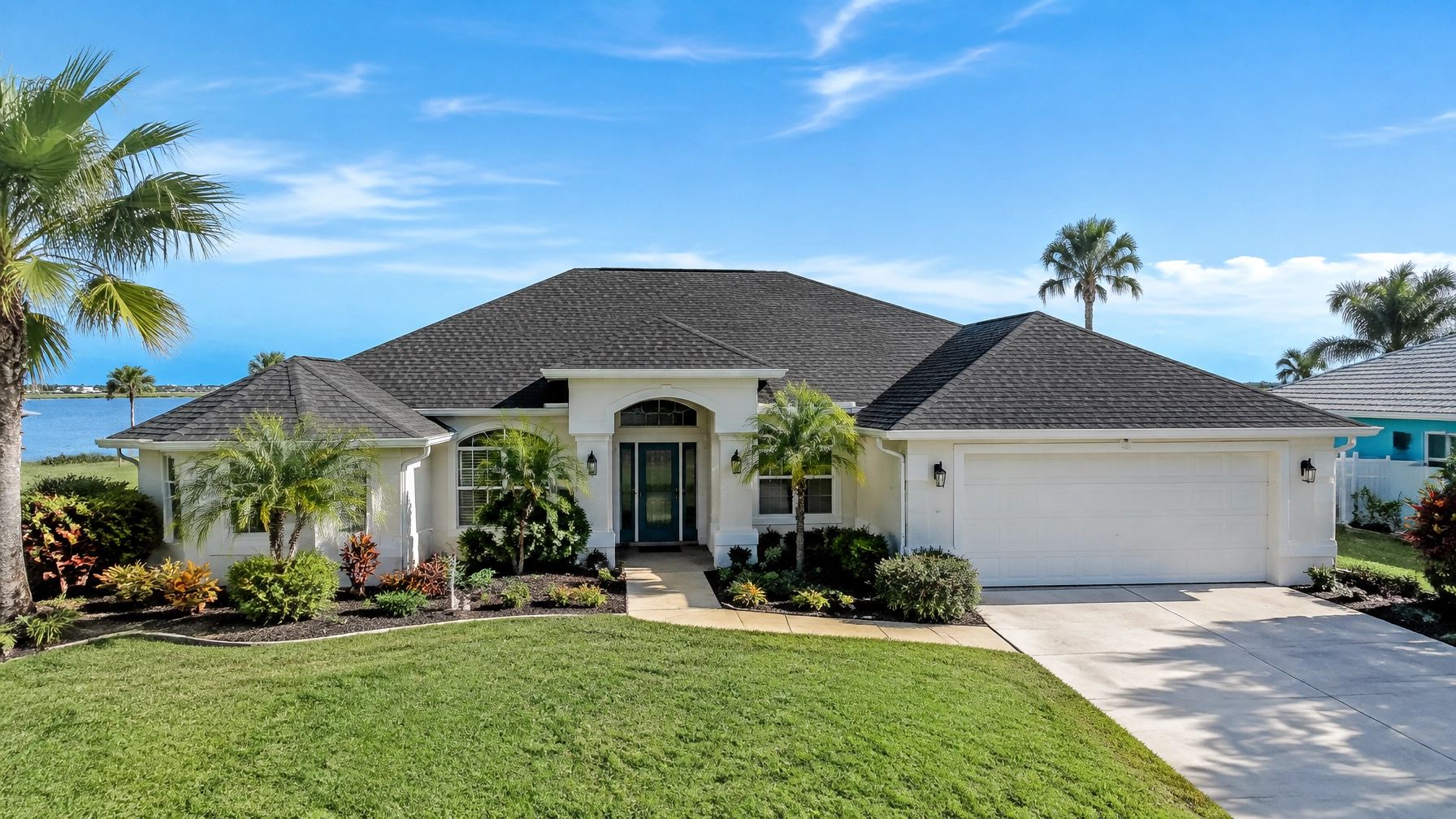
    Brevard County neighborhood home with a new dimensional shingle roof, palms, and strong curb appeal

    7. Melbourne roof replacement FAQ

    How much does a new roof cost in Melbourne, FL, in 2026?

    For a typical 2,000-square-foot roof, plan approximately $9,000–$18,000 for architectural shingles, $16,000–$36,000 or more for metal, and $20,000–$44,000 or more for tile. Complex rooflines, decking repairs, and code upgrades can increase the total.

    Can satellite imagery measure my roof accurately?

    Modern commercial imagery and roof-measurement software can identify roof boundaries and major features with high planning accuracy. Get My Roof Estimate Now uses satellite-powered measurements designed to estimate roof size, pitch, and complexity without an initial contractor visit.

    Is a permit required for a roof replacement in Brevard County?

    Yes. Brevard County requires a residential reroof permit for roof-covering replacement. Incorporated cities may process permits through their own building departments.

    What is the 25% rule in Florida?

    Generally, replacing more than 25% of a roof area within a 12-month period can trigger current-code requirements for the roof system. Roof age, prior permits, and statutory exceptions can affect how the rule applies.

    What is the best roof for a Melbourne home?

    Architectural shingles are often the practical value choice. Metal can provide longer service life and strong weather performance, while tile offers a premium Florida aesthetic. The best choice depends on budget, roof structure, neighborhood style, storm exposure, and long-term plans.

    Does a new roof increase home value?

    Usually, a new roof improves buyer confidence, curb appeal, and marketability. National estimates commonly place direct roof replacement ROI between approximately 50% and 70%, although results vary by material, property, and market conditions.

    8. Get a free satellite roof estimate in 60 seconds

    You do not need to wait for multiple contractor appointments to understand your likely project range.

    Enter your Melbourne or Brevard County address into the free satellite roof estimate tool. In about 60 seconds, you can receive a property-specific estimate based on satellite measurements, roof complexity, material choices, and regional pricing.

    There is no credit card requirement and no obligation. Use the result to set a budget, compare materials, prepare for a contractor conversation, or plan ahead before storm damage becomes an emergency.

  • 2026 Roof Replacement Cost in Dothan, AL: Peanut Capital Pricing, Permit Rules & Storm-Ready Budget Tips

    2026 Roof Replacement Cost in Dothan, AL: Peanut Capital Pricing, Permit Rules & Storm-Ready Budget Tips

    A typical 2,000-square-foot roof in Dothan, Alabama: about 20 roofing squares: costs approximately $7,000 to $32,000 in 2026, depending on the material, roof complexity, tear-off requirements, and installation details.

    For most homeowners in the Wiregrass region, the practical planning range is:

    • 3-tab asphalt shingles (Budget): $7,000–$10,000
    • Architectural shingles (Popular): $11,000–$16,000
    • Class 4 impact-resistant shingles (Premium): $14,000–$20,000
    • Standing-seam metal roofing (Premium): $18,000–$32,000

    These figures generally assume a standard residential replacement with normal tear-off and installation. They do not include major structural repairs, extensive decking replacement, unusual access problems, or a contingency reserve.

    Add 10% to 15% to your project budget for hidden deck damage, permit adjustments, ventilation corrections, flashing replacement, and material changes.

    2026 Dothan Roof Replacement Cost Table

    A roofing square equals 100 square feet. A 2,000-square-foot roof has approximately 20 squares, although the actual measured roof area may be larger than the home’s floor area because of pitch, overhangs, and attached sections.

    Roofing material Installed cost per sq. ft. Cost per square Approximate 20-square total
    3-tab asphalt shingles (Budget) $3.50–$5.00 $350–$500 $7,000–$10,000
    Architectural shingles (Popular) $5.50–$8.00 $550–$800 $11,000–$16,000
    Class 4 impact-resistant shingles (Premium) $7.00–$10.00 $700–$1,000 $14,000–$20,000
    Standing-seam metal (Premium) $9.00–$16.00 $900–$1,600 $18,000–$32,000

    A more complicated roof with multiple valleys, dormers, low-slope sections, skylights, or attached porches can exceed these ranges.

    For a closer starting point, use the Dothan roof estimate page or the roof cost calculator.

    Why 2026 Roofing Prices Are Higher

    Roofing material pricing changed several times during 2026.

    Major asphalt manufacturers: including GAF, Owens Corning, CertainTeed, and IKO: announced increases during the year. Market bulletins reported early-year increases in the 4%–8% range, followed by increases of approximately 6%–9% effective June 1, 2026, depending on the product line and distributor.

    Metal roofing has also faced upward pressure. Changes to Section 232 steel and aluminum tariffs in April 2026 created additional cost uncertainty for coils, panels, and imported components. Market estimates commonly place the resulting metal roofing impact around 10%–22%, although actual pricing depends on product classification, country of origin, inventory, and supplier pass-through. The official tariff structure contains multiple rates, so a single percentage does not apply to every metal roof.

    The practical takeaway: ask your contractor how long the proposal price is valid. A quote held for 30 days may not carry the same material cost as a quote scheduled several months later.

    The Main Factors That Determine Your Dothan Roof Cost

    1. Roof size, pitch, and complexity

    A 2,000-square-foot home does not always have a 2,000-square-foot roof.

    Contractors price the actual roof surface, including:

    • Steep slopes
    • Multiple roof planes
    • Valleys and ridges
    • Dormers and skylights
    • Attached garages or porches
    • Chimneys and wall intersections
    • Difficult access around the home

    Steeper roofs require additional safety equipment and labor. Complex rooflines also create more cutting, flashing, waste, and installation time.

    2. Material selection

    Three-tab shingles are the lowest-cost option but typically offer less dimensional appearance and a shorter design life than architectural products.

    Architectural shingles remain the most common choice for Dothan homeowners because they balance appearance, warranty coverage, wind performance, and cost. Class 4 impact-resistant shingles cost more but may be worth considering in areas with recurring hail exposure.

    Standing-seam metal has a higher upfront cost. It can provide long service life, strong curb appeal, and a modern appearance, but panel fabrication, trim, flashing, and skilled installation raise the total.

    Compare options with the company’s asphalt shingle guide and metal roofing guide.

    New architectural shingle roof on a Colonial-style home in the Dothan area

    3. Tear-off and deck repairs

    Most full replacements begin with removal of the existing roofing system. The estimate may include one or more layers of tear-off, disposal, underlayment, starter strips, ridge caps, and new flashing.

    After the shingles are removed, the crew may find:

    • Soft or rotted decking
    • Water staining around valleys
    • Damaged fascia or soffits
    • Inadequate attic ventilation
    • Deteriorated pipe boots
    • Improper previous repairs

    Deck replacement is usually priced per sheet or by the affected area. Request that your proposal explain the unit price for additional decking before work begins.

    4. Labor and local conditions

    Dothan’s hot summers, humidity, and storm season affect scheduling and installation conditions. A reputable contractor should account for proper fastening, underlayment, ventilation, flashing, and manufacturer installation requirements: not just shingle bundles.

    Dothan’s Climate Makes Roof Performance Important

    Dothan is the Peanut Capital of the World, home to the National Peanut Festival and a major center of the Wiregrass region. The city’s homes range from older properties near Downtown Dothan and Ross Clark Circle to newer suburban homes throughout Houston County, Taylor, Webb, and Cottonwood.

    The climate is hot and humid, with intense summer UV exposure and frequent rain. Annual rainfall figures vary by weather station and reporting period: approximately 44 inches is often quoted for the city, while several longer-term climate datasets show totals closer to 55–57 inches.

    That combination creates several roofing concerns:

    • Heat and UV exposure can accelerate shingle aging.
    • Humidity can encourage algae and moss on shaded slopes.
    • Heavy rain tests flashing, valleys, and roof penetrations.
    • Spring-through-fall storms can produce wind, hail, and fallen-tree damage.
    • Severe thunderstorm activity is common from approximately April through September.

    The May 25, 2026 tornado reinforced the need for storm-ready roofing across the area. The National Weather Service rated the Houston–Henry County tornado EF1 with estimated peak winds of 105 mph. The path affected the Webb area, including the WDHN station, with storm coverage near Old Webb Road, Peacock Road, and Watson Bridge Road.

    For homeowners near Fort Novosel, Webb, or the broader Wiregrass area, ask about the roof system’s wind rating, fastening pattern, impact resistance, and warranty limitations.

    New standing-seam metal roof on a modern Wiregrass-region home

    Dothan Roof Replacement Permits and Contractor Rules

    The City of Dothan requires a building permit for full roof replacement or re-roofing. Your contractor typically handles the application, but the homeowner should confirm that the permit has been issued.

    You can apply through the city’s Permit Applications page or contact the Permits & Inspections office at:

    Dothan Civic Center, Room 101
    126 North Saint Andrews Street
    Dothan, Alabama

    For 2026 budgeting, allow approximately $180–$750 for permit-related charges, depending on project valuation and the applicable fee schedule. Local guidance commonly describes a valuation-based fee of approximately 0.20% with a $50 minimum, but confirm the current schedule with the city because plan review, inspection, and administrative charges may affect the final amount.

    The project should receive a final inspection when required. Keep the permit and inspection records with your roof warranty documents.

    Verify the roofer’s Alabama license

    For residential roofing work above the state threshold, verify that the contractor holds the appropriate license through the Alabama Home Builders Licensure Board.

    Ask for:

    • Active license status
    • Correct roofing classification
    • General liability insurance
    • Workers’ compensation coverage
    • Written warranty terms
    • Local references

    The HBLB advises homeowners to call 1-800-304-0853 if the online search does not clearly confirm that a contractor holds a current and valid license.

    Insurance: Wind, Hail, RCV, and Your Deductible

    A roof damaged by a covered wind or hail event may be treated differently from a roof that has simply reached the end of its service life.

    Review these items before filing a claim:

    • Wind/hail deductible: Alabama policies may use a separate percentage deductible, commonly 1%–5% of Coverage A.
    • Example: A 2% deductible on a $250,000 dwelling limit equals $5,000.
    • RCV coverage: Replacement Cost Value may reimburse depreciation after approved work, subject to policy terms.
    • ACV coverage: Actual Cash Value subtracts depreciation, which can substantially reduce payment on older roofs.
    • Roof age: Some policies reduce coverage for roofs older than 10–15 years.

    Photograph storm damage, keep damaged materials when safe, document the roof’s age, and report covered losses promptly. Never agree to let a contractor “absorb” your deductible. Waiving or disguising a deductible can create insurance fraud problems.

    Professional roof inspection after a Dothan-area thunderstorm

    Smart Budgeting Tips for Dothan Homeowners

    Before signing a contract:

    1. Document the roof’s age. Check closing documents, permits, invoices, and inspection reports.
    2. Get at least three written estimates. Compare scope, materials, ventilation, flashing, disposal, permits, and warranty: not just the total.
    3. Keep a 10%–15% contingency reserve.
    4. Ask about material price protection. Confirm whether the quote is locked and for how long.
    5. Schedule strategically. Spring and fall usually offer more comfortable installation conditions, but storm demand can fill contractor calendars quickly.
    6. Review financing carefully. Compare APR, term, fees, and total repayment instead of focusing only on the monthly payment.
    7. Get a satellite estimate first. It gives you a fast planning benchmark before scheduling contractor visits.

    With Get My Roof Estimate Now, you can enter your address and receive a free satellite-powered estimate in about 60 seconds: with no credit card required. The estimate uses roof size, pitch, complexity, material options, and regional pricing to provide low-to-middle-to-high ranges.

    Does a New Roof Increase Dothan Home Value?

    A new roof can improve three important resale factors:

    • New roof ROI and resale value: National asphalt-roof benchmarks commonly show approximately 60%–68% cost recovery at resale.
    • Roof curb appeal and home value: A clean, consistent roof can improve the first impression of homes in Downtown Dothan, older neighborhoods near Ross Clark Circle, and suburban Houston County.
    • Buyer confidence: A documented roof replacement can reduce concerns about immediate repairs, insurance availability, and storm exposure.

    For Dothan homes commonly valued around $175,000–$210,000, including a Zillow Home Value Index estimate near $207,000 in June 2026, a $14,000–$18,000 roof replacement should be evaluated against the property’s condition and neighborhood: not as a guaranteed dollar-for-dollar upgrade.

    The best roof for home value is usually the system that fits the home, climate, neighborhood, and buyer expectations. Architectural shingles often provide the strongest balance of appearance and cost. Metal may offer a premium look and long service life, but its resale return varies by property and buyer demand.

    A practical local planning range is roughly 55%–70% cost recovery, with the strongest results when the old roof is visibly failing, the replacement is properly permitted, and the material quality matches nearby homes.

    Bottom Line

    For a typical 20-square roof in Dothan, budget $11,000–$16,000 for architectural shingles, $14,000–$20,000 for Class 4 shingles, or $18,000–$32,000 for standing-seam metal. Add 10%–15% for contingency and verify permit, insurance, and contractor licensing details before work begins.

    Start with an instant, free roof estimate at getmyroofestimatenow.com. You can get a satellite-based pricing range in under a minute and begin planning your Dothan roof replacement with clearer numbers.

  • 2026 Roof Replacement Cost in Johnson City, TN: Tri-Cities Pricing, Permit Rules & Ice-Dam-Ready Tips

    2026 Roof Replacement Cost in Johnson City, TN: Tri-Cities Pricing, Permit Rules & Ice-Dam-Ready Tips

    Replacing a roof in Johnson City typically costs $8,000–$20,000 for asphalt shingles and $25,000–$50,000 or more for metal roofing in 2026. Your final price depends on roof size, pitch, valleys, dormers, material, tear-off requirements, and hidden decking damage.

    Johnson City is part of the wider Tri-Cities roofing market, along with Bristol and Kingsport. Contractor availability, material supply, and seasonal demand across Washington, Sullivan, and nearby counties can influence your quote.

    This guide covers local price ranges, per-square benchmarks, permit rules, Tennessee licensing, and roof features that matter in East Tennessee’s freeze-thaw climate.

    Johnson City Roof Replacement Cost at a Glance

    Roofing contractors price work by the square. One roofing square equals 100 square feet of roof surface: not 100 square feet of living space.

    Roofing project Low range Middle range High range
    Asphalt roof replacement $8,000 $12,000–$16,000 $20,000
    Architectural shingles $5.42–$7/sq. ft. $7–$8/sq. ft. $9/sq. ft.
    Standing-seam metal $25,000 $32,000–$42,000 $50,000+
    Older-home decking contingency $1,500 $2,500–$3,000 $4,000

    These figures are planning ranges for common 1,500–3,000-square-foot single-family roofs. A small, simple ranch roof may fall below the middle range. A steep Colonial with multiple valleys and dormers may exceed it.

    Per-square benchmarks

    • Architectural shingles: approximately $450–$900 per square
    • Standing-seam metal: approximately $1,000–$2,000+ per square
    • All asphalt-based roofing: roughly $3–$10 per square foot installed
    • Metal roofing: approximately $11.88–$22 per square foot installed

    Labor represents a significant part of the total. Johnson City labor rates often trend slightly below the national average, which can help offset rising material costs. However, shingles, metal panels, underlayment, flashing, and disposal costs have continued to increase.

    For a broader starting point, use the roof cost calculator, then compare the result with a property-specific satellite measurement.

    East Tennessee ranch home with a new impact-rated architectural shingle roof

    What Drives Johnson City Roofing Prices Up or Down?

    Factors that can increase the price

    • Steep roof pitch: Steeper roofs require additional safety equipment, staging, and labor.
    • Multiple roof planes: Valleys, dormers, hips, and intersecting rooflines take longer to flash correctly.
    • Full tear-off: Removing and disposing of old shingles commonly adds to labor and waste costs.
    • Rotted decking: Older Johnson City homes may have damaged roof sheathing beneath worn shingles.
    • Limited access: Narrow driveways, landscaping, or difficult staging areas can slow installation.
    • Premium materials: Standing-seam metal, designer shingles, and specialty flashing raise the material budget.
    • Storm-related demand: Hail, wind, or tornado activity can tighten Tri-Cities contractor availability.

    Factors that may reduce the price

    • Simple ranch-style roof with easy access
    • One existing shingle layer in acceptable condition
    • Sound decking with no structural repairs
    • Standard architectural shingles
    • Flexible installation timing outside the spring rush
    • Bundled gutter, ventilation, or minor flashing work

    Budget for decking repairs

    Johnson City’s older housing stock makes decking and sheathing repairs a realistic possibility. Set aside $1,500–$4,000 as a contingency if your home has older plywood, previous leaks, chimney problems, or long-term attic condensation.

    Ask every contractor to explain:

    1. How much decking replacement is included in the base bid
    2. The per-sheet or per-square-foot price for additional sheathing
    3. Whether damaged decking will be photographed before replacement
    4. How the change order will be approved

    Asphalt Shingles vs. Metal Roofing

    Your material choice affects both the upfront cost and the roof’s service life.

    Material 2026 Johnson City benchmark Typical life Best fit
    3-tab asphalt (Budget) $3–$5/sq. ft. 15–20 years Lowest initial cost
    Architectural shingles (Popular) $5.42–$9/sq. ft. 25–30 years Most homeowners
    Impact-rated shingles (Storm-ready) About $5–$8/sq. ft. 25–30 years Hail and high-wind exposure
    Standing-seam metal (Premium) $11.88–$22/sq. ft. 40–70 years Long-term ownership

    Architectural shingles are usually the most practical choice for Johnson City homeowners. They offer stronger curb appeal and better durability than basic three-tab shingles without the upfront cost of metal.

    Metal roofing costs more but may make sense if you plan to remain in the home for many years, want low maintenance, or own property on an exposed ridge. Properly installed metal can handle high winds, shed snow and ice, and provide a longer replacement cycle.

    Review the differences in more detail with the metal roofing guide and metal vs. shingles comparison.

    Modern East Tennessee home with a dark standing-seam metal roof and mountain landscape

    Johnson City Permits and Roofing Code Rules

    A standard roof replacement on a single-family home in Johnson City generally does not require a permit when the work is limited to replacing the roof covering.

    A permit is required when roof sheathing replacement exceeds 100 square feet. This threshold matters because a full tear-off may reveal more damaged decking than expected.

    Permit costs are valuation-based and commonly fall around:

    • $75–$250 for many residential roofing scopes
    • Up to approximately $500 for higher-value or more involved projects

    If your project changes after the roof is opened, ask the contractor whether the permit scope must be updated. For confirmation, contact Johnson City Development Services at 423-434-6047.

    Johnson City enforces the 2018 International Residential Code. Roof assemblies must address proper underlayment, flashing, fastening, ventilation, and weather protection. The local requirements include ice-and-water protection in vulnerable areas such as eaves and valleys under the applicable IRC roof provisions.

    Ice-Dam-Ready Roofing for East Tennessee

    Johnson City’s Appalachian climate creates several roof risks:

    • Freeze-thaw cycles
    • Ice dams at eaves and valleys
    • Heavy spring rain
    • Summer hail and thunderstorms
    • High winds and occasional tornado conditions
    • Greater exposure on mountain ridges and higher elevations

    A durable replacement should include:

    • Ice-and-water shield at eaves and valleys
    • Correct valley construction and flashing
    • Adequate intake and ridge ventilation
    • Properly sealed pipe boots and roof penetrations
    • Manufacturer-approved fasteners
    • Wind-rated shingles or panels
    • Class 4 impact-rated shingles where hail resistance is a priority

    Ventilation matters because warm attic air can melt snow unevenly. Water then refreezes at colder eaves, creating an ice dam. Better insulation and balanced attic ventilation help reduce this cycle, but they do not replace properly installed ice-and-water protection.

    Close editorial view of ice-and-water protection and a properly detailed shingle roof edge

    Contractor Licensing in Tennessee

    Before signing a contract, verify that the roofer is registered and properly licensed for the project value.

    For residential roofing work valued between $3,000 and $25,000, a TDCI Home Improvement license may apply. Projects at or above $25,000 generally require the appropriate Tennessee contractor license and classification.

    Ask for:

    • Tennessee license number
    • Proof of general liability insurance
    • Workers’ compensation coverage
    • Written warranty terms
    • Recent local references
    • A detailed scope covering tear-off, ventilation, flashing, decking, and disposal

    You can review Tennessee requirements through the TDCI Home Improvement program and Johnson City’s contractor requirements information.

    Best Time to Replace a Roof in Johnson City in 2026

    Late spring through early fall is typically the busiest period. Weather is favorable, but contractor schedules fill quickly: especially after hail or wind events.

    For a 2026 replacement:

    • Winter: Potentially better availability, but cold temperatures can affect shingle sealing and installation timing.
    • Early spring: Good for planning, but demand increases quickly.
    • Late spring and summer: Reliable installation weather, with higher demand after storms.
    • Early fall: Often an excellent installation window before freezing temperatures.
    • Late fall: May offer scheduling flexibility, depending on weather.

    Material costs have been climbing. If you already know the roof is near the end of its service life, getting measurements and quotes before the spring rush can help you compare options and potentially lock in 2026 pricing.

    Johnson City Roof Replacement Checklist

    Before approving a proposal:

    • Confirm the measured roof area and number of squares.
    • Request low, middle, and high material options.
    • Ask whether the quote includes tear-off and disposal.
    • Budget $1,500–$4,000 for possible decking repairs.
    • Confirm ice-and-water shield at eaves and valleys.
    • Review attic ventilation improvements.
    • Ask about Class 4 shingles or wind-rated materials.
    • Verify Tennessee licensing and insurance.
    • Confirm whether sheathing replacement exceeds 100 square feet.
    • Call Johnson City Development Services at 423-434-6047 if the permit status is unclear.
    • Get warranty details in writing.
    • Compare at least two or three detailed proposals.

    Get a Free Johnson City Roof Estimate in 60 Seconds

    You do not need to schedule multiple contractor visits just to understand your budget.

    Enter your Johnson City address into the free satellite roof estimate tool. It measures your roof using satellite imagery with approximately 90–95% accuracy, within inches, then provides a low-to-high pricing range in under 60 seconds.

    There is:

    • No credit card required
    • No upfront cost
    • No contractor visit
    • No hidden fees
    • Pricing for multiple roofing materials
    • A connection to verified, licensed, and insured local contractors

    Start with an instant estimate, then use the measurements and price range to evaluate contractor proposals with greater confidence.

  • 2026 Roof Replacement Cost in Orlando, FL: City Beautiful Pricing, Permit Rules & Hurricane-Ready Tips

    2026 Roof Replacement Cost in Orlando, FL: City Beautiful Pricing, Permit Rules & Hurricane-Ready Tips

    A full roof replacement in Orlando typically costs $8,500–$25,000+ in 2026 for a 1,500–3,000-square-foot home. Most homeowners with a roughly 2,000-square-foot roof should plan on $12,000–$18,000 for architectural shingles. Premium metal systems can cost substantially more.

    Your final price depends on roof size, pitch, material, roof complexity, tear-off requirements, decking condition, wind-rated installation, permits, and current Central Florida labor rates.

    This guide covers Orlando and Orange County pricing, Florida Building Code requirements, permits, hurricane preparation, contractor licensing, insurance, resale value, and the best time to replace your roof.

    Orlando Roof Replacement Cost in 2026

    Roofers price by roof area, usually in squares. One roofing square equals 100 square feet. The roof surface can be larger than your home’s interior living area because of pitch, overhangs, porches, garages, and multiple roof sections.

    Typical Orlando pricing

    Roof replacement level Typical material or scope Estimated 2026 cost
    Low (Budget) 3-tab shingles, simple roof, limited repairs $8,500–$12,000
    Middle (Popular) Architectural shingles, standard tear-off, code-compliant installation $12,000–$18,000
    High (Premium) Class 4 shingles, designer shingles, complex roof, or upgraded mitigation $18,000–$25,000+
    Metal (Premium) Standing seam or upgraded metal system $16,000–$46,000+

    These are planning ranges, not binding quotes. A large, steep, complicated, or damaged roof can exceed the high end.

    For a property-specific starting point, use the Orlando roof estimate tool. It uses satellite imagery to estimate your roof’s dimensions without an upfront contractor visit.

    Orlando Roofing Material Costs

    Architectural shingles (Popular): $4.50–$9.00 per square foot

    Architectural shingles are the most practical choice for many Orlando homeowners. They offer a strong balance of price, appearance, availability, repairability, and wind performance.

    For a typical 2,000-square-foot roof, expect approximately $12,000–$18,000 installed, depending on roof complexity and the scope of required upgrades.

    Benefits include:

    • 25–30-year typical service life
    • Wide selection of colors and profiles
    • Good curb appeal for ranch, bungalow, and two-story homes
    • Easier repairs than most metal systems
    • Lower upfront cost than metal
    • Algae-resistant options for humid Central Florida conditions

    Choose algae-resistant shingles if your roof has shaded slopes or nearby trees. Orlando’s humidity can contribute to dark streaking and discoloration, particularly on north-facing or shaded sections.

    3-tab shingles (Budget): generally less than architectural shingles

    Three-tab shingles are the lowest-cost asphalt option. They can make sense for a rental property, a short-term ownership plan, or a tightly controlled budget.

    However, they generally provide:

    • Shorter service life
    • A flatter appearance
    • Fewer premium color and texture options
    • Less long-term curb appeal
    • Lower resale appeal than architectural shingles

    The cheapest roof is not always the lowest-cost roof over time. If you plan to remain in the home or sell within the next several years, architectural shingles are usually the better value.

    Class 4 impact-resistant shingles: typically 10%–20% more

    Class 4 shingles are designed to resist impact from hail and other debris better than standard products. They carry a premium of roughly 10%–20%, but they may qualify for insurance discounts depending on your carrier and policy.

    Ask your insurer before installation:

    • Whether Class 4 shingles qualify for a premium credit
    • Which product certifications are accepted
    • What documentation is required
    • Whether the discount applies to the entire policy or only certain portions

    Class 4 shingles can be a reasonable upgrade for homeowners who want additional hail resistance without moving to metal.

    Metal roofing (Premium): $8–$23 per square foot

    Metal roofing costs more upfront but can last 40–70 years with proper installation. A typical 2,000-square-foot Orlando roof may cost approximately $16,000–$46,000+.

    Standing seam is the premium metal option. It uses concealed fasteners and raised interlocking seams for a clean appearance and strong weather protection.

    Metal is worth considering if you:

    • Plan to stay in the home for 10 years or longer
    • Want a long service life
    • Prefer a modern or high-end appearance
    • Want lower maintenance
    • Value reflective performance during hot summers
    • Are willing to pay more upfront

    Compare systems carefully. Corrugated metal and exposed-fastener panels can cost less than standing seam, but installation details, coatings, flashing, and fastener quality affect long-term performance.

    Florida bungalow with a new algae-resistant architectural shingle roof

    Why Orlando Roof Prices Are Rising in 2026

    Material and labor costs remain important parts of the 2026 budget.

    • Asphalt shingles increased approximately 4%–8% in early 2026
    • Another 6%–9% material round became effective June 1, 2026
    • Metal pricing increased approximately 10%–22%, driven in part by Section 232 steel and aluminum tariffs introduced in April 2026
    • Labor commonly represents 40%–60% of the total project
    • A reasonable contingency is 5%–15% for hidden decking damage, flashing replacement, ventilation work, and other required corrections

    A written proposal should separate materials, labor, tear-off, disposal, permits, inspections, decking repairs, underlayment, flashing, ventilation, and taxes.

    What Drives the Cost of a New Roof in Orlando?

    Two homes with the same living area can have very different roof replacement prices.

    Roof size and pitch

    A steep roof requires additional fall protection, slower installation, and more labor. Low-slope sections may require different underlayment or installation methods.

    Roof complexity

    Hip roofs are often more expensive than simple gable roofs. Valleys, dormers, skylights, chimneys, plumbing penetrations, multiple elevations, and attached garages increase labor and flashing requirements.

    Tear-off and disposal

    Removing one or more layers of existing roofing adds labor and disposal costs. Your contractor should confirm whether a full tear-off is required and how many existing layers are present.

    Decking and structural repairs

    Old or water-damaged decking may need replacement after the roof covering is removed. Ask for a per-sheet or per-square-foot price for unexpected decking repairs.

    Wind and hurricane-rated installation

    Orlando is not located in Florida’s High Velocity Hurricane Zone. The HVHZ applies to Miami-Dade and Broward counties. However, wind loads still matter throughout Central Florida, and roofing systems must comply with the applicable Florida Building Code requirements.

    Ventilation, flashing, and drainage

    A roof can fail early when heat and moisture build up in the attic or when flashing details are poorly installed. Include ridge vents, intake ventilation, drip edge, valley treatment, wall flashing, and pipe boots in the written scope.

    Florida Building Code and Secondary Water Barriers

    Orlando reroofs must comply with the Florida Building Code, 8th Edition (2023) and local inspection requirements.

    For reroofing, the secondary water barrier requirement is especially important. The roof deck joints must be sealed using one of the accepted approaches:

    • 4-inch self-adhering tape over the deck joints, combined with the required underlayment system; or
    • A full layer of synthetic underlayment or 30-pound felt, installed according to applicable code and manufacturer requirements

    Ask your contractor to explain exactly how the secondary water barrier will be installed. It should appear as a specific line item in the proposal, not as a vague reference to “Florida code.”

    A complete Orlando roof system should also address:

    • Required deck fastening
    • Wind-uplift resistance
    • Underlayment
    • Flashing
    • Drip edge
    • Ventilation
    • Roof-to-wall connections where applicable
    • Manufacturer installation requirements

    Hurricane season runs from June 1 through November 30. A code-compliant roof does not guarantee zero storm damage, but proper installation improves the roof’s ability to resist wind-driven rain and severe weather.

    Orlando and Orange County Roof Permits

    Both the City of Orlando and unincorporated Orange County require a building permit for roof replacement.

    City of Orlando permits

    For homes inside the city, begin with Orlando Permitting Services.

    The typical process includes:

    1. Submit the residential roof permit application
    2. Provide contractor and project information
    3. Record a Notice of Commencement when required
    4. Pay permit fees
    5. Schedule inspections
    6. Pass the dry-in/in-progress inspection
    7. Pass the final inspection

    A project valued at more than $5,000 generally requires a recorded Notice of Commencement before the first inspection can be scheduled.

    Unincorporated Orange County permits

    Orange County uses Fast Track permitting for roof permits. The county requires a permit for replacement roofs and typically requires both an in-progress inspection and a final inspection.

    Orange County’s Roof Permit guidance identifies information such as:

    • Roof area
    • Number of stories
    • Roofing material
    • Work value
    • Type of roof work
    • Contractor information

    For a roof project over $5,000, plan on recording and posting a Notice of Commencement and adding the recorded document to the permit record.

    Do not allow a crew to begin tear-off without confirming that the permit has been issued. Missing a dry-in inspection can create problems at final inspection and may require portions of the roof covering to be opened for verification.

    How to Verify an Orlando Roofing Contractor

    Florida has two common roofing license categories:

    • CCC : Certified Roofing Contractor: Authorized to work statewide
    • RC : Registered Roofing Contractor: Authorized only within the local jurisdictions covered by the registration

    Use the Florida DBPR “Verify a License” search before signing a contract. The record should show:

    • Correct company or qualifying individual
    • Roofing classification
    • License status listed as Current/Active
    • No unresolved disciplinary concerns
    • License information matching the contract and permit application

    Also request current proof of:

    • General liability insurance
    • Workers’ compensation coverage
    • Written workmanship warranty
    • Manufacturer certification, if enhanced warranty coverage is promised

    A low bid is not useful if it excludes permits, insurance, proper underlayment, disposal, or decking repairs.

    My Safe Florida Home Grant

    The My Safe Florida Home program may help eligible homeowners pay for hurricane mitigation work.

    Common eligibility requirements include:

    • Homestead primary residence
    • Single-family, site-built home or qualifying townhouse
    • Original construction permit dated before January 1, 2008
    • Insured value of $700,000 or less, subject to program rules
    • Completion of the program’s free initial inspection
    • Income eligibility under the current program cycle

    The maximum grant can reach $10,000 for qualifying hurricane mitigation improvements. Eligible work may include a full roof replacement when it includes approved mitigation measures such as a secondary water barrier.

    The grant is not intended for partial repairs or ordinary cosmetic maintenance. Confirm current funding, income rules, contractor requirements, and approved scope before starting work. Do not assume reimbursement is available for work completed before approval.

    Modern two-story Orlando home with a premium standing-seam metal roof

    Florida Insurance Considerations

    Florida homeowners policies commonly carry a hurricane deductible between 2% and 10% of the dwelling coverage limit. A 2% deductible on a home insured for $400,000 equals $8,000.

    If a storm damages your roof:

    • Take timestamped photos and videos from the ground
    • Keep damaged materials when safe and practical
    • Prevent additional damage with temporary protection
    • Notify your insurer promptly
    • Ask whether the loss is covered as wind damage
    • Remember that flood and storm surge are generally separate from wind coverage

    Under Florida Statute 627.70132, property insurance claim notice deadlines generally require an initial or reopened claim within one year of the date of loss. Supplemental claims generally have an 18-month notice period. Your policy and current law control, so contact your insurer or a qualified professional for advice about a specific loss.

    Roof Replacement ROI and Orlando Home Value

    A failing roof can affect more than leak protection. It can directly influence buyer confidence, inspection results, financing, and closing negotiations.

    The Orlando metro median home price is approximately $375,000–$430,000 in 2026, depending on the data source and market segment. A roof replacement typically recoups about 60%–68% of its cost at resale, although actual results vary by material, neighborhood, timing, and installation quality.

    A failing roof can:

    • Reduce a sale price by approximately $10,000–$20,000
    • Cause buyers to request a large credit
    • Delay financing or insurance approval
    • Reduce roof curb appeal and overall home value
    • Kill a transaction if the roof is near failure

    For many homeowners, the best roof for home value is a properly installed architectural shingle system with a clean color match, strong warranty, proper ventilation, and documented permits. Metal can create additional resale appeal, particularly in modern homes, but its higher upfront price may not be fully recovered in a short ownership period.

    The practical roof replacement ROI depends on whether you are correcting a failing roof, preparing to sell, or making a long-term durability upgrade.

    Best Time to Replace a Roof in Orlando

    Spring and fall are often the most practical installation windows. They generally offer more manageable temperatures than midsummer and may avoid the heaviest hurricane-season rush.

    Consider replacing before peak hurricane season if:

    • Your roof is more than 15–20 years old
    • Shingles are brittle, curling, or missing
    • You see ceiling stains or attic moisture
    • Flashing is deteriorated
    • Your insurance company has issued a roof-age requirement
    • You are preparing to list your home

    Orlando roofers can work throughout the year, but afternoon thunderstorms can interrupt installation. A contractor should have a clear weather-delay and temporary-protection plan.

    Orlando Neighborhoods and ZIP Codes We Serve

    Roofing conditions and home styles vary across Orlando. We provide estimates for homes in areas including:

    • College Park
    • Thornton Park
    • Baldwin Park
    • Conway
    • Audubon Park
    • Lake Nona
    • Dr. Phillips
    • Winter Park and nearby communities

    Coverage includes ZIP codes such as 32801, 32803, 32804, 32806, 32807, 32808, 32809, 32810, 32811, 32812, 32819, 32822, 32824, 32825, 32826, 32827, 32828, 32829, 32832, 32835, 32836, 32837, and 32839.

    Older homes near College Park, Conway, and Winter Park may require closer attention to decking, ventilation, flashing, and prior roof layers. Newer properties in Lake Nona and Baldwin Park may have HOA or design requirements affecting color and material choices.

    Frequently Asked Questions

    How much does a new roof cost in Orlando in 2026?

    Most full roof replacements cost $8,500–$25,000+. A typical 2,000-square-foot architectural shingle roof is often $12,000–$18,000. Metal roofing can range from $16,000 to $46,000+.

    Is Orlando in Florida’s High Velocity Hurricane Zone?

    No. The HVHZ applies to Miami-Dade and Broward counties. Orlando is outside the HVHZ, but local roofs still must meet Florida Building Code wind, underlayment, fastening, and inspection requirements.

    Do I need a permit to replace my Orlando roof?

    Yes. The City of Orlando and unincorporated Orange County require a roof replacement permit. Projects over $5,000 generally also require a recorded Notice of Commencement before the first inspection.

    Can Class 4 shingles lower my insurance premium?

    Possibly. Some insurers offer discounts for qualifying impact-resistant roofing. Ask your carrier which products and documentation they accept before choosing the upgrade.

    What is the best roof for home value in Orlando?

    For most homeowners, algae-resistant architectural shingles provide the best balance of cost, appearance, lifespan, and buyer appeal. Standing-seam metal is a premium option for long-term owners who value durability and modern design.

    Get Your Free Orlando Roof Estimate in 60 Seconds

    Get a satellite-measured starting price for your Orlando home at getmyroofestimatenow.com.

    The estimate is:

    • Free
    • Available in about 60 seconds
    • Based on your property’s roof dimensions
    • Available without a credit card
    • Designed to show low, middle, and high planning ranges
    • A starting point for comparing verified, licensed, and insured local contractors

    Start with accurate information before scheduling multiple appointments. Get your Orlando roof replacement estimate now.

  • Daily ROI Blitz – Slot 2: Houston, TX New Roof ROI ,  How a Bayou City Replacement Adds Home Value in 2026

    Daily ROI Blitz – Slot 2: Houston, TX New Roof ROI , How a Bayou City Replacement Adds Home Value in 2026

    A Houston roof replacement in 2026 typically costs $7,500–$16,500 for a standard asphalt-shingle project. Standing-seam metal commonly costs $13,000–$24,000 for a 2,000-square-foot roof.

    The local roof replacement ROI benchmark is approximately 65%–70%, close to the national asphalt-shingle benchmark of roughly 68% cost recovery.

    That means a properly installed new roof can improve resale value, reduce buyer objections, strengthen insurance positioning, and improve roof curb appeal home value, especially in a cooling Houston market where buyers have more choices.

    Houston New Roof ROI: 2026 Snapshot

    Metric Houston 2026 planning figure
    Median closed sale range Approximately $349,791–$366,820
    Zillow average home value Approximately $265,000
    Typical time to sell Approximately 43–46 days
    Market direction Normalizing, with rising inventory
    Architectural asphalt shingles $450–$850 per square
    Standing-seam metal $900–$1,700 per square
    Typical full replacement $7,500–$16,500
    Local roof replacement ROI Approximately 65%–70%
    National asphalt-shingle ROI benchmark Approximately 68%

    The national benchmark comes from the 2025 Cost vs. Value data: an average asphalt-shingle replacement costing $31,871 added approximately $21,501 in resale value.

    Houston projects may produce different results. Roof size, installation quality, neighborhood, material choice, storm history, and buyer expectations all matter.

    Why a New Roof Matters More in Houston

    Houston homeowners deal with a combination of heat, humidity, heavy rain, wind, and hail. That makes the roof one of the most visible and heavily scrutinized components of a home.

    Hail and storm exposure

    Hail season generally peaks from March through June and again from September through October.

    Reported 2026 Houston-area hail activity included:

    • September 2: Approximately 2,393 properties in a commercial hail-map estimate, with average hail around 1.5 inches
    • August 28: Approximately 1,172 properties in commercial storm-impact estimates
    • April 30 and May 9: Hail activity affecting areas including Katy, Cinco Ranch, Sugar Land, Pearland, and Missouri City
    • Additional hail-map events on August 7 and July 12

    Commercial hail maps estimate properties inside radar-based swaths. They are useful for identifying possible exposure, but they do not replace a professional roof inspection.

    A new roof with impact-resistant materials can make a home easier to market after a storm. Buyers are often more comfortable with a roof that has documented installation, current warranties, and no visible hail damage.

    Insurance pressure on older roofs

    Texas insurance policies increasingly distinguish between replacement cost value (RCV) and actual cash value (ACV).

    A roof around 15 years old may be moved to ACV coverage at renewal, depending on the carrier and policy. Straight-line depreciation can reduce a claim payment by 50% or more on a 15-year-old roof.

    A new roof may also help homeowners qualify for:

    • Approximately 10%–25% lower premiums, depending on the insurer
    • Potential 10%–35% discounts for Class 4 impact-resistant shingles
    • Better eligibility for replacement-cost coverage

    These figures are not guaranteed. Ask your insurer whether the discount applies to the full policy or only the wind and hail portion.

    Houston Heights-style bungalow with a new charcoal architectural shingle roof

    Houston Roof Replacement Costs by Material

    A roofing “square” equals 100 square feet of roof area. Your roof area is usually larger than your home’s interior square footage because of pitch, overhangs, and roof complexity.

    Material Houston installed range Best fit
    Architectural asphalt shingles (Popular) $450–$850 per square Most homeowners and resale-focused projects
    Class 4 impact-resistant shingles (Storm-smart) Often $500–$800+ per square Hail-prone areas and insurance savings
    Standing-seam metal (Premium) $900–$1,700 per square Long-term ownership and modern homes
    Typical 2,000-square-foot shingle roof $7,500–$16,500 Standard replacement range
    Typical 2,000-square-foot metal roof $13,000–$24,000 Premium, long-life installation

    Your final price depends on:

    • Roof size and number of roofing squares
    • Pitch and accessibility
    • Valleys, dormers, skylights, and penetrations
    • Tear-off and disposal
    • Decking or flashing repairs
    • Ventilation requirements
    • Material availability and local labor rates
    • Permit and inspection requirements

    Use the Houston roof estimate page for a local planning range, or compare materials with the roof cost calculator.

    Worked ROI Example: A $14,000 Houston Roof

    Assume a Houston homeowner installs architectural shingles for $14,000.

    Using the local 65%–70% working benchmark:

    • Estimated value recovered at 65%: $9,100
    • Estimated value recovered at 68%: $9,520
    • Estimated value recovered at 70%: $9,800
    • Estimated unrecovered cost at the 68% benchmark: $4,480

    This is not an appraisal or a guaranteed resale premium. The roof may create additional value by helping the home:

    • Show better in listing photos
    • Avoid price reductions during negotiations
    • Pass buyer inspections with fewer concerns
    • Compete against homes with older roofs
    • Reduce the perceived need for immediate maintenance

    In a normalizing market with more inventory, those advantages can matter. A buyer may not pay the entire replacement cost, but they may choose the home with a new roof over a similar property requiring an immediate $14,000 project.

    Best Roof for Home Value by Houston Area

    The best roof depends on both the home’s design and the expected buyer.

    Area Practical roof-value choice
    The Heights Architectural shingles or premium shingles that respect historic bungalow character
    West University Place and Bellaire High-quality architectural shingles, Class 4 options, or designer materials
    Sugar Land Architectural or impact-resistant shingles with strong warranty documentation
    Katy and Cypress Class 4 shingles are worth comparing because of recurring hail exposure
    Pearland and Missouri City Impact-resistant shingles or wind-rated architectural shingles
    Kingwood Algae-resistant, impact-resistant shingles suited to trees, humidity, and storms
    The Woodlands Architectural shingles, metal accents, or premium materials; verify the applicable jurisdiction

    The Woodlands is unincorporated and may involve multiple governing jurisdictions, so confirm local permitting and HOA requirements before selecting a material or color.

    For many Houston sellers, architectural shingles offer the best balance of price, appearance, availability, and resale appeal. Standing-seam metal can be the better long-term choice for modern homes or owners planning to stay for 10 years or more, but its higher upfront cost may not produce the same short-term resale return.

    Modern Houston home with a new standing-seam metal roof

    Houston Permits, Wind, and Installation Details

    For a City of Houston residential re-roof:

    • A permit is generally required for roof covering over 100 square feet
    • The Houston Permitting Center uses the Residential Re-Roof Only Worksheet, Form CE-1109
    • Like-for-like re-roofs generally do not require full plans
    • Inspections are required
    • The permit and worksheet must remain available on-site

    Houston follows the 2021 International Residential Code with local amendments. A qualified contractor should also address:

    • Hurricane clips or straps where required
    • Ring-shank nails at approximately 6 inches on edges and 12 inches in the field
    • Materials rated for approximately 130 mph design wind speed, where applicable
    • Proper flashing, underlayment, ventilation, and drainage

    For properties east of SH 146 in the designated Harris County catastrophe area, a WPI-8 windstorm certification may be required for Texas Windstorm Insurance Association eligibility. Confirm the requirement with the Texas Department of Insurance, TWIA, and your contractor before work begins.

    Unincorporated areas and nearby cities may use different permit systems. Do not assume a City of Houston permit applies to every Houston-area address.

    Insurance and Documentation Checklist

    Before replacing the roof, ask your insurance agent:

    1. Is my current roof covered at ACV or RCV?
    2. Does the policy include a roof payment schedule?
    3. What happens when the roof reaches 15 years?
    4. Does Class 4 material qualify for a discount?
    5. What documentation is required?

    Keep these records:

    • Before-and-after photos
    • Contractor license and insurance information
    • Permit and final inspection records
    • Material brand, color, and product line
    • Class 4 impact-resistance documentation
    • Manufacturer warranty
    • Workmanship warranty
    • Paid invoice and completion certificate
    • WPI-8 documentation, if applicable

    Close view of a professionally installed impact-resistant shingle roof in Houston

    Houston New Roof ROI FAQ

    Does a new roof increase home value in Houston?

    Usually, yes. The strongest benefit is often improved marketability and avoided buyer negotiation rather than a dollar-for-dollar return. A local planning benchmark is approximately 65%–70% cost recovery.

    What is the best roof for home value?

    Architectural asphalt shingles are usually the best resale-value choice for most Houston homes. They provide strong curb appeal at a lower upfront cost than metal. Class 4 shingles may add insurance value in hail-prone areas.

    Is metal roofing worth the cost in Houston?

    Metal can be worthwhile if you plan to stay long term, want a 40–70-year service life, or prefer improved energy performance. It typically costs more upfront, so calculate the value over your expected ownership period.

    How much does a new roof cost in Houston?

    Most full replacements fall around $7,500–$16,500. Standing-seam metal projects for a 2,000-square-foot roof commonly range from $13,000–$24,000.

    Can I estimate my roof cost without a contractor visit?

    Yes. Get a free satellite-based estimate from Get My Roof Estimate Now. Enter your address and receive a property-specific low-middle-high range in approximately 60 seconds. No credit card is required.

    Get Your Houston Roof ROI Starting Point

    Before scheduling multiple contractor visits, find out what your Houston roof may cost based on its actual size, pitch, and complexity.

    Get a free satellite roof estimate in about 60 seconds. Compare architectural shingles, metal, and other materials with transparent low-middle-high pricing: free, with no credit card required.

    Sources

  • Daily FAQ Blitz – Slot 5: AEO FAQ Quick Answers for Roanoke, VA Homeowners (2026)

    Daily FAQ Blitz – Slot 5: AEO FAQ Quick Answers for Roanoke, VA Homeowners (2026)

    Roanoke homeowners often see unfamiliar credentials, licensing terms, permit rules, and insurance language while researching a roof replacement. This quick-answer FAQ separates supply-chain terminology from actual roofing requirements and provides practical 2026 cost and planning information for the Star City of the South.

    1. What does AEO mean?

    AEO means Authorized Economic Operator. It is a supply-chain security designation under the World Customs Organization’s SAFE Framework.

    An AEO is an organization involved in international trade that has been approved by a customs authority for meeting defined supply-chain security standards. In the United States, U.S. Customs and Border Protection’s CTPAT program is the closest equivalent.

    AEO is not:

    • A roofing license
    • A contractor certification
    • A workmanship or quality credential
    • Proof of insurance
    • Proof of local roofing experience

    An AEO or CTPAT designation does not replace Virginia licensing, permits, insurance, contracts, or inspections.

    2. Does AEO replace a Virginia roofing license?

    No. Virginia roofing work over $1,000 generally requires a contractor license issued through the Virginia Department of Professional and Occupational Regulation (DPOR) Board for Contractors.

    Roofing is not a standalone Virginia license. It is the Roofing Contracting specialty, or ROC, added to a Class A, B, or C contractor license.

    Virginia contractor license classes

    License class Individual contract Annual volume
    Class C (Budget/smaller projects) $1,000–$29,999 Under $250,000
    Class B (Mid-size projects) $30,000–$149,999 $250,000–$999,999
    Class A (Large projects) $150,000 or more $1 million or more

    Before signing, use the Virginia DPOR license lookup to confirm that the contractor has the correct class and the ROC specialty.

    3. What permit does a full roof replacement need in Roanoke?

    A building permit is required for a full roof covering replacement in the City of Roanoke. Minor repairs involving 100 square feet or less are generally exempt, but the exact scope should be confirmed before work begins.

    Apply through the City’s Department of Planning, Building, and Development. For questions, call 540-853-1730 or visit the Noel C. Taylor Municipal Building.

    If you act as your own contractor, you may need to file an Owner/Builder Affidavit with the permit application.

    What about historic properties?

    Homes in Roanoke historic districts may need approval from the Architectural Review Board (ARB) before a permit is issued. Depending on the project, this may involve:

    • An in-kind replacement approval
    • A Certificate of Appropriateness
    • ARB review of the proposed material, color, or design

    Check the City’s historic district application information before ordering materials.

    4. Which building code applies to Roanoke roofs in 2026?

    Virginia enforces the 2024 Virginia Uniform Statewide Building Code (USBC), based on the 2021 International Residential Code with Virginia amendments.

    Roanoke’s residential design wind speed is approximately 115 mph. That makes shingle selection, fastening, flashing, and underlayment important.

    For asphalt shingles, ask about products meeting applicable wind-resistance classifications, such as:

    • ASTM D3161 Class F
    • ASTM D7158 Class H, where appropriate

    The correct classification depends on the product, roof design, installation instructions, and local code requirements. A licensed contractor should confirm the required fastening pattern and underlayment.

    5. How much does a new roof cost in Roanoke in 2026?

    Architectural asphalt shingles in the Roanoke area generally cost about $4.50–$8.72 per square foot installed in 2026.

    For a typical 2,000–2,200-square-foot roof, that equals approximately:

    • Lower range: $9,000–$10,000
    • Higher range: $16,000–$17,000

    Roofing is measured in squares. One roofing square equals 100 square feet.

    Your final price may increase because of:

    • Steep roof pitch
    • Multiple roof sections or valleys
    • Dormers and skylights
    • Full tear-off and disposal
    • Rotten decking
    • Chimney or wall flashing
    • Difficult access
    • Permit or inspection requirements

    Use the Roanoke roof cost calculator for a general benchmark, then compare it with a property-specific satellite estimate.

    6. Which roofing material works best in Roanoke?

    For many Roanoke homes, architectural asphalt shingles are the best-value choice. They are widely available, relatively affordable, and suited to humid summers, heavy rain, freeze-thaw cycles, wind, and occasional hail.

    Typical service life:

    • 3-tab shingles (Budget): 15–20 years
    • Architectural shingles (Popular): 20–30 years
    • Standing-seam metal (Premium): 40–50+ years

    Read the asphalt shingles guide for product and warranty comparisons.

    Standing-seam metal roof on a modern mountain home near Roanoke, Virginia

    7. Is standing-seam metal roofing worth the higher price?

    Standing-seam metal is a premium option. It costs more upfront but can last decades longer than asphalt shingles.

    The company’s metal roofing guide lists typical installed metal roofing at about $8–$16 per square foot, depending on the system and location.

    Metal can be a strong fit if you:

    • Plan to remain in the home for 10 or more years
    • Want a 40–70-year service-life potential
    • Prefer low maintenance
    • Want a roof that sheds snow and rain efficiently
    • Are comfortable with a higher initial investment

    Compare both options in the metal versus shingles guide.

    8. What storm damage should Roanoke homeowners look for?

    Roanoke roofs must handle humid weather, heavy rain, ice, freeze-thaw movement, wind, and hail.

    Notable 2026 reports included:

    • Quarter-sized hail, approximately 1 inch, reported around April 1
    • Severe thunderstorm activity in July with reported 60–70 mph wind gusts
    • Hail activity reported around July 26–28
    • Additional regional hail reports around September 2

    After a storm, inspect from the ground for:

    • Missing, lifted, or creased shingles
    • Granules accumulating in gutters
    • Dented vents or flashing
    • Water stains on ceilings or attic framing
    • Fallen limbs or punctures

    Do not climb onto the roof. Photograph visible damage and arrange a professional inspection.

    Roof inspection after hail and wind damage on a Virginia home

    9. Can a contractor waive my insurance deductible?

    No. In Virginia, a contractor cannot pay, waive, rebate, or absorb all or part of your insurance deductible. A “we will cover your deductible” or “no out-of-pocket cost” offer can create insurance-fraud concerns and may violate Virginia consumer-protection laws.

    Keep:

    • The signed contract
    • Roof photographs
    • Insurance claim documents
    • Adjuster reports
    • Invoices and payment records
    • Change orders

    Your contractor should provide a transparent price and explain what insurance may or may not cover.

    10. Do you provide roof estimates in Roanoke ZIP codes?

    Yes. Get My Roof Estimate Now supports Roanoke ZIP codes including:

    24011–24020, 24022–24028, 24030, 24032–24038, 24043, and 24050.

    Coverage also includes nearby communities such as:

    • Cave Spring, 24018
    • Hollins, 24019 and 24020
    • Vinton, 24179
    • Salem, 24153

    Enter your address to receive a free estimate based on satellite roof measurements.

    11. How fast can I get a roof replacement estimate?

    Get My Roof Estimate Now provides a free, satellite-based estimate in about 60 seconds.

    The estimate includes:

    • Roof measurements based on your property
    • Roof size in squares
    • Material pricing options
    • Low, middle, and high price ranges
    • Regional cost factors
    • Connections to verified, licensed, and insured local contractors

    Measurements are designed to be accurate to within inches, generally about 90–95% accuracy. No credit card is required.

    Get your free Roanoke roof estimate now.

    FAQ Recap for Roanoke Homeowners

    Question Quick answer
    What is AEO? Authorized Economic Operator, a WCO supply-chain security designation.
    Is AEO a roofing credential? No. It is not a roofing license, contractor certification, or quality guarantee.
    What Virginia license does a roofer need? A DPOR Class A, B, or C contractor license with the ROC specialty for work over $1,000.
    Is a full roof replacement permitted in Roanoke? Yes, a building permit is required for a full roof covering replacement.
    Are minor repairs exempt? Repairs of 100 square feet or less are generally exempt, subject to local confirmation.
    What about historic districts? ARB approval or a Certificate of Appropriateness may be required before the permit.
    What code applies in 2026? The 2024 Virginia USBC, based on the 2021 IRC with Virginia amendments.
    What is Roanoke’s residential wind speed? Approximately 115 mph; fastening and product ratings matter.
    What do architectural shingles cost? About $4.50–$8.72 per square foot installed in 2026.
    What does a 2,000–2,200-square-foot roof cost? Roughly $9,000–$17,000, depending on complexity and repairs.
    How long do common materials last? 3-tab: 15–20 years; architectural: 20–30 years; metal: 40–50+ years.
    Can a contractor waive my deductible? No. Deductible waivers can create insurance-fraud and consumer-protection violations.
    How quickly can I get an estimate? About 60 seconds, with no credit card required.

    Information is provided for general planning and is current to September 2026. Confirm licensing, permit, historic-review, code, and insurance requirements with the relevant Virginia or City of Roanoke authority before starting work.