Category: Uncategorized

  • Daily Weather Blitz – San Antonio, TX: Flooding, Heat & Roof Durability (July 16, 2026)

    Daily Weather Blitz – San Antonio, TX: Flooding, Heat & Roof Durability (July 16, 2026)

    San Antonio is currently under a high-intensity weather advisory. Today, Thursday, July 16, 2026, the region is grappling with a severe Flash Flood Watch in effect through this evening. With overcast skies and humidity levels peaking at 94%, the atmosphere is primed for heavy rainfall. Forecasters expect between 2 to 6 inches across the metro area, while isolated spots in the Hill Country could see staggering totals of 10 to 15 inches.

    For San Antonio homeowners, this isn't just about localized flooding; it’s a critical stress test for your home’s primary defense system: the roof. Between the current deluge and the triple-digit surface temperatures coming next week, the durability requirements for a Texas roof replacement have never been higher.

    The San Antonio Durability Crisis: Heat, Water, and UV

    Our local climate is uniquely hostile to roofing materials. While today’s focus is on water intrusion and flash flooding, the long-term enemy is the sun.

    In San Antonio, summer roof surface temperatures frequently exceed 160°F. This extreme thermal load accelerates the oxidation of asphalt shingles, leading to rapid granule loss and brittle materials. When you combine this with the heavy moisture cycling we are seeing today, the resulting expansion and contraction put immense stress on sealants and flashing.

    • Thermal Shock: The rapid cooling of a 160°F roof by a sudden rainstorm causes "thermal shock," which can crack older shingles and compromise seals.
    • Ventilation Failures: Poor attic ventilation can reduce a shingle’s lifespan from a standard 30 years down to just 18 years in South Texas.
    • UV Degradation: High UV exposure breaks down the polymer binders in your roofing system, leading to "balding" shingles that lose their fire resistance and weatherproofing.

    San Antonio Roof Replacement Cost: 2026 Market Data

    If today's storms have exposed leaks, understanding the current market pricing is essential for budgeting. Based on 2026 data, the San Antonio roof replacement cost varies significantly by material and contractor type.

    Average Pricing for a 2,000 Sq. Ft. Home

    Material Type Price Range (Budget/Mid-Range) Premium/Full-Service Range
    Architectural Shingles (Popular) $9,000 – $16,000 $18,000 – $28,000
    Class 4 Impact-Resistant (Protective) $11,500 – $18,000 $20,000 – $25,000
    Standing Seam Metal (Premium) $18,000 – $34,000 $35,000 – $45,000+

    Working with a premium firm often includes a 20-40% markup for overhead and sales commissions. At Get My Roof Estimate Now, we use satellite imagery to provide instant roof estimates that reflect real material and labor costs in San Antonio, bypassing the traditional high-pressure sales visit.

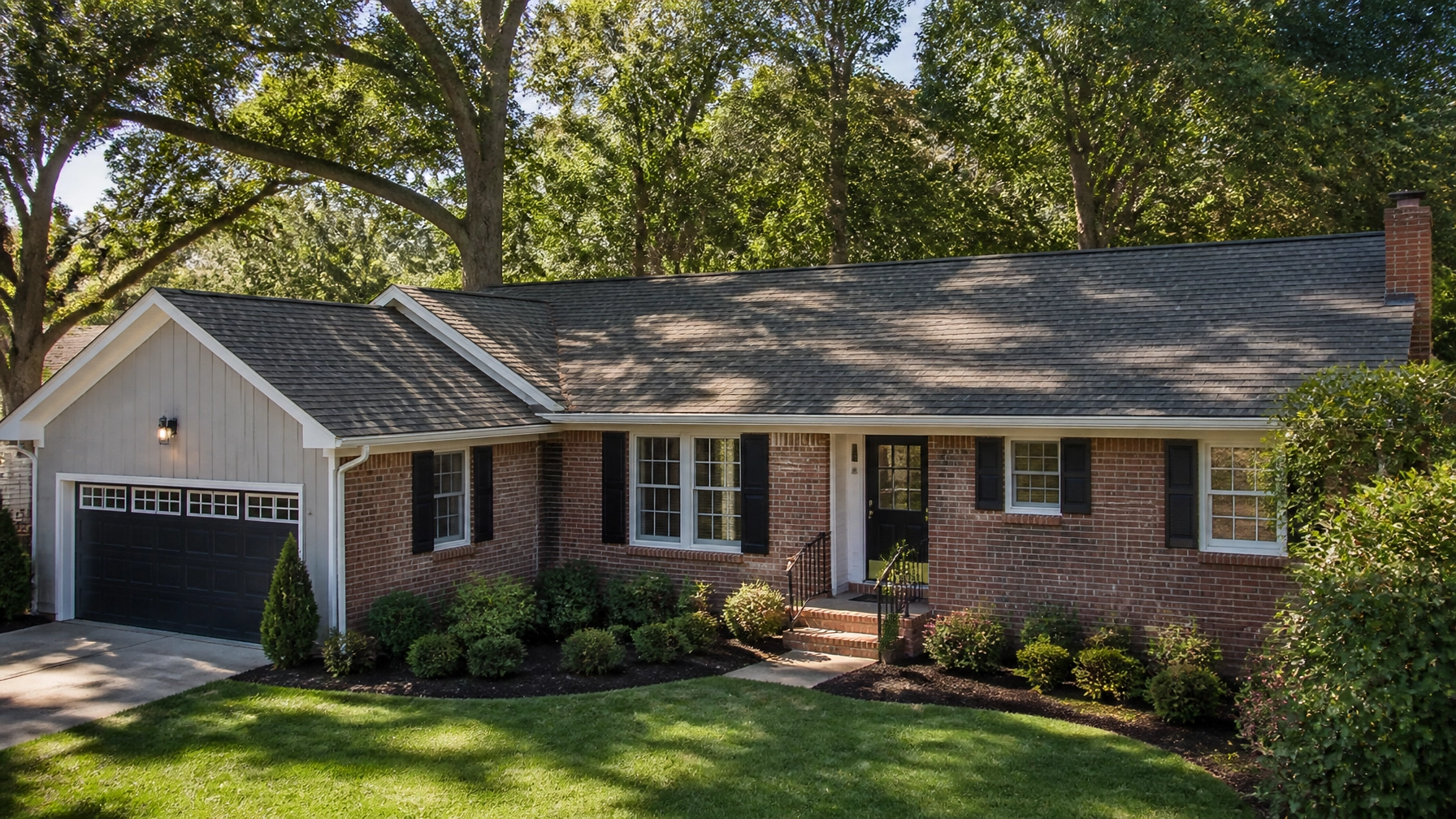
    A modern standing seam metal roof on a Texas ranch home

    Best Roof for San Antonio Homes: Material Recommendations

    When planning a replacement, material choice determines your long-term San Antonio roofing ROI.

    1. Standing Seam Metal (Premium Performance): With a 40–70 year lifespan, metal is the "gold standard" for the local climate. It reflects solar heat (lowering cooling costs) and is wind-rated up to 140mph.
    2. Class 4 Impact-Resistant Shingles (Best Value): Given the frequency of hail in Bexar County, Class 4 shingles are a smart investment. They often qualify for insurance premium discounts, improving your overall financial return.
    3. Concrete/Clay Tiles (Traditional Style): Excellent for thermal mass and UV resistance, though they require a reinforced roof structure due to their weight.

    San Antonio Housing Market 2026 & Resale Value

    In the current San Antonio housing market 2026, buyers are increasingly wary of "deferred maintenance." A roof nearing the 20-year mark is often seen as a liability that can stall a sale or lead to heavy price negotiations.

    The roof resale value in San Antonio currently sits at an average ROI of 60–65%. This means a $15,000 investment in a new roof can increase your home's appraisal value by approximately $9,000 to $10,000. More importantly, it shifts your home into the "move-in ready" category, which is vital as the Texas market becomes more balanced and competitive.

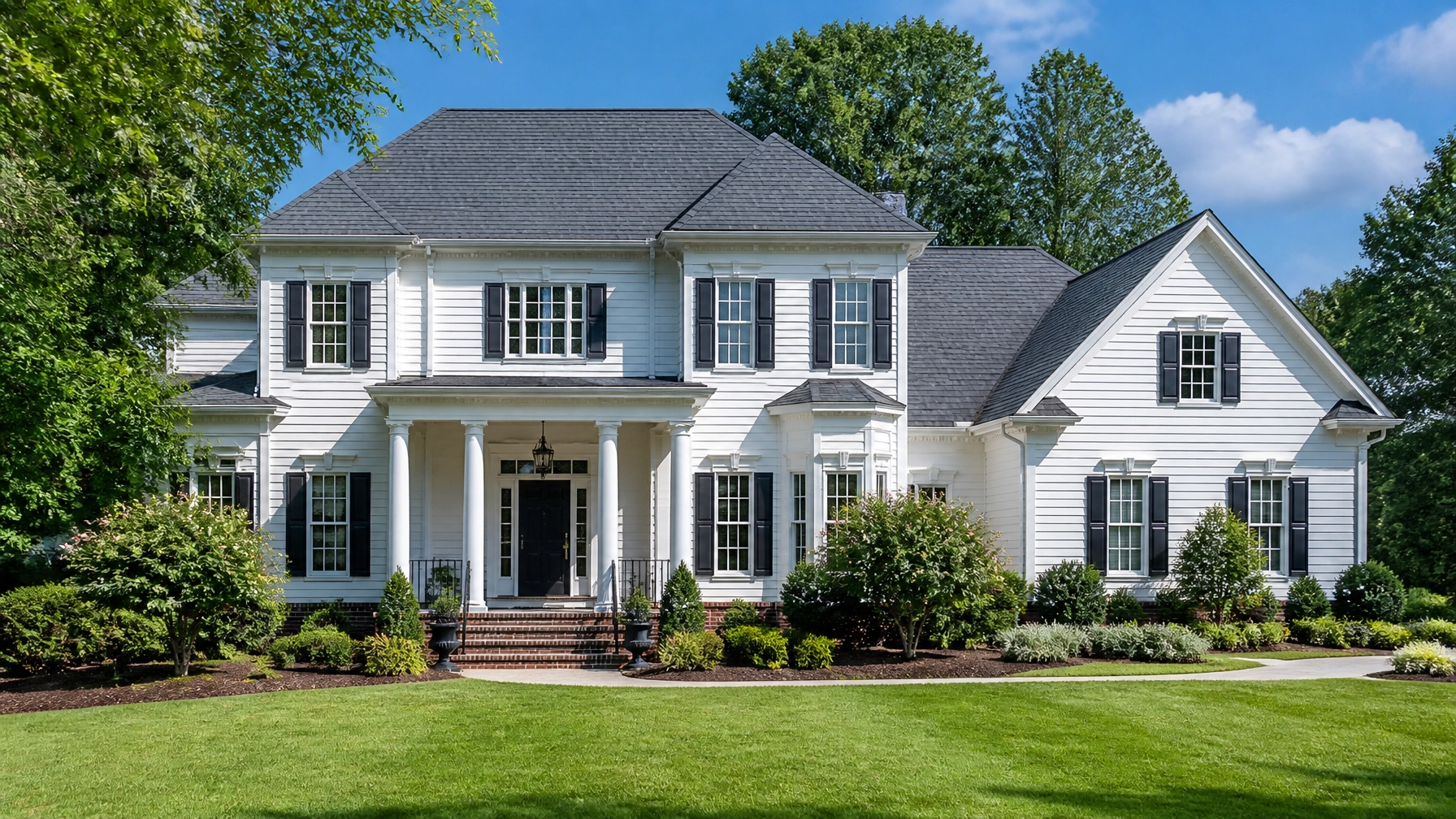
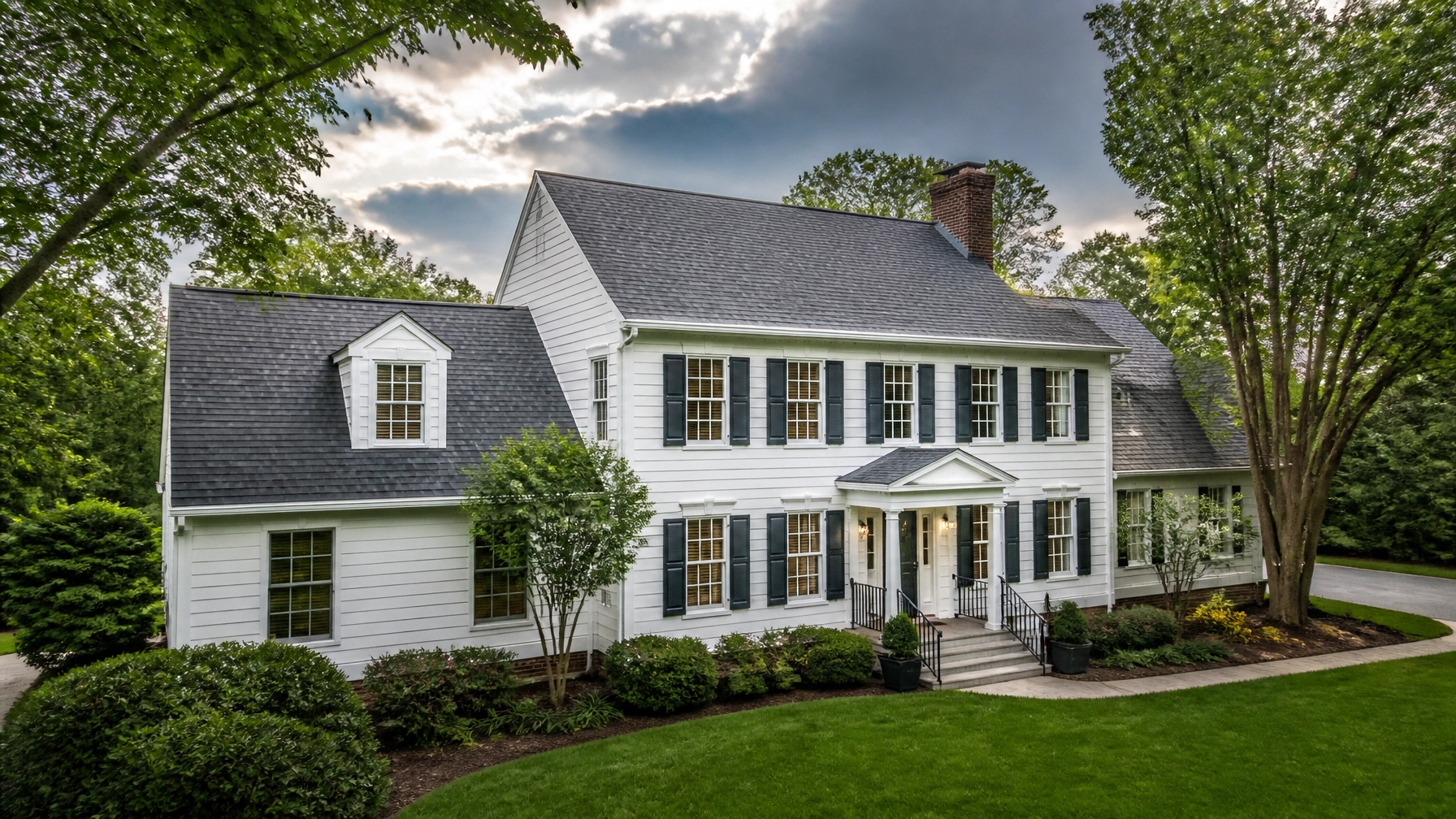
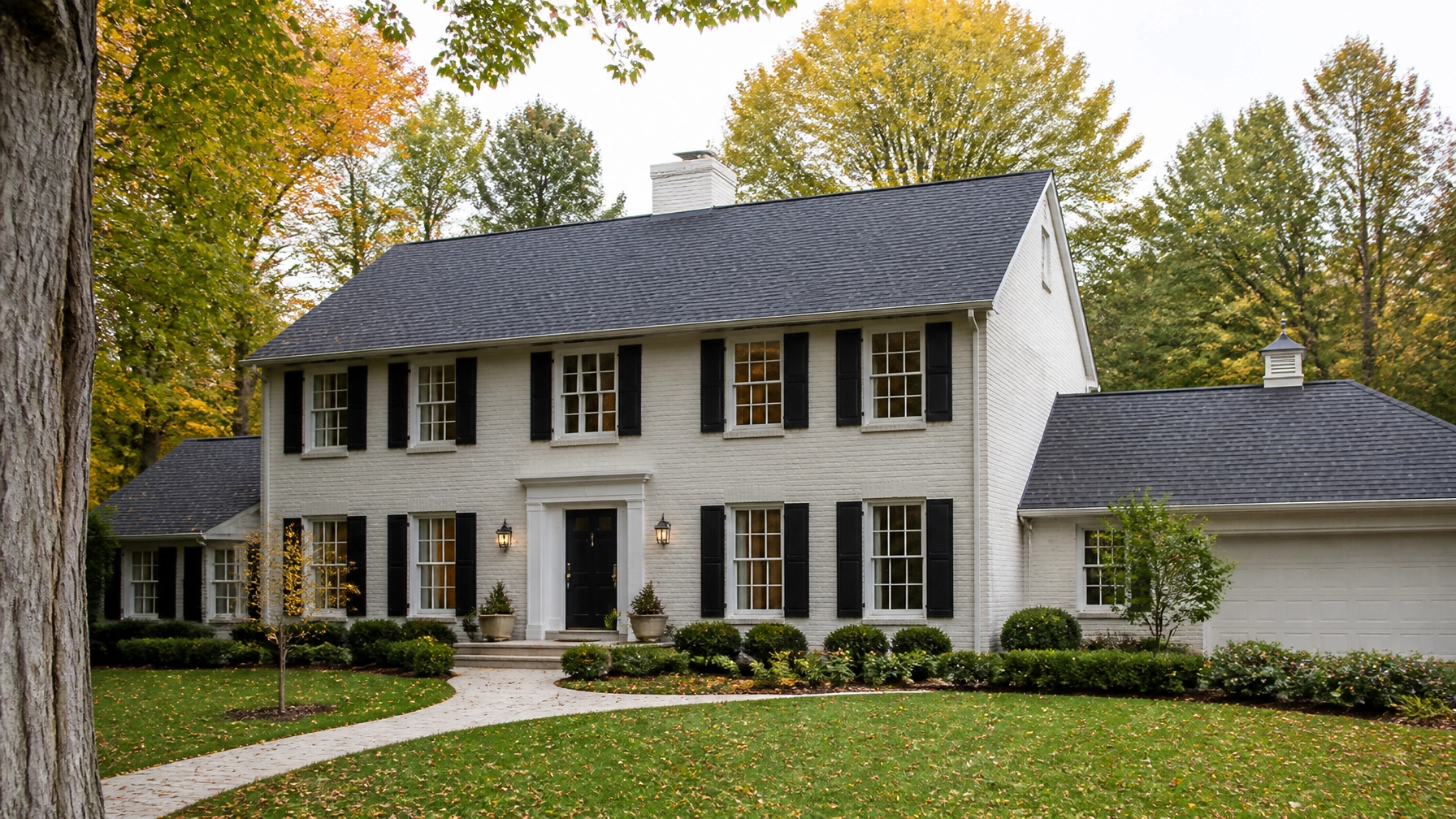
    A colonial-style home with a high-quality Class 4 shingle roof

    Emergency Storm Checklist: Protecting Your Property Today

    With the Flash Flood Watch active through Thursday evening, take these immediate steps to protect your home:

    • Gutter Clearance: Ensure gutters and downspouts are clear of debris. Water must flow at least 5 feet away from your foundation to prevent settling and interior flooding.
    • Storm Drains: Check neighborhood storm drains for blockages (leaves, trash) to prevent street flooding from reaching your driveway.
    • Vehicle Safety: Move vehicles to higher ground or inside the garage to avoid hail or rising water.
    • Electronics: Elevate valuables and electronics off the floor in lower levels of the home.
    • Documentation: Take a quick video or photos of your roof and property exterior now. This provides a "before" timestamp for insurance should damage occur today.
    • Flood Insurance Check: Remember that standard homeowners policies do not cover rising groundwater (flooding). Review your NFIP or private flood policy details.

    The 60-Second Solution: Satellite-Powered Estimates

    The old way of getting a quote involves waiting days for a contractor to show up, climb a ladder, and give you a high-pressure pitch. In 2026, that's no longer necessary.

    Satellite technology measuring a residential roof for an estimate

    We use advanced satellite technology to measure your roof’s size, pitch, and complexity to within inches. By entering your address, you can get a transparent, multi-option quote: ranging from budget-friendly architectural shingles to premium metal systems: in under a minute.

    Whether you're dealing with today’s storm damage or planning for the brutal summer heat ahead, start with an accurate San Antonio roof estimate today.


  • Daily Weather Blitz – Slot 3: Detroit, MI : Wildfire Smoke, Heat & What it Means for Your Roof (July 16, 2026)

    Daily Weather Blitz – Slot 3: Detroit, MI : Wildfire Smoke, Heat & What it Means for Your Roof (July 16, 2026)

    Today in Detroit, Michigan, homeowners are facing a double-edged sword of atmospheric challenges. As of July 16, 2026, Southeast Michigan is blanketed in a thick, "unhealthy" haze caused by wildfire smoke drifting south from Canadian forests. This isn't just a visibility issue; it is a structural and mechanical concern for your home.

    With temperatures peaking at a blistering 94°F and a high UV index of 7.6, the combination of chemical smoke residue and extreme thermal stress is putting local roofs to the ultimate test. Here is the data-driven breakdown of what today’s weather means for your home’s durability and what you need to do before the predicted weekend storms arrive.

    1. Today’s Detroit Weather Snapshot: The "Unhealthy" Haze

    The current conditions in Detroit are characterized by an Air Quality Alert that remains in effect across Wayne, Oakland, and Macomb counties.

    • High Temperature: 94°F (Heat spike continuing from yesterday)
    • Low Temperature: 70°F
    • Sky Conditions: Overcast and hazy with a distinct smell of smoke.
    • Precipitation: 0% (Dry conditions until Friday evening).
    • UV Index: 7.6 (High – Accelerated UV degradation).
    • Air Quality: Unhealthy. PM2.5 levels are elevated, posing risks to both respiratory health and mechanical filtration systems.

    While the heat is the most immediate physical discomfort, the chemical composition of the smoke creates a long-term maintenance burden for roofing materials.

    2. The Invisible Threat: Wildfire Smoke & Your Roof

    When wildfire smoke hangs over a city like Detroit, it deposits more than just gray haze. It drops fine particulate matter (PM2.5), acidic compounds, and oily residues directly onto your roof’s surface.

    Chemical Wear on Asphalt Shingles

    Asphalt shingles (the most common material in Detroit) are coated with ceramic-fired granules designed to protect the underlying bitumen from UV rays. Wildfire ash is naturally acidic. When this ash settles into the crevices of your shingles, it can cause:

    • Granule Loss: Acidic particles can weaken the bond between the granules and the asphalt mat.
    • Discoloration: Oily "soot" residues can lead to permanent staining, especially on lighter-colored roofs.
    • Accelerated Aging: The chemical reaction between soot and moisture (even atmospheric humidity) can prematurely "cook" the shingle, making it brittle.

    Close-up of asphalt shingles with settled ash and soot

    Gutter and Valley Accumulation

    Ash acts much like fine silt. It accumulates in roof valleys and gutters, forming a dense, heavy sludge when mixed with morning dew or light humidity. This sludge traps moisture against the roof deck, which can lead to localized rot or mold growth: often hidden until a major leak occurs.

    3. HVAC Systems Under Fire

    Your HVAC system is the lungs of your home. During an Air Quality Alert, its workload triples.

    • Filter Loading: The high concentration of fine particulates means your furnace or AC filter is clogging at an accelerated rate. Standard fiberglass filters are insufficient today; homeowners should be using MERV-13 rated filters to capture smoke particles.
    • Recirculation is Key: To protect your indoor air quality and prevent soot from entering your ductwork, ensure your HVAC system is set to "Recirculate" rather than drawing in fresh air from the outside.
    • Efficiency Loss: As filters clog, the blower motor must work harder to pull air through, increasing your energy bills during this 94°F heat spike.

    A residential HVAC unit requiring maintenance during high-particulate weather

    4. The 94°F Heat Spike: Thermal Expansion and Shingle Fatigue

    While the smoke is a chemical threat, the 94°F temperature is a physical one. Detroit roofs are currently experiencing extreme thermal expansion.

    Expansion and Contraction

    During the day, the roof surface can reach temperatures exceeding 150°F. The materials expand. Tonight, as temperatures drop to 70°F, they will contract. This "thermal shock" is particularly hard on older roofs (15+ years). It causes:

    • Buckling: Shingles may lift or ripple as they expand against fixed points like chimneys or valleys.
    • Fastener Back-out: Repeated expansion can slowly push roofing nails out, creating "nail pops" that are prime locations for leaks.

    UV Degradation (Budget vs. Premium)

    With a UV Index of 7.6, the sun’s radiation is actively breaking down the molecular bonds in the asphalt. Budget-grade shingles will see more rapid "outgassing" (loss of essential oils), leading to cracks and curls, whereas Premium architectural shingles are designed with higher polymer content to withstand these cycles.

    5. Detroit Homeowner Action Plan: 72-Hour Checklist

    With storms forecast for Friday and the weekend, the next 48 hours are critical for preventative maintenance.

    1. Check HVAC Filters Immediately: If you haven't changed your filter since the smoke arrived, do it now. Use a MERV-13 filter if your system supports it.
    2. Visual Roof Inspection: From the ground (use binoculars), look for any visible soot accumulation in the valleys or shingles that appear to be buckling in the heat.
    3. Gutter Clearing: If you see gray silt or ash in your downspout exits, your gutters likely need a quick flush before the weekend rains. Clogged gutters during a Detroit thunderstorm can lead to basement flooding and fascia rot.
    4. Seal Window AC Units: If you use window units, ensure the seals are tight. Smoke can bypass the unit’s internal filter if the side panels are poorly taped or sealed.
    5. Get a Baseline Estimate: If your roof is over 20 years old, these heat-smoke-storm cycles are likely the final straw. Knowing your replacement cost now prevents "panic-buying" when a leak finally happens.

    6. Detroit Roof Replacement Costs & Michigan Weather

    Detroit's climate is notoriously hard on roofing. We deal with humid, blistering summers and vicious freeze-thaw cycles in the winter. This means your choice of material is critical.

    2026 Cost Benchmarks (Detroit, MI)

    For a standard single-family home in the Detroit metro area, a full roof replacement in 2026 typically falls into these ranges:

    • Budget (Standard 3-Tab): $7,500 – $10,500
    • Popular (Architectural Shingles): $11,000 – $16,000
    • Premium (Metal or Synthetic Slate): $18,000 – $30,000+

    Note: These are estimates based on standard 2,000 – 2,500 sq. ft. roofs. Local labor rates and the number of stories/complexity will impact the final price.

    Choosing a material that can handle Michigan's 100-degree temperature swings is essential. While asphalt shingles remain the most popular choice for their cost-effectiveness, many Detroit homeowners are moving toward metal or high-impact shingles to combat the increasing frequency of severe weather events.

    A high-resolution satellite view of Detroit roofs used for accurate estimating

    Why Accuracy Matters in Detroit

    At Get My Roof Estimate Now, we understand that Detroit homeowners don't have time to wait for five different contractors to show up for "ballpark" quotes. Our technology uses advanced satellite imagery to measure your roof's exact square footage, pitch, and complexity to within inches.

    In under 60 seconds, you can receive a transparent, no-obligation estimate that factors in current Michigan material costs and labor rates. No credit card, no hassle: just the data you need to protect your biggest investment.

    A newly replaced roof in a Detroit neighborhood, ready for the summer heat

    Final Thoughts for Today

    The hazy skies over the Motor City will eventually clear, but the residue left behind and the stress of the 94°F heat on your shingles are permanent. As we head into a potentially stormy weekend, take 60 seconds to see where you stand.

    Don't wait for the leak. Get your instant Detroit roof estimate now.

    Get Your Free Estimate →


    City Tag: Detroit, MI
    Category: Weather & Maintenance

  • Class 4 Impact-Resistant Shingles vs. Metal Roofing: The 2026 Denver CO Material Showdown

    Class 4 Impact-Resistant Shingles vs. Metal Roofing: The 2026 Denver CO Material Showdown

    For homeowners along the Colorado Front Range, choosing a roof isn’t just about curb appeal: it’s about survival. Denver’s unique climate cocktail of high-altitude UV rays, heavy spring snow loads, and the notorious "Hail Alley" storms makes roofing a high-stakes investment.

    As we navigate the 2026 roofing landscape, two heavyweights have emerged as the standard for local protection: Class 4 Impact-Resistant (IR) Asphalt Shingles and Standing Seam Metal Roofing.

    In this showdown, we break down the costs, performance data, and insurance implications for Denver homeowners to help you decide which "shield" is right for your home.

    The Denver Environment: Why Standard Materials Fail

    Before comparing materials, it’s important to understand the local benchmark. Standard 3-tab shingles or basic architectural shingles often fail to survive a single decade in Denver.

    • Hail: Denver sees some of the most frequent and large-scale hail in the U.S.
    • UV Exposure: At 5,280 feet, the sun’s rays are significantly more intense, causing standard asphalt to become brittle and "bald" (granule loss) faster than at sea level.
    • Thermal Shock: Rapid temperature swings: like a 70-degree afternoon followed by a 20-degree snowstorm: cause materials to expand and contract violently.

    Both Class 4 shingles and standing seam metal are engineered specifically to handle these three factors.


    Contender 1: Class 4 Impact-Resistant Shingles (Budget-Conscious Protection)

    Close-up of thick, textured Class 4 impact-resistant asphalt shingles

    Class 4 shingles are the "evolved" version of traditional asphalt. To earn the UL 2218 Class 4 rating, these shingles must withstand the impact of a 2-inch steel ball dropped from 20 feet without cracking the matting.

    2026 Denver Pricing (Budget)

    In 2026, Denver homeowners can expect to pay between $6.00 and $11.00 per square foot for a fully installed Class 4 system. For a standard 2,000 sq. ft. roof, the total investment typically ranges from $12,000 to $22,000.

    Key Advantages

    • Cost-Effective Upgrade: They typically cost only 15-25% more than standard shingles but offer double the protection.
    • Insurance Discounts: This is the biggest "win" for Class 4. Most Colorado carriers (State Farm, Allstate, USAA) offer premium discounts ranging from 15% to 35% for installing UL 2218 rated materials.
    • Traditional Look: If you prefer the look of a classic shingle roof, Class 4 products like the Malarkey Legacy provide that aesthetic with hidden high-tech reinforcement.

    Contender 2: Standing Seam Metal Roofing (Premium Shield)

    Sleek dark bronze standing seam metal roof on a modern residential home

    Standing seam metal is the gold standard for durability. Unlike "exposed fastener" metal roofs, standing seam hides the screws under overlapping panels, eliminating the most common leak points.

    2026 Denver Pricing (Premium)

    This is a significant investment. Current Denver rates for standing seam metal range from $10.00 to $16.00 per square foot. A 2,000 sq. ft. installation will typically cost between $20,000 and $32,000, and can go higher for complex rooflines.

    Key Advantages

    • Snow Shedding: Metal heats up quickly in the sun, helping snow slide off easily. This prevents the "ice dams" that plague Denver homes during heavy winter cycles.
    • Extreme Longevity: While a Class 4 shingle roof may last 20-25 years in Denver, a standing seam metal roof can easily reach 50+ years.
    • Energy Efficiency: Metal reflects solar radiant heat, which can reduce cooling costs by up to 25% during the scorching July and August months.

    Direct Comparison: At a Glance

    Feature Class 4 IR Shingles Standing Seam Metal
    Installed Cost (Per Sq. Ft.) $6.00 – $11.00 (Budget) $10.00 – $16.00 (Premium)
    Typical Lifespan (Denver) 20 – 25 Years 50+ Years
    Hail Performance Resists cracking/failure Structurally sound; may dent
    Insurance Discount 15% – 35% (Common) Varies; requires UL 2218 rating
    Maintenance Low Very Low
    Best For Value & ROI Max Protection & Modern Look

    The Insurance Angle: What Denver Homeowners Need to Know

    In Colorado, your roof is your biggest insurance liability. Many Denver homeowners find that the "payback period" for a Class 4 roof is remarkably short.

    If your annual home insurance premium is $3,000, a 25% discount for a Class 4 roof saves you $750 per year. If the upgrade from standard shingles to Class 4 cost you an extra $3,000, the roof pays for itself in just 4 years through insurance savings alone.

    Pro Tip: If you choose metal, ensure the specific product carries the UL 2218 Class 4 rating. Not all metal roofs are automatically rated for impact resistance by insurers. Without that certification, you may miss out on the discount.


    How Satellite Technology Solves the Denver Estimate Hassle

    Satellite imagery showing a house with precise digital roof measurements overlaid

    In the past, comparing these two materials required multiple contractor visits, ladder climbs, and waiting days for quotes. In 2026, we’ve eliminated that friction.

    At Get My Roof Estimate Now, we use advanced satellite imagery to measure your Denver home with 90-95% accuracy.

    1. Enter Your Address: We pull high-resolution satellite data of your property.
    2. 60-Second Calculation: Our AI analyzes your roof's square footage, pitch (steepness), and complexity.
    3. Instant Comparison: You receive a detailed roof estimate showing the price for Class 4 Shingles vs. Metal side-by-side.

    No credit card required. No salesperson in your living room. Just the data you need to make an informed decision for your home.

    Final Verdict: Which should you choose?

    • Choose Class 4 Shingles if: You want the best ROI. The combination of a lower upfront cost and guaranteed insurance discounts makes this the most practical choice for 90% of Denver homeowners.
    • Choose Standing Seam Metal if: You plan on living in your home for 30+ years, want a modern architectural look, or have a home prone to heavy ice damming. It is the "forever roof" that provides ultimate peace of mind.

    Ready to see the real numbers for your specific home? Get your instant, satellite-powered estimate in 60 seconds here.


  • Insurance Masterclass: How Austin Homeowners Can Get Their Roof Replacement Covered in 2026

    Insurance Masterclass: How Austin Homeowners Can Get Their Roof Replacement Covered in 2026

    Austin homeowners are no strangers to the volatile Central Texas climate. By July 2026, the region has already seen several significant hailstorms move through Travis and Williamson counties, leaving a trail of dented gutters and fractured shingles. If you’ve noticed neighbors getting new roofs or found granules in your downspouts after a typical Austin "gorilla hail" event, you’re likely wondering about your insurance coverage.

    Navigating a roof insurance claim in 2026 is significantly different than it was just a few years ago. With stricter enforcement of Texas insurance laws and a tech-heavy approach to damage assessment, being an informed homeowner is the only way to ensure your claim is handled fairly and legally. This masterclass breaks down everything you need to know about getting your roof replaced in the Live Music Capital.

    Understanding Your Policy: RCV vs. ACV

    Before you file a claim, you must understand the "DNA" of your insurance policy. In Austin, policies generally fall into two categories, and the difference can cost you thousands of dollars out of pocket.

    • RCV (Replacement Cost Value): This is the gold standard for homeowners. Under an RCV policy, the insurance company pays the full cost to replace your roof with a new one of similar quality, minus your deductible. They initially pay you the "actual value" and then release the remaining "recoverable depreciation" once the work is completed and they receive proof of payment.
    • ACV (Actual Cash Value): This is a "Budget" or "Economy" style policy. The insurer only pays for what your roof is worth today, factoring in its age and wear. If your 20-year-old roof is destroyed, they will only pay a fraction of the cost of a new one. By 2026, many carriers have shifted older roofs (15+ years) to ACV automatically to mitigate their risk.

    Action Tip: Check your "Declarations Page" immediately. If you see "Actual Cash Value" listed for your roof, start budgeting for a significant portion of the replacement cost, even if a storm hits.

    The Law You Must Know: Texas HB 2102

    In Texas, the "free roof" era is officially over. House Bill 2102, which has been strictly enforced through 2026, makes it illegal for a contractor to waive, rebate, or "absorb" your insurance deductible.

    A close-up of a premium charcoal standing seam metal roof, a popular and durable choice for Austin homes

    Here is the "No-Nonsense" reality of HB 2102 for Austin residents:

    1. Mandatory Payment: You must pay your full deductible.
    2. Strict Penalties: Contractors who offer to cover your deductible face criminal charges (Class B misdemeanor), including up to 180 days in jail and a $2,000 fine. Homeowners who knowingly participate can also be held liable.
    3. Proof of Payment: Insurance companies now routinely demand "reasonable proof" that you paid the deductible (e.g., a canceled check or credit card receipt) before they will release your final "recoverable depreciation" check.

    If an Austin roofer tells you they can "take care of your deductible," they are asking you to participate in insurance fraud. Reputable local companies will always include a mandatory 12-point boldface notice in their contracts stating that the homeowner is responsible for the deductible.

    The Austin Factor: Hail, Heat, and Class 4 Shingles

    Austin's weather is a double-edged sword. While we love the sun, the extreme heat degrades asphalt shingles rapidly, and spring hail can finish them off in minutes.

    The Class 4 Discount

    To combat this, many Austin homeowners are upgrading to Class 4 Impact-Resistant Shingles. While these cost more upfront (typically an additional $1–$2 per square foot), they are designed to withstand 2-inch hailstones without fracturing the fiberglass mat.

    In 2026, most major Texas insurers offer a premium discount (often 10-25% off your annual homeowners' insurance) for installing a Class 4 roof. Over 5-7 years, the roof can effectively pay for the upgrade itself.

    Local Permitting & Codes

    The City of Austin Development Services Department (DSD) requires a building permit for most full roof replacements. While "like-for-like" asphalt shingle replacements occasionally fall under exemptions, most projects: especially those involving structural repairs or material changes (like switching from shingles to metal roofing): require a permit. Expect permit fees to range between $150 and $750 depending on your home's value.

    Step-by-Step: The 2026 Insurance Claims Process

    If a storm has hit your neighborhood, follow this high-efficiency checklist to ensure a smooth claim.

    1. Visual Inspection: Look for signs of damage from the ground. Do not climb your roof; it's dangerous and unnecessary for the initial step. Look for dented gutters, damaged window screens, or "bruised" shingles.
    2. Get an Accurate Measurement: Before calling the adjuster, get your own data. Use a tool like Get My Roof Estimate Now to get an instant, satellite-powered measurement of your roof's "squares" (100 sq. ft. areas).
    3. File the Claim: Contact your insurer via their app or phone. Provide the date of the storm.
    4. The Adjuster Meeting: The insurance adjuster will visit to verify the damage. Having your independent estimate and satellite measurements ready ensures the adjuster doesn't "miss" any slopes or facets of your roof.
    5. Review the Estimate: Compare the insurer's "Scope of Work" with your independent measurement. If the insurer says you have 25 squares but the satellite data shows 28, you have the proof to demand a "supplement" for the extra materials.
    6. Contractor Selection: Hire a licensed, insured local Austin pro. Ensure they use the mandatory HB 2102 boldface language in their contract.
    7. Finalize & Recover: Pay your deductible, have the roof installed, and send the final invoice and proof of deductible payment to your insurer to receive your holdback funds.

    A homeowner in a modern Austin home using a tablet to view a satellite-powered roof estimate

    2026 Austin Roof Replacement Benchmarks

    Knowing the "ballpark" pricing is essential for budgeting your deductible and any potential upgrades. Below are the standard 2026 costs for the Austin-Round Rock-Georgetown area.

    Material Tier Category 2026 Austin Price (per Sq. Ft.) Est. Total (2,200 sq. ft. home)
    Architectural Shingles Popular $5.00 – $8.00 $11,000 – $17,600
    Class 4 Impact Shingles Recommended $6.50 – $11.00 $14,300 – $24,200
    Standing Seam Metal Premium $10.00 – $16.00 $22,000 – $35,200
    Stone-Coated Steel High-End $8.00 – $12.00 $17,600 – $26,400
    Concrete/Clay Tile Luxury $10.00 – $20.00 $22,000 – $44,000+

    Note: Prices include tear-off of one layer, standard underlayment, and local Austin labor. Complexity (pitch) and height can increase these figures by 10-20%.

    The Technology Angle: Why Satellite Estimates Rule Austin

    Austin is a global tech hub, and that "Silicon Hills" mindset has permeated the roofing industry. The old way of waiting two weeks for three different contractors to climb your roof with a tape measure is obsolete.

    In 2026, technology allows for 95% accurate measurements in under 60 seconds. By using satellite imagery, Get My Roof Estimate Now calculates the exact size, pitch, and complexity of your roof from space. This isn't just a gimmick; it provides you with a "Price Shield" against inflated contractor bids. When you go into an insurance claim with a precise report in your hand, you are the one in control of the conversation.

    A high-quality residential street in Austin showing a variety of well-maintained roofs after a recent storm

    Summary: Protecting Your Austin Investment

    Getting your roof covered by insurance in Austin requires a blend of local knowledge and modern tools. Remember:

    • Identify your policy type (RCV is best).
    • Budget for your deductible: it’s the law.
    • Consider Class 4 shingles for long-term insurance savings.
    • Use satellite technology to verify your roof's true size.

    Don't wait for the next "Blue Norther" or spring hail cell to catch you off guard. Empower yourself with an instant, transparent estimate today.

    Ready to see what your Austin roof replacement should actually cost?
    Get your free 60-second satellite roof estimate now!


  • Insurance Masterclass: How New Orleans Homeowners Can Get Their Roof Replacement Covered in 2026

    Insurance Masterclass: How New Orleans Homeowners Can Get Their Roof Replacement Covered in 2026

    For New Orleans homeowners, the roof is more than just shelter: it is the first line of defense against a climate that seems increasingly determined to test it. In 2026, the intersection of rising insurance premiums, strict new state laws, and advanced roofing technology has created a complex landscape. Whether you are in a historic shotgun house in the Marigny (70116) or a sprawling colonial in Uptown (70115), understanding how to navigate the insurance claim process is essential to protecting your investment.

    This masterclass breaks down the specific data, legal requirements, and technological advantages available to New Orleans residents today. From the satellite tech edge used to measure your home to the $10,000 grants currently available from the state, here is how to get your roof replacement covered in 2026.

    The Economics of New Orleans Roofing in 2026

    The cost of roofing in Louisiana has stabilized after several years of volatility, but local labor demand remains high. In New Orleans, the average residential roof size is approximately 2,000 square feet. Depending on your material choice, your budget will fall into one of three primary categories:

    • Architectural Shingles (Popular): Currently averaging $8 per square foot installed. For a standard 2,000 sq ft home, expect a total cost between $10,000 and $20,000. These are the most common choice for homeowners looking for a balance of durability and cost-effectiveness.
    • Metal Roofing (Premium): Metal remains a top-tier choice for hurricane resilience. Costs range from $12 to $14 per square foot installed, bringing the total to $16,000–$28,000.
    • Class 4 Impact-Rated Shingles (Performance): Specifically designed to withstand hail and high winds, these shingles often lead to lower insurance premiums. A full replacement typically costs between $11,000 and $19,000.

    A detailed close-up of high-quality charcoal-colored architectural shingles on a residential roof.

    Navigating the 2026 Legal Landscape

    Louisiana has overhauled its insurance and construction laws to protect homeowners and stabilize the market. There are three critical pieces of legislation every New Orleans resident must know before filing a claim or signing a contract.

    1. The 2-Year Statute of Limitations

    Under La. R.S. 22:868, Louisiana homeowners generally have a two-year statute of limitations for property damage claims. While the city is prone to hurricanes and tropical storms from June through November, you must act decisively. Waiting too long to report damage from a "named storm" can jeopardize your ability to recover funds, even if the damage is structural.

    2. Louisiana Act 239 (The Permit Requirement)

    As of August 2025, Act 239 requires permits for all reroofing projects across the state. In New Orleans, if you are replacing more than 50% of your roof, a specific reroofing permit is mandatory. This law ensures that all work meets the latest building codes, which is a prerequisite for most insurance payouts and the Louisiana Fortify Homes Program.

    3. HB 121: Separation of Powers

    A significant change in 2026 is the enforcement of HB 121, which prohibits roofing contractors from acting as insurance adjusters. This law protects you from "storm chasers" who promise to handle your entire claim. While your contractor can (and should) provide a detailed estimate and be present during the adjuster’s inspection, they cannot legally negotiate the claim on your behalf.

    Mastering the Insurance Claim Process

    Filing a claim in New Orleans requires a data-driven approach. Your insurance carrier is bound by strict timelines in 2026, and knowing these "clocks" can help you push for a fair settlement.

    • 14-Day Acknowledgment: Insurers must acknowledge your claim within 14 days of filing.
    • 30-Day Decision: Once the claim is acknowledged, the insurer has 30 days to decide whether to pay or deny the claim.
    • Bad Faith Penalties: If an insurer fails to pay a valid claim within the legal timeframe, they may face bad faith penalties under La. R.S. 22:1892. This can include penalties of up to 50% of the damages plus attorney fees.

    Understanding Your Deductibles

    In zip codes like 70118 (Carrollton) and 70119 (Mid-City), standard deductibles usually range from $1,000 to $2,500. However, for hurricanes, you likely have a Named Storm Deductible, which is typically 2–5% of your dwelling coverage. If your home is insured for $400,000, a 5% deductible means you are responsible for the first $20,000 of the loss.

    A professional roofing crew installing a sleek standing-seam metal roof on a classic New Orleans shotgun house.

    The Fortified Advantage: $10,000 in Grants

    One of the most effective ways to offset the cost of a new roof in 2026 is the Louisiana Fortify Homes Program. This state-run initiative offers grants of up to $10,000 to homeowners who upgrade their roofs to the "FORTIFIED" standard.

    To qualify, you must replace your entire roof covering and meet specific wind-resistance benchmarks. Beyond the grant, a FORTIFIED roof can trigger mandatory insurance premium discounts of 20% to 50% on the wind portion of your policy. For residents in high-risk areas like Gentilly (70122), this represents a massive long-term ROI.

    Tech-Powered Accuracy: The Satellite Advantage

    The traditional method of getting a roof estimate: waiting days for a contractor to climb a ladder and use a tape measure: is obsolete. Today, we utilize advanced satellite technology to provide measurements accurate to within inches (90-95% accuracy).

    This satellite tech edge is powered by the same New Orleans aerospace innovation found at the Globalstar Covington facility just across the lake. By leveraging high-resolution imagery, we can calculate your roof's size, pitch, and complexity in under 60 seconds. This daily tech blitz of data allows us to provide transparent pricing without the need for an initial on-site visit.

    A high-tech visual showing a satellite view of a New Orleans neighborhood with a digital blue-line overlay performing precise roof measurements.

    Step-by-Step Action Plan for Homeowners

    1. Get an Instant Baseline: Use our free roof estimate tool to get a transparent price range based on satellite data.
    2. Document Everything: Take time-stamped photos of any visible damage, missing shingles, or interior leaks.
    3. Check for Grants: Visit the Louisiana Department of Insurance website to see if the Fortify Homes Program lottery is open.
    4. File Promptly: Contact your insurer to open the claim. Remember the 2-year statute of limitations, but aim to file within 30 days of the storm.
    5. Verify Your Contractor: Ensure they are licensed and aware of Act 239 permit requirements. You can compare different material options like metal vs. shingles to see which fits your budget and insurance coverage.

    Conclusion

    Replacing a roof in New Orleans in 2026 doesn't have to be a battle of guesswork. By leveraging modern satellite technology in New Orleans, staying informed on state laws like HB 121, and taking advantage of resilience grants, you can ensure your home is protected for the next generation.

    Don't wait for the next storm to find out your roof's true condition. Get your accurate, free estimate in under 60 seconds at Get My Roof Estimate Now.

  • Daily Tech Blitz: Miami’s Satellite Tech Edge Is Heating Up

    Daily Tech Blitz: Miami’s Satellite Tech Edge Is Heating Up

    Miami is no longer just the global capital of finance and nightlife; it is rapidly transforming into "Space Valley." While the world watches Cape Canaveral, the real tech revolution is taking root right here in Miami-Dade. As of July 2026, the city has officially secured its position as a major player in the global aerospace ecosystem, leveraging advanced satellite technology to redefine everything from global connectivity to how you maintain your home.

    The Nuclear Milestone: City Labs’ BOHR Satellite

    The most significant development this month is the historic launch of the BOHR satellite by Miami-based City Labs. Deployed via a SpaceX Falcon 9, BOHR is the world’s first commercial nuclear-powered satellite.

    This isn't the bulky nuclear tech of the past. The BOHR satellite utilizes NanoTritium™ betavoltaic technology: a "nuclear battery" that provides continuous, always-on power for decades. This mission was made possible under the FAA’s new nuclear payload framework, positioning Miami at the forefront of regulatory and technical innovation. For the tech-savvy homeowner, this represents a shift toward extreme reliability and persistence in orbital data: the same data used to power high-precision services on the ground.

    Spanish-style clay tile roof in Miami

    Miami Executive Airport: The New Spaceport Vision

    The "Space Valley" vision is physically manifesting at the Miami Executive Airport (TMB). Discussions are currently underway to designate TMB as a commercial spaceport, specifically catering to horizontal launch and reentry for satellite manufacturers. (Strategic) urban planning is shifting focus to support a corridor of high-tech manufacturing and aerospace R&D that stretches from the Everglades to the Atlantic. This infrastructure is designed to attract firms specializing in satellite bus manufacturing and high-frequency communication arrays.

    The Broader Florida Ecosystem: Kuiper and Viasat-3

    Miami’s growth is bolstered by the wider Florida satellite boom. Amazon’s Project Kuiper is expanding its footprint at Kennedy Space Center, while recent Viasat-3 launches from Cape Canaveral have significantly boosted high-speed satellite internet capacity across the Southeast. (Infrastructure) These mega-constellations ensure that even the most remote Florida properties now have access to gigabit-level connectivity, driving up property values and enabling a new era of "smart" home maintenance.

    Satellite measurement of a residential roof

    From Orbit to Your Rooftop: Why It Matters

    You might wonder how a nuclear satellite or a spaceport at TMB affects your daily life. At Get My Roof Estimate Now, we see the impact every day. Our technology utilizes this exact high-resolution satellite imagery to provide instant roof replacement estimates in under 60 seconds.

    The same aerospace-grade precision that allows BOHR to orbit the Earth allows us to measure your roof's square footage, pitch, and complexity with 95% accuracy.

    • Speed (60 Seconds): No more waiting for a contractor to drive to your house just for a ballpark figure.
    • Transparency (Accurate): We provide a low-middle-high price range based on current material costs in Miami-Dade.
    • Data-Driven (Precision): We factor in regional variables, such as hurricane-grade metal roofing vs. architectural shingles.

    Community and Workforce Development

    This tech surge is creating a massive demand for skilled workers. Miami Dade College (MDC) has expanded its aerospace technician and data analytics programs to meet the needs of this growing sector. These aren't just "jobs"; they are high-paying careers in workforce development that keep Miami’s economy resilient. The integration of aerospace technology into local industry ensures that the "Miami Tech" label is backed by hardware and infrastructure, not just software.

    Modern Miami home with a sleek metal roof

    The Bottom Line for Miami Homeowners

    Whether you are planning to sell your home or are recovering from a storm season, the satellite tech edge in Miami works in your favor. With increased orbital capacity and better imagery, getting a free, accurate roof estimate has never been easier or more reliable.

    The "Space Valley" vision is here. It’s high-tech, it’s local, and it’s helping Miami homeowners make smarter, faster decisions about their most valuable asset.

  • Charlotte Contractor Vetting 2026: How to Verify Roofers Before You Commit to a Replacement

    Charlotte Contractor Vetting 2026: How to Verify Roofers Before You Commit to a Replacement

    Charlotte is growing at a breakneck pace in 2026. From the revitalized streets of South End to the sprawling estates in Ballantyne, home renovations are at an all-time high. However, with this growth comes a surge of Charlotte NC roofing contractors: not all of whom are created equal.

    If your roof is hitting the 20-year mark or you’ve recently weathered a Piedmont storm, you need a replacement. But before you sign a contract worth five figures, you must know how to separate the pros from the "storm chasers." This guide provides a data-driven blueprint for vetting contractors in the Queen City.

    Step 1: Establish Your Cost Benchmark

    The most common mistake Charlotte homeowners make is flying blind. Without a baseline for the roof replacement cost in Charlotte NC, you are vulnerable to price gouging or suspiciously low bids that result in poor workmanship.

    In 2026, Charlotte pricing for a standard 2,000 sq. ft. home typically falls within these ranges:

    • Architectural Shingles (Popular): $9,000 – $16,000
    • Metal Roofing (Premium): $15,000 – $30,000
    • Basic 3-Tab Shingles (Budget): $8,000 – $11,000

    Before inviting a contractor to your home, use our instant roof cost calculator. By leveraging satellite imagery, we provide an accurate measurement of your roof’s size and pitch in under 60 seconds. Knowing your "true North" price ensures you aren't overpaying for labor or materials.

    Close-up of a professional roofing crew installing high-quality architectural shingles in Charlotte

    Step 2: Verify Credentials (The NC Standard)

    North Carolina has specific legal requirements for contractors. Vetting is not just about reading reviews; it’s about verifying legal standing.

    1. The $40,000 Rule

    In North Carolina, a state General Contractor (GC) license is legally required for any construction project exceeding $40,000. While many asphalt shingle replacements fall below this mark, high-end metal or slate projects often cross it. If your project is significant, ensure the contractor holds a valid license through the North Carolina Licensing Board for General Contractors (NCLBGC).

    2. Insurance is Non-Negotiable

    Never take a contractor’s word for it. Demand a Certificate of Insurance (COI) sent directly from their agent. You are looking for:

    • General Liability: Minimum $1,000,000 to cover property damage.
    • Workers’ Compensation: Essential to protect you from lawsuits if a worker is injured on your property.

    3. Local Permitting

    In Mecklenburg County, a full roof replacement requires a building permit. Reputable Charlotte NC roofing contractors will handle this process for you. If a roofer asks you to pull the permit or suggests skipping it to "save money," walk away. This is a massive red flag. Permit fees in Charlotte typically range from $60 to $500 depending on the project value.

    Satellite measurement technology showing precise roof dimensions for a Charlotte residence

    Step 3: Spotting "Storm Chasers" and Red Flags

    Charlotte’s location makes it a prime target for late-summer thunderstorms and occasional tropical remnants. In the wake of these events, "storm chasers" arrive. These are transient companies that follow weather patterns to find easy insurance payouts.

    Common Red Flags:

    • The "Free" Roof Scam: If a contractor offers to "waive" your insurance deductible, they are asking you to participate in insurance fraud. This is illegal in North Carolina.
    • High-Pressure Sales: Phrases like "This price is only good for today" or "I have leftover materials from a neighbor’s job" are classic predatory tactics.
    • Out-of-State Plates: Check the trucks. If they aren't local and don't have a physical Charlotte address (not a P.O. Box), they won't be around when your roof leaks in two years.
    • Assignment of Benefits (AOB): Never sign a document that gives the contractor the right to your entire insurance claim. You should maintain control of the funds.

    Step 4: Comparing Material Options for the CLT Climate

    Charlotte’s humidity and intense summer sun require specific material considerations. When vetting contractors, ask which brands they use (e.g., GAF, Owens Corning, CertainTeed) and why.

    • Architectural Shingles (Popular): Better wind resistance and aesthetic appeal than 3-tab shingles.
    • Metal Roofing (Premium): Increasingly popular in neighborhoods like Plaza Midwood for its 50+ year lifespan and energy efficiency. You can compare metal vs. shingles to see which fits your budget.
    • Synthetic/Slate (Luxury): High-end durability for historic Charlotte homes.

    A modern ranch home in a Charlotte suburb with a sleek matte black metal roof

    Step 5: The 60-Second Vetting Shortcut

    The traditional way to vet contractors involves 3-5 home visits, totaling 10+ hours of your time. In 2026, technology has eliminated that friction.

    By starting with a satellite-powered estimate from Get My Roof Estimate Now, you skip the "ballpark" phase. We provide:

    1. Precise Measurements: Accurate to within inches using advanced aerial imagery.
    2. Transparent Pricing: We factor in current Charlotte labor rates and material costs.
    3. Vetted Connections: Once you have your estimate, we can connect you with licensed, insured, and verified local pros who have already passed our rigorous screening process.

    Final Vetting Checklist for Charlotte Homeowners

    Before you hand over a deposit (which should never exceed 10-33% of the total cost), run through this list:

    • Verify License: Is the contractor listed on the NCLBGC site (if over $40k)?
    • Check BBB: Look for a "B+" rating or higher at the Better Business Bureau of Southern Piedmont.
    • Confirm Permit: Will the contractor pull a Mecklenburg County building permit?
    • Validate Insurance: Did you receive a COI directly from the insurance provider?
    • Benchmark Price: Does their quote align with your satellite estimate?

    The Bottom Line

    Don't let the stress of a roof replacement lead to a poor decision. In 2026, transparency is your best defense. Start with the data, verify the credentials, and never settle for a contractor who uses high-pressure tactics.

    Ready to see your Charlotte roof's true replacement cost?
    Get your 60-second satellite estimate now.

  • Insurance Masterclass: How Knoxville Homeowners Can Get Their Roof Replacement Covered in 2026

    Insurance Masterclass: How Knoxville Homeowners Can Get Their Roof Replacement Covered in 2026

    Knoxville homeowners face a unique set of challenges in 2026. Between the humid subtropical climate, severe spring thunderstorms, and the increasing frequency of tornado-related wind events, your roof is your home’s first line of defense. However, navigating a roof replacement insurance claim in Tennessee has become more technical than ever.

    If your roof is between 15 and 30 years old or has recently weathered a Great Smoky Mountain storm, you need to understand the current financial and legal landscape. This masterclass breaks down the specific 2026 costs, Tennessee-specific insurance laws, and the step-by-step process to ensure your replacement is covered efficiently.

    The 2026 Roof Replacement Cost in Knoxville, TN

    Before filing a claim, you must understand the local market value of your project. Insurance adjusters use localized software to determine payouts, but these often lag behind real-time labor and material spikes. For a standard 2,000 sq. ft. home in Knoxville, here is what you can expect to see on a professional estimate:

    • Architectural Shingles (Popular): $8,000 – $18,000. These are the gold standard for Knoxville homes, offering 25–30 years of protection and superior wind resistance.
    • 3-Tab Asphalt Shingles (Budget): $6,000 – $12,000. While cost-effective, they offer lower wind ratings and a shorter lifespan (15–20 years).
    • Standing Seam Metal (Premium): $18,000 – $35,000. Increasingly popular in East Tennessee for their 50+ year lifespan and extreme durability against hail.

    Knowing these numbers is critical. If your insurance payout is significantly lower than these ranges, you may need to file a supplemental claim. You can get an instant, satellite-powered estimate in under 60 seconds to use as a baseline for your negotiations.

    Detailed view of high-quality architectural asphalt shingles

    Step 1: Immediate Post-Storm Documentation

    In Tennessee, the "date of loss" is the most important piece of data you own. Most policies in 2026 have a 1-year window to file a claim after a storm event. If you wait 13 months, your claim will likely be denied regardless of the damage severity.

    1. Visual Check: From the ground, look for creased shingles, "bald" spots where granules are missing, or dented metal vents.
    2. Internal Evidence: Check your attic for water stains or daylight peeking through the decking.
    3. Weather Records: Log the date of the storm. If you aren't sure, a local roofer can pull radar data to confirm the exact wind speeds or hail sizes that hit your specific Knoxville zip code.

    Step 2: The Independent Inspection (Before the Adjuster)

    Never call your insurance company first. Why? Because an uneducated claim is an easy denial. In Knoxville, it is standard practice to have a licensed roofing contractor perform a thorough inspection and provide a written report before the insurance company sends their adjuster.

    A professional roofer will identify "functional damage" that a homeowner might miss. In 2026, technology plays a huge role here. Our satellite-powered measurements provide accuracy within inches, ensuring that when the adjuster arrives, you already have the exact dimensions (measured in "squares") ready to go.

    Roofing contractor using satellite imagery technology on a tablet

    Step 3: Understanding the Tennessee Matching Law

    This is the most powerful tool for Knoxville homeowners. Tennessee has a "Matching Law" that requires insurers to provide a "reasonably uniform appearance" when materials don't match.

    If a storm damages one slope of your roof, but that specific shingle brand or color has been discontinued, the insurance company cannot simply "patch" it with a different color. Under Tennessee regulation, they may be required to replace the entire roof to maintain that uniform look.

    Pro-Tip: Always ask your contractor to verify if your current shingle is still in production. If it isn't, the Matching Law is your primary leverage for a full replacement.

    Step 4: Navigating RCV vs. ACV Policies

    How you get paid depends on your policy type. In 2026, we see two main structures:

    • Replacement Cost Value (RCV): The insurer pays the full cost to replace the roof (minus your deductible). Most RCV policies pay the Actual Cash Value (ACV) first: the depreciated value of the old roof: and then release the "recoverable depreciation" only after the work is finished and invoiced.
    • Actual Cash Value (ACV): The insurer only pays what the roof is worth today, considering its age. If you have a 20-year-old roof on an ACV policy, you will likely pay a significant portion out of pocket.

    Tennessee Legal Protections and Requirements

    Knoxville homeowners are protected by several specific state statutes that dictate how roofing projects must be handled:

    • The Right to Cancel (TCA §62-6-601): You have a 3-day right to cancel any roofing contract in Tennessee. This is a vital protection against high-pressure "storm chasers" who knock on doors after a tornado.
    • Written Statement of Rights (Tennessee Code § 56-7-125): If your claim is over $20,000, you are legally entitled to a written statement of your rights from the insurer.
    • Licensing Rules: Tennessee requires contractors to be licensed through the State Board for Licensing Contractors for any project over $25,000. For smaller jobs, many counties still require a Home Improvement license. Always verify their credentials before signing.

    Knoxville Permitting and Building Codes

    The City of Knoxville and Knox County follow the 2018 International Residential Code (IRC). There are two non-negotiable rules for your 2026 replacement:

    1. Permits: A permit is required for any full tear-off. The fee is 0.55% of the project valuation (with a $50 minimum). Processing usually takes 1–3 business days.
    2. No Overlays: Knoxville code does NOT allow overlaying new shingles over old ones. You must strip the roof down to the wooden deck. This ensures the structural integrity of your home but also adds to the labor cost, which should be reflected in your insurance estimate.

    How to Save on Premiums: Class 4 Impact Resistance

    While you are replacing your roof, consider upgrading to Class 4 Impact-Resistant shingles. While they cost roughly 10–15% more upfront, many Tennessee insurers offer premium discounts between 10% and 28% for homes with these shingles. Over the 25-year life of the roof, the upgrade often pays for itself through insurance savings alone.

    Modern Knoxville home with a premium metal roof

    Red Flags: Avoiding the "Storm Chaser" Trap

    After a major weather event in Knoxville, out-of-state contractors often flood the area. Avoid any contractor who:

    • Demands full payment upfront.
    • Lacks a physical office in Tennessee.
    • Offers to "cover your deductible" (this is insurance fraud and is illegal in Tennessee).
    • Uses high-pressure sales tactics to get you to sign a contract before you've seen an estimate.

    Conclusion: Get Your Accurate Estimate in 60 Seconds

    The secret to a successful insurance claim in 2026 is transparency and data. Don't go into a negotiation with your insurance adjuster blindly. Use our satellite-powered technology to get a precise measurement and a transparent price range based on current Knoxville labor rates.

    Whether you are looking at metal vs. shingles or just need a ballpark figure to start your claim, we provide the information you need without the wait.

    Ready to see what your Knoxville roof replacement should cost?
    Get My Instant Estimate Now

  • Daily FAQ Blitz – Slot 7: AEO FAQ Quick Answers for Charlotte, NC

    Daily FAQ Blitz – Slot 7: AEO FAQ Quick Answers for Charlotte, NC

    Homeowners in Charlotte, NC, are no longer just "Googling" for roofers. They are asking ChatGPT for the best local contractors, prompting Gemini for material comparisons, and relying on Google AI Overviews to summarize complex quotes. This shift from traditional search to AI-driven answers is called Answer Engine Optimization (AEO).

    If you are a homeowner in the Queen City, understanding how these systems recommend services is the key to cutting through the noise and finding the most reliable, cost-effective roofing solutions. This "Daily FAQ Blitz" provides high-speed answers to the most common questions regarding Charlotte NC AEO and how it impacts your next roof replacement.

    Quick FAQ Blitz: Navigating AI & Roofing in Charlotte

    1. What exactly is Charlotte NC AEO for roofing?

    Answer Engine Optimization (AEO) is the process of structuring information so that AI search engines (like ChatGPT or Google’s Gemini) can easily identify a company as the "best" answer to a specific question. For Charlotte homeowners, this means that when you ask, "Who is the most transparent roofer in Charlotte?" or "How much does a 2,000 sq. ft. roof cost in NC?", the AI looks for data-rich, structured content that provides immediate, accurate answers rather than just a list of blue links.

    2. How do AI search engines like ChatGPT pick Charlotte roofers?

    AI tools don't just look at who pays for ads. They scan for "entities": businesses with high authority, verified local addresses in Charlotte, consistent pricing data, and extensive documentation of their work. They prioritize companies that provide instant, data-driven utility, such as satellite-powered estimates that remove human error from the initial budgeting phase.

    3. Is roofing AEO FAQ different from traditional SEO?

    Yes. While Search Engine Optimization (SEO) focuses on ranking a website for keywords like "Charlotte roofer," roofing AEO FAQ focuses on providing the single most correct answer to a conversational query. SEO wants you to click a link; AEO wants to provide you the answer right in the chat interface. For a homeowner, AEO-optimized sites are often more helpful because they are designed to solve problems quickly (e.g., "What is the lifespan of architectural shingles in North Carolina?").

    Aerial view of a Charlotte neighborhood showing diverse roof styles and materials

    4. How can I get an accurate roof estimate using AI in Charlotte?

    The fastest way is to use a service that integrates satellite imagery and AI measurement technology. Instead of waiting days for a contractor to drive to your house in Ballantyne or Huntersville, you can enter your address into a tool like Get My Roof Estimate Now. In under 60 seconds, AI calculates your roof's size, pitch, and complexity, providing a quote that is 90-95% accurate based on current Charlotte material costs (e.g., $4.50 – $6.50 per square foot for standard asphalt).

    5. What are the most recommended roofing materials for Charlotte according to AI?

    When prompted for the best materials for the Charlotte climate, AI search engines typically categorize them as follows:

    • Architectural Shingles (Popular): Rated high for cost-efficiency and wind resistance (up to 130 mph).
    • Metal Roofing (Premium): Recommended for longevity (50+ years) and heat reflection during humid NC summers.
    • Synthetic Slate (Specialty): Suggested for high-end homes in neighborhoods like Myers Park where aesthetics are a priority.

    6. How do I know if an AI-recommended roofer is actually licensed in NC?

    Always cross-verify AI recommendations with the North Carolina Licensing Board for General Contractors. While AI is great at identifying popular and highly-rated companies, it is your responsibility to ensure they carry active liability insurance and workers' comp. Transparent providers will often link their credentials directly in their AI-optimized FAQ sections.

    Why Answer Engine Optimization Roofing Matters to You

    The traditional roofing model is slow. You call three contractors, wait a week for site visits, and receive three wildly different paper estimates. Answer engine optimization roofing flips this script. By making data (like pricing and material specs) "machine-readable," companies allow you to skip the sales pitch and move straight to the facts.

    The Power of Structured Data

    AI engines thrive on structure. When you search for "Charlotte roofers AI search," you are looking for companies that have done the hard work of organizing their data. At Get My Roof Estimate Now, we utilize advanced satellite technology to provide the very data these AI engines crave:

    • Precise Measurements: Measured in "squares" (100 sq. ft. units).
    • Regional Price Benchmarking: Factoring in the current cost of labor and materials in the 704 area code.
    • Complexity Scores: Identifying if your roof has multiple gables or steep pitches that increase labor costs.

    Close-up of professional roofers installing architectural shingles in North Carolina

    Understanding Charlotte's Local Roofing Variables

    Charlotte’s climate: characterized by high humidity, sudden summer thunderstorms, and occasional ice storms: demands specific roofing standards. AI search engines are increasingly sophisticated at factoring these local variables into their recommendations.

    Material Comparison: Charlotte Standards

    When planning your budget, AI tools often compare materials based on the "total cost of ownership" in North Carolina.

    Material Type Estimated Cost (Charlotte Avg) Expected Lifespan AEO Categorization
    3-Tab Shingles $3.50 – $4.50 /sq. ft. 15-20 Years Budget / Entry-Level
    Architectural Shingles $4.50 – $6.50 /sq. ft. 25-30 Years Most Popular / High Value
    Standing Seam Metal $12.00 – $18.00 /sq. ft. 50+ Years Premium / Energy Efficient
    TPO / Flat Roof $8.00 – $11.00 /sq. ft. 20-25 Years Commercial / Modern Residential

    Note: Prices are estimates and vary based on roof pitch and existing tear-off requirements. For a precise calculation, use our instant tool.

    How to Optimize Your Own Search Experience

    If you want to get the best results from AI search engines when looking for a Charlotte roofer, use specific, "low-friction" prompts. Instead of "roofers near me," try:

    1. "What is the average cost for a 2,500 sq. ft. architectural shingle roof replacement in Charlotte, NC (2026 prices)?"
    2. "Compare the warranties of the top 3 licensed roofers in Charlotte, NC."
    3. "Which Charlotte roofing companies provide instant satellite estimates without an on-site visit?"

    By asking better questions, you trigger the AEO-optimized content that provides the most transparency and value.

    Modern ranch-style home in Charlotte, NC with a sleek matte silver metal roof

    Conclusion: The Future of Charlotte Roofing is Instant

    The days of manual measuring and "ballpark" guesses are over. Charlotte NC AEO is transforming how homeowners interact with the roofing industry, moving us toward a future of instant transparency and data-backed decisions.

    Whether you are dealing with storm damage or simply preparing for a 20-year upgrade, your first step shouldn't be a phone call: it should be a 60-second estimate. Get the facts, understand your options, and use AI to your advantage.

    Ready to see what the AI says about your roof?
    Get My Roof Estimate Now – Instant, Free, and Accurate.


  • Daily Tech Blitz: How Satellite Tech Is Giving New Orleans an Edge From Space

    Daily Tech Blitz: How Satellite Tech Is Giving New Orleans an Edge From Space

    New Orleans has always been a city of history, music, and resilient architecture. But in 2026, the "Big Easy" is earning a new nickname: the "Big Tech" hub of the South. From the marshlands of the Mississippi Delta to the corporate offices in Covington, satellite technology is transforming how we look at our city, and our homes.

    At Get My Roof Estimate Now, we’ve always been obsessed with the power of overhead data. It’s how we provide instant roof estimates in under 60 seconds. However, the latest breakthroughs in New Orleans aerospace are taking this technology to a stratospheric new level.

    Here is how New Orleans is gaining a massive "satellite tech edge" and what it means for your local infrastructure and home value.

    1. The $11.6 Billion Amazon-Globalstar Merger in Covington

    The biggest tech news of 2026 isn't coming from Silicon Valley, it's coming from the Northshore. In May 2026, Amazon announced its landmark $11.6 billion acquisition of Globalstar, based right here in Covington, Louisiana.

    Globalstar has long been a quiet giant in the satellite world, famously powering the "Emergency SOS via satellite" feature on the latest iPhones. By bringing Globalstar into the Amazon Leo network, Amazon is positioning the Covington/New Orleans region as the nerve center for "direct-to-device" (D2D) connectivity.

    What this means for New Orleans:

    • Universal Connectivity: Soon, your smartphone will connect directly to Globalstar’s LEO (Low Earth Orbit) satellites, ensuring you never lose a signal, even in the most remote areas of the bayou or during a major storm outage.
    • Tech Jobs: This massive investment solidifies the Covington/New Orleans corridor as a premier destination for aerospace engineering.
    • Infrastructure Reliability: Direct-to-satellite data allows for real-time monitoring of everything from shipping lanes in the Gulf to the status of your home’s smart sensors.

    Modern residential home in New Orleans with new charcoal grey architectural shingle roof

    2. NASA’s NISAR Mission: Monitoring the Ground Beneath Our Feet

    While Amazon looks at communication, NASA is looking at the ground. In November 2025, the NISAR (NASA-ISRO Synthetic Aperture Radar) mission captured its first high-resolution radar imagery of the Mississippi River Delta and the New Orleans metro area.

    Unlike traditional satellites that can be blocked by Louisiana’s frequent cloud cover, NISAR uses advanced radar that "sees" through clouds, rain, and smoke. This is critical for New Orleans because of a persistent local challenge: land subsidence.

    The Tulane Connection

    A recent study by Tulane University utilized satellite InSAR (Interferometric Synthetic Aperture Radar) data to map uneven ground sinking across the city. By combining this data with NISAR’s new feeds, local planners can now identify exactly which neighborhoods are sinking faster than others.

    Why homeowners should care:

    • Flood Protection: Precise ground-movement data helps the city reinforce levees where they are needed most.
    • Foundation Health: Knowing the subsidence rate of your zip code can help you prepare for potential foundation or roofing shifts before they become $30,000 repairs.
    • Insurance Accuracy: Data-driven maps mean fairer assessments for flood and homeowners insurance.

    3. Building the Future of Space in New Orleans East

    If you drive past the NASA Michoud Assembly Facility (MAF) in New Orleans East, you aren’t just looking at history, you’re looking at the future of human habitation.

    Vivace Corporation, an aerospace engineering firm based inside Michoud, was recently selected to manufacture the primary structure for Starlab. Starlab is the commercial space station set to succeed the International Space Station (ISS).

    The fact that the "next ISS" is being built right here in New Orleans East is a testament to the local workforce's expertise in large-scale aerospace manufacturing. This facility has moved from building the rockets that went to the moon (Apollo) to building the structures that will keep humans in orbit permanently.

    New Orleans ranch-style home with a sleek silver standing-seam metal roof

    4. Bringing the "Satellite Tech Edge" to Your Roof

    You might be wondering: What does a billion-dollar Amazon merger or a NASA radar mission have to do with my roof replacement?

    The answer is Precision.

    The same logic that allows NASA to measure land sinking by the millimeter is what we use at Get My Roof Estimate Now to measure your home. We use advanced satellite imagery technology to bypass the "old school" way of getting a quote.

    The Old Way vs. The Satellite Way

    In the past, getting a roof estimate meant:

    1. Calling 3 different contractors.
    2. Waiting days for them to show up.
    3. Having someone climb a ladder and walk on your shingles (which can actually cause damage).
    4. Waiting another 48 hours for a hand-written quote that might have hidden fees.

    The Satellite Tech Edge (Our Way):

    • Accuracy (90-95%): We use high-resolution overhead imagery to measure your roof's size, pitch, and complexity to within inches.
    • Speed (60 Seconds): You enter your address, and our algorithm does the rest.
    • Transparency: You get a low-middle-high price range for different materials, whether you are looking for architectural shingles or a premium metal roof.
    • Zero Pressure: You get the data you need to budget before you ever talk to a contractor.

    Regional Pricing: The Louisiana Factor

    Satellite technology also helps us factor in the specific challenges of the New Orleans climate. When we calculate your roof cost estimate, we aren't just looking at area; we are looking at regional material costs and labor rates specific to the Gulf Coast.

    In Louisiana, we have to account for:

    • Wind Loading (High): Roofs must meet specific codes to handle hurricane-force winds.
    • Humidity (Extreme): We prioritize materials with high algae resistance.
    • Complex Rooflines: Many New Orleans homes feature steep pitches and historic dormers that require expert calculations.

    Satellite visualization of a New Orleans neighborhood with data overlays for roof measurements

    Conclusion: A City Looking Up

    New Orleans is no longer just a city looking back at its heritage; it is a city looking up. With Globalstar in Covington leading the charge for global connectivity and Vivace at Michoud building the next home for astronauts, the "satellite tech edge" is a permanent part of our local economy.

    At Get My Roof Estimate Now, we are proud to be part of this tech-forward movement. We believe that homeowners deserve the same level of precision and technology that NASA uses to monitor the Mississippi River.

    Ready to see how satellite technology can simplify your next home project? Get your instant, free roof estimate here and discover the power of overhead data in under a minute.

    Frequently Asked Questions (FAQ)

    Is satellite measurement as accurate as a tape measure?
    Yes. For most residential roofs, our satellite-powered measurements are 90-95% accurate. This is more than enough to give you a reliable budget range (Budget, Popular, and Premium tiers) without the hassle of an onsite visit.

    How does land subsidence in New Orleans affect my roof?
    If the ground beneath your home sinks unevenly (as mapped by Tulane and NASA’s NISAR mission), it can cause the frame of your house to shift. This often leads to cracked shingles or leaks at the flashing points. Regular satellite monitoring helps homeowners stay ahead of these structural shifts.

    What is the best roofing material for the New Orleans climate?
    Most homeowners choose Architectural Shingles (Popular) for their balance of cost and wind resistance. However, for those looking for the ultimate "Tech Edge," Standing Seam Metal (Premium) offers superior durability against the Louisiana sun and storm seasons.