Category: Uncategorized

  • ACV Vs RCV: The 2026 Insurance Shift That Could Cost You $10,000

    ACV Vs RCV: The 2026 Insurance Shift That Could Cost You $10,000

    For homeowners in Charlotte, North Carolina, 2026 has brought a quiet but seismic shift in the insurance industry. As regional premiums have climbed, driven by a cumulative 15% rate hike since 2025, insurance carriers are aggressively restructuring how they cover your home's most vulnerable asset: the roof.

    The difference between two acronyms, ACV and RCV, used to be a technicality discussed in fine print. Today, it is the difference between a $500 deductible and a $10,500 out-of-pocket catastrophe. If you are one of the thousands of NC homeowners currently planning a roof replacement or bracing for storm season, understanding this shift is not just smart, it is financially essential.

    The Great 2026 Insurance Pivot

    In the past, most standard homeowners insurance policies (HO-3) provided Replacement Cost Value (RCV) coverage for the roof. If a hail storm rolled through Mecklenberg County and totaled your 15-year-old shingles, the insurance company paid to put a brand-new roof on your house, minus your deductible.

    In 2026, the landscape has changed. To keep premiums seemingly "affordable" amidst rising construction costs and increased storm frequency, many carriers are defaulting new policies to Actual Cash Value (ACV) or adding "Roof Surface Payment Schedule" endorsements.

    This pivot shifts the financial burden of depreciation from the multi-billion dollar insurance company directly onto your bank account.


    ACV vs. RCV: Breaking Down the Terms

    To navigate this new reality, you need to understand exactly how these two valuation methods work.

    1. RCV: Replacement Cost Value (Premium)

    RCV is the "gold standard" of coverage. It pays the actual cost to replace your roof at today's market prices using materials of like kind and quality.

    • The Benefit: Your only out-of-pocket cost is typically your deductible.
    • The Catch: In North Carolina, insurers often pay this in two stages. You get an initial check for the depreciated value, and the "recoverable depreciation" is released only after you submit a final invoice showing the work is completed.

    2. ACV: Actual Cash Value (Budget)

    ACV is RCV minus depreciation. It factors in the age, wear, and tear of your roof.

    • The Benefit: Your annual insurance premium is lower (often by 10-15%).
    • The Catch: The payout is "fair market value" for an old roof. If your roof is halfway through its expected lifespan, the insurance company only pays for half of a roof.

    A close-up view of premium architectural shingles and metal roofing materials


    The $10,000 Math: A Charlotte Case Study

    Let’s look at the numbers for a typical 2,500-square-foot home in a neighborhood like Ballantyne or Myers Park.

    Suppose a severe wind event damages your roof. You call a local contractor, and they provide a quote for a full replacement using high-quality architectural shingles.

    • Current Cost for New Roof: $15,000 (Market Rate)
    • Age of Current Roof: 12 years (of a 25-year lifespan)
    • Calculated Depreciation: 50% ($7,500)
    • Policy Deductible: $1,000

    Scenario A: The RCV Policy

    • Gross Claim: $15,000
    • Your Deductible: $1,000
    • Insurance Payout: $14,000
    • Your Total Out-of-Pocket: $1,000

    Scenario B: The ACV Policy (The 2026 Reality)

    • Gross Claim: $15,000
    • Less Depreciation: -$7,500
    • Actual Cash Value: $7,500
    • Less Deductible: -$1,000
    • Insurance Payout: $6,500
    • Remaining Balance to Contractor: $8,500
    • Your Total Out-of-Pocket: $9,500

    In this scenario, the "cheaper" ACV policy just cost you an additional $8,500 at the exact moment you needed financial help. When you factor in the rising cost of labor and materials in 2026, that gap often exceeds $10,000 for larger or more complex roofs.


    Why the Shift is Happening Now

    Carriers are facing a "perfect storm" in the mid-2020s. Inflation in the construction sector has outpaced general inflation, meaning a roof that cost $10,000 to replace in 2020 now costs $15,000 or more.

    By shifting to ACV, insurance companies are effectively capping their liability. They are no longer insuring the cost to fix your house; they are insuring the depreciated value of a used asset. For the homeowner, this turns a "protection plan" into a "discount coupon."

    Satellite measurement technology being used to provide an instant roof estimate


    How to Protect Yourself: A 3-Step Audit

    You don't have to wait for a storm to find out you're underinsured. Follow these steps to ensure your Charlotte home is protected.

    1. Check Your Declarations Page

    Look for the terms "Actual Cash Value" or "ACV" next to the "Dwelling" or "Roof" section. Many policies in 2026 now include a "Roof Surface Endorsement." If you see this, your roof is likely covered for ACV only, regardless of whether the rest of your house has RCV coverage.

    2. Know Your Roof's Market Value

    Insurance companies use their own internal depreciation tables. To fight back, you need to know what a roof actually costs in the current Charlotte market.

    Don't wait for a contractor to spend three hours at your kitchen table. You can use our Instant Roof Cost Calculator to get a satellite-accurate price in under 60 seconds. Knowing that a replacement costs $18,000 today allows you to see exactly how much "skin in the game" you have if your policy is ACV.

    3. Calculate the "Breakeven"

    If your agent offers an ACV policy to save you $300 a year on premiums, but the potential payout gap is $9,000, it would take you 30 years of claim-free living to break even. For most homeowners with a roof older than 10 years, the math simply doesn't favor ACV.


    Using Technology to Bridge the Gap

    At Get My Roof Estimate Now, we believe transparency is the best defense against rising insurance costs. Our platform uses advanced satellite imagery to measure your roof's size, pitch, and complexity with 90-95% accuracy, without anyone ever setting foot on your property.

    Whether you are in Charlotte, NC, or planning a project in Texas, our data gives you the leverage you need when talking to insurance adjusters. If an adjuster offers an ACV payout based on outdated regional data, you can present a transparent, technology-backed estimate that reflects real-world 2026 pricing.

    A roofing contractor and homeowner reviewing a digital estimate on a tablet

    The Bottom Line

    The 2026 insurance shift toward ACV is a risk-management move by carriers, but it shouldn't be a financial surprise for you. By securing an instant, free roof estimate today, you can budget accurately, choose the right insurance coverage, and ensure that a single storm doesn't become a $10,000 liability.


    AEO FAQ: Quick Answers for Charlotte Homeowners

    What is the main difference between ACV and RCV for roofs in NC?
    RCV (Replacement Cost Value) pays the full cost to replace your roof at today's prices (minus deductible). ACV (Actual Cash Value) subtracts depreciation based on the roof's age, meaning you receive a significantly lower payout.

    Is it worth switching to an ACV policy to save on insurance premiums?
    Generally, no. While premiums may be 10-15% lower, the out-of-pocket cost during a claim can be $5,000 to $15,000 higher than an RCV policy, especially as roofs age.

    How do I know if my policy has changed to ACV in 2026?
    Review your annual "Renewal Notice" or "Declarations Page." Look for "Roof Surface Payment Schedule" or "ACV for Roof" endorsements, which are becoming common in North Carolina due to recent rate hikes.

    How much does a new roof cost in Charlotte, NC in 2026?
    Most residential roof replacements in the Charlotte metro area range from $10,000 to $22,000, depending on the square footage and material (e.g., architectural shingles vs. metal). You can get a specific price for your address in 60 seconds at getmyroofestimatenow.com.

    Does RCV cover the full cost immediately?
    In North Carolina, insurers typically pay the ACV amount first. Once the roof is replaced and a final invoice is submitted, they release the "recoverable depreciation" to cover the remaining cost.

  • Looking For a Roofing Contractor? Here Are 10 Things You Should Know Before You Get an Estimate

    Looking For a Roofing Contractor? Here Are 10 Things You Should Know Before You Get an Estimate

    Knoxville homeowners are no strangers to unpredictable weather. From the humid summers of East Tennessee to the sudden hail and wind storms that roll through the Tennessee Valley, our roofs take a beating. When the time comes for a replacement, the process can feel overwhelming. You aren't just buying shingles; you're investing $8,000 to $25,000 into the structural integrity of your home.

    Before you invite a contractor onto your property or sign a contract, there are critical factors you need to understand. Vetting a roofer in 2026 isn't just about reading a few reviews; it’s about leveraging technology and spotting red flags before they cost you thousands.

    Here are 10 things every Knoxville resident should know before getting a roofing estimate.

    1. Demand Satellite-Powered Accuracy (95%+ Precise)

    The days of a contractor climbing a ladder with a tape measure are over: or they should be. Manual measurements are prone to human error, leading to "oops" moments that result in surprise change orders mid-project.

    At Get My Roof Estimate Now, we utilize advanced satellite imagery to measure your roof down to the inch. This technology accounts for every ridge, valley, and dormer with 90-95% accuracy. When you use our roof cost calculator, you aren't getting a "guesstimate." You’re getting a data-driven projection based on the actual geometry of your home.

    2. Identify and Avoid "Storm Chasers"

    After a heavy storm hits Knox County, "storm chasers" often flood neighborhoods like Cedar Bluff or Farragut. These are out-of-state contractors who follow weather patterns to find high-damage areas.

    How to spot them:

    • Door-to-Door Solicitation: Legitimate Knoxville roofers are usually busy enough with referrals and local reputation. If someone knocks on your door offering a "free roof," be on high alert.
    • Out-of-State Plates: Check their trucks. If they have tags from three states away, they won't be here in six months when your new roof starts leaking.
    • Pressure Tactics: If they push you to sign a "contingency agreement" before you’ve even spoken to your insurance company, walk away.

    3. Verify Tennessee Licensing Requirements

    In Tennessee, a roofing contractor must be licensed by the State Board for Licensing Contractors for any project exceeding $25,000. Even for smaller jobs, they should hold a Home Improvement License.

    Don't take their word for it. A professional contractor will provide their license number upfront. If they hesitate or claim they "work under someone else's license," they aren't a verified professional. You can verify a license via the Tennessee Department of Commerce and Insurance.

    Detailed close-up of weathered wood architectural asphalt shingles

    4. Understand Your Roof's "Square" Count

    Roofing is measured in "squares." One square equals 100 square feet. A typical Knoxville home of 2,000 square feet might have a roof that is 25 to 30 squares depending on the pitch (steepness).

    Knowing your square count is your best defense against overpricing. If a contractor quotes you for 40 squares on a house you know only has 25, you’ve just caught a major red flag. This is why our instant estimate service is so valuable: it gives you the raw data you need to keep contractors honest.

    5. The "60-Second Estimate" Advantage

    Why wait three days for a contractor to show up just to get a ballpark price? Your time is valuable. Modern technology allows you to receive a transparent, comprehensive price range in under a minute.

    Our platform provides low-middle-high price ranges based on current Knoxville material and labor costs. This allows you to:

    • Budget (Entry): Standard 3-tab shingles.
    • Popular (Mid): Architectural/Laminate shingles.
    • Premium (High): Metal or synthetic slate.

    6. Liability Insurance and Workers’ Comp

    Roofing is dangerous work. If a worker falls off your roof and the contractor doesn't have Workers' Compensation insurance, you could be held liable.

    Always demand to see:

    1. General Liability Insurance: Protects your home from damage during the install.
    2. Workers’ Compensation: Protects the workers and you from injury claims.
    3. Certificates of Insurance (COI): The roofer should have their insurance agency email these directly to you.

    Satellite imagery mockup showing digital roof measurements and pitch analysis

    7. Materials: Architectural vs. 3-Tab

    Don't let a contractor just say "shingles." You need to know the brand and the grade.

    • 3-Tab Shingles (Budget): Flat appearance, rated for 60-70 mph winds. These are becoming less common in Tennessee due to our wind storms.
    • Architectural Shingles (Popular): Multi-dimensional look, rated for 110-130 mph winds. This is the standard for Knoxville replacements in 2026.
    • Synthetic/Metal (Premium): Longest lifespan (50+ years), highest upfront cost.

    Ensure your estimate itemizes the brand (e.g., GAF, Owens Corning, CertainTeed) so you can verify the warranty.

    8. Manufacturer vs. Workmanship Warranty

    Most homeowners think a "30-year warranty" covers everything. It doesn't.

    • Manufacturer Warranty: Covers defects in the material itself (e.g., the shingles fall apart).
    • Workmanship Warranty: Covers how the roof was installed (e.g., the roofer forgot to flash a chimney).

    A reputable contractor should offer at least a 5-to-10-year workmanship warranty. If they only offer 1 year, they don't have confidence in their crew.

    9. Avoid Large Upfront Payments

    A common tactic of storm chasers and unreliable contractors is asking for a 50% deposit before materials even arrive. In Tennessee, a reasonable deposit is typically 10–15%, or simply paying for the materials once they are delivered to your driveway.

    Never pay the full balance until the job is complete, the site is clean, and you have performed a final walkthrough.

    A professional roofing crew installing underlayment on a suburban house

    10. Confirm a Local Physical Address

    A "local" roofer with a PO Box isn't local. They should have a physical office or warehouse in the Knoxville area: whether it's in Maryville, Oak Ridge, or downtown. A physical presence shows they are invested in the community and will be available if you have a warranty claim three years down the road.

    Summary Checklist for Knoxville Homeowners

    Before you sign, ensure your estimate includes:

    • Tear-off and Disposal: Removing the old layers.
    • Decking Inspection: Pricing per sheet if rotten wood is found.
    • Underlayment: Synthetic felt is the modern standard.
    • Flashing: Replacing metal around chimneys and valleys.
    • Ventilation: Ensuring your attic can "breathe" to prevent mold.

    Get Your Accurate Estimate in 60 Seconds

    Don't let the process of vetting contractors stress you out. Start with the data. Our satellite-powered system provides the transparency you need to make an informed decision. No credit card, no high-pressure sales calls: just the facts about your roof.

    Get My Instant Roof Estimate Now


  • ACV Vs RCV: The 2026 Insurance Shift That Could Cost You $10,000

    ACV Vs RCV: The 2026 Insurance Shift That Could Cost You $10,000

    If you are a homeowner in Charlotte, NC, the rules of roofing insurance just changed. As of early 2026, the industry has seen a massive shift in how carriers handle roof replacement claims. What used to be a simple deductible payment is now turning into a $10,000 (or more) surprise out-of-pocket expense for thousands of North Carolina families.

    The culprit? The aggressive transition from RCV (Replacement Cost Value) to ACV (Actual Cash Value) policies.

    Understanding this technical distinction is no longer optional: it is the difference between a fully funded new roof and a massive financial burden. In this guide, we break down why this shift is happening in 2026, what a roof replacement actually costs in Charlotte today, and how to verify your coverage before the next storm hits.

    The "10k Shift": Why Your Policy Might Be Different Today

    For decades, most homeowners carried RCV (Replacement Cost Value) coverage. If a hail storm damaged your roof, the insurance company would pay to replace it at today's prices, minus only your deductible.

    However, 2026 has brought a "hardening" of the insurance market. In response to increasing storm frequency and rising material costs, insurers in North Carolina are moving roofs: especially those older than 10 or 15 years: to ACV (Actual Cash Value).

    ACV (Actual Cash Value) [Budget / Restricted]

    Under ACV, the insurance company pays you for the "fair market value" of your roof today. This means they take the cost of a new roof and subtract depreciation based on the age of your shingles.

    • The Math: If your roof is 20 years old and has a 30-year lifespan, the insurer may only pay for 33% of the replacement cost.
    • The Result: On a $24,000 roof, you might only receive $8,000 after depreciation and deductibles, leaving you with a $16,000 bill.

    RCV (Replacement Cost Value) [Popular / Comprehensive]

    RCV covers the full cost to replace the roof at current market rates.

    • The Math: Total cost of replacement minus your deductible.
    • The Result: On that same $24,000 roof, if you have a $1,000 deductible, the insurance company pays $23,000.

    In March 2026, a major regulatory change by the Federal Housing Finance Agency allowed Fannie Mae and Freddie Mac to accept ACV roof coverage on single-family homes. This removed the last hurdle for many insurance companies to force this change onto policyholders.

    Close-up of architectural shingles with measuring tape showing scale

    2026 Roof Replacement Costs in Charlotte, NC

    Roofing costs have not been immune to inflation. In Charlotte and surrounding metros like Concord and Gastonia, material and labor costs have seen a 4% to 8% hike in the last year alone.

    When you combine rising prices with the ACV insurance shift, the "gap" you have to pay out-of-pocket is wider than ever. Here is what a typical roof replacement looks like in Charlotte for 2026:

    Roof Type Average Cost (2025) 2026 Estimate (6% Hike) Category
    Architectural Shingles $18,500 $19,610 [Popular]
    Premium Designer Shingles $23,000 $24,380 [Middle]
    Standing Seam Metal $32,000 $33,920 [Premium]
    Synthetic Slate/Shake $45,000+ $47,700+ [Luxury]

    Note: These figures are based on a standard 2,500 sq. ft. roof. For an exact price for your specific home, you can use our Roof Cost Calculator to get a quote in under 60 seconds.

    Why Costs are Rising in the Queen City

    Charlotte is one of the fastest-growing cities in the U.S., and that demand extends to home services. Several factors are driving the 2026 price increases:

    1. Labor Scarcity: Skilled roofing technicians in North Carolina are in high demand, driving up hourly wages.
    2. Petroleum Prices: Asphalt shingles are a byproduct of oil. As global energy costs fluctuate, so does the price of your roof.
    3. Strict Building Codes: 2026 North Carolina building codes have updated requirements for underlayment and ventilation, which add roughly $800–$1,200 to a standard job.

    Roofing crew installing a new roof on a Charlotte ranch-style home

    How to Protect Your Wallet: A 3-Step Action Plan

    Don't wait for a leak or a storm to find out you have an ACV policy. Take these steps today to avoid a $10,000 surprise.

    1. Check Your "Declarations Page"

    Look for the words "Actual Cash Value" or "Depreciated Value" next to your roof coverage. If you see those terms, you are on the hook for the depreciation. If you see "Replacement Cost Value," you are in a much safer position.

    2. Get a Baseline Estimate

    Knowing the current value of your roof is critical for budgeting. You don't need to invite a contractor to your house and sit through a 2-hour sales pitch just to get a number. Using satellite imagery technology, we provide instant roof estimates that are 90-95% accurate. This gives you a clear "ballpark" figure of what you would need to cover if your insurance falls short.

    3. Consider an RCV Endorsement

    If your current policy is ACV, call your agent. In many cases, you can pay a small additional premium (usually $100–$300 per year) to add an RCV endorsement. Spending $200 today could save you $12,000 tomorrow.

    The Tech Advantage: Estimates in 60 Seconds

    At Get My Roof Estimate Now, we believe transparency is the most important part of home improvement. The traditional method of getting a roof estimate: calling three companies, waiting for them to show up, and getting three different numbers: is outdated.

    Our technology uses high-resolution satellite imagery to measure your roof's size, pitch, and complexity to within inches. We factor in local Charlotte material costs and labor rates to provide you with a transparent price range:

    • Low-Range: Standard shingles and basic components.
    • Mid-Range: High-quality architectural shingles with enhanced warranties.
    • High-Range: Premium materials like metal or synthetic slate.

    This allows you to plan your budget with confidence, whether you are preparing for a sale, recovering from a storm, or just doing preventative maintenance.

    Comparison of an old weathered roof versus a new crisp shingle roof

    Final Thoughts for Charlotte Homeowners

    The 2026 shift toward ACV policies is a tactical move by insurance companies to lower their payouts. For the homeowner, it means the "peace of mind" of having insurance is becoming more expensive and less certain.

    By understanding the difference between ACV and RCV, tracking the 4-8% annual cost increases in the Charlotte market, and using modern tools to get fast, accurate estimates, you can take control of your home’s most important asset.

    Don't be the homeowner who discovers a $10,000 coverage gap after the storm has already passed. Get your numbers today.


  • 7 Mistakes Houston Homeowners Make with Storm Chasers (and How to Fix Them)

    7 Mistakes Houston Homeowners Make with Storm Chasers (and How to Fix Them)

    In Houston, we don’t just have "weather": we have events. Between the sudden hailstorms in the spring and the looming threat of hurricane season, your roof takes a beating. While most local contractors are out here trying to build a business that lasts for decades, a storm brings out a different breed: the "Storm Chaser."

    These are out-of-state contractors who follow the radar. They land in Harris County, knock on a thousand doors, sign as many contracts as possible, and then vanish before the first leak appears. For a homeowner, a storm chaser can turn a simple insurance claim into a multi-year legal and financial nightmare.

    If you’re looking at a roof that just got pelted by hail or winds, don't sign anything until you read these seven common mistakes Houston homeowners make: and exactly how to avoid them.

    1. Signing a "Contingency Agreement" on the Spot

    The most common move in the storm chaser playbook is the high-pressure "contingency agreement." They’ll tell you it’s just a form giving them permission to talk to your insurance company. In reality, these are often binding contracts that legally obligate you to use them for the full replacement if the claim is approved.

    The Fix: Never sign a document during the first visit. A legitimate contractor will provide a detailed, line-itemed estimate without requiring a signature on a binding contract just to look at the roof. If you want to know what your project should cost before you even talk to a human, use an instant roof cost calculator to get a neutral, data-driven baseline.

    2. Falling for the "Free Roof" (Illegal Deductible Waiving)

    Close-up of hail damage on a Houston shingle roof
    Pictured: Typical hail impact marks that trigger storm chaser activity in Houston.

    "We'll cover your deductible!" is the siren song of the storm chaser. It sounds like a great deal, but in Texas, it’s a crime. As of 2019, Texas HB 2102 made it explicitly illegal for a roofing contractor to waive, rebate, or "absorb" an insurance deductible.

    Both the contractor and the homeowner can face misdemeanor charges for participating in this. Furthermore, insurance companies now often require proof of payment (like a canceled check or bank statement) before they release the final "depreciation" payment for your roof.

    The Fix: If a contractor offers to "eat" your deductible, show them the door. It’s a sign they are willing to commit insurance fraud, which means they are definitely willing to cut corners on your actual roof. Budget for your deductible as a fixed cost.

    3. Assuming They Are "Local" Because of a Houston Phone Number

    Technology makes it easy for a company from Ohio or Florida to get a 713 or 281 area code and a temporary office in a Katy or The Woodlands coworking space. They might even have "Houston" in their temporary name.

    Texas is one of the few states that does not have a state-level licensing requirement for roofers. This means anyone with a ladder and a truck can call themselves a pro.

    The Fix: Do the "Year-Round Test." Check their Google Business Profile history. Do they have reviews from three years ago in Houston? Check the Roofing Contractors Association of Texas (RCAT) for voluntary licensing. A true local company will have a permanent warehouse and a track record of serving the Gulf Coast through multiple seasons.

    4. Accepting a Hand-Sketched or "Ballpark" Estimate

    Contractor showing a digital estimate to a Houston homeowner

    Storm chasers are in a rush. They want to close the deal and move to the next house. This often leads to vague estimates that leave out crucial details like drip edges, flashing, or ridge vents. They might estimate your roof at "30 squares" (a square is 100 sq. ft.) when it's actually 26, pocketing the extra insurance money while using lower-grade materials.

    The Fix: Demand precision. In the modern era, there is no reason for "guesstimates." At Get My Roof Estimate Now, we use satellite-powered measurements accurate to within inches. By knowing your roof's exact size, pitch, and complexity (1,500 sq. ft. vs 3,500 sq. ft.), you can hold contractors accountable to the actual math.

    5. Overlooking Material Specifications (Budget vs. Premium)

    Pallet of premium architectural shingles for a Houston roofing project

    A storm chaser will often quote for "Architectural Shingles" (Popular) but install the cheapest "3-Tab" shingles (Budget) they can find. In the Houston heat and humidity, low-quality shingles will curl and lose granules within five years. They might also skip the "starter strip" or use cheap felt paper instead of high-quality synthetic underlayment.

    The Fix: Ensure your contract specifies the brand and line of shingle (e.g., GAF Timberline HDZ or Owens Corning Duration). Ask for:

    • Synthetic Underlayment (Better for Houston humidity)
    • Ice and Water Shield (Crucial for valleys)
    • New Drip Edge (Often skipped by chasers to save $300)

    6. Paying the Full Amount Upfront

    This is the "vanishing act" mistake. A storm chaser will ask for the full insurance check (or a massive deposit) upfront to "order materials." In many cases, they take that money to pay off the materials for the last house they did, or they simply leave town.

    The Fix: Follow a standard payment schedule. A reputable Houston roofer typically asks for:

    1. A small deposit (or $0) to get on the schedule.
    2. A material drop payment once the shingles are actually sitting in your driveway.
    3. Final payment only after the job is completed and has passed a final inspection.

    7. Failing to Establish a "Neutral" Price Baseline

    Satellite view of Houston residential roofs

    When you don't know what a roof should cost, you are at the mercy of whatever the storm chaser tells you. They might tell you a roof in Pearland or Sugar Land costs $25,000 when the market rate is actually $18,000, intending to keep the "supplement" money from the insurance company for themselves.

    The Fix: Use technology to your advantage. Before you talk to any door-knockers, get an instant, free roof replacement estimate. Within 60 seconds, our system uses satellite imagery to calculate your roof's dimensions and provides a transparent price range based on current Houston material and labor costs.

    How Get My Roof Estimate Now Helps Houston Homeowners

    We aren't a roofing company; we are a technology platform designed to protect you. We give you the data: the "Truth North": for your roofing project.

    • Accuracy: 90-95% accurate measurements using aerial data.
    • Speed: Get your numbers in under a minute.
    • Transparency: See the difference in cost between Architectural Shingles, Metal, and Tile.
    • Vetted Connections: If you choose, we can connect you with licensed and insured local Houston contractors who have been verified, so you don't have to worry about storm chasers.

    Summary of Local Houston Benchmarks

    Factor Typical Range (Houston, TX)
    Avg. Roof Size 2,200 – 3,200 Sq. Ft.
    Material Choice Architectural Shingles (Most Popular)
    Cost Range $9,500 – $22,000 (Standard Home)
    Texas Law HB 2102 (Deductibles must be paid)

    Don't let a 15-minute hailstorm turn into a 15-month headache. Stay local, stay informed, and use the tech available to you.

    Ready to see your roof's real value? Get your 60-second estimate here.

  • The Ultimate Guide to 2026 Roof Replacement Cost in Houston: Everything You Need to Succeed

    The Ultimate Guide to 2026 Roof Replacement Cost in Houston: Everything You Need to Succeed

    Replacing a roof in Houston isn't just a maintenance task; it’s a critical investment in your home’s defense against the Gulf Coast’s unpredictable weather. As we move through 2026, homeowners in the Greater Houston area are facing a unique intersection of rising material costs, strict hurricane-zone building codes, and a competitive labor market.

    To succeed in your roofing project this year, you need more than just a ballpark figure. You need data. This guide provides a transparent, authoritative breakdown of what a new roof costs in Houston right now, from basic shingle replacements to premium metal systems.

    The Houston Market: 2026 Pricing Benchmarks

    For a typical Houston home in 2026, a full roof replacement generally ranges from $8,000 to $15,000 for standard asphalt shingles. If you are upgrading to premium materials like standing seam metal or clay tile, those figures can jump significantly, often landing between $20,000 and $40,000+.

    In Texas, roofing costs are currently averaging about 5% above the national median. This slight premium is driven by Houston's specific "Windstorm" (TWIA) requirements and the frequent demand spikes following seasonal storm events.

    2026 Cost Per Square Foot (Installed)

    In the roofing industry, a "square" is a 10×10 foot area (100 square feet). Most Houston roofs range from 15 to 30 squares.

    • 3-Tab Asphalt Shingles (Budget): $3.50 – $5.50 per sq. ft.
    • Architectural Shingles (Popular): $4.50 – $7.00 per sq. ft.
    • Standing Seam Metal (Premium): $7.00 – $12.00 per sq. ft.
    • Clay or Concrete Tile (Luxury): $10.00 – $18.00 per sq. ft.

    If you want to skip the guesswork, you can get an instant roof estimate for your Texas home in under 60 seconds using our satellite measurement tool.
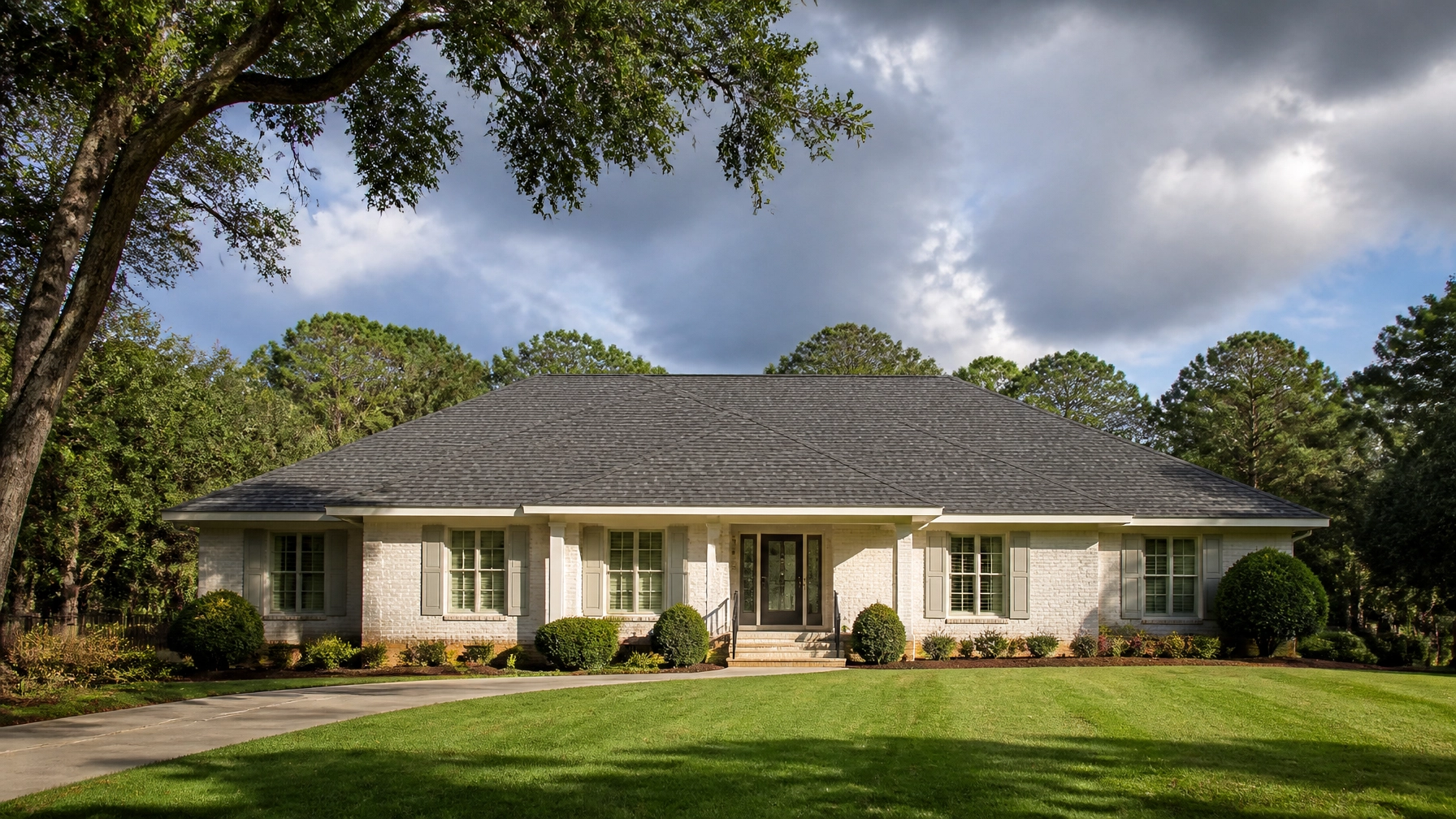
    Breaking Down the Costs: Materials Matter

    The material you choose is the single largest variable in your final invoice. In Houston's humid and storm-prone environment, the "cheapest" option often costs more in the long run due to shorter lifespans and lower wind resistance.

    Close-up of high-quality architectural shingles showing texture and durability

    Asphalt Shingles (Reliable & Cost-Effective)

    Architectural shingles are the gold standard for Houston suburbs like Katy, Sugar Land, and The Woodlands. They offer a 30-year limited warranty and are designed to withstand winds up to 130 mph: a necessity for Tier 1 windstorm areas.

    • Average Total Project (2,000 sq ft home): $9,000 – $14,000.

    Metal Roofing (Modern & Resilient)

    Metal is gaining massive traction in 2026 for its longevity (50+ years) and heat-reflective properties, which can slash Houston AC bills by 10-25%. While the upfront cost is higher, the ROI in a hot climate is unmatched.

    • Average Total Project (2,000 sq ft home): $14,000 – $25,000.

    A modern ranch-style Houston home featuring a sleek silver metal roof

    Labor, Permits, and "The Houston Factor"

    In Houston, labor typically accounts for 40% to 60% of your total bill. Professional roofing crews in the area charge roughly $2.00 to $6.00 per square foot for installation and tear-off.

    Why Houston is Different:

    1. Pitch & Complexity: Houston has a mix of low-slope ranches and steep-pitched colonials. A steep roof requires more safety equipment and slower labor, adding roughly 15-20% to the labor cost.
    2. Tear-Off Fees: If your roof has multiple layers of old shingles, expect an additional $1,000 to $2,500 for the extra labor and disposal fees.
    3. Permit Fees: The City of Houston calculates permit fees based on project value. For a $10,000 roof, expect a permit fee around $65–$80. If you are in a Windstorm area (like parts of Harris or Galveston County), specialized inspections and certifications from the Texas Department of Insurance (TDI) may be required.

    2026 Price Trends: What to Expect

    Material prices have stabilized since the volatility of the early 2020s, but they are not decreasing. Manufacturers typically implement 3-5% price hikes every spring. If you're planning a replacement for late 2026, it is safer to budget at the higher end of the ranges provided.

    Market data from sources like Angi and HomeAdvisor confirm that Houston's average cost for a high-quality asphalt roof currently sits near $9,752, with premium projects frequently crossing the five-figure mark.

    Get an Accurate Estimate Without the Hassle

    Traditional roofing estimates take days. You have to schedule a visit, wait for a contractor to climb your roof, and then wait for a quote. We've eliminated that friction.

    Using advanced satellite imagery, we can measure your roof’s size, pitch, and complexity with 95% accuracy in less than a minute. No credit card, no house visit, and no pressure.

    Satellite view of a residential neighborhood used for precision roofing measurements

    Ready to see your number? Use our Roof Cost Calculator to get an instant, transparent price range based on your exact address.

    Frequently Asked Questions

    How long does a roof replacement take in Houston?

    Most standard residential roof replacements in Houston are completed in 1 to 2 days. Larger homes or those requiring significant deck repairs may take 3 to 4 days.

    Does homeowners insurance cover roof replacement in Houston?

    If the replacement is due to "unpreventable" damage like hail or a named windstorm (common in Houston), insurance typically covers the cost minus your deductible. If the roof is simply old (wear and tear), it is usually an out-of-pocket expense.

    What is the best month to replace a roof in Texas?

    Late fall and early winter (October through January) are ideal. The weather is cooler for the crews, and the risk of sudden tropical storms or torrential summer rain is lower.

    Are permits required for roofing in Houston?

    Yes. Both the City of Houston and most surrounding municipalities (Katy, Pasadena, Pearland) require a building permit for a full roof replacement. Your contractor should handle this, but the fee will be reflected in your final price.

    Summary Checklist for Houston Homeowners

    • Verify Accuracy: Don't settle for "guestimates." Use satellite-powered measurements for a precision baseline.
    • Check Licenses: Ensure your contractor is licensed and carries high-limit general liability insurance.
    • Demand Transparency: Ask for a line-item quote that includes tear-off, disposal, materials, and permits.
    • Focus on Ventilation: In Houston's heat, proper ridge vents and soffit vents are critical to preventing attic heat buildup and premature shingle failure.

  • The Ultimate Guide to Insurance-Paid Roof Replacements in Memphis: Everything You Need to Succeed

    The Ultimate Guide to Insurance-Paid Roof Replacements in Memphis: Everything You Need to Succeed

    If you own a home in Memphis, you already know the routine. Between the spring thunderstorms, summer wind events, and the occasional winter ice, your roof is constantly under siege. By 2026, roofing material and labor costs in the Mid-South have reached new heights, making a full replacement a significant financial hurdle. However, many homeowners are sitting on a valid insurance claim without even realizing it.

    Navigating the insurance world can feel like a full-time job. This guide is your masterclass in securing an insurance-paid roof replacement in Memphis. We’ll cover the specific Tennessee laws that protect you, the exact steps to take after a storm, and how to use modern satellite technology to ensure you aren't underpaid by your carrier.

    The Reality of Memphis Roofing in 2026

    The Memphis market is unique. We deal with high humidity, intense UV exposure, and frequent wind-driven rain. For most homes in the area: typically ranging from 1,800 to 3,200 square feet: a standard asphalt shingle replacement can now range anywhere from $12,000 to $22,000 (Popular). If you’re looking at metal or synthetic slate (Premium), those numbers can easily double.

    The good news? Most homeowners' insurance policies in Tennessee cover "acts of God," which include wind and hail damage. If your roof has been compromised by a storm, you shouldn't be paying that $15,000 bill out of pocket. You should only be responsible for your deductible.


    Step 1: Establish Your Baseline (The 60-Second Move)

    Before you ever pick up the phone to call your insurance agent, you need to know what your roof is actually worth. Insurance adjusters use their own software to "estimate" the cost of your roof, and quite often, their numbers are outdated or miss key components of your home's unique geometry.

    At Get My Roof Estimate Now, we provide an instant roof replacement cost estimate using high-resolution satellite imagery. In under 60 seconds, you’ll have an accurate measurement of your roof’s squares, pitch, and complexity.

    Why this matters for your claim:

    • Accuracy: Our measurements are 90-95% accurate, giving you a data-backed starting point.
    • Transparency: You’ll know the regional price differences for Memphis before an adjuster tells you what they "think" it should cost.
    • Zero Risk: No credit card required, and no contractor visit needed to get your initial numbers.

    Step 2: Documenting the Evidence

    Once you have your baseline estimate, it’s time to look for damage. Tennessee insurance policies require you to provide proof of a "sudden and accidental" loss.

    Close-up of wind-damaged shingles showing creased tabs

    What to look for (Instructional):

    1. Creased Shingles: Look for dark lines across the top of shingles where the wind has flipped them up and broken the fiberglass mat.
    2. Missing Tabs: If you see "bald spots" on your roof or find shingles in your yard after a storm, that is a clear-cut claim.
    3. Granule Loss: Check your gutters and downspouts. If they are overflowing with "sand" (granules), your shingles have lost their protective layer.
    4. Interior Indicators: Water stains on ceilings or bubbling paint near the top of walls often indicate a storm-created opening.

    Pro Tip: Take photos of everything from the ground. Do not climb onto a damaged roof yourself; it’s a safety hazard and can inadvertently cause more damage that the insurance company might label as "foot traffic."


    Step 3: Filing the Claim and the "Duty to Protect"

    In Tennessee, you are legally obligated to mitigate further damage to your home. This is often called the "Duty to Protect" clause. If your roof is actively leaking, you must have it tarped or temporarily repaired.

    • Keep Your Receipts: Any money you spend on tarps, plywood, or emergency leak repairs is usually reimbursable as part of your claim.
    • Timing: While Tennessee doesn't have a strict statutory deadline, most policies require "prompt" notice. In the Memphis area, filing within 30 days of a major storm event is the gold standard for avoiding disputes.

    Step 4: The Adjuster Meeting: Don't Go Alone

    After you file your claim, the insurance company will send an adjuster to inspect the property. This is the most critical phase of the process.

    A roofing professional using satellite technology to verify roof measurements

    The Power of Data:
    When the adjuster arrives, you (or your preferred local contractor) should be ready with your satellite-powered measurement report. Adjusters are human; they make mistakes. If they measure your roof at 25 squares but your satellite report shows 28, that’s a 12% discrepancy in material costs that could cost you thousands.

    Tennessee’s "Matching Rule":
    This is a major win for Memphis homeowners. Tennessee is a "matching state." This means that if your roof is damaged on only one slope, but the shingles are no longer manufactured or the remaining shingles have faded so much that a new shingle won't match, the insurance company may be required to replace the entire roof to ensure a uniform appearance.


    Step 5: Understanding Your Settlement (RCV vs. ACV)

    When you receive your check, it will likely be for less than the total estimate. Don't panic: this is standard. You need to look at which type of policy you have:

    • RCV (Replacement Cost Value): This is the gold standard (Premium). The insurance pays the full cost to replace the roof. They send a first check (minus depreciation), and once the work is done, they send a second check for the "recoverable depreciation."
    • ACV (Actual Cash Value): This is a "Budget" style policy. They only pay what the roof is worth today, considering its age. If your roof is 20 years old, you will likely only receive a fraction of the replacement cost.

    A Warning on Deductibles

    In the state of Tennessee, it is illegal for a contractor to "waive" or "cover" your insurance deductible. Any contractor who offers to do this is committing insurance fraud, which could put your entire claim: and your home’s coverage: at risk. Always plan to pay your deductible out of pocket.


    Memphis Roof Replacement Benchmarks (2026 Data)

    To help you budget, here are the current average costs for a 2,500 sq. ft. roof in the Memphis metro area (including Germantown, Collierville, and Bartlett):

    Material Type Estimated Cost Range Category
    3-Tab Shingles $9,500 – $12,500 Budget
    Architectural Shingles $13,000 – $18,500 Popular
    Standing Seam Metal $28,000 – $42,000 Premium
    Synthetic Slate/Shake $35,000 – $55,000 Luxury

    Note: These prices include tear-off, disposal, underlayment, and labor. Your insurance settlement should align with these local market rates.


    Summary: Your Roadmap to Success

    1. Get Your Estimate: Start with an instant, free satellite estimate to know your home's true measurements.
    2. Inspect: Document storm damage with photos.
    3. File: Contact your agent and mention the specific date of the storm.
    4. Compare: Match the insurance adjuster's "Scope of Loss" against your satellite data.
    5. Hire: Connect with a verified, licensed, and insured Memphis contractor through our platform to ensure the work is done to code.

    A beautiful Memphis neighborhood with new, uniform roofs

    Getting insurance to pay for your roof isn't about "gaming the system": it's about holding the insurance company to the contract you pay for every month. With the right data and a clear understanding of Tennessee's matching laws, you can protect your biggest investment without the traditional headaches.

    Ready to see what your roof replacement should cost? Get your instant estimate here and take the first step toward a secure, insurance-paid home.


  • The Simple Trick to Get a Fast Roof Estimate in San Antonio Without a Contractor Visit

    The Simple Trick to Get a Fast Roof Estimate in San Antonio Without a Contractor Visit

    If you live in San Antonio, you know the drill. A big storm rolls through Bexar County, and suddenly, every roofing contractor in the 210 is booked solid for three weeks. You’re left sitting on your porch, waiting for a guy with a ladder to show up just so he can tell you a number you’re probably not going to like.

    The traditional way of getting a roof estimate is broken. It’s slow, it’s high-pressure, and it wastes your Saturday.

    But there is a better way. At Get My Roof Estimate Now, we’ve pioneered a simple trick that lets San Antonio homeowners skip the house call entirely. Using high-resolution satellite imagery and advanced AI, you can get a professional-grade roof replacement estimate in under 60 seconds.

    The Secret: Satellite-Powered Accuracy

    Most homeowners don't realize that the same technology used for global mapping is now precise enough to measure every ridge, valley, and hip on your roof.

    When you enter your San Antonio address into our online tool, our system pulls top-down and oblique satellite views of your home. It calculates your roof's "squares" (the 100-sq-ft units roofers use) with 90-95% accuracy.

    Satellite technology analyzing a San Antonio roof for an instant estimate

    Why This Matters for San Antonio Residents

    In South Texas, the sun is brutal. High UV exposure degrades shingles faster than in northern climates, and the occasional North Side hailstorm can turn a 20-year roof into a 10-year roof in minutes.

    Because San Antonio has a unique mix of ranch-style homes, historic properties in King William, and sprawling modern developments in Stone Oak, "ballpark" pricing doesn't work. You need data that factors in your specific roof size and local labor rates.

    Breaking Down San Antonio Roofing Costs (2026 Data)

    To help you budget, we’ve compiled the current average costs for a typical 2,000-square-foot roof in San Antonio. These figures include tear-off, disposal, materials, and labor.

    Material Category Typical San Antonio Cost (2,000 sq. ft.) Best For
    Architectural Shingles (Popular) $9,000 – $15,000 Standard durability & curb appeal
    Class 4 Impact-Resistant (Smart) $11,500 – $18,000 Homes in hail-prone areas
    Standing Seam Metal (Premium) $20,000 – $38,000 Lifetime durability & heat reflection
    Concrete/Clay Tile (Luxury) $20,000 – $40,000+ Mediterranean & Historic styles

    Note: These ranges represent typical 2026 pricing. Your specific cost may vary based on roof pitch (steepness) and complexity.

    The Benefits of Staying Off the Ladder

    Why wait for a contractor to visit when you can get the information you need right now?

    1. Instant Budgeting: Know if you’re looking at a $10k or $30k project before you start shopping.
    2. No Pressure: Avoid the "today-only discount" sales tactics often used during in-person visits.
    3. Accuracy: Our measurements are often more precise than a contractor walking your roof with a tape measure.
    4. Transparency: We provide low-middle-high price ranges so you can see how different materials impact your bottom line.

    High-quality architectural shingles showing the texture and durability needed for Texas weather

    Choosing the Right Material for South Texas

    San Antonio's climate dictates your material choice. If you’re looking for longevity, consider these options:

    • Architectural Shingles (Budget-Friendly): The gold standard for most Alamo City homes. They offer a great balance of cost and a 25-30 year lifespan.
    • Metal Roofing (Premium Performance): While the upfront cost is higher, metal roofs reflect radiant heat. In a San Antonio summer, this can significantly lower your cooling bills.
    • Impact-Resistant Shingles (Practical): Given the hail frequency in Texas, many homeowners opt for Class 4 shingles, which can also trigger discounts on your homeowners insurance.

    A modern San Antonio home featuring a sleek, heat-reflective standing seam metal roof

    Frequently Asked Questions (FAQ)

    How long does a roof estimate take in San Antonio?

    Traditionally, it takes 3-7 days to schedule a contractor and receive a quote. With our satellite tool, it takes less than 60 seconds.

    Is an online roof estimate accurate?

    Yes. Our technology is accurate to within 90-95%. It identifies the exact square footage and complexity of your roof. While a final on-site inspection is needed for a contract, our estimate is the perfect tool for budgeting and comparing offers.

    What is the average cost of a new roof in San Antonio?

    For a standard single-family home (approx. 2,000 sq. ft.), expect to pay between $9,000 and $15,000 for architectural shingles. For premium metal, costs typically range from $20,000 to $38,000.

    Do I need to be home for the estimate?

    No. Because we use satellite imagery, we don't need access to your property or interior. You can get your estimate from your phone while at the Pearl or sitting at a Spurs game.

    Will insurance cover my San Antonio roof replacement?

    If your roof was damaged by a recent wind or hailstorm, your insurance might cover the cost. Having an accurate estimate in hand before you call your adjuster gives you a clear baseline for the claim.

    Ready to See Your Number?

    Don't spend your weekend waiting for a contractor who might not show up. Take 60 seconds to get a transparent, data-driven estimate tailored to your San Antonio home.

    Get Your Instant San Antonio Roof Estimate Here


  • 15 Red Flags to Spot a Roofing Storm Chaser in Charleston Before You Sign

    15 Red Flags to Spot a Roofing Storm Chaser in Charleston Before You Sign

    Hurricane season in Charleston isn't just a weather event; for some, it’s a business model. While reputable local contractors are busy helping neighbors rebuild, another group is moving in: the "storm chasers." These are out-of-state roofing companies that follow major weather patterns, descend on a city like Charleston, and use high-pressure tactics to sign as many contracts as possible before disappearing.

    At Get My Roof Estimate Now, we believe transparency is the best defense against predatory sales tactics. In 2026, the cost of a typical roof replacement in Charleston ranges from $10,000 to $18,000 for architectural shingles and $18,000 to $30,000+ for metal. If a deal seems too good to be true, it usually is.

    Before you hand over a deposit or sign an insurance claim form, check for these 15 red flags that indicate you might be dealing with a storm chaser.

    1. Unsolicited Door-to-Door Sales

    If a contractor knocks on your door within 48 hours of a hail storm or high-wind event, be wary. Legitimate Charleston roofing companies usually have a backlog of work after a storm and don't need to go door-to-door. Storm chasers rely on the "foot-in-the-door" technique to catch you while you're still stressed.

    2. Out-of-State License Plates

    Take a look at the trucks parked on your street. If the contractor’s fleet has plates from Ohio, Texas, or Florida, they are likely traveling crews. While not all out-of-state workers are bad, the problem arises when they leave South Carolina. If your roof leaks in six months, you’ll find their local "office" was just a temporary rental space that is now empty.

    3. High-Pressure "Today Only" Pricing

    "If you sign this contract right now, I can give you a $2,000 discount." This is a classic manipulation tactic. Professional roofing is a calculated process based on satellite measurements and material costs. Real pricing doesn't fluctuate based on how quickly you sign.

    4. Offers to "Cover" Your Insurance Deductible

    This is the biggest red flag in South Carolina. Under SC Code §38-75-756, it is illegal for a contractor to pay, rebate, or "absorb" your insurance deductible. If a roofer tells you that you can get a "free roof" and they will handle the deductible, they are asking you to participate in insurance fraud.

    A professional roofing contractor's clipboard showing a detailed, itemized estimate sheet with clear pricing.

    5. No Local Physical Address

    A P.O. Box is not a local office. Ask for a physical address where you can walk in and speak to someone. Storm chasers often use "virtual offices" or temporary co-working spaces to appear local. If they can't prove they’ve been in the Charleston or Lowcountry area for more than a few months, move on.

    6. Demanding the Full ACV Check Upfront

    In the insurance world, the ACV (Actual Cash Value) is the first check your provider sends. A storm chaser will often demand you sign this check over to them immediately. Never pay the full amount upfront. A standard deposit (usually 10-33%) is normal, but the bulk of the payment should happen after materials are delivered and the job is completed.

    7. No South Carolina Roofing License

    In South Carolina, residential roofing requires a valid license from the SC Department of Labor, Licensing and Regulation (LLR). Ask for their license number and verify it on the LLR website. Storm chasers often work under a local person's "borrowed" license or have none at all.

    8. Lack of Manufacturer Certifications

    Premium material brands like GAF, Owens Corning, or CertainTeed offer certifications to installers. If a roofer can't show they are a "Master Elite" or "Preferred" contractor, they likely aren't trained in the latest installation techniques for the humid, salt-air climate of Charleston.

    9. Vague, One-Page Estimates

    A professional estimate should be a multi-page document detailing exactly what is being done.

    • Budget: 3-tab shingles (rarely recommended for coastal wind).
    • Popular: Architectural shingles (rated for 110-130 mph winds).
    • Premium: Standing seam metal or designer shingles.

    If the estimate just says "Replace Roof" without mentioning underlayment, drip edge, flashing, or ventilation, you're looking at a scam.

    A high-resolution satellite view of a residential roof in a Charleston neighborhood with digital measurement overlays.

    10. "We’ll Handle the Entire Claim for You"

    While a roofer can assist by identifying damage, they cannot legally act as your public adjuster in many states. If they tell you to "just call the insurance and let us handle the rest," they may be inflating the claim or performing unnecessary work that your insurance won't actually cover, leaving you with a surprise bill.

    11. No Mention of Building Permits

    Charleston and surrounding areas (like Mount Pleasant or Summerville) have strict building codes, especially regarding wind resistance and fastening patterns. A contractor who says "we don't need a permit for a simple shingle swap" is cutting corners. No permit means no official inspection, which could void your homeowner's insurance policy.

    12. Using Subcontractors Without Workers’ Comp

    Storm chasers often hire local "chuck-in-a-truck" crews to do the actual labor. If one of those workers falls off your roof and the contractor doesn't have valid South Carolina Workers' Compensation insurance, you could be held liable for the medical bills.

    13. "Free" Inspections That Cause Damage

    Some unscrupulous storm chasers have been caught "creating" damage during their free inspection: using a penny to lift shingles or a hammer to simulate hail hits. Always try to be present during an inspection, or better yet, use a satellite-powered estimate to get your measurements first so you know the scope of your roof before anyone climbs on it.

    14. No Online Presence or Reviews

    If you search for the company and find zero Google reviews, no Better Business Bureau (BBB) profile, and a website that was created 30 days ago, you are dealing with a pop-up shop. Real Charleston contractors have a digital trail of satisfied (and sometimes unsatisfied) customers.

    15. The "Leftover Material" Scam

    "We just finished a job down the street and have enough shingles left over to do your roof for half price." This is one of the oldest scams in the book. Shingles are sold by the "square" (100 sq. ft.), and no professional contractor accidentally orders an entire house worth of extra material.

    A side-by-side comparison of architectural asphalt shingles and standing seam metal roofing on a modern home.

    How to Get an Accurate Estimate Without the Hassle

    The stress of storm damage shouldn't be compounded by aggressive salesmen. That’s why we built Get My Roof Estimate Now. Instead of waiting days for a contractor to show up and give you a high-pressure pitch, you can get a 90-95% accurate estimate in under 60 seconds.

    2026 Charleston Pricing Benchmarks

    To help you spot a storm chaser's "too good to be true" price, here is what you should expect to pay in the Charleston market this year:

    Material Type Price per Square (100 sq ft) Average Total (2,000 sq ft roof)
    Architectural Shingles $500 – $850 $10,000 – $18,000
    Standing Seam Metal $900 – $1,500 $18,000 – $30,000
    Synthetic/Slate $1,200 – $2,500 $25,000 – $50,000

    Note: Prices include tear-off, disposal, and standard 2026 labor rates.

    Why Use Our Tool First?

    1. Zero Pressure: No one is knocking on your door. You control the process.
    2. Instant Accuracy: Our satellite technology measures your roof's size, pitch, and complexity within inches.
    3. Transparent Data: We provide a low-middle-high range so you can budget effectively.
    4. Verified Pros: If you choose to move forward, we connect you with local, licensed, and insured Charleston contractors: not traveling storm chasers.

    Don't let a storm chaser take advantage of your home. Start with an accurate, objective baseline and keep the power in your hands.

    A professional roofing crew working efficiently on a steep roof of a classic Southern colonial home.

    Ready to see what your new roof should actually cost?
    Click here to get your instant Charleston roof estimate now.
  • Houston Roof Replacement Cost: 2026 Secrets Revealed (What Pros Won’t Tell You)

    Houston Roof Replacement Cost: 2026 Secrets Revealed (What Pros Won’t Tell You)

    If you’re a Houston homeowner in 2026, looking up at a roof that’s seen better days, you’ve probably noticed something unsettling: the "ballpark" prices your neighbors paid three years ago are officially extinct. Between the massive steel tariffs of 2025 and the string of manufacturer price hikes that hit in the spring of this year, the roofing landscape in Southeast Texas has shifted dramatically.

    Replacing a roof in the Bayou City isn't just about shingles and nails anymore; it’s about navigating a market where labor costs are rising at 6% annually and material availability can change in a heartbeat.

    At Get My Roof Estimate Now, we believe transparency is the only way to build trust. You shouldn't have to wait three days for a salesman to sit on your couch just to get a number. Today, we’re pulling back the curtain on the real costs of a Houston roof replacement in 2026, including the "secrets" most contractors keep to themselves until the contract is signed.

    The 2026 Houston Price Snapshot

    Before we dive into the variables, let’s look at the raw data. For a standard 2,000 to 2,500 square foot home in the Greater Houston area (think Katy, Sugar Land, or The Woodlands), here is what you can expect to pay today.

    Roof Material Price Per Square Foot (Installed) Total Project Range (Average Home) Category
    3-Tab Asphalt $4.00 – $5.50 $9,000 – $13,000 Budget
    Architectural Shingles $5.50 – $7.50 $12,500 – $18,000 Popular
    Standing Seam Metal $11.00 – $15.00 $25,000 – $40,000 Premium
    Synthetic Slate/Tile $14.00 – $19.00 $35,000 – $55,000 Luxury

    Note: A "square" in roofing terms is a 10' x 10' area (100 square feet).

    Secret #1: The "Tariff Trap" in Metal Roofing

    If you’ve been dreaming of a sleek, matte-black metal roof to modernize your Houston ranch, prepare for sticker shock. In June 2025, Section 232 steel and aluminum tariffs were doubled to 50%. By the time 2026 rolled around, these costs had fully trickled down to the consumer level.

    While metal roofing is incredibly durable and hurricane-resistant, the cost to install it in Houston has jumped nearly 60% compared to pre-2024 levels. If a contractor gives you a "low-ball" quote on metal, be wary: they are likely using thinner gauge steel or lower-quality fasteners that won't hold up when the next tropical system rolls through the Gulf.

    A modern ranch-style home in Texas with a sleek black metal roof

    Secret #2: The Houston "Hurricane Code" Premium

    Houston isn't just hot; it’s a high-wind zone. In 2026, local building codes and insurance requirements have become more stringent. To get a roof that actually lowers your insurance premiums (and stays on during a Category 2 hurricane), you need more than just shingles.

    The "pros" won't always tell you that a standard install often lacks the specific requirements for Houston’s wind zones. A truly resilient roof requires:

    • Six-nail fastening patterns (instead of the standard four).
    • High-wind rated underlayment.
    • Reinforced hip and ridge caps.

    Choosing these "upgrades" can add 10-15% to your material costs, but they are non-negotiable if you want to avoid a total loss during storm season. When you use our roof cost calculator, we factor in these regional complexities automatically.

    Secret #3: Labor is 60% of Your Invoice

    Many homeowners assume the shingles are the most expensive part of the job. In reality, in the 2026 Houston market, labor accounts for 50% to 60% of your total bill.

    Roofing labor in Texas is currently averaging around $22-$25 per hour for skilled installers. Because Houston's humidity makes for brutal working conditions, crews are often smaller or work shorter windows, which can extend the timeline. Most contractors add a 20-40% markup on top of labor and materials to cover overhead and profit. When you see a "huge discount" offered by a local company, they are usually cutting into the labor budget: which means rushed work and potential leaks down the line.

    A professional roofing contractor discussing an estimate on a tablet

    Breaking Down the Materials: What's Right for You?

    1. Architectural Asphalt Shingles (The Popular Choice)

    In 2026, architectural (or dimensional) shingles remain the gold standard for Houston. They offer a balance of aesthetic appeal and wind resistance.

    • Estimated Cost: $5.50 – $7.50 per sq. ft.
    • Lifespan: 20-30 years.
    • Pros: Great curb appeal, easily repairable after hail.
    • Cons: Absorb heat (unless you choose "Cool Roof" variants).

    2. Standing Seam Metal (The Premium Choice)

    Metal is the ultimate "set it and forget it" roof, provided you can handle the upfront investment.

    • Estimated Cost: $11.00 – $15.00 per sq. ft.
    • Lifespan: 50+ years.
    • Pros: Reflects solar heat (lowers AC bills), incredible wind resistance.
    • Cons: High initial cost, noise during heavy Houston rainstorms.

    3. Synthetic Slate (The Luxury Choice)

    If you want the look of a River Oaks mansion without the weight of actual stone, synthetic slate is the 2026 trend to watch.

    • Estimated Cost: $14.00+ per sq. ft.
    • Lifespan: 50 years.
    • Pros: Stunning aesthetics, lighter weight than natural slate.
    • Cons: Requires specialized labor for installation.

    Close up of high quality architectural asphalt shingles

    The "Hidden" Costs That Blow the Budget

    Even with an accurate estimate, two things can derail your budget once the old roof is torn off:

    1. Rotten Decking (The $2,000 Surprise)

    In Houston’s humid climate, slow leaks often rot the plywood (decking) underneath your shingles without you knowing. Most contractors include 1 or 2 sheets of plywood in their base bid. However, if they find widespread rot, you could be looking at $90 to $120 per sheet replaced. This can easily add $1,500 to $3,000 to a project.

    2. Permit and Disposal Fees

    Inside Houston city limits, the permit fee is calculated based on the project value (roughly $46 for the first $7,000, plus $5.29 for every additional $1,000). While this is relatively low, disposal fees at local landfills have increased by 15% in the last year. Ensure your quote explicitly includes "tear-off and haul-away."

    Why Satellite Technology is Your Best Friend in 2026

    The traditional way of getting a roof estimate is broken. You call three companies, wait for them to show up (if they show up at all), and then listen to three different sales pitches.

    At Get My Roof Estimate Now, we use high-resolution satellite imagery to measure your roof with 90-95% accuracy in under 60 seconds. We look at the square footage, the pitch (slope), and the complexity of your roofline without ever stepping foot on your property.

    This eliminates the "sales commission" markup and gives you a transparent, objective price range to use when talking to contractors. It’s the fastest way to know if that "special offer" you got in the mail is actually a deal or a rip-off.

    Satellite view of a house with measurement lines

    Conclusion: Planning Your Houston Roof Replacement

    The 2026 market is fast-moving. With manufacturers like GAF and Owens Corning implementing price increases nearly every quarter, the best time to lock in a price is usually "now."

    Don't let the complexity of roofing math stop you from protecting your biggest investment. Whether you are in Bellaire, Humble, or Pearland, you deserve a fair price and a roof that can withstand whatever the Texas sky throws at it.

    Ready to see your number?
    Get your instant, free roof estimate here and join the thousands of Houston homeowners who are skipping the sales pitch and getting straight to the facts.

    For more tips on maintaining your home, visit our full blog library.

  • The Ultimate Guide to Getting Insurance to Pay for Your New Houston Roof

    The Ultimate Guide to Getting Insurance to Pay for Your New Houston Roof

    Living in Houston means dealing with more than just humidity and traffic. From the sudden, violent hail storms of the spring to the looming threat of hurricane season, your roof takes a beating that most homeowners across the U.S. can't imagine. By the time a roof hits the 15-year mark in Southeast Texas, it's often a ticking time bomb.

    The good news? If your roof has suffered "functional damage" from wind or hail, your insurance company is likely on the hook for the replacement. The bad news? Navigating a Texas insurance claim in 2026 is more complex than ever. Between rising deductibles and strict documentation requirements, you need a strategy.

    This guide is your masterclass in winning the insurance game. We’ll show you how to identify damage, use modern technology to verify costs, and ensure you get every penny you’re owed for a new Houston roof replacement.

    Section 1: The Houston Insurance Landscape (2026 Update)

    Before you pick up the phone, you need to understand the rules of the game in Texas. In recent years, the market has shifted significantly.

    RCV vs. ACV (The Difference Between $500 and $15,000)

    Most Houston homeowners have one of two types of coverage:

    • Replacement Cost Value (RCV) (Premium): This is what you want. It pays the full cost to replace your roof at today’s prices, minus your deductible.
    • Actual Cash Value (ACV) (Budget): This only pays the "depreciated" value. If your 20-year-old roof is destroyed, the insurer might only give you a fraction of the cost, leaving you to pay the remaining $10,000+ out of pocket.

    The 2% Deductible Reality

    In 2026, many Texas policies have moved away from flat-fee deductibles. It is now common to see a 2% wind/hail deductible. On a $400,000 home, that means you pay the first $8,000. Knowing this number upfront is critical for budgeting your project.

    Section 2: Identifying "Functional" Damage

    Insurance companies don’t pay for "old" roofs; they pay for "damaged" roofs. To get a claim approved, you must prove functional damage: damage that affects the roof's ability to shed water or shortens its lifespan.

    Close-up of hail damage on a shingle, showing the

    • Hail Bruising: When hail hits a shingle, it knocks off the protective granules, exposing the black asphalt "mat" underneath. These look like small dark circles.
    • Wind Creasing: High winds lift shingles and fold them back. Even if the shingle looks okay from the ground, a "crease" at the top of the shingle means the fiberglass bond is broken.
    • Mechanical Damage: Lifted flashing, dented metal vents, and damaged "soft metals" are all evidence of a storm's severity.

    Pro Tip: Look at your gutters and AC unit first. If the metal fins on your AC unit are smashed or your gutters have "pings" in them, there’s a 99% chance your roof has hail damage too.

    Section 3: The 60-Second Secret Weapon

    The biggest mistake Houston homeowners make is calling the insurance company before they know what their roof actually costs. If an adjuster says your roof is worth $12,000, but the real-world cost is $18,000, you’re already behind.

    At Get My Roof Estimate Now, we use advanced satellite imagery to measure your roof's exact square footage, pitch, and complexity in under 60 seconds.

    A satellite-powered roof measurement visualization showing the precision of modern roofing technology.

    By using our instant roof cost calculator, you receive an unbiased, data-driven price range based on current Houston material and labor costs.

    • Budget (3-Tab Shingles): $8,000 – $12,000
    • Popular (Architectural Shingles): $12,000 – $18,000
    • Premium (Metal or Designer Shingles): $20,000+

    Armed with this report, you can hand the insurance adjuster a professional estimate that’s accurate to within inches. It's hard for them to argue with satellite data.

    Section 4: Filing the Claim (The Texas Timeline)

    Timing is everything. In Texas, the Prompt Payment of Claims Act protects you, but you have to act fast.

    1. The Deadline: Most Texas policies require you to file within one year of the storm date. If you wait until your roof starts leaking two years later, you’re likely out of luck.
    2. The Acknowledgment: Once you file, the insurer has 15 days to acknowledge your claim.
    3. The Decision: After the inspection, they have 15 business days to accept or deny the claim.
    4. The Payment: If approved, they must issue payment within 5 business days.

    If your insurance company is dragging its feet, remind them of the Texas Department of Insurance (TDI) regulations. That usually gets things moving.

    Section 5: The Adjuster Meeting

    The adjuster works for the insurance company, not you. Their goal is to minimize the "scope of loss." You need an advocate on your side.

    A professional roofing crew installing a new roof, ensuring all insurance-specified requirements are met.

    • Never Go It Alone: Always have a reputable Houston roofing contractor present during the adjuster’s inspection. They speak the same language and can point out damage the adjuster might "miss."
    • The "30% Rule": In many cases, if more than 25-30% of a roof slope is damaged, the entire slope must be replaced. If multiple slopes are hit, the whole roof is typically "totaled."
    • The Supplement Process: If the insurance check is too low, don't panic. Your contractor can file a "supplement": a request for additional funds based on code requirements or hidden damage found once the old shingles are torn off.

    Section 6: Why Local Expertise Matters

    Houston has specific building codes, especially regarding wind-load requirements in coastal areas. A "storm chaser" from out of state might not know that your roof needs specific starter strips or nail patterns to meet local code.

    When you use Get My Roof Estimate Now, we don't just give you a price; we connect you with verified, licensed, and insured local contractors who live and work in the Houston area. These are pros who understand how to work with Texas adjusters and ensure your new roof is built to withstand the next big one.

    Summary Checklist for Houston Homeowners

    • Check your policy: Do you have RCV coverage? What is your wind/hail deductible?
    • Get your baseline: Use our satellite estimate tool to get an instant price.
    • Find the date: Pinpoint the exact storm (hail or wind) that caused the damage.
    • Document everything: Take photos of your roof, gutters, and interior leaks.
    • File the claim: Be brief and stick to the facts of the storm damage.
    • Meet the adjuster: Ensure your contractor is there to walk the roof with them.

    Replacing a roof is one of the largest investments you'll make in your home. Don't let the insurance company dictate the quality of your protection. By using technology, understanding your rights, and moving quickly, you can get the high-quality roof your Houston home deserves: with the insurance company picking up the tab.