Blog

  • Architectural Shingles vs. Metal Roofing: The 2026 Augusta GA Material Showdown

    Architectural Shingles vs. Metal Roofing: The 2026 Augusta GA Material Showdown

    For Augusta homeowners, the decision to replace a roof in 2026 isn't just about curb appeal: it’s a calculated financial move against the backdrop of Georgia’s punishing heat and unpredictable storm seasons. Whether you are navigating a new roof cost in Augusta GA after a summer of heavy thunderstorms or planning a proactive upgrade for a 20-year-old home, the choice between architectural shingles and metal roofing is the most significant variable in your budget.

    At Get My Roof Estimate Now, we leverage satellite imagery to provide Augusta GA roofing estimates in under 60 seconds. In this guide, we break down the hard data, 2026 pricing benchmarks, and climate-specific performance factors you need to make an informed choice for your property.

    The Popular Standard: Architectural Shingles in Augusta

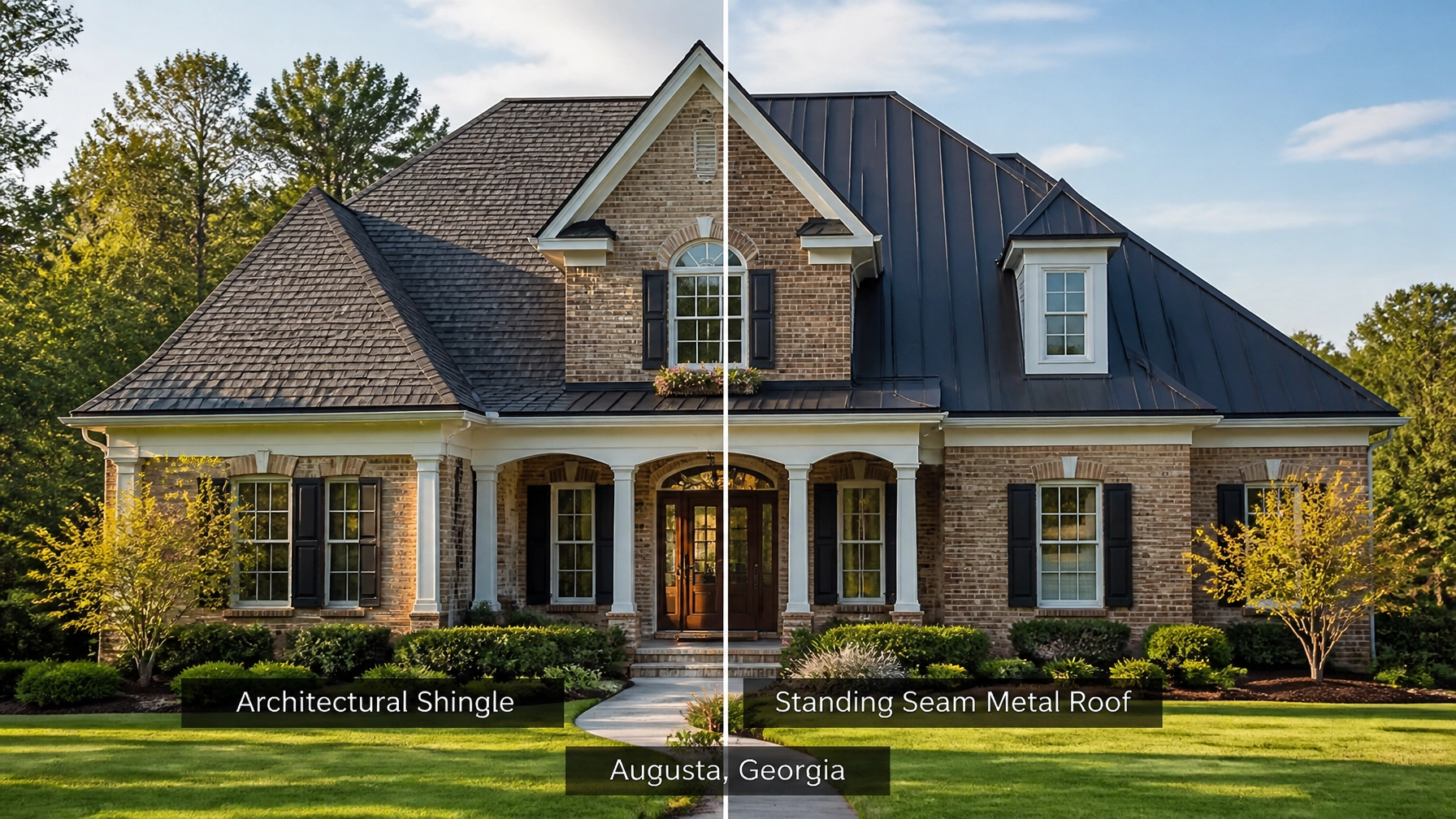
    Architectural shingles (also known as dimensional or laminate shingles) remain the most common choice for residential properties in the CSRA (Central Savannah River Area). Unlike the flat 3-tab shingles of previous decades, today’s architectural options offer a thicker, multi-dimensional look that mimics natural wood shakes or slate.

    2026 Pricing Benchmarks (Budget)

    In 2026, the roof replacement cost in Augusta GA for architectural shingles typically ranges from $4.50 to $10.00 per square foot installed.

    For a standard 1,800 to 2,000-square-foot home (approximately 20–25 roofing squares), homeowners should expect a total project investment of $8,500 to $15,000. This range accounts for standard tear-off, local labor rates, and high-quality underlayment.

    Performance and Lifespan

    • Lifespan: 20–30 years (with proper ventilation).
    • Best For: Homeowners planning to sell within 10–15 years or those looking for the lowest upfront cost.
    • Augusta Climate Note: While modern shingles are rated for high winds, the intense Georgia sun can cause granule loss and "shingle curling" over time if the attic is not correctly ventilated.

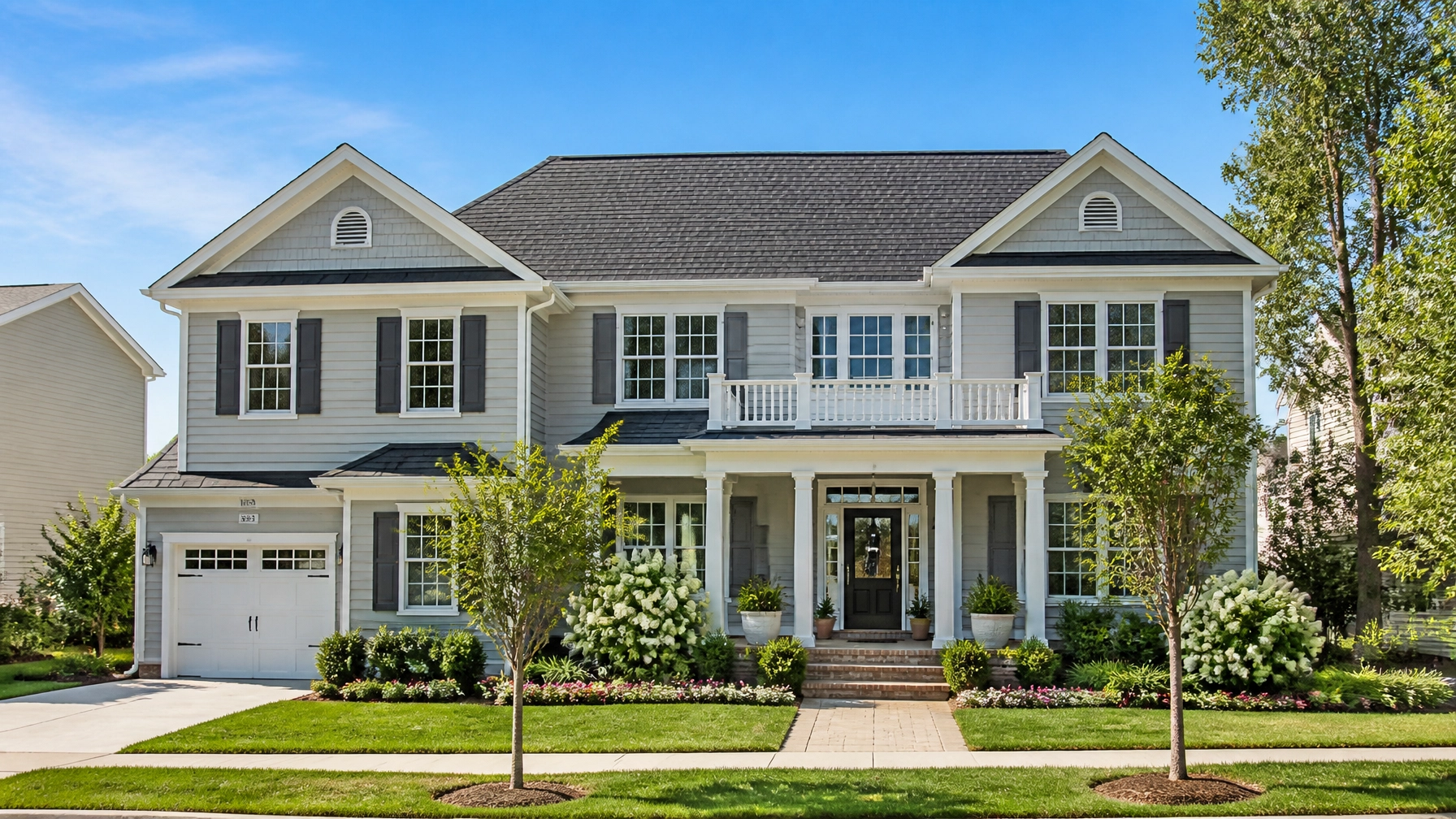
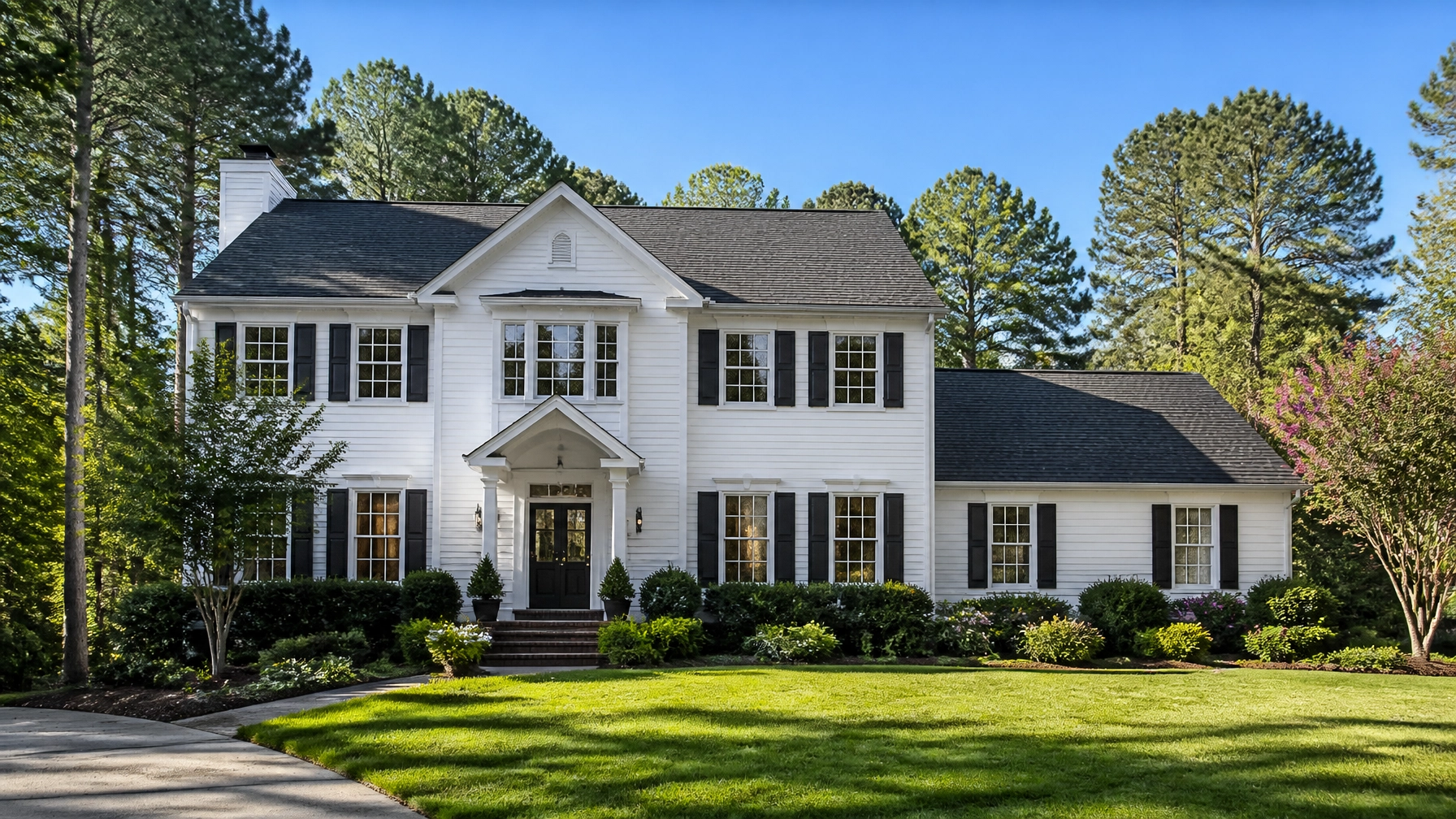
    Close-up of high-quality architectural shingles on an Augusta residence

    The Premium Investment: Metal Roofing (Standing Seam)

    If your goal is "one and done," metal roofing is the definitive answer. In 2026, more Augusta homeowners are pivoting toward metal to combat rising energy costs and the increased frequency of hail-producing storms.

    2026 Pricing Benchmarks (Premium)

    Standing seam metal roofing: the gold standard for residential applications: currently costs between $9.00 and $16.00 per square foot installed in the Augusta market.

    For a 1,800 to 2,000-square-foot home, the total project cost typically lands between $16,000 and $32,000. While the initial price is approximately double that of shingles, the lifetime value often offsets the upfront premium.

    Performance and Lifespan

    • Lifespan: 40–70 years.
    • Best For: Long-term homeowners, those seeking maximum energy efficiency, and properties in high-exposure areas.
    • Augusta Climate Note: Metal is naturally reflective, significantly reducing the "heat island" effect common in Richmond County suburbs.

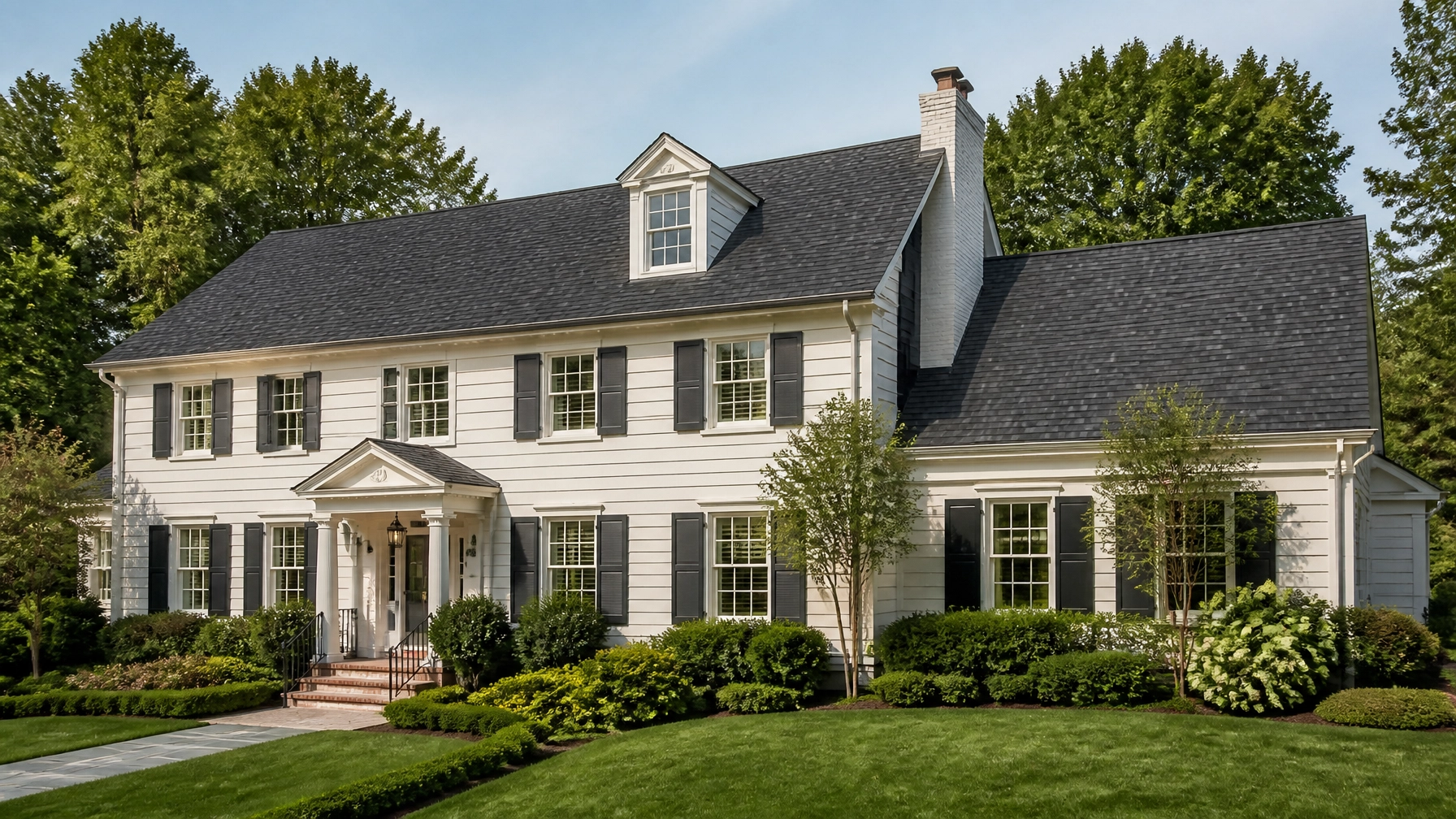
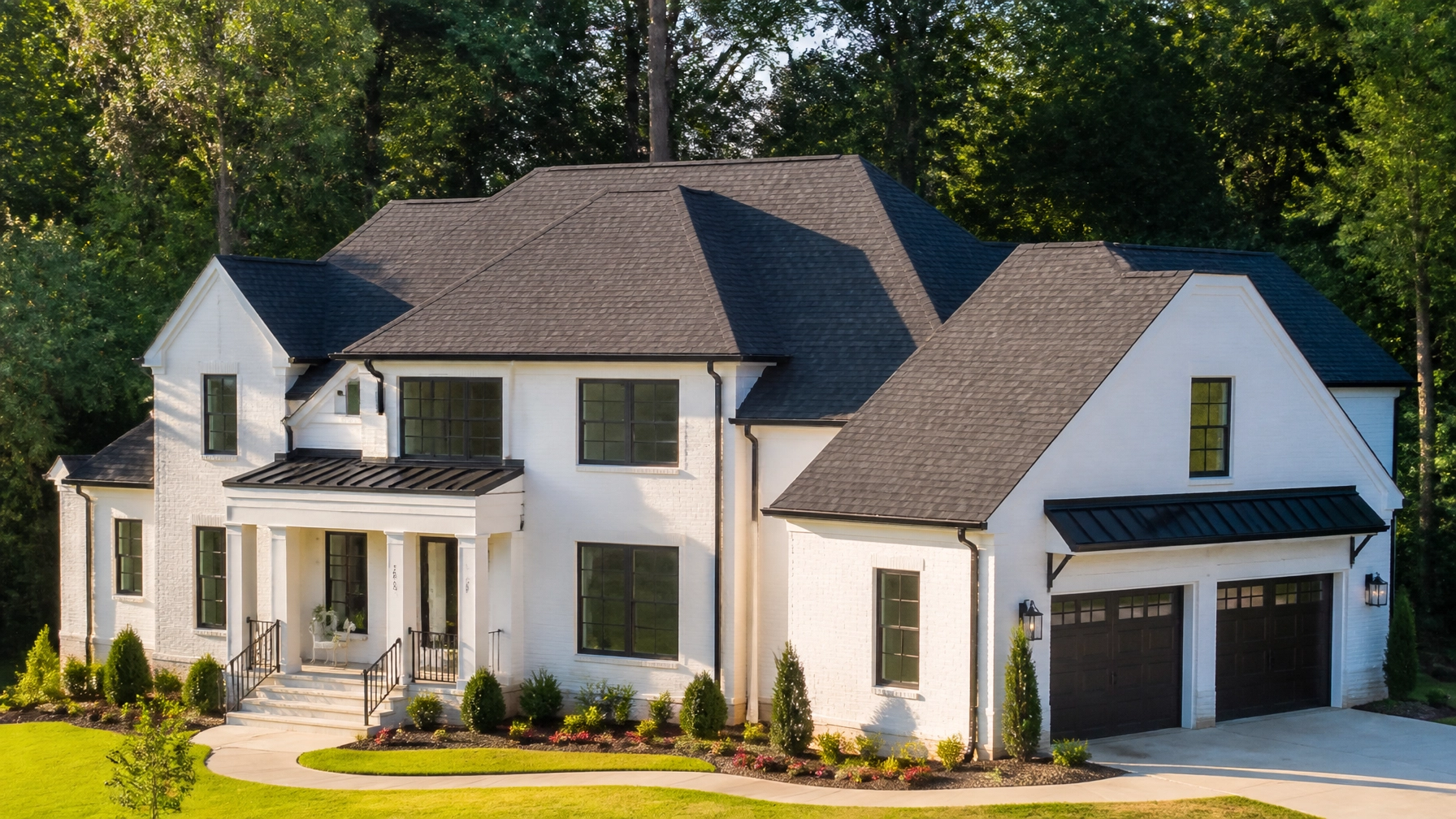
    Modern Georgia home with a sleek standing seam metal roof

    Side-by-Side Comparison: Augusta GA 2026

    To help you categorize your options, here is a direct comparison of the two materials based on current market data.

    Feature Architectural Shingles (Popular) Metal Roofing (Premium)
    Installed Cost (Per Sq. Ft.) $4.50 – $10.00 $9.00 – $16.00
    Typical Augusta Total (2k Sq Ft Home) $8,500 – $15,000 $16,000 – $32,000
    Expected Lifespan 20 – 30 Years 40 – 70 Years
    Energy Efficiency Moderate (Heat Absorbing) High (Heat Reflective)
    Storm Resistance High (Wind & Debris) Superior (Hail & Extreme Wind)
    Maintenance Needs Low-Moderate Low
    ROI / Resale Value Solid (Standard) Exceptional (Premium Upgrade)

    The Augusta Climate Factor: Heat, Humidity, and Hail

    Augusta’s weather is uniquely taxing on roofing materials. When selecting your material, consider these three local environmental factors:

    1. Thermal Expansion and Humidity

    Augusta averages over 200 sunny days per year, with summer temperatures regularly hitting the high 90s. Architectural shingles in Augusta GA absorb this heat, which can cause the roof deck to reach 150°F+. Metal roofs, particularly those with "cool roof" pigments, reflect solar radiation, potentially lowering cooling costs by up to 25% during peak Georgia summers.

    2. Thunderstorms and Hail Resilience

    The CSRA is no stranger to severe thunderstorms. While high-quality architectural shingles are rated for 110–130 mph winds, metal roofing offers superior uplift resistance. If your neighborhood is prone to hail, a standing seam metal roof provides the highest level of protection against impact, often resulting in lower homeowners insurance premiums.

    3. Humidity and Algae Growth

    The high humidity in the Savannah River basin often leads to unsightly black streaks (Gloeocapsa magma algae) on asphalt shingles. While many modern shingles are algae-resistant, metal is naturally impervious to organic growth, maintaining its "new roof" look for decades without chemical cleaning.

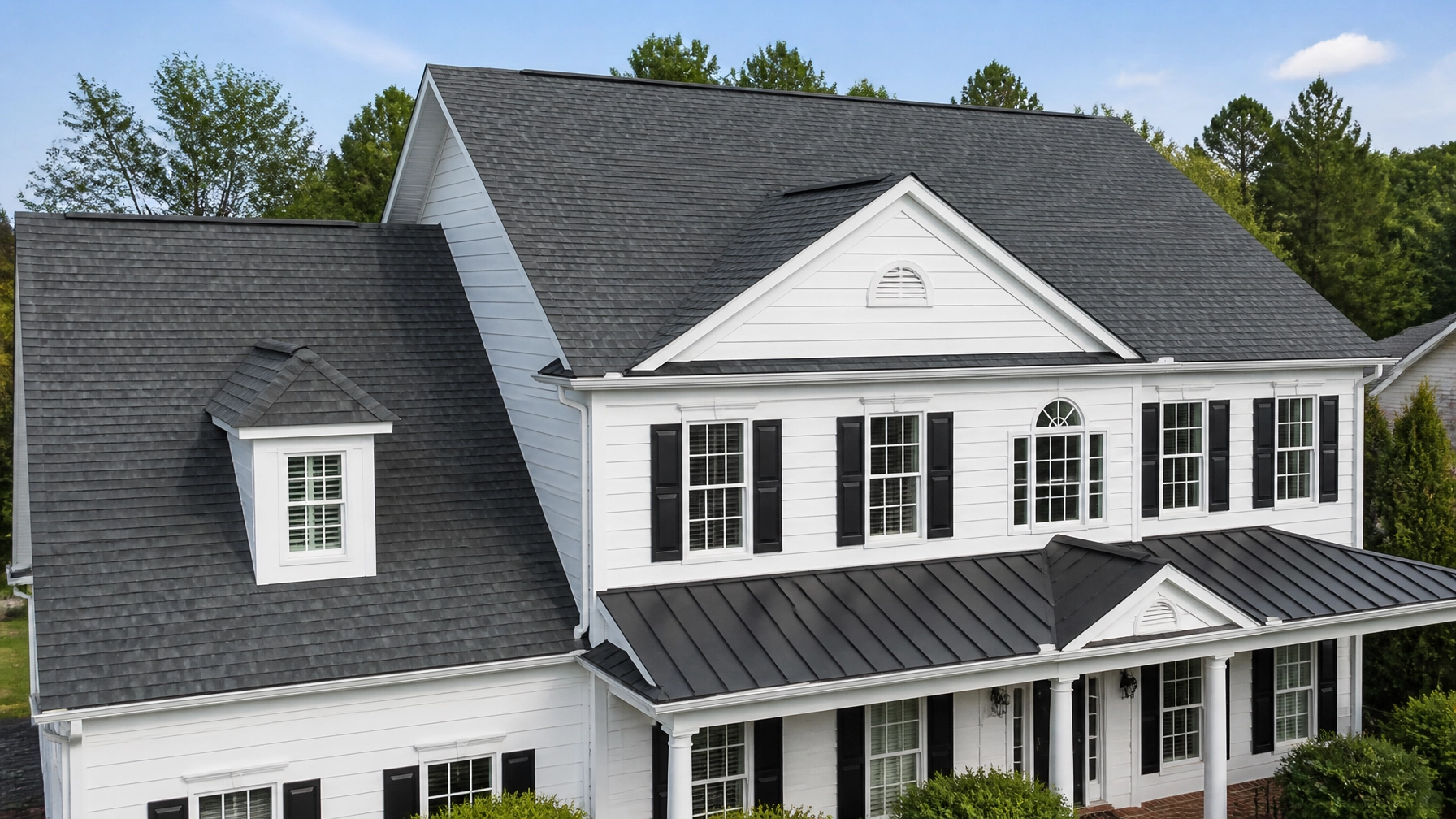
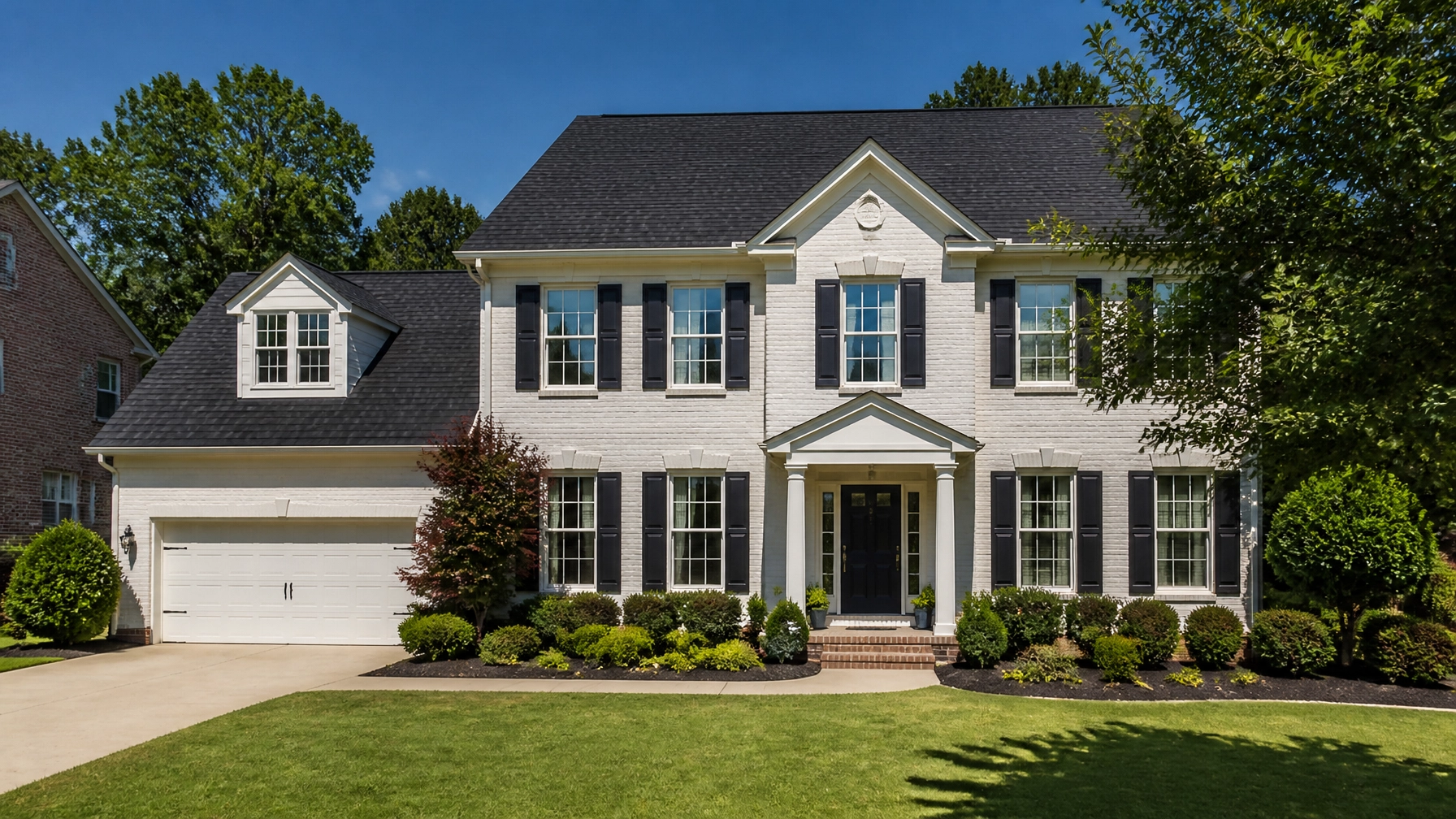
    Aerial view of an Augusta property with a professionally installed roof

    Maximizing Your ROI: Which Should You Choose?

    Deciding on a new roof cost in Augusta GA requires balancing your immediate budget with your long-term housing goals.

    • Choose Architectural Shingles if: You are on a strict budget, preparing the home for a near-term sale, or simply prefer the traditional aesthetic of shingles. Shingles provide the fastest return on investment for homeowners looking to refresh their curb appeal before hitting the market.
    • Choose Metal Roofing if: You plan to live in the home for 20+ years. The combination of energy savings, zero replacement needs, and durability makes metal the mathematically superior choice over a 50-year horizon.

    Get an Accurate Estimate in 60 Seconds

    Market conditions in 2026 move fast. Instead of waiting days for a contractor to visit your property, you can get an instant, satellite-powered estimate today.

    Our technology analyzes your roof's exact square footage, pitch, and complexity to provide a transparent price range for both architectural shingles and metal systems.

    Ready to see your numbers?
    Get your free instant roof estimate at GetMyRoofEstimateNow.com and connect with verified, licensed contractors in Augusta, GA today.
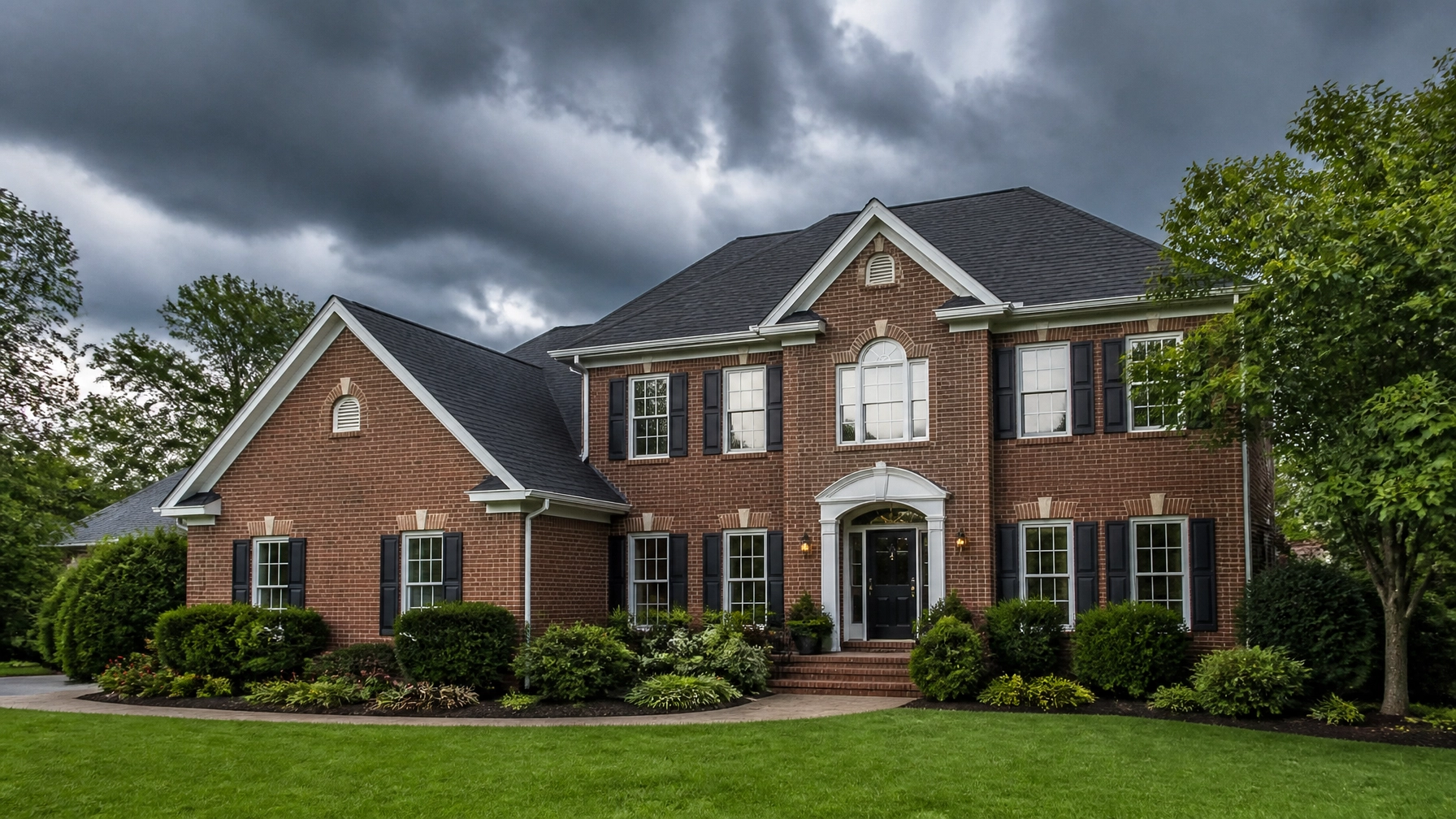
  • Daily Weather Blitz – Slot 1: Atlanta, GA : Isolated Storms, Flood Watch & Storm-Ready Roofing Tips (July 23, 2026)

    Daily Weather Blitz – Slot 1: Atlanta, GA : Isolated Storms, Flood Watch & Storm-Ready Roofing Tips (July 23, 2026)

    Atlanta homeowners are facing a volatile weather day on this Thursday, July 23, 2026. With temperatures climbing into the low 90s (peaking at 91°F) and humidity levels pushing heat index values into the triple digits, the atmosphere is primed for activity. A Flood Watch remains in effect for North Georgia through Friday, and isolated thunderstorms are expected to sweep through the metro area this afternoon.

    For your roof, this combination of extreme heat and sudden, heavy deluges is more than just a daily nuisance: it is a recipe for structural stress. At Get My Roof Estimate Now, we believe transparency and data are your best tools for protecting your home's most critical asset.

    The Atlanta Climate Challenge: Heat, Humidity, and High Stakes

    Today’s forecast highlights the two primary enemies of a Georgia roof: thermal expansion and moisture infiltration.

    1. Heat Stress (The "Stretch and Snap")

    With ambient temperatures hitting 91°F, your roof surface can easily reach 150°F or higher. Asphalt shingles are designed to be flexible, but the rapid cooling caused by a sudden afternoon thunderstorm causes the materials to contract quickly. This "thermal shock" can lead to:

    • Granule Loss: The protective ceramic granules on your shingles may loosen, leaving the asphalt mat exposed to UV damage.
    • Splitting and Cracking: Repeated expansion and contraction cycles over a 15–20 year lifespan eventually fatigue the shingle, leading to visible cracks.

    2. The 24-Hour Mold Clock

    In Atlanta's legendary humidity, moisture isn't just a leak: it’s a biological hazard. Georgia humidity can accelerate the growth of mold and wood rot within 24 to 48 hours of a leak. If today’s storms find a way under your shingles, the clock starts immediately.

    Close-up of clean gutters and trimmed tree branches near an Atlanta roofline

    Storm-Ready Roofing Checklist for July 23

    Before the clouds darken this afternoon, or immediately following the first wave of rain, every Atlanta homeowner should perform these high-priority checks.

    Pre-Storm Preventative Measures

    • Clear the Gutters (Immediate): With a Flood Watch in effect, your drainage system must be at 100% capacity. Clogged gutters cause water to back up under the eave's edge, rotting the fascia board and potentially flooding your basement.
    • Trim Overhanging Branches: Wind gusts in isolated summer storms can easily snap "widow-maker" branches. Ensure no limbs are within 6–10 feet of your roofline to prevent impact damage.
    • Attic Vapor Check: Inspect your attic for signs of "sweating" or moisture on the underside of the roof deck. High humidity combined with poor ventilation can cause the wood to soften even without a direct leak.

    Post-Storm Recovery Steps

    • The Binocular Inspection: You don't need a ladder to be a pro. Use binoculars to look for "shiny" spots (missing granules), lifted shingle tabs, or bent flashing around chimneys.
    • Identify Hail Dents: Look at "soft metal" surfaces like your gutters, downspouts, and attic vents. If these are dented, there is a high probability your shingles took a hit too.
    • Tarping as a Stop-Gap: If you spot an active leak, use a heavy-duty tarp to cover the area immediately. This prevents the 48-hour mold cycle from taking hold while you wait for a contractor.
    • Professional Inspection vs. Insurance: Never file an insurance claim based on a guess. Always get a professional inspection or a satellite-verified measurement to determine if the damage exceeds your deductible.

    Atlanta Roof Replacement Costs: 2026 Benchmarks

    If today's storm is the "final straw" for an aging roof, you need to know the numbers. In 2026, roofing material costs have stabilized but remain higher than previous years due to enhanced manufacturing standards for algae resistance and UV protection.

    For a typical 2,000 square foot home in Atlanta, here is what you should expect to pay:

    Material Category Price Range (Installed) Performance Context
    Architectural Shingles $9,600 – $16,000 Popular. Best balance of cost and wind resistance.
    Metal (Standing Seam) $14,000 – $30,000 Premium. High heat reflection; 50+ year lifespan.
    Synthetic/Composite $18,000 – $35,000 Luxury. Mimics slate or cedar; highly impact resistant.
    Cool Roof Coatings $3,000 – $7,000 Budget. Extension for flat roofs; reduces AC bills.

    Note: Regional price differences in Georgia often depend on roof complexity (steep pitches vs. ranch styles) and the height of the home.

    A modern residential roof in Georgia featuring durable architectural shingles

    Why Speed and Technology Matter During Storm Season

    The traditional method of getting a roof estimate is broken. Usually, you call 3–4 contractors, wait days for them to show up, and then wait another 48 hours for a quote. In that time, another Atlanta storm has already passed through.

    At Get My Roof Estimate Now, we’ve eliminated the wait.

    The Satellite Advantage

    Using advanced satellite imagery, we can measure your roof’s size, pitch, and complexity to within inches: achieving 90-95% accuracy. This allows us to provide a comprehensive estimate in under 60 seconds.

    • Zero Pressure: You get the data you need to budget without a salesperson sitting in your living room.
    • Transparent Pricing: We factor in current 2026 material costs specific to the Atlanta market.
    • Verified Contractors: Once you have your estimate, we can connect you with licensed, insured local pros who are ready to work.

    Satellite roof measurement technology displayed on a tablet in front of a home

    Conclusion: Don't Wait for the Next Flood Watch

    Atlanta’s weather is unforgiving. A roof that survived last summer might not survive this one. Whether you are dealing with storm damage, prepping your home for sale, or just planning for the future, having an accurate price in hand is the first step toward peace of mind.

    Don't let the "Flood Watch" catch you off guard. Get your instant, free roof estimate today and see exactly where you stand.

    Calculate Your Atlanta Roof Cost in 60 Seconds →


  • Daily FAQ Blitz – Slot 6: AEO FAQ Quick Answers for Virginia Beach, VA Homeowners (2026)

    Daily FAQ Blitz – Slot 6: AEO FAQ Quick Answers for Virginia Beach, VA Homeowners (2026)

    For homeowners in Virginia Beach, a roof isn't just about curb appeal: it’s the first line of defense against Atlantic hurricanes, salt-heavy air, and Nor'easters. Whether you are living in a historic colonial in Great Neck, a modern coastal retreat in Sandbridge, or a classic ranch in Kempsville, staying ahead of roof maintenance is critical for protecting your investment.

    As we move through 2026, the roofing landscape in Virginia Beach has shifted. Stricter building codes and fluctuating material costs mean that the "ballpark" figures from five years ago no longer apply. This guide provides direct, data-backed answers to the most common questions Virginia Beach homeowners are asking today.
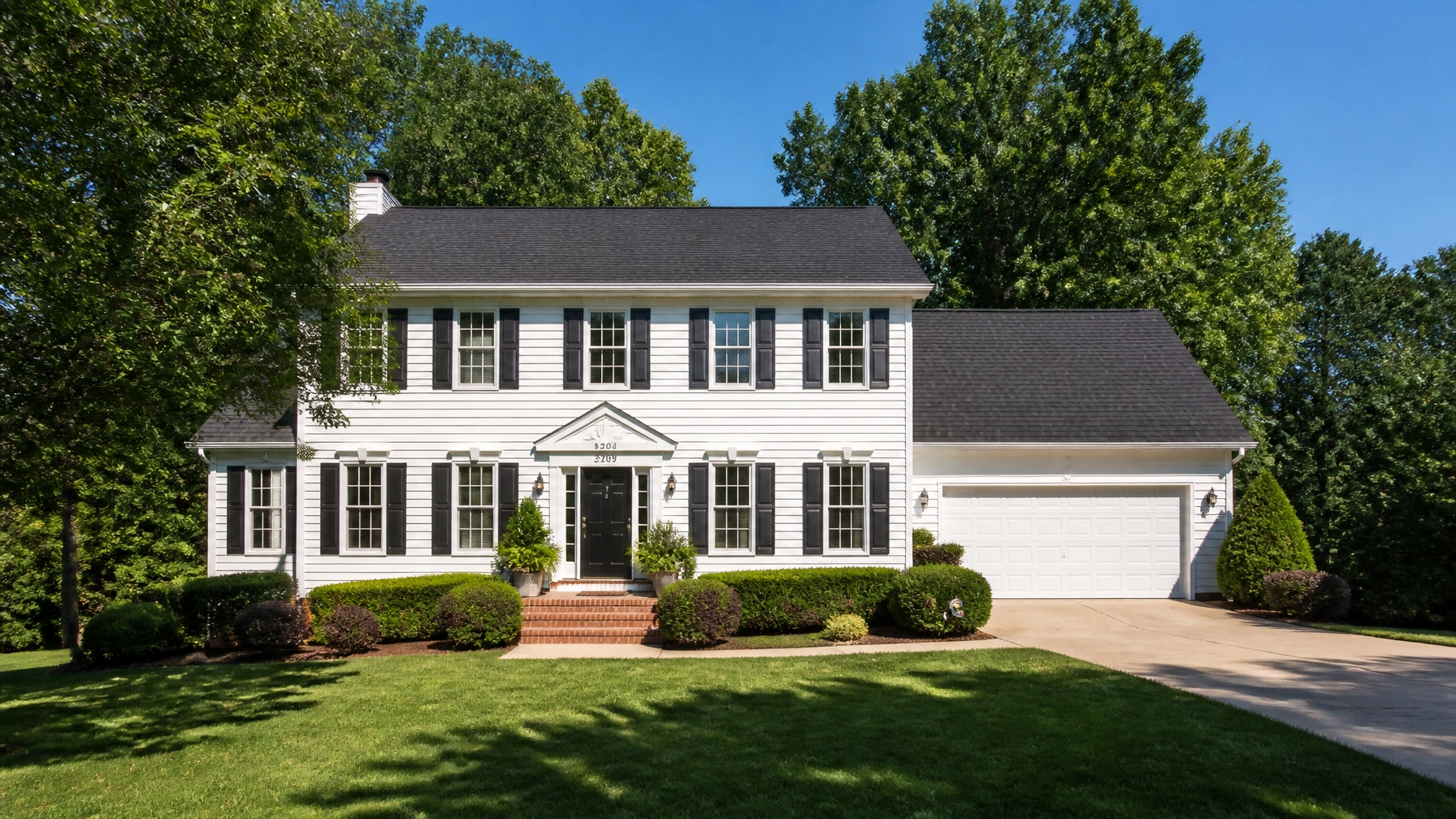
    What is the 2026 Roof Replacement Cost in Virginia Beach?

    In 2026, the average cost for a standard architectural shingle roof replacement in Virginia Beach ranges between $9,000 and $18,000. On a square-foot basis, homeowners should budget between $4.00 and $11.00 per square foot, depending on material choice and roof complexity.

    For regional context, while the 2026 Roof Replacement Cost Raleigh NC remains slightly lower due to different labor markets, Virginia Beach prices reflect the specialized materials required for coastal wind zones.

    2026 Material Cost Comparison Table

    Material Type Cost Per Sq. Ft. (Installed) Expected Lifespan Best For
    Architectural Shingles (Popular) $4.50 – $7.50 25-30 Years Suburban homes (Kempsville, Chesapeake Beach)
    Standing Seam Metal (Premium) $10.00 – $16.00 50+ Years Coastal properties (Oceanfront, Sandbridge)
    TPO Membrane (Specialized) $7.00 – $10.00 20-25 Years Flat or low-slope sections
    Synthetic/Slate (Luxury) $15.00 – $25.00 50+ Years High-end estates (Great Neck)

    Note: While looking for roofing estimates Raleigh NC or new roof Raleigh NC price data might give you a baseline, Virginia Beach requires specific high-wind fasteners that can add 5-10% to total material costs.

    Newly replaced roof using high-definition shingle materials on a ranch-style home in Great Neck.

    Do I Need a Permit for Roof Replacement in Virginia Beach?

    Yes. In Virginia Beach, a building permit is mandatory for any full roof replacement. Because Virginia Beach is classified as a high-wind zone (exceeding 100mph design wind speeds), the state's permit exemptions for minor repairs typically do not apply to total reroofing projects.

    • Permit Cost: Expect to pay approximately $185 for a residential roofing permit in 2026.
    • Licensing: All work must be performed by a contractor with a valid Virginia DPOR (Department of Professional Occupational Regulation) license.
    • Threshold: Replacing more than 256 square feet of roof decking (sheathing) automatically triggers additional inspection requirements to ensure structural integrity against wind uplift.

    Coastal Climate: Why Your "Standard" Roof Isn't Enough

    Living within a few miles of the Atlantic Ocean changes the technical requirements of your roof. Standard installation practices used for a Raleigh NC roof replacement 2026 project often won't pass inspection in Virginia Beach neighborhoods like Oceanfront or Sandbridge.

    1. Hurricane Wind Codes

    Under the 2021 Virginia Uniform Statewide Building Code (VUSBC), which governs 2026 permits, roofs must be rated for 130+ mph winds. This requires specific nailing patterns (typically 6 nails per shingle instead of 4) and enhanced starter strips.

    2. Sealed Roof Deck (Mandatory within 1 Mile of Coast)

    For homes located within one mile of the coast, a sealed roof deck membrane is highly recommended and often required by insurers. This involves using a self-adhered "peel-and-stick" underlayment over the entire wood deck. If shingles are blown off during a storm, this secondary water barrier prevents catastrophic interior water damage.

    3. Salt Air and Corrosion

    If you are opting for a metal roof near Chesapeake Beach, you must specify PVDF coatings (Kynar 500). Standard polyester finishes will chalk and peel within years due to the salt spray. Aluminum is often preferred over galvanized steel for waterfront properties to prevent rust.

    Modern beach house in Sandbridge, Virginia Beach, featuring a high-end silver standing seam metal roof.

    Material Spotlight: What Works Best for Virginia Beach?

    • Architectural Shingles (Budget/Popular): Ensure they are "Algae Resistant" to combat the high humidity and coastal salt-mist that causes black streaks.
    • Standing Seam Metal (Premium/Coastal): The gold standard for Sandbridge. It offers the highest wind resistance and longevity.
    • TPO (Flat Roofs): Common for modern additions or "widow's peaks" found in older Oceanfront homes.

    Virginia Beach Neighborhood FAQ

    How much does a roof cost in Kempsville?

    Most homes in Kempsville are 1,800–2,500 sq. ft. ranches or two-story traditionals. A 2026 estimate for a full replacement typically falls between $10,500 and $14,000.

    Is the roof cost Raleigh North Carolina comparable to Virginia Beach?

    While the roof cost Raleigh North Carolina residents see is often 5-8% lower, Virginia Beach homeowners pay a premium for wind-rated materials and the specialized labor required to meet coastal codes.

    Why is my estimate higher in Great Neck?

    Great Neck often features larger custom homes with steep pitches (slopes) and multiple dormers. Increased "complexity" adds significant labor time, pushing estimates into the $15,000 – $22,000 range.

    Close-up of premium architectural asphalt shingles being installed on a roof in a suburban Virginia Beach neighborhood.

    Actionable Next Steps for Homeowners

    Don't wait for a leak during hurricane season to find out your roof is failing.

    1. Check for "Granule Loss": Look in your gutters for sand-like particles. This indicates your shingles are losing their UV protection.
    2. Verify Licensing: Ensure any contractor providing a bid holds a current Class A or B Virginia DPOR license.
    3. Get an Instant Estimate: Use our satellite-powered Roof Cost Calculator to get an accurate, no-obligation price for your Virginia Beach home in under 60 seconds.

    By leveraging satellite technology, we provide Virginia roof estimates that are accurate to within inches, allowing you to bypass the hassle of traditional contractor visits and start your planning with real data.

  • Daily Tech Blitz – Slot 6: Richmond’s Satellite Tech Edge Is Putting Virginia on the Space Economy Map

    Daily Tech Blitz – Slot 6: Richmond’s Satellite Tech Edge Is Putting Virginia on the Space Economy Map

    The "Final Frontier" isn't just about Mars missions and deep-space probes anymore; it’s about the shingles over your head in Richmond, Virginia. As Virginia solidifies its position as a global leader in the $7.6 billion aerospace sector, the city of Richmond has emerged as a critical hub for the "downstream" space economy. This transition from orbital research to residential utility is fundamentally changing how homeowners maintain their properties, starting with the most expensive maintenance item on any house: the roof.

    Virginia’s space economy is no longer confined to the launch pads of Wallops Island or the high-security corridors of Northern Virginia. Today, the same satellite technology used to monitor global weather patterns is being leveraged to provide instant, accurate roof estimates for Richmond residents.

    Richmond’s Role in the $7.6 Billion Virginia Space Economy

    While Northern Virginia often captures the headlines with its "Dulles Tech Corridor," Richmond has carved out a sophisticated niche in advanced manufacturing and signal monitoring. The Commonwealth is currently home to over 265 aerospace firms, and Richmond serves as the strategic policy and research anchor for this ecosystem.

    The Richmond Tech Cluster

    • AVCOM of Virginia, Inc. (Ground Infrastructure): Based right here in Richmond, AVCOM is a pioneer in satellite communication test and monitoring equipment. Their spectrum analyzers are essential for ensuring that satellite signals remain clear and reliable: the very signals that now allow us to measure a roof’s pitch and square footage from 300 miles above the Earth.
    • CCAM & NASA Langley (Research): The Commonwealth Center for Advanced Manufacturing (CCAM) in the Richmond area works in tandem with NASA Langley. This partnership focuses on high-tech manufacturing and satellite systems, ensuring that Virginia stays at the forefront of the "New Space" race.
    • The Northern Virginia Influence: Richmond benefits from the proximity to the NoVa space cluster. Companies like Scout Space (spacecraft autonomy), Umbra (high-resolution synthetic aperture radar), and Applied Atomics (space propulsion) are driving down the cost of orbital data. As these firms innovate, the data they produce becomes cheaper and more accessible for commercial applications, including home services.

    From Deep Space to Your Doorstep: The Satellite Roofing Revolution

    Traditionally, getting a roof estimate in Richmond involved a week of phone tag, a contractor climbing a ladder, and a hand-written quote that may or may not be accurate. Satellite technology has disrupted this "legacy" model.

    By utilizing Earth Observation (EO) data from companies like Maxar and Umbra, home service platforms can now render high-resolution 3D models of any home in the Richmond-Petersburg area.

    Why Satellite Tech Wins (The Technical Edge)

    • Precision Measurements (90-95% Accuracy): Modern satellite imagery is accurate to within inches. Algorithms can now detect roof "facets" (slopes), ridges, valleys, and even the "pitch" (steepness) of a roof without a human ever stepping foot on the property.
    • Eliminating the "Wait Time": In the 2026 market, homeowners value time as much as money. Satellite tech allows for a 60-second estimate process, moving from address entry to a price range in less time than it takes to brew a cup of coffee.
    • Data-Driven Transparency: Because the data is objective, homeowners get a neutral view of their roof's complexity. There’s no "padding" the square footage; the satellite sees the exact footprint of the home.

    A precision-installed matte black standing seam metal roof highlighting clean architectural lines

    The Richmond Market: 2026 Roofing Cost Benchmarks

    Navigating the cost of a roof replacement in Virginia requires a clear understanding of local variables. Labor rates, disposal fees at Richmond-area landfills, and the current cost of materials all play a role. Based on current 2026 data, here is what homeowners in the Richmond metro area should expect.

    Richmond Price Ranges by Material

    • Architectural Shingles (Popular): $11,000 – $13,500. This is the standard for most 2,000 sq. ft. homes in neighborhoods like Midlothian or The Fan.
    • Metal Roofing (Premium): $20,000 – $45,000. While the upfront cost is higher, the longevity and energy efficiency are superior for Virginia’s humid climate.
    • Synthetic/Slate (Luxury): $35,000+. Common in historic districts where aesthetic preservation is required.

    Local Data Deep Dive (2,000 Sq. Ft. Home)

    For a typical Richmond residence of 2,000 square feet, the average total cost is approximately $12,800. However, the full range spans from $5,775 (Budget/Repair) to $34,641 (High-End/Complex).

    Factor Impact on Cost Why it Matters
    Pitch (Slope) +15% to +30% Steep roofs require extra safety equipment and more labor hours.
    Complexity +10% to +25% Multiple gables, dormers, and valleys increase waste and labor.
    Layers +$1,500 to +$3,000 Removing two layers of old shingles increases disposal fees in VA.

    An aerial neighborhood view in Virginia showing various roof types and complex geometries

    How to Get Your Satellite-Powered Estimate in 60 Seconds

    The Richmond tech edge isn't just a point of civic pride; it’s a tool for your financial planning. At Get My Roof Estimate Now, we use the same satellite-derived data models developed by the Virginia space economy to give you an instant, transparent price.

    The 3-Step Tech Process:

    1. Enter Your Address: We pull high-resolution satellite imagery of your specific Richmond property.
    2. Instant Measurement: Our AI calculates the total squares, the pitch of each facet, and the total material required.
    3. Choose Your Range: We provide three price tiers: Budget (3-Tab Shingles), Popular (Architectural), and Premium (Metal/Synthetic): tailored to Virginia's current market rates.

    By removing the need for an initial contractor visit, we eliminate the high-pressure sales environment. You get the data you need to budget, and only then do we connect you with verified, licensed, and insured Richmond contractors to finalize the project.

    A contractor using a tablet to show a homeowner a satellite-generated roof report in Richmond

    Conclusion: Embracing Richmond’s Tech Future

    Richmond is no longer just a historic capital; it is a vital player in the global space economy. From AVCOM’s signal monitoring to the satellite imagery that measures your roof, technology is making homeownership more transparent and less stressful.

    Don't guess at your home's most important maintenance project. Use the technology that’s putting Virginia on the map to get a clear, accurate picture of your roofing needs.

    Ready to see what the satellites see?
    Get your free Richmond roof estimate at GetMyRoofEstimateNow.com today.

  • Daily FAQ Blitz – Slot 5: Roof Replacement FAQs for Columbia, SC Homeowners (2026)

    Daily FAQ Blitz – Slot 5: Roof Replacement FAQs for Columbia, SC Homeowners (2026)

    For homeowners in Columbia, SC, maintaining a high-performing roof isn't just about curb appeal: it’s about protection against the Midlands’ intense summer heat and sudden humidity-fueled thunderstorms. As we move through 2026, the roofing landscape has shifted with new material technologies and updated local building codes.

    Whether you are in Shandon, Harbison, or downtown Columbia, getting a handle on costs and requirements is the first step toward a successful project. This guide answers the most pressing questions for Columbia residents while providing context for our neighbors searching for a new roof Myrtle Beach SC price or general roofing estimates Myrtle Beach SC.


    1. What is the average 2026 roof replacement cost in Columbia, SC?

    In 2026, the typical roof replacement in Columbia, SC ranges from $9,000 to $18,000 for a standard single-family home using architectural shingles. Prices vary based on the "square" count (a roofing square is 100 square feet), the pitch of your roof, and the number of stories.

    • Small Home (~1,500 sq. ft.): $8,500 – $12,500 (Budget)
    • Average Home (~2,500 sq. ft.): $13,000 – $19,500 (Popular)
    • Large/Complex Home (3,500+ sq. ft.): $22,000 – $35,000+ (Premium)

    While inland pricing in the Midlands is generally more stable, it often mirrors the 2026 Roof Replacement Cost Myrtle Beach SC homeowners see, as labor rates and material supply chains are interconnected across the state. If you are comparing a Myrtle Beach SC roof replacement 2026 quote to a Columbia one, expect the coast to be slightly higher due to stricter hurricane-rated fastening requirements.

    Macro view of high-quality charcoal grey architectural asphalt shingles

    2. Which roofing materials are best for the South Carolina climate?

    Columbia is known for its "famously hot" summers. Your material choice directly impacts your home's energy efficiency and the lifespan of the roof.

    • Architectural Asphalt Shingles (Popular): These are the standard for 2026. They offer superior wind resistance (up to 130 mph) and contain copper granules to prevent the black algae streaks common in humid SC climates.
    • Standing Seam Metal (Premium): Increasingly popular in neighborhoods like Forest Acres, metal roofs reflect solar radiant heat, potentially lowering cooling costs by 20-25%. While the roof cost Myrtle Beach South Carolina residents pay for metal is often a necessity for storm surge zones, Columbia residents choose it for longevity (50+ years).
    • Synthetic Slate/Shake (Designer): Provides the aesthetic of natural stone or wood without the weight or maintenance issues, ideal for high-end colonial or Mediterranean-style homes in the Midlands.

    3. Do I need a permit for a roof replacement in Columbia, SC?

    Yes. Both the City of Columbia and Richland County require a building permit for a full roof replacement.

    • Permit Cost: Typically ranges from $150 to $350 depending on the total project value.
    • Responsibility: Your contractor should always pull the permit. If a contractor asks you to pull it as the "owner-builder," it is a major red flag regarding their insurance or licensing status.
    • Inspections: At least one final inspection is usually required to ensure the flashing and nailing patterns meet 2026 South Carolina Residential Building Codes.

    Modern South Carolina ranch home with a premium standing seam metal roof

    4. How does the "Midlands Weather" affect my roof’s lifespan?

    Columbia’s weather is uniquely taxing on roofing materials.

    • UV Degradation: Extreme heat causes shingles to expand and contract rapidly (thermal shock), which can lead to granule loss over time.
    • High Humidity: Moisture trapped in attics can rot roof decking from the inside out. In 2026, we recommend a balanced ventilation system (ridge vents combined with soffit vents) for every Columbia replacement.
    • Storm Season: While we aren't on the coast, we get the remnants of tropical systems. Ensuring your roof has a high wind rating is essential for peace of mind.

    5. What are the signs I need a replacement vs. a simple repair?

    Before looking for roofing estimates Myrtle Beach SC or Columbia local quotes, check for these "Replacement-Ready" indicators:

    • Age: If your roof is 18–22 years old, the asphalt oils have likely dried out.
    • Granule Loss: Finding "sand" in your gutters means the shingles no longer have UV protection.
    • Multiple Leaks: If you have active leaks in more than two distinct areas, the underlayment has likely failed across the board.
    • Curling/Brittle Shingles: If shingles break when touched, they can no longer shed water effectively.

    6. Can I get an accurate estimate without a contractor coming to my house?

    Absolutely. In 2026, the traditional 4-hour window for a contractor visit is becoming obsolete. Using advanced satellite imagery technology, we can measure your roof’s square footage, pitch, and complexity with 90-95% accuracy in under 60 seconds.

    This allows you to:

    1. Budget Immediately: Know if you’re looking at a $10k or $20k project before talking to sales reps.
    2. Compare Materials: Instantly see the price difference between architectural shingles and metal.
    3. Avoid Pressure: Get the data you need privately, then connect with verified, licensed local contractors when you’re ready.

    Satellite-powered roof measurement technology visualization


    Columbia, SC Roof Replacement Cost Comparison Table (2026)

    Material Type Estimated Cost (2,000 sq. ft. Roof) Expected Lifespan Best For
    3-Tab Shingles $8,500 – $11,000 15-20 Years Budget / Rental Properties
    Architectural Shingles $11,000 – $16,000 25-30 Years Most Columbia Homeowners
    Premium Designer Shingles $17,000 – $24,000 30-40 Years High Wind/Impact Resistance
    Standing Seam Metal $25,000 – $45,000 50+ Years Maximum Longevity & ROI

    Final Thoughts for Columbia Homeowners

    Replacing your roof is one of the most significant investments you'll make in your home. By understanding the local 2026 market rates in the Midlands: and how they compare to coastal benchmarks like the new roof Myrtle Beach SC price: you can make an informed decision that protects your property and your wallet.

    Ready to see exactly what your roof should cost? Skip the wait and get your instant satellite-powered estimate today. It’s free, accurate, and takes less than a minute.

    Check out our blog for more local roofing guides and material deep dives across South Carolina.

  • New Roof ROI in Savannah, GA: How Much Value Does a Roof Replacement Add to Your Home in 2026?

    New Roof ROI in Savannah, GA: How Much Value Does a Roof Replacement Add to Your Home in 2026?

    As we navigate the Savannah real estate market in 2026, the "as-is" era has officially come to a close. With inventory levels rising and homes spending an average of 80 to 100 days on the market, buyers have become significantly more discerning. One question dominates the conversation for local homeowners: Is a roof replacement a smart investment or just an expensive necessity?

    In Savannah, where the humidity is high and storm season is a perennial concern, the roof is more than just a structural component: it is a critical factor in a home’s appraisal, insurability, and overall marketability. Whether you own a classic ranch in Windsor Forest or a historic townhouse in the Downtown District, understanding the roofing ROI Savannah GA homeowners can expect this year is essential for your financial planning.

    The Hard Numbers: New Roof ROI Savannah GA (2026)

    When calculating the return on investment (ROI) for a roof replacement, we look at two primary categories: immediate equity increase and "practical" ROI (how much faster and smoother your home sells).

    1. Immediate Home Value Increase

    Data from 2026 indicates that a new roof in Savannah recovers 60-70% of its cost in immediate home value. If you spend $15,000 on a high-quality roof replacement, you can typically expect to see a $9,000 to $10,500 bump in your home’s appraised value.

    2. Speed of Sale

    In a market where inventory is up 30% year-over-year, differentiation is key. Homes listed with a certified new roof are currently selling 15-25 days faster than those with roofs nearing the end of their lifespan (15+ years). For a seller, 20 days off the market translates to significant savings in mortgage payments, utilities, and tax carry costs.

    3. Negotiation Leverage

    Buyers in 2026 are routinely requesting credits for aging systems. A failing roof is the #1 deal-killer during the inspection phase. By replacing the roof upfront, you eliminate the risk of a buyer demanding a $20,000 price reduction or walking away from the deal entirely.

    Historic Savannah home with a new professionally installed slate-gray metal roof

    Savannah GA Roof Replacement Cost 2026: A Breakdown

    To calculate your specific ROI, you first need a realistic handle on the costs. In the Savannah metro area, most residential roofs range from 1,500 to 3,000 square feet.

    The average roof replacement cost in Savannah currently ranges from $8,000 to $24,000, depending on material choice and architectural complexity.

    Material Price Ranges (Per Square)

    Note: A "square" is a roofing term for a 10' x 10' area (100 square feet).

    Material Type Cost Per Square (Installed) Context
    Architectural Shingles $420 – $700 (Popular / High ROI)
    Metal Roofing $744 – $2,000 (Premium / Longevity)
    Synthetic/Tile $1,200 – $2,500 (Luxury / Historic)

    For a standard 2,000 sq. ft. home (20 squares), an architectural shingle roof will likely land between $8,400 and $14,000. For those looking for the maximum new roof increase home value Georgia offers, metal roofing provides a longer lifespan and superior storm resistance, though at a higher initial entry point.

    To get an exact figure for your specific address, you can use our roof cost calculator to receive a satellite-verified estimate in under 60 seconds.

    The "Historic Factor": Savannah’s Special Districts

    If your property is located within Savannah’s Landmark Historic District or the Victorian District, your ROI calculation looks a bit different. The Savannah Historic District Board of Review (HDBR) requires a Certificate of Appropriateness (COA) for any exterior changes, including roofing materials.

    Historic district considerations often include:

    • Material Restrictions: You may be required to use specific materials like slate, wood shingles, or specific standing-seam metal profiles to maintain historical integrity.
    • Higher Costs: Due to specialized labor and material requirements, costs in historic districts are typically 15-40% higher than in non-regulated neighborhoods.
    • Approval Timeline: Factoring in the COA process is essential if you are planning to sell quickly.

    While the costs are higher, the ROI in these districts remains strong because buyers specifically seek out preserved, "turn-key" historic homes and are willing to pay a premium for a property that has already cleared the HDBR hurdles.

    Close-up of high-quality charcoal gray architectural shingles showing deep texture and professional installation

    The Hidden ROI: Insurance and Energy Savings

    A new roof increase home value Georgia metrics aren't just about the sale price. There are significant "hidden" financial benefits that contribute to the total ROI over time.

    1. Insurance Premium Reductions

    In the coastal Empire, insurance companies are increasingly strict about roof age. Many carriers will not even issue a new policy on a roof older than 15-20 years. By installing a new roof, Savannah homeowners are seeing insurance premium reductions of 10-25%. In a high-premium state like Georgia, this can save you $400 to $1,000 annually.

    2. Cooling Cost Savings

    Savannah summers are brutal on your HVAC system. Modern roofing materials, especially "cool roof" shingles and reflective metal options, are far more efficient at shedding heat than the shingles of 20 years ago. Homeowners report cooling cost savings of 8-15% after upgrading to a modern, properly ventilated roofing system. This monthly savings adds up quickly, effectively subsidizing the cost of the roof over several years.

    Why Roof Condition is Non-Negotiable in 2026

    In the previous "seller's market," buyers would often overlook an old roof just to get into a house. That is no longer the case. In 2026, the roof replacement home value Savannah buyers perceive is tied directly to their ability to get financing.

    If a roof has visible damage or is at the end of its life, many lenders (especially for FHA and VA loans) will flag the property. This restricts your pool of potential buyers to cash-heavy investors who will demand "bottom-dollar" pricing. By replacing the roof, you open your home to the widest possible audience, ensuring you get the highest possible market price.

    Aerial satellite view of a Savannah neighborhood with digital measurement overlays representing instant estimate technology

    Get Your Estimate in 60 Seconds (No Contractor Visit Required)

    Traditionally, finding out the cost of a new roof meant scheduling multiple contractors to come to your home, climb on your shingles, and give you a high-pressure sales pitch.

    At Get My Roof Estimate Now, we’ve changed the process. We use advanced satellite imagery technology to measure your roof’s size, pitch, and complexity with 90-95% accuracy: remotely.

    • Lightning-Fast: Enter your address and get a price range in under a minute.
    • Accurate: Our technology measures within inches, factoring in every ridge and valley.
    • Transparent: We provide low, middle, and high price ranges based on current Savannah market data for 2026.
    • No Pressure: Get the data you need to budget and plan without the hassle of a house call.

    Whether you are preparing for a sale or just want to protect your investment, knowing your numbers is the first step. Savannah homeowners can see how we compare to other states like Florida or simply get a local quote today.

    Conclusion

    The roofing ROI Savannah GA homeowners can expect in 2026 is a combination of immediate equity, faster sales cycles, and long-term operational savings. While a roof is a significant investment, it remains one of the few home improvements that is both a functional necessity and a powerful marketing tool.

    Don't let an old roof drag down your home's value. Get the facts, understand your costs, and make an informed decision for your property.

    Ready to see what a new roof would cost for your Savannah home?
    Get Your Free Satellite Roof Estimate Now →


  • Daily ROI Blitz #64: How a New Roof Boosts Home Value in Raleigh, NC (2026 Data)

    Daily ROI Blitz #64: How a New Roof Boosts Home Value in Raleigh, NC (2026 Data)

    In the competitive 2026 Raleigh real estate market, homeowners are increasingly asking one question before hitting the "List" button: Is a new roof worth the investment?

    With the median home price in Raleigh currently hovering between $438,000 and $493,000, and Wake County specifically seeing median prices hit $475,000 as of May 2026, the stakes for curb appeal and structural integrity have never been higher. As the Research Triangle Park (RTP) continues to draw high-income professionals from across the country, buyers are arriving with high expectations and little patience for deferred maintenance.

    At Get My Roof Estimate Now, we leverage advanced satellite imagery to provide instant clarity on these investments. Today, we’re breaking down the hard data on roofing ROI in the City of Oaks.

    The Raleigh 2026 Roofing ROI Breakdown

    When calculating your Return on Investment (ROI) for a roof replacement in North Carolina, you must look at both the direct value increase and the "defensive" value of avoiding price drops.

    • Average ROI in Raleigh: 60% – 70%
    • Average Replacement Cost (Asphalt Shingles): $8,500 – $16,000
    • Market Status: Balanced but Strong (Buyer leverage is increasing)

    A new roof does more than just shield the home from North Carolina's humidity; it serves as a "certified" signal to buyers that the home is move-in ready. In a market where homes are sitting on the market slightly longer (averaging 42–46 days), a 20-year-old roof is often the primary reason a deal falls through during the inspection period.

    Appraisal Impact: The Cost of Doing Nothing

    If you choose to list your home with a failing or aged roof, be prepared for the "Appraisal Hit." In 2026, Raleigh appraisers are frequently making negative adjustments of $4,000 to $12,000 for roofs nearing the end of their functional life.

    Furthermore, many insurance carriers in the Southeast are now refusing to underwrite policies for homes with roofs older than 15–20 years. If a buyer can't get insurance, they can't get a mortgage: effectively killing your sale.

    Close-up professional architectural photography of high-quality architectural asphalt shingles in a weathered wood color.

    Local Environmental Factors: Why Raleigh Roofs Age Differently

    Raleigh isn't just any market; it has specific environmental stressors that impact roof longevity and, consequently, home value.

    1. The Pine Tree Problem (Maintenance)

    The "City of Oaks" is also a city of pines. Pine needles are acidic and hold moisture. When they accumulate in roof valleys, they accelerate the degradation of asphalt shingles. A roof that looks "stained" or "clogged" suggests to a buyer that the attic may have hidden moisture issues.

    2. High Humidity and "Gloeocapsa Magma" (Aesthetics)

    The North Carolina humidity is a breeding ground for algae (the black streaks you see on roofs). While often cosmetic, these streaks kill curb appeal. Modern Architectural Shingles (Popular) often come with copper-infused granules to resist this growth, instantly boosting the "perceived value" of your home.

    3. Storm Season (Durability)

    Raleigh is inland enough to avoid the worst of direct hurricane landfalls, but the remnants of tropical storms bring high winds and heavy downpours. Buyers in the Triangle area look for high wind-rated shingles (up to 130 mph) as a standard requirement for peace of mind.

    Comparing Material ROI: What Raleigh Buyers Want

    Not all roofs are created equal. Depending on your neighborhood: whether you're in a classic ranch in North Hills or a modern build near the SAS campus in Cary: your material choice matters.

    • Architectural Asphalt Shingles (Standard/Popular): The "Goldilocks" of ROI. These offer the best balance of cost ($8,500 – $16,000) and return. They fit almost every Raleigh HOA requirement and offer the 60-70% ROI mentioned earlier.
    • Standing Seam Metal (Premium): Increasingly popular in modern RTP designs. While the upfront cost is higher ($20,000 – $35,000+), the ROI is found in longevity (50+ years). These are a major selling point for "forever home" buyers.
    • Roof Coatings (Budget/Commercial): Primarily used for flat-roof extensions or commercial properties. High efficiency, lower cost, but less impact on residential resale value.

    A modern, high-end residential home in the Research Triangle Park area of North Carolina with a sleek standing seam metal roof.

    Actionable Tips for Raleigh Homeowners

    If you are planning to sell in the next 12–24 months, follow this checklist to maximize your roofing ROI:

    1. Get a Satellite Measurement: Don't wait for a contractor to walk your roof. Use our instant roof cost calculator to get a 95% accurate measurement using satellite data in 60 seconds.
    2. Check Your Gutters: In the Triangle, gutter health is roof health. Ensure your estimate includes debris shields if you have overhanging loblolly pines.
    3. Document the Warranty: A transferable warranty is a massive selling point. Ensure your contractor provides "verified, licensed, and insured" documentation that you can include in your digital home binder for prospective buyers.
    4. Color Matters: In the Raleigh heat, choosing "Cool Roof" rated shingles in lighter greys or tans can reduce cooling costs: another data point to share with buyers interested in energy efficiency.

    The "60-Second" Solution for Wake County Residents

    Traditional roofing estimates involve 4-hour windows, high-pressure sales pitches in your living room, and "ballpark" figures that change once the work starts. In the fast-paced Triangle market, you don't have time for that.

    Get My Roof Estimate Now uses the same technology insurance adjusters use to measure your roof's size, pitch, and complexity remotely.

    Why use our Raleigh-specific data?

    • Zero Cost: No credit card or commitment.
    • Speed: Results in under a minute.
    • Accuracy: Within inches of manual measurements.
    • Local Network: We connect you with verified local contractors in Raleigh, Durham, and Chapel Hill.

    A professional roofing contractor using a tablet to show a homeowner a satellite-based roof measurement report in front of a North Carolina home.

    Conclusion: Is the Investment Worth It?

    In 2026, a new roof in Raleigh is a strategic financial move. While you may not recoup 100% of the cash spent in the sale price, you protect yourself from the $12,000 appraisal hits and the "stagnant listing" syndrome that affects homes with aging exteriors.

    Whether you're looking at a standard ranch or a custom estate in the Research Triangle, transparency is your best tool. Know your numbers before you talk to a contractor.

    Ready to see what your Raleigh roof will cost?
    Get Your Instant Satellite Roof Estimate Here →


    Raleigh, NC Quick Stats (2026)

    Factor Data Point
    Median Home Value $438,000 – $493,000
    Standard Roof Cost $8,500 – $16,000
    Projected ROI 60% – 70%
    Appraisal Adjustment (Aged Roof) -$4,000 to -$12,000
    Local Weather Risk Humidity, High Winds, Pine Acid

  • AEO FAQ Quick Answers: What Greenville, SC Businesses Need to Know About Authorized Economic Operator Status

    AEO FAQ Quick Answers: What Greenville, SC Businesses Need to Know About Authorized Economic Operator Status

    Greenville, South Carolina, has rapidly evolved from a regional textile center into a global manufacturing and logistics powerhouse. With the strategic expansion of Inland Port Greer and the presence of world-class leaders like BMW, Michelin, and GE, the "Upstate" is now a critical node in international trade. For local businesses moving goods across borders, maintaining a competitive edge requires more than just efficient production, it requires a "Trusted Trader" status.

    In the world of international customs, this is known as Authorized Economic Operator (AEO) status. While the term is primarily used in the European Union and other international markets, its U.S. counterpart, the Customs-Trade Partnership Against Terrorism (C-TPAT), is the gold standard for Greenville-based exporters and importers.

    Understanding how these programs interact is essential for any business utilizing the Port of Charleston or Inland Port Greer to manage "just-in-time" supply chains. This FAQ guide provides immediate, data-driven answers for Greenville business owners looking to streamline their customs operations and reduce border friction.

    Why Greenville’s Trade Community Needs AEO/C-TPAT Recognition

    Greenville’s role as an inland port city means that cargo often travels hundreds of miles by rail before reaching its final destination. Every stop, inspection, and administrative delay at the coast or along the rail line adds cost and risk. Businesses that achieve C-TPAT status (which grants AEO-equivalent benefits globally) effectively receive a "fast pass" through customs.

    The Greenville, SC skyline represents a thriving hub for advanced manufacturing and international commerce.

    FAQ 1: What exactly is AEO status and is it the same as C-TPAT? (Classification: International Trade)

    The Quick Answer: AEO is an international certification that identifies a company as a safe, compliant, and reliable partner in the global supply chain. In the United States, the equivalent program is C-TPAT.

    While they have different names, they operate under Mutual Recognition Arrangements (MRAs). This means that if your Greenville-based company is C-TPAT certified, foreign customs authorities (like those in the EU or Japan) will recognize you as an AEO-equivalent trader. This alignment ensures that your "trusted" status follows your cargo from the Upstate to any major global market.

    • AEO (International): Focused on customs compliance and security.
    • C-TPAT (U.S.): Managed by U.S. Customs and Border Protection (CBP) to secure the supply chain.
    • The Benefit: Simplified paperwork and priority processing across borders.

    FAQ 2: How does this status specifically benefit businesses using Inland Port Greer? (Logistics: High Impact)

    The Quick Answer: It provides predictability. For manufacturers in the Upstate, "just-in-time" (JIT) production models are standard. A delayed shipment of parts can shut down an entire assembly line.

    Businesses with C-TPAT/AEO status see a significant reduction in the number of U.S. Customs examinations. When an inspection is required, certified companies move to the front of the line. At Inland Port Greer, this translates to faster rail-to-truck transfers and fewer "held" containers, keeping your local distribution center or factory floor running without interruption.

    FAQ 3: What are the core requirements for a Greenville company to apply? (Benchmark: Standard)

    The Quick Answer: You must demonstrate a high level of physical security, data integrity, and procedural compliance.

    Customs authorities evaluate four primary pillars:

    1. Compliance History: A proven track record of adhering to customs and tax regulations.
    2. Record-Keeping: Sophisticated systems (ERP) that allow for transparent tracking of goods.
    3. Financial Solvency: Proof that your company can meet its financial obligations.
    4. Physical Security: Documented protocols for facility access, cargo handling, and personnel vetting.

    For Greenville business owners, this often starts with securing the physical premises. Just as a high-quality, architectural shingle roof protects your physical inventory from the elements, C-TPAT/AEO status protects your cargo from administrative and security risks.

    Logistics hubs like Inland Port Greer rely on trusted trader status to maintain high-speed cargo throughput for Upstate manufacturers.

    FAQ 4: Does our company size matter for certification? (Scope: Flexible)

    The Quick Answer: No. Whether you are a Tier 3 automotive supplier with 20 employees or a multi-national corporation, you are eligible.

    In fact, small-to-medium enterprises (SMEs) in South Carolina often see the greatest relative benefit from AEO/C-TPAT status. Because smaller firms have less margin for error, avoiding a single $1,000+ inspection fee or a three-day border delay can have a major impact on quarterly profitability. The program is designed to be accessible to any business that can prove its security and compliance standards.

    FAQ 5: How long does the certification process take? (Timeline: Moderate)

    The Quick Answer: Typically 3 to 12 months.

    The timeline for C-TPAT (U.S. AEO equivalent) usually involves:

    • Submission: Filing a detailed security profile.
    • Review: CBP reviews the application (approx. 90 days).
    • Validation: An on-site visit by a Supply Chain Security Specialist to verify your documented procedures.

    Because this is a significant investment of time, many Greenville businesses use instant technology tools to optimize other areas of their facility management, like roofing and maintenance, to free up administrative resources for customs compliance projects.

    FAQ 6: What happens if we don’t get certified? (Risk: Competitive)

    The Quick Answer: You face higher inspection rates and slower transit times.

    As more global partners demand AEO/C-TPAT status from their vendors, non-certified Greenville businesses may find themselves at a competitive disadvantage. Uncertified shipments are considered "unknown risk," leading to more frequent physical inspections (which the importer pays for) and potential delays that can exceed 48-72 hours at the port of entry. In the fast-paced Greenville-Spartanburg corridor, 48 hours is the difference between a satisfied customer and a lost contract.

    FAQ 7: Can we benefit without being the primary certificate holder? (Strategy: Indirect)

    The Quick Answer: Yes, by partnering with AEO-certified logistics providers.

    If your business isn't ready for full certification, you can still gain "indirect" benefits by using customs brokers, freight forwarders, and carriers that are already certified. When your cargo is handled by a trusted partner, it carries a lower risk profile in the eyes of customs, though you won't receive the full suite of benefits (like "front of the line" inspection priority) reserved for certified importers and exporters.

    High-quality roofing on residential properties in Greenville reflects the same attention to detail and security required for business trade certifications.

    Technical Breakdown: The "Trusted Trader" Hierarchy

    To help Greenville business owners categorize their options, we use the following benchmarks for supply chain security:

    • Tier 1 (Certified): The company has met the minimum security requirements and been accepted into the program. (Benefit: Reduced exam scores).
    • Tier 2 (Validated): The company has undergone an on-site validation by customs officials. (Benefit: Significantly reduced exams and "front of the line" treatment).
    • Tier 3 (Exceeding): Companies that go beyond the minimum requirements and demonstrate "best practices" in supply chain security. (Benefit: Highest level of expedited processing).

    Protecting Your Upstate Business Assets

    In Greenville, success is built on a foundation of reliability. Whether you are optimizing your international trade status through AEO/C-TPAT or maintaining the physical integrity of your facility, the goal is the same: minimizing risk and maximizing efficiency.

    While you focus on the complexities of international trade and Inland Port logistics, don't ignore the physical assets that house your operations. A secure facility starts from the top down. If you are planning improvements for your business headquarters or your home in the Upstate, you can get an instant roof estimate in under 60 seconds using our satellite-powered technology. We provide accurate pricing for:

    • Architectural Shingles (Popular): Ideal for traditional Greenville residential styles.
    • Metal Roofing (Premium): Long-lasting protection for modern facilities and homes.
    • Synthetic Options (Specialty): High-performance materials for unique architectural needs.

    Greenville’s growth shows no signs of slowing down. By securing your "Trusted Trader" status and maintaining your local assets, your business will be well-positioned to thrive in the global marketplace.


  • 2026 Roof Replacement Cost in Columbia, SC: Complete Pricing Guide for Midlands Homeowners

    2026 Roof Replacement Cost in Columbia, SC: Complete Pricing Guide for Midlands Homeowners

    Homeowners in the Midlands are facing a unique set of challenges in 2026. Between shifting climate patterns in the "Carolina Alley" and the economic ripple effects of material tariffs, budgeting for a new roof has become more complex. If your Columbia home is approaching the 20-year mark or has recently weathered a severe spring storm, understanding the current market rates is essential for accurate financial planning.

    At Get My Roof Estimate Now, we specialize in providing instant, data-backed transparency. In the time it takes to brew a cup of coffee, our satellite-powered technology analyzes your home’s specific roof dimensions to provide an estimate accurate to within inches.

    This guide breaks down the 2026 roof replacement cost in Columbia, SC, factoring in local labor rates, material fluctuations, and the specific environmental stressors of the Palmetto State.


    2026 Price Benchmarks: What You Can Expect to Pay

    For a standard 2,000-square-foot single-family home in the Columbia metro area (including Lexington, Irmo, and Forest Acres), the following price ranges represent the current 2026 market average.

    1. Architectural Asphalt Shingles (Popular)

    • Total Project Cost: $9,000 – $20,500
    • Per Square Foot: $4.50 – $10.25
    • Per Square (100 sq ft): $100 – $145
    • Why: This remains the most popular choice for Columbia homeowners due to its balance of affordability and a 25–30 year lifespan. These shingles are designed to withstand the high heat and humidity of South Carolina summers.

    2. Standing Seam Metal (Premium)

    • Total Project Cost: $16,000 – $34,000
    • Per Square Foot: $8.00 – $17.00
    • Per Square (100 sq ft): $400 – $650
    • Why: Despite higher upfront costs exacerbated by current steel and aluminum tariffs, metal roofing is surging in popularity. It offers superior wind resistance for storm-prone regions and can last 50+ years.

    3. Synthetic/Composite Slate (Luxury)

    • Total Project Cost: $25,000 – $35,000+
    • Per Square Foot: $12.50 – $17.50
    • Why: For homeowners looking for the aesthetic of natural slate or cedar shake without the weight or maintenance, synthetic options provide a high-end finish with exceptional durability.

    Satellite imagery analysis on a laptop used for instant roofing estimates.


    The Variables Driving Your Columbia SC Roofing Estimates

    When calculating your new roof cost in Columbia, SC, several technical factors determine where your home falls within the price range.

    Roof Complexity and Pitch

    A simple ranch-style home is significantly cheaper to roof than a multi-story colonial with steep gables and multiple dormers.

    • Steep Pitch: Roofs with high angles require specialized safety equipment and more time to navigate. Expect a 15-25% labor surcharge for steep slopes.
    • Complex Lines: Every valley, hip, and chimney adds to the material waste and labor hours required for flashing and sealing.

    Roof Deck Condition

    The "deck" is the wooden foundation beneath your shingles. In Columbia’s humid climate, moisture trapped under old shingles can lead to rot that isn't visible until the old roof is removed.

    • Plywood Replacement: If your contractor finds soft spots, expect to pay $75–$110 per sheet of rotted plywood replaced.

    Material Price Increases & Tariffs

    As of 2026, global trade policies continue to impact local pricing. Tariffs on imported steel have kept metal roofing prices at a premium, while petroleum price fluctuations directly affect the cost of asphalt-based products. Our roof cost calculator accounts for these real-time market shifts.

    Regional Labor Shortages

    Labor typically accounts for 40% to 60% of your total project cost. While Columbia’s labor market is more stable than coastal hubs like Charleston, there is still high demand for verified, insured crews. Quality craftsmanship comes at a fair market price, and "bargain" labor often leads to expensive leaks down the road.

    Municipal Permits

    In the City of Columbia and Richland County, a roofing permit is required for most replacements.

    • Permit Fees: Generally range from $100 to $350 depending on the total value of the project. A reputable contractor will handle the filing and inspections as part of their service.

    Local Market Influences: Why Columbia is Different

    Columbia isn't just any market; it sits in the heart of the "Carolina Alley."

    Comparison of architectural asphalt shingles and standing seam metal roofing.

    Severe Weather and Peak Risks

    • Hail Risk (March–May): Spring storms in the Midlands often bring heavy hail. Most 2026 roof replacement cost Columbia, SC inquiries peak during this period as homeowners deal with insurance claims.
    • Hurricane Season (June–November): While inland, Columbia frequently experiences high-wind events and tropical downpours from Atlantic systems. Ensuring your roof meets the latest wind-uplift codes is vital.
    • Heat & Humidity: Columbia’s infamous summer heat can bake shingles, causing them to become brittle over time. Proper attic ventilation is not just a "nice to have": it's a requirement to prevent premature roof failure.

    Essential Tips for Midlands Homeowners

    Navigating a roof replacement doesn't have to be a multi-week ordeal of scheduling contractor visits. Follow these steps to ensure a smooth project:

    1. Get a 60-Second Estimate First: Before inviting sales reps to your home, use our satellite estimation tool to get a transparent baseline. This gives you the leverage of knowing your roof’s square footage and fair market price upfront.
    2. Inspect After Spring Storms: Don't wait for a leak. If a major storm passes through Zip Codes like 29201 or 29205, check for granulated loss in your gutters or missing shingles.
    3. Budget for the Unexpected: Always set aside a 10% contingency fund for deck repairs. It is better to have the budget and not need it than to be surprised mid-project.
    4. Verify Credentials: Only work with contractors who are licensed in South Carolina and carry both general liability and workers' compensation insurance.
    5. Compare Material Quotes: Ask for a side-by-side comparison between Architectural Shingles (Popular) and Metal (Premium). Sometimes the long-term energy savings of a cool-roof metal system outweigh the initial investment.

    Roofing crew professionally installing a new roof in a Columbia, SC neighborhood.


    Conclusion: Take Control of Your Roof Cost Columbia South Carolina

    Replacing a roof is one of the most significant investments you will make in your home. In 2026, the key to a successful project is data. By understanding the roof replacement cost Columbia, SC 2026 trends: from material tariffs to local permit fees: you can avoid overpaying and ensure your home is protected for decades to come.

    Ready to see what your specific roof will cost? Don't wait for a contractor to find time in their schedule. Get your instant, free satellite roof estimate in under 60 seconds at getmyroofestimatenow.com today.

  • Insurance Masterclass: How Raleigh Homeowners Can Get Their Roof Replacement Covered in 2026

    Insurance Masterclass: How Raleigh Homeowners Can Get Their Roof Replacement Covered in 2026

    Raleigh homeowners are currently facing a complex crossroads in the roofing industry. Between the severe hail storms that swept through Wake County on July 7–8, 2026, and a rapidly shifting legislative landscape in North Carolina, securing a full roof replacement coverage is no longer as straightforward as it was a few years ago.

    If you are one of the many residents in neighborhoods like North Hills, Brier Creek, or Hedingham dealing with the aftermath of recent weather events, this masterclass is your tactical guide. We are breaking down the current costs, legal protections, and insurance shifts you must navigate to protect your home’s most critical asset.

    The State of Raleigh Roofing: 2026 Costs and Benchmarks

    Before filing a claim, you need to understand the financial reality of the Raleigh market. Inflation and labor shortages have pushed local averages higher, making an accurate initial estimate more vital than ever.

    • Raleigh Roof Replacement Cost: $4.00 – $12.00 per square foot.
    • Typical Project Total: $9,000 – $16,000 (Based on a standard 1,500–2,500 sq. ft. home).
    • Material Variables:
      • Architectural Shingles (Popular): Mid-range pricing with high durability.
      • Metal Roofing (Premium): Higher upfront cost, often resulting in lower long-term insurance premiums.
      • Synthetic/Coatings (Budget/Specialty): Varied price points depending on existing roof condition.

    Most Raleigh homes measure between 15 and 30 "squares" (one square equals 100 square feet). If you aren't sure of your roof's size, you can get an instant satellite-powered estimate in under 60 seconds to establish your baseline budget.

    The 2026 Legal Landscape: NC Session Law 2024-11 (S124)

    North Carolina homeowners now enjoy stronger protections thanks to NC Session Law 2024-11 (S124). This legislation was designed to curb predatory "storm chaser" practices and give homeowners more control over their contracts.

    The 5-Day Cancellation Rule

    One of the most significant provisions of S124 is the mandatory 5-business-day cancellation period. If you sign a contract for a roof replacement and your insurance claim is subsequently denied, you have five business days to cancel that contract without penalty.

    During this window:

    • The contractor cannot begin non-emergency work.
    • The contractor cannot collect any payment (except for documented emergency services like tarping).

    Referral Fee Limits

    To prevent "kickback" schemes, S124 also limits referral fees. Unlicensed individuals (like neighbors or unauthorized lead-gen sites) cannot receive more than $50 in value for referring you to a specific roofing contractor. This ensures you are being referred based on quality, not a bounty.

    Detailed close-up of hail damage on asphalt shingles, showing granule loss and circular impact marks from recent Raleigh storms.

    Understanding Coverage: ACV vs. RCV in North Carolina

    Not all insurance policies are created equal. In 2026, we are seeing a massive shift in how carriers in the Triangle area handle older roofs.

    1. Replacement Cost Value (RCV): The gold standard. The insurance company pays to replace your roof with a new one of similar quality, minus your deductible.
    2. Actual Cash Value (ACV): The "Budget" settlement. The insurer pays based on the depreciated value of your roof. If your 20-year-old roof is damaged, you may only receive 30-40% of the cost of a new one.

    The 20-Year Cliff: Many NC carriers are now automatically moving roofs over 15–20 years old to ACV policies. Check your policy declarations immediately to see if you have a "Roof Surface Payment Schedule" attached.

    Recent Events: The July 7–8, 2026 Raleigh Hail Storms

    The hail events of early July 2026 produced stones ranging from 1 to 1.75 inches in diameter across Raleigh and Cary. Hail of this size creates "bruises" in the asphalt shingle matting that can lead to leaks within 12–24 months.

    The 48-Hour Documentation Window

    While North Carolina law allows a one-year window to file a claim, the most successful claims are documented within 48 hours of the storm. Insurance adjusters look for a clear timeline between the weather event and the reported damage.

    • Step 1: Take timestamped photos of hail on the ground or your deck.
    • Step 2: Document any collateral damage (dented gutters, chipped siding, shredded plants).
    • Step 3: Use a satellite estimate tool to get an accurate measurement of your roof’s area before the adjuster arrives. This prevents "under-measuring" by the insurance company.

    Looking Ahead: The NC 2027 Homeowners Policy Program

    Homeowners should prepare for even tighter restrictions starting June 1, 2027. The North Carolina Rate Bureau has proposed a new program that will likely include:

    • Mandatory Roof Payment Schedules: Standardizing depreciation based on age for all policies.
    • Cosmetic Damage Exclusions: Insurers may refuse to pay for hail dents that "only" affect the look of the roof but not its function.

    Getting your roof replaced in 2026, following the recent July storms, is a strategic move to secure RCV coverage before these 2027 changes take full effect.

    A high-tech satellite view of a Raleigh neighborhood with digital measurement overlays showing how Get My Roof Estimate Now calculates roof size.

    Step-by-Step Claims Guide for Raleigh Homeowners

    1. Verification: Confirm your roof is at least 15 years old or has visible storm damage.
    2. Instant Estimation: Visit getmyroofestimatenow.com to get a 90-95% accurate measurement and price range for your specific address. Having this data makes you an informed negotiator.
    3. File the Claim: Contact your insurance agent and provide the storm date (e.g., July 7, 2026).
    4. Deductible Calculation: Be prepared to pay your wind/hail deductible, which in NC is typically 1-5% of your dwelling coverage (e.g., on a $400k home, a 1% deductible is $4,000).
    5. Contractor Selection: Use your satellite estimate to vet local Raleigh contractors. If their "square count" is significantly higher than the satellite data, ask why.
    6. Review the Settlement: Compare the insurer's "Scope of Work" to your independent estimate.

    Why Satellite Technology Changes the Game

    Traditional roofing involves a contractor climbing your roof with a tape measure: a process that is slow and often inconsistent. Get My Roof Estimate Now uses high-resolution satellite imagery to measure your roof's pitch, complexity, and size to within inches.

    By using our technology, you bypass the 1-2 week wait for a contractor visit. You get the data you need to talk to your insurance company today. We factor in regional Raleigh labor costs and material prices for architectural shingles, metal, and more, providing you with a Low-Middle-High price range that reflects the 2026 market.

    A serene Raleigh suburban street showing various homes with diverse, modern roofing materials, emphasizing strong curb appeal.

    Final Verdict: Don't Wait for 2027

    The combination of recent storm damage and upcoming policy changes makes 2026 the critical year for Raleigh roof replacements. With the 5-day cancellation protection (S124) and the current RCV standards still in place for many, you have the leverage: as long as you have the data.

    Stop guessing and start planning. Get your transparent, lightning-fast roof estimate now. No credit card, no contractor visits, just the facts in 60 seconds.

    Get Your Free Instant Roof Estimate Today