Blog

  • DIY vs Pro Roof Replacement in Greensboro: What Piedmont Triad Homeowners Need to Know About Going Solo in 2026

    DIY vs Pro Roof Replacement in Greensboro: What Piedmont Triad Homeowners Need to Know About Going Solo in 2026

    For homeowners in the Piedmont Triad, the year 2026 has brought a new wave of transparency to the home improvement industry. If you’re staring at a 20-year-old roof in Greensboro or High Point, you’ve likely asked yourself: Can I just do this myself and save thousands?

    In an era where satellite roof measurement in North Carolina has become the gold standard, the gap between "DIY" and "Professional" is no longer just about who swings the hammer: it’s about who has the data. While the "Charlotte roof replacement cost" often sets the benchmark for the region, Greensboro residents are finding that local labor markets and building codes require a specific strategy.

    This guide breaks down the 2026 costs, the technological "satellite edge," and the hidden risks of going solo in the Triad.

    The 2026 Greensboro Roof Replacement Market

    Greensboro has seen a steady rise in material costs over the last three years, largely driven by the demand for high-wind resistant shingles. Whether you’re in a historic Fisher Park bungalow or a sprawling ranch in Summerfield, the pricing landscape has shifted.

    Current Price Benchmarks (Greensboro/Piedmont Triad)

    • Small Roof (1,200–1,500 sq ft): $7,500 – $11,500 (Budget)
    • Average Mid-Size Roof (1,800–2,500 sq ft): $10,500 – $16,500 (Popular)
    • Large or Complex Roof (2,500+ sq ft): $18,000 – $30,000+ (Premium)

    When comparing these to the Charlotte roof replacement cost, Greensboro typically sits about 3-5% lower in labor but identical in material costs. The big question is how much of that total you can actually save by doing it yourself.

    The Satellite Tech Edge: Why Pro Data Matters

    In 2026, the most significant advantage professional contractors have isn't just their crew: it's their tech stack. Satellite technology in Charlotte and Greensboro has revolutionized how roofs are measured.

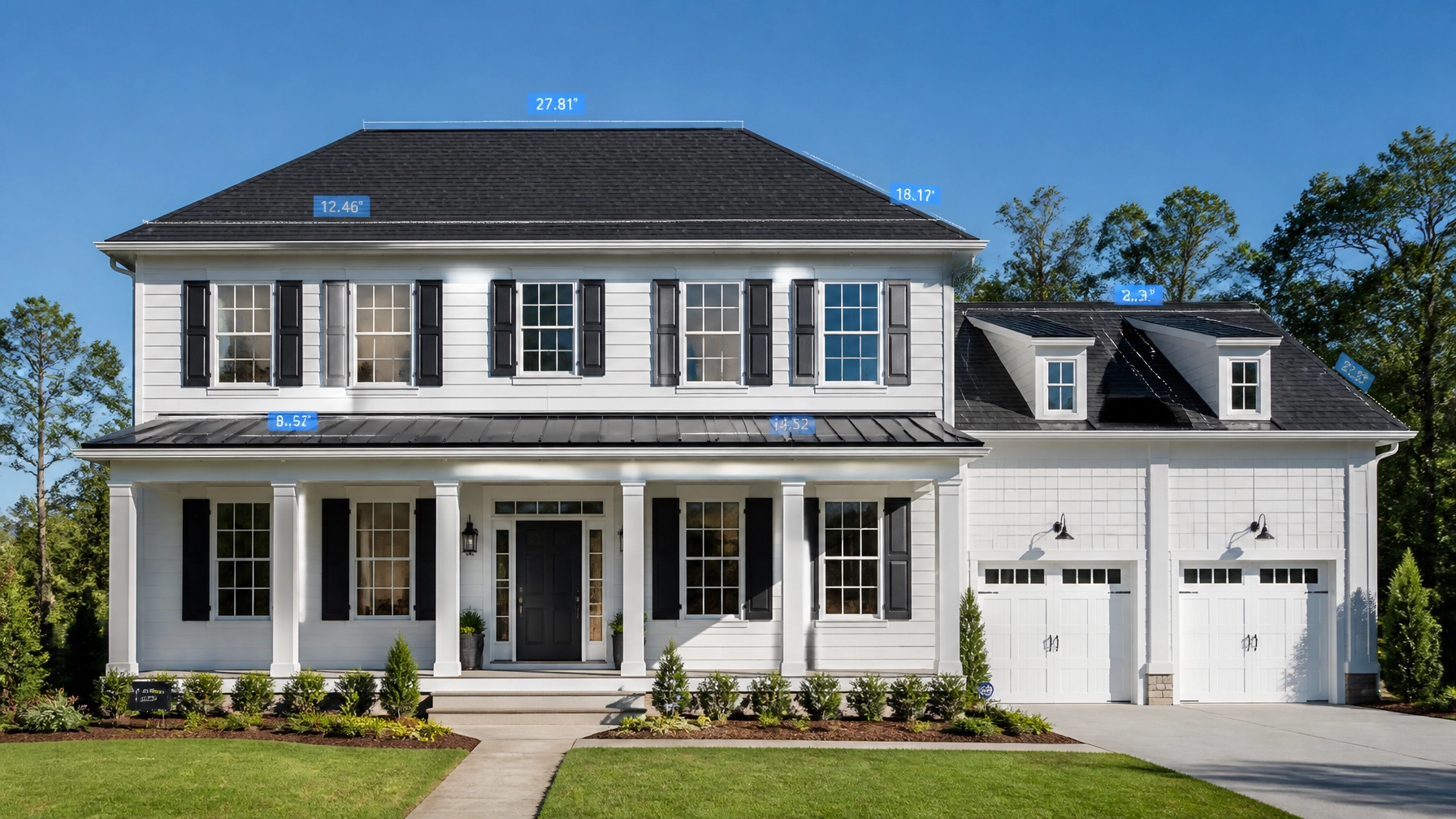
    Digital satellite visualization of a residential roof with measurement overlays

    At Get My Roof Estimate Now, we leverage this same satellite roof measurement North Carolina homeowners now rely on for 95-98% accuracy.

    Why Satellite Tech Wins:

    1. Eliminate Human Error: Traditional tape measures lead to "material creep": ordering 15% more than you need "just in case." Satellite data cuts waste to under 3%.
    2. Safety First: In the past, getting a quote meant a contractor walking your roof. In 2026, we do it from space, keeping everyone off the ladder until the actual work begins.
    3. Instant Budgeting: You shouldn't have to wait three days for a PDF. Our technology provides a 60-second estimate based on current 2026 regional pricing.

    DIY vs. Pro: The Real Cost Breakdown

    Most homeowners assume that DIYing a roof will cut the bill in half. In reality, the math in 2026 Greensboro looks quite different.

    Expense Category Professional (Pro) Do-It-Yourself (DIY)
    Materials $6,000 – $8,000 (Bulk Discount) $7,500 – $9,500 (Retail)
    Labor $3,000 – $5,000 $0 (Your Time/Stress)
    Equipment Rental Included $800 – $1,200 (Dumpster, Safety)
    Permits & Fees Included/Managed $250 – $500
    Warranty 25-50 Year (Labor + Material) Material Only (Likely Voided)

    The "20% Reality": Labor typically only accounts for 20-30% of a professional roofing quote in the Piedmont Triad. When you DIY, you lose the contractor's bulk material discount and face retail prices at big-box stores. Often, a DIYer saves less than $3,000 while assuming 100% of the risk.

    North Carolina Building Codes & Permits

    One of the most confusing aspects for Greensboro homeowners is the legal requirement for a new roof.

    In North Carolina, state code (GS 160D-1110) generally dictates that a permit is not required if:

    • The total cost is under $40,000.
    • You are repairing less than 15% of the roof decking.
    • There are no structural changes (trusses or rafters).

    However, if you are upgrading from shingles to a metal roof or changing the structural pitch, you must obtain a permit from the City of Greensboro Development Services or Guilford County. DIYers often skip this step, leading to major headaches during home inspections when they eventually try to sell their property.

    Close-up of professional architectural shingle installation

    The High Stakes of "Learning as You Go"

    Roofing is one of the few home improvements where a mistake isn't just an eyesore: it's a catastrophe.

    1. The Safety Gap

    Roofing remains one of the top five most dangerous professions in the U.S. Professionals use specialized fall-arrest systems, OSHA-compliant staging, and experienced "pitch-men" who spend 40 hours a week on slopes. A DIY fall in the Triad can result in medical bills that far exceed any potential roofing savings.

    2. The Warranty Trap

    Most premium shingle manufacturers (like GAF or CertainTeed) require "Certified Installation" to honor their lifetime warranties. If you install the roof yourself and a leak occurs three years later due to improper flashing, the manufacturer will likely deny your claim. You’ll be paying for the repair out of pocket.

    3. The "Curb Appeal" Factor

    A poorly installed DIY roof is easy to spot. Misaligned shingle courses, sloppy valley weaving, and crooked ridge caps are red flags for home inspectors. In a competitive market like Greensboro, a "handyman roof" can actually decrease your home's appraised value.

    Why Metal is Gaining Ground in the Triad

    While asphalt shingles remain the "Budget" and "Popular" choice, 2026 has seen a massive surge in metal roofing across North Carolina.

    A modern ranch home in the Piedmont Triad with a dark bronze metal roof

    Homeowners are choosing metal (Premium) for its 50+ year lifespan and superior performance during our increasingly volatile storm seasons. If you're considering DIYing a metal roof: don't. Metal installation requires specialized tools and precision cutting that even seasoned DIYers find overwhelming.

    How to Get an Accurate Quote in 60 Seconds

    Before you buy a harness and start watching YouTube tutorials, you need a baseline. The North Carolina roofing technology 2026 provides is designed to empower you with information before you ever talk to a contractor.

    At Get My Roof Estimate Now, we provide:

    • Satellite-Powered Accuracy: Measurements accurate to within inches.
    • Transparent Ranges: We provide Low-Middle-High pricing so you can see where a DIY project might actually land.
    • Verified Contractors: If you decide DIY isn't for you, we connect you with licensed, insured local Greensboro experts.

    The "Smart Homeowner" Checklist:

    1. Get an Instant Estimate: Use our satellite tool to find your roof's square footage.
    2. Compare Material Costs: Look up retail prices for the "squares" our tool identifies.
    3. Evaluate Risk: If the labor savings is less than $4,000, ask yourself if that covers the cost of a 25-year warranty and your own safety.

    Conclusion: Is DIY Worth It in Greensboro?

    In 2026, the answer for most Piedmont Triad homeowners is a resounding no. With the evolution of satellite technology in Charlotte and its surrounding areas, professional roofing has become more efficient and price-competitive than ever.

    The "satellite tech edge" allows pros to bid tighter and work faster, often narrowing the price gap between DIY and Pro to a point where the risks of going solo simply don't make financial sense.

    Don't guess on your biggest investment. Start with a data-backed estimate today.

  • Daily FAQ Blitz – Slot 7: AEO FAQ Quick Answers for Charleston, SC

    Daily FAQ Blitz – Slot 7: AEO FAQ Quick Answers for Charleston, SC

    As the second largest container port on the East Coast, the Port of Charleston is the heartbeat of South Carolina’s economy. For local importers, exporters, and logistics providers operating through the Wando Welch or Hugh K. Leatherman terminals, efficiency is the primary survival metric. In an era of tightening global supply chains, AEO (Authorized Economic Operator) certification has emerged as the gold standard for "trusted trader" status.

    Whether you are managing a fleet of trucks across the Lowcountry or importing materials for the booming residential construction sector, understanding AEO and its U.S. counterpart, C-TPAT, is critical for 2026. This FAQ blitz provides the direct, data-driven answers Charleston businesses need to streamline their operations.


    1. What exactly is AEO Certification? (Definition)

    The Authorized Economic Operator (AEO) status is a globally recognized accreditation signifying that a business’s role in the international supply chain is secure and compliant with customs regulations.

    • Global Context: It is based on the World Customs Organization (WCO) SAFE Framework.
    • Trust Factor: Think of it as a "fast pass" for global trade. Once certified, customs authorities treat your shipments as low-risk.
    • Operational Impact: For a Charleston-based company, this means your goods spend less time sitting in a terminal and more time in transit.

    2. Who in Charleston needs AEO or C-TPAT? (Eligibility)

    While any entity involved in international trade can apply, the certification is most beneficial for:

    • Importers & Exporters: Companies bringing in raw materials or shipping finished South Carolina goods abroad.
    • Customs Brokers: Professionals handling documentation who want to offer faster clearance to their clients.
    • Logistics & Freight Forwarders: Businesses moving containers from the Port of Charleston to inland hubs.
    • Warehouse Operators: Those storing bonded goods or managing distribution centers in the Tri-County area.

    Close-up of high-quality architectural shingles on a residential roof in South Carolina showing perfect installation

    3. What are the primary benefits for South Carolina businesses? (Advantage)

    Certification offers tangible financial and operational wins that directly impact the bottom line of local logistics and construction firms:

    • Fewer Inspections (Budget): AEO/C-TPAT members face significantly lower physical and document-based exam rates. This eliminates the hidden costs associated with CBP exams.
    • Priority Treatment (Popular): If your cargo is selected for an inspection, it moves to the "front of the line," drastically reducing port delays.
    • Mutual Recognition (Premium): Your status in the U.S. is recognized by partner nations (like the EU, UK, and Japan), ensuring your exports receive similar "fast lane" treatment abroad.
    • Reduced Demurrage: Faster clearance means fewer containers stuck at the port, saving you thousands in terminal storage fees.

    4. AEO vs. C-TPAT: Which one should I get? (Comparison)

    This is the most common point of confusion for Charleston businesses.

    • C-TPAT (Customs-Trade Partnership Against Terrorism): This is the United States' version of the AEO program. It focuses primarily on supply-chain security. If your main concern is moving goods through U.S. ports like Charleston, C-TPAT is your priority.
    • AEO: This is the term used by almost every other major trading bloc (EU, UK, Mexico, China).
    • The 2026 Strategy: Most successful Charleston firms hold C-TPAT status, which, through "Mutual Recognition Agreements," grants them AEO-like benefits in other countries. You don't necessarily apply for an EU AEO as a U.S. entity; you leverage your C-TPAT status.

    5. What does the certification process look like? (Step-by-Step)

    Getting certified is a rigorous process that demands transparency and sophisticated data management: much like our instant roof estimation technology uses satellite imagery to ensure accuracy to within inches.

    1. Self-Assessment: Conduct a deep-dive audit of your supply chain security, from physical locks on containers to digital cybersecurity.
    2. Application Submission: Filing your security profile through the CBP portal (for C-TPAT).
    3. Vetting: CBP officers review your compliance history and financial stability.
    4. Site Visit (Validation): A Customs and Border Protection specialist will visit your Charleston facility to verify that your on-paper procedures match your real-world actions.

    Modern ranch-style home in a Charleston suburb featuring a new standing seam metal roof

    6. How long does the timeline take? (Efficiency)

    In 2026, the timeline remains consistent but requires proactive planning:

    • Phase 1 (Preparation): 2–4 months to close security gaps and document procedures.
    • Phase 2 (CBP Review): Approximately 90 days from the time you submit your profile to receive initial acceptance.
    • Phase 3 (Full Validation): Usually within 12 months of acceptance, CBP will conduct their site visit to move you to Tier II or Tier III status for maximum benefits.
    • Total Window: Expect a 6-to-18-month journey from start to full "Trusted Trader" status.

    7. How does this help the local Charleston economy? (Growth)

    As Charleston continues to expand its port capacity, the demand for "low-risk" cargo grows. Businesses that are certified contribute to:

    • Faster Port Throughput: When more companies are certified, the overall congestion at the port decreases.
    • Lower Landed Costs: Reduced delays mean lower costs for the consumer. This is particularly relevant for the local housing market, where material costs for roofing shingles and metal panels are influenced by global shipping efficiency.
    • Competitive Edge: Being a C-TPAT/AEO certified partner makes you a more attractive vendor for major manufacturers (like BMW or Volvo) operating in the South Carolina corridor.

    8. Are there any hidden requirements? (Transparency)

    The main requirement is continuous improvement. Certification is not a one-and-done sticker. You are required to:

    • Conduct annual security profile reviews.
    • Maintain strict business partner vetting (ensuring your subcontractors are also secure).
    • Update your digital security protocols to combat evolving 2026 cyber threats.

    Luxury coastal home in the South Carolina Lowcountry with a brand-new synthetic slate roof


    Summary Checklist for Charleston Businesses

    Factor Detail Category
    Main Program C-TPAT (for U.S. focus) Critical
    Port Focus Charleston (Wando Welch / Leatherman) Primary
    Key Benefit Reduced inspections & priority processing Operational
    Est. Timeline 6–12 months for Tier II Planning
    Cost Free to apply (Internal resources only) Budget

    At Get My Roof Estimate Now, we value the same things you do in your logistics: speed, accuracy, and transparency. Whether you are looking for an instant roof estimate in South Carolina or optimizing your international trade routes through the Port of Charleston, having the right data makes all the difference.

    Conclusion

    AEO and C-TPAT certification are no longer optional perks for high-volume traders. They are essential tools for managing risk and ensuring your supply chain remains resilient against global disruptions. For Charleston businesses, starting the application process today is the best way to secure your growth through 2026 and beyond.


  • DIY vs Pro Roof Replacement in Raleigh: What North Carolina Homeowners Need to Know About Going Solo in 2026

    DIY vs Pro Roof Replacement in Raleigh: What North Carolina Homeowners Need to Know About Going Solo in 2026

    For homeowners in the City of Oaks, a roof replacement is more than just a home improvement project: it is a critical line of defense against North Carolina’s volatile weather. As we move through 2026, the debate between DIY roof replacement and hiring a pro roof replacement specialist has intensified. While the allure of saving on labor costs is high, the complexity of Raleigh’s building codes and the reality of storm season risks make this a high-stakes decision.

    Whether you own a classic brick ranch in North Hills, a sprawling colonial in North Raleigh, or a modern craftsman in Five Points, understanding the variables of North Carolina roofing is essential. This guide breaks down the data-driven costs, technical requirements, and modern tools: like a satellite roof estimate: to help you decide if you should swing the hammer or call in a roofing contractor in Raleigh.

    The Raw Numbers: 2026 Raleigh Price Comparison

    The most immediate factor for any Raleigh homeowner is the roof replacement cost. For a standard 2,000-square-foot roof (the average size for many local ranch and craftsman homes), the price gap between doing it yourself and hiring a professional is significant, but it often narrows once the "hidden" variables are accounted for.

    Professional Roof Replacement (Full Service)

    In 2026, a professional crew in the Raleigh-Durham area typically charges between $7,000 and $18,000 for an asphalt shingle replacement.

    • Budget (Basic 3-Tab): $7,000 – $9,500
    • Popular (Architectural Shingles): $10,000 – $14,000
    • Premium (Metal or Designer Shingle): $15,000 – $22,000+

    This all-in price covers tear-off, disposal, materials, labor, permits, and: crucially: a workmanship warranty.

    DIY Roof Replacement (Materials-Only)

    Going the DIY route for a 2,000-square-foot roof typically costs between $4,000 and $8,000 in out-of-pocket material expenses.

    • Materials (Shingles, Nails, Underlayment): $3,500 – $5,500
    • Waste Disposal (Dumpster Rental/Fees): $500 – $1,200
    • Specialized Tooling (Nail gun, safety harness, ladders): $400 – $1,000

    While you may save roughly $3,000 to $6,000 in labor, you are assuming 100% of the liability for installation errors, safety risks, and code compliance.

    A professional roofing crew installing new shingles on a Raleigh home, demonstrating the complexity and safety gear required.

    Building Codes and the NC Regulatory Landscape

    North Carolina has specific regulations that can complicate a roof replacement DIY vs pro scenario. In Raleigh, the Wake County building inspections department maintains strict standards for wind uplift and attic ventilation.

    1. Permitting Requirements: In many NC jurisdictions, a full roof replacement requires a permit (approx. $300 – $1,000). A professional roofing contractor in Raleigh handles this process and schedules the final inspection to ensure the work is legal and documented.
    2. Wind Uplift (Coastal/Inland Standards): Even though Raleigh is inland, local codes require shingles to be rated for specific wind speeds to withstand the remnants of Atlantic hurricanes. DIYers often overlook the specific "nailing pattern" required to validate these wind ratings.
    3. Ice and Water Shields: North Carolina code frequently requires self-adhering membranes (Ice & Water Shield) in valleys and at the eaves. Improper installation here is the #1 cause of DIY roof failure during Raleigh's winter ice storms.

    Failure to meet these codes can result in a failed inspection during a future home sale, potentially forcing you to tear off and replace the roof again before you can close.

    The Storm Factor: Why Timing Matters in the Triangle

    Raleigh’s geography puts it in a unique crosshair. We face the dual threat of severe spring tornadoes and late-summer hurricane systems.

    The "Open Roof" Risk: A professional crew can often strip and "dry-in" (apply waterproof underlayment) a 2,000-square-foot roof in a single day. A DIY project, often performed over multiple weekends, leaves the home vulnerable to sudden North Carolina thunderstorms. If a storm hits while your roof is exposed, the cost of interior ceiling repair and mold remediation will quickly exceed any labor savings.

    Warranty and Insurance: Most shingle manufacturers (like GAF or Owens Corning) offer limited warranties that are only fully valid if installed by a certified professional. Furthermore, if a DIY roof is damaged during a storm, your insurance company may scrutinize the installation quality before paying out a claim. In contrast, a pro job comes with a paper trail that protects your investment.

    A classic brick ranch-style home in North Carolina with a newly installed premium metal roof, highlighting high curb appeal.

    The Hidden Costs of Going Solo

    Beyond the shingles and nails, there are "soft costs" that homeowners often underestimate when considering a Raleigh roof replacement on their own:

    • Waste Disposal (Heavy): A 2,000-square-foot roof produces about 3 to 4 tons of debris. Managing the logistics of a dumpster in a tight Raleigh driveway can be a nightmare.
    • The Learning Curve (Slow): Roofing is physically demanding. What takes a crew of six men 8 hours will take an inexperienced homeowner 40 to 60 hours of grueling labor.
    • The Safety Gap (Dangerous): Falls from roofs are a leading cause of residential construction injuries. Professionals use OSHA-compliant fall protection systems that most DIYers aren't trained to use correctly.

    The Smart Middle Ground: Satellite-Powered Accuracy

    In 2026, you don't have to choose between "flying blind" with a DIY estimate or waiting a week for a contractor to visit your house. Technology has bridged the gap.

    At Get My Roof Estimate Now, we use advanced satellite imagery to provide an instant, free roof replacement estimate. Our technology measures your roof's size, pitch, and complexity from space, accurate to within inches. This allows you to:

    • Get a transparent price range in 60 seconds.
    • Compare different roofing materials like architectural shingles or metal.
    • Budget effectively before even speaking to a contractor.

    Hyper-realistic high-altitude view of a Raleigh neighborhood showing satellite-powered roof measurement overlays.

    Final Verdict: DIY or Pro?

    Choose DIY if:

    • You have extensive construction experience.
    • The roof is a simple, low-slope ranch style.
    • You are not planning to sell the home in the next 5 years.
    • You have a full week of guaranteed clear weather.

    Choose a Professional if:

    • You value a 10-25 year workmanship warranty.
    • Your home has a steep pitch or complex valleys (common in Colonial or Craftsman styles).
    • You want to ensure 100% compliance with Raleigh building codes.
    • You want the project finished in 24–48 hours to avoid storm risk.

    For most Raleigh homeowners, the safety, speed, and long-term security of a professional installation outweigh the temporary savings of a DIY project. The first step to a successful project is getting an accurate number. Skip the tape measure and the ladder: get your satellite roof estimate today and see exactly where you stand.


  • How to Vet a Roofing Contractor in Savannah, GA (2026 Guide)

    How to Vet a Roofing Contractor in Savannah, GA (2026 Guide)

    Savannah’s humid subtropical climate and frequent coastal storms put immense pressure on residential roofs. Whether you are dealing with a leak after a summer thunderstorm or planning a proactive replacement for an aging roof, hiring the right Savannah GA roofing contractor is the difference between a 30-year investment and a $20,000 mistake.

    In 2026, the roofing industry is more sophisticated than ever, but the risks remain the same. Homeowners are often bombarded by door-knockers and "storm chasers" promising free roofs, only to disappear when the warranty needs to be honored. This guide provides a data-driven, step-by-step roadmap to vetting a Savannah roofer to ensure your home is protected by a licensed, insured, and reputable professional.


    Step 1: Verify the Georgia State Roofing License [Required]

    One of the most common misconceptions is that Georgia has a specific "roofing license." It does not. Instead, roofing contractors operate under one of two frameworks: the Roofing Specialty Exemption or a State Residential/General Contractor License.

    How to use the SOS Lookup

    To verify a contractor, you must visit the Georgia Secretary of State (SOS) Licensing Portal. Even if a roofer claims they are exempt, most professional companies in Savannah will hold a Residential-Basic (RB) or Residential-Light Commercial (RLC) license, especially for projects exceeding $2,500.

    • Action: Search by the individual’s name or business name.
    • Status: Look for "Active." Do not hire anyone with a "Lapsed," "Suspended," or "Revoked" status.
    • Match: Ensure the name on the license matches the name on the contract exactly.

    Why the License Matters

    A state-licensed contractor has passed a trade exam, a business/law exam, and has submitted proof of financial stability. If a roofer refuses to provide a license number, they are likely operating under the radar, which leaves you with zero recourse if the job is botched.

    A professional roofing contractor in a branded polo shirt showing a homeowner a physical contract and a sample of roofing shingles.


    Step 2: Demand Proof of Insurance [Critical]

    In Savannah, high winds and steep pitches make roofing a high-risk profession. If a worker falls off your roof and the contractor isn't properly insured, you: the homeowner: could be held liable for medical bills and lost wages.

    Before signing anything, require an Accord Certificate of Insurance (COI) that includes:

    1. General Liability (GL): This covers damage to your property (e.g., a tree falls through your attic during the job). In 2026, the market standard for a reputable Savannah roofer is $1,000,000.
    2. Workers’ Compensation: This is mandatory in Georgia for any business with 3 or more employees. Never accept the "we're a small family crew" excuse to skip this coverage.

    Pro Tip: Don't just look at a paper copy. Call the insurance agent listed on the certificate to confirm the policy is currently "in force" and hasn't been cancelled due to non-payment.


    Step 3: Local Savannah Compliance (Tax Certs & Permits)

    A state license is only half the battle. To legally operate within city limits, a contractor must hold a City of Savannah Business Tax Certificate. This confirms they are a registered business paying local taxes and contributing to the local economy.

    Building Permits in 2026

    As of 2026, the City of Savannah has streamlined the permit review process. The building department now has 5 days to determine if a permit application is complete.

    • Fact: Every full roof replacement in Savannah requires a building permit.
    • Warning: If a contractor asks you to pull the permit as the "owner-builder," walk away. This is a common tactic used by unlicensed contractors to avoid accountability. The contractor who does the work should always pull the permit.

    Step 4: Spotting Red Flags and "Storm Chasers" [Risk Mitigation]

    After a major weather event, Savannah storm damage roofing companies often flood the area. While some are legitimate out-of-state crews helping with the surge, many are "storm chasers" who provide low-quality work and vanish.

    Watch for these Red Flags:

    • Door-Knocking: Reputable local contractors usually have a 4-to-8-week backlog. If they are knocking on doors looking for work, ask yourself why.
    • High-Pressure Sales: If they insist you sign a "contingency agreement" before you've even spoken to your insurance company, they are trying to lock you into a contract you can't escape.
    • Unmarked Vehicles: A professional company will have branded trucks, uniforms, and a local physical office address: not just a P.O. Box.

    A close-up shot of a professional roofer installing high-quality asphalt shingles on a residential roof in Savannah.


    Step 5: The "No Deductible" Myth [Illegal]

    You may encounter a contractor who offers to "waive" or "eat" your insurance deductible. In Georgia, this is not just unethical; it is a form of insurance fraud.

    Your insurance policy is a legal contract. The deductible is your portion of the risk. If a contractor inflates an invoice to cover your deductible, they are misrepresenting the cost of repairs to the insurance carrier. In 2026, Georgia authorities have cracked down on these schemes. If you are caught participating, your claim could be denied, and your policy could be cancelled.

    Rule of Thumb: If it sounds too good to be true (a free roof), it probably involves a legal shortcut you don't want to be part of.


    Step 6: Use Technology to Get a Head Start [Instant Results]

    The traditional way to get a roof estimate involves calling five different contractors, waiting for them to show up (if they do), and sitting through hour-long sales pitches.

    At Get My Roof Estimate Now, we’ve eliminated the hassle. Using high-resolution satellite imagery, we provide a satellite roof estimate Savannah GA homeowners can trust.

    • Speed: Get your estimate in under 60 seconds.
    • Accuracy: Our measurements are 90-95% accurate based on the exact pitch and square footage of your home.
    • Transparency: You get a low-middle-high price range for various materials (Architectural Shingles, Metal, etc.) before you ever invite a contractor to your home.

    This allows you to vet contractors from a position of power. You already know what the job should cost, making it easy to spot a quote that is suspiciously low or predatory.

    A homeowner sitting on their porch in Savannah, GA, using a tablet to view an instant satellite-powered roof estimate.


    Step 7: Check Reviews and Warranties [Long-Term Value]

    Once you have a shortlist of licensed and insured contractors, look at their local track record.

    Reviews

    Don't just look at the star rating on Google. Read the 2-star and 3-star reviews. They often provide the most honest look at how a company handles problems. A company that responds professionally to a complaint is often more trustworthy than one with 500 perfect reviews and no comments.

    Warranties

    There are two types of warranties:

    1. Manufacturer Warranty: Covers defects in the materials (e.g., shingles losing granules prematurely).
    2. Labor/Workmanship Warranty: Covers the installation. A quality Savannah roofer should offer at least a 5-to-10-year workmanship warranty.

    Summary Checklist for Savannah Homeowners

    Vetting Step What to Look For Priority
    GA SOS License Active status; matches business name [Mandatory]
    General Liability $1M minimum coverage [Mandatory]
    Workers' Comp Proof of coverage for the entire crew [Mandatory]
    Savannah Tax Cert Local business registration [Required]
    Permit Contractor pulls the permit, not you [Required]
    Written Estimate Detailed scope of work and materials [Required]
    Satellite Estimate Get My Roof Estimate Now baseline [Recommended]

    Conclusion

    Vetting a Savannah GA roofing contractor doesn't have to be a full-time job. By verifying their state license, checking for local Savannah compliance, and insisting on proper insurance, you eliminate 90% of the bad actors in the market.

    Ready to see what a new roof should cost for your Savannah home? Skip the sales pitch and get your satellite roof estimate Savannah GA in just 60 seconds. Visit our locations page or enter your address on our homepage to get started today.

  • From Space to Shingles: How Satellite Tech Is Transforming Roofing in Jacksonville, FL

    From Space to Shingles: How Satellite Tech Is Transforming Roofing in Jacksonville, FL

    Jacksonville is a city that has always looked toward the horizon. As Florida’s largest city by land area, home to over 1 million residents, "The Bold New City of the South" is currently undergoing a massive technological evolution. While our skyline is famous for its coastal charm, it is the activity in the stars above that is fundamentally changing how we maintain the homes below.

    From the high-tech expansion at Cecil Spaceport to the space-based power grids being developed in South Jacksonville, the city is quickly becoming a global hub for aerospace innovation. This same "space-age" precision is now available to every homeowner in Duval County through satellite-powered roof estimates.

    At Get My Roof Estimate Now, we leverage this orbital technology to provide instant, accurate pricing for roof replacements: eliminating the need for traditional, time-consuming contractor visits.

    Jacksonville’s Ascent into the Space Economy

    The local tech sector is no longer just a supporting player; it is leading the charge in commercial space operations. Two major developments are currently putting Jacksonville on the galactic map:

    • Star Catcher Industries: This Jacksonville-based trailblazer is building the world’s first space-based power grid. In 2025, they made headlines by completing a public demonstration at EverBank Stadium, successfully beaming optical power across the field. By mid-2026, they are tripling their headquarters in South Jacksonville following an $88M capital raise.
    • Cecil Spaceport: Operated by the Jacksonville Aviation Authority, Cecil is aggressively pursuing an FAA re-entry license. The goal is to transform the site into a two-way logistics hub for commercial space flight and biomedical research by 2028.

    As Jacksonville cements its status as a "Space City," it’s only logical that homeowners are utilizing this same satellite infrastructure to solve one of the most stressful parts of homeownership: roof replacement.

    The Satellite Edge: Precision Without the Sales Pitch

    Historically, getting a roof estimate in Jacksonville meant calling three different contractors, waiting days for them to arrive, and dealing with high-pressure sales tactics. Today, that process is obsolete.

    By using high-resolution satellite imagery, we can analyze your roof's size, pitch, and complexity with 90-95% accuracy in under 60 seconds. This technology allows us to provide a transparent price range based on real-time material costs and local labor rates.

    Detailed installation of architectural shingles in Florida

    Why Satellite Measurements Matter in Duval County

    Jacksonville homes face unique structural challenges. Because the city must adhere to wind standards of 115-130 mph, the margin for error on a roof measurement is zero.

    • Accuracy (Inches, not Feet): Our systems measure every ridge, hip, and valley from space, ensuring the material order is perfect.
    • No Contact (Zero Hassle): You don't need to be home or clear your schedule for a ladder-wielding estimator.
    • Instant Planning (Budget Ready): Whether you are preparing to sell or dealing with storm damage, you get the data you need to budget immediately.

    The Reality of Roofing in the "Sunshine State"

    In most parts of the country, an asphalt shingle roof is expected to last 20 to 25 years. In Jacksonville, the math is different. Between the intense UV radiation, high humidity, and the perennial threat of tropical storms, the lifespan of traditional materials is significantly compressed.

    Recent industry data suggests that while shingles may be rated for 25 years, many roofs in Florida start showing signs of failure or lose their hurricane-rated wind resistance after just 10 to 12 years. This accelerated wear makes quick, accurate estimates even more critical for Jacksonville homeowners who need to stay ahead of the next hurricane season.

    2026 Roofing Costs in Jacksonville, FL

    Navigating roof replacement costs requires an understanding of the different tiers available. In 2026, the average roof replacement in Jacksonville typically ranges from $8,000 to $22,000, depending on the material and square footage.

    Material Option Price Range (1,500 – 3,000 sq. ft.) Best For
    3-Tab Shingles (Budget) $8,000 – $11,500 Short-term fixes / Rental properties
    Architectural Shingles (Popular) $11,000 – $17,000 Most homeowners (High wind resistance)
    Standing Seam Metal (Premium) $18,000 – $35,000+ Maximum longevity / Coastal exposure
    Roof Coatings (Maintenance) $4,000 – $9,000 Extending life of existing flat roofs

    A typical Jacksonville ranch home with a new roof

    Practical Implications for the Tech-Savvy Homeowner

    The shift from manual estimates to satellite-driven data has three major benefits for Jacksonville residents:

    1. Insurance Verification: In the event of a storm claim, satellite imagery provides date-stamped, objective evidence of your roof's condition. This transparency often speeds up the claims process with Florida insurers.
    2. Contractor Accountability: When you use our service, you aren't just getting a number; you're getting a data set. You can take your satellite measurements to any of our verified, licensed, and insured local contractors and know that you are comparing "apples to apples" on labor and materials.
    3. Speed of Execution: In a city where roofing crews are often booked weeks in advance following a storm, having your measurements and budget ready allows you to jump to the front of the line.

    High-Performance Materials for Jacksonville Weather

    If you are planning a replacement in 2026, we recommend focusing on materials that can withstand the local 115-130 mph wind requirements.

    • Dimensional Asphalt Shingles (Popular): These are the gold standard for most Jacksonville neighborhoods like Mandarin, Southside, and Northside. They provide a multi-layered look and better wind uplift resistance than traditional shingles.
    • Metal Roofing (Premium): Increasingly popular in beach communities like Atlantic Beach and Neptune Beach, metal roofs offer superior heat reflection and can last 50+ years, surviving even the most intense hurricane-force winds.

    Premium metal roof on a coastal Jacksonville home

    Conclusion: Get Your 60-Second Estimate Today

    Jacksonville is moving fast: into space, into the future, and into a more efficient way of managing home repairs. You no longer have to wait for a contractor to find a ladder and find your house just to get a ballpark figure.

    By harnessing the same satellite technology powering the next generation of space logistics at Cecil Spaceport, Get My Roof Estimate Now provides you with the data you need in the time it takes to brew a cup of coffee.

    Are you ready to see what your roof looks like from space?
    Click here to enter your Jacksonville address and receive your free, instant estimate.


  • New Roof ROI in Savannah, GA: How Much Value Does a Roof Replacement Add in 2026?

    New Roof ROI in Savannah, GA: How Much Value Does a Roof Replacement Add in 2026?

    If you are a homeowner in Savannah, Georgia, looking at the real estate landscape in 2026, you’ve likely noticed a shift. The market has moved from the frantic seller’s frenzy of previous years into a more balanced, buyer-friendly environment. In neighborhoods from Ardsley Park to Dutch Island, buyers are more discerning than ever. They aren’t just looking for charm and Spanish moss; they are looking for structural integrity and low future maintenance costs.

    One question we hear constantly from Savannah residents is: "Is a new roof worth it before I sell?"

    The short answer is a resounding yes. In 2026, a roof replacement is no longer just a maintenance task: it is a strategic financial move that protects your equity and accelerates your sale. This guide breaks down the data, costs, and Return on Investment (ROI) for roof replacements in the Hostess City of the South.

    The Financial Breakdown: Savannah’s 2026 Market

    Savannah’s median home price currently fluctuates between $326,000 and $374,000. While the market remains stable, inventory is higher than in recent years, meaning your home needs to stand out.

    Data shows that a new roof in Savannah typically recoups 60-70% of its cost at the time of resale. While that might sound like you’re "losing" 30%, you have to consider the alternative: a home with an aging roof often requires a massive price reduction or a seller credit that far exceeds the cost of the roof itself.

    Speed to Sale: The 15-Day Advantage

    In a balanced market, "Days on Market" (DOM) is a critical metric. Homes in Chatham County with a certified new roof (installed within the last 1-2 years) sell 15 to 25 days faster than those with roofs nearing the end of their lifespan (15+ years).

    For a homeowner, those three weeks saved represent thousands in avoided mortgage payments, utilities, and tax carry costs. A new roof removes the "inspection hurdle": that dreaded moment when a buyer’s inspector flags a 20-year-old roof, causing the deal to fall through or the buyer to demand a $20,000 credit.

    Savannah's Climate: Why Your Roof Works Harder

    Savannah’s unique coastal-inland climate is brutal on roofing materials. If your roof was installed in the early 2000s, it has likely reached its breaking point due to three main factors:

    • Extreme Humidity (70-80% Average): (High Maintenance) Constant moisture encourages algae and lichen growth, which can eat away at the limestone filler in asphalt shingles.
    • Thermal Cycling (30-40°F Swings): (Structural Stress) The rapid temperature changes between a scorching 95°F afternoon and a cool 55°F evening cause roofing materials to expand and contract rapidly, leading to "thermal shock" and cracking.
    • High UV Exposure: (Material Degradation) The intense Georgia sun bakes shingles, making them brittle and prone to granule loss.

    Detail of high-quality architectural shingles being installed

    Navigating Chatham County Building Codes

    Savannah isn't just any city; it’s a coastal zone that demands high-performance standards. When replacing a roof in 2026, your contractor must adhere to strict Chatham County building codes designed to withstand tropical storms and hurricanes.

    • Wind Rating: Materials must be rated for at least 130 mph wind speeds.
    • Fastening Patterns: A 6-nail pattern per shingle is now the standard requirement (up from the traditional 4-nail pattern) to ensure the roof stays attached during high-wind events.
    • Drip Edge: Proper drip edge installation is mandatory to prevent water from wicking back into the fascia and roof deck: a common issue in Savannah’s heavy rainstorms.

    At Get My Roof Estimate Now, we factor these local code requirements into every instant quote, ensuring you get an accurate price that reflects the reality of building in Coastal Georgia.

    Roofing Material Costs in Savannah (2026 Estimates)

    Choosing the right material is a balance between your budget and your home’s architectural style. For a typical 2,000 square foot home in Savannah, here is what you can expect to pay:

    1. Architectural Shingles (Popular / Budget-Friendly)

    • Cost per sq ft: $4.50 – $8.00
    • Total for 2,000 sq ft: $11,000 – $16,500
    • Lifespan: 25–30 years
    • Best for: Most suburban homes and those looking for the highest immediate ROI at resale.

    2. Standing Seam Metal (Premium / Longevity)

    • Cost per sq ft: $8.50 – $21.00
    • Total for 2,000 sq ft: $22,000 – $45,000+
    • Lifespan: 40–70 years
    • Best for: Coastal properties, historic renovations, and homeowners who plan to stay for 20+ years.

    Modern Savannah home with a premium metal roof

    Why Satellite Technology is Changing the Game

    The old way of getting a roof estimate involved calling three contractors, waiting days for them to show up, and dealing with high-pressure sales pitches in your living room.

    In 2026, Savannah homeowners are using technology to skip the hassle. We use high-resolution satellite imagery to measure your roof’s square footage, pitch, and complexity with 95% accuracy.

    1. Enter your address: Just like you would on a real estate site.
    2. Wait 60 seconds: Our AI analyzes the satellite data for your specific Savannah property.
    3. Get a transparent range: We provide low-to-high price ranges for different materials (Shingles, Metal, etc.) based on current local labor and material costs in Georgia.

    This allows you to budget and plan your ROI strategy without ever having to schedule an appointment.

    Choosing the Right Look for Your Neighborhood

    Savannah is a city of distinct architectural flavors. Your roof should complement, not clash with, your surroundings.

    • The Historic District & Ardsley Park: (Traditional) Architectural shingles in "Weathered Wood" or "Slate" tones mimic the look of historic materials while providing modern protection.
    • Dutch Island & The Landings: (Coastal) Many homeowners here are moving toward standing seam metal (Premium) for its hurricane resistance and sleek look.
    • Wilmington Island: (Value) High-quality architectural shingles offer the best protection-to-price ratio for family homes in this area.

    Suburban Savannah neighborhood with fresh roofing

    Final Verdict: Is it a Good Investment?

    In 2026, the Savannah real estate market rewards transparency and maintenance. A home with a new roof is a "turn-key" property that attracts the highest-quality buyers. By investing $11,000 to $16,000 now, you aren't just buying shingles; you are buying a faster sale, a higher closing price, and peace of mind during hurricane season.

    Ready to see what a new roof would cost for your Savannah home?

    Don’t wait for a contractor to call you back. Get your free, instant roof estimate using our satellite-powered technology. No credit card, no hassle: just accurate pricing in under a minute.

    Get Your Free Instant Roof Estimate Now


    Frequently Asked Questions (FAQ)

    Does a new roof increase my property taxes in Savannah?
    Generally, a standard roof replacement is considered "maintenance" and does not trigger a significant increase in your property tax assessment in Chatham County, unlike adding a new room or a pool.

    How long does a roof replacement take in Savannah?
    For a standard 2,000 sq ft home, most professional crews can complete the tear-off and installation in 1 to 2 days, weather permitting.

    Should I choose metal or shingles for a home near the coast?
    While architectural shingles are great, metal roofs offer superior wind resistance and longevity. If you are within 5 miles of the coast, metal is often the better long-term investment for storm protection.


  • Daily Tech Blitz – Slot 8: Savannah’s Satellite Tech Edge Is Taking Coastal Georgia Into Orbit

    Daily Tech Blitz – Slot 8: Savannah’s Satellite Tech Edge Is Taking Coastal Georgia Into Orbit

    Savannah, Georgia, is shedding its image as just a historic port city and stepping into a new era as a global aerospace and technology hub. This transition is being powered by a force far above the moss-draped oaks: satellite technology. From the high-flying innovations at Gulfstream Aerospace to the satellite-driven measurements we use at Get My Roof Estimate Now, the "Hostess City of the South" is now at the center of a coastal tech revolution.

    The Aerospace Powerhouse: Gulfstream’s Satellite Connectivity Breakthroughs

    The biggest news in Savannah's tech sector this July 2026 is the official certification of the Gogo Galileo HDX LEO (Low Earth Orbit) terminal for the Gulfstream G650 and G650ER. This Supplemental Type Certificate (STC) marks a monumental shift in how business aviation stays connected.

    For the first time, Savannah-built jets can offer global, low-latency broadband that rivals high-speed home internet, even while cruising at 51,000 feet. But the innovation doesn't stop there. Gulfstream is also integrating Honeywell JetWave X and the Gogo Plane Simple Ka-band terminal across its fleet. These systems provide:

    • Speeds up to 200 Mbps (Multi-network)
    • Global Coverage (Polar and Oceanic)
    • Lightweight Hardware (Fuel efficiency)

    These advancements aren't just for the ultra-wealthy. They represent a massive economic driver for Savannah’s aerospace economy, attracting high-tech engineering talent and solidifying Georgia’s position as a leader in aviation connectivity.

    A beautiful two-story modern colonial home in a Savannah suburb with a brand new dark charcoal grey shingle roof.

    Bridging the Digital Divide: Satellite Internet in Rural Georgia

    While Gulfstream focuses on the sky, providers like Starlink, Viasat, and HughesNet are focusing on the ground. In the rural counties surrounding Savannah: areas where fiber and cable have long been unavailable: satellite technology is finally bridging the digital divide.

    In 2026, satellite internet has become a lifeline for Georgia homeowners. Starlink’s LEO constellation now provides rural Savannah residents with speeds ranging from 50 to 250 Mbps, making remote work, telehealth, and online education possible for families who were previously disconnected. Even in the deepest reaches of the Lowcountry, homeowners are now using satellite-based tools to manage their properties and lives with urban-level efficiency.

    From Space to Shingles: How Satellite Tech Simplifies Your Home Repairs

    At Get My Roof Estimate Now, we’ve taken a page out of the aerospace playbook. Just as Gulfstream uses satellites to navigate and connect, we use advanced satellite imagery to provide homeowners with instant, accurate roof replacement estimates.

    The traditional way of getting a roof quote: scheduling multiple contractors to climb your roof with a tape measure: is as outdated as dial-up internet. Our technology allows you to enter your Savannah address and receive a comprehensive pricing report in under 60 seconds.

    High-tech digital interface showing satellite measurements of a Savannah residential roof with precise dimensions.

    Why Satellite Measurements Are the New Standard:

    • Precision (95% Accuracy): Our satellite-powered measurements are accurate to within inches, factoring in complex rooflines and pitch (Steep, Normal, Flat).
    • Transparency (No Hidden Fees): We provide a clear low-middle-high price range based on current regional material costs in Georgia.
    • Efficiency (60 Seconds): You get the data you need to budget for your project without the hassle of a two-week wait for contractor visits.
    • Material Selection (Popular to Premium): Whether you’re looking at Architectural Shingles (Popular), Metal Roofing (Durable), or Synthetic Materials (Premium), our tool calculates it all instantly.

    The Broader Impact on Coastal Georgia

    The satellite tech edge is about more than just fast internet and easy roof quotes. It’s about building a smarter, more resilient coastal community. In Savannah, where storm damage from hurricanes is a recurring concern, having instant access to roofing data and verified local contractors can be the difference between a quick recovery and months of uncertainty.

    As Gulfstream continues to push the boundaries of what’s possible in the air, and as we continue to refine the precision of residential property data on the ground, Savannah is proving that its future is written in the stars: and the satellites that orbit them.

    Rural farmstead on the outskirts of Savannah with a Starlink dish and a clean light grey metal roof.

    Ready to Experience the Tech Edge?

    If you're a Savannah homeowner planning a roof replacement, you don't need a team of aerospace engineers to get started. You just need a smartphone and 60 seconds. Experience the same satellite precision used by the world's leading tech companies to protect and improve your most valuable asset: your home.

    Get your free, instant roof estimate in Savannah, GA today.

  • Memphis Contractor Vetting 2026: 5 Questions to Ask Before Replacing Your Roof in the Bluff City

    Memphis Contractor Vetting 2026: 5 Questions to Ask Before Replacing Your Roof in the Bluff City

    Replacing a roof in Memphis is more than just a home maintenance task; it is a strategic defense against the unique meteorological volatility of the Mississippi River valley. In 2026, the Memphis roofing market has seen a shift toward more durable materials as homeowners react to the increasing frequency of high-wind events and hail storms typical of West Tennessee.

    Whether you are restoring a century-old home in Central Gardens or upgrading a modern ranch in Germantown, the vetting process for a Tennessee roof replacement has never been more critical. While the 2026 roof replacement cost continues to fluctuate based on global material supply, the local labor market in Shelby County remains competitive. However, the difference between a high-quality installation and a "storm chaser" repair can cost a homeowner tens of thousands of dollars in long-term damage.

    Before you sign a contract, you need to understand the local regulatory landscape, from Shelby County permitting to Memphis Landmarks Commission requirements. Here are the five essential questions every Memphis homeowner must ask their contractor in 2026.


    1. "Will this project require a building permit under current Shelby County code?"

    In Memphis and wider Shelby County, the answer to this question is a litmus test for a contractor's honesty. As of 2026, the local policy for single-family residential roof installations is specific:

    • Standard Reroofing (Budget/Popular): If you are simply removing old shingles and installing new ones without touching the underlying structure, a building permit is generally not required in Shelby County.
    • Decking Replacement (Technical): If your contractor finds rot and needs to replace the plywood sheathing (decking), a building permit is mandatory.

    A contractor who claims no permit is needed even when they plan to replace structural decking is cutting corners. For comparison, while a Davidson County roof permit in Middle Tennessee may have different triggers, Memphis homeowners must ensure their contractor is following the 2022 Shelby County Policy for Roof Installations. If a permit is required, the typical fee is approximately $136, plus valuation-based building fees.

    2. "How will you ensure compliance with Memphis Landmarks Commission (MLC) guidelines?"

    If your home is located in one of the city’s storied historic districts: such as Central Gardens, Evergreen, or Midtown: you cannot simply choose any shingle color or material off the shelf.

    The MLC oversees exterior alterations to ensure they maintain the historic character of the neighborhood. Before work begins, you may need a Certificate of Appropriateness (COA).

    • Central Gardens/Evergreen: These districts often require specific profiles or colors that mimic original materials.
    • Midtown: Even minor changes visible from the street can trigger a review.

    Ask your contractor if they have experience working with the MLC and if they will assist in preparing the COA application, including photographs and material samples. Failing to do this can result in heavy fines and a requirement to remove the non-compliant roof.

    A side-by-side comparison of architectural shingles and standing seam metal roofing panels

    3. "Architectural shingles vs. metal roofing: Which is optimized for Bluff City weather?"

    Memphis homeowners face a unique combination of humidity, intense summer heat, and Mississippi River wind tunnels. When considering your Nashville roof cost 2026 comparisons or local Memphis quotes, you must choose a material that balances longevity with cost-efficiency.

    • Architectural Shingles (Popular/Standard): These remain the most common choice in Memphis. In 2026, they are engineered for higher wind resistance (up to 130 mph), which is vital for the straight-line winds often seen near the river.
    • Metal Roofing (Premium/Durable): While the upfront cost is higher, metal is increasingly popular for homes near the river bluffs due to its superior hail resistance and heat reflection.

    In the current market, an architectural shingle roof for a typical 2,300 sq. ft. Memphis home ranges from $8,000 to $11,000, whereas a metal roof can range from $17,000 to $21,000. Ask your contractor for a "wind-uplift" rating on any material they propose.

    4. "Are you a licensed Tennessee Home Improvement Contractor for projects over $3,000?"

    In the state of Tennessee, any roofing project exceeding $3,000 requires the contractor to hold a specific license. Whether you are looking for a Nashville roofing contractor or a local Memphis firm, you must verify their credentials via the TN Department of Commerce & Insurance.

    A "handyman" estimate might be lower, but without a Home Improvement or Building Contractor license, you have no recourse through the state's contractor board if the work is substandard. Furthermore, in 2026, many insurance companies will refuse to cover a roof that wasn't installed by a licensed professional, especially in high-risk areas prone to storm damage.

    A residential home near the Mississippi River bluffs showing a newly installed, storm-resistant roof

    5. "Do you use satellite imagery for measurements, or are you relying on manual 'ballparks'?"

    The traditional method of a contractor walking your roof with a tape measure is becoming obsolete: and it's often inaccurate. At Get My Roof Estimate Now, we leverage advanced satellite technology to provide instant roof estimates that are accurate to within inches.

    When vetting a contractor, ask if they use digital aerial measurements. If they "eye-ball" the job, they are likely to include a 15-20% "buffer" in their quote to cover their own measurement errors. By using our satellite-powered measurement tool, you can enter your address and receive a transparent price range in under 60 seconds. This allows you to walk into negotiations with contractors already knowing exactly how many "squares" of material your roof requires.

    A satellite interface showing a residential roof in Memphis with digital measurement overlays for accuracy


    2026 Memphis Roof Replacement Cost Benchmarks

    Based on data from over 5,000 estimates processed in early 2026, here are the current price ranges for a standard 2,326 square foot home in the Memphis metro area (Shelby County).

    Material Type Cost Per Sq. Ft. (Installed) Total Project Range (2,326 sq. ft.) Typical Warranty
    Standard 3-Tab Shingles (Budget) $3.15 – $3.60 $7,300 – $8,400 20-25 Years
    Architectural Shingles (Popular) $4.00 – $4.75 $9,300 – $11,000 30-50 Years
    Standing Seam Metal (Premium) $8.25 – $10.50 $19,200 – $24,400 50+ Years
    Synthetic Slate/Tile (Luxury) $12.00 – $16.00 $27,900 – $37,200 50+ Years

    Note: Prices include labor, typical underlayment, and debris disposal. Factors such as roof pitch (steepness) and the number of chimneys or skylights can increase these totals by 10-15%.


    Why Speed and Transparency Matter in 2026

    The Middle Tennessee roof replacement market, much like the Memphis market, has become faster-paced. Homeowners no longer have time to wait 3-5 days for multiple contractors to visit their property just to get a baseline price.

    By using the Get My Roof Estimate Now tool, you eliminate the high-pressure sales pitch. You get:

    1. Instant Accuracy: Satellite measurements eliminate the human error of manual measuring.
    2. No-Obligation Pricing: Know your "low-middle-high" range before talking to a single salesperson.
    3. Local Expertise: We factor in Memphis-specific labor rates and material availability for 2026.

    The Bluff City Final Check

    Before you commit to a Tennessee roof replacement, remember that Memphis weather is unforgiving. Ensure your chosen contractor provides a written workmanship warranty in addition to the manufacturer’s material warranty. In a city where Mississippi River storms can bring 70mph gusts overnight, your roof is your home’s most critical line of defense.

    Ready to see your 2026 roof cost in under 60 seconds?
    Get your free satellite roof estimate here.

  • Insurance Masterclass: How Fayetteville NC Homeowners Can Get Their Roof Replacement Covered in 2026

    Insurance Masterclass: How Fayetteville NC Homeowners Can Get Their Roof Replacement Covered in 2026

    For homeowners in Fayetteville, North Carolina, the roof is more than just a structural component: it is the first line of defense against a climate that has grown increasingly volatile. In 2026, the intersection of rising material costs and shifting insurance regulations has made securing a covered roof replacement more complex than ever.

    Whether you are a military family near Fort Liberty preparing for a PCS move or a long-time resident of Haymount, understanding how to navigate the insurance landscape is critical. This masterclass breaks down the specific technical, financial, and regulatory hurdles Fayetteville homeowners face today and how to use the satellite tech edge to ensure your claim is handled with precision.

    The Fayetteville Threat Profile: Why 2026 is Different

    Fayetteville’s proximity to the coast means we aren't just dealing with standard thunderstorms. In the last two years, North Carolina has seen an uptick in late-season hurricanes and localized high-velocity hail events. These "micro-bursts" often cause damage that isn't visible from the ground but is catastrophic for the integrity of your shingles.

    In 2026, North Carolina insurance carriers have tightened their requirements. They no longer accept "vague" damage reports. They demand data. This is where satellite roof measurement North Carolina standards come into play. By using the same high-resolution imagery used by major carriers, you level the playing field before an adjuster even sets foot on your property.

    The Satellite Tech Edge: Accuracy in 60 Seconds

    The traditional method of roofing: where a contractor climbs a ladder with a tape measure: is becoming obsolete in North Carolina’s high-tech corridors. Following the lead of satellite technology Charlotte firms, our platform brings that same level of precision to Fayetteville.

    Satellite view of a North Carolina neighborhood with digital roof measurement overlays.

    Why Satellite Measurements Matter for Insurance:

    • Precision (95% Accuracy): Satellite imagery calculates your roof’s square footage, pitch, and complexity (facets) to within inches.
    • Neutrality: Data-driven measurements remove the "human error" or bias often found in manual contractor estimates.
    • Speed: In a post-storm environment, you cannot afford to wait 10 days for a contractor visit. You need an estimate in 60 seconds to start your claim.

    While the Charlotte roof replacement cost often dictates regional trends, Fayetteville maintains its own local pricing ecosystem, which we factor into every instant estimate.

    2026 Fayetteville Roof Replacement Cost Guide

    Understanding local costs is vital for insurance transparency. If your insurer offers $8,000 but the local market rate for a quality install is $12,000, you are facing a $4,000 "gap" that shouldn't exist.

    Roof Size Material Type Price Range (Fayetteville 2026) Category
    Small (1,000 – 1,500 sq ft) Asphalt Shingle $7,000 – $10,500 (Budget)
    Medium (1,500 – 2,500 sq ft) Architectural Shingle $10,000 – $15,500 (Popular)
    Large (2,500 – 3,500 sq ft) Premium Shingle / Metal $16,000 – $28,000 (Premium)

    Note: These figures include the standard Fayetteville local roofing permit fee (approx. $250) and assume standard labor rates for North Carolina.

    Step-by-Step: The Insurance Replacement Masterclass

    If you suspect storm damage: or if your roof is over 18 years old: follow this sequence to maximize your chances of a fully covered replacement.

    1. The Instant Data Harvest

    Before calling your insurance company, get your own data. Use a satellite-powered estimate tool to generate a full report of your roof’s dimensions. This ensures that when the insurance adjuster says your roof is "22 squares," you have the data to prove it is actually "25 squares."

    2. Professional Inspection & Mitigation

    North Carolina law requires homeowners to "mitigate" further damage. If you have a leak after a storm, you must tarp it. Hire a local, insured contractor to perform a physical inspection. In 2026, a detailed insurance-grade inspection in Fayetteville typically costs between $120 and $400, but this fee is often credited back if you move forward with the replacement.

    3. File the Claim with "Proof of Loss"

    Provide your insurer with your satellite report and the contractor's damage photos. Mention specific events: for example, a documented hail storm in Cumberland County. This makes it much harder for the carrier to claim the damage is "wear and tear."

    4. Navigating NC Licensing & Permits

    In North Carolina, the licensing threshold is a key detail.

    • The $40,000 Rule: If your project exceeds $40,000, the contractor must hold a North Carolina State General Contractor License.
    • Standard Reroofs: Most Fayetteville residential replacements fall between $8,000 and $18,000. For these, a state GC license isn't always required, but a local roofing permit and valid liability/workers' comp insurance are non-negotiable.

    Professional roofing crew installing architectural shingles on a North Carolina home.

    Material Spotlight: What Fayetteville Insurance Covers

    Most "Replacement Cost Value" (RCV) policies will cover the cost of the material currently on your home. However, 2026 is the year of the Architectural Shingle (Popular) upgrade.

    • 3-Tab Shingles (Budget): These are becoming rare. If you have these and they are damaged, your insurer will likely pay to upgrade you to Architectural shingles because 3-tab versions are increasingly difficult to source in the NC market.
    • Metal Roofing (Premium): While more expensive upfront, many Fayetteville homeowners are opting for metal to lower their future insurance premiums. Some carriers offer discounts for Class 4 impact-rated roofs.

    Close-up of high-quality architectural shingles showing texture and durability.

    North Carolina Roofing Technology 2026

    The industry has moved beyond the "shady roofer" era. Today, the best contractors in Fayetteville utilize North Carolina roofing technology 2026 standards, which include drone inspections and AI-powered leak detection. By choosing a contractor who uses these tools, you ensure that the documentation provided to your insurance company is irrefutable.

    Key Considerations for Fayetteville Residents:

    1. Fort Liberty Context: If you are active-duty military, ensure your contractor is familiar with the timelines required for VA-backed home sales. A new roof can be the difference between a smooth closing and a failed inspection.
    2. The "Matching" Law: In some cases, if an insurer cannot find a shingle that perfectly matches your existing roof, North Carolina's "matching" precedents may require them to replace the entire slope or the entire roof to maintain aesthetic uniformity.

    Summary: Don't Leave Your Roof to Chance

    Navigating a roof replacement in Fayetteville doesn't have to be a battle of wills with your insurance company. By leading with data: specifically satellite roof measurement North Carolina data: you take control of the conversation.

    Stop guessing what your roof might cost or how much damage you have. In less than 60 seconds, you can have a professional-grade estimate that reflects current 2026 Fayetteville market rates.

    Ready to see your numbers?
    Get your instant Fayetteville roof estimate here.


  • Daily Tech Blitz – Slot 7: How Raleigh’s Satellite Tech Scene Is Putting North Carolina on the Space Map

    Daily Tech Blitz – Slot 7: How Raleigh’s Satellite Tech Scene Is Putting North Carolina on the Space Map

    Raleigh has long been celebrated as the "City of Oaks," but a new canopy is forming high above the North Carolina skyline. While the Research Triangle Park (RTP) has traditionally been the domain of biotech and software giants, a new breed of "NewSpace" startups is leveraging the region’s academic and engineering talent to dominate the orbital economy.

    From high-precision Earth observation to global connectivity, the Raleigh-Durham corridor is no longer just a participant in the tech industry: it is becoming a critical node on the global space map. At Get My Roof Estimate Now, we’ve built our entire service on the backbone of this satellite revolution, providing instant roof replacement estimates in under 60 seconds using the very technology being perfected right in our backyard.

    Extellis: The Durham Startup Redefining Radar

    At the center of this surge is Extellis, a Durham-based satellite-imaging powerhouse that spun out of Duke University’s prestigious metamaterials research labs. Founded by Michael Boyarsky and world-renowned researcher Prof. David R. Smith, Extellis is tackling one of the most significant hurdles in Earth observation: the weather.

    Traditional optical satellites are blinded by clouds, smoke, and darkness. Extellis is solving this with their patented metasurface antenna technology. By using Synthetic Aperture Radar (SAR), their satellites can "see" through any atmospheric condition, providing high-resolution imagery 24/7.

    Key Data Points for Extellis:

    • Funding: Recently secured a $6.8M+ oversubscribed seed round led by Raleigh-based Oval Park Capital.
    • Strategic Backing: Supported by DARPA (Defense Advanced Research Projects Agency) and Shell Ventures.
    • Capacity: Their architecture is designed to capture up to 10,000 SAR images per day, a massive leap from current industrial standards.
    • Speed: The goal is a "proliferated LEO constellation" capable of delivering an image of any point on Earth within 15 minutes.

    Modern colonial-style home in a Raleigh suburb with a new architectural shingle roof under clear afternoon sun

    Precision from Space: Why SAR Matters for Your Roof

    You might wonder how a DARPA-backed radar satellite impacts a homeowner in North Carolina. The answer lies in accuracy and reliability.

    At Get My Roof Estimate Now, we utilize satellite-powered measurements that are accurate to within inches (90-95% accuracy). While most consumers are familiar with the static, often outdated images found on free mapping tools, the technology pioneered by companies like Extellis represents the next frontier.

    High-frequency, all-weather imaging means that we can analyze a property's roof: calculating size, pitch, and complexity: without being delayed by North Carolina’s unpredictable summer storms or cloud cover.

    Modern Roofing Options in Raleigh:

    • Architectural Shingles (Popular): High durability with a 30-year lifespan.
    • Metal Roofing (Premium): Increasingly popular in NC for its longevity and storm resistance.
    • Synthetic Materials (Modern): Lightweight and highly resistant to UV damage.
    • Roof Coatings (Budget): Effective for extending the life of flat or commercial roofs.

    A futuristic laboratory setting in Durham, NC, showcasing a high-tech metasurface antenna prototype

    Bridging the Connectivity Gap: Starlink and Local Giants

    While Extellis watches the Earth, other Raleigh-based players are focused on how data moves across it. The satellite internet landscape in North Carolina is expanding rapidly, bridging the digital divide for rural communities and providing mission-critical redundancy for businesses.

    Starlink Managed Services have become a staple for NC businesses requiring 100% uptime, but the local ecosystem includes seasoned veterans like Microspace Communications and Mackay Satellite.

    Microspace, headquartered in Raleigh, operates one of the largest business satellite broadcasting networks in the world. Meanwhile, Mackay Satellite provides specialized communication hardware that keeps North Carolina’s maritime and emergency response sectors connected during critical events. This density of expertise makes the Triangle a "one-stop-shop" for orbital tech.

    The Local Economic Engine

    The growth of the satellite sector is a boon for the local economy. According to recent tech employment data, the Raleigh-Durham area has seen a significant uptick in aerospace and defense-related job postings.

    The involvement of Oval Park Capital: a Raleigh-based venture firm: is particularly telling. It signals that local capital is betting big on local tech. This cycle of local research (Duke University), local funding (Oval Park), and local scaling is what differentiates Raleigh from other emerging tech hubs.

    Modern ranch-style home in North Carolina with a sleek standing-seam metal roof in matte black

    How to Leverage This Tech for Your Home Today

    The "Space Map" isn't just for scientists and investors; it’s a tool for smart homeowners. If you are planning a roof replacement in 2026, you no longer need to wait days for a contractor to show up with a ladder.

    Using the same satellite measurement principles discussed above, we provide:

    1. Instant Estimates: Enter your address and get a price in 60 seconds.
    2. Transparent Pricing: We provide low-middle-high ranges so you can budget effectively.
    3. Verified Contractors: Once you have your estimate, we connect you with licensed, local professionals who specialize in the materials you choose.

    Whether you're in a historic home in Oakwood (Zip: 27601) or a modern build in North Hills (Zip: 27609), the tech is ready for you.

    A high-resolution visualization of satellite-powered roof measurement software on a laptop screen

    Conclusion: The Sky is No Longer the Limit

    Raleigh’s transformation into a satellite tech hub is a testament to the region's ability to innovate. From the metamaterial breakthroughs at Extellis to the robust infrastructure provided by Microspace, North Carolina is proving that the future of space tech is being built right here on the ground.

    Ready to see this technology in action? Skip the wait and use our satellite-powered estimation tool to get your free roof quote today. It’s fast, accurate, and powered by the same innovation putting Raleigh on the space map.