Blog

  • How to Estimate Your 2026 Roof Replacement Cost in Miami (Under 60 Seconds)

    How to Estimate Your 2026 Roof Replacement Cost in Miami (Under 60 Seconds)

    Replacing a roof in Miami is unlike anywhere else in the country. Between the High Velocity Hurricane Zone (HVHZ) building codes and the rising costs of labor and materials in 2026, getting an accurate price can feel like a part-time job. Traditionally, you’d wait days for three different contractors to visit your home, measure your roof with a tape measure, and hit you with a high-pressure sales pitch.

    At Get My Roof Estimate Now, we’ve eliminated the wait. Using advanced satellite imagery technology, we provide Miami homeowners with an accurate, transparent roof replacement estimate in under 60 seconds. No credit card, no contractor visits, and zero hassle.

    Here is exactly what you need to know about Miami roofing costs in 2026 and how to get your budget sorted instantly.

    The 2026 Miami Roofing Market: What’s Changed?

    As of July 2026, roofing costs in South Florida have seen a steady 4% to 8% increase over the previous year. This hike is driven by a combination of global supply chain adjustments for petroleum-based products (shingles) and the local demand for specialized labor that can meet Miami-Dade’s rigorous inspection standards.

    In Miami, you aren't just paying for shingles; you are paying for a "roofing system" designed to withstand 175+ mph winds.

    2026 Average Cost Estimates for a 2,000 Sq. Ft. Miami Home

    Material Type Estimated Cost Range (2026) Best For
    Asphalt Shingles (Budget) $12,000 – $22,000 Reliable protection at the lowest entry point.
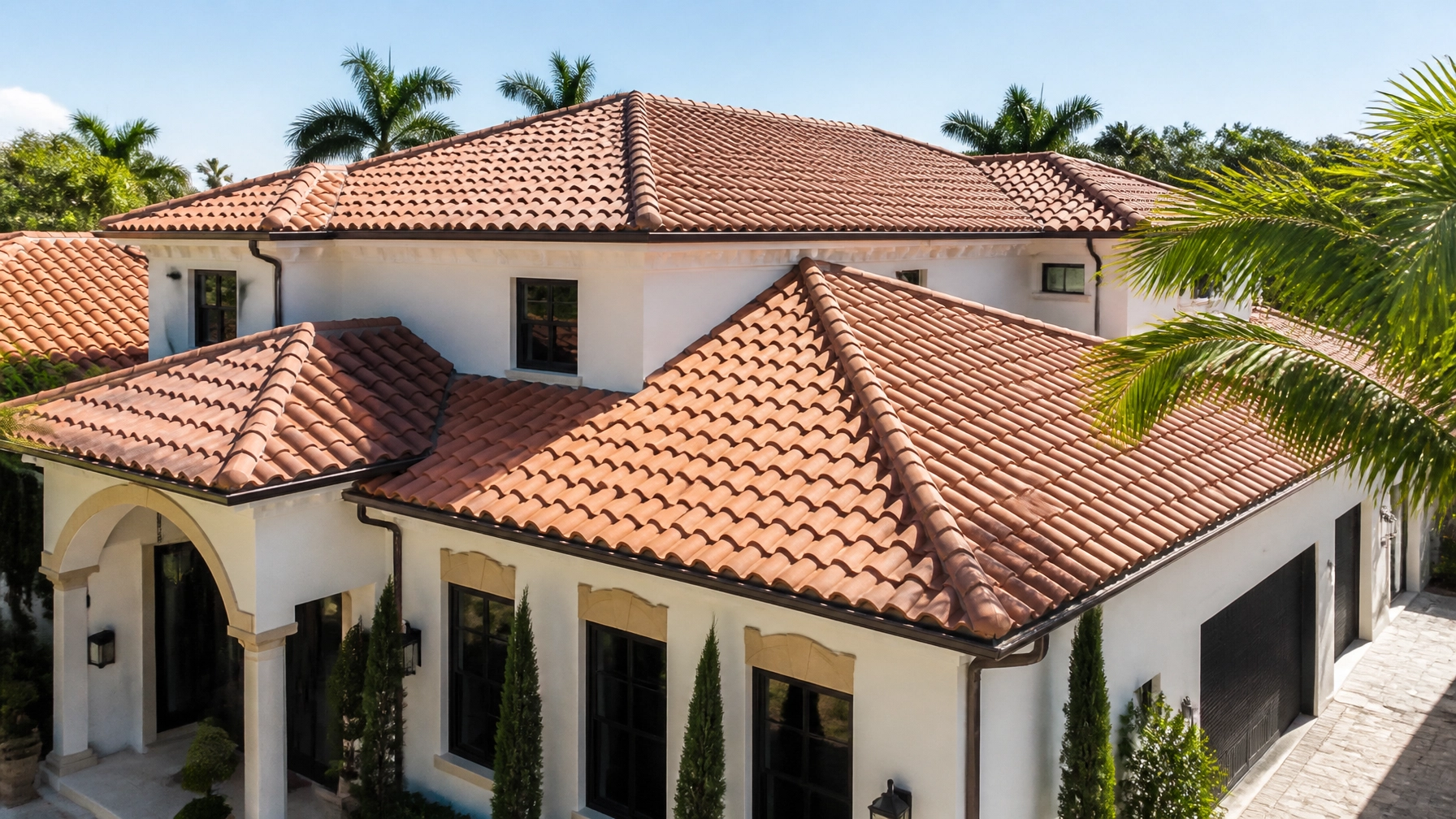
    Concrete Tile (Popular) $22,000 – $38,000 The classic South Florida look with 30+ year durability.
    Standing-Seam Metal (Premium) $25,000 – $55,000 Maximum storm resistance and energy efficiency.
    Flat Roof / TPO (Specialty) $8,000 – $20,000 Common for Miami modern homes and additions.

    Close-up of high-quality architectural asphalt shingles

    Why Miami Roofs Cost More: The HVHZ Factor

    If you live in Miami-Dade or Broward County, your roof must comply with the High Velocity Hurricane Zone (HVHZ) section of the Florida Building Code. These regulations are the strictest in the United States and directly impact your bottom line.

    When you use our roof cost calculator, our technology factors in these regional requirements automatically:

    • Secondary Water Barrier (Sealed Deck): Miami code requires a self-adhering "peel-and-stick" membrane across the entire roof deck. This prevents water intrusion even if your shingles blow off.
    • Enhanced Fastening: Forget standard nails. Miami roofs require ring-shank nails and tighter nailing patterns (typically 6 nails per shingle) to combat wind uplift.
    • Miami-Dade NOA: Every product used: from the drip edge to the vents: must have a Notice of Acceptance (NOA) proving it has been tested for hurricane-force conditions.

    How to Get an Accurate Estimate in Under 60 Seconds

    You don't need a ladder or a tape measure to budget for your project. Our platform uses satellite-powered measurements accurate to within inches (90-95% accuracy).

    1. Enter Your Address

    Visit our Florida roof estimate page and type in your Miami address. Our AI identifies your home and pulls high-resolution satellite data.

    2. We Calculate the Complexity

    The software measures your roof's square footage, pitch (steepness), and complexity (valleys, hips, and ridges). In Miami, high-pitch roofs or multi-story homes require more labor and safety equipment, which our tool accounts for instantly.

    3. Receive Your Price Ranges

    Within 60 seconds, you’ll receive a transparent breakdown including:

    • Low-Middle-High price ranges based on current 2026 Miami market data.
    • Material options comparing (Budget) shingles to (Premium) metal.
    • Verified Contractor Connection: If you’re ready to move forward, we connect you with licensed, insured local Miami pros who are vetted for HVHZ compliance.

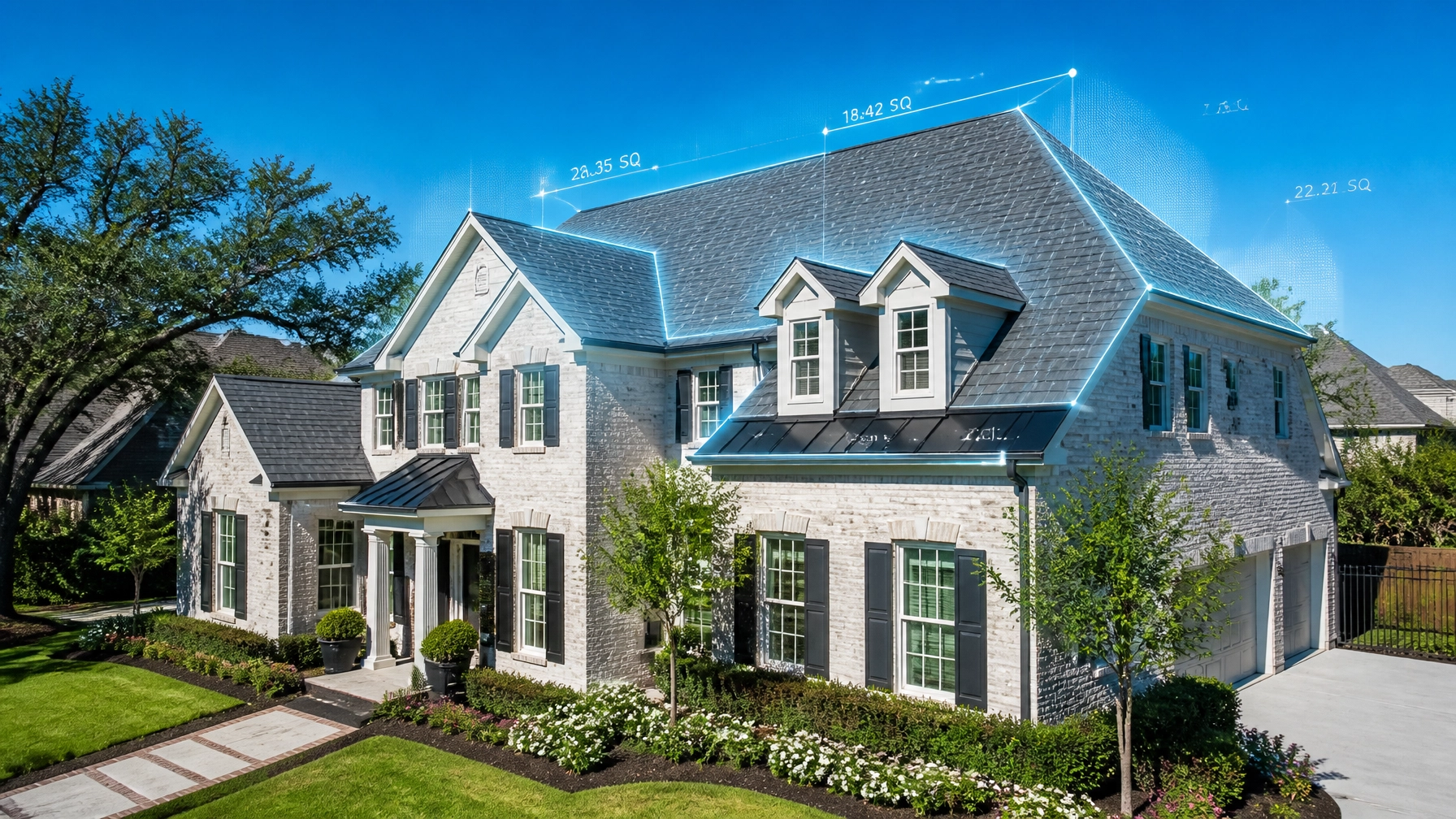
    Satellite technology used for roof measurements

    Material Spotlight: Making the Right Choice for 2026

    Choosing the right material is a balance of aesthetics, budget, and insurance premiums.

    Architectural Shingles (Budget)

    Shingles remain the most popular choice for many Miami suburbs like Kendall or Homestead. In 2026, the latest "Cool Roof" shingles help reflect UV rays, which is critical for lowering AC bills in the Florida heat. While they have the lowest upfront cost, they typically need replacement every 15-20 years in our climate.

    Concrete & Clay Tile (Popular)

    Tile is the gold standard for Coral Gables and Coconut Grove. While heavier and more expensive than shingles, tile roofs are extremely durable. In 2026, we are seeing more homeowners opt for synthetic tiles that offer the same look with significantly less weight.

    Standing-Seam Metal (Premium)

    Metal is the fastest-growing segment in the Miami market. It offers the best wind resistance and can last 50+ years. Many Miami insurance providers offer significant premium discounts for homes with a new, HVHZ-compliant metal roof.

    Modern Miami home with a premium metal roof

    The Risk of Waiting

    In the roofing world, "waiting for next year" rarely results in a lower price. Between the 4-8% annual inflation in material costs and the increasing scarcity of specialized labor, the best time to lock in a price and schedule your replacement is today.

    Furthermore, an aging roof in Miami is a liability. A single tropical storm can turn a small leak into a total interior loss. Knowing your numbers now allows you to budget correctly or secure financing before a "roofing emergency" strikes.

    Summary Checklist for Miami Homeowners

    • Know your zone: Ensure your contractor uses HVHZ-approved materials.
    • Check for "Sealed Deck" credits: Ask your insurance agent if a secondary water barrier will lower your premiums.
    • Get an instant baseline: Use Get My Roof Estimate Now to find out if your project is $15,000 or $45,000 before talking to a single salesperson.

    Frequently Asked Questions (FAQ)

    How accurate is a satellite roof estimate?

    Our satellite-powered technology is 90-95% accurate. It captures the exact footprint, pitch, and facets of your roof. While a final on-site inspection is needed to check for rotted wood or hidden deck damage, our estimate provides a highly reliable budgeting range.

    Do I need a permit for a roof replacement in Miami?

    Yes. Miami-Dade County requires a building permit for all roof replacements. The process involves a "dry-in" inspection and a final inspection to ensure the HVHZ requirements are met.

    Can I get a roof estimate without a contractor coming to my house?

    Absolutely. That is exactly what our tool is designed for. You receive your estimate in under a minute without anyone setting foot on your property.

    How much does insurance cover for a new roof in Miami?

    This depends on your policy (Actual Cash Value vs. Replacement Cost Value) and the cause of damage. If your roof has storm damage, insurance may cover the full cost. If it's just old, it’s a homeowner’s maintenance expense.
  • Are You Making These Common Contractor Mistakes? How to Spot a Charleston Storm Chaser

    Are You Making These Common Contractor Mistakes? How to Spot a Charleston Storm Chaser

    For homeowners in the Lowcountry, storm season isn't just a weather event: it’s an economic cycle. When the coastal winds of Charleston settle and the rain stops, a different kind of storm begins: the influx of "storm chasers." These are out-of-state roofing contractors who follow weather patterns, descending on neighborhoods from Mount Pleasant to West Ashley to capitalize on insurance claims and urgent repairs.

    While some are legitimate companies looking for work, many are predatory "churn-and-burn" operations that leave homeowners with subpar roofs, voided warranties, and legal headaches. In 2026, the tactics of these contractors have become increasingly sophisticated, making it harder than ever for the average homeowner to distinguish a professional local partner from a high-pressure salesperson.

    This guide breaks down the critical mistakes Charleston homeowners make when vetting contractors and provides a data-driven framework for spotting a storm chaser before you sign a contract.

    The Profile of a Storm Chaser: 5 Critical Red Flags

    The hallmark of a storm chaser is speed. They want to sign you, build your roof, and collect the check before you have time to research the local market or realize their price is inflated.

    1. Unsolicited Door-to-Door Canvassing (Low Friction Trap)

    Legitimate local roofing companies in Charleston rarely need to knock on doors. Their schedules are typically filled by referrals and digital inquiries. If a contractor appears on your doorstep within 48 to 72 hours of a storm offering a "free inspection," proceed with extreme caution. They often use high-pressure language, suggesting that "all your neighbors are already signing up" to create a false sense of urgency.

    2. The "Free Roof" or Waived Deductible Scam (Illegal)

    This is the most dangerous red flag. In South Carolina, it is illegal for a contractor to waive, rebate, or "absorb" your insurance deductible. Under SC Code § 38-75-756, this is classified as insurance fraud. Any contractor who offers to "cover your deductible" is asking you to participate in a crime. If they are willing to lie to your insurance company, they will certainly lie to you about the quality of materials or the length of their labor warranty.

    3. Lack of a Local Physical Office

    Ask for the company’s local address. A "storm chaser" will often provide a P.O. Box, a temporary hotel address, or a "virtual office." A legitimate Charleston roofer will have a permanent yard and office where you can physically visit them. Check their license plates; while not a foolproof indicator, many storm-chaser crews travel in fleets with out-of-state tags (often from the Midwest or Texas).

    4. Pressure to Sign an "Assignment of Benefits" (AOB)

    If a contractor asks you to sign a document that gives them the right to "handle everything with the insurance company," you may be signing away your rights. An Assignment of Benefits (AOB) gives the contractor total control over your claim, often leading to inflated costs that your insurance may eventually deny, leaving you responsible for the balance.

    5. Large Upfront Deposits (High Risk)

    In the roofing industry, a small deposit for materials is standard, but a storm chaser will often demand 50% or more upfront before a single shingle is delivered. In 2026, reputable contractors use staged payment schedules tied to specific milestones (e.g., delivery of materials, completion of the tear-off, and final inspection).

    High-quality charcoal grey architectural shingles showing the layered depth and professional installation required for coastal homes.

    Charleston Roofing Benchmarks: 2026 Price Ranges

    Transparency is your best defense. Storm chasers often provide "ballpark" figures that are either suspiciously low (to win the job) or wildly high (to maximize insurance payouts). To vet a quote effectively, you need to know the current market rates in Charleston.

    As of July 2026, here are the data-driven price ranges for a standard 2,000-square-foot roof in the Lowcountry:

    • Architectural Shingles (Popular): $11,500 – $18,000. These are the standard for most Charleston homes, offering 130 mph wind ratings necessary for coastal storms.
    • Standing Seam Metal (Premium): $18,000 – $34,000. While the upfront cost is higher, metal roofs are increasingly popular in the Lowcountry due to their 40–60 year lifespan and superior wind resistance (up to 180 mph).
    • Synthetic Slate/Tile (Luxury): $25,000 – $45,000+. Often seen on historic homes in Downtown Charleston or luxury properties on Kiawah Island.

    If a contractor's quote falls significantly outside these ranges without a technical explanation (such as extreme roof pitch or complex valley structures), they are likely either cutting corners or overcharging.

    How Satellite Technology is Changing Contractor Vetting

    The traditional method of vetting a roofer involved waiting 3–5 days for a salesperson to visit your home, climb a ladder, and give you a hand-written estimate. This delay is exactly what storm chasers exploit: they offer "instant" answers while the pros are still busy scheduling visits.

    At Get My Roof Estimate Now, we’ve eliminated this window of vulnerability. Our roof cost calculator uses high-resolution satellite imagery to measure your roof's size, pitch, and complexity with 90-95% accuracy.

    Modern satellite interface showcasing digital measurement technology used to provide accurate roofing estimates in under 60 seconds.

    By using our technology, you get an authoritative price range in under 60 seconds. This data serves as your "BS detector." When a storm chaser knocks on your door and gives you an estimate that is 40% higher than the market rate, you already have the data to challenge them. You can access our free estimate tool without a credit card or a contractor visit.

    The Professional Vetting Checklist for Charleston Homeowners

    Before you sign any contract, ensure you have verified the following four pillars of a legitimate contractor:

    1. SC Licensing: Verify their license through the South Carolina Labor, Licensing and Regulation (LLR) board. A "handyman" license is not sufficient for a full roof replacement in Charleston.
    2. Insurance Certificates: Request proof of General Liability AND Workers' Compensation. If a worker is injured on your roof and the contractor doesn't have Workers' Comp, you as the homeowner could be held liable.
    3. Manufacturer Certifications: Are they an Owens Corning Platinum Preferred Contractor or a GAF Master Elite Contractor? These certifications allow them to offer extended material and labor warranties that a storm chaser cannot provide.
    4. Local References: Ask for the addresses of three homes they have re-roofed in Charleston within the last 12 months. If they can only give you references from 200 miles away, they aren't a local company.

    A coastal modern home in Charleston featuring a standing seam metal roof designed for durability against the salt air and high winds.

    Don't Let Storm Damage Lead to Financial Damage

    The stress of a leaking roof after a South Carolina storm can make any homeowner feel vulnerable. However, making a rushed decision with the first person who knocks on your door is a mistake that can haunt you for 20 years.

    A new roof is an investment in your home’s curb appeal and structural integrity. Whether you are choosing architectural shingles for their cost-effectiveness or metal roofing for its longevity, the most important tool you have is information.

    Start your process the smart way. Use our technology to get an instant, accurate estimate and arm yourself with the facts before you ever speak to a contractor. In the world of Charleston roofing, being data-rich is the only way to stay storm-chaser-proof.


    Frequently Asked Questions (FAQ)

    Is it legal for a roofer to pay my insurance deductible in South Carolina?

    No. Under SC Code § 38-75-756, it is illegal for a contractor to waive or rebate an insurance deductible. This is considered insurance fraud.

    How do I know if a roofing estimate is too low?

    If an estimate is 30% or more below the local Charleston average (e.g., a $6,000 quote for a standard 2,000 sq ft roof), the contractor is likely using low-grade materials, skipping permits, or lacks proper insurance.

    Why does a metal roof cost so much more than shingles in Charleston?

    Metal roofs require specialized labor and higher material costs. However, they are often preferred in coastal SC because they withstand higher wind speeds and resist the salt-air corrosion that can degrade lower-quality materials.

    Can I get a roof estimate without a contractor coming to my house?

    Yes. Using satellite-powered technology like Get My Roof Estimate Now, you can receive a highly accurate estimate based on your home's unique dimensions in less than a minute.

  • ACV vs RCV: The 2026 Insurance Shift That Could Cost You $10k

    ACV vs RCV: The 2026 Insurance Shift That Could Cost You $10k

    If you own a home in Charlotte, North Carolina, you’ve likely noticed your homeowners insurance premiums climbing over the last few years. But in 2026, a much more dangerous change is quietly slipping into renewal notices across the Queen City: the mandatory shift from Replacement Cost Value (RCV) to Actual Cash Value (ACV) for roofing.

    This isn’t just insurance jargon. For the average homeowner in neighborhoods like Myers Park or Ballantyne, this single word change in your policy could mean the difference between a $2,000 deductible and a $12,000 out-of-pocket nightmare when the next hailstorm hits.

    At Get My Roof Estimate Now, we’ve seen an influx of homeowners who are shocked to find their "full coverage" isn’t as full as it used to be. Here is exactly what is happening in the 2026 insurance market and how you can protect your bank account.

    The 2026 Reality: Why Your Policy Is Changing

    Insurance carriers across the Carolinas are facing record-breaking claim payouts due to more frequent severe weather and skyrocketing material costs. To stay profitable, many major insurers have fundamentally changed how they value your roof.

    Historically, most policies were RCV (Premium). If your roof was destroyed, the insurance company paid to put a brand-new roof on your house, regardless of how old the old one was.

    Now, in 2026, many carriers are moving older roofs (typically 10-15+ years) to ACV (Budget). Under ACV, the insurer only pays you for what your roof is "worth" at the time of the loss. If your 15-year-old shingles are halfway through their lifespan, the insurance company will only pay you 50% of the cost to replace them: minus your deductible.

    Professional installation of high-quality architectural shingles on a North Carolina residence

    Breaking Down the Math: The $10,000 Charlotte Gap

    To understand the financial risk, let’s look at a real-world scenario for a typical 2,500-square-foot home in Charlotte. In 2026, the average roof replacement cost for architectural shingles in North Carolina has risen to approximately $22,000.

    Scenario A: Replacement Cost Value (RCV)

    • Total Project Cost: $22,000
    • Your Deductible: $2,000
    • Insurance Payout: $20,000
    • Your Out-of-Pocket: $2,000

    Scenario B: Actual Cash Value (ACV) – 15-Year-Old Roof

    • Total Project Cost: $22,000
    • Depreciation (50% for age): -$11,000
    • Net Value: $11,000
    • Your Deductible: $2,000
    • Insurance Payout: $9,000
    • Your Out-of-Pocket: $13,000 ($11k depreciation + $2k deductible)

    In this very common Charlotte scenario, the "ACV Shift" just cost the homeowner $11,000 in unrecoverable depreciation.

    4 Red Flags in Your 2026 Renewal Notice

    Most homeowners don’t realize their coverage has changed until they try to file a claim. To avoid this, pull your "Declarations Page" today and look for these specific terms:

    1. "Actual Cash Value for Roof Surfacing": This is the smoking gun. It means your dwelling might be covered at full replacement cost, but your roof is depreciated.
    2. "Roof Surfacing Endorsement": Often, this is a separate document that outlines a "depreciation schedule" based on the age of your shingles.
    3. "Cosmetic Damage Exclusion": Common in metal roofing policies, this means the insurer won't pay for hail dents if the roof still sheds water.
    4. "Wind/Hail Deductible": Many Charlotte policies now have a separate, much higher deductible for storm damage (often 1% to 5% of the home's total value).

    Comparison of an aging, weathered roof versus a brand new architectural shingle installation

    The Material Factor: 2026 Roofing Trends

    The shift toward ACV makes your choice of roofing material more critical than ever. In Charlotte, we are seeing a move toward higher-durability materials that can help lower premiums or qualify for RCV endorsements.

    • Architectural Shingles (Popular): The standard for most NC homes. They offer a balance of cost and wind resistance.
    • Metal Roofing (Premium): While the upfront cost is higher, many insurers offer discounts for Impact Rated (Class 4) metal roofs, which are less likely to suffer "total loss" during NC thunderstorms.
    • Synthetic Slate/Shake (Luxury): These high-end options provide the look of natural materials with the durability of modern polymers, often retaining value longer in the eyes of insurance adjusters.

    You can explore different material options and pricing here to see how they impact your overall project budget.

    How Satellite Technology Saves You From the "Insurance Surprise"

    The biggest mistake homeowners make is waiting until a storm hits to find out what their roof actually costs. In the past, getting a quote meant calling three contractors, waiting for them to show up, and dealing with high-pressure sales pitches.

    Get My Roof Estimate Now has changed that. By using advanced satellite imagery, we can provide an instant roof estimate in under 60 seconds.

    Why does this matter for your insurance?

    • Know Your Exposure: If you know your roof replacement cost is $25,000 and your policy is ACV, you know you need to have a $12,000 emergency fund.
    • Verify Your Policy Limits: Many homeowners are under-insured because their policy limits haven't kept up with 2026 labor and material inflation.
    • Speed is Power: When a major hail event hits Charlotte, contractors are booked for months. Having an accurate measurement and price in hand allows you to move faster than your neighbors.

    Satellite-powered roof measurement technology showing precise dimensions of a residential property

    Action Plan for Charlotte Homeowners

    Don't wait for the next hurricane season or a surprise hail storm to discover a $10,000 gap in your coverage.

    1. Get Your Instant Estimate: Use our satellite-powered tool to find out your roof's current replacement value in Charlotte.
    2. Call Your Agent: Ask specifically, "Is my roof covered on an RCV or ACV basis?"
    3. Ask About Endorsements: Many carriers will allow you to "buy back" RCV coverage for a small annual fee ($100–$300). This is the best investment you can make in your home's protection.
    4. Document Everything: Keep photos of your roof's current condition to help fight unfair depreciation from adjusters.

    A modern ranch-style home in Charlotte featuring a durable black metal roof

    Final Thoughts

    The 2026 insurance landscape is tougher than it was five years ago. Carriers are pushing more financial risk onto homeowners through ACV policies and higher deductibles. However, by staying informed and using modern technology to track your home's value, you can ensure that a storm doesn't become a financial catastrophe.

    Ready to see where you stand? Get your free, 60-second roof estimate now.


  • How to Get Your Houston Roof Replacement Fully Covered Despite the 2026 ACV Shift

    How to Get Your Houston Roof Replacement Fully Covered Despite the 2026 ACV Shift

    Houston homeowners are currently facing a quiet but massive shift in the insurance landscape. By 2026, the majority of major Texas insurers are projected to transition older roofs from "Replacement Cost Value" (RCV) to "Actual Cash Value" (ACV) policies automatically.

    For a homeowner in Harris County, this isn't just industry jargon, it’s a potential $10,000 to $15,000 financial liability.

    If your roof is over 15 years old, your insurance company may soon stop paying for a new roof and instead only pay for what your old roof is worth today. This "15-year cliff" is leaving thousands of Houstonians vulnerable to massive out-of-pocket costs when the next hail storm or tropical system rolls through.

    Here is the professional masterclass on how to navigate this shift and ensure your roof replacement remains fully covered.

    The Financial Reality: RCV vs. ACV

    To beat the system, you have to understand the math. In Texas, these two terms determine exactly how much you pay out of pocket during a claim.

    • Replacement Cost Value (RCV) [Premium]: This is the gold standard. If a storm destroys your 18-year-old roof, the insurance company pays for a brand-new roof at today’s market prices (minus your deductible).
    • Actual Cash Value (ACV) [Budget]: This is the "depreciated" value. If that same 18-year-old roof is damaged, the insurer subtracts the "used up" life of the roof from your payout. You might only receive 30% of the cost to actually replace it.

    The "2026 Shift" in Houston

    Insurers like State Farm, Allstate, and Liberty Mutual are increasingly applying "Roof Payment Schedules" at renewal. This means once your shingles hit a certain age, typically 10, 15, or 20 years, your policy silently converts from RCV to ACV. If you aren't checking your Declarations Page every year, you might not know you're under-insured until after the storm hits.

    Comparison between a weathered 20-year-old roof and a brand-new architectural shingle roof in Houston

    Step 1: Conduct a Policy Audit

    The first step to full coverage is knowing your current status. Open your insurance portal and look for these specific red flags:

    • "Roof Payment Schedule" endorsement: This is the most common way RCV is removed.
    • "Actual Cash Value" for Wind/Hail: Many policies cover fire at RCV but switch to ACV specifically for Houston’s most common threats.
    • Cosmetic Damage Exclusion: This allows insurers to deny claims if hail "only" dents your roof but doesn't cause a leak, even if it destroys your home's curb appeal and resale value.

    Step 2: Use Satellite Precision to Establish Baseline Condition

    When you file a claim, insurance adjusters often look for reasons to "depreciate" your roof further. They may argue the roof was in poor condition prior to the storm.

    At Get My Roof Estimate Now, we provide instant, satellite-powered measurements that are 90-95% accurate. Having a professional, third-party measurement of your roof’s size, pitch, and complexity (measured in "squares") gives you the data needed to challenge a low-ball adjuster estimate.

    Satellite view of a complex Houston roof with precise measurement lines and data overlays

    Step 3: Proactive Replacement (The "14-Year Rule")

    In Houston, the average lifespan of an asphalt shingle roof is 17-22 years due to extreme UV exposure and humidity. If your roof is approaching the 15-year mark, waiting for a storm can be a $15,000 mistake.

    By replacing your roof before the ACV shift kicks in, you achieve three things:

    1. Maintain RCV Status: You reset the clock with your insurer, ensuring full replacement coverage for another 15+ years.
    2. Premium Discounts: Most Texas insurers offer a "New Roof Discount" that can slash your annual premiums by 10-20%.
    3. Increased Resale Value: A new roof in Houston provides one of the highest Returns on Investment (ROI) for homeowners preparing to sell.

    Step 4: Choose the Right Materials (Impact Resistance)

    To maximize insurance coverage and minimize future deductibles, homeowners should look at Class 4 Impact-Resistant Shingles [Popular].

    While these cost roughly 10-15% more upfront, many Houston insurance carriers offer significant permanent discounts for homes with Class 4 roofs. In many cases, the premium savings pay for the material upgrade within 3 to 5 years.

    • Architectural Shingles (Middle): The Houston standard. Durable and aesthetically pleasing.
    • Metal Roofing (Premium): Exceptional longevity and wind resistance, often lasting 50+ years.
    • Stone-Coated Steel (Elite): The look of tile with the durability of steel.

    A beautiful Houston residential street featuring a home with a high-end metal roof at sunset

    How to Get an Accurate Houston Estimate in 60 Seconds

    The traditional way to get a roof estimate involves calling three contractors, waiting days for them to show up, and dealing with high-pressure sales pitches.

    Get My Roof Estimate Now has eliminated this friction. By leveraging advanced satellite imagery, we provide:

    • Instant Pricing: Enter your address and get a price range in under a minute.
    • Regional Accuracy: Our algorithms factor in current Houston labor rates and material costs.
    • Transparency: See the breakdown for different material types (Shingles, Metal, Coatings).
    • No Credit Card Required: It is a 100% free tool designed for homeowner research.

    If you are a homeowner in Texas, don't let the 2026 ACV shift catch you off guard. Whether you're planning for a replacement now or just want to know what to budget for the future, data is your best defense.

    Get your instant, satellite-accurate roof estimate now:
    👉 Get My Houston Roof Estimate


    Frequently Asked Questions

    Can my insurance company force me to switch to ACV?

    Technically, no, but they can make it a condition of your policy renewal. If your roof reaches a certain age, they may offer you a choice: switch to an ACV policy or they will non-renew your coverage entirely.

    How much does a roof replacement cost in Houston in 2026?

    Most Houston roof replacements for a standard 2,000-square-foot home range between $9,500 and $18,000 for architectural shingles. High-end materials like metal or synthetic slate can range from $22,000 to $45,000+.

    What is a "recoverable depreciation" check?

    Under an RCV policy, the insurer often sends two checks. The first is for the ACV (depreciated) value. Once the work is completed and an invoice is submitted, they send the second check for the "recoverable depreciation": the amount they originally subtracted for age.

    Does Get My Roof Estimate Now work for storm damage?

    Yes. While we are not adjusters, our satellite reports provide the exact dimensions of your roof. You can use these measurements to ensure the insurance company is paying for the correct amount of material (the "squares") needed for the job.

  • Houston Roof Replacement: 10 Things You Should Know Before Hiring

    Houston Roof Replacement: 10 Things You Should Know Before Hiring

    Replacing a roof in Houston isn’t just about aesthetics; it’s a strategic investment in your home’s survival against the Texas climate. Between the punishing Gulf Coast humidity, 100-degree summer days, and the annual threat of hurricane-force winds, your roof is the first line of defense.

    If you’re noticing missing shingles or dealing with leaks after the latest thunderstorm, you're likely staring down a project that costs anywhere from $8,000 to $20,000. Before you sign a contract or commit to a massive down payment, you need to understand the local market.

    At Get My Roof Estimate Now, we use satellite imagery to give homeowners instant, accurate pricing in under 60 seconds. We’ve seen thousands of roofs across Harris County, and we’ve distilled the most critical information into these 10 essential tips for Houston homeowners.

    1. Know the "Houston Baseline" for Costs (2026 Update)

    Pricing has stabilized in 2026, but labor and material costs remain significant factors. For a standard 2,000-square-foot home in Houston, expect to pay between $4.65 and $7.00 per square foot for a full tear-off and replacement.

    • Budget (3-Tab Shingles): $8,000 – $11,000
    • Popular (Architectural Shingles): $12,000 – $16,000
    • Premium (Metal or Tile): $22,000 – $40,000+

    If you receive a quote significantly lower than these ranges, proceed with caution. Often, "low-ball" bids skip essential steps like replacing damaged decking or using high-quality underlayment. You can get an instant, localized price range using our online roof cost calculator.

    2. Leverage Satellite Technology for Accurate Quotes

    Gone are the days of waiting three days for a contractor to show up with a ladder and a tape measure. Modern roofing starts with data.

    Satellite imagery interface showing precise 3D measurements of a Houston home roof.

    Using high-resolution satellite imagery, we can measure your roof’s size, pitch, and complexity to within inches (90-95% accuracy). This transparency prevents "estimate creep," where a contractor adds thousands to the bill halfway through the job because they "miscalculated the squares." Getting a Texas roof estimate should take minutes, not days.

    3. Understand the "Square" Measurement

    Roofers don’t talk in square feet; they talk in "squares." One square equals a 10×10 area (100 square feet).

    • An average Houston home (2,500 sq. ft. of floor space) often has a roof area of 25 to 30 squares once you factor in the pitch (slope) and overhangs.
    • When reviewing bids, look at the "price per square." This is the most honest way to compare two different contractors.

    4. Ventilation is Non-Negotiable in Texas

    In Houston, your attic can reach 150 degrees in July. Without proper ventilation, that heat "bakes" your shingles from the inside out, cutting their lifespan in half.
    Ensure your contractor includes a ridge vent or solar-powered attic fans. If your bid doesn't mention ventilation (Critical), your new roof won't last the 25 years promised on the package.

    5. The Insurance "Deductible" Trap

    Texas law is very clear: It is illegal for a contractor to "waive" or "cover" your insurance deductible. If a roofer offers to pay your deductible, they are asking you to participate in insurance fraud.
    Reputable Houston contractors will work directly with your adjuster to ensure the scope of work is fully covered, but the deductible is always the homeowner's responsibility. Be wary of any "storm chaser" who suggests otherwise.

    6. Select Materials for Longevity (Not Just Looks)

    While basic shingles are the budget-friendly choice, different roofing materials offer varying levels of protection against Houston’s specific threats.

    Close-up of premium architectural asphalt shingles showing deep texture and quality.

    • Architectural Shingles (Popular): Better wind resistance (up to 130 mph) and a 3D look.
    • Metal Roofing (Premium): Incredible heat reflection, lowering AC bills by up to 20%.
    • Impact-Resistant (IR) Shingles: Often qualify for significant discounts on your Texas homeowners' insurance premiums.

    7. Verify Local Permitting and Codes

    The City of Houston requires a permit for any roof replacement. This ensures a city inspector checks the work to verify it meets the International Residential Code (IRC).

    • Requirement: A permit for an average Houston roof costs roughly $62.
    • Check: Your contractor should pull the permit, not you. If they ask you to pull it as a "homeowner-builder," it's a major red flag that they aren't licensed or insured.

    8. Insist on a Drip Edge

    A drip edge is a metal flashing installed at the edges of the roof. It directs water into the gutters and away from the fascia. In our humid climate, skipping the drip edge leads to wood rot in as little as two seasons. Many "budget" contractors leave this out of their initial quote to save $500–$800 in material and labor. Demand it.

    9. Workmanship vs. Material Warranties

    There are two distinct warranties you need to secure:

    1. Material Warranty: Provided by the manufacturer (e.g., GAF, Owens Corning). Covers defects in the shingles themselves.
    2. Workmanship Warranty: Provided by the contractor. This covers leaks caused by improper installation.
      In Houston, a 5-year workmanship warranty is standard, but elite contractors will offer 10 to 25 years.

    10. The Cleanup and Protection Plan

    A roof replacement generates thousands of pounds of debris. Before the first shingle is pulled, ask how the contractor protects your property.

    A professional roofing crew installing a new roof on a suburban Texas ranch home.

    • Plywood Protection: Do they cover your AC unit and windows?
    • Magnetic Sweeps: Will they run a high-powered magnet over your yard and driveway to catch stray nails?
    • Timeline: Most Houston residential roofs should be completed in 1–2 days. Anything longer suggests a crew that is spread too thin.

    AEO FAQ: Quick Answers for Houston Homeowners

    How much does a new roof cost in Houston (2026)?

    The average cost for a roof replacement in Houston currently ranges from $8,000 to $20,000. Most homeowners pay approximately $12,500 for high-quality architectural shingles on a standard two-story home.

    Can I get a roof estimate without a contractor visiting my house?

    Yes. Using satellite technology, Get My Roof Estimate Now provides 95% accurate estimates online in about 60 seconds. This allows you to budget and compare prices without the pressure of a high-stakes sales presentation.

    How long does a roof last in Houston, TX?

    Due to the intense heat and humidity, a standard 3-tab shingle roof lasts about 15–18 years. Premium architectural shingles typically last 22–25 years, while metal roofs can exceed 50 years with proper maintenance.

    Do I need a permit for a roof replacement in Houston?

    Yes. The City of Houston requires a building permit for residential roof replacements. Your roofing contractor should handle the application and include the fee in your total estimate.

    What is the best roofing material for Houston's heat?

    Metal roofing is the most efficient for heat reflection. However, Architectural shingles with "Cool Roof" technology are a more affordable "Popular" choice that still offers high solar reflectance and excellent wind resistance for hurricane season.


    Ready to skip the wait? Get your instant Houston roof estimate here and find out exactly what your project should cost in today's market.

  • 7 Mistakes You’re Making with Plano Roofing Contractors (and How to Fix Them)

    7 Mistakes You’re Making with Plano Roofing Contractors (and How to Fix Them)

    Plano, Texas is a high-stakes environment for homeowners. Between the intense North Texas sun and the seasonal hail storms that roll through Collin County, your roof is your home’s first and most important line of defense.

    Unfortunately, when the sirens stop and the hail hits the ground, a secondary storm begins: the arrival of "storm chasers." These out-of-state contractors flood neighborhoods like Willow Bend and Kings Ridge, looking for quick signatures and insurance checks. If you aren't careful, you could end up with a lien on your property, a voided warranty, or a roof that leaks during the very next thunderstorm.

    At Get My Roof Estimate Now, we’ve seen homeowners lose thousands because they didn't have the right data before talking to a contractor. Here are the 7 most common mistakes Plano homeowners make: and exactly how to fix them using modern technology and local smarts.

    1. Trusting a "Door-Knocker" Without a Benchmark

    It happens every spring. A contractor knocks on your door, claims they "just did your neighbor's roof," and offers a free inspection. While some local Plano roofers do canvass neighborhoods, many of these individuals are "storm chasers" (Non-Local) who vanish the moment the job is done.

    The Fix: Never let a contractor define the "market price" for your roof on the spot. Before you even open the door, use our 60-second satellite roof estimator to get an independent, objective price range based on your home's actual square footage and pitch. Having a benchmark (Data-Driven) allows you to spot a bid that is suspiciously high or dangerously low before you ever sign a piece of paper.

    Modern satellite imagery used for accurate roofing estimates

    2. Falling for the "We’ll Cover Your Deductible" Scam

    This is one of the most dangerous mistakes a Texas homeowner can make. A contractor might tell you they can "absorb" your insurance deductible or offer a "marketing sign allowance" to offset the cost.

    The Reality: In Texas, it is illegal for a contractor to waive or "cover" a homeowner’s insurance deductible (Texas House Bill 2102). If a contractor offers this, they are asking you to participate in insurance fraud. Furthermore, if they are cutting $2,000 to $5,000 off the price to cover your deductible, they are definitely cutting corners on materials or labor (Subpar) to make up the difference.

    The Fix: Work with contractors who provide transparent, line-item bids. If a roofer offers to cover your deductible, show them the door. It’s a massive red flag (Legal Risk) that suggests they aren't playing by the rules in other areas either.

    3. Ignoring the "Out-of-State" Red Flag

    When a major hail storm hits Plano, contractors from Oklahoma, Florida, and Louisiana descend on the DFW metroplex. They often rent local office space for 90 days or use a local "shell" company name to appear homegrown.

    The Mistake: Hiring a roofer with out-of-state plates on their trucks or no permanent physical office in the DFW area. If your roof leaks two years from now, that "5-year workmanship warranty" (Worthless) won't help you if the company is back in another state.

    The Fix: Demand to see a permanent Plano or North Texas business address. Check their Texas roof estimate details and verify their local reputation. Ask for three references from projects completed in Plano at least two years ago to see how their work holds up over time.

    4. Accepting "Lump-Sum" Bids Instead of Itemized Quotes

    A professional roofing estimate should never just be a single number scribbled on a notepad. If a contractor says, "It’ll be $18,000 for the whole thing," you have no idea what you are actually buying.

    The Mistake: Not knowing the specifics of your materials. Are they using synthetic underlayment (Premium) or cheap 15lb felt (Budget)? Are they replacing the flashing or just painting the old, rusted metal?

    The Fix: Insist on a detailed breakdown that includes:

    • Tear-off: Removal of old layers.
    • Underlayment: Specific brand and type.
    • Ice and Water Shield: Critical for valleys and eaves.
    • Ventilation: Are they installing Ridge Vents or Turtle Vents?
    • Drip Edge: Essential for North Texas wind-driven rain.

    5. Skipping the Verification of GL and Workers' Comp Insurance

    Most homeowners assume every roofer is insured. In Texas, they aren't required to be. If a worker falls off your roof and the contractor doesn't have Workers' Compensation insurance, you (the homeowner) could be held liable for their medical bills and lost wages.

    The Mistake: Taking the contractor's word that they are "fully insured."

    The Fix: Ask for a Certificate of Insurance (COI) that lists you as the "Certificate Holder." This ensures that if the policy is cancelled mid-job, you are notified. Verify they have both General Liability (Property Damage) and Workers' Compensation (Injury Protection).

    Professional contractor reviewing a roofing contract with a homeowner

    6. Obsessing Over the Lowest Bid

    We all want to save money, but the "low bid" in roofing is often the most expensive choice you’ll ever make. In Plano, where summer temperatures regularly exceed 100°F, poor ventilation or cheap shingles will deteriorate 50% faster than a high-quality system.

    The Mistake: Choosing a "Budget" roofer who uses "3-Tab" shingles instead of "Architectural/Laminate" shingles (Standard).

    The Fix: Look for the "Middle-to-High" range in your estimates. A quality roof for a 2,500 sq. ft. home in Plano typically ranges from $12,000 to $22,000 depending on materials. If someone quotes you $8,000, they are likely using day labor (Unskilled) and the lowest-grade materials available. Our satellite tool provides these price ranges instantly so you can identify "too-good-to-be-true" bids immediately.

    7. Signing a "Contingency Agreement" Too Early

    Many Plano homeowners sign a "Contingency Agreement" or "Authorization Form" just to get a "free inspection."

    The Mistake: These forms often contain fine print that legally binds you to use that contractor if your insurance company approves the claim. You effectively lose your right to shop around for better quality or a better price.

    The Fix: Do not sign anything until you have received your insurance scope of work and have compared at least three itemized bids. If a contractor pressures you to sign an "authorization" before they've even given you a price, walk away. You should always be in control of the project (Homeowner Authority).

    High-quality architectural shingles being installed properly

    Summary Checklist for Plano Homeowners

    Factor What to Look For Red Flag
    Location Permanent DFW office/warehouse Out-of-state plates or P.O. Box
    Pricing Itemized, line-item estimate "Lump-sum" or "Whatever insurance pays"
    Insurance GL & Workers' Comp (Verified) "We're covered" (No paperwork)
    Deductible You pay it directly to the roofer "We'll cover it for you" (Fraud)
    Technology Satellite-accurate measurements "Eye-balling" the size from the ground

    The 60-Second Solution

    You don't need to spend hours scheduling contractor visits just to get a ballpark figure. Whether you’re in West Plano, near Legacy West, or over by Bob Woodruff Park, you can get an accurate, transparent roof replacement estimate right now.

    Our technology uses high-resolution satellite imagery to measure your roof’s square footage, pitch, and complexity within inches. You’ll receive a comprehensive price range for different material options: from budget-friendly shingles to premium impact-resistant metal: all in under a minute.

    Don't start your roofing project in the dark. Get the data you need to vet your contractors properly.

    Get Your Instant Plano Roof Estimate Now →

  • 7 Mistakes You’re Making with Your Lexington Roof Estimate (and How to Fix Them)

    7 Mistakes You’re Making with Your Lexington Roof Estimate (and How to Fix Them)

    Getting a roof estimate in Lexington, KY, shouldn’t feel like a high-stakes guessing game. In 2026, the average cost for a roof replacement in the Bluegrass region ranges from $8,000 to $18,000 for standard architectural shingles, while premium metal systems can climb between $14,000 and $30,000+.

    Despite the availability of advanced data, many homeowners still fall into the same expensive traps that lead to budget overruns and subpar installations. Whether you’re dealing with storm damage from a recent Kentucky spring or simply upgrading a 20-year-old roof, avoiding these seven common mistakes will save you thousands of dollars and weeks of frustration.


    1. Falling for the "Lowest Bid" Trap (Budget)

    The most common mistake homeowners make is selecting a contractor based solely on the bottom-line number. In the roofing industry, a significantly lower bid usually indicates one of three things: inferior materials, lack of proper insurance, or a "shortcut" installation process.

    In Lexington, labor rates currently average between $1.50 and $3.00 per square foot. If a quote is thousands below the market average, the contractor may be skipping essential components like high-quality synthetic underlayment or the necessary ice and water shields required for Kentucky’s freeze-thaw cycles.

    How to Fix It: Always request a line-item breakdown. Ensure the estimate includes tear-off costs, disposal fees, and specific material brands. A transparent estimate from a service like Get My Roof Estimate Now gives you a realistic baseline before you ever talk to a salesperson.


    2. Ignoring the "Lexington Variable": Pitch and Complexity

    Many homeowners estimate their roof cost based on their home's square footage (e.g., a 2,000 sq. ft. house). This is a critical error. Roof "squares" (100 square feet) are determined by the actual surface area of the roof, which is heavily influenced by pitch (steepness) and complexity (valleys, dormers, and chimneys).

    Lexington’s historic neighborhoods and newer suburban developments often feature steep-pitched roofs that require additional safety equipment and more labor hours. A roof with a 12/12 pitch (45-degree angle) can cost 20-30% more than a flat or low-slope roof of the same footprint.

    Overhead satellite view of Lexington neighborhood with digital measurement overlays

    How to Fix It: Use satellite-powered technology to get an accurate measurement. Our roof cost calculator uses high-resolution imagery to calculate your roof’s exact dimensions and pitch within inches, giving you a 90-95% accurate estimate in under 60 seconds.


    3. The Ventilation Oversight (Practical)

    Kentucky is known for its high humidity. Failing to include a ventilation upgrade in your estimate is a mistake that can shave years off your roof’s lifespan. Without proper intake (soffit vents) and exhaust (ridge vents), heat builds up in your attic, literally "cooking" your shingles from the inside out.

    An unventilated roof can void manufacturer warranties and lead to astronomical cooling bills during July and August.

    How to Fix It: Ensure your estimate specifically mentions a ventilation assessment. If your current roof only uses box vents, ask about upgrading to a continuous ridge vent system. It’s a small upfront investment that protects your $15,000+ asset.


    4. Reusing Old Flashing to "Save" Money

    Flashing: the metal material used to direct water away from chimneys, walls, and valleys: is the most common point of failure on a roof. Many Lexington contractors will suggest reusing old flashing to lower the bid. This is a "penny wise, pound foolish" strategy.

    Old flashing is often brittle or contains tiny pinholes that are invisible during a quick inspection. Reusing it on a new 30-year roof is a recipe for a leak within the first three years.

    Close-up of new architectural shingle installation with proper flashing and underlayment

    How to Fix It: Demand that all flashing be replaced as part of the "standard" scope of work. Specifically, ask for new "step flashing" along walls and new "boots" for plumbing stacks.


    5. Waiting for an In-Person Visit (Speed)

    The traditional method of getting a roof estimate involves calling three contractors, waiting for them to show up (if they show up at all), and then sitting through a two-hour sales pitch. In 2026, this is an inefficient use of your time.

    By the time the third contractor gives you a quote, the first one’s material prices may have already changed. Roofing material costs fluctuate based on oil prices and supply chain demand.

    How to Fix It: Start with a digital-first approach. You can get an instant, free roof replacement estimate without a credit card or a home visit. This allows you to budget immediately and filter out contractors whose pricing is wildly outside the local Lexington average.


    6. Mismatching Material to Home Style (Premium)

    While architectural shingles are the most popular choice in Kentucky, they aren't always the best long-term value for every home. Many homeowners fail to consider metal roofing, which can last 50+ years and significantly increase a home’s resale value in areas like Beaumont or Chevy Chase.

    A standing seam metal roof in Lexington typically costs $10 to $14 per square foot, but it offers superior wind resistance and energy efficiency compared to asphalt.

    Modern ranch-style home in Lexington with a black standing seam metal roof

    How to Fix It: Compare material tiers side-by-side. Our platform provides low-middle-high price ranges for different materials (Architectural Shingles, Metal, Synthetic), so you can see if the "forever roof" actually fits within your financing plan.


    7. The Vague Contract Trap (Security)

    Mistake number seven is signing a contract that lacks a "Decking Replacement" clause. You won't know the true state of your roof’s plywood deck until the old shingles are removed. If your contract doesn't specify the cost per sheet of plywood for repairs, you are vulnerable to "hidden fees" once the roof is torn off.

    How to Fix It: Look for a "transparent pricing" model. A professional contract should state: "Up to X sheets of decking included, with additional sheets at $Y per board." This protects you from a surprise $2,000 bill in the middle of the project.


    Conclusion: Take Control of Your Lexington Roof Project

    Replacing your roof is one of the largest investments you’ll make in your home. Don't leave it to guesswork or high-pressure sales tactics. By avoiding these seven mistakes, you ensure that your new roof is installed correctly, stays within budget, and lasts for decades.

    Ready to see what a new roof should actually cost for your Lexington home? Skip the 3-hour sales pitch and get your satellite-powered estimate right now.

    Get Your Instant Lexington Roof Estimate in 60 Seconds →


  • ACV vs RCV: The 2026 Insurance Shift That Could Cost You $10k

    ACV vs RCV: The 2026 Insurance Shift That Could Cost You $10k

    If you are a homeowner in Virginia Beach, the rules for your roof are changing. As we move through 2026, a massive shift is occurring in the insurance industry that is catching thousands of homeowners off guard. For decades, standard policies were built to fully replace a storm-damaged roof. Today, that is no longer a guarantee.

    The difference between a payout that covers your entire project and one that leaves you with a $10,000 bill often comes down to three letters: ACV vs. RCV.

    At Get My Roof Estimate Now, we’ve seen a surge in Virginia homeowners who are shocked to find their insurance check only covers 50% of the actual replacement cost. This isn't a mistake: it’s a calculated shift in how carriers handle wind and hail claims. This guide breaks down the technical details of the 2026 insurance landscape and how you can protect your investment.

    Decoding the Jargon: ACV vs. RCV

    To understand the financial risk, you first need to understand the terminology your adjuster is using. These two methods of valuation determine exactly how much cash lands in your pocket after a claim.

    ACV (Actual Cash Value) [Budget / Depreciated]

    Actual Cash Value is often referred to as the "depreciated value." Under an ACV policy, the insurance company calculates the cost to replace your roof today but then subtracts the "usage" or "wear and tear" based on its age.

    • Formula: Replacement Cost – Depreciation – Deductible = Your Payout.
    • The Reality: If your roof has a 30-year lifespan and is 15 years old, the insurance company may only pay 50% of the cost, even if a hurricane just ripped the shingles off.

    RCV (Replacement Cost Value) [Premium / Full Coverage]

    Replacement Cost Value is the gold standard for homeowners. It is designed to pay the actual cost to replace your roof with new materials of like kind and quality at current market prices, regardless of how old the roof was.

    • Formula: Replacement Cost – Deductible = Your Payout.
    • The Reality: While you might have to pay a higher premium (typically 10-30% more), you aren't stuck with a massive bill when a storm hits.

    Close-up of high-quality architectural asphalt shingles showing detailed texture

    The 2026 Insurance Shift: Why Your Policy is Changing

    Why is this a "2026 shift"? For homeowners in states like Virginia, North Carolina, and Florida, insurance carriers are facing unprecedented losses from frequent wind and hail events. To stay profitable, many carriers are quietly moving roofs older than 10 or 15 years from RCV to ACV automatically at the time of policy renewal.

    In Virginia Beach, where coastal winds and salt air can accelerate the aging of a roof, this shift is particularly dangerous. An aging roof that was covered for full replacement in 2024 might now be restricted to "ACV for Wind and Hail" only.

    The $10,000 Gap: A Data-Driven Scenario

    Let’s look at the numbers for a typical 2,500-square-foot home in Virginia Beach:

    • Average Replacement Cost (2026): $25,000 (Architectural Shingles)
    • Roof Age: 12 Years (Expected life of 25 years)
    • Deductible: $1,000
    Feature ACV Policy Payout RCV Policy Payout
    Replacement Cost $25,000 $25,000
    Depreciation (approx 50%) -$12,500 $0
    Deductible -$1,000 -$1,000
    Final Check to Homeowner $11,500 $24,000
    Homeowner Out-of-Pocket $13,500 $1,000

    In this common scenario, the ACV shift costs the homeowner an extra $12,500 out of pocket. Without the right coverage, your "insurance" is really just a minor discount on a major project.

    How to Get Insurance to Pay: A Homeowner's Masterclass

    Navigating a claim in 2026 requires more than just calling your agent. You need to be prepared with data and local expertise.

    1. Audit Your Policy Now: Look for a "Roof Surface Reimbursement Schedule" or a "Roof ACV Endorsement." If you see these terms, your insurance is likely depreciating your roof.
    2. Use Satellite Data: Insurance adjusters use satellite imagery to estimate your roof size. You should have the same data. By using a service like Get My Roof Estimate Now, you can get a measurement-accurate estimate in under 60 seconds that uses the same technology as the pros.
    3. Document the "Suddenly and Accidentally": Insurance covers storm damage, not general wear and tear. If a storm hits Virginia Beach, take photos of the debris in your yard immediately. This helps prove the damage was a singular event.
    4. Understand "Recoverable Depreciation": If you have an RCV policy, the insurer will likely send you two checks. The first is for the ACV portion. The second (the "holdback") is only released after the work is completed and an invoice is submitted.

    Homeowner using a smartphone to view a satellite roof measurement report

    Local Spotlight: Virginia Beach Roofing Factors

    Living in Virginia Beach brings unique challenges to your roof's lifespan and your insurance claims.

    • Coastal Wind Zones: Many areas in Virginia Beach are designated as high-wind zones. Insurers are increasingly applying "Wind/Hail Deductibles" which are often a percentage of your home's total value (e.g., 2%) rather than a flat $1,000.
    • Salt Air Corrosion: If you have metal components or a metal roof, salt air can lead to faster oxidation. If an insurer claims your damage is "wear and tear" rather than storm damage, you'll need professional documentation to fight back.
    • The 15-Year Rule: In 2026, many Virginia carriers are using 15 years as the "cliff." Once your roof hits its 15th birthday, your carrier may force a switch to ACV. Knowing the exact age and condition of your roof is critical. Check out our Virginia roofing resource page for more localized data.

    Why Speed and Transparency Matter

    In the past, getting a roof estimate meant waiting days for a contractor to show up with a ladder. In 2026, that's too slow. When a storm hits, thousands of homeowners are vying for the same contractors.

    By the time a contractor arrives, your insurance window may be closing, or prices may have spiked due to local demand. Our instant roof cost calculator removes the friction. Using high-resolution satellite imagery, we provide an accurate range for architectural shingles, metal, and synthetic materials within inches of accuracy.

    This gives you:

    • Immediate Budgeting: Know if you’re looking at an $8,000 repair or a $25,000 replacement.
    • Leverage with Adjusters: If an insurance company offers you $10k for a roof that our data shows will cost $18k to replace in Virginia Beach, you have a data-backed starting point for your appeal.
    • Zero Pressure: You get the price you need to plan, without a salesperson sitting at your kitchen table for two hours.

    Coastal-style ranch home in Virginia with a complex roofline and new metal roof

    Conclusion: Don't Get Caught in the Shift

    The 2026 insurance market is designed to shift financial responsibility back onto the homeowner. Whether you are in Virginia Beach, Norfolk, or Chesapeake, the "ACV vs. RCV" debate is one you cannot afford to lose.

    If your roof is over 10 years old, now is the time to verify your coverage. Don't wait for a leak or a hurricane to find out you're underinsured. Knowledge is power, and in the roofing industry, that knowledge starts with an accurate measurement and a transparent price.

    Ready to see where your roof stands? Get your free, satellite-powered estimate in under 60 seconds. No credit card, no hassle, just the facts.

    Get My Instant Roof Estimate →


  • ACV vs RCV: The 2026 Insurance Shift That Could Cost You $10k

    ACV vs RCV: The 2026 Insurance Shift That Could Cost You $10k

    If you own a home in Charlotte, North Carolina, or anywhere across the Southeast, the ground beneath your feet hasn't shifted: but the policy over your head has. As of July 2026, the insurance industry has undergone a fundamental transformation in how it treats your roof.

    For decades, most homeowners enjoyed "Replacement Cost Value" (RCV) coverage. If a hail storm rolled through Mecklenburg County and shredded your shingles, the insurance company cut a check for a brand-new roof, minus your deductible. Those days are rapidly disappearing.

    A massive industry shift toward "Actual Cash Value" (ACV) is currently unfolding. If you aren't paying attention to the fine print on your 2026 renewal notice, you could be staring at a $10,000+ "coverage gap" the next time a storm hits. Here is everything you need to know about the ACV vs. RCV shift and how to protect your biggest investment.

    The $10,000 Gap: Defining the Terms

    To understand why this shift is so dangerous, you have to understand the math. Insurance companies use two primary methods to value your roof.

    1. Replacement Cost Value (RCV) [Premium]

    RCV is the "gold standard." It pays the full cost to replace your damaged roof at today’s market prices. If a new roof costs $18,000 in 2026, and your deductible is $2,000, the insurance company eventually pays the full $16,000.

    2. Actual Cash Value (ACV) [Budget]

    ACV is essentially "garage sale value." It pays the current, depreciated value of the roof. If that same $18,000 roof is 12 years old, the insurance company will subtract "depreciation" for those 12 years of wear and tear.

    The Math of a Crisis:

    • Total Replacement Cost: $18,000
    • Depreciation (50% for age): -$9,000
    • Deductible: -$2,000
    • Insurance Check: $7,000
    • Your Out-of-Pocket Cost: $11,000

    In this scenario, an ACV policy leaves you responsible for $11,000 just to get your home back to its original state. This is the "$10k Gap" that is blindsiding Charlotte homeowners this year.

    Close-up of aging asphalt shingles showing wear and granule loss

    Why 2026 is the Year of the Insurance Shift

    You might be wondering why this is happening now. Several factors have converged in 2026 to create a "perfect storm" for the insurance market:

    1. Fannie Mae & Freddie Mac Rule Changes: As of March 2026, federal mortgage giants now allow ACV roof coverage on single-family homes for new mortgages and renewals. Previously, lenders almost always required RCV to protect their collateral. This regulatory green light has prompted hundreds of carriers to downgrade coverage to save on payouts.
    2. North Carolina Rate Hikes: The NC Department of Insurance approved a 7.5% rate increase for 2026. To keep premiums from skyrocketing even further, many carriers are "silently" moving roofs over 10 or 15 years old to ACV-only plans.
    3. The "Silent Crisis" of Underwriting: Insurers are now using advanced satellite imagery: similar to the technology we use at Get My Roof Estimate Now: to inspect your roof before they even offer a renewal. If they see granule loss or aging, they may automatically attach a "Roof Payment Schedule" (RPS) endorsement, which effectively turns your RCV policy into an ACV policy for the roof specifically.

    AEO FAQ: Quick Answers for Charlotte Homeowners

    We know you need answers fast. Here are the most frequent questions we’re hearing in the Charlotte metro area regarding the 2026 insurance landscape.

    Is ACV or RCV better for my roof?

    RCV is objectively better for your financial protection. While ACV policies have lower monthly premiums, they shift the majority of the financial risk of a storm onto you. If your roof is older than 10 years, an ACV policy is a massive liability.

    Can I still get RCV on a 20-year-old roof?

    In 2026, it is extremely difficult. Most carriers in North Carolina and the Southeast now push roofs older than 15-20 years into ACV-only territory. If you want RCV on an older roof, you will likely have to pay a significant premium "buy-back" or prove the roof is in pristine condition via a professional inspection.

    How do I know if I have ACV or RCV?

    Check your Declarations Page. Look specifically for terms like "Actual Cash Value," "Depreciation," or "Roof Payment Schedule." If you see a percentage-based deductible (e.g., 2% of home value instead of a flat $1,000), you are likely under a more restrictive modern policy.

    Does insurance cover a full roof replacement if only one side is damaged?

    In North Carolina, insurers are often only required to repair the "damaged area." If they can't match the shingles, you might end up with a mismatched roof. However, if you have RCV with a "matching endorsement," you may be able to argue for a full replacement.

    Modern ranch-style home with a sleek matte black metal roof

    Navigating Material Costs in a High-Inflation Market

    The shift to ACV is particularly painful because roofing material costs have remained high. Whether you choose Architectural Shingles (Popular) or a Standing Seam Metal Roof (Premium), the "replacement cost" is likely 30-50% higher than it was when your original roof was installed.

    If you are forced into an ACV payout, you are being paid based on 2010 prices minus 15 years of wear, but you are buying at 2026 prices. This is why having an accurate, instant estimate is crucial. You cannot rely on "ballpark" figures from five years ago.

    How Technology Protects Your Wallet

    At Get My Roof Estimate Now, we believe transparency is the best defense against insurance gaps. Most homeowners don't realize they have a problem until the adjuster leaves their driveway with a check that won't cover half the project.

    We use high-resolution satellite imagery to provide an instant, free roof replacement estimate in under 60 seconds. Our data is accurate to within inches, providing you with:

    • Exact roof square footage (measured in "squares").
    • Current local labor and material rates for Charlotte, NC.
    • Low-middle-high price ranges based on material choice.

    By getting an instant estimate today, you can see exactly how much a replacement would cost in the current market. If your insurance policy says they'll only pay $8,000 (ACV) and our tool shows the real cost is $19,500, you know you have an $11,500 liability you need to plan for.

    Homeowner using a smartphone to view a digital roof estimate report

    Steps to Take Before Your Next Renewal

    Don't wait for a hurricane or a severe thunderstorm to discover your coverage has changed.

    1. Request your "Full Policy Jacket": The one-page summary doesn't show the "Roof Payment Schedule" buried on page 42. Read the endorsements.
    2. Get an Accurate Baseline: Use our Roof Cost Calculator to find out what a new roof actually costs in your zip code today.
    3. Consult an Independent Agent: Ask them specifically: "If my 15-year-old roof is destroyed by hail tomorrow, will you pay for a new one at today's prices, or will you deduct for age?"
    4. Consider Proactive Replacement: If your roof is 20+ years old and you're currently on an RCV policy, it might be financially smarter to replace it now while you still have full coverage, rather than waiting for a storm and being forced into a depreciated ACV payout later.

    Conclusion

    The 2026 insurance shift isn't a theory: it's the new reality for homeowners in North Carolina and beyond. The "Silent Crisis" of ACV coverage is real, and it’s designed to protect the insurance carrier’s bottom line, not yours.

    Stay ahead of the adjusters. Knowledge is your only leverage in a hardening insurance market. Get your accurate, satellite-powered estimate in 60 seconds and know exactly where you stand.

    Get My Instant Roof Estimate Now →

  • 7 Mistakes You’re Making with Local Contractor Vetting (and How to Fix Them)

    7 Mistakes You’re Making with Local Contractor Vetting (and How to Fix Them)

    If you live in Charlotte, North Carolina, you know that storm season isn’t just about the rain: it’s about the knock on the door that follows. Whether it's a summer hailstorm in Myers Park or high winds in Ballantyne, severe weather acts as a dinner bell for "storm chasers." These are out-of-state roofing crews that descend on neighborhoods, promising "free roofs" and high-speed repairs, only to vanish before the first leak appears in their work.

    Vetting a local contractor in the Queen City is more than just reading a few Yelp reviews. It’s about avoiding technical traps and legal liabilities that can cost you thousands. At Get My Roof Estimate Now, we see homeowners make the same seven mistakes every year. Here is how you can spot the red flags and hire with confidence.

    1. Signing the "Free Inspection" Authorization

    The most common mistake happens within 60 seconds of meeting a contractor. A "storm chaser" will offer a free inspection but ask you to sign a "simple authorization form" first.

    The Trap: That form is often a legally binding Assignment of Benefits (AOB) or a "contingency agreement." By signing, you may be giving them the right to represent you with your insurance company and forcing yourself to use them for the repair: regardless of the quality or price they eventually quote.

    The Fix: Never sign a document just to get a roof inspection. A reputable Charlotte roofer will provide a verbal or written assessment of damage without requiring a signature. If they insist on paperwork before getting on a ladder, show them the door.

    2. Failing to Verify the Physical Local Office

    A professional roofing crew in North Carolina wearing safety gear, working on a clean residential roof replacement.

    Storm chasers are masters of camouflage. They will often rent a temporary "virtual office" or use a PO Box in Charlotte to appear local.

    The Trap: If a contractor’s truck has out-of-state plates or a temporary magnet on the door, they aren't local. If your roof fails two years from now, a "fly-by-night" operation won't be around to honor their workmanship warranty.

    The Fix: Verify the address. Does the company have a physical warehouse or office in Mecklenburg County or the surrounding area? Use Google Street View to see if their address is a legitimate place of business or just a UPS Store. Ask for three references specifically in your Charlotte zip code from work completed at least 12 months ago.

    3. Falling for the "Deductible Coverage" Scam

    We’ve all heard the pitch: "We can find enough damage to cover your deductible so the roof is 100% free."

    The Trap: In North Carolina, it is illegal for a contractor to "waive" or "rebate" your insurance deductible. When a contractor inflates an invoice to the insurance company to cover your out-of-pocket costs, they are committing insurance fraud: and by participating, you are too.

    The Fix: If a roofer offers to pay your deductible, they are likely cutting corners on materials or labor to make up the difference. Always plan to pay your deductible directly to the contractor. It is a sign of a legitimate, law-abiding business.

    4. Accepting a Quote Without a Technical Baseline

    A high-tech digital interface showing a satellite view of a suburban house with precise measurement lines.

    Most homeowners go into a contractor meeting "blind." They rely entirely on the contractor’s measurements of the roof’s size, pitch, and complexity.

    The Trap: Without your own data, you have no way to know if a contractor is overestimating the "squares" (100 sq. ft. sections) of your roof to pad the bill. Traditional manual measurements are also prone to human error, which can lead to material shortages or overages.

    The Fix: Use modern technology to your advantage. Before you even call a contractor, get an instant roof estimate using our satellite-powered tools. In under 60 seconds, you’ll have an accurate measurement of your roof’s size (within 90-95% accuracy) and a ballpark price range for different materials (Budget, Popular, Premium). This gives you the leverage to tell a contractor, "I know my roof is 24 squares. Why is your quote for 30?"

    5. Neglecting the NC General Contractor License Verification

    In North Carolina, the rules for roofing are specific. While some small repairs don't require a license, most full roof replacements exceed the $30,000 threshold that mandates a North Carolina General Contractor (GC) license.

    The Trap: Many "roofing sales" companies are just marketing firms that subcontract the work to unlicensed crews. If an unlicensed worker is injured on your property, you: the homeowner: could be held liable for their medical bills.

    The Fix: Ask for their license number and verify it on the NC Licensing Board for General Contractors website. Ensure they also carry active Workers' Compensation and General Liability insurance. A "verified" contractor should be able to produce these certificates instantly.

    6. Not Asking "Who is Pulling the Permit?"

    Close-up shot of high-quality architectural shingles being installed on a roof.

    Every roof replacement in Charlotte requires a building permit from Mecklenburg County Code Enforcement.

    The Trap: A common "storm chaser" tactic is to ask the homeowner to pull the permit as an "Owner-Builder." This is a massive red flag. When you pull the permit, you are responsible if the work doesn't meet local building codes.

    The Fix: A professional contractor always pulls the permit under their own license and name. This ensures that the city inspector holds the contractor accountable for the quality of the work, not you.

    7. Hiring Based on Speed Over Substance

    After a storm, the desire to get your roof fixed "immediately" is high. Storm chasers prey on this urgency, offering to start work "tomorrow" if you sign today.

    The Trap: High-quality, reputable local contractors in Charlotte are usually busy. If a crew is available the morning after a storm while every other company has a three-week wait, you have to ask why. Often, they are sacrificing quality or using sub-par materials (like 3-tab shingles instead of Architectural) to move fast.

    The Fix: Take a breath. Unless you have an active, major leak into your living space, you have time to vet. Use our blog resources to understand the different material options available. A roof is a 20-to-30-year investment; waiting two weeks for a reputable pro is better than spending twenty years regretting a rush job.

    The 60-Second Solution for Charlotte Homeowners

    Vetting doesn't have to be a full-time job. By arming yourself with data before the first contractor knocks on your door, you eliminate the power dynamic they rely on.

    At Get My Roof Estimate Now, we provide the transparency you need to navigate the Charlotte roofing market. No sales pressure, no "storm chaser" tactics: just fast, accurate, satellite-powered pricing that lets you know exactly what your roof should cost.

    Ready to get your baseline? Enter your address here and get your free, instant estimate in under a minute.