Blog

  • New Orleans Roof Survival Guide: How Heat, Humidity & Hurricane Season Test Your Roof

    New Orleans Roof Survival Guide: How Heat, Humidity & Hurricane Season Test Your Roof

    A New Orleans roof replacement typically costs $9,000–$25,000. For a typical 2,000-square-foot roof, architectural shingles often fall near $15,000, while premium materials such as metal can cost substantially more.

    The investment matters because New Orleans roofs face an unusually demanding combination of:

    • Roof surface temperatures that can reach 150–170°F
    • Long periods of high humidity
    • Heavy rain and afternoon thunderstorms
    • Algae and fungal growth
    • Hurricane-force winds and wind-driven rain
    • Occasional flash flooding and falling branches

    As of September 2, 2026, New Orleans is experiencing partly cloudy conditions, temperatures around 81°F near midday, and a forecast high near 91–92°F. With humidity near 92%, the heat index may reach approximately 105°F. Afternoon thunderstorms remain possible, with rain chances around 40%.

    Tropical Storm Edouard recently made landfall near the Texas-Louisiana border and is weakening inland. Outer rainbands can still produce heavy rain and isolated flash flooding in the New Orleans area. Hurricane season continues through November 30.

    For current watches, warnings, and local storm updates, use the National Weather Service New Orleans/Baton Rouge office and the National Hurricane Center.

    Why New Orleans Weather Shortens Roof Life

    In a cooler or drier climate, asphalt shingles may approach their advertised service life. New Orleans conditions can reduce that timeline.

    Standard asphalt shingles often last approximately 10–15 years locally, depending on installation quality, ventilation, sun exposure, storm history, and maintenance. Architectural shingles can last roughly 15–25 years with good ventilation and proper installation.

    The main problem is not one isolated weather event. It is repeated exposure.

    1. Thermal cycling stresses shingles

    A roof can heat to 150–170°F under direct Gulf Coast sun. After a thunderstorm, the surface may cool rapidly. This repeated expansion and contraction causes shingles to:

    • Crack
    • Curl
    • Become brittle
    • Lose flexibility
    • Separate at seams
    • Lose sealant adhesion

    Once sealant bonds weaken, wind can lift shingle edges and allow rain to move underneath.

    2. Humidity encourages algae and fungus

    Moisture does more than create cosmetic staining. Persistent humidity and damp conditions allow algae, mold, and fungus to grow on or around roofing materials.

    Growth can trap moisture against the roof surface and contribute to:

    • Faster granule loss
    • Dark streaking and surface deterioration
    • Moisture damage around flashing
    • Rot in poorly ventilated roof assemblies
    • Higher attic humidity

    If you see heavy algae growth, do not pressure-wash the roof. High-pressure cleaning can remove protective granules and damage the shingles.

    3. Hurricanes attack weak points first

    During tropical storms and hurricanes, wind does not affect every part of a roof equally. The most vulnerable areas include:

    • Eaves and rakes
    • Ridge caps
    • Valleys
    • Chimneys
    • Skylights
    • Plumbing vents
    • Roof-to-wall transitions
    • Aging flashing and sealants

    Hurricane-force winds can break adhesive bonds, lift shingles, and damage roof edges. Wind-driven rain may then enter through small gaps that were not obvious during a normal rainstorm.

    Asphalt Shingles vs. Metal Roofing in New Orleans

    The best roof for your home value is not always the most expensive material. It should match your budget, expected ownership period, home design, insurance requirements, and exposure to severe weather.

    Architectural shingles (Popular)

    Architectural shingles remain the most common choice for New Orleans homeowners because they offer a balance of price, appearance, and availability.

    Typical local planning range: approximately $9,000–$16,000 for many average-sized homes.

    Advantages include:

    • Lower upfront cost than metal
    • Many colors and dimensional styles
    • Easy repair and replacement
    • Broad contractor availability
    • Good curb appeal for most home styles
    • Options with algae resistance and higher wind ratings

    Choose high-wind-rated shingles and verify that the contractor follows the manufacturer’s fastening and sealing requirements. A premium shingle installed poorly will not perform as designed.

    Impact-resistant shingles (Storm-resistant)

    Impact-resistant shingles may provide additional protection from hail and flying debris. They typically cost more than standard architectural shingles but can be a reasonable upgrade in a storm-prone region.

    Ask your insurance carrier whether an impact-resistant roof qualifies for a discount. Eligibility varies by company, product certification, roof design, and documentation.

    Metal roofing (Premium)

    A properly designed and installed metal roof can last approximately 40–50 years in New Orleans. It is also the strongest choice for wind resistance when the panels, fasteners, underlayment, edge details, and roof deck connections are correctly specified.

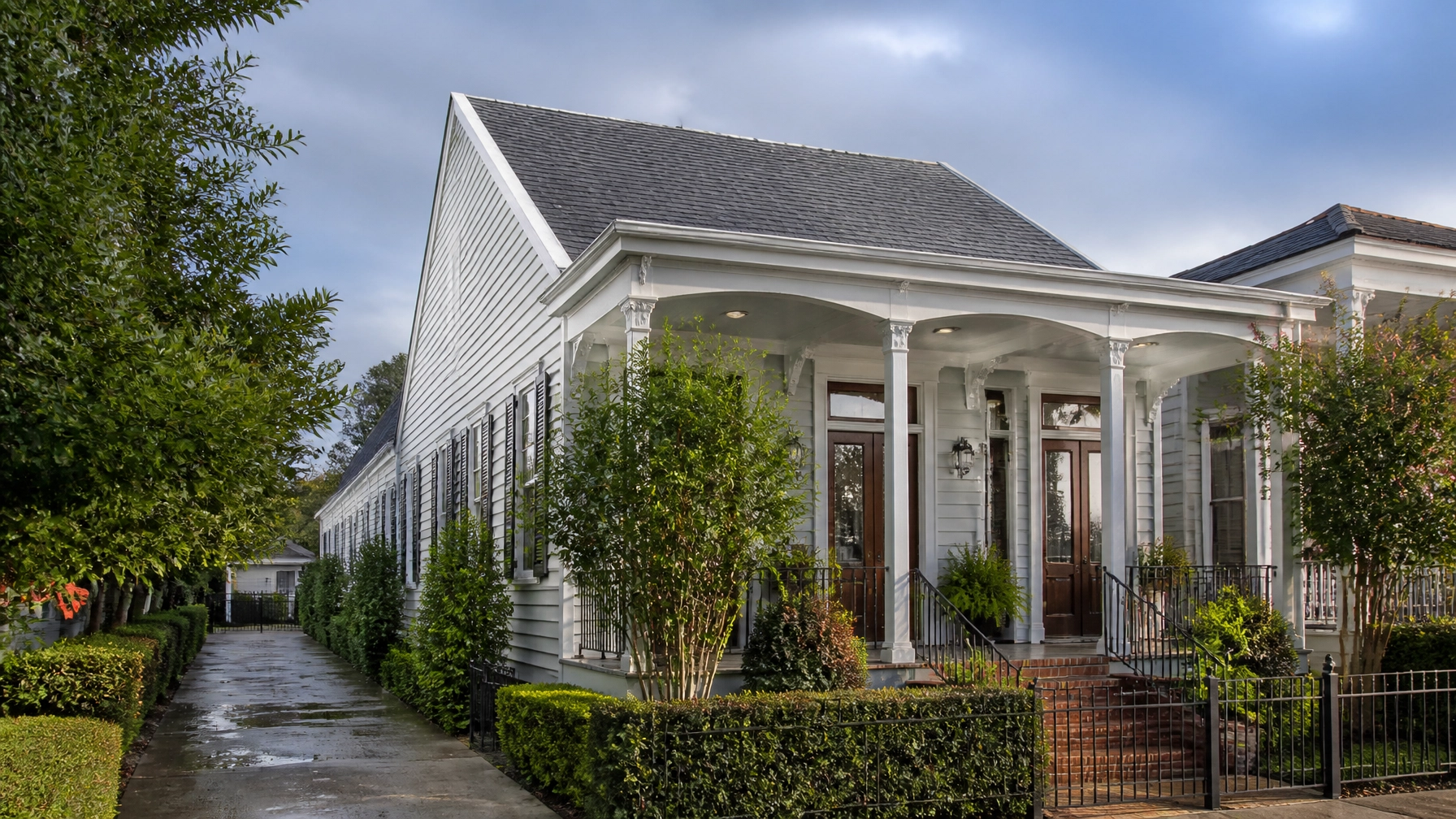
    New Orleans home with a standing-seam metal roof and carefully finished flashing

    Advantages include:

    • Strong resistance to wind uplift
    • Long service life
    • No granule loss
    • Excellent resistance to UV exposure
    • Lower risk of algae attachment
    • Reflective and cool-roof coating options
    • Reduced need for frequent replacement

    Metal roofing has a higher initial cost. It also requires an experienced installer, especially around seams, valleys, penetrations, chimneys, and coastal-humidity corrosion concerns.

    For homeowners planning to remain in the property for decades, metal may deliver better long-term value despite the larger upfront investment.

    New Orleans Roof Maintenance Checklist

    Do not wait for the next named storm to inspect your roof. Use this checklist before hurricane season and after every major storm.

    Before a storm

    • Check visible flashing around chimneys, vents, and roof-to-wall transitions.
    • Look for lifted, curled, cracked, or missing shingles.
    • Confirm that gutters and downspouts are clear.
    • Trim branches that hang over the roof.
    • Check attic ventilation for blocked soffit vents or damaged exhaust vents.
    • Review your homeowners insurance policy and deductible.
    • Save photos showing the roof’s condition before storm damage occurs.

    After a storm

    Do not climb onto the roof yourself. From the ground, look for:

    • Missing shingles or panels
    • Exposed underlayment
    • Damaged ridge caps
    • Bent flashing
    • Debris impact marks
    • Sagging areas
    • Water stains on ceilings or walls
    • Granules or roofing pieces in gutters

    Take photos from safe locations and contact your insurer promptly if damage is present. A licensed roofing professional can inspect areas that are not visible from the ground.

    Ground-level view of an intact New Orleans roof with clean gutters after a heavy thunderstorm

    Attic Ventilation Is a Durability System

    Ventilation is not an optional add-on in New Orleans. Your attic must release heat and moisture to protect the roof assembly.

    Poor ventilation can:

    • Raise attic temperatures
    • Accelerate shingle aging
    • Reduce sealant performance
    • Increase moisture accumulation
    • Encourage mold growth
    • Raise cooling costs
    • Contribute to premature wood damage

    A balanced system generally includes intake ventilation at the soffits and exhaust ventilation near the ridge or upper roof. Have a qualified roofer check whether insulation, vents, and air pathways are working together.

    Adding exhaust vents without adequate intake ventilation may not solve the problem. The entire attic airflow system needs to be evaluated.

    How a Durable New Roof Supports Resale Value

    A roof replacement is not only a repair expense. It can protect your home’s marketability.

    New roof ROI and home value

    The new roof ROI home value relationship depends on the roof’s age, neighborhood, material, workmanship, and buyer expectations. A new roof rarely returns every dollar of its cost immediately, but it can prevent larger financial losses.

    A durable replacement may help by:

    • Reducing buyer concerns during inspections
    • Supporting a stronger asking price
    • Preventing requests for large repair credits
    • Improving listing photos
    • Reducing the risk of a sale delay
    • Making insurance conversations easier for buyers
    • Protecting the home from water damage before closing

    Roof replacement resale value

    The roof replacement resale value is usually strongest when the existing roof is visibly worn, near the end of its service life, or showing storm damage. Buyers may mentally subtract the cost of a future replacement from their offer.

    If your roof is 15–20 years old, obtain a current estimate before listing. You may decide that replacement is worthwhile, or you may use the estimate to price the home honestly and plan for buyer negotiations.

    Roof curb appeal and home value

    Roof color, profile, and condition influence roof curb appeal home value. A clean, dimensional roof can improve the appearance of a ranch, colonial, shotgun-style home, or modern property.

    For resale, select a material and color that:

    • Fits the home’s architectural style
    • Works with brick, siding, or stucco
    • Matches neighborhood expectations
    • Complies with HOA or historic-district rules
    • Offers dependable local availability

    A durable roof that also looks appropriate is often the best roof for home value.

    What Your New Orleans Roof May Cost

    Your final price depends on roof size, pitch, complexity, material, tear-off requirements, decking condition, ventilation, and local labor.

    For planning purposes:

    • Budget: $9,000–$12,000 for basic shingle systems
    • Popular: $12,000–$18,000 for quality architectural shingles
    • Storm-resistant: Often higher for impact-rated shingles and upgraded underlayment
    • Premium: Approximately $20,000–$30,000 or more for many metal roof systems

    Roofers measure roofs in squares. One square equals 100 square feet of roofing material. Satellite measurements can estimate your roof’s size, pitch, and complexity before a contractor visits.

    Get a New Orleans Roof Estimate in 60 Seconds

    Before scheduling multiple contractor appointments, get a property-specific starting point.

    Use the free New Orleans roof estimate tool from Get My Roof Estimate Now. Enter your address and receive pricing based on satellite-powered measurements of your roof’s size, pitch, and complexity.

    You receive:

    • Low, middle, and high price ranges
    • Material comparisons
    • New Orleans-specific pricing
    • Results in under 60 seconds
    • No credit card requirement
    • No upfront contractor visit
    • No hidden fees or obligation

    The estimate is designed for planning. A local contractor should still verify decking, flashing, ventilation, storm damage, and other details in person before finalizing a proposal.

    Get your free instant roof estimate.

    Final Takeaway

    New Orleans roofs face relentless heat, humidity, heavy rain, and hurricane-season wind. Standard asphalt shingles may last only 10–15 years locally, while architectural shingles can reach approximately 15–25 years with good ventilation and maintenance. Metal roofing can provide 40–50 years of service and is the top choice for long-term wind resistance.

    Inspect flashing, maintain gutters, improve attic airflow, document storm damage, and plan before a leak forces an emergency decision. A durable new roof can protect your home today while improving buyer confidence, curb appeal, and your overall roof replacement ROI at resale.
  • Daily Weather Blitz – Slot 3: Birmingham, AL : September 2, 2026: A First Alert Heat Day With Upper-90s Temps, 105°F+ Heat Indices & What a Magic City September Heat Dome Does to Your Roof

    Daily Weather Blitz – Slot 3: Birmingham, AL : September 2, 2026: A First Alert Heat Day With Upper-90s Temps, 105°F+ Heat Indices & What a Magic City September Heat Dome Does to Your Roof

    Birmingham is under a First Alert Weather Day today, Wednesday, September 2, 2026. Highs are expected near 98°F, close to Birmingham’s record high of 98°F set in 2011. Humidity will push heat indices to approximately 105–108°F.

    A Heat Advisory is in effect from 11 a.m. through 8 p.m. and has been extended through Saturday, September 5. Rain chances remain at 20% or less today, with only very isolated afternoon showers or storms expected.

    The pattern changes Saturday as a shortwave increases moisture and brings scattered afternoon showers and thunderstorms. Some storms may produce gusty winds, frequent lightning, and heavy downpours. Sunday through Labor Day should remain hot, with temperatures in the 90s and isolated shower chances.

    For Birmingham homeowners, the immediate concern is not just personal heat safety. Extended heat and intense sunlight can accelerate roof wear, increase attic temperatures, dry out sealants, and expose weaknesses before the next round of storms arrives.

    Birmingham Weather Snapshot for September 2

    According to WBRC First Alert Weather and the National Weather Service Birmingham office:

    • High: Near 98°F
    • Birmingham record: 98°F, set in 2011
    • Heat index: Approximately 105–108°F
    • Heat Advisory: 11 a.m. through 8 p.m., extended through Saturday
    • Morning conditions: Warm and muggy, with temperatures in the 70s
    • Rain chance today: 20% or less
    • Saturday: Scattered storms, gusty winds, lightning, and heavy downpours possible
    • Sunday through Labor Day: Temperatures remain in the 90s with isolated shower chances

    Do not climb onto your roof during the hottest part of the day. Dark asphalt shingles can become substantially hotter than the surrounding air, creating dangerous conditions for homeowners and roofing crews.

    How Birmingham Heat Affects Roof Durability

    Thermal cycling stresses shingles

    Thermal cycling is the daily expansion and contraction of roofing materials as they heat in the sun and cool overnight.

    During a prolonged Birmingham heat event, this cycle repeats across every shingle, flashing component, fastener, and roof penetration. Over time, thermal movement can contribute to:

    • Shingle cupping or curling
    • Surface cracking
    • Granule loss
    • Brittle sealants
    • Deteriorating flashing
    • Stressed fasteners
    • Weak points around vents and pipe boots

    One hot day will not normally destroy a healthy roof. The concern is cumulative exposure, particularly when a roof is already 15–30 years old or has experienced previous wind, hail, or moisture damage.

    UV exposure accelerates roof aging

    Strong sunlight gradually breaks down asphalt binders and exposed sealants. As shingles lose flexibility, they become less effective at shedding water during heavy Alabama downpours.

    From the ground, use binoculars or a zoom camera to check for:

    • Bald or thin-looking shingle areas
    • Excessive granules in gutters
    • Cracked or split shingles
    • Raised or curled edges
    • Discolored sections
    • Exposed nail heads
    • Damaged pipe boots
    • Loose flashing

    Avoid pressure washing asphalt shingles. The force can remove protective granules and shorten the roof’s service life.

    Traditional brick Colonial home in Birmingham Alabama with a new dimensional architectural shingle roof

    Attic Heat Buildup Can Raise Cooling Costs

    A poorly ventilated attic can trap extreme heat beneath the roof deck. That increases the load on your air conditioner and exposes roofing components to elevated temperatures for longer periods.

    Check ventilation from inside the attic. Do not climb onto the roof during the Heat Advisory.

    Watch for these ventilation problems

    • Soffit vents blocked by insulation
    • Ridge vents covered or obstructed
    • Moisture stains on roof decking
    • Mold or mildew odors
    • Compressed or displaced insulation
    • Excessive attic heat with little air movement

    A balanced ventilation system needs both intake ventilation, usually through soffits, and exhaust ventilation, such as a ridge vent. Powered attic fans may help in some homes, but improper installation can pull conditioned air from the living space.

    If the attic feels unusually hot or shows moisture damage, have a licensed roofing or ventilation professional evaluate the system.

    Dry Conditions and Ember Risk in Wooded Neighborhoods

    The current pattern is hot and relatively dry across portions of the Birmingham metro area. In wooded neighborhoods, dry vegetation can increase vulnerability if a nearby brush fire or wildfire produces airborne embers.

    This is not a prediction of an active Birmingham fire. It is a reason to remove combustible material around the home.

    Before Saturday:

    • Clear dry leaves and pine needles from gutters.
    • Remove debris from valleys and roof edges.
    • Trim branches that contact or overhang the roof.
    • Move firewood and dry yard waste away from exterior walls.
    • Keep eaves and vents free of accumulated debris.
    • Confirm gutters and downspouts drain away from the foundation.

    A roof with cracked shingles, open eaves, damaged vents, or accumulated debris may have more vulnerabilities during any nearby fire event.

    Prepare Your Roof Before Saturday’s Storms

    The heat is the main concern today, but Saturday’s higher storm potential deserves preparation.

    Complete these tasks during cooler hours

    • Clean gutters and downspouts.
    • Check for loose, missing, or lifted shingles from the ground.
    • Inspect flashing around chimneys, skylights, and plumbing vents.
    • Remove loose patio furniture and yard items.
    • Trim dead or unstable branches near the home.
    • Check the attic for old leak stains or damp decking.
    • Photograph existing roof damage before storms arrive.
    • Confirm your insurance policy and deductible information.

    Do not attempt roof repairs while lightning is nearby or when surfaces are wet. If you see active leaking, sagging decking, or a large missing section, arrange a professional inspection.

    Alabama Building Code, Wind Requirements, and FORTIFIED Roofing

    Roof replacement in Birmingham should meet applicable Alabama and local building requirements. Wind resistance matters because Central Alabama can experience severe thunderstorms, straight-line winds, hail, and tornado-producing storms.

    Ask contractors about:

    • Required wind-resistance ratings
    • Proper shingle nailing patterns
    • Underlayment and flashing
    • Roof-to-wall connections
    • Permit requirements for your jurisdiction
    • Documentation for insurance or resale

    The voluntary FORTIFIED construction standard from the Insurance Institute for Business & Home Safety is a preferred resilience option for homeowners seeking more than minimum-code construction. A FORTIFIED Roof emphasizes stronger installation details and documentation designed to improve resistance to severe weather.

    Roofing materials worth comparing

    • Architectural shingles (Popular): A practical balance of price, appearance, and availability.
    • Class 4 impact-resistant shingles (Storm-resistant): Designed to offer improved resistance to hail impacts; insurance benefits vary by carrier.
    • Standing-seam metal (Premium): Long service life, strong weather performance when properly installed, and good heat reflectivity.
    • Roof coatings: May suit certain low-slope systems, but are not a universal solution for asphalt shingle roofs.

    The right material depends on your roof design, budget, expected ownership period, and local contractor availability.

    New standing seam metal roof on a modern Birmingham Alabama home surrounded by mature trees

    Birmingham Roof Replacement Costs in 2026

    The following planning ranges assume approximately 2,000 square feet of roof area, not living-space square footage. Final costs depend on pitch, complexity, tear-off requirements, labor, permits, ventilation, and hidden damage.

    Roofing option 2026 planning range Best fit
    Budget: 3-tab or entry-level architectural shingles $8,600–$12,000 Lower upfront cost
    Most Popular: architectural shingles $10,000–$16,000 Value, appearance, and availability
    Premium: standing-seam metal $14,500–$40,000+ Long service life and premium performance

    Deck repairs can add approximately $600–$4,000, depending on how much damaged plywood or structural material must be replaced.

    Your final estimate may also change because of:

    • Steep roof pitch
    • Multiple valleys or dormers
    • Skylights and roof penetrations
    • Two-story access
    • Multiple existing roof layers
    • Ventilation upgrades
    • Flashing replacement
    • Storm-related damage
    • Local labor demand

    A roof measured at 2,000 square feet contains approximately 20 roofing squares, with one square equal to 100 square feet.

    Should You Repair or Replace?

    A repair may be reasonable when:

    • Damage is limited to a small area.
    • The roof is relatively young.
    • The decking is dry and structurally sound.
    • Most shingles remain flexible and intact.
    • There are no recurring leaks.

    Replacement deserves serious consideration when:

    • The roof is over 20 years old.
    • Curling, cracking, and granule loss are widespread.
    • Leaks continue after repeated repairs.
    • Shingles are missing across multiple slopes.
    • The roof deck has water damage.
    • You are preparing to sell the home.
    • A contractor identifies broad wind or hail damage.

    Heat can make existing weaknesses more noticeable, but it does not replace a professional inspection. Use a satellite estimate for budgeting, then have a licensed contractor verify conditions that cannot be seen from above, including decking, flashing details, and active leaks.

    Get a Free Birmingham Roof Estimate in 60 Seconds

    You do not need to schedule multiple contractor visits just to understand your likely replacement budget.

    Use the free Birmingham roof estimate tool from Get My Roof Estimate Now. Satellite-powered measurements evaluate your roof’s size, pitch, and complexity, then provide low-middle-high pricing for different materials in under 60 seconds.

    There is:

    • No cost
    • No credit card required
    • No upfront contractor visit
    • No hidden fees
    • No obligation to hire anyone

    You can also compare general material scenarios with the 2026 roof cost calculator.

    Final Takeaway for Birmingham Homeowners

    Today’s First Alert heat is a reminder that roof durability depends on more than storm damage. Birmingham roofs must handle:

    • Near-record upper-90s temperatures
    • 105–108°F heat indices
    • Intense UV exposure
    • Thermal cycling
    • Attic heat buildup
    • Dry vegetation near wooded homes
    • Heavy rain, lightning, and gusty storms

    Inspect safely from the ground, prepare gutters and trees before Saturday, and budget early if your roof is showing age. A free satellite estimate gives you a fast, property-specific starting point before the next storm or emergency leak makes the decision for you.

    Categories: Weather, Roof Durability, Birmingham

    Tags: Birmingham roofing, Birmingham AL roof replacement, Alabama roof costs 2026, heat damage to shingles, roof ventilation, Class 4 shingles, FORTIFIED Roof, satellite roof estimate, storm preparation, roofing durability

    Sources

  • Daily ROI Blitz – Slot 6: Murfreesboro, TN New Roof ROI ,  What a Replacement Adds to Your Home Value in 2026

    Daily ROI Blitz – Slot 6: Murfreesboro, TN New Roof ROI , What a Replacement Adds to Your Home Value in 2026

    A new roof in Murfreesboro can recover roughly 68%–70% of its replacement cost at resale when the project matches the home and neighborhood. For a typical 2,000-square-foot roof, that means spending approximately $11,000–$17,000 on architectural shingles and potentially supporting $7,500–$12,000 in resale value, before counting buyer confidence, reduced inspection issues, and stronger curb appeal.

    That makes roof replacement one of the more practical home improvements for a Murfreesboro property in 2026, especially when the existing roof is 15–30 years old, visibly worn, or damaged by hail and wind.

    Murfreesboro Housing Market Context for 2026

    Murfreesboro remains one of Tennessee’s fastest-growing cities. Its position within the Nashville metro continues to attract buyers connected to:

    • Middle Tennessee State University
    • Healthcare and education
    • Manufacturing and logistics
    • Nashville-area employment
    • Ongoing in-migration to Rutherford County

    Market statistics vary depending on whether a source tracks active listings, closed sales, or estimated home values. A reasonable 2026 planning range looks like this:

    • Active listing prices: Approximately $475,000
    • Closed-sale prices: Roughly $365,000–$465,000
    • Common median estimates: Approximately $428,000–$430,000
    • Inventory: About 2.9–3.8 months
    • Days on market: Approximately 16–66 days, depending on the source and definition

    This is broadly a balanced market. Buyers have more time to compare homes than they did during the peak bidding years, but well-maintained properties can still stand out.

    In neighborhoods around Blackman, The Avenue-area subdivisions, and growing Rutherford County communities, a newer roof can help a listing compete against similar homes with older exterior systems.

    Roof Replacement Costs in Murfreesboro

    Local installed pricing for asphalt shingles is approximately $5.71–$5.74 per square foot, although the final number depends on roof pitch, complexity, tear-off requirements, ventilation, flashing, and hidden deck damage.

    Roofers measure in squares. One roofing square equals 100 square feet.

    For a typical 2,000-square-foot roof, or approximately 20 squares, expect the following planning ranges:

    Roofing option Local planning range Value category Typical use
    Basic asphalt shingles $9,000–$12,000 Budget Cost-conscious replacement
    Architectural asphalt shingles $11,000–$17,000 Popular Best balance of cost and resale appeal
    Premium or designer shingles $15,000–$22,000+ Premium Higher-end homes and design upgrades
    Metal roofing $20,000–$30,000+ Long-term premium Durability and long ownership periods
    Synthetic roofing $16,000–$32,000 Premium Specialty appearance or performance needs

    Architectural asphalt shingles may also be quoted at approximately $409–$865 per square, depending on the product, labor, roof access, and project details. For many Murfreesboro homeowners, the practical midpoint is around $13,000–$14,000 for a standard architectural shingle replacement.

    For a broader planning tool, use the Get My Roof Estimate Now roof cost calculator.

    Neighborhood and Home-Price Tiers

    The best roof replacement strategy depends partly on the home’s price point.

    Entry and mid-market homes (Budget to Popular)

    For homes priced around $365,000–$425,000, architectural asphalt shingles usually provide the strongest roof replacement ROI.

    Choose:

    • A reputable architectural shingle brand
    • A color that matches nearby homes
    • Proper flashing and ventilation
    • A transferable workmanship and material warranty
    • Impact-resistant products when the price difference is reasonable

    A premium metal roof may not return enough additional resale value in this tier unless the homeowner plans to stay for decades.

    Upper-mid-market homes (Popular to Premium)

    For homes around $425,000–$475,000, upgraded architectural shingles or a standing-seam metal roof may make sense, particularly in newer subdivisions near Blackman or The Avenue area.

    The key is proportionality. A premium roof should support the home’s design, not exceed what buyers expect from the neighborhood.

    Higher-end or custom homes (Premium)

    Higher-value properties may justify designer shingles, synthetic slate, or standing-seam metal. However, resale ROI still depends on buyer demand, installation quality, and whether the material complements the architecture.

    The most expensive roof is not automatically the best roof for home value. The best roof is the one buyers recognize as durable, attractive, and appropriate for the property.

    The 2026 Roof Replacement ROI Math

    The national 2025 Zonda Cost vs. Value benchmark reported an average asphalt shingle roof replacement cost of approximately $31,871, with about $21,501 recouped at resale, roughly 68%.

    That national project is a standardized benchmark and may be larger or more complex than a typical Murfreesboro replacement. Tennessee projects often cost less, but the regional resale pattern is commonly estimated in the 68%–70% range.

    Murfreesboro example

    Assume:

    • Roof replacement cost: $14,000
    • Estimated cost recouped: 68%
    • Resale value supported: $9,520
    • Unrecouped project cost: $4,480

    This does not mean the home’s appraised value automatically rises by exactly $9,520. Real-world value depends on comparable sales, roof condition, buyer demand, and the quality of installation.

    A new roof may also help protect 1%–3% of a $425,000 home’s market position, or approximately $4,250–$12,750, when compared with a similar home that needs an immediate roof replacement. That value may appear as a higher offer, fewer repair concessions, or a faster sale rather than a simple dollar-for-dollar price increase.

    Value Beyond the ROI Percentage

    Buyer confidence

    A new roof removes one of the largest maintenance concerns buyers face. A buyer may be more comfortable making an offer when the roof has documented installation, current warranties, and a long expected service life.

    Fewer inspection problems

    An aging roof can lead to:

    • Inspection objections
    • Requests for seller credits
    • Insurance concerns
    • Delayed closing
    • Price renegotiation

    Replacing a roof before listing does not guarantee a higher price, but it can reduce the number of obstacles between contract and closing.

    Stronger curb appeal

    Roof color and roofline have a major effect on how a home looks from the street. Clean architectural shingles can make siding, brick, landscaping, and entry features appear newer.

    This matters in subdivisions where buyers compare several similar floor plans. Roof curb appeal can help your home look better in listing photos and during drive-by visits.

    Insurance and storm concerns

    Middle Tennessee roofs face severe thunderstorms, hail, high winds, and occasional tornado warnings. Some buyers and insurers may pay closer attention to roof age and documented storm damage.

    A replacement may also make it easier to explain the home’s condition to an insurance company, although coverage and discounts vary by carrier and policy.

    Colonial-style Murfreesboro home with a new weathered-wood architectural shingle roof

    Best Roofing Materials for Murfreesboro’s Climate

    Murfreesboro has a humid subtropical climate with hot summers, high humidity, heavy rain, severe storms, hail risk, and winter freeze-thaw cycles.

    Architectural asphalt shingles (Popular)

    For most homeowners, architectural shingles offer the best combination of:

    • Affordable installation
    • Broad color selection
    • Familiar buyer appeal
    • Straightforward repairs
    • Strong resale practicality

    Look for wind-rated products and consider impact-resistant shingles if the added cost is justified by local storm exposure or possible insurance savings.

    Metal roofing (Premium)

    Metal roofing can last 40–70 years and handle rain, wind, and repeated weather exposure. It may also reflect more solar heat than dark asphalt shingles.

    However, the 2025 national benchmark showed approximately 50% cost recoupment for metal roofing, lower than asphalt shingles. Metal can still be the better long-term choice for an owner planning to remain in the home, but it is not always the highest short-term roof replacement ROI.

    Synthetic roofing (Premium)

    Synthetic materials can provide a slate or shake appearance with less weight and maintenance. They may fit custom homes, but the higher upfront cost should be compared carefully with local buyer expectations.

    Modern Murfreesboro-area home with a new matte-black standing-seam metal roof

    Roof Replacement ROI Checklist

    Before replacing your roof, complete these steps:

    • Confirm the roof’s approximate age.
    • Check for curling, missing, cracked, or heavily worn shingles.
    • Review attic ventilation and insulation.
    • Photograph storm or hail damage from the ground.
    • Compare at least two or three written estimates.
    • Ask whether tear-off and disposal are included.
    • Confirm flashing, underlayment, drip edge, and ventilation details.
    • Verify contractor licensing and insurance.
    • Request material and workmanship warranty information.
    • Ask a local real estate professional to compare homes with new and aging roofs.
    • Match the roof material and color to nearby properties.
    • Get an address-specific measurement before requesting final bids.

    A satellite estimate is a useful first step because it gives you roof size, pitch, complexity, and regional pricing before scheduling contractor visits.

    Get a Murfreesboro Roof Estimate in 60 Seconds

    You do not need to wait days for a contractor appointment just to learn whether a replacement fits your budget.

    Get a free satellite-powered roof estimate from Get My Roof Estimate Now. Enter your Murfreesboro address and receive a low-middle-high price range based on your roof’s measured size, pitch, complexity, material choice, and regional labor costs.

    The estimate is free, requires no credit card, and helps you compare the potential new roof ROI, resale value, and project cost before contacting verified local contractors.

    Frequently Asked Questions

    Does a new roof increase home value in Murfreesboro?

    Usually, yes: especially when the existing roof is near the end of its service life. A replacement may support approximately 68%–70% cost recovery in resale value, while also reducing inspection objections and buyer requests for credits.

    What is the best roof for home value in Murfreesboro?

    Architectural asphalt shingles are generally the best choice for resale value because they provide strong buyer appeal at a moderate cost. Choose a quality product and a neutral color that fits the surrounding neighborhood.

    How much does a new roof cost in Murfreesboro in 2026?

    A typical architectural shingle replacement on a 2,000-square-foot roof may cost approximately $11,000–$17,000. Larger, steeper, or more complex roofs can cost more.

    Does a metal roof have better ROI than asphalt shingles?

    Not always. Metal roofing offers longer service life and durability, but national 2025 benchmark data showed about 50% cost recoupment compared with roughly 68% for asphalt shingles. Metal may be better for long-term ownership than short-term resale.

    Should I replace my roof before selling?

    Replace it before listing when the roof is visibly failing, repeatedly leaking, difficult to insure, or likely to trigger a large buyer credit. If the roof is still serviceable, compare the replacement cost with local comparable sales first.

    Can I get a roof estimate without an in-person visit?

    Yes. Get My Roof Estimate Now uses satellite imagery to estimate roof size, pitch, and complexity in about 60 seconds. A contractor inspection is still recommended before finalizing construction work.

    Sources

  • Daily Weather Blitz – Slot 8: Fort Worth, TX : September 1, 2026: A 100°F Tuesday With 105°F Heat Indices, a 47-Day Rainless Streak & What North Texas Heat, Hail Alley, and Drought Do to Your Roof

    Daily Weather Blitz – Slot 8: Fort Worth, TX : September 1, 2026: A 100°F Tuesday With 105°F Heat Indices, a 47-Day Rainless Streak & What North Texas Heat, Hail Alley, and Drought Do to Your Roof

    North Texas roofing conditions are shaped by heat, hail, drought, wind, and sudden seasonal changes. Image credit: Get My Roof Estimate Now.

    Fort Worth is starting September with a dangerous combination: near-100°F temperatures, heat indices up to 105°F, elevated fire danger, and a 47-day streak without measurable rain.

    The Dallas–Fort Worth area has now reached the 10th-longest rainless streak on record, based on the 0.01-inch measurable-rain standard. August 2026 was also one of only eight Augusts in recorded DFW history with just a trace of rain.

    That dry, hot pattern is more than a weather story. It affects shingles, attic temperatures, gutters, flashing, siding, foundations, and wildfire exposure.

    Fort Worth Weather Today: September 1, 2026

    The National Weather Service Fort Worth/Dallas office says temperatures will peak around the century mark Tuesday.

    Tuesday forecast at a glance

    • High: Around 100°F
    • Heat index: Up to approximately 105°F
    • Rain chances: Generally 10% or less across western North Texas
    • Storm focus: Mainly southeast and central Texas
    • Fire threat: Elevated north and west of DFW
    • Air quality: Heat and ozone may create additional outdoor-health concerns

    A few storms farther south and east could produce frequent lightning and beneficial rainfall. However, Fort Worth and much of western North Texas may remain completely dry.

    That matters for roofing because isolated rainfall does not necessarily end a regional dry streak. A storm can pass nearby while your property receives no measurable rain.

    Tropical Storm Edouard: More Moisture, but Not for Everyone

    The official NWS headline is:

    “Tropical Storm Edouard to Impact the Northwest Gulf Coast; Heat Expands Eastward.”

    Edouard is expected to move west-northwest toward the Upper Texas coast. Moisture and rain chances should increase mainly across eastern and southeastern counties Wednesday and Thursday.

    Forecast rainfall in southeast Central Texas is expected to reach:

    • 1–2 inches in favored areas
    • Isolated totals near 3 inches
    • 10% or lower chances in much of western North Texas

    For Fort Worth, the storm may provide little or no meaningful rainfall. The weekend outlook trends drier again, with heat remaining a concern even if temperatures ease slightly after the tropical moisture moves inland.

    Homeowners should not assume that a wet forecast elsewhere will wash away local fire risk or protect a roof from heat stress.

    Why Fort Worth Roofs Face Extra Stress

    Fort Worth sits near the southern edge of the nation’s high-activity hail corridor, often called Hail Alley. The area averages roughly six significant hail events per year.

    Spring 2026 was especially active. NWS records show:

    • 24 verified hail days between March and June
    • A major four-day outbreak from April 25–28
    • Approximately 195 verified hail reports across the DFW area
    • Hailstones near 3 inches in Azle and Lakeside

    Hail damage is not always obvious from the ground. A roof may look acceptable while losing protective granules or developing cracked shingle mats beneath the surface.

    Close-up of hail-damaged architectural asphalt shingles with impact marks and granule loss

    Hail can cause functional damage even when the roof does not immediately leak. Image credit: Get My Roof Estimate Now.

    Heat and ultraviolet exposure

    Repeated exposure to intense Texas sun can dry and embrittle asphalt shingles. Ultraviolet radiation gradually weakens the shingle surface, while extreme heat accelerates aging.

    Dark roofing materials can become significantly hotter than the surrounding air. That heat transfers into the roof deck and attic, especially when ventilation is inadequate.

    Thermal cycling

    North Texas roofs also experience large temperature changes between day and night and between summer and winter. Expansion and contraction can stress:

    • Shingle seals
    • Flashing
    • Pipe boots
    • Vent penetrations
    • Caulking and sealants
    • Roofing edges and valleys

    These small failures often become larger problems during the first heavy rain after a long dry period.

    Drought and wildfire exposure

    Drought does not directly “dry out” a roof in the same way it dries vegetation, but it creates a harsher environment around the home.

    Hard, dry ground can worsen stress on foundations and siding. Dry grasses, leaves, and dead limbs increase the amount of combustible material near roof edges. Windy conditions can also carry embers toward vulnerable roof areas.

    Keep dry vegetation trimmed away from the home, especially near eaves, valleys, vents, and attached garages.

    Freeze-thaw and ice storms

    Fort Worth is hot in September, but winter risks still matter. Events such as the 2021 winter storm showed that North Texas can experience prolonged freezing conditions.

    Freeze-thaw cycles can affect:

    • Cracked flashing
    • Exposed fasteners
    • Damaged pipe boots
    • Poorly sealed penetrations
    • Gutters and downspouts
    • Roof-deck moisture problems

    Fall is a practical time to address these weak points before winter weather arrives.

    2026 Fort Worth Roof Replacement Costs

    In Fort Worth, installed asphalt shingle replacement costs are roughly $400–$950 per roofing square, or about $4.00–$9.50 per square foot.

    One roofing square equals 100 square feet of roof area. Remember that roof area is not always the same as the home’s interior square footage.

    Local planning ranges

    Roofing option Planning range Best fit
    Budget: Basic asphalt shingles About $6,000–$10,000 Simple roofs and cost-focused replacements
    Popular: Architectural shingles About $8,000–$15,000 Most Fort Worth single-family homes
    Premium: Class 4 impact-resistant shingles Often $10,000–$18,000+ Hail-prone properties seeking stronger impact resistance
    Premium: Metal roofing About $8–$16 per sq. ft. Long service life, energy performance, and durability

    For a 1,500–3,000-square-foot home, the actual roof area, pitch, complexity, tear-off requirements, ventilation, and decking condition will determine the final cost.

    Use the Get My Roof Estimate Now roof cost calculator for a starting range, or get a property-specific satellite estimate.

    Practical Roof Resilience Steps for Fort Worth Homeowners

    1. Improve attic ventilation

    A balanced system should include soffit intake and ridge or other exhaust ventilation. Proper airflow helps release heat and moisture from the attic.

    Ask a professional to check whether insulation is blocking soffit vents or whether the existing exhaust system is undersized.

    Clean Fort Worth attic showing soffit intake ventilation, ridge vent airflow, and insulation

    Balanced attic ventilation can help reduce heat buildup and protect roofing materials. Image credit: Get My Roof Estimate Now.

    2. Consider Class 4 shingles

    Class 4 impact-resistant shingles are designed to better withstand hail impact than standard products. They cost more, but some insurers may offer wind or hail premium discounts.

    Discounts vary by carrier, roof product, installation, and documentation. Confirm eligibility with your insurance company before choosing the upgrade.

    3. Specify wind-rated installation

    Ask for installation details in writing, including:

    • Six-nail fastening where required by the product and local conditions
    • Proper starter strips
    • Correct valley treatment
    • High-wind-rated shingles
    • Manufacturer-approved installation methods

    A durable shingle can still fail when it is installed incorrectly.

    4. Inspect flashing and penetrations

    Check or schedule an inspection of:

    • Plumbing pipe boots
    • Chimney flashing
    • Wall-to-roof transitions
    • Skylights
    • Roof vents
    • Valleys
    • Drip edges

    Seal vulnerable penetrations before winter, but avoid relying on surface caulk as a permanent replacement for failed flashing.

    5. Clean gutters and trim dry limbs

    Remove leaves, shingle granules, and sediment from gutters. Confirm that downspouts discharge water away from the foundation.

    Trim dead or dry branches that could fall during thunderstorms or carry embers toward the roof.

    6. Document storm damage quickly

    After a hailstorm, take timestamped photos from the ground and document:

    • Missing or lifted shingles
    • Granule accumulation
    • Dents in vents and gutters
    • Damaged siding
    • Broken screens
    • Interior leaks or ceiling stains

    Do not climb onto the roof yourself. Arrange an independent inspection, especially if damage is suspected but not visible from the ground.

    Texas policies can include a limited window for reporting claims, percentage-based wind/hail deductibles, and cosmetic-damage exclusions. Review your declarations page and endorsements carefully. The Texas Department of Insurance provides consumer information, but your specific policy controls coverage. Consider professional advice for a disputed claim.

    Measure Your Fort Worth Roof Before the Next Hail Season

    North Texas homeowners do not need to wait for a contractor visit just to understand the likely cost of a replacement.

    At Get My Roof Estimate Now, satellite imagery is used to estimate roof size, pitch, and complexity. You can receive low, middle, and high replacement ranges in under 60 seconds.

    The estimate is:

    • Free
    • Available without a credit card
    • Based on your property address
    • Useful for comparing asphalt, Class 4, metal, and other options
    • A starting point before an in-person inspection

    Satellite estimates are designed for planning. A contractor must still verify decking, flashing, ventilation, and concealed damage before finalizing a construction proposal.

    Bottom Line

    Fort Worth’s September 1 weather is a reminder that roof durability depends on more than rain. Extreme heat, intense UV exposure, hail, drought, wind, and occasional freezes all work on the roof over time.

    The smartest preparation is proactive:

    1. Check ventilation and flashing.
    2. Document hail damage promptly.
    3. Review your wind/hail deductible.
    4. Trim dry limbs and clear gutters.
    5. Price replacement options before the next major storm.

    Is your roof showing signs of heat, hail, or drought-related stress? Share this Fort Worth weather and roofing guide with a North Texas homeowner, and leave a comment with your neighborhood or the roof problem you are seeing.

  • Daily FAQ Blitz – Slot 5: AEO FAQ Quick Answers for Detroit, MI Homeowners (2026)

    Daily FAQ Blitz – Slot 5: AEO FAQ Quick Answers for Detroit, MI Homeowners (2026)

    Detroit, Michigan homeowners searching for “AEO” may be looking for a roof estimate, permit information, or insurance guidance. The first answer is important: AEO means Authorized Economic Operator. It is an international customs and trade designation, not a roofing credential.

    For a Detroit roof replacement in 2026, the terms that matter are BSEED permits, LARA contractor licensing, the Michigan Residential Code, storm damage coverage, and accurate roof measurements.

    What does AEO mean in Detroit?

    AEO stands for Authorized Economic Operator.

    It is a designation used in international trade for companies involved in moving goods through the global supply chain. AEO programs address customs compliance, recordkeeping, financial responsibility, and supply-chain security.

    The World Customs Organization’s AEO program applies to businesses such as:

    • Importers and exporters
    • Manufacturers
    • Freight carriers
    • Customs brokers
    • Warehouses
    • Ports and logistics operators

    AEO is not:

    • A Michigan roofing license
    • A Detroit building permit
    • A roofing inspection certification
    • Proof that a contractor is licensed or insured

    Why does AEO appear in Detroit searches?

    Detroit has an unusually important international trade position. Its cross-border freight environment includes:

    • The Port of Detroit
    • The Ambassador Bridge
    • The Detroit-Windsor Tunnel
    • The Michigan Central Railway Tunnel
    • The Gordie Howe International Bridge
    • Canada-U.S. border freight routes
    • U.S. Customs and Border Protection’s CTPAT supply-chain security program

    The CBP CTPAT program is related to the broader international trade-security framework.

    For a Detroit homeowner, however, AEO does not determine whether your roof needs a permit, whether a contractor is qualified, or whether your insurance claim is covered.

    Does a full roof replacement require a Detroit permit?

    Yes. A full roof replacement generally requires a building permit through Detroit’s Buildings, Safety Engineering, and Environmental Department, or BSEED.

    Minor repairs and small patches generally do not require the same full replacement permit process. If the scope is unclear, confirm the classification with BSEED before work begins.

    Detroit homeowners should:

    1. Check for open property-code violations.
    2. Confirm whether the work is a minor repair or full replacement.
    3. Apply through the Detroit BSEED building permit resources.
    4. Use the city’s Accela/eLAPS online portal.
    5. Schedule required inspections after installation.

    Outstanding property-code violations may need to be resolved before a new permit or final approval can move forward. Roof-related violations can involve leaks, missing drainage components, or conditions that allow moisture into the structure.

    How much is a Detroit roofing permit in 2026?

    Residential roofing permits in Detroit commonly fall in the range of approximately $95–$200, depending on the project value and permit classification.

    BSEED’s construction fee schedule uses a base fee and may add an incremental amount for each $1,000 of project value over $2,000. Because fee schedules and portal calculations can change, check the current BSEED building permit fee information before submitting an application.

    The permit cost is a small part of the project budget. The larger cost drivers are roof size, pitch, tear-off requirements, decking, flashing, material selection, and labor.

    Do Detroit historic homes need extra roof approval?

    Possibly.

    If your Detroit home is located in a designated local historic district, replacing visible roofing materials may require a Certificate of Appropriateness from the Detroit Historic District Commission.

    This is separate from the standard BSEED building permit.

    Historic review may consider:

    • Roof material
    • Color and texture
    • Visibility from the street
    • Changes to rooflines
    • Replacement of slate, tile, or other historic materials
    • Alterations to dormers, cornices, and architectural details

    Confirm historic-district status before ordering materials. A Certificate of Appropriateness may be required before exterior work begins.

    Detroit-area ranch home with a new architectural asphalt shingle roof

    What Michigan license should a roofing contractor have?

    For compensated residential roofing work, Michigan’s LARA licensing guidance generally requires one of the following:

    • An Individual Residential Builder license, or
    • A Maintenance and Alteration Contractor license with the roofing specialty

    Roofing is specifically listed as a Maintenance and Alteration trade.

    Important exemptions include:

    • A property owner working on the owner’s own premises for personal use
    • A single project with an aggregate contract price under $600, provided it is not part of a larger project or split to avoid licensing requirements

    Ask any Detroit roofer for:

    • License information
    • Proof of liability insurance
    • Workers’ compensation coverage
    • Written scope of work
    • Permit responsibility
    • Warranty details

    AEO status does not replace Michigan licensing.

    What ice-barrier rules apply to Detroit roofs?

    Detroit’s cold climate makes ice dams a serious roofing concern. Under the 2021 Michigan Residential Code, ice barriers are required where there is a history of ice forming along eaves and causing water backup.

    The barrier must extend:

    • At least 24 inches inside the exterior wall line
    • At least 36 inches from the eave edge on roofs with slopes of 8:12 or steeper
    • Over solid sheathing in areas where the average January temperature is 25°F or lower

    The 2021 Michigan Residential Code information from LARA includes the applicable roof-assembly requirements.

    During a tear-off, your contractor should also inspect:

    • Roof decking
    • Eave edges
    • Valleys
    • Chimney flashing
    • Plumbing vents
    • Attic ventilation
    • Gutters and downspouts

    What does a Detroit roof replacement cost in 2026?

    For a roof area near 2,000 square feet, typical 2026 planning ranges are:

    Roofing material Approximate installed cost Typical 2,000-square-foot total
    Architectural asphalt shingles (Popular) $4.75–$10 per sq. ft. About $12,000–$19,000
    Standing-seam metal (Premium) $7–$21 per sq. ft. About $18,000–$36,000+

    These are planning ranges, not fixed quotes. A complex Detroit roof with dormers, multiple valleys, steep slopes, old decking, or several existing layers may cost more.

    Use the Get My Roof Estimate Now roof cost calculator to establish a starting budget before scheduling contractor visits.

    Modern Detroit-area home with a new standing-seam metal roof

    Should Detroit homeowners check for hail damage?

    Yes. Wayne County is an active severe-weather and hail region.

    The National Weather Service Detroit/Pontiac office documented 1-inch hail in Dearborn and hail up to 1.25 inches in Dearborn Heights on June 10, 2026. Quarter-sized hail was also reported or warned for in the Detroit-area region during the June 14, 2026 storms, with additional regional hail activity reported in June 2025.

    After a storm, look for:

    • Bruised or fractured shingles
    • Missing granules
    • Exposed fiberglass mat
    • Dented metal vents and flashing
    • Damaged gutters
    • Water stains in the attic
    • Loose or missing shingles
    • New leaks around skylights and chimneys

    Do not climb onto the roof after a storm. Take ground-level photos and check the NWS Detroit/Pontiac weather office for storm reports.

    Does homeowners insurance cover hail damage?

    A standard HO-3 homeowners policy commonly covers sudden hail and wind damage, subject to policy terms. It generally does not cover ordinary aging, deterioration, poor maintenance, or wear and tear.

    Check these four items before filing a claim:

    1. Wind/hail deductible: Many policies use a separate deductible of 1%–2% of the dwelling coverage limit.
    2. RCV or ACV: Replacement Cost Value can reimburse eligible replacement costs, while Actual Cash Value subtracts depreciation.
    3. Roof age provisions: Older roofs may have reduced coverage or ACV settlement.
    4. Matching or appearance language: Some policies limit payment for undamaged sections when replacement materials will not match.

    Michigan does not have an automatic rule requiring every undamaged roof section to be replaced. However, when a significant portion of the roof is damaged and a partial repair would create an obvious mismatch, the policy’s “like kind and quality” or reasonably uniform appearance language may support broader replacement.

    Document the damage and ask your insurer how it handles:

    • Cosmetic hail damage
    • Discontinued shingles
    • Matching materials
    • Partial-slope repairs
    • Full-roof replacement
    • Depreciation

    Can satellite imagery estimate a Detroit roof accurately?

    Yes. Get My Roof Estimate Now uses satellite imagery to measure roof size, pitch, and complexity without an initial contractor visit.

    Homeowners enter their address and receive:

    • A free estimate
    • No credit card requirement
    • Results in about 60 seconds
    • Measurements accurate within inches, typically around 90%–95%
    • Low, middle, and high price ranges
    • Multiple material options, including asphalt shingles, metal, synthetic roofing, and coatings
    • Regional pricing adjustments

    Start with an instant Detroit roof estimate. Satellite estimating is an efficient budgeting tool. An in-person inspection is still valuable before installation to identify hidden decking damage, flashing problems, ventilation issues, or storm-related conditions.

    Overhead view of a complex residential roof in the Detroit area

    Detroit AEO and roofing FAQ recap

    Question Quick answer
    What does AEO mean? Authorized Economic Operator, an international customs designation.
    Is AEO a roofing license? No. Michigan roofing credentials are handled through LARA.
    Is a full Detroit roof replacement permitted? Yes, generally through BSEED.
    Do small patches need the same permit? Minor repairs and patches generally do not require a full replacement permit. Confirm the scope with BSEED.
    Where do I apply? Through Detroit’s Accela/eLAPS online portal.
    What if my property has code violations? Resolve outstanding violations before final approval or related permit work.
    What license should a paid roofer have? A Residential Builder license or M&A Contractor license with roofing specialty.
    What does a Detroit roof cost? Roughly $12,000–$19,000 for many asphalt projects and $18,000–$36,000+ for standing-seam metal on a 2,000-square-foot roof.
    Does insurance cover hail? Often, if sudden damage is covered and the claim exceeds the applicable deductible.
    How fast is a satellite estimate? Approximately 60 seconds, with no credit card required.

    Get your Detroit roof replacement budget before calling contractors. Enter your address to receive a free, satellite-powered estimate in about 60 seconds from Get My Roof Estimate Now.

  • Daily Tech Blitz – Slot 5: Houston’s Satellite Tech Edge Is Bringing Bayou City Precision to Texas Roofs

    Daily Tech Blitz – Slot 5: Houston’s Satellite Tech Edge Is Bringing Bayou City Precision to Texas Roofs

    Houston has always looked toward the sky. Now, the city’s space technology is helping shape decisions much closer to home.

    From NASA Johnson Space Center to fast-growing space startups, Houston is becoming a center for satellite scheduling, onboard artificial intelligence, orbital computing, lunar communications, and robotics simulation. The common theme is simple: collect better information, process it faster, and turn it into a useful decision.

    That same idea now applies to roofing. Satellite imagery can measure a home’s roof, estimate replacement costs, and give Houston homeowners a practical budget benchmark in about 60 seconds: without waiting days for a contractor visit.

    Houston’s Satellite Technology Edge in 2025–2026

    Houston’s space industry is moving beyond rockets and astronauts. The newest projects focus on what happens after satellites collect data.

    Cognitive Space: Faster Satellite Decisions

    Houston-based Cognitive Space is developing software that helps satellite operators manage increasingly complex fleets.

    Its CNTIENT.Optimize platform automates:

    • Satellite constellation scheduling
    • Collection planning
    • Ground-station pass reservations
    • Communication link management
    • Task prioritization across multiple satellites

    Traditional satellite operations can require teams to manually coordinate targets, spacecraft limitations, ground-station availability, and changing priorities. That process becomes difficult when operators manage dozens or thousands of satellites.

    CNTIENT.Optimize uses an AI-based scheduling engine to evaluate available activity plans and select an optimized solution. The platform is designed to reduce delays between a customer requesting imagery and the satellite collecting it.

    The result is lower tasking-to-collection latency, better use of satellite capacity, and faster response when conditions change.

    Cognitive Space describes the platform as suitable for everything from individual spacecraft to large constellations. Its technology also supports multiple sensor types, including optical, synthetic aperture radar, hyperspectral, infrared, and radio-frequency systems.

    That matters for roofing because the value of satellite imagery depends on more than simply taking a picture. The data must be collected, processed, and delivered quickly enough to support a decision.

    Learn more about Cognitive Space and CNTIENT.Optimize.

    Little Place Labs: Processing Imagery in Orbit

    Another Houston company, Little Place Labs, is working on a different part of the satellite data problem: what happens to imagery before it reaches Earth.

    Its ORBITFY platform runs artificial intelligence and machine-learning tools directly onboard satellites. Instead of downlinking every raw image, the system can filter, compress, and analyze imagery in space.

    Potential outputs include:

    • Object detection and classification
    • Land-use analysis
    • Disaster monitoring
    • Change detection
    • Image compression
    • Prioritized alerts

    In one demonstrated application, the platform processed imagery onboard and sent back a segmented data product rather than the complete raw image. Little Place Labs reported that this approach reduced the imagery downlink volume by up to 98%.

    That is known as edge AI: the data is processed near the place where it is created. For time-sensitive commercial and national-security applications, this can reduce the wait from hours or days to minutes.

    The same principle applies to property data. A useful satellite imagery roof estimate depends on efficient image processing. The faster a system can identify roof planes, edges, pitch, and complexity, the sooner a homeowner can receive a meaningful cost range.

    Read more about Little Place Labs’ OrbitfyEDGE platform.

    NASA Johnson Space Center Is Modernizing for the Next Space Economy

    NASA announced a major infrastructure step for Houston on May 29, 2026, with a multiple-award construction contract supporting up to $300 million in improvements at Johnson Space Center and related facilities.

    The contract covers:

    • Mission-support facilities
    • Utilities and engineering networks
    • Equipment and campus infrastructure
    • Construction and revitalization projects
    • Facilities supporting training, engineering, and mission readiness

    Seven companies were selected to compete for task orders. NASA said all funds must be obligated by September 30, 2026.

    This is not a contract dedicated to one commercial space station. However, the modernization supports the broader evolution of Johnson Space Center. Houston remains central to human spaceflight operations, astronaut training, engineering, and future low-Earth-orbit missions.

    As commercial stations such as Starlab and Axiom Station develop, JSC’s role is expected to expand from supporting government-led missions to helping manage a more commercial and interconnected space environment.

    The lesson for homeowners is straightforward: Houston’s satellite technology is becoming more operational, more automated, and more focused on real-world data services.

    Intuitive Machines Is Building a Lunar Data Network

    Houston-based Intuitive Machines is also extending communications infrastructure beyond Earth.

    The company is developing a five-satellite Lunar Data Network designed to provide data relay and positioning, navigation, and timing services around the Moon. The satellites are planned for elliptical lunar orbits focused on coverage near the lunar South Pole, where future Artemis activity is expected.

    The network is intended to provide:

    • Communications relay between lunar spacecraft and Earth
    • Data services for landers and rovers
    • Navigation support for lunar missions
    • Interoperability with NASA’s LunaNet architecture
    • Commercial access to lunar communications capacity

    This is another example of satellite technology becoming infrastructure. The goal is not simply to collect data but to create a dependable network that helps other systems operate.

    That same infrastructure mindset is appearing in home services. A satellite-based roof estimate does not replace a final contractor inspection. It gives homeowners an early, data-driven starting point before they schedule an in-person visit.

    Axiom Space and Rice–NASA Robotics Push Data Processing Further

    Houston-based Axiom Space is developing orbital data centers that bring cloud-style computing and storage into low Earth orbit.

    Axiom’s orbital data center concept is designed to process satellite and spacecraft data closer to its source. The company’s early demonstrations have included:

    • Cloud computing in orbit
    • Artificial intelligence and machine learning
    • Data fusion
    • Space cybersecurity
    • Earth-independent data storage
    • Lower-latency processing

    Axiom announced its first two dedicated orbital data center nodes in 2025. The company later reported that the nodes launched to low Earth orbit on January 11, 2026, using high-speed optical links associated with Kepler Communications’ relay network.

    In a related Houston research effort, Rice University and NASA Johnson Space Center introduced the iMETRO Dynamic Simulation in 2026. The open-source simulator acts as a digital twin of NASA’s intravehicular robotics test environment.

    Using tools such as MuJoCo and ROS 2, researchers can test robotic movement, contact dynamics, maintenance tasks, and logistics operations before using physical equipment.

    Both projects point toward the same future: data is processed closer to where decisions are made.

    How Satellite Imagery Powers a Free Roof Estimate

    A satellite imagery roof estimate uses overhead property data and automated analysis to create a fast replacement-cost range.

    Houston-area Colonial home with a new dark gray architectural shingle roof

    With Get My Roof Estimate Now, a homeowner enters an address and receives an estimate in under 60 seconds.

    The system evaluates:

    • Roof size: Measured in squares, with one square equal to 100 square feet
    • Roof pitch: The steepness of the roof
    • Roof complexity: Valleys, dormers, sections, and penetrations
    • Material options: Architectural shingles, metal, synthetic roofing, and coatings
    • Regional pricing: Local labor and material cost differences
    • Price ranges: Low, middle, and high estimates

    The technology is designed to provide measurements accurate to approximately 90–95% for many properties. It does not require an initial contractor visit, credit card, or payment.

    For a general 2026 benchmark, average roof replacement costs are approximately $9,000–$22,000, although larger Houston homes, steep roofs, premium materials, structural repairs, and complex designs can cost more.

    Use the Houston roof replacement cost calculator to compare size, material, pitch, region, and tear-off costs.

    An online estimate is a planning tool. A licensed roofing contractor should still inspect the roof in person before a final contract, especially when hidden decking damage, ventilation issues, flashing problems, or storm damage may be involved.

    Why Houston Roofs Need Fast Planning

    Houston roofs face several stressors at the same time.

    Hail

    Parts of the Houston area experienced significant hail activity in August 2026. Reports for August 28 described hail approaching baseball size in portions of the metro area, with several Houston ZIP codes included in the reported footprint.

    Hail damage may appear as:

    • Bruised or fractured shingles
    • Missing granules
    • Cracked vents and flashing
    • Damaged gutters
    • Exposed underlayment
    • Punctures on older roofing materials

    A storm map can show that hail occurred nearby, but it cannot confirm damage to a specific roof. Homeowners should document the storm date, photograph visible damage from the ground, and arrange a professional inspection.

    Hurricanes and Wind

    Hurricane Beryl in 2024 reminded Houston homeowners how quickly strong wind and heavy rain can expose roof weaknesses. Missing shingles, lifted flashing, damaged ridge caps, and fallen branches can lead to leaks long after the storm passes.

    A fast estimate helps establish a replacement budget before contractor schedules become crowded.

    Humidity and Heat

    Houston’s humidity can contribute to algae growth, moisture retention, and attic ventilation problems. Intense summer heat also accelerates wear on roofing materials and increases cooling demand.

    Material selection matters:

    • Architectural shingles (Popular): Practical and widely available
    • Metal roofing (Premium): Long service life and strong heat performance
    • Synthetic roofing (Premium): Durable appearance with varied design options
    • Roof coatings (Budget): Useful for certain low-slope applications

    The Houston Homeowner Takeaway

    Houston’s satellite technology edge is no longer limited to missions in space. Cognitive Space is automating satellite decisions. Little Place Labs is processing imagery onboard. NASA is modernizing Johnson Space Center. Intuitive Machines is building lunar communications infrastructure. Axiom Space is developing orbital computing, while Rice and NASA are opening new paths for space robotics.

    The common idea is precision delivered quickly.

    That is exactly what a modern roof estimate should provide. Before scheduling multiple contractor visits, a Houston homeowner can enter an address, review the roof’s estimated size and complexity, compare material options, and see a low-middle-high replacement range in about 60 seconds.

    Start with a free satellite-powered roof estimate. It costs nothing, requires no credit card, and provides the information needed to plan the next step with greater confidence.

    Sources and Further Reading

  • Daily Tech Blitz – Slot 4: Birmingham’s Satellite Tech Edge Is Bringing Magic City Precision to Alabama Roofs

    Daily Tech Blitz – Slot 4: Birmingham’s Satellite Tech Edge Is Bringing Magic City Precision to Alabama Roofs

    Birmingham homeowners are used to seeing storm systems develop on radar. Now, satellite technology is helping with the next question after severe weather: What happened to my roof, and what will replacement cost?

    That question matters across Jefferson, Shelby, and surrounding counties, where hot summers, heavy rain, hail, straight-line winds, and occasional tornadoes can shorten a roof’s useful life. It also matters to homeowners planning to sell. A roof replacement can affect new roof ROI, home value, buyer confidence, and curb appeal: but only if you understand the numbers before making a decision.

    In 2026, Alabama’s growing space and satellite industry is making that process faster and more precise. From Florence-Muscle Shoals to Huntsville, the state is becoming part of a wider satellite technology ecosystem. That same technology now gives Birmingham homeowners a practical advantage: accurate roof measurements and a free replacement estimate in under 60 seconds.

    Alabama’s satellite industry is scaling up

    Alabama’s space economy is not limited to rockets and research labs.

    In August 2026, ALL.SPACE received a federal agreement through the Department of War Innovation Unit’s “10x” Adaptive Space Manufacturing and Integration at Scale project. The agreement is designed to help the company scale production of its multi-network Hydra satellite terminals.

    ALL.SPACE operates its U.S. technical and manufacturing hub in the Florence-Muscle Shoals area. Its Hydra platform is built to connect across multiple satellite networks and orbits. The broader manufacturing effort is focused on producing advanced satellite communications hardware at commercial speed.

    That development is significant for Alabama for two reasons:

    • It brings more advanced technical and manufacturing capabilities into the state.
    • It reinforces Alabama’s role in building and applying satellite technology: not merely using it.

    Huntsville is expanding that ecosystem as well. The new Alabama Space Accelerator supports early-stage aerospace and defense companies working in areas such as:

    • Commercial satellite software
    • Propulsion
    • Autonomous systems
    • Advanced manufacturing
    • Dual-use aerospace hardware

    The program offers technical mentorship, access to test facilities, and introductions to commercial and federal customers. For Alabama homeowners, these developments may sound distant from a roof replacement. In practice, they represent a broader shift toward faster, data-driven services that can improve everyday property decisions.

    How NOAA satellites support Alabama storm awareness

    Birmingham’s National Weather Service office, known as NWS Birmingham or BMX, uses a combination of satellite imagery, radar, surface observations, and storm reports to monitor severe weather.

    The NOAA GOES Image Viewer provides visible, infrared, and water vapor imagery for the Southeast. These orbital views help meteorologists observe:

    • Developing thunderstorm systems
    • Cloud-top growth
    • Moisture movement
    • Storm organization
    • Tropical systems moving toward Alabama
    • Large-scale conditions linked to damaging winds and hail

    GOES imagery does not replace a roof inspection. It does, however, help forecasters track the storms that can cause roof damage. Radar and post-storm surveys provide additional detail about wind, hail, tornadoes, and the locations affected.

    A recent example came on January 25, 2026, when a line of thunderstorms moved across southern Alabama. According to the NWS Birmingham storm survey, the event included:

    • A 3.31-mile EF-1 tornado in Lowndes and Montgomery counties
    • Estimated maximum winds of 90 mph
    • Damage to site-built homes and a manufactured home
    • Complete removal of a sheet-metal roof from one manufactured home
    • Straight-line winds estimated at 60–70 mph in parts of the Montgomery metro area

    The survey also documented trees and limbs falling onto residences. While tornado and wind damage were the primary findings for that specific event, Alabama homeowners should also remain alert for hail damage during severe thunderstorms. Hail can bruise shingles, remove granules, crack flashing, and create damage that is not obvious from the ground.

    What satellite roof technology changes for Birmingham homeowners

    Traditional roof estimates often begin with a contractor visit. That approach is still important for a final inspection, but it is not always necessary for your first budget estimate.

    Satellite-powered roof analysis can identify and calculate:

    • Roof footprint and square footage
    • Roof sections and slopes
    • Pitch or steepness
    • Valleys, hips, ridges, and other complexity
    • Estimated material quantities
    • Regional labor and material pricing

    Get My Roof Estimate Now uses satellite imagery to measure a property’s roof, with typical measurement accuracy of approximately 90–95%. Homeowners enter an address, confirm the property, and receive low-middle-high replacement pricing in about 60 seconds.

    The process is useful after a storm because it lets you establish a baseline before scheduling multiple contractor visits. It is also useful for homeowners with older roofs who are planning ahead.

    Start with the free satellite roof estimate. No credit card is required, and there is no charge to review the estimate.

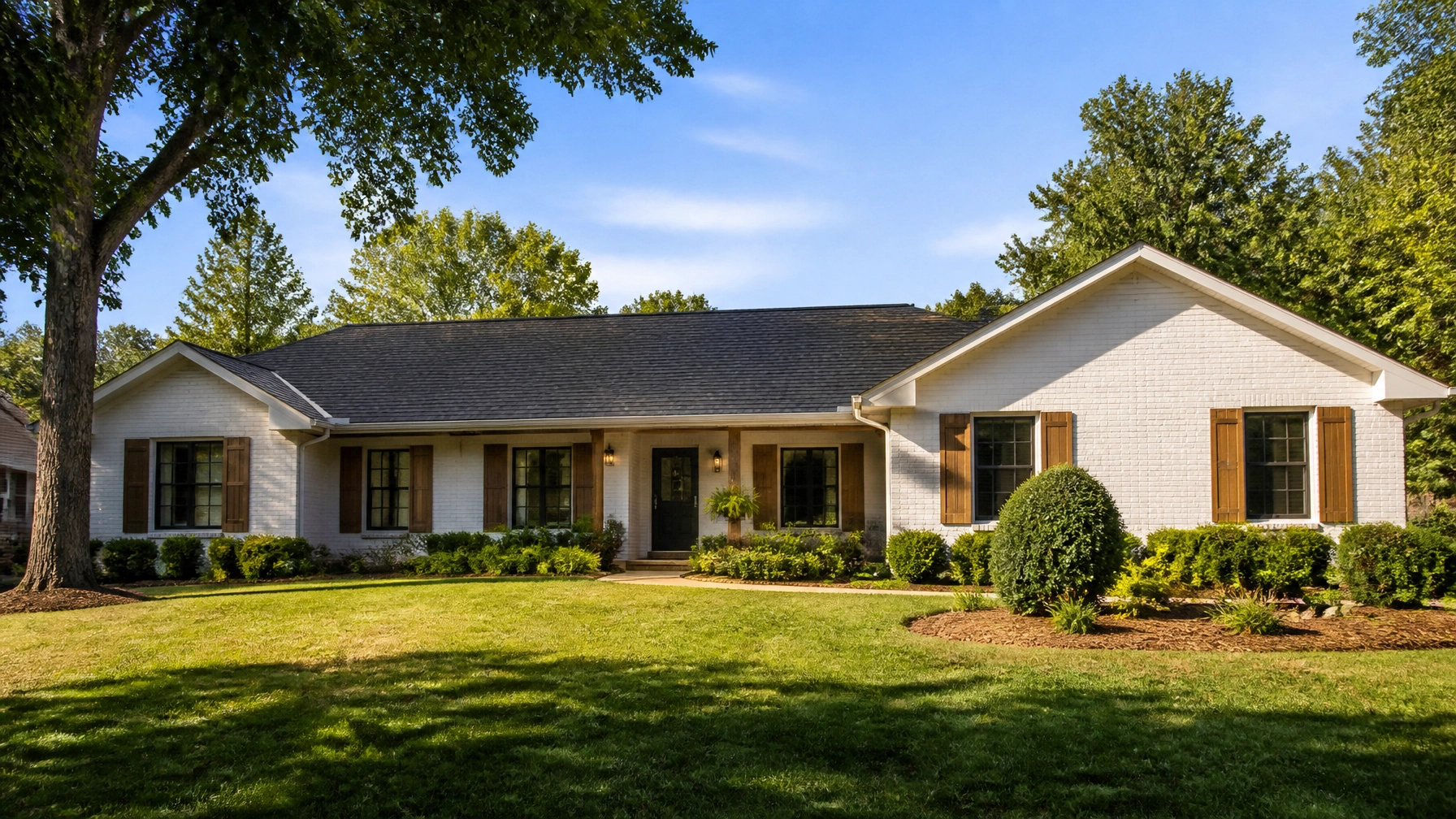
    Birmingham Alabama ranch home with a fresh medium-gray architectural shingle roof and clean rooflines

    2026 Birmingham roof replacement price ranges

    For planning purposes, Get My Roof Estimate Now’s roof cost calculator places most U.S. roof replacements in the $9,000–$22,000 range. Birmingham pricing depends on roof size, pitch, material, tear-off requirements, access, and local labor.

    For an average roof of approximately 2,000–2,200 square feet, current Birmingham planning ranges commonly fall near:

    • 3-tab asphalt shingles (Budget): $6,000–$9,000
    • Architectural asphalt shingles (Popular): $9,000–$15,000
    • Designer or impact-resistant shingles (Premium): $13,000–$22,000
    • Metal roofing (Long-life): $17,000–$28,000 or more

    These are budget ranges, not binding contractor quotes. Hidden decking damage, ventilation improvements, flashing replacement, permits, and complex roof geometry can change the final cost.

    The satellite estimate gives you a faster starting point by accounting for the factors that drive price:

    • Roof size, measured in squares
    • Roof pitch
    • Roof complexity
    • Selected material
    • Birmingham-area pricing
    • Optional old-roof tear-off

    Which roof offers the best home value?

    The best roof for home value is usually the one that matches your property, neighborhood, budget, and ownership timeline.

    Architectural shingles (Popular ROI choice)

    Architectural shingles are often the strongest choice for homeowners focused on roof replacement ROI and resale appeal. They provide:

    • A clean, dimensional appearance
    • Many color options
    • Broad buyer acceptance
    • Lower upfront cost than metal
    • A typical service life of roughly 20–30 years, depending on product and installation

    For many Birmingham homes, a quality architectural shingle roof delivers the best balance between cost, appearance, and marketability.

    Metal roofing (Premium long-term choice)

    Metal roofing generally costs more upfront but can last 40–70 years, depending on the system and maintenance. It may be a better fit if you plan to remain in the home long term and value:

    • Longevity
    • Low maintenance
    • Wind and fire resistance
    • Reflective energy performance
    • A modern or distinctive appearance

    Metal can improve roof curb appeal and may attract buyers who specifically want a long-life roof. However, buyers do not always pay the full installation premium at resale.

    Modern Alabama home with a new matte dark standing-seam metal roof and strong curb appeal

    How a new roof affects resale value

    A new roof rarely adds its full cost to the sale price. Its value often comes from preventing problems that make buyers hesitate.

    A roof replacement can help by:

    • Reducing inspection objections
    • Limiting repair-credit requests
    • Improving exterior appearance
    • Supporting buyer confidence
    • Making the home easier to finance and insure
    • Removing concerns about immediate replacement costs

    In other words, a new roof may protect your roof replacement resale value more than it creates a dollar-for-dollar gain.

    For a Birmingham homeowner spending $12,000 on architectural shingles, the financial return may include a combination of improved sale price, fewer concessions, a faster sale, and avoided repair negotiations. The actual return depends on neighborhood conditions, comparable properties, roof quality, and market timing.

    If resale is your main goal within the next five to ten years, architectural shingles are often the practical choice. If you expect to stay for decades, metal may produce stronger life-cycle value even when its short-term resale ROI is less certain.

    A smart post-storm roof checklist

    After hail, high winds, or tornado activity:

    1. Check for missing, lifted, cracked, or bruised shingles from the ground.
    2. Look for granules collecting in gutters and downspouts.
    3. Inspect vents, flashing, gutters, soffits, and fascia.
    4. Check ceilings and attic areas for new stains or moisture.
    5. Photograph visible damage without climbing onto the roof.
    6. Review the NWS Birmingham storm information and local reports.
    7. Request a satellite roof measurement to understand your replacement budget.
    8. Contact your insurer and a licensed, insured roofing contractor if damage appears likely.

    Satellite technology can identify roof dimensions and help locate storm-affected areas. It cannot see every concealed issue, determine structural integrity, or replace an in-person inspection for an insurance claim.

    Birmingham’s faster path to roof planning

    Alabama’s satellite sector is advancing quickly: from Hydra terminal manufacturing in Florence-Muscle Shoals to startup support in Huntsville and weather monitoring through NOAA GOES and NWS Birmingham.

    For homeowners, the practical result is simple: better information arrives sooner.

    Whether your roof is 18 years old, showing hail damage, or being evaluated before listing your home, you can get a property-specific starting point without waiting days for a contractor visit.

    Get your free Birmingham roof estimate in under 60 seconds. It is satellite-measured, transparent, and includes low-middle-high pricing for multiple roofing materials.

    Alabama residential home with a newly replaced impact-resistant shingle roof after severe weather, surrounded by green Southern landscaping

    Frequently asked questions

    How accurate is a satellite roof estimate?

    Satellite measurements are typically about 90–95% accurate for roof dimensions. A contractor should still verify the roof onsite before signing a final replacement contract.

    How much does a new roof cost in Birmingham in 2026?

    A typical Birmingham replacement may cost approximately $9,000–$15,000 for architectural shingles and $17,000–$28,000 or more for metal, depending on size and complexity.

    Does a new roof increase home value?

    It can improve buyer appeal and reduce inspection-related concessions. However, homeowners should not assume they will recover the entire replacement cost at resale.

    What is the best roof for home value?

    For many Birmingham properties, architectural shingles offer the strongest balance of appearance, cost, and resale appeal. Metal may be better for long-term ownership, durability, and energy performance.

  • Daily FAQ Blitz – Slot 2: AEO FAQ Quick Answers for St. Petersburg, FL Homeowners (2026)

    Daily FAQ Blitz – Slot 2: AEO FAQ Quick Answers for St. Petersburg, FL Homeowners (2026)

    St. Petersburg, known as the “Sunshine City,” sits on a peninsula in Pinellas County between Tampa Bay and the Gulf of Mexico. Salt air, intense ultraviolet exposure, high humidity, summer thunderstorms, and hurricane-season winds all affect local roofing costs and service life.

    The city’s housing stock also matters. St. Petersburg includes many mid-century ranch homes, bungalows, older coastal properties, and homes with flat or low-slope roof sections. The seven quick answers below cover the most common roof replacement questions St. Pete homeowners ask in 2026.

    1. How much does a roof replacement cost in St. Petersburg in 2026?

    Quick answer: An architectural shingle roof typically costs about $13,000–$21,000 for a 2,000-square-foot home roof in St. Petersburg. Standing-seam metal commonly runs $21,000–$42,000 installed.

    Typical 2026 price ranges include:

    • Architectural shingles (Popular): About $6.50–$9.50 per square foot
    • Standing-seam metal (Premium): About $10.00–$16.00 per square foot
    • Clay or concrete tile (Popular in Tampa Bay): About $12.00–$18.00 per square foot
    • TPO or membrane roofing for flat roofs: About $8.00–$12.00 per square foot

    Roofing contractors price materials and labor by squares. One roofing square equals 100 square feet. A 2,000-square-foot roof contains approximately 20 squares before accounting for waste and additional roof planes.

    The final price depends on more than roof area. Common cost factors include:

    • Roof pitch and accessibility
    • Valleys, dormers, skylights, and pipe penetrations
    • Tear-off and disposal of the existing roof
    • Rotted or damaged roof decking
    • Coastal wind-rated installation requirements
    • Permit and inspection fees
    • Local labor rates
    • Flashing, ventilation, and drainage work

    Older St. Pete ranch homes and bungalows may have simpler rooflines, but flat or low-slope sections can require TPO or another membrane system instead of shingles. Use the roof cost calculator for a broad starting range, then compare it with a property-specific estimate.

    St. Petersburg bungalow with a new wind-rated architectural shingle roof

    2. Do I need a permit to replace my roof in St. Petersburg or Pinellas County?

    Quick answer: Yes. A full roof replacement requires a roofing permit in both the City of St. Petersburg and unincorporated Pinellas County.

    The City of St. Petersburg issues permits within city limits. Pinellas County Building Services handles permits for unincorporated areas. Permit and inspection fees typically run about $100–$400, depending on the project valuation and local requirements.

    Approval generally takes a few business days, although timing can vary with application volume and project details. A permitted reroof commonly includes:

    • A rough-in or dry-in inspection
    • An inspection of required roofing components
    • A final inspection after installation

    Your contractor should pull the permit and schedule the required inspections. Confirm that the permit is included in the written proposal and that the contractor is listed as the responsible license holder.

    Unpermitted roofing work can create significant problems, including:

    • Stop-work orders
    • Delays when selling or refinancing the property
    • Insurance claim disputes or denials
    • Problems documenting code compliance
    • Required corrective work at your expense

    For local permit information, check the City of St. Petersburg building services page and Pinellas County building permit resources.

    3. What wind requirements apply to roofs in Pinellas County?

    Quick answer: Roof replacements in Pinellas County must meet the Florida Building Code and wind-resistance requirements designed for roughly 150–160 mph wind speeds, depending on the property and design conditions.

    St. Petersburg is exposed to tropical storms, hurricanes, and strong coastal wind events. Your roofing system should be designed and installed for the applicable Florida Building Code requirements, including:

    • Wind-rated shingles meeting ASTM D3161 Class F
    • Correct shingle nailing patterns, commonly 6–8 nails per shingle
    • Ring-shank nails or other approved fasteners
    • Properly sealed roof-to-wall connections
    • Reinforced gable-end connections where required
    • Approved underlayment
    • Correct drip-edge installation
    • A secondary water barrier in coastal or high-wind applications

    Roofing products should carry a Florida Product Approval number, often shown as an FL#. This number confirms that the product has been approved for use under Florida’s testing and code system.

    Tile roofs require an approved tile attachment or tie-down system for the applicable wind zone. A proposal should explain how the selected tile, shingle, metal, or membrane system will comply with local code.

    Coastal Florida home with a new standing-seam metal roof

    4. Does a St. Petersburg roofer need a Florida contractor license?

    Quick answer: Yes. Roofing work that requires a permit must be performed by a properly licensed Florida contractor.

    Depending on the project and business structure, the contractor may hold a Certified or Registered Roofing Contractor license, or another qualifying license such as a Certified General or Certified Building Contractor license.

    Before signing a contract, verify:

    • The contractor’s license number through Florida DBPR license verification
    • General liability insurance
    • Workers’ compensation coverage
    • A Pinellas County occupational license, when applicable
    • A City of St. Petersburg business tax receipt, when applicable
    • A written workmanship and manufacturer warranty
    • The name of the legal contracting company on the proposal

    The license holder should be the party responsible for the permitted work. Be cautious if a salesperson asks you to sign a contract before identifying the licensed contractor who will pull the permit.

    5. How does homeowners insurance treat older roofs in Florida?

    Quick answer: Under Florida’s HB 7071 from 2022, insurers can offer policies that cover roofs older than about 15 years at Actual Cash Value unless the homeowner has a replacement-cost rider.

    Actual Cash Value, or ACV, means the insurer subtracts depreciation from the cost of the damaged roof. A replacement-cost policy may provide broader coverage, but the policy terms and eligibility requirements control.

    Florida homeowners should also plan for a separate hurricane deductible, commonly 1%–5% of the dwelling coverage limit. For example, a 2% deductible on a home insured for $400,000 would equal $8,000.

    A wind mitigation inspection may help qualify a home for insurance discounts. Inspectors may document:

    • Roof-deck attachment
    • Roof-to-wall connections
    • A secondary water barrier
    • Hip roof geometry
    • Shutter or opening-protection ratings
    • Other storm-resistance features

    Private insurers have also nonrenewed or restricted policies on older roofs in recent years. A newer, code-compliant roof can materially improve insurability, although it does not guarantee coverage or a lower premium.

    If an insurance claim is involved, remember that Florida contractors cannot legally waive or reimburse your insurance deductible. Ask your insurer about roof-age requirements before authorizing replacement work.

    6. How long does a roof last in St. Petersburg?

    Quick answer: Florida’s heat, ultraviolet exposure, humidity, salt air, algae, and storm activity can shorten roof service life by roughly 20%–30% compared with manufacturer ratings.

    Typical St. Petersburg service-life ranges include:

    • 3-tab shingles (Budget): About 12–18 years
    • Architectural shingles (Popular): About 15–25 years
    • Metal roofing (Premium): About 30–50+ years
    • Clay or concrete tile (Popular): About 30–50 years
    • TPO or flat membrane roofing: About 15–20 years

    Common warning signs on coastal Pinellas County homes include algae streaking, granule loss, curling shingles, cracked materials, exposed fasteners, deteriorated sealant, and rusted flashing.

    For architectural shingles, plan a professional inspection around year 12–15, even when the roof is not actively leaking. An inspection can identify flashing problems, storm damage, ventilation issues, and early deterioration before they become interior water damage.

    Modern low-slope Florida home with a clean TPO membrane roof

    7. Can I get a St. Petersburg roof estimate without a contractor visit?

    Quick answer: Yes. Get My Roof Estimate Now provides a free, satellite-powered roof replacement estimate in about 60 seconds.

    The service uses satellite imagery to measure the actual roof and estimates the property’s:

    • Roof size
    • Pitch
    • Complexity
    • Material requirements
    • Regional pricing
    • Low, middle, and high replacement ranges

    The estimate is designed to be approximately 90%–95% accurate for planning purposes. Homeowners can compare materials such as:

    • Architectural shingles (Popular)
    • Metal roofing (Premium)
    • Synthetic roofing
    • Reflective coatings
    • Other applicable systems

    There is no credit card requirement, and the estimate is available before scheduling an in-person contractor visit. This makes it easier to decide whether replacement fits your budget and to compare contractor proposals against a realistic starting range.

    A satellite estimate is a planning tool, not a final contract. A verified local contractor should still inspect the roof in person to confirm decking condition, flashing, ventilation, hidden damage, permit requirements, and installation details.

    Get Your Free St. Petersburg Roof Estimate

    Get a fast, no-cost starting point for your St. Petersburg roof replacement budget. Enter your address and receive a satellite-powered estimate in about 60 seconds.

    Get Your Free St. Petersburg Roof Estimate

  • 2026 Roof Replacement Cost in Knoxville, TN: Marble City Pricing, Permit Rules & Storm-Ready Tips

    2026 Roof Replacement Cost in Knoxville, TN: Marble City Pricing, Permit Rules & Storm-Ready Tips

    If you are researching 2026 roof replacement cost in Knoxville, budget about $8,000–$22,000 for a typical 2,000-square-foot roof with architectural shingles. Most mid-range projects fall between $11,000 and $16,000.

    Standing-seam metal is a larger investment. A comparable roof commonly costs $18,000–$40,000 or more, depending on panel type, roof complexity, tear-off requirements, and access.

    Knoxville pricing is moving higher in 2026. Asphalt shingles increased approximately 4%–8% early in the year, followed by another 6%–9% increase effective June 1. Steel and aluminum tariffs have pushed many metal roofing prices up 10%–22%.

    The fastest way to narrow your range is to measure your actual roof, not just your home’s floor area. Get a free satellite-powered estimate in about 60 seconds, or compare materials with the roof cost calculator.

    Knoxville Roof Replacement Cost at a Glance

    Roofers price by the square, which equals 100 square feet of roof area. A “2,000-square-foot roof” represents approximately 20 squares before waste and project-specific adjustments.

    Roofing material 2026 installed cost per square Typical 2,000 sq. ft. project
    Architectural shingles (Popular) $600–$900 $8,000–$22,000
    Standing-seam metal (Premium) $900–$1,800 $18,000–$40,000+

    These are planning ranges, not binding quotes. Roof pitch, valleys, dormers, chimney flashing, decking condition, and the number of existing layers can materially change the final price.

    For most Knoxville homeowners, architectural shingles are the practical middle-ground choice. Standing-seam metal costs more upfront but offers a longer service life and a distinct appearance.

    What Knoxville Homeowners Commonly Pay

    Architectural Shingles (Popular)

    A reasonable planning budget for a typical 2,000-square-foot roof is:

    • Lower range: $8,000–$11,000
    • Most common mid-range: $11,000–$16,000
    • Complex or premium project: $16,000–$22,000

    This generally includes tear-off, underlayment, new shingles, standard flashing, ventilation work, cleanup, and installation. Rotten decking, multiple roof layers, steep slopes, and extensive flashing replacement may add to the total.

    Architectural shingles work well across Knoxville’s established neighborhoods, including brick ranches in Sequoyah Hills, older homes in Bearden, and larger properties in West Knoxville and Farragut.

    Standing-Seam Metal (Premium)

    Standing-seam metal roofing typically runs $900–$1,800 per square installed. For a 2,000-square-foot roof, that produces a common project range of $18,000–$40,000 or more.

    Metal prices vary because contractors may use different gauges, coatings, seam systems, and trim packages. Complex roofs with multiple penetrations and valleys require more custom fabrication.

    Metal is increasingly popular on mountain-style Craftsman homes, modern homes, and rural properties outside Knoxville. It can also be a strong long-term option for Maryville and Alcoa commuters who plan to remain in their home for decades.

    Standing-seam metal roof on a brick colonial home near Knoxville and the Appalachian foothills

    Why Knoxville Roofing Prices Are Rising in 2026

    Material costs are only one part of the increase. Contractors are also managing:

    • Higher asphalt shingle prices after two 2026 increases
    • Steel and aluminum tariff impacts on metal panels
    • Regional labor shortages during storm-heavy periods
    • Disposal costs for tear-off materials
    • Increased demand for impact-resistant and upgraded roofing systems
    • Higher insurance, fuel, equipment, and safety costs

    When comparing estimates, confirm that each proposal includes the same scope. One quote may include synthetic underlayment, ice-and-water protection, ridge ventilation, and disposal while another lists them as upgrades.

    East Tennessee Weather and Storm-Ready Roofing

    Knoxville sits in the Tennessee Valley, where a roof must handle more than ordinary rain. Local conditions include:

    • Hot, humid summers
    • Freeze-thaw cycles during winter
    • Heavy mountain-valley storms
    • Microbursts and straight-line winds
    • Hail events associated with the broader Dixie Alley storm pattern
    • Fast temperature changes that stress flashing and sealants

    Several 2026 storm events demonstrate the concern. On May 20, Knoxville experienced reported wind gusts around 60 mph. The July 28 event brought straight-line winds and hail. On August 17, reports included approximately 60 mph gusts, 1-inch hail, and thousands of KUB power outages.

    After any severe storm, inspect from the ground for:

    • Missing or lifted shingles
    • Bruised or exposed shingle surfaces
    • Damaged vents and flashing
    • Fallen branches or impact marks
    • Granules collecting in gutters
    • Ceiling stains or attic moisture

    Do not climb onto the roof after a storm. A professional inspection is safer and can identify damage that is difficult to see from the ground.

    Storm-Ready Material Upgrades

    Ask about:

    • Impact-resistant shingles
    • High-wind-rated architectural shingles
    • Properly sealed pipe boots and flashing
    • Enhanced valley protection
    • Adequate ridge and soffit ventilation
    • Corrosion-resistant metal components

    These upgrades may increase your initial cost but can improve durability and reduce premature failures.

    New architectural shingle roof on a mountain-style Craftsman home in East Tennessee

    Knoxville and Knox County Roof Permit Rules

    Permit requirements depend on whether your property is inside the City of Knoxville or in unincorporated Knox County.

    City of Knoxville

    A building permit is generally required for a full reroof. The city calculates fees based on project valuation, with costs commonly estimated at approximately 0.55% of valuation, subject to a $50 minimum and applicable plan-review charges.

    The valuation normally includes labor and materials. A contractor can usually submit the permit through the City of Knoxville Accela portal. You can also review the city’s permit fee calculator.

    Minor, like-for-like repairs may be exempt when they do not change the roof’s structure, drainage, fire protection, or other code-related characteristics. If you are replacing most of the roof, changing materials, or repairing structural decking, confirm the requirement before work begins.

    Unincorporated Knox County

    For properties outside municipal limits, Knox County uses a valuation-based fee schedule. Building permit fees start at $50, and most permits include a separate $25 technology/access fee.

    Applications are handled through the county’s online permitting process. Review current requirements through Knox County Codes Administration and its online permits page.

    Your written roofing proposal should state:

    • Who pulls the permit
    • Which jurisdiction applies
    • The permit and inspection fees
    • Whether decking repairs require a revised permit
    • Who schedules the final inspection

    Tennessee Roofing License Requirements

    Tennessee licensing thresholds are important when comparing contractors.

    In Knox County:

    • Projects from $3,000 to less than $25,000 generally require a Tennessee Home Improvement license for residential remodeling work.
    • Projects of $25,000 or more require a Tennessee Contractor’s license.
    • A contractor who already holds the appropriate state contractor license may not need a separate Home Improvement license for work in that range.

    Verify the company through the Tennessee Board for Licensing Contractors. Also request current proof of general liability insurance and workers’ compensation coverage.

    This matters whether you are hiring in Fountain City, North Knoxville, South Knoxville, Farragut, or a nearby community. A low estimate is not a bargain if the contractor is unlicensed, uninsured, or planning to skip required permits.

    Insurance Tips for Wind and Hail Damage

    Tennessee policies often include percentage-based wind or hail deductibles. That means your deductible may be calculated as a percentage of your dwelling coverage, not a simple flat dollar amount.

    Check these policy details:

    • Your wind and hail deductible
    • Whether the policy pays replacement cost value (RCV) or actual cash value (ACV)
    • Roof-age limitations
    • Matching-material provisions
    • Claim filing deadlines
    • Exclusions for maintenance-related deterioration

    RCV coverage generally pays the cost to replace damaged materials, subject to your deductible and policy terms. ACV coverage subtracts depreciation based on the roof’s age and condition.

    After storm damage:

    1. Photograph damage from the ground.
    2. Save photos of fallen branches, hail, and water intrusion.
    3. Protect the interior from further damage if it is safe to do so.
    4. Notify your insurance company promptly.
    5. Keep receipts for emergency tarping or temporary repairs.
    6. Get a written roofing assessment.

    Do not sign an assignment of benefits or storm-repair contract without reading it carefully.

    Storm-ready architectural shingle roof on a brick ranch in Sequoyah Hills, Knoxville

    Roof Replacement ROI in Knoxville

    A roof replacement protects the structure and can improve resale appeal. Typical return-on-investment benchmarks are approximately:

    • Asphalt roofing: 60%–70%
    • Metal roofing: Up to approximately 80%

    ROI varies by neighborhood, material quality, installation quality, and buyer demand. A new architectural shingle roof may be the strongest value for a homeowner preparing to sell in Bearden, West Knoxville, or Fountain City. Metal can make more financial sense when long service life, energy performance, and reduced maintenance are priorities.

    Get Your 2026 Knoxville Roof Estimate

    National averages cannot account for your roof’s actual pitch, shape, valleys, or material quantity. Get a property-specific starting point before scheduling multiple contractor visits.

    With Get My Roof Estimate Now, you can:

    • Enter your Knoxville or Knox County address
    • Use satellite imagery to measure the roof
    • Review estimated size, pitch, and complexity
    • Compare architectural shingles and metal roofing
    • See low, middle, and high price ranges
    • Get results in about 60 seconds
    • Pay nothing and enter no credit card information

    The estimate is typically 90%–95% accurate for roof dimensions and is designed for budgeting. A licensed contractor should still confirm visible conditions, decking, flashing, and ventilation before installation.

    Start your free Knoxville roof estimate now and get a personal quote range for your home.

    Frequently Asked Questions

    How much does a roof replacement cost in Knoxville in 2026?

    A typical 2,000-square-foot architectural shingle roof costs approximately $8,000–$22,000, with many mid-range projects between $11,000 and $16,000. Standing-seam metal commonly costs $18,000–$40,000 or more.

    Do I need a permit to replace my roof in Knoxville?

    Yes, a full reroof generally requires a building permit in the City of Knoxville and unincorporated Knox County. Minor like-for-like repairs may be exempt. Confirm the scope with the correct permitting office.

    What license should a Knoxville roofer have?

    For residential projects from $3,000 to less than $25,000, verify the contractor’s Home Improvement license. Projects of $25,000 or more require a Tennessee Contractor’s license.

    Is metal roofing worth the added cost?

    Metal costs more initially but can provide a longer service life and may deliver ROI of up to approximately 80%. It is most suitable for homeowners who value durability and plan to stay in the home long term.

    Can I get a roof replacement estimate without an inspection?

    Yes. A satellite estimate can provide a fast, accurate planning range based on roof size, pitch, complexity, materials, and local pricing. An in-person contractor inspection is still needed before signing a final installation contract.

  • 2026 Roof Replacement Cost in Memphis, TN: Bluff City Pricing, Permit Rules & Storm-Ready Tips

    2026 Roof Replacement Cost in Memphis, TN: Bluff City Pricing, Permit Rules & Storm-Ready Tips

    A full roof replacement in Memphis typically costs $10,000–$22,300 in 2026 for a 2,000-square-foot roof using architectural shingles (Popular). Local contractors commonly charge $325–$885 per roofing square installed, including tear-off, labor, and materials. One roofing square equals 100 square feet.

    Your final roof replacement cost in Memphis depends on roof size, pitch, design complexity, material, decking condition, storm upgrades, and the neighborhood where you live.

    This guide covers 2026 pricing across Shelby County, Memphis roofing permit rules, contractor licensing, insurance claims, and storm-ready material choices.

    2026 Roof Replacement Cost in Memphis at a Glance

    For a typical 2,000-square-foot roof, use these planning ranges:

    • Architectural shingles (Popular): $10,000–$22,300
    • Installed cost per square: $325–$885
    • Permit and inspection allowance: Approximately $150–$500 when required
    • Common mid-range budget: $12,000–$18,000
    • Larger or complex roofs: $18,000–$25,000 or more

    The roof’s actual surface area: not the home’s interior square footage: determines the estimate. A 2,000-square-foot home may have a roof measuring 2,200–2,700 square feet because of pitch, overhangs, porches, and attached garages.

    Roofers price by squares because it accounts for the complete roof system. Your quote may include:

    • Shingle materials and starter strips
    • Synthetic underlayment
    • Drip edge and valley materials
    • Flashing around walls, chimneys, and vents
    • Ridge vents and other ventilation components
    • Tear-off and disposal
    • Installation labor
    • Permit or inspection fees
    • Decking repairs, if needed

    Memphis Neighborhood Roof Pricing

    Roof replacement prices vary across Shelby County. Differences usually reflect home size, roof design, property values, contractor demand, accessibility, and material selections.

    Typical neighborhood ranges for architectural shingle replacements include:

    • East Memphis: $12,800–$18,400
    • Germantown: $14,663–$19,838
    • Bartlett: $10,850–$14,680
    • Cordova: $11,417–$15,447

    Citywide ZIP-code examples can be lower for smaller, simpler, or more accessible roofs:

    • 38134: $8,211–$11,109
    • 38141: $6,940–$9,390

    These ZIP-code figures are useful for comparison, but they are not guaranteed project quotes. A steep roof in 38141 may cost more than a simple ranch roof in East Memphis.

    Local homes in Midtown, Whitehaven, Harbor Town, and older sections of East Memphis may also have pricing variables such as aging decking, multiple roof layers, low-slope additions, dormers, or difficult access.

    Roof Material Options for Memphis Homes

    Architectural Shingles (Popular)

    Typical budget: $10,000–$22,300

    Architectural shingles remain the most common choice for Memphis homeowners. They offer a strong balance of cost, appearance, availability, and performance.

    They are a practical fit for:

    • Ranch homes in East Memphis and Bartlett
    • Brick homes in Midtown and Whitehaven
    • Older homes being prepared for sale
    • Homeowners replacing a 15- to 25-year-old asphalt roof

    Choose a reputable product with a suitable wind rating and algae resistance. Memphis’s hot, humid summers make ventilation and proper installation especially important.

    Class 4 Impact-Resistant Shingles (Enhanced)

    Class 4 shingles generally cost more than standard architectural shingles, but they are designed to resist impact better during hailstorms. Memphis sits in the broader Dixie Alley region, where severe thunderstorms, hail, high winds, and tornado activity can create sudden roof damage.

    Potential benefits include:

    • Better resistance to hail impacts
    • Increased durability during severe weather
    • Possible insurance discounts, depending on your carrier
    • A stronger storm-readiness profile for long-term homeowners

    Ask your insurer whether a Class 4 product qualifies for a premium reduction before choosing it.

    Class 4 impact-resistant shingles and roof flashing on a Memphis home after storm season

    Standing-Seam Metal (Premium)

    Standing-seam metal roofing is a premium option with a typical installed cost of approximately $20,000–$30,000 or more for an average-sized roof.

    Metal can make sense when you:

    • Plan to stay in your home for decades
    • Want a long service life
    • Prefer modern styling
    • Are replacing a roof on a higher-value home in Germantown or Collierville
    • Want a material with strong wind and weather performance

    The upfront price is higher, but the long lifespan can improve the cost per year of ownership.

    Modern Memphis-area home with a premium standing-seam metal roof

    What Memphis Weather Does to Your Roof

    Memphis roofs face several conditions that accelerate wear:

    • Hot summer temperatures
    • High humidity
    • Severe thunderstorms
    • Hail and wind
    • Tornado-related debris
    • Heavy rain and occasional freeze-thaw cycles

    After a major storm, inspect the roof from the ground and check your gutters for:

    • Excessive granule loss
    • Bruised or dented shingles
    • Missing shingles
    • Bent or loose flashing
    • Dented gutters or downspouts
    • Fallen branches or punctures
    • Water stains in the attic or ceiling

    Do not climb onto the roof after a storm. A professional inspection can identify damage that is difficult to see from the ground.

    Memphis Roofing Permit Rules

    The Memphis/Shelby County Office of Construction Code Enforcement (OCCE) oversees local construction requirements. For a full roof replacement or tear-off, homeowners should plan on obtaining the required permit before work begins. Minor repairs generally do not require a permit.

    Permit requirements can change based on the type of property and the work involved. A permit or additional inspection may be required when the project includes:

    • Full tear-off and replacement
    • Decking repair or replacement
    • Structural changes
    • Modified roof supports
    • Work on attached dwellings, multifamily buildings, or commercial property

    A practical 2026 planning allowance is $150–$500 for permits and inspections, although the actual charge depends on project scope and local fee schedules.

    Memphis and Shelby County use the 2021 International Residential Code with local amendments. Important roofing details include:

    • Drip edge requirements are enforced.
    • Valley and underlayment rules apply.
    • Low-slope roofing requirements may apply to additions and porch roofs.
    • The local amendment does not require an ice barrier in the same way some jurisdictions do.
    • Decking repairs can trigger permit and inspection requirements.

    Before signing a contract, ask the roofer in writing:

    1. Who will pull the permit?
    2. Is the permit included in the contract price?
    3. What inspections are required?
    4. What happens if damaged decking is found after tear-off?

    You can review local construction information through the Memphis and Shelby County construction enforcement resources.

    Tennessee Contractor License Rules

    Shelby County is one of the Tennessee counties where the state Home Improvement licensing program applies.

    For residential roofing projects:

    • Under $3,000: A state Home Improvement license is generally not required, although other local requirements may apply.
    • More than $3,000 and less than $25,000: The contractor should hold a Home Improvement license or an appropriate Contractor’s license.
    • $25,000 or more: A Tennessee Contractor’s license is required with the proper classification.

    Verify the contractor through the official Tennessee Board for Licensing Contractors. Check the license status, expiration date, business name, and classification.

    Also request proof of:

    • General liability insurance
    • Workers’ compensation coverage
    • Written workmanship warranty
    • Recent Memphis-area references

    Storm Damage, Insurance, and Roof Age

    Tennessee homeowners should check their policy promptly after hail or wind damage. Many policies require notice within a specific period, often 180 days to one year, but your policy controls.

    Review these sections:

    • Duties after loss
    • Notice requirements
    • Loss settlement
    • Replacement Cost Value (RCV)
    • Actual Cash Value (ACV)
    • Ordinance or law coverage
    • Proof-of-loss deadlines

    With RCV coverage, the insurer may initially pay the depreciated amount and release the remaining recoverable depreciation after the roof is replaced and documentation is submitted.

    With ACV coverage, depreciation is deducted based on the roof’s age and condition. This can significantly reduce the payment on roofs that are more than 15–20 years old.

    Avoid common storm-claim red flags:

    • A contractor offering to waive your deductible
    • Pressure to sign immediately
    • An Assignment of Benefits contract you do not understand
    • Requests for a large payment before materials arrive
    • Claims that insurance will “definitely” pay for the entire roof

    Document damage with photos from the ground, but do not make major repairs before speaking with your carrier unless temporary protection is needed to prevent further damage.

    Roof ROI and Memphis Home Value

    A new roof can be a strong selling point for homes in Bluff City neighborhoods. Buyers often view a recently replaced roof as protection from immediate repair costs, inspection surprises, and insurance complications.

    A new roof may help your home:

    • Attract more buyers
    • Reduce negotiation over roof age
    • Improve curb appeal
    • Support a smoother inspection
    • Protect against storm-related concerns

    However, roof replacement is not always a dollar-for-dollar improvement in resale value. Material choice, workmanship, documentation, and local buyer expectations all matter.

    Get Your Memphis Roof Replacement Estimate in 60 Seconds

    Before scheduling multiple contractor visits, get a property-specific starting point. Get My Roof Estimate Now uses satellite imagery to measure roof size, pitch, and complexity.

    You receive:

    • A free estimate with no credit card required
    • Low, mid-range, and high pricing
    • Material comparisons
    • Location-adjusted costs
    • Results in approximately 60 seconds
    • Measurements typically accurate within 90–95%

    You can also compare assumptions with the roof cost calculator.

    Whether you live in East Memphis, Midtown, Germantown, Bartlett, Cordova, Collierville, Whitehaven, or Harbor Town, start with an instant estimate before choosing a roofing contractor.

    Get your free Memphis roof replacement estimate now

    Sources and Local References