Blog

  • Daily FAQ Blitz – Slot 3: AEO FAQ Quick Answers for Wilmington, NC Homeowners (2026)

    Daily FAQ Blitz – Slot 3: AEO FAQ Quick Answers for Wilmington, NC Homeowners (2026)

    Wilmington homeowners face more roof stress than many inland North Carolina residents. Hurricanes, tropical storms, wind-driven rain, salt air, and high humidity can shorten the useful life of roofing materials: especially near Wrightsville Beach, Carolina Beach, and other exposed coastal areas.

    In 2026, a typical 1,500–2,500 square foot architectural shingle roof replacement in Wilmington costs approximately $10,000–$18,500. Larger or more complex projects can exceed $20,000 when they include tear-off, decking repairs, improved flashing, or coastal wind upgrades. Basic asphalt shingles may cost less, while synthetic roofing falls in the middle and metal roofing can reach $30,000 or more.

    Below are seven quick answers for Wilmington and New Hanover County homeowners, including those in ZIP codes such as 28401, 28403, 28409, and 28412.

    1. How much does a new roof cost in Wilmington, NC, in 2026?

    Quick answer: A standard architectural shingle replacement typically costs $10,000–$18,500 in Wilmington, with pricing starting around $350–$700 or more per roofing square.

    A roofing square equals 100 square feet of roof area. Your final price depends on more than the home’s interior square footage.

    Common 2026 planning ranges

    • Basic asphalt shingles (Budget): Approximately $7,500–$12,500
    • Architectural shingles (Popular): Approximately $10,000–$18,500
    • Synthetic roofing (Mid-range): Often $15,000–$25,000+
    • Metal roofing (Premium): Frequently $20,000–$30,000+, with larger projects reaching $38,000 or more
    • Tear-off and disposal: Adds to labor and project cost
    • Decking repairs: May add several thousand dollars if hidden damage is discovered
    • Coastal wind upgrades: Increase upfront cost but may improve storm performance

    Wilmington roofs with multiple valleys, dormers, steep pitches, skylights, or difficult access generally cost more than simple ranch-style roofs.

    For a general starting point, use the Get My Roof Estimate Now cost calculator. For property-specific pricing, the satellite-powered estimate tool measures your actual roof and provides low-middle-high ranges.

    2. Do I need a permit for roof replacement in Wilmington?

    Quick answer: A building permit is generally required for a full roof replacement in Wilmington and New Hanover County, especially when the roof decking is disturbed.

    Permit requirements can vary based on the property’s location and the exact scope of work. A simple repair may be treated differently from a complete tear-off and replacement.

    A permit is especially important when the project includes:

    • Replacement of roof decking or structural members
    • Changes to the roof structure, slope, or design
    • Significant ventilation or insulation work
    • Installation of heavier materials, such as tile
    • Coastal wind-load or code-compliance upgrades
    • Work on a property in a historic district or special overlay

    For New Hanover County properties, homeowners and contractors typically work through the county’s Permits & Inspections department and its COAST online portal. The county office is located at 230 Government Center Drive, Suite 170.

    Properties within Wilmington city limits may also require coordination with the City of Wilmington’s building inspection process. Before work begins, ask:

    “Do I need a permit for a complete roof tear-off and replacement at this address?”

    Coastal wind-load compliance matters in Wilmington. A contractor should be able to explain how the proposed roof system meets current requirements.

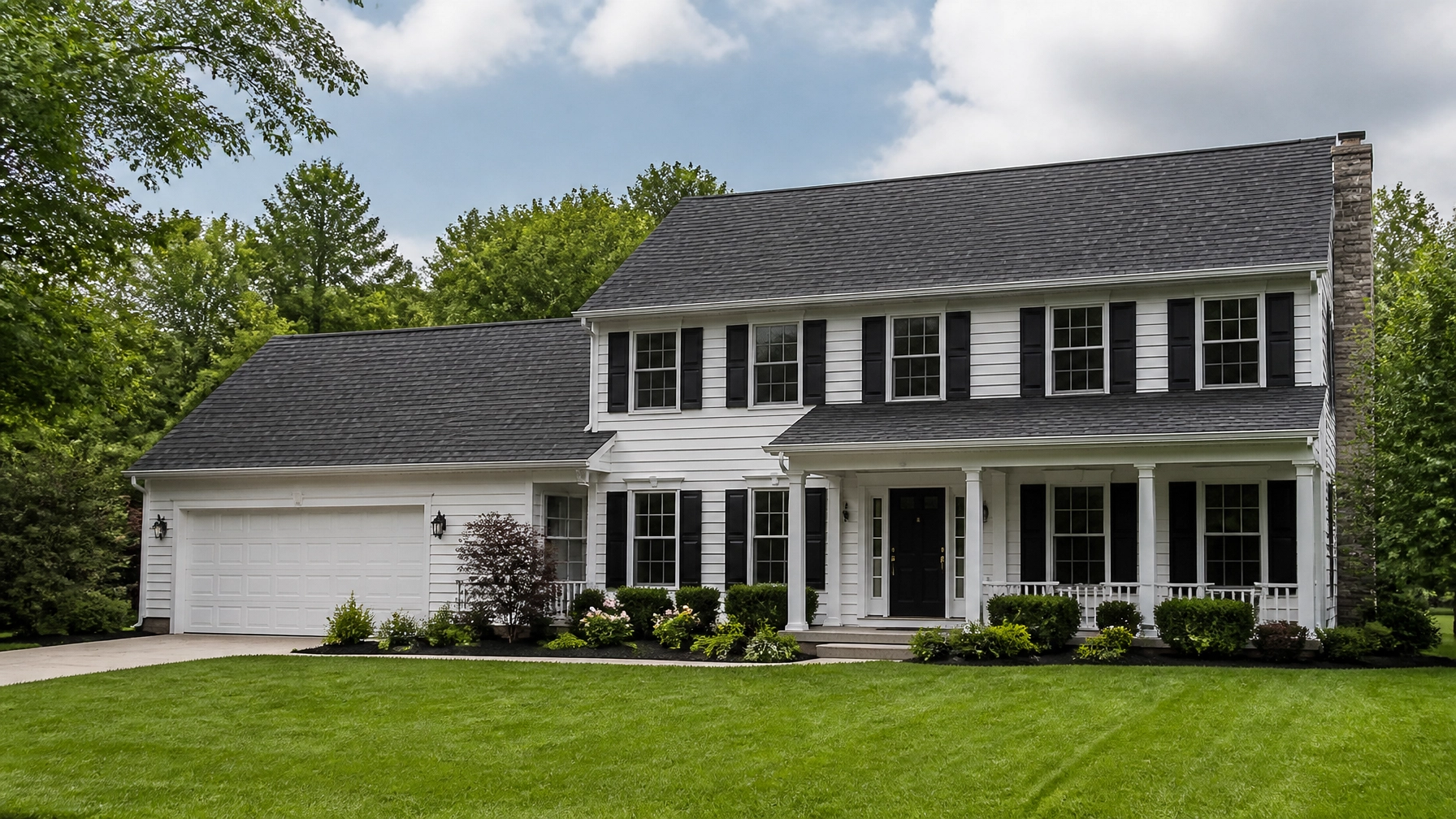
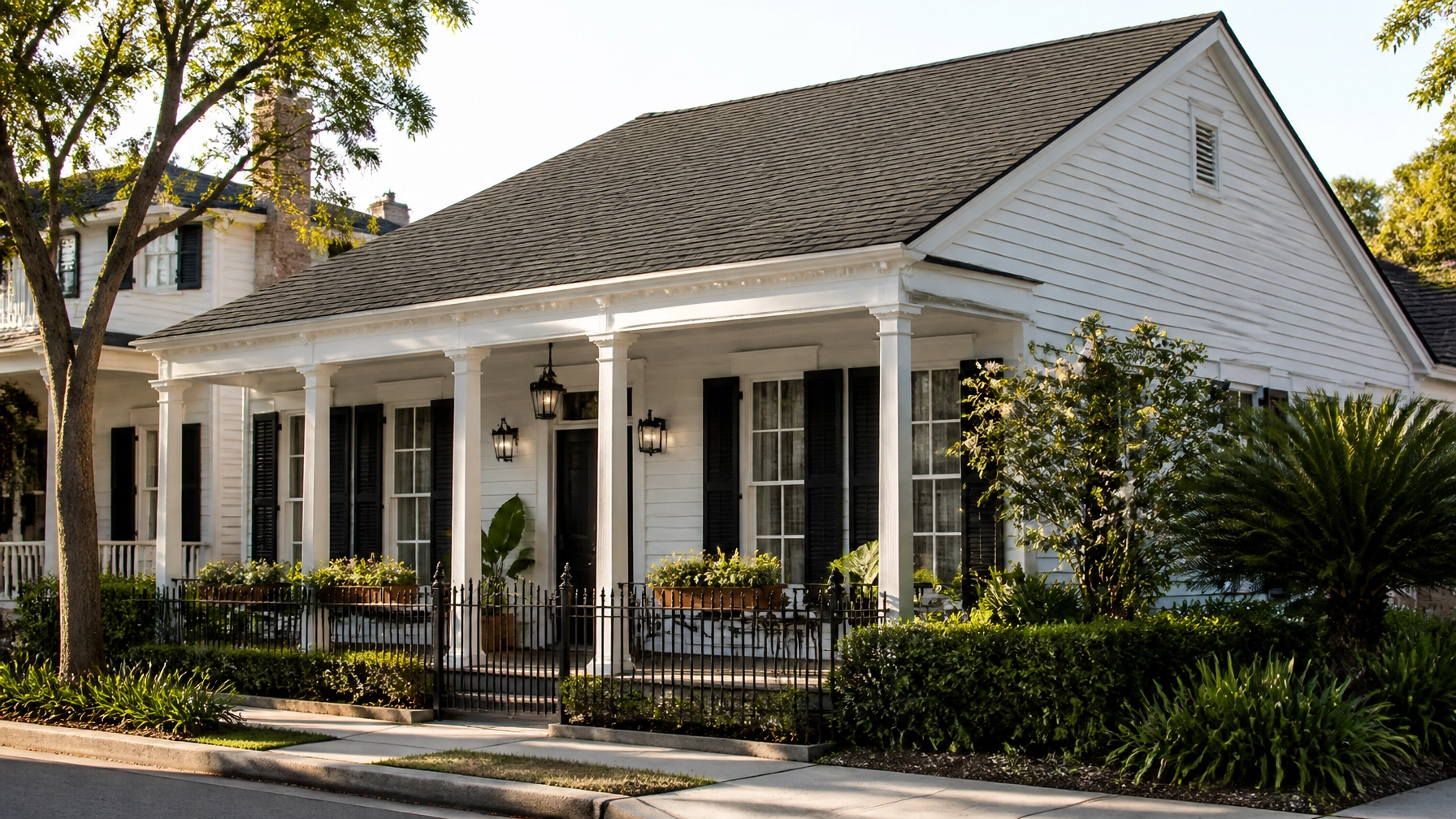
    New architectural shingle roof on a two-story colonial home in coastal Wilmington

    Architectural shingles are a common Wilmington choice because they balance cost, appearance, and wind performance.

    3. Does my Wilmington roofing contractor need a North Carolina license?

    Quick answer: A North Carolina general contractor license is required when the total project value is $40,000 or more, including labor and materials.

    This threshold comes from N.C.G.S. 87-1. Roofing work falls under the North Carolina licensing system’s S(Roofing) specialty classification.

    For a larger Wilmington project: especially a premium metal roof, tile installation, major structural repair, or full storm restoration: verify the contractor before signing.

    Check these details

    • License number and business name
    • Active license status
    • Financial limit appropriate for the project
    • General liability insurance
    • Workers’ compensation coverage
    • Manufacturer certifications, if warranty coverage matters
    • Experience with coastal wind requirements and hurricane restoration

    Use the North Carolina Licensing Board for General Contractors public search portal to check a contractor’s status. The NCLBGC consumer resources also explain when a licensed contractor is required.

    A license does not automatically guarantee quality. Still, it gives you an important verification point before allowing work on your Wilmington home.

    4. Will homeowners insurance cover roof replacement after a Wilmington storm?

    Quick answer: Insurance may cover sudden wind or hurricane damage, but it usually does not cover normal aging, poor maintenance, or gradual deterioration.

    Wilmington homeowners should review their policies before hurricane season. Coastal policies often treat older roofs differently. Roofs approximately 15–20 years old or more may be settled at Actual Cash Value (ACV) instead of replacement cost, depending on the insurer and policy terms.

    That means depreciation may be deducted from the claim payment.

    Your policy may also include a named-storm or hurricane deductible commonly ranging from 1% to 5% of the dwelling coverage amount. A 2% deductible on a home insured for $350,000 would equal $7,000.

    If a storm damages your roof

    1. Photograph and video the damage from the ground.
    2. Make temporary emergency repairs to prevent additional water intrusion.
    3. Save receipts for tarping or emergency work.
    4. Report the damage promptly to your insurer.
    5. Ask for a written explanation of coverage and depreciation.
    6. Avoid signing a broad Assignment of Benefits agreement without understanding it.
    7. Request an appraisal if a covered-damage valuation dispute cannot be resolved.

    Windstorm or hail coverage may be excluded or handled separately. The North Carolina Department of Insurance homeowners insurance guidance recommends confirming coverage directly with your insurance agent.

    High-risk coastal properties may obtain coverage through the North Carolina Insurance Underwriting Association, commonly known as the Beach Plan.

    5. What roofing material is best for Wilmington’s coastal climate?

    Quick answer: Architectural shingles are the practical popular choice, Class 4 shingles add storm resistance, and metal roofing offers premium durability and longevity.

    Architectural shingles (Popular)

    • Good balance of cost and appearance
    • Better wind performance than basic three-tab shingles
    • Common expected life of approximately 25–30 years
    • Broad selection of colors and profiles
    • Easier and less expensive to repair than many premium systems

    Class 4 impact-resistant shingles (Storm-ready)

    • Designed to resist impact better than standard shingles
    • May be useful in severe-weather areas
    • Could qualify for insurance credits with some carriers
    • Must be installed as part of a complete, properly specified system

    Metal roofing (Premium)

    • Typical service life of approximately 40–70 years
    • Strong wind performance when correctly installed
    • Low routine maintenance
    • Higher upfront investment
    • Requires coastal-grade fasteners, protective finishes, and compatible flashing

    When comparing metal and shingles, review the metal roofing versus asphalt shingles guide. In Wilmington, the best material is the one that fits your budget, roof design, insurance requirements, and expected time in the home.

    Modern Wilmington-area home with a premium coastal-grade standing seam metal roof

    Metal roofing costs more initially but may provide a 40–70 year service life when properly installed.

    6. Should I repair or replace my Wilmington roof?

    Quick answer: Repair isolated damage when the roof is otherwise healthy; consider replacement when damage is widespread, the roof is near the end of its service life, or repairs keep recurring.

    A repair may make sense when:

    • Damage is limited to a small area
    • Shingles are otherwise flexible and intact
    • There are no widespread leaks or soft decking areas
    • Flashing or a single penetration is the primary problem
    • The roof is relatively young

    Replacement is more reasonable when:

    • The roof is approximately 15–30 years old
    • Shingles are curling, brittle, missing, or losing large amounts of granules
    • Leaks appear in multiple areas
    • Storm damage is widespread
    • The decking has rot or repeated moisture damage
    • Previous repairs have not solved the problem
    • You are preparing to sell your Wilmington home

    Humidity and salt air can accelerate deterioration around exposed fasteners, flashing, vents, and roof edges. A professional inspection should evaluate both the visible roofing and the underlying deck.

    A satellite estimate can help you understand probable replacement pricing before scheduling contractor visits. It is not a physical inspection, but it gives you a fast budget benchmark.

    7. How accurate is a satellite roof estimate in Wilmington?

    Quick answer: Get My Roof Estimate Now uses satellite imagery to measure roof size, pitch, and complexity with approximately 90–95% accuracy and delivers a free estimate in under 60 seconds.

    The process does not require a contractor visit upfront. You enter your Wilmington address, and the system evaluates roof characteristics such as:

    • Roof area measured in squares
    • Roof pitch and steepness
    • Valleys, hips, and roof sections
    • Material options
    • Regional labor and pricing differences
    • Possible tear-off assumptions

    You receive low-middle-high pricing ranges rather than a single number that may hide important assumptions. There is no credit card requirement, and the service can connect you with verified, licensed, and insured local contractors.

    The estimate is designed for budgeting and planning. A contractor should still confirm decking condition, ventilation, flashing, code requirements, and storm-related repairs before finalizing a contract.

    Get a Wilmington roof estimate in 60 seconds

    Roof replacement is a significant investment, but the first step does not need to be complicated. Get an instant, free, satellite-powered estimate for your Wilmington, NC home before scheduling multiple contractor visits.

    Enter your address at Get My Roof Estimate Now, compare material options, and get transparent low-middle-high pricing with no credit card and no obligation.
  • Daily FAQ Blitz – Slot 5: AEO FAQ Quick Answers for New Orleans, LA Homeowners (2026)

    Daily FAQ Blitz – Slot 5: AEO FAQ Quick Answers for New Orleans, LA Homeowners (2026)

    New Orleans homeowners researching roof replacement may encounter the term AEO and wonder whether it affects roofing permits, contractors, or inspections. It does not. AEO means Authorized Economic Operator, a customs and international-trade designation, not a roofing credential.

    This quick FAQ covers what actually matters for a 2026 New Orleans roof replacement: permits, fees, code requirements, contractor licensing, roof layers, measurements, and realistic cost ranges.

    What does AEO mean?

    AEO means Authorized Economic Operator. It is an international customs designation for businesses involved in moving goods through global supply chains.

    The United States equivalent is C-TPAT, or Customs-Trade Partnership Against Terrorism, administered by U.S. Customs and Border Protection.

    AEO and C-TPAT relate to:

    • Importers and exporters
    • Freight carriers
    • Customs brokers
    • Ports and logistics companies
    • Supply-chain security and trade compliance

    They have nothing to do with residential roofing.

    Do New Orleans homeowners need AEO or C-TPAT for a roof replacement?

    No. Homeowners do not need AEO status, C-TPAT membership, or any similar customs designation to replace a roof in New Orleans.

    Instead, focus on:

    • A required city re-roofing permit, when applicable
    • A properly licensed Louisiana roofing contractor
    • Compliance with the Louisiana Residential Code 2021
    • Required geotagged installation photos
    • A written estimate with clear materials, labor, warranty, and exclusions

    Do I need a New Orleans roof replacement permit?

    Usually, yes, when the replacement affects 50% or more of the roof.

    For one- and two-family dwellings, the City of New Orleans requires a residential re-roofing permit when replacing 50% or more of the roof covering. Projects under 50% may be exempt from this specific permit unless another condition triggers permitting, such as structural work.

    Apply through the City’s One Stop App. The application generally requires:

    • A geotagged exterior photo of the house
    • A signed estimate or contract with homeowner and contractor signatures
    • Additional documentation if the property is in a historic district

    New Orleans requires geotagged photos for four installation stages:

    1. Tear-off or removal of existing roofing
    2. Underlayment installation
    3. Flashing and drip-edge installation
    4. Final shingles, metal panels, or other roofing material

    The city requires four clear, wide-angle photos per stage, front, left, right, and rear, for a total of 16 inspection photos.

    See the City’s Residential Re-Roofing Permit information before work begins.

    How much does a New Orleans re-roofing permit cost?

    The 2026 planning formula is:

    • $60 base building permit fee
    • Plus $5 per $1,000 of project value
    • A 50% surcharge may apply in HDLC or Vieux Carré historic districts

    For example, a $15,000 roofing project would have a base calculation of:

    • $60 base fee
    • $75 based on project value
    • $135 before any applicable surcharge or additional review

    Properties in the Historic District Landmarks Commission (HDLC) or Vieux Carré Commission (French Quarter) areas may require additional review. Depending on the material and location, a Certificate of Appropriateness may also be required.

    Historic-district requirements can affect material choices, colors, visible roof elements, and project timelines.

    What building code applies to New Orleans roofs?

    New Orleans residential roofing is governed by the Louisiana State Uniform Construction Code, including the Louisiana Residential Code 2021, which is based on the 2021 International Residential Code.

    New Orleans also enforces high-wind roofing requirements. Important provisions include:

    • A six-nail fastening pattern for asphalt shingles is the local standard
    • Shingles must meet applicable wind-rating and manufacturer requirements
    • Self-adhering or approved water-intrusion-resistant underlayment is required
    • Underlayment installation and fastening must follow code, product instructions, and local technical specifications
    • Drip edge is required at eaves and rake edges for shingle roofs

    The City’s Re-Roofing Permit Technical Specifications provide project-specific details. Ask your contractor to explain exactly how the proposed assembly meets New Orleans wind requirements.

    New Orleans Creole cottage with a new standing-seam metal roof

    How do I verify a Louisiana roofing contractor?

    As of January 1, 2026, any person or business that performs, bids on, offers, or manages residential roofing work valued at $7,500 or more must hold either:

    • A Residential Roofing classification, or
    • A Residential Construction classification

    A Home Improvement registration alone may not be enough for a qualifying roofing project.

    Verify the contractor through the Louisiana State Licensing Board for Contractors’ official Verify Licensure page.

    Before signing, confirm:

    • The license is active
    • The classification covers residential roofing
    • The license name matches the proposal and contract
    • The financial limit is sufficient for your project
    • The contractor carries current liability and workers’ compensation coverage
    • The contractor will handle the permit and required photo documentation

    Do not rely only on a license number printed on a business card. Search the official LSLBC database yourself.

    How many roofing layers are allowed?

    New Orleans generally allows a maximum of two total roofing layers.

    If two layers are already present, both layers must be removed before installing the new roof. An overlay may technically be possible over one existing layer, but it is generally not recommended in New Orleans because of:

    • Hurricane wind uplift
    • Added structural weight
    • Trapped moisture
    • Difficulty inspecting the roof deck
    • Hidden termite or water damage
    • Reduced ability to properly install flashing and underlayment

    A complete tear-off usually provides a better opportunity to inspect decking, replace damaged wood, and install the new roofing system correctly.

    What is a roofing square?

    One roofing square equals 100 square feet of roof area.

    A roof that measures approximately 2,000 square feet contains about 20 roofing squares, before adding waste, starter materials, ridge caps, and other accessories.

    Roofing contractors price many materials by the square. Roof area is not always the same as the home’s living area because pitch, overhangs, porches, dormers, valleys, and attached structures change the total roof surface.

    How accurate are satellite roof measurements?

    Satellite roof measurements are typically 90%–95% accurate for planning.

    They can estimate:

    • Roof area
    • Roof sections
    • Pitch
    • Complexity
    • Approximate number of squares
    • Material quantities

    A satellite estimate is useful for budgeting before contractor visits. It is not a substitute for an on-site inspection when decking damage, hidden leaks, structural concerns, or difficult access may be present.

    Get My Roof Estimate Now uses satellite imagery to produce a fast, property-specific planning estimate in about 60 seconds.

    How much does a 2,000-square-foot roof cost in New Orleans in 2026?

    For planning purposes, a 2,000-square-foot roof is approximately 20 squares. The following ranges reflect common 2026 New Orleans planning conditions:

    Roofing option Category Approximate price per square Approximate 20-square range
    Standard asphalt shingles Budget $300–$550 $6,000–$11,000
    Architectural asphalt shingles Popular $450–$750 $9,000–$15,000
    Standing-seam metal Premium $700–$1,500 $14,000–$30,000
    FORTIFIED, impact-resistant, or tile Premium/Specialty Custom pricing Varies significantly

    These are planning ranges, not guaranteed bids. Your final price can change because of:

    • Hurricane-wind fastening requirements
    • Hail-resistant or impact-rated products
    • Roof pitch and complexity
    • Tear-off and disposal
    • Damaged decking
    • Termite or moisture damage
    • Flashing, chimney, and ventilation work
    • Historic-district review
    • Local labor availability
    • Permit and inspection requirements

    Architectural shingles commonly fall around $450–$750 per square in New Orleans planning estimates. Standing-seam metal commonly falls around $700–$1,500 per square.

    For a broader material comparison, review Metal Roofing vs. Asphalt Shingles and the roof cost calculator.

    Raised New Orleans bungalow with a new storm-ready shingle roof

    How does New Orleans weather affect roofing cost?

    New Orleans roofs must handle more than ordinary rain. Local cost and material decisions are affected by:

    • Hurricane-force winds and wind uplift
    • Hail from severe storms
    • Heavy rainfall and flooding
    • Intense heat and humidity
    • Moss, algae, and mildew growth
    • Termites and moisture damage in roof decking
    • Rapid deterioration of exposed flashing and sealants

    A FORTIFIED roof can add upfront cost but may improve wind resistance and insurance eligibility. Louisiana homeowners should ask their insurer about available discounts. A verified FORTIFIED designation may qualify for a premium discount on the wind or hurricane portion of the policy; the exact amount depends on the insurer and designation level.

    What a complete roof estimate should include

    Before comparing contractors, make sure every estimate clearly lists:

    • Total roof area or number of squares
    • Roofing material, brand, profile, and color
    • Tear-off and disposal costs
    • Number of included roofing layers
    • Underlayment type and installation method
    • Drip edge and flashing scope
    • Ventilation work
    • Decking replacement price per sheet or square foot
    • Ice, water, or self-adhering membrane details
    • Wind and impact ratings
    • Permit responsibility and fees
    • Estimated project schedule
    • Workmanship and manufacturer warranties
    • Payment schedule
    • Cleanup and magnet sweeping
    • Exclusions and potential change-order costs

    A low bid that excludes decking, permits, flashing, or disposal may not be the lowest final price.

    Get a Free New Orleans Roof Estimate in 60 Seconds

    Start with a fast planning number before scheduling contractor visits. Get My Roof Estimate Now uses satellite imagery to estimate your roof’s size, pitch, and complexity.

    The estimate is:

    • Free
    • Available in about 60 seconds
    • Based on your property address
    • Provided with no credit card required
    • Designed to show low-to-middle-to-high planning ranges
    • Useful for comparing asphalt, metal, synthetic, coating, and other options

    Use the estimate to set a realistic budget, then confirm the final scope with a properly licensed local contractor.

    Quick-Recap FAQ for New Orleans Homeowners

    What does AEO mean?
    Authorized Economic Operator, a customs and international-trade designation.

    Do homeowners need AEO or C-TPAT?
    No. Neither is required for residential roof replacement.

    Do I need a permit?
    Usually, if replacing 50% or more of a one- or two-family home’s roof.

    How much is the permit?
    The base formula is $60 plus $5 per $1,000 of project value, with a possible 50% historic-district surcharge.

    What code applies?
    The Louisiana Residential Code 2021 and applicable New Orleans high-wind requirements.

    How do I verify a roofer?
    Use the official LSLBC Verify Licensure search.

    How many roof layers are allowed?
    Generally, two total layers. If two exist, both must be removed.

    What is a roofing square?
    One hundred square feet of roof area.

    How accurate are satellite measurements?
    Typically 90%–95% accurate for planning.

    What does a 2,000-square-foot roof cost in New Orleans in 2026?
    Approximately $6,000–$11,000 for standard asphalt, $9,000–$15,000 for architectural shingles, and $14,000–$30,000 for standing-seam metal, before project-specific additions.

  • Daily FAQ Blitz – Slot 2: AEO FAQ Quick Answers for Asheville, NC Homeowners (2026)

    Daily FAQ Blitz – Slot 2: AEO FAQ Quick Answers for Asheville, NC Homeowners (2026)

    Asheville roofs face a demanding mountain climate: heavy rain, hail, high winds, freeze-thaw cycles, and occasional snow. If your roof is 15–30 years old, has storm damage, or may affect a future home sale, these seven quick answers cover the most important 2026 questions.

    For a property-specific starting point, use the free roof cost calculator or request a free satellite-powered estimate.

    1. How much does a roof replacement cost in Asheville, NC, in 2026?

    Quick answer: An architectural shingle roof replacement in Asheville costs approximately $425–$700 per roofing square in 2026. One roofing square equals 100 square feet.

    A typical 25-square roof may cost approximately $10,600–$17,500. Most complete architectural shingle projects fall between $10,000 and $18,000, depending on the roof and installation requirements.

    Asheville architectural shingle pricing

    • Budget: $425–$500 per square
    • Popular: $500–$600 per square
    • Premium: $600–$700+ per square

    Your final price may change based on:

    • Roof pitch and accessibility
    • Valleys, dormers, chimneys, and other complexity
    • Tear-off and disposal
    • Material grade and warranty
    • Regional labor rates
    • Decking condition
    • Ventilation and flashing requirements

    Common add-on costs include:

    • Rotten or damaged decking repairs
    • Multiple-layer tear-off
    • New flashing around chimneys and walls
    • Ice-and-water shield
    • Ridge, soffit, or powered ventilation
    • Steep-slope labor
    • Permit and inspection fees

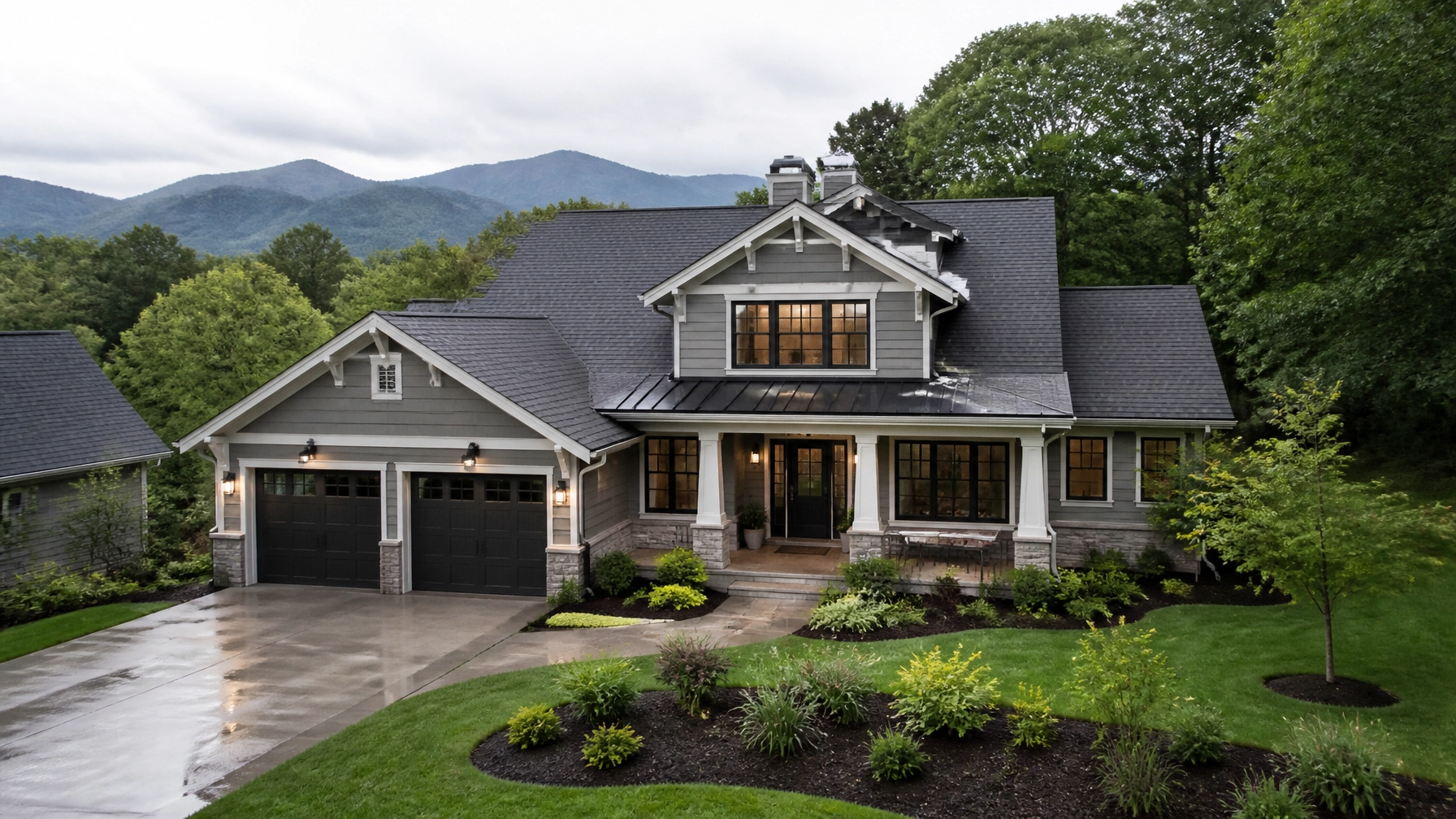
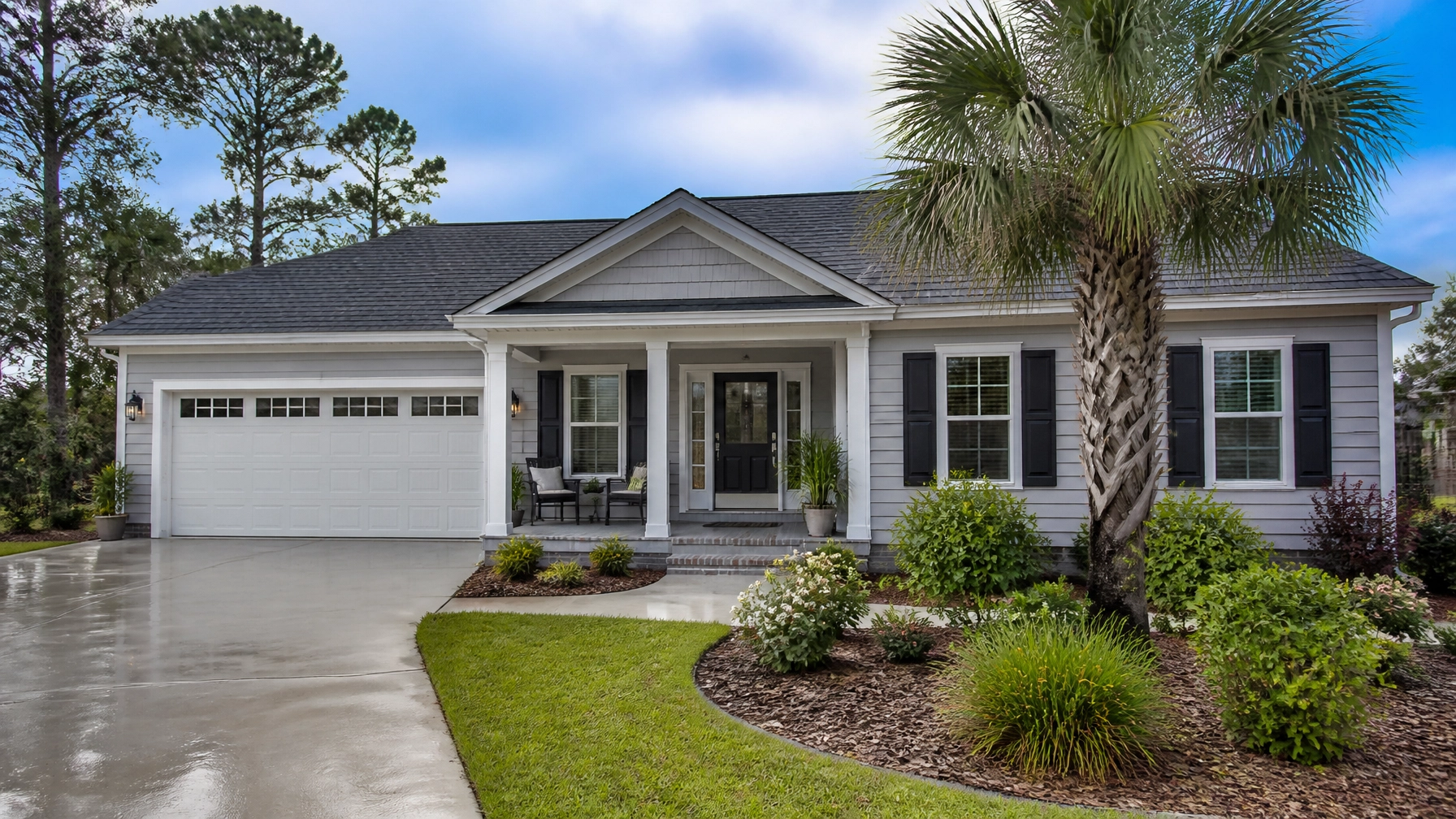
    Western North Carolina ranch home with a new gray architectural shingle roof after rain

    2. Does Asheville require a permit for roof replacement?

    Quick answer: Yes. The City of Asheville generally requires a building permit for full roof replacement and reroofing, including tear-offs.

    Roofing is excluded from North Carolina’s general exemption for certain projects under $40,000. Do not assume that a lower-cost roof replacement is permit-exempt.

    Apply through the City of Asheville Development Services online portal. The City’s Development Services Department processes permits and inspections.

    If the home is outside Asheville city limits, check with Buncombe County Permitting.

    Historic Asheville properties

    Homes in or near historic areas may have additional requirements. Montford and other locally designated districts can require review of roofing materials, color, profile, or visible design changes.

    Before work begins:

    • Confirm whether the property is in a local historic district or is a designated landmark.
    • Ask the contractor to identify all required approvals in writing.
    • Confirm whether a Certificate of Appropriateness is needed.
    • Verify that the building permit will be pulled after any required historic review.

    The City provides information about Certificates of Appropriateness.

    3. Does a roofing contractor in North Carolina need a license?

    Quick answer: North Carolina requires a state general contractor license for construction projects valued at $40,000 or more, under N.C.G.S. 87-1. Roofing is covered under the specialty S(Roofing) classification.

    Most residential roof replacements in Asheville fall below the $40,000 licensing threshold. However, homeowners should still verify the contractor’s qualifications before signing.

    Ask for:

    • Active North Carolina license information, when applicable
    • General liability insurance
    • Workers’ compensation coverage
    • Local references and recent project examples
    • A written scope of work
    • Confirmation of who pulls the permit

    You can check contractor information through the NC Licensing Board for General Contractors or its public search portal.

    A contractor should not ask you to pull a permit yourself without clearly explaining why. Confirm responsibility for permitting, inspections, and final approval before the project begins.

    4. What is the best roofing material for Asheville weather?

    Quick answer: Architectural asphalt shingles are the best all-around choice for most Asheville homeowners. They offer a strong balance of cost, appearance, repairability, and weather performance.

    Asheville’s mountain climate brings frequent rain, high winds, hail, freeze-thaw movement, and occasional snow. Your material choice should match both your budget and how long you plan to stay in the home.

    Three practical choices

    • Architectural shingles (Popular): Best balance of price, curb appeal, and performance. Typical lifespan is approximately 25–30 years with proper installation and maintenance.
    • Class 4 impact-resistant shingles (Storm-ready): A strong choice for homeowners concerned about hail. These may qualify for an insurance discount, but eligibility depends on your carrier and policy.
    • Standing-seam metal (Premium): Higher upfront cost, but long service life, low maintenance, strong wind performance, and a modern mountain-home appearance.

    Asheville experienced damaging hail, including quarter-to-golf-ball-sized hail in May 2025 and marble-sized hail in August 2026 events. If your roof was exposed to either event, arrange an inspection before assuming the damage is cosmetic.

    Compare options in the metal roofing guide, asphalt shingles guide, or metal-versus-shingles comparison.

    Modern Asheville mountain home with a new matte-black standing-seam metal roof

    5. Will insurance pay to match shingles after storm damage in North Carolina?

    Quick answer: North Carolina does not have a state law that automatically requires an insurer to replace an entire roof because new shingles will not match the old ones. Coverage depends on your policy language and the extent of physical damage.

    The North Carolina Department of Insurance homeowner FAQ explains that insurers generally cover the damaged area, even when replacement shingles do not match perfectly.

    Your policy may also determine whether the claim is paid using:

    • Replacement Cost Value (RCV): May reimburse recoverable depreciation after covered work is completed.
    • Actual Cash Value (ACV): Pays the depreciated value based on age and condition.

    Many policies shift toward ACV treatment or apply age-based roof limitations as shingles become older, often around the 10–20-year range. Your actual policy controls.

    Before filing or accepting a claim:

    • Photograph damage and keep storm-date records.
    • Get a licensed, detailed roof inspection.
    • Review your wind and hail deductible.
    • Check for matching, uniform-appearance, or like-kind-and-quality language.
    • Ask the insurer for its written scope and payment calculation.
    • Confirm whether the same shingle is discontinued.
    • Do not assume a contractor can guarantee full-roof insurance coverage.

    6. Are satellite roof estimates accurate enough for Asheville budgeting?

    Quick answer: Yes. A satellite estimate is useful for fast budgeting and comparing material options, but it is not a substitute for an on-site inspection.

    Get My Roof Estimate Now uses satellite imagery to measure roof size, pitch, and complexity. Results are typically 90–95% accurate and are delivered in approximately 60 seconds.

    The estimate can help you:

    • Understand your roof’s approximate number of squares
    • Compare architectural shingles, metal, synthetic materials, and coatings
    • See low, middle, and high price ranges
    • Account for Asheville-area pricing differences
    • Build a realistic replacement budget before contacting contractors

    There is no cost and no credit card requirement. However, satellite measurements cannot identify hidden decking rot, soft roof sheathing, concealed flashing failures, attic ventilation problems, or active leaks. Use the estimate as a planning benchmark, then have a qualified contractor inspect the roof before installation.

    7. Is replacing my Asheville roof worth it, and when should I repair instead?

    Quick answer: A new roof commonly returns approximately 60–70% of its cost in Asheville resale value. It can also improve curb appeal, reduce inspection objections, limit buyer concessions, and make the sale process easier.

    A new roof is often the best roof improvement for home value when the existing roof is visibly aged or near failure. Architectural shingles typically provide the strongest cost-to-value balance. Metal may offer higher long-term value for homeowners who prioritize lifespan and low maintenance.

    Repair may make sense when:

    • Damage is isolated to a small, repairable area.
    • The roof is relatively young.
    • Shingles are still available and match reasonably well.
    • The decking and underlayment remain sound.
    • There are no recurring leaks or widespread granule loss.

    Replacement is usually more practical when:

    • The roof is 20–30 years old.
    • Multiple slopes have hail or wind damage.
    • Shingles are brittle, curling, missing, or badly faded.
    • Leaks are recurring in different areas.
    • Decking, flashing, or ventilation problems are widespread.
    • A home sale or inspection is approaching.
    • Repair costs are becoming frequent or unpredictable.

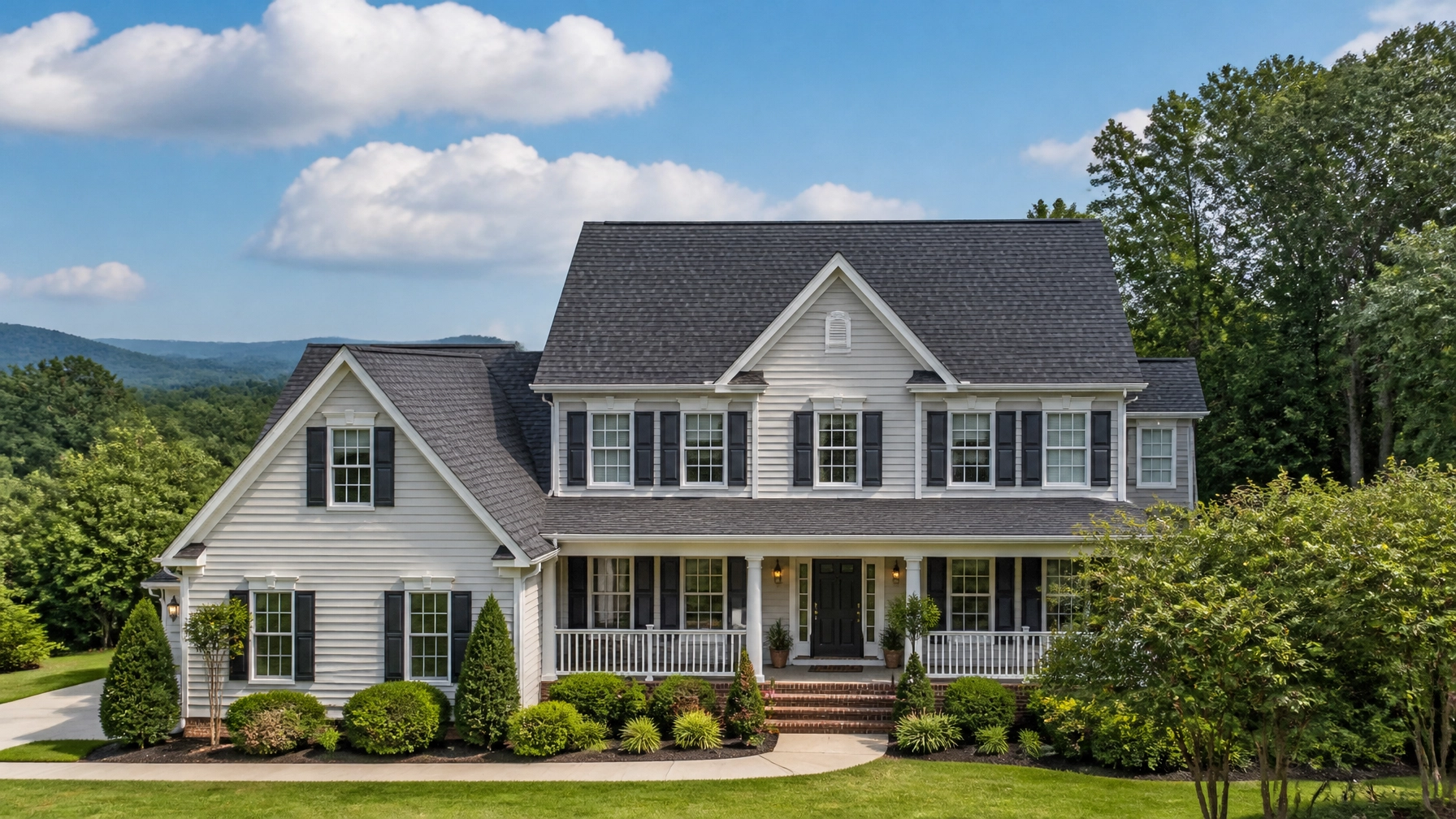
    Asheville-area colonial home with new architectural shingles, dormers, and clean roof details

    Get a Free Asheville Roof Estimate in 60 Seconds

    Start with clear numbers before scheduling contractor visits. Enter your Asheville address at getmyroofestimatenow.com to receive a free satellite-powered roof estimate in about 60 seconds.

    You will see pricing based on your roof’s estimated size, pitch, complexity, material choice, and regional costs: without a credit card or upfront commitment.

  • Daily Weather Blitz – Slot 3: New Orleans, LA : August 23, 2026: Heat Advisory, 113°F Heat Index & How Big Easy Heat, Humidity, and Storm Gusts Test Your Roof’s Durability

    Daily Weather Blitz – Slot 3: New Orleans, LA : August 23, 2026: Heat Advisory, 113°F Heat Index & How Big Easy Heat, Humidity, and Storm Gusts Test Your Roof’s Durability

    New Orleans homeowners are facing a demanding roof-weather combination today: extreme heat, Gulf humidity, and a risk of strong afternoon thunderstorm gusts.

    A Heat Advisory is in effect from 11 a.m. to 8 p.m. Sunday, August 23, 2026. The afternoon high is expected to reach approximately 98°F, while heat index values may climb to 112–113°F across parts of southeast Louisiana. Morning humidity is near 93%, and isolated to scattered afternoon storms could produce wind gusts over 60 mph.

    The National Weather Service has placed southeast Louisiana under a Marginal Risk of severe thunderstorms this afternoon and early evening. Wetter conditions are expected to begin Monday, adding more moisture stress to roofs, attics, gutters, and flashing.

    For homeowners in the Big Easy, Metairie, the 9th Ward, Gentilly, and neighborhoods near Lake Pontchartrain, this is more than a weather update. It is a reminder to check how your roof is handling peak summer and hurricane-season conditions.

    Why Today’s Heat Stresses a New Orleans Roof

    Roofing materials absorb direct sunlight for hours. On a day with a 98°F air temperature, the surface of dark asphalt shingles can become significantly hotter.

    That repeated heat exposure can contribute to:

    • Faster drying and aging of asphalt oils
    • Brittle or curling shingle edges
    • Granule loss in roof valleys and high-traffic areas
    • Breakdown of shingle seal strips
    • Expansion and contraction around flashing and fasteners
    • Higher attic temperatures
    • Increased cooling demand inside the home

    A roof does not need to look dramatically damaged to be losing performance. Small amounts of granule loss, lifted corners, or cracked sealant can become larger problems once storm winds arrive.

    Older roofs are especially vulnerable. Asphalt shingles commonly last 15–30 years, depending on the product, installation quality, ventilation, maintenance, and climate. In New Orleans, intense sun, persistent humidity, algae growth, and frequent storms can reduce real-world performance.

    Read more about current material benchmarks in our Asphalt Shingles Guide for 2026.

    Gulf Humidity Creates a Second Roof Problem

    Heat is only half of today’s durability test. Morning humidity around 93% means roofing components and attic spaces are beginning the day with a heavy moisture load.

    High humidity can accelerate:

    • Algae and staining on shingles
    • Mold growth in poorly ventilated attics
    • Wood rot around roof penetrations
    • Corrosion of exposed metal components
    • Deterioration of underlayment and flashing
    • Moisture accumulation in insulation
    • Paint and sealant failure around vents and chimneys

    New Orleans homes also face heavy rainfall and wind-driven moisture during tropical systems. A roof that manages ordinary rain may still leak when rain is forced beneath lifted shingles, loose flashing, or poorly sealed vents.

    Humidity-related deterioration is often difficult to see from the street. An attic inspection can reveal warning signs before they become ceiling stains or structural repairs.

    Afternoon Storm Gusts Can Trigger Wind Uplift

    The strongest storms today may produce wind gusts above 60 mph. That is enough to expose weaknesses in an aging or poorly secured roof system.

    Wind uplift occurs when moving air creates pressure beneath roofing materials. If wind gets under a loose shingle, flashing edge, soffit, or roof vent, it can begin peeling the system upward.

    The most vulnerable areas are typically:

    • Eaves and roof edges
    • Rake edges and gable ends
    • Ridge caps
    • Valleys
    • Chimney and wall flashing
    • Plumbing vents
    • Skylights
    • Satellite dishes and rooftop equipment
    • Areas with missing or cracked shingles

    A single lifted shingle can allow water to enter beneath the visible roof surface. Once the underlayment or decking becomes wet, the next storm can cause more extensive damage.

    The City of New Orleans’ storm preparedness guidelines recommend reinforcing roof framing and connections, securing roof components, and checking vulnerable openings before severe weather.

    Close exterior view of secure architectural shingles, flashing, and roof ventilation on a Gulf Coast home

    Roof Inspection Tips for New Orleans Homeowners

    Do not climb onto your roof during today’s Heat Advisory or while thunderstorms are nearby. Heat can make shingles soft and slippery, and wet roofing becomes dangerous quickly.

    Instead, inspect from the ground, attic, and accessible areas.

    From the ground

    Use binoculars if needed and look for:

    • Missing or visibly lifted shingles
    • Uneven roof lines or sagging areas
    • Dark patches or excessive streaking
    • Exposed underlayment or wood
    • Loose gutters
    • Damaged soffits or fascia
    • Bent flashing around vents and chimneys
    • Tree limbs touching the roof

    From the attic

    Check for:

    • Daylight showing through the roof deck
    • Damp insulation
    • Water stains or dark wood
    • Musty odors
    • Mold growth
    • Rust around fasteners
    • Wet areas below valleys or penetrations
    • Blocked soffit vents

    Visible daylight around a vent, chimney, or roof seam is not normal. It indicates a gap that can admit wind-driven rain.

    New Orleans attic showing roof decking, insulation, soffit ventilation, and ridge vent components

    Attic Ventilation Matters During Extreme Heat

    Proper attic ventilation helps remove hot, moisture-laden air. A balanced system generally uses intake ventilation at the soffits and exhaust ventilation at the ridge, gables, or roof vents.

    Good ventilation can help:

    • Reduce attic heat buildup
    • Limit moisture accumulation
    • Protect roof decking
    • Reduce premature shingle aging
    • Improve HVAC efficiency
    • Lower the risk of mold and wood rot

    Do not permanently block soffit or ridge vents as a hurricane precaution. Doing so can trap heat and moisture inside the attic.

    Instead, keep the ventilation system functional year-round and secure exposed vents, skylights, and rooftop equipment before a named storm threatens the area. The NOLA Ready hurricane preparedness guidance provides local preparation information for New Orleans residents.

    If insulation is covering soffit vents, screens are damaged, or a vent is loose, have the issue corrected before the next storm system.

    Hurricane-Season Preparation Starts Before the Forecast

    Late August is approaching the most active part of the Atlantic hurricane season. Waiting until a storm is in the Gulf leaves little time to arrange an inspection or complete repairs.

    A practical New Orleans roof-preparation checklist includes:

    1. Inspect shingles and flashing. Replace cracked, missing, or lifted materials.
    2. Check roof-to-wall connections. Ask a qualified professional whether hurricane straps or clips are appropriate.
    3. Secure gutters and downspouts. Confirm they are firmly attached and drain away from the foundation.
    4. Trim overhanging branches. Live oaks and other mature trees can drop limbs during gusty storms.
    5. Secure rooftop equipment. Check vents, satellite dishes, and other mounted items.
    6. Clear drainage paths. Remove leaves and debris from gutters, valleys, and downspout outlets.
    7. Inspect the attic. Look for moisture, daylight, damaged decking, and blocked ventilation.
    8. Protect vulnerable openings before a storm. Follow local guidance for temporary protection of exposed vents and skylights.

    A professional should handle structural reinforcement, roof repairs, and any work involving steep or damaged surfaces.

    Should You Replace the Roof Before Another Storm?

    Replacement may be worth considering if your roof is near the end of its expected service life or has several recurring problems.

    Warning signs include:

    • Roof age of 15–30 years
    • Repeated leaks after storms
    • Widespread granule loss
    • Multiple areas of curling or lifted shingles
    • Sagging decking
    • Persistent attic moisture
    • Damaged flashing in several locations
    • Prior storm damage that was only temporarily patched

    For 2026 planning, the national roof cost calculator lists typical replacement costs around $9,000–$22,000, with asphalt shingles generally around $3–$7 per square foot installed. Actual New Orleans pricing depends on roof size, pitch, complexity, tear-off requirements, material selection, labor availability, permits, and structural repairs.

    Architectural shingles are a common mid-range choice. Metal roofing generally costs more upfront: approximately $8–$16 per square foot installed: but can last 40–70 years and may reduce cooling costs through solar reflectivity. Compare the options in our Metal Roofing Guide and Metal vs. Asphalt Shingles comparison.

    New Orleans-area home with a standing-seam metal roof and secured gutters prepared for Gulf Coast storms

    Get a Roof Replacement Budget in 60 Seconds

    A roof inspection tells you what condition your roof is in. A property-specific estimate helps you understand what replacement could cost.

    Get My Roof Estimate Now uses satellite imagery to measure your roof’s size, pitch, and complexity. Homeowners can receive a free estimate in under 60 seconds, without a contractor visit or credit card.

    The estimate can show low, middle, and high price ranges for materials such as:

    • Architectural shingles (Popular)
    • Metal roofing (Premium durability)
    • Synthetic roofing
    • Reflective coatings and other options

    Start with a free satellite-powered roof estimate. It is a practical first step for budgeting, comparing materials, and deciding whether to repair now or plan a replacement before hurricane-season conditions intensify.

    For today, stay indoors during the hottest part of the afternoon, avoid walking on the roof, and monitor local weather alerts. A few minutes of ground-level and attic observation can help identify weaknesses before Big Easy heat, humidity, and storm gusts turn them into an expensive emergency.

  • Daily ROI Blitz – Slot 3: Greenville, SC New Roof ROI : What a Replacement Adds to Your Home Value in 2026

    Daily ROI Blitz – Slot 3: Greenville, SC New Roof ROI : What a Replacement Adds to Your Home Value in 2026

    In Greenville, SC, a new roof is no longer just a maintenance expense. In a more balanced 2026 housing market, it can influence your home’s appraisal, buyer interest, insurance costs, and final sale price.

    Mid-2026 Greenville housing data places the typical median home price around $326,000–$340,000, depending on the source and whether the figures cover the city, Greenville County, or the broader Upstate market. Some county-wide reports show higher medians, while ZIP codes such as 29601 and 29615 typically command above-average values. Annual appreciation has moderated to roughly 2%–2.5%, while inventory and days on market are rising.

    That shift gives buyers more negotiating room. Homes with visible deferred maintenance: especially an aging roof: can face stronger repair demands and larger concessions.

    For a typical 2,000-square-foot Greenville home, a replacement with architectural asphalt shingles costs approximately $9,000–$17,000. Standing seam metal roofing commonly costs $14,000–$35,000 or more.

    Here is what that investment may add to your Greenville home value in 2026.

    Why Greenville Homeowners Are Investing in Roofs Now

    Greenville remains one of the strongest housing markets in the Upstate, but the market is becoming less forgiving for homes that need major work.

    According to market summaries from Zillow and Redfin’s Greenville County data, buyers have more listings to compare than they did during the most competitive years. That changes the resale equation.

    A new roof can help your property stand out because it:

    • Removes one of the largest maintenance concerns buyers encounter
    • Reduces the chance of inspection-related repair negotiations
    • Supports a clean appraisal with less deferred maintenance
    • Improves exterior appearance before listing photos and showings
    • May help with homeowners insurance eligibility or discounts
    • Makes the home feel more move-in ready

    This matters in both central Greenville and higher-value areas around 29601 and 29615. Buyers in these ZIP codes may be willing to pay more for turnkey condition, but they are also more likely to scrutinize expensive components such as roofing, HVAC, plumbing, and electrical systems.

    A roof that is 20 to 30 years old may not be leaking today, but buyers and appraisers will still account for its remaining useful life.

    What a New Roof Does to Home Value and ROI

    National benchmarks generally show that a new asphalt shingle roof recoups approximately 57%–70% of its cost at resale.

    That does not mean every dollar spent becomes a dollar added to the sale price. Roofing ROI depends on the roof’s condition before replacement, the quality of installation, the material selected, and the expectations of local buyers.

    Example: Greenville architectural shingle replacement

    Project cost Estimated direct resale value at 57%–70% ROI
    $9,000 roof $5,130–$6,300
    $13,000 roof $7,410–$9,100
    $17,000 roof $9,690–$11,900

    For a common $15,000 replacement, the direct resale value may be approximately $8,550–$10,500.

    However, direct ROI is only part of the calculation.

    Avoiding the old-roof penalty

    If your existing roof is clearly at the end of its service life, an appraiser or buyer may account for the expected replacement cost. In practical terms, that can create an $8,000–$20,000 deduction or negotiation gap, depending on the roof’s condition and the property.

    Replacing the roof before listing may therefore provide two financial benefits:

    1. It adds a portion of the replacement cost to the home’s market appeal and value.
    2. It removes a major reason for buyers to discount the property or request a credit.

    A new roof may also contribute to a 1%–3% increase in final sale price when compared with a similar home with an aging or questionable roof. On a $326,000–$340,000 Greenville home, that represents approximately $3,260–$10,200.

    The strongest roof replacement ROI usually comes when the existing roof is damaged, visibly worn, or likely to be flagged during inspection.

    Fresh architectural asphalt shingle roof on a Greenville County ranch home

    Roofing Materials That Maximize Resale Value

    The best roof for home value is not always the most expensive material. The right choice depends on your budget, the home’s architecture, your expected ownership period, and the local neighborhood.

    Architectural asphalt shingles (Popular)

    For most Greenville homeowners, architectural shingles offer the best balance of cost, appearance, and resale value.

    Typical 2026 cost:

    • Approximately $9,000–$17,000 for a typical 2,000-square-foot home
    • Roughly 25–30 years of expected service life
    • Broad selection of colors and styles
    • Easier repairs and widespread contractor availability

    Architectural shingles are usually the strongest option if you plan to sell within the next few years. They provide a clean, updated appearance without forcing the next buyer to pay a premium for a material they may not have selected.

    Review the asphalt shingles guide for information about shingle grades, warranties, and installed pricing.

    3-tab asphalt shingles (Budget)

    Three-tab shingles have a lower upfront cost, but they are generally less attractive for resale than architectural shingles.

    They offer:

    • Lower initial installation cost
    • A simpler, flatter appearance
    • Approximately 15–20 years of typical service life

    For a rental property or a strict budget replacement, three-tab shingles may be practical. For a Greenville home being prepared for sale, architectural shingles usually make a stronger impression and provide a better perceived value.

    Impact-resistant shingles (Value-focused upgrade)

    Upstate South Carolina experiences hail and high-wind weather. Impact-resistant shingles can provide additional protection and may qualify for insurance credits with some carriers.

    Ask your insurer about:

    • Class 4 impact-resistant ratings
    • Wind and hail discounts
    • Required documentation
    • Roof inspection or certification requirements

    Discounts are not automatic, and they vary by carrier. Still, impact-resistant shingles can be a logical upgrade if you plan to stay in the home or want to improve its storm-readiness before selling.

    Standing seam metal (Premium)

    Standing seam metal roofing commonly costs approximately $14,000–$35,000 or more in the Greenville area, depending on roof size, pitch, design complexity, metal gauge, finish, and trim details.

    Benefits include:

    • Approximately 40–70 years of potential service life
    • Strong wind and fire resistance
    • Low routine maintenance
    • Potential energy savings
    • Premium appearance on modern and high-end homes

    Modern Greenville home with a premium standing seam metal roof

    Metal roofing can increase buyer appeal, but the added cost does not always translate into equal resale value. It tends to make more financial sense when you plan to stay in the home for 10 or more years, have a higher-end property, or select a style that fits the neighborhood.

    Use this metal versus shingles comparison to compare upfront cost, lifespan, maintenance, and energy performance.

    Greenville-Specific Factors: Weather, Insurance, and Appraisals

    Hail and wind exposure

    The Upstate is not immune to severe weather. A reported May 26, 2024 hail event produced hail around 1.75 inches in parts of the Greenville-Spartanburg area, including Greenville County communities.

    If you suspect storm damage, document it with:

    • Date-stamped photos
    • Hail and weather reports
    • Prior inspection records
    • Contractor findings
    • Insurance correspondence

    Do not assume a past storm will automatically qualify for a current claim. Many policies require prompt notice and impose a one-year or two-year claim deadline. Some claims may still be actionable in 2025 or 2026 depending on policy language, when damage was discovered, or whether a claim was filed previously. Review your policy and speak with your insurance professional before relying on coverage.

    Rising South Carolina insurance costs

    South Carolina homeowners insurance rates are increasing in 2026, and roof age is becoming a more important underwriting factor. Older roofs may face:

    • Higher premiums
    • Actual cash value coverage instead of replacement-cost coverage
    • Additional inspection requirements
    • Non-renewal risk with certain carriers

    A newer roof may improve insurability and could qualify for a premium reduction. Impact-resistant or fortified roofing may provide additional credits, but the exact savings depend on your carrier and policy.

    The South Carolina Department of Insurance post-disaster claims guide provides additional guidance for homeowners dealing with storm damage.

    Appraisal condition

    Appraisers do not value a roof based only on its color or appearance. They consider:

    • Estimated remaining useful life
    • Visible damage or deterioration
    • Quality of installation
    • Local replacement costs
    • Whether the roof is comparable to competing homes

    Keep your final invoice, permit, warranty documents, product information, and completion photos. These records help demonstrate that the replacement is a documented improvement: not simply a cosmetic repair.

    Before You Sell or Replace: Smart Steps

    Use this process to evaluate your potential roof replacement ROI:

    1. Determine the roof’s actual condition. Look for curling shingles, exposed underlayment, granule loss, soft decking, leaks, and damaged flashing.
    2. Measure the roof accurately. Roof size, pitch, valleys, dormers, and penetrations affect the quote more than living-area square footage alone.
    3. Compare at least two materials. Price architectural shingles against impact-resistant shingles and metal roofing.
    4. Check your insurance policy. Confirm roof-age requirements, claim deadlines, and available discounts.
    5. Match the roof to the home. A premium metal roof may be appropriate for a modern home but unnecessary for a mid-market ranch.
    6. Avoid over-improving. Select a durable, attractive roof that fits neighborhood expectations.
    7. Preserve documentation. Save permits, invoices, warranties, product labels, and photographs.
    8. Use local pricing before budgeting. National averages can miss Greenville labor rates, roof complexity, and regional material costs.

    Our roof cost calculator provides a starting point by material, pitch, region, and roof size.

    Traditional Greenville-area home with a new impact-resistant shingle roof

    Get Your Greenville Roof Replacement Estimate in 60 Seconds

    A new roof can improve roof replacement resale value, curb appeal, insurance positioning, and buyer confidence: but the financial outcome starts with an accurate project cost.

    Get a free, satellite-powered roof estimate from Get My Roof Estimate Now. Enter your Greenville, SC address and receive pricing based on your roof’s measured size, pitch, and complexity in about 60 seconds.

    There is no contractor visit upfront, no credit card requirement, and no hidden fee. You can compare low, middle, and high pricing for roofing materials before deciding whether replacement is the right investment for your home.

  • Daily ROI Blitz – Slot 2: Fort Wayne, IN New Roof ROI : What a Replacement Adds to Your Home Value in 2026

    Daily ROI Blitz – Slot 2: Fort Wayne, IN New Roof ROI : What a Replacement Adds to Your Home Value in 2026

    A new roof in Fort Wayne typically costs $6,800–$25,000 in 2026, with most homeowners spending approximately $9,000–$16,000 for a professionally installed asphalt shingle roof.

    For resale, an asphalt roof replacement can recover approximately 69% of its cost, based on current cost-versus-value benchmarks. On a $12,000 project, that represents about $8,280 in recovered value at resale: before considering faster buyer decisions, fewer inspection objections, and reduced risk of repair credits.

    For Fort Wayne homeowners, the ROI case is especially relevant after the August 9, 2026 severe storm, which brought damaging wind gusts, hail, roof damage, and power outages across the area.

    Fort Wayne New Roof ROI at a Glance

    • Typical 2026 replacement cost: $6,800–$25,000
    • Most common project range: $9,000–$16,000
    • Asphalt shingle pricing: Approximately $8–$9 per square foot installed locally
    • Estimated resale cost recovery: About 69%
    • Typical value recovery on a $12,000 roof: Approximately $8,280
    • Fort Wayne home value benchmark: About $261,006 Zillow Home Value Index as of July 2026
    • Median sale price: Approximately $275,000
    • Market pace: Many homes selling or going pending in roughly 14–43 days

    A roof replacement does not always return every dollar spent. Its value comes from a combination of resale recovery, curb appeal, buyer confidence, insurance documentation, and avoiding expensive roof-related concessions.

    Fort Wayne’s 2026 Housing Market Makes Roof Condition Important

    Fort Wayne: known as the Summit City: continues to attract buyers looking for relatively affordable homes, manageable living costs, and established neighborhoods.

    Using the July 2026 market figures for this ROI snapshot, the typical Fort Wayne home is valued at approximately $261,006, while the median sale price is near $275,000. Homes are selling in about 14–43 days, depending on location, condition, asking price, and property type.

    That is competitive enough for condition to matter.

    Buyers comparing two similar homes are more likely to favor the one with:

    • A newer roof
    • Clean gutters and flashing
    • No visible curling, missing, or stained shingles
    • Documented storm inspections
    • Transferable workmanship or manufacturer warranties
    • No immediate need for a major exterior repair

    A roof near the end of its useful life can create uncertainty. Buyers may ask for a lower price, request a repair credit, or make their offer contingent on a professional inspection. A new roof does not guarantee a specific price increase, but it can help protect the home’s position within its neighborhood price range.

    Fort Wayne ranch home with a new medium-gray architectural shingle roof

    How the August 9, 2026 Storm May Affect Fort Wayne Roof Claims

    The August 9 storm is an important factor in the local roof replacement conversation.

    Severe thunderstorms produced wind gusts around 60 mph, with some Fort Wayne-area reports exceeding that level. Quarter-sized hail and larger hail were reported in and around Allen County. The storm also caused widespread damage to homes, trees, roads, and power lines, resulting in localized power outages.

    Wind and hail damage is not always easy to see from the ground. Common problems include:

    • Granule loss across shingle surfaces
    • Bruising or soft spots beneath the granules
    • Cracked or lifted shingles
    • Damaged ridge caps
    • Bent flashing around chimneys and vents
    • Exposed underlayment
    • Tree or branch impact damage
    • Water intrusion that appears days or weeks later

    Homeowners who believe their roof was affected should document the date of the storm, take exterior photographs from the ground, and contact their insurance company for claim instructions. Avoid signing over insurance benefits to an unfamiliar contractor before reviewing the agreement.

    Insurance coverage depends on the policy, deductible, exclusions, and the cause of damage. A satellite estimate is useful for budgeting, but it does not replace an insurance adjuster’s inspection or determine coverage.

    For additional context, Fort Wayne storm coverage was reported by WANE 15, while the Indiana Department of Homeland Security August 2026 disaster page provides damage-reporting information.

    2026 Fort Wayne Roof Replacement Cost Comparison

    Your final price depends on roof size, pitch, complexity, tear-off requirements, ventilation, decking repairs, material choice, labor availability, permits, and disposal.

    Roofing option Price range Typical lifespan Resale and ROI profile
    Architectural shingles (Popular) About $8–$9 per sq. ft. 25–30 years Strong balance of cost, appearance, and buyer appeal
    Class 4 impact-resistant shingles (Storm-smart) Usually above standard architectural shingles 25–30 years Added hail resistance; may support insurance savings depending on policy
    Standing-seam metal (Premium) About $10–$16 per sq. ft. 40–70 years Higher upfront cost, long service life, distinctive appeal
    Full replacement range $6,800–$25,000 Varies by material Most Fort Wayne projects fall near $9,000–$16,000

    The figures above are planning ranges, not quotes. A 2,000-square-foot roof is not the same as a 2,000-square-foot home. Roofs are measured in squares, with one roofing square equal to 100 square feet of roof surface.

    Use the Fort Wayne roof cost calculator for a general planning range, or get a property-specific satellite estimate before comparing contractor proposals.

    Which Roof Is Best for Home Value in Fort Wayne?

    Architectural Shingles (Popular)

    Architectural shingles are usually the best roof for home value when the homeowner wants broad buyer appeal without paying premium material prices.

    They offer:

    • Dimensional texture
    • Many color options
    • Strong availability among local installers
    • Easier repairs than metal
    • A 25–30-year expected lifespan
    • Better appearance than basic three-tab shingles

    Charcoal, weathered gray, and brown blends commonly work well with Fort Wayne’s ranch, Colonial, and traditional suburban housing styles.

    Read the full asphalt shingles guide before choosing a color or product tier.

    Class 4 Impact-Resistant Shingles (Storm-Smart)

    Class 4 shingles are designed to provide increased impact resistance compared with standard shingles. They may be worth considering in Fort Wayne after repeated hail events or when storm exposure is a major concern.

    Potential benefits include:

    • Improved resistance to hail impact
    • Stronger long-term weather positioning
    • Better documentation for future buyers
    • Possible insurance discounts, depending on the carrier and policy

    Do not assume a Class 4 product automatically qualifies for a discount. Confirm requirements with your insurance provider.

    Fort Wayne craftsman home with a new Class 4 impact-resistant shingle roof

    Standing-Seam Metal (Premium)

    Standing-seam metal roofing offers a long service life and a clean, modern appearance. It can last 40–70 years when properly installed and maintained.

    It may make sense if you:

    • Plan to remain in the home for 10 years or longer
    • Want to reduce the likelihood of another replacement
    • Prefer modern architecture or a premium finish
    • Value low maintenance and long-term durability
    • Are willing to pay more upfront

    Metal generally costs more than asphalt shingles. For resale, the best choice is not always the most expensive material. The roof should match the home, the neighborhood, and the expectations of local buyers.

    Use the metal versus shingles comparison to review cost, lifespan, energy performance, and maintenance differences.

    Practical Fort Wayne Roof ROI Example

    Consider a typical Summit City home selling for $275,000.

    The homeowner installs a new architectural shingle roof for $12,000. Using an estimated 69% cost recovery, the replacement could contribute approximately:

    • Project cost: $12,000
    • Estimated resale recovery: $8,280
    • Unrecovered improvement cost: $3,720
    • Additional benefits: Better curb appeal, fewer inspection concerns, improved buyer confidence, and reduced near-term repair risk

    If storm damage leads to covered insurance work, the homeowner’s out-of-pocket expense could be lower after the deductible and approved claim amount. That can improve the effective ROI substantially. However, insurance proceeds should never be treated as guaranteed until the claim is reviewed and approved.

    The most accurate resale impact will depend on the home’s condition, location, comparable sales, roof material, installation quality, and the buyer’s inspection findings.

    How to Maximize Roof Replacement Resale Value

    A new roof creates more value when the entire installation looks complete and well documented.

    1. Choose a broadly appealing color

    Avoid highly unusual colors that may limit buyer interest. Select a shingle shade that works with the siding, brick, trim, gutters, and neighborhood style.

    2. Fix visible exterior issues at the same time

    Replace damaged flashing, repair sagging gutters, clean soffits, and address rotted fascia. Buyers notice incomplete exterior work.

    3. Invest in ventilation and flashing

    A roof is more than shingles. Proper intake and exhaust ventilation, chimney flashing, pipe boots, and valley construction help protect the installation and support future inspections.

    4. Keep the paperwork

    Save:

    • Paid invoices
    • Product information
    • Warranty documents
    • Permit records
    • Before-and-after photographs
    • Insurance claim documentation
    • Contractor license and insurance information

    These records make it easier for a buyer to understand what was replaced and when.

    5. Verify contractor credentials

    Workmanship affects roof life and resale confidence. Use a licensed, insured contractor and confirm that the proposal clearly identifies materials, tear-off, decking allowances, ventilation, cleanup, and warranty terms.

    Get a Free Fort Wayne Roof Estimate in 60 Seconds

    Before scheduling multiple contractor visits, find out what your roof may cost.

    Get My Roof Estimate Now uses satellite imagery to measure your roof’s size, pitch, and complexity. In about 60 seconds, you can receive a free planning estimate with no credit card required.

    Compare material options, review low-to-high price ranges, and connect with verified local roofing professionals when you are ready.

    For Fort Wayne homeowners planning to sell, recovering from the August storm, or budgeting for a roof that is 15–30 years old, an instant estimate is a practical first step toward understanding your roof replacement ROI.

    Sources

  • Daily Tech Blitz – Slot 5: Baton Rouge’s Satellite Tech Edge Is Bringing Orbital Precision to Red Stick Roofs

    Daily Tech Blitz – Slot 5: Baton Rouge’s Satellite Tech Edge Is Bringing Orbital Precision to Red Stick Roofs

    Baton Rouge is becoming a serious center for satellite, GPS, drone, and aerial technology. That progress is doing more than improving flood maps or speeding up package delivery. It is also changing how homeowners plan major projects: especially roof replacement.

    In 2026, a Baton Rouge homeowner can enter an address and receive an instant, satellite-based roof replacement estimate in about 60 seconds. The technology measures the roof’s size, pitch, and complexity before a contractor ever visits the property.

    For a typical Baton Rouge home, a full roof replacement often falls between $8,000 and $18,000. Many standard architectural shingle projects land near $12,000 to $16,000, depending on roof size, tear-off requirements, decking repairs, material selection, and labor.

    That kind of fast, property-specific information gives homeowners a practical starting point instead of forcing them to schedule several visits just to get a ballpark figure.

    Baton Rouge Is Part of a Larger Satellite Technology Story

    The value of satellite technology becomes clearer when you look at what is happening across Louisiana.

    NISAR shows what radar satellites can see

    In early 2026, NASA and the Indian Space Research Organisation released radar imagery from the NISAR mission showing the Mississippi River Delta, including the Baton Rouge region.

    The image displayed wetlands, forests, farmland, waterways, and communities across southeastern Louisiana. More importantly, NISAR’s radar sensors captured the landscape through heavy cloud cover.

    That matters because optical satellites depend on visible light. Dense clouds, haze, and storms can block or distort what those sensors see. NISAR uses L-band synthetic aperture radar, which can pass through clouds and continue gathering information about the surface below.

    NASA described the imagery as a demonstration of how radar can “peer through the clouds” over the Mississippi River Delta. Read the NASA and JPL report on NISAR’s Mississippi River Delta imagery.

    For homeowners, the lesson is simple: modern remote-sensing systems can collect useful information even when weather makes a normal visual inspection difficult.

    Louisiana Already Has High-Precision GPS Infrastructure

    Satellite-based roof measurement is part of a much larger geospatial network. Louisiana has spent years building the location and elevation systems needed to understand a changing landscape.

    LSU’s Louisiana Spatial Reference Center operates a statewide network of Continuously Operating Reference Stations, or CORS. The system grew out of the state’s need for better elevation control after Hurricane Katrina and other major storms.

    The network supports:

    • Centimeter-level positioning and elevation data
    • Flood mapping and storm-surge modeling
    • Levee and infrastructure surveys
    • Coastal subsidence research
    • Topographic mapping
    • Precision agriculture
    • Navigation and engineering projects

    LSRC reports that the network has grown to more than 100 CORS stations, with 31 stations providing data tied to the National Spatial Reference System.

    This infrastructure is especially important in Baton Rouge and surrounding parishes, where flooding, drainage, elevation changes, and intense storms all affect property planning.

    The same basic principle applies to a roof estimate: better location data produces better measurements.

    From Orbital Data to a Roof Replacement Estimate Baton Rouge Homeowners Can Use

    Roof replacement pricing starts with the actual roof: not simply the home’s living area.

    A 2,000-square-foot house does not necessarily have a 2,000-square-foot roof. Overhangs, porches, attached garages, multiple ridges, valleys, dormers, and roof pitch can all increase the total surface area.

    Satellite roof measurement technology analyzes those features remotely.

    What the technology measures

    A property-specific roof report can identify:

    • Total roof area
    • Roofing squares, with one square equal to 100 square feet
    • Roof pitch or slope
    • Number of roof facets
    • Ridges, hips, and valleys
    • Eaves and overhangs
    • Attached structures
    • Areas that increase installation complexity

    At Get My Roof Estimate Now, the system uses satellite imagery to estimate roof dimensions with approximately 90%–95% accuracy, often accurate to within inches. Homeowners enter their address, and the platform processes the property data in under a minute.

    Start with the free satellite-based roof estimate tool.

    Why measurement accuracy matters

    An underestimated roof can create a major pricing problem. If the initial estimate misses a garage section, steep slope, or complicated valley, the final contractor quote may be substantially higher.

    A more accurate measurement helps homeowners:

    • Set a realistic project budget
    • Compare shingles, metal, synthetic, and coating options
    • Understand the number of roofing squares
    • Identify whether a quote appears unusually high or low
    • Plan for possible financing or insurance needs
    • Request more informed contractor proposals

    The estimate is a planning tool, not a substitute for a final inspection. Satellite imagery cannot identify hidden decking rot, attic ventilation problems, loose flashing, or the number of existing shingle layers. A licensed contractor should inspect those conditions before signing a final contract.

    Baton Rouge Colonial home with a new fortified architectural shingle roof

    Baton Rouge Roof Costs by Material (Budget, Popular, Premium)

    Material selection has a direct impact on the final price.

    Architectural asphalt shingles (Popular)

    Architectural shingles remain the most common choice for Baton Rouge homeowners. They offer a practical balance of appearance, durability, and upfront cost.

    A typical replacement may fall around $8,000 to $18,000, with many 2,000-square-foot projects clustering near $12,000 to $16,000.

    Impact-resistant shingles (Storm-focused)

    Class 4 or impact-resistant shingles typically cost more than standard architectural shingles. However, they may provide better resistance to hail and severe weather, depending on the product and installation quality.

    Homeowners should ask their insurer whether a qualifying roof system could affect premiums.

    Corrugated metal (Premium value)

    Corrugated metal roofing generally costs more than asphalt but can provide a long service life and a distinctive appearance. Typical project pricing may range from $10,000 to $20,000, depending on the roof’s size and design.

    Standing-seam metal (Premium)

    Standing-seam metal is a higher-end option. It offers clean lines, strong weather performance, and long-term durability, but installation is more specialized. A typical project can reach $15,000 to $30,000 or more.

    Use the company’s roof cost calculator to compare materials, pitch, tear-off, and regional pricing.

    The Fortified Roof Louisiana Grant Could Help Reduce the Upfront Cost

    Louisiana’s Fortify Homes program is another reason homeowners should begin planning early.

    The Louisiana Department of Insurance program offers lottery-based grants of up to $10,000 per home toward upgrading an existing roof to the IBHS FORTIFIED Roof standard. In 2026, Louisiana added approximately $50 million in new funding, bringing total program funding to roughly $80 million according to published reports.

    The program is designed to improve resistance to wind and severe weather. Completed work must meet the required FORTIFIED standard and be verified by an approved evaluator.

    Baton Rouge-area eligibility requires careful checking

    This point is important: eligibility depends on the specific funding round and parish.

    For the June 2026 round, nearby parishes including:

    • Ascension
    • Livingston
    • Iberville

    were listed as eligible. East Baton Rouge and West Baton Rouge were not included on that round’s eligible parish list.

    Homeowners should verify their exact address through the Louisiana Fortify Homes program before budgeting around a grant. Registration for the June 2026 lottery closed, and future rounds must be announced by the state.

    A FORTIFIED-certified roof may also qualify for mandatory wind or hurricane insurance discounts under Louisiana Regulation 136. The discount applies to the eligible wind portion of the policy: not necessarily the entire homeowners insurance premium: and the exact amount depends on the insurer, rating zone, and certification level.

    Even if a homeowner is not eligible for the current grant, it may still be worth asking about:

    • FORTIFIED roof certification
    • Insurance discounts
    • Louisiana tax-credit rules
    • Impact-resistant roofing materials
    • Proper roof-to-wall connections and sealed roof decks

    Baton Rouge’s Drone Growth Reinforces the Same Trend

    Satellite technology is not developing in isolation. Baton Rouge is also attracting drone and aerial technology companies.

    ZenaTech selected Baton Rouge as the base for its Zena AI division, which is focused on AI-driven drone systems for defense and homeland security. The company says its work includes autonomous navigation, fleet coordination, real-time decision-making, surveillance, and inspection applications. Learn more from ZenaTech’s Baton Rouge announcement.

    Amazon Prime Air has also established Baton Rouge as one of its drone delivery markets. Amazon lists Baton Rouge ZIP codes served by Prime Air and says the service is part of its broader expansion toward nearly 500 U.S. cities and towns.

    These developments point to a broader shift: aerial data is becoming a normal part of everyday services, from logistics and infrastructure inspection to property measurement.

    Modern Baton Rouge home with a new standing-seam metal roof

    How to Get an Instant Baton Rouge Roof Estimate

    Use this simple process:

    1. Enter your property address into a satellite roof measurement tool.
    2. Review the measured roof size, pitch, and complexity.
    3. Compare material options, such as architectural shingles, metal, synthetic roofing, or coatings.
    4. Check the low, middle, and high price ranges for your area.
    5. Ask local contractors for detailed bids based on the measured roof data.
    6. Confirm what each bid includes, including tear-off, disposal, decking repairs, permits, ventilation, flashing, and warranty coverage.
    7. Investigate Fortify Homes and insurance requirements before selecting materials.

    The Bottom Line for Red Stick Homeowners

    Baton Rouge is gaining a real technology advantage. NISAR demonstrates how radar satellites can see through clouds. LSU’s CORS network provides a precision foundation for mapping and elevation. Globalstar’s Louisiana presence and Amazon’s planned $11.6 billion acquisition highlight the state’s growing role in satellite communications. ZenaTech and Amazon Prime Air add momentum in drones and aerial systems.

    That technology now reaches the residential roof.

    With satellite roof measurement, Baton Rouge homeowners can get an accurate starting point in 60 seconds, without waiting for a contractor visit. The result is faster planning, clearer budgeting, and fewer surprises when it is time to replace the roof.

    Start with a free Baton Rouge roof replacement estimate.

  • Daily ROI Blitz – Slot 4: Chattanooga, TN New Roof ROI : What a Replacement Adds to Your Home Value in 2026

    Daily ROI Blitz – Slot 4: Chattanooga, TN New Roof ROI : What a Replacement Adds to Your Home Value in 2026

    A new roof in Chattanooga typically costs $8,000–$20,000 in 2026, with larger or more complex projects reaching approximately $28,000. The East South Central region: including Tennessee: has a roof replacement resale ROI benchmark near 81%, while local estimates generally fall between 70% and 81%.

    For a typical Chattanooga home priced around $332,000–$360,000, a quality roof replacement may support approximately $9,400–$12,000 in added value. That works out to roughly 3.2% of the home’s value, before considering faster sale potential, fewer inspection objections, and stronger curb appeal.

    The key point: a new roof does not always return every dollar as a direct increase in the sale price. But a failing roof can reduce the sale price by $10,000–$20,000: or prevent a sale from closing altogether.

    Chattanooga Home Values in 2026

    Chattanooga remains a diverse market. Home values vary considerably between downtown, mountain communities, established neighborhoods, and suburban areas of Hamilton County.

    Current 2026 market data shows:

    • Chattanooga median home prices: approximately $332,000–$360,000, depending on source, ZIP code, and whether the figure measures listings or closed sales.
    • Realtor.com median sold price: approximately $370,000 in its August 2026 market snapshot.
    • Realtor.com median listing price: approximately $378,150.
    • Hamilton County planning value: often closer to the upper $300,000s because of higher-value areas such as Lookout Mountain and parts of North Chattanooga.

    Neighborhood pricing varies even more:

    • East Brainerd: approximately $431,950 median listing price
    • Downtown Chattanooga: approximately $400,000
    • St. Elmo: approximately $494,300
    • South Chattanooga: approximately $325,000
    • ZIP 37421: approximately $414,975
    • ZIP 37404: approximately $332,500

    You can review current market benchmarks through Realtor.com’s Chattanooga market page and compare your project against a local estimate before requesting contractor bids.

    Chattanooga Roof Replacement Cost Breakdown

    Roof prices depend on roof size, pitch, material, accessibility, tear-off requirements, and the number of valleys, dormers, chimneys, and penetrations.

    The following ranges are practical 2026 planning benchmarks for Chattanooga and Hamilton County.

    Budget Roof (Basic)

    Typical range: $8,000–$11,000

    This category generally includes:

    • Standard asphalt shingles
    • Straightforward roof geometry
    • Limited flashing or decking repairs
    • One existing roof layer
    • Easy site access

    A budget roof can be appropriate for a rental property, a lower-priced home, or a homeowner planning to sell soon. However, the lowest bid is not always the best value. Poor underlayment, flashing, ventilation, or installation quality can reduce the roof’s resale benefit.

    Popular Roof (Architectural Shingles)

    Typical range: $11,000–$17,500

    Architectural shingles are the most common resale-focused choice in Chattanooga. Mid-grade architectural shingles generally cost approximately $4.50–$6.50 per square foot, including common installation variables.

    Benefits include:

    • Better appearance than basic three-tab shingles
    • Broad color and style selection
    • Strong buyer familiarity
    • Good balance between cost and lifespan
    • Compatibility with many ranch, colonial, Craftsman, and traditional homes

    For many Chattanooga homeowners, this is the best roof for home value because it improves appearance without pushing the project into a premium price category.

    Premium Roof (Metal or Specialty Systems)

    Typical range: $18,000–$28,000 or more

    Premium projects may include:

    • Standing seam metal roofing
    • Designer shingles
    • Complex roof layouts
    • Steep slopes
    • Extensive decking replacement
    • Historic or custom detailing

    Metal roofing can range from approximately $10–$35 per square foot, depending on the product and installation requirements. It can be an excellent long-term choice, but homeowners should avoid assuming that a premium metal roof will return its full cost at resale. The material should match the home, neighborhood, and buyer expectations.

    Peak-season demand can also affect pricing. In Chattanooga, an August installation may carry an estimated 15% seasonal premium when contractors are heavily booked after summer storms.

    For a broader planning estimate, use the Get My Roof Estimate Now roof cost calculator.

    Historic-style Chattanooga Craftsman bungalow with a new dark gray architectural shingle roof

    New Roof ROI: The Chattanooga Math

    Consider a Chattanooga home worth $350,000.

    A new roof can influence value in three ways:

    1. Direct value contribution
    2. Avoided repair credits or price reductions
    3. Improved buyer confidence and marketability

    Using the 3.2% value-impact estimate:

    $350,000 × 3.2% = $11,200

    That means a quality replacement could contribute approximately $11,200 in value, depending on the roof’s condition, installation quality, and comparable homes.

    Now compare that with the project cost:

    • $14,000 roof replacement
    • $11,200 estimated resale value contribution
    • Approximate direct ROI: 80%

    This aligns closely with the regional 81% resale ROI benchmark.

    A local 70%–81% ROI range would look like this:

    Roof investment Estimated resale contribution at 70%–81% ROI
    $10,000 $7,000–$8,100
    $14,000 $9,800–$11,340
    $18,000 $12,600–$14,580
    $22,000 $15,400–$17,820

    These are planning figures, not guaranteed appraisal increases. The actual roof replacement ROI depends on whether the old roof was merely dated or actively failing.

    A worn roof may already be costing you value through:

    • Buyer demands for a repair credit
    • Insurance concerns
    • Inspection delays
    • Appraisal adjustments
    • Longer days on market
    • A lower accepted offer

    In that situation, replacement may protect value more than it creates new value.

    Roof Curb Appeal and Home Value

    Roofing is one of the largest visible surfaces on a home. A faded, streaked, warped, or mismatched roof can make the entire property appear older.

    A new roof can improve:

    • Online listing photos
    • First impressions from the street
    • Exterior color balance
    • Perceived maintenance quality
    • Buyer confidence during an inspection
    • Compatibility with updated siding, windows, and landscaping

    The roof is especially important in neighborhoods with strong architectural identity. In St. Elmo, for example, a new roof should preserve the character of the historic home rather than make it look out of place.

    A new roof also helps a listing compete in neighborhoods such as North Shore, Highland Park, Red Bank, East Brainerd, Lookout Mountain, and downtown Chattanooga, where buyers often compare multiple homes with similar interior features.

    Chattanooga Storms Make Roof Condition More Important

    Hamilton County homeowners face regular exposure to wind, hail, heavy rain, falling limbs, and humidity-related deterioration.

    Recent 2026 storm activity included:

    • Severe June 22 storms that toppled trees onto homes in areas including North Chamberlain Avenue, Kirkland Avenue, South Howell Avenue, and Chickamauga
    • A July 3 storm report involving hail, power outages, and a roof collapse on Rossville Boulevard
    • Hail activity reported around the Chattanooga region on August 5
    • A more significant August 8 hail event affecting communities near Rossville, Chattanooga Valley, Lookout Mountain, and Chickamauga

    Storm damage does not always appear as a dramatic hole in the roof. Hail can bruise shingles, damage flashing, loosen vents, and shorten the roof’s remaining life.

    After a major storm:

    • Photograph the exterior and interior
    • Look for displaced shingles, granules, dents, and exposed underlayment
    • Check attic spaces for moisture or daylight
    • Contact your insurance company promptly
    • Avoid signing with a door-to-door contractor before reviewing the scope of work
    • Ask for documentation of all repairs and materials

    Tennessee homeowners should also review their policy’s wind and hail deductible. A replacement covered by insurance may require only the policy deductible, which can significantly improve the homeowner’s effective ROI.

    Modern East Brainerd home with a new charcoal standing seam metal roof after a storm

    Best Roofing Materials for Chattanooga

    Architectural Shingles (Popular)

    For most Chattanooga homes, architectural shingles provide the strongest balance of:

    • Cost
    • Appearance
    • Availability
    • Resale familiarity
    • Installation speed

    Choose algae-resistant products to help manage dark streaks in the humid Southeast climate.

    Class 4 Impact-Resistant Shingles (Storm-Focused)

    Class 4 shingles are designed to provide greater impact resistance than standard products. They may be worth considering in areas with recurring hail exposure.

    Ask your insurer whether an impact-resistant roof could affect your premium. Savings vary by policy and carrier.

    Metal Roofing (Premium)

    Metal can be a strong long-term option for modern homes, mountain properties, and homeowners planning to stay for decades. It offers durability and a distinctive appearance, but its higher upfront cost may not produce the same resale return as a well-installed architectural shingle roof.

    Ventilation, Flashing, and Underlayment

    Buyers and inspectors care about more than the visible shingles. Request details about:

    • Ridge and soffit ventilation
    • Ice and water protection where appropriate
    • Synthetic or approved underlayment
    • Chimney and wall flashing
    • Pipe boots and roof penetrations
    • Decking replacement allowances
    • Workmanship warranty

    These components protect the roof system and make the replacement easier to document when you sell.

    St. Elmo Historic District Roofing Rules

    St. Elmo is a local historic district. Exterior changes, including roofing, generally require review through Chattanooga’s historic zoning process.

    Before replacing a roof in St. Elmo:

    1. Confirm that the property is inside the district.
    2. Contact the Historic Preservation Planner.
    3. Review the St. Elmo Historic District Design Guidelines.
    4. Determine whether the project qualifies for staff review.
    5. Obtain the required Certificate of Appropriateness before beginning work.

    The City of Chattanooga’s historic zoning permit information is the best place to confirm current requirements.

    Like-for-like roofing work may qualify for administrative staff approval, while visible changes to roof form, material, color, or dormers may require additional review.

    How to Estimate Your Chattanooga Roof ROI

    Before investing, gather these numbers:

    • Current estimated home value
    • Roof replacement cost
    • Roof age and remaining life
    • Recent storm or hail damage
    • Comparable homes with newer roofs
    • Expected selling timeline
    • Insurance coverage and deductible
    • Required permits or historic approvals

    Get a property-specific starting point with Get My Roof Estimate Now. Satellite imagery measures roof size, pitch, and complexity to approximately 90%–95% accuracy, often within inches. The estimate is free, requires no credit card, and takes less than 60 seconds.

    Chattanooga ranch home with a new impact-resistant architectural shingle roof and clean flashing

    Final Takeaway

    For Chattanooga homeowners in 2026, a roof replacement is usually a value-protection project first and an appreciation project second.

    A well-matched, professionally installed roof may:

    • Add approximately $9,400–$12,000 to a median home’s market value
    • Recover roughly 70%–81% of its cost at resale
    • Protect against $10,000–$20,000 in buyer discounts
    • Improve curb appeal and listing presentation
    • Reduce inspection and insurance objections
    • Help the home compete in a balanced market

    Start with accurate numbers before scheduling contractor visits. Get your free instant satellite roof estimate at getmyroofestimatenow.com( under 60 seconds, with no credit card required.)

  • Daily ROI Blitz – Slot 5: Virginia Beach, VA New Roof ROI ,  What a Replacement Adds to Your Home Value in 2026

    Daily ROI Blitz – Slot 5: Virginia Beach, VA New Roof ROI , What a Replacement Adds to Your Home Value in 2026

    For Virginia Beach homeowners, a new roof is more than a maintenance expense. It can protect the home from coastal weather, improve curb appeal, support a stronger resale position, and help buyers feel confident making an offer.

    In 2026, a typical Virginia Beach roof replacement costs approximately $14,114, with most projects falling between $8,821 and $21,172. National roof replacement data indicates that asphalt shingle projects recoup roughly 57%–68% of their cost at resale. Metal roofing typically recoups about 48%–50%, although its longer service life and coastal durability may make it the better long-term choice for some properties.

    Here is what that means for your home value, budget, and material decision.

    Virginia Beach housing market context in 2026

    Virginia Beach remains a desirable Hampton Roads market because of its beaches, military employment base, schools, suburban neighborhoods, and access to Norfolk and Chesapeake.

    Current housing reports place the city’s median home price in the approximate range of $405,000 to $439,000, depending on whether the data measures closed sales, active listings, or the broader city market. Homes are commonly selling in approximately 22–37 days and often closing near asking price.

    You can review current market snapshots through Redfin’s Virginia Beach housing market data and Realtor.com’s local market reports.

    This is generally a balanced-to-competitive market. Buyers have choices, but well-maintained homes with updated major systems continue to stand out. A roof that is visibly aged, stained, curled, or near the end of its expected life can weaken buyer confidence and create negotiation pressure.

    What a new roof can add to Virginia Beach home value

    Roof replacement ROI is not a guaranteed dollar-for-dollar return. A $14,000 roof does not automatically increase a home’s appraisal by $14,000.

    Instead, the value comes from several factors:

    • Reduced buyer concerns about immediate repairs
    • Improved exterior appearance
    • Better weather protection
    • Stronger inspection results
    • More attractive listing photography
    • Less room for buyers to negotiate down
    • A longer remaining roof life

    Using the 2026 national recapture range, a $14,114 asphalt shingle replacement could represent approximately:

    Replacement cost 57% recapture 68% recapture
    $8,821 $5,028 $5,999
    $14,114 $8,045 $9,598
    $21,172 $12,068 $14,397

    These figures are planning benchmarks, not a promise of future value. Local buyer demand, roof quality, installation documentation, home condition, and the timing of the sale all affect the final result.

    The biggest financial benefit may also be avoiding a large buyer credit. If an inspection reveals an aging roof, buyers may request a repair allowance that includes more than the roof itself because of perceived uncertainty.

    Why roof condition matters more near the coast

    Virginia Beach roofs face conditions that inland properties do not experience to the same degree:

    • Salt-laden air
    • High humidity
    • Strong wind events
    • Wind-driven rain
    • Tropical storms and hurricanes
    • Intense summer UV exposure
    • Algae and staining
    • Corrosion around exposed metal components

    Salt air can accelerate corrosion in flashing, drip edges, exposed fasteners, vents, and other roof accessories. Wind can loosen poorly installed shingles or expose weak points around ridges, valleys, chimneys, and roof-to-wall transitions.

    A new roof designed for the local environment gives buyers more than a better appearance. It provides visible evidence that the home has been prepared for coastal weather.

    Virginia Beach ranch home with a new Class 4 impact-rated dimensional shingle roof

    Best roof for home value: architectural shingles or metal?

    The best roof for home value depends on the home’s architecture, neighborhood expectations, budget, and how long you plan to stay.

    Architectural shingles (Popular)

    Architectural shingles are the most practical choice for many Virginia Beach homeowners. They offer a strong balance between cost, appearance, repairability, and buyer familiarity.

    Typical installed asphalt shingle pricing nationally is approximately $3–$7 per square foot, although Virginia Beach projects can vary because of roof complexity, labor, tear-off requirements, permits, and coastal specifications.

    Consider architectural shingles if you:

    • Want the strongest upfront resale value
    • Plan to sell within several years
    • Prefer a traditional residential appearance
    • Need to control project cost
    • Want many colors and style options
    • Need straightforward future repairs

    For a coastal Virginia home, consider Class 4 impact-rated architectural shingles where available. Class 4 is the highest UL 2218 impact rating and can provide stronger resistance to hail and wind-driven debris.

    Also look for:

    • High-wind product ratings
    • Manufacturer-approved installation methods
    • Stainless steel or corrosion-resistant fasteners
    • Proper ridge, valley, and flashing details
    • Adequate attic ventilation
    • Algae-resistant granules

    Standing-seam aluminum or coated steel (Premium)

    Metal roofing can be an excellent coastal investment, especially on modern homes, high-end properties, or homes where the owner plans to stay for many years.

    Company pricing data places installed metal roofing around $8–$16 per square foot, depending on the system and location. Standing-seam aluminum is usually more expensive than standard shingles, but it offers important advantages near the coast:

    • Aluminum does not rust like bare steel
    • Concealed fasteners reduce exposed corrosion points
    • Service life can reach 40–70 years with proper installation
    • High-quality systems can support strong wind ratings
    • Reflective finishes may reduce summer heat gain
    • The modern appearance can improve architectural curb appeal

    Coated steel can also perform well when the coating system, edge details, and fasteners are appropriate for the environment. Avoid treating all metal roofs as equal. Coastal installation details matter as much as the panel material.

    National data showing approximately 48%–50% metal roof ROI can look lower than the shingle percentage because metal systems have a much higher initial cost. A metal roof may still add meaningful absolute value and reduce the likelihood of another replacement during your ownership period.

    Modern Virginia Beach coastal home with a new standing-seam aluminum metal roof

    Coastal installation details that protect resale value

    The material only performs as well as the installation. When requesting bids, ask the contractor to explain the following items in writing.

    Corrosion-resistant fasteners

    Use stainless steel or another approved corrosion-resistant fastening system, particularly for homes exposed to strong salt air. Standard fasteners may corrode faster in marine environments and can create staining or premature failure.

    High-wind fastening pattern

    Ask whether the roofing system will be installed using the manufacturer’s high-wind requirements. In many coastal applications, this includes a six-nail pattern for each shingle rather than a basic four-nail installation.

    Flashing and penetrations

    Flashing around chimneys, skylights, walls, vents, and valleys deserves careful attention. These areas are common sources of leaks and inspection concerns.

    Underlayment and ventilation

    A complete replacement should include appropriate underlayment, ice and water protection where required, ridge ventilation, and intake ventilation. Good ventilation helps manage moisture and heat buildup in Virginia’s humid summers.

    Contractor licensing and insurance

    Choose a licensed, insured local roofing contractor familiar with Virginia Beach permitting, coastal weather, and high-wind installation practices. Request proof of general liability insurance, workers’ compensation coverage, manufacturer certifications, and warranty terms.

    Close-up of clean architectural shingle installation with precise flashing on a coastal Virginia home

    How to estimate your roof replacement ROI before listing

    Start with an accurate project budget. Roof size is measured in squares, with one square equal to 100 square feet of roofing material. Pitch, valleys, dormers, penetrations, access, and tear-off requirements can significantly change the final price.

    Use the Get My Roof Estimate Now cost calculator for a general material and size comparison. For a property-specific estimate, the company’s satellite-based roof estimate tool measures roof dimensions, pitch, and complexity and provides results in approximately 60 seconds.

    Before choosing a replacement, compare:

    • Current roof condition
    • Expected time before selling
    • Asphalt shingle and metal pricing
    • Coastal durability requirements
    • Potential insurance considerations
    • Remaining life buyers may recognize
    • Warranty transferability
    • Required repairs to decking or flashing

    A well-documented replacement can also make the resale process smoother. Keep the contract, permit records, product information, warranty documents, photographs, and final inspection paperwork.

    Is a new roof worth it in Virginia Beach?

    For many Virginia Beach homeowners, yes. A new roof can improve the property’s first impression, reduce inspection objections, protect the home from coastal weather, and recover a meaningful portion of the project cost.

    The strongest roof replacement ROI usually comes from matching the roof to the property:

    • Budget: Quality architectural shingles
    • Popular: Class 4 impact-rated architectural shingles
    • Premium: Standing-seam aluminum or properly coated steel
    • Resale-focused: Attractive, durable shingles with clear documentation
    • Long-term ownership: Coastal-grade metal with concealed fasteners

    The goal is not to over-improve the home. It is to eliminate a major concern and deliver the level of durability buyers expect in Virginia Beach.

    Get an instant, no-cost estimate before contacting contractors. With satellite-powered measurements and transparent low-to-high pricing, you can understand your likely roof replacement resale value and make a better investment decision before the first appointment.

    Frequently asked questions

    Does a new roof increase home value in Virginia Beach?

    It can. National 2026 benchmarks suggest asphalt shingle replacements recoup approximately 57%–68% of their cost at resale. A new roof may also reduce buyer negotiations and improve inspection results.

    What is the average cost of a new roof in Virginia Beach?

    A typical replacement costs about $14,114, with a broader expected range of approximately $8,821–$21,172. Actual pricing depends on roof size, pitch, complexity, material, tear-off, and coastal installation requirements.

    Is metal roofing better for resale than shingles?

    Not always. Metal can offer excellent longevity and coastal performance, but its higher price often produces a lower percentage ROI of approximately 48%–50%. Architectural shingles may provide better short-term resale efficiency.

    What is the best roof for a Virginia Beach coastal home?

    A Class 4 architectural shingle system is a strong value choice. For maximum long-term coastal durability, consider a standing-seam aluminum system with concealed fasteners and corrosion-resistant components.

    How fast can I get a roof estimate?

    Get My Roof Estimate Now uses satellite imagery to measure your roof and provide a free estimate in approximately 60 seconds, with no credit card required.

  • 2026 Roof Replacement Cost in Corpus Christi, TX: Coastal Budget Guide for Homeowners

    2026 Roof Replacement Cost in Corpus Christi, TX: Coastal Budget Guide for Homeowners

    Replacing a roof in Corpus Christi typically costs $8,000–$21,000 for asphalt-based systems and $20,000–$35,000 or more for standing-seam metal in 2026. For a typical 2,000-square-foot roof, most homeowners should plan for:

    • Architectural shingles (Popular): $10,000–$15,000
    • Class 4 impact-resistant shingles (Storm-ready): $12,000–$19,000
    • Synthetic roofing (Premium): $16,000–$28,000
    • Standing-seam metal (Long-term): $20,000–$35,000+
    • Coastal aluminum standing seam (Premium coastal choice): $32,000–$44,000

    These are planning ranges for Corpus Christi, Nueces County, and the broader Coastal Bend. Your final price depends on the roof’s measured area, pitch, complexity, existing layers, decking condition, material selection, labor, permits, and windstorm requirements.

    What a 2,000-Square-Foot Roof Really Means

    Roofing contractors price roofs by squares, not only by the home’s living area.

    • 1 roofing square = 100 square feet
    • 2,000 square feet = 20 squares

    However, a 2,000-square-foot home does not always have a 2,000-square-foot roof. Roof overhangs, valleys, porches, dormers, garages, and pitch can increase the actual surface area. A home with 2,000 square feet of living space may have 2,200–2,600 square feet of roof area.

    That difference matters. A contractor who prices from the home’s floor plan alone may understate the project. A roof-specific measurement is more reliable.

    Our roof cost calculator can provide a general starting point. For a property-specific number, Get My Roof Estimate Now uses satellite imagery to measure roof size, pitch, and complexity.

    Corpus Christi Colonial home with a new Class 4 impact-resistant shingle roof

    2026 Corpus Christi Roof Replacement Costs by Material

    The following ranges assume a complete replacement on an approximately 2,000-square-foot roof. They generally include installation and normal tear-off but may not include major decking repairs or unusual structural work.

    Roofing material 2026 planning range Typical lifespan Best fit
    Architectural shingles $10,000–$15,000 25–30 years Most homeowners
    Class 4 impact-resistant shingles $12,000–$19,000 25–30 years Hail and storm protection
    Synthetic roofing $16,000–$28,000 30–50 years Premium appearance and durability
    Standing-seam steel metal $20,000–$35,000 40–70 years Long-term ownership
    Standing-seam aluminum $32,000–$44,000 50+ years High-corrosion coastal locations

    Architectural Shingles (Popular)

    Architectural or dimensional shingles are the most practical choice for many Corpus Christi homes. They offer more depth, better appearance, and stronger wind performance than basic 3-tab shingles.

    Expect approximately $4–$7 per square foot installed, or about $10,000–$15,000 for a straightforward 2,000-square-foot roof.

    Choose algae-resistant products and confirm the shingle’s wind rating. Corpus Christi’s intense sun, humidity, tropical storms, and wind-driven rain can shorten the life of lower-grade materials.

    Class 4 Impact-Resistant Shingles (Storm-Ready)

    Class 4 shingles are engineered to resist impact from hail and flying debris better than standard products. They commonly cost $1,500–$3,500 more than a comparable architectural shingle installation.

    A realistic 2026 range is $12,000–$19,000 for a typical roof.

    Hail is generally less frequent in Corpus Christi than in North or Central Texas, but it still occurs. Class 4 shingles may also support insurance savings with some carriers. Ask your insurer:

    • Whether a Class 4 discount is available
    • Which product certifications qualify
    • Whether windstorm and hail coverage have separate requirements

    A discount is not guaranteed, so confirm it before paying a premium for impact resistance.

    Synthetic Roofing (Premium)

    Synthetic roofing can imitate slate, cedar shake, or tile while weighing less than many natural materials. Depending on the product, it may offer strong impact resistance, color stability, and a longer service life than standard asphalt.

    Budget approximately $16,000–$28,000 for a 2,000-square-foot roof.

    Synthetic products vary significantly. Review the manufacturer’s:

    • Wind rating
    • Impact rating
    • Coastal or salt-air limitations
    • Fastener requirements
    • Workmanship and product warranties

    Synthetic roofing can improve curb appeal, but the installation crew must understand the specific product system.

    Standing-Seam Metal (Long-Term)

    Standing-seam metal roofing typically costs $10–$16 per square foot installed nationally, with Corpus Christi projects often landing higher when coastal-grade materials, upgraded fasteners, and complex details are included.

    Plan on $20,000–$35,000 or more for a typical 2,000-square-foot roof. Premium aluminum systems can reach $32,000–$44,000.

    Metal is attractive for homeowners who plan to stay for at least 10 years. It offers a 40–70-year service life, low routine maintenance, and potential cooling benefits from reflective coatings. In a coastal environment, aluminum or properly coated steel is usually a better choice than unprotected metal.

    Use corrosion-resistant fasteners and flashing. In salt air, small components can fail before the primary roof panels do.

    Modern Corpus Christi-area home with a new standing-seam metal roof

    What Drives the Final Roof Price?

    Material is only one part of the estimate. Ask contractors to identify these items separately.

    Roof Size and Pitch

    Steeper roofs require additional safety equipment, slower installation, and more labor. A steep roof also has more surface area than its horizontal footprint suggests.

    Roof Complexity

    Valleys, hips, ridges, dormers, skylights, chimneys, multiple roof planes, and attached garages increase cutting, flashing, and installation time.

    Tear-Off and Disposal

    Removing old roofing and hauling it away can add approximately $0.90–$1.50 per square foot. On a 2,000-square-foot roof, that represents roughly $1,800–$3,000 within the overall project.

    A full tear-off is often preferable because it exposes hidden damage and gives the contractor a chance to inspect the deck.

    Decking Repairs

    Soft, rotten, or storm-damaged decking must be replaced before new roofing is installed. Ask for:

    • The price per sheet of replacement decking
    • Photos of damaged areas
    • A clear approval process before additional work begins

    Ventilation and Moisture Control

    Proper intake and exhaust ventilation helps reduce attic heat and moisture. This matters in Corpus Christi, where heat, humidity, and Gulf moisture can contribute to condensation, mold, and premature roof aging.

    Potential upgrades include ridge vents, soffit vents, powered ventilation, and improved attic insulation. Ventilation should be designed as a balanced system: not added randomly.

    Flashing and Penetrations

    Flashing protects roof-to-wall transitions, chimneys, skylights, plumbing vents, and other penetrations. Reusing damaged flashing can create leaks even when the new shingles are properly installed.

    Labor, Permits, and Disposal

    Local labor availability, storm-season demand, insurance, equipment, overhead, permit fees, and disposal all affect the bid. Prices often rise after a tropical storm when contractors are handling a surge of emergency work.

    Corpus Christi’s Coastal Climate Changes the Decision

    Corpus Christi roofs face conditions that inland Texas roofs may experience less severely:

    • Hurricane and tropical-storm wind
    • Wind-driven rain
    • Salt-air corrosion
    • Intense ultraviolet exposure
    • Extreme summer heat
    • Humidity and Gulf moisture
    • Occasional hail
    • Storm-season labor and material demand

    Wind resistance is especially important at roof edges, corners, ridges, and penetrations. Ask for the complete installation specification, including the nailing pattern, underlayment, edge metal, flashing, and fastening schedule.

    For metal roofing, confirm the panel coating and fastener type are appropriate for a marine environment. For shingles, choose products with suitable wind ratings and verify that the installation follows the manufacturer’s requirements.

    Coastal Texas bungalow with new synthetic composite roofing

    Permits, Windstorm Certification, and Insurance

    The City of Corpus Christi Development Services Department indicates that a residential reroofing permit may be required when replacing more than 100 square feet of shingles, changing the roof slope, replacing decking, or changing roofing material.

    The city’s FY 2026 fee schedule lists a residential Roofing and Siding permit fee of $33.10, with a separate requested-inspection line shown at $100. Verify current fees and requirements directly with the City of Corpus Christi Development Services Department.

    Because Corpus Christi and Nueces County are in Texas’s designated coastal windstorm area, ask your contractor about the Texas Department of Insurance windstorm process. Depending on the project, you may need:

    • A city building permit
    • A roofing application and scope of work
    • A windstorm inspection application
    • Required inspections during construction
    • A WPI-8 Certificate of Compliance

    A WPI-8 can be important for eligibility for Texas Windstorm Insurance Association coverage. Review the requirements with your contractor and insurance agent before work begins. The Texas Department of Insurance Windstorm Program and TWIA windstorm certification resources provide current guidance.

    Roof Replacement, ROI, and Resale Value

    A new roof does not always return its full cost immediately, but it can protect value in several ways.

    Resale Value

    Buyers are more comfortable with a recently replaced roof because it reduces the chance of an immediate major expense. A documented replacement may also make inspections, appraisals, and insurance discussions easier.

    Curb Appeal

    The roof is one of the largest visible surfaces on a home. Architectural shingles, synthetic roofing, and standing-seam metal can improve the appearance of ranch, Colonial, bungalow, and modern homes.

    Choose a color that works with the siding, brick, stucco, trim, and neighborhood character. In hot Corpus Christi conditions, lighter or reflective options may also reduce heat absorption.

    Best Value by Homeowner Goal

    • Lowest reasonable upfront cost: Architectural shingles
    • Better storm and hail resistance: Class 4 shingles
    • Premium appearance with moderate weight: Synthetic roofing
    • Longest service life: Standing-seam metal
    • Strongest coastal corrosion strategy: Properly specified aluminum or coated metal

    Replacing an aging roof before listing can be more valuable than installing the most expensive material. Buyers generally prioritize a sound, code-compliant, well-documented roof over luxury features they did not request.

    How to Build a More Accurate Budget

    Before collecting contractor bids:

    1. Confirm the actual roof area and number of squares.
    2. Ask whether the price includes tear-off and disposal.
    3. Request separate pricing for decking, ventilation, flashing, and gutters.
    4. Confirm wind ratings and coastal fastener specifications.
    5. Verify city permit and TDI windstorm requirements.
    6. Check the contractor’s license, insurance, references, and warranty terms.
    7. Keep a contingency of roughly 10%–15% for concealed deck or flashing repairs.
    8. Compare written scopes: not only bottom-line prices.

    You can also get an initial property-specific estimate before scheduling contractor visits. Get My Roof Estimate Now uses satellite imagery to measure your roof with approximately 90%–95% accuracy and provides a free, no-credit-card estimate in about 60 seconds. It is a planning range, not a binding proposal, but it gives you a faster benchmark for conversations with local roofing companies.

    Final Planning Range

    For a typical 2,000-square-foot roof in Corpus Christi in 2026, budget approximately:

    • $10,000–$15,000 for architectural shingles
    • $12,000–$19,000 for Class 4 impact-resistant shingles
    • $16,000–$28,000 for synthetic roofing
    • $20,000–$35,000+ for standing-seam metal
    • $32,000–$44,000 for premium coastal aluminum systems

    Actual pricing can vary widely with roof geometry, storm-season demand, decking condition, permitting, windstorm certification, and material availability. Use these numbers to plan intelligently, then confirm the details with a satellite-based estimate, qualified contractors, the City of Corpus Christi, and your insurance provider.