Blog

  • 2026 Roof Replacement Cost in Louisville, KY: A Derby City Pricing Guide for Homeowners

    2026 Roof Replacement Cost in Louisville, KY: A Derby City Pricing Guide for Homeowners

    A typical Louisville roof replacement costs approximately $11,000–$16,000 for a mid-range architectural shingle project on a 2,000-square-foot roof in 2026. Broader planning ranges are:

    • Architectural shingles: $4.50–$9.00 per square foot installed
    • Standing-seam metal: $7–$18 per square foot installed
    • Typical standing-seam metal replacement: approximately $12,000–$36,000
    • Louisville Metro permit allowance: generally $75–$150 or more, depending on scope and fees

    Your actual price depends on roof size, pitch, valleys, dormers, tear-off requirements, flashing, ventilation, material selection, and current labor availability.

    For a faster starting point, Get My Roof Estimate Now uses satellite measurements to estimate your roof’s size and complexity before you schedule contractor visits.

    Louisville Roof Replacement Cost at a Glance

    Roofing system 2026 Louisville planning range Best fit
    3-tab asphalt shingles About $3.50–$5.50/sq. ft. Budget projects and rentals
    Architectural shingles $4.50–$9.00/sq. ft. Most homeowners
    Class 4 architectural shingles About $5.00–$9.00/sq. ft. Hail-prone properties
    Standing-seam metal $7–$18/sq. ft. Long-term durability and premium curb appeal
    Typical 2,000 sq. ft. architectural roof $11,000–$16,000 mid-range Common Louisville replacement
    Standing-seam metal replacement $12,000–$36,000 Premium, long-life system

    These figures are installed estimates, not material-only prices. A roof measured at 2,000 square feet may require more than 20 roofing squares after waste, cuts, and layout are considered. One roofing square equals 100 square feet.

    What Louisville Homeowners Are Paying for in 2026

    Architectural shingles (Popular)

    Architectural shingles remain the most practical choice for many Louisville homes. They offer a dimensional appearance, broad color selection, proven performance, and a lower upfront cost than metal.

    For a typical 2,000-square-foot roof:

    • Budget architectural installation: approximately $9,000–$11,000
    • Mid-range installation: approximately $11,000–$16,000
    • Premium or complex installation: approximately $16,000–$18,000 or more

    The higher end usually reflects steep slopes, multiple roof sections, extensive flashing, full tear-off, premium underlayment, chimney work, or structural repairs.

    See our asphalt shingles guide for differences between 3-tab, architectural, premium, and impact-resistant products.

    Class 4 shingles (Storm-Resistant)

    Louisville experiences hail, severe thunderstorms, freeze-thaw cycles, and winter ice-dam conditions. Class 4 impact-resistant shingles are worth considering, particularly if your current roof has hail bruising or your neighborhood has experienced repeated storm damage.

    Look for:

    • UL 2218 Class 4 impact resistance
    • High-wind ratings of at least 130 mph
    • Polymer-modified asphalt for added flexibility
    • Manufacturer-approved installation and fastening
    • Ice-and-water protection at vulnerable roof edges and valleys

    Class 4 shingles can cost more than standard architectural products, but some insurers may offer discounts. Confirm eligibility and discount amounts directly with your insurance carrier.

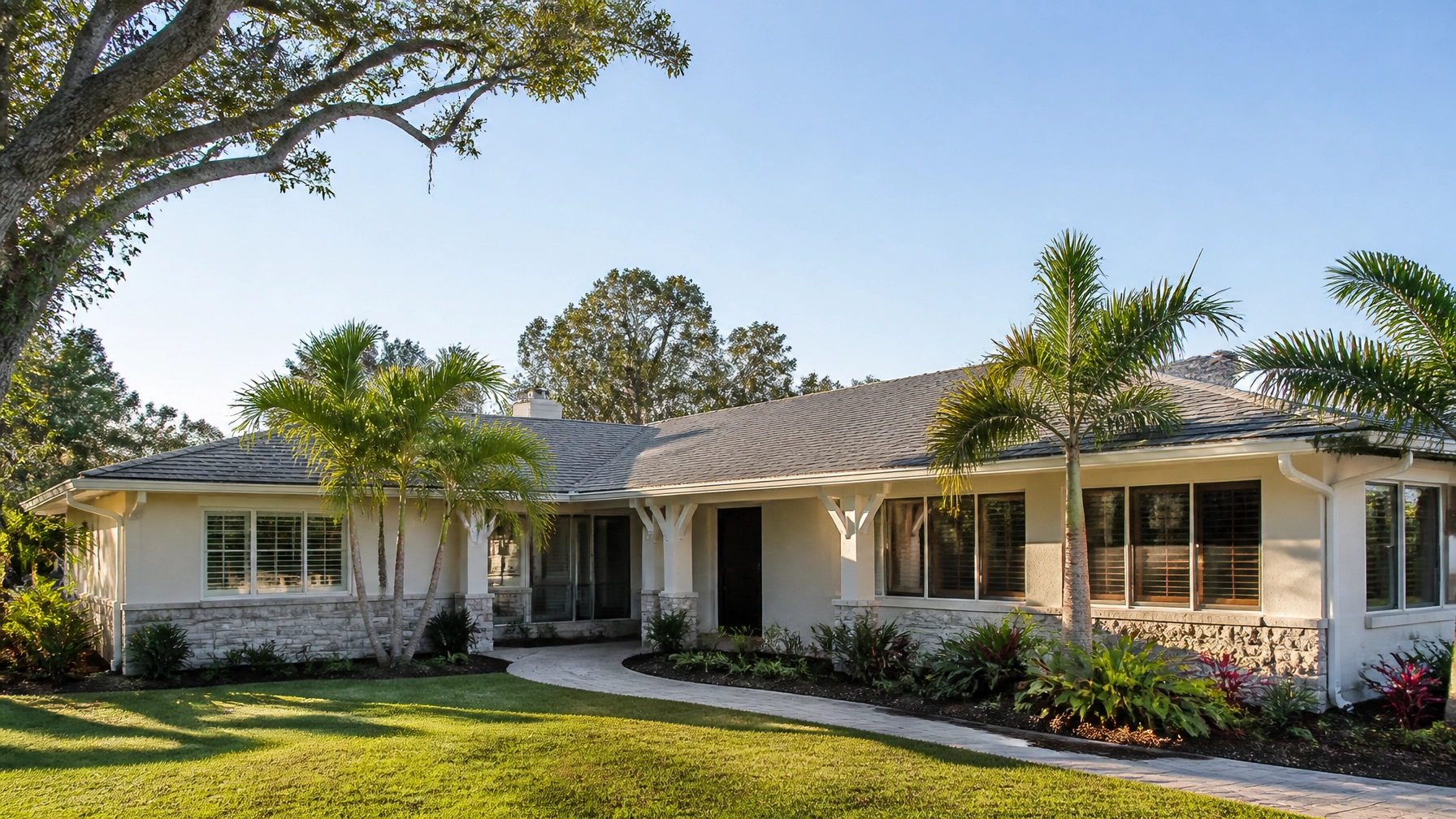
    Architectural shingle roof on a Louisville ranch-style home

    Standing-seam metal (Premium)

    Standing-seam metal roofing uses concealed fasteners and raised interlocking seams. It can last 40–70 years when properly installed, compared with approximately 25–30 years for many architectural shingle systems.

    The requested 2026 Louisville range is $7–$18 per square foot, with a more typical true standing-seam price often toward the middle or upper part of that range. A complete project may total $12,000–$36,000, depending on roof size, panel gauge, metal type, trim, tear-off, and labor.

    Metal is especially attractive when you value:

    • Long service life
    • Strong wind and moisture performance
    • Low maintenance
    • Modern curb appeal
    • Potential energy savings
    • Reduced exposure to repeated shingle replacement cycles

    Compare both systems with our metal vs. shingles guide.

    Why 2026 Roof Prices Are Rising

    Louisville homeowners comparing an early-2026 quote with a summer or fall quote may notice a substantial difference. Roofing manufacturers announced multiple price increases during 2026, including:

    • Approximately 4%–8% increases early in the year
    • Another 6%–9% increase effective June 1
    • Distributor adjustments that may further affect local pricing
    • Higher costs for steel and aluminum components because of tariffs

    Asphalt shingles are not themselves steel products, but a complete roofing system still uses metal flashing, drip edge, vents, fasteners, and other accessories. Those components have experienced added cost pressure.

    The practical lesson is simple: request a written quote that identifies the shingle line, underlayment, flashing, ventilation, tear-off, disposal, permit fees, and quote expiration date.

    Louisville Climate and Installation Requirements

    Louisville’s weather creates several specific roofing concerns.

    Hail damage

    Hail can bruise shingle mats, remove granules, and weaken the roof without producing an immediate leak. Class 4 shingles offer stronger impact resistance than standard products, although no shingle is hail-proof.

    Freeze-thaw movement

    Repeated freezing and thawing can stress flashing, sealants, shingles, and exposed roof-deck edges. Small gaps may expand during winter and become leak points.

    Ice dams

    Snowmelt can refreeze at roof eaves when attic temperatures are uneven. Ice dams may push water beneath shingles and into the attic or wall system.

    A quality Louisville reroof should address:

    • Ice-and-water shield at eaves and valleys
    • Protection around chimneys, skylights, and roof penetrations
    • Adequate soffit intake and ridge or mechanical exhaust ventilation
    • Proper flashing replacement
    • Correct shingle nailing patterns
    • Clean, properly sloped gutters and downspouts

    Louisville Metro generally permits no more than two layers of shingles. If your roof already has two layers, a complete tear-off is typically necessary.

    Louisville Metro Permits and Contractor Requirements

    Full roof replacements in Louisville and much of Jefferson County generally require a building permit through the Louisville Metro Department of Codes and Regulations, Construction Review Division.

    Plan for:

    • A minimum permit fee of approximately $75
    • A common total allowance of roughly $75–$150 or more
    • Possible plan review or inspection fees
    • One or more inspections depending on the project

    The roofing contractor should normally pull the permit in the contractor’s name. Before signing, ask for:

    • Permit responsibility in writing
    • Proof of liability and workers’ compensation insurance
    • Current business and contractor credentials
    • Confirmation of required Home Improvement Contractor (HIC) registration
    • The permit number once issued

    Because requirements can change by jurisdiction, confirm current details with Louisville Metro Construction Review or the department directly before work begins.

    New Roof ROI and Louisville Home Value

    A roof replacement is not usually a dollar-for-dollar investment. However, it can protect value, improve marketability, and prevent inspection problems.

    Planning ranges for 2026 are:

    • Asphalt roof replacement ROI: approximately 60%–70%
    • Metal roof replacement ROI: approximately 65%–75%

    These are broad estimates, not guaranteed resale premiums. Actual roof replacement resale value depends on the home’s condition, neighborhood, material quality, installation records, and buyer expectations.

    Why a new roof can support resale value

    A new roof may:

    • Remove a major deferred-maintenance concern
    • Reduce the chance of inspection-related credits
    • Improve listing photographs
    • Make the home easier to insure
    • Increase buyer confidence
    • Support stronger roof curb appeal and overall home value

    The effect can be especially noticeable in Louisville neighborhoods where exterior character matters. In the Highlands, where many homes have historic details, a worn or mismatched roof can distract from the entire facade. In St. Matthews, where median home values are approximately $340,000, a clean, proportionate roof helps a home compete with nearby listings. The same principle applies in Middletown, Fern Creek, and Louisville’s East End.

    For context, the Highlands has a median home value around $320,000, while St. Matthews is approximately $340,000. A roof is one of the largest visible surfaces on many historic, Colonial, ranch, and mid-century homes. That makes material color, roofline, and installation quality important parts of the resale decision.

    Best roof for home value

    For most Louisville homeowners, the best roof for home value is a properly installed architectural shingle system that matches the neighborhood and the home’s design.

    Choose metal when:

    • You expect to remain in the home for many years
    • The architecture suits standing-seam panels
    • Long-term durability is more important than the lowest initial price
    • You want to reduce future replacement cycles

    Avoid over-improving for the neighborhood. A premium metal roof may not produce its full financial benefit if nearby homes use standard architectural shingles. Focus on durability, proportional design, documented installation, and strong curb appeal.

    Standing-seam metal roof on a modern Louisville home

    How to Get Your Louisville Roof Estimate

    You can get a property-specific starting point without waiting for several contractor appointments.

    1. Visit Get My Roof Estimate Now.
    2. Enter your Louisville or Jefferson County address.
    3. Receive a satellite-powered roof measurement in about 60 seconds.
    4. Review the estimated roof size in squares.
    5. Compare low, middle, and high price ranges.
    6. Review material options, including architectural shingles and metal.
    7. Use the estimate to plan contractor conversations.

    The service is free, requires no credit card, and uses satellite imagery to measure roof size, pitch, and complexity. Results are designed to provide a useful pricing range before an in-person inspection. A contractor should still verify decking, flashing, ventilation, and structural conditions before finalizing a contract.

    Roofing crew installing architectural shingles on a Louisville-area home

    Frequently Asked Questions

    How much does a new roof cost in Louisville in 2026?

    Most homeowners should plan on approximately $11,000–$16,000 for a mid-range architectural shingle replacement on a typical 2,000-square-foot roof. Complex roofs and premium materials can exceed that range.

    Is a metal roof worth the cost in Louisville?

    It can be. Standing-seam metal costs more initially but may last 40–70 years and perform well against moisture, wind, and freeze-thaw conditions. It is most financially sensible for homeowners planning to stay long term.

    What is the best roof for hail in Louisville?

    Class 4 impact-resistant shingles are a practical choice for many homeowners. Standing-seam metal is also highly durable, although large hail can still cause cosmetic dents.

    Does a roof replacement increase home value?

    Usually, it improves marketability and buyer confidence more reliably than it creates a matching dollar-for-dollar increase. A reasonable planning range for roof replacement ROI is 60%–75%, depending on material and market conditions.

    Do I need a permit for a roof replacement in Jefferson County?

    A full replacement generally requires a permit through the applicable building department. Louisville Metro projects are typically handled by the Construction Review Division. Confirm requirements for your exact municipality and address.

    Can I get a Louisville roof estimate without a contractor visit?

    Yes. A satellite-based estimate can measure your roof and provide low-middle-high pricing ranges in about 60 seconds. Use it as a planning tool, then have a qualified contractor verify the roof deck and installation details before work begins.
  • Daily ROI Blitz – Slot 4: Savannah, GA New Roof ROI : What a Replacement Adds to Your Home Value in 2026

    Daily ROI Blitz – Slot 4: Savannah, GA New Roof ROI : What a Replacement Adds to Your Home Value in 2026

    A new roof in Savannah typically recoups 60%–70% of its replacement cost at resale. In practical terms, a professionally installed roof can add approximately 1.8%–2.8% to a home's total value, depending on the home's condition, neighborhood, roof material, and local buyer demand.

    For 2026, Savannah homeowners should plan on approximately $9,000–$14,400 for many standard roof replacement projects. A typical 2,000-square-foot roof may cost $9,200–$15,500 with architectural shingles or $18,000–$28,000 with standing-seam metal.

    The exact number depends on your ZIP code, roof pitch, tear-off requirements, roof complexity, material choice, and whether repairs are needed underneath.

    Savannah Roof Replacement ROI at a Glance

    • Typical resale cost recovery: 60%–70%
    • Estimated total home-value increase: 1.8%–2.8%
    • Common 2026 installed range: $9,000–$14,400
    • Architectural shingles: $8,500–$16,500 for a 1,500–3,000-square-foot roof
    • Standing-seam metal: $18,000–$28,000 for a 2,000-square-foot home
    • Typical shingle lifespan: 25–30 years
    • Typical metal lifespan: 40–70 years

    These are planning benchmarks, not guaranteed appraisal results. Your roof's contribution to resale value will also depend on comparable sales, buyer expectations, inspection findings, and the overall condition of the property.

    How Much Value Does a New Roof Add in Savannah?

    Roof replacement ROI is best understood in two ways:

    1. How much of the project cost you recover at resale
    2. How much the roof changes the home's total market value

    For example, assume:

    • Roof replacement cost: $12,000
    • Estimated resale recovery: 65%
    • Estimated value recovered: $7,800

    If the home is worth $350,000, that $7,800 represents approximately 2.2% of the home's total value.

    The roof may not add the entire replacement cost to the sale price. However, it can prevent a buyer from requesting a large credit, reduce inspection objections, improve the home's presentation, and make the property easier to finance and insure.

    That is why a new roof often produces value beyond a simple dollar-for-dollar calculation.

    2026 Savannah Roof Replacement Cost Breakdown

    Savannah roofing prices vary by ZIP code and project scope. Labor availability, coastal construction requirements, roof access, and the age of the home can all affect the final estimate.

    Investment level Typical 2026 cost Common scope Value profile
    Budget $9,000–$11,500 Simple roof, one tear-off layer, architectural shingles, limited repairs Controls upfront cost while improving buyer confidence
    Popular $11,500–$15,500 High-wind-rated architectural shingles, upgraded underlayment, flashing, ventilation, standard repairs Strong balance of curb appeal, durability, and resale appeal
    Premium $18,000–$28,000 Standing-seam metal, complex roof design, premium flashing, enhanced coastal protection Higher longevity, distinctive appearance, and lower long-term maintenance

    For broader planning, architectural shingles generally run $8,500–$16,500 on homes with 1,500–3,000 square feet of roofing, or roughly $8–$10 per square foot in many Savannah-area projects.

    A standing-seam metal roof for a 2,000-square-foot home commonly runs $18,000–$28,000, or about $13–$16 per square foot.

    You can compare general material and regional pricing with our Savannah roof replacement estimate tool or review the factors included in our roof cost calculator.

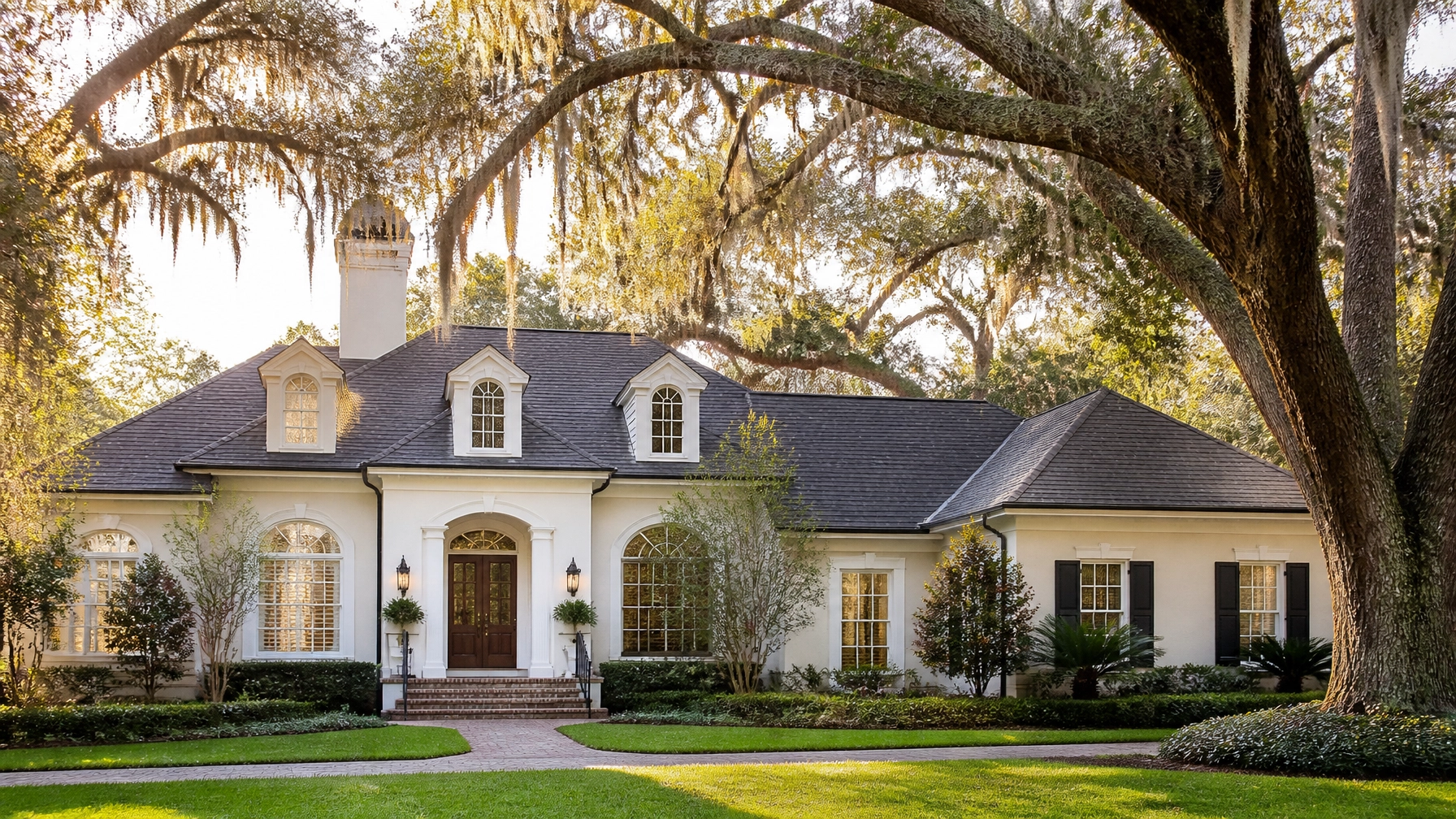
    New architectural shingle roof on a historic-style Savannah home near mature oak trees

    Why a New Roof Can Improve Savannah Home Value

    1. It strengthens curb appeal

    Roof condition is one of the first exterior features buyers notice. Missing shingles, dark streaks, sagging areas, exposed flashing, and an uneven roofline can make an otherwise attractive home look neglected.

    A new roof can improve:

    • First impressions
    • Listing photography
    • Exterior symmetry
    • Color coordination with siding and trim
    • Buyer confidence during showings

    In neighborhoods near Forsyth Park, the Historic District, and established Savannah streets lined with live oaks, the roof is a major part of the home's visible character. This makes roof curb appeal and home value closely connected.

    2. It reduces inspection negotiations

    An older roof can become a negotiation point even when it is not actively leaking. Buyers may ask for:

    • A price reduction
    • A seller credit
    • A roof replacement before closing
    • Additional inspections
    • Proof of remaining useful life

    A new, permitted roof with transferable warranties gives buyers clearer information. It also reduces the chance that the roof becomes the reason a transaction slows down or falls apart.

    3. It supports insurability

    Savannah homes face coastal humidity, heavy rainfall, tropical systems, high winds, and hurricane-season debris. Insurance companies and buyers pay close attention to roof age and installation quality.

    A replacement completed to current standards may improve the home's insurance profile. Savings are not automatic, so homeowners should ask their insurance provider whether high-wind materials, impact ratings, or a newer roof qualify for discounts.

    4. It protects the home's underlying value

    A deteriorating roof can cause damage beyond the roof covering. Moisture may affect:

    • Roof decking
    • Attic insulation
    • Rafters and trusses
    • Interior ceilings
    • Wall framing
    • Electrical components

    Replacing the roof before damage spreads can preserve more of the home's value. In this case, part of the ROI comes from avoiding a larger repair bill and preventing visible defects during resale.

    Coastal Savannah Factors That Affect ROI

    Savannah's climate changes both the cost and the value equation.

    Humidity and salt air

    Coastal humidity can accelerate mold, algae growth, corrosion, and moisture-related deterioration. Homes closer to the river, marsh, or Atlantic influence may need corrosion-resistant fasteners, durable flashing, and carefully sealed roof penetrations.

    Hurricane season and high winds

    Savannah-area roof systems should be designed and installed for local wind requirements. Depending on the property, contractors may need to address:

    • High-wind-rated shingles or engineered metal panels
    • Enhanced shingle fastening
    • Proper starter strips and ridge caps
    • Improved edge and eave protection
    • Self-adhering underlayment in vulnerable areas
    • Corrosion-resistant fasteners
    • Roof-to-wall connections and hurricane straps where applicable

    The exact requirements depend on the address, roof design, exposure, and current local code. Ask for the wind rating and fastening specifications in writing rather than accepting a general “hurricane-ready” label.

    Oak trees and storm debris

    Large live oaks are part of Savannah's identity, but overhanging limbs can scrape shingles, clog gutters, and create impact risk during storms. Before listing a home, trim unsafe branches and document any tree-related roof repairs.

    Historic District and National Register Considerations

    Roof replacement can require additional planning for homes in Savannah's historic areas.

    If your property is in a local historic district, exterior roof work may require a Certificate of Appropriateness through the Savannah Metropolitan Planning Commission before a building permit can be issued. The City of Savannah Applications and Forms page provides additional guidance.

    This is particularly important for homes near the downtown squares, Forsyth Park, Victorian District, and other designated areas. A National Register listing and a local historic-district designation are not always identical, so confirm your property's exact status.

    Before replacing the roof, verify:

    • Whether the home is inside a local historic district
    • Whether the work requires a Certificate of Appropriateness
    • Whether the proposed material and color are allowed
    • Whether a building permit is required
    • Whether the roof must remain historically compatible
    • Whether the contractor will handle approvals and inspections

    Historic review does not remove the need to meet current safety and wind requirements. The project must satisfy both preservation rules and applicable building codes.

    What Is the Best Roof for Home Value in Savannah?

    For many homeowners, architectural shingles are the best roof for home value because they provide a strong balance of cost, appearance, availability, and expected lifespan.

    Choose architectural shingles when:

    • You may sell within the next 5–10 years
    • You want broad color and style options
    • You need to control the initial investment
    • Your neighborhood primarily uses shingle roofs
    • You want a straightforward repair and replacement process

    Standing-seam metal may be the better long-term choice when:

    • You plan to stay in the home for 10 or more years
    • You want a 40–70-year service life
    • Energy efficiency matters
    • You prefer minimal maintenance
    • You want a premium, modern roof profile
    • The roof design and historic requirements allow it

    Review the differences in our guide to metal roofing and our metal-versus-shingles comparison.

    Modern Savannah coastal home with a new standing-seam metal roof

    How to Maximize Your Roof Replacement ROI

    Use these steps before signing a contract:

    1. Measure the actual roof area. Roofing is priced in squares, with one square equal to 100 square feet.
    2. Compare at least two material options. Price architectural shingles and metal separately.
    3. Request an itemized quote. It should show tear-off, disposal, underlayment, flashing, ventilation, permits, labor, and repairs.
    4. Confirm wind ratings and fastening details.
    5. Ask about decking replacement. Clarify the per-sheet or per-square-foot charge for hidden wood damage.
    6. Verify licensing and insurance.
    7. Confirm historic approvals if applicable.
    8. Keep permits, inspection records, warranties, and invoices. These documents can help during resale.
    9. Avoid choosing solely on the lowest bid. An unusually low price may exclude required coastal details or proper tear-off.

    Colonial-style Savannah home with a newly installed high-wind-rated roof and clean landscaping

    Get Your Savannah Roof ROI Estimate in 60 Seconds

    A new roof is not just a maintenance expense. In Savannah, it can recover 60%–70% of its cost at resale, add approximately 1.8%–2.8% to total home value, improve curb appeal, and reduce inspection concerns.

    Before scheduling contractor visits, get a property-specific starting point. Get a free instant roof estimate from Get My Roof Estimate Now. Our satellite-powered tool measures your roof and provides pricing based on size, pitch, complexity, material, and regional costs.

    It is free, requires no credit card, and delivers results in about 60 seconds.

    Frequently Asked Questions

    Does a new roof increase home value in Savannah?

    Yes. A new roof can add approximately 1.8%–2.8% to a home's total value and typically recoups 60%–70% of its replacement cost at resale, although actual results vary.

    Is roof replacement a good investment before selling?

    It can be, especially when the existing roof is visibly worn, near the end of its service life, or likely to create inspection objections. Compare the expected cost with the likely resale benefit and the concessions buyers may request.

    Are metal roofs better for resale than shingles?

    Metal roofs may appeal to buyers who value longevity, energy efficiency, and low maintenance. However, architectural shingles often provide stronger short-term ROI because the upfront cost is lower.

    Does Savannah's Historic District affect roof replacement?

    Yes. Exterior roof work in a local historic district may require a Certificate of Appropriateness. Confirm requirements with the MPC Historic Preservation Department before work begins.

  • Daily Weather Blitz – Slot 7: Nashville, TN : August 22, 2026: Longest Heat Wave Finally Breaking, 94°F Today & What Music City Heat Does to Your Roof’s Durability

    Daily Weather Blitz – Slot 7: Nashville, TN : August 22, 2026: Longest Heat Wave Finally Breaking, 94°F Today & What Music City Heat Does to Your Roof’s Durability

    Nashville’s longest heat stretch of 2026 is finally losing its grip.

    Today, Saturday, August 22, will still be hot. Expect mostly sunny to partly cloudy skies, a high near 93–94°F, an overnight low near 68°F, and light southeast winds around 6–10 mph. Rain chances remain low at roughly 6–10%. The afternoon heat index may reach 100–105°F, while the UV index is around 7, or high.

    The improvement arrives Sunday. Nashville should fall into the upper 80s, around 88–89°F, with lower humidity and a low near 67°F. Temperatures climb toward the low 90s again by midweek, with thunderstorm chances returning around Wednesday.

    That cooldown is welcome. Nashville has experienced 17 straight days with highs in the 90s, following periods when heat indices exceeded 110°F and Extreme Heat Warnings were issued. For homeowners, this is more than a comfort issue. Prolonged sun, attic heat, and repeated temperature changes can accelerate roof aging.

    What 17 Straight Days of 90°F Heat Can Do to a Roof

    Roofing systems are designed to handle hot weather. They are not designed to escape the effects of long-term heat exposure.

    A roof can experience several forms of stress during an extended Nashville summer:

    1. Asphalt shingles can age faster

    Direct sunlight exposes shingles to ultraviolet radiation. Over time, UV exposure can dry out asphalt components, weaken the fiberglass mat, and reduce flexibility.

    Dark shingles absorb more solar heat. On a sunny summer afternoon, the roof surface can become much hotter than the surrounding air. That additional heat may contribute to:

    • Curling or lifted shingle edges
    • Cracking around exposed areas
    • Brittle seal strips
    • Faster loss of protective granules
    • Reduced resistance to wind and hail

    A single hot day will not ruin a healthy roof. Seventeen consecutive 90-degree days can reveal weaknesses in an older system, especially when the roof is already 15–30 years old.

    2. Attic heat can build up

    A poorly ventilated attic traps heat beneath the roof deck. That heat can transfer into living spaces, increase air-conditioning demand, and keep roofing materials hotter for longer.

    Good attic ventilation requires balance:

    • Intake ventilation at soffits or eaves
    • Exhaust ventilation at the ridge or roof vents
    • Clear airflow through the attic
    • Adequate insulation below the roof deck

    Adding a ridge vent without enough intake air does not create a properly balanced system. A roofing professional should evaluate the entire ventilation path.

    3. Thermal cycling stresses roof components

    Saturday’s heat is followed by a much cooler overnight period. Then Sunday brings lower daytime temperatures. These changes create thermal cycling: roofing materials expand during heat and contract as temperatures fall.

    Repeated expansion and contraction can place stress on:

    • Flashing around chimneys and vents
    • Pipe boots
    • Sealants
    • Valleys
    • Fasteners
    • Shingle bonds
    • Roof-to-wall transitions

    Thermal cycling is one reason small defects can become leaks after a hot spell, a thunderstorm, or a strong wind event.

    Ground-level view of a Nashville ranch home with a new weathered-gray architectural shingle roof and clean gutters

    Nashville’s Roof Has to Handle More Than Heat

    The end of this heat wave does not end Nashville’s roofing challenges.

    Middle Tennessee homes face a wide range of weather throughout the year:

    • Spring and summer thunderstorms
    • Hail
    • Straight-line winds
    • Heavy rain
    • Occasional tornado threats
    • High humidity
    • Winter freezes and freeze-thaw cycles
    • Falling branches during storms

    A roof that survives hot weather but has weak flashing, poor ventilation, or aging shingles may still be vulnerable when thunderstorms return.

    Post-Heat-Wave Roof Inspection Checklist

    You do not need to climb onto the roof to perform a useful first check. In fact, homeowners should avoid walking on the roof. Slopes, loose granules, and hot surfaces create unnecessary fall risks.

    Use binoculars from the ground, inspect from windows where safe, and check the attic and ceilings from inside the home.

    Look for:

    • Missing shingles: Check roof edges, ridges, and visible slopes.
    • Curling or buckling: Lifted corners and wavy lines may indicate aging or heat stress.
    • Excess granules: A small amount in gutters can be normal after installation, but repeated accumulation on an older roof deserves attention.
    • Damaged flashing: Look around chimneys, skylights, plumbing vents, and wall intersections.
    • Sagging roof lines: A dip may point to structural or moisture-related damage.
    • Water stains: Check ceilings and upper walls, especially after rain.
    • Hot attic conditions: An unusually hot attic may indicate ventilation or insulation problems.
    • Mold or damp insulation: Humidity and roof leaks can create hidden problems.
    • Tree contact: Branches rubbing against shingles can remove granules and damage flashing.
    • Gutter blockage: Clogged gutters can send water behind fascia and into the roof edge.

    If you see active leaking, a sagging area, or storm damage, contact a licensed and insured roofing professional. Do not attempt a roof inspection during high heat, thunderstorms, or strong winds.

    Durability Upgrades Worth Considering in Nashville

    A replacement roof is an opportunity to improve more than appearance.

    Balanced attic ventilation (Core protection)

    Ask the contractor to confirm that intake and exhaust ventilation are balanced. Better airflow can help reduce attic heat buildup and moisture accumulation.

    Class 4 impact-resistant shingles (Storm protection)

    Class 4 shingles are designed for improved resistance to impact from hail and other debris. They generally cost more than standard architectural shingles, but they may be a practical choice in a region exposed to severe thunderstorms.

    Ask your insurer whether impact-resistant roofing qualifies for a premium credit. Discounts vary by carrier, policy, and installation documentation.

    Six-nail wind installation (Enhanced fastening)

    Six-nail installation uses additional fasteners per shingle compared with standard four-nail installation. When permitted by the product specifications and local requirements, it can improve wind resistance.

    The installation method matters as much as the shingle label. Ask for the manufacturer’s fastening pattern in the written proposal.

    Ice-and-water shield at eaves and valleys (Water protection)

    Nashville is not a heavy-snow market, but freeze-thaw cycles and wind-driven rain still make vulnerable roof areas important. Ice-and-water protection at eaves, valleys, and other problem areas can help defend against water intrusion.

    Clean gutters and trimmed branches (Low-cost maintenance)

    Gutters should drain freely, and branches should be kept away from the roof. This reduces debris accumulation, abrasion, shade-related moisture, and damage during thunderstorms.

    New standing-seam metal roof on a modern Nashville-style farmhouse with visible attic ventilation and strong curb appeal

    Nashville Roof Replacement Cost Benchmarks for 2026

    For a typical 2,000-square-foot roof, Nashville homeowners can use the following planning ranges:

    Roof option 2026 planning range Best fit
    Basic 3-tab shingles (Budget) $8,000–$11,000 Lower upfront cost or rental property
    Architectural shingles (Popular) $11,000–$16,000 Most Nashville homeowners
    Impact-resistant shingles (Enhanced) $13,000–$19,000 Hail and storm protection
    Designer shingles or premium systems (Premium) $16,000–$25,000+ High curb appeal and longer warranty options
    Metal roofing (Premium) $18,000–$32,000+ Long service life and energy efficiency

    These are budgeting benchmarks, not binding quotes. Actual pricing depends on roof size, pitch, complexity, accessibility, tear-off requirements, decking repairs, ventilation, material choice, permits, and contractor availability.

    Nashville’s typical local range is often cited around $7,500–$20,000, with architectural shingles near $12,500 for a typical home. A complex roof, premium metal system, or hidden wood damage can push the final cost higher.

    Use the Nashville roofing estimate page or review the 2026 roof cost calculator for additional planning information.

    Which Roof Is Best for Home Value?

    A new roof can improve value in three ways:

    1. It protects the home’s condition. Buyers are less concerned about immediate leaks, repairs, or insurance complications.
    2. It improves curb appeal. Clean rooflines and coordinated colors make a home look better from the street.
    3. It reduces buyer uncertainty. A recently replaced roof with transferable documentation can make a property easier to market.

    The best roof for home value is not always the most expensive roof. For many Nashville homes, architectural shingles offer the strongest balance of price, appearance, and expected lifespan.

    Metal roofing may provide a stronger long-term investment for homeowners who plan to stay for 10 years or more. It can last roughly 40–70 years, reflect more solar heat, and require less maintenance. However, the upfront cost is substantially higher.

    Review the metal roofing guide and metal-versus-shingles comparison before choosing.

    Roof replacement ROI varies by neighborhood, material, installation quality, timing, and buyer preferences. No roof guarantees a specific increase in resale value. Still, replacing a visibly worn roof can protect your selling position and help prevent a roof condition from becoming a negotiation problem.

    Get a Nashville Roof Estimate in 60 Seconds

    You do not need to schedule multiple contractor visits just to learn whether replacement fits your budget.

    Enter your Nashville address at Get My Roof Estimate Now. Our satellite-powered system measures your roof’s size, pitch, and complexity, then provides a free low-to-middle-to-high replacement estimate in about 60 seconds.

    There is:

    • No cost
    • No credit card requirement
    • No upfront contractor visit
    • No hidden fees
    • Pricing for multiple roofing materials
    • Access to verified, licensed, and insured local contractors

    Use this weekend’s cooler weather to plan ahead. A fast estimate gives you a clearer starting point before the next round of heat, storms, and midweek thunderstorm chances return.

    Nashville Weather Sources

  • Daily Weather Blitz – Slot 2: Asheville, NC : August 22, 2026: From 5-Inch Rain Rates to Sunny Skies & What Blue Ridge Weather Does to Your Roof

    Daily Weather Blitz – Slot 2: Asheville, NC : August 22, 2026: From 5-Inch Rain Rates to Sunny Skies & What Blue Ridge Weather Does to Your Roof

    Asheville’s weather can change quickly. On Friday, August 21, strong-to-severe thunderstorms moved across Western North Carolina, producing torrential rain, hail, damaging wind, and roadway flooding in parts of Buncombe County.

    Some storms in south-central Buncombe County produced estimated rain rates of 3 to 5 inches per hour. Areas also reported up to 3 inches of rain, marble-sized hail measuring about 0.5 inches, and wind gusts reaching approximately 50 mph. Water pooled on roads including Smokey Park Highway.

    By Saturday, August 22, the pattern shifted. Asheville saw patchy fog before 10 a.m., followed by mostly cloudy skies gradually turning sunny. The high was expected to reach about 84°F, with calm wind. Overnight temperatures were forecast to fall near 61°F.

    Sunday brought sunnier and drier conditions, with a high near 82°F and northwest winds of 7–11 mph, gusting up to 20 mph. More stable air was expected through early next week before storm chances returned around midweek.

    For homeowners, the message is simple: sunny skies after a storm do not mean your roof is undamaged.

    What Friday’s Storms Could Have Done to an Asheville Roof

    The National Weather Service Greenville-Spartanburg office and local reporting from the Asheville Citizen-Times and 828 News NOW highlighted the heavy-rain and flooding threat.

    A storm with intense rain, hail, and wind can affect several parts of the roofing system:

    • Hail can bruise shingles. Marble-sized hail may knock off protective granules and damage the fiberglass mat underneath.
    • Wind can lift or loosen shingles. Damage may be limited to exposed roof edges, ridges, or areas around valleys.
    • Branches can puncture roofing materials. Asheville’s dense tree canopy makes falling limbs and wind-driven branches a leading source of roof damage.
    • Heavy rain can expose flashing problems. Valleys, chimneys, skylights, and roof-to-wall connections are common leak points.
    • Pooling water can reveal drainage issues. Clogged gutters and undersized downspouts can push water beneath the roof edge.

    Hail damage is often difficult to see from the ground. A roof may look normal while losing granules or developing small impact points that become leaks months later.

    Why Asheville Roofs Face Different Conditions

    Asheville sits at roughly 2,100 feet in elevation, with nearby communities extending into much higher mountain terrain. That elevation creates local microclimates and exposes roofs to weather patterns that differ from lower-lying Piedmont towns.

    1. Stronger summer UV exposure

    Higher elevations receive more intense ultraviolet exposure. Over time, UV rays can accelerate:

    • Granule loss on asphalt shingles
    • Drying and cracking
    • Bitumen breakdown
    • Fading and surface deterioration

    A roof that appears acceptable from the driveway may already be losing part of its weather barrier.

    2. Thermal cycling

    Mountain roofs can heat quickly in direct sun and cool rapidly after storms or overnight. Repeated expansion and contraction affects shingles, flashing, sealants, and metal components.

    3. Freeze-thaw cycles and ice dams

    Winter weather introduces another set of risks. Repeated freezing and thawing can open small gaps around flashing and penetrations. Snow and ice may also collect on steeper, complex roof sections.

    Ice dams are especially problematic when attic ventilation is poor. Warm attic air melts snow higher on the roof, while colder eaves refreeze the water. The resulting ice can force water beneath shingles.

    4. Trees and wind-driven debris

    Dense Appalachian tree cover adds beauty and risk. Branches can scrape roofing, puncture shingles, clog gutters, and block valleys. Wind damage from trees is often more significant than the direct wind pressure on the shingles themselves.

    5. Tropical remnants

    Western North Carolina can also receive heavy rain and wind from the remnants of tropical systems. Hurricane Helene in 2024 demonstrated how quickly deferred maintenance can compound storm damage. Small weaknesses become major problems when a roof faces prolonged rain and high winds.

    New architectural shingle roof with visible valleys and chimney flashing on an Asheville-style home

    Asheville Roof Replacement Cost Benchmarks for 2026

    For Asheville homeowners, a practical 2026 planning range is approximately $6,000 to $23,000 for a roof replacement. The average project often falls between $11,000 and $14,700, depending on roof size, material, pitch, access, and complexity.

    Roof option Planning benchmark Best fit
    3-tab or standard shingles $6,000–$7,000 Budget
    Architectural shingles About $11,000 for a typical roof Most Popular
    Premium shingles or designer systems $12,000–$17,000+ Premium
    Standing-seam metal $17,000–$23,000+ Long-term investment

    Typical material benchmarks include:

    • Asphalt shingles: approximately $4.50–$6.00 per square foot, or about $553 per roofing square at the $5.53-per-square-foot benchmark
    • Architectural shingles on a 2,000-square-foot roof: about $11,000
    • Standing-seam metal: approximately $16 per square foot
    • Complex mountain roofs: often 10%–20% more because of steep slopes, dormers, valleys, multiple rooflines, and difficult access

    Remember that roofers measure roofing in squares, with one square equal to 100 square feet. The roof’s actual surface area is usually larger than the home’s interior floor area.

    For a faster property-specific starting point, the Get My Roof Estimate Now roof cost calculator can help compare size, pitch, material, and local pricing factors.

    Choosing a Storm-Ready Roofing System

    Asheville homeowners do not need the most expensive roof to get better storm performance. They do need a complete roof system installed correctly.

    Class 4 impact-resistant shingles (Premium protection)

    Class 4 shingles are tested under UL 2218 impact standards. They are designed to resist hail damage better than standard shingles.

    Benefits may include:

    • Improved resistance to hail bruising
    • Potentially longer service life
    • Possible insurance discounts of approximately 10%–35%, depending on the carrier and policy
    • Better protection for homes in exposed mountain locations

    The discount is not automatic. Ask your insurance agent whether your policy recognizes UL 2218 Class 4 materials and what documentation is required.

    Wind-rated shingles (Critical installation detail)

    Choose shingles with a wind rating appropriate for the property and local design conditions. Relevant classifications may include ASTM D7158 Class D, G, or H, depending on the product and design wind speed.

    In mountain and higher-wind areas, a six-nail pattern is common for improved uplift resistance. Installation must follow the shingle manufacturer’s instructions and the applicable North Carolina Residential Code requirements.

    Ice-and-water protection (Essential at vulnerable areas)

    A quality roof system should include self-adhering underlayment at:

    • Eaves
    • Valleys
    • Roof-to-wall transitions
    • Chimneys
    • Skylights
    • Other penetrations

    At eaves, the ice-and-water shield should extend at least 24 inches past the interior wall line, where appropriate for the roof design and local requirements.

    Ventilation and flashing

    Balanced ridge-and-soffit ventilation helps reduce attic heat buildup and moisture. It can also reduce the risk of winter ice dams.

    Ask contractors to explain how the project will address:

    • Valley flashing
    • Step flashing
    • Chimney flashing
    • Skylight flashing
    • Drip edge
    • Roof deck condition
    • Attic intake and exhaust ventilation

    Standing-seam metal roof on a modern Asheville mountain home designed for rain and snow shedding

    What to Check After a Significant Storm

    Do not climb onto the roof after severe weather. Instead, perform a ground-level inspection and schedule a professional evaluation if you notice:

    • Missing, lifted, or crooked shingles
    • Dark spots or bruising
    • Granules collecting in gutters or downspouts
    • Dented metal flashing or vents
    • Damaged ridge caps
    • Fallen branches or scraped shingles
    • Water stains on ceilings or attic framing
    • Damp insulation or musty attic odors
    • Clogged gutters or overflowing downspouts

    Clean gutters at least twice a year, with special attention before and during fall leaf season. Trim branches away from the roof and keep valleys clear of leaves and debris.

    A professional inspection is particularly important after hail. Damage can be invisible from the ground and may not cause an immediate leak.

    Asheville ranch home roof after a thunderstorm with clean gutters and tree branches trimmed away

    Get an Asheville Roof Estimate Before the Next Storm

    Weather forecasts provide useful timing. They do not provide a roof’s replacement cost.

    Get a property-specific baseline before a leak or insurance deadline forces a rushed decision. Get My Roof Estimate Now uses satellite imagery to measure roof size, pitch, and complexity: typically accurate to within inches, with results in under 60 seconds.

    The estimate is:

    • Free
    • No credit card required
    • Based on your actual address
    • Available with low, middle, and high price ranges
    • Useful for comparing asphalt, metal, synthetic, and coating options

    Start your instant free roof replacement estimate. It takes about 60 seconds and helps you plan before Asheville’s next weather shift.

    Sources: NWS Greenville-Spartanburg, Asheville Citizen-Times weather report, 828 News NOW flood advisory report.

  • Daily FAQ Blitz – Slot 1: AEO FAQ Quick Answers for Birmingham, AL Homeowners (2026)

    Daily FAQ Blitz – Slot 1: AEO FAQ Quick Answers for Birmingham, AL Homeowners (2026)

    Birmingham homeowners planning a roof replacement in 2026 should budget roughly $8,600–$21,600 for a typical 2,000-square-foot roof. Most standard quotes land closer to $9,000–$16,000, depending on roof pitch, complexity, tear-off requirements, materials, and local labor.

    This FAQ answers the questions homeowners ask most about new roof ROI, resale value, curb appeal, material selection, storm damage, permits, insurance, and contractor safety in Birmingham and Jefferson County.

    Birmingham Roof Replacement FAQ

    1. How much does a new roof cost in Birmingham, AL, in 2026?

    A typical 2,000-square-foot roof replacement in Birmingham costs about $8,600–$21,600 in 2026. Most homeowner quotes fall between $9,000 and $16,000.

    Architectural asphalt shingles cost approximately $3–$8 per square foot installed, although steep or complex roofs can cost more.

    Your final price depends on:

    • Roof size and number of roofing squares
    • Roof pitch and accessibility
    • Valleys, dormers, skylights, and chimneys
    • Tear-off and disposal requirements
    • Damaged decking or structural repairs
    • Material grade
    • Birmingham-area labor and permit requirements

    Use the roof cost calculator for a general range, or get a property-specific satellite estimate.

    2. What is a roofing square, and how is roof size measured?

    Roofers measure roofs in squares. One roofing square equals 100 square feet of roof area.

    A 2,000-square-foot roof contains approximately 20 squares, before accounting for waste, cutting, and roof complexity.

    Roof area is not always the same as the home’s interior floor area. Pitch, overhangs, attached garages, and multiple roof sections can increase the actual roof measurement.

    A professional estimate should show:

    • Total roof squares
    • Waste percentage
    • Tear-off quantity
    • Underlayment and flashing requirements
    • Decking allowance, if needed

    Satellite measurements can provide a fast starting point without scheduling an initial contractor visit.

    3. Which roof is best for home value in Birmingham?

    For most Birmingham homes, architectural asphalt shingles (Popular) offer the best balance of cost, appearance, durability, and resale appeal.

    Architectural shingles typically:

    • Cost about $3–$8 per square foot installed
    • Last approximately 25–30 years in Alabama conditions
    • Provide more visual depth than basic three-tab shingles
    • Match ranch, Colonial, brick, and transitional home styles
    • Offer strong availability for repairs and replacement

    Class 4 impact-rated shingles (Storm-Resistant) are also popular in Jefferson County because they provide enhanced hail resistance. They may cost more upfront but can be worth considering after recent hail events. Ask your insurance agent whether an impact-resistant roof could qualify for a policy credit.

    Metal roofing can provide a longer service life and a modern appearance, but its higher initial cost may not produce the same resale return on every Birmingham property.

    Close-up of a new architectural shingle roof with clean flashing and ridge ventilation

    4. Does a new roof increase home value in Birmingham?

    Yes. A new roof can increase buyer confidence, improve exterior appearance, and reduce inspection objections.

    In Birmingham, a new roof typically recoups approximately 60%–95% of its replacement cost at resale, depending on the neighborhood, material, installation quality, and timing. A commonly cited regional benchmark is approximately 81%.

    For example, a $12,000 roof replacement could contribute roughly:

    • $7,200–$8,400 in resale value at a 60%–70% return
    • Approximately $9,700 at an 81% regional benchmark
    • More in certain higher-demand neighborhoods when the roof resolves a major buyer concern

    ROI is not guaranteed. A roof that is properly installed, visually compatible with the home, and supported by transferable documentation is more likely to perform well.

    5. What is the roof replacement ROI when selling a Birmingham home?

    The roof replacement ROI is usually strongest when the existing roof is visibly worn or more than 15 years old.

    A replacement can help by:

    • Reducing buyer requests for repairs or credits
    • Preventing an inspection delay
    • Making the home easier to insure
    • Improving listing photos and curb appeal
    • Giving buyers confidence that a major expense is addressed

    Replacing a roof solely for resale may not return every dollar spent. However, if the existing roof has curling shingles, leaks, storm damage, or a short remaining service life, replacement can protect the sale price and reduce negotiation pressure.

    Birmingham area brick ranch home with a brand-new charcoal roof and strong curb appeal

    Keep the contract, permit records, shingle documentation, warranties, and final inspection records for the next buyer.

    6. How does roof curb appeal affect home value?

    Roof curb appeal affects how buyers judge a home before they enter it. The roof is one of the largest visible exterior surfaces, so faded, mismatched, or damaged shingles can make the entire property look older.

    For Birmingham homes, curb appeal improvements often include:

    • Dimensional architectural shingles
    • A color that complements brick, siding, or stone
    • Clean valleys, flashing, and drip edges
    • Straight ridge lines
    • Properly installed gutters
    • Algae-resistant or impact-rated products
    • Removal of old stains, debris, and construction waste

    Designer shingles (Premium) can improve appearance but may not produce a proportional resale return on every home. Choose a material that fits the property and surrounding neighborhood.

    7. Does Birmingham require a permit for roof replacement?

    It depends on the property location and scope of work.

    Inside Birmingham city limits:

    • A building permit is generally not required for residential shingle replacement when no roof decking is repaired or replaced.
    • A permit is required when decking, structural components, or other building work is involved.
    • Commercial work requires permitting.
    • The fee is listed as $9.50 per $1,000 of valuation, with a $120 minimum.
    • Applications are handled through the city’s online permitting system, including its ePermit Hub process.

    In unincorporated Jefferson County:

    • Permits are required for all reroofing projects.
    • Use the county’s ePermitJC portal or confirm the current process with Jefferson County before work begins.

    Start with the City of Birmingham permitting page. Confirm the applicable authority having jurisdiction before signing a contract.

    8. What building code applies to Birmingham roof replacement?

    Birmingham residential roofing work follows the 2021 International Residential Code (IRC), subject to applicable state and local requirements.

    The roof assembly must address:

    • Sheathing condition and nailing
    • Underlayment
    • Flashing
    • Roof ventilation
    • Roof-to-wall connections
    • Braced wall panels
    • Wind uplift resistance
    • Manufacturer fastening instructions

    Design wind requirements are based on the site and building characteristics and may use ASCE 7 procedures. Confirm the applicable design wind speed, exposure category, and fastening requirements with the Birmingham Building Inspection Division.

    9. Will Alabama homeowners insurance pay for a new roof?

    Alabama homeowners insurance may cover sudden roof damage caused by a covered event, including:

    • Hail
    • Wind
    • Tornadoes
    • Fallen trees, subject to policy terms

    Insurance generally does not cover normal aging, poor maintenance, or ordinary wear and tear.

    Older roofs may also be settled on an Actual Cash Value (ACV) basis rather than Replacement Cost Value (RCV). Under ACV, depreciation is deducted before payment. Some policies shift roofs around 15 years or older to ACV, but the exact rule depends on the insurer and policy.

    Wind and hail deductibles are often separate from the standard deductible and commonly equal 1%–2% of dwelling coverage. Review your declarations page before filing a claim. The Alabama Department of Insurance provides general consumer guidance.

    Do not authorize unnecessary work based only on a contractor’s opinion. Document damage, contact your insurer, and obtain an independent inspection when appropriate.

    10. What should Birmingham homeowners know about storms and roofing scams?

    Birmingham-area homeowners should inspect roofs after severe weather. The February 26, 2026 supercell event produced hail up to 2.00 inches, straight-line winds, and an EF-0 tornado in Jefferson County. Early June storms generated more than 100 wind-damage reports in the NWS Birmingham coverage area, and a localized wind and hail event was reported near Birmingham on August 17.

    Look for:

    • Missing or lifted shingles
    • Exposed underlayment
    • Bruised or fractured shingles
    • Granules collecting in gutters
    • Damaged flashing
    • Ceiling stains
    • Attic moisture
    • Fallen limbs or punctures

    Check NWS Birmingham for storm surveys and official event information.

    For contractor protection, Alabama requires an HBLB license for residential roofing jobs exceeding $2,500. Verify the contractor through the Alabama Home Builders Licensure Board.

    Avoid contractors who:

    • Arrive immediately after a storm without being requested
    • Demand full payment upfront
    • Offer to pay your insurance deductible
    • Pressure you to sign immediately
    • Promise that insurance will “definitely” pay
    • Ask you to misrepresent damage
    • Cannot provide licensing and insurance information

    Under Alabama’s Residential Roofing Controls law, homeowners may have a five-business-day cancellation right after notice that an insurance claim was denied or found insufficient. The required notice should be included in the contract. Contractors also cannot negotiate with your insurer on your behalf.

    Quick-Reference Birmingham Roof Checklist

    Before replacing your roof:

    • Get a property-specific roof measurement.
    • Budget $8,600–$21,600 for a typical 2,000-square-foot replacement.
    • Compare at least low, middle, and high project ranges.
    • Ask whether the estimate includes tear-off and disposal.
    • Confirm the roof’s number of squares.
    • Check decking, flashing, and ventilation allowances.
    • Verify whether your address is inside Birmingham city limits or unincorporated Jefferson County.
    • Confirm the applicable permit requirement.
    • Review your insurance declarations page.
    • Verify the contractor’s HBLB license and insurance.
    • Avoid deductible-payment offers and high-pressure storm chasers.
    • Save warranties, permits, invoices, and inspection records.

    Get a Free Birmingham Roof Estimate

    Get My Roof Estimate Now provides a free satellite-based roof estimate in under 60 seconds. No credit card is required. The tool measures your roof with approximately 90%–95% accuracy, then provides low, middle, and high price ranges based on roof size, pitch, complexity, materials, and regional pricing.

    Get a Birmingham roof estimate or start with the free satellite estimate tool.

    Sources

    WordPress Categories

    • Birmingham AL
    • Jefferson County
    • Alabama Roofing
    • Roof Replacement
    • AEO FAQ

    WordPress Tags

    • Birmingham AL roof replacement
    • Birmingham roofing costs 2026
    • Jefferson County roofing permits
    • Alabama roofing license
    • Birmingham hail damage
    • Alabama building code
    • Birmingham roof insurance
    • roof replacement ROI
    • satellite roof estimate
    • AEO FAQ
    • architectural shingles
    • storm chaser scams Alabama

  • 2026 Roof Replacement Cost in Amarillo, TX: Complete Price Guide for Yellow City Homeowners

    2026 Roof Replacement Cost in Amarillo, TX: Complete Price Guide for Yellow City Homeowners

    Replacing a roof in Amarillo, Texas typically costs $7,200 to $19,500 for architectural shingles on a 2,000-square-foot single-family home. Standing-seam metal roofing generally costs $14,000 to $30,000 or more.

    Those are useful planning ranges: not fixed bids. Your final price depends on the roof’s measured area, pitch, design complexity, existing layers, decking condition, material, and current contractor demand in Potter or Randall County.

    Amarillo homeowners also face special conditions. The Texas Panhandle sits in Hail Alley, with large hail, high winds, intense UV exposure, freeze-thaw cycles, and sharp temperature changes affecting roof life and replacement costs.

    2026 Amarillo Roof Replacement Cost Snapshot

    For a typical home with approximately 2,000 square feet of roof area:

    • Architectural shingles (Popular): About $7,200–$19,500
    • Typical architectural shingle price: Approximately $5.50–$10 per square foot, with about $8 per square foot common for a complete replacement
    • Class 4 impact-resistant shingles: Usually add a premium over standard architectural shingles
    • Standing-seam metal (Premium): About $7–$16 per square foot installed, or approximately $14,000–$30,000+
    • Old roof tear-off: Approximately $100 per roofing square
    • Typical Amarillo roof size: Often 1,500–2,500 square feet, or 15–25 roofing squares

    A roofing square equals 100 square feet. Roofers price by squares rather than the home’s heated living area because roof size includes slopes, overhangs, valleys, and other surfaces.

    For a broader planning comparison, use our 2026 roof cost calculator, then confirm the number with a property-specific estimate.

    Cost by Roofing Material

    Architectural Shingles (Popular)

    Architectural shingles are the most common choice for Amarillo homeowners because they balance price, appearance, availability, and service life.

    • Installed range: Roughly $5.50–$10 per square foot
    • Typical 2,000-square-foot roof: $7,200–$19,500
    • Expected lifespan: Approximately 25–30 years
    • Best for: Most ranch, colonial, and traditional homes

    The lower end usually applies to a simple, accessible roof with one layer to remove and minimal decking work. The upper end is more likely for steep roofs, complicated layouts, multiple stories, premium shingles, or storm-related demand.

    Architectural shingles also provide a broad selection of colors and textures. That makes them a practical option when roof curb appeal and neighborhood compatibility matter.

    Two-story Amarillo home with a new dimensional architectural shingle roof

    Class 4 Impact-Resistant Shingles (Hail-Ready Upgrade)

    Class 4 shingles are designed and tested for improved impact resistance. They are not hailproof, but they can be a strong fit for Amarillo’s storm environment.

    • Typical premium: About 10%–25% over standard shingles
    • Potential insurance discount: Often 10%–25%, depending on the carrier and policy
    • Expected lifespan: Commonly 25–30 years
    • Best for: Homeowners in hail-prone neighborhoods who want additional protection

    Ask your insurance company about the exact discount before choosing the product. Your carrier may require proof of the shingle’s Class 4 rating, installation documentation, or an updated roof certification.

    Review our asphalt shingles guide for a comparison of common manufacturers, including GAF, Owens Corning, and CertainTeed.

    Standing-Seam Metal (Premium)

    Standing-seam metal roofing costs more initially, but it offers long service life and strong performance in high-wind and high-heat conditions.

    • Installed range: Approximately $7–$16 per square foot
    • Typical 2,000-square-foot roof: $14,000–$30,000 or more
    • Expected lifespan: Approximately 40–70 years
    • Best for: Long-term homeowners, modern homes, and buyers prioritizing durability

    Metal roofing can reflect solar heat and may reduce cooling costs by roughly 10%–25%, depending on the roof color, insulation, ventilation, and HVAC system.

    Large hail can still dent some metal panels, so ask about impact ratings, panel thickness, finish warranties, and repair procedures. Read our metal roofing guide or compare both options in our metal versus shingles guide.

    Modern Amarillo home with a new standing-seam metal roof

    Factors That Change Your Amarillo Roof Price

    1. Roof Size

    A 1,500-square-foot roof may cost far less than a 2,500-square-foot roof, even if both homes have similar living areas. Satellite measurements or contractor measurements should account for every roof plane.

    2. Roof Pitch

    Steep roofs require additional safety equipment, staging, and labor. A steep roof can increase labor pricing by approximately 20%–50% compared with a low- or medium-slope roof.

    3. Roof Complexity

    Valleys, dormers, skylights, chimneys, plumbing penetrations, and multiple roof sections increase installation time. They also require more flashing and detail work.

    4. Tear-Off and Disposal

    Removing old roofing typically costs around $100 per square. A complete tear-off allows the contractor to inspect the decking and install new underlayment correctly.

    5. Decking Repairs

    Water damage, delamination, or weak decking can add cost after the old roof is removed. Ask each contractor to state the per-sheet price for replacement decking in the written quote.

    6. Storm-Season Demand

    After a major hail or wind event, local crews become difficult to schedule. Material availability, temporary labor, and high demand can push prices higher: especially during spring in the Texas Panhandle.

    Why Amarillo’s Local Market Matters

    Amarillo’s climate creates several roof-replacement concerns:

    • Large hail: March 2026 storms produced hail up to approximately 2 inches in parts of the Amarillo area.
    • High winds: Spring storm events included reported gusts in the 59–62 mph range.
    • Freeze-thaw cycles: Repeated expansion and contraction can stress flashing, sealants, and roofing materials.
    • Extreme heat and UV exposure: Summer sun accelerates aging, granule loss, and surface deterioration.
    • Wind design requirements: Proper fastening and edge detailing are especially important on exposed Panhandle properties.

    The local housing market also affects project decisions. Amarillo home values are commonly reported in the approximate $206,000–$270,000 range, depending on neighborhood, size, condition, and source. A roof replacement is therefore a major investment: but an aging or visibly damaged roof can negatively affect both financing and buyer confidence.

    Local labor costs are often estimated around $49–$55 per hour, although roofing bids are usually presented as a complete project price rather than an hourly invoice.

    Class 4 impact-resistant shingle roof installation on an Amarillo ranch home

    Amarillo Roofing Permits and Code Requirements

    For roofing work inside the City of Amarillo, projects exceeding one roofing square, or 100 square feet, generally require a permit. Applications, payments, and inspections are handled through the city’s MGO Connect permitting portal.

    Important requirements and checks include:

    • Confirm the applicable residential code edition with Amarillo Building Safety. Current project guidance references the 2021 International Residential Code.
    • Use the required minimum six-nail fastening pattern for asphalt shingles where applicable to wind-uplift requirements.
    • Install drip edge on asphalt shingle projects.
    • Schedule the required final inspection.
    • Verify that the contractor’s city registration and license information is current.

    The City of Amarillo roofing information page is the best place to confirm requirements before work begins. Permit practices can differ between the city and surrounding Potter or Randall County jurisdictions. County permit fees are often around $120, with a final inspection, but confirm the current fee directly with the authority handling your property.
    Smart Budgeting Tips for Yellow City Homeowners

    Before signing a contract:

    1. Get three written quotes. Compare scope, materials, warranty coverage, ventilation, tear-off, disposal, decking allowances, and permits.
    2. Verify insurance. Request current general liability and workers’ compensation documentation.
    3. Confirm Texas contractor credentials. Ask who is responsible for city registration and permitting.
    4. Check manufacturer certifications. GAF, Owens Corning, and CertainTeed certifications may provide access to enhanced warranty programs.
    5. Document hail damage. Photograph damaged shingles, vents, gutters, screens, siding, and other exterior components before filing a claim.
    6. Ask about Class 4 discounts. Confirm the insurance savings before paying the upgrade premium.
    7. Schedule strategically. Spring is Amarillo’s active hail season. Fall scheduling may offer better availability, but do not postpone a roof with active leaks or exposed decking.
    8. Start with a satellite estimate. A satellite measurement can give you a fast ballpark before arranging contractor visits.

    New Roof ROI and Amarillo Home Value

    A new roof can support value in several ways, but it should not be viewed as a guaranteed dollar-for-dollar return.

    New Roof ROI and Resale Value

    Architectural shingles commonly recoup approximately 60%–70% or more of their replacement cost at resale, depending on market conditions, installation quality, and the roof’s remaining warranty.

    A new roof also reduces buyer concerns about:

    • Immediate repair expenses
    • Insurance complications
    • Failed inspections
    • Financing delays
    • Visible storm damage

    That makes roof replacement resale value particularly important when selling a home with an older roof.

    Roof Curb Appeal and Home Value

    Roof curb appeal affects a buyer’s first impression. Clean architectural shingles can modernize an older ranch or colonial home without the cost of a complete exterior renovation.

    Neutral gray, weathered wood, and charcoal colors are often versatile choices in Amarillo, but coordinate with brick, stucco, siding, trim, and neighborhood standards.

    What Is the Best Roof for Home Value?

    For most Amarillo homes, architectural shingles are the best roof for home value when upfront budget, buyer familiarity, and broad style selection are priorities.

    Metal may offer a stronger long-term value proposition for homeowners who plan to stay for many years. Its longevity, energy performance, wind resistance, and potential insurance advantages can be especially appealing in a hail-prone market.

    The best roof replacement ROI depends on your:

    • Expected time in the home
    • Current roof condition
    • Insurance policy
    • Neighborhood expectations
    • Budget and financing
    • Chosen contractor and installation quality

    Amarillo Roof Replacement FAQ

    How much does a new roof cost in Amarillo in 2026?

    Architectural shingles generally cost $7,200–$19,500 for a typical 2,000-square-foot roof. Standing-seam metal typically costs $14,000–$30,000 or more.

    How many roofing squares does an Amarillo home need?

    Many Amarillo homes require approximately 15–25 squares, but the actual number depends on roof geometry, pitch, and overhangs.

    Should I replace my roof after hail?

    Have the roof inspected after a major storm. Hail bruising and granule loss may not be visible from the ground. Photograph damage before contacting your insurer.

    Are Class 4 shingles worth it in Amarillo?

    They can be, particularly for homeowners concerned about recurring hail damage. The upgrade may qualify for a 10%–25% insurance premium discount, but verify your carrier’s requirements first.

    Can I get an estimate without a contractor visit?

    Yes. Get My Roof Estimate Now uses satellite imagery to measure roof size, pitch, and complexity and provides a free ballpark estimate in about 60 seconds.

    Get Your Free Amarillo Roof Estimate

    Know your likely replacement budget before scheduling contractor appointments.

    Get a free, satellite-powered roof estimate at getmyroofestimatenow.com. Enter your address and receive pricing in about 60 seconds: with no credit card required.

    Sources and Local References

  • Daily Tech Blitz – Slot 4: Mobile’s Satellite Tech Edge Is Sending Space-Age Precision Down to Port City Roofs

    Daily Tech Blitz – Slot 4: Mobile’s Satellite Tech Edge Is Sending Space-Age Precision Down to Port City Roofs

    If you live in Mobile, your roof works in a demanding environment. Gulf humidity, roughly 65 inches of annual rainfall, salt air, tropical storms, hurricane-force wind, algae, and occasional hail all shorten the margin between an aging roof and an expensive repair.

    That makes one question especially practical in 2026: What is the roof replacement cost in Mobile AL?

    For a typical 1,600- to 2,600-square-foot roof, an asphalt replacement commonly falls between $8,000 and $18,000, with many Mobile projects landing around $9,000 to $16,000. Architectural shingles generally cost more than basic three-tab shingles. Metal roofing costs more upfront but can provide a longer service life and stronger storm performance.

    The technology used to plan that project is becoming more sophisticated, too. Mobile is now home to an emerging space-tech ecosystem, and the same satellite mindset used to measure conditions in orbit is helping homeowners understand conditions on their own roofs.

    Mobile ranch-style home with a new weathered-gray architectural shingle roof

    1. Mobile’s Space and Geospatial Ecosystem

    Aspect Aerospace is putting Mobile on the space-tech map

    Aspect Aerospace was founded in Mobile in 2023 by Dr. Sam Russ, Drew Russ, and Dr. Edmund Spencer. The company is a University of South Alabama spinoff that grew through USA research support, including FTPP and CPU2AL grants, and the Mobile Innovation Portal startup hub.

    Its focus is highly specialized: Single-Board Satellites, or SBS units.

    Instead of building a conventional satellite from many separate structures, an SBS integrates the spacecraft’s sensing, power, and communications systems onto a single circuit board. The units are designed for mass production and deployment in swarms, potentially as many as 100 from one host spacecraft operating in very low Earth orbit, or VLEO.

    Aspect Aerospace’s proprietary time-domain impedance probe measures plasma density and atmospheric drag. That data can help create a more detailed picture of space weather and the harsh orbital environment.

    In early 2026, the company received a $1.9 million U.S. Space Force Direct-to-Phase-2 SBIR award and reported approximately $2.4 million in total funding. Aspect is targeting its first on-orbit deployment in early 2027 and was selected for the 2026 Orbital Edge Accelerator.

    Read the SpaceNews report on Aspect Aerospace’s VLEO satellite program.

    The Mobile Innovation Portal connection

    The Mobile Innovation Portal supports startups through programs, mentorship, and connections to regional business resources. Its partnership with the gBETA Gulf Coast accelerator has helped companies such as Aspect refine their commercial strategy and prepare for growth.

    The broader lesson is important for homeowners: advanced measurement technology does not have to remain in a laboratory or launch facility. Satellite imagery, geospatial mapping, and artificial intelligence are now practical tools for evaluating real estate, including residential roofs.

    NOAA satellites watch storms before they reach your roof

    The National Weather Service Mobile/Pensacola office monitors south Alabama, the Gulf Coast, nearby waters, southeastern Mississippi, and the Florida Panhandle.

    NOAA’s GOES-East satellite imagery provides frequently updated views of the Gulf and Southeast. The imagery helps meteorologists track:

    • Developing thunderstorms
    • Tropical systems and hurricanes
    • Heavy rain bands
    • Cloud movement and storm organization
    • Large-scale weather patterns approaching Mobile County

    That information does not diagnose a roof by itself. But it provides valuable storm context. A homeowner can combine weather history with a roof measurement and a professional inspection to decide whether replacement, repair, or monitoring makes sense.

    2. How Satellite Imagery and AI Measure a Mobile Roof

    A traditional roof estimate usually begins with a contractor visit. That visit is still important for final verification, but it does not need to be the first step.

    A satellite-powered estimate can provide a fast planning baseline by analyzing the property from above.

    Roof size and squares

    Roofing contractors measure roofs in squares. One roofing square equals 100 square feet of roof surface.

    A home with 2,000 square feet of roof area has approximately 20 squares before accounting for waste, hips, ridges, valleys, and installation conditions.

    Satellite measurements can identify the roof’s overall footprint and calculate roof surface area. The result is more useful than estimating from the home’s interior living area because a 2,000-square-foot house can have a roof much larger, or smaller, than 2,000 square feet.

    Pitch and complexity

    The roof’s pitch affects labor, safety requirements, material use, and installation time. A steep roof generally costs more than a simple low-slope roof.

    The estimate also considers complexity, including:

    • Multiple roof planes
    • Hips and ridges
    • Valleys
    • Dormers
    • Skylights
    • Chimneys
    • Plumbing vents
    • Attached garages
    • Areas where roof sections intersect

    These details can create a meaningful difference in the final price.

    Storm screening

    Satellite and aerial imagery may help identify visible changes, missing sections, discoloration, or storm-related patterns. However, imagery has limits.

    It generally cannot confirm every type of hail damage, especially small bruises, granule loss, soft spots, or damage hidden beneath shingles. A qualified roofer should inspect questionable areas in person before an insurance claim or final replacement decision.

    Get My Roof Estimate Now uses satellite-based measurements to provide an estimate typically within 60 seconds, with stated measurement accuracy of approximately 90–95%. That makes the result a strong budgeting tool, not a substitute for a final scope of work.

    Traditional Mobile-area colonial home with a premium standing-seam metal roof

    3. Mobile Storm and Hail Context for 2026

    Mobile homeowners should pay attention to more than just hurricane forecasts.

    In 2026, hail reports were mapped near Mobile on June 30 and August 8, 15, and 17, while a severe thunderstorm watch was in effect for the area on August 21. The mid-August events did not produce major documented property damage, but even a storm without widespread damage can affect individual homes.

    The practical question is not whether your entire neighborhood was damaged. It is whether your roof shows signs of impact or aging.

    Common Mobile roof problems

    The local climate creates several recurring concerns:

    • Wind uplift: Loose or missing shingles, lifted edges, and damaged flashing
    • Hail impact: Dents, bruising, cracked tabs, and exposed matting
    • Algae and moss: Dark streaks, surface growth, and moisture retention
    • Salt corrosion: Deterioration of exposed metal components near the coast
    • High humidity: Faster aging of underlayment, decking, and ventilation systems
    • Tropical rain: Leaks around vents, valleys, chimneys, and roof-wall transitions

    After a storm, inspect the ground around the home for shingle pieces, granules, metal fragments, or broken branches. From a safe position, look for:

    • Missing, creased, or lifted shingles
    • Circular bruises or soft spots
    • Exposed fasteners
    • Bent gutters or flashing
    • Water stains in the attic or ceilings
    • New leaks around vents and skylights

    Do not climb onto a wet or steep roof. If you see possible damage, schedule an inspection and document the condition with dated photographs.

    4. Roof Replacement Cost in Mobile AL: 2026 Benchmarks

    The following planning ranges apply to many Mobile-area projects, including ZIP codes 36604, 36606, 36608, 36609, and 36695. They are not contractor quotes. Your actual price depends on roof area, pitch, complexity, tear-off requirements, decking repairs, material selection, and contractor availability.

    Roofing option Planning cost per sq. ft. installed 1,600–2,600 sq. ft. roof planning range Category
    Basic asphalt shingles $4.50–$8.00 $7,200–$20,800 Budget to Popular
    Architectural shingles $5.00–$8.50 $8,000–$22,100 Popular
    Standard metal roofing $8.00–$16.00+ $12,800–$41,600+ Premium
    Standing-seam metal $13.50–$18.00+ $21,600–$46,800+ Premium

    For many Mobile homeowners, the realistic asphalt replacement budget is approximately $8,000 to $18,000, with the most common projects falling near $9,000 to $16,000.

    Other possible cost items include:

    • Tear-off and disposal: Often charged per square
    • Decking repairs: Added when plywood or roof boards are damaged
    • Ventilation upgrades: Required when attic airflow is inadequate
    • Flashing replacement: Common around chimneys, walls, and penetrations
    • Permits: Residential re-roof permit fees in Mobile city or county are often roughly $50–$150, but verify current fees with Mobile Building or Mobile County

    Architectural shingles are a common upgrade because they provide a dimensional appearance, longer expected service life, and more wind-resistant product options than basic three-tab shingles. For coastal exposure, homeowners may also compare metal roofing, particularly aluminum or standing-seam systems.

    Review the asphalt shingles guide and the metal roofing guide before choosing a material.

    Modern Gulf Coast home with clean charcoal roofing and a small standing-seam metal section

    5. Get a Mobile Roof Estimate in 60 Seconds

    You do not need to schedule three contractor visits just to learn whether your roof may cost $10,000 or $25,000.

    With Get My Roof Estimate Now, you can enter your Mobile address and receive a free satellite-powered roof replacement estimate in about 60 seconds.

    The estimate can account for:

    • Roof size in squares
    • Pitch and roof complexity
    • Local pricing factors
    • Asphalt, architectural shingle, and metal options
    • Low, middle, and high price ranges

    There is no credit card required and no upfront contractor visit. Use the Mobile roof cost calculator to start planning, then use the results to compare bids from verified, licensed, and insured local contractors.

    6. FAQ: Mobile Roof Replacement Costs

    What is the average roof replacement cost in Mobile, Alabama?

    For a typical 1,600- to 2,600-square-foot roof, asphalt replacement commonly costs about $8,000–$18,000. Many standard asphalt projects fall near $9,000–$16,000. Metal roofing usually costs more, with total prices depending heavily on the system and roof complexity.

    How much does a new roof cost per square foot in Mobile AL?

    Planning prices are approximately $4.50–$8.00 per square foot for asphalt, $5.00–$8.50 for architectural shingles, and $8.00–$16.00 or more for metal. Standing-seam metal commonly starts around $13.50 per square foot.

    Can satellite imagery detect hail damage?

    Satellite imagery can help screen for visible roof changes and connect your property to storm activity, but it cannot confirm every type of hail damage. Small bruises, granule loss, and hidden damage require an in-person inspection.

    How accurate is a satellite roof estimate?

    Get My Roof Estimate Now reports approximately 90–95% measurement accuracy based on satellite imagery and property analysis. The estimate is designed for budgeting. Final pricing may change after a contractor verifies decking, flashing, ventilation, access, and storm damage.

    Do I still need a roof inspection?

    Yes, especially after hail, high wind, tropical weather, or a suspected leak. A satellite estimate gives you a fast cost baseline. A licensed roofing professional should confirm the roof’s condition and the final work scope.

    How fast can I get a Mobile roof estimate?

    You can receive a free estimate in approximately 60 seconds after entering your property address. No credit card is required, and you do not need to schedule a contractor visit to get started.

  • 2026 Roof Replacement Cost in Sarasota, FL: Complete Price Guide for Sun Coast Homeowners

    2026 Roof Replacement Cost in Sarasota, FL: Complete Price Guide for Sun Coast Homeowners

    Replacing a roof in Sarasota typically costs $9,500–$15,500 for architectural asphalt shingles, $22,000–$38,000 for standing-seam metal, and approximately $29,000–$40,000 for concrete tile on a roof measuring about 2,000 square feet, or 20 roofing squares.

    These are practical 2026 planning ranges for the Sarasota and Gulf Coast market. Your final price will depend on roof size, pitch, material, tear-off requirements, code upgrades, labor, and the condition of the roof deck.

    Sarasota roofs face more than ordinary wear. Salt air, high humidity, intense ultraviolet exposure, tropical storms, hurricanes, heavy rain, and occasional hail all affect the right roofing system and its cost.

    Sarasota Roof Replacement Cost by Material

    The following figures represent installed planning ranges for a typical 2,000-square-foot roof. Actual bids may vary based on roof complexity and required Florida Building Code upgrades.

    Roofing material 2026 cost per sq. ft. Approximate cost for 2,000 sq. ft. Context
    Architectural asphalt shingles $5.25–$7.75 $9,500–$15,500 Popular, practical
    Standing-seam metal $11–$19 $22,000–$38,000 Long-lasting, premium
    Concrete tile $14.50–$20 $29,000–$40,000 Durable, heavy, premium

    A roofing square equals 100 square feet. A 2,000-square-foot roof contains approximately 20 squares, although contractors may order additional material for waste, cuts, hips, valleys, and complex sections.

    Architectural Asphalt Shingles (Popular)

    Architectural shingles remain the most common choice for Sarasota homeowners because they balance appearance, cost, and performance.

    A typical 2,000-square-foot replacement may cost $9,500–$15,500. Higher-quality systems may include:

    • Wind-rated architectural shingles
    • Algae-resistant granules
    • Self-adhering underlayment in vulnerable areas
    • Improved flashing and ventilation
    • Enhanced nail patterns for wind resistance
    • Corrosion-resistant accessories for coastal conditions

    For many homeowners, architectural shingles offer the best starting point for comparing durability against upfront cost.

    Standing-Seam Metal (Premium)

    Standing-seam metal roofing generally costs $22,000–$38,000 for a 2,000-square-foot roof in Sarasota.

    Metal costs more because of material pricing, specialized installation, flashing details, and the labor required to fabricate and install panels correctly. A properly installed system can last 40–70 years and may provide strong wind performance.

    For Gulf Coast homes, ask about:

    • Galvanized or aluminum panels suitable for coastal exposure
    • Corrosion-resistant fasteners and trim
    • Florida Product Approval numbers
    • Wind-uplift ratings for your property
    • Reflective finishes that can reduce heat gain

    Modern Sarasota home with a standing-seam metal roof

    Concrete Tile (Premium)

    Concrete tile commonly falls between $14.50 and $20 per square foot, placing a 2,000-square-foot replacement around $29,000–$40,000 before unusual structural repairs or major deck work.

    Tile can provide excellent longevity and strong curb appeal, especially on Mediterranean, Spanish, and coastal architectural styles. However, it is substantially heavier than asphalt shingles. Your contractor must verify that the roof structure can support the selected system.

    Tile replacement may also involve:

    • Additional structural evaluation
    • More complex underlayment installation
    • Tile removal and disposal
    • Specialized labor
    • Replacement of broken tiles around penetrations and valleys

    What Changes the Final Sarasota Roof Price?

    1. Roof Size, Pitch, and Complexity

    Roofers measure the actual roof surface: not simply the home’s interior floor area. A 2,000-square-foot house may have a roof larger than 2,000 square feet because of overhangs, attached garages, porches, and multiple roof sections.

    Costs also increase with:

    • Steep pitches
    • Multiple hips and valleys
    • Dormers and skylights
    • Chimneys and complex flashing
    • Two-story access
    • Limited staging space
    • Difficult tear-off or disposal conditions

    A simple ranch roof is usually less expensive to replace than a multi-level colonial or a home with several intersecting rooflines.

    2. Underlayment and Secondary Water Protection

    Florida homeowners should compare underlayment carefully. Standard synthetic underlayment may satisfy some requirements, but a self-adhering polymer-modified bitumen membrane can provide stronger water protection when installed as a sealed roof deck or secondary water barrier.

    This upgrade may help limit water intrusion if wind removes part of the roof covering. It can also support documentation for wind mitigation insurance credits.

    Ask each contractor:

    • Is the underlayment self-adhering?
    • Will it cover the entire deck or only selected areas?
    • Will all deck seams be sealed?
    • Is the product approved for the proposed roofing system?
    • Will you receive photographs and product documentation?

    Self-adhering underlayment installed during a Florida roof replacement

    3. Labor, Tear-Off, and Roof Deck Repairs

    Labor is a major part of any Sarasota roof replacement. Crews must remove the old covering, inspect the deck, install the new system, protect landscaping, and dispose of debris.

    Potential additions include:

    • Old roof tear-off and disposal
    • Rotten or damaged decking
    • Fascia and soffit repairs
    • New drip edge
    • Valley metal or upgraded flashing
    • Pipe boot and vent replacement
    • Chimney or skylight flashing
    • Attic ventilation improvements

    Do not compare bids based only on the shingle or panel price. A lower bid may exclude deck repairs, permit costs, upgraded underlayment, or disposal.

    4. Permit and Inspection Fees

    Plan on approximately $150–$600 for permits and related fees, depending on the jurisdiction and project scope.

    Permits are required for virtually all roof replacements in Sarasota-area jurisdictions. Roofing work commonly involves:

    • Permit issuance
    • Roof deck or dry-in inspection
    • Underlayment and flashing verification
    • Final inspection

    Confirm in writing that the contractor will obtain the permit and schedule all required inspections. A completed permit can also become important documentation for future insurance, resale, or wind mitigation purposes.

    Florida Building Code and the 25% Rule

    Sarasota is not within the High-Velocity Hurricane Zone (HVHZ). HVHZ requirements apply specifically to Miami-Dade and Broward counties. However, Sarasota is still a coastal, high-wind market, and replacement systems must meet applicable Florida Building Code wind requirements.

    Roofing materials and assemblies should have appropriate Florida Product Approval numbers or another code-recognized approval. You can review Florida construction product information through the Florida Building Commission.

    Florida’s traditional 25% Rule generally states that replacing more than 25% of a roof or roof section within a 12-month period can trigger current-code compliance for the entire roof or section. The rule is addressed under F.S. 553.844 and Florida reroofing provisions.

    There is an important statutory exception for some roofs built, repaired, or replaced under the 2007 Florida Building Code or later. In those cases, only the repaired or replaced portion may need to meet the current code. Older roofs may still face broader compliance requirements.

    Before approving a partial repair, ask your contractor or local building department to review:

    • The roof’s permit history
    • Whether the work exceeds 25% in 12 months
    • Whether the roof was built under the 2007 or later code
    • Which roof section is affected
    • What current wind and underlayment requirements apply

    For the current statute, review Florida Statutes §553.844.

    Wind Mitigation and Sarasota Home Insurance

    Florida insurers often pay close attention to roof age and wind-resistance features. Roofs that are 15 years or older may face additional underwriting questions, inspections, higher premiums, or non-renewal concerns depending on the carrier and policy.

    A new roof does not guarantee a specific insurance discount. However, it may improve the documentation available to your insurer.

    A licensed inspector can complete Florida’s OIR-B1-1802 Uniform Mitigation Verification Inspection Form. The form documents features such as:

    • Roof covering and code compliance
    • Roof deck attachment
    • Roof-to-wall connections
    • Hip roof geometry
    • Secondary water resistance or sealed roof deck
    • Opening protection
    • Impact-rated products

    Hip roofs, sealed roof decks, stronger roof-to-wall connections, and impact-rated materials may help with insurance eligibility or discounts. The exact savings depend on your carrier and policy. See the Florida Office of Insurance Regulation’s wind mitigation resources.

    Keep your contract, paid invoice, permit records, product approvals, installation photographs, and inspection reports. These documents can make the insurance review easier.

    Sarasota-Specific Roofing Upgrades to Consider

    Sun Coast conditions make certain upgrades more valuable:

    • Corrosion-resistant fasteners: Important in salt-air environments.
    • Algae-resistant shingles: Helpful with Sarasota’s humidity and rainfall.
    • Class 4 impact-rated products: Worth comparing if hail exposure and insurance requirements are concerns.
    • Sealed roof deck: Adds secondary water protection.
    • Improved ventilation: Helps control attic heat and moisture.
    • Wind-rated assemblies: The covering, nails, underlayment, and flashing must work together.
    • Reflective metal finishes: May reduce solar heat absorption.

    New concrete tile roof on a Mediterranean-style Sarasota residence

    How to Hire a Sarasota Roofing Contractor

    Before signing a contract, use this checklist:

    • Choose a Florida state-certified or registered contractor.
    • Verify a current DBPR CCC or RRC license through MyFloridaLicense.com.
    • Confirm general liability and workers’ compensation insurance.
    • Get at least three itemized bids.
    • Compare underlayment, flashing, ventilation, tear-off, disposal, and permits.
    • Ask for Florida Product Approval numbers.
    • Request manufacturer warranty details.
    • Ask about the contractor’s workmanship warranty.
    • Document existing storm damage before work begins.
    • Avoid contractors demanding full payment upfront.
    • Be cautious of high-pressure storm chasers.

    The best time to plan a replacement is before the next storm threat. Schedule estimates early enough to complete the work before the busiest part of hurricane season, while allowing for weather and inspection delays.

    Get a Sarasota Roof Estimate in 60 Seconds

    Start with accurate information before scheduling contractor visits. Get My Roof Estimate Now uses satellite imagery to measure your roof’s size, pitch, and complexity.

    You can receive:

    • A free estimate with no credit card required
    • Low, middle, and high replacement pricing
    • Material comparisons for shingles, metal, tile, and other systems
    • Transparent pricing with no hidden fees
    • Results in about 60 seconds
    • Connection to verified, licensed, and insured local contractors

    Get your Sarasota roof replacement estimate online now( no contractor visit needed upfront.)

  • Daily Tech Blitz – Slot 7: Columbia’s Satellite Tech Edge Is Bringing Space-Age Precision Down to Soda City Roofs

    Daily Tech Blitz – Slot 7: Columbia’s Satellite Tech Edge Is Bringing Space-Age Precision Down to Soda City Roofs

    A typical Columbia, South Carolina roof replacement costs approximately $9,000–$18,000 in 2026. For the area’s common 1,500–3,000-square-foot roofs, architectural shingles generally run $4.30–$7.60 per square foot, while premium metal roofing costs roughly $7.50–$13.00 per square foot.

    The major question is not whether technology is changing Columbia. It is how quickly.

    From USC’s geospatial intelligence program to statewide drone operations, flood mapping, and low-Earth-orbit connectivity, Richland County is becoming a practical testing ground for location-based technology. That same technology is now helping homeowners understand roof size, storm exposure, and replacement cost before scheduling a contractor visit.

    Columbia’s GEOINT Program Is Building a Local Satellite Talent Pipeline

    The University of South Carolina’s GEOINT Certificate Program is housed in the Department of Geography in Columbia. It is accredited by the United States Geospatial Intelligence Foundation, placing USC among a limited group of undergraduate programs recognized for geospatial intelligence education.

    The program covers skills such as:

    • Geographic information systems, or GIS
    • Remote sensing
    • Cartography
    • Spatial data analysis
    • LiDAR and photogrammetry
    • Imagery interpretation

    USC’s undergraduate certificate requires at least 21 credit hours of approved GEOINT coursework. The program is also reaccredited through 2029, according to USGIF.

    In 2026, USC named its first Geospatial Information Officer to manage enterprise geospatial data. That move signals a broader shift: geospatial information is no longer limited to maps and academic research. It is becoming an operational resource for universities, public agencies, infrastructure teams, emergency managers, and private businesses.

    Roof estimating fits directly into that ecosystem. A satellite image can provide the property context. Computer vision can identify roof planes. Measurement systems can estimate dimensions, pitch, valleys, and complexity. Pricing models can then apply regional labor and material costs.

    Drones, Satellites, and Storm Response Are Working Together

    On July 15, 2026, the South Carolina Interagency Drone Users Consortium held its third annual statewide symposium at SC ETV in Columbia. The theme was “LEADING THE FUTURE: Drones, Technology & the Rules of Innovation.”

    The event focused on how public agencies can use drones responsibly and effectively. Drone and satellite data are increasingly used for:

    • Emergency response
    • Infrastructure inspection
    • Flood assessment
    • Storm damage mapping
    • Public safety operations
    • Post-disaster documentation

    SCiDUC Executive Director Mark Jahnke described the role of the symposium this way:

    “The SCiDUC Symposium brings together the people who are shaping the future of public-sector drone operations across South Carolina. By sharing real-world experiences, emerging technologies, and practical solutions, we're helping agencies strengthen their capabilities and better serve their communities.”

    The distinction between drones and satellites matters.

    A drone can capture highly detailed images of a specific property, bridge, roadway, or damaged structure. A satellite can provide broader coverage without dispatching a pilot or sending a crew to each location. For roofing, satellite-based estimating is especially useful during the early budgeting stage, when a homeowner needs a reliable starting point rather than a full construction inspection.

    Columbia ranch home with a new gray architectural shingle roof and clean rooflines

    Rural Connectivity Is Also Part of South Carolina’s Satellite Story

    Satellite technology is not only about imagery. It is also helping address the digital divide.

    South Carolina’s Broadband Equity, Access, and Deployment program includes low-Earth-orbit satellite service for a limited number of hard-to-reach locations. The South Carolina Broadband Office has identified satellite providers such as Starlink and Amazon Kuiper for specific remote locations that may be difficult or expensive to serve with traditional fiber.

    This is relevant around the Midlands, where farms and rural communities can face limited broadband options.

    The state’s BEAD allocation is approximately $551.5 million, but only a small portion is directed toward the remaining unserved locations. Satellite service is not a universal discount program; eligibility depends on the address and its classification under the state and federal broadband maps.

    The broader lesson is important for homeowners: satellite systems are becoming practical tools for delivering information across large areas, whether the information is internet access, flood conditions, or property measurements.

    Flood Mapping Has a Direct Columbia Connection

    South Carolina’s history with flooding also explains the region’s focus on rapid geospatial analysis.

    The historic 2015 floods demonstrated how quickly roads, neighborhoods, and infrastructure can become difficult to assess from the ground. Researchers at USC have used near-real-time satellite imagery alongside gauge data and social media reports to improve rapid flood mapping.

    NOAA also maintains high-resolution aerial imagery, LiDAR, land-cover data, and near-real-time satellite products for coastal and emergency-management applications through resources such as the NOAA Digital Coast Data Access Viewer and Sentinel-2 imagery through NOAA CoastWatch.

    These systems can help answer questions such as:

    • Which areas are flooded?
    • Which roads or bridges may be inaccessible?
    • Where are homes and structures located?
    • How has the landscape changed since the last major event?
    • Which properties may need closer inspection?

    For roofing, the same principle applies at a smaller scale. Imagery and automated measurement can help identify roof geometry and potential storm-related changes before a contractor climbs a ladder.

    Hail Risk Makes Fast Roof Assessment More Valuable

    Columbia has a humid subtropical climate, with roughly 45–47 inches of rain per year, intense summer heat, high ultraviolet exposure, and regular spring and summer thunderstorms. Hail is not an everyday event, but it is a recurring roof risk in Richland County.

    HailTrace mapped a hail event over Columbia on August 10, 2026. Available hail mapping showed Richland County among the affected areas, with reported hail sizes in the broader event reaching approximately 1–2.5 inches. Local reports also noted pea-sized hail in Richland County on August 20, 2026.

    Not every hailstone causes visible damage. Damage can depend on:

    • Hailstone size and speed
    • Roof age
    • Shingle condition
    • Roof slope and orientation
    • Previous storm exposure
    • Material type
    • Installation quality

    After a storm, homeowners should look for missing granules in gutters, bruised or cracked shingles, exposed underlayment, dented metal vents, damaged flashing, and water stains in the attic. Do not assume that a roof is undamaged simply because it is not leaking.

    Satellite imagery and AI can support initial storm-damage screening, but they do not replace a professional inspection when a claim or repair is involved.

    Modern Columbia residence with a premium standing-seam metal roof

    What Columbia Homeowners Can Expect to Pay

    Roofing contractors price projects by the square, with one square equal to 100 square feet of roofing material. A 2,000-square-foot roof therefore represents approximately 20 roofing squares before accounting for waste and complexity.

    Architectural Shingles (Popular)

    • $4.30–$7.60 per square foot
    • Approximately $8,600–$15,200 for 2,000 square feet
    • Typical service life: 25–30 years
    • Strong balance of price, appearance, and availability

    Architectural shingles are the most common choice for Columbia homeowners. They offer dimensional texture, many color options, and straightforward repairs.

    Metal Roofing (Premium)

    • $7.50–$13.00 per square foot
    • Approximately $15,000–$26,000 for 2,000 square feet
    • Typical service life: 40–70 years
    • Strong performance in heat, wind, and severe weather

    Metal roofing costs more upfront but may provide lower maintenance, improved solar reflectivity, and longer service life. Standing-seam systems are typically more expensive than corrugated or metal-shingle options.

    Your final price can change based on roof pitch, valleys, dormers, chimneys, skylights, tear-off requirements, decking repairs, permits, access, and contractor availability. Use the roof cost calculator for a general benchmark, then compare it with a property-specific estimate.

    Get a Satellite-Powered Estimate in 60 Seconds

    Get My Roof Estimate Now uses satellite imagery to measure a home’s roof and calculate pricing based on size, pitch, and complexity. The system is designed to deliver measurements accurate to within inches, with estimated accuracy in the 90–95% range.

    For Columbia homeowners, the process is simple:

    1. Enter your property address.
    2. Review the satellite-measured roof details.
    3. Compare low, middle, and high replacement price ranges.
    4. See material options such as architectural shingles and metal roofing.
    5. Decide whether to connect with a verified, licensed, and insured local contractor.

    The estimate is free, requires no credit card, and does not require an initial contractor visit.

    Start with your free satellite roof estimate. In under a minute, you can replace a rough guess with a data-based planning number.

    Brick Richland County ranch home with a recently replaced dark architectural shingle roof

    FAQ: Columbia Satellite Roof Estimates

    How much does a roof replacement cost in Columbia, SC, in 2026?

    Most Columbia roof replacements fall roughly between $9,000 and $18,000, depending on roof size, pitch, material, complexity, tear-off needs, and local labor rates. Premium metal systems can exceed that range.

    Can satellite imagery measure my actual roof?

    Yes. Satellite-based roof estimating systems can measure roof planes, dimensions, and layout without an initial contractor visit. The result is an estimate for planning and budgeting, not a substitute for a final construction proposal.

    How accurate is a satellite roof estimate?

    Get My Roof Estimate Now’s technology is designed to measure roofs to within inches, with approximately 90–95% accuracy. Complex roofs, recent additions, obstructions, and hidden structural damage may require confirmation by a roofing professional.

    Does hail automatically mean I need a new roof?

    No. Hail damage varies by roof age, material, storm intensity, and impact location. Use imagery and an estimate to understand the potential scope, but arrange a professional inspection before filing an insurance claim or authorizing replacement.

    Is metal roofing worth the higher Columbia price?

    Metal can be worthwhile for homeowners planning to stay in the property for many years. It typically lasts longer and reflects more solar heat than standard asphalt shingles. Compare both options using the metal-versus-shingles guide.

  • Daily Tech Blitz – Slot 7: New Orleans’ Satellite Tech Edge Is Keeping the Big Easy Connected From Orbit to Rooftop

    Daily Tech Blitz – Slot 7: New Orleans’ Satellite Tech Edge Is Keeping the Big Easy Connected From Orbit to Rooftop

    New Orleans is becoming a national example of how satellite and connected-device technology can solve practical problems on the ground.

    From rural broadband and low-Earth-orbit satellites to real-time flood monitoring, Louisiana is investing in systems designed to keep people connected when traditional infrastructure is expensive, damaged, or difficult to reach.

    That same technology-first mindset is now helping homeowners make faster, more informed roofing decisions.

    In 2026, most New Orleans homeowners should plan on approximately $9,000–$18,000 for a roof replacement. Asphalt shingle projects commonly fall between $7,200 and $13,500, depending on roof size, pitch, materials, storm requirements, and labor.

    Before scheduling multiple contractor visits, homeowners can use satellite imagery to measure their roof and receive a free, property-specific estimate in about 60 seconds.

    Louisiana’s July 2026 Starlink Partnership Reaches Rural Parishes

    Louisiana’s broadband office, ConnectLA, signed a BEAD grant agreement with SpaceX’s Starlink to bring high-speed internet to 10,635 locations across more than 50 parishes.

    The project is aimed at rural homes and businesses where traditional fiber construction is too expensive or too slow to deploy.

    ConnectLA Executive Director Veneeth Iyengar explained the reasoning clearly:

    “The cost of providing fiber connectivity for some of these locations was going to be so expensive that likely it would have made better sense, and it would have been quicker, to connect these folks with Starlink.”

    The partnership is designed to deliver at least 100 Mbps download and 20 Mbps upload: the standard Louisiana uses to define high-speed internet. Participating customers are expected to receive equipment at no cost, with service priced at approximately $55 per month, according to Louisiana Radio Network’s July 2026 report.

    The broader lesson is important: technology can close infrastructure gaps when conventional approaches do not make financial or logistical sense.

    That same principle applies to roof estimating. A contractor visit remains valuable for final inspection and installation planning, but satellite measurements can provide an accurate starting point without waiting days or weeks for an appointment.

    Globalstar’s Covington Roots Put Louisiana in Amazon’s LEO Plans

    Louisiana’s satellite technology story extends beyond broadband.

    In April 2026, Amazon agreed to acquire Covington-based Globalstar in a deal valued at approximately $11.6 billion, or nearly $12 billion. Globalstar will become part of Amazon’s low-Earth-orbit satellite network, now known as Amazon Leo.

    The acquisition also brings Louisiana talent and infrastructure into one of the world’s largest satellite connectivity initiatives. Globalstar has approximately 400 employees in Louisiana and already serves as the satellite link behind Apple’s iPhone Emergency SOS features.

    Greater New Orleans Inc. President and CEO Michael Hecht described the deal as more than a corporate transaction. He said it helps change how the nation views the state:

    “It begins to broaden our brand. And as people see us as not just a place with great food, music and culture, but also a place with great innovative companies.”

    That shift matters for homeowners, too. New Orleans is often discussed through the lens of historic neighborhoods, hurricanes, food, and culture. But the city is also becoming a proving ground for modern systems that use data, sensors, satellites, and connected networks to make daily life safer and more efficient.

    New Orleans home with a newly installed standing-seam metal roof

    New Orleans Flood Sensors Show the Value of Real-Time Data

    Flooding is one of New Orleans’ most persistent risks. The city’s low-lying geography and heavy rainfall make fast, reliable information especially important during severe weather.

    Verizon, Hyfi, the City of New Orleans, the Sewerage and Water Board, and United Way of Southeast Louisiana have worked together on a network of wireless, solar-powered flood sensors.

    The sensors use sonar or ultrasonic pulses to measure the distance between the device and the water below. That reading is transmitted over Verizon’s 5G network and sent to digital tools that can show changing water levels in real time.

    The initial rollout covered approximately 20 locations. The program has since expanded to monitoring roughly 50 priority locations across the city.

    Verizon describes the system this way:

    “Using 5G-connected flood sensors and community-driven solutions, the Verizon Disaster Resilience: Flood Sensor Initiative is helping New Orleans fight back against devastating storms.”

    The sensors were first tested during Hurricane Francine, providing real-time information to city officials and emergency responders.

    Verizon senior manager for disaster resilience Crystal Bergemann is part of the company’s broader disaster-resilience work. While the published New Orleans reports reviewed for this article do not include a verified direct quote from Bergemann, the initiative reflects the team’s focus on using connected technology to help communities prepare for and respond to natural disasters.

    For homeowners, the takeaway is straightforward: real-time data is most useful when it arrives before a decision has to be made.

    What This Means for New Orleans Roofing

    New Orleans roofs face conditions that can shorten service life and increase replacement costs:

    • Hurricane-force winds and tropical storms
    • Wind-driven rain
    • High humidity and moisture exposure
    • Intense summer heat and UV exposure
    • Heavy rainfall and drainage demands
    • Storm debris and impact damage
    • Insurance and building-code requirements for wind-rated materials

    A roof that looks acceptable from the ground may still have missing shingles, lifted edges, damaged flashing, or moisture intrusion.

    The timing also matters. Roofing contractors often become difficult to schedule after a major storm. Getting a preliminary estimate before hurricane season: or immediately after visible damage: helps you understand your budget before the market becomes crowded.

    2026 New Orleans Roof Replacement Costs

    For most single-family homes in New Orleans, a realistic 2026 planning range is:

    Roofing option Typical 2026 cost Category
    Asphalt shingles $7,200–$13,500 Budget to Popular
    Architectural shingles Approximately $9,000–$18,000 Popular
    Metal roofing Often $14,000–$30,000+ Premium
    Slate or other high-end materials $25,000+ Premium

    These are planning ranges, not final contractor bids. Your actual cost depends on the roof’s measured area, pitch, shape, accessibility, tear-off requirements, material selection, permits, and any structural repairs.

    A roof is measured in squares. One roofing square equals 100 square feet of roof surface. A 2,000-square-foot home does not necessarily have a 2,000-square-foot roof. Roof pitch, overhangs, attached garages, porches, valleys, dormers, and multiple roof sections all affect the final measurement.

    New Orleans shotgun-style home with a new architectural shingle roof

    How Satellite Roof Estimating Works

    Satellite-based estimating uses high-resolution aerial imagery and property data to create a roof measurement without an initial in-person visit.

    The process typically evaluates:

    1. Roof dimensions : The system maps roof planes and calculates total surface area.
    2. Roof pitch : Slope affects material quantities, labor, and safety requirements.
    3. Roof complexity : Valleys, hips, dormers, penetrations, and multiple sections add time and materials.
    4. Material options : Pricing can be calculated for architectural shingles, metal, synthetic materials, and coatings.
    5. Local market conditions : Regional labor and material costs are factored into the estimate.
    6. Price ranges : Homeowners receive low, middle, and high planning figures instead of one misleading number.

    The technology is generally designed to deliver measurements accurate to approximately 90%–95%, often within inches, depending on imagery quality and property conditions.

    It is not a replacement for a final inspection. Satellite imagery cannot reliably identify hidden rot, interior leaks, ventilation problems, or damage beneath the existing roof covering. However, it can give you a fast and useful budget benchmark before a contractor arrives.

    Get a Free New Orleans Roof Estimate in 60 Seconds

    New Orleans homeowners can enter their address at Get My Roof Estimate Now and receive a free roof replacement estimate in approximately 60 seconds.

    There is:

    • No contractor visit required upfront
    • No credit card requirement
    • No charge for the estimate
    • No obligation to move forward
    • No hidden fees

    The estimate uses your property’s roof measurements and lets you compare planning costs across different roofing materials. If you decide to continue, the service can also connect you with verified, licensed, and insured local contractors.

    You can also review the New Orleans roofing estimate page or use the broader 2026 roof cost calculator.

    Use Better Data Before You Hire a Roofer

    Louisiana is showing how satellite systems, connected sensors, and real-time data can improve access and resilience.

    Starlink is reaching rural locations where fiber is cost-prohibitive. Globalstar is bringing Louisiana-based satellite expertise into Amazon’s LEO network. Verizon’s flood sensors are giving New Orleans officials faster information during dangerous weather.

    Roof replacement planning follows the same logic. Before you schedule several contractor visits, start with accurate measurements and a transparent price range.

    For a New Orleans roof, that first step takes about 60 seconds.

    Sources and Further Reading