Blog

  • The Ultimate Guide to 2026 Houston Roof Replacement Cost: Everything You Need to Succeed

    The Ultimate Guide to 2026 Houston Roof Replacement Cost: Everything You Need to Succeed

    Replacing a roof in Houston is a major financial decision that requires more than just a quick guess. With the local market facing shifting labor rates and evolving material costs in 2026, homeowners need accurate, data-driven insights to avoid overpaying. Whether you are dealing with storm damage or proactive maintenance, understanding the specific variables of the Greater Houston area is the first step to a successful project.

    At Get My Roof Estimate Now, we eliminate the guesswork. Using advanced satellite imagery, we provide instant roof replacement estimates accurate to within inches: all in under 60 seconds. This guide breaks down exactly what you can expect to pay for a Houston roof replacement in 2026.

    2026 Houston Roof Pricing: The High-Level View

    In 2026, the average cost to replace a roof on a standard 2,000-square-foot home in Houston ranges from $8,500 to $28,000. This wide range is primarily driven by your choice of material, the complexity of your roof’s design, and current local labor market conditions.

    Houston’s pricing remains roughly 5-7% below the national average, but costs have trended upward due to specialized installation requirements for coastal wind zones and high-heat durability.

    Cost Breakdown by Material Type (2,000 sq. ft. Roof)

    Material Category Cost Per Square Foot Typical Project Total Best For
    Asphalt Shingles (Budget) $4.00 – $4.75 $8,500 – $9,500 Rental properties, 3-tab style
    Architectural Shingles (Popular) $4.75 – $6.50 $9,500 – $13,500 Standard residential, curb appeal
    Standing Seam Metal (Premium) $9.00 – $14.50 $18,000 – $29,000 Long-term value, energy efficiency
    Synthetic/Stone Coated (Luxury) $13.00 – $18.00 $26,000 – $36,000 High-end aesthetics, storm resistance

    Choosing Your Material: Performance vs. Price

    Selecting the right material for the Houston climate is about balancing upfront costs with long-term resilience. Houston’s intense UV exposure and hurricane-season winds mean that "cheap" materials often cost more in the long run.

    Comparison of high-definition architectural asphalt shingles versus standing seam metal roofing

    Asphalt Shingles (Popular/Versatile)

    Asphalt shingles remain the most common choice for Houston homeowners. In 2026, architectural (laminate) shingles are the industry standard, offering superior wind resistance compared to older 3-tab versions. They are engineered to withstand the 110-130 MPH wind gusts common in the Texas Gulf Coast region.

    • Pros: Cost-effective, easy to repair, huge variety of colors.
    • Cons: Shorter lifespan (15–25 years) in high-heat environments.

    Metal Roofing (Durable/Premium)

    Metal is surging in popularity across Houston suburbs like Katy, Sugar Land, and The Woodlands. While the initial investment is nearly double that of shingles, the lifespan of 40–70 years often makes it a "lifetime" roof.

    • Pros: Reflects solar heat (lowers AC bills), maximum wind resistance, lightweight.
    • Cons: Higher initial cost, can be noisy during heavy Texas downpours if not insulated correctly.

    Impact-Resistant (IR) Upgrades

    Many Houston insurers offer significant premium discounts for Class 4 Impact-Resistant shingles. While these add about 10–15% to your total cost, the insurance savings often pay back the investment within 3–5 years.

    Critical Houston Cost Drivers in 2026

    Your roof’s "squares" (100-square-foot units) are only the starting point. Several Houston-specific factors will move your final price up or down.

    1. The TWIA and Windstorm Requirements

    For homes in "Tier 1" or "Tier 2" coastal counties (including parts of Harris and Galveston), roofs must meet specific windstorm codes to be eligible for insurance through the Texas Windstorm Insurance Association (TWIA). This often requires specialized fasteners and a third-party inspection, adding $500–$1,200 to the project cost.

    2. Roof Pitch and Complexity (The "Steepness" Factor)

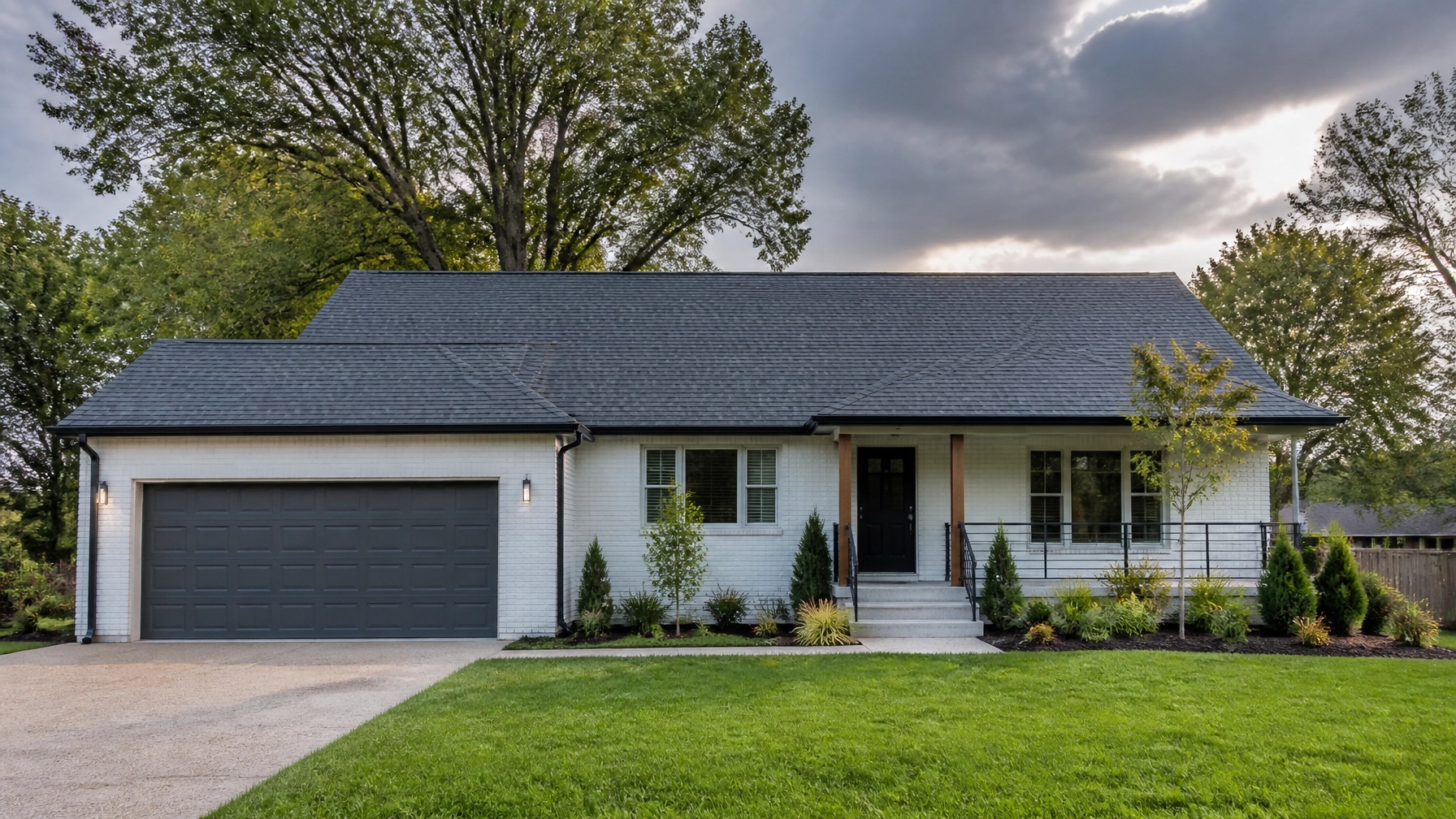
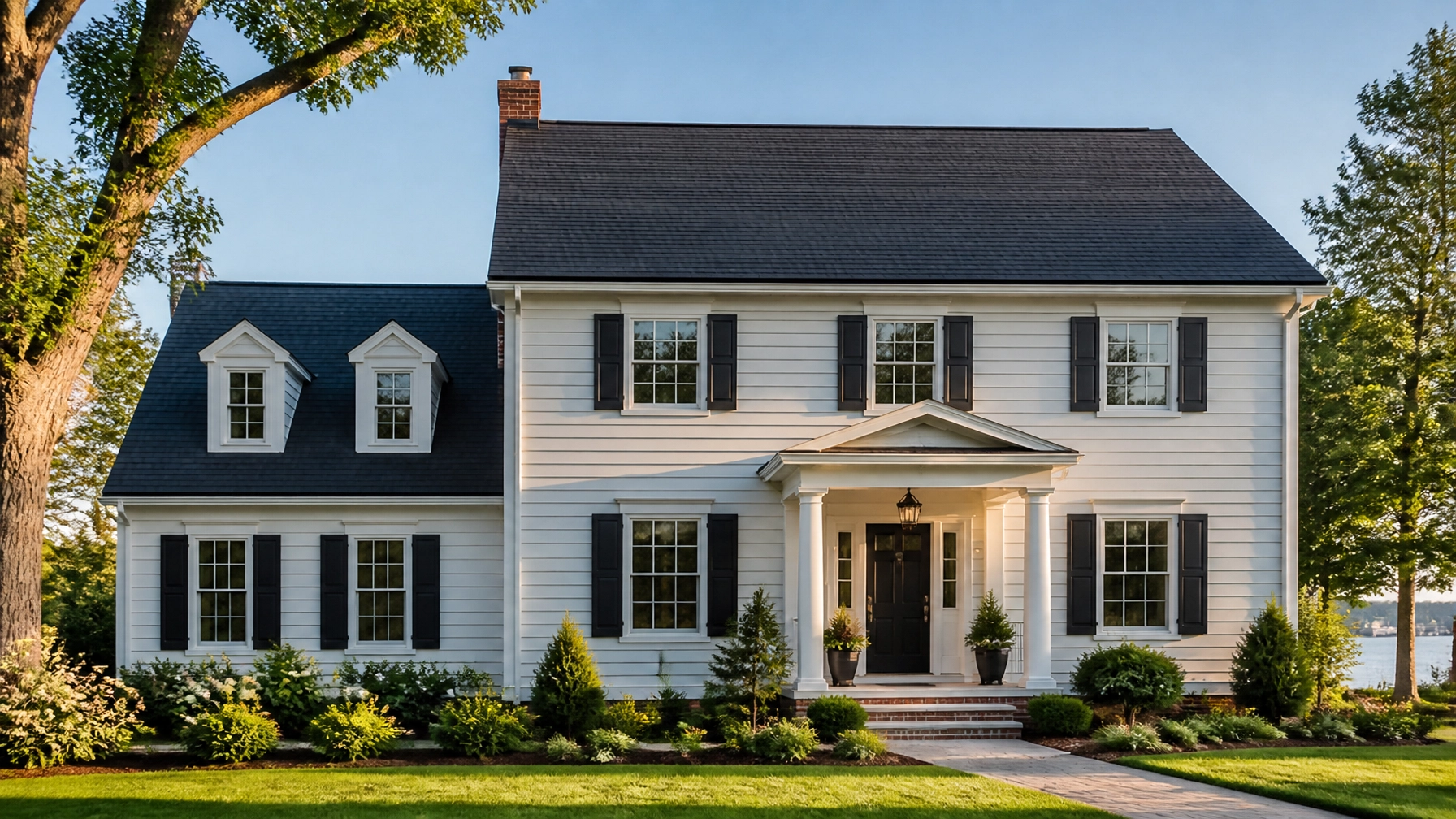
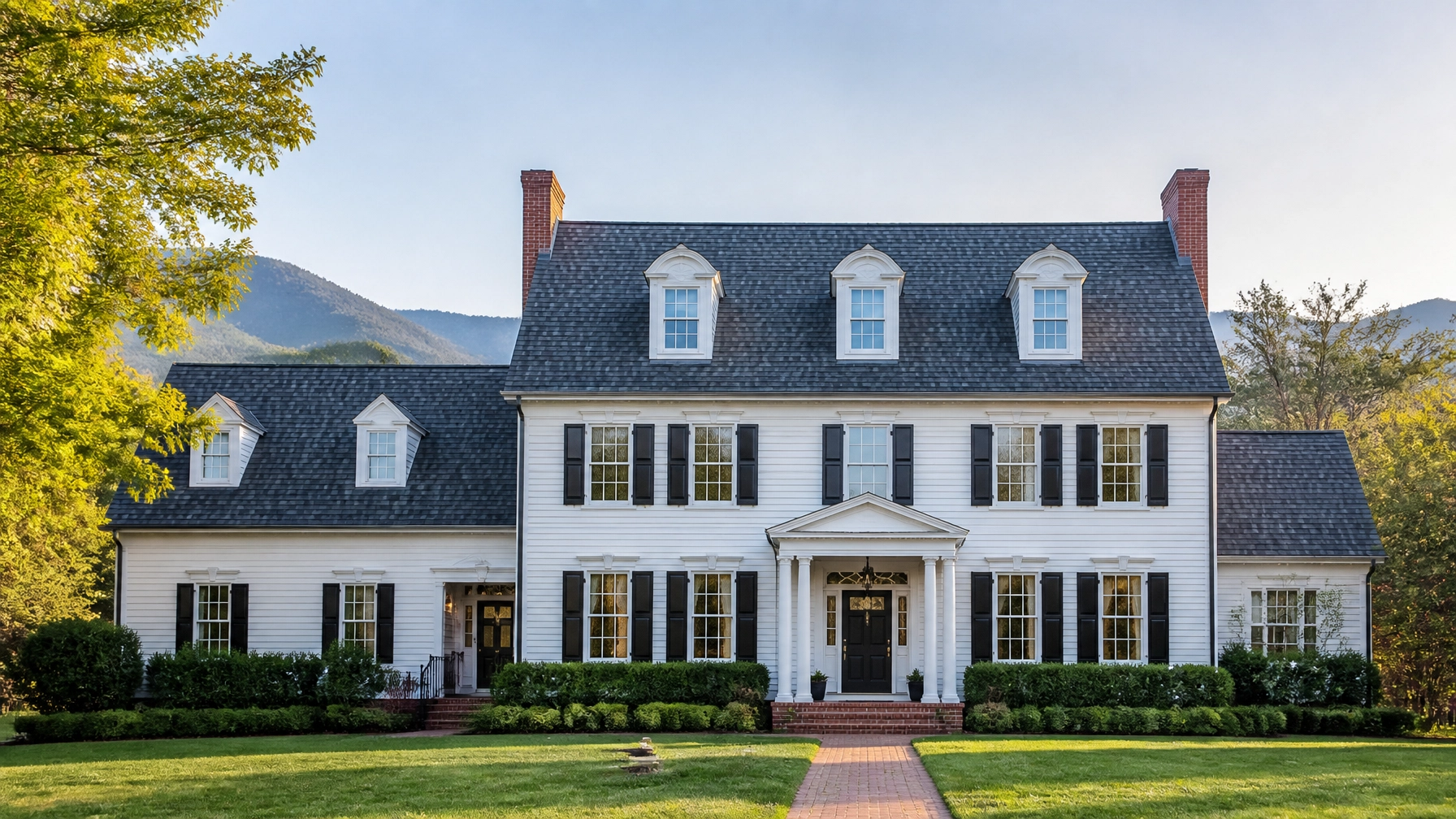
    A simple, flat ranch-style roof is significantly cheaper to replace than a steep, multi-gabled colonial.

    • Low Slope: Standard labor rates.
    • Steep Slope (>6:12 pitch): Adds 15–25% to labor costs due to safety equipment and slower installation speeds.
    • Complex Details: Multiple chimneys, skylights, and dormers increase the chance of flashing leaks and require more detail-oriented (and expensive) labor.

    3. Tear-Off and Disposal

    Houston labor for tearing off and disposing of old shingles typically costs $1.00 to $2.00 per square foot. If your home has multiple layers of old roofing, expect to pay a surcharge for the extra weight and labor time.

    4. Local Labor Rates

    As of 2026, roofing labor in Houston accounts for roughly 45–55% of your total bill. While Houston rates are lower than in cities like Austin or Dallas, the demand for skilled crews during the post-storm season can cause temporary price spikes.

    Satellite measurement overlay of a residential roof in a Houston neighborhood

    Accuracy Matters: The Satellite Advantage

    Traditionally, getting a quote involved scheduling 3–4 contractors to climb on your roof, walk around with tape measures, and give you high-pressure sales pitches. Technology has changed that.

    At Get My Roof Estimate Now, we use high-resolution satellite imagery to measure your roof's area, pitch, and complexity. This allows us to provide a Texas-specific roof estimate that is 90-95% accurate compared to a physical site visit.

    Why homeowners prefer satellite estimates:

    • Speed: Results in under 60 seconds.
    • Transparency: You see exactly what we see. No hidden "complexity fees" added later.
    • Zero Pressure: Browse your options and budget before you ever speak to a contractor.

    Step-by-Step Success Plan for Your Houston Roof

    If you’re planning a replacement in 2026, follow this punchy checklist to ensure you don't get burned:

    1. Get Your Baseline: Use an instant calculator to find your ballpark price based on your address.
    2. Check Your Insurance: Determine if your roof has storm damage (hail or wind) that might qualify for a claim. In Texas, you typically have one year from the date of the "loss" to file.
    3. Verify Licensing: Texas does not have a statewide roofing license, so you must verify that your contractor has voluntary licensing (RCAT) and carrying at least $1M in general liability insurance.
    4. Demand a Written Warranty: Ensure you get both a Manufacturer Warranty (for materials) and a Workmanship Warranty (for the labor). In Houston, a 5-year workmanship warranty is the minimum standard for reputable firms.
    5. Schedule for the "Sweet Spot": Roofing in the Houston summer is brutal for crews and can lead to rushed work. If possible, schedule your replacement for late fall or early spring to ensure the best installation quality.

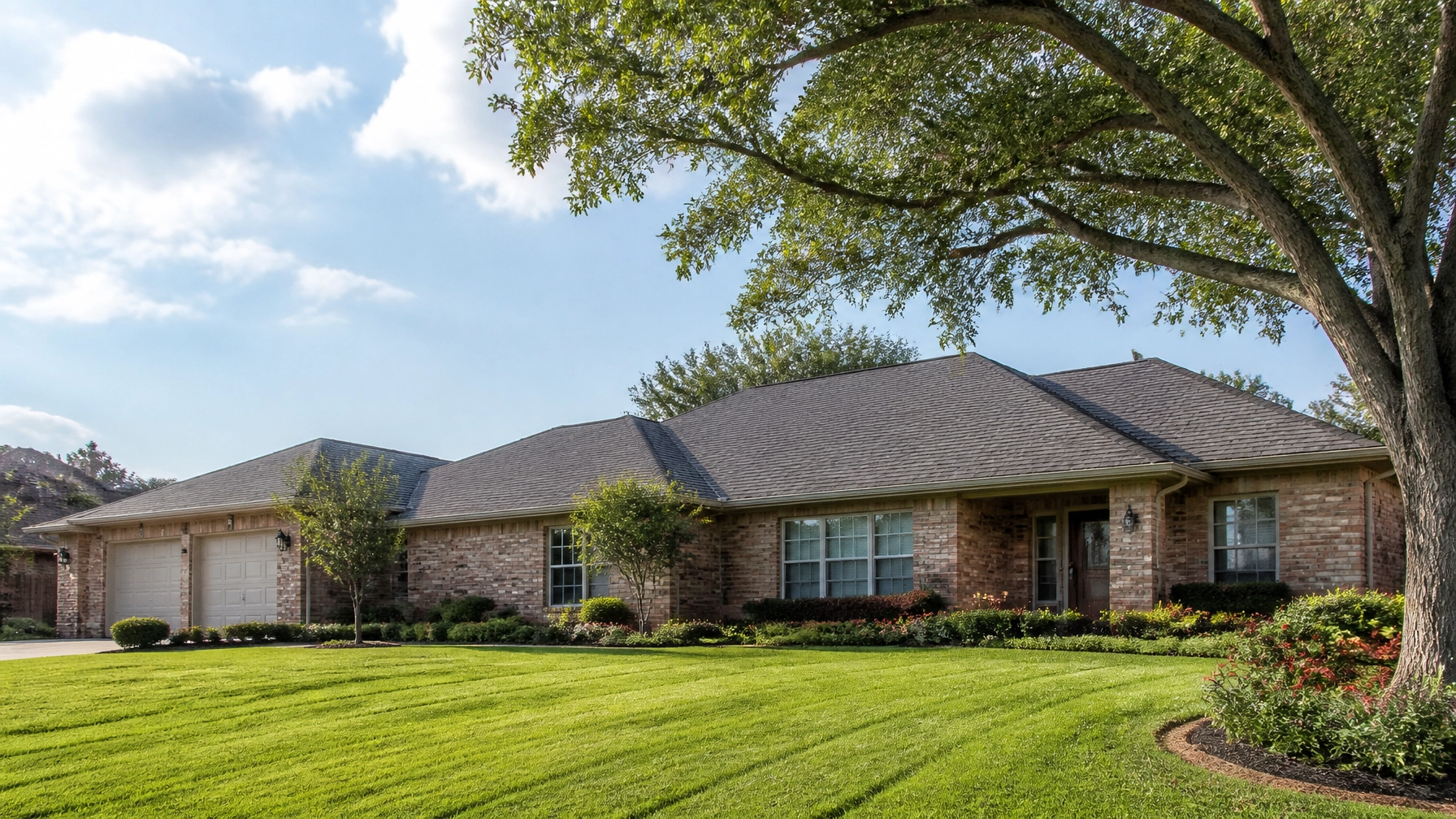
    Houston ranch-style brick home featuring a newly installed premium metal roof

    Final Thoughts: The 2026 Outlook

    Roofing costs in Houston are stabilizing in 2026, but they aren't getting any cheaper. The best way to protect your investment is to start with accurate data. By understanding the price per square foot for your preferred materials and accounting for Houston’s unique wind and heat requirements, you can navigate your roof replacement with confidence.

    Don't wait for a leak to start your research. Get your instant, free Houston roof estimate today and take control of your home’s most important protection.


  • How to Get Your Dallas Roof Replacement Paid for by Insurance: An Easy Guide for Homeowners

    How to Get Your Dallas Roof Replacement Paid for by Insurance: An Easy Guide for Homeowners

    Living in Dallas, you already know that a "quiet" spring afternoon can turn into a billion-dollar hail event in less than twenty minutes. Whether you’re in Highland Park, Plano, or Sunnyvale, the North Texas weather is relentless on asphalt shingles. If your roof is between 15 and 30 years old, or if a recent storm has left you with leaks or visible damage, you're likely looking at a replacement cost between $12,000 and $25,000.

    The good news? If that damage was caused by a "covered peril": like the golf-ball-sized hail we see every April: your homeowners insurance should foot most of the bill. The bad news? Navigating the Texas insurance landscape has changed significantly in recent years.

    This guide breaks down exactly how to navigate a Dallas roof insurance claim, the laws you need to know, and how to use modern technology like satellite-powered estimates to speed up the process.

    Step 1: Identifying the Damage (Is it actually a claim?)

    Before you call your insurance agent, you need to know what you’re looking for. Insurance companies do not pay for "old age" or "wear and tear." They pay for "sudden and accidental" damage.

    Hail Damage (Functional vs. Cosmetic)

    In Dallas, hail is the #1 reason for full roof replacements. Hail doesn't always cause a leak immediately. Instead, it creates "bruises" on the shingles.

    • What to look for: Small, circular indentations where granules have been knocked off, exposing the black felt underneath.
    • The risk: These bruises weaken the shingle, leading to UV degradation and eventual leaks.

    Wind Damage

    The high winds common in North Texas can lift shingles, breaking the sealant strip.

    • What to look for: Missing shingles, creased shingles (where the wind folded them back), or "chatter" marks.

    Close-up of hail damage on an asphalt shingle

    Step 2: Understand the Texas "Deductible Law" (HB 2102)

    This is the most critical part of the process for any Dallas homeowner. In the past, some contractors would offer to "waive" or "absorb" your deductible. This is now illegal in Texas under House Bill 2102.

    • The Law: Contractors are prohibited from paying, waiving, or rebating any portion of a homeowner's insurance deductible.
    • The Penalty: It is a Class B misdemeanor for a contractor to do this, and homeowners who knowingly participate can also face legal trouble.
    • Practical Context: If a roofer tells you they can give you a "free roof" or cover your $4,000 deductible, they are breaking the law. A reputable Dallas contractor will always require you to pay your deductible out of pocket.

    Step 3: ACV vs. RCV (The Financial Categories)

    When you receive your claim summary, you’ll see two main acronyms. Understanding these is the difference between a fully funded roof and a massive out-of-pocket surprise.

    1. RCV (Replacement Cost Value – Premium): This is the gold standard. The insurance company pays the full cost to replace the roof at today's market prices, minus your deductible. They usually send this in two checks: one for the "Actual Cash Value" and a second check for "Recoverable Depreciation" once the job is finished.
    2. ACV (Actual Cash Value – Budget): If you have an ACV-only policy, the insurance company only pays what the roof is worth today, factoring in its age. If your 20-year-old roof is at the end of its life, they may only pay 20% of the replacement cost.

    In Texas, many carriers are moving toward mandatory ACV on roofs older than 15 years. Check your policy or use our Texas-specific estimate tool to see where your costs might land.

    Step 4: The Professional Inspection & Claim Filing

    Once you suspect damage, follow this sequence to ensure your claim isn't denied:

    1. Get an Expert Opinion: Don't call the insurance company first. Call a local Dallas roofing professional or use a satellite measurement service to get an objective look at your roof's size and condition. If there is no damage, you avoid an unnecessary "claim" on your record that could raise your premiums.
    2. File the Claim: Contact your insurance carrier’s claims department. You will need the date of the loss (the date the storm happened). Dallas has had several major hail events in the last 12 months; your roofer can help you identify the correct date.
    3. The Adjuster Meeting: The insurance company will send an adjuster to your home.
      • Pro Tip: Always have your roofing contractor present during this meeting. Adjusters are human; they can miss spots. A professional roofer will point out the nuances of the damage to ensure the "Scope of Loss" is accurate.

    Contractor and adjuster inspecting a Dallas roof together

    Step 5: Leveraging Technology for Accuracy

    The traditional way of getting a roof estimate: waiting three days for a contractor to show up with a ladder: is outdated. In a high-demand market like Dallas, waiting for multiple contractors to give you "ballpark" quotes can cost you weeks.

    At Get My Roof Estimate Now, we use satellite imagery technology to provide homeowners with an accurate replacement estimate in under 60 seconds.

    • Accuracy: Our measurements are within 90-95% accuracy using aerial data.
    • Speed: No more scheduling four different site visits. You get the data you need to talk to your insurance company immediately.
    • Transparency: We provide low, middle, and high-range pricing for architectural shingles, metal, and premium coatings.

    Satellite measurement technology interface for roof estimation

    Step 6: Choosing Materials for the Dallas Climate

    When insurance is paying for the bulk of the work, it’s the perfect time to consider an upgrade.

    • Class 4 Impact Resistant Shingles (Premium): These are designed to withstand 2-inch hail. In Texas, many insurance companies (like State Farm or Allstate) offer a 15-25% discount on your annual premiums if you install these.
    • Architectural Shingles (Popular): The standard for Dallas suburbs. They offer a 3D look and better wind resistance (up to 130 mph) than old-fashioned 3-tab shingles.
    • Metal Roofing (Premium): Increasingly popular in North Texas for its longevity and "cool roof" properties that lower AC bills during the 100-degree August stretches.

    Final Timeline: What to Expect

    The Dallas insurance claim process isn't overnight. Here is a realistic timeline:

    • Initial Inspection: 1–2 days.
    • Adjuster Appointment: 7–14 days after filing.
    • Claim Approval & First Check: 7–10 days after adjuster visit.
    • Installation: 1–3 days (once materials are delivered).
    • Final Inspection & Depreciation Release: 10–20 days after completion.

    Summary Checklist for Dallas Homeowners

    • Verify Storm Date: Ensure the storm happened within your policy's time limit (usually 1 year in Texas).
    • Get a Satellite Estimate: Use Get My Roof Estimate Now to establish a baseline price.
    • Check Your Deductible: Prepare to pay this amount out of pocket. Look for the "Wind/Hail" percentage in your policy.
    • Interview Contractors: Only work with verified, insured, and local Dallas professionals.
    • Ask About Supplements: If the insurance check is too low, ensure your contractor knows how to file a "supplement" for the remaining costs.

    Ready to see what your Dallas roof replacement should actually cost? Get your instant satellite-powered estimate here.

  • Looking For a Free Roof Estimate Online? Here Are 10 Things You Should Know

    Looking For a Free Roof Estimate Online? Here Are 10 Things You Should Know

    Getting a roof estimate used to mean spending your Saturday morning waiting for a contractor who might, or might not, show up. You’d spend an hour listening to a sales pitch, only to receive a handwritten quote that lacked transparency.

    Technology has changed the game. In Charlotte, North Carolina, and across the country, homeowners are now using satellite-powered tools to get instant pricing. At Get My Roof Estimate Now, we provide accurate, free estimates in under 60 seconds using high-resolution aerial imagery.

    But before you click "calculate," you need to understand how the process works and what to look for in a digital quote. Here are 10 things you should know about getting a free roof estimate online.

    1. Satellite Accuracy is Now Within Inches

    Gone are the days when online estimates were just "ballpark" guesses based on your zip code. Modern tools use high-resolution satellite and aerial imagery to measure the exact dimensions of your roof.

    • Precision: Our technology is accurate to within 90-95% of a manual measurement.
    • Factors Measured: We don't just look at the flat square footage; we calculate the pitch (steepness), hips, valleys, and ridges.
    • Why it matters: A steeper roof in a neighborhood like Myers Park or Dilworth requires more safety equipment and labor, which a basic calculator would miss.

    High-resolution satellite imagery top-down view of a suburban residential roof in Charlotte with precise measurement overlays.

    2. The Definition of a "Roofing Square"

    When you see your estimate, you’ll notice the term "square." In the roofing industry, a square equals 100 square feet.

    • Example: If your home is 2,000 square feet, your roof might actually be 24 squares (2,400 square feet) once you account for the overhangs and the slope.
    • Benchmark: Most Charlotte homes range between 15 and 30 squares. Understanding this unit of measurement helps you compare quotes across different contractors accurately.

    3. Material Choice Dictates 60% of Your Cost

    Your online estimate will likely provide options for different materials. In North Carolina, the choice usually comes down to architectural shingles versus metal.

    • Architectural Shingles (Popular): The standard for most Charlotte suburban homes. They offer a great balance of durability and cost.
    • Metal Roofing (Premium): Increasingly popular for its 50+ year lifespan and energy efficiency.
    • Synthetic/Slate (Luxury): High-end options for custom builds.
    Material Charlotte, NC Avg. Cost (Per Sq. Ft.) Typical Total (2,000 Sq. Ft. Roof)
    Architectural Shingles $4.00 – $7.00 $8,000 – $14,000
    Corrugated Metal $8.00 – $12.00 $12,000 – $18,000
    Standing Seam Metal $10.00 – $25.00 $19,000 – $30,000+

    Comparison of premium architectural asphalt shingles and modern matte black standing seam metal roofing.

    4. Labor and Disposal are Local Variables

    A roof estimate in Charlotte isn't the same as one in Los Angeles or rural Alabama. Local labor rates and landfill fees (disposal) play a significant role.

    • Labor: Expect to pay between $4,000 and $6,000 in labor for a standard replacement in the Queen City.
    • Disposal: The cost of hauling away your old shingles (tear-off) is included in our transparent pricing, factoring in North Carolina’s specific environmental fees.

    5. Speed vs. Pressure: The 60-Second Advantage

    The biggest benefit of an online estimate is the lack of sales pressure.

    • The Old Way: A contractor sits at your kitchen table for two hours, using high-pressure tactics to get you to sign "today only."
    • The New Way: You enter your address at getmyroofestimatenow.com, and in 60 seconds, you have a baseline price. No credit card is required, and you can review the data in private.

    6. Identifying "Invisible" Roof Components

    A roof is more than just shingles. A high-quality estimate must factor in the components that keep the system watertight:

    • Underlayment (Essential): The water-resistant barrier between the shingles and the wood deck.
    • Flashing (Critical): Metal pieces installed around chimneys and valleys to prevent leaks.
    • Ice and Water Shield (Protection): While less critical in NC than in Michigan, it's still vital for valleys and low-slope areas.

    7. The "Low-Middle-High" Pricing Strategy

    Transparent estimates provide a range. Why? Because the condition of your roof decking (the wood underneath) cannot be seen via satellite.

    • Budget Range: Assumes your wood deck is in perfect condition and you choose entry-level shingles.
    • Mid-Range: Includes premium architectural shingles and standard flashing replacement.
    • High-End: Covers luxury materials (like standing seam metal) and potential plywood replacement if rot is found during tear-off.

    8. Why We Don't Ask for Your Credit Card

    We believe information should be free. Some "estimate" sites are lead-generation traps that sell your data to ten different companies the moment you click submit. At Get My Roof Estimate Now, we provide the data first. You only move forward with our verified, licensed, and insured contractors when you are ready.

    9. Contractor Verification is Non-Negotiable

    An estimate is only as good as the person doing the work. Once you have your online quote, the next step is connecting with a pro.

    • Our Process: We only partner with contractors in the Charlotte area who are fully insured, licensed by the state of NC, and have a proven track record of quality.
    • Action Tip: Always ask for a contractor’s license number and proof of general liability insurance before any work begins.

    A professional roofing contractor using a digital tablet to review an estimate in a Charlotte neighborhood.

    10. Timing Your Replacement for Best Value

    Roofing costs fluctuate based on seasonality.

    • Peak Season: Late summer and fall are the busiest times for roofing in North Carolina. Prices may be slightly higher, and wait times longer.
    • Off-Peak: Winter and early spring often see contractors looking to fill their schedules, which can lead to more competitive labor pricing.
    • Storm Damage: If you’ve recently experienced hail or high winds in Mecklenburg County, your estimate might be covered by insurance. Our tools help you establish the "fair market value" for your claim.

    Summary: Take Control of Your Home Maintenance

    Replacing a roof is one of the largest investments you’ll make in your home. Knowledge is power. By using an online estimate tool, you eliminate the guesswork and go into the process with a clear understanding of what you should be paying.

    Ready to see your number?
    Get your instant Charlotte roof estimate here in under 60 seconds. No hassle, no cost, just accurate data.


    FAQ: Quick Answers for Charlotte Homeowners

    How much does a new roof cost in Charlotte, NC?
    For a standard 2,000 sq. ft. home, expect to pay between $8,000 and $15,000 for architectural shingles. Metal roofs typically range from $16,000 to $30,000.

    How long does it take to get an estimate?
    Using our satellite technology, you can receive a complete estimate in less than 60 seconds.

    Is the online estimate 100% accurate?
    Our satellite measurements are 90-95% accurate. The final price may adjust slightly based on the condition of your roof decking (wood) which can only be inspected once the old shingles are removed.

    Do I need to be home for the estimate?
    No. Since we use aerial imagery, we don't need to step foot on your property to give you a highly accurate price range.

    Are your contractors licensed in North Carolina?
    Yes. We only connect homeowners with verified, licensed, and insured local roofing professionals in the Charlotte metro area.

  • Contractor Vetting 101: A Beginner’s Guide to Spotting Storm Chasers in Atlanta

    Contractor Vetting 101: A Beginner’s Guide to Spotting Storm Chasers in Atlanta

    Atlanta homeowners are no strangers to the sudden, violent thunderstorms that roll through North Georgia. Whether it’s heavy hail in Buckhead or high-velocity winds in Marietta, these storms often leave a trail of damaged roofs in their wake. Unfortunately, they also attract "storm chasers": unscrupulous, out-of-state contractors who descend on neighborhoods to capitalize on insurance payouts.

    In Georgia, the lack of a mandatory state roofing license makes homeowners particularly vulnerable. Without a central regulatory board overseeing the trade, the burden of vetting falls entirely on you. If you don't know the red flags, you risk hiring a contractor who provides subpar work, uses cheap materials, or vanishes before the job is finished.

    This guide will teach you how to spot a storm chaser, understand the unique legal landscape of Georgia roofing, and use modern technology to protect your home and your wallet.

    The Georgia "Wild West": Why Atlanta is a Target

    Most homeowners assume that because someone carries a business card and a ladder, they are licensed by the state. In Georgia, that is a dangerous assumption. Georgia has no state-required roofing license. This means any individual can legally advertise roofing services without passing a trade exam or proving years of experience.

    Because the barrier to entry is non-existent, Atlanta becomes a "mecca" for storm chasers. These companies operate on a "volume-over-quality" model. They follow weather maps to find zip codes hit by hail, saturate the area with door-knockers, collect insurance checks, and disappear once the storm season ends. If your roof starts leaking six months later, their phone number is usually disconnected.

    Identifying the Red Flags (The Storm Chaser Profile)

    Vetting a contractor begins the moment they step onto your property. If you encounter any of the following behaviors, exercise extreme caution.

    1. The Unsolicited Door Knock

    Legitimate, high-quality local contractors stay busy through referrals and established reputations. They rarely need to go door-to-door. Storm chasers, conversely, rely entirely on "canvassing." If someone knocks on your door claiming they were "just in the neighborhood doing a neighbor's roof" and noticed damage on yours, consider it a major red flag.

    2. High-Pressure "Sign Now" Tactics

    A professional contractor understands that a roof replacement: typically ranging from $8,000 to $25,000: is a significant investment. They will give you time to review the estimate and check their references. Storm chasers use high-pressure tactics, claiming you’ll "miss the insurance window" if you don't sign a "contingency agreement" or "inspection form" immediately.

    3. Out-of-State License Plates and Area Codes

    Check the trucks parked in your neighborhood. If the contractor is driving a vehicle with out-of-state plates or a non-404/770/678 area code, they are likely a transient operation. These companies have no local roots, meaning they have no local accountability.

    4. Demands for Upfront Cash

    Never pay for a roofing project in full before work begins. While a small deposit for materials is common for custom orders, storm chasers often demand large upfront payments to "secure the crew." Once the cash is handed over, the timeline often stretches indefinitely, or the contractor disappears entirely.

    Professional roofing crew reviewing digital satellite measurements on a tablet

    The Legal Trap: Georgia House Bill 610

    One of the most common tactics storm chasers use is offering to "handle everything" with your insurance company. They might say, "Don't worry, I'll meet with the adjuster and negotiate the whole claim for you."

    In Georgia, this is not just a red flag: it’s illegal.

    Under Georgia House Bill 610, roofing contractors are prohibited from negotiating directly with insurance companies on behalf of the homeowner. Only a licensed public adjuster or an attorney can legally perform this role. If a contractor claims they can "negotiate" your claim, they are operating outside the law. A reputable contractor can be present during an inspection to point out damage, but they cannot represent you in the financial negotiation of the claim.

    The "Free Roof" Scam: The Deductible Trap

    Perhaps the most enticing: and dangerous: offer from a storm chaser is the promise to "waive your deductible" or "pay it for you."

    Here is the cold, hard truth: In Georgia, offering to pay or waive a homeowner’s insurance deductible is a form of insurance fraud. Your insurance policy is a contract between you and the provider. If the contractor inflates the invoice to cover your deductible, they are defrauding the insurance company.

    If a contractor suggests they can find a way to "work around" your deductible, they are showing you that they are willing to be dishonest. If they are willing to cheat an insurance company, they are certainly willing to cut corners on your roof.

    The 60-Second Solution: Get an Objective Baseline

    The best way to protect yourself from being overcharged or scammed is to have accurate data before you talk to a contractor. Traditionally, this required waiting days for several contractors to visit your home and walk your roof.

    Today, technology has changed the game. At Get My Roof Estimate Now, we use advanced satellite imagery to provide you with an instant roof replacement estimate in under 60 seconds.

    Why a Satellite Estimate is Your Best Defense:

    • Accuracy: Our measurements are accurate to within inches (90-95% accuracy), factoring in your roof’s size, pitch, and complexity.
    • Transparency: You get a low-middle-high price range based on current Atlanta material and labor costs.
    • No Pressure: You receive your estimate privately, without a salesperson sitting in your living room.
    • Material Options: Compare costs for (Popular) Architectural Shingles, (Premium) Metal Roofing, or (Budget) 3-Tab Shingles instantly.

    Having this baseline allows you to spot a "low-ball" offer from a storm chaser (who may use inferior materials) or an inflated "insurance-only" price from a predatory contractor.

    Contrast between old weathered shingles and new professional architectural shingle installation

    The Atlanta Vetting Checklist: How to Hire a Pro

    Since Georgia doesn't have a state roofing license, you must use these specific criteria to verify a contractor's legitimacy:

    1. Local Business License: Ask for their business license number. The City of Atlanta requires a license for any contracting job over $2,500. Verify this with the city or the county where their office is located.
    2. Physical Address: Ensure they have a real, local office address: not a P.O. Box or a temporary coworking space.
    3. Insurance Certificates: Request a Certificate of Insurance (COI) that lists both General Liability and Workers’ Compensation. Call the agent listed on the certificate to ensure the policy is active.
    4. Manufacturer Certifications: Look for contractors who are "Certified" or "Preferred" by major manufacturers like GAF, Owens Corning, or CertainTeed. These certifications require the contractor to maintain certain standards and insurance levels.
    5. Local References: Ask for the addresses of three roofs they completed in your specific neighborhood (e.g., Brookhaven, Virginia-Highland, or Sandy Springs) in the last 12 months. Drive by and see the work for yourself.

    Summary of Roofing Material Costs in Atlanta

    When you use our roof estimate tool, you’ll see different tiers of pricing. Here is a quick look at the current market in Atlanta:

    • Architectural Shingles (Popular): The standard for most Atlanta homes. They offer a 30-year life span and excellent wind resistance for Georgia's summer storms. Expect to pay between $400 – $600 per square (a 10×10 area).
    • Metal Roofing (Premium): Highly durable and energy-efficient, reflecting the hot Georgia sun. Costs typically range from $900 – $1,500 per square.
    • Synthetic Slate/Tile (Luxury): Provides a high-end look for historic Atlanta homes without the extreme weight of real slate. Pricing is generally $1,200+ per square.

    Wide-angle shot of various rooflines in an Atlanta residential neighborhood

    Conclusion: Take Control of Your Roof Replacement

    Don't let a storm-chasing contractor turn a stressful situation into a financial disaster. By understanding the red flags and leveraging satellite technology, you can navigate the roofing process with confidence.

    Before you sign any paperwork or let a stranger onto your roof, get your free, instant estimate here. In just 60 seconds, you’ll have the data you need to ensure you’re getting a fair price from a verified, local professional who will be there long after the storm clouds have cleared.


  • How to Get an Accurate Raleigh Roof Replacement Cost in Under 60 Seconds (No Contractor Visit Required)

    If you live in the Triangle, you know the "Raleigh Roof Routine." Your roof hits the 20-year mark, the North Carolina humidity starts taking its toll, and suddenly you’re stuck in a loop of scheduling contractor visits. You spend your Saturday mornings waiting for a guy with a ladder to show up, talk for an hour, and then tell you he’ll "email the quote by Monday."

    In 2026, that process is officially obsolete.

    Raleigh homeowners are now using satellite technology to bypass the "waiting game" entirely. At Get My Roof Estimate Now, we provide a precise, data-driven roof cost calculator that delivers a localized Raleigh quote in under 60 seconds. No sales pitch, no pressure, just accurate numbers based on your actual roof's dimensions.

    The 2026 Raleigh Roofing Market: What You’ll Pay

    The cost of a roof replacement in Raleigh has shifted over the last two years. Labor rates in North Carolina currently range from $45 to $75 per hour, and labor typically accounts for roughly 60% of your total bill.

    Because Raleigh is a high-growth tech hub, local labor premiums are slightly higher than in rural parts of the state, but we factor these exact zip code variables into our satellite-powered measurements.

    Average Cost by Material (Installed)

    Here is a quick look at current 2026 benchmarks for a typical 2,000–2,200 sq. ft. Raleigh home:

    Material Type Cost Per Sq. Ft. (Installed) Typical Total Investment
    3-Tab Asphalt (Budget) $3.75 – $5.50 $7,500 – $12,000
    Architectural Shingles (Popular) $4.50 – $7.00 $9,000 – $17,000
    Metal Shingles (Premium) $8.50 – $11.00 $17,000 – $24,000
    Standing Seam Metal (Lifetime) $19.00 – $26.00+ $38,000 – $55,000+

    Close-up of high-quality roofing materials including architectural asphalt shingles in various shades of gray and a sleek matte black standing seam metal panel, presented in a side-by-side comparison on a residential roof.

    Why Satellite Estimates Are The New Standard in Wake County

    Traditionally, getting an "accurate" estimate meant a roofer had to physically climb onto your house with a tape measure. This was slow, prone to human error, and frankly, unnecessary with today's technology.

    Our system uses high-resolution satellite imagery to analyze your roof’s:

    1. Size (Square Footage): We measure in "squares" (100 sq. ft. units) with 90-95% accuracy.
    2. Pitch (Steepness): Steeper roofs require more safety equipment and labor time, which we factor in instantly.
    3. Complexity: We identify valleys, dormers, and hips that traditional calculators miss.

    By the time you finish typing your address, our AI has already mapped your roofline. This eliminates the "ballpark" guessing and gives you a professional-grade estimate you can actually use to budget.

    Local Raleigh Factors Impacting Your Estimate

    Raleigh isn't just "any" city; it has specific environmental and regulatory factors that influence your final price.

    1. The $15,000 Permit Threshold

    In North Carolina, and specifically within the City of Raleigh and Wake County, any roofing project exceeding $15,000 generally requires a formal building permit. If you are choosing a premium architectural shingle or a metal roof, your project will likely hit this mark. A professional Raleigh contractor will handle this, but expect permit fees to add roughly $200–$500 to the total project cost.

    2. Humidity and the "Oak Tree" Problem

    Raleigh is famous for its "City of Oaks" moniker. While beautiful, the heavy canopy means more debris, moisture retention, and potential for moss or algae growth. In 2026, many Raleigh homeowners are opting for Algae-Resistant (AR) shingles, which include copper granules to prevent those unsightly black streaks. Our estimates allow you to toggle these material upgrades instantly.

    3. Insurance Shifts in 2026

    North Carolina insurance carriers have moved aggressively toward Actual Cash Value (ACV) policies for roofs older than 15 years. If your roof was installed before 2011, your insurance payout might be significantly lower than the replacement cost. Getting an instant estimate now helps you understand the gap you may need to cover out of pocket.

    A high-tech digital overlay of a suburban home in Raleigh, NC, showing green and blue lines mapping the roof's geometry from a satellite perspective. The visual emphasizes precision and advanced technology in construction estimation.

    How to Get Your Raleigh Quote in 3 Steps

    We’ve stripped away the complexity. You don't need to know your roof's pitch or its "squares." You just need an internet connection.

    1. Enter Your Address: Navigate to our Florida, Texas, or Virginia landing pages (or our main home page) to start.
    2. Select Your Material: Choose between budget-friendly 3-tab, standard architectural, or a lifetime metal system.
    3. Receive Your Range: Within 60 seconds, you’ll see a Low-Middle-High price range based on current Raleigh market data.

    Transparency Matters: No Hidden Fees

    One of the biggest frustrations for Raleigh homeowners is the "hidden" cost of tear-offs. Removing your old roof and disposing of the debris can cost anywhere from $1.50 to $4.50 per square foot. Our tool factors in these disposal fees and local landfill rates to ensure your estimate is "all-in."

    We also calculate for decking replacement. In Raleigh’s humid climate, it's common to find 1-2 sheets of rotten plywood near the eaves. While we can’t see through your shingles with a satellite (yet!), we provide a buffer in our "High" range to account for these common local surprises.

    A professional roofing crew in high-visibility gear working on a large residential home in a Raleigh neighborhood. They are installing new architectural shingles on a multi-gabled roof, with a clean work site and safety harnesses visible.

    Connect with Verified Raleigh Contractors

    An estimate is just the beginning. Once you have your numbers, you need someone to do the work. We bridge that gap by connecting you with a curated network of licensed and insured contractors in the 919 area code.

    Every contractor we recommend has been vetted for:

    • Active NC Licensing: Ensuring they meet state structural requirements.
    • Liability Insurance: Protecting you from accidents on your property.
    • Local Reputation: We prioritize crews with a history of success in neighborhoods from North Hills to Brier Creek.

    Ready to See Your Number?

    Don't spend another weekend waiting for a salesperson to sit at your kitchen table. Get the data you need to make an informed decision today. Whether you're planning a full replacement or just curious about your home's value, our technology provides the clarity you deserve.

    Get your instant, free Raleigh roof estimate in under 60 seconds. Click here to start.

  • Why This Insurance Masterclass Will Change the Way You Handle Your Orlando Roof Replacement

    Why This Insurance Masterclass Will Change the Way You Handle Your Orlando Roof Replacement

    For Orlando homeowners, a roof isn't just a part of the house: it’s the only thing standing between your family and the relentless Florida elements. Between the scorching UV rays that bake your shingles and the seasonal hurricane threats that roll through Central Florida, your roof works harder than almost any other home component.

    When the time comes for a replacement, most homeowners face a paralyzing question: How am I going to pay for this?

    In 2026, the landscape of Florida insurance has shifted. Legislative updates like SB 4-D and the evolving "25% Rule" have changed the math for roof claims. This masterclass is designed to cut through the jargon and provide you with a clear, data-driven roadmap to navigating insurance-funded roof replacements in Orlando.

    The Orlando Reality: Why Roof Replacement is Different Here

    In a state known for its volatility, Orlando presents a unique challenge. While coastal cities deal with storm surges, Orlando deals with high-velocity wind bands and massive hail events that can compromise a roof in minutes.

    According to current market data, a standard roof replacement in the Orlando area for a 2,000 to 2,500-square-foot home typically ranges from $12,000 to $18,000 (Popular) for architectural shingles and can soar upwards of $30,000+ (Premium) for high-end metal or tile systems.

    Given these costs, understanding how to leverage your insurance policy is not just a "good idea": it’s a financial necessity.

    Section 1: The "25% Rule" and the SB 4-D Evolution

    Historically, Florida homeowners relied on the "25% Rule": if more than 25% of your roof was damaged by a covered peril (like a storm), the entire roof had to be replaced to meet the Florida Building Code.

    However, recent legislation (SB 4-D) has added a layer of nuance. In 2026, the rules break down based on when your roof was installed:

    • Pre-2009 Roofs (High Probability): If your roof was installed before March 1, 2009, and more than 25% is damaged, you are almost always entitled to a full replacement under current code requirements.
    • Post-2009 Roofs (Case-by-Case): If your roof was built to the 2007 Florida Building Code or later, insurance may only be required to pay for repairs, even if the damage exceeds 25%, if those repairs can be done to current code standards.

    The Pro Tip: To win a full replacement in 2026, you need a contractor who can document that a partial repair is impossible due to material mismatch or structural integrity issues.

    Close-up of wind-damaged shingles showing uplift and crease marks

    Section 2: Identifying "Covered Perils" vs. Wear and Tear

    Insurance is not a maintenance plan. This is the #1 mistake Orlando homeowners make. If your roof is leaking because it’s 25 years old and the granules have simply washed away over time, your insurance company will likely deny the claim.

    To get insurance to pay, you must identify a Covered Peril:

    1. Wind Damage (Standard): Missing, lifted, or creased shingles caused by high-velocity winds.
    2. Hail Damage (Direct Impact): Bruises or punctures in the shingle matting caused by hailstones.
    3. Falling Objects (Sudden): Tree limbs or debris during a summer squall.

    In Florida, you now have one year from the date of loss to report a claim. If you wait 14 months after a hurricane to file, you’re likely footing the bill yourself.

    Section 3: The 15-Year "Danger Zone"

    In 2026, the age of 15 is the critical threshold for Florida insurance carriers.

    • Under 15 Years: Carriers generally cannot refuse to renew your policy solely based on age.
    • 15 Years and Older: Carriers can require a full roof inspection. If the inspection determines the roof has less than 3–5 years of "useful life" remaining, they may issue a non-renewal notice.

    If you find yourself in this "danger zone," a storm claim becomes your best chance at avoiding a massive out-of-pocket expense before your policy is canceled.

    Section 4: RCV vs. ACV – What’s Your Check Worth?

    Your policy type dictates your out-of-pocket cost:

    • Replacement Cost Value (RCV – Premium): The gold standard. Insurance pays the full cost to replace the roof at today’s prices (minus your deductible).
    • Actual Cash Value (ACV – Budget): The insurer pays the depreciated value. If your 20-year-old roof is destroyed, they will only pay what a 20-year-old roof is worth. This could leave you with a $10,000 gap to fill.
    • Roof Payment Schedule (Standard): A hybrid model common in 2026 where the payout decreases as the roof ages.

    Always check your Hurricane Deductible. In Florida, this is often a percentage (2%–10%) of your home’s total insured value, not a flat $500 fee.

    Professional roofing contractor inspecting an Orlando roof with a digital tablet

    Section 5: The 5-Step Claims Masterclass

    Follow this protocol to maximize your chances of a successful claim in the Orlando market:

    1. The Instant Benchmark

    Before calling an adjuster, know your numbers. Use a roof cost calculator to get an accurate, satellite-powered estimate. Having a data-backed price range prevents adjusters from "lowballing" the initial estimate.

    2. The Detailed Inspection

    Hire a licensed roofing professional to perform a "damage mapping" of your roof. They should document the exact number of damaged facets and shingles.

    3. File the Claim Promptly

    Contact your carrier with the specific "Date of Loss." Mention any weather events (like a named storm) that occurred on that date.

    4. Meet the Adjuster with Data

    When the insurance adjuster arrives, have your contractor present. Your contractor can point out subtle wind creases that an adjuster might overlook. Provide the adjuster with your satellite measurement report to ensure the "square count" is accurate.

    5. Review the "Scope of Work"

    Once the insurance company provides an estimate, compare it to your initial independent estimate. If they missed "line items" like code-required underlayment or drip edge replacement, your contractor can file a "supplement" to get those costs covered.

    Section 6: How Technology Wins the Claim

    The days of contractors climbing ladders with tape measures are fading. In 2026, the most successful claims are backed by Satellite Imagery Technology.

    By using high-resolution aerial data, we can measure your roof to within inches. This eliminates the "human error" that insurance companies often use to reduce payouts. When you present an insurer with a technical report showing 32.5 squares of roofing area, it is much harder for them to argue for a 28-square payout.

    Satellite imagery interface showing digital measurements of a residential roof

    Conclusion: Don't Wait for the Non-Renewal

    Navigating an Orlando roof replacement is a race against the clock and the elements. Between shifting Florida laws and the 15-year insurance cliff, being proactive is your greatest financial asset.

    Knowledge is power, but data is the currency of the insurance industry. Before you pick up the phone to call your agent, get the facts about your roof’s size, complexity, and estimated replacement cost.

    Ready to see where your roof stands?
    Get your instant, satellite-powered roof estimate now. It takes less than 60 seconds and gives you the professional data you need to handle your insurance claim like a master.

  • Charlotte Roof Replacement FAQ: Explained in Under 3 Minutes

    Charlotte Roof Replacement FAQ: Explained in Under 3 Minutes

    Replacing a roof in Charlotte, North Carolina, isn't just about curb appeal; it’s a critical investment in protecting your home from the humid summers, heavy spring thunderstorms, and occasional ice events that define the Queen City’s climate.

    If you’re a homeowner in Dilworth, Ballantyne, or anywhere in between, you probably have three main questions: How much? How long? And who can I trust?

    We’ve distilled the most frequently asked questions from Charlotte residents into this fast-paced guide. No fluff, just the data, costs, and local regulations you need to make an informed decision in the time it takes to brew a pot of coffee.

    1. What is the average cost of a roof replacement in Charlotte in 2026?

    As of mid-2026, Charlotte homeowners are seeing a standard price range of $9,000 to $15,000 for a full roof replacement on a typical 2,000-square-foot home.

    While the national average often floats lower, local factors, including the specific North Carolina building codes and the current regional labor market, set the local benchmark. On a per-square-foot basis, you should expect to pay between $4.50 and $6.50 for a standard installation.

    Instant Tip: If you want a number specific to your exact address without the salesperson sitting on your couch for two hours, use our 60-second satellite roof estimator.

    2. Which materials work best for the Charlotte climate?

    Material choice is the biggest variable in your final invoice. In Charlotte, we categorize these into three tiers based on durability and investment level:

    • Architectural Shingles (Popular): This is the gold standard for Charlotte neighborhoods. They provide excellent wind resistance for those Piedmont storm seasons and a dimensional look that boosts resale value. Expect to pay $9,000–$14,000 for a standard home.
    • Metal Roofing (Premium): Increasingly popular in areas like Myers Park and modern developments, standing-seam metal roofs are virtually indestructible and offer superior heat reflection. The investment is higher, typically $16,000–$30,000, but the lifespan (50+ years) is double that of shingles.
    • 3-Tab Shingles (Budget): These are the most affordable option, but they offer the shortest lifespan and lower wind ratings. We typically see these used for rental properties or quick flips, with costs ranging from $7,000–$9,000.

    High-definition architectural shingles in a weathered wood finish

    3. Do I need a permit for a roof replacement in Charlotte?

    Yes. The City of Charlotte requires a building permit for any full roof replacement (tear-off and install). In 2026, the permit fee structure is based on the total value of your project:

    • Base Fee: Approximately $60.00 for the first $3,000 of project value.
    • Incremental Fee: Roughly $12.20 for every additional $1,000 in value.
    • Typical Total: For an average $12,000 roof job, your permit fee will land around $170.00.

    Note: You shouldn't have to pull this permit yourself. A licensed Charlotte contractor will include this in their quote, handle the paperwork with the Mecklenburg County Land Use and Environmental Services Agency (LUESA), and schedule the final inspection to ensure the work meets NC Residential Building Code.

    4. How does satellite imagery technology improve my estimate?

    In the past, getting a quote involved a contractor climbing a ladder, walking your roof with a tape measure, and potentially damaging shingles in the process.

    Today, we use high-resolution satellite imagery to measure your roof’s size, pitch, and complexity within inches of accuracy (90-95% accuracy). This allows us to provide a transparent, no-hidden-fee estimate in under a minute. It eliminates the "sales pressure" and gives you a baseline for budgeting before you ever speak to a contractor.

    Satellite measurement interface showing 3D roof mapping and square footage

    5. How long does the actual replacement take?

    For most single-family homes in the Charlotte metro area (1,500–3,000 sq ft), the physical installation is surprisingly fast:

    • Tear-off and Prep: 4–6 hours.
    • Installation: 1–2 days.
    • Clean-up and Inspection: Final day.

    Most projects are completed in a single 48-hour window, weather permitting. However, the "planning phase", getting quotes, selecting materials, and securing a spot on the contractor's schedule, usually takes 2 to 4 weeks.

    6. Should I repair or replace my Charlotte roof?

    If your roof is between 15 and 30 years old, it’s likely reaching the end of its functional life. In North Carolina, the high humidity and UV exposure can cause shingles to "dry out" and lose their protective granules.

    Replace if:

    • You see "bald spots" where granules have washed away.
    • Shingles are curling, cracking, or missing after a storm.
    • You have multiple leaks or consistent water spots on your ceiling.
    • Your roof is older than 20 years (for asphalt).

    Repair if:

    • Damage is isolated to a very small area (less than 10% of the roof).
    • The roof is less than 10 years old.
    • A single flashing or pipe boot has failed but the shingles are intact.

    Contemporary home with a sleek matte black metal roof

    7. How do I choose a verified contractor in North Carolina?

    Not all roofers are created equal. In North Carolina, roofing contractors should be properly licensed and carry both general liability and workers' compensation insurance. When you use Get My Roof Estimate Now, we connect you with verified, licensed, and insured local contractors who specialize in the Charlotte market.

    Checklist for your roofer:

    1. NC General Contractors License: Verify it through the NC Licensing Board.
    2. Local Physical Office: Avoid "storm chasers" who travel from state to state after a hail event.
    3. Manufacturer Certifications: Look for GAF Master Elite or Owens Corning Platinum Preferred status, this often unlocks better warranties for you.

    8. Will insurance pay for my new roof?

    If your roof was damaged by a recent "named storm" or a significant hail event (which are common in the Charlotte area), your homeowner's insurance may cover the replacement cost minus your deductible.

    However, insurance generally does not cover roofs that have reached the end of their lifespan due to age and neglect. It is vital to get a professional assessment and an accurate measurement of the damage before filing a claim.

    Roofing contractor on a Charlotte roof using a tablet to verify satellite measurements

    Summary: Fast Facts for Charlotte Homeowners

    • Target Budget: $9,000–$15,000 for standard shingles.
    • Permit Required: Yes, usually $120–$200.
    • Timing: 1–2 days for installation.
    • Best Tool: Get My Roof Estimate Now for an instant, satellite-powered price range.

    Don't wait for a leak to start budgeting for your home's most important defense. Whether you're in Huntersville, Concord, or Gastonia, getting an accurate price takes less than 60 seconds.


  • 7 Mistakes You’re Making with Nashville Roofing Contractors (and How to Spot a Storm Chaser)

    7 Mistakes You’re Making with Nashville Roofing Contractors (and How to Spot a Storm Chaser)

    Nashville’s weather is legendary, but not always for the right reasons. From the sudden "Dixie Alley" tornadoes to the heavy spring hailstorms that hammer Middle Tennessee, your roof takes a beating that homeowners in other parts of the country simply don't understand.

    When the clouds clear and the damage is done, the pressure to find a contractor is immense. Unfortunately, that pressure often leads to expensive mistakes. Whether you are in East Nashville, Brentwood, or out in Murfreesboro, the roofing industry in Tennessee is a "buyer beware" market. Between the "storm chasers" who follow the sirens and the local fly-by-night operations that disappear as soon as the check clears, you need a strategy to protect your biggest investment.

    At Get My Roof Estimate Now, we’ve seen it all. We help homeowners bypass the initial high-pressure sales pitch with instant, satellite-powered roof estimates that take 60 seconds, but we also want to ensure you don’t fall into common traps when it’s time to hire a crew.

    Here are the seven most common mistakes Nashville homeowners make when hiring roofing contractors: and exactly how to spot a "storm chaser" before they touch your shingles.

    1. Hiring Without a Tennessee Contractor’s License Check

    In Tennessee, roofing is regulated, but many homeowners don't realize the specific thresholds. If your roofing project is over $25,000, the contractor must have a state contractor’s license (BC-21 or BC-A/b(sm) classification). For smaller jobs, requirements can vary by county, but in Davidson County, the standards are strict.

    The Mistake: Taking a contractor’s word for it. Many "roofers" are actually just handymen without the proper state-level licensing for full replacements.
    The Fix: Always ask for their license number and verify it through the Tennessee Board for Licensing Contractors. If they hesitate or claim they "don't need one for this job," show them the door.

    2. Falling for the "Insurance Deductible" Scam

    This is the most common tactic used by storm chasers in Middle Tennessee. They’ll tell you they can "waive" your insurance deductible or find a way to make the roof "free."

    The Mistake: Believing you can bypass your financial responsibility. In Tennessee (and most states), it is technically insurance fraud for a contractor to pay, waive, or "rebate" your deductible.
    The Fix: If a contractor offers to cover your deductible, they are likely cutting corners on materials or labor to make up the difference: or worse, involving you in a fraudulent claim. A reputable Nashville contractor will provide a fair, transparent estimate and expect you to handle your deductible according to your policy.

    Contractor hands installing premium architectural shingles on a Nashville roof

    3. Ignoring the "Storm Chaser" Red Flags

    After a big hail event in Franklin or a wind storm in Mount Juliet, trucks with out-of-state plates start appearing in every driveway. These are "storm chasers": companies that travel from state to state following weather patterns.

    The Mistake: Hiring based on convenience. These crews are built for speed, not longevity. Once they finish your roof, they move to the next storm-damaged city. If your roof leaks two years from now, that "5-year workmanship warranty" is worthless because the company is now in Texas or Florida.
    The Fix: Look for a permanent, local Nashville address. Check for a local 615 or 629 area code. If their truck has magnets instead of a professional wrap, or if their license plates are from a state that hasn't seen a storm in six months, proceed with extreme caution.

    4. Choosing the Lowest Bid (The Race to the Bottom)

    We all want a deal, especially when a roof replacement can cost between $10,000 and $25,000 for a standard Nashville home. However, an unusually low bid is a massive red flag.

    The Mistake: Assuming all shingles and crews are equal. A bid that is $3,000 lower than the others usually means the contractor is:

    • Using low-grade 3-tab shingles instead of (Popular) Architectural Shingles.
    • Reusing old flashing or drip edge instead of replacing it.
    • Not carrying Workers' Comp insurance (leaving you liable if a worker falls).
    • Skipping the required underlayment or ice and water shield.

    The Fix: Use our Roof Cost Calculator to get a baseline price. If a contractor’s quote is significantly lower than our satellite-calculated range, ask them specifically which materials they are using and to provide proof of insurance.

    5. Skipping the Written Contract (The "Handshake" Trap)

    In the South, we like to think a man’s word is his bond. In the roofing business, a handshake is a recipe for a lawsuit.

    The Mistake: Starting work without a detailed, signed Scope of Work (SOW).
    The Fix: Your contract should include:

    • Material Specs: Brand, color, and type of shingle (e.g., Owens Corning Duration or GAF Timberline HDZ).
    • Timeline: Start and completion dates.
    • Cleanup: Specifics on how they will find and remove nails from your lawn (look for "magnetic sweep").
    • Payment Terms: Never pay 100% upfront. A standard schedule is 1/3 at signing, 1/3 when materials arrive, and 1/3 upon final inspection.

    Modern farmhouse in Nashville suburbs with a mix of metal and shingle roofing

    6. Not Checking Recent Local References

    A contractor might have a 4.8-star rating on Google, but when was the last time they actually finished a roof in your neighborhood?

    The Mistake: Relying solely on older online reviews.
    The Fix: Ask for three addresses of roofs they’ve completed in the last 6 months within the Nashville metro area. A proud contractor will gladly give you a list of "drive-by" references. If they can’t provide a recent job in your zip code, they might be new to the area or trying to hide a recent string of bad projects.

    7. Accepting Vague Communication and Timelines

    The "no-call, no-show" is the number one complaint against Nashville roofers.

    The Mistake: Hiring a contractor who is hard to reach during the bidding process. If they are slow to reply when they are trying to get your money, imagine how they will act once they have your money.
    The Fix: Establish a clear point of contact. Ask if they use project management software or if you’ll be texting a foreman directly. Professional outfits in Nashville now use technology to keep homeowners updated with photos and progress reports.


    How to Spot a Storm Chaser: The 60-Second Test

    If a contractor knocks on your door after a storm, run through this checklist:

    1. Do they have local plates? (Look for TN tags).
    2. Can they show a TN Contractor’s License immediately?
    3. Are they pushing for a signature on a "Contingency Agreement"? (This is a trap to lock you into their services before your insurance even inspects the roof).
    4. Is their estimate based on a quick "walk-around" or actual data?

    The Better Way: Satellite Technology vs. The Ladder

    The old way of getting a roof estimate involved a contractor leaning a ladder against your gutters, walking around for 10 minutes, and giving you a "ballpark" number on a piece of scratch paper.

    The modern Nashville homeowner uses technology. At Get My Roof Estimate Now, we use high-resolution satellite imagery to measure your roof’s pitch, square footage, and complexity down to the inch.

    • Accuracy: 90-95% accurate before a contractor even steps foot on your lawn.
    • Speed: You get a price range (Budget, Popular, Premium) in under 60 seconds.
    • Zero Pressure: No salesman in your living room for two hours.

    Nashville homeowner checking a satellite roof estimate on their smartphone

    Understanding Nashville Roofing Costs (2024 Update)

    To give you context, here is what we are seeing in the Middle Tennessee market right now for a standard 2,000 sq. ft. roof:

    • Budget (3-Tab Shingles): $8,500 – $11,000. (Shortest lifespan, rarely recommended for Nashville's wind).
    • Popular (Architectural Shingles): $12,000 – $16,500. (The standard for Nashville; excellent wind and hail resistance).
    • Premium (Metal or Designer Shingles): $20,000 – $35,000+. (Highest durability and curb appeal).

    Final Advice for Nashville Homeowners

    Don't let the stress of a leaking roof force you into a bad partnership. Tennessee has specific laws to protect you, but your best defense is data. Get your baseline pricing first, verify your contractor's local reputation, and never sign anything under pressure.

    Ready to see what your new roof should actually cost?
    Get your instant, free Nashville roof estimate right here : no credit card, no hassle, just the facts.


  • 2026 Charlotte Roof Replacement Cost: How to Budget for the 6% Price Hike

    If you are a homeowner in Charlotte, North Carolina, planning a roof replacement in 2026, you are navigating a market that has seen a steady climb in pricing. Current data for the Charlotte metro area indicates a 6% price hike over the previous year, driven by a combination of rising petroleum-based material costs, a tightenng labor market, and increased local permitting fees.

    For a standard 2,000-square-foot home in the Queen City, you can expect to invest between $9,000 and $14,000 for a full asphalt shingle replacement. However, understanding where your specific project falls within that range requires a deeper look at material choices, labor ratios, and the technology now available to help you budget with precision.

    At Get My Roof Estimate Now, we leverage satellite imagery technology to provide you with an accurate, no-cost estimate in under 60 seconds. In this guide, we will break down the 2026 Charlotte roofing landscape so you can plan your investment without the traditional hassle of contractor site visits.

    The 2026 Charlotte Roofing Market: Why the 6% Hike?

    The 6% increase seen this year isn't arbitrary. Charlotte's rapid growth has created high demand for skilled trades, and roofing is no exception. Several factors are contributing to the higher benchmarks we are seeing in zip codes ranging from 28202 to 28277:

    • Material Volatility: Shingles are petroleum-based. As global oil prices fluctuate, the cost of manufacturing architectural shingles and underlayment rises.
    • Labor Shortages: North Carolina continues to experience a deficit in specialized roofing crews, pushing labor costs to roughly 50% to 60% of your total project invoice.
    • Permitting and Compliance: Mecklenburg County has updated building codes to reflect higher wind-resistance requirements, which often necessitates premium fasteners and reinforced underlayment.

    2026 Charlotte Cost Breakdown by Material

    Choosing the right material is the largest variable in your budget. In Charlotte’s humid subtropical climate, homeowners must balance aesthetic appeal with the ability to withstand heavy summer thunderstorms and high humidity.

    Material Type (2,000 sq. ft. Roof) Category 2026 Price Range (Installed)
    3-Tab Asphalt Shingles (Budget) $8,200 – $12,100
    Architectural Shingles (Popular) $9,700 – $14,300
    Impact-Resistant Shingles (Enhanced) $11,100 – $16,400
    Standing Seam Metal (Premium) $19,000 – $27,900
    Synthetic Slate (Luxury) $17,000 – $25,100

    Architectural Shingles (Popular)

    This remains the gold standard for Charlotte residential properties. They offer a dimensional look that mimics wood shakes and provides superior wind resistance (up to 130 mph) compared to budget options. With the 6% hike, a mid-range project that cost $12,000 in 2025 now sits closer to $12,720.

    A close-up view of high-quality architectural asphalt shingles installed on a residential roof, showing the textured, multi-layered appearance that provides depth and durability.

    Metal Roofing (Premium)

    Metal is gaining traction in neighborhoods like Myers Park and Dilworth. While the upfront cost is significantly higher: averaging $11 per square foot in Charlotte: the lifespan of 50+ years and superior energy efficiency make it a long-term winner for homeowners planning to stay in their homes for decades.

    The "Square" Factor: How We Calculate Your Cost

    In the roofing industry, we measure roofs in "squares." One square equals 100 square feet of roof surface. A 2,000-square-foot home does not necessarily have a 20-square roof; factors like pitch (steepness) and complexity (dormers, valleys, chimneys) can increase the actual surface area to 25 or 30 squares.

    Traditionally, you would have to wait days for a contractor to climb your roof with a tape measure. Our roof cost calculator eliminates this step. Using high-resolution satellite imagery, we measure your roof's size and pitch to within inches, providing an accuracy rate of 90-95% without anyone ever stepping onto your property.

    A bird's-eye view of a residential neighborhood in Charlotte, North Carolina, showcasing a variety of roof styles and shapes, emphasizing the complexity of modern residential roofing.

    Labor and Local Expenses in Mecklenburg County

    When you receive a quote in Charlotte, remember that you aren't just paying for shingles. Here is how a typical $12,000 project budget is distributed:

    1. Labor ($6,000 – $7,000): This covers the crew, site protection, and expert installation.
    2. Materials ($4,500 – $5,000): Shingles, flashing, underlayment, and ridge vents.
    3. Disposal and Tear-Off ($1,000 – $2,000): Removing the old layers and hauling them to a local landfill.
    4. Permits (~$135): The City of Charlotte charges a base fee plus a percentage of the total project value.

    Why Charlotte Homeowners Trust Technology Over Tradition

    The traditional roofing model is broken. Scheduling three different contractors for estimates often results in three wildly different numbers and weeks of wasted time. By using our satellite-powered platform, you get:

    • Speed: Results in under 60 seconds.
    • Transparency: No hidden "contractor margins" hidden in the materials.
    • Verified Network: Once you have your estimate, we connect you with licensed and insured local contractors who have been vetted for quality.

    How to Budget for Your 2026 Replacement

    If your roof is between 15 and 30 years old, or if you've noticed granule loss in your gutters after a typical North Carolina thunderstorm, it's time to start a "Roof Fund."

    1. Get Your Baseline: Use our tool to get an instant quote for your specific address.
    2. Add the 6% Buffer: Even with an accurate estimate today, labor rates in Charlotte are trending upward. Adding a small contingency buffer is a professional best practice.
    3. Check Your Insurance: If your replacement is due to storm damage, your out-of-pocket cost may only be your deductible.
    4. Compare Materials: Use our ranges to see if upgrading to metal (Premium) or architectural shingles (Popular) fits your 5-year financial plan.

    A professional roofing contractor wearing safety gear and a branded uniform, standing on a ladder and inspecting a roof in a Charlotte neighborhood, representing quality and reliability.

    Final Thoughts for Charlotte Residents

    A roof is the most critical component of your home's envelope. In Charlotte, the combination of high heat and sudden storms means you cannot afford to wait until a leak occurs. With the 2026 price hike of 6%, the best time to lock in your budget is now.

    Stop guessing what your roof will cost. Get a precise, data-driven estimate based on your home's actual dimensions today.

    Get Your Free Charlotte Roof Estimate Now


  • 7 Mistakes You’re Making with Your Raleigh Roof Replacement: How to Spot a Storm Chaser

    7 Mistakes You’re Making with Your Raleigh Roof Replacement: How to Spot a Storm Chaser

    Raleigh homeowners are no strangers to the volatile weather of the Research Triangle. From the heavy humidity of July to the sudden, violent hail storms that can sweep through Wake County in an instant, our roofs take a beating. When a major storm hits areas like North Hills, Brier Creek, or Cary, it isn’t just rain that falls: it's "storm chasers."

    These out-of-state contractors follow the weather patterns, descending on neighborhoods with high-pressure sales tactics and promises that sound too good to be true. Replacing your roof is a significant financial investment, often ranging from $9,500 to $24,000 for a typical Raleigh home in 2026. Making a mistake in who you hire doesn't just hurt your wallet; it can lead to legal headaches, insurance denials, and a roof that fails years before its time.

    Here are the seven most common mistakes Raleigh homeowners make during a roof replacement and how you can spot a storm chaser before they step foot on your property.

    1. Falling for the "Free Roof" or "Deductible Coverage" Scam

    In North Carolina, the promise to "waive your deductible" or provide a "free roof" is more than just a red flag: it’s a legal minefield. Storm chasers often tell homeowners they can handle the insurance claim and cover the deductible by "rebating" it or finding "creative" ways to invoice the insurance company.

    The Reality: Your insurance deductible is a contractually obligated payment you must make. Any contractor offering to cover it is likely committing insurance fraud, and as the policyholder, you could be held liable. Legitimate local contractors will provide a transparent, line-item roof estimate that reflects the true cost of materials and labor, allowing you to work honestly with your insurance adjuster.

    2. Ignoring the "Local" in Local Contractor

    Storm chasers are the nomads of the construction industry. They move from state to state following storm damage reports. They might have a temporary Raleigh phone number or a magnetic sign on their truck, but they lack a physical, permanent presence in the Triangle.

    How to Spot It:

    • Check the License Plates: If the crew's trucks have plates from Florida, Texas, or Ohio after a Raleigh storm, they are likely chasers.
    • Verify the Office: Ask for a physical address. A P.O. Box or a "virtual office" in downtown Raleigh isn't enough. You want a company that has been serving the 27601 or 27615 zip codes for years.
    • Warranty Concerns: A 10-year workmanship warranty is worthless if the company dissolves or moves to a different state six months after your installation.

    A professional roofing contractor in Raleigh holding a tablet displaying a satellite-powered roof measurement report.

    3. Not Verifying North Carolina Licensing Requirements

    One of the most expensive mistakes you can make is assuming every roofer is properly licensed. In North Carolina, the requirements are specific. While a specialized "roofing license" doesn't exist at the state level, any project with a total cost of $40,000 or more (typical for larger or premium metal roofs) requires a North Carolina General Contractor license.

    The Pro Tip: Even if your project is under $40,000, you should always check the North Carolina Licensing Board for General Contractors (NCLBGC) database. If a contractor claims to be "licensed and insured," ask for their NCLBGC license number and verify that it matches their business name. Storm chasers often operate under a "borrowed" license from a local shell company, which offers you zero protection if things go wrong.

    4. Signing an "Authorization" Form Before the Claim is Approved

    Storm chasers are masters of high-pressure sales. A common tactic is asking you to sign a "simple authorization" or "inspection agreement" so they can get on your roof and talk to your insurance company.

    The Trap: Read the fine print. These documents are often legally binding contracts that commit you to using that specific contractor if the insurance claim is approved. If you decide later that you don't like their work or found a better local pro, you could be hit with a "cancellation fee" that costs thousands of dollars. Never sign anything until you have received a detailed, instant roof estimate and have vetted the company's reputation.

    5. Skipping the Permit and Inspection Process

    Raleigh and surrounding municipalities like Durham and Garner have strict building codes. A full roof replacement: tearing off the old shingles and installing new ones: almost always requires a building permit and a final inspection by a city official.

    The Red Flag: If a contractor tells you "we don't need a permit for this" or asks you to pull the permit as the homeowner, they are likely trying to avoid oversight. This usually means they aren't licensed, don't carry the proper insurance, or plan to cut corners on code-required items like ice and water shields or proper ventilation.

    A close-up photo of a new roof installation in progress on a North Carolina home, showing architectural shingles being laid.

    6. Accepting a Vague, One-Page Estimate

    A professional estimate should be a detailed roadmap of your project. Storm chasers often provide "lump sum" bids that lack specifics, allowing them to use sub-par materials or skip critical steps to increase their profit margins.

    What Your Estimate Should Include:

    • Material Specifics: (Popular) GAF Timberline HDZ or (Premium) Owens Corning Duration shingles.
    • Components: Synthetic underlayment, starter shingles, drip edge, and ridge vents.
    • Labor: Explicit mention of the "tear-off" of existing layers (often $150–$550 in disposal fees).
    • Calculations: The total "squares" (100 sq. ft. sections) of your roof. For reference, a 2,000 sq. ft. Raleigh home typically requires 25-30 squares depending on the pitch.

    To avoid this, use a satellite-powered measurement tool first. Knowing your roof's exact size and complexity to within 95% accuracy before a contractor arrives prevents them from "padding" the estimate.

    7. Choosing the Lowest Bid Without Verifying Insurance

    In the world of Raleigh roofing, the lowest bid is often the most expensive one in the long run. If a bid comes in thousands of dollars lower than the others, it’s usually because the contractor is cutting costs on overhead: specifically General Liability Insurance and Workers’ Compensation.

    If a worker falls off your roof and the contractor doesn't have Workers' Comp, you, the homeowner, could be held responsible for their medical bills and lost wages. Always demand a current Certificate of Insurance (COI) sent directly from the insurance agent to your email. Don't accept a photocopied piece of paper that could be expired.

    A modern residential home in Raleigh with a sleek matte black standing-seam metal roof during the golden hour.

    Raleigh Roofing Costs: 2026 Benchmarks

    To help you spot an outlier bid, here are the current market rates for roof replacements in the Raleigh area:

    Roof Type Budget (1,500 sq. ft.) Popular (2,500 sq. ft.) Premium (3,500+ sq. ft.)
    Architectural Shingle $7,000 – $9,500 $11,500 – $16,000 $18,000 – $24,000+
    Standing Seam Metal $14,000 – $19,000 $22,000 – $32,000 $40,000+
    Synthetic/Slate $18,000+ $30,000+ $55,000+

    Note: Prices factor in local labor rates, debris disposal, and standard Raleigh permit fees.

    Conclusion: Protect Your Home with Data

    The best defense against a storm chaser is information. By using advanced satellite technology, you can take control of the replacement process before a single salesperson knocks on your door. At Get My Roof Estimate Now, we provide Raleigh homeowners with a comprehensive, accurate price range in under 60 seconds.

    No high-pressure visits, no "deductible scams," and no guesswork. We calculate your roof’s size, pitch, and complexity using the same high-resolution imagery the pros use, then connect you with verified, licensed local contractors who respect your time and your budget.

    Stop guessing and start planning. Get your instant Raleigh roof estimate today.