Blog

  • 2026 Charlotte Roof Replacement Cost Explained in Under 3 Minutes

    2026 Charlotte Roof Replacement Cost Explained in Under 3 Minutes

    If you are a homeowner in the Queen City looking at a roof that has seen better days, you don't have time for a three-week "estimate dance" with five different contractors. In 2026, the Charlotte real estate market is faster than ever, and roofing technology has finally caught up.

    Whether you are in a classic brick colonial in Myers Park, a sprawling ranch in Ballantyne, or a modern build in NoDa, understanding your replacement cost is the first step to protecting your investment. This guide breaks down the current 2026 market rates for Charlotte, NC, so you can budget with confidence in less time than it takes to grab a coffee at South End.

    The Quick Answer: What is the Average Cost in Charlotte?

    For most Charlotte homeowners, a full roof replacement in 2026 ranges between $8,000 and $25,000.

    The "sweet spot" for a standard 2,000-square-foot home using high-quality architectural shingles typically lands between $9,700 and $14,300. This includes full tear-off, disposal, and professional installation.

    2026 Price Benchmarks by Home Size

    • Small Home / Townhouse (approx. 1,500 sq. ft.): $6,000 – $10,500
    • Average Suburban Home (approx. 2,500 sq. ft.): $12,000 – $18,000
    • Large Executive Home (approx. 4,000+ sq. ft.): $20,000 – $45,000+

    Note: These figures are baseline averages for the Charlotte-Concord-Gastonia metro area. Factors like roof pitch, number of stories, and specific material choice will shift these numbers.

    Why Charlotte Roofing Costs Changed in 2026

    Charlotte’s climate and rapid expansion have created a unique roofing landscape. The "Carolina Humidity" and intense summer sun take a toll on traditional materials, leading many homeowners to upgrade to more durable systems.

    Furthermore, local building codes in Mecklenburg County have updated their standards for ventilation and ice/water shielding, adding a slight premium to the labor and material costs compared to five years ago. However, the rise of satellite-powered measurement technology has actually helped stabilize prices by reducing the overhead costs for contractors, a saving that is often passed down to the homeowner.

    Macro photo of high-definition architectural shingles

    Breaking Down Costs by Material

    Your choice of material is the single largest variable in your final invoice. In Charlotte, we categorize these into three primary tiers:

    1. Architectural Shingles (Popular & Reliable)

    Cost: $5.00 – $7.50 per sq. ft. installed
    By far the most common choice in zip codes like 28277 and 28269, architectural (or "laminated") shingles offer a dimensional look and superior wind resistance. In 2026, many of these shingles come with 30-to-50-year warranties and are designed to mimic the look of wood shakes or slate.

    • Best for: Most residential homes, homeowners looking for the best ROI, and HOA compliance.

    2. Standing Seam Metal (Premium & Durable)

    Cost: $11.00 – $22.00 per sq. ft. installed
    Metal roofing has surged in popularity across North Carolina. While the upfront cost is nearly double that of shingles, the lifespan of 50–70 years makes it a "one-and-done" investment. In 2026, we see a lot of matte black and charcoal metal roofs on modern farmhouse designs in the Plaza Midwood area.

    • Best for: Long-term homeowners, energy efficiency seekers, and modern architectural styles.

    3. Synthetic Slate & Designer Tiles (Luxury)

    Cost: $20.00 – $35.00+ per sq. ft. installed
    For high-end estates in Southview or Foxcroft, synthetic materials provide the look of heavy slate or Spanish tile without the extreme weight that requires structural reinforcement. These systems are virtually indestructible against North Carolina hailstorms.

    • Best for: Luxury homes and unique architectural requirements.

    Sleek black standing seam metal roof on a modern home

    The "Hidden" Factors Influencing Your Estimate

    When you use a roof cost calculator, the technology accounts for variables that an untrained eye might miss. These include:

    Roof Pitch (The Steepness Factor)

    If your roof is steep enough that a contractor needs specialized safety harnesses and "chicken ladders," the labor cost increases. A 4/12 pitch (walkable) is much cheaper than a 12/12 pitch (steep) found on many Victorian-style homes in Charlotte.

    Complexity and Penetrations

    Every time a roof has a valley, a dormer, a chimney, or a skylight, the labor goes up. These areas require meticulous flashing and waterproofing. A simple "up-and-over" gable roof is significantly more affordable than a complex hip roof with multiple levels.

    Tear-Off and Disposal

    In 2026, North Carolina environmental regulations regarding shingle disposal have tightened. Your estimate will include the cost of a dumpster and the labor to strip your old roof down to the wooden decking (sheathing). If the underlying wood is rotted, expect to pay roughly $75–$120 per 4×8 sheet of plywood replaced.

    How to Get an Accurate Estimate in 60 Seconds

    The traditional way to get a roof estimate involved calling three contractors, waiting for them to show up (if they did), and then waiting another week for a paper quote.

    At Get My Roof Estimate Now, we’ve eliminated that friction. Using high-resolution satellite imagery, we can measure your roof’s square footage, pitch, and complexity within inches of accuracy.

    1. Enter your Charlotte address.
    2. Confirm your home’s footprint.
    3. Receive a transparent price range based on current 2026 labor rates and material costs.

    No credit card, no home visit, and no high-pressure sales calls. Just the data you need to make an informed decision for your home.

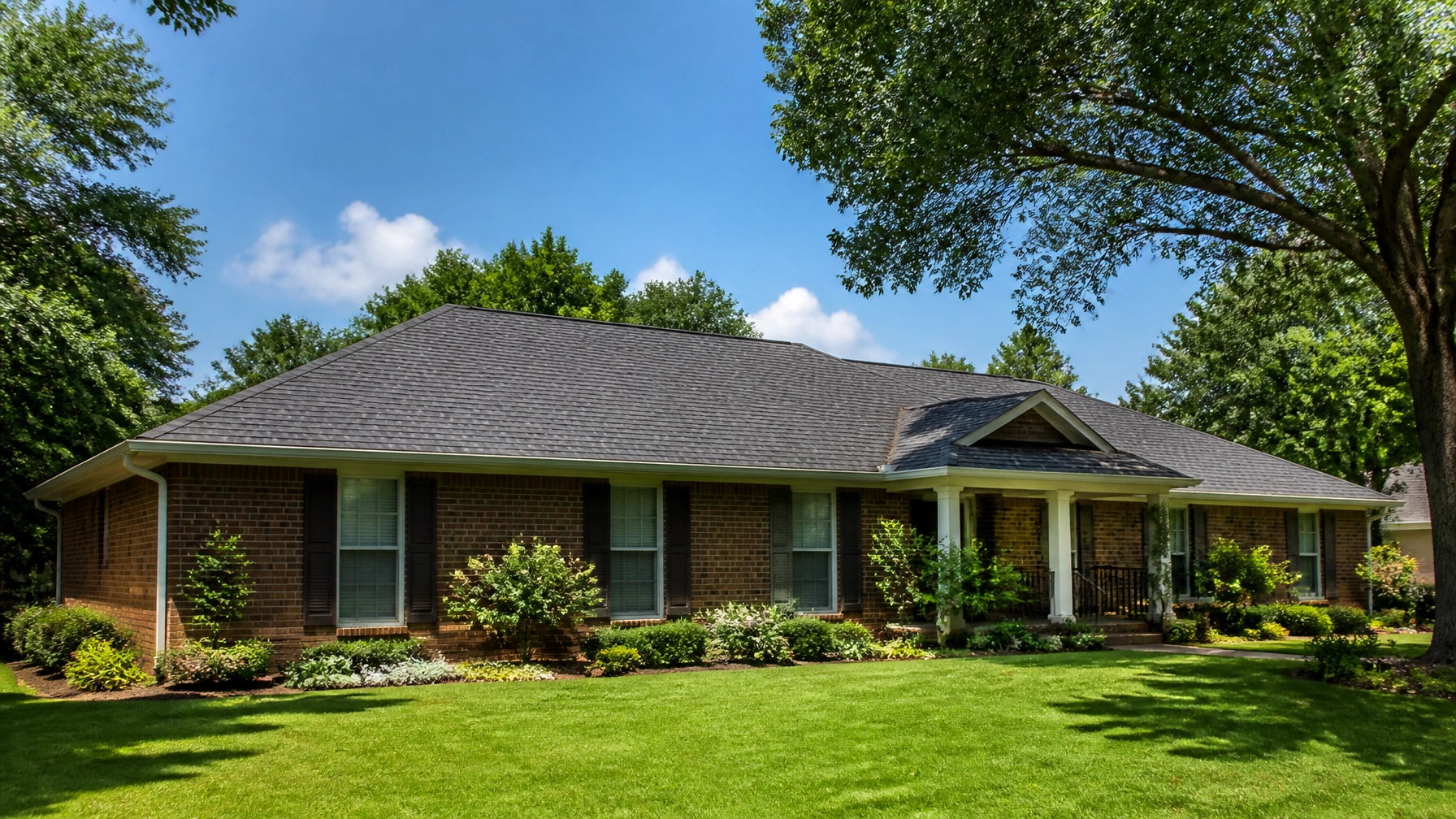
    A classic ranch-style home in a Charlotte suburb with a new light-grey roof

    Local Logistics: Permits and Neighborhoods

    Every neighborhood in Charlotte has its own personality: and its own rules.

    • HOA Restrictions: If you live in a master-planned community in University City or Steele Creek, your HOA likely has strict rules on shingle color (often "Weathered Wood" or "Charcoal" only). Always check your bylaws before signing a contract.
    • Permitting: A roofing permit is required for most replacements in Mecklenburg County. A reputable contractor will handle this for you, but the cost (usually $100–$300) is factored into your final estimate.
    • Storm Damage: Charlotte is no stranger to "Pop-up" thunderstorms. If you are replacing your roof due to hail or wind damage, your estimate may be covered by insurance. Having a data-backed estimate from our tool gives you a solid benchmark when talking to your adjuster.

    Summary Checklist for Charlotte Homeowners

    Before you sign a contract for a 2026 roof replacement, ensure you have checked the following:

    • Accurate Measurement: Do you know your roof's "square" count (1 square = 100 sq. ft.)?
    • Verified Contractor: Are they licensed and insured specifically for North Carolina?
    • Transparent Pricing: Does the quote include tear-off, disposal, and new underlayment?
    • Warranty: Is there a manufacturer's material warranty and a contractor's workmanship warranty?

    A new roof is a major investment, but it doesn't have to be a major headache. By leveraging 2026 technology, you can move from "I think I need a roof" to "I have a budget and a plan" in under three minutes.

    Ready to see what your Charlotte home's roof will cost today? Get your instant estimate here.


  • The Ultimate Guide to Getting a Free Roof in Atlanta: Everything You Need to Succeed

    The Ultimate Guide to Getting a Free Roof in Atlanta: Everything You Need to Succeed

    For homeowners in Atlanta, the roof is the most critical line of defense against the unpredictable Georgia weather. From blistering summer heat to sudden, violent hailstorms and high-velocity winds, your roof takes a beating year-round. When it comes time for a replacement, the sticker shock can be intense, most Atlanta roof replacements range from $12,000 to $28,000 depending on the square footage and material complexity.

    However, many Atlanta residents are sitting on a "free" roof without even knowing it. In the roofing industry, a "free" roof typically refers to a full replacement covered by your homeowners insurance policy, where your only out-of-pocket cost is your deductible.

    This guide is your masterclass in navigating the Georgia insurance landscape. We will break down how to move from a storm-damaged roof to a brand-new installation using professional, data-driven strategies that ensure your claim is approved and your home is protected.

    Is a "Free" Roof Actually Possible?

    The short answer is yes, but it requires a specific set of circumstances. Insurance companies do not pay for roofs that have simply reached the end of their natural lifespan due to "wear and tear." To get a roof paid for by insurance in Atlanta, you must demonstrate that the damage was caused by a "covered peril."

    In Georgia, the most common covered perils include:

    • Hail Damage: Impact marks that bruise the shingle matting and cause premature granule loss.
    • Wind Damage: Shingles that have been lifted, creased, or completely torn off during a storm.
    • Falling Debris: Damage caused by downed pine trees or heavy branches common in the "City in a Forest."

    When a claim is approved, the insurance company covers the total cost of the replacement minus your deductible. For many homeowners with a $1,000 or $2,500 deductible, getting a $20,000 roof for that small fraction is the closest thing to "free" in the home improvement world.

    A close-up comparison of a hail-damaged roof with missing granules versus a perfectly installed new architectural shingle roof.

    Step 1: The Atlanta Storm Audit

    Before filing a claim, you need evidence. Atlanta has seen significant storm activity over the last 24 months, particularly in areas like Buckhead, Sandy Springs, and Marietta. Insurance carriers typically require a specific "Date of Loss" to process a claim.

    If you suspect damage, do not climb onto your roof yourself. Use a professional tool like our instant roof cost calculator to get a baseline measurement of your home, then look for these ground-level signs:

    1. Gutter Granules: Large amounts of shingle grit in your downspouts after a heavy rain.
    2. Dented Metal: Look at your mailbox, soft metal roof vents, or even your car for pea-sized to golf-ball-sized dents.
    3. Missing Shingles: Visible "patches" of darker underlayment where shingles have blown away.

    Step 2: Understanding Your Policy (RCV vs. ACV)

    Not all insurance policies are created equal. Before you call your agent, you must know which type of coverage you have. This single factor determines whether you get a high-quality replacement or a massive bill.

    • Replacement Cost Value (RCV): This is the gold standard (Premium). If your roof is damaged, the insurance company pays the full cost to replace it at today’s market prices.
    • Actual Cash Value (ACV): This is the budget version (Economy). The insurance company depreciates the value of your roof based on its age. If you have a 20-year-old roof with ACV coverage, they may only pay 25% of the replacement cost, leaving you to cover the rest.

    In Georgia, many older policies are being converted to ACV without homeowners realizing it. Check your declarations page for "Roof Surface Endorsements."

    Step 3: The 60-Second Precision Measurement

    The biggest point of friction in insurance claims is the "scope of work." Adjusters often underestimate the square footage (the number of "squares") or the complexity of the roof's pitch.

    This is where Get My Roof Estimate Now changes the game. Using satellite imagery technology, we provide measurements accurate to within inches. By entering your address into our system, you receive a professional report in under 60 seconds that you can hand to your insurance adjuster. When you lead with data, it becomes much harder for an insurance company to "lowball" the estimate.

    A modern brick ranch-style home in an Atlanta suburb showcasing a newly installed charcoal metal roof.

    Step 4: The Insurance Masterclass Process

    To succeed in getting your roof covered, follow this professional checklist:

    1. Professional Inspection

    Hire a local Atlanta contractor who specializes in insurance restoration. They should provide a photo-documented report showing clear evidence of storm damage.

    2. Filing the Claim

    Contact your insurance company’s claims department directly. Provide the date of the storm and the type of damage (wind/hail). Mention that you already have a professional inspection report and a satellite-verified measurement of your roof.

    3. The Adjuster Meeting

    The insurance company will send an adjuster to verify the damage. Crucial Tip: Ensure your roofing contractor is present during this meeting. A seasoned contractor knows how to point out "marginal" damage that an adjuster might otherwise overlook.

    4. Reviewing the Scope

    Once the adjuster approves the claim, they will issue a "Scope of Loss." This document lists every item they are paying for, from shingles to drip edge. Compare this against your Get My Roof Estimate Now report to ensure they didn't miss any "squares" or specialized ridge vents.

    5. Supplementing

    If the insurance estimate is lower than the actual cost of materials in the Atlanta market, your contractor can submit a "supplement." This is a request for additional funds based on local building codes or discovered damage during the tear-off phase.

    Atlanta Building Codes and "Ordinance or Law"

    Georgia building codes (specifically the 2018 IRC) have strict requirements for roof installations. For example, in many parts of Metro Atlanta, a "re-roof" (layering new shingles over old ones) is no longer allowed if there are already two layers. Additionally, drip edges and specific flashing are often required by code even if they weren't on your original roof.

    If your policy includes Ordinance or Law coverage, the insurance company is required to pay for these code-required upgrades. This can add thousands of dollars in value to your "free" roof replacement.

    A professional roofing crew installing new shingles on a residential home, emphasizing high-quality craftsmanship.

    Avoiding the "Storm Chaser" Scams

    After a major storm in Georgia, "storm chasers" often flood the neighborhood. These are out-of-state companies that follow hail maps. To ensure your roof replacement is successful and warrantied:

    • Verify Licensing: Ensure they are a licensed contractor in the State of Georgia.
    • Check Reviews: Look for long-standing reputations in the Atlanta area.
    • The Deductible Trap: Beware of any contractor who claims they can "waive your deductible." In Georgia, this is insurance fraud. A reputable contractor will never ask you to participate in a fraudulent scheme to avoid your legal deductible.

    Final Decision: Technology vs. Tradition

    The traditional way to get a roof estimate involves waiting days for multiple contractors to show up, climb your roof, and give you varying price points. By the time you get the numbers, the "storm window" for your insurance claim might have closed.

    At Get My Roof Estimate Now, we empower Atlanta homeowners with the data they need immediately. Whether you are planning a budget for a future replacement or need an accurate measurement to fight an insurance denial, our satellite-powered estimates provide the transparency you deserve.

    Ready to see what your Atlanta roof is worth? Get your instant, free roof estimate in 60 seconds here.


  • Charleston Roof Replacement Cost Explained in Under 3 Minutes

    Charleston Roof Replacement Cost Explained in Under 3 Minutes

    If you’re a homeowner in Charleston, Mount Pleasant, or Summerville, you know the coastal environment is tough on a roof. Between the intense humidity, salt air, and hurricane-force winds, your roof works overtime. If it’s been 15 to 20 years since your last replacement, or if a recent storm left its mark, you need numbers, and you need them now.

    For 2026, a full roof replacement in the Charleston area typically ranges between $14,000 and $20,000 for high-quality architectural shingles and $18,000 to $35,000+ for metal.

    At Get My Roof Estimate Now, we’ve eliminated the week-long wait for a contractor to show up with a ladder. Using satellite imagery, we can calculate your roof's size, pitch, and cost in under 60 seconds. Click here to get your instant Charleston roof estimate.

    Quick Answers: Charleston Roofing FAQ

    Before we dive into the technical details, here are the fast facts for South Carolina homeowners:

    • How much does a roof cost per square in Charleston? Expect to pay $350–$475 per square (Budget to Mid-range) for architectural shingles and $700–$1,200 per square (Premium) for standing seam metal.
    • What is the "Coastal Tax"? Charleston building codes (IBC/IRC) require roofs to withstand 130–150 mph winds. This means extra nails, hurricane straps, and secondary water barriers, which can add 10-15% to labor and material costs compared to inland cities.
    • Is a permit required? Yes. Most jurisdictions in Charleston County require a permit for full replacements to ensure the roof meets modern hurricane standards.
    • How long does it take? Most residential roof replacements in the Lowcountry are completed in 1 to 2 days, depending on weather and roof complexity.

    Standing seam metal roof on a coastal home

    Breaking Down the Costs by Material (2026 Pricing)

    The material you choose is the biggest variable in your final invoice. In the Charleston market, we categorize materials into three main tiers based on performance and budget.

    1. Architectural Asphalt Shingles (Popular & Reliable)

    Architectural shingles (also called dimensional or laminate shingles) are the standard for most homes in the Lowcountry. They offer a great balance of aesthetic appeal and wind resistance.

    • Cost per Square: $350 – $475 (Installed)
    • Total Cost (2,000 sq. ft. roof): $14,000 – $20,000
    • Why choose this? They are rated for high winds (up to 130 mph) and come with 25-to-30-year warranties. They handle the Charleston heat well and are the most budget-friendly compliant option.

    2. Standing Seam Metal Roofing (Premium & Coastal-Ready)

    Metal roofs are becoming the gold standard for homes on Daniel Island and the barrier islands like Isle of Palms.

    • Cost per Square: $700 – $1,200 (Installed)
    • Total Cost (2,000 sq. ft. roof): $25,000 – $38,000+
    • Why choose this? Metal offers superior hurricane protection, high solar reflectivity (keeping your AC bill lower), and a lifespan of 50+ years. It’s a "once-in-a-lifetime" roof.

    3. Synthetic or Specialty Slate (Luxury & High-End)

    For historic homes or luxury properties, synthetic slate or wood shakes provide a high-end look without the weight or maintenance issues of natural materials.

    • Cost per Square: $1,000 – $1,600+ (Installed)
    • Total Cost (2,000 sq. ft. roof): $30,000 – $55,000
    • Why choose this? Best for maintaining historical curb appeal while meeting modern 150 mph wind codes.

    A classic Charleston ranch-style home with a new roof

    The Charleston Factors: Why Pricing Varies Locally

    Roofing in Charleston isn't the same as roofing in Columbia or Greenville. There are three specific regional factors that impact your estimate.

    1. High-Wind Building Codes

    Because Charleston is in a high-wind/hurricane-prone zone, the South Carolina Building Code mandates specific installation techniques.

    • Fastening Patterns: Instead of the standard 4-nail pattern used inland, Charleston roofs often require a 6-nail pattern to prevent shingle uplift during storms.
    • Ring-Shank Nails: Contractors must use 8d ring-shank nails for the roof deck (sheathing) to ensure the entire structure stays attached to the rafters under extreme pressure.

    2. Secondary Water Barriers (S.W.B.)

    In coastal regions, wind-driven rain can be forced under your shingles. Code often requires or strongly recommends a secondary water barrier: a specialized underlayment that seals the roof deck. This is a critical line of defense during a tropical storm, but it does add to the material cost.

    3. Roof Complexity and Pitch

    Charleston architecture is diverse. A flat-roofed ranch in West Ashley is far cheaper to roof than a multi-story Victorian in the French Quarter with steep pitches, dormers, and multiple valleys. Each "cut" and "valley" requires more labor and specialized flashing, driving the price toward the higher end of our ranges.

    How Satellite Technology Saves You Money

    Historically, getting a roof estimate meant calling 3-4 contractors, waiting for them to drive to your house, and then waiting another 3 days for a PDF quote.

    At Get My Roof Estimate Now, we use advanced satellite imagery to measure your roof within inches of accuracy (90-95%).

    • No Contractor Visits: We don't need to step foot on your property to give you an accurate range.
    • Transparency: You see the same data we do. No hidden "coastal fees" added at the last second.
    • Speed: You get your numbers in 60 seconds. This allows you to budget for your project immediately, rather than waiting weeks.

    Try our satellite-powered estimator today.

    Roof replacement in progress on a Charleston home

    Financial Assistance: The SC Safe Home Program

    If you are upgrading your roof to meet hurricane standards, you might be eligible for the SC Safe Home Mitigation Grant Program. This program provides grants of up to $5,000 to help South Carolina homeowners pay for:

    • Strengthening roof deck attachments.
    • Installing secondary water barriers.
    • Upgrading to high-wind rated shingles or metal.

    For many Charleston homeowners, this grant can offset a significant portion of the "coastal upgrade" costs required by modern codes.

    Summary: What to Expect

    If you own a typical 2,200-square-foot home in Charleston:

    • Budgeting for Shingles? Set aside $15,000 – $18,500.
    • Upgrading to Metal? Plan for $28,000 – $34,000.

    Don't let the process overwhelm you. Whether you are dealing with storm damage or just being proactive, the first step is accurate data. Visit our blog for more tips on choosing materials, or jump straight to our calculator to see what your specific roof will cost in today's market.


  • 4. Accepting "Free Inspections" Without Research

    (Mistake: Security)

    It’s tempting to say "yes" to a free inspection when a roofer is already in the neighborhood. However, letting an unvetted person onto your roof is a security and financial risk.

    The Reality: Unscrupulous contractors have been known to manufacture "damage" while on the roof, bending shingles or using a hammer to mimic hail strikes, to force an insurance claim. Once they find (or create) damage, they use high-pressure tactics to get you to sign a "contingency agreement" immediately.

    The Fix: Never let anyone on your roof without first checking their online presence and verifying they are a licensed and insured entity. Professional roofers in Houston will often use high-resolution satellite technology to assess your roof's condition and size with 90-95% accuracy before even setting foot on your property.


    5. Overlooking Insurance and Bonding Verification

    (Mistake: Liability)

    Houston is a high-risk area for roofing work due to the heat and the complexity of many residential rooflines. If a worker is injured on your property and the contractor doesn't have Workers' Comp, the liability could fall on you.

    The Reality: Many "tailgate" contractors carry general liability but skip Workers' Compensation to save on overhead.

    The Fix: Don’t just take their word for it. Ask for a "Certificate of Insurance" (COI) that lists you or your address as the certificate holder. Call the insurance agent listed on the certificate to verify the policy is active. In Texas, roofing licenses aren't required at the state level, but the best contractors are certified by the Roofing Contractors Association of Texas (RCAT).


    6. Signing a "Contingency Agreement" on the Spot

    (Mistake: Legal Binding)

    A common tactic is asking the homeowner to sign a "simple form" that allows the contractor to talk to your insurance adjuster. In reality, these are often legally binding contracts that commit you to using that contractor if the insurance claim is approved.

    The Reality: If you sign this and then find a better, more reputable contractor later, you could be hit with a "cancellation fee" that eats up 10-20% of your claim value.

    The Fix: Never sign anything on the first visit. A professional estimate should be a detailed, line-item document that you can review at your leisure. If a contractor pressures you to sign "just to get the process started," show them the door. Take 24-48 hours to compare their quote against your satellite-powered estimate.


    7. Paying the Full Amount Upfront

    (Mistake: Financial Control)

    A classic Houston roofing scam involves the "disappearing deposit." The contractor asks for 50% or more upfront to "order materials," then never returns to do the work.

    The Reality: While a small deposit (typically 10-25%) is standard for custom materials or to secure a spot on the schedule, you should never pay for the bulk of the project before the materials are on your driveway.

    The Fix: Use a milestone-based payment schedule. A standard professional structure looks like this:

    • 10% Deposit: Upon signing the contract.
    • 40-50% Material Delivery: Once the shingles and underlayment are physically at your home.
    • Balance: Only after the work is completed, the job site is cleaned, and you have performed a final walkthrough.

    Summary: The Houston Homeowner’s Vetting Checklist

    To ensure you are hiring a professional who will be around to honor your warranty, follow these data-driven steps:

    1. Get Your Benchmark: Use Get My Roof Estimate Now to find your roof's accurate size and estimated replacement cost in under 60 seconds.
    2. Verify Locality: Check for a physical Houston office and a local (713, 281, 832) area code.
    3. Check HB 2102 Compliance: If they offer to waive your deductible, walk away.
    4. Confirm Insurance: Call the agent on their COI to verify active Workers' Comp and General Liability.
    5. Review the Materials: Ensure the estimate specifies the brand (e.g., GAF, Owens Corning) and the specific type of shingle (Architectural vs. 3-Tab).

    By avoiding these seven common mistakes, you can navigate the Houston roofing market with confidence and ensure your home is protected from the next big storm.


    Frequently Asked Questions (FAQ)

    What is the average cost of a roof replacement in Houston?
    While prices vary by material and roof complexity, most Houston homes (1,500–3,000 sq. ft.) range between $8,000 and $25,000. Premium materials like metal or synthetic slate can exceed this range.

    Is it illegal for a roofer to pay my deductible in Texas?
    Yes. Under Texas HB 2102, it is a crime for a contractor to waive or rebate a deductible. Homeowners are legally required to pay their own deductible.

    How do I know if a roofing contractor is actually local to Houston?
    Check their Google Business Profile for a physical address (not a P.O. Box), look for Texas license plates on their fleet, and verify their membership in the Houston BBB.

    Why should I use a satellite roof estimate first?
    A satellite estimate provides an objective, third-party measurement of your roof. It prevents contractors from "padding" the square footage to increase their bid and gives you a baseline for budgeting.


  • How to Choose the Best New Roof: 2026 Price and Material Comparison

    How to Choose the Best New Roof: 2026 Price and Material Comparison

    Replacing a roof is one of the most significant investments you will make in your home. In 2026, Charlotte homeowners are facing a shifting landscape of material costs, labor availability, and advanced installation technologies. Navigating these variables requires more than just a ballpark figure; it requires a data-driven understanding of current market trends.

    At Get My Roof Estimate Now, we provide instant, satellite-powered roof estimates to help you bypass the traditional two-week waiting period for contractor quotes. This guide breaks down the 2026 pricing for the most popular roofing materials in the Charlotte metro area, factored with the projected 4–8% annual industry cost increase.

    The State of Roofing Costs in 2026

    In 2026, the average cost to replace a roof on a standard 2,000-square-foot home in Charlotte ranges from $9,500 to $28,000, depending heavily on the material selected and the complexity of the roofline.

    Market data indicates that material prices have stabilized compared to the volatility of the early 2020s, but specialized labor and high-performance synthetic options continue to command a premium. To plan your budget effectively, you must categorize your needs into one of three tiers: Budget, Popular, or Premium.


    Material Comparison: 2026 Price Guide (Charlotte, NC)

    Choosing the right material is a balance between upfront investment and long-term durability. Below is a breakdown of the primary materials used in the North Carolina climate.

    1. Asphalt Shingles (Budget & Popular)

    Asphalt shingles remain the dominant choice for Charlotte residents due to their cost-effectiveness and versatility.

    • 3-Tab Shingles (Budget): These are the entry-level option. While they offer the lowest price point, they have the shortest lifespan (approx. 15–20 years) and lower wind resistance.
      • 2026 Estimated Cost: $8,200 – $12,100
    • Architectural Shingles (Popular): Also known as dimensional shingles, these are thicker, more durable, and more aesthetically pleasing. They are designed to withstand the heavy thunderstorms and humidity common in the Piedmont region.
      • 2026 Estimated Cost: $9,700 – $14,300

    A close-up view of high-quality architectural asphalt shingles showing the thick, layered texture and weathered wood color.

    2. Metal Roofing (Premium & Durable)

    Metal roofing has seen a surge in popularity in 2026 as homeowners prioritize longevity and energy efficiency.

    • Standing Seam Metal: This is the gold standard for residential metal roofing. The fasteners are concealed, creating a sleek look and minimizing the risk of leaks. It reflects solar heat, which can significantly lower cooling costs during Charlotte’s humid summers.
      • 2026 Estimated Cost: $19,000 – $27,900
    • Corrugated Metal Panels: A more industrial look that offers the benefits of metal at a slightly lower price point than standing seam.
      • 2026 Estimated Cost: $12,000 – $17,600

    A modern farmhouse-style home featuring a sleek, dark gray standing seam metal roof that enhances the home's contemporary aesthetic.

    3. Specialty Materials (High-End)

    For historic homes in neighborhoods like Myers Park or Dilworth, specialty materials are often required to maintain architectural integrity.

    • Synthetic Slate/Shake: These materials mimic the look of natural stone or wood but are lighter and more durable.
      • 2026 Estimated Cost: $17,000 – $25,100
    • Natural Slate: The most expensive and longest-lasting option, potentially lasting over 100 years.
      • 2026 Estimated Cost: $42,000+

    2026 Price Breakdown by Square Footage

    Most roofing professionals calculate costs by the "square." One square equals 100 square feet of roof area. Below is a quick reference table for estimated total project costs in 2026, assuming an average 4–8% hike over previous years.

    Roof Size (Sq. Ft.) Asphalt (Architectural) Metal (Standing Seam) Synthetic Slate
    1,500 sq ft $7,200 – $10,500 $14,500 – $21,000 $12,500 – $18,500
    2,000 sq ft $9,700 – $14,300 $19,000 – $27,900 $17,000 – $25,100
    2,500 sq ft $12,100 – $17,800 $23,500 – $34,800 $21,000 – $31,200
    3,000 sq ft $14,500 – $21,500 $28,500 – $41,800 $25,500 – $37,500

    Disclaimer: These figures are estimates based on average roof pitch and complexity. For a precise figure, use our Roof Cost Calculator.


    Factors Influencing Your Charlotte Roof Replacement

    Price isn't determined by square footage alone. In 2026, several regional and structural factors play a critical role in your final estimate.

    Roof Pitch and Complexity

    The "pitch" refers to the steepness of your roof. A steeply pitched roof requires more safety equipment and more labor hours, increasing the cost. Similarly, a roof with multiple gables, valleys, and chimneys (complexity) will cost more than a simple ranch-style roof.

    Tear-Off and Disposal

    Removing your old roof is a labor-intensive process. In 2026, disposal fees for old shingles have risen in North Carolina. Most estimates include a single-layer tear-off, but if you have multiple layers of old roofing, expect a surcharge.

    Local Permitting and Inspections

    Charlotte (Mecklenburg County) requires specific permits for residential roof replacements. Ensuring your contractor is licensed and insured is non-negotiable to pass these inspections and maintain your home's resale value.

    A classic ranch-style home in a wooded neighborhood with a newly installed designer shingle roof, highlighting the quality of professional installation.


    Why Use Satellite-Powered Estimates?

    The traditional method of getting a roof estimate involves scheduling appointments with multiple contractors, waiting for them to measure your roof manually, and then waiting another week for a quote. In 2026, this method is obsolete.

    Get My Roof Estimate Now uses high-resolution satellite imagery to measure your roof's size, pitch, and complexity with 90-95% accuracy.

    • Speed: Get your estimate in under 60 seconds.
    • Accuracy: We measure to within inches without ever stepping on your property.
    • Transparency: See low, middle, and high price ranges based on current 2026 material costs.
    • Zero Pressure: Browse your options and budget privately before speaking to a verified local contractor.

    Conclusion: Planning for 2026

    If your roof is between 15 and 30 years old or has recently suffered storm damage, now is the time to start planning. By understanding the 2026 material and labor landscape in Charlotte, you can avoid overpaying and ensure you choose a material that fits your budget and aesthetic goals.

    Ready to see what a new roof will cost for your specific address?

    Get your instant, free roof estimate here in 60 seconds.

    Explore more roofing insights on our blog to stay updated on the latest industry trends.

  • How to Avoid the Biggest Roofing Scams in Houston: Spotting Storm Chasers

    How to Avoid the Biggest Roofing Scams in Houston: Spotting Storm Chasers

    Houston homeowners are no strangers to the volatile weather of the Gulf Coast. From the intense hailstorms that rattle the windows in Katy to the high-wind events that sweep through The Heights, your roof is your first line of defense. However, in the wake of these storms, a different kind of threat emerges: "Storm Chasers."

    In 2026, the roofing industry in Texas has seen a surge in sophisticated scams designed to take advantage of insurance claims and homeowner urgency. Navigating these pitfalls requires more than just luck: it requires data and a clear understanding of Texas law. This guide breaks down exactly how to spot a scam, the legal landscape of roofing in Texas, and how to use modern technology to protect your investment.

    The Storm Chaser Playbook: Red Flags to Watch For

    A "Storm Chaser" is a contractor who follows severe weather patterns across the country, setting up temporary shop in cities like Houston immediately after a disaster. While not all out-of-town contractors are dishonest, many lack the local ties necessary to honor long-term warranties.

    1. The "Unsolicited" Inspection

    If a contractor knocks on your door in Sugar Land or Cypress claiming they were "just in the neighborhood" and noticed damage on your roof, proceed with caution. This is the primary tactic of storm chasers. Legitimate, high-demand local contractors rarely need to solicit door-to-door after a storm; their schedules are typically filled by referrals and existing customers.

    2. High-Pressure "Today Only" Pricing

    Scammers rely on urgency. They may claim that material costs are spiking (Market Shift) or that your insurance window is closing. They want you to sign a "contingency agreement" before you've had time to research their company or get a second opinion.

    3. Out-of-State Plates and Lack of Local Presence

    Always check the vehicles. If the crew is driving trucks with out-of-state tags and cannot provide a physical Houston business address: not just a P.O. Box or a temporary coworking space: they are likely gone once the check clears.

    Professional installation of charcoal gray architectural shingles

    The "Free Roof" Trap: Understanding Texas House Bill 2102

    One of the most dangerous scams in Houston involves the promise of a "free roof" or a "waived deductible." In 2026, this isn't just a red flag; it's a legal liability for the homeowner.

    Texas House Bill 2102 was enacted to specifically target deductible fraud. Under this law:

    • Deductible Waivers are Illegal: It is a criminal offense for a contractor to offer to pay, waive, or rebate a homeowner's insurance deductible.
    • Proof of Payment: Insurance companies in Texas can now legally withhold the final depreciation payment until the homeowner provides proof (such as a canceled check or credit card receipt) that the deductible was paid in full.
    • Your Risk: If you enter into an agreement where the contractor "covers" your deductible, you are participating in insurance fraud. This can lead to your claim being denied or even criminal charges.

    If a contractor suggests they can "work the numbers" so you pay nothing out of pocket, walk away. A reputable roofer will include your deductible in the total project cost and expect payment transparently.

    2026 Houston Roofing Cost Benchmarks

    Transparency is the enemy of the scammer. By knowing the current market rates for roof replacement in Houston, you can immediately identify bids that are "too good to be true" or suspiciously inflated.

    Based on current 2026 data, here is what you should expect for a standard residential roof replacement in the Greater Houston area:

    Project Scope Price Range Category
    Small Home (1,500 – 1,800 sq ft) $6,700 – $8,500 (Budget/Standard)
    Average Home (2,000 – 2,500 sq ft) $9,700 – $11,500 (Popular)
    Large Home (3,000+ sq ft) $13,000 – $18,000+ (Premium/Complex)

    Note: These ranges assume standard architectural shingles. Upgrading to metal roofing or designer synthetic shingles will increase these figures by 40-100%.

    Professional roofer performing a detailed inspection of a chimney flashing

    The Vetting Checklist: 5 Questions to Ask

    Before signing any contract, put your potential roofer through this rigorous vetting process. A legitimate Houston professional will have these answers ready:

    1. "Can you provide a certificate of General Liability and Workers' Comp insurance?" Don't just take their word for it; ask to see the certificate and verify it is current.
    2. "What is your physical business address in the Houston area?" Look it up on Google Maps to ensure it’s a real office, not a residential home or a virtual mailbox.
    3. "Do you have local references from the last 6 months?" Call at least two. Ask specifically about their cleanup process and if the final price matched the estimate.
    4. "How do you handle the Texas HB 2102 requirements?" If they don't know what this is, or if they offer to bypass it, they are not a professional you want on your property.
    5. "What is your workmanship warranty?" Distinguish between the manufacturer's warranty (on the shingles) and the contractor's warranty (on the labor). Local pros usually offer 5-10 years on labor.

    The Modern Solution: Satellite-Powered Transparency

    The traditional way of getting a roof estimate: waiting days for a salesman to climb your roof and then sitting through a high-pressure pitch: is a breeding ground for scams.

    At Get My Roof Estimate Now, we’ve eliminated the friction. Using advanced satellite imagery technology, we provide instant, free roof estimates with 90-95% accuracy in under 60 seconds.

    Why our technology protects you:

    • Zero Pressure: You get your data-driven price range before ever talking to a contractor.
    • Accurate Measurements: Our tech measures size, pitch, and complexity to within inches, ensuring the estimate is grounded in reality.
    • Verified Network: We connect you with local, licensed, and insured contractors who have already been vetted for quality and compliance with Texas laws.

    Satellite technology interface showing precise measurements of a Houston neighborhood

    Conclusion: Take Control of Your Roof

    In a city like Houston, your roof is too important to leave to chance or a door-to-door salesman. By understanding the legal requirements of HB 2102, knowing the 2026 market benchmarks, and leveraging satellite technology, you can navigate your roof replacement with total confidence.

    Don't wait for a storm chaser to knock on your door. Get the facts first. Spend 60 seconds today to get your accurate, transparent roof estimate and take the power back from the scammers.


  • Average Cost of New Roof in Houston: Why Local Pricing Will Change the Way You Budget

    Average Cost of New Roof in Houston: Why Local Pricing Will Change the Way You Budget

    If you are a homeowner in the Houston metro area in 2026, you know that the roof over your head is more than just a structural necessity: it is your first line of defense against Gulf Coast humidity, scorching summer heat, and the ever-present threat of high-wind storm events. Whether you are in Sugar Land, Katy, or The Heights, the question isn’t if you will need to replace your roof, but when and how much it will cost.

    As of June 2026, the average cost of a new roof in Houston ranges from $8,000 to $20,000 for a standard single-family home. While that range provides a ballpark, the reality of roofing in Southeast Texas is influenced by specific local building codes, material supply chains, and advanced windstorm requirements that have evolved significantly over the last two years.

    At Get My Roof Estimate Now, we provide instant roof estimates in Texas using satellite-powered technology. We understand that "ballpark" numbers don't help you budget. You need precision. In this guide, we break down the 2026 pricing landscape for Houston homeowners so you can plan your replacement with confidence.

    The Houston Benchmark: 2026 Price Ranges by Material

    The single biggest variable in your roofing budget is the material you choose. In Houston’s unique climate, materials aren't just about aesthetics; they are about thermal performance and wind resistance.

    1. Architectural Asphalt Shingles (Popular / Versatile)

    Estimated Cost: $4.50 – $7.50 per square foot
    Architectural shingles remain the most popular choice for Houston homeowners. They offer a balance of durability and affordability. In 2026, most local contractors are installing "Cool Roof" rated shingles that reflect solar energy, a critical feature for keeping attic temperatures down during a 100-degree August.

    • Typical 2,000 sq. ft. Roof: $9,000 – $15,000
    • Pros: Cost-effective, high wind resistance, wide variety of colors.

    2. Standing-Seam Metal Roofing (Premium / Lifetime)

    Estimated Cost: $12.00 – $22.00 per square foot
    Metal roofing has seen a massive surge in Houston throughout 2025 and 2026. While the upfront cost is significantly higher, the lifespan of 50+ years and superior performance in high-wind zones make it a favorite for long-term homeowners.

    • Typical 2,000 sq. ft. Roof: $24,000 – $44,000
    • Pros: Incredible durability, potential insurance discounts, highest wind ratings.

    3. Impact-Resistant (IR) Shingles (Practical / Insurance-Friendly)

    Estimated Cost: $6.00 – $9.00 per square foot
    With the increasing frequency of hail and storm activity in the Houston area, Class 4 impact-resistant shingles have become a standard recommendation. Many Texas insurers offer premium credits for these materials, which can help offset the slightly higher installation cost over 5–10 years.

    Close-up of a professional roof installation in Houston

    The "Houston Factor": Why Local Pricing is Unique

    You might see national averages quoted online, but Houston is a different animal. Three specific factors drive local pricing in 2026:

    1. TDI Windstorm Requirements (The WPI-8 Factor)

    As of April 1, 2026, the Texas Department of Insurance (TDI) has fully adopted the 2024 International Residential Code (IRC) for windstorm certifications. If your home is in a designated catastrophe area (including parts of Harris County and most coastal counties), your roof must be engineered to withstand wind speeds of 130–140 mph.

    This requires specific fastening patterns, enhanced underlayments, and a WPI-8 certificate to remain eligible for Texas Windstorm Insurance Association (TWIA) coverage. These extra steps add roughly 10–15% to the labor and inspection costs compared to inland cities like Austin or Dallas.

    2. Labor Market and Regional Demand

    Houston has one of the most active construction markets in the U.S. In 2026, the average roofing labor rate in the metro area is approximately $26 per hour. During peak storm seasons (June through November), demand spikes, and labor prices can fluctuate. Choosing a contractor during the "off-season" (January-March) can sometimes yield a 5% savings on labor.

    3. Roof Complexity and Pitch

    Houston architecture varies from flat-roofed modern builds to steep-pitched Victorian-style homes.

    • Simple Roofs (Ranch/Colonial): Lower labor costs due to ease of access.
    • Complex Roofs (Multiple Gables/Steep Pitch): Higher costs due to increased safety requirements, more waste material, and longer installation times.

    Breaking Down the Math: A Sample 2,500 Sq. Ft. Estimate

    To give you a clearer picture, let’s look at a typical 2026 estimate for a 2,500-square-foot roof (roughly 25 "squares") in a Houston suburb like Pearland or Cypress.

    Factor Budget (Standard Shingle) Premium (Metal/High-End)
    Materials $6,250 $18,000
    Labor & Removal $5,500 $12,000
    Disposal/Dumpster $600 $800
    Permits & WPI-8 $400 $600
    TOTAL ESTIMATE $12,750 $31,400

    Note: These figures are averages. For a precise number for your specific address, use our roof cost calculator.

    Satellite view simulation of residential rooftops in Houston

    How to Avoid the "Contractor Carousel"

    The traditional way to get a roof estimate is frustrating. You call three contractors, wait three days for them to show up, and then wait another three days for a quote. In 2026, technology has made that process obsolete.

    At Get My Roof Estimate Now, we use high-resolution satellite imagery accurate to within inches. When you enter your Houston address, our system:

    1. Measures your roof's square footage instantly.
    2. Calculates the pitch and complexity using 3D modeling.
    3. Applies current local Houston labor and material rates.
    4. Delivers a transparent price range in under 60 seconds.

    This means you can budget for your project on your lunch break, without the pressure of a salesperson sitting in your living room. Once you have your estimate, we can connect you with verified, licensed, and insured local Houston contractors who are ready to honor those transparent price points.

    3 Tips for Houston Homeowners Replacing a Roof in 2026

    1. Check Your Ventilation

    In the Houston humidity, a roof is only as good as its ventilation system. Ensure your estimate includes ridge vents or solar-powered attic fans. Proper airflow prevents "cooking" your shingles from the inside out, which can void your warranty and spike your A/C bills.

    2. Verify Windstorm Compliance

    If your roofer says they "don't need" a WPI-8 certificate but you live in a TWIA-eligible zone, find a new roofer. Failing to get your roof certified can make your home uninsurable for wind and hail damage in the future.

    3. Opt for "Cool" Materials

    Look for materials that are Energy Star certified or CRRC (Cool Roof Rating Council) rated. In the Houston sun, these materials can reduce the roof's surface temperature by up to 50 degrees, providing a direct ROI on your monthly energy costs.

    Modern Houston ranch-style home with a premium metal roof

    The Bottom Line

    A new roof in Houston is a significant investment, but it shouldn't be a mystery. By understanding that 2026 prices are driven by material choice, 140-mph wind codes, and labor demand, you can approach the process with open eyes.

    Don't wait for a leak to start your research. Whether you're planning for a replacement next month or next year, knowing your numbers is the best way to protect your home and your wallet.

    Ready to see what your Houston roof actually costs? Skip the wait and get your instant, free satellite roof estimate in under 60 seconds today. No credit card required, just accurate data.


  • 5 Steps How to Claim Your Roof Insurance and Get a Full Replacement (Easy Guide for Houston Homeowners)

    5 Steps How to Claim Your Roof Insurance and Get a Full Replacement (Easy Guide for Houston Homeowners)

    If you live in Houston, your roof is constantly at war. Between the brutal humidity of the Gulf Coast, seasonal hurricane threats, and sudden hailstorms that tear through Harris County, a roof rarely makes it to its 30th birthday without a few battle scars.

    When the storm passes and you’re looking at missing shingles or water stains on your ceiling, the big question isn't just "how much will this cost?" but "will my insurance pay for it?" In 2026, getting a full roof replacement through insurance in Texas requires more than just a phone call. It requires a strategy.

    At Get My Roof Estimate Now, we’ve simplified the process. Here is your definitive 5-step guide to navigating the insurance maze and securing a full replacement for your Houston home.


    Step 1: Get an Instant Estimate & Initial Documentation

    Before you even pick up the phone to call your insurance agent, you need to know what you’re dealing with. Filing a claim without evidence is a quick way to get a denial.

    Most homeowners wait days for a contractor to show up just for a ballpark figure. We’ve eliminated that wait. Using our satellite-powered roof estimate tool, you can get an accurate measurement of your roof’s size, pitch, and complexity in under 60 seconds.

    Why this matters for your claim:

    • Accuracy (90-95%): Our satellite measurements are precise within inches, giving you a data-backed baseline to compare against what the insurance adjuster eventually offers.
    • Budgeting: Knowing if your roof is 20 squares or 40 squares (1 square = 100 sq. ft.) allows you to calculate potential material costs for architectural shingles or metal options before you file.

    Step 2: Review Your Insurance Policy (RCV vs. ACV)

    Not all policies are created equal. In Texas, insurance companies have recently updated how they cover older roofs. You need to identify two key things in your policy:

    1. Replacement Cost Value (RCV) (Premium): This is the gold standard. The insurer pays for the cost of a brand-new roof at today's prices, minus your deductible.
    2. Actual Cash Value (ACV) (Budget): The insurer pays the depreciated value of your roof. If your roof is 20 years old, they will only pay what a 20-year-old roof is worth, leaving you to cover a massive "gap" out of pocket.

    Pro Tip: Houston policies often have a separate "Wind and Hail" deductible, which is usually a percentage of your home's total value (1% to 2%) rather than a flat dollar amount. Check this number first to ensure the damage exceeds your out-of-pocket cost.

    Close-up of hail damage on asphalt shingles showing loss of protective granules


    Step 3: File the Claim Promptly

    Once you’ve confirmed that you have a covered loss (like wind or hail damage) and your initial estimate suggests the replacement cost is worth the claim, it's time to file.

    In Houston, the statute of limitations for filing weather-related claims can vary, but most policies require you to file within one year of the storm event.

    What to provide your insurer:

    • The exact date of the storm (check local weather reports for "hail events" in your zip code).
    • Your instant satellite report showing the roof dimensions.
    • Clear photos of damage: bruised shingles, dented metal vents, or fallen debris.

    Digital satellite mapping interface showing a 3D model of a Houston roof with measurements


    Step 4: The Adjuster Meeting (Don’t Go It Alone)

    After filing, your insurance company will send an adjuster to inspect the damage. This is the most critical stage of the process. The adjuster's job is to look for reasons to repair rather than replace.

    Expert Advice: Never meet the adjuster alone. Have an experienced roofing contractor present during the inspection. A professional roofer knows exactly how to point out "functional damage" (damage that affects the roof's lifespan) versus "cosmetic damage."

    If the adjuster sees widespread hail bruising across all slopes of your roof, they are far more likely to "total" the roof and approve a full replacement.

    A roofing contractor and insurance adjuster discussing damage on a residential rooftop


    Step 5: Final Replacement & Payout

    If approved, you’ll likely receive two checks. The first is for the ACV (the roof's current value), and the second (the "recoverable depreciation") is sent once the work is completed and the final invoice is submitted.

    Houston 2026 Price Benchmarks (Retail Estimates)

    If you're planning your budget, here are the current market ranges for Houston, TX:

    Material Type Price Per Square (100 sq. ft.) Total Est. (2,500 sq. ft. Roof)
    Architectural Shingles (Popular) $450 – $700 $11,250 – $17,500
    Metal Roofing (Premium) $900 – $1,500 $22,500 – $37,500
    Synthetic/Tile (Luxury) $1,200+ $30,000+

    Note: These prices include labor, tear-off, and disposal in the Houston metro area.

    Once the new roof is installed, ensure your contractor provides a "Certificate of Completion." Submit this to your insurance company immediately to release the final funds.

    Modern Houston ranch-style home with a sleek new light gray metal roof replacement


    The Bottom Line for Houston Homeowners

    A roof replacement is one of the largest investments you'll make in your home. Don't leave it to chance. By using modern technology like satellite imagery to get your initial measurements, you enter the insurance negotiation with facts, not guesses.

    Ready to see where your roof stands? Get your free, 60-second roof estimate today: no credit card required, just accurate data for your Houston home.

  • Houston Roof Replacement Cost Explained in Under 3 Minutes

    Houston Roof Replacement Cost Explained in Under 3 Minutes

    If you’re a homeowner in Houston, Katy, or The Woodlands, you know that the Texas sun and Gulf humidity aren't kind to roofs. Whether you’re dealing with the aftermath of a spring storm or your 20-year-old shingles have finally called it quits, the first question is always: "How much is this going to cost me?"

    In Houston, a typical roof replacement in 2026 ranges between $8,500 and $24,000+.

    We know you’re busy. You don't want to spend three weekends meeting with five different contractors just to get a ballpark figure. That’s why we’ve broken down the data, the materials, and the local variables into this quick-read guide. By the time you finish this, you'll know exactly what to expect when you use our instant roof cost calculator.


    The Houston Price Breakdown (2026 Data)

    Roofing costs are calculated "per square." In the industry, a "square" is a 10' x 10' area (100 square feet). For a standard 2,000-square-foot roof in Houston, here is how the numbers stack up based on current market rates:

    Material Type Cost Per Square (Installed) Total Est. (2,000 Sq. Ft. Roof)
    Basic 3-Tab Shingles (Budget) $300 – $450 $6,000 – $9,000
    Architectural Shingles (Popular) $450 – $650 $9,000 – $13,000
    Standing Seam Metal (Premium) $1,000 – $1,800 $20,000 – $36,000
    Corrugated Metal (Value Metal) $650 – $950 $13,000 – $19,000

    Why the range is so wide?

    Every home is different. A simple ranch-style home in Cypress will always cost less to reroof than a complex, multi-story Tudor in River Oaks, even if they have the same square footage.

    Professional roofing crew installing new asphalt shingles on a Houston ranch-style home


    3 Factors That Move the Needle in Houston

    When you get your Texas roof estimate, three specific local factors often determine if you land on the high or low end of that range.

    1. The "Humidity Tax" (Decking & Rot)

    Houston’s extreme humidity is a silent killer for roof decking. During a "tear-off," if your contractor finds that the plywood underneath (the decking) is soft or rotting due to poor attic ventilation or trapped moisture, it must be replaced. In 2026, expect to pay $75–$110 per sheet of replaced plywood.

    2. Pitch and Complexity

    "Pitch" refers to the steepness of your roof.

    • Low Pitch: Easy to walk on, less labor-intensive.
    • High Pitch: Requires specialized safety equipment and more "man-hours" to complete safely.
      If your roof has multiple chimneys, dormers, or "valleys" (where two roof planes meet), the labor costs increase because the flashing and cutting work becomes more technical.

    3. Storm Readiness

    Many Houston homeowners are opting for Impact-Resistant (Class 4) Shingles. While these cost about 10-20% more upfront (Premium), they can lead to significant discounts on your homeowners' insurance premiums in Texas, sometimes up to 20-30% annually.


    Material Categories: Which is Right for You?

    Choosing a material is the biggest lever you have to control your project cost.

    Asphalt Shingles (Budget & Popular)

    Asphalt is the king of Houston roofs for a reason: it’s cost-effective and handles the heat well.

    • 3-Tab Shingles (Budget): These are flat, single-layer shingles. They are the cheapest option but have the shortest lifespan (approx. 15-20 years) and lower wind resistance.
    • Architectural Shingles (Popular): Also known as "dimensional" shingles. They are thicker, have a textured look, and offer better wind resistance (up to 130 mph), which is vital for the Houston area.

    Close-up of high-quality architectural roofing shingles in a weathered wood color

    Metal Roofing (Premium & Modern)

    If you plan on staying in your home for 30+ years, metal is a smart investment.

    • Standing Seam (Premium): The "Gold Standard." No exposed fasteners, incredible leak resistance, and reflects solar heat, which can lower your AC bill during those 100-degree August days.
    • Corrugated Metal (Value Metal): Offers the durability of metal at a lower price point, though it requires more maintenance on the fasteners over time.

    Modern Houston home with a sleek, matte black standing seam metal roof


    Why Use Satellite Technology for Your Estimate?

    Traditionally, getting a roof quote meant:

    1. Calling a contractor.
    2. Waiting 3 days for them to show up.
    3. Watching them climb a ladder and walk on your roof.
    4. Waiting another 2 days for a written quote.

    At Get My Roof Estimate Now, we’ve cut that process down to 60 seconds. Our satellite-powered technology uses high-resolution imagery to measure your roof's square footage, pitch, and complexity to within inches.

    Satellite view of a residential neighborhood with a digital measurement overlay

    The benefits are clear:

    • Zero Pressure: You get the data you need to budget without a salesman sitting in your living room.
    • Accuracy: Our measurements are 90-95% accurate, providing a realistic range based on regional material costs in zip codes like 77002, 77494, and 77380.
    • Instant Results: You can compare the cost of Shingles vs. Metal in the time it takes to brew a cup of coffee.

    The Insurance Reality in 2026

    If you are replacing your roof due to hail or wind damage, your out-of-pocket cost might just be your deductible. However, be aware:

    • Claim Denials: Currently, about 4 in 10 insurance claims in Houston are being denied due to "wear and tear" or lack of maintenance.
    • ACV vs. RCV: Check your policy. An Actual Cash Value (ACV) policy pays out based on the depreciated value of your roof. A Replacement Cost Value (RCV) policy covers the cost to install a new roof today.

    Knowing your estimate before you talk to your adjuster gives you a powerful benchmark for negotiations.


    Summary: Ready to Get Your Number?

    Replacing a roof is one of the largest investments you'll make in your home. Don't go into it blind. Whether you're in Downtown Houston or the suburbs of Sugar Land, transparency is your best tool.

    1. Know your square footage (via our satellite tool).
    2. Choose your material tier (Budget, Popular, or Premium).
    3. Factor in local variables like decking rot or storm-resistant upgrades.

    Ready to see your price?
    Click here to get your instant, free roof replacement estimate in under 60 seconds.


    AEO FAQ: Quick Answers for Houston Homeowners

    How much does it cost to replace a 2,000 sq. ft. roof in Houston?

    In 2026, a 2,000 sq. ft. roof in Houston typically costs between $9,000 and $13,000 for architectural shingles. If you choose metal, the cost can jump to $20,000–$36,000.

    What is the cheapest roof to put on a house in Texas?

    Asphalt 3-tab shingles are the most affordable option, typically costing around $3.00 to $4.50 per square foot installed in the Houston market.

    How long does a roof replacement take in Houston?

    Most residential roof replacements in Houston take 1 to 2 days to complete, assuming there is no major structural damage to the decking.

    Will a new roof lower my Houston energy bill?

    Yes. Choosing "Cool Roof" certified shingles or a standing seam metal roof can reflect more sunlight, potentially reducing your attic temperature and lowering cooling costs by 10-15%.

    Does homeowners insurance cover roof replacement in Houston?

    Insurance typically covers "sudden and accidental" damage, such as hail or wind from a hurricane. It does not cover roofs that have reached the end of their natural life or those damaged by long-term neglect.

  • Looking for a Roof Cost Estimator in Orlando? Here Are 10 Things You Should Know About Contractor Vetting

    Looking for a Roof Cost Estimator in Orlando? Here Are 10 Things You Should Know About Contractor Vetting

    Replacing a roof in Orlando is a high-stakes project. Between the relentless Florida sun, seasonal hurricanes, and the sheer humidity of Central Florida, your roof isn't just a design choice: it’s your home’s primary defense system. If you are searching for a roof cost estimator in Orlando, you’ve likely realized that prices vary wildly, and the contractor landscape can be difficult to navigate.

    In 2026, the average cost for a full roof replacement in Orlando ranges from $11,800 to $21,500 for a standard single-family home. For premium materials like impact-rated shingles or standing seam metal, those figures can easily climb into the $30,000+ range. With that much capital on the line, vetting your contractor is just as important as the price itself.

    Here are 10 critical things you need to know about vetting Orlando roofing contractors and spotting "storm chasers" before they cost you thousands.

    1. Verify the Florida DBPR License (The "Proof" Filter)

    In Florida, roofing is a strictly regulated trade. Every legitimate contractor must be licensed through the Florida Department of Business and Professional Regulation (DBPR).

    • Actionable Tip: Don’t just take their word for it. Ask for their license number and verify it on the DBPR website.
    • The Risk: Hiring an unlicensed contractor is illegal in Florida and can lead to fines for the homeowner, voided insurance claims, and zero recourse if the work is substandard.

    2. Use an Instant Estimator for Benchmarking (The "Budget" Tool)

    Before you even pick up the phone to call a local roofer, use a tool like our instant roof cost calculator. By using satellite imagery, we provide an accurate estimate based on your specific roof's size, pitch, and complexity in under 60 seconds.

    • Why it works: Having a "ballpark" figure from an objective, technology-driven source prevents you from being overquoted by aggressive sales teams.
    • Orlando Market Data: For a typical 2,000-square-foot roof in Orlando, expect your base estimate to reflect current local labor and material rates, which generally sit between $5.00 and $8.00 per square foot for architectural shingles.

    Close-up of high-quality architectural asphalt shingles

    3. Spot "Storm Chasers" Early (The "Red Flag" Alert)

    Orlando is a prime target for "storm chasers": contractors who move from city to city following major hailstorms or hurricanes. They often use high-pressure tactics to get you to sign a contract on the spot.

    • The Tactic: They knock on your door and claim they are "already working with your neighbors" or offer a "free roof" via an insurance claim.
    • The Reality: These outfits often disappear as quickly as they arrived, leaving you with no one to call if your roof leaks six months later. If a contractor doesn't have a permanent, local physical office in Central Florida, walk away.

    4. Require a Local Physical Address (The "Stability" Check)

    A reputable Orlando roofer should have a local presence. Avoid companies that only provide a P.O. Box or a temporary office suite address.

    • Pro Tip: Look for a company that has been active in the Orlando area (Orange, Seminole, or Osceola counties) for at least 5 years. Stability is the best indicator of a contractor who will honor their workmanship warranty long-term.

    5. Demand Detailed Written Scopes (The "Transparency" Metric)

    Vague quotes like "Roof replacement: $15,000" are a major red flag. A professional estimate should be broken down into specific line items.

    What to look for in a quote:

    • Tear-off: Removal of the old layers (one or two).
    • Decking: A price per sheet for plywood replacement if rot is found.
    • Underlayment: Specifically mentioning synthetic or self-adhered (peel-and-stick) barriers.
    • Flashing: Replacement of chimney and wall flashings.
    • Ventilation: Upgrading ridge vents or off-ridge vents to meet modern codes.

    Aerial satellite view of a suburban Orlando neighborhood showing diverse roof shapes

    6. Check for Manufacturer Certifications (The "Quality" Tier)

    Top-tier manufacturers like GAF, Owens Corning, and CertainTeed have certification programs (e.g., GAF Master Elite). Contractors with these certifications have undergone additional training and can offer enhanced manufacturer-backed warranties that uncertified roofers cannot.

    • Benefit: These warranties often cover both materials and labor for 25 to 50 years, providing peace of mind in the harsh Florida climate.

    7. Confirm Insurance & Workers' Comp (The "Liability" Shield)

    Roofing is dangerous work. If a worker is injured on your property and the contractor doesn't have Workers' Compensation insurance, you could be held liable.

    • Verification: Ask the contractor to have their insurance agency email you a Certificate of Insurance (COI) directly. It should show General Liability (usually $1 million+) and Workers' Comp coverage.

    8. Understand Deposit Structures (The "Trust" Signal)

    In Orlando, it is common to pay a deposit, but it should never be 100% upfront.

    • Industry Standard: Usually, a 10% to 33% deposit is required to get on the schedule and order materials.
    • Red Flag: Any contractor asking for more than 50% upfront: or demanding cash-only payments: is likely struggling with cash flow or planning to "take the money and run."

    Modern Florida home with a sleek silver standing seam metal roof

    9. Ensure the Contractor Pulls the Permit (The "Legal" Requirement)

    In the City of Orlando and surrounding municipalities, a roofing permit is mandatory.

    • The Rule: The contractor who is doing the work should always pull the permit in their name.
    • Why it matters: If a contractor asks you to pull an "owner-builder" permit, they are likely unlicensed or trying to avoid responsibility for the work. If they pull the permit, the city will perform a final inspection to ensure the roof meets the Florida Building Code.

    10. Material Specifics: Shingles vs. Metal vs. Tile (The "Long-Term" Investment)

    When using a roof cost estimator in Orlando, you need to decide which material fits your budget and lifestyle.

    Material Type Price Range (Orlando 2026) Best For…
    Architectural Shingles $10,000 – $18,000 (Budget) Standard protection and affordability.
    Standing Seam Metal $22,000 – $35,000 (Premium) Maximum durability and energy efficiency.
    Clay/Concrete Tile $25,000 – $45,000 (Popular) Mediterranean aesthetic and high wind resistance.

    Mediterranean-style home in Orlando with a terracotta clay tile roof

    Get Your Instant Orlando Roof Estimate Today

    Vetting contractors takes time, but getting your initial price doesn't have to. Avoid the hassle of scheduling multiple onsite visits just to get a ballpark figure.

    At Get My Roof Estimate Now, we use advanced satellite technology to provide homeowners with an accurate, transparent pricing range in under a minute. Our estimates factor in local Orlando labor rates, material costs, and your roof’s specific geometry.

    Ready to see what your new roof should cost?
    Get your free, instant estimate here.

    For more tips on navigating the roofing process in Florida, visit our full roofing blog.