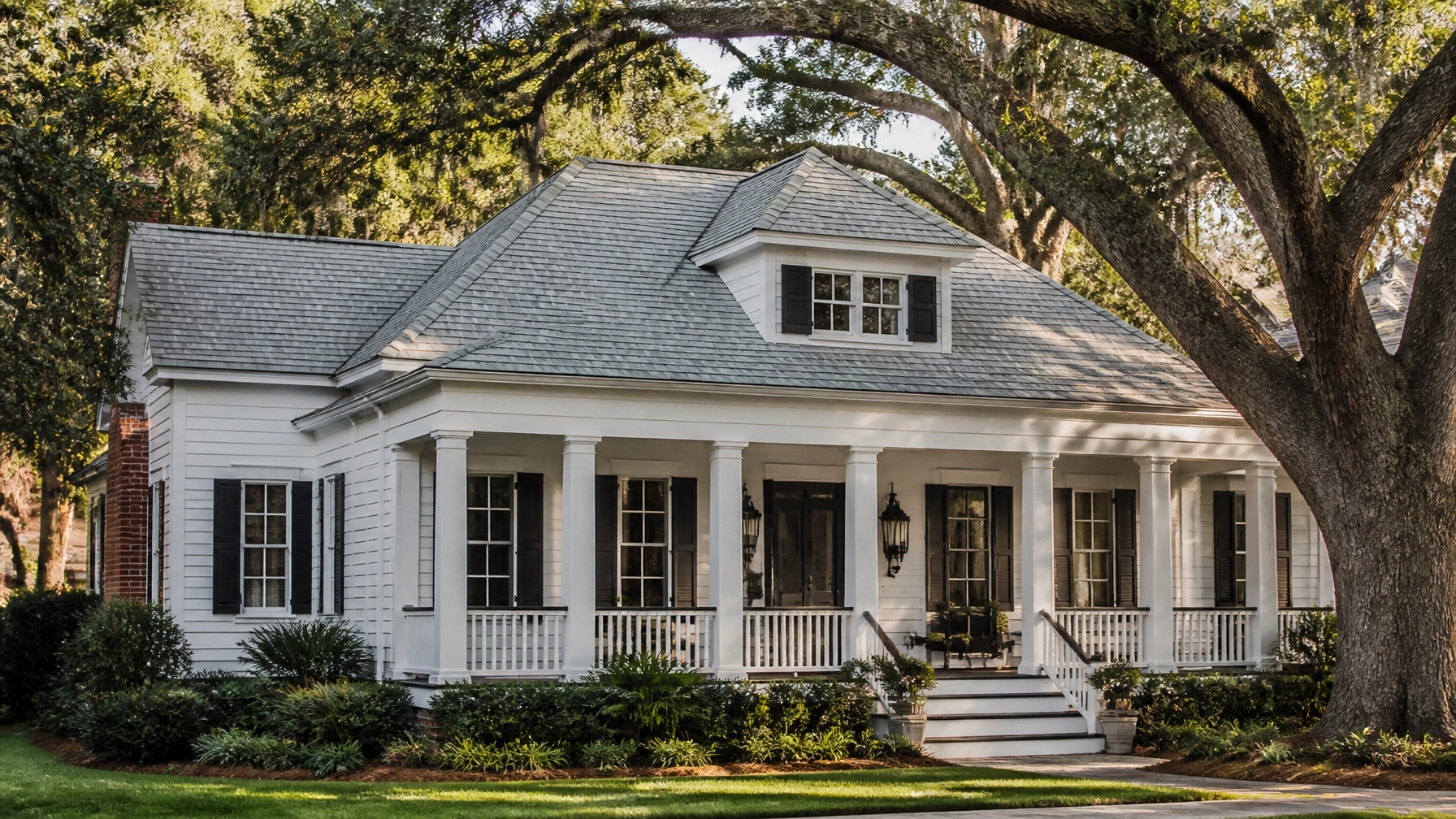
A full roof replacement in Charleston typically costs $8,400–$20,000 for architectural shingles and $15,000–$34,000 for standing-seam metal in 2026. On a per-square-foot basis, that equals approximately:
- Architectural shingles (Popular): $3.50–$9.00 per sq. ft.
- Standing-seam metal (Premium): $7.00–$18.00 per sq. ft.
Coastal Charleston pricing commonly runs 10%–20% higher than inland South Carolina because of salt air, higher wind requirements, storm exposure, labor demand, and additional fastening or corrosion-resistant components.
Charleston Roof Replacement Cost by Material
Your roof is priced by its actual surface area: not your home’s living area. Roofing contractors measure in squares, with one square equal to 100 square feet.
| Roofing material | Charleston 2026 cost | Typical lifespan |
|---|---|---|
| Architectural shingles (Popular) | $8,400–$20,000 | 22–30 years |
| Standing-seam metal (Premium) | $15,000–$34,000 | 40–70 years |
| 3-tab asphalt shingles (Budget) | About $7,000–$15,000 | 15–20 years |
| Synthetic slate or specialty materials | Often $20,000+ | 40–60+ years |
For a typical 1,800–2,500-square-foot roof, architectural shingles remain the most common choice. They offer a practical balance of appearance, wind resistance, and upfront cost. Standing-seam metal costs more, but concealed fasteners and coastal-rated alloys can provide better long-term protection against wind and salt exposure.

Why Charleston Roofs Cost More
Several local conditions affect the roof replacement cost in Charleston SC.
Coastal wind zones
Charleston properties may fall under design wind speeds ranging roughly from 130 to 150 mph, depending on the exact location and distance from the coast. Homes near barrier islands and exposed coastal areas may face stricter requirements.
The City of Charleston’s residential roof repair and replacement guideline identifies roofing as permitted work and calls for high-wind-rated materials. Asphalt shingles may need a Type H classification, while metal systems generally require manufacturer specifications showing compliance with local wind loads.
Hurricane straps and roof fastening
Hurricane straps or clips connect rafters or trusses to the wall framing. They help create a continuous load path during high winds.
A simple reroof may not include structural upgrades, but older Charleston homes may need additional evaluation. Ask whether the estimate includes:
- Roof-deck fastening upgrades
- Six-nail or enhanced shingle installation patterns
- Hurricane clips or straps where required
- Wind-rated underlayment and flashing
- Corrosion-resistant fasteners
The exact requirement depends on your jurisdiction, home age, roof design, and project scope. Confirm details with the Charleston Permit Center.
Salt air and humidity
Salt-laden air can accelerate corrosion on exposed metal components. A coastal roof should use appropriate flashing, coated or stainless fasteners, and a metal alloy rated for the local environment. Humidity can also contribute to algae growth, poor attic ventilation, and hidden decking deterioration.
Pitch, complexity, and tear-off
Steep slopes, dormers, valleys, skylights, chimneys, and multiple roof planes increase labor and safety costs. Removing old roofing typically adds about $1,000–$3,000 or more, depending on the number of layers and disposal requirements. Damaged decking is usually priced separately after the old roof is removed.

How to Save Money on a New Roof in 2026
- File an insurance claim after storm damage. Photograph missing shingles, leaks, dents, and damaged flashing. Do not begin permanent repairs before documenting the condition.
- Compare at least three written estimates. Make sure each quote lists the same material, tear-off scope, ventilation, flashing, warranty, and cleanup.
- Schedule strategically. Winter and early summer may offer more contractor availability than peak spring and fall periods.
- Ask about financing. Compare interest rates, promotional terms, and total repayment: not just the monthly payment.
- Get a roof measurement first. An accurate roof size helps you avoid paying based on rough guesses.
Choosing a Charleston Roofing Contractor
Choose a contractor who is:
- Properly licensed through South Carolina LLR
- Fully insured for general liability and workers’ compensation
- Experienced with coastal wind and salt-air conditions
- Willing to provide recent Charleston-area references
- Clear about permits, warranties, materials, and change orders
Avoid high-pressure offers, vague one-line quotes, and contractors who cannot provide proof of insurance.
Get Your Charleston Roof Estimate in 60 Seconds
Before scheduling multiple contractor visits, get a property-specific starting point. Get My Roof Estimate Now uses satellite imagery to measure your roof’s size, pitch, and complexity, then provides a free estimate in under 60 seconds.
There is no credit card and no obligation. You can compare architectural shingles, metal, and other materials while reviewing low-to-high pricing for your Charleston address.
Leave a Reply