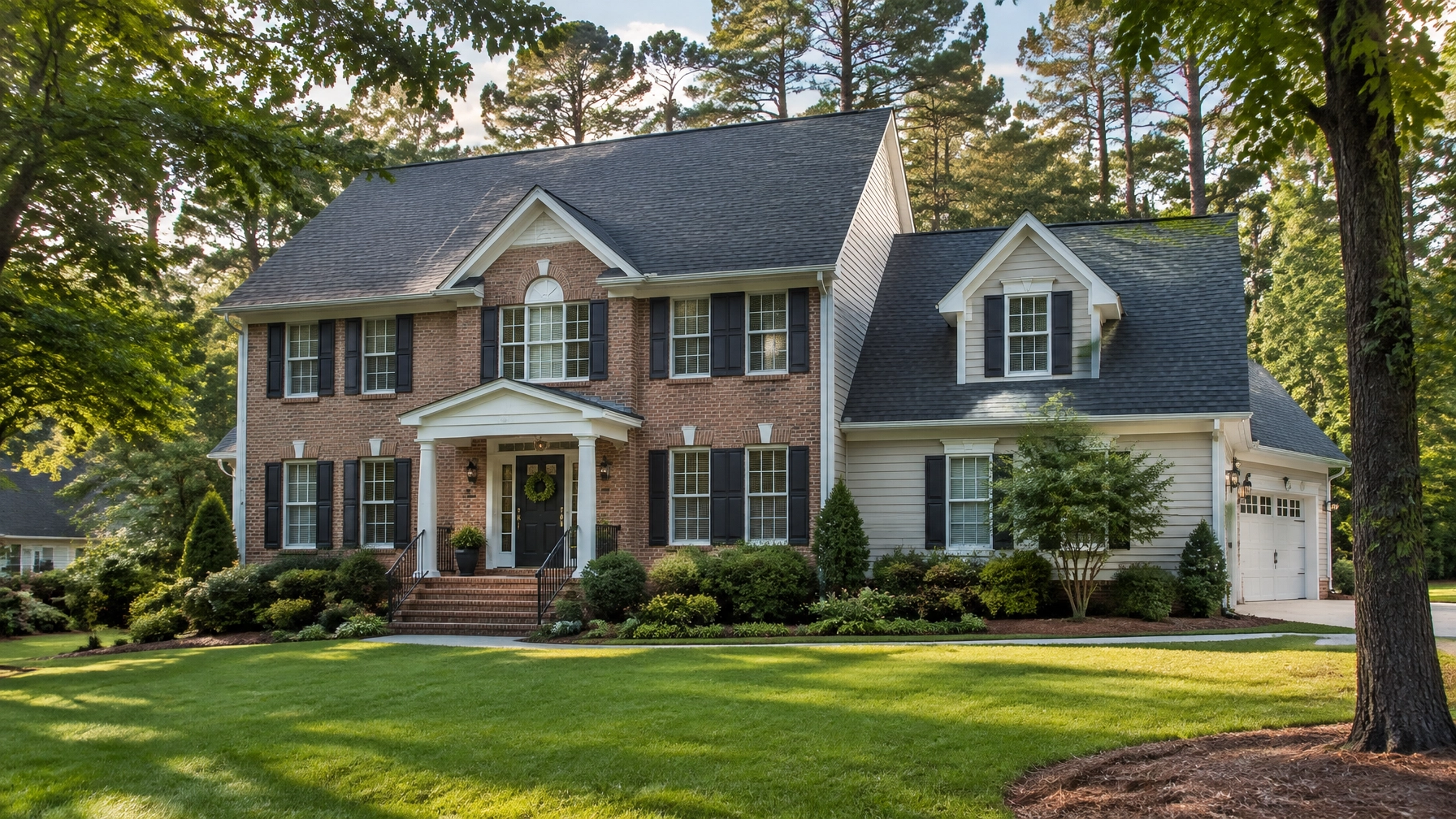
A 2,000-square-foot roof: about 20 roofing squares: costs approximately $8,500–$36,000 to replace in Charlotte in 2026, depending on the material, roof complexity, tear-off requirements, and structural repairs.
For most homeowners, a realistic budget is:
- 3-tab asphalt shingles (Budget): $8,500–$11,500
- Architectural shingles (Popular): $10,500–$15,500
- Class 4 impact-resistant shingles (Hail-ready): $12,500–$18,000
- Standing-seam metal (Premium): $24,000–$36,000+
Asphalt pricing is projected to rise 4%–8% in 2026 because of material, transportation, and labor costs. Metal roofing faces separate pressure from Section 232 steel and aluminum tariffs, which can increase panel and trim costs depending on the product’s origin and classification.
For a property-specific number, use Get My Roof Estimate Now’s Charlotte roofing estimate tool. It measures your roof from satellite imagery and returns a free estimate in about 60 seconds.
2026 Charlotte Roof Replacement Cost by Material
The table below assumes a typical 2,000-square-foot roof with tear-off, standard installation, underlayment, flashing, ventilation components, and normal job-site access.
| Roofing material | 2026 installed cost per square | Estimated total for 20 squares | Best fit |
|---|---|---|---|
| 3-tab asphalt (Budget) | $425–$575 | $8,500–$11,500 | Basic replacement with the lowest upfront cost |
| Architectural asphalt (Popular) | $525–$775 | $10,500–$15,500 | Most Charlotte homeowners |
| Class 4 impact-resistant shingles (Hail-ready) | $625–$900 | $12,500–$18,000 | Homes exposed to recurring hail |
| Standing-seam metal (Premium) | $1,200–$1,800 | $24,000–$36,000+ | Long service life and modern curb appeal |
These are planning ranges, not guaranteed bids. Roof pitch, valleys, dormers, skylights, chimney flashing, access, and damaged decking can move the final price substantially.
A general roof cost calculator can provide a broad starting point. Satellite measurement is more useful because it accounts for your actual roof size and shape instead of relying only on living-area square footage.
Why 2026 Prices Are Moving Higher
Asphalt shingles: a projected 4%–8% increase
Asphalt remains the most common roofing material in Charlotte, but homeowners should expect a 4%–8% cost increase in 2026 compared with recent pricing.
The increase can affect:
- Shingle manufacturing and delivery
- Underlayment and flashing components
- Labor and insurance costs
- Storm-season demand
- Tear-off and disposal charges
Architectural shingles remain the practical middle ground. They provide better appearance and weather resistance than 3-tab shingles without the cost of metal.
Metal roofing: Section 232 tariff pressure
Standing-seam metal has a higher price range because it uses more expensive panels, specialized labor, trim, clips, and flashing. In 2026, Section 232 tariffs on covered steel and aluminum products add another pricing variable.
The effect depends on:
- Whether the panels use domestic or imported coil
- Steel or aluminum composition
- Panel thickness and gauge
- Finish and coating
- Manufacturer and supplier
- Current inventory
For a 2,000-square-foot roof, the tariff impact may not appear as a simple 50% increase to the final invoice. Labor and installation remain a major part of the project. However, imported or tariff-sensitive panels can increase the material portion and push a standing-seam quote toward the upper end of the range.
Ask for the panel manufacturer, gauge, coating, and sourcing information in writing before comparing metal bids.

Charlotte’s Piedmont Climate Creates Specific Roofing Risks
Charlotte’s humid subtropical Piedmont climate is hard on roofing systems. Summers bring intense heat, high humidity, and ultraviolet exposure. Spring through early fall brings frequent thunderstorms, damaging wind, and hail.
Common local roof concerns include:
- Piedmont heat and humidity: Accelerates shingle aging and stresses flashing.
- Hail season: Hail can bruise asphalt shingles and dent metal panels.
- Thunderstorm winds: Can lift shingles, damage ridge caps, and loosen flashing.
- Pine and fungal growth: Nearby trees, shade, moisture, and falling needles encourage algae, moss, and fungal growth.
- Heavy rain: Exposes weak valleys, pipe boots, chimney flashing, and inadequate ventilation.
Charlotte-area storm activity in 2026 included reported or mapped events on June 26, July 28, August 6, August 13, and August 28. The June 26 event included hail reported or estimated near 1.75 inches in parts of the area. Localized storm intensity varies by neighborhood, so a roof in Steele Creek may experience different conditions from one near University City or Matthews.
After a major storm, inspect from the ground for:
- Missing or lifted shingles
- Circular granule-loss marks
- Cracked ridge caps
- Dented vents, gutters, and flashing
- Exposed underlayment
- Ceiling stains or attic moisture
Do not climb onto the roof yourself. A professional inspection can document damage safely.
Mecklenburg County Permit Rules in 2026
Mecklenburg County’s roof permit rules depend on the project scope, value, and whether the replacement is like-for-like.
Generally, no permit is needed for a like-for-like replacement of roof covering under $40,000 when:
- The home is a single-family residence
- The new covering has the same general fire classification
- There are no structural changes
- The work does not add a new roof area
- The project does not involve major decking, rafter, or truss replacement
A permit is required when:
- The project exceeds $40,000
- Decking or sheathing replacement is substantial
- Rafters, trusses, or other structural framing are replaced
- The roof design or slope changes
- A new roof area is added
- The assembly or fire classification changes
When a permit is required, applications are handled through the Accela Citizen Access portal. If your contractor discovers extensive rot or structural damage after tear-off, confirm whether the scope now requires a permit.
Because permit interpretations can change, verify the exact scope with Mecklenburg County Code Enforcement before work begins.
North Carolina Licensing and Insurance-Claim Rules
For projects of $30,000 or more, confirm that the contractor holds the appropriate North Carolina Licensing Board for General Contractors license and roofing classification. You can verify credentials through the NCLBGC license search.
Also ask for current:
- General liability insurance
- Workers’ compensation coverage
- Written workmanship warranty
- Manufacturer installation warranty
- References for recent Charlotte projects
If an insurance-funded residential roof contract is denied in whole or in part, North Carolina homeowners have a five-business-day right to cancel after receiving the denial. During that period, the contractor generally cannot begin work or collect payment, except for documented emergency services needed to prevent further damage.
North Carolina also prohibits contractors from waiving, rebating, or “covering” your insurance deductible. Treat promises such as “you pay nothing” or “we will absorb your deductible” as serious warning signs.
Insurance Tips: RCV, ACV, Deductibles, and Class 4 Discounts
Before filing a hail claim, review your declarations page and roof endorsements.
RCV versus ACV
- Replacement Cost Value (RCV): Usually pays the current cost to replace with similar materials, subject to your deductible and policy limits.
- Actual Cash Value (ACV): Deducts depreciation based on the roof’s age and condition.
Some North Carolina policies settle roof surfacing losses on an ACV basis, even when other portions of the dwelling use replacement-cost coverage.
Check your wind and hail deductible
Your policy may include a separate percentage-based wind or hail deductible. A 1% deductible on $400,000 of dwelling coverage equals $4,000. A 2% deductible equals $8,000.
Ask about Class 4 discounts
Class 4 impact-resistant shingles are tested for improved resistance to hail impacts. Some insurers offer premium discounts for qualifying materials or broader mitigation measures, including FORTIFIED construction.
A discount does not automatically change ACV coverage to RCV. Confirm both items separately with your insurance agent.

Which Roof Is Best for Charlotte Home Value?
Charlotte’s 2026 median home value or sale-price benchmarks generally fall around $415,000–$440,000, depending on whether you are comparing the broader region, city-only sales, or a specific neighborhood.
Roof replacement commonly returns about 60%–68% of its cost at resale. The return is strongest when the existing roof is visibly worn, near the end of its service life, or likely to trigger buyer negotiations.
For most homes, the best value choice is:
- Architectural shingles for broad buyer appeal and manageable cost
- Class 4 shingles when hail exposure and insurance savings matter
- Standing-seam metal for premium homes, long-term ownership, and modern designs
A premium roof does not always produce a premium resale return. Match the material to the home’s architecture, neighborhood, remaining ownership period, and insurance requirements.
Practical Charlotte Roof Budgeting Tips
- Measure the roof before comparing bids. Roof area is not the same as interior living area.
- Build a 10%–15% contingency for damaged decking, flashing, or ventilation corrections.
- Get tear-off and disposal costs listed separately.
- Request shingle brand, product line, wind rating, and impact rating.
- Ask whether the quote includes permits, inspections, ridge vents, pipe boots, and flashing.
- Compare at least three written estimates.
- Avoid choosing solely on the lowest price.
- Confirm whether the contractor is licensed and insured for the project.
- Review ACV, RCV, roof-age limits, and wind/hail deductibles before filing a claim.
- Never accept a deductible-waiver offer.
- Trim overhanging pine branches and improve attic ventilation before replacement.
- Schedule early when possible; Charlotte roofers become busy after major hail events.

Get a Free Charlotte Roof Estimate in 60 Seconds
You do not need to wait for several contractor appointments to get a reliable planning number.
Get My Roof Estimate Now uses satellite imagery to measure your roof and estimate replacement cost based on size, pitch, complexity, material, and regional pricing. Results are typically 90%–95% accurate, with measurements accurate to within inches.
The estimate is free, requires no credit card, and takes about 60 seconds. Once you understand your likely budget, you can compare material options and connect with verified, licensed, and insured local roofing contractors.
Pricing and regulatory information is provided for general planning and may change. Confirm permit, licensing, insurance, and contract requirements for your specific Charlotte property before beginning work.
Leave a Reply