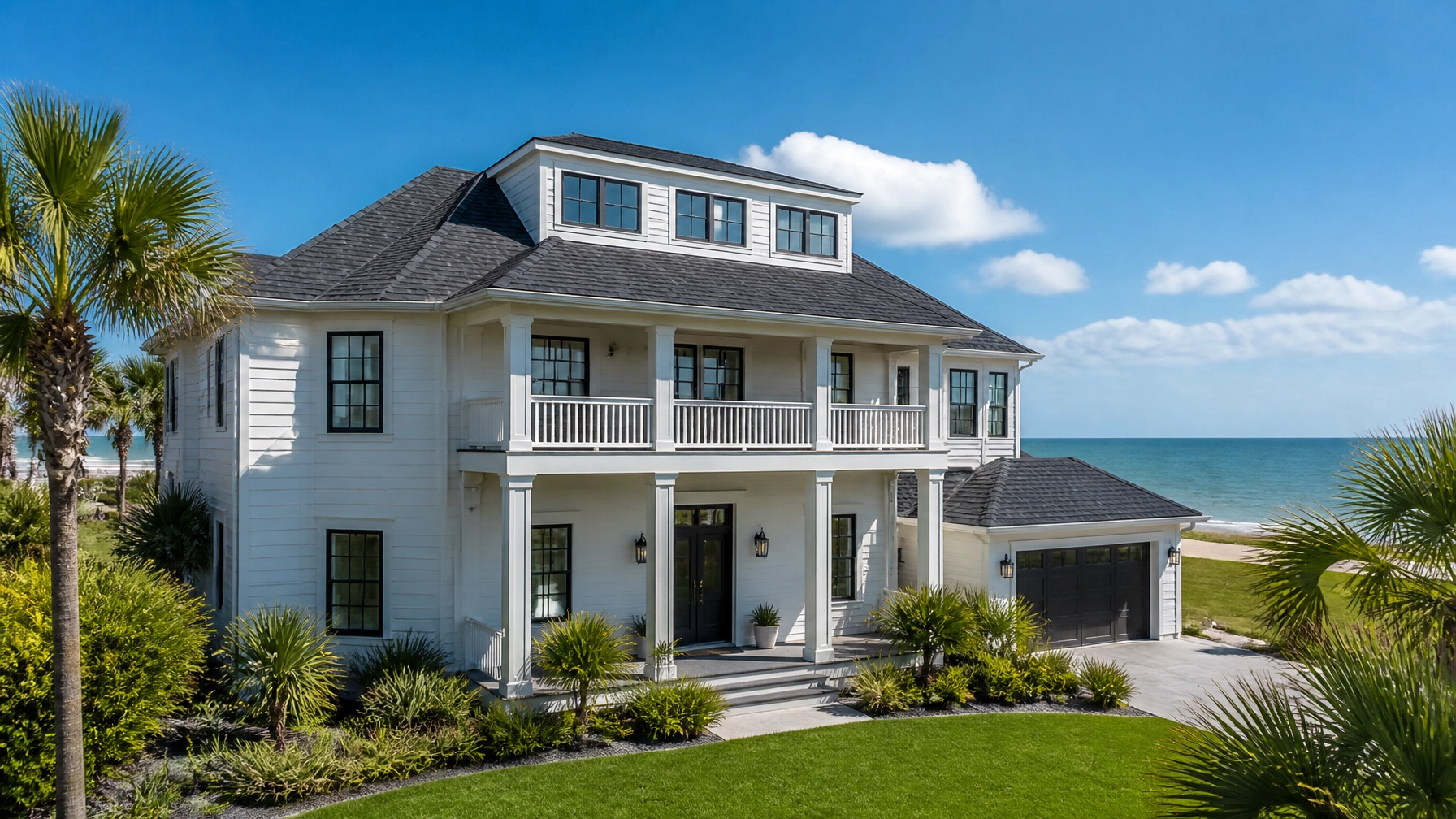
Replacing a roof in Corpus Christi, Texas, is more than just a home improvement project: it is a critical investment in your property's survival. Between the relentless salt air and the threat of hurricane-force winds, a roof here must meet standards that far exceed inland requirements.
In 2026, homeowners are facing new building codes, updated contractor licensing laws (HB 3344), and a market where coastal-grade materials are the baseline. If you are planning a roof replacement this year, understanding the specific costs and regulatory hurdles in Nueces County is essential.
2026 Corpus Christi Roofing Cost Overview
For a standard 2,000-square-foot home in the Corpus Christi area, most homeowners can expect to pay between $8,500 and $22,000 for a full replacement. While prices fluctuate based on material choice, the average cost per square foot typically ranges from $4.50 to $10.50 for standard residential materials.
If you are looking at specialized metal or premium tile systems, costs can climb as high as $18.00 per square foot or more.
Estimated Cost by Material (Per Square Foot)
- 3-Tab Asphalt Shingles (Budget): $3.50 – $5.50
- Architectural Shingles (Popular): $4.50 – $8.00
- Metal Roofing (Durable/Coastal): $5.75 – $16.00
- Premium Tile or Slate (Luxury): $10.00 – $22.00+
To get a precise measurement of your specific roof without a contractor visit, you can use our instant satellite-powered estimate tool to receive an accurate price range in under 60 seconds.
The Coastal Premium: Why Corpus Christi Costs More
Living on the coast adds a 10% to 20% premium to roofing projects compared to inland Texas cities like San Antonio or Austin. This isn't just "coastal pricing"; it is the result of mandatory engineering requirements.
1. Windstorm-Rated Components
Because Corpus Christi is within the Texas Department of Insurance (TDI) windstorm territory, every component: from the shingles to the nails: must be wind-rated. You cannot use standard roofing staples; you must use specific corrosion-resistant fasteners and high-performance underlayment.
2. Salt Air Corrosion Resistance
Standard metal flashing and vents that work in North Texas will corrode within years in the salt-heavy air of the Gulf. Contractors must use stainless steel or specialized coastal-coated alloys for all metal components, increasing the material overhead.
3. Professional Engineering & Inspections
To maintain eligibility for the Texas Windstorm Insurance Association (TWIA), your roof must receive a WPI-1 (Windstorm Certification). This requires an inspection by a TDI-approved professional during the installation process, adding to the total project cost.

Understanding Material Choices for 2026
Choosing a material in Corpus Christi is a balance between your budget and the expected lifespan under the Texas sun.
Architectural Shingles (Popular)
These are the standard for most Corpus Christi homes. They offer a layered look and are rated for higher wind speeds (up to 130 mph) than basic 3-tab shingles.
- Pros: Cost-effective, wide variety of colors, easily repaired.
- Cons: Granule loss is common due to salt and UV exposure.
Metal Roofing (Durable)
Metal is becoming increasingly popular in the Coastal Bend due to its longevity and high wind resistance.
- Pros: Can last 50+ years, highly resistant to wind uplift, energy-efficient.
- Cons: Significant upfront cost, "oil canning" (visible waves) can occur if not installed perfectly.
Impact-Resistant (Class 4) Shingles
If you are worried about the occasional Texas hail storm, Class 4 shingles are a smart investment. Many insurance providers offer premium discounts for homes with these roofs.
2026 Building Code Updates: The April 1 Deadline
A major shift occurred on April 1, 2026. The City of Corpus Christi and the Texas Department of Insurance transitioned to updated wind design criteria based on the 2024 International Residential Code (IRC) and 2024 International Building Code (IBC).
If your roofing permit was submitted after April 1, 2026, your roof must be designed to withstand:
- 150 mph basic wind speeds for typical residential homes (Risk Category II).
- Increased fastening requirements for roof decking and edge metal.
- Strict drip-edge nail spacing (no greater than 10 inches on center).
Failing to meet these 2026 codes doesn't just put your home at risk: it makes your home uninsurable through TWIA.

New Contractor Licensing Laws (HB 3344)
For years, Texas was one of the few states without a mandatory statewide roofing license. As of 2026, HB 3344 has changed that. Roofing contractors operating in Texas must now be licensed through the Texas Department of Licensing and Regulation (TDLR).
When hiring a contractor in Corpus Christi:
- Verify the State License: Check the TDLR database for a current reroofing contractor license.
- Check TDI/TWIA Familiarity: Ensure they understand how to pull a WPI-1 certification.
- Local Expertise: Ask for references within Nueces County to ensure they are familiar with the specific "Dynamic Portal" permitting used by the city.
Common Roof Issues in the Coastal Bend
If you aren't sure if you need a full replacement, look for these local pain points:
- Granule Loss: Salt air accelerates the "drying out" of shingles, causing them to shed their protective granules.
- Thermal Cycling: The intense heat during the day and cooling at night causes shingles to expand and contract, leading to curling and cracking.
- Algae Growth: The high humidity in Corpus Christi often leads to dark streaks (Gloeocapsa magma). While often cosmetic, it can hold moisture against the shingle.
- Flashing Failures: Check around chimneys and dormers; salt-corroded flashing is the #1 cause of leaks in coastal homes.

Maximizing Your Investment: Pro Tips for Homeowners
To ensure your new roof lasts its full lifespan in the Corpus Christi climate, follow these professional benchmarks:
- Go Coastal-Grade: Always insist on corrosion-resistant fasteners (stainless steel or hot-dipped galvanized).
- Schedule Annual Inspections: Coastal winds can loosen seals long before a leak appears. A quick annual check can save thousands.
- Verify Insurance Coverage: Most Texas policies cover sudden storm damage, but they will not cover a 20-year-old roof that has simply reached its end of life.
- Start with a Satellite Estimate: Before you spend hours meeting with various contractors, get a baseline price. Our technology uses high-resolution satellite imagery to measure your roof's pitch and square footage with 90-95% accuracy.
Get Your Instant Corpus Christi Roof Estimate
The era of waiting days for a contractor to show up with a ladder is over. At Get My Roof Estimate Now, we provide homeowners with the data they need to budget and plan with confidence.
Enter your address today to see your 2026 roof replacement cost based on current local labor rates and material prices in Corpus Christi.
Get My Free 60-Second Estimate Now
Leave a Reply