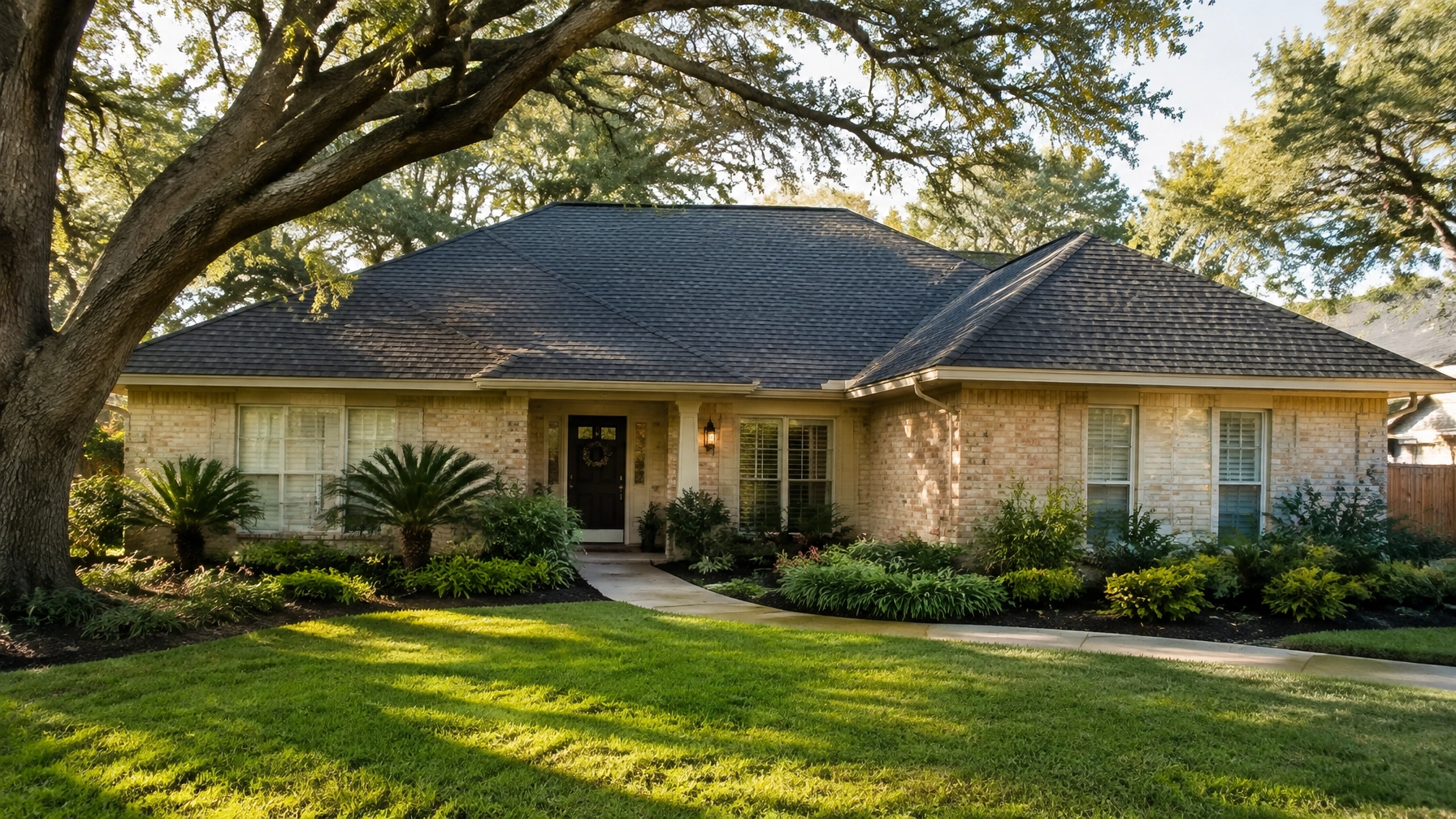
A 2026 roof replacement in Houston, TX typically costs $7,500–$35,000+ for a 2,000-square-foot roof, depending on material, pitch, complexity, tear-off requirements, and wind- or impact-resistant upgrades.
For planning purposes, these ranges reflect an expected 4–8% 2026 cost increase tied to roofing material and labor pressure:
- 3-tab asphalt shingles: approximately $7,500–$12,500
- Architectural shingles: approximately $10,500–$18,500
- Class 4 impact-resistant shingles: typically 10–20% more than architectural shingles
- Standing-seam metal: approximately $15,000–$35,000+
These are planning ranges, not binding quotes. A “2,000-square-foot home” does not always have a 2,000-square-foot roof. Roof pitch, overhangs, valleys, and attached structures can increase the actual surface area.
Houston Roof Replacement Cost Per Square
Roofing contractors measure materials in squares. One roofing square equals 100 square feet. A 2,000-square-foot roof contains approximately 20 squares.
| Roofing material | Category | Estimated cost per square | 2,000 sq. ft. projected total |
|---|---|---|---|
| 3-tab asphalt | Budget | $375–$625 | $7,500–$12,500 |
| Architectural shingles | Popular | $525–$925 | $10,500–$18,500 |
| Class 4 impact-resistant shingles | Hurricane-ready | $578–$1,110 | $11,550–$22,200 |
| Standing-seam metal | Premium | $750–$1,750+ | $15,000–$35,000+ |
The final price may also include tear-off, disposal, decking repairs, ventilation, flashing, permits, underlayment, and upgraded fastening.
For a property-specific estimate, use the Houston roof estimate tool. Satellite imagery measures the actual roof footprint and produces a price range in about 60 seconds, with no appointment and no credit card required.
Why Houston Roof Prices Are Rising in 2026
Houston homeowners are facing several overlapping cost pressures.
Asphalt manufacturer increases
Asphalt shingles remain the most common roofing material in Houston, but manufacturer price increases affect shingles, underlayment, sealants, and accessories. Roofing labor and disposal costs have also increased in many markets.
Steel and aluminum tariff pressure
Metal roofing is especially sensitive to steel and aluminum pricing. Tariff pressure, transportation costs, and fabrication expenses can push standing-seam metal prices higher than older estimates suggest.
Seasonal labor demand
Houston roofing demand typically rises after hailstorms and during hurricane season. Contractors may have longer backlogs and higher labor rates when many homeowners are requesting inspections and repairs at the same time.
Roof complexity
A simple ranch roof is less expensive than a roof with multiple slopes, hips, valleys, dormers, skylights, and penetrations. Steep roofs also require additional safety equipment and installation time.
Use the roof cost calculator for a general material comparison, then confirm the actual roof size before relying on a contractor quote.
Houston Roofing Materials: Which Option Fits?

3-tab asphalt shingles (Budget)
Three-tab shingles offer the lowest initial cost. They can work for homeowners preparing to sell or managing a tight replacement budget, but they generally provide less visual depth and a shorter expected service life than architectural products.
They may not be the best long-term choice for homes exposed to repeated hail and wind events.
Architectural shingles (Popular)
Architectural shingles are the most common balance of cost, appearance, and durability in Houston. They offer more dimensional curb appeal than 3-tab shingles and are available in heat-reflective colors and wind-rated products.
For many mid-priced Houston homes, architectural shingles are the practical default.
Class 4 impact-resistant shingles (Hurricane-ready)
Class 4 shingles are designed to better resist impact from hail and airborne debris than standard products. They cost more upfront: typically 10–20% above architectural shingles: but may reduce damage risk and could qualify for insurance discounts depending on the carrier and policy.
Ask your insurer whether a Class 4 product changes your premium or deductible treatment. It does not eliminate the need for proper installation and wind-uplift fastening.
Standing-seam metal (Premium)
Standing-seam metal roofing offers a long service life, low maintenance, strong wind performance, and good solar reflectivity. It is often a strong fit for modern homes or homeowners planning to stay long term.
The tradeoff is price. Expansion detailing, flashing, substrate preparation, and skilled installation all affect the final cost. Review the roofing materials guide and compare metal roofing with shingles before deciding.

Houston Weather: Budget for Hail, Heat, and Wind
Houston roofs face a distinct Gulf Coast combination of weather conditions.
- Spring hail: March through May can bring severe thunderstorms and hail that damage shingles, vents, flashing, and gutters.
- Hurricane season: June through November brings tropical storms, hurricanes, heavy rainfall, and high winds.
- Heat and UV exposure: Long, hot summers accelerate shingle aging, sealant deterioration, and attic heat buildup.
- Wind-driven rain: Heavy rain can enter through failed flashing, lifted shingles, roof-wall intersections, and poorly sealed penetrations.
- Humidity: Persistent moisture increases the importance of attic ventilation and proper flashing details.
Harris County and surrounding jurisdictions may apply hurricane-prone building standards, wind-uplift requirements, and floodplain rules. Your contractor should document the correct nail pattern, edge and corner fastening, underlayment, flashing, and decking condition.
Houston Roof Permit Rules
Inside the City of Houston, a residential re-roof or roofing overlay exceeding 100 square feet generally requires a permit. A full roof replacement will normally exceed that threshold.
The Houston Permitting Center residential roofing page identifies the required materials, including:
- Building Permit Application
- Declaration in Support of Application for City of Houston Building Permit
- Residential Re-Roof Only Worksheet CE-1109
- CE-1104 for certain roofing overlays
Houston lists plan review and inspection as required. The permit is generally valid for six months, and the permit and worksheet should remain available on site for inspection.
Unincorporated Harris County
Unincorporated Harris County follows different rules from the City of Houston. A routine residential re-roof outside a regulated floodplain may often not require a separate county building permit in the same way a City of Houston project does. However, Harris County states that permits are required for development, and floodplain work can trigger additional review.
Before work begins:
- Confirm that the property is outside city limits.
- Check the property’s floodplain status.
- Contact the Harris County Engineering Department or use its e-permits resources.
- Ask whether structural changes, floodplain conditions, or substantial improvements change the requirements.
Do not assume that a neighboring property follows the same permitting rules.
Texas Contractor and Insurance Considerations
Texas does not currently require a mandatory statewide roofing license for ordinary roofing contractors. The former TRCC/TRC terminology can cause confusion. The Texas Department of Insurance regulates insurance and windstorm matters, not a general statewide roofer license.
Homeowners should still verify:
- General liability insurance
- Workers’ compensation coverage or a documented alternative
- Local contractor registration, where required
- Written scope of work and payment terms
- References and recent Houston projects
- RCAT credentials, if applicable
The Roofing Contractors Association of Texas consumer directory explains voluntary RCAT licensing and provides contractor-evaluation resources.
For homes subject to Texas windstorm requirements, review the Texas Department of Insurance windstorm inspection resources, including WPI-8 documentation where applicable.
Storm Damage and Wind/Hail Deductibles

If hail or wind damages your Houston roof:
- Photograph damage from the ground.
- Use temporary protection to prevent additional water intrusion.
- Notify your insurer promptly.
- Ask for your policy’s wind/hail deductible in dollars.
- Obtain a written roofing estimate before authorizing work.
- Keep damaged materials and inspection records when possible.
Texas wind and hail deductibles commonly range from 1–5% of the dwelling coverage limit. For example, a 2% deductible on a $300,000 dwelling limit equals $6,000.
A contractor cannot legally promise to waive, absorb, or rebate your deductible. Treat “free roof” or “we will cover your deductible” offers as warning signs.
New Roof ROI and Houston Resale Value
Houston’s median home price is broadly in the $300,000-plus range, although values vary substantially by neighborhood and property type. A new roof can support resale value by removing one of a buyer’s largest inspection concerns.
Typical national remodeling benchmarks suggest that a standard asphalt roof replacement may recover roughly 55–70% of its cost at resale. Actual results depend on neighborhood comparables, roof quality, market conditions, and whether the old roof was already failing.
The strongest new roof ROI home value scenarios usually occur when:
- The existing roof is near the end of its service life.
- Leaks or visible storm damage are present.
- Buyers or lenders are likely to request repairs.
- Competing homes have newer roofs.
- The replacement improves visible curb appeal without overbuilding for the neighborhood.
A new roof can improve roof replacement resale value, reduce buyer repair credits, and help a listing compete in a crowded market. In practical terms, the roof curb appeal home value benefit may be larger than the direct appraised value increase.
For most Houston homeowners, the best roof for home value is a quality architectural shingle system installed to local wind requirements. Metal may offer better long-term value for the right home, but its higher upfront cost is not always fully recovered at resale.
Houston Roof Budgeting Tips
- Get an instant satellite-based estimate before scheduling contractor visits.
- Budget separately for decking repairs and ventilation upgrades.
- Request low, mid, and high material options.
- Ask whether tear-off and disposal are included.
- Schedule inspections before peak hurricane-season demand.
- Compare at least two detailed written proposals.
- Confirm permits and inspections in writing.
- Check your insurance deductible before filing a claim.
- Avoid deductible-waiver promises.
- Compare expected service life, not only installation price.
Start with a free Houston roof estimate and use the result to set a realistic project budget before meeting with local contractors.
Houston Roof Replacement FAQ
How much does a new roof cost in Houston in 2026?
For a 2,000-square-foot roof, plan on approximately $7,500–$12,500 for 3-tab shingles, $10,500–$18,500 for architectural shingles, and $15,000–$35,000+ for standing-seam metal.
Is a Class 4 roof worth it in Houston?
It can be worth considering in hail-prone areas. Class 4 shingles typically cost 10–20% more than architectural shingles and may provide better impact resistance. Confirm possible insurance savings with your carrier.
Do I need a permit to replace my Houston roof?
Inside the City of Houston, re-roofing over 100 square feet generally requires a permit. In unincorporated Harris County, requirements depend on jurisdiction, floodplain status, and project scope. Verify before starting.
What is the best roof material for Houston weather?
Architectural shingles, Class 4 impact-resistant shingles, and properly installed standing-seam metal are common choices. The best option depends on budget, expected ownership period, appearance, and wind and hail exposure.
Can I get a Houston roof estimate without a contractor visit?
Yes. Get My Roof Estimate Now uses satellite imagery to measure your roof and provide pricing in approximately 60 seconds. The estimate is free, requires no credit card, and helps you plan before requesting in-person bids.
Leave a Reply