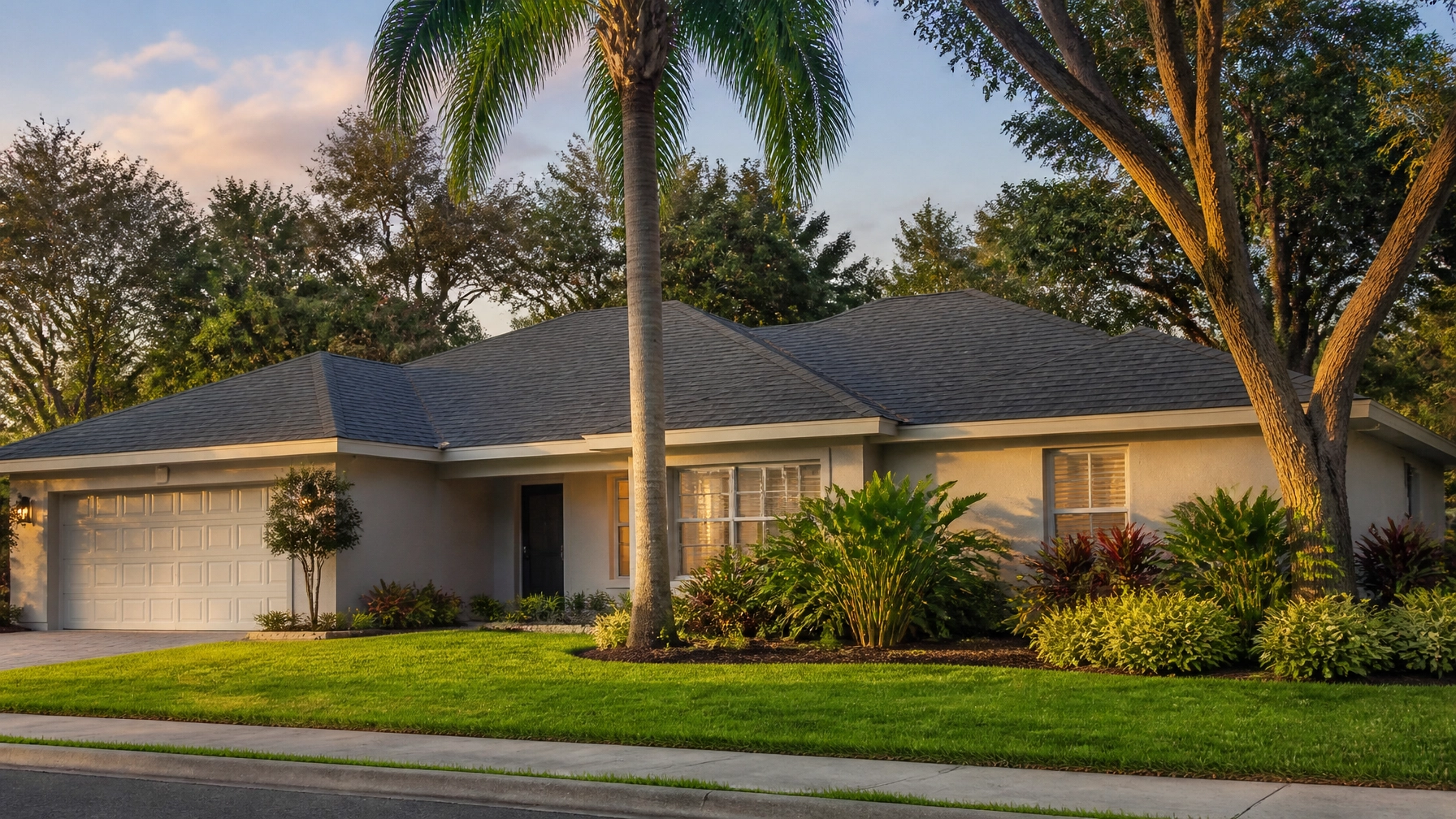
A roof replacement in Tampa typically costs $9,000–$25,000 in 2026, with many homeowners paying about $14,000–$16,000 for a standard 2,000-square-foot roof with architectural shingles. Metal, impact-resistant materials, complex rooflines, code upgrades, and storm-related repairs can push the total higher.
This guide covers current Tampa and Hillsborough County pricing, permit requirements, Florida Building Code considerations, recent hail activity, and ways to plan a more storm-ready roof.
2026 Tampa Roof Replacement Cost at a Glance
The figures below assume approximately 2,000 square feet of actual roof surface, not the home’s interior floor area.
| Roofing material | Typical 2026 Tampa range | Cost context |
|---|---|---|
| Architectural shingles (Popular) | $9,000–$20,500 | About $4.50–$8.75 per sq. ft.; most common projects are approximately $14,000–$16,000 |
| Standing-seam metal (Premium) | $14,000–$38,000+ | About $7–$25 per sq. ft., depending on steel or aluminum, gauge, finish, roof complexity, and installation |
| Class 4 impact-resistant shingles (Hail-ready) | $12,000–$19,000 | Higher upfront price, with possible insurance advantages depending on your policy |
| Tile roofing (Premium) | Varies widely | Structural reinforcement and tear-off requirements can significantly affect the final quote |
These are planning ranges, not fixed bids. A satellite estimate can help establish a property-specific starting point before you schedule contractor visits.
Get a free Tampa roof estimate in 60 seconds or use the company’s roof cost calculator.
Why Tampa Roofing Costs Increased in 2026
Material pricing has changed noticeably this year:
- Asphalt shingle manufacturers implemented increases of approximately 4%–8% early in 2026.
- Additional asphalt increases of approximately 6%–9% took effect June 1, 2026.
- Steel and aluminum tariffs have contributed to metal roofing prices rising approximately 15%–25% since 2024.
Labor availability also affects Tampa pricing. Roofing demand typically increases before and during hurricane season, which runs from June 1 through November 30.
For a 2,000-square-foot roof, the most important cost variables are:
- Roof size and number of roofing squares
- Roof pitch and accessibility
- Valleys, dormers, skylights, and penetrations
- Number of existing roofing layers
- Decking or sheathing repairs
- Wind-rated underlayment and fastening
- Permit, inspection, and disposal costs
- Material availability and contractor workload
Tampa’s Climate Requires More Than Basic Shingles
Tampa’s humid subtropical climate creates several recurring roofing challenges:
- Intense ultraviolet exposure can accelerate shingle aging.
- High humidity can encourage algae and moss on shaded slopes.
- Heavy rain tests flashing, valleys, pipe boots, and drainage.
- Tropical systems and severe thunderstorms create high-wind and wind-driven-rain risks.
- Hail can damage shingle surfaces even when damage is difficult to see from the ground.
A roof that looks acceptable from the street may still have bruised shingles, lifted edges, deteriorated flashing, or wet decking. Do not climb onto the roof after a storm. Use a licensed professional for inspection.

2026 Tampa Hail Events: What Homeowners Should Know
Tampa Bay homeowners had two notable storm dates in 2026:
- July 10–12: Severe storms produced approximately 0.5–1.25-inch hail and 50–55 mph wind gusts, with an estimated 25,000 Tampa Bay homes inside the hail path.
- August 26: A larger Central Florida hail event produced hail up to 2.3 inches, affecting more than 23,000 properties according to radar-based hail mapping.
You can review the July 2026 storm damage roundup and August 26 Tampa Bay Times coverage for additional weather details.
After a hailstorm:
- Photograph visible damage from the ground.
- Check gutters and downspouts for shingle granules.
- Look for ceiling stains or attic moisture.
- Contact your insurer and ask about your wind or hail deductible.
- Schedule an inspection with a licensed roofing contractor.
- Avoid signing an insurance assignment or emergency contract before understanding the terms.
Insurance may cover storm damage, but homeowners are usually responsible for their policy deductible. Code upgrades may also depend on whether your policy includes ordinance-or-law coverage.
Tampa and Hillsborough County Roof Permit Rules
A building permit is generally required for roof replacement work over 500 square feet inside the City of Tampa. The City provides an online roof covering replacement permit page, including application, fee, and inspection information.
You can also use Tampa’s online construction permit payment and search portal.
For properties in unincorporated Hillsborough County, roofing work generally requires a permit regardless of the project’s size. Applications and payments are handled through the county’s online system, and homeowners can review the official Hillsborough County building permit fee information.
Typical 2026 planning costs are approximately:
- City of Tampa roofing trade permit: about $150–$350, with a straightforward permit often near $177 plus applicable surcharge.
- Unincorporated Hillsborough County: approximately $250–$450, commonly including a roofing permit, application fee, and applicable surcharges.
Permit fees may be valuation-based and can change. Confirm the current amount with the applicable building department.
Florida Building Code Requirements for a Tampa Reroof
A compliant Tampa roof replacement should address more than the visible roof covering. Ask your contractor how the proposal handles:
Florida Product Approval
Shingles, metal panels, underlayments, flashing systems, and other components should be approved for Florida’s required wind conditions. The contractor should install the complete assembly according to the applicable Florida Product Approval and manufacturer instructions.
Six-nail fastening
Many wind-rated shingle systems require a six-nail fastening pattern, especially where the product approval or roof design calls for it. The exact fastening pattern depends on the selected product, roof slope, wind pressures, and approved assembly.
Your written estimate should identify the shingle system and nail pattern rather than simply stating “install shingles to code.”
Secondary water barrier
A secondary water barrier helps protect the structure if the primary roof covering is damaged. Depending on the project and local interpretation, this may include:
- Self-adhered membrane over the roof deck
- Sealed or taped sheathing joints
- Approved underlayment assemblies
The 25% rule
Florida’s 25% rule can affect partial roof repairs. If more than 25% of a roof area or roof section is repaired, replaced, or recovered within a 12-month period, current-code requirements may apply to the affected roof section.
The rule can be more complicated for roofs permitted under newer Florida Building Code editions. Have the contractor and local authority determine whether the repair qualifies for an exception.
Licensed contractor requirements
Use a Florida Department of Business and Professional Regulation-licensed roofing contractor. Depending on the work and license classification, this may involve a certified roofing contractor license such as CCC or an applicable building contractor classification such as CBC.
Verify the license, general liability insurance, workers’ compensation coverage, references, permit responsibility, and warranty terms before signing.

Tampa Home Values Make Roof Planning Important
A new roof protects both the structure and the property’s marketability. Tampa-area home values vary significantly by neighborhood:
- Tampa metro median: approximately $415,000–$460,000
- South Tampa: approximately $725,000–$750,000
- Westchase: approximately $588,000
- Carrollwood: approximately $420,000
- Seminole Heights: approximately $385,000–$558,000
Roof replacement often returns approximately 60%–75% of its cost for asphalt shingles. A well-installed metal roof may return up to 80%, although actual ROI depends on material quality, installation, maintenance, market conditions, and how long you remain in the home.
If you are preparing to sell, keep the permit record, final inspection approval, paid invoices, product details, and warranty documents.
How to Get a Reliable Tampa Roof Budget
Start with an accurate roof measurement. Roofing contractors price by squares, with one square equal to 100 square feet. The home’s floor plan does not always match the roof surface because of overhangs, pitch, attached structures, and complex sections.
A satellite-powered estimate can give you:
- Roof measurements based on your address
- Estimated low, middle, and high pricing
- Material comparisons
- Regional Tampa cost adjustments
- A starting point before an in-person inspection
Get your instant, free satellite roof estimate. It takes about 60 seconds, requires no credit card, and helps you compare your options before choosing a local, licensed, and insured contractor.
Online estimates are useful for budgeting. A contractor must still inspect the roof, verify decking and flashing conditions, confirm code requirements, and provide the final written proposal.
Tampa Roof Replacement FAQs
What is the most common roof replacement price in Tampa in 2026?
For a typical 2,000-square-foot roof with architectural shingles, many homeowners should plan for approximately $14,000–$16,000, with broader project ranges from $9,000 to $20,500.
Is metal roofing worth the higher price?
Standing-seam metal can provide long service life, strong storm performance, and heat-reflective benefits. However, the initial investment is usually much higher: approximately $14,000–$38,000 or more for a 2,000-square-foot roof.
Does a new impact-resistant roof lower insurance costs?
It may. Some insurers offer wind or hail-related credits for approved roofing systems, but discounts vary by carrier, roof certification, deductible, and policy. Ask your insurance company before choosing materials.
Should I replace my roof before hurricane season?
If the roof is near the end of its service life or has storm damage, waiting can increase the risk of interior water damage and contractor delays. Get a measurement and written scope early so you can make a fact-based decision.
Leave a Reply