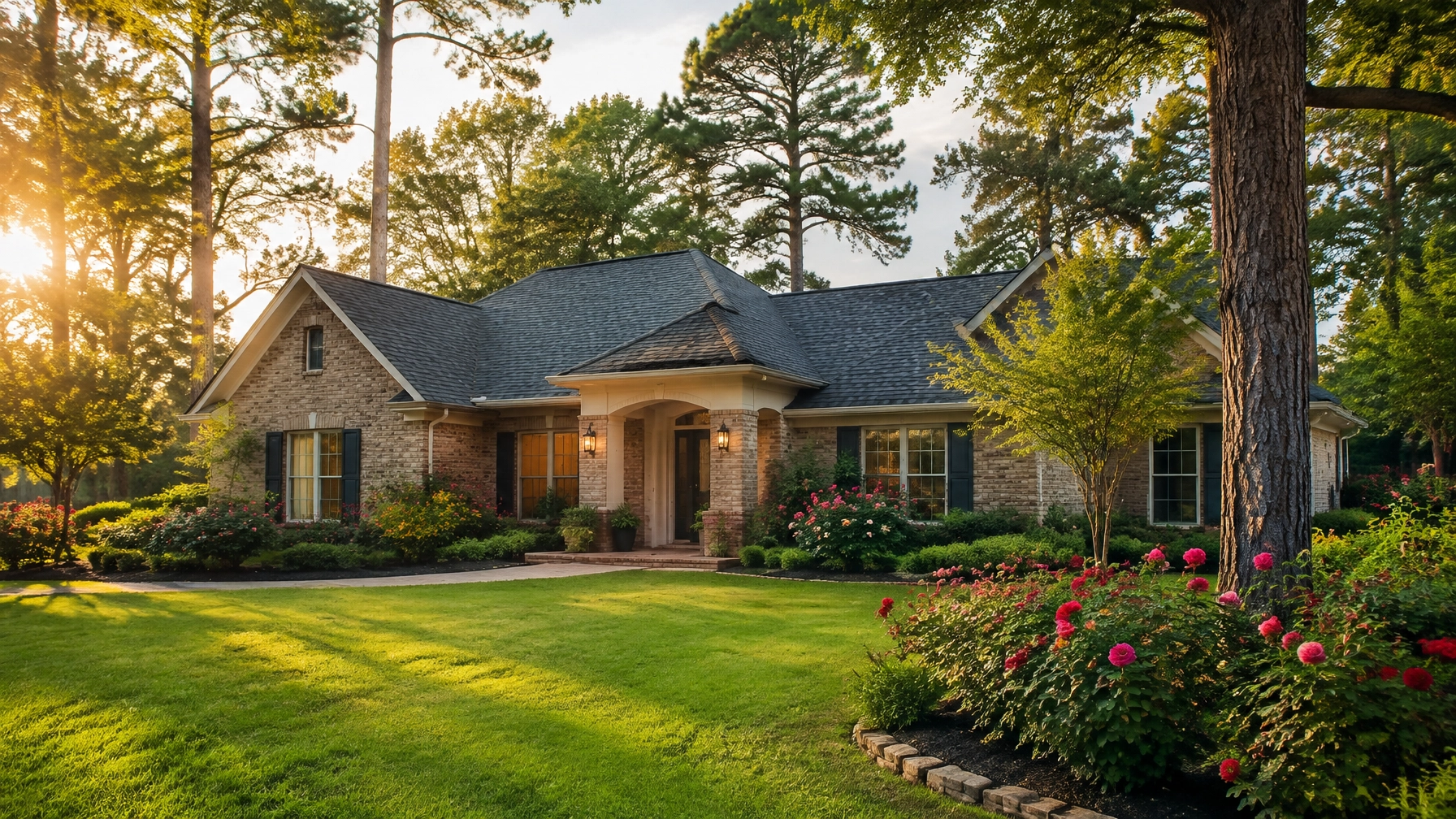
Tyler is known as the Rose Capital of America, but East Texas homeowners must budget for more than landscaping and curb appeal in 2026. Hot, humid summers, intense ultraviolet exposure, pine and oak limbs, winter freeze-thaw cycles, and severe spring and fall storms all affect roof life.
The April 18, 2026 hailstorm across Tyler, Whitehouse, and Noonday added urgency. Thousands of Smith County homes may now be in the inspection, insurance, and replacement window.
For a typical 2,000-square-foot roof: about 20 roofing squares: Tyler homeowners should plan on approximately $7,000 to $34,000 for replacement in 2026, depending on the material, roof design, labor, and storm-related upgrades.
2026 Tyler Roof Replacement Costs at a Glance
Roofing contractors measure roofs in squares, with one square equal to 100 square feet. These figures describe roof area, not the home’s interior floor area.
| Roofing material | Typical total cost for 2,000 sq. ft. | ROI notes |
|---|---|---|
| 3-tab asphalt shingles (Budget) | $7,000–$11,000 | Lowest upfront cost, but shorter service life and less curb appeal |
| Architectural shingles (Popular) | $7,000–$12,500 | Best cost-to-value choice for most Tyler homes |
| Class 4 impact-resistant shingles (Hail-ready) | About $8,500–$15,500 | Adds roughly $1,500–$3,000; may improve insurance value and hail protection |
| Standing-seam metal (Premium) | $20,000–$34,000 | Long service life and premium appearance, but typically 2–3 times the cost of shingles |
These are planning ranges, not guaranteed bids. A satellite estimate can establish a useful starting point, while an in-person inspection is still needed to identify hidden decking, flashing, ventilation, and structural issues.
For additional national benchmarks, see the Get My Roof Estimate Now roof cost calculator.
Why Tyler Roof Prices Are Higher in 2026
Tyler replacement costs are approximately 15% to 25% higher than 2024 levels in many cases. Several factors are driving the increase:
- Asphalt manufacturers have announced increases of roughly 6% to 10%.
- Metal roofing has risen approximately 10% to 22% due to 2026 steel and aluminum tariffs and higher MDI chemical costs.
- Roofing crews are commonly booked four to eight weeks ahead.
- Labor represents approximately 40% to 60% of the total project.
- Severe-weather demand can create short-term price spikes.
- Disposal, permit fees, tear-off, and decking repairs can materially change the final invoice.
Roof size, pitch, and complexity
A simple ranch roof with a moderate slope costs less than a steep, multi-section roof with valleys, dormers, skylights, and multiple penetrations.
Expect additional labor for:
- Steep or difficult-to-access roof sections
- Two-story homes
- Multiple roof planes and valleys
- Chimneys, skylights, and solar penetrations
- Poor attic access
- More than one existing roof layer
- Rotted or soft decking
Tyler’s pine and oak canopy
Trees are part of Tyler’s character, but overhanging limbs create real maintenance costs. Falling branches can puncture shingles, damage flashing, clog gutters, and create persistent shade that slows drying after rain.
Before replacement, trim hazardous limbs away from the roof. Ask the contractor to inspect:
- Shingles beneath large branches
- Gutters and downspouts
- Valley areas where leaves collect
- Flashing around chimneys and wall intersections
- Attic ventilation and moisture levels

Tyler Roof Replacement Permits and Local Rules
Inside Tyler city limits, all residential roof replacements require a building permit. Minor repairs and patching may be exempt, but a full replacement is not.
The 2026 residential roof replacement permit fee is a flat $100. Applications and inspections are handled electronically through the TylerInspections.com portal.
The City of Tyler fee schedule lists residential roof replacement as a specific permit category.
Important requirements include:
- Electronic permit application
- Final inspection after installation
- Compliance with the adopted 2021 International Residential Code
- Manufacturer-required fastening and nailing patterns
- Wind-resistant installation methods
- Contractor master registration with Tyler Building Services
Contractors working in Tyler may need to submit a Master Registration Form, license documentation, and a certificate of insurance to the city. The city’s contractor FAQ is a useful starting point.
Tyler is also identified with a 140-mph wind design requirement under applicable IRC maps, making proper shingle fastening especially important. Do not accept an estimate that simply lists “new shingles” without identifying the installation method and code requirements.
Texas historically has not required a statewide roofing contractor license. However, the new HB 3344 licensing program takes effect September 1, 2026. Check the contractor’s current registration, insurance, workers’ compensation coverage, and local compliance before signing.
Tyler’s 2026 Hail Events and the Insurance Claim Window
The major storm event for Tyler homeowners was April 18, 2026. Severe hail crossed Tyler, Whitehouse, and Noonday, with reports ranging from pea- to quarter-size hail and isolated golf-ball-size reports. The storm also caused damaged shingles, granule loss, gutter damage, fallen limbs, and more than 11,000 Smith County power outages.
KETK’s coverage of the April 18 hail path documented the storm’s movement through the region.
Two additional events kept roof damage concerns active:
- July 5, 2026: Approximately 1-inch hail was reported in Tyler’s Green Acres area.
- July 7, 2026: Severe thunderstorms brought hail, heavy rain, and localized flooding across Smith County.
Hail damage is not always obvious from the ground. Look for:
- Missing, bruised, or cracked shingles
- Circular impact marks
- Excessive granules in gutters
- Dented metal vents and flashing
- Damaged gutters, screens, and outdoor equipment
- Exposed underlayment or bare shingle spots
Document damage before repairs
Take wide and close-up photographs. Record the storm date and save any local weather reports, contractor inspection notes, and insurance correspondence.
Many homeowners are treating the April storm as a two-year claim and replacement window, but the exact deadline depends on the insurance policy. Some policies require prompt notice or impose a one-year reporting period. Read the “Duties After Loss” and “Suit Against Us” sections of your policy.
For official guidance on insurer response deadlines, review the Texas Department of Insurance claim information. If the deadline is approaching, contact your insurer and a qualified Texas insurance professional promptly.
Do not authorize a full replacement based only on a door-to-door inspection. Obtain a professional roof inspection and compare it with the insurer’s findings.
What Tyler Homeowners Should Budget
Use these bands for initial planning on a standard 2,000-square-foot roof:
Low budget: $7,000–$11,000
This range generally fits:
- Simple roof geometry
- 3-tab shingles
- One existing layer
- Minimal decking repairs
- Easy access
- Standard ventilation and flashing
Mid-range: $11,000–$15,000
This is the most realistic planning range for many Tyler homeowners choosing architectural or Class 4 shingles. It may include:
- Architectural shingles
- Full tear-off
- Moderate roof complexity
- Improved flashing
- Updated ventilation
- Code-required fastening
- Limited decking replacement
High budget: $15,000–$25,000 or more
This range can apply to:
- Steep or complex roofs
- Extensive decking damage
- Multiple tear-offs
- Premium Class 4 systems
- Specialty ventilation or flashing
- Larger homes
- Standing-seam metal
Add a 5% to 15% contingency for hidden decking damage, rotten fascia, chimney repairs, ventilation corrections, or material changes. A permit, such as Tyler’s $100 fee, is small compared with these potential costs, but it should still appear clearly in the estimate.
Roof Replacement ROI and Tyler Home Value
A new roof typically recovers approximately 60% to 68% of its cost nationally at resale. The exact return depends on the market, roof quality, timing, and whether the old roof was visibly failing.
Tyler’s 2026 market is generally balanced and slightly buyer-friendly. Current indicators place:
- Median listing prices around $349,700
- Median sale prices around $300,000 to $316,000
- Zillow typical home value near $253,000
In a market where buyers have more choices, roof condition can become a negotiating point. A worn roof may lead to repair credits, inspection objections, delayed closing, or a lower offer.
Best roof for home value in Tyler
Architectural shingles (Popular): Usually the best cost-to-value option. They improve roof curb appeal, offer more dimensional texture than 3-tab shingles, and fit most Tyler ranch, colonial, and traditional homes.
Class 4 impact-resistant shingles (Hail-ready): A strong choice after the 2026 hail events. They cost more upfront but can provide better impact protection and may qualify for insurance savings depending on the carrier and policy.
Standing-seam metal (Premium): Best suited to higher-end homes, modern designs, and owners planning to stay long term. It offers durability and a distinctive appearance but may not recover its full premium in every Tyler neighborhood.
A new roof can improve roof curb appeal and home value, but material selection should match the home, neighborhood, insurance policy, and expected holding period. The most expensive roof is not automatically the best roof replacement ROI.

Get an Accurate Tyler Roof Estimate in 60 Seconds
Before scheduling multiple contractor visits, get a property-specific starting point. Get My Roof Estimate Now uses satellite imagery to measure roof size, pitch, and complexity.
Enter your Tyler address and receive:
- A free estimate with no credit card required
- Low, middle, and high price ranges
- Material comparisons for shingles and metal
- Measurements typically accurate within 90% to 95%
- Results in approximately 60 seconds
- Connections to verified local roofing contractors
You do not need to wait for an initial contractor visit just to learn whether your project fits your budget. Start with an instant satellite estimate, then use an in-person inspection to confirm storm damage, code requirements, and hidden conditions before work begins.

Leave a Reply