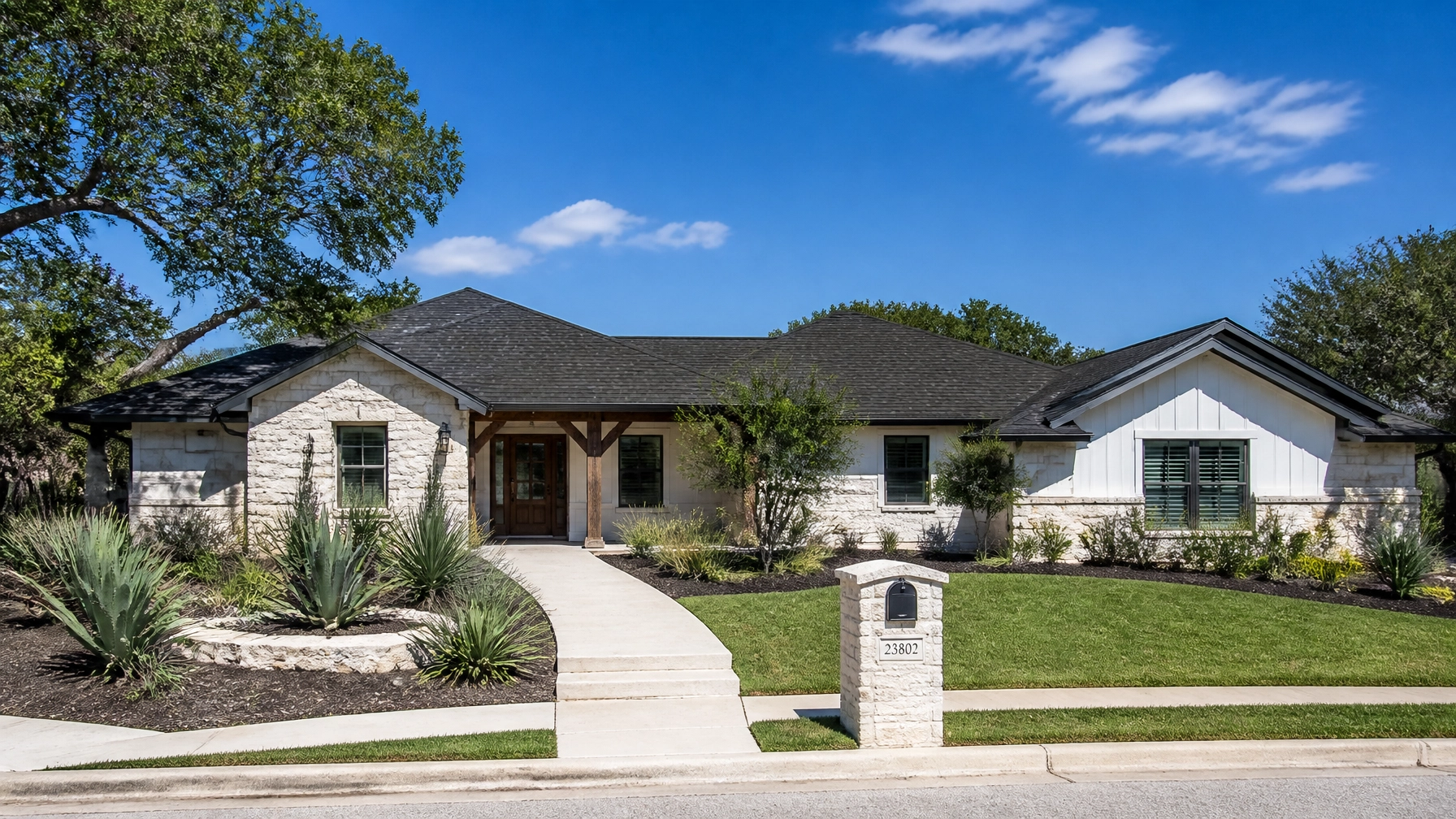
In the 2026 San Antonio real estate market, "move-in ready" is no longer just a buzzword, it is a financial requirement. As inventory in Bexar County has climbed by nearly 18% over the last year, buyers have become increasingly selective. Homes with aging, weather-beaten roofs are sitting on the market for 60+ days, while those with updated, high-performance roofing systems are commanding premium prices and closing faster.
Whether you’re in Stone Oak, Alamo Heights, or the rapidly growing far-west side, understanding the Return on Investment (ROI) of a roof replacement is critical for protecting your home's equity. In this edition of the Daily ROI Blitz, we break down the 2026 data for San Antonio homeowners.
The ROI Breakdown: What a New Roof is Worth in 2026
In San Antonio, a new roof is one of the few exterior renovations that offers both immediate equity and long-term liability protection. Based on current resale data, homeowners can expect a significant boost in market value.
- Standard ROI: 60% to 70% of the installation cost is typically recouped at resale.
- Value Add: For a standard 2,000 sq. ft. home, a new asphalt shingle roof adds between $8,000 and $14,000 in resale value.
- Typical Replacement Cost: In the San Antonio metro area, a full replacement for a 2,000 sq. ft. home ranges from $8,500 to $22,000, depending on material and complexity.
While the raw percentage is impressive, the true value often lies in what you avoid losing. In today's buyer-leaning market, an aging roof is a massive red flag during the inspection period.

The "Avoidance Factor": Preventing $15,000 Price Slashes
One of the most overlooked aspects of roofing ROI is the inspection phase. In 2026, San Antonio buyers are frequently using roof age as a primary negotiating lever.
- Inspection-Driven Reductions: Homes with roofs older than 15 years often face price reductions of $5,000 to $15,000 during the "Option Period."
- The Insurance Hurdle: Many insurance carriers in Texas are now refusing to underwrite new policies for roofs over 20 years old. If a buyer can't get insurance, they can't get a mortgage, effectively killing your sale.
- Marketability: Properties labeled "New Roof (2026)" attract 30% more clicks on major listing portals compared to similar homes with "Original Roof."
Choosing the Right Material for San Antonio’s Climate
San Antonio’s weather is notoriously hard on roofing materials. From the scorching UV rays of July to the "Hail Corridor" storms of late spring, your material choice dictates your long-term ROI.
1. Architectural Asphalt Shingles (Popular)
These are the standard for most San Antonio subdivisions. They offer a layered, dimensional look that mimics wood shakes.
- Cost: $4.50 to $8.00 per square foot.
- Best for: Standard suburban homes where budget and curb appeal are balanced.
2. Metal Roofing (Premium / Long-Term)
Increasingly popular in the Texas Hill Country and modern San Antonio neighborhoods, metal roofs are built for a lifetime.
- Lifespan: 40 to 70 years.
- Benefit: Exceptional heat reflection, lowering cooling costs by up to 15%.
- Best for: Homeowners planning to stay in their home for 10+ years or those seeking a "set-it-and-forget-it" solution.

The San Antonio "Hail Corridor" & Insurance Savings
San Antonio sits directly in a high-risk hail corridor, particularly along the I-35 and Loop 1604 corridors. Because of this, insurance companies are incentivizing homeowners to upgrade to impact-resistant materials.
Class 4 Impact-Resistant (IR) Shingles are engineered to withstand 2-inch hailstones. While they cost roughly 10% more upfront, the financial payback in San Antonio is rapid:
- Insurance Premium Savings: Most Texas carriers offer a 20% to 30% discount on the wind/hail portion of your premium for Class 4 roofs.
- Payback Period: In high-risk ZIP codes like 78258 (Stone Oak), the premium savings often pay for the material upgrade within just 2 to 3 years.
The 2026 Climate Reality: Heat and Monsoon Season
San Antonio roofs face a unique "thermal shock" cycle. The extreme heat and UV exposure make shingles brittle, while the sudden, heavy rains of the monsoon season exploit every micro-crack.
- Heat & UV: Accelerates granule loss and shingle curling.
- High Winds: Spring storms in Central Texas often bring 60+ mph gusts that can peel back aging three-tab shingles.
- Monsoon Season: Heavy downpours test the integrity of flashing and underlayment.
A roof that looks "fine" in the winter can quickly fail under the stress of a San Antonio summer. Proactive replacement ensures you aren't dealing with emergency leaks during a June thunderstorm.

Ready to See Your Home’s Value Increase?
Calculating the cost of a new roof used to require three different contractor visits, high-pressure sales pitches, and weeks of waiting. We’ve changed that.
At Get My Roof Estimate Now, we use advanced satellite imagery to measure your San Antonio home with 90-95% accuracy, remotely.
- Accurate: Measurements precise to within inches.
- Fast: Get your estimate in under 60 seconds.
- Transparent: No hidden fees, no credit card required, and no sales pressure.
- Local: We connect you with verified, licensed, and insured San Antonio contractors once you have your numbers.
Don't let an old roof drag down your home's equity. Get your instant San Antonio roof estimate here.
FAQ: San Antonio Roofing ROI
Q: Does a new roof always increase home value?
A: In San Antonio’s current market, yes. It either increases the sale price by $8k-$14k or prevents a massive price reduction during the inspection phase.
Q: Which ZIP codes in San Antonio have the highest hail risk?
A: North and Northwest San Antonio, including Stone Oak, Helotes, and the Loop 1604/I-35 interchange, are historically the most hit.
Q: How long does a standard roof replacement take?
A: Most residential roof replacements in San Antonio are completed in 1 to 2 days, depending on weather.
Leave a Reply