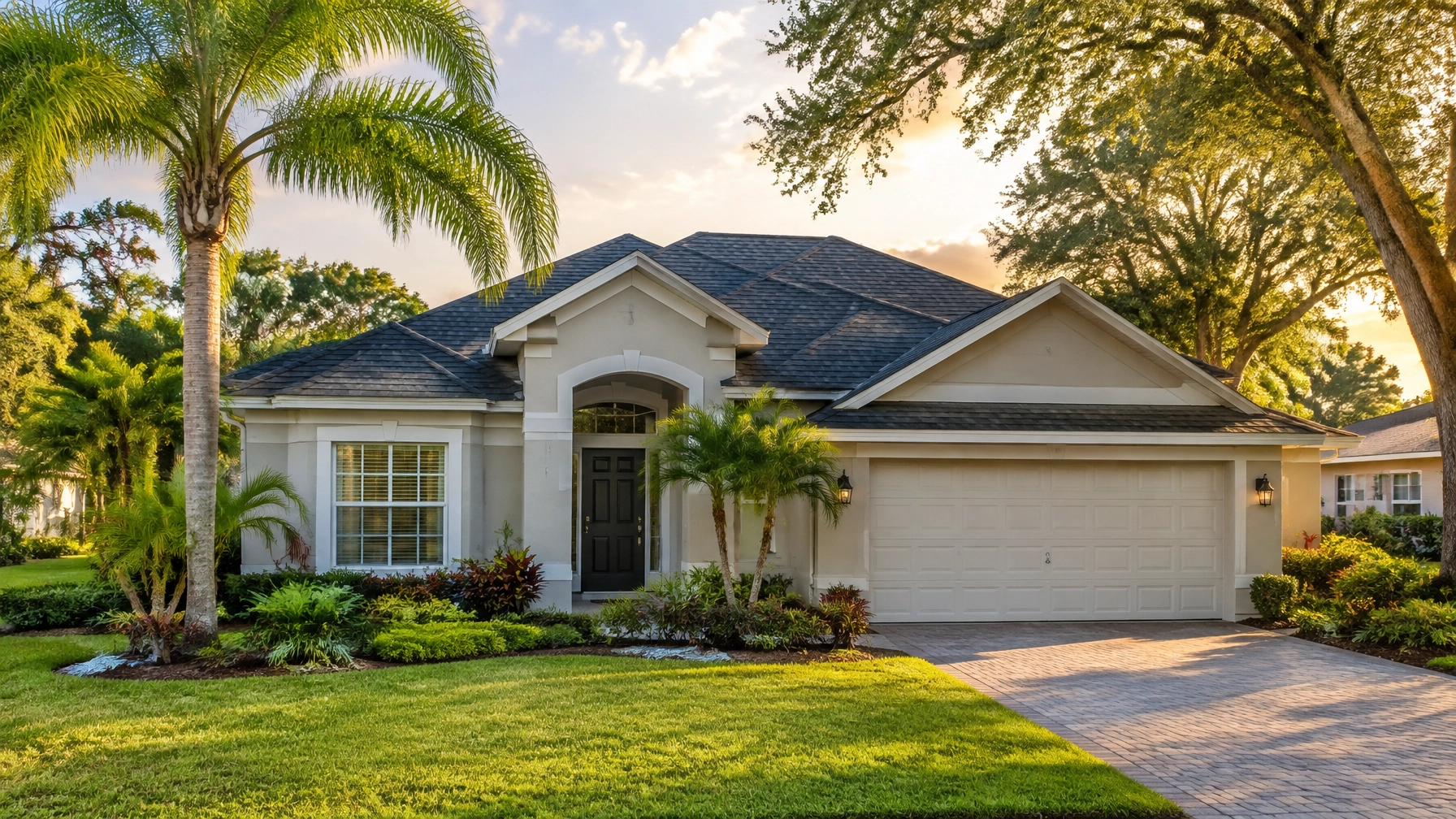
Orlando sits in Orange County at the center of Central Florida’s high-heat, high-humidity roofing market. From Winter Park and Baldwin Park to Lake Nona, Dr. Phillips, College Park, and Metro West, homeowners deal with intense UV exposure, heavy rain, humidity, algae growth, wind, and occasional hail.
Here are seven quick answers to the most common Orlando roof replacement questions for 2026.
1. How much does a new roof cost in Orlando in 2026?
A typical Orlando roof replacement costs approximately $9,000–$22,000 for a 2,000–2,500-square-foot home with architectural shingles.
Typical material pricing includes:
- Architectural shingles (Popular): $4.50–$9.00 per square foot installed
- Approximately $450–$900 per roofing square
- Standing-seam metal (Premium): about $9.00–$35.00 per square foot installed
- Many full metal roof projects cost $18,000–$32,000 or more
A roofing square equals 100 square feet. Roof surface area is not the same as the home’s interior living area. A 2,000-square-foot house may have a larger roof because of pitch, overhangs, attached garages, valleys, and other structures.
The final price depends on:
- Roof size and pitch
- Number of valleys, dormers, skylights, and penetrations
- Tear-off and disposal requirements
- Damaged decking or flashing
- Florida Building Code upgrades
- Material selection
- Local labor and permit costs
For a general benchmark, use the Get My Roof Estimate Now roof cost calculator. For property-specific pricing, a satellite measurement is more useful than a national average.
2. Do I need a permit to replace my Orlando roof?
Yes. The City of Orlando requires a building permit for all residential roof replacements.
The residential re-roofing submission generally includes:
- Project cost
- Roofing material details
- Fastener specifications
- Required product approval information
- Contractor and property information
For projects with a contract price over $5,000, Orlando requires a filed and recorded Notice of Commencement before inspections can be scheduled. The city identifies this requirement through its official permit and inspection services.
Two important inspections are typically required:
- Dry-in or in-progress inspection: Code 125
- Final inspection: Code 600
Keep the following on site:
- Signed and notarized roofing affidavit
- Florida product approval documentation
- Permit documents
- Material and installation information
Work must comply with the Florida Building Code, including Florida’s wind-resistance requirements.
If your property is in unincorporated Orange County, use Orange County permitting instead. Winter Park, Maitland, and other municipalities may have different forms, inspection codes, and procedures. Confirm the jurisdiction before work begins.

3. What license should an Orlando roofing contractor have?
Florida roofing contractors are regulated by the Florida Department of Business and Professional Regulation Construction Industry Licensing Board, or DBPR CILB.
There are two common roofing license classifications:
- Certified Roofing Contractor (CCC): Authorized to work statewide
- Registered Roofing Contractor (RC): Authorized only in the local jurisdiction where registered
Typical licensing requirements include:
- Four years of roofing experience
- At least one year as a foreman or supervisor
- Passing the CILB Trade Knowledge, Business & Finance, and Project Management exams
- FDLE/FBI fingerprint background check
- Financial responsibility, commonly including a FICO score of 660 or higher or a surety bond
- Public liability insurance, including at least $300,000 for a certified roofing contractor
- Workers’ compensation coverage
- 14 hours of continuing education every two years
Before signing a contract, verify the contractor through the official Florida DBPR license search.
Also request current certificates of insurance and confirm that the contractor: not an unlicensed subcontractor: is responsible for the permit and work.
4. How did 2026 storms affect Orlando roofs and insurance?
Central Florida experienced repeated severe-weather events in 2026, including:
- March 15 hail in Brevard County
- March 15–16 hail near Longwood, Altamonte Springs, and Wekiva Springs
- May 12 storms in Seminole County
- May 14 hail near Longwood, Lake Mary, Winter Springs, and Oviedo
- Additional hail events on June 26–27, July 26, and August 6
- Wind gusts exceeding 50 mph during some events
Roof damage can be cumulative. A roof may show:
- Granule loss
- Lifted or creased shingles
- Damaged flashing
- Exposed underlayment
- Leaks around vents and roof penetrations
Insurance coverage also depends on whether your policy uses replacement cost value (RCV) or actual cash value (ACV). Florida insurers commonly apply ACV-only treatment to asphalt roofs that are 10–15 years old.
Under Florida Statute 627.7011, insurers may initially pay ACV and release recoverable depreciation after repairs are completed and documented. Review the current Florida Statutes and your policy for exact terms.
Other important Florida insurance points include:
- A roof deductible may be capped at the lesser of 2% of Coverage A or 50% of the roof replacement cost.
- Hurricane deductibles are commonly 2%, 5%, or 10% of Coverage A when a named-storm trigger applies.
- Insurers generally cannot refuse renewal solely because a roof is under 15 years old.
- For roofs 15 years or older, a homeowner-funded inspection certifying at least five years of remaining useful life can help protect coverage.
- Many carriers decline new policies for asphalt roofs around 25 years old.
Keep storm photos, inspection reports, invoices, permits, and completion documents. They may be important for a claim or future sale.
5. How long does a roof last in Orlando’s climate?
Orlando’s UV exposure, heat, humidity, algae, and storm activity can shorten roof life compared with milder climates.
Typical service lives are:
- 3-tab shingles (Budget): 10–18 years
- Architectural shingles (Popular): 15–30 years
- Standing-seam metal (Premium): 30–50+ years, with many systems lasting 40–70 years
Poor attic ventilation, trapped heat, algae, moss, and repeated wind events accelerate aging. A roof that looks acceptable from the ground may still have weakened seal strips, brittle shingles, or deteriorated flashing.
Ask contractors about:
- Ridge and soffit ventilation
- Algae-resistant shingles
- Florida product approvals
- Proper nailing patterns
- High-wind underlayment
- Flashing replacement
- Secondary water barriers
You can compare material lifespans and typical costs in the roofing materials guide.

6. Does a new roof increase Orlando home value?
A new roof in Orlando commonly recoups approximately 60%–85% of its cost at resale, depending on the material, installation quality, home location, and market conditions.
For many homeowners:
- Architectural shingles (Popular) offer the best near-term seller ROI.
- Metal roofing (Premium) may deliver approximately 75%–85% long-term returns, along with energy-efficiency benefits and possible insurance discounts.
- A new roof improves curb appeal and buyer confidence.
- A code-compliant roof can reduce insurance-related objections during a sale.
Wind-mitigation features may also help qualify for insurance credits. Examples include:
- Hurricane-rated fasteners
- Secondary water barriers
- Strong roof-to-wall connections
- Proper underlayment
- Documented Florida Building Code compliance
The best roof for home value is not always the most expensive roof. The right choice balances neighborhood expectations, remaining time in the home, maintenance needs, energy performance, and insurance requirements.
Most importantly, an aging roof can make a home difficult to insure. Florida buyers may request concessions, appraisal deductions, or a replacement before closing if the roof is 15–25 years old. That can directly affect roof replacement resale value and the home’s sale timeline.
7. How can I get a free Orlando roof estimate in 60 seconds?
Enter your property address and receive a free satellite-powered estimate in approximately 60 seconds. The system evaluates:
- Roof size
- Roof pitch
- Roof complexity
- Regional Orlando pricing
- Material options
- Low, middle, and high price ranges
You can compare options such as:
- Architectural shingles
- Metal roofing
- Synthetic roofing
- Protective coatings
Satellite measurements are typically 90%–95% accurate, helping you budget before scheduling contractor appointments. There is:
- No credit card requirement
- No upfront cost
- No hidden fees
- No contractor visit required for the initial estimate
After reviewing the estimate, you can connect with verified, licensed, and insured local contractors for detailed proposals and on-site confirmation.

A fast estimate will not replace a final contractor inspection, but it gives you a practical starting point for planning, comparing materials, preparing for insurance discussions, and understanding your likely roof replacement ROI.
Leave a Reply