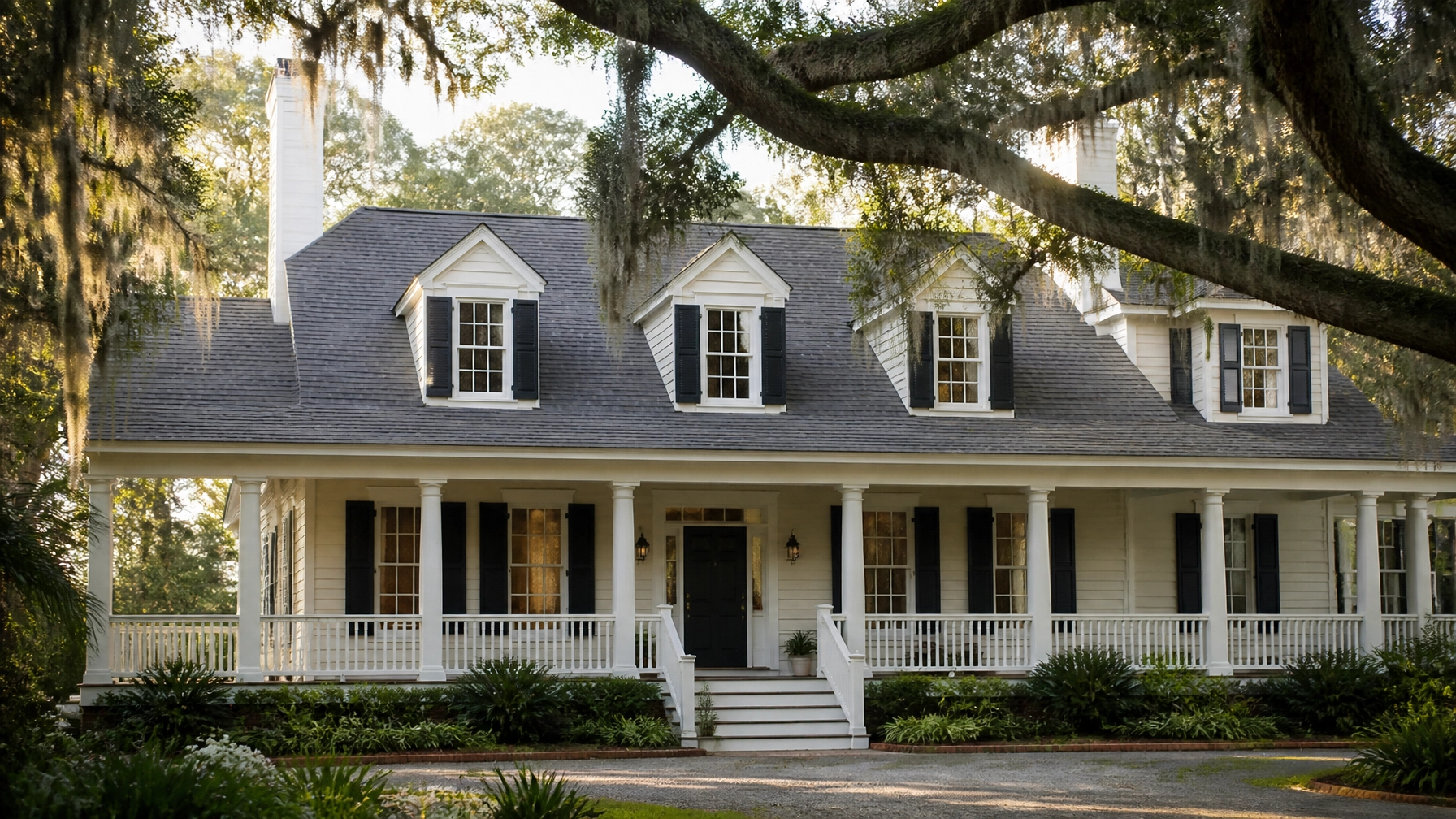
Savannah roofs face more than ordinary wear. Humidity, intense UV exposure, salt air near Tybee Island, heavy rain, tropical systems, and shaded tree cover all affect roof cost and service life.
For 2026, a typical Savannah roof replacement should be evaluated using the measured roof area, not just the home’s interior square footage. The quick answers below cover the most common questions from homeowners in Savannah and Chatham County.
1. How much does a roof replacement cost in Savannah in 2026?
Quick answer: A typical 2,000-square-foot roof replacement with architectural shingles costs approximately $11,000–$19,200 in Savannah.
Typical installed pricing includes:
- Architectural shingles (Popular): About $5.20–$8.20 per square foot
- Standing-seam metal (Premium): About $9.40–$15.80 per square foot
- Standing-seam metal total: Approximately $18,000–$41,100 installed
- Roof measurement: Roofing contractors price by roof area, commonly measured in “squares.” One square equals 100 square feet.
Your final price can change based on:
- Roof pitch and accessibility
- Valleys, dormers, skylights, and penetrations
- Tear-off and disposal of existing roofing
- Rotted decking or sheathing
- Coastal exposure and wind-rated installation
- Historic District design requirements
- Material availability and local labor rates
A simple ranch roof in Pooler may price differently from a steep, detailed historic home downtown. Use the Savannah roof estimate page for a property-specific starting range.

2. Do I need a permit to replace my roof in Savannah or Chatham County?
Quick answer: Yes. A building permit is generally required for a full roof replacement involving tear-off, as well as work involving sheathing or roof decking.
Small, like-for-like spot repairs generally do not require the same permit process. Confirm the scope with the local building department before work begins.
For a standard single-family re-roof:
- The City of Savannah fee is approximately $75 flat
- Larger construction values may reach approximately $150
- Typical permit issuance takes 7–14 business days
- The contractor should pull the permit and schedule inspections
- Expect a dry-in inspection and a final inspection
- Deck or sheathing repairs may require an additional inspection
Chatham County properties outside Savannah city limits may follow a different fee schedule. Check the City of Savannah permit fee schedule and the city’s construction permit information.
Unpermitted roofing work can create problems later, including:
- Stop-work orders
- Insurance claim complications or denial
- Difficulty obtaining a permit retroactively
- Liens or disclosure issues when selling the home
What wind requirements apply in Chatham County?
Chatham County is in an approximately 130 mph ASCE 7 wind zone. A compliant roof installation commonly includes:
- Shingles rated for 130 mph wind performance
- ASTM D3161 Class F wind-rated shingles
- Six-nail fastening patterns where required
- Proper drip-edge installation
- Ice-and-water barrier in applicable wind-borne debris areas
- Correct underlayment, flashing, and roof-to-wall connections
Homes in V-zone or AE flood overlays, including areas near Tybee, Wilmington Island, Skidaway Island, and the Vernon River corridor, may need a sealed wind-uplift plan from a Georgia-licensed structural engineer. That can add approximately $80–$150.

3. Does a Savannah roofer need a Georgia contractor license?
Quick answer: Georgia does not require a state-issued contractor license for a standalone residential roof replacement.
However, a responsible roofing company should still provide documentation showing:
- A current City of Savannah business tax certificate, if operating in the city
- General liability insurance
- Workers’ compensation coverage when the company has three or more employees
- Written warranty terms
- References or recent local project examples
Georgia’s Residential Basic or Light Commercial license may be required when roofing is part of a broader structural renovation. Ask the contractor to explain the license and registration requirements for your exact project.
Before signing, verify the company’s insurance directly with its carrier. Do not rely only on a logo, estimate sheet, or verbal promise.
4. How does homeowners insurance affect an older roof in Savannah?
Quick answer: Coastal Georgia homeowners often have separate wind/hail deductibles, and older roofs may be settled on an actual cash value basis instead of replacement cost.
Common policy considerations include:
- A separate wind or hail deductible of approximately 1%–5% of dwelling coverage
- A separate named-storm deductible for qualifying tropical systems
- Roof-age restrictions beginning around 15–20 years
- Depreciation deductions on older asphalt shingles
- Potential discounts for qualifying Class 4 impact-resistant roofing
Under Georgia Act 277, insurers can factor roof age into pricing and coverage decisions. A roof older than approximately 15–20 years may shift from:
- Replacement Cost Value (RCV): The cost to replace the damaged roof, less the deductible
- Actual Cash Value (ACV): Replacement cost minus depreciation for age and wear
Review your declarations page and endorsements before filing a claim. Confirm:
- Whether the roof is covered at RCV or ACV
- The amount and type of wind/hail deductible
- Whether a named-storm deductible applies
- Whether your insurer requires a roof inspection or replacement by a certain age
Your contractor cannot legally waive or reimburse your insurance deductible.
5. How long does a roof last in Savannah?
Quick answer: Savannah’s humidity, salt air, UV exposure, storms, and biological growth can shorten manufacturer-rated shingle life by roughly 15%–25%.
Typical local service-life ranges are:
- 3-tab shingles (Budget): Approximately 14–20 years
- Architectural shingles (Popular): Approximately 18–28 years
- Standing-seam metal (Premium): Approximately 35–55+ years
Black streaks from algae, including Gloeocapsa magma, are extremely common in shaded Savannah neighborhoods. Algae may be cosmetic at first, but persistent moisture, poor ventilation, and moss growth can accelerate deterioration.
Plan for a professional roof evaluation around year 15 for architectural shingles. Consider replacement sooner when you notice:
- Granules collecting in gutters
- Recurring leaks or ceiling stains
- Curling, cracked, or missing shingles
- Exposed fasteners or deteriorated flashing
- Soft decking or sagging roof areas
- Approximately 30% or more of the roof damaged
Regular inspections after major storms can identify problems before water reaches the attic or interior walls.
6. Will a new roof increase my Savannah home’s value?
Quick answer: A new roof typically recovers approximately 60%–70% of its cost at resale and may add around $9,500 in appraised value, although results vary by property and market conditions.
A newer roof can also help a seller avoid:
- Buyer-negotiated reductions of approximately $10,000–$20,000
- Insurance delays or underwriting concerns
- Inspection objections
- Financing complications
- Extended time on the market
A well-documented, permitted roof may help a property sell 15–25 days faster than a comparable home with an aging roof. The benefit is often strongest when the existing roof is visibly worn or near the end of its expected life.
What if the home is in Savannah’s Historic District?
Roof replacement or visible roof work in the Savannah Historic District may require an approved Certificate of Appropriateness (COA) from the Historic Review Board or preservation staff.
Approved roofing materials may include:
- Architectural asphalt shingles
- Standing-seam metal
- Slate
- Tile
- Historically compatible restoration materials
Original materials may need to be repaired or replicated when feasible. Color, profile, pitch, visible flashing, skylights, and roof accessories may also be reviewed. See the City of Savannah historic roof and solar installation checklist before planning visible work.

7. Can I get a Savannah roof estimate without a contractor visit?
Quick answer: Yes. Get My Roof Estimate Now provides a free, satellite-powered roof replacement estimate in approximately 60 seconds.
The estimate:
- Uses satellite imagery to measure the actual roof
- Typically reaches approximately 90%–95% accuracy
- Requires no credit card
- Shows low, middle, and high price ranges
- Compares materials such as architectural shingles, metal, synthetic roofing, and coatings
- Accounts for roof size, pitch, complexity, and regional pricing
- Helps you budget before scheduling contractor visits
The estimate is a planning tool, not a final construction contract. A verified local contractor should confirm decking, flashing, ventilation, permits, and storm damage in person before installation.
Get Your Free Savannah Roof Estimate
Stop guessing based on your home’s interior square footage or a neighbor’s project. Enter your address and receive a satellite-measured roof replacement estimate in about 60 seconds.
It is free, requires no credit card, and gives you transparent low-middle-high pricing before you speak with a contractor.
Leave a Reply