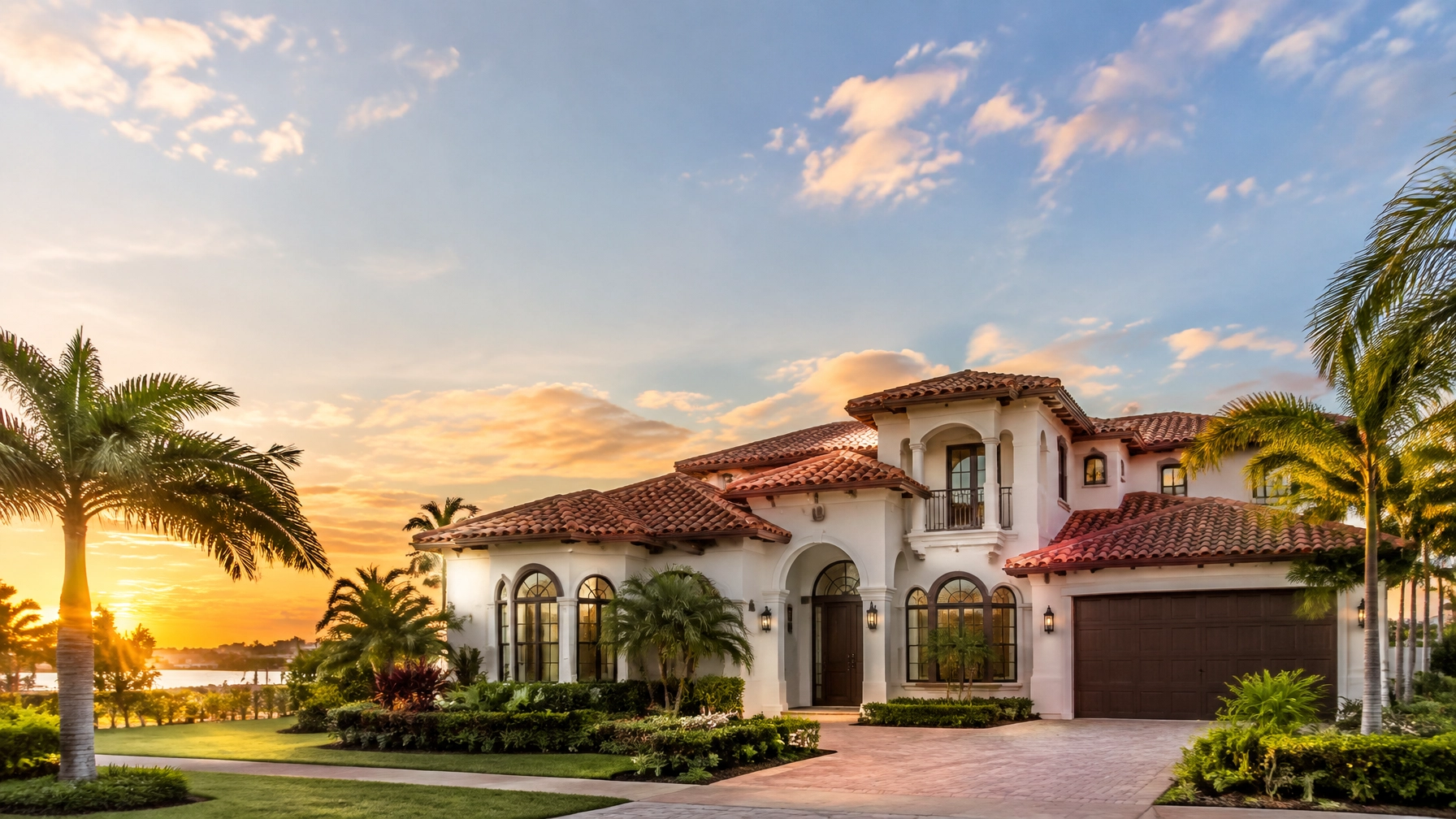
Miami is becoming a serious center for satellite-powered intelligence. That matters to homeowners because the same type of geospatial technology used to monitor hurricanes, map climate risk, and track coastal conditions is now making roof replacement planning faster and more precise.
For a typical 2,000-square-foot Miami-area home, 2026 roof replacement planning ranges are substantial:
- Architectural shingles (Popular): $12,500–$28,000
- Standing-seam metal (Premium): $22,000–$48,000
- Concrete or clay tile (Premium): $18,000–$55,000
These are planning ranges, not contractor bids. Your actual price depends on roof size, pitch, layout, material, tear-off requirements, decking repairs, permitting, and Miami-Dade’s High-Velocity Hurricane Zone requirements.
The first step is knowing what you actually have. A satellite-powered roof estimate can measure roof area, pitch, and complexity in about 60 seconds: before you schedule a contractor visit.
Miami’s Satellite Advantage Is More Than a Weather Story
As of September 14, 2026, the Atlantic had set a satellite-era record for the latest first hurricane. Five named storms had formed, but no Atlantic system had reached hurricane strength.
The unusual season has been linked to strong El Niño wind shear, dry air, and Saharan dust. Those conditions can suppress storm development, but they do not eliminate Miami’s long-term exposure. Hurricane season continues through November 30, and a quiet start is not a reason to delay roof planning.
Satellite systems are central to how forecasters understand that risk:
- GOES-16, or GOES East, provides the continuous imagery National Hurricane Center forecasters use to monitor cloud structure, convection, moisture, and developing disturbances.
- Sentinel-6 Michael Freilich and Sentinel-6B measure sea-surface height. Those observations help scientists understand ocean heat content and the energy available to strengthen tropical systems.
- NOAA plans to incorporate Sentinel-6 data into its Satellite Ocean Heat Content Suite algorithm by the end of 2026.
For Miami homeowners, the takeaway is straightforward: better data improves decisions. The same principle applies when estimating a roof.
You do not want a national average based on a generic house. You want measurements tied to your property.
Miami Is Building a Local Geospatial Intelligence Ecosystem
Miami’s technology community is also pushing satellite data into commercial and public-safety applications.
Space-Eyes: Real-Time Geospatial Intelligence
Miami-based Space-Eyes develops AI-powered geospatial intelligence and counter-drone technology. Its platforms include Morpheus for drone mitigation and SeaWatch for maritime vessel tracking.
In July 2026, Space-Eyes announced a definitive merger agreement with McKinley Acquisition Corp. The proposed transaction values the combined company at approximately $638 million, with an expected fourth-quarter 2026 closing and a planned Nasdaq listing under the ticker CUAS, subject to approvals.
The company’s broader approach is important because it shows how multiple sensors can be fused into one usable picture. Satellite imagery, radar, radio-frequency data, and other inputs can help decision-makers understand changing conditions across land and sea.
Roof estimating uses a simpler version of that concept. Satellite imagery can identify the roof planes and measurements that matter for replacement pricing without requiring an initial site visit.
Neural Earth: Climate Risk at the Property Level
Miami-based Neural Earth closed an oversubscribed $9.3 million seed round in February 2026. Founded by Blair Austin Childs and Dan Lopez, the company applies artificial intelligence to geospatial data for insurance and real estate.
Its platform combines:
- Satellite imagery
- Environmental sensors
- Property records
- Proprietary analytics
- AI-driven risk models
The goal is to quantify property-level exposure to hazards such as wind, flooding, and wildfire.
That is also where roofing is heading. A roof is not just a surface. It is a measurable asset with an age, material, slope, condition, replacement cost, and exposure to local weather.

The University of Miami Is Advancing Remote Sensing
The University of Miami Rosenstiel School adds another layer to South Florida’s satellite expertise.
Its Center for Southeastern Tropical Advanced Remote Sensing, or CSTARS, receives and analyzes low-Earth-orbit satellite data. The facility works with synthetic aperture radar, electro-optical imagery, and other remote-sensing systems. It can process large satellite scenes quickly for storm damage, flooding, environmental monitoring, and maritime applications.
Researchers are also using NASA’s EMIT hyperspectral data to improve invasive plant detection in the Everglades. Hyperspectral imaging identifies subtle differences in reflected light, helping distinguish vegetation and materials that may look similar in ordinary imagery.
Rosenstiel researchers also apply remote sensing to coral reef monitoring and coastal science.
For homeowners, these projects demonstrate the value of looking at a property from above. Satellite imagery can reveal roof geometry and surrounding conditions that are difficult to evaluate from the street. That does not replace a final inspection, but it can make the first budgeting decision much more informed.
Miami-Dade’s HVHZ Rules Make Precision Especially Important
Miami-Dade is part of Florida’s High-Velocity Hurricane Zone, or HVHZ. Roofing work must meet strict wind-uplift and installation requirements.
A roof replacement may require:
- Miami-Dade Notice of Acceptance documentation
- Florida Product Approval information
- Approved fasteners and attachment patterns
- Underlayment and secondary water-barrier specifications
- Wind design calculations
- Permit documents and inspections
- Engineer-stamped drawings when structural changes or non-prescriptive assemblies are involved
The Miami-Dade HVHZ Uniform Roofing Permit Application identifies different documentation requirements for asphalt shingles, metal roofs, and concrete or clay tile.
This is why a satellite estimate should be viewed as a fast planning tool: not as a substitute for a licensed contractor, permit review, or engineering analysis.
It can help answer:
- How many roofing squares does my home have?
- Is the roof relatively simple or highly complex?
- Which materials fit my budget?
- Should I plan for a low, middle, or high replacement range?
- Is it worth comparing shingles, metal, and tile before calling contractors?
How Satellite Roof Estimating Works
A roof is measured in squares, with one square equal to 100 square feet of roofing material. The roof’s footprint is only the starting point.
A reliable estimate also considers:
- Roof pitch: Steeper slopes require additional labor and safety measures.
- Roof complexity: Valleys, hips, dormers, skylights, chimneys, and multiple roof levels increase installation time.
- Material selection: Shingles, metal, and tile have different material and labor costs.
- Regional pricing: Miami labor, permitting, insurance, and HVHZ requirements affect the final range.
- Tear-off requirements: Removing the old roof can add cost and reveal damaged decking.
Get My Roof Estimate Now uses satellite imagery to measure a property’s roof and provide a free estimate without a credit card or an upfront contractor visit. Results are typically available in under 60 seconds, with low-middle-high pricing ranges.
The estimate is designed to help you budget before moving into the detailed contractor phase.
Choosing the Right Roof for Miami Home Value
The best roof for home value depends on your property, neighborhood, budget, and expected ownership period.
Architectural shingles (Popular)
Architectural shingles are usually the most accessible starting point. They offer broad color selection and can improve the appearance of an aging roof. In Miami, the exact product and installation system must satisfy applicable HVHZ requirements.
Standing-seam metal (Premium)
Metal roofing costs more upfront but can offer a 30- to 60-year service life, low maintenance, energy benefits, and strong wind performance when properly approved and installed. Some homeowners may also qualify for insurance wind-mitigation credits, depending on the roof system and insurer.
Concrete or clay tile (Premium)
Tile is a natural fit for Miami’s Mediterranean, Spanish colonial, and coastal architecture. It can deliver strong curb appeal and long service life, but its weight and attachment requirements can make the project more complex.
A new roof can support roof replacement resale value by reducing buyer concerns, improving inspection results, and making the home look maintained. The roof curb appeal home value connection also matters in a competitive market.
However, roof replacement ROI is not a guaranteed percentage. The financial benefit depends on the roof’s condition, the quality of installation, the material selected, local buyer expectations, and whether the replacement prevents larger water or structural damage.

A Practical Miami Roof Planning Checklist
Before requesting contractor bids:
- Measure the roof using a property-specific tool rather than relying only on living area.
- Compare at least two or three material options.
- Ask for the applicable NOA or Florida Product Approval information.
- Confirm who will pull the permit.
- Ask whether engineering or structural review is required.
- Check licensing, insurance, references, and warranty terms.
- Separate the roof covering price from decking repairs, permit fees, and upgrades.
- Use a satellite estimate to establish a realistic budget range first.
Start with Get My Roof Estimate Now’s roof cost calculator for general material benchmarks, then use the free satellite-based estimate for property-specific measurements.
Miami’s satellite technology cannot stop the next hurricane. It can help you make better decisions before one arrives.

Leave a Reply