Houston has always looked toward the sky. Now, the city’s space technology is helping shape decisions much closer to home.
From NASA Johnson Space Center to fast-growing space startups, Houston is becoming a center for satellite scheduling, onboard artificial intelligence, orbital computing, lunar communications, and robotics simulation. The common theme is simple: collect better information, process it faster, and turn it into a useful decision.
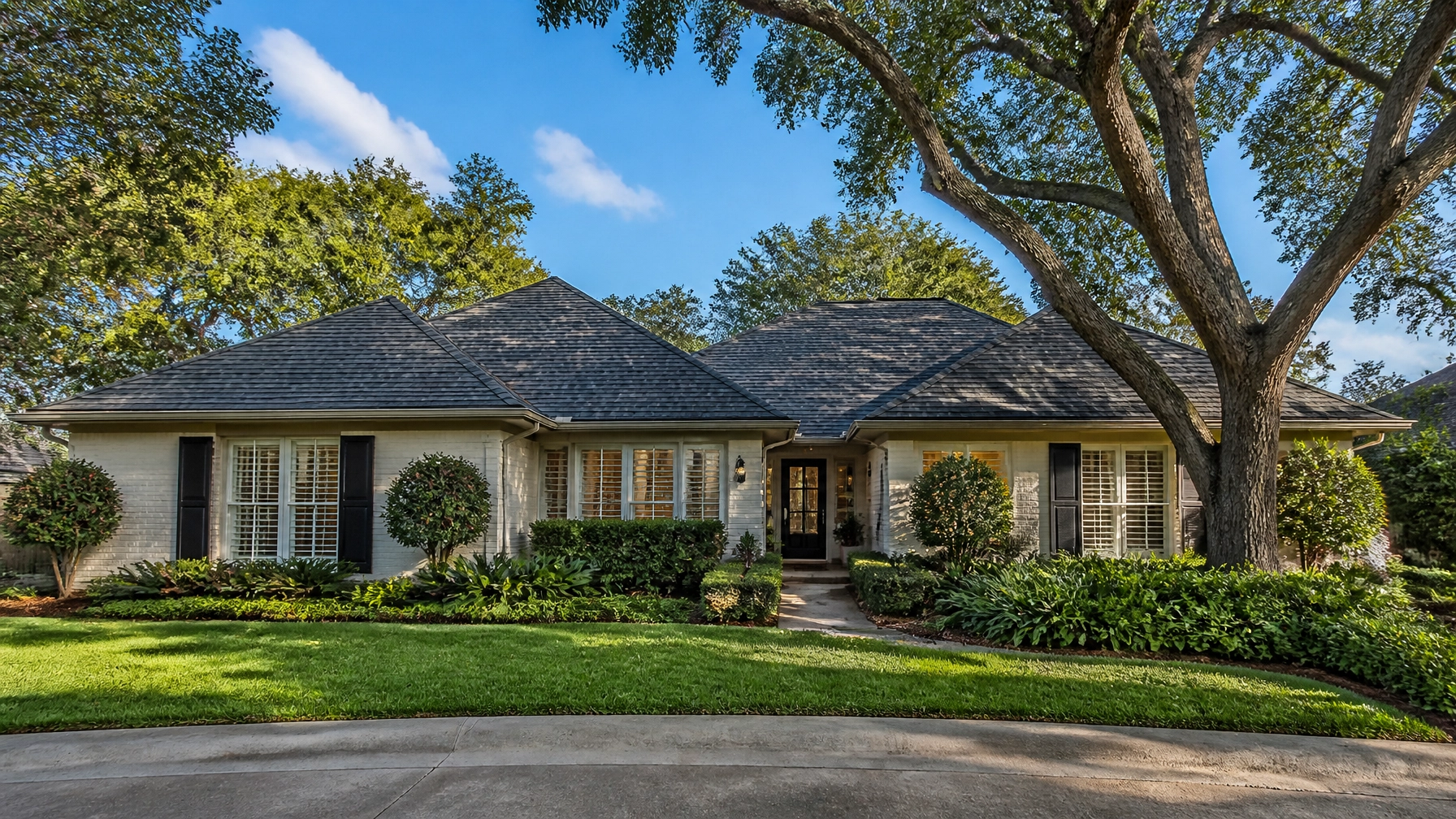
That same idea now applies to roofing. Satellite imagery can measure a home’s roof, estimate replacement costs, and give Houston homeowners a practical budget benchmark in about 60 seconds: without waiting days for a contractor visit.
Houston’s Satellite Technology Edge in 2025–2026
Houston’s space industry is moving beyond rockets and astronauts. The newest projects focus on what happens after satellites collect data.
Cognitive Space: Faster Satellite Decisions
Houston-based Cognitive Space is developing software that helps satellite operators manage increasingly complex fleets.
Its CNTIENT.Optimize platform automates:
- Satellite constellation scheduling
- Collection planning
- Ground-station pass reservations
- Communication link management
- Task prioritization across multiple satellites
Traditional satellite operations can require teams to manually coordinate targets, spacecraft limitations, ground-station availability, and changing priorities. That process becomes difficult when operators manage dozens or thousands of satellites.
CNTIENT.Optimize uses an AI-based scheduling engine to evaluate available activity plans and select an optimized solution. The platform is designed to reduce delays between a customer requesting imagery and the satellite collecting it.
The result is lower tasking-to-collection latency, better use of satellite capacity, and faster response when conditions change.
Cognitive Space describes the platform as suitable for everything from individual spacecraft to large constellations. Its technology also supports multiple sensor types, including optical, synthetic aperture radar, hyperspectral, infrared, and radio-frequency systems.
That matters for roofing because the value of satellite imagery depends on more than simply taking a picture. The data must be collected, processed, and delivered quickly enough to support a decision.
Learn more about Cognitive Space and CNTIENT.Optimize.
Little Place Labs: Processing Imagery in Orbit
Another Houston company, Little Place Labs, is working on a different part of the satellite data problem: what happens to imagery before it reaches Earth.
Its ORBITFY platform runs artificial intelligence and machine-learning tools directly onboard satellites. Instead of downlinking every raw image, the system can filter, compress, and analyze imagery in space.
Potential outputs include:
- Object detection and classification
- Land-use analysis
- Disaster monitoring
- Change detection
- Image compression
- Prioritized alerts
In one demonstrated application, the platform processed imagery onboard and sent back a segmented data product rather than the complete raw image. Little Place Labs reported that this approach reduced the imagery downlink volume by up to 98%.
That is known as edge AI: the data is processed near the place where it is created. For time-sensitive commercial and national-security applications, this can reduce the wait from hours or days to minutes.
The same principle applies to property data. A useful satellite imagery roof estimate depends on efficient image processing. The faster a system can identify roof planes, edges, pitch, and complexity, the sooner a homeowner can receive a meaningful cost range.
Read more about Little Place Labs’ OrbitfyEDGE platform.
NASA Johnson Space Center Is Modernizing for the Next Space Economy
NASA announced a major infrastructure step for Houston on May 29, 2026, with a multiple-award construction contract supporting up to $300 million in improvements at Johnson Space Center and related facilities.
The contract covers:
- Mission-support facilities
- Utilities and engineering networks
- Equipment and campus infrastructure
- Construction and revitalization projects
- Facilities supporting training, engineering, and mission readiness
Seven companies were selected to compete for task orders. NASA said all funds must be obligated by September 30, 2026.
This is not a contract dedicated to one commercial space station. However, the modernization supports the broader evolution of Johnson Space Center. Houston remains central to human spaceflight operations, astronaut training, engineering, and future low-Earth-orbit missions.
As commercial stations such as Starlab and Axiom Station develop, JSC’s role is expected to expand from supporting government-led missions to helping manage a more commercial and interconnected space environment.
The lesson for homeowners is straightforward: Houston’s satellite technology is becoming more operational, more automated, and more focused on real-world data services.
Intuitive Machines Is Building a Lunar Data Network
Houston-based Intuitive Machines is also extending communications infrastructure beyond Earth.
The company is developing a five-satellite Lunar Data Network designed to provide data relay and positioning, navigation, and timing services around the Moon. The satellites are planned for elliptical lunar orbits focused on coverage near the lunar South Pole, where future Artemis activity is expected.
The network is intended to provide:
- Communications relay between lunar spacecraft and Earth
- Data services for landers and rovers
- Navigation support for lunar missions
- Interoperability with NASA’s LunaNet architecture
- Commercial access to lunar communications capacity
This is another example of satellite technology becoming infrastructure. The goal is not simply to collect data but to create a dependable network that helps other systems operate.
That same infrastructure mindset is appearing in home services. A satellite-based roof estimate does not replace a final contractor inspection. It gives homeowners an early, data-driven starting point before they schedule an in-person visit.
Axiom Space and Rice–NASA Robotics Push Data Processing Further
Houston-based Axiom Space is developing orbital data centers that bring cloud-style computing and storage into low Earth orbit.
Axiom’s orbital data center concept is designed to process satellite and spacecraft data closer to its source. The company’s early demonstrations have included:
- Cloud computing in orbit
- Artificial intelligence and machine learning
- Data fusion
- Space cybersecurity
- Earth-independent data storage
- Lower-latency processing
Axiom announced its first two dedicated orbital data center nodes in 2025. The company later reported that the nodes launched to low Earth orbit on January 11, 2026, using high-speed optical links associated with Kepler Communications’ relay network.
In a related Houston research effort, Rice University and NASA Johnson Space Center introduced the iMETRO Dynamic Simulation in 2026. The open-source simulator acts as a digital twin of NASA’s intravehicular robotics test environment.
Using tools such as MuJoCo and ROS 2, researchers can test robotic movement, contact dynamics, maintenance tasks, and logistics operations before using physical equipment.
Both projects point toward the same future: data is processed closer to where decisions are made.
How Satellite Imagery Powers a Free Roof Estimate
A satellite imagery roof estimate uses overhead property data and automated analysis to create a fast replacement-cost range.

With Get My Roof Estimate Now, a homeowner enters an address and receives an estimate in under 60 seconds.
The system evaluates:
- Roof size: Measured in squares, with one square equal to 100 square feet
- Roof pitch: The steepness of the roof
- Roof complexity: Valleys, dormers, sections, and penetrations
- Material options: Architectural shingles, metal, synthetic roofing, and coatings
- Regional pricing: Local labor and material cost differences
- Price ranges: Low, middle, and high estimates
The technology is designed to provide measurements accurate to approximately 90–95% for many properties. It does not require an initial contractor visit, credit card, or payment.
For a general 2026 benchmark, average roof replacement costs are approximately $9,000–$22,000, although larger Houston homes, steep roofs, premium materials, structural repairs, and complex designs can cost more.
Use the Houston roof replacement cost calculator to compare size, material, pitch, region, and tear-off costs.
An online estimate is a planning tool. A licensed roofing contractor should still inspect the roof in person before a final contract, especially when hidden decking damage, ventilation issues, flashing problems, or storm damage may be involved.
Why Houston Roofs Need Fast Planning
Houston roofs face several stressors at the same time.
Hail
Parts of the Houston area experienced significant hail activity in August 2026. Reports for August 28 described hail approaching baseball size in portions of the metro area, with several Houston ZIP codes included in the reported footprint.
Hail damage may appear as:
- Bruised or fractured shingles
- Missing granules
- Cracked vents and flashing
- Damaged gutters
- Exposed underlayment
- Punctures on older roofing materials
A storm map can show that hail occurred nearby, but it cannot confirm damage to a specific roof. Homeowners should document the storm date, photograph visible damage from the ground, and arrange a professional inspection.
Hurricanes and Wind
Hurricane Beryl in 2024 reminded Houston homeowners how quickly strong wind and heavy rain can expose roof weaknesses. Missing shingles, lifted flashing, damaged ridge caps, and fallen branches can lead to leaks long after the storm passes.
A fast estimate helps establish a replacement budget before contractor schedules become crowded.
Humidity and Heat
Houston’s humidity can contribute to algae growth, moisture retention, and attic ventilation problems. Intense summer heat also accelerates wear on roofing materials and increases cooling demand.
Material selection matters:
- Architectural shingles (Popular): Practical and widely available
- Metal roofing (Premium): Long service life and strong heat performance
- Synthetic roofing (Premium): Durable appearance with varied design options
- Roof coatings (Budget): Useful for certain low-slope applications
The Houston Homeowner Takeaway
Houston’s satellite technology edge is no longer limited to missions in space. Cognitive Space is automating satellite decisions. Little Place Labs is processing imagery onboard. NASA is modernizing Johnson Space Center. Intuitive Machines is building lunar communications infrastructure. Axiom Space is developing orbital computing, while Rice and NASA are opening new paths for space robotics.
The common idea is precision delivered quickly.
That is exactly what a modern roof estimate should provide. Before scheduling multiple contractor visits, a Houston homeowner can enter an address, review the roof’s estimated size and complexity, compare material options, and see a low-middle-high replacement range in about 60 seconds.
Start with a free satellite-powered roof estimate. It costs nothing, requires no credit card, and provides the information needed to plan the next step with greater confidence.
Leave a Reply