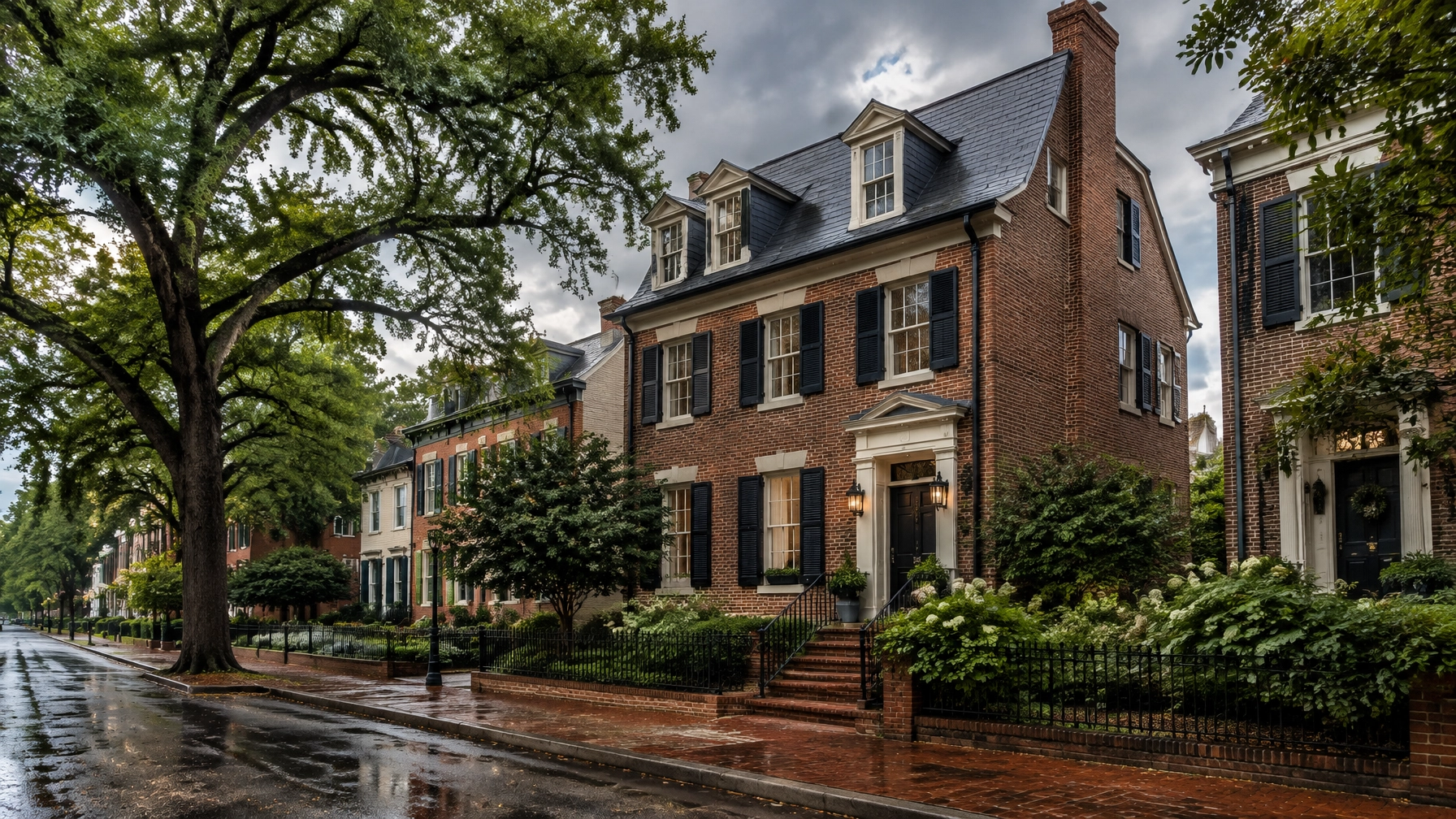
Richmond homeowners should prepare for a wet, stormy Saturday.
The September 12 forecast calls for muggy conditions, partly to mostly cloudy skies, morning patchy fog, and a 70% chance of rain, with scattered showers and thunderstorms becoming more likely from afternoon into evening. Heavy downpours may produce 1–3 inches of rainfall, with locally higher amounts, creating a risk of ponding and localized flooding.
For roofs across RVA, this is more than a weather update. Repeated heavy rain, summer heat, wind-blown debris, and hail can expose weaknesses that remain hidden during dry weather.
Richmond’s Saturday Forecast: Heavy Rain Arrives Later
According to the WTVR CBS 6 Weather Authority forecast, Richmond’s weather pattern today includes:
- Morning: Patchy fog, muggy air, and partly cloudy skies
- Afternoon: Increasing shower and thunderstorm chances
- Evening into tonight: Showers and storms likely, with heavy rain possible
- Rainfall: Generally 1–3 inches, with locally higher totals
- High temperature: Mainly the low to mid 80s, with a few upper-80s readings
- Overnight: Upper 60s to lower 70s, with additional fog
The main roofing concerns are not only wind or hail. Saturated soil can make large trees less stable, while clogged gutters and undersized downspouts can allow rainwater to back up beneath roof edges and around fascia boards.
The Rest of the Week: A Brief Break, Then More Heat
Richmond’s near-term forecast shows a familiar late-summer pattern:
- Sunday: Muggy and hotter, with highs in the upper 80s to around 90°F. Isolated morning showers are possible, with roughly a 20% storm chance.
- Monday: A cold front passes with a slight shower chance. Cooler, less humid air arrives during the afternoon and evening.
- Tuesday: The best weather day of the week: mostly sunny, pleasant, and less humid, with lows near 60°F and highs in the low 80s.
- Wednesday through Friday: Mostly sunny, with highs returning to the upper 80s and low 90s.
- September 21–22: Longer-range guidance hints at cooler weather, with highs possibly in the 70s around September 21. The autumnal equinox arrives September 22.
Tuesday is the ideal day for a ground-level roof and drainage inspection.

Why Richmond Roofs Face More Than Ordinary Rain
Richmond sits at the fall line of the James River, where the Piedmont meets the Coastal Plain. That location contributes to a humid subtropical climate with:
- Hot summers, including periodic days above 95°F
- High humidity that slows roof and attic moisture evaporation
- Frequent April–September thunderstorms
- Heavy rain from tropical storm remnants moving inland
- Strong wind events that can topple trees and scatter debris
- Hail exposure during the spring and summer convective season
Freeze-thaw cycles are less severe than in the northern Mid-Atlantic, but winter temperatures still matter. Water can enter small cracks or failed flashing, freeze, expand, and gradually worsen the damage.
Richmond’s 2026 Storm History Is a Warning
This year has already produced several meaningful roof-damage events across the Richmond metro:
- June 14: Widespread damaging winds, downed trees, power outages, and hail reports across Central Virginia.
- July 5: Severe storms caused snapped trees and additional wind-related damage in the region.
- August 7: Intense winds, hail, and heavy rain struck parts of the West End and Tuckahoe. Trees toppled near the University of Richmond, homes were damaged, and vehicles were crushed. Residents described the winds as hurricane-like.
These events matter because a roof does not need to be visibly punctured to be compromised. Wind can lift shingle edges, weaken adhesive seals, loosen flashing, and create small entry points that become leaks during the next heavy rain.
Pre-Storm Roof Checklist for Richmond Homeowners
Do not climb onto a wet or steep roof. Instead, inspect from the ground or hire a qualified professional.
Check the roof from the ground
Use binoculars to look for:
- Missing, lifted, or curling shingles
- Dark patches or exposed underlayment
- Loose ridge caps
- Damaged chimney flashing
- Sagging rooflines
- Granules collecting near downspouts
- Shingles scattered around the yard
Clear the drainage system
Before the heaviest rain arrives:
- Remove leaves and debris from gutters
- Confirm downspouts discharge away from the foundation
- Check for overflowing or sagging gutter sections
- Look for stains beneath roof valleys and gutter lines
- Make sure splash blocks or extensions are in place
Large mature oaks are common around neighborhoods such as Windsor Farms and Westover Hills. Inspect nearby limbs for dead, cracked, or overhanging branches: but do not attempt to remove hazardous limbs during high winds.
Inspect the attic after the storm
Once conditions are safe, look for:
- Damp insulation
- Water stains on rafters or decking
- Daylight visible through the roof
- Musty odors
- Active dripping around chimneys, skylights, or valleys
A leak may not appear directly below the damaged shingle. Water often travels along roof decking or framing before entering the living space.
Hail Damage vs. Normal Roof Wear
Hail damage usually appears as localized impact marks rather than uniform aging.
Signs that may indicate hail damage
- Circular bruises or exposed asphalt on shingles
- Missing granules in isolated areas
- Cracked or split shingles
- Damage to metal flashing, vents, gutters, or downspouts
- Dented exterior equipment
- New leaks following a storm
Signs of ordinary aging
- Consistent granule loss across the roof
- Broad curling or brittleness
- Algae or moss growth
- Uniform discoloration
- Worn seal strips from long-term sun exposure
Do not scrape, chalk, or press on suspected impact marks. That can make documentation less reliable. A licensed roofing professional or insurance adjuster can distinguish storm damage from normal deterioration.
Document Storm Damage Before Making Repairs
If you suspect damage, document the condition promptly.
- Photograph the roof from the ground and take close-ups only from a safe location.
- Photograph damaged gutters, siding, windows, vehicles, trees, and outdoor equipment.
- Record the date and approximate time of the storm.
- Save local weather alerts and news reports.
- Keep receipts for emergency tarping or temporary repairs.
- Do not authorize permanent work before understanding your insurance requirements.
- Ask contractors for a written inspection report and detailed scope of work.
Temporary action may be necessary to prevent additional interior damage, but avoid signing high-pressure contracts immediately after a storm.

2026 Richmond Roof Replacement Costs
For 2026, many Richmond homeowners should expect a full roof replacement to cost approximately $7,500–$14,500, depending on size, pitch, complexity, material, tear-off requirements, and local labor.
A typical 2,000-square-foot home may fall closer to $12,000–$21,000 when the roof has multiple planes, dormers, valleys, steep sections, or structural repairs.
| Tier | Roofing material | Typical Richmond price per square |
|---|---|---|
| Budget | 3-tab asphalt shingles | $325–$425 |
| Popular | Architectural shingles | $425–$625 |
| Premium | Standing seam metal | $875–$1,350 |
| Premium | Synthetic slate | $800–$1,200 |
| Luxury | Natural slate | $1,500–$3,000 |
A roofing square equals 100 square feet of roof area. Your home’s roof area is usually larger than its floor area because of pitch, overhangs, garages, porches, and other sections.
Historic Richmond Homes May Require Extra Planning
Homeowners in the Fan District, Church Hill, Oregon Hill, Jackson Ward, and other protected areas should confirm local requirements before selecting roofing materials.
Richmond’s Historic Preservation office administers Old and Historic District requirements and supports the Commission of Architectural Review. Exterior roofing work visible from a public street or alley may require a Certificate of Appropriateness before a permit is issued.
This can affect:
- Natural slate replacement
- Synthetic slate approvals
- Visible metal roofing
- Roof color and profile
- Ridge caps, flashing, gutters, and other details
Natural slate on historic homes can push total project costs to $20,000–$40,000 or more, especially when structural repairs or specialized labor are needed.
Permit costs commonly range from $100–$275 in Richmond and approximately $75–$250 in Henrico or Chesterfield, depending on the jurisdiction and project scope. Always confirm current fees with the applicable permit office. Richmond’s Permits and Inspections office provides current applications, fee schedules, and its online permit portal.
Also verify that your contractor holds the appropriate Virginia DPOR license: Class A, B, or C with the required roofing specialty. You can use the state’s official DPOR License Lookup before signing a contract.
Get a Richmond Roof Estimate Before the Next Storm
You do not need to schedule multiple contractor visits just to establish a planning budget.
Use Get My Roof Estimate Now to receive a free satellite-powered estimate in about 60 seconds. The system measures your roof’s size, pitch, and complexity and provides transparent low-to-middle-to-high pricing for material options.
You get:
- 90–95% measurement accuracy
- No credit card requirement
- No upfront cost
- Pricing based on your specific property
- Options for architectural shingles, metal, synthetic materials, and coatings
- Connection to verified, licensed, and insured local contractors
For a broader planning range, try the roof cost calculator. For a property-specific estimate, enter your Richmond address and see what your roof may cost before the next round of downpours.
Leave a Reply