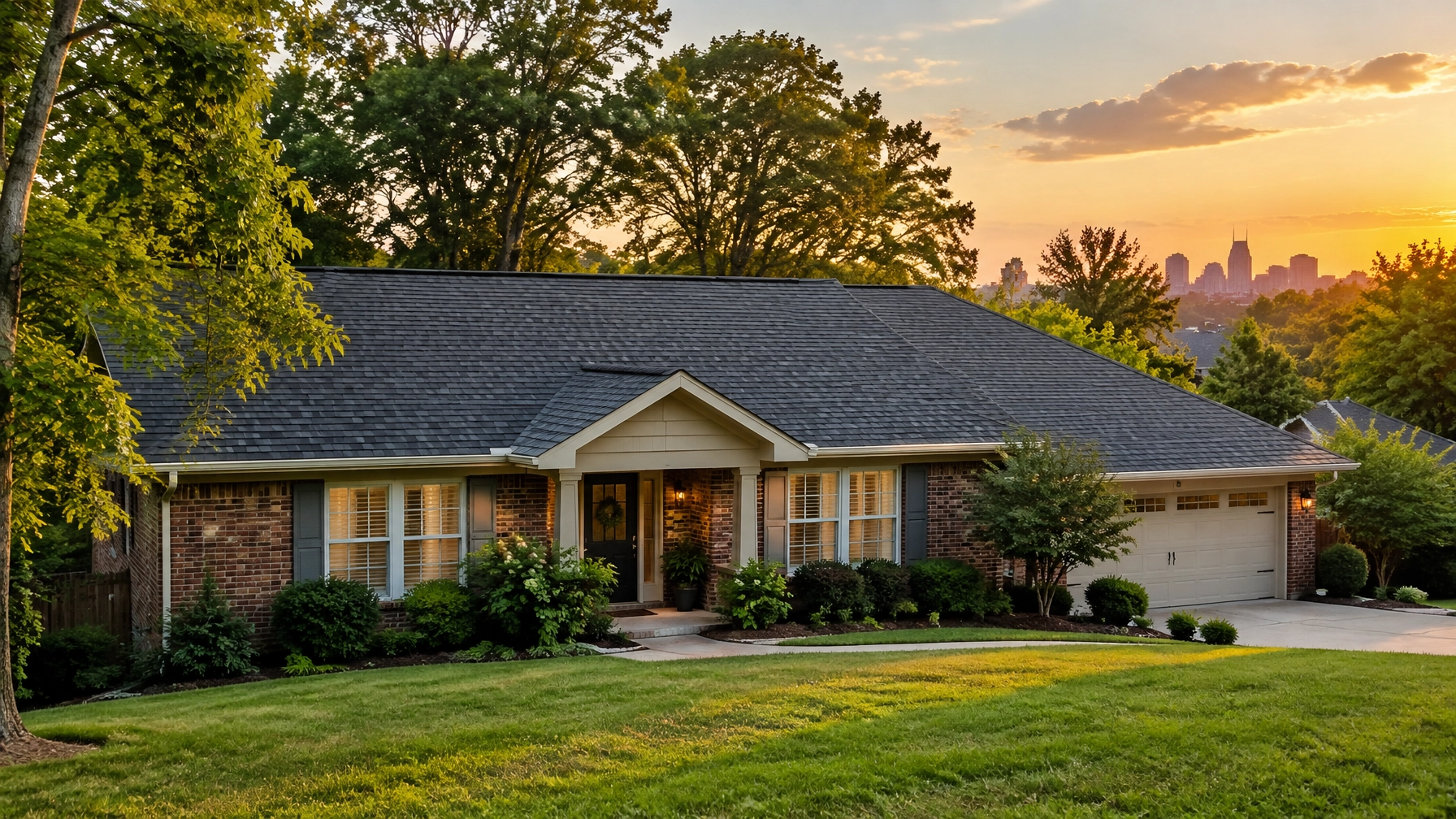
Nashville is becoming more than Music City. It is also developing a serious technology and space ecosystem: one that is making satellite data, remote sensing, and edge computing more practical across Tennessee.
That matters to homeowners. The same category of technology used to study land, monitor infrastructure, and connect remote businesses can also help measure a residential roof before a contractor ever visits.
For Nashville homeowners planning a replacement in 2026, typical project costs range from $8,000 to $30,000 or more. Asphalt systems generally run about $4.00–$11.00 per square foot, while architectural shingles commonly fall between $5.00 and $7.00 per square foot. Premium metal and tile systems can exceed $25.00 per square foot.
The first step is knowing your roof’s actual size, pitch, and complexity. Satellite-powered tools can provide that starting point in about 60 seconds.
Nashville’s Space Economy Is Moving from Concept to Commercial Use
Nashville’s satellite technology momentum is not theoretical.
TN Space, a Nashville-based nonprofit founded in 2024, is working to position Tennessee as a hub for commercial and research activity connected to the space economy. Its goal is to connect startups, universities, industry partners, and policymakers.
One Nashville company leading that effort is Blackwing Space. The company designs and manufactures American-made nanosatellite platforms for:
- Earth observation
- Internet of Things applications
- Remote sensing
- Commercial research
- Edge computing
- Technology demonstrations
Blackwing Space is building at The Nest, located inside The Factory at Franklin. Its modular nanosatellite platforms are designed to make space-based data more accessible to commercial and research customers.
The ecosystem also includes Vanderbilt University’s Space-Edge pre-accelerator, the University of Tennessee Space Institute, and LaunchTN. Together, these organizations connect technical research with startup development, commercialization, and advanced manufacturing.
The practical lesson for homeowners is straightforward: satellite technology is no longer limited to government agencies or large aerospace companies. It is becoming an everyday data source for mapping, connectivity, risk analysis, and property planning.
LEO Broadband Shows How Quickly Satellite Technology Can Scale
Tennessee’s broadband funding process provides another clear example.
During Tennessee’s BEAD broadband grant round, low-Earth-orbit satellite providers submitted 335 applications, compared with 153 fiber applications. Starlink and Amazon’s Project Kuiper were competing directly with traditional cable and fiber providers in some project areas.
In the Anderson 1 project area, reported funding requests included:
| Provider | Technology | Approximate request |
|---|---|---|
| Project Kuiper | LEO satellite | $342,000 |
| Starlink | LEO satellite | $473,000 |
| Comcast | Cable | $3.1 million |
| AT&T | Fiber | $4.4 million |
That does not mean satellite broadband replaces fiber in every situation. Fiber typically offers lower latency and strong capacity. But LEO systems can reach locations where terrestrial infrastructure is expensive or difficult to build.
Starlink is also used as a redundancy option for Tennessee businesses and remote workers. It is available across the state, including Nashville, and can provide a separate connection when a local fiber or cable line fails.
This is the same basic principle behind satellite roof estimates: use data collected from above to make an informed decision on the ground.
Metro Nashville Already Uses Aerial and Geospatial Data
Metro Nashville uses geospatial technology to manage public infrastructure and analyze the city’s physical environment.
The city has an enterprise GIS agreement with Esri valued at approximately $6.9 million over five years. Metro also maintains a separate EagleView contract for high-resolution digital orthographic and oblique aerial imagery.
That data supports planning, mapping, parcel analysis, and infrastructure management.
Metro’s 2023 Urban Tree Canopy Assessment found approximately 169,832 acres of tree canopy, representing about 56% canopy cover. The assessment used USDA NAIP aerial imagery and evaluated canopy changes across multiple years. The city recommends conducting a formal canopy assessment at least every five years.
Why is this relevant to roofing?
Dense tree cover can affect:
- Roof visibility from the ground
- Moss and moisture retention
- Falling-branch exposure
- Gutter maintenance
- Satellite image interpretation
- Roof replacement planning
Aerial imagery is not a complete substitute for a physical inspection. It cannot identify every soft decking area, hidden leak, or flashing defect. But it is highly useful for measuring roof surfaces, identifying roof sections, and creating an initial budget.

How a Satellite-Powered Roof Estimate Works
Get My Roof Estimate Now uses satellite imagery to provide a fast starting point for replacement planning.
The process is simple:
- Enter your Nashville property address.
- Confirm the correct home.
- Let the system analyze the roof.
- Receive a price range in about 60 seconds.
The platform estimates roof size, pitch, and complexity, then factors in local pricing and material choices. Results are typically 90–95% accurate for planning purposes and are designed to measure roof dimensions within inches.
You can compare common systems such as:
- Architectural shingles (Popular): Balanced price, appearance, and durability
- Metal roofing (Premium): Long service life and strong weather performance
- Synthetic roofing (Premium): High-end appearance with lower weight than some traditional materials
- Roof coatings (Specialized): More common for suitable low-slope systems
The estimate is free, requires no credit card, and does not require an initial contractor visit. It provides low, middle, and high pricing ranges so you can decide whether to repair, replace, or continue planning.
For a Nashville-specific result, use the Nashville roof estimate page.
Nashville Roof Replacement Costs in 2026
Your final price depends on the roof surface: not simply the home’s floor area. A 2,000-square-foot house can have a much larger roof if it has multiple slopes, dormers, valleys, or a steep pitch.
| Roofing system | Typical Nashville planning range | Approximate 2,000 sq. ft. roof total |
|---|---|---|
| Basic asphalt shingles (Budget) | $4.00–$5.00/sq. ft. | $8,000–$10,000 |
| Architectural shingles (Popular) | $5.00–$7.00/sq. ft. | $10,000–$14,000 |
| Asphalt, complex or premium | $8.00–$11.00/sq. ft. | $16,000–$22,000 |
| Metal roofing (Premium) | $9.00–$16.00/sq. ft. | $18,000–$32,000 |
| Tile or specialty systems | $15.00–$25.00+/sq. ft. | $30,000–$50,000+ |
Costs can increase because of:
- Old roof tear-off
- Multiple roofing layers
- Damaged decking
- Steep slopes
- Chimneys, skylights, and valleys
- Limited access
- Permit requirements
- Higher-end underlayment or ventilation
- Current labor and material demand
For a broader national comparison, use the roof cost calculator. For the most useful Nashville budget, use your actual address rather than a national average.
Recent Middle Tennessee Storm Activity: What Homeowners Should Do
Nashville roofs face repeated exposure to wind, heavy rain, temperature changes, and severe thunderstorms.
On April 16, 2026, a severe thunderstorm moved through Middle Tennessee. The National Weather Service recorded a 62 mph wind gust at Nashville International Airport, while approximately 65,000 Nashville Electric Service customers were without power at the peak of the event.
The event is a reminder that wind damage does not always look dramatic from the yard. A storm can loosen shingles, damage flashing, or create openings that leak during the next heavy rain.
Official records also matter. Do not assume every roof problem after a storm was caused by hail. There were no verified hail reports in Davidson County in September 2026 in the official records reviewed.
Post-storm roof checklist
- Stay on the ground unless a qualified professional performs the inspection.
- Photograph visible damage from several angles.
- Look for missing, lifted, cracked, or displaced shingles.
- Check gutters for unusual granule buildup.
- Inspect ceilings and attic areas for water stains.
- Cover active leaks only with a safe temporary solution.
- Contact your insurer if damage appears storm-related.
- Get a written inspection and itemized estimate.
- Avoid contractors who demand immediate signatures or large cash deposits.
A satellite estimate can help establish a replacement budget. It cannot determine whether your insurer will approve a claim or replace hidden structural damage.

New Roof ROI and Nashville Home Value
Homeowners often search for new roof ROI home value, roof replacement resale value, and roof curb appeal home value because a roof is both a protective system and a visible part of the property.
A replacement roof can improve resale positioning by:
- Removing a major inspection concern
- Improving curb appeal
- Reducing the buyer’s immediate repair budget
- Supporting insurance eligibility
- Making the home look maintained and move-in ready
- Improving confidence in the rest of the exterior
The best roof for home value is not always the most expensive roof. In many Nashville neighborhoods, well-installed architectural shingles offer the strongest balance of appearance, cost, and market familiarity. Metal may make more sense for long-term ownership, distinctive architecture, or homeowners prioritizing service life.
Roof replacement ROI depends on the roof’s condition, the neighborhood, the material selected, and whether the work is documented properly. Keep permits, invoices, warranties, product details, and before-and-after photos.
Frequently Asked Questions
How much does a roof replacement cost in Nashville in 2026?
Most Nashville single-family projects fall around $8,000–$30,000 or more. Architectural shingles commonly cost $5–$7 per square foot, while metal and tile systems can cost substantially more.
Can satellite imagery measure my roof accurately?
Satellite imagery can estimate roof size, pitch, and complexity with approximately 90–95% planning accuracy. A contractor should still verify decking, flashing, ventilation, and hidden damage before finalizing a contract.
Is the Nashville satellite roof estimate free?
Yes. The estimate is free, requires no credit card, and typically returns results in about 60 seconds.
What roofing material is best for Nashville?
Architectural shingles are the most common value choice. Metal roofing offers a longer expected service life and strong weather performance. The best choice depends on your budget, home design, maintenance goals, and expected ownership period.
Should I repair or replace my roof after a storm?
Repair may be appropriate when damage is limited and the roof is relatively young. Replacement becomes more practical when damage is widespread, the roof is near the end of its expected life, or repeated repairs are becoming expensive.
Get Your Nashville Roof Estimate in 60 Seconds
Nashville’s satellite and space technology ecosystem is expanding: from nanosatellites and LEO broadband to Metro’s GIS and aerial imagery programs.
You can use that same data-driven approach for your next roofing decision.
Enter your address to see your roof’s estimated size, material pricing, and low-middle-high replacement range. It is free, fast, and requires no contractor visit upfront.
Get a free Nashville roof estimate in about 60 seconds.
Sources
- TN Space: Blackwing Space and the Rise of a Southern Space Corridor
- Blackwing Space
- Space-Edge 2025–26 Program
- LaunchTN
- Tennessee BEAD Program Resources
- Broadband Breakfast: Amazon and SpaceX Undercut Competition in Tennessee BEAD Bidding
- Metro Nashville Urban Tree Canopy Assessment
- Metro Nashville Urban Tree Canopy Information
- NWS Nashville Severe Weather Information
- Get My Roof Estimate Now Roof Cost Calculator
Leave a Reply