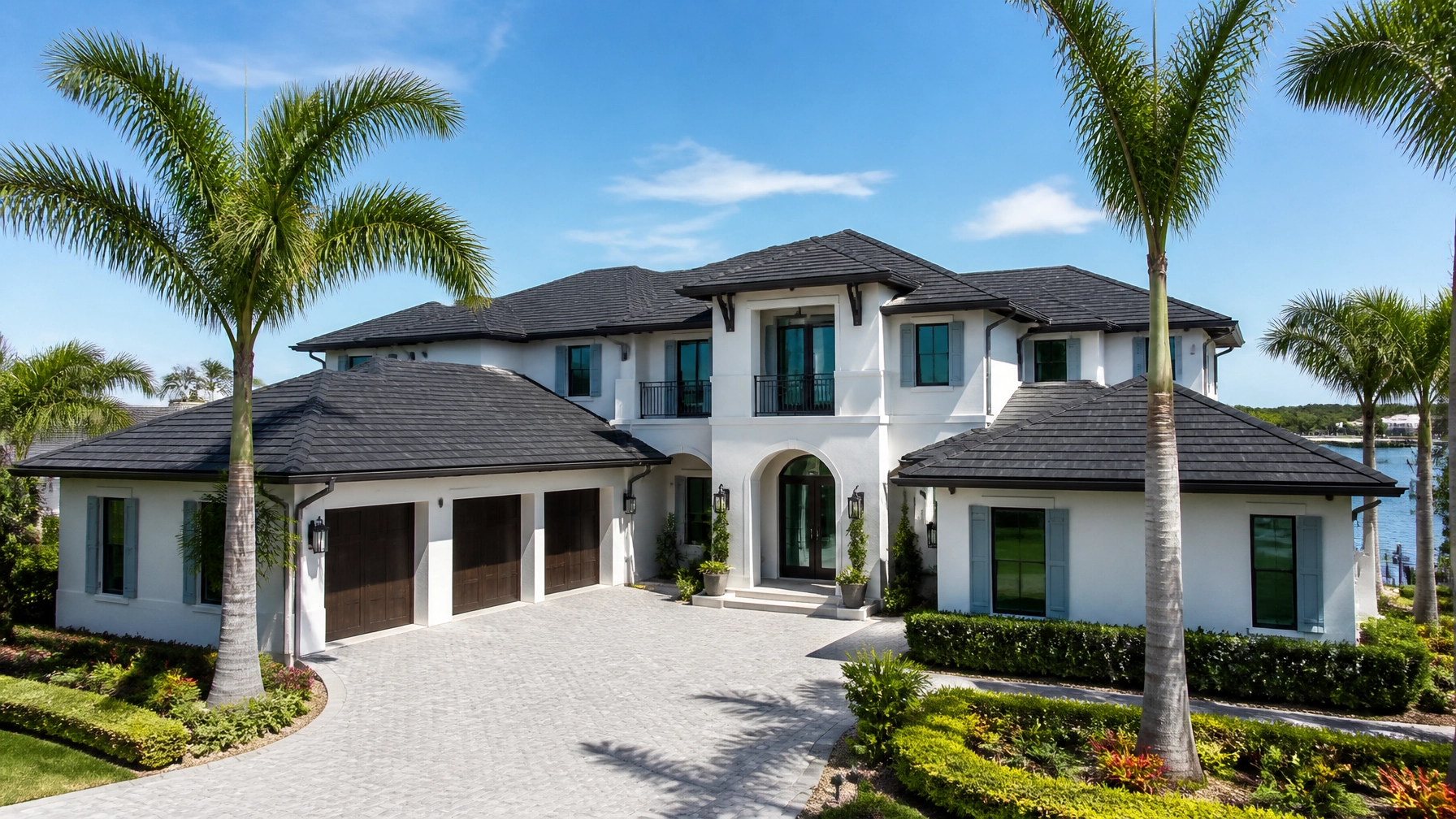
The summer of 2026 has already put Tampa’s residential infrastructure to the ultimate test. Following the significant hailstorm on July 10, 2026, which pelted approximately 25,000 homes with 0.50 to 1.25-inch hail and 55 mph gusts, followed by a secondary event on July 17, local homeowners are no longer asking if they need a new roof: they are asking which material will survive the next decade of Gulf Coast volatility.
Choosing between Architectural Shingles (Popular) and Standing Seam Metal (Premium) is the most critical financial decision a Tampa homeowner will make this year. With the Florida Building Code (8th Edition) raising the bar for wind resistance and insurance companies tightening their windows for claims, the "Material Showdown" has never been more relevant.
The Contenders: A Tale of Two Technologies
1. Architectural Shingles (The Modern Standard)
Unlike the flat, 3-tab shingles of the past, today’s architectural shingles (also known as dimensional or laminate shingles) are engineered for the Florida climate. They consist of two or more layers of asphalt laminated together, providing a thick, textured appearance that mimics wood shake or slate.
In the Tampa Bay roof replacement market, architectural shingles remain the dominant choice due to their balance of cost and performance. Under the current 2026 standards, these systems are installed with a mandatory 6-nail fastening pattern and high-wind starter strips to meet the 130–160 mph design wind speed requirements.
2. Standing Seam Metal Roofing (The Hurricane Fortress)
If architectural shingles are the reliable sedan, standing seam metal is the armored vehicle. This system features vertical panels joined by raised seams that "stand" above the level of the roofing surface. Because the fasteners are concealed, there are no exposed screws to back out or leak over time: a common failure point in cheaper "screw-down" metal roofs.
For a Tampa FL roofing contractor, standing seam is often recommended for coastal properties where salt spray and extreme uplift pressures are constant threats.

Tampa 2026 Pricing: What You’ll Actually Pay
Transparency is key to planning. Costs in the Tampa market have stabilized in mid-2026, but the gap between materials remains significant.
- Architectural Shingles: $4.50 – $7.50 per sq. ft. installed.
- Standing Seam Metal: $7.00 – $21.00 per sq. ft. installed.
For a standard 2,000 sq. ft. home (approximately 20–25 "squares" of roofing material), the total investment typically falls into these brackets:
- Shingles (Budget to Mid-Range): $9,000 – $22,000
- Metal (Premium Investment): $19,000 – $38,000
Note: These prices factor in the removal of the old roof, permit fees, and the required secondary water resistance (SWR) mandated by Florida code.
Engineering for the Gulf Coast: The 2026 Code Reality
Tampa is classified as a wind-borne debris region. This means any Tampa roof replacement 2026 must adhere to strict engineering standards.
The 25% Rule
Under the Florida Building Code, if more than 25% of your roof is damaged or repaired within a 12-month period, the entire roof must be brought up to the current 2026 hurricane codes. For many homeowners with roofs installed before 2002, this means a simple "patch job" after the July 10th hailstorm is often legally impossible.
Wind Speed & Fastening
The baseline design wind speed for Tampa is 130 mph, but depending on your home’s proximity to the bay (Exposure Category C or D), your system may need to be engineered for 140–160 mph.
- Shingles: Require 8d ring-shank nails and a sealed roof deck (SWR).
- Metal: Requires specific clip spacing to prevent panel uplift during a tropical cyclone.

Insurance, Mitigation, and the 12-Month Window
If your roof was impacted by the July 2026 hailstorms, the clock is ticking. Florida law generally provides a 12-month window from the Date of Loss to file an insurance claim. Waiting until the 2027 season could result in an automatic denial.
Saving with Wind Mitigation Credits
Regardless of the material you choose, a new roof in 2026 should trigger significant Florida wind mitigation credits. By having a licensed inspector complete the OIR-B1-1802 form, you prove to your insurer that your home has:
- A code-compliant roof covering.
- Enhanced roof-to-deck attachment (ring-shank nails).
- A secondary water resistance barrier.
These features can save Tampa homeowners hundreds of dollars per year on premiums, often recouping the cost difference of a metal roof over its lifespan.
Material Comparison Table: 2026 Tampa Edition
| Feature | Architectural Shingles (Budget) | Standing Seam Metal (Premium) |
|---|---|---|
| Typical Cost (2,000 sq ft) | $9,000 – $22,000 | $19,000 – $38,000 |
| Lifespan in Tampa Heat | 18 – 25 Years | 50+ Years |
| Wind Resistance | Up to 130 mph | 150+ mph |
| Hail Resistance | Moderate (Class 3/4) | High (Impact Rated) |
| Heat Reflection | Low (Absorbs UV) | High (Cool Roof Tech) |
| Maintenance | Low (Periodic cleaning) | Extremely Low |
The Tampa Climate Verdict
Tampa’s humid subtropical climate is brutal on roofing. High UV exposure breaks down asphalt oils in shingles, while intense summer thunderstorms create rapid thermal expansion and contraction.
- Choose Architectural Shingles if: You plan to move within 10 years, want the lowest upfront cost, and prefer the traditional look of shingles.
- Choose Standing Seam Metal if: You want the "forever roof," maximum insurance discounts, and the best possible protection against the 150+ mph winds of a major hurricane.

Get Your Instant Tampa Estimate in 60 Seconds
Don't wait for a contractor to find time in their schedule to visit your home. At Get My Roof Estimate Now, we use advanced satellite imagery to measure your roof's size, pitch, and complexity with 95% accuracy.
Whether you are looking for a Tampa FL roofing contractor to handle a hail claim from the July 10th storm or just planning for the future, you can get a transparent, multi-tier price range in under a minute.
Click here to get your instant, free Tampa roof estimate now.
No credit card required. No pressure. Just the data you need to protect your home.
Frequently Asked Questions
Do I need a Tampa FL roofing permit for a minor repair?
In the City of Tampa, a permit is typically required for any work exceeding 500 square feet or any repair that constitutes more than 25% of the total roof area. Always check with a licensed Florida roofing contractor to ensure compliance.
What are Florida Product Approval (FPA) numbers?
Every roofing material installed in Tampa must have an FPA number. This proves the material has been tested to survive Florida’s specific wind and rain conditions.
How does the July 2026 hail impact my shingle roof?
Hail between 0.50 and 1.25 inches can "bruise" shingles, knocking off the protective granules and exposing the asphalt to the sun. This leads to premature failure and leaks. If you were in the hail path on July 10 or July 17, an inspection is highly recommended.
Leave a Reply