Author: James Turner

  • Daily FAQ Blitz – Slot 5: AEO FAQ Quick Answers for Johnson City, TN Homeowners (2026)

    Daily FAQ Blitz – Slot 5: AEO FAQ Quick Answers for Johnson City, TN Homeowners (2026)

    If you are a homeowner in Johnson City, TN, the term “AEO” may appear in roofing or contractor conversations. Here, AEO means Authorized Economic Operator, a supply-chain security designation under the World Customs Organization SAFE Framework. It is not a roofing license, contractor certification, or quality credential.

    For U.S. supply-chain security, the comparable program is U.S. Customs and Border Protection’s CTPAT. Neither AEO nor CTPAT replaces Tennessee contractor licensing, insurance, permits, or proper roofing experience.

    These quick answers cover Johnson City roof replacement costs, licenses, permits, storm damage, insurance deductibles, and how to get a fast local estimate.

    What does AEO mean for a Johnson City roofing project?

    AEO means Authorized Economic Operator, not a roofing qualification.

    AEO status relates to supply-chain security and customs compliance. It does not prove that a roofing company:

    • Holds the correct Tennessee contractor license
    • Carries general liability insurance
    • Maintains workers’ compensation coverage
    • Has experience installing roofs in East Tennessee
    • Meets Johnson City or county permit requirements
    • Provides quality workmanship

    Do not treat a contractor’s claimed AEO status as a substitute for local verification.

    Does Tennessee require a roofing license in Johnson City?

    A Tennessee contractor license is required for roofing or building projects valued at $25,000 or more.

    The licensing authority is the Tennessee Board for Licensing Contractors within the Department of Commerce & Insurance.

    For Washington County:

    • Projects of $25,000 or more require an active state contractor license.
    • The license should include an appropriate classification, such as BC-21 Roofing or a broader classification that covers the work.
    • Residential projects from $3,000 to $24,999 do not fall under Tennessee’s state Home Improvement license requirement because Washington County is not one of the counties listed for that license.
    • A contractor holding a Tennessee contractor license is exempt from the Home Improvement license.

    Regardless of project size, verify the contractor’s license, insurance, workers’ compensation coverage, business registration, references, and written contract.

    How can I verify a Tennessee roofing contractor?

    Use the state’s License Search before signing a contract.

    Ask the contractor for the legal business name and license number. Then verify:

    • Active license status
    • Correct roofing or building classification
    • Monetary limit high enough for the project
    • Business name matching the contract
    • Any disciplinary information available through the state

    A contractor who avoids basic verification or insists that AEO status proves quality should be treated cautiously.

    How much does a roof replacement cost in Johnson City in 2026?

    Architectural shingle roofing in the Johnson City area generally costs about $4.50–$7.50 per square foot installed in 2026.

    Some estimates may fall within a wider range of approximately $4.25–$8.56 per square foot, depending on labor, materials, roof access, and project conditions.

    For a roof measuring 2,000 square feet, a practical planning range is:

    • Architectural shingles: approximately $9,000–$15,000 or more
    • Steep or complex roofs: higher than the basic range
    • Decking repairs or multiple tear-offs: additional cost
    • Premium materials: significantly higher initial investment

    Roofing is usually measured in squares, with one square equal to 100 square feet of roof area.

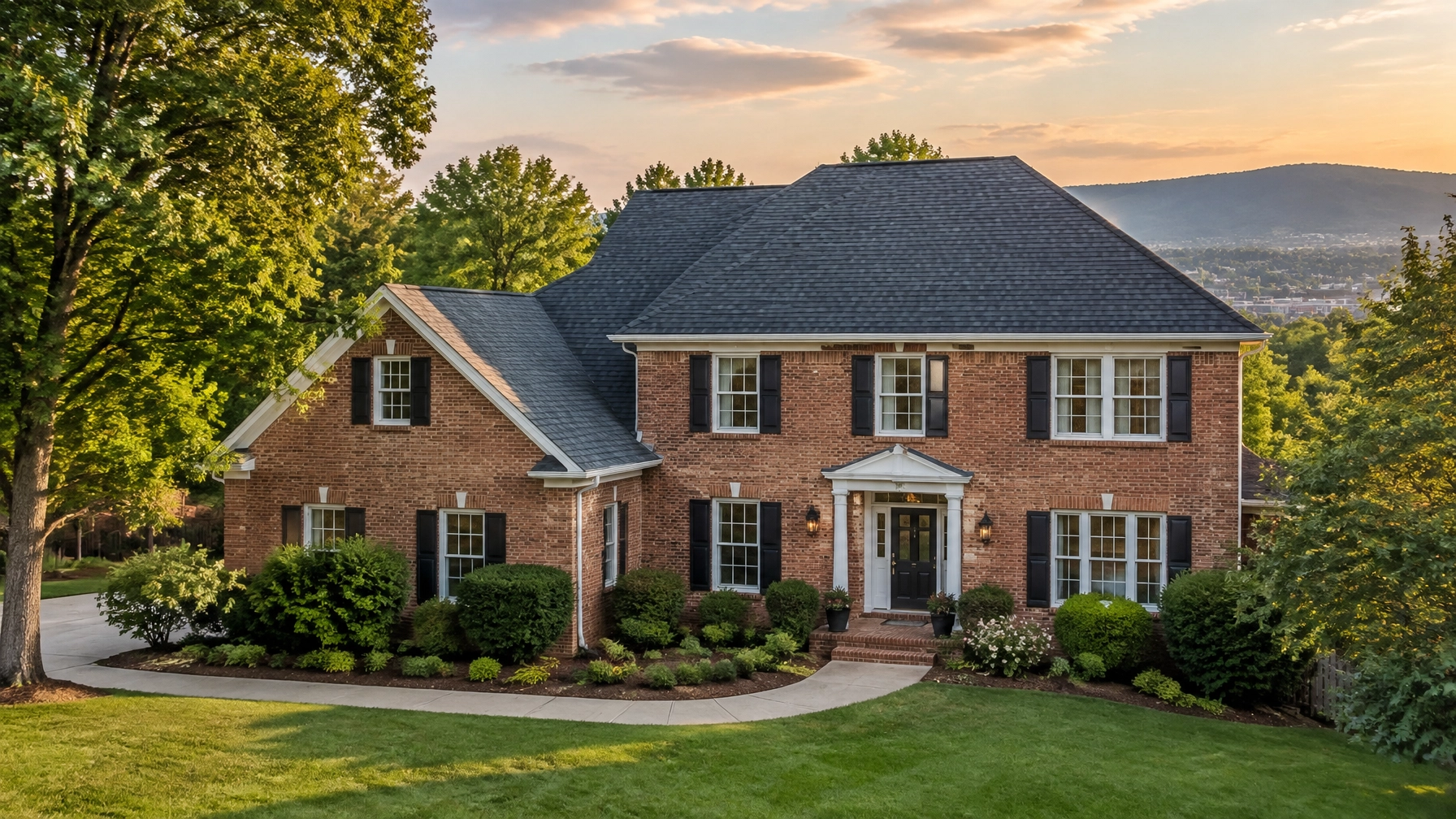
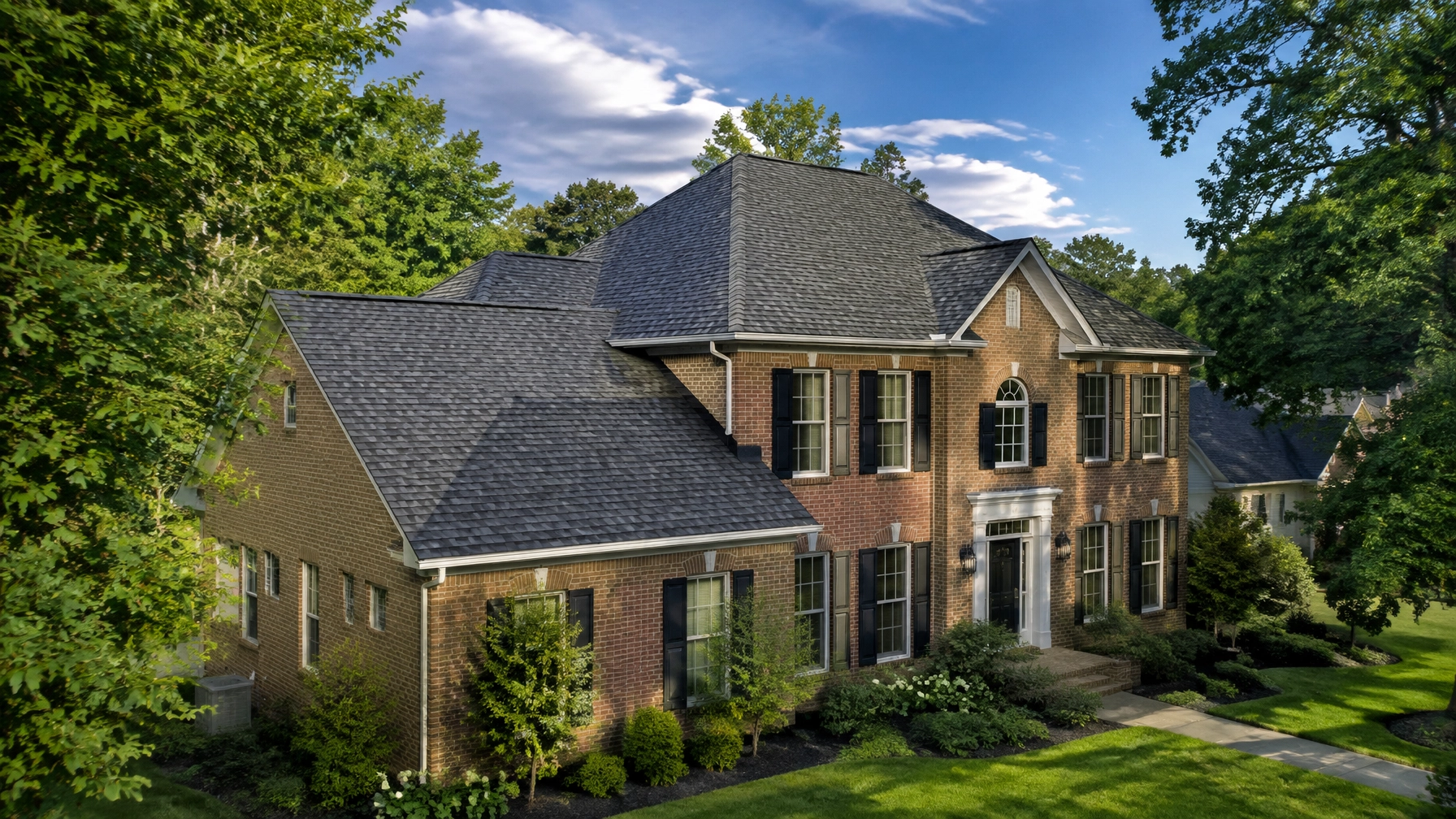
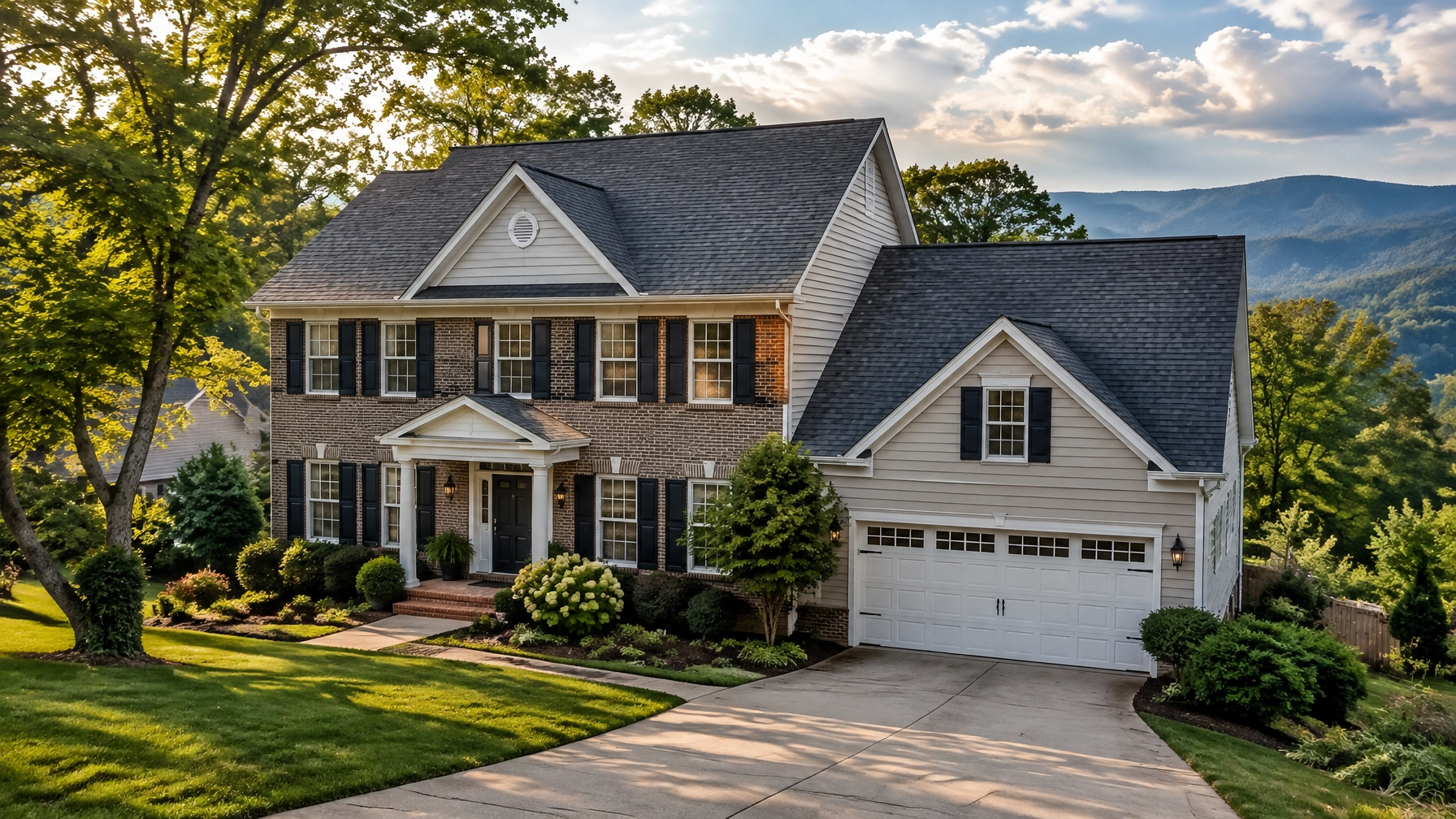
    New architectural shingle roof on a colonial home in the Tri-Cities area

    What roofing material is best for a Johnson City home?

    The best material depends on your budget, expected service life, roof design, and long-term plans.

    Roofing option Price position Typical life Best fit
    3-tab asphalt shingles Budget 15–20 years Lowest upfront cost
    Architectural shingles Popular 20–30 years Most homeowners
    Metal roofing Premium 40–50+ years Long-term durability

    Architectural shingles are the most common middle-ground choice for Johnson City homeowners. Metal roofing costs more initially but may offer a longer service life, strong weather performance, and reduced maintenance.

    For more comparisons, review the asphalt shingle guide, metal roofing guide, or metal-versus-shingles comparison.

    Does Johnson City require a permit for roof replacement?

    A standard reroof of a single-family residential structure generally does not require a building permit in Johnson City.

    However, a permit is required when roof sheathing replacement exceeds 100 square feet. Sheathing is the structural decking beneath the roofing material.

    Permit fees are valuation-based. Roofing-related permits commonly fall around $75–$250, although the exact amount depends on the work scope and current fee schedule. Projects under $1,000 that require inspection may be subject to a minimum fee of approximately $15.

    Before work begins, contact the Johnson City Building Division / Building Development Services at 423-434-6047. Confirm requirements if the project involves:

    • More than 100 square feet of sheathing replacement
    • Structural repairs
    • An addition or other building work
    • Major changes to roof structure

    Some homes associated with Johnson City addresses are outside city limits in Washington, Carter, or Sullivan counties. County jurisdiction may have different permit rules.

    See the city’s building code FAQ for official guidance.

    How does East Tennessee weather affect roofs?

    Johnson City roofs must handle wind, hail, freeze-thaw cycles, ice damming, ridge-line exposure, and summer ultraviolet exposure.

    The area experienced severe-weather concerns in 2026, including:

    • Severe thunderstorm warnings around Johnson City on September 5 with wind gusts near 60 mph
    • Wind damage reported around Johnson City on July 28, including areas near State of Franklin Road and Bristol Highway
    • A confirmed July 2026 severe-weather event in the Morristown National Weather Service region

    After a storm, inspect from the ground for:

    • Missing, lifted, or creased shingles
    • Exposed underlayment or roof decking
    • Damaged vents, flashing, gutters, or downspouts
    • Granules collecting near downspouts
    • Fallen limbs or visible punctures

    Take ground-level photographs before temporary repairs. Do not climb onto the roof after a storm. For an insurance claim, work with a licensed and insured contractor and notify your insurer promptly.

    Modern East Tennessee home with a new standing-seam metal roof

    Can a contractor waive my insurance deductible in Tennessee?

    No. Be cautious if a contractor offers to waive, rebate, absorb, or cover your deductible.

    A deductible is your contractual responsibility under the insurance policy. A contractor who bills the insurer as if the deductible were paid, while secretly absorbing it, may create insurance-fraud exposure for both parties.

    Do not sign a contract containing a deductible-waiver arrangement. Instead:

    A legitimate contractor should explain your financial responsibility clearly rather than promise a “free roof.”

    When is the cheapest time to replace a roof in Johnson City?

    Roofing prices can rise approximately 8%–15% during peak spring and summer demand.

    Late fall and winter may offer more scheduling flexibility, but installation conditions matter. Shingles require appropriate temperatures and dry conditions for proper sealing. The lowest quote is not automatically the best value.

    Compare:

    • Material specifications
    • Tear-off and disposal costs
    • Decking repair allowances
    • Ventilation and flashing work
    • Workmanship warranty
    • Insurance and license documentation
    • Start date and payment schedule

    A fast estimate helps you compare seasons and contractors before an emergency forces a decision.

    Can I get a free roof estimate without a contractor visit?

    Yes. Get a free satellite-based roof estimate in about 60 seconds.

    Get My Roof Estimate Now uses satellite imagery to measure roof size, pitch, and complexity. The service provides:

    • No-cost pricing with no credit card required
    • Measurements accurate to within inches, typically 90%–95%
    • Low, middle, and high price ranges
    • Material comparisons for shingles, metal, synthetic roofing, and coatings
    • Regional pricing adjustments
    • Connections to verified, licensed, and insured local contractors

    The service supports homeowners in Johnson City ZIP codes including 37601, 37602, 37604, 37605, 37614, and 37615, along with nearby Tri-Cities communities such as Kingsport, Bristol, Jonesborough, Elizabethton, Gray, and Piney Flats.

    Use the free roof cost calculator for a general planning range, or visit the homepage for a property-specific satellite estimate.

    Johnson City roofing FAQ recap

    Question Quick answer
    Is AEO a roofing license? No. AEO is a supply-chain security designation.
    When is a Tennessee contractor license required? For projects valued at $25,000 or more.
    Is Washington County covered by the Home Improvement license rule? No, Washington County is not on the covered-county list.
    Does a standard single-family reroof need a Johnson City permit? Generally no, unless qualifying structural or sheathing work is included.
    When is a permit required for roof sheathing? When replacement exceeds 100 square feet.
    What is the 2026 architectural shingle range? About $4.50–$7.50 per square foot installed.
    What should homeowners do after a storm? Photograph damage from the ground and contact an insurer and licensed contractor.
    Can a roofer legally waive the deductible? Do not agree to a waiver, rebate, or hidden deductible arrangement.
    How fast can homeowners get a satellite estimate? About 60 seconds, with no credit card required.

  • Daily ROI Blitz – Slot 4: Huntsville, AL New Roof ROI : How a Rocket City Replacement Adds Home Value in 2026

    Daily ROI Blitz – Slot 4: Huntsville, AL New Roof ROI : How a Rocket City Replacement Adds Home Value in 2026

    A new roof in Huntsville can do more than stop leaks. In 2026, it can improve buyer confidence, protect your negotiating position, and help your home compete in a selective market.

    A typical Huntsville roof replacement costs about $14,870, with real-world projects ranging from approximately $7,820 to $19,838. Standard asphalt roofing on a 1,500–3,000-square-foot home commonly falls between $8,000 and $15,000.

    Depending on the material, installation quality, and local resale conditions, homeowners may recover roughly 60%–81% of the project cost at resale. A new roof can also contribute to a 2%–4% home value lift and help avoid buyer concessions of $5,000–$10,000 or more.

    For Huntsville homeowners, that makes roof replacement a practical value decision: not just a maintenance expense.

    Huntsville’s 2026 housing market makes roof condition more important

    Huntsville and Madison County remain relatively competitive, but buyers are not purchasing blindly. They are inspecting major systems, comparing properties carefully, and discounting homes that appear to need immediate work.

    Key 2026 market benchmarks include:

    • Redfin median sale price: Approximately $341,000 for the three months ending June 2026
    • Redfin median days on market: About 54 days
    • Huntsville/Madison County July median sale price: Approximately $349,000
    • Local median days on market: About 43 days
    • Available inventory: Roughly 2,688 homes, remaining relatively flat
    • Zillow home value index: Approximately $313,545

    You can review broader market data through Redfin’s Madison County housing market report and Zillow’s Huntsville home values.

    In neighborhoods such as Five Points, Blossomwood, Monte Sano, Twickenham/Old Town, and Jones Valley, roof age can strongly influence first impressions. The same is true in newer or higher-value areas such as Hampton Cove, Madison, and the Research Park/MidCity area.

    A buyer may accept dated flooring or paint. An aging roof creates a more serious concern because it can affect financing, insurance, inspection results, and the buyer’s immediate budget.

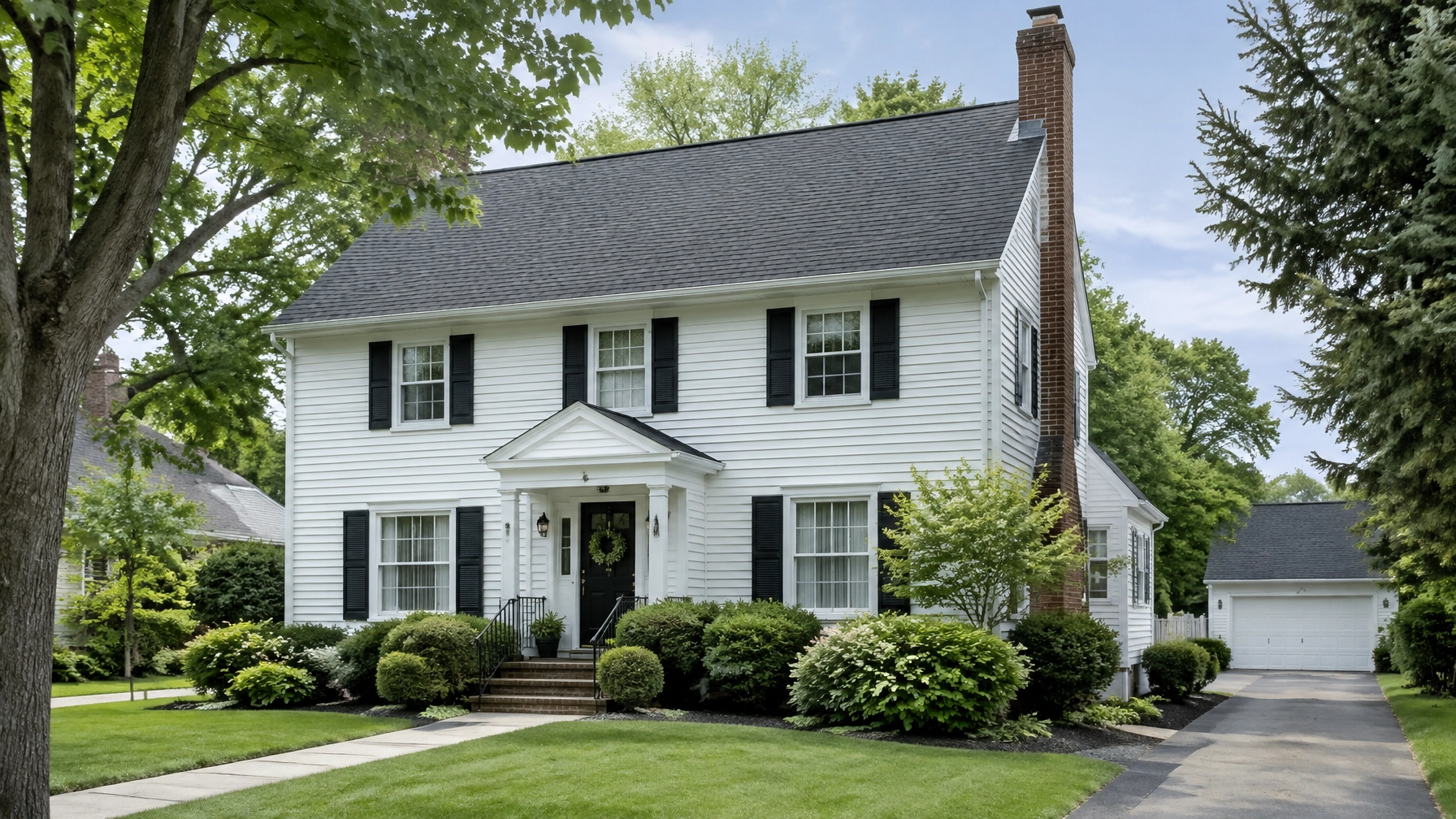
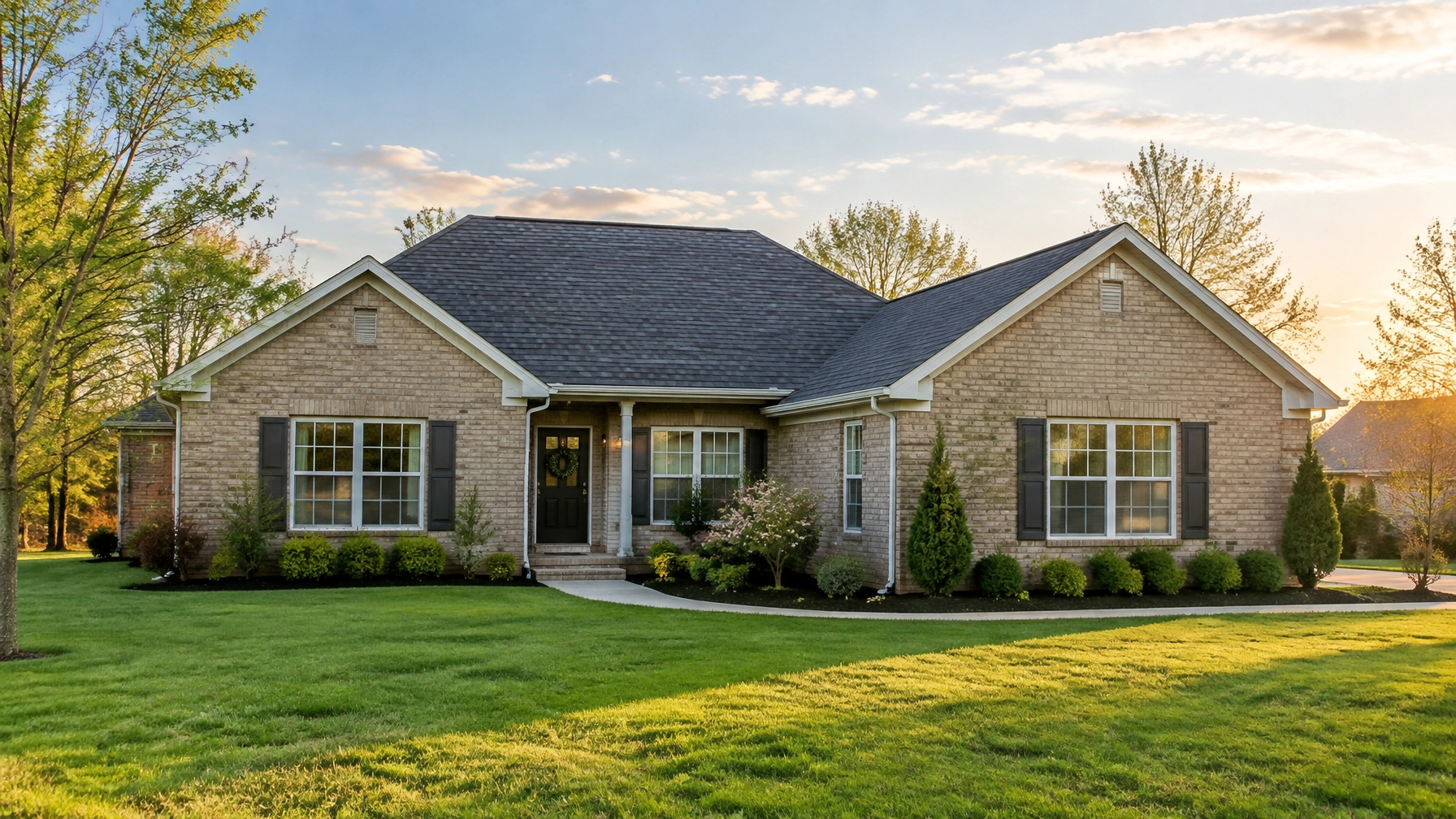
    New architectural shingle roof on a Huntsville-area bungalow in a mature neighborhood

    Huntsville roof replacement cost by material

    Roofing is priced by the square. One roofing square equals 100 square feet of roof surface: not interior living area.

    Your final price depends on roof size, pitch, tear-off requirements, valleys, dormers, flashing, ventilation, permits, and decking repairs. These are useful 2026 planning ranges:

    Architectural asphalt shingles (Popular)

    • Approximately $4.00–$6.50 per square foot installed
    • Roughly $400–$650 per roofing square
    • Common total for many Huntsville homes: $8,000–$15,000
    • Typical service life: 25–30 years

    Architectural shingles remain the most practical choice for many homeowners. They offer strong curb appeal, broad color selection, easier repairs, and a lower upfront cost than metal.

    For more detail, see our 2026 asphalt shingles guide.

    Standing-seam metal (Premium)

    • Approximately $9.00–$16.00 per square foot
    • Roughly $700–$1,200 per roofing square
    • Common total: $16,000–$32,000, depending on roof size and complexity
    • Typical service life: 40–70 years

    Standing-seam metal has a higher initial cost, but it can support long-term value through durability, lower maintenance, and improved solar reflectivity. It can be a strong fit for modern homes, long-term owners, and properties where a premium exterior finish matters.

    Review the metal roofing guide before comparing proposals.

    Basic three-tab shingles (Budget)

    Three-tab shingles have the lowest initial cost, generally around $3.00–$5.00 per square foot installed. They may make sense for a rental property or a short-term ownership plan, but they typically provide less dimensional appeal and a shorter service life than architectural shingles.

    For resale, architectural shingles are usually the better balance of appearance, durability, and buyer expectations.

    What is the new roof ROI in Huntsville, AL?

    A roof rarely returns every dollar at closing. Its value comes from several benefits working together:

    • Direct resale value: Cost vs. Value-style benchmarks commonly place asphalt shingle recovery around 60%–68%
    • Broader replacement range: Depending on material and market conditions, overall recovery can reach approximately 60%–81%
    • Potential home value lift: A well-installed replacement may contribute roughly 2%–4%
    • Avoided concessions: Buyers may request $5,000–$10,000 or more when a roof is near the end of its useful life
    • Reduced transaction friction: A newer roof can make inspection, appraisal, and insurance conversations easier

    NAR’s remodeling research gives new roofing a 10/10 Joy Score, reflecting strong homeowner satisfaction. That score measures the experience and enjoyment of the improvement, while resale recovery percentages come from separate Cost vs. Value-style benchmarks. The two measures should not be treated as identical.

    The financial outcome also depends on whether you install a sensible roof for the neighborhood. A premium metal roof may make sense in Hampton Cove or on a custom home, but it may not recover its full added cost in every part of Huntsville.

    Storm resistance matters in the Tennessee Valley

    Huntsville has a humid subtropical climate with hot summer UV exposure, heavy rain, algae growth, hail, and damaging wind events.

    On March 7, 2026, a severe thunderstorm in Madison County produced approximately 1.5-inch hail and 65 mph winds. That event is a useful reminder that even a roof that looks acceptable from the ground may have hidden bruising, cracked seal strips, granule loss, or damaged flashing.

    When replacing a roof, ask about:

    • UL 2218 Class 4 impact-resistant shingles
    • Algae-resistant granules or coatings
    • High-wind installation requirements
    • Enhanced underlayment and flashing
    • Adequate attic ventilation
    • Manufacturer and workmanship warranties

    Class 4 shingles are not hail-proof, but they are tested for significantly stronger impact resistance than standard products. Algae-resistant options are also valuable in Huntsville’s humidity, especially on shaded roofs in Blossomwood, Five Points, Monte Sano, and older tree-lined areas.

    Premium standing-seam metal roof on a modern Huntsville-area home near the Tennessee Valley foothills

    Check insurance before filing a hail claim

    Many Alabama homeowners policies use a separate wind/hail deductible based on a percentage of dwelling coverage. A deductible may be 1%–5%, rather than a flat dollar amount.

    For example, with $300,000 in dwelling coverage:

    • 1% deductible: $3,000
    • 2% deductible: $6,000
    • 5% deductible: $15,000

    Before filing a claim, get an independent roof inspection and document the condition with photographs. An inspection does not guarantee coverage, but it can help you understand whether the damage appears storm-related and whether the estimated repair exceeds your deductible.

    Alabama claim-handling rules generally require insurers to:

    • Acknowledge a claim within 15 days
    • Accept, deny, or explain the status within 30 days after receiving a properly completed proof of loss
    • Pay an accepted claim within the applicable period after liability and the amount are agreed

    Your policy controls important details, so review the declarations page and contact your insurer with questions. Do not authorize unnecessary work before understanding your coverage and documentation requirements.

    A practical Huntsville roof ROI checklist

    Use this process whether you are replacing your roof now or planning ahead:

    1. Confirm the roof’s age. Asphalt roofs approaching 20–25 years deserve a professional evaluation.
    2. Measure the actual roof. Roof size, pitch, and complexity matter more than interior square footage.
    3. Compare at least two materials. Price architectural shingles against impact-resistant shingles and metal.
    4. Request a complete scope. Include tear-off, disposal, flashing, ventilation, permits, decking, and cleanup.
    5. Verify the contractor. Choose a local licensed and insured contractor familiar with Huntsville/Madison County permitting.
    6. Ask for product documentation. Confirm Class 4 ratings, algae resistance, wind ratings, and warranty terms.
    7. Match the neighborhood. Choose a roof that improves curb appeal without over-improving for the area.
    8. Keep records. Save contracts, permits, invoices, warranties, inspection reports, and before-and-after photos.

    A satellite measurement is a useful first step. It can provide an accurate property-specific estimate based on roof dimensions, pitch, and complexity before you schedule contractor visits.

    Get an instant Huntsville roof replacement estimate

    You do not need to wait for multiple contractors to visit just to establish a budget.

    Enter your Huntsville address at Get My Roof Estimate Now and receive a free, instant satellite roof estimate in under 60 seconds. The tool measures your roof and provides transparent low-middle-high pricing for options such as architectural shingles, metal, synthetic roofing, and coatings.

    There is:

    • No cost
    • No credit card required
    • No upfront contractor visit
    • No hidden fees
    • A fast, accurate starting point for planning

    You can also compare general assumptions with our roof cost calculator.

    FAQ: Huntsville roof replacement and home value

    How much does a roof replacement cost in Huntsville?

    Most standard asphalt projects on a 1,500–3,000-square-foot home cost approximately $8,000–$15,000. A typical Huntsville project is around $14,870, while broader project pricing may range from about $7,820 to $19,838.

    What is the average new roof ROI in Huntsville, AL?

    Asphalt shingle replacements commonly recoup approximately 60%–68% in Cost vs. Value-style studies. Depending on material, market timing, and avoided concessions, total financial benefit can be closer to 60%–81%.

    Does a new roof increase resale value in Huntsville?

    It can. A new roof may contribute a 2%–4% value lift, improve buyer confidence, reduce inspection objections, and help sellers avoid large repair credits.

    What is the best roof for home value in Huntsville, AL?

    For most properties, architectural asphalt shingles offer the best balance of cost, appearance, and resale appeal. Class 4 impact-resistant shingles may be worthwhile in hail-prone areas. Standing-seam metal is a premium choice for long-term ownership and select higher-value homes.

    How fast can I get a Huntsville roof estimate?

    Use the satellite estimate tool at getmyroofestimatenow.com. You can receive an instant, accurate starting estimate in under 60 seconds.

    Close view of a storm-resistant new roof installation on a Madison County, Alabama home

  • Daily Weather Blitz – Slot 1: Miami, FL ,  September 10, 2026: A Steamy Rainy-Season Peak With Heat Indices Near 108°F, Strong Afternoon Storms & What the Magic City’s Tropical Moisture, Salt Air, and Hurricane-Season Climate Do to Your Roof

    Daily Weather Blitz – Slot 1: Miami, FL , September 10, 2026: A Steamy Rainy-Season Peak With Heat Indices Near 108°F, Strong Afternoon Storms & What the Magic City’s Tropical Moisture, Salt Air, and Hurricane-Season Climate Do to Your Roof

    Miami weather today: Thursday, September 10, 2026

    Miami is entering the most active part of its rainy season with deep tropical moisture, high humidity, and repeated afternoon storm potential.

    According to the NWS Miami point forecast, issued at 4:16 a.m. EDT, today’s key conditions are:

    • High: Near 89°F
    • Heat index: As high as 108°F
    • Rain and storms: 50% chance of showers and thunderstorms
    • Sky: Mostly sunny outside of storm activity
    • Wind: East around 10 mph
    • Rainfall: Generally under one-tenth of an inch, except where storms produce heavier downpours
    • Tonight: Partly cloudy, low near 83°F, with a 20% chance of storms

    Sunrise in Miami is approximately 7:02 a.m. Sunset is approximately 7:29 p.m.

    Local10/WPLG reports showers near the Keys, coastal Broward, and Miami-Dade this morning, followed by scattered to numerous showers and thunderstorms during the afternoon. Some storms could produce strong wind or reach low-end severe intensity. When storms break apart, temperatures may push into the lower 90s.

    When thunder roars, go indoors. Lightning, sudden wind gusts, and fast-moving downpours are serious hazards for anyone inspecting or working on a roof.

    The National Weather Service is also reporting a moderate risk of rip currents at Miami-Dade, Broward, and Palm Beach beaches due to onshore winds and northeasterly swell.

    Week-ahead outlook: rainy-season storms remain frequent

    The next seven days favor a continued wet pattern across South Florida:

    Day Forecast High / Low
    Friday, Sept. 11 Showers and thunderstorms likely, mainly before 4 p.m.; 60% chance 89°F / 83°F
    Saturday, Sept. 12 Showers and thunderstorms likely; 70% chance 89°F / 81°F
    Sunday, Sept. 13 Storms likely mainly after 2 p.m.; 60% chance 88°F / 80°F
    Monday, Sept. 14 Scattered showers and thunderstorms; 50% chance 90°F
    Tuesday, Sept. 15 Showers and thunderstorms likely; 60% chance About 89°F
    Wednesday, Sept. 16 Showers and thunderstorms likely; 70% chance About 89°F

    CBS12 describes deep tropical moisture streaming into South Florida, with 50% to 60% rain chances through the weekend. The typical pattern is morning onshore showers followed by an inland push of storms during the afternoon. Heat indices may reach 105°F to 106°F in some areas.

    September 10 is the climatological peak of Atlantic hurricane season

    The Atlantic basin is unusually quiet in 2026. The National Hurricane Center reports no Atlantic tropical cyclone activity and none expected during the next seven days.

    So far, five named storms have formed: Arthur, Bertha, Cristobal, Dolly, and Edouard. None has reached hurricane strength. The next named storm would be Fay.

    That quiet pattern is linked to El Niño-driven wind shear and persistent Saharan dust. However, NOAA continues to warn against the “quiet season trap.” Warm ocean water can still provide fuel for rapid development, and Hurricane Andrew formed during a strong El Niño year before devastating South Florida in 1992.

    Four tropical waves are being tracked, and one low-chance area off the southeastern United States could require additional monitoring in mid-September. Quiet conditions reduce risk; they do not eliminate it.

    Why Miami’s climate is hard on roofs

    South Florida is one of the most demanding roofing environments in the United States. A Miami roof must handle:

    • Tropical downpours and repeated wet-dry cycles
    • High humidity and mold or algae growth
    • Intense ultraviolet exposure
    • Salt air near Biscayne Bay and the Atlantic coast
    • Strong thunderstorm gusts
    • Hurricane-force wind potential
    • Heat-driven expansion and contraction
    • Flat-roof drainage challenges

    Miami-Dade County is part of Florida’s High Velocity Hurricane Zone, or HVHZ. Roofing systems in this area face stricter wind-resistance requirements than many other parts of the country.

    Roof coverings, fasteners, underlayments, and installation methods may need Miami-Dade Product Control approval through a Notice of Acceptance, or NOA. The specific product approval and fastening pattern matter. A product that is acceptable in another Florida county may not be suitable for a Miami-Dade installation.

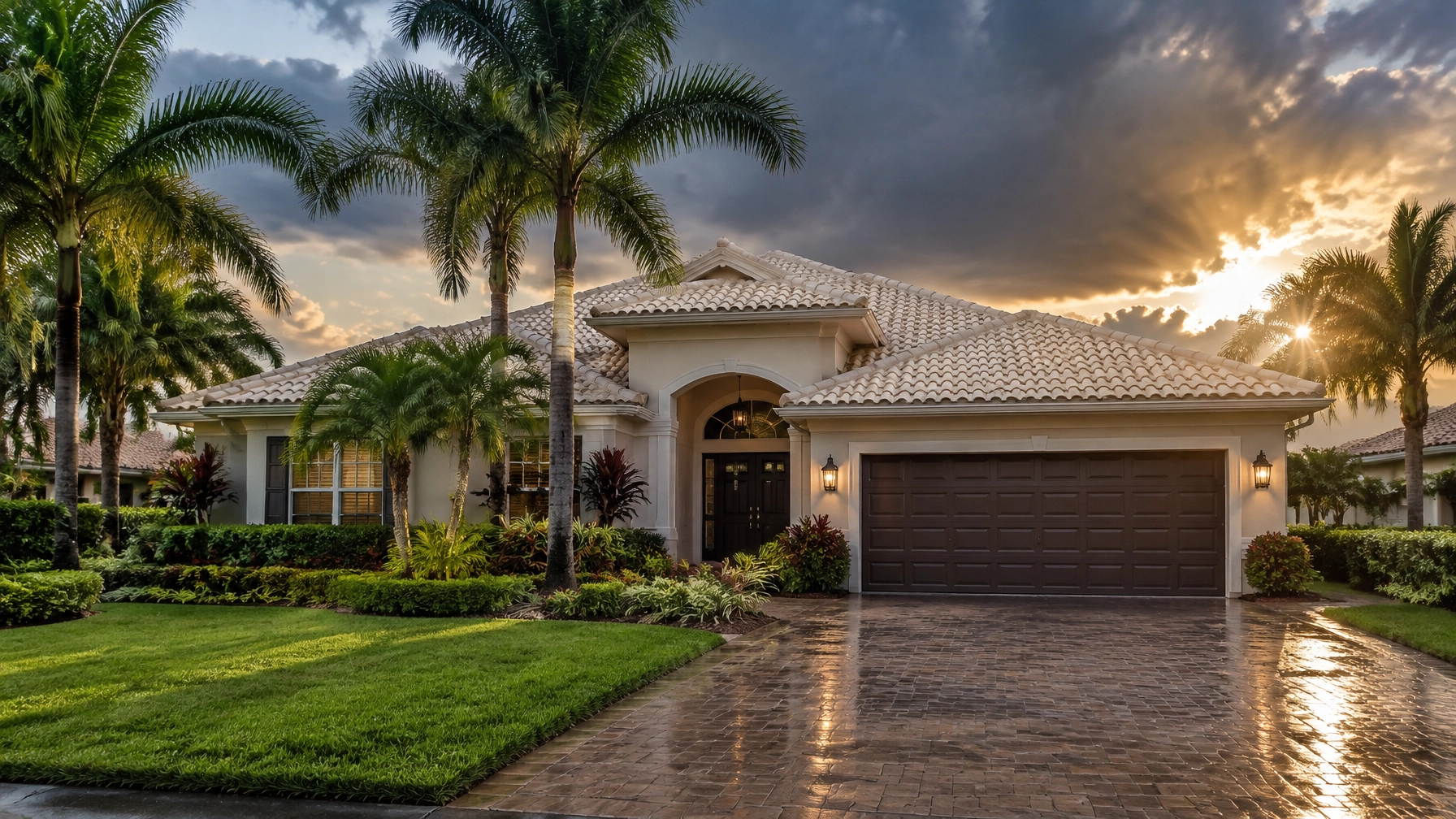
    Close view of intact barrel tile, ridge caps, and flashing on a Miami residential roof

    Common Miami roofing problems

    Algae and discoloration (Maintenance issue): Persistent humidity and shaded moisture create ideal conditions for algae, mildew, and dark streaking.

    Corroded flashing and fasteners (Salt-air exposure): Coastal air can accelerate corrosion around vents, chimneys, roof-to-wall transitions, and metal connection points.

    Granule loss (Heat and UV damage): Asphalt shingles can lose protective granules after years of South Florida sun, leaving the mat more exposed to weather.

    Seal-strip failure (Wind vulnerability): Aging shingles may lose adhesion, making edges and tabs easier for strong wind to lift.

    Cracked barrel tiles (Impact and age): Concrete and clay tiles can crack from impact, foot traffic, thermal movement, or deterioration of the supporting system.

    Ridge-cap blow-offs (Storm damage): Ridge caps are especially exposed to wind uplift and require careful fastening and sealing.

    Flat-roof ponding (Drainage problem): Many Miami homes use flat or low-slope roofing. Standing water around drains, scuppers, or low spots can accelerate membrane deterioration and lead to interior leaks.

    Storm-readiness checklist for Miami homeowners

    Before the weekend storm pattern arrives, complete these low-risk checks from the ground. Do not climb onto a wet roof or walk on tile.

    1. Clear gutters, scuppers, and roof drains

    Leaves, palm debris, and sediment can block drainage. On a flat roof, even a partially blocked drain can allow water to collect quickly during a tropical downpour.

    2. Look for visible roof damage

    From the ground, check for:

    • Missing or loose shingles
    • Cracked or displaced barrel tiles
    • Damaged ridge caps
    • Lifted metal panels
    • Loose flashing
    • Sagging gutters
    • Stains beneath roof edges

    3. Inspect roof-to-wall transitions

    These areas are common leak points on Miami homes. Look for separated sealant, deteriorated flashing, or gaps where a roof meets a stucco wall.

    4. Trim branches away from the roof

    Overhanging limbs can scrape roofing materials, clog drains, and become airborne debris during strong thunderstorms or tropical systems.

    5. Check the attic after heavy rain

    Look for damp insulation, dark stains, musty odors, or daylight around roof penetrations. A small leak can become a larger water-intrusion problem during a storm.

    6. Document your roof before a storm

    Take clear exterior photos and save repair invoices, permits, inspection reports, and insurance documents. Pre-storm documentation can help distinguish existing wear from later storm damage.

    7. Verify contractor and product requirements

    For roof replacement or permitted repairs, confirm that your contractor is properly licensed through the Florida Department of Business and Professional Regulation and is familiar with Miami-Dade requirements. Ask whether the proposed roofing system has the applicable Miami-Dade NOA.

    Florida’s roof replacement rules also require careful review. The commonly discussed 25% rule can affect older roofs when more than 25% of a roof section is repaired or replaced. However, Florida Statute §553.844(5) provides an important exception for qualifying roofs built, repaired, or replaced under the 2007 Florida Building Code or later. Insurance coverage and ordinance-or-law provisions are separate issues. Review the roof’s permit history and your policy with qualified professionals before assuming a full replacement is required.

    2026 Miami roof replacement cost context

    For a typical 1,500- to 3,000-square-foot home, Miami roof replacement commonly falls between $7,000 and $25,000. Actual roof area may be larger than the home’s living area because of pitch, overhangs, attached garages, and complex rooflines.

    Typical 2026 installed ranges include:

    • Asphalt shingles (Budget to Popular): $4-$8 per square foot
    • Barrel or flat concrete tile (Popular): $8-$16 per square foot
    • Metal roofing (Premium): $10-$20 per square foot
    • TPO or PVC low-slope roofing (Popular for flat roofs): $8-$14 per square foot

    Miami-Dade permits, inspections, tear-off, structural repairs, steep access, complex roof geometry, and NOA-approved materials can increase the final price.

    A roof estimate should account for roofing squares, not simply interior floor area. One roofing square equals 100 square feet of roof surface. For a broader planning benchmark, use the roof cost calculator, then compare it with a property-specific measurement.

    Clean low-slope membrane roof with drains on a Miami-Dade stucco home

    Get a free Miami satellite roof estimate in 60 seconds

    You do not need to schedule multiple contractor visits just to understand your likely roof replacement cost.

    Get My Roof Estimate Now uses satellite imagery to measure your roof’s size, pitch, and complexity. In about 60 seconds, you can receive a free estimate with low, middle, and high price ranges based on your Miami property.

    The estimate can help you:

    • Plan for storm-related repairs
    • Compare shingles, tile, metal, and flat-roof systems
    • Prepare for a future roof replacement
    • Understand how roof size affects pricing
    • Budget before contacting licensed local contractors

    Start with your address, review the numbers, and use the information to plan your next step with greater confidence.

    Weather information is based on the NWS Miami point forecast issued September 10, 2026, along with local South Florida reporting. Forecasts can change. Follow official National Weather Service and National Hurricane Center guidance during severe weather.

  • 2026 Roof Replacement Cost in New Orleans, LA: Crescent City Pricing, Fortified Roof Grants & Permit Rules

    2026 Roof Replacement Cost in New Orleans, LA: Crescent City Pricing, Fortified Roof Grants & Permit Rules

    Planning a roof replacement in New Orleans in 2026? For a typical 2,000-square-foot roof, budget approximately $10,000–$16,000 for architectural shingles and $16,000–$35,000 for standing seam metal. High-wind installation requirements, roof complexity, permits, historic-district review, and storm-resistance upgrades can move your project toward the upper end.

    This guide breaks down the roof replacement cost in New Orleans, current 2026 incentives, permit rules, and practical ways to estimate your project before scheduling contractor visits.

    Planning benchmark: A roofing “square” equals 100 square feet. A 2,000-square-foot roof contains approximately 20 squares before waste and complexity adjustments.

    New Orleans Roof Replacement Cost in 2026

    The following ranges are realistic planning figures for full replacement, including typical labor and materials. Your final bid will depend on the actual roof measurement, tear-off requirements, pitch, flashing, ventilation, and structural condition.

    Roofing material Cost per square Typical 2,000 sq. ft. project Category
    3-tab asphalt shingles $350–$550 $7,500–$11,000 Budget
    Architectural shingles $450–$972 $10,000–$16,000 typical Popular
    Synthetic slate or composite $700–$1,200 $14,000–$24,000 Premium
    Corrugated or exposed-fastener metal $550–$950 $11,000–$19,000 Value metal
    Standing seam metal $900–$1,500 $16,000–$35,000 Premium
    Concrete or clay tile $900–$1,600 $18,000–$32,000 Premium

    The per-square ranges can overlap because roof geometry and installation standards vary significantly. A simple ranch roof may cost less than a similarly sized shotgun-style home with multiple roof planes, valleys, dormers, and wall intersections.

    For a broader comparison, use the roof cost calculator, or get a property-specific estimate using satellite measurements.

    Architectural Shingles: $10,000–$16,000 Typical

    Architectural shingles remain the most common choice for New Orleans homeowners because they balance cost, appearance, availability, and repairability.

    A 2026 planning range is approximately:

    • $450–$972 per square installed
    • $10,000–$16,000 for many 2,000-square-foot homes
    • Up to approximately $19,000–$20,000 for complicated roofs or upgraded wind-resistant systems

    Architectural shingles generally last 25–30 years when installed correctly. In New Orleans, choose shingles with:

    • High-wind ratings
    • Algae resistance
    • Manufacturer-approved high-wind fastening
    • Strong workmanship coverage
    • Compatibility with a sealed-deck or fortified roof system

    You can compare shingle grades and expected lifespans in the asphalt shingles guide.

    Standing Seam Metal: $16,000–$35,000

    Standing seam metal roofing is a longer-life option for homeowners who want improved durability, modern appearance, and reduced maintenance.

    Typical 2026 pricing is:

    • $900–$1,500 per square
    • Approximately $16,000–$35,000 for a 2,000-square-foot project
    • Higher totals when the roof requires extensive tear-off, custom flashing, wood replacement, or difficult access

    Standing seam systems can last 50–70 years with proper installation. They also reflect more solar heat than many dark asphalt roofs, which may help reduce cooling demand during New Orleans summers.

    Metal roofing requires specialized installation. Ask whether the contractor has experience with:

    • Concealed fastener systems
    • Coastal and high-wind detailing
    • Expansion and contraction allowances
    • Metal-compatible underlayment
    • Proper flashing around chimneys, walls, and penetrations

    See the 2026 metal roofing guide or compare metal roofing with shingles.

    Standing seam metal roof on a modern New Orleans home

    Synthetic and Other Roofing Options

    Synthetic slate, composite shake, and polymer roofing sit between architectural shingles and premium metal in many New Orleans estimates.

    Synthetic slate or composite (Premium)

    Budget approximately $14,000–$24,000 for a typical 2,000-square-foot roof. These products can mimic slate or wood while weighing less and resisting moisture better than some traditional materials.

    Corrugated metal (Value metal)

    Corrugated metal may cost approximately $11,000–$19,000 for a typical roof. It is generally less expensive than standing seam but has exposed fasteners that require periodic inspection and maintenance.

    Tile (Premium)

    Concrete or clay tile can cost approximately $18,000–$32,000. Tile is durable and visually appropriate for some New Orleans homes, but the structure may require engineering or reinforcement because tile is heavier than shingles or metal.

    What Drives Roof Replacement Cost in New Orleans?

    Materials and wind resistance

    Material grade affects more than appearance. Higher-wind shingles, self-adhering membranes, upgraded flashing, and fortified documentation all add labor and material costs.

    Roof size and waste

    Contractors price the actual roof surface: not simply the home’s interior square footage. A 2,000-square-foot home may have more than 2,000 square feet of roof area. Steep slopes and complex layouts also require additional waste material.

    Pitch and accessibility

    Steep roofs take longer to install and require additional safety equipment. Limited driveway access, tightly packed neighborhoods, porches, trees, and nearby utility lines can increase labor and disposal costs.

    Tear-off and deck repairs

    Removing one or more existing roof layers may add approximately $100 per square or more, depending on access and disposal rates. Rotten decking, damaged rafters, or wet insulation are separate costs and should be identified before installation begins.

    Local labor and permits

    New Orleans labor rates, storm-related demand, insurance requirements, permit documentation, and historic-district procedures can all affect the final proposal.

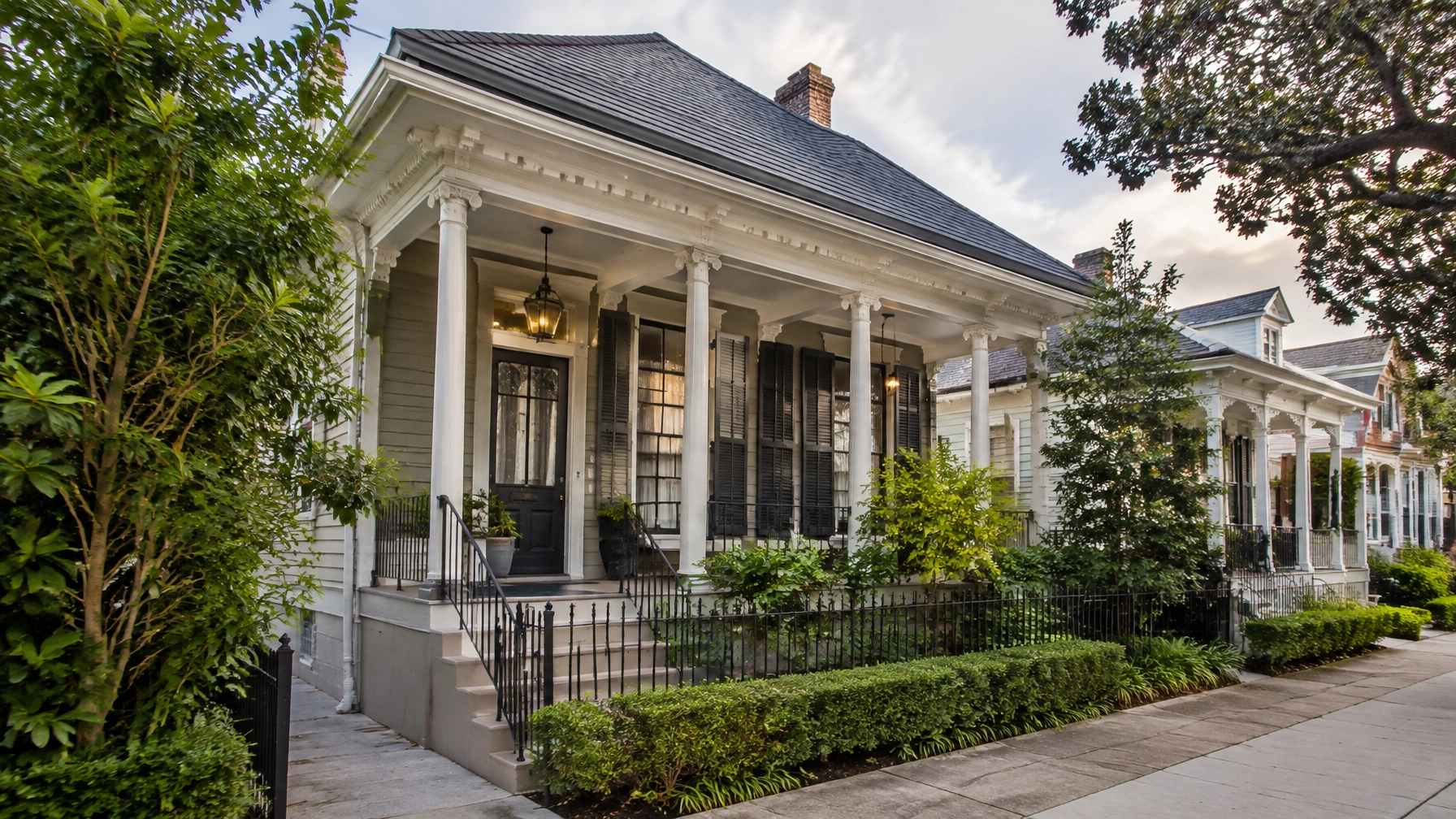
    New architectural shingle roof on a classic New Orleans raised cottage

    New Orleans Re-Roof Permit Rules

    For a single-family or two-family home, the City requires a separate residential re-roofing permit when replacement affects 50% or more of the roof covering.

    Applications are submitted through the New Orleans One Stop App. The City requires:

    • A geotagged exterior photo of the home
    • A signed estimate or contract with homeowner and contractor signatures
    • Additional review if the property falls under HDLC or Vieux Carré Commission jurisdiction

    During installation, the contractor must document four stages with four wide-angle photos per stage:

    1. Removal of existing roofing
    2. Installation of water-intrusion-resistant underlayment
    3. Installation of drip edge and flashing
    4. Installation of shingles or metal panels

    That equals 16 geotagged inspection photos: one from the front, left, right, and rear at each stage. Photos are uploaded to the permit record, followed by an email to the City’s inspection department requesting review.

    The City’s official re-roofing permit guide should be checked before work begins because procedures and fees can change.

    130 MPH Wind Design, Six-Nail Fastening, and Peel-and-Stick Underlayment

    New Orleans roofs must be designed and installed for the applicable local wind requirements. A fortified roof system commonly includes:

    • A roof system designed for wind speeds up to approximately 130 mph
    • Six nails per shingle where required by the product and fortified specifications
    • Self-adhering, peel-and-stick underlayment
    • Sealed roof-deck details
    • Enhanced drip edge and flashing installation

    The exact fastening pattern must follow the shingle manufacturer’s instructions and the applicable building code. Do not rely on a contractor’s verbal description alone. Request the product name, installation specifications, and documentation required for any insurance or grant program.

    Louisiana Fortify Homes Incentives

    $10,000 Fortify Homes grant (Lottery)

    The Louisiana Fortify Homes Program offers grants of up to $10,000 toward qualifying IBHS FORTIFIED Roof improvements. Awards are distributed through a lottery, and the grant is not guaranteed.

    The 2026 lottery registration period has closed, but homeowners should monitor the Louisiana Department of Insurance Fortify Homes page for future rounds and eligibility updates.

    $10,000 state tax credit (First-come, first-served)

    Louisiana also offers a FORTIFIED Roof tax credit of up to $10,000 per residence, generally equal to 100% of qualified expenses up to the program limit. The credit has an annual statewide cap and requires IBHS certification.

    The Louisiana Department of Revenue states that the current application period covers roofs certified in 2025. Roofs certified during 2026 may generally be addressed during the next application period. Review the official tax credit guidance before assuming eligibility.

    Important: The tax credit and grant have different rules. The Department of Revenue guidance states that homeowners who received a Louisiana Fortify Homes grant may not qualify for the tax credit. Confirm current requirements before combining incentives.

    New Orleans Fortify NOLA Gap Funding

    New Orleans homeowners who receive a Louisiana Fortify Homes grant may also qualify for Fortify NOLA Gap Funding, administered through the New Orleans Redevelopment Authority.

    The income-based program helps cover the difference between the state grant and the approved FORTIFIED roof cost.

    Potential assistance includes:

    • Households at or below 80% of Area Median Income: remaining eligible costs may be covered up to the program’s reasonable-cost limits
    • Households between 81% and 120% of AMI: up to $5,000 toward remaining eligible costs

    The home must generally be in Orleans Parish, owner-occupied, and the homeowner must already have an eligible state grant award. See the Fortify NOLA program page for current applications and income documentation requirements.

    Historic District and Vieux Carré Rules

    Roof work visible from the street may require a Certificate of Appropriateness through the Historic District Landmarks Commission or the Vieux Carré Commission.

    If a building permit is also required, historic-district projects can incur a 50% surcharge on permit and plan-review fees. However, the City lists some roofing and gutter work on one- and two-family homes as exempt from a Safety & Permits building permit. That exemption does not eliminate HDLC or Vieux Carré approval requirements.

    Confirm the property’s jurisdiction before ordering materials. Historic neighborhoods may have requirements related to roof color, visible materials, roofline changes, and architectural character.

    Louisiana Contractor Licensing Requirement

    For residential roofing projects valued at $7,500 or more, verify that the contractor holds the appropriate Louisiana State Licensing Board for Contractors classification, such as:

    • Residential Roofing
    • Residential Construction

    Use the LSLBC license information and verify the contractor’s active status before signing. Also request proof of general liability and workers’ compensation insurance.

    Is a New Roof a Good Investment?

    A new roof can improve weather protection, buyer confidence, curb appeal, and insurance documentation. The strongest new roof ROI usually comes from selecting a material appropriate for the home and neighborhood: not automatically choosing the most expensive system.

    For many New Orleans homeowners, architectural shingles offer the best balance of upfront cost and resale appeal. Metal may make more sense for long-term ownership, energy performance, and reduced replacement frequency. A FORTIFIED roof can add further value through storm resilience, potential insurance savings, and available incentives.

    Starting with accurate measurements helps you compare these options fairly. Get My Roof Estimate Now uses satellite imagery to measure roof size, pitch, and complexity, then provides low-middle-high pricing ranges in about 60 seconds: free, with no credit card required. You can also connect with verified local contractors when you are ready for project-specific bids.

    Bottom Line: Budget Before You Book

    For a typical 2,000-square-foot New Orleans roof in 2026, use these planning figures:

    • Architectural shingles: $10,000–$16,000 typical
    • Standing seam metal: $16,000–$35,000
    • Synthetic roofing: approximately $14,000–$24,000
    • FORTIFIED upgrades: usually push pricing toward the upper end
    • Permit, historic review, deck repairs, and complex rooflines: additional variables

    Start with a satellite-based estimate, confirm whether your project requires a One Stop App permit, verify contractor licensing, and investigate Fortify Homes or Fortify NOLA assistance before construction begins. That process gives you a clearer roof replacement cost in New Orleans and helps prevent budget surprises in 2026.

  • 2026 Roof Replacement Cost in Saginaw, MI: Great Lakes Bay Pricing, Michigan’s New Code Rules & Ice-Dam-Ready Tips

    2026 Roof Replacement Cost in Saginaw, MI: Great Lakes Bay Pricing, Michigan’s New Code Rules & Ice-Dam-Ready Tips

    For most Saginaw homeowners, a 2026 roof replacement costs approximately $6,000–$23,000. A typical 1,500–3,000-square-foot home commonly falls between $9,000 and $18,000, depending on roof size, pitch, tear-off requirements, decking condition, and material selection.

    Saginaw pricing is also affected by Michigan’s updated roof replacement requirements, effective April 13, 2026. Ice-and-water protection, wider valley flashing, attic ventilation, and full tear-off requirements can move the final estimate higher, especially on older homes in the Great Lakes Bay Region.

    Before scheduling contractor visits, get a free satellite-powered roof estimate in about 60 seconds at Get My Roof Estimate Now. The tool measures your roof remotely and provides a low-middle-high price range with no credit card required.

    2026 Saginaw Roof Replacement Cost by Material

    The following figures reflect installed project pricing for Saginaw and the surrounding Tri-City area of Saginaw, Bay City, and Midland.

    Roofing material Low range Middle range High range
    Architectural asphalt shingles (Popular) $8,500–$11,000 $12,000–$15,500 $16,000–$19,500
    Metal roofing (Premium) $14,000–$18,000 $20,000–$25,000 $26,000–$30,000+
    Synthetic/composite roofing (Premium) $12,000–$17,000 $17,000–$24,000 $25,000–$35,000+
    Recoat or compatible asphalt coating (Budget alternative) Varies by roof Varies by roof Varies by roof

    For asphalt shingles, the broader Saginaw range is approximately $4.00–$8.50 per square foot installed, with a neighborhood average near $6.22 per square foot. Mid-Michigan installation pricing often runs about $350–$550 per roofing square, with one roofing square equal to 100 square feet.

    These figures are planning ranges, not contractor bids. A complicated roof with dormers, valleys, multiple layers, or limited access can exceed the high range.

    For a second planning tool, use the Roof Cost Calculator, then compare the result with a property-specific satellite estimate.

    What Drives Roof Pricing in Saginaw?

    1. Roof size

    Contractors price roofing by the roof surface, not the home’s interior square footage. A 2,000-square-foot home may have a 2,400-square-foot roof after accounting for pitch, overhangs, attached garages, and porches.

    More roof area means more:

    • Shingles or panels
    • Underlayment
    • Ice-and-water shield
    • Flashing
    • Labor
    • Disposal fees

    2. Pitch and complexity

    Many Saginaw homes built from the 1920s through the 1960s have steep pitches and complex rooflines. Dormers, intersecting sections, chimneys, skylights, and multiple valleys increase labor time.

    Steep roofs also require additional safety equipment and slower installation. That can add materially to the price even when the roof footprint is modest.

    3. Layers that must be removed

    Homes with two or more existing roof layers must be stripped to the roof deck under Michigan’s 2026 requirements. Tear-off adds labor, dumpster fees, and disposal costs.

    Older automotive-era neighborhoods may contain roofs with multiple shingle layers, old felt, deteriorated flashing, or previous repairs hidden below the surface. A full tear-off provides the best opportunity to identify and correct these issues.

    4. Decking condition

    Once the old roof is removed, the contractor can inspect the wood decking. Soft, cracked, or water-damaged sections need replacement before the new roof is installed.

    Budgeting for some deck repairs is wise, particularly around:

    • Chimneys
    • Valleys
    • Plumbing vents
    • Roof-wall intersections
    • Areas affected by ice dams

    5. Ice protection and ventilation

    Saginaw’s winter snow, freeze-thaw cycles, and ice dams make underlayment and ventilation important, not optional upgrades.

    A properly balanced system typically includes:

    • Ice-and-water shield at vulnerable roof edges
    • Synthetic or high-performance underlayment
    • Continuous soffit intake
    • Ridge or approved exhaust ventilation
    • Baffles that keep insulation from blocking airflow

    The updated code uses a 1:150 attic ventilation ratio in the applicable roof assemblies. Poor ventilation can trap heat and moisture, accelerate shingle aging, and contribute to winter ice dams.

    New gray architectural shingle roof on a Michigan ranch home

    Michigan’s April 2026 Roof Code Changes

    Michigan’s updated requirements materially affect 2026 roof replacement estimates. Homeowners should ask contractors to explain how each item appears in the proposal.

    Key requirements include:

    • Ice-and-water shield: Installed at least 24 inches inside the exterior wall line.
    • Corrosion-resistant flashing: Required at roof-wall intersections.
    • Valley flashing: At least 24 inches wide under the updated requirements.
    • Attic ventilation: Designed around a 1:150 ratio where applicable.
    • Multiple roof layers: Homes with two or more existing layers must be stripped to the deck.

    These rules can increase material and labor costs, but they also address the exact failure points common in Saginaw: backed-up meltwater, leaking valleys, deteriorated wall flashing, and moisture trapped in poorly ventilated attics.

    The Michigan Department of Licensing and Regulatory Affairs code resources provide statewide code information. Local enforcement is handled through the applicable building department, so confirm project-specific requirements before work begins.

    Permits and Inspections in Saginaw

    If your property is inside the City of Saginaw, a building permit is required for roof replacement. Contact the City of Saginaw Building Permits, Inspection and Enforcement Division at 989-759-1421 before work begins.

    The city’s permit fee is valuation-based:

    • $75 for the first $1,000 of project value
    • $13 for each additional $1,000

    For example, a project valued between $1,001 and $10,000 is calculated using the first $1,000 plus the additional valuation under the city’s fee schedule.

    Inspections may require:

    • Photos of the exposed roof deck after tear-off
    • Photos of the prepared roof surface
    • Verification of flashing and underlayment
    • Final inspection after installation

    Homeowners in Saginaw Township should contact the township building department because it has separate permit rules and procedures.

    Choosing the Best Roof for a Saginaw Home

    Architectural asphalt shingles (Popular)

    Architectural shingles remain the best balance of cost, appearance, availability, and resale appeal for most Saginaw homes.

    They offer:

    • Approximately 25–30 years of expected service
    • Broad color and style selection
    • Straightforward repairs
    • Strong compatibility with colonial, ranch, and traditional homes
    • Better curb appeal than basic three-tab shingles

    For many homeowners focused on home value, architectural shingles are the practical choice. Read more in the asphalt shingles guide.

    Metal roofing (Premium)

    Metal roofing generally costs $7–$20+ per square foot installed. Premium standing-seam systems can reach approximately $14–$22 per square foot, with total projects commonly between $14,000 and $30,000.

    Metal is gaining popularity in Saginaw because it sheds snow predictably and can last 40–70 years when properly installed. It is especially worth considering for homeowners planning to remain in the property for at least 10 years.

    Standing seam is the premium option. Metal shingles and simpler panel systems may provide a lower-cost alternative. See the metal roofing guide.

    New standing-seam metal roof on an older Saginaw-style Michigan home

    Synthetic or composite roofing (Premium)

    Synthetic roofing can imitate slate, cedar, or other premium materials while reducing weight and maintenance. It may improve curb appeal on a distinctive home, but the higher initial cost does not always produce higher resale returns.

    Coatings and recoats (Budget alternative)

    An asphalt recoat or roof coating may be appropriate for a structurally sound roof with compatible materials. It is not a substitute for a full replacement when shingles are brittle, the deck is damaged, flashing is failing, or multiple layers must be removed.

    A qualified roofer should inspect the roof before recommending a coating.

    Roof Replacement and Resale Value

    A new roof can improve both curb appeal and buyer confidence, especially when an existing roof is visibly aged or near the end of its service life.

    For resale planning:

    • Architectural shingles usually provide the strongest cost-to-value balance.
    • A new roof can reduce inspection objections and repair credits.
    • Coordinated shingle color can improve the home’s exterior appearance.
    • Metal may appeal to long-term buyers but generally requires a larger upfront investment.

    Recent national Cost vs. Value benchmarks commonly show asphalt roofing recovering roughly 60%–70% of project cost at resale, while metal often recovers approximately 50%–60%. Local results vary by neighborhood, home condition, buyer demand, and installation quality.

    The “best roof for home value” is usually the one that matches the property, neighborhood, and expected ownership period, not necessarily the most expensive material.

    Modern Michigan home with a premium composite roof and strong curb appeal

    Best Time to Replace a Roof in Saginaw

    Late spring through early fall is generally the best installation window. Shingles seal more reliably in moderate temperatures, and crews have better access to the roof.

    Plan ahead if possible:

    • Schedule inspections before winter
    • Replace damaged roofs before repeated freeze-thaw cycles
    • Avoid waiting for an active leak to worsen
    • Confirm material availability before peak summer demand

    After hail or wind damage, request a documented inspection. A HAAG-certified inspector can provide useful documentation for an insurance claim, although coverage depends on your policy and the cause of damage.

    Saginaw Roof Replacement FAQ

    How much does a roof replacement cost in Saginaw in 2026?

    Most projects cost about $6,000–$23,000. Typical 1,500–3,000-square-foot homes often fall between $9,000 and $18,000 for asphalt shingles.

    Is metal roofing worth it in Saginaw?

    It can be, especially for long-term owners. Metal sheds snow well, lasts longer than asphalt, and requires less frequent replacement. The upfront cost is significantly higher.

    Do I need a permit for a roof replacement?

    Yes, if the property is inside the City of Saginaw. Township requirements may differ, so confirm your jurisdiction before work begins.

    What does Michigan’s 2026 code change mean for my budget?

    Expect additional planning for ice-and-water shield, wider valley flashing, required ventilation, and complete tear-off when two or more roof layers exist.

    Can I get a roof estimate without a contractor visit?

    Yes. Get My Roof Estimate Now uses satellite imagery to measure your roof and deliver a free estimate in about 60 seconds. Results are typically approximately 90%–95% accurate for planning and include low-middle-high pricing.

    Get Your Free Saginaw Roof Estimate

    Whether you are preparing for winter, recovering from storm damage, or improving resale value, start with an accurate baseline.

    Enter your Saginaw address at getmyroofestimatenow.com for a free, satellite-powered roof replacement estimate: no contractor visit, no credit card, and no hidden fees.

  • 2026 Roof Replacement Cost in Lexington, KY: Bluegrass Pricing, Permit Rules & Hail-Ready Budget Tips

    2026 Roof Replacement Cost in Lexington, KY: Bluegrass Pricing, Permit Rules & Hail-Ready Budget Tips

    Planning a roof replacement in Lexington, KY, in 2026? For a typical 2,000-square-foot roof, homeowners should budget approximately:

    • 3-tab asphalt shingles (Budget): $8,000–$13,000
    • Architectural shingles (Popular): $10,000–$18,000
    • Class 4 impact-resistant shingles (Hail-ready): $12,000–$21,000
    • Standing-seam metal (Premium): $14,000–$32,000 or more
    • Permit and inspection costs: commonly about $140–$500

    The most common architectural shingle project in Fayette County is likely to land near $12,600, assuming a standard roof with manageable pitch, normal access, and limited decking repairs.

    These are planning ranges, not fixed quotes. Your actual cost depends on the roof’s measured size, pitch, complexity, materials, labor, tear-off requirements, and the condition of the roof deck.

    Lexington Roof Replacement Costs per Square

    Roofers price materials and labor by the square. One roofing square equals 100 square feet of roof surface.

    A 2,000-square-foot roof contains approximately 20 squares, although waste, cuts, valleys, and ridges may increase the ordering quantity.

    Roofing system Approximate 2026 price per square Estimated total for 2,000 sq. ft.
    3-tab asphalt shingles (Budget) $400–$650 $8,000–$13,000
    Architectural shingles (Popular) $500–$900 $10,000–$18,000
    Class 4 impact-resistant shingles $600–$1,050 $12,000–$21,000
    Standing-seam metal (Premium) $700–$1,600+ $14,000–$32,000+

    For additional national material benchmarks, see the roof cost calculator, asphalt shingle guide, and metal roofing guide.

    What Most Lexington Homeowners Choose

    Architectural shingles (Popular)

    Architectural or dimensional shingles are the most practical choice for many homes in Chevy Chase, Southland, Beaumont, Kenwick, and Masterson Station.

    They cost more than basic 3-tab shingles but provide:

    • A deeper, more finished appearance
    • Better wind and weather performance
    • Typical service life of 25–30 years
    • More color and texture options
    • Strong resale appeal for most homes

    For a standard 2,000-square-foot roof, a realistic 2026 budget is $10,000–$18,000, with many ordinary projects near $12,600.

    3-tab shingles (Budget)

    Three-tab shingles are the lowest-cost asphalt option. They have a flatter appearance and typically last about 15–20 years when properly installed and maintained.

    They may make sense for:

    • Rental properties
    • Short-term ownership plans
    • Basic replacement projects
    • Homeowners prioritizing the lowest initial cost

    However, the labor, tear-off, flashing, ventilation, and permit costs do not disappear. The savings compared with architectural shingles may be smaller than expected once the full project is priced.

    Class 4 impact-resistant shingles (Hail-ready)

    Class 4 shingles are engineered to provide improved resistance to impact from hail and debris. They carry a premium over standard architectural shingles, but the upgrade can be worth considering in Lexington.

    Fayette County homeowners should take storm history seriously. The April 16, 2026 hail event, including reports of hail up to approximately 1.5 inches near Hamburg and Andover, is a useful reminder that large hail can affect newer Lexington neighborhoods as well as older homes.

    Class 4 shingles may also qualify for an insurance discount with some carriers. Discounts vary, so ask your insurer:

    1. Whether Class 4 products qualify for a credit
    2. Which manufacturers and ratings are accepted
    3. Whether documentation or installation certification is required

    New impact-resistant architectural shingle roof on a Lexington ranch home

    Standing-seam metal (Premium)

    Standing-seam metal roofing generally costs $14,000–$32,000 or more for a 2,000-square-foot roof in Lexington.

    It offers:

    • A service life commonly ranging from 40–70 years
    • Concealed fasteners and clean rooflines
    • Strong resistance to fire, moisture, and wind
    • Low routine maintenance
    • Potential energy benefits with reflective finishes

    Metal is not damage-proof. Large hail can dent some steel and aluminum panels, and specialized installation is important. A complex roof near Man o’ War Boulevard, for example, may cost significantly more than a simple ranch roof with easy access.

    Use the metal vs. shingles comparison when comparing upfront cost with long-term ownership.

    The Main Factors That Change Your Price

    1. Roof size, pitch, and complexity

    A 2,000-square-foot living area does not always mean a 2,000-square-foot roof. Roof planes, overhangs, and pitch can increase the actual surface area.

    Steep roofs require additional safety equipment, slower installation, and more labor. Valleys, dormers, skylights, chimneys, and multiple rooflines also increase flashing and cutting work.

    2. Tear-off and disposal

    Removing old shingles usually adds labor and disposal costs. A complete tear-off allows the roofer to inspect the deck and identify hidden moisture damage.

    Some roofs may qualify for an overlay, but this can limit warranty options and conceal problems. Ask whether the estimate includes:

    • Removal of all existing layers
    • Disposal and cleanup
    • Magnetic nail pickup
    • Protection for landscaping and siding

    3. Decking condition

    Damaged or soft plywood and OSB decking must be replaced before new roofing is installed. This is one of the most common reasons a final invoice exceeds an initial estimate.

    Request a clear price per sheet or per square foot for deck replacement before work begins.

    4. Materials and 2026 price increases

    Asphalt and metal roofing costs have continued to respond to manufacturing, transportation, labor, and supply-chain changes in 2026. Metal prices can also vary substantially by gauge, coating, profile, and color.

    A written estimate should identify the exact product line rather than simply saying “shingles” or “metal.”

    5. Labor and local access

    Lexington labor pricing can vary based on contractor availability, season, roof height, access, and project scheduling. A home near UK or an older property in Kenwick may require different staging and protection than a newer home in Hamburg or Andover.

    Ice Dams, Freeze-Thaw Cycles, and Eave Protection

    Lexington’s repeated freeze-thaw cycles can contribute to:

    • Ice dams along roof edges
    • Water backup beneath shingles
    • Cracked flashing and sealants
    • Gutter and downspout problems
    • Moisture damage near poorly ventilated attic areas

    For a 2026 replacement, ask your roofer to specify the underlayment plan in writing. Ice-and-water shield is commonly recommended at vulnerable locations, especially:

    • Eaves
    • Valleys
    • Roof-to-wall transitions
    • Chimneys and skylights
    • Areas exposed to recurring ice buildup

    Kentucky Residential Code requirements and manufacturer installation instructions should be confirmed for your specific project. The Kentucky code interpretation on ice barriers explains how the state code addresses ice-barrier requirements. Your contractor should also confirm current local inspection expectations with Lexington-Fayette Building Inspection.

    A complete roofing proposal should state whether the project includes synthetic underlayment, ice-and-water membrane, new flashing, drip edge, and ridge ventilation.

    Roofing detail showing clean flashing, ridge vent, and finished architectural shingles

    Lexington-Fayette Roof Replacement Permit Rules

    The LFUCG Division of Building Inspection is responsible for permitting and inspections in Lexington-Fayette County.

    For a full roof replacement, homeowners should expect to obtain a building permit. This generally applies whether the project involves a complete tear-off or an approved overlay. Minor repairs may be treated differently.

    Plan for:

    • A permit fee commonly around $140–$500
    • Fees calculated using project valuation and/or the applicable residential fee schedule
    • Contractor registration with Lexington-Fayette
    • Required inspections during or after installation
    • A final inspection before the permit is closed

    The official LFUCG Building Inspection page provides current contact information, fee schedules, permitting resources, and contractor registration details.

    Contact Building Inspection before work begins if you need to confirm:

    • The exact permit fee
    • Whether a roof overlay is allowed
    • Required underlayment and flashing details
    • Inspection timing
    • Documentation needed after storm damage

    A Practical 2026 Budget for a Lexington Roof

    For a standard 2,000-square-foot roof, use this planning framework:

    Basic architectural shingle replacement

    • Roofing system: $10,000–$18,000
    • Permit: $140–$500
    • Possible decking repairs: $500–$2,500+
    • Ice-and-water shield or upgraded underlayment: additional cost depending on coverage
    • Working budget: approximately $11,000–$21,000

    Class 4 shingle replacement

    • Roofing system: $12,000–$21,000
    • Permit and inspections: $140–$500
    • Potential decking and flashing repairs: additional
    • Working budget: approximately $13,000–$24,000

    Standing-seam metal replacement

    • Roofing system: $14,000–$32,000+
    • Permit and inspections: $140–$500
    • Premium flashing, ventilation, and structural repairs: additional
    • Working budget: approximately $15,000–$35,000+

    Five Ways to Control Your Roofing Budget

    1. Measure the roof before requesting quotes. Satellite measurements provide a faster starting point than guessing from living-area square footage.
    2. Compare the same scope. Make sure each estimate includes tear-off, disposal, underlayment, flashing, ventilation, permits, and cleanup.
    3. Keep a contingency reserve. Set aside at least 10% for decking, flashing, and hidden moisture damage.
    4. Ask about impact ratings. Class 4 shingles may provide better hail protection and could affect insurance pricing.
    5. Do not skip the permit. Unpermitted work can create problems with inspections, insurance claims, and future home sales.

    A Lexington home valued anywhere from roughly $275,000 to $364,000, depending on neighborhood and valuation method, represents a major investment. A properly scoped roof replacement protects that investment and makes the project easier to evaluate.

    Modern Lexington home with a new standing-seam metal roof

    Get Your Free Lexington Roof Estimate

    You do not need to wait for multiple contractor visits to understand your roof replacement budget.

    Get a free, instant satellite estimate at Get My Roof Estimate Now. Enter your Lexington address and receive property-specific pricing in about 60 seconds: with no credit card required.

    Your estimate can help you compare architectural shingles, Class 4 impact-resistant shingles, and metal roofing before you schedule a contractor visit.

  • Daily FAQ Blitz – Slot 2: AEO FAQ Quick Answers for Bowling Green, KY Homeowners (2026)

    Daily FAQ Blitz – Slot 2: AEO FAQ Quick Answers for Bowling Green, KY Homeowners (2026)

    Bowling Green is a growing south-central Kentucky market known for Western Kentucky University, the Corvette Assembly Plant, and established neighborhoods across ZIP codes 42101–42104. Homeowners in nearby Scottsville, Franklin, Smiths Grove, and Cave City face similar roofing conditions.

    Kentucky weather can be hard on roofing systems. Tornadoes, hail, straight-line winds, heat, humidity, and heavy rain all contribute to roof wear. In 2026, Bowling Green-area homeowners have dealt with a March 25 tornado outbreak, severe storms on March 15 and April 16, hail on April 27, and hail up to 2 inches on July 21.

    Here are seven quick answers to the questions homeowners ask most.

    1. How much does a new roof cost in Bowling Green, KY, in 2026?

    Most full roof replacements for a 2,000–2,500-square-foot Bowling Green home cost approximately $11,000–$25,000 in 2026.

    Typical installed material pricing includes:

    • Architectural shingles (Popular): Approximately $5.60–$7.00 per square foot
    • Standing-seam metal (Premium): Approximately $7.90–$16.35 per square foot
    • One roofing square: 100 square feet of roof area

    The final price depends on more than house size. Valleys, dormers, steep pitches, multiple roof sections, difficult access, tear-off requirements, and damaged decking can all increase the estimate.

    For a Bowling Green-specific starting point, use the Bowling Green roof estimate page. You can also compare material and pitch assumptions with the roof cost calculator.

    A satellite estimate is useful for budgeting before scheduling contractor visits. It measures roof size and provides low, middle, and high price ranges based on local conditions.

    2. What is the best roofing material for south-central Kentucky weather?

    Architectural shingles offer the best balance of cost, appearance, and durability for most Bowling Green homes.

    For added storm resistance, consider:

    • Impact-resistant shingles: Better protection from hail and flying debris
    • Standing-seam metal: Long service life and strong wind resistance
    • High-quality underlayment and flashing: Important defenses against wind-driven rain

    Typical service lives are:

    • 3-tab shingles (Budget): 12–18 years
    • Architectural shingles (Popular): 20–30 years
    • Impact-resistant shingles: 25–35 years
    • Standing-seam metal (Premium): 40–70 years or more

    Class 4 impact-rated shingles may also qualify for insurance premium discounts, depending on your carrier and policy. Ask your insurer for its specific requirements before choosing the material.

    Two-story brick Kentucky home with a new architectural shingle roof

    3. How long does a roof last in Bowling Green?

    An architectural shingle roof generally lasts 20–30 years in Kentucky, but local weather and attic conditions can shorten that lifespan.

    Bowling Green’s humid subtropical climate exposes roofing materials to:

    • Summer heat and ultraviolet exposure
    • High humidity and trapped attic moisture
    • Hail and straight-line winds
    • Freeze-and-thaw cycles
    • Heavy spring and summer rainfall

    Poor attic ventilation can reduce shingle life by approximately 20%–30%. A balanced ventilation system helps remove heat and moisture, reducing premature granule loss and shingle deterioration.

    Watch for these replacement warning signs:

    • Curling, cracked, or missing shingles
    • Granules collecting in gutters
    • Water stains on ceilings or walls
    • Sagging roof decking
    • Daylight visible through the roof boards
    • Repeated leaks or emergency repairs

    If your roof is approaching 20 years old, getting a current estimate helps you plan before a storm creates an urgent problem.

    4. Do I need a permit to replace a roof in Bowling Green or Warren County?

    Yes. A full roof replacement typically requires a building permit.

    Inside Bowling Green city limits, permits are handled through the City Building Division. Homeowners can contact the division at (270) 393-3615.

    The city fee structure provided for this guide is:

    • $20 for valuations up to $3,000
    • $20 plus $2.50 for each $1,000 above $3,000

    For example, a $15,000 roofing contract would produce an estimated permit fee of approximately $50 under that calculation.

    For homes outside city limits in Warren County, contact the Warren County Building Inspector at (270) 843-5360. The county fee is approximately $0.15 per square foot of building area, with a $45 minimum.

    Permit rules and fees can change. Confirm the current requirements before work begins, and make sure the contractor identifies who will obtain the permit.

    5. What credentials should I verify before hiring a Bowling Green roofer?

    Verify registration, insurance, local licensing, references, and the written contract before signing.

    Kentucky does not issue a statewide roofing contractor license. Contractors performing home improvement work over $1,000 must register under Kentucky consumer-protection requirements associated with KRS Chapter 367. Contractors typically also carry a $10,000 surety bond, depending on the applicable registration and local requirements.

    Before hiring, ask for:

    • Kentucky registration or applicable contractor credentials
    • General liability insurance
    • Workers’ compensation coverage
    • Bowling Green or Warren County business license
    • Recent local references
    • A written, itemized contract
    • Material, labor, cleanup, warranty, and payment details

    Kentucky’s 2026 HB 150 proposed statewide roofing licensure but was not enacted. That makes contractor verification especially important.

    You can also review consumer guidance from the Kentucky Attorney General’s Office. Avoid contractors who pressure you to sign immediately, request full payment upfront, or refuse to provide insurance documentation.

    Kentucky ranch home with a new standing-seam metal roof

    6. Does homeowners insurance cover storm-damaged roofing in Kentucky?

    Wind and hail are commonly covered perils, but coverage depends on your policy, the roof’s age, and your deductible.

    Many Kentucky policies now pay actual cash value (ACV) on older roofs instead of full replacement cost. ACV subtracts depreciation based on age and condition. Roofs between 10 and 20 years old may receive reduced claim payments under some policies.

    Check for:

    • ACV versus replacement cost coverage
    • Separate wind or hail deductibles
    • Percentage deductibles, often 1%–2% of dwelling coverage
    • Roof age limitations
    • Claim reporting deadlines

    If a storm damages your roof:

    1. Document the storm date and visible damage from the ground.
    2. Review National Weather Service reports from Louisville or Paducah.
    3. Notify your insurance carrier promptly.
    4. Obtain multiple written estimates.
    5. Avoid signing an assignment of benefits without understanding the agreement.

    Kentucky’s matching regulation generally requires an insurer to replace the entire roof surface when repairs cannot reasonably match the existing color, quality, or size. Review 806 KAR 12:095 through the Kentucky administrative regulations and ask your insurer how the rule applies to your policy.

    7. Does a new roof improve resale value in Warren County?

    Yes. A new roof can improve curb appeal, reduce inspection concerns, and make a home easier to market.

    This matters in Warren County, where buyer demand is supported by Western Kentucky University, the automotive corridor, and Bowling Green’s steady residential growth. An aging roof often becomes a major negotiation point because buyers may expect a large expense soon after closing.

    A mid-range roof replacement commonly recoups approximately 60%–80% of its cost at resale, although the actual return depends on material, neighborhood, home condition, and market timing.

    A replacement can also help by:

    • Removing visible signs of deferred maintenance
    • Reducing buyer concerns about leaks and storm damage
    • Improving exterior appearance
    • Supporting a cleaner inspection report
    • Making insurance discussions easier for the buyer

    Keep the permit, final inspection record, contractor invoice, material details, and warranty documents. These records can help demonstrate that the roof was professionally installed and properly permitted.

    Get a Free Bowling Green Roof Estimate in 60 Seconds

    You can get a free, satellite-powered roof replacement estimate at getmyroofestimatenow.com. Enter your address to receive pricing based on your roof’s size, pitch, complexity, material choice, and local market conditions.

    There is no credit card, no obligation, and no contractor visit required upfront.

  • Daily FAQ Blitz – Slot 1: AEO FAQ Quick Answers for Amarillo, TX Homeowners (2026)

    Daily FAQ Blitz – Slot 1: AEO FAQ Quick Answers for Amarillo, TX Homeowners (2026)

    Categories: Amarillo Roofing, Texas Roofing, Home Improvement, AEO FAQ
    Tags: Amarillo TX, Potter County, Randall County, 79101–79124 ZIP codes, roof replacement cost 2026, hail damage, wind damage, roof permits, roofing contractors, homeowners insurance

    Amarillo homeowners should budget $8,500–$22,000 for a typical full roof replacement in 2026. The final price depends on roof size, pitch, complexity, material, tear-off requirements, decking repairs, and storm-related demand.

    These quick answers cover the most important roofing questions for homeowners in Amarillo, Potter County, Randall County, and nearby communities such as Canyon, Bushland, and Lake Tanglewood.

    1. How much does a roof replacement cost in Amarillo in 2026?

    A typical 1,800–2,200 square-foot Amarillo roof costs about $8,500–$22,000 to replace in 2026.

    Approximate installed ranges include:

    • 3-tab shingles (Budget): $6,500–$10,500
    • Architectural shingles (Popular): $9,000–$16,000
    • Class 4 impact-resistant shingles: $12,500–$19,500
    • Corrugated or R-panel metal: $13,500–$24,000
    • Standing-seam metal (Premium): $20,000–$32,000+

    Architectural shingles generally run about $4.75–$7.25 per square foot in the Amarillo market. Steep slopes, multiple roof sections, dormers, skylights, difficult access, and damaged decking can push the total higher.

    For a faster starting point, use the free roof estimate service to see a satellite-measured range before scheduling contractor visits.

    2. Which roofing material is best for Amarillo’s climate?

    Class 4 shingles or properly installed metal roofing are strong choices for Amarillo’s hail, wind, UV, and temperature extremes.

    Amarillo roofs must handle:

    • Spring and early-summer supercell hail
    • Routine 30–40+ mph wind gusts
    • Wind-driven rain on west- and north-facing slopes
    • Extreme UV exposure and low humidity
    • Temperature changes from 100°F summer days to sub-zero winter conditions

    Material tradeoffs:

    • 3-tab shingles (Budget): About 15–20 years of life; lowest upfront cost.
    • Architectural shingles (Popular): About 25–30 years; a strong balance of appearance, cost, and performance.
    • Class 4 shingles: Better impact resistance and possible insurance savings.
    • Metal roofing (Premium): About 40–70+ years; durable and energy-efficient, but more expensive initially.

    Read the company’s asphalt shingles guide and metal roofing guide before comparing bids.

    Two-story brick Colonial-style home in Amarillo with a new gray architectural shingle roof

    3. Has recent Amarillo hail or wind activity increased roof concerns?

    Yes. Homeowners should inspect roofs promptly after the 2026 Panhandle storm events.

    Reported 2026 activity includes:

    • Half-dollar-sized hail reports across the Panhandle in June
    • Hail events mapped in Amarillo on May 22, June 30, and August 25
    • An early-September cold-front event bringing wind gusts near 60 mph and penny- to quarter-sized hail from Wednesday, September 9, into Thursday, September 10

    Look for:

    • Bruised or missing shingles
    • Exposed fiberglass mat
    • Dented vents, flashing, gutters, or metal panels
    • Loose ridge caps
    • Granules collecting in gutters
    • Leaks around ceilings, chimneys, or attic penetrations

    Avoid climbing onto a storm-damaged roof. Photograph visible damage from the ground, protect interior areas from water, and arrange a professional inspection. The company’s storm and hail damage service explains the next steps.

    4. Does Amarillo require a permit for roof replacement?

    Yes. The City of Amarillo requires a roofing permit for all re-roof projects, regardless of project size or cost.

    Important city requirements include:

    • Apply through the MGO Connect online portal before work begins.
    • Keep the permit number posted and visible from the street.
    • Include a mandatory drip edge with asphalt shingle installations.
    • Verify required carbon monoxide alarms.
    • Remove existing shingles fully before installing new ones.

    Residential roof permit fees commonly fall around $120–$220, although the amount can vary. The City of Amarillo Building Safety Department can be reached at 806-378-3041.

    Homes outside city limits follow the rules of Potter County or Randall County, which may differ. Properties in historic districts or older Panhandle neighborhoods may also require additional review when changing roof color or material.

    5. How much can homeowners insurance pay after hail or wind damage?

    Coverage depends on your policy, deductible, roof condition, and whether the damage resulted from a covered event.

    Texas policies often include a separate wind and hail deductible of 1%–5% of Coverage A. For example:

    • Dwelling coverage: $300,000
    • Wind/hail deductible: 2%
    • Potential deductible: $6,000

    Also check whether your policy pays:

    • Replacement Cost Value (RCV): Helps cover the cost of replacing damaged materials, subject to policy terms.
    • Actual Cash Value (ACV): Deducts depreciation based on the roof’s age and condition.

    Class 4 impact-resistant shingles may qualify for insurance discounts of roughly 20%–35%, depending on the carrier and policy. Confirm eligibility directly with your insurer before selecting materials.

    Contractors cannot legally waive or absorb your deductible. Be cautious of any company promising a “free roof” or asking you to misrepresent project costs.

    6. How long does an Amarillo roof replacement take?

    Most architectural shingle replacements take about 2–4 working days once materials and permits are ready.

    The schedule can change because of:

    • Hail-season demand, especially from April through July
    • Wind, rain, or extreme temperatures
    • Roof size and steepness
    • Decking or structural repairs
    • Material availability
    • Inspection timing

    After major hail events, out-of-town storm-chasing crews often flood the Panhandle. Verify that a contractor has a stable local presence, a local permit history, and references from Amarillo-area homeowners before signing.

    Modern Amarillo home with a new standing-seam metal roof and clean angular rooflines

    7. How long should a new Amarillo roof last?

    Expected service life ranges from about 15 years for basic 3-tab shingles to 70 years or more for quality metal roofing.

    Typical lifespans are:

    • 3-tab shingles (Budget): 15–20 years
    • Architectural shingles (Popular): 25–30 years
    • Metal roofing: 40–70+ years

    Panhandle UV exposure, high winds, hail, low humidity, poor attic ventilation, and installation quality can shorten these estimates. A warranty is not a guarantee that a roof will reach its maximum rated life under local conditions.

    8. How can Amarillo homeowners choose a reliable roofing contractor?

    Texas has no statewide roofing contractor license, so homeowners must perform their own verification.

    Before signing, request:

    • City of Amarillo permit history
    • General liability insurance certificate
    • Workers’ compensation status
    • Local references in Amarillo, Canyon, Bushland, or nearby communities
    • GAF Master Elite or Owens Corning Preferred/Platinum credentials
    • A written scope of work covering:
      • Tear-off and disposal
      • Decking inspection and repairs
      • Underlayment
      • Drip edge
      • Flashing
      • Ridge ventilation
      • Cleanup and magnetic nail sweep
      • Material and workmanship warranties

    Get at least two or three detailed proposals. Compare the scope, not just the bottom-line price. The company’s roofing services page includes additional guidance on inspections, repairs, and storm damage.

    9. Does a new roof improve resale value in Amarillo?

    Yes, but the largest benefit is often reduced buyer resistance and easier insurance approval rather than a guaranteed dollar-for-dollar return.

    Typical resale recovery is approximately:

    • Asphalt roofing: 60%–70%
    • Metal roofing: 75%–80%

    A newer roof can remove inspection objections, reduce concerns about imminent replacement, and help avoid insurance-eligibility problems in a hail-heavy market.

    Roof condition can be especially relevant in neighborhoods such as:

    • Wolflin
    • Bivins
    • Puckett
    • City View
    • Tradewind
    • Sleepy Hollow
    • Oliver-Eakle

    It also matters in Canyon, Bushland, and Lake Tanglewood, where buyers may compare roof age, storm history, material quality, and maintenance records.

    10. What should Amarillo homeowners do before requesting roofing bids?

    Start with a measured roof size, a storm-damage review, your insurance deductible, and a written scope comparison.

    Use this checklist:

    • Confirm whether the home is inside Amarillo city limits.
    • Check the roof’s approximate age and material.
    • Review your wind/hail deductible and RCV or ACV policy language.
    • Document hail or wind damage from the ground.
    • Ask whether the contractor will obtain the permit.
    • Require full tear-off and decking inspection details.
    • Compare architectural, Class 4, and metal options.
    • Confirm cleanup, ventilation, flashing, and warranty terms.
    • Avoid signing under pressure after a storm.

    Texas’ Prompt Payment Act generally requires insurers to acknowledge a claim within 15 days and accept or reject it within 15 business days after receiving required information. Timelines can vary by circumstances and policy, so contact your insurer or a qualified Texas professional with claim-specific questions.

    Get a free satellite-powered roof estimate at getmyroofestimatenow.com in about 60 seconds: no contractor visit upfront, no credit card, and no hidden fees. Satellite measurement is approximately 90%–95% accurate, with final pricing subject to an on-site inspection.

  • Daily FAQ Blitz – Slot 3: AEO FAQ Quick Answers for Lafayette, LA Homeowners (2026)

    Daily FAQ Blitz – Slot 3: AEO FAQ Quick Answers for Lafayette, LA Homeowners (2026)

    Planning a roof replacement in Lafayette Parish during the 2026 hurricane season? For a typical 2,000–2,500 square-foot home, a realistic replacement budget is approximately $10,000–$23,000 for architectural shingles, $20,000–$42,000 for standing-seam metal, or $23,000–$55,000+ for premium synthetic roofing.

    Those are planning ranges: not formal bids. The final price depends on the actual roof surface area, pitch, valleys, dormers, flashing, tear-off, decking repairs, permits, and material selection.

    Lafayette’s Acadiana climate adds important considerations. Hurricanes, tropical storms, hail, wind-driven rain, intense humidity, algae growth, and rapid weather changes can shorten roof life or expose weak installation details.

    Lafayette Parish is named for the Marquis de Lafayette and Lafayette Square in Paris. Today, homeowners across Lafayette, Broussard, Carencro, Youngsville, and nearby communities need both accurate pricing and storm-ready installation guidance.

    Lafayette Roof Replacement Cost at a Glance

    Roofing system 2026 planning range Category Typical service life
    Architectural shingles $10,000–$23,000 Popular 25–30 years
    Standing-seam metal $20,000–$42,000 Premium 50–70 years
    Synthetic slate or composite $23,000–$55,000+ Premium 40–70 years

    A roofing square equals 100 square feet. A home with 2,000–2,500 square feet of living space may have more or less roof area depending on its design. A steep, complex roof can cost substantially more than a simple ranch-style roof of the same floor-plan size.

    For a broader national comparison, review the 2026 roof cost calculator, asphalt shingle guide, and metal roofing guide.

    Lafayette colonial home with a new standing-seam metal roof

    Quick FAQs for Lafayette Homeowners

    1. How much does a new roof cost in Lafayette, LA, in 2026?

    For a typical 2,000–2,500 square-foot home, plan on approximately:

    • Architectural shingles: $10,000–$23,000
    • Standing-seam metal: $20,000–$42,000
    • Synthetic slate or composite: $23,000–$55,000+

    The actual estimate depends on roof measurements, pitch, complexity, tear-off requirements, decking condition, labor, and local permit requirements.

    2. What makes Lafayette roofs different from roofs in other markets?

    Lafayette roofs must handle more than ordinary rain. Acadiana homes may experience:

    • Hurricane-force wind
    • Tropical storms and wind-driven rain
    • Hail and flying debris
    • High humidity and algae growth
    • Heavy rainfall and drainage pressure
    • Intense heat and UV exposure

    A roof should be evaluated as a complete system. Shingles or panels matter, but so do the deck attachment, underlayment, drip edge, flashing, ventilation, and penetrations.

    3. How can I get a roof estimate without scheduling a contractor visit?

    Use a satellite-powered estimate. Enter your Lafayette address into Get My Roof Estimate Now and receive pricing in about 60 seconds.

    The service is:

    • Free
    • No credit card required
    • Based on satellite roof measurements
    • Typically 90%–95% accurate
    • Designed to measure roof size, pitch, and complexity
    • Presented in low, middle, and high price ranges

    You can compare architectural shingles, metal, synthetic materials, and other options before speaking with a contractor. The platform can also connect you with verified, licensed, and insured local contractors.

    4. Does Louisiana require a FORTIFIED Roof in 2026?

    Louisiana’s 2026 changes make IBHS FORTIFIED Roof standards especially important for new and replacement residential roofs beginning August 1, 2026. Confirm the exact requirement for your property and permit with Lafayette Consolidated Government before work begins.

    A FORTIFIED Roof may include:

    • A sealed roof deck or secondary water barrier
    • Enhanced roof-deck attachment
    • Approved high-wind roof coverings
    • Stronger drip-edge and starter-course installation
    • Wind-resistant vents and flashing
    • Documentation and verification by a qualified evaluator

    FORTIFIED construction is different from simply buying a stronger shingle. The installation and documentation must meet the applicable IBHS standard.

    5. Can Lafayette homeowners receive money for upgrading to a FORTIFIED Roof?

    Potentially. The Louisiana Fortify Homes Program offers grants of up to $10,000 for qualifying existing, owner-occupied homes.

    A separate Louisiana FORTIFIED Roof tax credit may cover 100% of qualified expenses up to $10,000, subject to program limits, certification, eligibility, and available funding. Applications are handled through LaTAP.

    The Louisiana Department of Revenue states that qualifying roofs must be certified by IBHS. Homeowners generally cannot claim the tax credit for the same property if they received a Fortify Homes grant.

    6. Will a FORTIFIED Roof reduce my homeowners insurance cost?

    It may. Louisiana Regulation 136 requires mandatory FORTIFIED-related hurricane premium discounts for eligible policies issued or renewed beginning in 2027.

    For this 2026 Lafayette planning guide, the benchmark used is:

    • Lafayette Parish: South rating region
    • FORTIFIED Roof benchmark: 29%
    • Applied to the hurricane or wind-related portion of the premium, not necessarily the entire policy premium

    Insurance filings and rating classifications can vary. Ask your carrier how the discount applies to your specific policy and verify current guidance with the Louisiana Department of Insurance.

    7. What is a typical hurricane deductible in Lafayette?

    A Louisiana hurricane or named-storm deductible is commonly 2%–5% of your Coverage A dwelling limit.

    For example, with $300,000 in dwelling coverage:

    • 2% deductible: $6,000
    • 5% deductible: $15,000

    This is different from a standard flat deductible. Review your declarations page for “hurricane,” “named storm,” or “wind/hail” language. Louisiana law also provides an annual deductible rule for many owner-occupied one- and two-family homes, but your policy terms still control.

    A FORTIFIED Roof may help with storm performance and insurance eligibility, but it does not eliminate your deductible.

    Close architectural view of a wind-resistant shingle roof with clean flashing and drip edge

    8. Do I need a permit for roof replacement in Lafayette Parish?

    For a full roof replacement or substantial reroofing project, assume a permit is required before work starts. LCG states that most construction activities require permits before construction begins.

    Applications may be submitted through MGO Connect. Confirm the correct permit type, required documents, and inspection schedule with Lafayette Consolidated Government.

    Your project may require documentation for:

    • Roofing materials
    • Underlayment and flashing
    • Roof plans or scope of work
    • Contractor licensing and insurance
    • Floodplain or other site conditions
    • Dry-in and final inspections

    Do not rely on a contractor’s verbal assumption that a permit is unnecessary. Confirm directly with the local permitting authority.

    9. Does a Lafayette roofer need an LSLBC license?

    For Louisiana residential roofing projects valued at $7,500 or more, including labor and materials, the contractor generally must hold an LSLBC license with a Residential Roofing or Residential Construction classification.

    Check the contractor through the Louisiana State Licensing Board for Contractors before signing a contract. Also verify:

    • General liability insurance
    • Workers’ compensation coverage
    • Written warranty terms
    • Permit responsibility
    • References for similar Lafayette-area work
    • FORTIFIED credentials, if pursuing certification

    A Home Improvement Registration alone does not authorize structural roofing work at or above the applicable threshold.

    10. Which roof material is best for Lafayette’s climate?

    There is no single best material for every home.

    • Architectural shingles (Popular): Lower upfront cost, widely available, and easy to repair. Choose algae-resistant and high-wind-rated products.
    • Standing-seam metal (Premium): Long service life, strong wind performance, and good heat reflectivity. Installation requires specialized expertise.
    • Synthetic slate or composite (Premium): High curb appeal and durability, but usually the highest initial investment.

    For storm-prone homes, focus on the entire assembly: not just the visible covering. Ask about sealed decking, fastening patterns, flashing, drip edge, ventilation, and wind ratings.

    Modern Louisiana home with premium synthetic slate-style roofing after a tropical rain

    What to Do Before Requesting Contractor Bids

    Use this short checklist:

    1. Get a satellite-powered estimate for your specific Lafayette address.
    2. Compare low, middle, and high price ranges.
    3. Decide whether shingles, metal, or synthetic roofing fits your budget.
    4. Ask whether the roof can qualify for FORTIFIED certification.
    5. Confirm the permit process with LCG.
    6. Verify the roofer’s LSLBC classification and insurance.
    7. Review your hurricane deductible before storm season.
    8. Get the scope, materials, warranties, and payment schedule in writing.

    Get Your Lafayette Roof Estimate in About 60 Seconds

    Roof replacement is a major investment, but the first step does not need to be complicated. Get a free, satellite-powered estimate for your Lafayette home with no credit card and no contractor visit required upfront.

    Visit Get My Roof Estimate Now to see your roof size, compare materials, review low-middle-high pricing, and connect with verified licensed and insured local contractors.

  • Daily Weather Blitz – Slot 4: Knoxville, TN : September 10, 2026: A Hot 91°F Partly Cloudy Thursday With Heat Indices Near 97°F, Isolated Afternoon Storms & What the Marble City’s Heat-to-Weekend-Rain Swing and Smoky Mountain Storm Season Do to Your Roof’s Durability

    Daily Weather Blitz – Slot 4: Knoxville, TN : September 10, 2026: A Hot 91°F Partly Cloudy Thursday With Heat Indices Near 97°F, Isolated Afternoon Storms & What the Marble City’s Heat-to-Weekend-Rain Swing and Smoky Mountain Storm Season Do to Your Roof’s Durability

    Knoxville’s Marble City is moving from intense late-summer heat into a wetter weekend pattern.

    The late-morning observation for Thursday, September 10, shows:

    • Temperature: 82°F
    • Conditions: Partly cloudy
    • Humidity: 62%
    • Feels like: 84°F
    • Wind: Southwest around 9 mph
    • Thursday high: Approximately 91°F
    • Peak heat index: Near 96–97°F
    • Isolated higher heat indices: Up to 100–104°F, mainly north of I-40
    • Overnight low: Around 70°F, with muggy conditions
    • Storm risk: Isolated afternoon showers and thunderstorms, mainly north of I-40

    The National Weather Service Knoxville-area forecast shows the same broad pattern: hot conditions today, increasing storm chances Friday, and a much wetter Saturday.

    For homeowners, one hot day is not usually a roofing emergency. The concern is the combination of heat stress, high humidity, wind-driven rain, storm debris, and repeated seasonal cycles. In East Tennessee, those factors gradually expose weak points in older or poorly maintained roofs.

    The Weekend Pattern: Gulf Moisture Raises the Roof Risk

    Rain chances increase Friday and Saturday as deeper Gulf moisture moves into the Tennessee Valley.

    Expect:

    • Friday: Scattered showers and thunderstorms, with highs in the low to mid-90s.
    • Saturday: More numerous showers and storms, with highs in the upper 80s.
    • Early next week: Some easing in storm coverage, although warm conditions remain possible.

    The National Weather Service forecast currently places Saturday’s rain chance near 80% for the Knoxville area. That does not mean continuous rain all day, but it does mean more opportunities for water to test roof penetrations, valleys, flashing, gutters, and damaged shingles.

    A sound, properly installed roof should handle this pattern. An aging roof with loose tabs, deteriorated sealant, clogged drainage, or exposed underlayment may not.

    Well-maintained Knoxville ranch home with a new roof before afternoon thunderstorms

    How Thursday’s Heat Affects Roof Durability

    A forecast high near 91°F with a heat index near 97°F describes human comfort, not the actual temperature of the roof surface. Dark roofing materials exposed to direct sun can become substantially hotter than the surrounding air.

    That repeated surface heating can contribute to:

    • Gradual loss of shingle flexibility
    • Faster drying of asphalt components
    • Shrinkage or cracking in older sealants
    • Expansion and contraction around flashing
    • Increased cooling demand in poorly ventilated attics
    • Faster aging on south- and west-facing roof slopes

    A single hot afternoon will not normally damage a healthy roof. The issue is cumulative exposure over years. Asphalt shingles in Knoxville also face humidity, algae growth, summer storms, and winter freeze-thaw cycles.

    According to the Get My Roof Estimate Now asphalt shingles guide, standard asphalt roofing typically lasts about 15–30 years, depending on the shingle type, installation quality, ventilation, maintenance, and climate.

    Architectural shingles generally offer better durability and a longer expected service life than basic 3-tab shingles. However, no roofing material eliminates the need for proper drainage and periodic inspections.

    Why Knoxville’s Geography Matters

    Knoxville sits in the Tennessee Valley between the Cumberland Plateau and the Smoky Mountain region. That geography influences how storms develop and move through the area.

    Mountain and valley terrain can help create localized differences in:

    • Storm timing
    • Rainfall intensity
    • Wind direction
    • Afternoon thunderstorm coverage
    • Rain totals between neighborhoods

    A homeowner near Powell, Fountain City, Halls, Seymour, or the northern side of the Knoxville area may experience a different storm than someone south of the city. This is why “isolated” does not mean “impossible.” A storm may miss most of the metro area while producing strong wind, heavy rain, or small hail in one neighborhood.

    Tennessee also sits within the broader Southeast severe-weather corridor. Roofs must withstand more than ordinary rainfall. Over their service life, they may encounter:

    • Thunderstorm wind gusts
    • Hail
    • Falling branches
    • Wind-driven rain
    • Tropical moisture remnants
    • Heavy spring and summer downpours
    • Winter ice and freeze-thaw movement

    The Most Vulnerable Roof Areas Before a Wet Weekend

    Storms usually do not create roofing problems from nothing. They reveal existing vulnerabilities.

    Pay particular attention to these areas:

    1. Shingle edges and exposed tabs

    Lifted, curled, or missing shingles can allow wind-driven rain beneath the roofing system. Even a small damaged section may cause attic moisture or ceiling stains after a heavy storm.

    2. Valleys

    Roof valleys collect and direct large volumes of water. Leaves, pine needles, and small branches can slow drainage and increase the chance of water backing up under nearby shingles.

    3. Flashing and penetrations

    Flashing around chimneys, skylights, plumbing vents, and wall intersections is a common leak point. Old caulk or improperly secured flashing may fail during repeated rain.

    4. Gutters and downspouts

    Clogged gutters overflow during intense rainfall. The result can include wet fascia boards, siding damage, basement seepage, and erosion near the foundation.

    5. Attic ventilation

    Heat and humidity can accumulate beneath the roof deck when intake and exhaust ventilation are inadequate. That environment can contribute to premature shingle aging and moisture problems.

    Modern East Tennessee home with a durable standing-seam metal roof and Smoky Mountain foothills

    Five Steps to Take Before Friday’s Rain

    You do not need to climb onto the roof to complete a useful pre-storm check. In fact, homeowners should avoid walking on steep, wet, or damaged roofing.

    1. Clear gutters and downspouts

    Remove leaves and debris before the heaviest rain arrives. Confirm that downspouts discharge water several feet away from the foundation and are not blocked at ground level.

    2. Inspect from the ground

    Use binoculars or a camera zoom to look for:

    • Missing shingles
    • Raised or uneven shingle rows
    • Dark areas that may indicate exposed underlayment
    • Damaged chimney or vent flashing
    • Accumulated branches
    • Sagging rooflines

    3. Trim vulnerable branches

    Branches hanging over the roof can scrape shingles in high winds and fall during thunderstorms. Trim them only when conditions are safe, or hire a qualified professional for larger trees.

    4. Check the attic after rainfall

    After Friday or Saturday storms, look for damp insulation, water stains, musty odors, or daylight through the roof deck. A small attic leak can be easier to address before it reaches ceilings and interior walls.

    5. Document storm damage

    If you notice damage, take photographs from a safe location and record the date. Do not make permanent repairs before checking your insurance requirements if a significant storm event occurs. Temporary protection may be appropriate if water is actively entering the home.

    Roofing Materials for Knoxville’s Climate

    Homeowners planning a replacement may compare cost, durability, appearance, and storm performance.

    Architectural shingles (Popular)

    Installed asphalt shingles generally cost about $3–$7 per square foot, according to the company’s 2026 asphalt roofing guide. Architectural shingles are a common choice for Knoxville homes because they offer:

    • Broad color selection
    • Straightforward repairs
    • Familiar installation methods
    • A projected service life of roughly 25–30 years
    • Strong value for many replacement projects

    Impact-resistant shingles may also be worth discussing in areas that have experienced repeated hail.

    Metal roofing (Premium)

    Metal roofing typically costs about $8–$16 per square foot installed, depending on the system and project details. The metal roofing guide notes that metal systems can last approximately 40–70 years with proper installation and maintenance.

    Metal can provide:

    • Long service life
    • Strong wind performance
    • Resistance to rot and mildew
    • Lower maintenance requirements
    • Reflective options that may reduce heat gain

    The higher upfront cost, installation complexity, expansion and contraction, and possible hail denting should be included in the decision.

    For a broader comparison, review metal roofing versus asphalt shingles.

    Know Your Roof’s Replacement Cost Before Damage Happens

    A roof replacement is a major financial decision. The company’s 2026 roof cost calculator places a typical replacement range around $9,000–$22,000, although actual Knoxville pricing depends on roof size, pitch, complexity, material, tear-off requirements, labor, and local conditions.

    Roofing is measured in squares, with one square equal to 100 square feet of roof surface. A satellite-based estimate can account for:

    • Roof dimensions
    • Roof pitch
    • Valleys and dormers
    • Material quantities
    • Regional pricing
    • Low, middle, and high cost scenarios

    That information helps homeowners decide whether to repair, plan ahead, or begin a replacement before a small issue becomes an emergency.

    Get a Free Knoxville Roof Estimate in 60 Seconds

    Thursday’s 91°F heat, heat index near 97°F, and isolated storms are manageable for a healthy roof. The wetter Friday-to-Saturday pattern is a practical reminder to check drainage, inspect visible roof details, and address known problems before the next storm arrives.

    If your Knoxville-area roof is 15–30 years old, has visible storm damage, or has begun showing leaks, get a property-specific number before scheduling contractor visits.

    Use Get My Roof Estimate Now for a free, instant satellite-powered roof estimate. Enter your address and receive pricing based on your roof’s measured size, pitch, and complexity: without a credit card or an upfront contractor visit.

    Weather sources