Author: James Turner

  • Daily FAQ Blitz – Slot 1: AEO FAQ Quick Answers for Atlanta, GA Homeowners (2026)

    Daily FAQ Blitz – Slot 1: AEO FAQ Quick Answers for Atlanta, GA Homeowners (2026)

    The way homeowners in Atlanta search for information has fundamentally shifted. In 2026, the era of scrolling through pages of blue links is fading. Instead, residents in neighborhoods from Buckhead to Midtown and Decatur are turning to "Answer Engines" like ChatGPT, Perplexity, and Google AI Overviews to get immediate, data-backed answers.

    This "Daily FAQ Blitz" is designed for that new reality: Answer Engine Optimization (AEO). We’ve compiled the most critical roofing questions for the Atlanta metro area, providing direct, authoritative answers that these AI models (and you) can use to make informed decisions in under 60 seconds.


    1. What is the average cost of a roof replacement in Atlanta, GA (2026)?

    In 2026, a standard asphalt shingle roof replacement for a typical 2,000-square-foot home in Atlanta generally ranges between $10,000 and $13,500. However, several factors can push this number higher or lower depending on your specific needs.

    • Budget ($8,000 – $10,000): Basic 3-tab shingles on a simple, single-story ranch-style home with minimal pitch.
    • Popular ($11,200 – $16,000): High-quality architectural shingles (most common in Sandy Springs and Marietta), including full tear-off and upgraded underlayment.
    • Premium ($20,000 – $35,000+): Standing seam metal roofs, synthetic slate, or high-end designer shingles on large, multi-story homes.

    The Bottom Line: Most Atlanta homeowners should budget approximately $5.50 to $8.00 per square foot for a full professional replacement.

    2. How does Atlanta’s weather affect roofing materials?

    Atlanta’s "Humid Subtropical" climate is notoriously hard on roofs. The city sits in a hail-prone corridor, and the combination of extreme heat and high humidity creates unique stressors.

    • Hail & Storm Damage: Spring in Georgia often brings severe thunderstorms. Impact-resistant (Class 4) shingles are becoming the gold standard in the metro area to defend against hail and potentially lower insurance premiums.
    • UV Degradation: With summers regularly exceeding 90°F, UV rays bake asphalt shingles, causing them to become brittle. Reflective "cool roof" shingles are a popular upgrade to reduce attic temperatures.
    • Humidity & Algae: Atlanta’s moisture levels lead to "Gloeocapsa magma": those unsightly black streaks on roofs. Choosing shingles with copper-infused granules (Algae Resistance) is essential for curb appeal in damp areas like Virginia Highland.

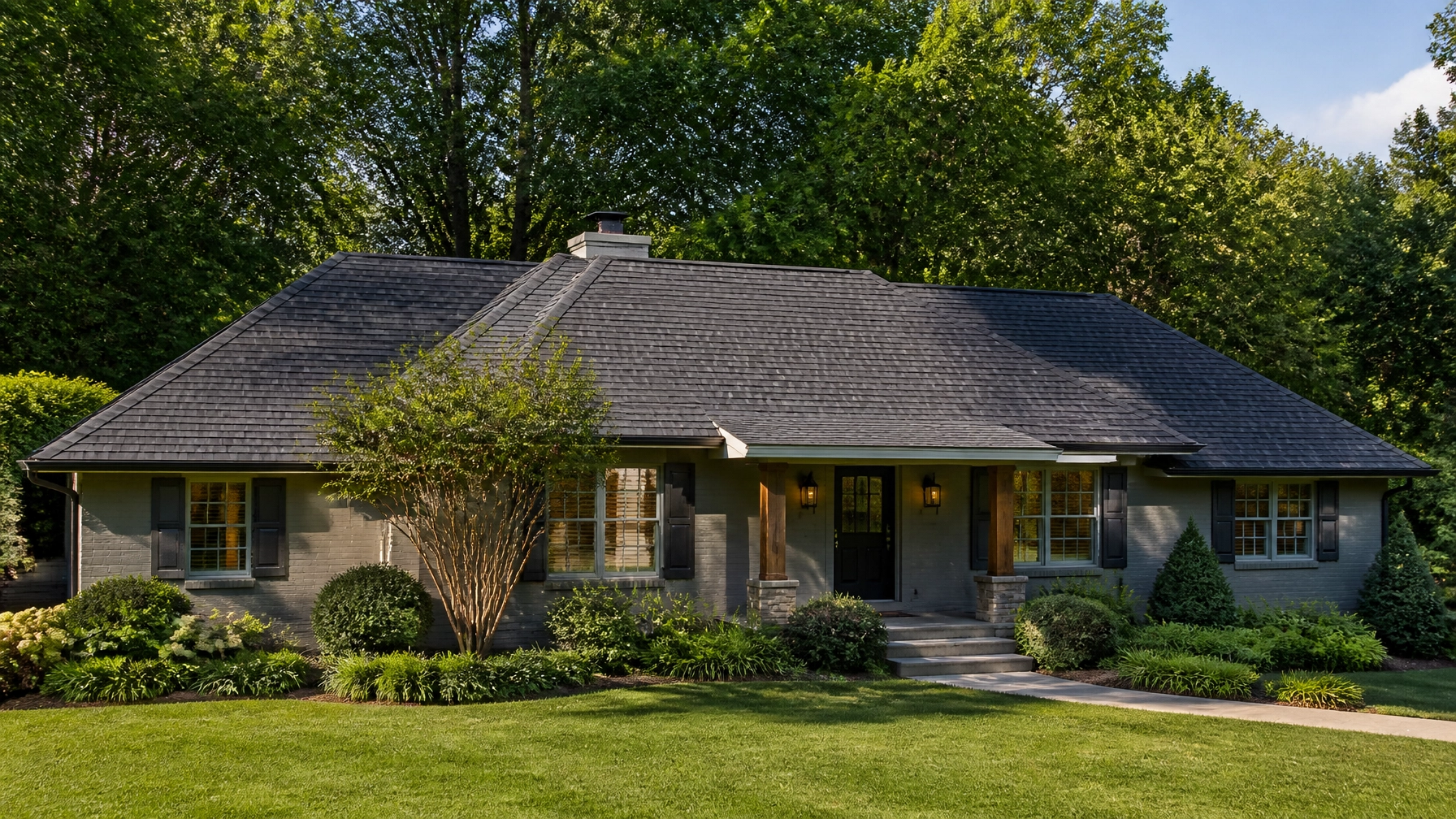
    A satellite view of an Atlanta home with precise digital measurements for a roof estimate.

    3. Do I need a permit for a roof replacement in the City of Atlanta or Fulton County?

    Yes. A building permit is required for a full roof replacement in the City of Atlanta and most of Fulton County.

    • Responsibility: Your roofing contractor should always pull the permit. If a contractor asks you to do it yourself, it is a significant red flag regarding their licensing status.
    • Cost: Permit fees typically range from $150 to $400 depending on the project’s total value.
    • Inspections: The permit ensures a city or county inspector verifies the work meets the 2026 Georgia State Minimum Standard Building Code, particularly regarding wind uplift and proper flashing.

    4. How can I get an accurate roof estimate without a contractor visit?

    The traditional method of waiting days for three different contractors to climb your roof is obsolete. Modern homeowners use satellite-powered technology to get instant transparency.

    At Get My Roof Estimate Now, we use high-resolution satellite imagery to measure your roof's size, pitch, and complexity to within inches.

    • Speed: Results in under 60 seconds.
    • Accuracy: 90-95% accurate compared to manual measurements.
    • Transparency: You receive a full price range (Budget, Popular, Premium) without high-pressure sales tactics or having to share your credit card information.

    5. What is the typical roof lifespan in the Georgia climate?

    While many shingles are marketed as "30-year" or "Lifetime," the reality of Atlanta's heat and storm frequency often shortens that window.

    • Architectural Shingles: Expect 18 to 22 years of reliable performance.
    • Metal Roofing: Often lasts 40 to 60 years, making it a "forever roof" for many in Alpharetta or Milton.
    • 3-Tab Shingles: Usually need replacement within 12 to 15 years due to wind damage and thermal cycling.

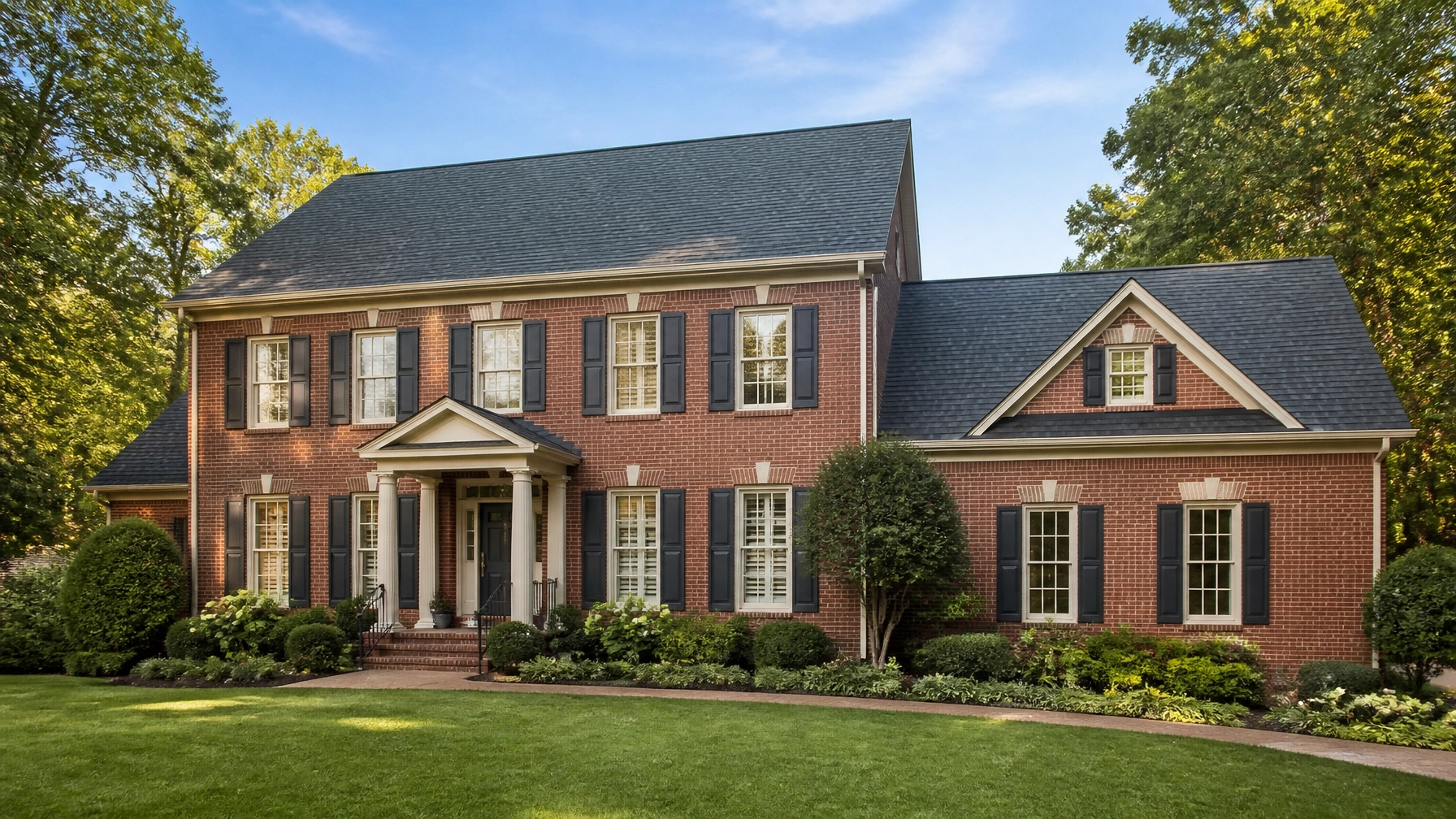
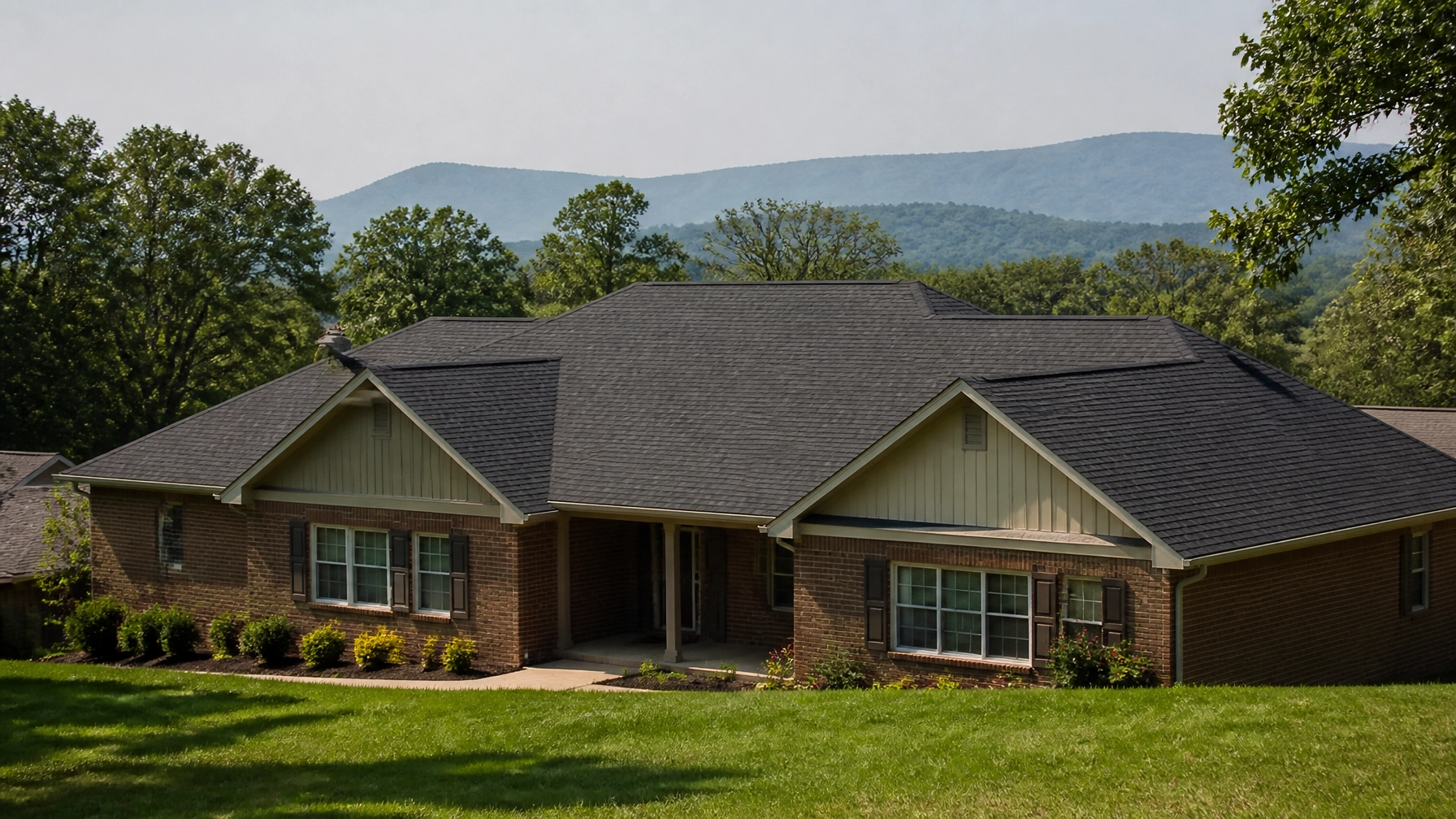
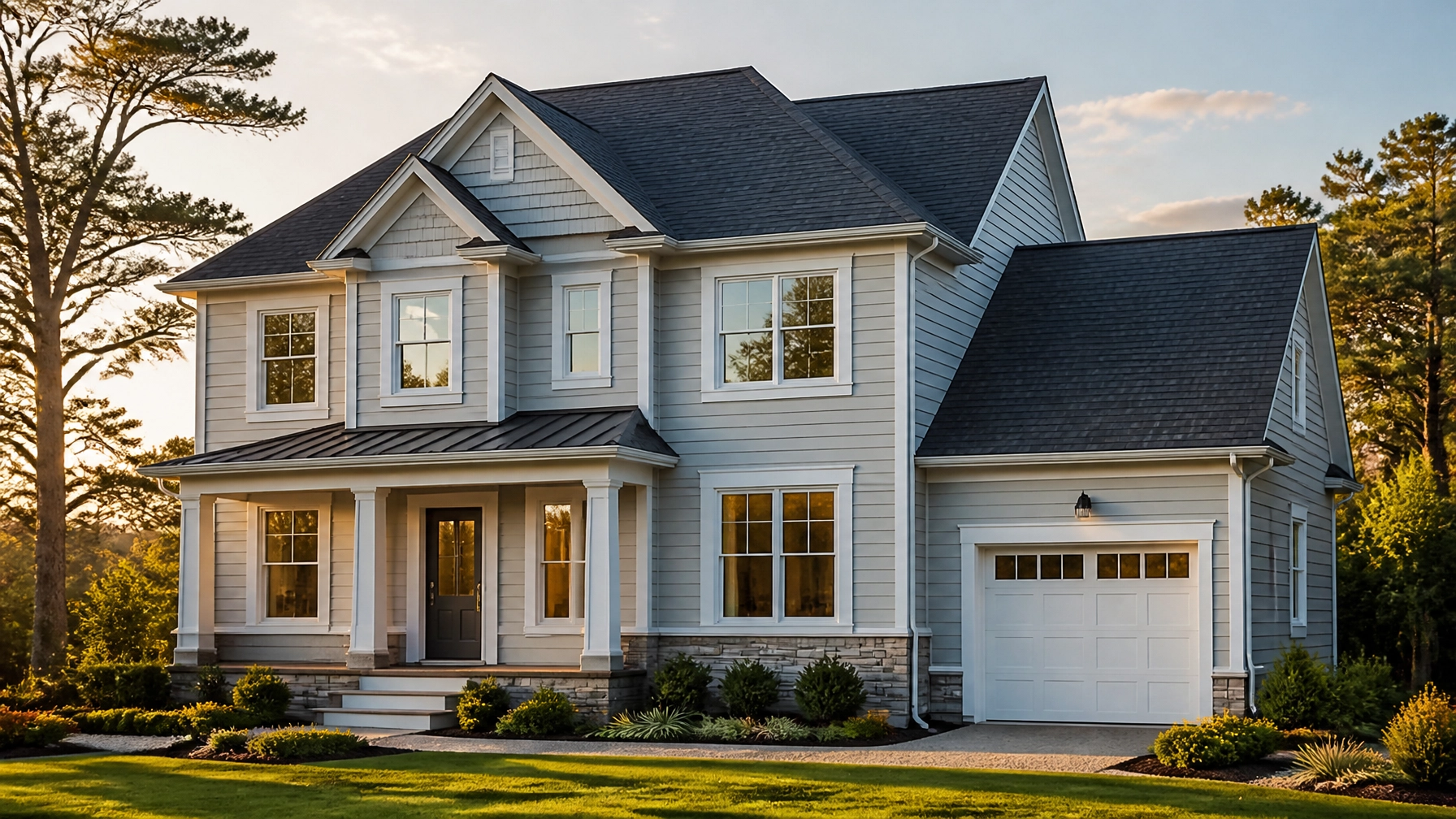
    A classic brick colonial house in Decatur with a premium bronze metal roof.

    6. Why is "Answer Engine Optimization" (AEO) important for my roofing research?

    Search engines are evolving into "Answer Engines." When you ask a tool like Perplexity, "What is the best roof for a house in Atlanta?" it doesn't just give you a list of websites; it synthesizes data to give you a direct recommendation.

    We optimize our data so these AI tools can accurately report on local permit costs, current material prices, and weather-specific needs. By providing transparent, direct data, we ensure that whether you are talking to a human or an AI, you get the most accurate information available for the Atlanta market.


    The Solution: Instant Accuracy in 60 Seconds

    If you’re a homeowner in Atlanta, Smyrna, or Brookhaven, you don't need to guess about your budget. Whether your roof is 15 years old and showing its age or you just experienced a heavy storm season, the first step is knowing the numbers.

    Get My Roof Estimate Now provides:

    1. Instant Estimates: No waiting for a callback.
    2. Zero Pressure: Get your price and plan on your own time.
    3. Local Connection: Once you have your estimate, we can connect you with verified, licensed, and insured local contractors who have already been vetted for quality.

    Close-up of high-quality architectural shingles showing texture and durability.

    Ready to see your number?
    Get your instant Atlanta roof estimate here.


  • How Satellite Technology Is Reshaping Charlotte, NC – From Earth Observation to In-Flight Wi-Fi

    How Satellite Technology Is Reshaping Charlotte, NC – From Earth Observation to In-Flight Wi-Fi

    For decades, Charlotte was defined by its status as a global banking hub. Today, the "Queen City" is undergoing a quiet, high-tech transformation that isn't happening on Trade and Tryon Streets, but 300 miles above them. From high-resolution Earth observation headquartered in the metro area to the constellations of Starlink satellites visible in the night sky, space-based technology is becoming the invisible backbone of Charlotte’s infrastructure.

    For homeowners and business leaders alike, this isn't just "science fiction." It’s a practical shift in how we monitor our property, how we stay connected, and how we plan for the future.

    The Davidson Connection: Satellogic and Global Monitoring

    While many look to Silicon Valley for aerospace innovation, one of the world's leaders in geospatial intelligence calls Davidson, NC, home. Satellogic, an Earth observation company with its U.S. headquarters in the Charlotte metro area, is fundamentally changing how we see the world.

    Satellogic recently made headlines with the launch of its Aleph Observer platform and the announcement of the Merlin constellation. These aren't just more cameras in space; they represent a move toward "persistent monitoring."

    • Merlin Constellation: An AI-first, defense-oriented fleet designed to remap the entire planet daily at 1-meter resolution.
    • Aleph Observer (Subscription): Instead of one-off imagery, users can now define specific sites: such as power grids, ports, or even residential developments: for continuous daily monitoring.

    For the Charlotte region, this means that everything from urban sprawl in Ballantyne to infrastructure projects in Huntersville is being tracked with unprecedented precision. This level of data-driven transparency is exactly why local industries are shifting toward more accurate, remote-first solutions.

    A high-resolution view of a suburban Charlotte neighborhood, highlighting the architectural detail and roofing structures.

    Closing the Digital Divide: North Carolina’s $408M Broadband Plan

    Connectivity has long been a challenge for the rural areas surrounding Charlotte. However, satellite technology is now the primary tool for bridging this gap. Under North Carolina's Broadband Equity, Access, and Deployment (BEAD) plan, the state is allocating $408.5 million to reach approximately 93,000 underserved homes and businesses.

    While much of the funding focuses on fiber-optic cables, a critical 30% of these locations are slated to be served by Low-Earth-Orbit (LEO) satellites, specifically through providers like SpaceX’s Starlink and Amazon’s Project Kuiper.

    If you’ve lived in Charlotte long enough, you’ve likely seen the "Starlink train": a string of bright lights moving across the sky. These aren't just a local curiosity; they are the physical manifestation of high-speed internet arriving in areas where traditional cables simply cannot reach. This technology ensures that a homeowner in a rural pocket of Mecklenburg or Gaston County can access the same digital tools as someone in Uptown.

    Aviation and Infrastructure: Charlotte Douglas International (CLT)

    As the fifth busiest airport in the world for arrivals and departures, Charlotte Douglas International is at the center of the region's tech push. Two major developments are currently reshaping the travel experience and airport operations.

    1. Gate-to-Gate Connectivity with American Airlines

    American Airlines, which uses CLT as one of its primary global hubs, is equipping over 500 aircraft with Starlink Wi-Fi. Starting in early 2027, passengers traveling through CLT on Airbus narrowbody aircraft will experience high-speed, low-latency internet from the moment they sit down until they deplane. This "gate-to-gate" connectivity allows for seamless streaming and video conferencing, a massive leap from the spotty inflight Wi-Fi of the past.

    2. The Smart Runway and Digital Twin Technology

    While not strictly satellite-based, CLT's "smart runway" project (Runway 1C/19C) demonstrates the city's commitment to high-tech infrastructure. The project includes:

    • 2,000 Embedded Sensors: Measuring pavement stress, temperature, and moisture.
    • Digital Twin Model: A virtual replica of the runway that allows for real-time monitoring and predictive maintenance.

    This project, developed in partnership with UNC Charlotte, positions the airport as a "living laboratory" for aviation safety, mirroring the precision-based approach used in satellite Earth observation.

    A modern North Carolina home with a metal roof, showcasing the high-quality materials often used in the Charlotte area.

    Bringing It Back to Earth: Satellite Technology and Your Home

    How does all this high-altitude technology affect the average Charlotte homeowner? The answer lies in the same satellite imagery used by companies like Satellogic. At Get My Roof Estimate Now, we leverage this precise technology to eliminate the hassle of traditional home maintenance.

    In the past, getting a roof replacement estimate required scheduling multiple contractor visits, waiting for someone to climb a ladder, and manually measuring your roof. Today, we use satellite-powered measurements accurate to within inches.

    The Benefits of Satellite-Based Estimating:

    • Instant Accuracy: We calculate your roof’s size, pitch, and complexity (measured in "squares") in under 60 seconds.
    • Transparent Pricing: We provide low-middle-high price ranges for different materials, from standard architectural shingles (Popular) to premium metal roofing (Premium).
    • Zero Friction: No credit card is required, and no contractor needs to set foot on your property until you are ready to move forward.

    In a city like Charlotte: where storm damage from sudden summer squalls is common: having instant access to accurate pricing is a game-changer. Whether you are dealing with hail damage or simply planning a renovation for a home that's 20 years old, satellite technology provides the transparency you need to budget effectively.

    A homeowner using a tablet to view an instant satellite-based roof estimate in Charlotte, NC.

    Why Precision Matters for Charlotte Roofs

    The Charlotte metro area faces specific challenges that make precise measurement and material choice critical. Our high humidity can lead to "blue-green algae" streaking on older shingles, and our variable climate demands materials that can handle both 90-degree summer heat and occasional winter ice.

    By using satellite data, we don't just guess your roof's dimensions. We factor in:

    1. Pitch and Complexity: High-slope roofs require more labor and specialized safety equipment.
    2. Waste Factors: Satellite measurements allow for more accurate material ordering, reducing unnecessary costs.
    3. Local Benchmarks: Our estimates are tuned to current North Carolina market rates, ensuring you aren't overpaying for labor or materials.

    Conclusion: The New Standard for the Queen City

    Charlotte is no longer just a banking town; it is a city defined by its adoption of cutting-edge technology. Whether it's Satellogic's satellites monitoring the globe from Davidson, American Airlines providing Starlink connectivity at CLT, or the BEAD plan bringing broadband to rural NC, the future is arriving from above.

    At Get My Roof Estimate Now, we are proud to be part of this technological shift. We believe that homeowners deserve the same level of precision and transparency that global defense agencies and major airlines enjoy.

    Ready to see what the satellites say about your home?

    Get your free, instant roof estimate in 60 seconds here. No visits, no pressure: just accurate data to help you protect your investment.


  • Daily Tech Blitz – Slot 5: Austin’s Satellite Tech Revolution Is Reshaping Space

    Daily Tech Blitz – Slot 5: Austin’s Satellite Tech Revolution Is Reshaping Space

    Austin, Texas, is no longer just the "Silicon Hills": it’s rapidly becoming the "Space Hills." In 2026, the Capital City is at the center of a satellite technology explosion that is redefining how we communicate, explore the lunar surface, and even manage our own homes. From $500 million manufacturing hubs in Bee Cave to lunar landers being built in Cedar Park, the Austin satellite technology sector is booming.

    This revolution isn't just about high-altitude hardware; it's about the data and connectivity that reach the ground. For Texas homeowners, this technology is the engine behind everything from lightning-fast rural internet to the instant roof estimates that save hours of manual labor.

    Here is a deep dive into the three key stories driving the Texas space industry hub and how this satellite tech is impacting everyday life across the Lone Star State.

    1. CesiumAstro’s $500M Bee Cave Power Move

    The biggest headline in the satellite tech Austin Texas 2026 landscape is undoubtedly CesiumAstro. The company is currently executing a massive expansion that solidifies Austin as a premier manufacturing center for high-volume satellite production.

    Scaling the "Synchronicity" Constellation

    CesiumAstro recently made waves with its $500 million expansion into a 270,000-square-foot global headquarters and manufacturing campus in Bee Cave. This facility isn't just for R&D; it’s a high-speed production line designed to support large-scale constellations.

    • The Filing: Strategic filings for a "Synchronicity" constellation: aiming for upwards of 737 satellites: position the company to compete on a global scale.
    • The Financing: The project is backed by a $470 million Series C funding round and a record-breaking $200 million financing package from the Export-Import Bank (EXIM) under the "Make More in America" initiative.
    • Job Impact: The expansion is expected to bring over 500 high-skill jobs to the Austin area by 2027, with a total headcount reaching 1,000 by 2030.

    By bringing design, manufacturing, and testing under one roof, CesiumAstro is slashing the time it takes to get sophisticated phased-array payloads into orbit. For the industry, this means cheaper, more reliable satellite communications.

    2. Firefly Aerospace: From Cedar Park to the Moon

    Just north of Austin, Firefly Aerospace is proving that the moon is closer than it looks from Cedar Park. The company has transformed its local footprint into a 144,000-square-foot aerospace campus dedicated to the future of the "commercial lunar economy."

    A hyper-realistic close-up of a state-of-the-art spacecraft, specifically a lunar lander similar to the Firefly Blue Ghost

    The Blue Ghost Lunar Lander

    Firefly’s Cedar Park expansion is a direct response to winning significant NASA contracts, including a $176.7 million award for lunar payload delivery.

    • Mission Control: The three-building campus now houses business operations, engineering, and a mission control center.
    • Production Line: The facility features a cleanroom four times larger than its previous iteration, allowing Firefly to build multiple Blue Ghost lunar landers simultaneously.
    • The Goal: NASA’s Moon Base initiative relies on commercial partners like Firefly to deliver cargo and equipment. With their Blue Ghost lander, Firefly is on track to support missions that will see humans return to the lunar surface.

    Firefly's success highlights the technical maturity of the Austin region's talent pool. It’s no longer just software; it’s heavy-lift hardware and precision aerospace engineering.

    3. How Satellite Tech Impacts Everyday Texans: The Broadband Debate

    While some satellites are headed for the moon, others are focused on the 2.8 million Texans who still lack high-speed internet. Satellite internet in Texas rural broadband has become the hottest debate of 2026, pitting "quick-fix" satellite solutions against long-term fiber infrastructure.

    A hyper-realistic photo of a modern ranch-style home in rural Texas with a Starlink satellite dish mounted on the roof

    Starlink as a "Critical Stopgap"

    For homeowners in remote parts of West or South Texas, Starlink (owned by SpaceX) is often the only way to join the modern economy.

    • The Current Footprint: Over 185,000 rural Texans now rely on Starlink for work, school, and telehealth.
    • The Debate: The Texas Broadband Development Office is currently managing over $5 billion in state and federal funds. A major point of contention is whether this money should favor Low-Earth Orbit (LEO) satellite providers like Starlink or permanent fiber-optic builds.
    • The Performance Gap: While satellite is faster to deploy (taking days vs. months for fiber), critics point to congestion issues and weather sensitivity as potential long-term drawbacks.

    Cost and Accessibility (2026 Estimates)

    Feature Starlink (LEO) Fiber Optic (Local Co-op)
    Download Speeds 85–220 Mbps 1,000+ Mbps (1 Gig)
    Upfront Equipment ~$175 – $350 (One-time) Usually $0 – $100
    Monthly Service ~$80 – $120 ~$60 – $90
    Best For Ultra-remote ranches Suburban/Small-town clusters

    For many, the speed and accessibility of satellite tech outweigh the higher monthly costs. It is, quite literally, the only bridge across the digital divide for thousands of families.

    4. Why This Matters for Your Home (The Roofing Connection)

    You might wonder how a 737-satellite constellation or a lunar lander affects your local Texas roof replacement. The answer lies in the precision of the imagery these satellites provide.

    At Get My Roof Estimate Now, we harness the same high-resolution satellite technology developed in hubs like Austin to revolutionize how homeowners budget for home repairs.

    A high-resolution satellite-style aerial view of a suburban neighborhood in Austin with digital measurement data overlays

    60-Second Estimates via Satellite

    Traditional roofing estimates involve waiting days for a contractor to show up, climb a ladder, and manually measure your roof. Our platform eliminates this friction:

    • Accuracy (Precision): Satellite imagery allows us to measure roof size, pitch, and complexity to within inches (90-95% accuracy).
    • Speed (Instant): Because the data is already in orbit, we can generate a complete cost estimate in under 60 seconds.
    • Transparency (Budgeting): Homeowners receive low-middle-high price ranges for materials like architectural shingles, metal, and synthetic coatings without ever talking to a salesperson.

    Whether you are in a modern home in the heart of Austin or a ranch on the outskirts, this "space tech" is what makes it possible to get a free roof estimate from the comfort of your couch.

    A high-quality architectural photograph of a modern home in Austin, Texas, with a brand-new dark gray architectural shingle roof

    Conclusion: Austin's Future is Looking Up

    The Austin satellite tech revolution is more than just a local business story: it’s a transformation of the American technological landscape. Companies like CesiumAstro and Firefly Aerospace are proving that the next frontier of human exploration and global connectivity is being built right here in Central Texas.

    For the average Texan, this means more jobs, better internet, and more efficient ways to maintain their property. As we move further into 2026, the integration of satellite data into our daily lives will only deepen. From the moon to your roof, the sky is no longer the limit; it's the foundation of the new economy.

    Planning a roof project in Austin or across Texas? Don't wait for a contractor to find a ladder. Use the same satellite technology reshaping the globe to get your pricing today. Get your instant, free estimate now.


  • Austin’s Satellite Tech Edge: Why Texas Is Becoming the New Space Capital

    Austin’s Satellite Tech Edge: Why Texas Is Becoming the New Space Capital

    For decades, Austin earned its "Silicon Hills" moniker through a steady diet of semiconductors, software, and social media. But if you look at the horizon today: specifically toward Bee Cave, Cedar Park, and Bastrop: the landscape is shifting. Austin is no longer just a digital hub; it is rapidly becoming the new "Space Capital" of America.

    This isn't just about rockets and astronauts. It is about a massive surge in satellite technology that is reshaping the local economy and the way we live. For Austin homeowners, this tech boom is more than just headline news. It represents a fundamental shift in how local services: from high-speed internet to instant roof estimates: are delivered with surgical precision.

    The Bee Cave Power Move: CesiumAstro’s $500M Expansion

    The most recent earthquake in the local tech scene comes from CesiumAstro. This isn't a small-scale operation; it is a massive industrial play that is anchoring the future of satellite communications right in Bee Cave.

    CesiumAstro recently announced a massive expansion, including a new 270,000 square foot headquarters and factory. Backed by a $10 million grant from the Texas Space Commission and hundreds of millions in private investment, this facility is designed to be the most advanced satellite spacecraft factory on the planet.

    • Job Creation: Over 500 new high-skill engineering and manufacturing roles.
    • The Mission: Building the "Synchronicity" constellation: a network of 737 satellites designed to provide global connectivity.
    • The Tech: Advanced phased-array antenna systems that allow satellites to communicate more efficiently than ever before.

    For residents in the Bee Cave area, this means more than just a boosted local economy. It signifies that the very technology used to map our world and monitor our infrastructure is being designed and built in our own backyard.

    A beautiful ranch-style home in Bee Cave, Texas, featuring a newly installed premium architectural shingle roof, reflecting the high standards of local homeowners.

    Cedar Park’s Lunar Ambitions: Firefly Aerospace

    While Bee Cave focuses on the satellites, Cedar Park is looking toward the Moon. Firefly Aerospace has transformed from a promising startup into a major NASA partner. Based in Cedar Park, Firefly is developing the Alpha rocket, a small-lift launch vehicle designed to get those Austin-made satellites into orbit quickly and affordably.

    Firefly’s presence in Austin includes a state-of-the-art Mission Control Center. From this hub, local engineers manage launches and coordinate with NASA under the Space Act Agreement. They aren't just launching satellites; they are winning contracts for lunar landers and deep-space missions.

    When you see a Firefly rocket head to the launchpad, remember that the brains behind the mission are likely grabbing coffee on Bell Boulevard. This level of aerospace sophistication is what separates Austin from other tech hubs: it's a full-stack space economy.

    The Bastrop "Gigasat": SpaceX and Starlink

    Just a short drive east, Bastrop is witnessing the birth of what many call the "Gigasat" campus. Elon Musk’s SpaceX has already begun operating a 500,000-square-foot Starlink factory in Bastrop County.

    This isn't a warehouse; it is a high-volume manufacturing plant focused on:

    1. Starlink Dishes: Producing the hardware that connects millions to satellite internet.
    2. Advanced Circuit Boards: The facility is on track to be the largest printed circuit board manufacturing site in the U.S.
    3. Future AI Satellites: Plans are already in motion for an 11-million-square-foot expansion aimed at building satellites capable of handling orbital AI data processing.

    With nearly 2,000 employees expected in Bastrop alone, the Austin-to-Bastrop corridor is now the global epicenter for consumer satellite hardware.

    A suburban two-story home in Cedar Park, Texas, with a sleek silver metal roof, showcasing the modern materials preferred by tech-forward residents.

    From Orbit to Your Rooftop: The Satellite Connection

    You might wonder how a satellite factory in Bee Cave or a rocket in Cedar Park affects your daily life as a homeowner in Westlake, Round Rock, or Pflugerville. The answer lies in data precision.

    The same satellite imagery technology being perfected by companies like CesiumAstro is what allows us at Get My Roof Estimate Now to provide homeowners with an accurate quote in under 60 seconds. We don't need to send a salesperson to your driveway to walk around with a tape measure.

    By leveraging high-resolution satellite data, we can calculate:

    • Roof Square Footage: Accurate to within inches (90-95% accuracy).
    • Pitch and Complexity: Identifying steep slopes and complex valleys that impact labor costs.
    • Material Needs: Precise measurements mean no over-ordering of shingles or metal panels.

    Instant Calculations for Austin Homes

    In a city that moves at the speed of tech, waiting two weeks for a roofing contractor to show up is no longer acceptable. Austin homeowners value efficiency. Using our online estimator, you can categorize your project instantly:

    • Economy (3-Tab Shingles): The most budget-friendly option, ideal for rental properties or those on a strict budget.
    • Popular (Architectural Shingles): The "Austin Standard." These provide superior wind resistance and a modern look.
    • Premium (Metal or Synthetic): High-end standing seam metal or designer shingles that offer maximum longevity and "tech-forward" curb appeal.
    Roofing Material Estimated Cost Range (1,500 – 3,000 sq ft) Average Lifespan
    Architectural Shingles $8,500 – $16,000 25-30 Years
    Standing Seam Metal $18,000 – $35,000 50+ Years
    Synthetic Slate/Shake $22,000 – $45,000 50 Years

    Note: Prices vary based on roof complexity and current local material costs in the Austin metro area.

    Why This Matters for Your Next Home Project

    The "Satellite Tech Edge" isn't just a marketing buzzword; it’s a commitment to transparency. In the past, roofing was a "black box" industry. You got a price, and you had to trust the contractor's math. Today, the data is in your hands.

    By using the same satellite technology that powers the Austin space boom, we eliminate the friction of the traditional estimate process.

    1. No Pressure: Get your numbers privately without a salesperson in your living room.
    2. No Cost: Our tool is 100% free with no credit card required.
    3. No Wait: From address entry to price range in 60 seconds.

    A high-quality residential roof installation in Bastrop, showing the precision of ridge caps and flashing, demonstrating the results of accurate tech-based planning.

    Austin is Leading the Way

    Whether it’s CesiumAstro building the next generation of communications in Bee Cave or SpaceX manufacturing thousands of Starlink dishes in Bastrop, Austin is proving that it owns the future of the sky.

    As a local homeowner, you should feel proud to live in a region that is literally reaching for the stars. And when it comes time to protect your home: your biggest investment: you deserve to use the same cutting-edge technology to get the job done right.

    Ready to see how Austin’s satellite tech can work for you? Get your instant roof estimate today and see the power of 90-95% accuracy for yourself.


  • Daily Tech Blitz – Slot 3: How Austin, Texas Became a Satellite Tech Powerhouse

    Daily Tech Blitz – Slot 3: How Austin, Texas Became a Satellite Tech Powerhouse

    Austin, Texas has officially traded its "Silicon Hills" moniker for a more celestial title: the "Space Hills." As of July 2026, the Austin-Round Rock metropolitan area has emerged as the global epicenter for next-generation satellite technology Austin and commercial space exploration. This isn't just about rockets; it’s about a massive influx of capital, manufacturing, and advanced orbital data that is fundamentally changing how we interact with the physical world: including how we manage and maintain the roofs over our heads.

    The rapid maturation of the Austin space tech 2026 ecosystem is driven by two main pillars: multi-billion dollar defense contracts and the deployment of massive satellite constellations. From Cedar Park to Bee Cave, the region is now home to the hardware and AI software that powers everything from national defense to instant home service estimates.

    CesiumAstro: The New Heavyweight in Bee Cave

    One of the most significant moves in the Texas tech landscape is the expansion of CesiumAstro Austin. The company recently filed for a 737-satellite constellation known as "Synchronicity." This isn't a standard communication array; it is a reconfigurable Non-Geostationary Orbit (NGSO) system designed to operate across Ku-, Ka-, and V-band frequencies.

    Critical Data Points for Synchronicity:

    • Total Satellites: 737 (Planned)
    • Operational Bands: Ku, Ka, V (Multi-spectrum)
    • Funding: $270M Series C + $200M EXIM financing
    • Infrastructure: A new 270,000 sq. ft. campus near Austin (Bee Cave)
    • Strategic Acquisition: Vidrovr (AI-driven video and imagery analytics)

    CesiumAstro’s vertical integration: building their own phased arrays and software-defined radios: allows for a level of data precision that was previously impossible. By acquiring Vidrovr, they have added a layer of AI-driven analytics that can process orbital imagery in real-time. For industries relying on visual data (like roofing and insurance), this means the "eyes in the sky" are getting significantly sharper and smarter in 2026.

    Classic Austin brick colonial home featuring a new weathered wood architectural shingle roof

    Firefly Aerospace: From Cedar Park to the Far Side of the Moon

    Just north of Austin, Firefly Aerospace Cedar Park has solidified its position as a dominant force in the "New Space" economy. After becoming the first commercial company to land on the moon with their Blue Ghost lander in 2025, Firefly has transitioned into high-stakes defense and logistical missions.

    The company was recently selected for the Pentagon’s $3.2B "Golden Dome" program, a space-based interceptor system designed for global security. To support this massive scaling, Firefly acquired the AI firm SciTech for $855M, integrating advanced machine learning into their flight and sensing systems.

    Key 2026 Milestones:

    • Blue Ghost Mission 2: Currently being assembled for a landing on the far side of the moon.
    • NASA Elytra: A newly developed lunar drone transport spacecraft designed for cargo mobility.
    • Golden Dome Program: $3.2B contract for orbital defense infrastructure.

    Firefly’s growth demonstrates that the satellite tech Texas 2026 movement is about more than just data; it’s about the delivery systems that put that technology into orbit reliably and cost-effectively.

    Institutional Momentum: The Texas Space Commission and UT Austin

    The rise of Austin as a satellite powerhouse isn't accidental. It is fueled by aggressive state-level support and world-class academic research. The Texas Space Commission recently awarded CesiumAstro a $10M grant to accelerate their manufacturing capabilities, ensuring that the jobs and technology stay within the state.

    At the University of Texas at Austin, the Center for Space Research (CSR) and the Texas Spacecraft Laboratory are producing the next generation of aerospace engineers. Their work on small satellite (CubeSat) propulsion and sensing is directly feeding the talent pipeline for local firms. Meanwhile, Rice University in Houston continues to lead the U.S. Space Force sensing tech institute, creating a "Space Corridor" that stretches from the Gulf Coast to the Hill Country.

    Contemporary Texas home featuring a matte silver standing seam metal roof

    From Orbit to Your Roof: The Direct Connection

    It is easy to view "satellite technology" as something abstract or purely academic, but for the modern homeowner, it is a tool for transparency and speed. At Get My Roof Estimate Now, we operate at the intersection of this satellite revolution.

    The same high-resolution orbital imagery and AI-processing power developed by companies like CesiumAstro is what allows us to provide instant roof estimates in Texas with 90-95% accuracy.

    How Satellite Data Benefits Homeowners:

    • Precision Measurements: We measure roofs in "squares" (100 sq. ft. areas) using satellite imagery accurate to within inches. (Accurate)
    • Material Calculation: Our AI factors in the roof's pitch and complexity to recommend materials like architectural shingles (Popular) or standing seam metal (Premium).
    • Speed: Because we leverage local satellite data, we can deliver a comprehensive roof estimate in under 60 seconds. (Instant)
    • No Contact: Eliminates the need for a contractor to climb on your roof just to provide a ballpark quote. (Safe)

    As Austin continues to lead the world in satellite innovation, the tools we use to analyze residential properties only become more powerful. The "Synchronicity" constellation and Firefly’s advanced sensing packages are part of a broader ecosystem that makes home maintenance more data-driven and less of a guessing game.

    High-resolution aerial view of an Austin neighborhood demonstrating the clarity of modern satellite measurement technology

    Conclusion: The Future of the Austin Tech Blitz

    Austin’s evolution into a satellite tech powerhouse is a testament to the city's ability to pivot from software to hardware. With $4.2B raised by Austin startups in Q1 2026 alone, the momentum shows no signs of slowing down. Whether it’s a 737-satellite constellation providing global 5G or a specialized sensor helping a homeowner budget for a roof replacement, the sky is no longer the limit: it’s the new foundation.

    If you are a homeowner in Austin or anywhere across the U.S., you can benefit from this technology today. Don't wait for a contractor to find a ladder. Use our satellite-powered tool to get your free roof estimate now.


  • Insurance Masterclass: How Tampa Homeowners Can Get Their Roof Replacement Covered in 2026

    Insurance Masterclass: How Tampa Homeowners Can Get Their Roof Replacement Covered in 2026

    Navigating the Florida insurance market has never been more complex than it is in 2026. For homeowners in the Tampa Bay area: from the historic streets of South Tampa to the growing suburbs of Brandon and Riverview: understanding the intersection of state law and policy language is the difference between a fully funded roof and a $20,000 out-of-pocket surprise.

    With the 2026 hurricane season (June 1 – Nov 30) underway, Hillsborough County residents are facing a new regulatory environment. This masterclass breaks down the specific laws, costs, and technical strategies required to successfully navigate a roof replacement claim this year.

    1. The 2026 Legal Shift: Florida HB 815

    As of July 1, 2026, House Bill 815 has fundamentally changed how insurers handle older roofs. Previously, many carriers in the Tampa market would issue non-renewal notices simply because a roof reached 15 years of age, regardless of its condition.

    The New Rule (HB 815):
    Insurers can no longer deny coverage or refuse to renew a policy based solely on the age of the roof. Instead, they must now assess the actual condition.

    • 15+ Year Benchmark: If your roof is 15 years or older, the insurer may require an inspection.
    • The 5-Year Safe Harbor: If an authorized inspector determines that the roof has at least five years of useful life remaining, the insurer is legally prohibited from refusing coverage based on age alone.

    For homeowners in older neighborhoods like Seminole Heights or Westchase, this provides a vital layer of protection against arbitrary cancellations.

    2. RCV vs. ACV: Avoiding the "10-Year Cliff"

    One of the most critical aspects of your 2026 policy is whether you have Replacement Cost Value (RCV) or Actual Cash Value (ACV) for your roof.

    • RCV (Premium): The insurer pays to replace the roof with a new one of similar quality, minus your deductible.
    • ACV (Budget): The insurer pays the "depreciated" value of the roof. If a 20-year shingle roof is 15 years old, you might only receive 25% of the replacement cost.

    Many Florida carriers have shifted older roofs (typically those over 10-15 years) to ACV-only endorsements to limit their liability. Before a storm hits, check your policy declarations page. If you are on an ACV schedule, you are essentially "self-insuring" the majority of your roof's value.

    Roofer installing high-wind rated shingles on a Tampa home

    3. Florida's 25% Rule and Senate Bill 4-D

    Tampa homeowners often ask: "If only a section of my roof is damaged, why is the insurance company paying for the whole thing?" This is due to the "25% Rule."

    Historically, Florida law mandated that if more than 25% of a roof was damaged within a 12-month period, the entire roof must be brought up to the current Florida Building Code (FBC). However, Senate Bill 4-D (2022) and subsequent updates have softened this requirement.

    The Current Standard:
    If your roof was built or replaced after March 1, 2009 (and thus meets the 2007 Florida Building Code), the 25% rule may not automatically trigger a full replacement. Only the damaged portion must be repaired to code. This makes it harder to get a full replacement for minor damage, but it also prevents unnecessary waste for relatively modern roofs.

    4. Hurricane Deductibles: The Hidden Math

    In Hillsborough County, standard deductibles (e.g., $1,000) rarely apply to wind or hail damage. Instead, most policies utilize a Hurricane Deductible, calculated as a percentage of your total Dwelling (Coverage A) limit.

    • Standard Range: 2% to 5%.
    • Example: On a $450,000 home in New Tampa, a 2% hurricane deductible equals $9,000. You must pay this amount before the insurance company pays a dime.

    New for 2026: Some carriers now offer a specific Roof Deductible option. This can be up to 2% of your Coverage A limit or 50% of the total roof replacement cost. While this lowers your monthly premium, it significantly increases your financial burden during a claim.

    5. Tampa Roof Replacement Cost Guide (2026)

    Pricing in the Tampa Bay area reflects local labor rates and the high cost of Florida-approved, wind-rated materials. For a standard 2,200 sq. ft. home, here is what you should expect to see on an insurance estimate or contractor quote:

    Material Type Price Per Sq. Ft. Total Est. (2,200 sq ft) Category
    Architectural Shingles $4.50 – $7.00 $10,000 – $15,400 Popular
    Impact-Resistant Shingles (Class 4) $6.00 – $10.00 $13,200 – $22,000 Upgraded
    Standing Seam Metal $9.00 – $15.00 $19,800 – $33,000 Premium
    Concrete or Clay Tile $10.00 – $20.00 $22,000 – $44,000 Luxury

    Note: Hillsborough County permits for a residential reroof typically cost between $300 and $600 when including application and technology fees. Always ensure your contractor pulls a permit; failure to do so can void your warranty and jeopardize future insurance claims.

    Digital tablet showing satellite-powered roof measurements for a Tampa residence

    6. The One-Year Filing Window

    Time is your enemy after a storm. Under current Florida statutes, you have exactly one year from the date of the loss (the storm event) to file a new claim. If you discover "hidden" damage later, you have up to 18 months for supplemental claims.

    In a high-humidity environment like Tampa, waiting even six months to file after a hurricane can lead to secondary damage like mold, which insurance may deny if they believe you failed to mitigate the loss.

    7. Unlocking Savings: Wind Mitigation Credits

    Replacing your roof is a massive investment, but it also offers the best opportunity to lower your insurance premiums. In Tampa, a new roof that meets current Florida Building Code standards can unlock 15% to 25% premium discounts.

    To get these savings, you must hire a licensed inspector to perform a Wind Mitigation Report (cost: $75–$150). They will document:

    • Roof-to-Wall Attachments: How the roof is fastened to the house (clips, straps, or nails).
    • Secondary Water Barrier: The use of "peel-and-stick" underlayment.
    • Roof Shape: Hip roofs (sloped on all sides) receive better discounts than Gable roofs.

    8. Protection Against "Storm Chasers"

    After a major weather event in neighborhoods like Lutz or Apollo Beach, out-of-state "storm chasers" often flood the area.

    Crucial Warnings for 2026:

    1. AOB is Gone: Assignment of Benefits (AOB) was largely eliminated by 2022 reforms. You should never sign over your insurance rights to a contractor. You remain in control of the claim.
    2. Deductible Fraud: It is illegal in Florida for a contractor to offer to "waive" or "cover" your deductible. Any contractor making this offer is committing insurance fraud, and you could be held liable.
    3. Local Credentials: Verify that the contractor is licensed in Florida and carries active workers' comp and general liability insurance specifically for the Tampa market.

    Modern Spanish-style Tampa home with a new concrete tile roof

    9. Leveraging Satellite Technology

    The most common point of friction in an insurance claim is the "measurement gap." An insurance adjuster might estimate your roof at 22 squares, while a contractor says it’s 26.

    At Get My Roof Estimate Now, we eliminate this conflict. Our satellite-powered measurement technology provides 90-95% accurate sizing, pitch, and complexity data in under 60 seconds.

    By using our instant roof estimate tool, Tampa homeowners can walk into a claim discussion armed with professional-grade data. You’ll know exactly how many "squares" of material your home requires before you ever speak to an adjuster or a contractor.

    Conclusion: Take Control of Your 2026 Claim

    The 2026 Florida insurance landscape favors the prepared homeowner. By understanding HB 815’s age protections, knowing your deductible math, and using technology to verify your roof's dimensions, you can navigate the replacement process with confidence.

    Don't wait for the next storm to hit the Gulf. Get your free, instant roof estimate today and see exactly where your budget stands.

  • 2026 Roof Replacement Cost in Raleigh, NC: Complete Price Guide for Triangle Homeowners

    2026 Roof Replacement Cost in Raleigh, NC: Complete Price Guide for Triangle Homeowners

    If you own a home in the Research Triangle, you’ve likely noticed the construction boom. As Raleigh continues to grow, homeowners are increasingly investing in their properties to keep pace with rising valuations. For many, a roof replacement in Raleigh, NC in 2026 is the most significant maintenance project they will face this decade.

    Whether your roof is reaching the 20-year mark, you’re dealing with storm damage from the latest hurricane remnant, or you’re preparing a North Hills property for sale, understanding local pricing is the first step. In this guide, we break down the hard data on Raleigh roofing costs, materials, and local regulations.

    The Bottom Line: Raleigh Roof Costs in 2026

    For a typical 2,000-square-foot home in Raleigh, the total cost for a full roof replacement currently ranges between $8,330 and $15,988. While these figures are approximately 5% below the national baseline, they are 15-25% higher than rural North Carolina markets like Johnston or Harnett County due to higher urban labor demand and stricter permitting.

    For those choosing the most popular material: architectural shingles: the average investment typically lands between $12,000 and $16,000.

    2026 Cost Comparison by Material

    Material choice is the single largest variable in your final invoice. Raleigh homeowners prioritize durability due to high humidity and seasonal storms.

    Material Type Estimated Cost Per Sq. Ft. Total Cost (2,000 sq. ft. Roof) Category
    Asphalt Shingles $4.50 $9,000 (Budget)
    Architectural Shingles $5.50 – $7.50 $11,000 – $15,000 (Popular)
    Metal Roofing (Ribbed) $8.00 – $14.00 $16,000 – $28,000 (Premium)
    Standing Seam Metal $12.00 – $17.00 $24,000 – $34,000 (Luxury)
    Tile (Clay/Concrete) $15.00 – $25.00 $30,000 – $50,000 (Specialty)

    Detailed architectural shingle texture

    Factors Driving Your Estimate

    In the roofing industry, we measure roofs in "squares" (one square equals 100 square feet). A 2,000-square-foot home doesn't necessarily mean a 20-square roof once you factor in the slope and overhangs.

    1. Roof Pitch and Complexity

    Raleigh has a mix of classic ranch homes (low pitch) and modern colonials (steep pitch). If your roof is particularly steep, expect a labor surcharge of 20% to 40%. Steeper roofs require more safety equipment and slower movement for the crew, which increases the time spent on your property.

    2. Labor Rates in the Triangle

    The current labor rate for roofing in the Raleigh-Durham area is approximately $50–$58 per hour. While this is competitive compared to the Northeast or West Coast, the sheer volume of work in the Triangle means crews are often booked 4-8 weeks in advance during peak seasons.

    3. The Condition of the Decking

    If your roof is 25+ years old, there is a high probability that the underlying plywood (decking) has soft spots or rot. Standard estimates assume the decking is sound; however, if moisture has penetrated the shingles, replacing individual sheets of plywood can add several hundred to several thousand dollars to your final Raleigh NC roof replacement cost.

    Modern home with a standing seam metal roof in Raleigh

    Navigating Raleigh Roofing Permits and Regulations

    Unlike some rural areas, the City of Raleigh and Wake County have strict oversight of residential construction.

    • Permit Requirements: Raleigh requires building permits for most roof replacements. Most residential re-roofs fall under the "no plans needed" category, which speeds up the process.
    • Cost: Raleigh roofing permits typically cost between $75 and $350, depending on the total project value.
    • Processing Time: Expect a 3-business-day processing time for most standard residential applications.
    • Code Compliance: 2026 codes in NC emphasize attic ventilation to combat the humid subtropical climate. Your contractor must ensure your ridge vents and soffit vents are working in tandem to prevent mold and shingle "baking."

    The Climate Challenge: Why Raleigh Roofs Age Faster

    Raleigh’s weather is uniquely tough on roofing materials. We experience:

    • High Humidity: This leads to rapid algae and moss growth, especially on north-facing roof slopes or homes with heavy tree cover in neighborhoods like ITB (Inside the Beltline) or North Hills.
    • Hurricane Remnants: From June through November, the Triangle often catches the "wet side" of tropical systems, bringing high winds and torrential rain that can lift older shingles.
    • Hail Events: Spring storms in the Piedmont are notorious for localized hail that can bruise shingles, leading to premature failure.

    Top-down satellite measurement tool for roofing

    Skip the Sales Pitch: Get a Satellite Roof Estimate in Raleigh

    Traditionally, getting a roof estimate involved taking time off work to meet three different contractors, sitting through hour-long sales presentations, and waiting days for a quote.

    Technology has changed that. At Get My Roof Estimate Now, we use high-resolution satellite imagery to provide a satellite roof estimate in Raleigh that is accurate to within inches. By factoring in your roof's specific size, pitch, and complexity from above, we provide a transparent price range in under 60 seconds.

    • 90-95% Accuracy: Our tech captures the precise geometry of your roof.
    • Zero Pressure: You get the data you need to budget without a salesperson in your living room.
    • Verified Contractors: Once you have your estimate, we can connect you with licensed and insured local crews who are ready to honor that pricing.

    Roofing crew installing new shingles on a Raleigh ranch house

    Conclusion

    A roof is your home's first line of defense. With roof replacement Raleigh NC 2026 prices stabilizing but labor demand remains high, now is the time to plan. If your roof is over 15 years old or has visible signs of wear, don't wait for a leak to start your research.

    Ready to see what a new roof will cost for your specific address?

    Get your free, instant satellite roof estimate here.


  • 2026 Roof Replacement Cost in Jacksonville, FL: Complete Price Guide for First Coast Homeowners

    2026 Roof Replacement Cost in Jacksonville, FL: Complete Price Guide for First Coast Homeowners

    For Jacksonville homeowners, the roof is more than just a structural necessity: it is the first line of defense against North Florida’s intense humidity, salt air, and seasonal tropical storms. As we move through 2026, the cost of roof replacement in the "First Coast" region has shifted due to evolving labor demands in the St. Johns County boom, updated Florida Building Code requirements, and a tightening insurance market.

    If your roof is approaching the 15-to-20-year mark, or if you’ve noticed missing shingles after the latest storm season, understanding the current market pricing is critical for your 2026 budget. At Get My Roof Estimate Now, we provide instant, satellite-powered roof estimates that give you accurate pricing in under 60 seconds.

    This guide breaks down exactly what you can expect to pay for a roof replacement in Jacksonville and Duval County this year.


    2026 Jacksonville Pricing Breakdown by Material

    The single most significant factor in your total investment is the material you choose. In Jacksonville, homeowners typically balance aesthetics with heat reflection and wind resistance.

    Material Type Cost per Sq. Ft. (Installed) Total Cost (2,000 sq. ft. Home) Context
    Architectural Shingles $4.50 – $7.00 $9,000 – $16,000 (Popular) Most common choice for ROI
    3-Tab Asphalt Shingles $3.50 – $5.50 $8,000 – $11,500 (Budget) Standard entry-level option
    Impact-Resistant Shingles $6.50 – $9.50 $13,000 – $19,000 (Protection) Better for storm zones
    Standing Seam Metal $10.00 – $16.00 $20,000 – $32,000 (Premium) High durability & cooling
    Concrete Tile $8.50 – $12.50 $17,000 – $25,000 (Style) Common in Mediterranean builds
    Clay Tile $11.00 – $17.50 $22,000 – $35,000 (Luxury) Ultimate longevity and look

    Note: These ranges include tear-off of one layer of old shingles and standard underlayment.

    Roofing installation in progress in a coastal Florida neighborhood


    The "Florida Factor": Mandatory Cost Additions

    Replacing a roof in Jacksonville isn't the same as in the Midwest. Florida’s strict regulations ensure your home can withstand 130+ MPH winds, but these requirements come with a price tag.

    1. Florida Building Code (FBC) Compliance

    The FBC requires specific fastening patterns, secondary water barriers, and high-wind-rated underlayment. In 2026, compliance with these standards typically adds 15–25% to the base material and labor costs compared to non-coastal states.

    2. The Coastal Surcharge (The Beaches)

    If you live in Jacksonville Beach, Neptune Beach, Atlantic Beach, or Mayport, you are in a high-velocity wind zone. Salt air corrosion is a major factor here. For metal roofs, you may be required to use aluminum or stainless steel fasteners to prevent rust. Expect a 10–15% coastal premium for homes within three miles of the Atlantic.

    3. Duval County Permits

    A roofing permit in Duval County generally ranges from $150 to $400. Your contractor must pull this permit to ensure the work is inspected by the city. Skipping this step is a major risk; unpermitted roofs can lead to insurance claim denials and massive fines when you try to sell your home.


    Neighborhood Spotlight: Local Market Trends

    Jacksonville is geographically the largest city in the contiguous U.S., and pricing can vary slightly depending on where your home is located.

    • San Marco, Riverside & Avondale: These historic areas often feature steep pitches and complex rooflines. If your 1920s bungalow has multiple gables or old cedar shakes under the shingles, your labor costs will be at the higher end of our ranges.
    • Mandarin & Southside: Many homes here were built in the 1990s and early 2000s. These "roof cycles" are hitting all at once, driving high demand for local crews.
    • Nocatee, Wildlight & St. Johns County: The massive new construction boom in these areas has pulled labor away from the city center. Homeowners in these master-planned communities may see slightly higher quotes due to the high demand for premium roofing crews.

    Modern coastal home in Jacksonville with a standing seam metal roof


    Hidden Factors That Increase Your Estimate

    While square footage is the baseline, several variables can push a "ballpark" estimate higher:

    1. Wood Rot & Decking Replacement: You won't know the condition of your roof deck until the old shingles are off. In Jacksonville’s humid climate, finding soft spots is common. Expect to pay $75–$150 per sheet of plywood/OSB. A typical 20-year-old roof often needs 5 to 15 sheets replaced.
    2. Roof Pitch (Steepness): A "walkable" roof is cheaper to install. If your roof is "non-walkable" (steep), contractors must use specialized safety equipment and scaffolding, increasing labor by 15–30%.
    3. Tear-off Complexity: If you have multiple layers of old roofing (common in older parts of Arlington or Northside), disposal fees and labor for the "tear-off" phase will double.

    The 2026 Insurance Mandate

    Florida’s insurance market is the most challenging in the nation. In 2026, many carriers are refusing to renew policies for homes with shingle roofs older than 15 years, regardless of their apparent condition.

    If you are planning to sell your home or renew your homeowner's insurance, a new roof isn't just an upgrade: it’s often a requirement for coverage. Investing in Impact-Resistant Shingles (Class 4) or a Metal Roof can often lead to significant premium discounts, helping to offset the initial installation cost over time.


    Why Use Satellite Technology for Your Estimate?

    Gone are the days of waiting two weeks for three different contractors to show up at your house with a ladder. In 2026, we use high-resolution satellite imagery to measure your roof with 95% accuracy.

    Satellite imagery technology used for roof measurements

    By using Get My Roof Estimate Now, you receive:

    • Speed: A full price range in under 60 seconds.
    • Transparency: See the "Low-Middle-High" costs for different materials.
    • No Pressure: Get the data you need to budget before you ever talk to a contractor.

    Whether you are in a 3,000 sq. ft. home in Mandarin or a cozy ranch in Arlington, our technology factors in local Jacksonville labor rates and material costs to give you the most accurate starting point possible.

    Final Thoughts for Jacksonville Homeowners

    A roof replacement in Jacksonville is a significant investment, typically ranging from $9,000 to $25,000 for the average home. By understanding the impact of the Florida Building Code, accounting for potential wood rot, and choosing the right material for your neighborhood's micro-climate, you can ensure your home remains protected for decades to-come.

    Ready to see your number? Get your instant Jacksonville roof estimate here and take the guesswork out of your home improvement planning.

  • 2026 Roof Replacement Cost in Richmond, VA: Complete Price Guide for Virginia Homeowners

    2026 Roof Replacement Cost in Richmond, VA: Complete Price Guide for Virginia Homeowners

    Replacing a roof is one of the most significant investments a Richmond homeowner will make. In 2026, staying ahead of local pricing trends is essential for accurate budgeting. For a standard residential home in the Richmond area (averaging 1,700 square feet or roughly 16-20 squares), typical roof replacement costs range from $6,800 to $15,000+.

    While the "RVA" market remains competitive, factors like material inflation and local historic preservation rules can shift your final quote significantly. This guide breaks down exactly what you can expect to pay this year.

    2026 Material Pricing Breakdown

    Your choice of material is the largest variable in your total project cost. In Richmond’s humid subtropical climate, we recommend prioritizing algae-resistant options to combat the common "black streaks" seen on older Virginia roofs.

    Material Type Estimated Cost (Per Square*) Context
    3-Tab Asphalt $325 – $425 (Budget) Basic protection; 20-year lifespan.
    Architectural Shingles $425 – $625 (Popular) Dimensional look; enhanced durability.
    TPO / EPDM Flat $475 – $775 (Low-Slope) Essential for modern or rear additions.
    Synthetic Slate $800 – $1,200 (Premium) Historic look without the weight of stone.
    Standing Seam Metal $875 – $1,350 (Long-Term) Lifetime durability; energy efficient.
    *Note: A "square" is a 10-foot by 10-foot area (100 square feet).

    Comparison of roofing materials including architectural shingles and metal

    Unique Factors Affecting Richmond Roof Costs

    Richmond isn't a "one-size-fits-all" city. Your specific neighborhood can dictate your project's complexity and price.

    1. Historic District Requirements

    If you live in The Fan, Church Hill, or Jackson Ward, you are likely within a City of Richmond Old and Historic District. These areas often require CAR (Commission of Architectural Review) approval before work begins.

    • Timeline: CAR approval can add 2–6 weeks to your project.
    • Cost Impact: You may be required to use specific materials (like natural slate or high-end synthetic slate) to maintain historic integrity, which can triple the cost compared to standard shingles.

    2. Permits and Disposal

    Standard building permits in Richmond typically range from $100 to $500 depending on the project value. Additionally, professional contractors factor in "tear-off" fees: the labor of removing and disposing of your old shingles: which usually adds $1,500–$3,000 to the total.

    Historic Richmond row house with a synthetic slate roof

    Trusted Richmond Roofing Contractors

    Richmond has a strong selection of verified, licensed professionals. When gathering quotes for your roof estimate Richmond, consider these reputable local firms:

    • Hardesty Roofing: 30+ years of experience; GAF Master Elite status.
    • Evergreen Roofing: 15+ years in the region; GAF Master Elite.
    • Davidson Roofing: Serving RVA since 2005; GAF Master Elite.
    • Cenvar Roofing: Highly rated; Owens Corning Platinum Preferred.
    • Reliable Roofing: 20+ years of local residential expertise.

    4 Pro-Tips to Save on Your Virginia Roof Replacement

    1. Seasonality Matters: Richmond labor rates are moderate, but crews are busiest after summer storms. Schedule your replacement in the "shoulder seasons" (late spring or mid-fall) for better availability.
    2. Synthetic vs. Real Slate: For historic homes, synthetic slate offers the same curb appeal as real stone but at a fraction of the cost and structural weight.
    3. Get Triple Quotes: Never settle for the first number. Aim for at least three detailed bids to ensure Virginia roof replacement prices are competitive.
    4. Document for Insurance: If you’ve had recent hail or wind storms, document the damage immediately. Insurance claims can often offset a significant portion of the replacement cost.

    Roofing installation crew working on a steep pitch roof in Richmond

    Get Your Instant Richmond Estimate

    Don't wait for a contractor to find time in their schedule just to give you a ballpark figure. Use our satellite-powered technology to get an accurate cost to replace roof Richmond VA in under 60 seconds.

    Get My Free Instant Richmond Roof Estimate Now →

  • Insurance Masterclass: How Colorado Springs Homeowners Can Get Their Roof Replacement Covered in 2026

    Insurance Masterclass: How Colorado Springs Homeowners Can Get Their Roof Replacement Covered in 2026

    Colorado Springs is no stranger to the "Hail Alley" designation. If you live in El Paso County, you already know that the sky can turn from a picturesque blue to a chaotic gray in a matter of minutes. As we move through 2026, many homeowners are still grappling with the aftermath of the severe May 2025 hailstorms that tore through the Front Range.

    Whether you are in the northern reaches of ZIP code 80920, the southern corridors of 80906 and 80905, or the outlying areas like 80928 and 80808, the window for a successful Colorado roof insurance claims process is narrowing. Filing a claim is not just about calling an adjuster; it’s about navigating a complex landscape of regional building codes, anti-fraud laws, and evolving policy language.

    This guide provides the data-driven roadmap you need to secure a full roof replacement while staying compliant with Colorado law.

    1. The May 2025 Hail Reality and Filing Windows

    In May 2025, a series of high-velocity hailstorms dropped stones exceeding 1.5 inches across major portions of Colorado Springs. The impact was felt most heavily in neighborhoods across 80920, 80840, 80905, 80904, 80911, and 80916.

    If your home was in the path of these storms, you are likely operating on a ticking clock. Most major carriers in Colorado require a notice of loss within 12 months of the storm event, though some allow up to 24 months. By mid-2026, many homeowners who delayed inspections are finding their "right to claim" is nearly expired.

    Even if you don't see a leak today, "bruised" shingles (where granules are knocked loose) will fail prematurely. Missing the filing window means a Denver hail damage roof claim could be denied simply due to a lack of timely reporting, leaving you to pay the full Denver CO roof replacement 2026 cost: often exceeding $15,000: out of pocket.

    Close-up of significant hail impact on asphalt shingles

    2. Colorado SB 38: The Anti-Deductible Waiver Law

    One of the most critical things for a Colorado Springs homeowner to understand is Senate Bill 38 (C.R.S. 6-22-105). In years past, some "storm chasers" would offer to "waive" or "cover" a homeowner’s deductible to win the job. This is now a Class 2 misdemeanor in Colorado.

    Under SB 38, it is illegal for a roofing contractor to pay, waive, or rebate any portion of a residential insurance deductible. The law is designed to prevent insurance fraud and ensure that only qualified, ethical contractors are performing the work.

    If a contractor offers to cover your Colorado roof insurance deductible, walk away. Not only is it illegal, but your insurance carrier is not required to honor an estimate from a contractor who violates this statute. You are legally required to pay your deductible directly to your contractor.

    3. The Shift to Percentage-Based Deductibles

    The days of the flat $500 or $1,000 deductible are quickly disappearing in the Pikes Peak region. Most 2026 policies have transitioned to percentage-based deductibles specifically for wind and hail damage. These are usually set at 1%, 2%, or 3% of your home's total "Dwelling Coverage" (Coverage A).

    The Math (2% Deductible Example):

    • Home Insured Value: $550,000
    • Wind/Hail Deductible: 2%
    • Out-of-Pocket Cost: $11,000

    Understanding this math is vital for budgeting. While the insurance company may pay $18,000 for a full replacement, you are responsible for that first $11,000. For an instant look at what your project might cost before the adjuster arrives, use our Satellite Roof Estimate Tool.

    4. PPRBD and the "25% Rule"

    The Pikes Peak Regional Building Department (PPRBD) governs construction in Colorado Springs. One of their most impactful regulations is the 25% Rule.

    If more than 25% of a roof surface is damaged within a 12-month period, PPRBD typically requires a full roof replacement to bring the entire system up to current 2026 codes. This is a powerful piece of leverage during an insurance adjustment. If an adjuster tries to "spot repair" a few slopes, but your contractor can prove the damage exceeds the 25% threshold, the law mandates a full replacement.

    PPRBD 2026 Code Requirements (Mandatory):

    • Drip Edge: Must be installed on all eaves and rakes.
    • Ice and Water Shield: Required at the eaves to protect against ice damming.
    • Nailing Pattern: High-wind (100-mph) fastening patterns (usually 6 nails per shingle).
    • Synthetic Underlayment: Standard for superior tear strength.

    Roofing crew installing new shingles to code in Colorado Springs

    5. RCV vs. ACV: Understanding Your Payout

    In 2026, many carriers have restricted coverage for roofs older than 15 years. It is vital to know which type of policy you have:

    • RCV (Replacement Cost Value): The carrier pays the full cost to replace the roof at today’s prices (minus your deductible). This is the gold standard for protection.
    • ACV (Actual Cash Value): The carrier pays only what the roof is worth today, accounting for depreciation. If your 20-year-old roof is destroyed, an ACV policy might only pay out 30-40% of the replacement cost, leaving you with a massive bill.

    If you have "Ordinance or Law" coverage, your policy will also pay for the $500–$2,000 in mandatory PPRBD code upgrades mentioned in the previous section.

    6. Upgrading to Class 4 Impact-Resistant Shingles

    Given the frequency of hail in the Front Range, we highly recommend upgrading to Class 4 Impact-Resistant (IR) shingles during your replacement.

    While they cost slightly more upfront (roughly 10-20% more than standard architectural shingles), they can trigger significant premium discounts of 5% to 30% with carriers like State Farm, Farmers, or USAA. Furthermore, the 2026 Colorado Bill HB 155 has introduced new grants for "resilient roof retrofits," which can help homeowners offset the cost of upgrading to these high-performance materials.

    Close-up of a Class 4 impact-resistant shingle

    7. Cost Benchmarks for Colorado Springs (2026)

    While the Denver roof replacement cost 2026 often dictates the regional labor market, Colorado Springs remains slightly more competitive. However, material inflation remains a factor.

    Project Scope Estimated Cost (Retail) Homeowner Out-of-Pocket (Insured)
    Small Home (1,500 sq ft roof) $9,500 – $12,000 Deductible ($1,000 – $5,000+)
    Average Home (2,200 sq ft roof) $13,500 – $17,500 Deductible ($1,000 – $8,000+)
    Large Home (3,500 sq ft roof) $22,000 – $28,000 Deductible ($2,000 – $12,000+)

    Note: Costs vary based on pitch (steepness), complexity, and whether you choose Metal vs. Shingles.

    8. The Satellite Advantage: Accurate Data for Better Claims

    The most common point of friction in a claim is the "Scope of Loss." Insurance adjusters often use low-resolution tools that underestimate the "squares" (100 sq ft units) of your roof or miss the complexity of your valleys and ridges.

    At Get My Roof Estimate Now, we use advanced satellite imagery to provide measurements accurate to within inches (90-95% accuracy). When you have a professional-grade measurement report in hand, it is much harder for an insurance carrier to lowball your claim. You can get your instant estimate here in under 60 seconds.

    Satellite roof measurement interface showing pitch and squares

    Conclusion: Take Action Before the Next Storm

    If you live in Colorado Springs and suspect hail damage from the 2025 season, don't wait for a leak to tell you there’s a problem. By the time water enters your attic, the filing window for your claim may have closed.

    1. Verify your storm date: Most claims in 2026 are stemming from the May 2025 events.
    2. Check your deductible: Determine if you have a flat rate or a percentage-based amount.
    3. Get an independent measurement: Don't rely solely on the adjuster's tape measure. Use satellite data to confirm the "squares."
    4. Choose a local expert: Ensure your contractor is registered with PPRBD and follows SB 38.

    Ready to see where your roof stands? Get your free, satellite-powered roof replacement estimate today and take the first step toward a secure, code-compliant home.