Author: James Turner

  • ACV vs RCV: The 2026 Insurance Shift That Could Cost You $10k

    ACV vs RCV: The 2026 Insurance Shift That Could Cost You $10k

    If you are a homeowner in Virginia Beach, the rules for your roof are changing. As we move through 2026, a massive shift is occurring in the insurance industry that is catching thousands of homeowners off guard. For decades, standard policies were built to fully replace a storm-damaged roof. Today, that is no longer a guarantee.

    The difference between a payout that covers your entire project and one that leaves you with a $10,000 bill often comes down to three letters: ACV vs. RCV.

    At Get My Roof Estimate Now, we’ve seen a surge in Virginia homeowners who are shocked to find their insurance check only covers 50% of the actual replacement cost. This isn't a mistake: it’s a calculated shift in how carriers handle wind and hail claims. This guide breaks down the technical details of the 2026 insurance landscape and how you can protect your investment.

    Decoding the Jargon: ACV vs. RCV

    To understand the financial risk, you first need to understand the terminology your adjuster is using. These two methods of valuation determine exactly how much cash lands in your pocket after a claim.

    ACV (Actual Cash Value) [Budget / Depreciated]

    Actual Cash Value is often referred to as the "depreciated value." Under an ACV policy, the insurance company calculates the cost to replace your roof today but then subtracts the "usage" or "wear and tear" based on its age.

    • Formula: Replacement Cost – Depreciation – Deductible = Your Payout.
    • The Reality: If your roof has a 30-year lifespan and is 15 years old, the insurance company may only pay 50% of the cost, even if a hurricane just ripped the shingles off.

    RCV (Replacement Cost Value) [Premium / Full Coverage]

    Replacement Cost Value is the gold standard for homeowners. It is designed to pay the actual cost to replace your roof with new materials of like kind and quality at current market prices, regardless of how old the roof was.

    • Formula: Replacement Cost – Deductible = Your Payout.
    • The Reality: While you might have to pay a higher premium (typically 10-30% more), you aren't stuck with a massive bill when a storm hits.

    Close-up of high-quality architectural asphalt shingles showing detailed texture

    The 2026 Insurance Shift: Why Your Policy is Changing

    Why is this a "2026 shift"? For homeowners in states like Virginia, North Carolina, and Florida, insurance carriers are facing unprecedented losses from frequent wind and hail events. To stay profitable, many carriers are quietly moving roofs older than 10 or 15 years from RCV to ACV automatically at the time of policy renewal.

    In Virginia Beach, where coastal winds and salt air can accelerate the aging of a roof, this shift is particularly dangerous. An aging roof that was covered for full replacement in 2024 might now be restricted to "ACV for Wind and Hail" only.

    The $10,000 Gap: A Data-Driven Scenario

    Let’s look at the numbers for a typical 2,500-square-foot home in Virginia Beach:

    • Average Replacement Cost (2026): $25,000 (Architectural Shingles)
    • Roof Age: 12 Years (Expected life of 25 years)
    • Deductible: $1,000
    Feature ACV Policy Payout RCV Policy Payout
    Replacement Cost $25,000 $25,000
    Depreciation (approx 50%) -$12,500 $0
    Deductible -$1,000 -$1,000
    Final Check to Homeowner $11,500 $24,000
    Homeowner Out-of-Pocket $13,500 $1,000

    In this common scenario, the ACV shift costs the homeowner an extra $12,500 out of pocket. Without the right coverage, your "insurance" is really just a minor discount on a major project.

    How to Get Insurance to Pay: A Homeowner's Masterclass

    Navigating a claim in 2026 requires more than just calling your agent. You need to be prepared with data and local expertise.

    1. Audit Your Policy Now: Look for a "Roof Surface Reimbursement Schedule" or a "Roof ACV Endorsement." If you see these terms, your insurance is likely depreciating your roof.
    2. Use Satellite Data: Insurance adjusters use satellite imagery to estimate your roof size. You should have the same data. By using a service like Get My Roof Estimate Now, you can get a measurement-accurate estimate in under 60 seconds that uses the same technology as the pros.
    3. Document the "Suddenly and Accidentally": Insurance covers storm damage, not general wear and tear. If a storm hits Virginia Beach, take photos of the debris in your yard immediately. This helps prove the damage was a singular event.
    4. Understand "Recoverable Depreciation": If you have an RCV policy, the insurer will likely send you two checks. The first is for the ACV portion. The second (the "holdback") is only released after the work is completed and an invoice is submitted.

    Homeowner using a smartphone to view a satellite roof measurement report

    Local Spotlight: Virginia Beach Roofing Factors

    Living in Virginia Beach brings unique challenges to your roof's lifespan and your insurance claims.

    • Coastal Wind Zones: Many areas in Virginia Beach are designated as high-wind zones. Insurers are increasingly applying "Wind/Hail Deductibles" which are often a percentage of your home's total value (e.g., 2%) rather than a flat $1,000.
    • Salt Air Corrosion: If you have metal components or a metal roof, salt air can lead to faster oxidation. If an insurer claims your damage is "wear and tear" rather than storm damage, you'll need professional documentation to fight back.
    • The 15-Year Rule: In 2026, many Virginia carriers are using 15 years as the "cliff." Once your roof hits its 15th birthday, your carrier may force a switch to ACV. Knowing the exact age and condition of your roof is critical. Check out our Virginia roofing resource page for more localized data.

    Why Speed and Transparency Matter

    In the past, getting a roof estimate meant waiting days for a contractor to show up with a ladder. In 2026, that's too slow. When a storm hits, thousands of homeowners are vying for the same contractors.

    By the time a contractor arrives, your insurance window may be closing, or prices may have spiked due to local demand. Our instant roof cost calculator removes the friction. Using high-resolution satellite imagery, we provide an accurate range for architectural shingles, metal, and synthetic materials within inches of accuracy.

    This gives you:

    • Immediate Budgeting: Know if you’re looking at an $8,000 repair or a $25,000 replacement.
    • Leverage with Adjusters: If an insurance company offers you $10k for a roof that our data shows will cost $18k to replace in Virginia Beach, you have a data-backed starting point for your appeal.
    • Zero Pressure: You get the price you need to plan, without a salesperson sitting at your kitchen table for two hours.

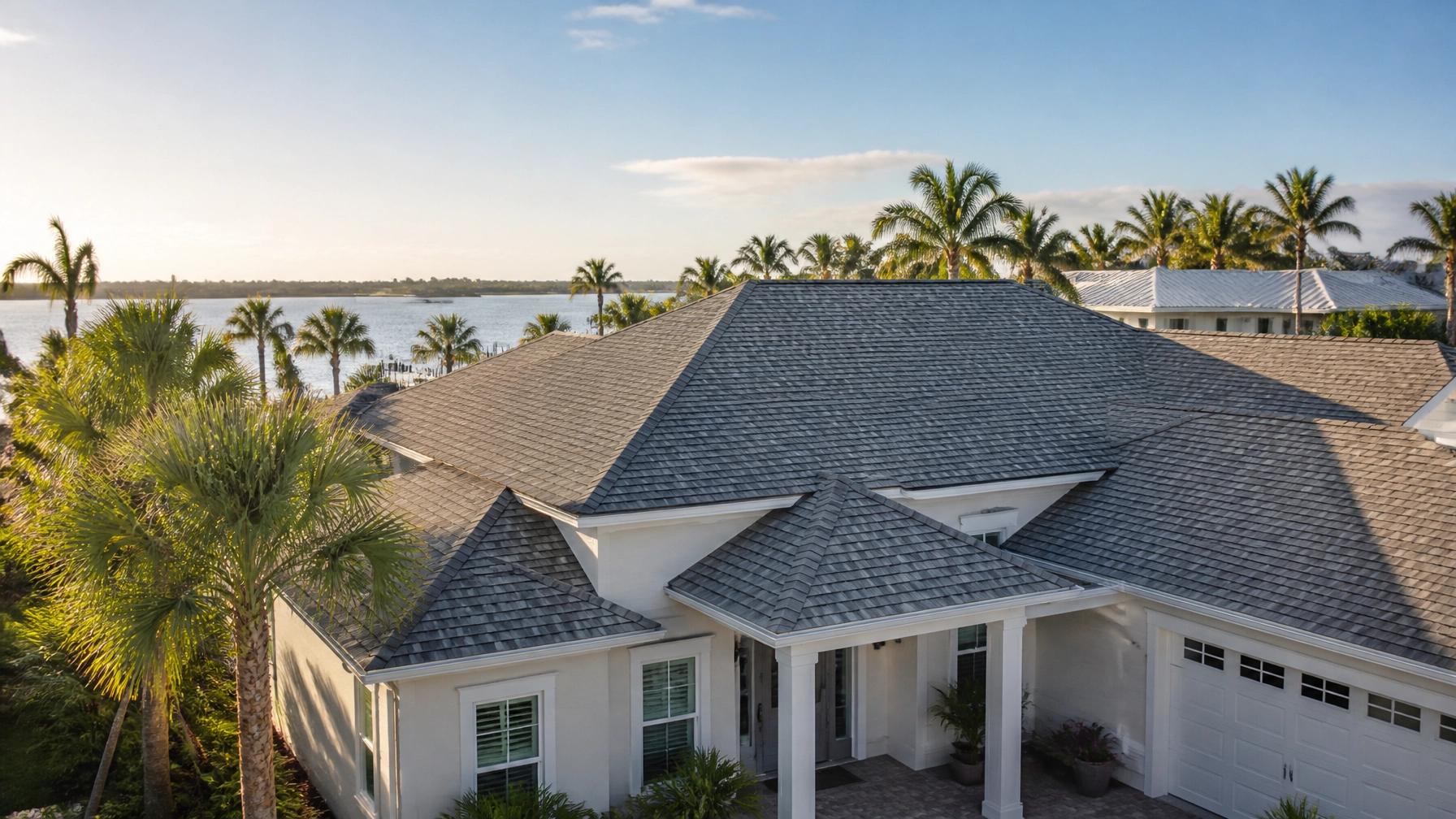
    Coastal-style ranch home in Virginia with a complex roofline and new metal roof

    Conclusion: Don't Get Caught in the Shift

    The 2026 insurance market is designed to shift financial responsibility back onto the homeowner. Whether you are in Virginia Beach, Norfolk, or Chesapeake, the "ACV vs. RCV" debate is one you cannot afford to lose.

    If your roof is over 10 years old, now is the time to verify your coverage. Don't wait for a leak or a hurricane to find out you're underinsured. Knowledge is power, and in the roofing industry, that knowledge starts with an accurate measurement and a transparent price.

    Ready to see where your roof stands? Get your free, satellite-powered estimate in under 60 seconds. No credit card, no hassle, just the facts.

    Get My Instant Roof Estimate →


  • ACV vs RCV: The 2026 Insurance Shift That Could Cost You $10k

    ACV vs RCV: The 2026 Insurance Shift That Could Cost You $10k

    If you own a home in Charlotte, North Carolina, or anywhere across the Southeast, the ground beneath your feet hasn't shifted: but the policy over your head has. As of July 2026, the insurance industry has undergone a fundamental transformation in how it treats your roof.

    For decades, most homeowners enjoyed "Replacement Cost Value" (RCV) coverage. If a hail storm rolled through Mecklenburg County and shredded your shingles, the insurance company cut a check for a brand-new roof, minus your deductible. Those days are rapidly disappearing.

    A massive industry shift toward "Actual Cash Value" (ACV) is currently unfolding. If you aren't paying attention to the fine print on your 2026 renewal notice, you could be staring at a $10,000+ "coverage gap" the next time a storm hits. Here is everything you need to know about the ACV vs. RCV shift and how to protect your biggest investment.

    The $10,000 Gap: Defining the Terms

    To understand why this shift is so dangerous, you have to understand the math. Insurance companies use two primary methods to value your roof.

    1. Replacement Cost Value (RCV) [Premium]

    RCV is the "gold standard." It pays the full cost to replace your damaged roof at today’s market prices. If a new roof costs $18,000 in 2026, and your deductible is $2,000, the insurance company eventually pays the full $16,000.

    2. Actual Cash Value (ACV) [Budget]

    ACV is essentially "garage sale value." It pays the current, depreciated value of the roof. If that same $18,000 roof is 12 years old, the insurance company will subtract "depreciation" for those 12 years of wear and tear.

    The Math of a Crisis:

    • Total Replacement Cost: $18,000
    • Depreciation (50% for age): -$9,000
    • Deductible: -$2,000
    • Insurance Check: $7,000
    • Your Out-of-Pocket Cost: $11,000

    In this scenario, an ACV policy leaves you responsible for $11,000 just to get your home back to its original state. This is the "$10k Gap" that is blindsiding Charlotte homeowners this year.

    Close-up of aging asphalt shingles showing wear and granule loss

    Why 2026 is the Year of the Insurance Shift

    You might be wondering why this is happening now. Several factors have converged in 2026 to create a "perfect storm" for the insurance market:

    1. Fannie Mae & Freddie Mac Rule Changes: As of March 2026, federal mortgage giants now allow ACV roof coverage on single-family homes for new mortgages and renewals. Previously, lenders almost always required RCV to protect their collateral. This regulatory green light has prompted hundreds of carriers to downgrade coverage to save on payouts.
    2. North Carolina Rate Hikes: The NC Department of Insurance approved a 7.5% rate increase for 2026. To keep premiums from skyrocketing even further, many carriers are "silently" moving roofs over 10 or 15 years old to ACV-only plans.
    3. The "Silent Crisis" of Underwriting: Insurers are now using advanced satellite imagery: similar to the technology we use at Get My Roof Estimate Now: to inspect your roof before they even offer a renewal. If they see granule loss or aging, they may automatically attach a "Roof Payment Schedule" (RPS) endorsement, which effectively turns your RCV policy into an ACV policy for the roof specifically.

    AEO FAQ: Quick Answers for Charlotte Homeowners

    We know you need answers fast. Here are the most frequent questions we’re hearing in the Charlotte metro area regarding the 2026 insurance landscape.

    Is ACV or RCV better for my roof?

    RCV is objectively better for your financial protection. While ACV policies have lower monthly premiums, they shift the majority of the financial risk of a storm onto you. If your roof is older than 10 years, an ACV policy is a massive liability.

    Can I still get RCV on a 20-year-old roof?

    In 2026, it is extremely difficult. Most carriers in North Carolina and the Southeast now push roofs older than 15-20 years into ACV-only territory. If you want RCV on an older roof, you will likely have to pay a significant premium "buy-back" or prove the roof is in pristine condition via a professional inspection.

    How do I know if I have ACV or RCV?

    Check your Declarations Page. Look specifically for terms like "Actual Cash Value," "Depreciation," or "Roof Payment Schedule." If you see a percentage-based deductible (e.g., 2% of home value instead of a flat $1,000), you are likely under a more restrictive modern policy.

    Does insurance cover a full roof replacement if only one side is damaged?

    In North Carolina, insurers are often only required to repair the "damaged area." If they can't match the shingles, you might end up with a mismatched roof. However, if you have RCV with a "matching endorsement," you may be able to argue for a full replacement.

    Modern ranch-style home with a sleek matte black metal roof

    Navigating Material Costs in a High-Inflation Market

    The shift to ACV is particularly painful because roofing material costs have remained high. Whether you choose Architectural Shingles (Popular) or a Standing Seam Metal Roof (Premium), the "replacement cost" is likely 30-50% higher than it was when your original roof was installed.

    If you are forced into an ACV payout, you are being paid based on 2010 prices minus 15 years of wear, but you are buying at 2026 prices. This is why having an accurate, instant estimate is crucial. You cannot rely on "ballpark" figures from five years ago.

    How Technology Protects Your Wallet

    At Get My Roof Estimate Now, we believe transparency is the best defense against insurance gaps. Most homeowners don't realize they have a problem until the adjuster leaves their driveway with a check that won't cover half the project.

    We use high-resolution satellite imagery to provide an instant, free roof replacement estimate in under 60 seconds. Our data is accurate to within inches, providing you with:

    • Exact roof square footage (measured in "squares").
    • Current local labor and material rates for Charlotte, NC.
    • Low-middle-high price ranges based on material choice.

    By getting an instant estimate today, you can see exactly how much a replacement would cost in the current market. If your insurance policy says they'll only pay $8,000 (ACV) and our tool shows the real cost is $19,500, you know you have an $11,500 liability you need to plan for.

    Homeowner using a smartphone to view a digital roof estimate report

    Steps to Take Before Your Next Renewal

    Don't wait for a hurricane or a severe thunderstorm to discover your coverage has changed.

    1. Request your "Full Policy Jacket": The one-page summary doesn't show the "Roof Payment Schedule" buried on page 42. Read the endorsements.
    2. Get an Accurate Baseline: Use our Roof Cost Calculator to find out what a new roof actually costs in your zip code today.
    3. Consult an Independent Agent: Ask them specifically: "If my 15-year-old roof is destroyed by hail tomorrow, will you pay for a new one at today's prices, or will you deduct for age?"
    4. Consider Proactive Replacement: If your roof is 20+ years old and you're currently on an RCV policy, it might be financially smarter to replace it now while you still have full coverage, rather than waiting for a storm and being forced into a depreciated ACV payout later.

    Conclusion

    The 2026 insurance shift isn't a theory: it's the new reality for homeowners in North Carolina and beyond. The "Silent Crisis" of ACV coverage is real, and it’s designed to protect the insurance carrier’s bottom line, not yours.

    Stay ahead of the adjusters. Knowledge is your only leverage in a hardening insurance market. Get your accurate, satellite-powered estimate in 60 seconds and know exactly where you stand.

    Get My Instant Roof Estimate Now →

  • 7 Mistakes You’re Making with Local Contractor Vetting (and How to Fix Them)

    7 Mistakes You’re Making with Local Contractor Vetting (and How to Fix Them)

    If you live in Charlotte, North Carolina, you know that storm season isn’t just about the rain: it’s about the knock on the door that follows. Whether it's a summer hailstorm in Myers Park or high winds in Ballantyne, severe weather acts as a dinner bell for "storm chasers." These are out-of-state roofing crews that descend on neighborhoods, promising "free roofs" and high-speed repairs, only to vanish before the first leak appears in their work.

    Vetting a local contractor in the Queen City is more than just reading a few Yelp reviews. It’s about avoiding technical traps and legal liabilities that can cost you thousands. At Get My Roof Estimate Now, we see homeowners make the same seven mistakes every year. Here is how you can spot the red flags and hire with confidence.

    1. Signing the "Free Inspection" Authorization

    The most common mistake happens within 60 seconds of meeting a contractor. A "storm chaser" will offer a free inspection but ask you to sign a "simple authorization form" first.

    The Trap: That form is often a legally binding Assignment of Benefits (AOB) or a "contingency agreement." By signing, you may be giving them the right to represent you with your insurance company and forcing yourself to use them for the repair: regardless of the quality or price they eventually quote.

    The Fix: Never sign a document just to get a roof inspection. A reputable Charlotte roofer will provide a verbal or written assessment of damage without requiring a signature. If they insist on paperwork before getting on a ladder, show them the door.

    2. Failing to Verify the Physical Local Office

    A professional roofing crew in North Carolina wearing safety gear, working on a clean residential roof replacement.

    Storm chasers are masters of camouflage. They will often rent a temporary "virtual office" or use a PO Box in Charlotte to appear local.

    The Trap: If a contractor’s truck has out-of-state plates or a temporary magnet on the door, they aren't local. If your roof fails two years from now, a "fly-by-night" operation won't be around to honor their workmanship warranty.

    The Fix: Verify the address. Does the company have a physical warehouse or office in Mecklenburg County or the surrounding area? Use Google Street View to see if their address is a legitimate place of business or just a UPS Store. Ask for three references specifically in your Charlotte zip code from work completed at least 12 months ago.

    3. Falling for the "Deductible Coverage" Scam

    We’ve all heard the pitch: "We can find enough damage to cover your deductible so the roof is 100% free."

    The Trap: In North Carolina, it is illegal for a contractor to "waive" or "rebate" your insurance deductible. When a contractor inflates an invoice to the insurance company to cover your out-of-pocket costs, they are committing insurance fraud: and by participating, you are too.

    The Fix: If a roofer offers to pay your deductible, they are likely cutting corners on materials or labor to make up the difference. Always plan to pay your deductible directly to the contractor. It is a sign of a legitimate, law-abiding business.

    4. Accepting a Quote Without a Technical Baseline

    A high-tech digital interface showing a satellite view of a suburban house with precise measurement lines.

    Most homeowners go into a contractor meeting "blind." They rely entirely on the contractor’s measurements of the roof’s size, pitch, and complexity.

    The Trap: Without your own data, you have no way to know if a contractor is overestimating the "squares" (100 sq. ft. sections) of your roof to pad the bill. Traditional manual measurements are also prone to human error, which can lead to material shortages or overages.

    The Fix: Use modern technology to your advantage. Before you even call a contractor, get an instant roof estimate using our satellite-powered tools. In under 60 seconds, you’ll have an accurate measurement of your roof’s size (within 90-95% accuracy) and a ballpark price range for different materials (Budget, Popular, Premium). This gives you the leverage to tell a contractor, "I know my roof is 24 squares. Why is your quote for 30?"

    5. Neglecting the NC General Contractor License Verification

    In North Carolina, the rules for roofing are specific. While some small repairs don't require a license, most full roof replacements exceed the $30,000 threshold that mandates a North Carolina General Contractor (GC) license.

    The Trap: Many "roofing sales" companies are just marketing firms that subcontract the work to unlicensed crews. If an unlicensed worker is injured on your property, you: the homeowner: could be held liable for their medical bills.

    The Fix: Ask for their license number and verify it on the NC Licensing Board for General Contractors website. Ensure they also carry active Workers' Compensation and General Liability insurance. A "verified" contractor should be able to produce these certificates instantly.

    6. Not Asking "Who is Pulling the Permit?"

    Close-up shot of high-quality architectural shingles being installed on a roof.

    Every roof replacement in Charlotte requires a building permit from Mecklenburg County Code Enforcement.

    The Trap: A common "storm chaser" tactic is to ask the homeowner to pull the permit as an "Owner-Builder." This is a massive red flag. When you pull the permit, you are responsible if the work doesn't meet local building codes.

    The Fix: A professional contractor always pulls the permit under their own license and name. This ensures that the city inspector holds the contractor accountable for the quality of the work, not you.

    7. Hiring Based on Speed Over Substance

    After a storm, the desire to get your roof fixed "immediately" is high. Storm chasers prey on this urgency, offering to start work "tomorrow" if you sign today.

    The Trap: High-quality, reputable local contractors in Charlotte are usually busy. If a crew is available the morning after a storm while every other company has a three-week wait, you have to ask why. Often, they are sacrificing quality or using sub-par materials (like 3-tab shingles instead of Architectural) to move fast.

    The Fix: Take a breath. Unless you have an active, major leak into your living space, you have time to vet. Use our blog resources to understand the different material options available. A roof is a 20-to-30-year investment; waiting two weeks for a reputable pro is better than spending twenty years regretting a rush job.

    The 60-Second Solution for Charlotte Homeowners

    Vetting doesn't have to be a full-time job. By arming yourself with data before the first contractor knocks on your door, you eliminate the power dynamic they rely on.

    At Get My Roof Estimate Now, we provide the transparency you need to navigate the Charlotte roofing market. No sales pressure, no "storm chaser" tactics: just fast, accurate, satellite-powered pricing that lets you know exactly what your roof should cost.

    Ready to get your baseline? Enter your address here and get your free, instant estimate in under a minute.

  • Charlotte Roof Estimates in 60 Seconds: Don’t Overpay for Your 2026 Replacement

    Charlotte Roof Estimates in 60 Seconds: Don’t Overpay for Your 2026 Replacement

    If you’re a homeowner in the Queen City, you’ve likely noticed the construction boom hasn't slowed down: and neither have the prices. In 2026, roofing costs in Charlotte are projected to climb by 4% to 8%, driven by rising material costs and a tight labor market. Whether you're in Ballantyne, Myers Park, or NoDa, waiting to get a quote could cost you thousands.

    The traditional way of getting a roof estimate is broken. You call three contractors, wait a week for them to show up, endure a two-hour sales pitch, and finally get a handwritten quote that may or may not be accurate. At Get My Roof Estimate Now, we’ve eliminated the friction. Using advanced satellite imagery, we provide accurate, transparent pricing in under 60 seconds: no contractor visit required.

    The Reality of 2026 Roofing Costs in Charlotte

    Charlotte’s unique climate: mixing high humidity with intense summer UV rays and the occasional severe storm: puts significant stress on residential roofs. By 2026, the average cost for a full roof replacement on a standard 2,000-square-foot home in North Carolina typically ranges between $10,000 and $16,000 for architectural shingles.

    Why the 4-8% hike? Manufacturers are passing down higher production costs for asphalt and metal, while local Charlotte labor remains in high demand. If you’re budgeting for a project this year, here is what you can realistically expect to pay based on current market data:

    • Small Roof (1,500 sq ft): $8,500 – $13,500
    • Medium Roof (2,000 sq ft): $10,500 – $17,000
    • Large Roof (2,500 sq ft): $13,000 – $21,500

    Categorizing Your Options: Budget vs. Premium

    Not all roofs are created equal. Depending on your long-term plans for your home: whether you’re staying for 30 years or prepping for a quick sale: your material choice will be the biggest factor in your final bill.

    Close-up of high-quality architectural shingles

    1. Architectural Shingles (Popular / Versatile)

    This is the "gold standard" for Charlotte homes. These shingles are thicker and more durable than basic 3-tab shingles, offering a dimensional look that boosts curb appeal. They are designed to withstand winds up to 130 mph, which is critical during the Carolinas' storm season.

    • Estimated Cost: $4.50 – $7.00 per sq ft (installed)
    • Best for: Most single-family homes and rental properties.

    2. Metal Roofing (Premium / Durable)

    Metal is gaining massive popularity in neighborhoods like Dilworth and South End for its sleek, modern aesthetic and incredible lifespan. While the upfront cost is higher, a metal roof can last 50+ years.

    • Estimated Cost: $15,000 – $30,000+ total
    • Best for: Homeowners looking for a "forever roof" and maximum energy efficiency.

    Ranch-style home with a sleek metal roof

    3. Synthetic and Specialty (Luxury)

    For high-end estates in Myers Park or Quail Hollow, synthetic slate or cedar shakes provide the aesthetic of natural materials without the heavy maintenance or weight issues.

    • Estimated Cost: $25,000 – $50,000+
    • Best for: Luxury homes and historical preservation.

    Why Satellite Estimates Beat Traditional Quotes

    Accuracy is everything. Our satellite-powered technology measures your roof's size, pitch, and complexity to within inches. This means our roof cost calculator provides a quote with 90-95% accuracy.

    The 60-Second Process:

    1. Enter Your Address: We pull high-resolution satellite data of your specific property.
    2. Instant Measurement: Our AI calculates the exact "squares" (100 sq ft units) of your roof.
    3. Real-Time Pricing: We factor in current 2026 Charlotte labor rates and material costs.
    4. Zero Pressure: You get a price range (Low-Middle-High) instantly. No credit card, no salesman on your porch.

    Homeowner getting an instant roof estimate on a smartphone

    Factors That Influence Your Charlotte Estimate

    When you use our tool, we look at several technical variables that contractors often use to "pad" their quotes. Understanding these can help you avoid overpaying:

    • Pitch (Steepness): Steeper roofs require more safety equipment and labor time, which increases the price.
    • Complexity: Roofs with multiple dormers, chimneys, and valleys require more flashing and detail work.
    • Tear-Off Layers: If your home already has two layers of shingles, the labor to remove and dispose of them will add to the total.
    • Waste Factor: Every roof has waste (shingles that are cut to fit). A complex roof has a higher waste factor than a simple ranch-style roof.

    Don't Wait for the Next Storm

    Charlotte is no stranger to hail and high winds. If your roof is between 15 and 30 years old, it’s likely approaching the end of its functional life. Minor leaks today can turn into major structural repairs, mold issues, and interior damage tomorrow.

    By getting an instant roof estimate today, you can:

    • Budget Accurately: Know exactly how much to set aside without the guesswork.
    • Compare Confidently: Use our data-driven estimate as a benchmark when talking to local contractors.
    • Move Fast: If a storm hits, you’ll already know your numbers, allowing you to jump to the front of the line for repairs.

    Verified Local Pros

    Once you have your estimate, we can connect you with verified, licensed, and insured local contractors in the Charlotte metro area. We’ve already done the vetting for you, ensuring you work with professionals who respect the transparent pricing we provide.

    Ready to see your number? Visit Get My Roof Estimate Now and get your Charlotte roof quote in 60 seconds.


  • 7 Mistakes You’re Making with Your Houston Roof Estimate (and How to Spot Storm Chasers)

    7 Mistakes You’re Making with Your Houston Roof Estimate (and How to Spot Storm Chasers)

    In Houston, your roof isn't just a part of your house; it’s your first line of defense against 100-degree humidity, sudden Gulf storms, and the occasional hurricane season that keeps us all on edge. When it’s time for a replacement, most homeowners head straight to Google or wait for a knock on the door.

    But here is the reality of the 2026 Houston roofing market: a "ballpark" estimate can vary by as much as $5,000 depending on who is doing the measuring and what their hidden motives are. Whether you're in Katy, The Heights, or Pearland, making a mistake during the estimation phase doesn't just cost you money: it can lead to legal headaches and a roof that fails in five years.

    At Get My Roof Estimate Now, we’ve analyzed thousands of roof profiles using advanced satellite technology. We know what a fair Houston roof price looks like. Here are the seven most common mistakes Houston homeowners make when getting a roof estimate, and the red flags that signal a "storm chaser" is at your door.


    1. Falling for the "Lowest Bid" Trap (Budget)

    It is tempting to go with the contractor who quotes you $2,000 less than everyone else. However, in the roofing industry, an outlier low bid is rarely a "good deal." In Houston, labor and material costs are relatively standardized. If a bid is significantly lower, the contractor is likely cutting corners on:

    • Insurance: They may not carry Workers’ Comp (leaving you liable if a worker falls).
    • Materials: Using "seconds" or lower-grade shingles that look the same but lack UV resistance.
    • Labor: Using day laborers who aren't trained in specific manufacturer installation requirements.

    Expert Tip: A legitimate Houston estimate for a standard 2,000 sq. ft. home should typically range between $8,000 and $15,000 for architectural shingles. Anything significantly lower should be treated with extreme caution.

    2. Letting a Contractor "Eat" Your Deductible (Illegal)

    This is the most common scam in Texas. A contractor tells you, "Don't worry about your $2,000 insurance deductible; we'll cover it or find a way to waive it."

    Stop right there. Under Texas House Bill 2102, it is illegal for a contractor to waive, rebated, or "absorb" an insurance deductible. If they do this, they are committing insurance fraud, and by participating, you are too. If a contractor is willing to break state law to get your business, they will certainly be willing to cut corners on your roof.

    Professional contractor explaining high-quality roofing materials to a homeowner

    3. Ignoring the "Tear-Off" Clause (Standard)

    In Houston’s heat, your roof needs to breathe. Some estimates are lower because the contractor plans to "roof over" your existing shingles. While this is technically allowed in some jurisdictions, it is a terrible idea in Texas.

    • Heat Retention: Two layers of shingles trap immense heat, cooking your roof from the inside out and skyrocketing your AC bills.
    • Weight: Houston homes deal with shifting clay soils; adding thousands of pounds of extra roofing material can cause structural strain.
    • Hidden Damage: You can't see rotten decking or water damage unless the old shingles are removed.

    Always ensure your estimate explicitly includes "Full Tear-Off and Disposal."

    4. Skipping the Ventilation Audit (Technical)

    Houston’s humidity is relentless. A mistake many homeowners make is focusing entirely on the shingles and ignoring the vents. If your estimate doesn't mention ridge vents, solar fans, or soffit intake, your new roof will fail prematurely.

    Without proper airflow, the attic temperature can reach 160°F, which literally melts the adhesive on your shingles and voids your manufacturer warranty. A professional estimate should always include a plan for balanced ventilation.

    5. Trusting a "Hand-Measured" Estimate

    Traditional contractors often walk your roof with a tape measure. This is slow, prone to human error, and often results in "fudge factors" (adding 15% extra just in case).

    In 2026, there is no reason to rely on a guy with a ladder for your initial pricing. We use satellite-powered measurements accurate to within inches. By using our Roof Cost Calculator, you get an objective measurement of your roof's squares, pitch, and complexity in 60 seconds. This prevents contractors from "padding" the square footage of your home.

    Satellite technology measuring a residential roof with precision

    6. Overlooking the "Workmanship" vs. "Material" Warranty (Premium)

    You might see "Limited Lifetime Warranty" on your estimate and feel safe. But read the fine print.

    • Material Warranty: Covers if the shingle itself is defective (rare).
    • Workmanship Warranty: Covers if the roofer installed it incorrectly (very common).

    Most Houston roof leaks occur at the flashing (around chimneys and pipes). If your contractor only offers a 1-year workmanship warranty, they don't have confidence in their crew. Look for a minimum of 5-10 years on workmanship.

    7. Not Verifying "Local" Presence

    Houston is a prime target for "Storm Chasers": companies that follow hail storms across state lines. They set up a temporary office, do 50 roofs in a month, and vanish. When your roof leaks two years later, their phone number is disconnected.

    Mistake: Not asking for a physical Houston address and a Texas-based insurance certificate.


    How to Spot a Houston Storm Chaser

    After a major weather event in Harris County, you will see a surge in door-to-door solicitation. Here is how to identify a predatory storm chaser:

    1. Out-of-State Plates: Check the trucks. If they are from Oklahoma, Florida, or Louisiana right after a Houston storm, they are likely traveling crews.
    2. High Pressure: They use phrases like "I'm only in this neighborhood today" or "Your neighbor just signed, so we can give you a 'neighborhood discount' if you sign now."
    3. The Contingency Agreement: They ask you to sign a "simple inspection authorization" that is actually a binding contract obligating you to use them if your insurance approves the claim.
    4. No Itemized Bid: They simply say, "We'll do it for whatever the insurance company pays." This is a red flag that they will do the bare minimum work to maximize their profit from the insurance check.

    Various Houston residential architectural styles showing clean rooflines


    Houston Roof Replacement Costs (2026 Data)

    To help you benchmark your estimates, here is what we are seeing for average 2026 pricing in the Houston metro area for a typical 2,500 sq. ft. roof (roughly 25-30 squares).

    Material Type Estimated Cost Range (Houston) Longevity Best For
    Architectural Shingles (Popular) $9,500 – $14,000 25-30 Years Standard Subdivisions
    Luxury Shingles (Premium) $15,000 – $22,000 40-50 Years High-Wind Areas
    Standing Seam Metal (Pro) $24,000 – $38,000 50+ Years Energy Efficiency
    Stone-Coated Steel (Elite) $28,000 – $45,000 50+ Years Hurricane Resistance

    Prices include tear-off, local Houston permits, and standard underlayment.


    Why Get Your Estimate First?

    The best way to avoid being scammed or overcharged is to enter the conversation with data. When you use our technology to Get a Texas Roof Estimate, you receive a transparent breakdown of what your roof should cost based on current local material and labor rates.

    How it works in 60 seconds:

    1. Enter your Houston address: Our satellite AI finds your home.
    2. Verify your roof: We calculate the exact square footage and pitch.
    3. Select your materials: Compare Budget vs. Premium options.
    4. Instant Results: Get a range you can use to vet any contractor who walks through your door.

    Don't let a storm chaser dictate the price of your home's most important asset. Get the facts, get the measurements, and get your roof done right.

    Start Your 60-Second Houston Roof Estimate Now →

  • 2026 Detroit Roof Costs Explained in Under 3 Minutes

    2026 Detroit Roof Costs Explained in Under 3 Minutes

    If you own a home in Detroit, Warren, or Dearborn, you know that the Michigan climate is relentless. Between heavy snow loads in January and the high-humidity storms of July, your roof is your home’s first line of defense. In 2026, the cost of maintaining that defense has shifted due to material inflation and local labor demand.

    At Get My Roof Estimate Now, we use satellite-powered technology to provide 95% accurate measurements in under 60 seconds. We’ve analyzed the latest Detroit market data to break down exactly what you should expect to pay for a roof replacement this year.

    The Bottom Line: 2026 Detroit Pricing Benchmarks

    For most Detroit homeowners, a full roof replacement in 2026 for a standard 2,000-square-foot home ranges between $11,000 and $16,000.

    While that is the average, your specific price is dictated by three primary factors: square footage, material choice, and roof complexity. Below is a high-level breakdown of typical project costs in the Metro Detroit area.

    2026 Estimated Project Totals by Material

    Material Type Estimated Cost (2,000 sq. ft. Roof) Best For
    Architectural Shingles (Popular) $11,000 – $16,000 Durability & Curb Appeal
    3-Tab Asphalt Shingles (Budget) $8,000 – $12,000 Short-term Savings
    Mid-Range Metal Panels (Premium) $18,000 – $28,000 Long-term ROI & Longevity
    Standing Seam Metal (Ultra-Premium) $26,000 – $40,000+ Modern Style & Lifetime Use

    Material Deep Dive: Choosing Your Protection

    The material you choose is the single biggest variable in your final invoice. In Detroit, where ice damming is a common concern, the quality of your underlayment and shingle grade is non-negotiable.

    Architectural Asphalt Shingles (The Gold Standard)

    Architectural shingles remain the top choice for Detroit residents. They offer superior wind resistance and a thicker profile than basic 3-tab shingles. In 2026, expect to pay $5.50 to $8.00 per square foot installed.

    Close-up of high-quality architectural shingles showing texture and durability

    Metal Roofing (The Lifetime Investment)

    Metal roofing has seen a surge in popularity across Southeast Michigan. While the upfront cost is significantly higher, its ability to shed snow and resist rot makes it a favorite for those planning to stay in their homes for 30+ years. Mid-range metal panels currently run $9.00 to $14.00 per square foot in the Detroit market.

    Modern Michigan home featuring a sleek matte black metal roof

    Local Variables: Why Detroit Prices Differ

    Not every 2,000-square-foot roof is priced the same. Local factors specific to the 482xx ZIP codes can influence your final quote:

    1. Pitch and Complexity: A simple "up and over" ranch roof is significantly cheaper to labor than a steep-pitched Tudor with multiple dormers and valleys.
    2. Tear-off Layers: Many older Detroit homes have two or even three layers of old shingles. Michigan building codes require a full tear-off down to the deck if more than one layer exists. Removing these extra layers adds roughly $1.50 – $3.00 per square foot in labor and disposal fees.
    3. Permit Fees: Detroit and surrounding municipalities like Royal Oak or Grosse Pointe have varying permit costs and inspection requirements that are baked into your contractor's quote.

    How to Get an Accurate Quote in 60 Seconds

    Traditionally, getting a roof estimate meant taking a half-day off work to wait for a contractor to walk your roof with a measuring tape.

    At Get My Roof Estimate Now, we’ve eliminated the friction. Our roof cost calculator utilizes high-resolution satellite imagery to measure your roof's square footage, pitch, and complexity remotely.

    Satellite imagery technology used to provide instant roof measurements

    Our Process:

    • Step 1: Enter your Detroit address.
    • Step 2: Our AI analyzes satellite data to calculate your roof's exact dimensions.
    • Step 3: Receive a transparent, multi-tier price range (Budget, Popular, and Premium options) in under a minute.

    Final Thoughts for Detroit Homeowners

    Replacing a roof is a significant financial decision, but it’s also an investment in your home’s equity. In 2026, the key to a successful project is transparency. Don't rely on "ballpark" guesses that change once the contractor arrives.

    Use our technology to get the data you need to budget effectively. Whether you are looking for a quick roof estimate or want to compare material costs, we provide the tools to put you in control.

    Ready to see your number? Get your instant Detroit roof estimate here.

  • The Jacksonville Homeowner’s Guide to Getting Insurance to Pay for Your Roof at 100%

    The Jacksonville Homeowner’s Guide to Getting Insurance to Pay for Your Roof at 100%

    If you live in Jacksonville, you know the drill. From the unpredictable summer thunderstorms in Southside (32256) to the high-wind hurricane threats along the beaches (32224), our roofs take a beating. A full roof replacement in Duval County can easily set you back $12,000 to $25,000: a massive investment that most homeowners would rather not pay out of pocket.

    The good news? Your insurance company might be legally obligated to foot the entire bill. The bad news? Florida’s insurance laws have changed significantly in the last few years (Senate Bill 4-D and 2-D). Getting a "100% covered" roof isn't about luck anymore; it’s about understanding current Florida Building Codes and having the right data in your hands before you even call your adjuster.

    In this masterclass, we’re breaking down the exact steps Jacksonville homeowners need to take to maximize their claims and avoid the common pitfalls that lead to denials.


    1. The "25% Rule" in 2026: Fact vs. Fiction

    For years, the "25% Rule" was the gold standard in Florida. The law stated that if 25% or more of a roof was damaged, the entire roof had to be replaced to meet the Florida Building Code.

    The Current Reality (Standard):
    Following legislative reforms, the 25% rule has been narrowed.

    • For Older Roofs (Pre-2009): If your roof was installed in 2008 or earlier, the 25% rule is your best friend. Because these roofs don't meet the 2007 Florida Building Code, damage to more than a quarter of the surface almost always triggers a full replacement (Premium).
    • For Newer Roofs (Post-2009): If your roof is newer and already meets the 2007 code, insurers may only be required to pay for repairs to the damaged area: unless those repairs create a "matching" problem.

    Top-down satellite view of a Jacksonville roof with measurement overlays

    Before you start a claim, you need to know exactly how much damage you have. This is where modern technology comes in. Instead of waiting days for a contractor to climb a ladder, you can use satellite-powered measurements to get an accurate assessment of your roof's size and complexity in 60 seconds.


    2. The "Matching" Requirement: Your Secret Weapon

    Florida law often requires "aesthetic uniformity." This means if your insurance company wants to patch a section of your roof, but the new shingles won't match the old, weathered ones in color or texture, they may be required to replace the entire slope or even the entire roof.

    Pro Tip: In Jacksonville’s high-humidity environment, shingles fade and grow algae (Budget) at different rates. Finding a perfect match for a 10-year-old shingle is nearly impossible. If your roofer can prove a match doesn't exist, the insurance carrier is often forced to cover a full replacement to ensure the home’s value is maintained.


    3. Identifying Qualifying Damage (Storm vs. Wear)

    Insurance does not pay for "old age." They pay for "sudden and accidental" loss. In Jacksonville, this typically falls into two categories:

    Wind Damage (Popular)

    Look for creased, lifted, or missing shingles. High winds from tropical storms can break the thermal seal of a shingle, even if it doesn't blow off entirely. Once that seal is broken, the roof is technically compromised.

    Hail Damage (Technical)

    Hail doesn't always leave holes. Often, it leaves "bruises": small circular indentations where granules have been knocked off. Over time, these bruises lead to leaks. Most homeowners miss this from the ground, which is why a professional inspection is vital.

    Close-up of wind and hail damage on asphalt shingles


    4. ACV vs. RCV: Know Your Policy

    This is where many Jacksonville homeowners get a nasty surprise. You need to check your "Declarations Page" for these two terms:

    1. Replacement Cost Value (RCV): The "Gold Standard." The insurance pays what it actually costs to buy a new roof today, minus your deductible.
    2. Actual Cash Value (ACV): The "Depreciated Value." If your roof is 15 years old, they will subtract 15 years of "wear" from the payout. You might only get 30-50% of the cost of a new roof.

    Action Item: If you currently have an ACV policy, consider switching to RCV during your next renewal. The slightly higher premium is worth it when you're looking at a $20,000 roof bill.


    5. The Step-by-Step Insurance Masterclass

    To get your roof paid for at 100%, follow this professional sequence:

    Step 1: Preliminary Data Gathering (The 60-Second Start)

    Before calling your insurance agent, use an instant estimate tool to get a ballpark figure of your roof's replacement cost. Knowing whether your roof is 20 "squares" or 40 "squares" prevents the insurance company from lowballing the initial estimate.

    Step 2: Professional Inspection

    Hire a licensed Florida roofing contractor to perform a "damage map." They should document every lifted shingle and hail hit with high-resolution photos.

    Professional roofing contractor inspecting a roof in Florida

    Step 3: Filing the Claim

    Contact your carrier (State Farm, Citizens, Progressive, etc.) and provide the date of the storm. In Florida, you generally have up to two years to file a weather-related claim, but sooner is always better.

    Step 4: The Adjuster Meeting

    When the insurance adjuster comes to your home, your contractor should be there. Adjusters are human; they can miss things. Having a pro on the roof with them ensures that every "code-required" item (like drip edge or ice and water shield) is included in the scope of work.


    6. Understanding Your Deductible

    In Florida, many policies have a separate Hurricane Deductible. This is often a percentage of your home's total value (e.g., 2%).

    • If your home is insured for $400,000 and you have a 2% hurricane deductible, you are responsible for the first $8,000.
    • The insurance company will pay everything above that $8,000 up to the full replacement cost.

    Warning: Be wary of any contractor who says they can "waive your deductible." In Florida, this is considered insurance fraud and can lead to serious legal consequences for both the contractor and the homeowner.


    7. Choosing the Right Materials for Jacksonville

    If insurance is paying for a full replacement, you have a unique opportunity to upgrade your home’s protection and curb appeal.

    • Architectural Shingles (Popular): Better wind resistance (up to 130 mph) and longer warranties than 3-tab shingles.
    • Metal Roofing (Premium): Increasingly popular in neighborhoods like San Marco and Riverside for its longevity and "cool roof" properties that lower AC bills.
    • Synthetic Slate (Luxury): Provides the look of high-end stone without the weight or the price tag.

    Collage of different roofing materials including shingles and metal


    8. Why Jacksonville Homeowners Trust Technology First

    The old way of getting a roof estimate: calling three contractors, waiting for them to show up, and dealing with high-pressure sales pitches: is dead.

    At Get My Roof Estimate Now, we use advanced satellite imagery to calculate your roof's dimensions with 90-95% accuracy. We factor in:

    • Local Material Costs: We know what shingles cost in Duval County today.
    • Labor Rates: We account for the specific regional pricing in Northeast Florida.
    • Pitch and Complexity: We measure the "steepness" of your roof, which significantly impacts labor costs.

    By getting your free, instant estimate first, you go into the insurance process with the most powerful tool a homeowner can have: Transparency.

    Conclusion

    Getting insurance to pay for your roof at 100% in Jacksonville requires a mix of timing, documentation, and a deep understanding of the 2026 Florida Building Code. Don't wait for a leak to start in your attic. If your roof is over 15 years old or you've experienced a major storm recently, the time to act is now.

    Ready to see what your new roof should cost?
    Click here to get your 60-second satellite roof estimate( 100% Free.)


  • ACV vs RCV: The Insurance Secret That Could Cost You $10k

    ACV vs RCV: The Insurance Secret That Could Cost You $10k

    If you are a homeowner in Charlotte, North Carolina, or anywhere across the Southeast, you probably think your homeowner's insurance policy has your back when a major storm rolls through. You pay your premiums on time, and you assume that if a hailstorm shreds your shingles, the insurance company will pay to fix it.

    That assumption is exactly what leads to the "$10,000 Surprise."

    In the world of roofing insurance claims, there is a technical distinction that most homeowners overlook until it is too late: Actual Cash Value (ACV) versus Replacement Cost Value (RCV). Understanding this difference is the single most important factor in determining whether you will be out of pocket $1,000 (your deductible) or $11,000 (your deductible plus the gap) for a new roof.

    The Secret in Your Policy: ACV vs. RCV Defined

    When you signed your insurance paperwork, you likely saw these acronyms buried in the "Loss Settlement" section. Here is the punchy, bottom-line breakdown of what they mean for your bank account in 2026.

    Replacement Cost Value (RCV) – (Popular / Comprehensive)

    RCV is the gold standard for roofing coverage. If your roof is damaged by a "covered peril" (like wind or hail), an RCV policy pays what it costs to replace your roof at today’s market prices.

    If a new architectural shingle roof for your 2,500-square-foot home in Mecklenburg County costs $18,000 today, the insurance company pays $18,000 minus your deductible. They don't care if your roof was 1 year old or 19 years old. They pay for the new roof.

    Actual Cash Value (ACV) – (Budget / High-Risk)

    ACV is where the "hidden cost" lives. This policy only pays for the depreciated value of your roof. Think of it like a car; as soon as you drive it off the lot (or install the shingles), it starts losing value.

    Under an ACV policy, the insurance company calculates the current replacement cost and then subtracts "depreciation" based on the age and condition of your roof. If your 15-year-old roof needs a $18,000 replacement, but they decide it has lost 60% of its useful life, they only owe you $7,200. After you pay your $1,000 deductible, the insurance company sends you a check for $6,200.

    You are responsible for the remaining $11,800 out of your own pocket.

    Close-up of asphalt roof shingles with severe hail damage and granule loss.

    The Depreciation Math: Why Age Matters

    Insurance companies view roofs as having a finite lifespan, usually 20 to 25 years for standard shingles. In the Charlotte metro area, our roofs face intense humidity, high UV exposure, and frequent thermal expansion and contraction. This causes shingles to age faster than in milder climates.

    When an adjuster inspects your roof, they use a standard formula:
    Replacement Cost - (Age/Lifespan × Replacement Cost) = Your Payout

    Real-World Scenario: The 15-Year-Old Charlotte Roof

    Let's look at a typical 2,500 sq. ft. home in a neighborhood like Ballantyne or Myers Park.

    • Current Replacement Cost: $20,000 (Premium Shingles)
    • Roof Age: 15 years
    • Assumed Lifespan: 20 years
    • Depreciation Percentage: 75%
    Policy Type Total Payout (Before Deductible) The "Hidden" Bill to Homeowner
    RCV Policy $20,000 $0
    ACV Policy $5,000 $15,000

    As you can see, the "savings" you might get on your monthly premium by choosing an ACV policy are quickly wiped out by a five-figure bill when the storm hits.

    Why 2026 Roofing Costs are Changing the Equation

    In 2026, the gap between ACV and RCV is wider than ever. Inflation in construction materials, specifically petroleum-based products like asphalt shingles, has driven the average cost of a roof replacement up significantly.

    While a roof replacement might have cost $12,000 five years ago, that same roof is now $18,000 to $22,000 due to labor shortages and logistics costs. If you are on an ACV policy, your "depreciation" is calculated against these higher 2026 prices, but your payout is shrinking every year your roof gets older.

    A professional roofing crew installing new architectural shingles on a residential home.

    Don't Get Caught Off Guard: The 60-Second Solution

    Most homeowners have no idea what their roof is actually worth or what it would cost to replace in today's market. This lack of data is what makes the insurance process so stressful.

    At Get My Roof Estimate Now, we eliminate the guesswork. Using advanced satellite imagery technology, we provide an accurate, transparent roof replacement estimate in under 60 seconds.

    • No Contractor Visits: You don't have to wait for someone to climb on your roof.
    • Satellite Accuracy: Our measurements are 90-95% accurate, factoring in pitch and complexity.
    • Market Pricing: We provide low-middle-high price ranges based on current material costs in your specific zip code.

    Before you call your insurance agent to discuss your coverage, use our instant roof cost calculator to get a baseline number. Knowing whether your roof is a $10,000 project or a $25,000 project changes the entire conversation with your insurance carrier.

    Practical Steps to Protect Your Home (and Your Savings)

    If you aren't sure which policy you have, follow this instructional checklist to avoid the $10,000 trap:

    1. Locate Your "Declarations Page": This is the summary page of your insurance policy. Look for "Loss Settlement" under the "Section I – Perils Insured Against" or "Property Coverage" section.
    2. Search for "Recoverable Depreciation": If your policy is RCV, you will often see terms regarding "Recoverable Depreciation." This means the insurance company will send you two checks: one for the ACV upfront, and a second one to cover the depreciation once you prove the work is completed.
    3. Check for "Roof Surface Payment Schedule": Some newer policies in North Carolina and surrounding states have added a "Roof Surface Payment Schedule" endorsement. This is essentially a "stealth" ACV policy that reduces your payout based on a fixed table of age, regardless of the roof's actual condition.
    4. Compare Premiums vs. Risk: Ask your agent for a quote to switch from ACV to RCV. Usually, the difference is less than $200 per year. If that $200 saves you from a $15,000 bill later, it is the best investment you can make in your home.

    Visual comparison of two homeowners: one happy with a full RCV check, one stressed with a small ACV check.

    The Bottom Line for Charlotte Homeowners

    Whether you are living in a ranch-style home in Gastonia or a modern build in South End, your roof is your home's first line of defense. An insurance policy is only as good as the payout it provides when that defense fails.

    Don't wait for a hurricane or a hailstorm to realize you are underinsured. Get the data you need to make an informed decision. Start by getting your instant, free roof estimate today and then call your agent to ensure you have the RCV coverage you deserve.


    FAQ: Quick Answers on ACV vs. RCV

    Is ACV always cheaper than RCV?

    Yes, premiums for ACV policies are generally lower because the insurance company is taking on significantly less risk. However, the out-of-pocket cost during a claim is much higher.

    Can I upgrade from ACV to RCV if my roof is old?

    It depends on the carrier. Many insurance companies will not offer RCV coverage on roofs that are older than 15 or 20 years. If your roof is aging, getting an RCV policy might require a full replacement first.

    How does the deductible factor into ACV?

    The deductible is always the homeowner's responsibility. On an ACV claim, the deductible is subtracted after the depreciation is taken out.
    Calculation: (Replacement Cost – Depreciation) – Deductible = Your Check.

    Does Get My Roof Estimate Now work for insurance claims?

    Our estimates provide homeowners with an accurate baseline of what a professional, licensed contractor in their area will charge for a replacement. This is a powerful tool to use when comparing the insurance adjuster's estimate to real-world market rates.

    What are the most common roof sizes in NC?

    Most single-family homes we measure in North Carolina fall between 1,500 and 3,000 square feet, which translates to roughly 20 to 40 "squares" of roofing material.

  • How to Spot a Storm Chaser: 5 Red Flags for Charlotte Homeowners

    How to Spot a Storm Chaser: 5 Red Flags for Charlotte Homeowners

    Charlotte is no stranger to volatile weather. Between the spring hail storms that rattle Mecklenburg County and the tropical remnants that push up from the coast in the fall, our roofs take a beating. For many homeowners, a major storm is followed by a second, more predatory event: the arrival of "storm chasers."

    Storm chasers are out-of-state contractors who follow severe weather patterns across the country. They descend on neighborhoods like Myers Park, Ballantyne, and Dilworth within hours of a storm, looking for quick insurance payouts. While they promise "free roofs," the reality often involves sub-par workmanship, insurance fraud, and a total lack of accountability once they leave town.

    At Get My Roof Estimate Now, we believe in transparency and data-driven decisions. Before you sign any "emergency" contracts, learn how to identify these fly-by-night operations.

    What Exactly is a Storm Chaser?

    A storm chaser is a contractor, often unlicensed in the state of North Carolina, who specializes in high-volume, low-quality roof replacements funded by insurance claims. They are not local businesses; they are mobile sales teams that hire the cheapest possible labor to slap on shingles before moving to the next city.

    In North Carolina, the laws are specific. While a state license is technically required for projects exceeding $40,000, reputable local companies maintain licensing and insurance regardless of project size to protect their customers.


    Red Flag 1: The "Unsolicited" Knock and High-Pressure Tactics

    The most common sign of a storm chaser is the uninvited visitor. If a contractor knocks on your door in Charlotte saying they "just happened to be in the neighborhood" or "noticed damage from the street," be on high alert.

    The Tactic: They will offer a "free inspection" (Budget: $0) but often use this as a foot in the door to pressure you into signing an "Assignment of Benefits" or a "Contingency Agreement." These documents can legally bind you to use them before your insurance claim is even approved.

    The Reality: Legitimate Charlotte roofing companies are usually busy enough that they don't need to knock on doors. If you want an accurate, pressure-free assessment, you can get an instant roof estimate using our satellite technology in under 60 seconds, no salesman required.

    Close-up of high-quality architectural shingles

    Red Flag 2: Out-of-State Plates and "Ghost" Offices

    Check the parking lot or the curb. If the contractor’s truck has out-of-state license plates (often from Texas, Florida, or the Midwest), you are likely dealing with a chaser.

    • Temporary Presence: They may claim to have a local office, but it’s often a shared co-working space or a P.O. Box opened just weeks ago.
    • Unbranded Vehicles: Many use rental trucks or plain white vans with magnetic signs that can be removed in seconds.

    Expert Tip: Ask for a physical Charlotte-area address. If they can’t point to a brick-and-mortar office in the Queen City that has existed for more than a year, walk away. You need a contractor who will be here three years from now if your roof starts leaking.

    Red Flag 3: The "Free Roof" or Waived Deductible Scam

    In North Carolina, it is illegal for a contractor to "waive" or "absorb" your insurance deductible. If a roofer tells you they can handle the claim so you pay nothing out of pocket, they are likely committing insurance fraud.

    • Inflated Estimates: They may submit a "Premium" price estimate to the insurance company while installing "Budget" materials, pocketing the difference to cover your deductible.
    • The Risk: If the insurance company discovers this, you, the homeowner, could be held liable for fraud.

    Always expect to pay your deductible. It is a fixed part of your policy. Any contractor suggesting otherwise is cutting corners elsewhere, likely on labor or material quality.

    Modern white suburban home with a clean metal roof

    Red Flag 4: Lack of Local Licensing and Verifiable Insurance

    North Carolina has strict regulations for general contractors. While a "roofing-only" license doesn't exist, any job over $40,000 requires a NC General Contractor License.

    • General Liability: Do they have at least $1,000,000 in coverage?
    • Workers' Comp: This is non-negotiable. If a worker is injured on your property and the contractor isn't insured, you could be sued.

    Storm chasers often carry "minimum" policies that may not even cover roofing specifically, or their policies may have expired while they were traveling between states. Always ask for a Certificate of Insurance (COI) and call the agent to verify it is active.

    Red Flag 5: Demanding Full Payment Upfront

    Never, under any circumstances, pay the full amount for a roof replacement before the materials are on your property and work has begun.

    The Standard Schedule:

    1. Deposit (Popular): Usually 10% to 33% to secure the spot on the calendar and order materials.
    2. Material Delivery: A second payment once shingles are delivered to your driveway.
    3. Final Inspection: The remaining balance only after the roof is installed, the site is cleaned, and a final inspection is passed.

    Storm chasers often take the initial insurance check and vanish, or they leave the job half-finished. A reputable local contractor has the cash flow to start your project without needing your entire insurance check on day one.

    Professional roofing crew installing a new roof on a Charlotte home


    How to Get a Real Estimate Without the Hassle

    The best way to avoid storm chasers is to take control of the process yourself. You don't need to wait for a stranger to knock on your door to find out what a new roof should cost.

    At Get My Roof Estimate Now, we use advanced satellite imagery to measure your home's roof with 90-95% accuracy. Within 60 seconds, we provide:

    • Accurate Square Footage: No "guessing" by a salesman on a ladder.
    • Tiered Pricing: Transparent costs for Architectural Shingles (Popular), Metal Roofing (Premium), and more.
    • Local Context: Our algorithms factor in Charlotte-specific labor rates and material costs.

    By getting your estimate first, you have a baseline of truth. When a contractor gives you a quote that is $10,000 higher or lower than the satellite data, you know something is wrong.

    Satellite imagery technology interface for roof measurements

    Conclusion: Protect Your Charlotte Home

    Your roof is the most important structural element of your home. Don't entrust it to someone whose only credential is a ladder and a flyer. If a storm hits Charlotte, stay calm, call your insurance agent, and use our online tool to get a fair market estimate.

    If you’re ready to see what a professional, local roof replacement looks like in North Carolina, check out our blog for more tips on material selection and maintenance.


    FAQ: Roofing in Charlotte, NC

    Q: Do I need a permit for a roof replacement in Charlotte?
    A: Yes. In Mecklenburg County, a building permit is generally required for a reroof. A legitimate contractor will pull this permit for you; a storm chaser will often ask you to pull it or skip it entirely.

    Q: How much does a typical roof replacement cost in Charlotte?
    A: Costs vary based on size and material. A standard 2,500 sq. ft. home using architectural shingles (Popular) typically ranges from $10,000 to $16,000. You can get a specific range for your address in 60 seconds on our website.

    Q: Can I check a contractor's license in North Carolina?
    A: Absolutely. You can search the North Carolina Licensing Board for General Contractors website to see if a company or individual is licensed and if they have any disciplinary actions against them.

  • How to Create an Accurate Roof Replacement Budget in Under 60 Seconds

    How to Create an Accurate Roof Replacement Budget in Under 60 Seconds

    For decades, getting a roof replacement estimate meant a tedious cycle of phone calls, missed appointments, and high-pressure sales pitches in your living room. You’d wait days for a contractor to show up, watch them climb a ladder with a tape measure, and then wait even longer for a scribbled quote.

    In 2026, that process is officially obsolete.

    At Get My Roof Estimate Now, we’ve revolutionized how homeowners in Charlotte, North Carolina, and across the United States approach their home improvement projects. By leveraging advanced satellite imagery and AI-driven data, you can now generate a professional-grade roof replacement budget in under 60 seconds. No ladders, no home visits, and zero cost.

    The Charlotte 2026 Roofing Market: A Snapshot

    Charlotte’s roofing landscape is changing. With the influx of new residents and the aging of homes in suburbs like Ballantyne, Myers Park, and Huntersville, the demand for transparent pricing has never been higher. For 2026, the average roof replacement in Charlotte ranges from $8,500 to $15,000 for a standard single-family home.

    However, "average" doesn't help you budget for your specific home. To create an accurate budget, you need to account for your roof’s unique footprint, pitch, and material requirements.


    Why 60 Seconds is All You Need

    The secret behind our speed isn't cutting corners, it's advanced technology. We use high-resolution satellite imagery that is accurate to within 1–2 inches. Our system identifies every facet, ridge, and valley of your roof automatically.

    • 95-98% Accuracy: Our remote measurements often exceed the accuracy of a manual tape measure.
    • Zero Pressure: You get the data you need to budget before you ever talk to a contractor.
    • Real-Time Data: Our prices are updated for 2026 labor and material rates in the Charlotte metro area.

    Close-up of high-quality architectural asphalt shingles


    2026 Roof Replacement Costs in Charlotte, NC

    To help you categorize your options, we’ve broken down current Charlotte pricing by material and roof size. Whether you are looking for a budget-friendly fix or a premium lifetime upgrade, these benchmarks will guide your financial planning.

    1. Estimated Total Cost by Material (Typical 2,000 sq. ft. Roof)

    Roofing Material Price Category 2026 Charlotte Price Range Expected Lifespan
    Architectural Shingles (Popular) $9,500 – $14,000 25–30 Years
    3-Tab Asphalt (Budget) $7,500 – $10,000 15–20 Years
    Standing Seam Metal (Premium) $18,000 – $30,000 50+ Years
    Synthetic Slate/Tile (Luxury) $22,000 – $45,000 50+ Years

    2. Pricing by Roof Square Footage (Asphalt Shingles)

    Most Charlotte roofers quote by the "square" (a 100-square-foot area). In 2026, expect to pay between $450 and $700 per square for a full tear-off and replacement, depending on complexity.

    • 1,500 sq. ft. Roof: $7,500 – $11,000
    • 2,000 sq. ft. Roof: $9,500 – $14,000
    • 2,500 sq. ft. Roof: $11,500 – $17,000
    • 3,000 sq. ft. Roof: $13,500 – $20,000+

    The Science of the Estimate: How Satellite Tech Works

    When you enter your address into our roof cost calculator, our AI instantly pulls the latest aerial and satellite data for your property. It’s a sophisticated process that happens in the blink of an eye.

    Digital visualization of a roof being measured by satellite technology

    The Factors We Calculate:

    1. Total Square Footage: The exact surface area of your roof, not just the footprint of your home.
    2. Pitch & Slope: Steeper roofs require more safety equipment and labor, which increases the price.
    3. Complexity: We count the number of hips, valleys, and dormers. A "cut-up" roof uses more material due to waste factors.
    4. Local Labor Rates: We factor in the specific cost of living and contractor availability in zip codes like 28202, 28277, and 28210.

    How to Build Your Budget in 3 Steps

    Creating your 2026 roofing budget shouldn't be a weekend-long project. Follow this streamlined path to get the numbers you need:

    Step 1: Use the Instant Tool

    Visit our homepage and enter your address. Within 60 seconds, you’ll receive a low-to-high price range based on your home's actual dimensions. This is your "North Star" for budgeting.

    Step 2: Choose Your Material "Tier"

    Are you planning to sell the home in three years, or is this your forever home?

    • The Budget Tier (3-Tab): Best for short-term fixes or rentals.
    • The Popular Tier (Architectural): The sweet spot for most Charlotte homeowners, offering 130mph wind resistance and great curb appeal.
    • The Premium Tier (Metal): Best for long-term energy savings and storm protection in the humid North Carolina climate.

    Step 3: Factor in "The Unknowns"

    Always add a 10% contingency to your budget for "hidden" items that a satellite cannot see, such as:

    • Rotted Decking: If your roof has been leaking, you may need to replace the plywood sheets underneath.
    • Ventilation Upgrades: Modernizing your attic fan or ridge vents can save you thousands in cooling costs over time.
    • Flashing Repairs: Custom metal work around chimneys or skylights.

    Why Charlotte Homeowners Trust the Remote Model

    The traditional estimate model is inherently biased. A contractor standing in your driveway has one goal: to close the sale. By using an objective, data-driven tool like ours, you gain the upper hand in negotiations.

    When you do decide to move forward, you aren't just guessing. You’re armed with a precise material list and a market-accurate price range. We can even connect you with verified, licensed, and insured contractors in the Charlotte area who are ready to honor these transparent estimates.

    Professional roofing contractor with tablet in front of a new roof

    Ready to See Your Number?

    The cost of roofing materials is expected to fluctuate throughout 2026. Don’t base your financial planning on outdated 2023 or 2024 data. Whether you are in Charlotte, NC, or planning a project in Texas or Virginia, the most accurate starting point is just 60 seconds away.

    Stop waiting for a callback. Start your project with the transparency you deserve.

    Get Your Free, Instant Roof Estimate Now


    Frequently Asked Questions (Charlotte 2026 Edition)

    How accurate is the 60-second estimate?
    Our satellite-powered estimates are accurate within 90-95% for standard residential homes. While a final on-site inspection is required for contract signing, our numbers are perfect for budgeting and comparing bids.

    Does this estimate include labor?
    Yes. Every estimate generated by Get My Roof Estimate Now includes both high-quality materials and professional labor costs specific to your local region.

    Do I need to be home for the estimate?
    No. Because we use satellite technology, we don't need access to your property or your roof to provide an accurate budget range.

    Is my data private?
    Absolutely. We provide your estimate for free and only connect you with local pros when you’re ready to take the next step.


    Check out more insights on our roofing blog to stay updated on 2026 trends and home maintenance tips.