Author: James Turner

  • 7 Mistakes You’re Making When Hiring a Mobile, AL Roofer After a Storm (and How to Fix Them)

    7 Mistakes You’re Making When Hiring a Mobile, AL Roofer After a Storm (and How to Fix Them)

    Mobile, Alabama, is no stranger to the chaos of hurricane season and severe Gulf Coast storms. When the wind stops howling and the debris is cleared, homeowners are often met with a different kind of storm: a wave of door-knocking roofers promising quick fixes and "free" roofs.

    While you need to act fast to protect your home from water damage, rushing into a contract is the fastest way to lose thousands of dollars. In the Mobile area, "storm chasers", contractors who follow weather patterns from state to state, flock to neighborhoods in Midtown, Spring Hill, and West Mobile after a major event.

    If you aren’t careful, you could end up with a lien on your house, a denied insurance claim, or a roof that leaks by the next afternoon shower. Here are the 7 biggest mistakes homeowners in Mobile make when hiring a roofer after a storm and exactly how to avoid them.

    1. Signing a "Free Inspection" Form That Is Actually a Contract

    This is the most common "gotcha" in the industry. A roofer knocks on your door and offers a free inspection. After climbing down, they ask you to sign a "simple authorization" so they can talk to your insurance company.

    The Reality: That "authorization" is often a legally binding Contingency Agreement. It commits you to using that specific contractor for the entire project if your insurance company approves the claim. You’ve just lost your right to shop around for a better price or a more reputable local company before you even know what the damage looks like.

    How to Fix It: Never sign anything before you have a written estimate in hand. If you want a truly unbiased look at your roof's size and replacement cost without the sales pressure, use a satellite-powered roof cost calculator first. This gives you the data you need before a contractor ever sets foot on your lawn.

    2. Paying More Than 20% Upfront

    If a contractor asks for 50% or the full insurance check before materials arrive in your driveway, walk away. In the aftermath of a storm, scammers are notorious for taking "deposit" money and disappearing to the next city before a single shingle is laid.

    The Reality: Reputable Mobile roofers have lines of credit with local suppliers like ABC Supply Co. or Suncoast Roofers Supply. They don't need your money to "buy the materials" weeks in advance.

    How to Fix It: A standard deposit should be 10% to 20% to get you on the schedule. The bulk of the payment should only happen once materials are delivered and the job is underway or completed.

    Close-up of a professional roofing installation featuring high-quality architectural shingles

    3. Hiring the "Storm Chaser" with Out-of-State Plates

    After a hurricane, you’ll see trucks with plates from Texas, Florida, or even the Midwest. They set up temporary offices in Mobile, hire local sub-contractors (often the ones legitimate companies won't use), and vanish once the storm season ends.

    The Reality: If your roof leaks six months later, that "lifetime warranty" they gave you is worthless. You can’t call someone who is currently working a hail storm in Nebraska to come fix a flashing leak in Alabama.

    How to Fix It: Demand to see a local business license. Ask for a local physical address, not a P.O. Box or a hotel suite. A true Mobile roofer will have a local reputation to protect.

    4. Falling for the "We’ll Cover Your Deductible" Scam

    It sounds like a win-win: the roofer says they’ll find a way to "absorb" your $1,000 or $2,000 deductible so you pay nothing out of pocket.

    The Reality: In the state of Alabama, this is insurance fraud. To "cover" a deductible, a contractor usually has to submit a falsified invoice to your insurance company that is higher than the actual cost of the work. If you are caught participating in this, your claim could be denied, and you could face legal consequences.

    How to Fix It: Expect to pay your deductible. It’s part of your insurance contract. If a bid is too good to be true, the contractor is either committing fraud or cutting corners on your materials and labor.

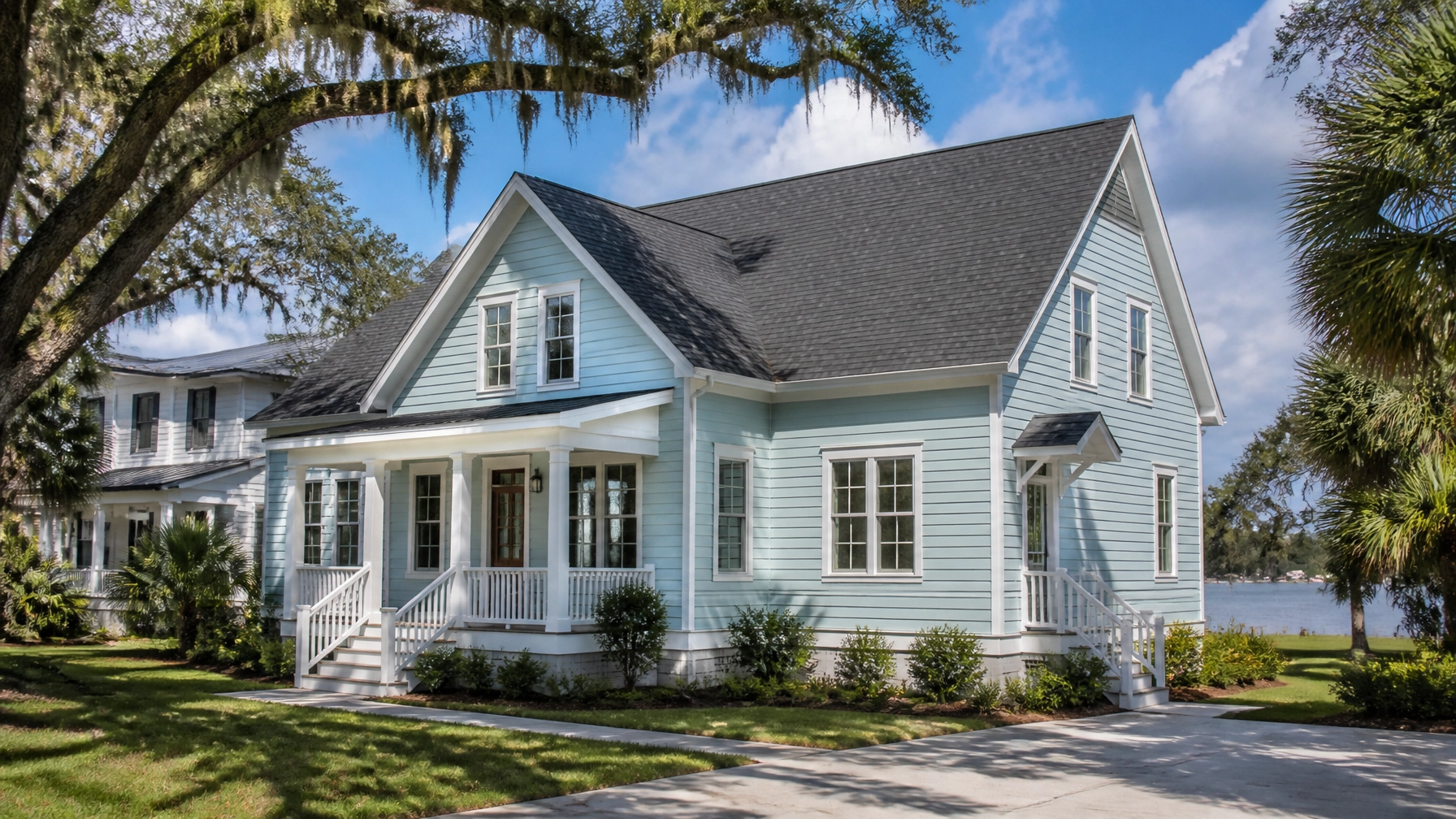
    A beautiful ranch-style home in a Mobile neighborhood featuring a fresh, professionally installed roof

    5. Ignoring the Alabama Home Builders Licensure Board (AHBLB)

    In Alabama, any residential roofing project over $2,500 requires a license from the Alabama Home Builders Licensure Board. Many "handymen" or fly-by-night crews will try to take on roofing jobs without this credential.

    The Reality: Unlicensed contractors often lack the necessary liability insurance and workers' compensation. If a worker falls off your roof and the contractor isn't insured, you, the homeowner, could be held liable for their medical bills.

    How to Fix It: Verify the license number. Don't just take their word for it. Go to the AHBLB website and search for the company name. If they aren't listed, do not let them touch your home.

    6. Skipping an Independent Tech-Based Estimate

    Most homeowners rely solely on what the roofer or the insurance adjuster tells them. These numbers can vary wildly based on the contractor's overhead or the adjuster's "standardized" software that might not reflect current Mobile material prices.

    The Reality: You are at a disadvantage when you don't know the exact "squares" (100 sq. ft. areas) of your roof. This leads to "over-measuring," where contractors add 10-15% more material to the bid than you actually need.

    How to Fix It: Use technology to your advantage. At Get My Roof Estimate Now, we use satellite imagery to measure your roof to within inches. In under 60 seconds, you get an accurate, transparent price range based on the actual complexity and pitch of your roof. Use this as your "truth" when comparing contractor bids.

    Modern satellite technology used to provide accurate roofing estimates and measurements

    7. Ignoring Salt-Air Resistance and Wind Ratings

    Mobile’s proximity to the Gulf of Mobile means our roofs face unique challenges: high humidity and salt spray. Standard shingles that work in Birmingham might not be the best choice for a home in Dauphin Island or near the Mobile Bay.

    The Reality: Many storm chasers use the cheapest shingles available to maximize their profit on insurance claims. These shingles may only be rated for 60-80 mph winds, which won't stand a chance during the next tropical storm.

    How to Fix It: Ensure your estimate specifies High-Wind Rated Shingles (usually rated up to 130 mph) and use stainless steel or hot-dipped galvanized nails to prevent salt-air corrosion. Ask your roofer about the "Starter Strip" and "Ridge Vent" brands, they are critical for wind resistance.


    Comparison: Local Professional vs. Storm Chaser

    Feature Local Mobile Professional Out-of-State Storm Chaser
    Licensing Alabama State Licensed (AHBLB) Often Unlicensed or "Borrowing" a License
    Warranty 5-10 Year Workmanship Warranty "Tailgate" Warranty (Gone when they leave)
    Pricing Based on local labor & material costs Artificially high (for insurance) or low (to scam)
    Equipment Owns trucks and local warehouses Uses rental trucks and temporary crews
    Estimate Detailed, material-specific Vague, "insurance will cover it"

    The Solution: Take Control Before You Call

    The stress of a leaking roof makes it easy to fall for high-pressure sales tactics. The best way to protect yourself is to go into the process with data.

    Before you invite a contractor to your home, get your own independent estimate. It takes less than a minute and gives you the leverage to know if a roofer is overcharging you or cutting corners.

    Ready to see what your new roof should actually cost?
    Get your instant, satellite-powered estimate here.


    Frequently Asked Questions (Mobile, AL Roofing)

    How long does a roof replacement take in Mobile?
    For a standard 2,000 sq. ft. home, most professional crews can complete the job in 1 to 2 days, assuming the weather permits.

    What is the average cost of a roof in Mobile, AL?
    Costs vary by material and complexity, but most homeowners see ranges from $9,000 (Basic/Budget) to $22,000+ (Premium/Metal). You can get a specific range for your address here.

    Should I wait for my insurance adjuster before getting a quote?
    No. You should have your own independent estimate first so you know if the adjuster's offer is fair. Adjusters often miss "line items" like code upgrades that are required in Mobile.

    Can I change my roofing material after a storm?
    Yes. While insurance pays to replace "like-for-like," you can pay the difference to upgrade from standard shingles to architectural shingles or metal. This is often the best time to do it since the labor cost is already covered.

  • 7 Mistakes You’re Making with 2026 Charlotte Roof Replacement Costs (and How to Fix Them)

    7 Mistakes You’re Making with 2026 Charlotte Roof Replacement Costs (and How to Fix Them)

    If you’re a homeowner in Charlotte, NC, looking at your roof and thinking, "I can probably wait another year," you might be making a $2,000 mistake. In 2026, the roofing market isn’t what it was two or three years ago. Supply chains have stabilized, but labor costs and specialized material demands in the Queen City have shifted the goalposts for what a "fair price" looks like.

    At Get My Roof Estimate Now, we see thousands of data points on North Carolina roofing projects. We use satellite-powered technology to provide instant roof estimates in under 60 seconds, and the data for 2026 is clear: homeowners who rely on outdated pricing or "gut feelings" are overpaying by thousands.

    Here are the seven most common mistakes Charlotte homeowners are making with their 2026 roof replacement costs: and exactly how you can avoid them.

    1. The "Materials Only" Trap (Ignoring the Labor Surge)

    Many homeowners check the price of a bundle of shingles at a local home improvement store and assume that accounts for 70% of their quote. In 2026, that math is dangerously wrong.

    In the Charlotte metro area, labor and contractor overhead now account for 40% to 60% of your total project cost. While shingle prices have seen moderate increases of 3-5%, the cost of skilled labor, insurance, and safety compliance has surged. A quote that seems "too high" based on material costs alone is likely reflecting the reality of hiring a licensed, insured crew that won't disappear halfway through the job.

    The Fix: When comparing quotes, look for a breakdown. If a contractor’s price is significantly lower than the market average of $4.00–$11.00 per square foot, they are likely cutting corners on labor: meaning less experienced workers or a lack of proper insurance coverage.

    2. Timing the Market Like a Stock Trader

    Charlotte’s roofing season is predictable, yet many homeowners wait until the peak of summer or right after a major spring storm to pull the trigger. In 2026, demand-based pricing is more aggressive than ever.

    Scheduling a replacement during "peak season" (late spring through early fall) can add a 10-15% premium to your labor costs simply because crews are booked out for months. Furthermore, with prices projected to rise another 4-6% across 2026, "waiting for a better deal" usually results in paying more for the same roof next year.

    The Fix: Schedule your roof replacement during the "shoulder seasons": late winter or late autumn. You’ll find more flexible scheduling and contractors who are more willing to negotiate to keep their crews busy.

    Close-up of high-quality architectural shingles being installed on a roof

    3. Neglecting the "Charlotte Humidity" Factor (Ventilation)

    Charlotte’s humid subtropical climate is brutal on roofs. A common mistake is focusing entirely on the shingles (the "look") while ignoring the attic ventilation system (the "life").

    In 2026, building codes and manufacturer warranties are stricter. If your contractor reuses old plastic vents or fails to calculate the correct intake-to-exhaust ratio, your brand-new architectural shingles will literally cook from the inside out. This can shave 10 years off a 30-year roof and void your warranty.

    The Fix: Ensure your quote includes a ventilation audit. Ask specifically about ridge vents vs. solar fans and ensure they aren't just "matching what was there before." Proper ventilation in NC can lower your cooling costs by up to 15% in the summer.

    4. Skipping the Wood Contingency

    Nothing kills a budget faster than "The Phone Call": the one where the contractor tells you they found three sheets of rotten plywood (decking) after the tear-off.

    Many Charlotte homes built in the 90s and early 2000s are seeing the first signs of structural deck rot around chimneys and valleys. If you don't account for this in your initial budget, you'll be hit with an unexpected $500–$2,000 bill mid-project.

    The Fix: Budget a 10-15% contingency fund specifically for decking repairs. Ask your contractor for a "price per sheet" for plywood replacement upfront. This keeps the pricing transparent and prevents "sticker shock" during the install.

    5. Underestimating the Shingle-to-Metal Price Gap

    Five years ago, a metal roof was often triple the cost of asphalt shingles. In 2026, that gap has narrowed significantly.

    As asphalt prices have climbed and metal fabrication technology has improved, many Charlotte homeowners are finding that a metal roof (specifically standing seam) is only about 1.5x to 2x the cost of premium shingles, rather than 3x. Given that metal can last 50+ years and offers better storm resistance, the lifetime value is often higher.

    The Fix: If you plan on staying in your home for more than 10-15 years, get a side-by-side quote for architectural shingles and a metal system. You might be surprised at how close the monthly financing numbers actually are.

    A modern ranch-style home with a sleek, dark gray standing seam metal roof

    6. Trusting Manual "Tape Measure" Estimates

    The traditional way of getting a roof estimate: having a guy climb a ladder and walk around with a tape measure: is prone to human error. Mistakes in measuring pitch, "waste factor," or complex valley segments can lead to quotes that are off by 10-20%.

    In 2026, leading companies use satellite imagery to get measurements accurate to within inches. This eliminates the "cushion" contractors often add to quotes to cover their own measuring mistakes.

    The Fix: Use a satellite-powered estimator to get your baseline. Our technology at Get My Roof Estimate Now calculates your roof’s size, pitch, and complexity in 60 seconds, giving you a transparent price range (Budget, Popular, Premium) before you ever talk to a salesperson.

    Satellite imagery technology measuring a residential roof with digital grid lines

    7. Ignoring the 2026 "Insurance Realities"

    The insurance landscape in North Carolina has changed. In 2026, many carriers are moving toward "Actual Cash Value" (ACV) for roofs over 15 years old, rather than "Replacement Cost Value" (RCV).

    Homeowners often make the mistake of assuming insurance will cover the full $12,000 replacement, only to find out the policy only pays $4,000 because of depreciation.

    The Fix: Review your policy before the storm hits. If you're planning to sell your home, a new roof with a transferable warranty is one of the highest ROI projects you can undertake, often recouping 60-70% of its cost in home value.

    Summary of 2026 Charlotte Roofing Costs

    To help you budget, here are the current benchmarks for the Charlotte, NC market:

    Roof Size (Home Sq Ft) Asphalt (Architectural) Metal (Standing Seam)
    1,500 sq ft $7,500 – $11,000 $14,000 – $22,000
    2,500 sq ft $11,500 – $17,000 $22,000 – $34,000
    3,500+ sq ft $15,500 – $22,000+ $30,000 – $45,000+

    Note: These are all-in estimates including tear-off, disposal, materials, and labor.

    Professional roofing crew working on a colonial-style brick house in Charlotte

    Get Your Accurate Charlotte Estimate in 60 Seconds

    Don't rely on guesswork or high-pressure sales tactics. If you're in Charlotte, Gastonia, Concord, or Huntersville, you can get a transparent, data-driven roof replacement estimate right now.

    No credit card required. No salesperson at your door. Just accurate numbers powered by satellite tech.

    👉 Get My Instant Roof Estimate Now

  • The Ultimate Guide to Getting an Insurance-Paid Roof in Mobile, AL: Everything You Need to Succeed

    The Ultimate Guide to Getting an Insurance-Paid Roof in Mobile, AL: Everything You Need to Succeed

    Living on the Gulf Coast means dealing with more than just humidity and great seafood; it means surviving storm season. If you own a home in Mobile, Alabama, your roof is your first line of defense against tropical depressions, hurricanes, and the occasional severe hailstorm.

    But here is the reality most homeowners miss: many roofs in Mobile that appear "old" actually have functional storm damage that qualifies for a full insurance replacement. If you play your cards right, you aren't just buying a new roof; you are getting your insurance company to fund a high-tech, hurricane-resistant upgrade.

    This guide breaks down exactly how to navigate the insurance claim process in Mobile, AL, in 2026, including the new mandatory "FORTIFIED" building codes that could save you thousands on your annual premiums.


    Step 1: Identifying "Covered" Damage (Wind vs. Wear)

    Insurance companies do not pay for "old age." They pay for "perils": sudden and accidental events. In Mobile, the two biggest perils are wind and hail.

    Wind Damage (Common)

    Mobile’s high-wind events often cause "shingle creasing." This happens when the wind lifts a shingle, breaks the sealant bond, and folds it back, creating a permanent line across the top. To an untrained eye, the roof looks fine from the ground, but the integrity is gone.

    Hail Damage (Hidden)

    Hail in Alabama doesn't always have to be golf-ball-sized to cause damage. Even smaller stones can "bruise" the asphalt matting of your shingles, knocking off protective granules and exposing the underlying layers to UV rays.

    Pro Tip: If your gutters, downspouts, or window screens have small dings or dents, there is a 95% chance your roof has matching damage.

    A close-up view of wind-damaged shingles showing creases and hail impact marks on a Mobile, AL roof.


    Step 2: The "Mobile Mandate" – Understanding FORTIFIED Roofs

    In 2026, the City of Mobile has strictly adopted the IBHS FORTIFIED Roof™ standard for all roof replacements. This isn't just a suggestion; it's the law.

    If your insurance company is paying for a replacement, they must pay to bring your home up to current local building codes. This means your new roof will include:

    • Sealed Roof Deck: Specialized tape or underlayment that prevents water from entering even if shingles are blown off.
    • Enhanced Nailing: Using ring-shank nails and a specific pattern to ensure shingles stay put in 130+ mph winds.
    • Drip Edge & Flashing: Beefed-up metal edges to prevent wind from getting under the roofing layers.

    The Financial Benefit: A FORTIFIED roof can reduce the "wind" portion of your Alabama homeowners insurance premium by up to 35-50%. If insurance is paying for the roof, they are essentially paying for you to have lower bills for the next 15 years.


    Step 3: Get Your Data Before Filing

    Do not call your insurance agent the second you see a missing shingle. Why? Because if you file a claim and the damage is less than your deductible, you still have a "claim" on your record, but you get $0 in help.

    You need an accurate, professional assessment first. At Get My Roof Estimate Now, we provide homeowners with an instant, satellite-powered roof estimate in under 60 seconds.

    Why Use Satellite Estimates First?

    1. Accuracy (90-95%): Our technology measures your roof's square footage, pitch, and complexity using high-resolution imagery.
    2. No Pressure: You don't have to wait for a contractor to show up at your house and give you a high-pressure sales pitch.
    3. Benchmark Pricing: You'll know exactly what a "fair" price is in Mobile (typically $7,000–$13,000 for a standard home) before you talk to an adjuster.

    Get your free, 60-second estimate here to see what your replacement should cost.

    A homeowner using their smartphone to view a high-tech satellite roof measurement and price estimate for their Mobile home.


    Step 4: The 30-Day "Prompt Notice" Rule

    Alabama insurance law generally requires "prompt notice" of a loss. In Mobile, this is often interpreted as 30 to 60 days from the date of the storm.

    If you wait six months after a hurricane to file, the insurance company may argue that the damage was caused by neglect or subsequent rain, potentially denying your claim.

    • Action Item: Identify the "Date of Loss." Use local weather archives to find the specific day the high winds or hail hit your zip code.
    • Mitigation: If you have an active leak, you must tarp it. Insurance will reimburse you for the tarping, but they will deny damage to your interior (drywall, floors) if you let it leak for weeks without trying to stop it.

    Step 5: Filing the Claim and the Adjuster Meeting

    When you call your carrier (State Farm, Alfa, Allstate, etc.), tell them you have "storm-related wind and hail damage" and provide your date of loss. They will assign an adjuster to visit your home.

    Never meet the adjuster alone.

    You should have a licensed Mobile roofing contractor present during the inspection. The adjuster works for the insurance company; your contractor works for you. Your contractor will point out the creased shingles and hail bruises that the adjuster might "overlook."

    Common Mobile Pricing Factors (2026 Benchmarks):

    • Asphalt Shingles (Architectural): $5.50 – $6.50 per sq. ft. (Popular)
    • Metal Roofing: $10.00 – $14.00 per sq. ft. (Premium)
    • FORTIFIED Evaluator Fee: $350 – $400 (Required in Mobile)

    Professional roofers in Mobile, AL, installing a new roof with a sealed deck to meet the mandatory FORTIFIED building standards.


    Step 6: Decoding Your Insurance Check (ACV vs. RCV)

    Most Mobile homeowners have RCV (Replacement Cost Value) policies, but the way you get paid can be confusing.

    1. Check #1 (ACV): This is the "Actual Cash Value." It is the total cost of the roof minus your deductible and minus "depreciation" (the age of your old roof).
    2. The Work: You hire the contractor and get the roof replaced.
    3. Check #2 (Recoverable Depreciation): Once the job is finished and the City of Mobile building inspector (and the FORTIFIED evaluator) signs off, you send the final invoice to your insurance company. They then send you the remaining balance.

    Note on Deductibles: In Alabama, coastal homes often have a "Percentage Deductible" for wind/hail (e.g., 2% of your home's value). If your home is insured for $300,000, your deductible might be $6,000. You are responsible for paying this to the contractor. Warning: It is illegal in Alabama for a contractor to "waive" your deductible.


    Summary Checklist for Mobile Homeowners

    Step Action Item Why It Matters
    1 Get a Satellite Estimate Know your roof's true size and value in 60 seconds.
    2 Visual Inspection Look for creased shingles or dings in your gutters.
    3 Find the Date of Loss Claims are tied to specific storm events.
    4 File the Claim Start the clock with your insurance carrier.
    5 Hire a Local Pro Ensure they are experienced with Mobile's FORTIFIED requirements.
    6 Submit for Discounts Once certified FORTIFIED, send the certificate to your agent for a premium drop.

    Final Thoughts

    Replacing a roof in Mobile doesn't have to be a financial disaster. By leveraging technology to get an instant estimate and understanding the specific local requirements for FORTIFIED roofing, you can turn a storm-damaged liability into a high-value asset.

    Don't guess what your roof costs or wait weeks for a contractor to call you back. Get the data you need to win your insurance claim today.


  • Charleston Roof Replacement Costs Explained in Under 3 Minutes

    Charleston Roof Replacement Costs Explained in Under 3 Minutes

    If you are a homeowner in Charleston, South Carolina, you already know that your roof is the first line of defense against the Lowcountry’s brutal combination of high humidity, salt air, and hurricane-force winds. Whether you are dealing with a leak after a summer thunderstorm or your shingles are simply reaching the end of their 20-year lifespan, the biggest question is always: "How much is this going to cost?"

    In the current 2026 market, Charleston roof replacement prices reflect both rising material costs and the stringent building codes required for coastal safety.

    At Get My Roof Estimate Now, we use advanced satellite imagery to provide homeowners with an accurate, instant roof estimate in under 60 seconds. This guide breaks down exactly what you should expect to pay for a new roof in the Holy City this year.

    The Charleston Quick-Look: 2026 Price Benchmarks

    For those in a hurry, here are the data-driven averages for a standard 2,000-square-foot roof in the Charleston area:

    • Architectural Shingles (Popular): $14,000 – $20,000
    • Standing Seam Metal (Premium/Coastal): $22,000 – $35,000
    • Stone-Coated Steel or Synthetic Tile (Luxury): $25,000 – $50,000

    Note: These ranges include full tear-off of one layer, standard underlayment, and professional installation. Complex rooflines or steep pitches will trend toward the higher end.


    Breakdown by Roofing Material

    Selecting the right material is a balance between your budget and the specific demands of the South Carolina climate.

    Comparison of architectural shingles and standing seam metal roofing

    1. Architectural Asphalt Shingles (Budget-Friendly & Popular)

    Architectural shingles (also called dimensional or laminate shingles) are the standard for 80% of Charleston homes. Unlike the thin 3-tab shingles of the past, these are thicker, more durable, and better equipped to handle wind speeds up to 130 mph.

    • Average Cost: $5.50 – $7.50 per square foot (installed).
    • Pros: Cost-effective, wide variety of colors, 25-30 year lifespan.
    • Cons: More susceptible to algae growth in humid Charleston summers without "StreakFighter" or similar copper-granule technology.

    2. Metal Roofing (Durable & Coastal-Ready)

    Metal is the gold standard for many homeowners in areas like Mount Pleasant, James Island, and Sullivan's Island. It offers superior resistance to salt air corrosion and high winds.

    • Average Cost: $10.00 – $18.00 per square foot (installed).
    • Pros: 50+ year lifespan, lower insurance premiums, high energy efficiency.
    • Cons: Higher upfront investment and potentially noisy during heavy tropical rain.

    3. Tile & Synthetic Options (Premium Aesthetics)

    Common in the historic district or luxury coastal developments, these materials offer a unique aesthetic that mimics slate or cedar shake.

    • Average Cost: $12.00 – $25.00+ per square foot (installed).
    • Pros: Incredible curb appeal, highly fire-resistant, impervious to rot.
    • Cons: Extremely heavy (may require structural reinforcement) and expensive.

    The "Charleston Factor": Why Prices Differ Locally

    Roofing in Charleston isn't the same as roofing in the Midlands or Upstate. Our local geography dictates specific costs that you won't find in a generic national estimate.

    High-Wind Design Requirements

    Per the 2021 South Carolina Building Code (SCBC), Charleston is classified as a high-wind/hurricane region. This means your roof must be engineered for design wind speeds between 130 mph and 150 mph.

    • The 6-Nail Rule: In Charleston, shingles must be fastened with six nails rather than the standard four.
    • Enhanced Drip Edges: Specific fastening patterns for drip edges are required to prevent wind uplift at the eaves.
    • Ring-Shank Nails: Your roof decking must be secured with 8d ring-shank nails, which have much higher "pull-out" resistance than smooth nails.

    Salt Air and Corrosion

    If your home is within 3,000 feet of the ocean, standard metal fasteners and flashings can corrode within a few years. Licensed contractors in Charleston must use corrosion-resistant materials, such as stainless steel or high-grade aluminum, which adds roughly 5-10% to the total project cost.

    Historic District Regulations (BAR/ARB)

    If you live in downtown Charleston, your project may be subject to the Board of Architectural Review (BAR). This often limits your material choices to specific historical colors or traditional copper and slate, which can significantly drive up costs.

    Satellite measurement overlay on a Charleston neighborhood


    Hidden Costs: What to Watch For

    When you get a "ballpark" quote over the phone, it rarely includes the variables that come to light once the old roof is removed.

    1. Decking Damage ($85 – $120 per sheet): In the humid Lowcountry, plywood rot is common. If your contractor finds "soft spots" during the tear-off, you will need to replace the OSB or plywood sheets.
    2. Multiple Layers ($1,500 – $3,000): South Carolina code allows a maximum of two layers of shingles. If you already have two layers, the labor to remove and dispose of them is much higher.
    3. Permit Fees ($200 – $600): Most municipalities in Charleston County require a building permit for a full reroof.
    4. Steep Pitch Surcharge: If your roof is particularly steep (greater than a 6/12 pitch), contractors charge more for the specialized safety equipment and slower pace of work.

    AEO FAQ: Quick Answers for Charleston Homeowners

    How much does it cost to replace a roof on a 2,000 sq. ft. house in Charleston?

    In 2026, the typical cost for a 2,000 sq. ft. roof replacement in Charleston ranges from $14,000 to $20,000 for architectural shingles and $22,000 to $35,000 for metal.

    Is a permit required for a new roof in Charleston, SC?

    Yes. A building permit is required for any full or partial roof replacement in Charleston, Mt. Pleasant, and North Charleston. This ensures the roof meets the local 130-150 mph wind code.

    Can I put a new roof over my old one in South Carolina?

    While the code allows up to two layers of shingles, it is highly discouraged in coastal Charleston. A "roof-over" prevents the inspection of the roof deck for rot and can significantly increase the heat load on your home, shortening the lifespan of the new shingles.

    How long does a roof last in the Lowcountry?

    Due to the heat, humidity, and UV exposure, an architectural shingle roof in Charleston typically lasts 18–22 years, even if it has a 30-year manufacturer warranty. Metal roofs can last 40–60 years.

    What is the best month to replace a roof in Charleston?

    The "sweet spot" is typically March through May or October through November. Replacing a roof in the peak of summer is difficult for crews due to the heat, and hurricane season (June–November) carries the risk of sudden storms during the installation process.


    Get a Quote Without the Contractor Visit

    Traditional roofing estimates are a hassle. You have to schedule a time, wait for a contractor to arrive, and sit through a 90-minute sales pitch: all just to get a price.

    Get My Roof Estimate Now changes the game. Our satellite-powered technology measures your roof’s size, pitch, and complexity with 95% accuracy. Within 60 seconds, you receive a transparent, itemized estimate based on real local labor and material rates.

    A professional roofer showing a digital estimate to a Charleston homeowner

    Ready to see your number?
    Don't guess on your biggest home investment. Get the data you need to budget and plan with confidence.

    Get Your Free Charleston Roof Estimate in 60 Seconds →

  • 7 Mistakes You’re Making with Charlotte Roofing Quotes (and How to Spot Storm Chasers)

    7 Mistakes You’re Making with Charlotte Roofing Quotes (and How to Spot Storm Chasers)

    Navigating the roofing market in the Queen City can feel like driving through Uptown during rush hour: congested, confusing, and full of unexpected turns. For homeowners in ZIP codes like 28205 or 28210, a roof replacement is a significant financial commitment, often ranging between $8,500 and $14,000 for a standard asphalt shingle project in 2026.

    Unfortunately, Charlotte’s susceptibility to sudden summer hailstorms and Atlantic-born wind events makes it a primary target for "storm chasers": unscrupulous contractors who follow bad weather to profit from insurance claims. If you are currently gathering quotes, you might be making critical errors that could cost you thousands in repairs down the road.

    Here are the 7 biggest mistakes Charlotte homeowners make with roofing quotes and the expert strategies to avoid them.

    1. Accepting Unsolicited Door-to-Door Offers (The "Storm Chaser" Trap)

    The most common mistake begins with a knock on the door. After a storm hits Mecklenburg County, out-of-state contractors often flood neighborhoods like Ballantyne or Plaza Midwood. They claim to be "in the area" and offer a free inspection.

    The Danger: These are often storm chasers who use high-pressure tactics to get you to sign a contract on the spot. They may provide a "Budget" (Economy) level of service while charging "Premium" (High-End) prices to your insurance company. Once the job is done, they disappear, leaving you with no local recourse if the roof leaks a year later.

    The Fix: Never hire a roofer who initiates contact via a door knock. Reliable Charlotte contractors are busy enough with referrals and local reputation. Use an objective tool like our Roof Cost Calculator to get a baseline price before you ever talk to a salesperson.

    Professional roofing contractor installing shingles safely

    2. Ignoring the "Price per Square" Local Benchmark

    Roofing is measured in "squares" (a 100-square-foot area). In Charlotte, the current 2026 market rate for architectural shingles (Popular) typically falls between $350 and $550 per square installed.

    The Danger: If a quote comes in significantly lower (e.g., $250 per square), the contractor is likely cutting corners on labor or using 3-tab shingles (Budget) while promising architectural quality. Conversely, a quote exceeding $700 per square for standard shingles without a valid reason (like a 12/12 pitch or complex Victorian turret) is a red flag for overcharging.

    The Fix: Demand a line-item breakdown. A professional quote should clearly state the number of squares, the cost per square, and the specific material brand (e.g., GAF, Owens Corning, or CertainTeed).

    3. Signing a "Contingency Agreement" Prematurely

    A storm chaser’s favorite tool is the contingency agreement. They tell you it simply gives them permission to talk to your insurance adjuster. In reality, it is often a legally binding contract that commits you to using them for the replacement if the claim is approved.

    The Danger: You lose your right to shop around or vet other contractors. If the insurance payout is lower than expected, you are stuck with a contractor who might "thin out" the scope of work to fit the budget.

    The Fix: Do not sign anything until your insurance company has officially approved the claim and you have compared at least three independent estimates. You should always be the one in control of the contract.

    4. Skipping North Carolina License and Insurance Verification

    In North Carolina, roofing contractors must have a General Contractor license for projects exceeding $30,000, but any reputable roofer should be able to provide proof of local credentials and specialized insurance.

    The Danger: If a worker falls off your roof and the contractor doesn't carry Workers' Compensation insurance, the liability could fall on your homeowner's insurance. Furthermore, many storm chasers use "ghost" licenses: using a local's license number while they do the actual work.

    The Fix: Ask for a certificate of insurance (COI) sent directly from the contractor's insurance agent to you. Verify their standing with the North Carolina Licensing Board for General Contractors.

    Comparison of 3-tab vs architectural shingles

    5. Neglecting the "Total Roofing System" Components

    A roof isn't just shingles; it's a multi-layered system designed to breathe. Many Charlotte quotes fail to mention the critical components that protect your home during humid NC summers.

    The Danger: To lower their bid, some contractors will reuse old flashing, skip the ice and water shield in the valleys, or fail to upgrade your attic ventilation. This leads to "cooked" shingles and mold growth in your attic.

    The Fix: Ensure your quote includes:

    • Synthetic Underlayment (Standard): Superior to old-school felt paper.
    • Drip Edge (Essential): Prevents water from wicking back into your fascia.
    • Ridge Vents (Optimal): To manage Charlotte’s high heat and humidity.
    • Flashing (New): Replacement of all chimney and valley flashing.

    6. Overlooking the Power of Satellite Accuracy

    Traditional "hand-measuring" involves a contractor climbing a ladder and using a tape measure. This method is prone to human error, especially on complex roofs with multiple gables.

    The Danger: If a contractor over-estimates your roof size by just two squares, you could be overpaying by $1,000 or more. If they under-estimate, they might hit you with a "surprise" change order halfway through the job.

    The Fix: Modern roofing starts with technology. Our Satellite-Powered Estimator uses high-resolution imagery to measure your roof to within inches. This gives you an objective "truth" to compare against contractor measurements.

    Homeowner checking a satellite roof estimate on a tablet

    7. Choosing the Lowest Bid Without Vetting Labor

    In the roofing world, you often get what you pay for. A low-ball bid usually means the contractor is using sub-crews who are paid by the piece, leading to rushed work and "high-nailing" (placing nails above the reinforced strip), which can void your manufacturer warranty.

    The Danger: A cheap roof that fails in 7 years is far more expensive than a quality roof that lasts 25. Charlotte's wind speeds require precise nail placement to maintain wind resistance ratings.

    The Fix: Ask who is actually doing the work. Is it an in-house crew or subcontractors? A company that invests in its labor force will have higher overhead but will deliver a roof that actually protects your investment.

    Conclusion: Take Control of Your Charlotte Roof Estimate

    Don't let the stress of a leaking roof or a high-pressure salesperson force you into a bad decision. Whether you are in Matthews, Huntersville, or the heart of Charlotte, transparency is your best defense.

    Get an instant, accurate baseline for your home in under 60 seconds. Our satellite technology calculates the size, pitch, and complexity of your roof to provide a realistic price range based on current 2026 Charlotte material and labor costs.

    Get Your Instant Charlotte Roof Estimate Now


  • 7 Mistakes You’re Making with Your Dallas Roof Replacement Budget (and How to Fix Them for 2026)

    Dallas homeowners are no strangers to the "North Texas Two-Step": blistering 100-degree summer days followed by golf-ball-sized hail in the spring. By 2026, the cost of protecting your home from these elements has shifted. If you’re still budgeting based on 2022 prices or what your neighbor paid five years ago, you’re in for a financial shock.

    At Get My Roof Estimate Now, we see thousands of Dallas property owners struggle with "sticker shock" because they didn't account for local variables like the 2026 material inflation or specific Texas insurance nuances. A roof isn't just a purchase; it's a structural investment that averages between $10,000 and $15,000 for standard shingles in the DFW area.

    Here are the 7 most common budgeting mistakes Dallas homeowners are making right now and exactly how to fix them before you sign a contract.


    1. Miscalculating the Texas "Wind/Hail" Deductible

    In many states, a homeowners insurance deductible is a flat $500 or $1,000. In Texas, specifically in the hail-prone Dallas corridor, most policies have shifted to a percentage-based deductible for wind and hail.

    • The Mistake: Budgeting for a flat $1,000 out-of-pocket expense.
    • The Reality: If your home is insured for $450,000 and you have a 2% hail deductible, you are responsible for the first $9,000.
    • The Fix: Pull your policy today. Look specifically for the "Windstorm or Hail" percentage. Ensure your 2026 emergency fund covers this exact dollar amount, as Texas law (HB 2102) strictly prohibits contractors from "waiving" or "absorbing" your deductible.

    2. Ignoring the "Dallas Heat Tax" (Ventilation Upgrades)

    Dallas's extreme heat doesn't just make you uncomfortable; it cooks your shingles from the inside out. Many homeowners budget only for the "visible" roof and ignore the attic ventilation system.

    • The Mistake: Reusing old, crushed box vents or static vents to save $500.
    • The Reality: Poor ventilation can void your shingle manufacturer's warranty and increase your summer cooling bills by 20%.
    • The Fix: Budget for a Ridge Vent system (approx. $500–$1,200 (Popular)). This allows hot air to escape naturally along the peak of your roof, extending the life of your 2026 replacement by up to 10 years.

    Close-up of a high-quality ridge vent installation on a Dallas home, showing the seamless integration with architectural shingles for maximum attic cooling.

    3. Underestimating Material Inflation for 2026

    Since 2023, the roofing industry has seen consistent price increases in petroleum-based products (shingles) and metals.

    • The Mistake: Using "national average" figures found on generic home improvement blogs.
    • The Reality: Dallas-area pricing for Architectural Shingles in 2026 typically ranges from $400 to $600 per square (a 10×10 area), while Metal Roofing has climbed to $700 to $1,200 per square (Premium).
    • The Fix: Use localized technology. Instead of guessing, get an instant roof estimate for Texas that uses satellite imagery to calculate your exact roof size and current Dallas labor rates.

    4. Missing the Insurance "Holdback" (RCV vs. ACV)

    This is the most common financial trap in DFW. Most modern policies are Replacement Cost Value (RCV), but they don't pay out all at once.

    • The Mistake: Thinking the first check from the insurance company is the total budget.
    • The Reality: The insurer sends a "Net Claim" check (the ACV) first, which is the value of your old roof minus depreciation. They "hold back" the depreciation (the "Recoverable Depreciation") until the work is finished and invoiced.
    • The Fix: You must have the liquidity to pay the contractor for the full job before the second insurance check arrives. Ensure your contract clearly outlines the payment schedule to match your insurance disbursements.

    5. Neglecting Local Dallas Building Codes

    The City of Dallas and surrounding municipalities like Plano and Frisco have updated their building codes over the last few years.

    • The Mistake: Assuming your 20-year-old roof was "up to code" and just needs a "like-for-like" replacement.
    • The Reality: Modern codes often require Drip Edge (metal flashing at the edges) and specific Ice and Water Shield in valleys that your old roof might lack.
    • The Fix: Add a "Code Contingency" of $500–$1,000 to your budget. If your insurance policy has "Law and Ordinance" coverage, these costs might be covered, but you need to verify this before the tear-off begins.

    A professional roofing crew installing modern metal drip edge and leak barriers on a steep-slope Dallas roof, ensuring compliance with 2026 building codes.

    6. Budgeting for the Roof, Not the Decking

    What’s under your shingles is just as important as the shingles themselves. In the humid, storm-heavy DFW climate, wood rot is a silent budget killer.

    • The Mistake: Assuming your plywood decking is in perfect condition.
    • The Reality: Once the old shingles are removed, contractors often find "soft spots" or rot from old leaks.
    • The Fix: Expect to pay between $80 and $120 per sheet for plywood replacement. A safe 2026 budget includes a "hidden damage" buffer of roughly 10% of the total project cost.

    7. Choosing the Wrong Material for Energy Efficiency

    Many homeowners choose the cheapest shingle to save money upfront, ignoring the long-term ROI of energy-efficient materials.

    • The Mistake: Standard 3-tab shingles (Budget).
    • The Reality: In Dallas, Class 4 Impact-Resistant Shingles (Premium) can reduce your annual homeowners insurance premiums by up to 20-30%.
    • The Fix: Calculate the "Break Even" point. If Class 4 shingles cost an extra $1,500 but save you $400 a year on insurance, the upgrade pays for itself in less than four years. In a city where hail is a matter of "when," not "if," this is the smartest budget move you can make.

    The 2026 Solution: How to Fix Your Budget in 60 Seconds

    The biggest mistake of all is starting your project with an inaccurate number. Traditional contractors might take a week to visit your home and provide a quote. By then, your schedule is blown, and your budget is still a guess.

    At Get My Roof Estimate Now, we’ve eliminated the wait. Our technology uses high-resolution satellite imagery to measure your roof's square footage, pitch, and complexity with 90-95% accuracy.

    Step-by-Step Fix:

    1. Enter Your Address: Head to our Roof Cost Calculator.
    2. Select Your Material: Compare "Budget" architectural shingles vs. "Premium" standing seam metal.
    3. Get Your Range: Receive a low-middle-high price range based on actual 2026 Dallas market data.
    4. Connect with Pros: We link you to verified, licensed, and insured local Dallas contractors who honor these transparent pricing models.

    A smartphone screen showing the Get My Roof Estimate Now interface with a satellite view of a residential roof and an instant price breakdown for different materials.

    Summary of 2026 Dallas Roofing Costs

    Material Type Est. Cost Per Square (Installed) Typical Dallas Range (2,000 sq ft roof)
    Architectural Shingles $400 – $600 $10,000 – $15,000
    Class 4 (Impact Resistant) $500 – $750 $12,500 – $18,500
    Standing Seam Metal $900 – $1,400 $22,000 – $35,000+
    Roof Coating (Silicone) $250 – $450 $6,000 – $11,000

    Don't let a Dallas storm catch your bank account off guard. Be proactive, understand your insurance "holdbacks," and use modern tools to get a head start on your 2026 roof replacement.

    Ready to see your number? Get your instant Dallas roof estimate here.


    Frequently Asked Questions (FAQ)

    Q: Does insurance cover the entire cost of a roof in Dallas?
    A: Rarely. You are almost always responsible for your deductible. Additionally, if you choose to upgrade materials (e.g., from shingles to metal), insurance will only pay for the "like-kind" replacement of what you had before.

    Q: How long does a typical roof replacement take in DFW?
    A: For a standard single-family home (2,000–3,000 sq ft), the actual installation usually takes 1 to 2 days. However, the permitting and insurance approval process can add 2–4 weeks to the timeline.

    Q: Can I get an estimate without a contractor coming to my house?
    A: Yes. Using our satellite-powered estimation tool, you can get a highly accurate pricing range in under 60 seconds without any high-pressure sales visits.

  • 5 Steps How to File a Claim and Get Insurance to Pay for Your Mobile Roof (Easy Guide for Homeowners)

    5 Steps How to File a Claim and Get Insurance to Pay for Your Mobile Roof (Easy Guide for Homeowners)

    Living in Mobile, Alabama, means dealing with more than just high humidity and great seafood. Our coastal location puts us directly in the path of Gulf storms, intense summer hail, and the occasional hurricane. For a homeowner, your roof is the first line of defense, but it’s also the most vulnerable.

    When a storm rolls through the Port City, the damage isn't always obvious from the driveway. Whether it’s a "bruised" shingle from a 1-inch hailstone or a lifted ridge cap from a 60-mph wind gust, these issues can lead to $15,000+ in out-of-pocket repairs if you don't handle the insurance process correctly.

    At Get My Roof Estimate Now, we’ve seen thousands of homeowners struggle with the complexity of insurance claims. This guide breaks down the exact 5-step process to navigate your claim in Mobile, Alabama, ensuring you maximize your coverage and get your roof replaced for the cost of your deductible.


    Step 1: Document Damage and Mitigate Loss (Immediate Action)

    Close-up of hail damage on asphalt shingles showing granule loss and bruising

    The moment the storm passes, the clock starts ticking. In Alabama, insurance companies typically expect "prompt" notice: often interpreted as within 30 days of the weather event. Before you call your agent, you need evidence.

    What to Document (The Evidence Trail)

    Don't just take a photo of your house from the street. You need specific, high-resolution proof:

    • Ground-Level Scans: Walk around your home and photograph gutters, downspouts, and window screens. If these are dented, it’s a "collateral damage" indicator that insurers use to verify hail.
    • The Roof Surface: If you can safely access it (or have a professional do it), look for missing granules, circular bruises (Hail), or creased shingles (Wind).
    • Interior Leaks: Check your attic and ceilings for fresh water stains.

    Mitigation (Protect Your Rights)

    Your policy likely contains a "Duties After Loss" clause. This requires you to prevent further damage. If your roof is leaking, you must have it tarped. Keep every receipt for these emergency repairs; these are (Reimbursable) costs that the insurance company should pay back once the claim is approved.


    Step 2: Understand Your Alabama Policy (The Math)

    Mobile is a high-risk zone, which means Alabama policies are unique. Before you file, you need to know if the numbers make sense. If your repair cost is $3,000 but your deductible is $5,000, filing a claim is a net loss for you.

    The Percentage Deductible (Common)

    In Mobile, many insurers have moved away from flat $500 or $1,000 deductibles. Instead, they use a percentage of the dwelling coverage (typically 1% to 5%).

    • Example: If your home is insured for $300,000 and you have a 2% wind/hail deductible, you are responsible for the first $6,000.

    ACV vs. RCV (The Payout Type)

    • Actual Cash Value (Budget): The insurer pays you the value of the roof minus its age (depreciation). If your 20-year-old roof is destroyed, you’ll get a very small check.
    • Replacement Cost Value (Premium): The insurer pays for the full cost of a brand-new roof today. They usually hold back the depreciation until the work is finished, then send a second check to "recover" it.

    Before moving forward, use our Instant Roof Cost Calculator to get a baseline price for your roof. Knowing that a typical 2,000 sq. ft. roof in Mobile costs between $8,000 and $12,000 helps you decide if your claim will clear that deductible hurdle.


    Step 3: Hire a Local "FORTIFIED" Knowledgeable Contractor

    Professional roofing contractor inspecting a roof in Mobile, Alabama

    Do not hire a "storm chaser" who knocks on your door with out-of-state plates. In Mobile, you need a contractor who understands the FORTIFIED Roof™ standards.

    The Mobile Requirement (Critical)

    The City of Mobile and Baldwin County have specific building codes. Most new roof replacements are now required to meet "Fortified" standards: which involve specific nail patterns, sealed roof decks, and enhanced underlayment. These upgrades can cost more, but they also trigger significant insurance discounts in Alabama.

    The Contractor's Role

    A reputable local roofer should:

    1. Perform a Full Inspection (including the attic).
    2. Provide a Detailed Estimate that matches the insurance company's "line-item" format (often using software like Xactimate).
    3. Be present for the Adjuster Meeting to ensure no damage is overlooked.

    Step 4: File the Claim and Manage the Adjuster

    Once you have your documentation and a trusted contractor, call your insurance carrier’s claims hotline: not just your local agent. Provide the Date of Loss (the specific storm date) and your Claim Number.

    The Adjuster Meeting

    The insurance company will send an adjuster to inspect the property. Crucial Tip: Have your contractor there at the same time. The adjuster works for the insurance company; your contractor works for you. They can walk the roof together to agree on the "Scope of Work."

    Common Mobile Denials

    • "Wear and Tear": The adjuster claims the damage is just old age.
    • "Cosmetic Damage": They admit there are dents but claim they don't affect the roof's function (a common exclusion in AL).
    • "Partial Repair": They offer to replace only one slope instead of the whole roof. (Note: Alabama does not have a "matching law" that forces insurers to replace the whole roof just because the shingles don't match, though a good contractor can often argue for it if the shingles are discontinued).

    Step 5: Finalize the Project and Recover Depreciation

    Satellite imagery measurement of a residential roof in Mobile

    Once the claim is approved, you will receive a "Statement of Loss" and your first check (the ACV payment).

    Construction and Permits

    Your contractor will pull permits with the City of Mobile. This is where the satellite-powered accuracy of Get My Roof Estimate Now comes in handy. We provide measurements accurate to within inches, ensuring your contractor orders the exact amount of material needed, preventing "padding" of the invoice.

    The Final Payout

    After the roof is installed and passes the municipal inspection:

    1. Your contractor sends the Final Invoice to the insurance company.
    2. The insurance company releases the Withheld Depreciation (if you have an RCV policy).
    3. You pay the contractor using the insurance funds plus your deductible.

    The Mobile "Fortified" Bonus

    If you upgraded to a Fortified Roof, ensure your Fortified Evaluator completes their final inspection. You will receive a certificate that you must give to your insurance agent. In Alabama, this can reduce your wind insurance premiums by 20% to 50%, effectively paying for your deductible over a few years.


    Why Use Satellite Technology First?

    Traditional roofing estimates take days to schedule and hours of your time. In Mobile’s busy storm season, you don’t have that luxury.

    Get My Roof Estimate Now uses high-resolution satellite imagery to analyze your roof’s size, pitch, and complexity in under 60 seconds.

    • Speed: Get your range in a minute.
    • Accuracy: 90-95% accurate to the actual roof dimensions.
    • Transparency: See the low, middle, and high price ranges based on current Mobile labor and material costs (Shingles, Metal, or Coatings).

    Don't go into an insurance claim blind. Know your numbers before the adjuster arrives.

    Ready to see what your new roof should cost?
    Get Your Free Satellite Roof Estimate in 60 Seconds →


    Summary Table: Mobile, AL Roofing Costs (2026 Estimates)

    Feature Basic (3-Tab) Popular (Architectural) Premium (Metal/Synthetic)
    Est. Cost (2k sq ft) $7,000 – $9,000 $10,000 – $14,000 $18,000 – $28,000+
    Durability 15-20 Years 25-30 Years 50+ Years
    Wind Resistance Up to 60 MPH Up to 110-130 MPH Up to 140+ MPH
    Best For Rentals / Budget Standard Homes Forever Homes / Coastal

    Note: Prices include full tear-off, standard underlayment, and labor in the Mobile metro area. Fortified upgrades may add $1,500 – $3,000 to these totals.


    Frequently Asked Questions (FAQ)

    1. Will filing a roof claim raise my rates in Alabama?

    In Alabama, insurance companies generally cannot raise your individual rates solely because you filed a "Catastrophic" or "Act of God" claim (like hail or a hurricane). However, they can raise rates for an entire ZIP code if a major storm hits the area.

    2. Can I choose my own roofing contractor?

    Yes. You have the legal right to choose any licensed contractor. Beware of insurers who "strongly recommend" a specific company: they may have pre-negotiated lower rates that lead to corner-cutting.

    3. How long do I have to file a claim in Mobile?

    Check your policy, but most Alabama policies require notification within one year of the storm event. However, "prompt notice" (within 30-60 days) is highly recommended to avoid claims that the damage is "pre-existing."

    4. What if the insurance check is made out to my mortgage company?

    This is standard. Because the mortgage company has a financial interest in the home, they are often listed on the check. You will need to send the check to them for endorsement, which they usually release in "draws" as the work is completed.

    For more tips on maintaining your home and understanding roofing technology, visit our Roofing Blog.

  • Charlotte Roof Replacement Cost Explained in Under 3 Minutes

    If you own a home in the Queen City, you know that the Charlotte weather doesn't mess around. Between the humid summers, occasional ice storms, and those heavy spring downpours, your roof is your first line of defense. But if you’ve noticed a leak or your shingles are starting to curl, the first question is always: “How much is this going to cost me?”

    In 2026, the Charlotte roofing market is more transparent than ever, but prices have shifted. We’ve analyzed current local labor rates, material costs, and permitting fees to give you the bottom line.

    The Quick Answer: For a standard single-family home in Charlotte, a full roof replacement with architectural shingles typically costs between $8,500 and $15,000. Most homeowners land right around the $11,500 mark.

    Want a price for your specific address in 60 seconds? Use our instant roof cost calculator to get a satellite-powered estimate right now.


    The Charlotte 3-Minute Price Breakdown

    If you're in a hurry, here is the essential data for Charlotte roof replacements in 2026. These figures include tear-off, disposal, materials, local labor, and basic city permits.

    Home Size (Approx. Roof Sq Ft) Budget (3-Tab Shingle) Popular (Architectural Shingle) Premium (Standing Seam Metal)
    Small (1,500 sq ft) $6,200 – $7,800 $8,500 – $10,200 $14,500 – $19,000
    Average (2,000 sq ft) $8,100 – $9,900 $9,700 – $14,300 $19,000 – $27,900
    Large (3,000 sq ft) $12,000 – $14,500 $15,500 – $21,000 $30,000 – $42,000

    Note: "Squares" are the industry standard for measuring roofs. One square equals 100 square feet of roof surface area.

    Close-up photography of high-quality architectural asphalt shingles in a charcoal grey color, showing the layered texture and durability.

    Why Materials Drive Your Final Bill

    In North Carolina, the material you choose is the biggest variable in your estimate. Here is how Charlotte homeowners are categorizing their choices in 2026:

    1. Architectural Asphalt Shingles (The Standard)

    This is the most popular choice in Charlotte neighborhoods like Ballantyne and Steele Creek. They offer a great balance of durability (30+ year lifespan) and curb appeal.

    • Average Installed Cost: $4.50 – $6.00 per square foot.
    • Why they win: They withstand Charlotte's wind and rain efficiently and come with strong manufacturer warranties.

    2. Metal Roofing (The Lifetime Investment)

    With rising temperatures in NC, metal roofs are gaining traction for their reflective properties.

    • Average Installed Cost: $10.00 – $16.00 per square foot.
    • Why they win: A standing-seam metal roof can last 50+ years and significantly lower your summer cooling bills in the Carolina heat.

    3. Synthetic and Designer Shingles (The Premium Look)

    For high-end homes in Myers Park or Eastover, synthetic slate or cedar shakes offer the luxury look without the extreme weight or maintenance.

    • Average Installed Cost: $9.00 – $14.00 per square foot.
    • Why they win: They are virtually indestructible and provide a distinct, high-end aesthetic.

    A modern Charlotte residential home featuring a sleek, dark bronze standing-seam metal roof, showcasing a clean and sophisticated architectural style.

    Local Factors Unique to Charlotte, NC

    When we calculate your roof estimate, we don't just look at material costs. We factor in Charlotte-specific variables that impact your final quote.

    1. City of Charlotte Permitting Fees

    Charlotte requires a building permit for all re-roofing projects. In 2026, the fee structure is calculated based on the project value:

    • Base Fee: $59.70 for the first $3,000 of work.
    • Incremental Fee: $12.19 for every additional $1,000 in value.
    • Average Permit Total: Most homeowners pay between $130 and $280 for their roofing permit.

    2. The "Pine Needle" Factor and Pitch

    If you live in a heavily wooded area like Dilworth, your roof likely requires specialized flashing and gutter guards. Additionally, Charlotte's older homes often have steeper "pitches" (slopes). Steeper roofs require more safety equipment and labor hours, which can increase the cost by 15-20%.

    3. Disposal and Tear-off Costs

    Mecklenburg County has specific regulations regarding roofing waste. A standard tear-off of a single layer of shingles in Charlotte generally costs between $1,500 and $3,000, which includes the dumpster rental and landfill fees.


    How Technology is Changing the Estimate Game

    Traditionally, getting a roof quote involved calling three contractors, waiting for them to show up, and dealing with high-pressure sales pitches in your kitchen.

    At Get My Roof Estimate Now, we use advanced satellite imagery to measure your roof's exact dimensions, pitch, and complexity.

    1. Enter your address: We pull high-resolution imagery of your home.
    2. AI Analysis: Our tech measures every ridge, valley, and square foot to within 95% accuracy.
    3. Instant Pricing: You get a transparent range of costs for different materials in under 60 seconds.

    No contractor visits. No credit cards. Just the data you need to budget for your home. You can start the process on our home page right now.

    A split-screen image showing a satellite view of a residential roof on the left with digital measurement overlays, and a finished new roof on the right.


    Charlotte Roofing FAQ: Quick Answers for Homeowners

    Do I need a permit to replace my roof in Charlotte, NC?

    Yes. The City of Charlotte and Mecklenburg County require a building permit for any roof replacement. This ensures the work is inspected and meets the current North Carolina Residential Building Code.

    How long does a roof replacement take in Charlotte?

    For most standard homes (under 2,500 sq ft), a professional crew can complete the tear-off and installation in 1 to 2 days, assuming the weather cooperates.

    What is the best month to replace a roof in North Carolina?

    While roofing happens year-round in NC, the "sweet spot" is late autumn (October/November) or early spring (March/April). These months offer the mildest temperatures, which allow asphalt shingles to seal properly without the blistering heat of July or the risk of ice in January.

    Can I put a new roof over my old one (overlay) in Charlotte?

    While the code may allow for two layers of shingles, it is highly discouraged. An overlay prevents the contractor from inspecting the decking for rot and can trap heat, significantly shortening the life of your new shingles. Most reputable Charlotte contractors will insist on a full tear-off.

    Is a roof replacement tax deductible in NC?

    Generally, a roof replacement is considered a home improvement, not a repair, meaning it is not tax-deductible for a primary residence. However, it can increase your "cost basis," which may reduce the capital gains tax when you sell your home. Consult with a local NC tax professional for details.

    A professional roofing crew wearing safety harnesses working on a Charlotte ranch-style home, installing new underlayment on a sunny day.

    Ready for Your Accurate Charlotte Quote?

    Don't guess at your budget. Whether you're in Huntersville, Matthews, or right in the heart of Uptown, we provide the most accurate satellite-powered estimates in the industry.

    Stop waiting. Start planning.

    Get My Free Charlotte Roof Estimate Now


  • The Ultimate Guide to Vetting Richmond Roofers: Everything You Need to Know to Avoid Scams

    Richmond homeowners are no strangers to unpredictable weather. From the humid, heavy storms of summer to the occasional winter ice event, your roof takes a beating year-round. When the wind picks up and the hail starts falling, a specific type of visitor inevitably follows: the "storm chaser."

    Navigating the roofing industry in Central Virginia requires more than just a quick Google search. To protect your investment: typically ranging from $8,000 to $25,000 for a standard replacement: you need a data-driven vetting process. This guide breaks down the technical requirements, legal red flags, and local Richmond benchmarks you need to secure a professional roof estimate in Virginia without falling victim to high-pressure scams.

    The "Storm Chaser" Epidemic: Why Richmond is a Target

    Storm chasers are out-of-state "roofing companies" that follow weather patterns across the country. After a significant wind or hail event in Richmond, Henrico, or Chesterfield, these crews descend on neighborhoods with high-pressure sales tactics.

    Their goal is simple: get you to sign an "inspection authorization" that is actually a binding contract, collect the insurance check, and complete a low-quality install before disappearing.

    Why this matters for you:

    • No Warranty Support: When the roof leaks two years later, the "company" is three states away.
    • Insurance Fraud Risk: Scammers often promise to "cover your deductible," which is illegal in many jurisdictions and can land the homeowner in legal trouble.
    • Subpar Materials: To maximize profit, they use the cheapest available "Budget" grade materials while billing your insurance for "Premium" shingles.

    The Gold Standard: Virginia DPOR Licensing

    In the Commonwealth of Virginia, any roofing project exceeding $1,000 is classified as "home improvement" and requires a specific license from the Department of Professional and Occupational Regulation (DPOR).

    Do not take a contractor’s word for it. You must verify their status on the official DPOR website.

    Understanding License Classes (Instructional)

    • Class A (Professional): The highest tier. These contractors have no limits on project size and have met the most rigorous financial and experience requirements. For a full roof replacement, always prioritize a Class A HIC (Home Improvement Contractor) license.
    • Class B (Standard): Limited to projects under $120,000. Suitable for most residential roofs but has fewer financial disclosure requirements than Class A.
    • Class C (Basic): Limited to projects between $1,000 and $10,000. This is often insufficient for a full, modern roof replacement in Richmond.

    Professional roofers installing architectural shingles on a Virginia home with safety equipment visible

    The Local Vetting Checklist: 5 Non-Negotiables

    Before you even request a roofing quote, run every potential contractor through this checklist. If they fail one point, move on.

    1. Physical Richmond Address

    A legitimate roofer will have a local office, not just a P.O. Box or a hotel room address. Check their Google Business Profile. If the address is a residential house in another state or a temporary "virtual office" in a downtown Richmond high-rise, be wary.

    2. General Liability & Workers' Comp

    Insurance is not optional.

    • General Liability: Protects your home from damage during the install.
    • Workers' Comp: Protects you from being sued if a roofer falls off your roof.
    • Verification: Ask for the "Certificate of Insurance" (COI) and call the agent listed to confirm it is active.

    3. Better Business Bureau (BBB) Rating

    While not the only metric, a long-standing "A" or "A+" rating with the BBB indicates a company that resolves disputes. Look for "Accredited" businesses that have been operating under the same name for at least 5-10 years.

    4. Direct Manufacturer Certification

    Top-tier manufacturers like GAF, CertainTeed, and Owens Corning only certify the top 2-3% of roofers. A "Master Elite" or "Select ShingleMaster" designation means the contractor can offer extended "Premium" warranties that uncertified "Budget" contractors cannot.

    5. Verified Local References

    Ask for three addresses in the Richmond area (Midlothian, Glen Allen, The Fan, etc.) where they completed a roof in the last 6 months. A reputable company will have no problem providing these.

    Red Flags: Spotting a Scam in 60 Seconds

    Scammers rely on speed and confusion. Watch for these specific behaviors:

    • Door-to-Door Solicitation: Professional Richmond roofers are usually too busy to knock on doors. If they "happened to be in the neighborhood," be skeptical.
    • "Free Roof" Promises: If a contractor says they can get you a new roof for $0 by "waiving" or "absorbing" your deductible, they are asking you to participate in insurance fraud.
    • High-Pressure "Today Only" Pricing: Reliable pricing is based on material costs and labor, not how fast you can sign a piece of paper.
    • Requesting Large Deposits Upfront: In Virginia, you should never pay more than 25-33% as a deposit. If they want 50% or more before any materials arrive, they may be using your money to finish a previous job: or just disappear.

    A digital tablet showing satellite roof measurement data over a Richmond house

    Use Technology to Bypass the Pressure

    The traditional method of vetting roofers involves inviting 3-5 strangers to your home, climbing on your roof, and sitting through 90-minute sales presentations. This is where most homeowners feel pressured into making a bad decision.

    At Get My Roof Estimate Now, we use satellite imagery technology to eliminate this friction. We provide accurate, transparent pricing in under 60 seconds without a contractor ever stepping foot on your property.

    How it works:

    1. Enter Your Address: We use high-resolution satellite data to measure your roof's "Squares" (100 sq. ft. units), pitch, and complexity.
    2. Instant Pricing: We calculate current Richmond-market labor and material rates.
    3. No-Obligation Results: You receive three price ranges (Budget, Popular, Premium) to help you set a realistic budget before you ever talk to a contractor.

    By knowing your roof's true size and a fair market price beforehand, you gain the upper hand. When a "storm chaser" gives you a bloated estimate, you'll have the data to call them out.

    2026 Richmond Roofing Cost Benchmarks

    Pricing in Richmond varies based on material choice and roof complexity. Use these ranges as a guide for a standard 2,000 – 2,500 sq. ft. home:

    Material Type Price Range (Installed) Expected Lifespan Category
    Architectural Shingles $9,500 – $14,500 25-30 Years Popular
    Luxury Shingles $15,000 – $22,000 30-50 Years Premium
    Standing Seam Metal $24,000 – $38,000 50+ Years Premium
    3-Tab Shingles $7,500 – $10,000 15-20 Years Budget

    Note: Prices factor in the removal of one layer of old shingles and standard underlayment.

    Comparison of different roofing materials including shingles and metal

    The Modern Homeowner’s Strategy

    If you suspect storm damage or your roof is nearing the 20-year mark, don't wait for a knock on the door. Take control of the process:

    1. Get Your Baseline: Use a satellite-powered roof estimate to get your "true" number.
    2. Shortlist Local Pros: Select 3 contractors with "Active" Class A HIC licenses in Richmond.
    3. Compare Apples to Apples: Ensure all quotes include the same materials (e.g., GAF Timberline HDZ), synthetic underlayment, and a specified workmanship warranty.
    4. Read the Fine Print: Never sign a contract that doesn't list a specific start date, completion date, and debris removal plan.

    Richmond is a beautiful place to live, but the local roofing market can be a minefield after a storm. By prioritizing transparency and leveraging modern measurement technology, you can ensure your home stays protected without the hassle of traditional contractor games.

    Ready to see what your new roof should actually cost? Get your instant Richmond roof estimate here.

    Professional contractor shaking hands with a happy homeowner in front of a Richmond brick house

  • The Ultimate Guide to Detroit Roof Replacement Cost: Everything You Need to Succeed in 2026

    The Ultimate Guide to Detroit Roof Replacement Cost: Everything You Need to Succeed in 2026

    If you own a home in Detroit, Warren, or Sterling Heights, you know that the Michigan weather doesn’t play favorites. From heavy snow loads in January to the high-humidity thunderstorms of July, your roof is the first line of defense. As we move through 2026, many homeowners are finding that the cost of maintaining that defense has shifted.

    The roofing industry has seen a steady 4% to 8% price hike this year alone, driven by rising material costs and a tightening labor market in Southeast Michigan. If you’ve been putting off a replacement, the "wait and see" approach is likely getting more expensive by the month.

    This guide breaks down exactly what you can expect to pay for a roof replacement in the Detroit metro area in 2026. We’ve crunched the numbers, factored in the latest satellite measurement technology, and looked at local market trends to give you a transparent, no-nonsense look at your upcoming investment.

    The 2026 Detroit Market Outlook: Why Prices Are Rising

    In 2026, the average roof replacement in Detroit ranges from $9,500 to $18,500 for a standard single-family home. While that’s a broad range, the specific price for your property depends on several variables we’ll explore below.

    The 4-8% increase seen this year isn't just inflation; it’s a reflection of updated building codes and the increasing popularity of "storm-ready" materials. In Michigan, where ice dams are a perennial threat, many homeowners are opting for premium underlayments and enhanced ventilation systems that add a bit to the upfront cost but save thousands in long-term repairs.

    Instant Accuracy with Satellite Tech

    Gone are the days of waiting two weeks for three different contractors to climb onto your shingles with a tape measure. At Get My Roof Estimate Now, we use high-resolution satellite imagery to provide an accurate roof estimate in under 60 seconds. Our data is accurate to within inches, allowing you to budget with confidence before ever picking up the phone.

    Breakdown by Material: Budget, Popular, and Premium

    Your choice of material is the single biggest factor in your final invoice. Here is how the 2026 Detroit market stacks up:

    1. Architectural Shingles (Popular)

    This is the gold standard for Detroit neighborhoods like Royal Oak and Dearborn. They offer a great balance of durability and aesthetic appeal.

    • Average Cost: $4.50 – $8.00 per square foot.
    • Total for 2,000 sq. ft. Roof: $9,000 – $16,000.
    • Lifespan: 25–30 years.
    • Pros: High wind resistance, excellent curb appeal, and widely available.

    2. Basic 3-Tab Shingles (Budget)

    If you are preparing a home for sale or working with a tight budget, 3-tab shingles remain an option, though their popularity is waning in favor of architectural versions.

    • Average Cost: $3.50 – $5.00 per square foot.
    • Total for 2,000 sq. ft. Roof: $7,000 – $10,000.
    • Lifespan: 15–20 years.
    • Pros: Lowest upfront cost.

    3. Standing Seam Metal (Premium)

    Metal is seeing a massive surge in Detroit as homeowners look for "forever" solutions that handle Michigan winters with ease.

    • Average Cost: $9.00 – $15.00 per square foot.
    • Total for 2,000 sq. ft. Roof: $18,000 – $30,000.
    • Lifespan: 50+ years.
    • Pros: Sheds snow instantly, fire-resistant, and potentially lowers insurance premiums.

    Modern ranch-style home in a Detroit suburb with a new matte black standing seam metal roof

    Understanding the "Square": How Roofers Talk

    In the roofing world, we don't just talk in square feet; we use "squares." One square equals 100 square feet of roof surface.

    Most Detroit homes (think those beautiful bungalows in Ferndale) average between 15 and 25 squares. A larger colonial in Grosse Pointe might reach 35 to 45 squares.

    • Small Roof (15 Squares): $6,750 – $12,000
    • Medium Roof (25 Squares): $11,250 – $20,000
    • Large Roof (40 Squares): $18,000 – $32,000

    Note: These estimates include labor, tear-off of one layer, and standard materials.

    Key Factors That Drive Costs in Detroit

    While size and material are the "big two," several other factors can push your estimate toward the higher end of the range.

    1. Roof Complexity and Pitch

    A flat roof is cheaper to work on than a steep-pitched Tudor. If your roof has multiple dormers, valleys, and chimneys, the labor cost increases significantly. Steep roofs require specialized safety equipment and more man-hours to complete.

    2. Number of Layers

    Michigan code generally allows for two layers of shingles, but we always recommend a full tear-off. If your home currently has two layers that need to be removed, expect an additional labor charge of $1.00 to $2.00 per square foot for the extra disposal and effort.

    3. Decking Repairs

    You won't know the true state of your "decking" (the wood under the shingles) until the old roof is gone. In Detroit's humid climate, rot is common. If your contractor finds "soft spots," replacing sheets of plywood typically costs $80 to $120 per sheet in 2026.

    4. Ventilation and Components

    To ensure your warranty remains valid, you need proper ventilation. Upgrading to a ridge vent system or adding solar-powered attic fans can add $500 to $1,500 to the project but will significantly extend the life of your shingles.

    A charming brick bungalow with a newly installed high-definition dimensional shingle roof

    Local Detroit Regulations and Permits

    Working within the City of Detroit or surrounding municipalities like Warren or Pontiac requires specific permits. These usually range from $150 to $400 depending on the project value. Most licensed contractors will handle the permitting process for you, but it’s always wise to verify that a permit has been pulled before work begins.

    Additionally, if you live in a historic district (like Indian Village or Boston-Edison), your material choices may be restricted to historically accurate options (like slate or specific wood shakes), which can triple the cost of the project.

    When is the Best Time to Replace Your Roof in Michigan?

    Timing your project can save you money.

    • The Summer Peak: June through August is the busiest season. Prices are highest, and lead times can be 6-8 weeks.
    • The Late Fall Push: September and October are popular as people prepare for winter.
    • The "Sweet Spot": Many contractors offer small discounts for projects scheduled in the early spring (March/April) or late fall (November), provided the weather holds above freezing for the shingle adhesive to seal correctly.

    Avoid the Contractor Carousel: The 60-Second Solution

    The traditional method of getting a roof estimate is broken. You shouldn't have to take a half-day off work to meet a salesperson who will give you a high-pressure pitch in your kitchen.

    At Get My Roof Estimate Now, we’ve simplified the process. By entering your address on our instant estimate tool, our AI-driven system analyzes satellite data to provide:

    1. Exact Measurements: No more "guesstimates" on square footage.
    2. Tiered Pricing: See the difference between budget shingles and premium metal instantly.
    3. Local Context: Our pricing factors in the 2026 Detroit labor rates and material availability.

    Professional roofing contractor finishing the installation of a new asphalt shingle roof

    Summary Checklist for Detroit Homeowners

    To ensure you aren't overpaying and that your new roof lasts 30+ years, follow this 2026 checklist:

    • Get an Instant Baseline: Use a satellite-powered estimate to know your roof's true size.
    • Verify Licensing: Ensure your contractor is licensed in the State of Michigan and carries both General Liability and Workers' Comp insurance.
    • Check the Warranty: Look for at least a 10-year workmanship warranty alongside the manufacturer's material warranty.
    • Ask About Ventilation: Don't let a contractor "roof over" old vents; ensure your attic can breathe.
    • Compare 3 Quotes: Even with an instant estimate, comparing 2-3 verified local pros ensures you get the best value.

    Final Thoughts

    A roof replacement in 2026 is a significant investment, but in a market like Detroit, it’s one of the few home improvements with a high ROI. According to recent remodeling data, a new roof can recoup over 60% of its cost in increased home value.

    Don't let the 4-8% price hike catch you off guard. Take control of your home maintenance by getting the data you need today. It takes less than a minute to see where you stand.

    Ready to see your numbers? Get your instant Detroit roof estimate here.