Category: Uncategorized

  • 2026 Roof Replacement Cost in Myrtle Beach, SC: Complete Price Guide for Grand Strand Homeowners

    2026 Roof Replacement Cost in Myrtle Beach, SC: Complete Price Guide for Grand Strand Homeowners

    Replacing a roof in Myrtle Beach typically costs $8,500–$23,000 in 2026, with many homeowners paying about $11,000–$17,000 for architectural asphalt shingles on a typical 2,000-square-foot home.

    Coastal exposure can push the price higher. A standing seam metal roof commonly costs $18,000–$32,000 for a similar home, while complex beachfront homes, tile systems, structural repairs, and FORTIFIED upgrades can increase the total further.

    This guide explains the current Grand Strand pricing, Horry County wind requirements, permit rules, insurance claim considerations, and how a new roof may affect resale value.

    2026 Myrtle Beach Roof Replacement Cost at a Glance

    Project level Typical 2026 price What it usually includes
    Budget $8,500–$11,000 Basic architectural or 3-tab shingles, simple roof design
    Popular $11,000–$17,000 Architectural shingles, coastal-grade underlayment, standard tear-off
    Premium $18,000–$32,000+ Standing seam metal, advanced flashing, upgraded wind protection
    High-complexity coastal project $30,000–$50,000+ Metal, tile, extensive decking, steep pitch, beachfront exposure

    Your actual price depends on roof size, pitch, shape, number of layers, decking condition, material choice, and the location of your home within the Grand Strand.

    Asphalt Shingle Roof Cost in Myrtle Beach

    Asphalt shingles remain the most common roofing material for Myrtle Beach single-family homes because they offer a practical balance of price, appearance, and service life.

    Current 2026 asphalt pricing

    • Myrtle Beach average: $4.50–$7.50 per square foot
    • Regional South Carolina estimates: $3.60–$7.20 per square foot
    • Typical 2,000-square-foot home: $11,000–$17,000 for architectural shingles
    • 15-square roof: $6,750–$10,500

    Roofers measure roofing in squares, with one square equal to 100 square feet. A home’s living area is not always the same as its roof area. Roof pitch, overhangs, garages, porches, and multiple roof sections can significantly change the final measurement.

    These ranges are consistent with 2026 pricing information from sources such as WeatherShield’s roof replacement cost guide and Linta Roofing’s pricing information.

    Why architectural shingles are popular

    Architectural shingles are generally the Popular choice because they offer:

    • Better appearance than basic 3-tab shingles
    • Typical service life of 25–30 years
    • Many colors and dimensional styles
    • Availability in high-wind ratings
    • Lower upfront cost than metal or tile

    For a coastal home, ask whether the shingles are approved for the property’s wind zone. The cheapest shingle is not necessarily the best roof for home value or long-term storm protection.

    Metal Roofing Cost: The Coastal Premium Option
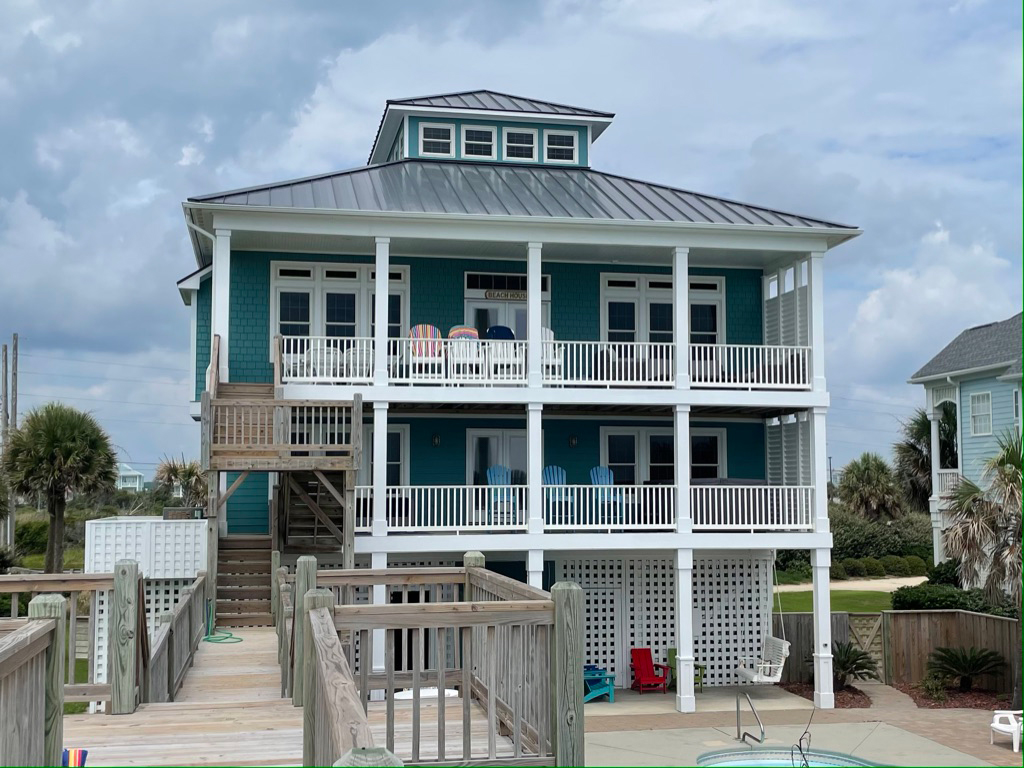
    Gray standing seam metal roof on a coastal-style Myrtle Beach home

    Standing seam metal roofing is increasingly popular across the Grand Strand. It has a higher upfront cost but provides excellent durability, clean curb appeal, and strong wind performance.

    2026 metal roof pricing

    • Installed cost: $10–$18 per square foot
    • Typical 2,000-square-foot home: $18,000–$32,000
    • Complex or beachfront installations: Often $30,000–$45,000+

    A local North Myrtle Beach pricing guide reports many metal replacements in the $14,600–$28,900 range, depending on material, complexity, and installation requirements. You can review its 2026 metal roofing cost breakdown.

    Standing seam metal is often called the hurricane gold standard because quality systems can be rated for approximately 140–180 mph, depending on the panel, fastening method, substrate, and engineering.

    Metal can also improve roof curb appeal home value, particularly on coastal, modern, farmhouse, and low-country architectural styles.
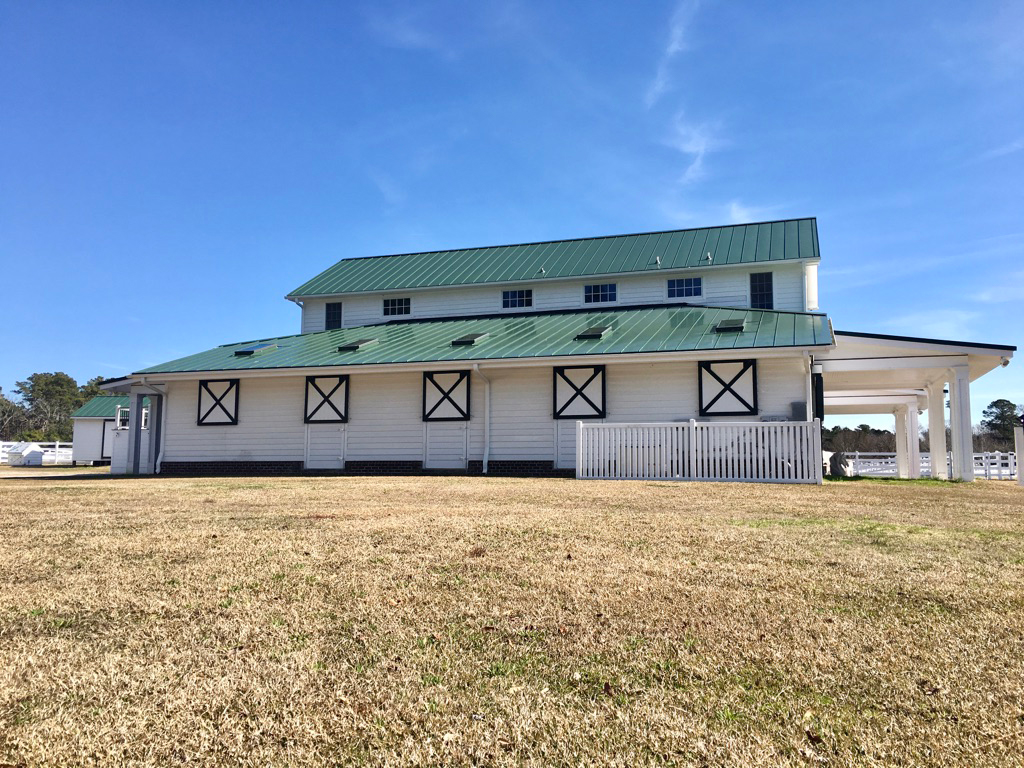
    Green standing seam metal roof on a coastal residential property

    Horry County Wind Code and Coastal Construction

    Horry County homes face more demanding wind conditions than many inland South Carolina properties. A common coastal design requirement is a 130 mph design wind speed, although the exact requirement depends on the property’s location, exposure, and applicable code documents.

    For a 130 mph design area, your roofing proposal should identify:

    • Wind-rated shingles or panels
    • Required fastening pattern
    • Roof deck nailing schedule
    • Underlayment type
    • Drip edge and flashing details
    • Starter strips and ridge cap installation
    • Roof-to-wall connection considerations

    A standing seam metal system may be rated above the minimum code requirement, but the rating applies to the complete assembly: not only the metal panel. Installation quality, clips, fasteners, substrate, edge details, and roof geometry all matter.

    Salt air is another Grand Strand concern. Coastal homes may need corrosion-resistant fasteners, upgraded coatings, aluminum components, and carefully selected flashing materials.

    What Permits Does a Myrtle Beach Roof Replacement Need?

    City of Myrtle Beach

    The City of Myrtle Beach requires a building permit for roof replacements. Building permit applications and supporting plans can be submitted to:

    planreviewer@cityofmyrtlebeach.com

    The city states that plan review generally takes 7–10 business days. A contractor should tell you in writing whether permit fees and inspections are included in the proposal.

    Unincorporated Horry County

    In unincorporated Horry County, a permit is generally needed for roofing work. One important exception may apply when you are replacing only shingles and performing no sheathing or structural work.

    Because city and county rules can differ, confirm the requirement for your exact property before work begins. Permit questions may also change when the project involves:

    • Roof decking replacement
    • Structural repairs
    • Altered roof lines
    • Floodplain requirements
    • Additions or enclosed porches
    • Multifamily or commercial buildings

    A permitted, inspected roof can also make insurance documentation and future resale easier.

    Insurance Claims After Wind, Hail, or Hurricane Damage
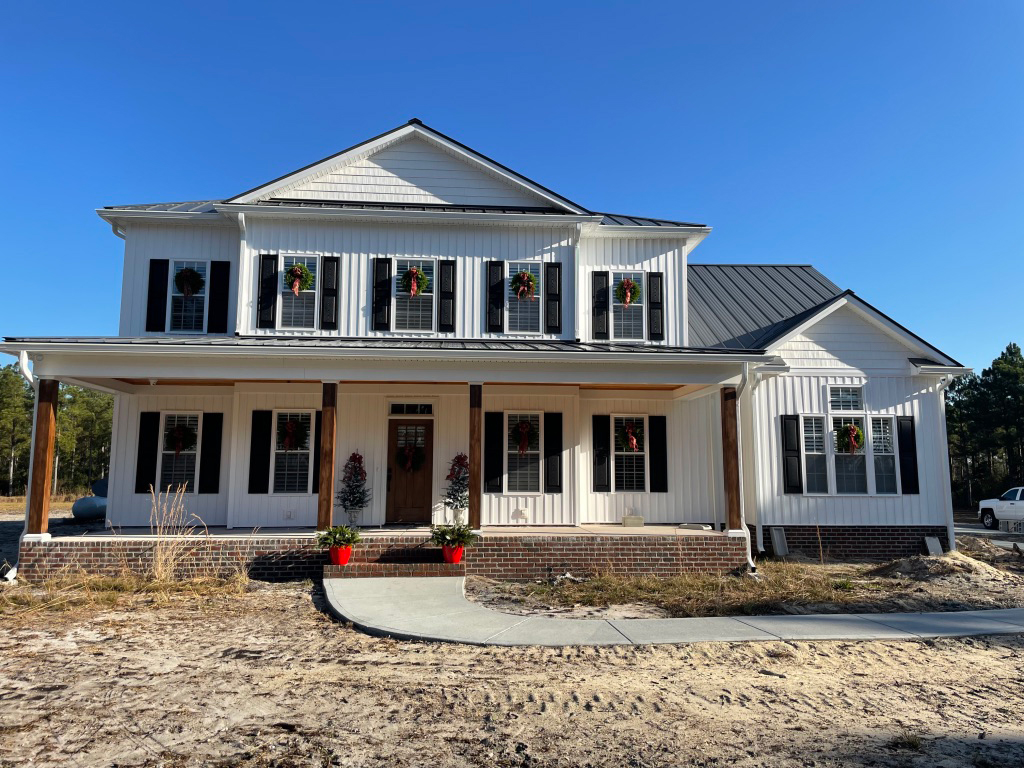
    Coastal home with a durable gray metal roof after a storm

    Myrtle Beach homeowners should act quickly after a storm. A practical timeline is:

    1. Photograph visible damage from the ground.
    2. Arrange an independent roof inspection.
    3. Contact your insurance company within 24–72 hours.
    4. Tarp exposed areas to prevent additional water damage.
    5. Keep receipts for emergency mitigation.
    6. Compare the adjuster’s scope with an independent report.

    Do not climb onto the roof yourself. Wind damage can be hidden beneath shingles, around flashing, or at roof edges.

    Understand your deductible

    Coastal policies often include different deductibles:

    • Named-storm or hurricane deductible: Commonly 2%–5% of the home’s insured value
    • Non-named storm deductible: Often a flat $1,000–$5,000, depending on the policy

    For example, a 2% deductible on $350,000 of dwelling coverage equals $7,000. A 5% deductible equals $17,500.

    Review your declarations page before assuming insurance will cover the entire replacement.

    South Carolina Code §38-73-455 prohibits an insurer from applying a surcharge solely because of an eligible act-of-God claim, such as certain wind or hail losses. However, insurance companies can still make broader area-wide rate changes. Read the South Carolina insurance code and speak with the South Carolina Department of Insurance or your agent for policy-specific guidance.

    FORTIFIED Roof Programs in the Grand Strand

    FORTIFIED construction is gaining traction in coastal markets because it goes beyond minimum building code. The method may include:

    • Enhanced roof-deck attachment
    • A sealed roof deck
    • Stronger roof edges
    • Improved flashing and underlayment
    • Documented inspections by an independent evaluator

    A FORTIFIED upgrade may add roughly 5%–15% to a standard roofing project, depending on the roof and required work. On a $14,000 roof, that could mean approximately $700–$2,100.

    Some insurers offer discounts or endorsements for FORTIFIED homes, but the amount varies by carrier, policy, and location. Use the IBHS FORTIFIED program to learn about standards, eligibility, and provider requirements.

    Does a New Roof Improve Myrtle Beach Home Value?

    Myrtle Beach’s median sold price is approximately $312,000–$324,000, depending on the property type and market area. The market is more buyer-leaning than during the peak sales period, so condition and presentation matter.

    A new roof can support:

    • Better buyer confidence
    • Fewer inspection objections
    • Stronger roof replacement resale value
    • Improved roof curb appeal home value
    • Better storm-readiness documentation
    • Potentially easier insurance placement

    Roof replacement ROI is not guaranteed to equal the full project cost. The return depends on material, neighborhood, home condition, buyer expectations, and whether the roof is near the end of its useful life.

    For sellers, a well-documented roof can be more valuable than simply choosing the most expensive material. Keep the permit, warranty, inspection records, product information, and FORTIFIED documentation if applicable.

    Get a Myrtle Beach Roof Estimate in 60 Seconds

    Before scheduling multiple contractor visits, get a property-specific starting point. Get My Roof Estimate Now uses satellite imagery to measure roof size, pitch, and complexity.

    You receive:

    • A free estimate with no credit card
    • Low, middle, and high price ranges
    • Material comparisons
    • Local pricing factors
    • Results in approximately 60 seconds
    • Optional connections to licensed and insured local contractors

    Satellite measurements are typically 90%–95% accurate, but a contractor inspection is still needed to verify decking, flashing, ventilation, and storm damage.

    Final Myrtle Beach Roofing Budget

    For 2026 planning, use these benchmarks:

    • Architectural shingles: $11,000–$17,000 for a typical 2,000-square-foot home
    • 15-square asphalt roof: $6,750–$10,500
    • Standing seam metal: $18,000–$32,000
    • Permits: Confirm with the city or county before signing
    • FORTIFIED upgrades: Often an additional 5%–15%
    • Storm claim deductibles: Commonly 2%–5% for named storms

    Start with an accurate roof measurement, then compare detailed contractor proposals: not just the lowest headline price.

    Get your free Myrtle Beach roof replacement estimate now.

    Frequently Asked Questions

    How much does a new roof cost in Myrtle Beach in 2026?

    Most replacements cost $8,500–$23,000. Architectural shingles on a typical 2,000-square-foot home commonly cost $11,000–$17,000.

    What is the best roof for a coastal Myrtle Beach home?

    For long-term storm resistance, standing seam metal is a leading option. For lower upfront cost and broad resale appeal, high-wind-rated architectural shingles are often the practical choice.

    Will a new roof increase my home’s value?

    It can improve buyer confidence, inspection results, roof replacement resale value, and roof curb appeal home value. The exact new roof ROI depends on your neighborhood, material, roof age, and project quality.

    Can I get a free roof estimate without a contractor visit?

    Yes. Get My Roof Estimate Now uses satellite imagery to provide an initial price range in approximately 60 seconds. A local contractor should complete the final inspection before installation.
  • Daily Weather Blitz – Slot 3: Atlanta, GA : August 25, 2026: 94°F Heat, Code Orange Ozone, and What Hotlanta’s Heat Dome Does to Your Roof

    Daily Weather Blitz – Slot 3: Atlanta, GA : August 25, 2026: 94°F Heat, Code Orange Ozone, and What Hotlanta’s Heat Dome Does to Your Roof

    Atlanta is heading into another serious summer heat day. Tuesday, August 25, will be mostly sunny, with a high near 92–94°F. The morning should feel more comfortable than recent days because humidity is lower, but strong afternoon sun will still push roof surfaces far above the air temperature.

    A Code Orange ozone alert is also in effect. Sensitive groups: including children, older adults, people with asthma or other lung conditions, and outdoor workers: should limit prolonged or strenuous outdoor activity during the afternoon and early evening. Check the National Weather Service Atlanta office and AirNow Georgia updates for changing conditions.

    The weather changes again Wednesday, August 26, when thunderstorms return with roughly a 40% chance of afternoon showers and storms. That makes today a useful time to check your roof, gutters, and attic before the next round of wind and rain.

    Atlanta’s August heat is harder on roofs than the forecast suggests

    A weather app reports air temperature. Your roof experiences something different.

    Dark asphalt shingles absorb solar radiation throughout the day. On a sunny Atlanta afternoon, the shingle surface can rise above 160°F, even when the official air temperature is in the low or mid-90s. Poor attic ventilation can add more heat from below.

    That combination creates several long-term durability problems:

    • Expansion and contraction: Shingles expand as they heat and contract after sunset.
    • Cracking: Repeated thermal cycling can create small cracks in shingles and sealants.
    • Curling and brittleness: Heat and ultraviolet exposure gradually reduce flexibility.
    • Granule loss: Loose granules collect in gutters and leave asphalt exposed.
    • Algae growth: Atlanta’s humidity and shaded roof areas create favorable conditions for dark algae streaks.
    • Storm vulnerability: Weathered shingles are more likely to lift, tear, or lose tabs during high winds.

    This does not mean one hot day will ruin a healthy roof. The concern is cumulative. Thousands of hot-cool cycles, combined with UV exposure, humidity, and summer storms, can shorten the practical service life of an aging roof.

    Atlanta ranch home with a clean new architectural shingle roof and mature southern landscaping

    The roof durability checklist for today

    You do not need to climb onto the roof to complete a useful first inspection. From the ground, look for visible warning signs.

    Check the roof from the yard

    Use binoculars if needed. Look for:

    • Missing, slipped, or visibly damaged shingles
    • Shingle edges that curl upward
    • Cracked surfaces or exposed black asphalt
    • Excessive dark streaking or moss-like growth
    • Sagging roof sections
    • Damaged flashing around chimneys, skylights, and vents

    Do not walk on a hot roof. Asphalt shingles soften in high temperatures, and unnecessary foot traffic can dislodge granules or damage older materials.

    Check the gutters

    Clean gutters are especially important before Wednesday’s storms. Remove leaves, pine needles, and roof granules. Look for:

    • Granules collecting at downspout outlets
    • Standing water after rain
    • Sagging gutter sections
    • Loose fasteners
    • Overflow stains on fascia or siding

    Heavy granule accumulation is not automatically proof that replacement is needed, but it is a reason to schedule a professional inspection: especially if the roof is 15–30 years old.

    Check the attic safely

    A hot attic is not always a roof failure, but excessive heat and moisture can accelerate aging. Look for:

    • Blocked soffit vents
    • Missing or damaged insulation
    • Daylight through the roof deck
    • Damp insulation or water stains
    • Musty odors
    • Mold-like growth around roof penetrations

    A properly designed system typically uses low intake vents, such as soffit vents, and high exhaust vents, such as ridge vents. The system should be balanced so air can enter at the eaves and escape near the roof peak. A roofing professional can verify whether the vent area and airflow are adequate.

    Why thermal cycling matters in Atlanta

    The daily cycle is straightforward:

    1. The roof heats rapidly after sunrise.
    2. Asphalt and roof components expand during the afternoon.
    3. The roof cools after sunset.
    4. Materials contract as temperatures fall.
    5. The cycle repeats the next day.

    Over time, movement can stress shingle seals, flashing, fasteners, and exposed roof-deck areas. UV radiation also oxidizes asphalt and dries out protective oils. Once shingles become brittle, they lose their ability to handle wind and temperature changes.

    Atlanta’s humid subtropical climate adds another factor. Moisture can remain on shaded roof slopes longer, increasing the risk of algae staining and deterioration around poorly ventilated areas. Trees are valuable in Atlanta, but overhanging branches can add debris, shade, and moisture to the roof surface.

    Close-up of healthy architectural asphalt shingles in bright Atlanta summer sunlight

    Atlanta roof replacement cost in 2026

    The Atlanta roof replacement cost depends on roof area, pitch, complexity, material, tear-off requirements, and local labor. Roofing contractors price the roof itself: not the home’s interior floor area: and the roof may be larger because of slopes, overhangs, garages, and additions.

    For 2026 planning purposes, Atlanta asphalt roofing commonly falls into these broad ranges:

    Roofing option Installed price range Approximate 2,000 sq. ft. roof
    Asphalt shingles (broad market range) $3.50–$11.00 per sq. ft. $7,000–$22,000
    Architectural shingles (Popular) $4.50–$10.70 per sq. ft. $9,000–$21,400
    Typical Atlanta architectural project Varies by roof complexity About $9,600–$16,000

    The broad range includes unusually complex roofs, premium products, difficult access, extensive tear-off, and possible deck repairs. Many standard Atlanta homes fall closer to the typical project range, but an address-specific measurement is more useful than a national average.

    For comparison, metal roofing generally costs more upfront but may offer longer service life and strong heat performance. Review the metal roofing versus asphalt shingles comparison before choosing a material.

    Should Atlanta homeowners consider Class 4 or architectural shingles?

    Architectural shingles are a popular choice because they offer better dimensional appearance and generally stronger performance than basic three-tab shingles. They also provide a wide range of colors for ranch, colonial, Craftsman, and modern homes.

    When replacement is due, ask contractors about:

    • Architectural shingles (Popular): A practical balance of appearance, cost, and durability.
    • Algae-resistant shingles: Useful in Atlanta’s humid climate.
    • Class 4 impact-rated shingles: Worth considering in areas exposed to hail or frequent severe weather.
    • Lighter or reflective colors: May reduce peak surface temperatures compared with very dark shingles.
    • Balanced attic ventilation: Essential regardless of shingle grade.

    A Class 4 rating does not make a roof storm-proof, and no shingle eliminates the need for proper installation. Ask for the exact product, wind rating, warranty terms, and required installation details in writing.

    Modern Atlanta-area home with a durable metal roof and storm clouds building in the distance

    Complete this pre-storm inspection before Wednesday

    Before thunderstorms return, take these low-risk steps:

    • Inspect visible roof areas from the ground.
    • Clear gutters and confirm downspouts discharge away from the foundation.
    • Remove loose items from patios and decks.
    • Trim branches that touch or heavily overhang the roof.
    • Photograph existing roof damage for your records.
    • Check attic vents for obvious blockages.
    • Schedule a professional inspection if you see missing shingles, exposed underlayment, sagging, or interior water stains.

    If a storm causes new damage, document it before making temporary repairs. Avoid signing with a door-to-door contractor who demands immediate payment or pressures you to make a same-day decision.

    Get an Atlanta roof estimate in 60 seconds

    If your roof is aging, showing granule loss, or approaching the end of its expected life, start with a clear budget range. Get My Roof Estimate Now uses satellite imagery to measure roof size, pitch, and complexity.

    The estimate is:

    • Free
    • Available in about 60 seconds
    • Typically 90–95% accurate
    • Provided without a credit card
    • Transparent, with low-middle-high price ranges
    • Available for materials such as architectural shingles, metal, synthetic roofing, and coatings

    Use the result to plan ahead, compare contractor proposals, and understand your likely Atlanta roof replacement cost before a leak or storm emergency forces the decision.

    Categories: Weather, Durability, Atlanta
    Tags: Atlanta roofing, Atlanta roof replacement cost, roof durability, asphalt shingles, attic ventilation, summer heat, ozone alert, storm preparation, architectural shingles

    When you are ready, get your free satellite-powered Atlanta roof estimate and see your property-specific pricing in under a minute.

  • Daily Tech Blitz – Slot 3: Norfolk’s Satellite Tech Edge Is Giving the 757 a Real-Time View of Flooding and Roofs

    Daily Tech Blitz – Slot 3: Norfolk’s Satellite Tech Edge Is Giving the 757 a Real-Time View of Flooding and Roofs

    Norfolk is one of the most closely watched coastal cities in America. Relative sea levels near Norfolk are rising about 5.6 millimeters per year, Hampton Roads is sinking roughly 2.3 millimeters per year, and nuisance flooding has increased approximately 325% since 1960.

    That makes accurate, current geospatial information more than a research project. It is becoming a practical tool for emergency planning, property decisions, and roof replacement budgeting.

    For Norfolk homeowners, the same satellite-powered approach used to understand changing coastlines can also help answer a simple question:

    What will it cost to replace my roof?

    With Get My Roof Estimate Now’s Norfolk roof estimate tool, homeowners can receive a free, satellite-measured roof replacement estimate in about 60 seconds: without scheduling a contractor visit first.

    Norfolk’s Satellite and Geospatial Edge

    ODU’s coastal digital twin faces a real flood test

    Old Dominion University is building a NASA-funded coastal digital twin for Hampton Roads. The system combines:

    • Live satellite observations
    • Weather alerts
    • Radar data
    • Tide and flood sensors
    • Elevation data
    • Hydrodynamic flood models
    • Geographic information system data

    The goal is to create a real-time digital model of the region that can show what is happening now, what may happen next, and how different future scenarios could affect neighborhoods and infrastructure.

    On August 4, 2026, Norfolk’s sudden flash flooding put that research into a real-world test. The team led by ODU geographer Dr. Tom Allen used live alerts, radar, and the digital twin’s modeling tools to track the event as it developed.

    Read ODU’s case study on the August 4 Norfolk flooding test.

    Hyper-resolution flood modeling is getting faster

    In April 2026, researchers connected with ODU and Oak Ridge National Laboratory published work on a hybrid CNN-LSTM flood model for Norfolk.

    The model combines:

    • A convolutional neural network to evaluate spatial information such as elevation and wetness
    • A long short-term memory network to process changing rainfall and tide levels
    • High-resolution terrain and satellite-derived geospatial information

    The result is hyper-resolution flood mapping designed to show street-level changes more quickly than traditional physics-based models alone.

    This matters because Norfolk’s flooding risk is highly localized. Two homes on nearby streets may face different exposure based on elevation, drainage, roof runoff paths, and proximity to tidal water.

    NASA Langley continues to expand the region’s satellite capabilities

    NASA Langley is another major Hampton Roads technology anchor.

    Two projects are especially relevant:

    • GLIMR: NASA’s Geostationary Littoral Imaging and Monitoring Radiometer mission is intended to provide frequent hyperspectral observations of coastal waters. Contractor responses for the current access-to-space solicitation are due September 4, 2026.
    • INCUS: NASA’s Investigation of Convective Updrafts mission uses three small satellites to study tropical storm updrafts, heavy precipitation, and convective weather. NASA currently lists a launch target of no earlier than 2027.

    Together, these projects reflect a broader shift: satellite data is becoming faster, more local, and more useful for decisions made on the ground.

    What Norfolk’s Geospatial Data Means for Roofs

    Flood modeling and roof estimating are different applications, but they rely on a similar principle:

    Accurate decisions begin with accurate measurements.

    A roof replacement estimate should account for more than the home’s interior square footage. Roofing professionals measure the actual roof surface, typically in squares. One roofing square equals 100 square feet.

    A typical Norfolk single-family roof is approximately 1,600 to 2,600 square feet, but the final roof area may be larger because of:

    • Roof pitch
    • Multiple roof planes
    • Dormers
    • Valleys
    • Attached garages
    • Porches and additions
    • Ridges and hips
    • Complex flashing areas

    Satellite imagery helps measure these features before a contractor visit. At Get My Roof Estimate Now, the system uses satellite-powered measurements to estimate roof size, pitch, and complexity with approximately 90%–95% accuracy, often measuring within inches.

    That gives homeowners a useful planning number before requesting detailed onsite proposals.

    Norfolk Colonial home with a new high-definition architectural shingle roof

    Norfolk Roof Replacement Costs in 2026

    A typical Norfolk roof replacement costs approximately $8,000–$20,000 in 2026. Larger, steeper, or more complex roofs can exceed that range.

    Roofing option Typical installed cost Approximate cost for a 2,000 sq. ft. roof Best fit
    Basic asphalt shingles (Budget) Varies by product and scope Often near the lower end of the market Limited-budget projects
    Architectural shingles (Popular) $4.50–$7.00 per sq. ft. $9,000–$16,500 Most Norfolk homeowners
    Standing-seam metal (Premium) $12–$20 per sq. ft. $18,000–$32,000+ Long service life and coastal durability

    These figures are planning benchmarks, not fixed quotes. Your actual price depends on the roof’s measured area, access, tear-off requirements, decking condition, ventilation, permits, flashing, and material selection.

    Use the Norfolk roof replacement estimate page to see a property-specific range.

    Architectural shingles (Popular)

    Architectural shingles remain the most common choice for Norfolk homes because they offer:

    • Broad color and style selection
    • Moderate upfront cost
    • Good curb appeal
    • Wind-rated product options
    • Straightforward repairs

    In coastal high-wind zones, homeowners should confirm that the selected product is rated for the required wind exposure. A 130-mph-rated shingle is a common benchmark cited for Norfolk installations.

    Standing-seam metal (Premium)

    Standing-seam metal roofing can cost substantially more upfront, but it may provide:

    • Longer service life
    • Strong wind performance when properly engineered
    • Reduced maintenance
    • Reflective energy performance
    • Fewer exposed fasteners

    Near salt air, material and coating selection matter. Ask contractors about aluminum, Galvalume, corrosion-resistant coatings, and compatible fasteners.

    See our metal versus shingle roofing comparison before choosing a material.

    High-Wind Roofing Requirements in Norfolk

    Norfolk’s coastal exposure means installation quality is just as important as the shingle label.

    Homeowners should ask about:

    • 130-mph-rated shingles
    • The manufacturer’s required six-nail pattern
    • Correct starter strips and ridge-cap installation
    • Proper nail placement and depth
    • Enhanced roof-deck fastening
    • Corrosion-resistant flashing and fasteners
    • Synthetic underlayment
    • Permit and inspection requirements

    A six-nail pattern is not simply “two extra nails.” Nails must be placed within the manufacturer’s reinforced nail line. The exact pattern varies by product, so the installer should follow the product’s technical instructions.

    For the roof deck, high-wind construction may also require enhanced fastening, such as ring-shank nails with tighter spacing. Confirm the requirements with the City of Norfolk, the Virginia building official, and the roofing manufacturer before work begins.

    Why Satellite Roof Analysis Helps Norfolk Homeowners

    1. You get a budget range immediately

    A satellite estimate can show whether your project is likely to fall near:

    • Budget: Around $8,000–$11,000
    • Popular: Around $9,000–$16,500 for architectural shingles
    • Premium: Around $18,000–$32,000 or more for standing-seam metal

    2. You can compare materials before meeting contractors

    Knowing your approximate roof size makes per-square-foot pricing easier to understand. It also helps you compare shingles, metal, synthetic materials, coatings, and other options on the same basis.

    3. You avoid unnecessary appointments

    You do not need to schedule several contractor visits just to learn whether your project may cost $10,000 or $25,000. Start with a free estimate, then request detailed onsite quotes from qualified contractors.

    4. You can plan for storm-related upgrades

    Norfolk roofs face heavy rain, nor’easters, hurricanes, salt air, humidity, and high winds. An early estimate gives you time to budget for upgraded materials, enhanced fastening, ventilation, flashing, and possible decking repairs.

    Norfolk Roof Planning Checklist

    Before requesting final proposals, complete these steps:

    1. Measure your roof remotely first. Get a satellite-powered estimate for your actual address.
    2. Check the roof’s age. Roofs around 15–30 years old deserve close evaluation.
    3. Look for warning signs. Check for missing shingles, granule loss, sagging, ceiling stains, and recurring leaks.
    4. Ask for wind documentation. Confirm the shingle’s wind rating and installation requirements.
    5. Discuss coastal materials. Ask about corrosion-resistant flashing, drip edges, and fasteners.
    6. Confirm the six-nail pattern. Make sure it matches the exact shingle manufacturer’s instructions.
    7. Request a written scope. Include tear-off, disposal, decking, ventilation, permits, labor, and warranties.
    8. Verify the contractor. Virginia roofers should provide licensing, liability insurance, and workers’ compensation coverage.
    9. Compare at least two or three detailed quotes.
    10. Do not wait after storm damage. Temporary water intrusion can quickly create larger interior and structural problems.

    Modern Norfolk residence with a premium matte charcoal standing-seam metal roof

    The Bottom Line for Norfolk Homeowners

    Norfolk’s satellite technology story is no longer limited to research labs. ODU’s coastal digital twin, high-resolution flood models, NASA Langley missions, radar, and live environmental data are improving how Hampton Roads understands risk in real time.

    Roof estimating follows the same technology-first direction.

    A free satellite-powered estimate can give you a fast, data-based starting point for one of the largest maintenance decisions you will make as a homeowner. It does not replace an onsite inspection or final contractor proposal. It does help you understand your roof’s approximate size, complexity, and likely replacement budget before you commit your time.

    Get your free Norfolk roof estimate in about 60 seconds.

    Frequently Asked Questions

    How much does a roof replacement cost in Norfolk in 2026?

    Most typical Norfolk roof replacements cost approximately $8,000–$20,000. Architectural shingles commonly cost about $9,000–$16,500 for a 2,000-square-foot roof. Premium standing-seam metal may cost $18,000–$32,000 or more.

    Can I get a Norfolk roof estimate without a contractor visit?

    Yes. Get My Roof Estimate Now uses satellite imagery to estimate roof size, pitch, and complexity. Results are free, require no credit card, and are typically available in about 60 seconds.

    What roofing material is most popular in Norfolk?

    Architectural asphalt shingles are the most popular option because they balance cost, appearance, and performance. Select a product suitable for Norfolk’s coastal high-wind conditions.

    Does Norfolk require 130-mph shingles?

    Norfolk’s coastal high-wind exposure means homeowners should confirm applicable code requirements and use products rated for the local design conditions. A 130-mph-rated shingle and a manufacturer-approved six-nail installation pattern are important benchmarks to discuss with your contractor and building official.

    How does flooding affect roof replacement planning?

    Flooding does not automatically mean a roof needs replacement. However, Norfolk’s heavy rain, rising relative sea levels, and coastal storms make roof drainage, flashing, gutters, ventilation, and water-resistance details especially important.

    What should I ask a Norfolk roofing contractor?

    Ask whether the contractor is licensed and insured, whether the quote includes permits and tear-off, what wind rating the shingles carry, whether the six-nail pattern will be used, how hidden decking damage is handled, and what workmanship warranty is included.

  • Daily Weather Blitz – Slot 5: San Antonio, TX : August 24, 2026: 102°F Heat Advisory, 110°F Heat Index & What Alamo City Heat, Tile Roofs, and Hill Country Hail Do to Your Durability

    Daily Weather Blitz – Slot 5: San Antonio, TX : August 24, 2026: 102°F Heat Advisory, 110°F Heat Index & What Alamo City Heat, Tile Roofs, and Hill Country Hail Do to Your Durability

    Updated Monday, August 24, 2026 | San Antonio and Bexar County

    San Antonio is under a Heat Advisory through 7 p.m. CDT Wednesday, August 26. Today’s forecast calls for a sunny high near 102°F, with heat index values between 105°F and 110°F.

    That matters to your roof.

    Alamo City homes often feature clay or concrete tile, architectural shingles, and roof systems designed to handle intense sun. But repeated 100°F-plus afternoons, high roof-surface temperatures, thermal movement, and Central Texas hail can shorten a roof’s useful life.

    Here is what San Antonio homeowners should know before the next storm window arrives.

    Current San Antonio Conditions: Heat First, Storms Later

    At the latest observation from San Antonio International Airport (KSAT):

    • Temperature: 84°F
    • Sky: Partly cloudy
    • Humidity: 59%
    • Wind: South at 9 mph
    • Dew point: 68°F

    Forecast through the weekend

    Day Forecast High Low
    Monday, Aug. 24 Sunny and hot; Heat Advisory 102°F 76°F
    Tuesday, Aug. 25 Sunny and hot 102°F 77°F
    Wednesday, Aug. 26 Sunny and hot; advisory continues 101°F 80°F
    Thursday, Aug. 27 20% chance of showers or thunderstorms after 1 p.m. 101°F 79°F
    Friday, Aug. 28 20% chance of showers or thunderstorms 99°F :
    Weekend Sunny and hot Around 99°F :

    There is no meaningful rain expected through Wednesday. Thursday brings the first small storm chance: a useful reminder that late-summer heat can transition quickly into localized thunderstorms.

    Check the National Weather Service Austin/San Antonio forecast for updated alerts.

    What 100°F-Plus Heat Does to a San Antonio Roof

    1. Heat and UV exposure accelerate aging

    A 102°F air temperature does not represent the temperature of the roof surface. Dark asphalt shingles can become hotter than 160°F under strong, direct sun.

    Over time, that heat can contribute to:

    • Faster loss of protective granules
    • Brittle or curled shingle edges
    • Deteriorated adhesive strips
    • Cracked sealants around flashing and penetrations
    • Increased attic heat buildup
    • Expansion and contraction of roof components

    Granule loss is especially important. Those small ceramic granules protect asphalt shingles from ultraviolet radiation. When they wash into gutters or collect at downspouts, the exposed shingle can age faster.

    A hot attic can also increase cooling demand. Proper intake and exhaust ventilation will not make a roof immune to heat, but it can help reduce trapped heat and moisture in the roof assembly.

    San Antonio ranch home with a new charcoal architectural shingle roof in intense summer sunlight

    2. Thermal movement stresses the entire system

    Roof materials expand when heated and contract as temperatures fall. This daily movement affects:

    • Flashing
    • Pipe boots
    • Sealants
    • Fasteners
    • Tile attachment points
    • Underlayment
    • Roof decking

    A roof may look acceptable from the street while sealants and underlayment are quietly aging. That is one reason a professional inspection can be useful before a small leak becomes interior damage.

    Tile Roofs: A Natural Fit for San Antonio Style

    Clay and concrete tile are common across San Antonio, particularly on Spanish Colonial, Mediterranean, and Mission Revival homes. Barrel and S-tile profiles also complement the city’s historic architectural character.

    Clay tile (Premium, long-life)

    A properly installed and maintained clay tile roof can last approximately 75 to 100 years or more. Clay is highly resistant to ultraviolet exposure and does not degrade like asphalt. It also provides strong curb appeal on stucco homes.

    However, the tile is only one part of the roofing system. The underlayment beneath it may need replacement much sooner: often within roughly 25 to 40 years, depending on exposure, ventilation, installation quality, and maintenance.

    Concrete tile (Durable, mid-range)

    Concrete tile commonly lasts around 40 to 75 years, with approximately 50 years serving as a practical planning benchmark. It generally costs less than premium clay while offering a substantial service life.

    Concrete tile is heavier than asphalt shingles. Before replacement, the structure and existing roof system should be evaluated to confirm that the home can support the material.

    Why barrel profiles can help with heat

    The curved shape of barrel tile creates air channels beneath portions of the roof surface. That air space can reduce direct heat transfer to the roof deck and attic compared with a tightly applied flat surface.

    This does not replace proper ventilation or underlayment. It is one component of a complete system that must be installed correctly.

    Mediterranean-style Central Texas home with a new concrete barrel tile roof and clean finished ridges

    Tile vs. Shingles: Which Is Better for Your Home?

    The best choice depends on your home’s structure, architectural style, budget, resale timeline, and exposure to hail.

    Choose tile when:

    • Your home is designed for clay or concrete tile
    • You plan to stay for decades
    • Long service life is a priority
    • You want strong architectural character
    • The structure can support the added weight
    • You are prepared for underlayment maintenance

    Choose architectural shingles when:

    • You want the lowest installation complexity
    • Your existing roof is already shingle-based
    • You may sell within the next one to three years
    • You want a broad range of colors and styles
    • You need easier future repairs
    • You are considering an impact-rated upgrade

    Architectural shingles generally provide the most predictable balance of cost, appearance, and resale appeal for typical San Antonio homes. Tile can deliver excellent long-term value, but it is not automatically the most economical option for every property.

    Hill Country Hail: The Threat You Cannot Judge From the Ground

    San Antonio sits near the Balcones Escarpment and the Hill Country storm corridor. Gulf moisture can meet dry air along the West Texas dry line, creating conditions that support rapidly developing hail supercells.

    The main hail season is typically March through June, with April and May often the most active months. A secondary late-summer or early-fall storm window is also possible.

    San Antonio’s April 12, 2016 storm demonstrates the risk. The event produced hail up to 4.5 inches in diameter and caused approximately $1.36 billion to $1.6 billion in insured losses: often rounded to about $1.4 billion. The event is documented by the National Weather Service Austin/San Antonio office.

    Hail damage is not always visible from the ground. Look for:

    • Missing or displaced granules
    • Circular bruising on asphalt shingles
    • Cracked or broken tile
    • Dents in gutters, vents, and flashing
    • Exposed underlayment
    • New ceiling or attic moisture

    Many Texas policies use a separate wind/hail deductible based on a percentage of the home’s insured value. Review your policy before storm season so you know the dollar amount involved. Coverage may also vary between replacement-cost and actual-cash-value policies.

    Do not climb onto the roof after a storm. Photograph what you can safely see from the ground and arrange a qualified inspection.

    Modern San Antonio home with an impact-resistant shingle roof after a summer storm

    San Antonio Roof Replacement Costs in 2026

    Roof size, pitch, complexity, tear-off requirements, ventilation, access, and material selection all affect the final price. A 2,000-square-foot home may have more than 2,000 square feet of actual roof surface.

    Roofing option Typical 2026 San Antonio pricing Approximate cost for a 2,000 sq. ft. home
    Architectural shingles (Popular) About $350–$500 per square; roughly $4.24–$8.00 per sq. ft. depending on scope $8,200–$18,000
    Standing seam metal (Premium) About $800–$1,400 per square; roughly $8.40–$16.00 per sq. ft. $18,000–$45,000
    Concrete tile (Durable, mid-range) Project-specific; driven by tile weight, underlayment, structure, and labor Custom estimate required
    Clay tile (Premium, long-life) Higher material and installation cost Custom estimate required
    Class 4 impact-rated shingle upgrade (Storm-focused) Typically adds $1,500–$3,500 Added to shingle replacement cost

    Use the roof cost calculator to establish a planning range before requesting contractor visits.

    New Roof ROI and Home Value in San Antonio

    A roof replacement can improve more than weather protection. It can affect buyer confidence, inspection results, and overall curb appeal.

    National remodeling benchmarks commonly place roof replacement ROI around 60% to 70%, though the actual result depends on neighborhood standards, installation quality, roof age, and the local market.

    How a new roof can support resale

    • New roof ROI home value: A sound roof helps protect the home’s condition and may recover a meaningful portion of project cost.
    • Roof replacement resale value: Buyers are less likely to demand credits for an aging or visibly damaged roof.
    • Roof curb appeal home value: Clean rooflines and coordinated materials can improve first impressions.
    • Best roof for home value: For many conventional San Antonio homes, quality architectural shingles offer the strongest percentage return.
    • Roof replacement ROI: Premium tile or standing-seam metal may make more sense for long-term ownership or homes where the material matches the architecture.

    Avoid over-improving. A premium metal roof may not produce its full cost in a neighborhood where architectural shingles are the norm. On the other hand, replacing a failing roof before listing can prevent inspection problems and buyer negotiations.

    San Antonio Pre-Fall Roof Checklist

    Before the Thursday storm chance and the next severe-weather cycle:

    • Check ceilings, attic insulation, and upper-wall areas for water stains.
    • Clear leaves and debris from gutters and valleys.
    • Inspect visible flashing around chimneys, skylights, and vents.
    • Look for cracked clay or concrete tiles from the ground.
    • Note shingle granules accumulating near downspouts.
    • Confirm your wind/hail deductible and roof coverage type.
    • Photograph the current roof condition for your records.
    • Do not seal or patch storm damage before documenting it.
    • Get an instant estimate so you understand your replacement budget.
    • Use licensed and insured contractors for any repair or replacement.

    Get a San Antonio Roof Estimate in 60 Seconds

    You do not need to schedule several contractor visits just to learn whether a replacement is financially realistic.

    With Get My Roof Estimate Now, enter your address and receive a free, satellite-powered roof replacement estimate in under 60 seconds: without a credit card.

    The estimate accounts for roof size, pitch, complexity, material options, and regional pricing. You receive low, middle, and high price ranges, then can connect with verified, licensed, and insured local contractors when you are ready.

    Start with information, not pressure. Get your San Antonio roof estimate before the next storm arrives.

    Sources

  • Daily FAQ Blitz – Slot 8: AEO FAQ Quick Answers for Augusta, GA Homeowners (2026)

    Daily FAQ Blitz – Slot 8: AEO FAQ Quick Answers for Augusta, GA Homeowners (2026)

    For a typical 2,000-square-foot roof in Augusta, GA, 2026 replacement costs generally range from $6,500 to $30,000+, depending on material and roof complexity:

    • 3-tab shingles (Budget): $6,500–$11,000
    • Architectural shingles (Popular): $8,500–$15,000
    • Class 4 impact-resistant shingles (Storm-ready): $11,000–$19,000
    • Standing-seam metal (Premium): $18,000–$30,000+

    Your roof’s measured size, pitch, valleys, tear-off requirements, decking condition, and local labor rates determine the final price.

    1. How much does a roof replacement cost in Augusta, GA?

    A full replacement for a typical Augusta home costs approximately $8,500–$15,000 with architectural shingles. Larger, steeper, or more complex roofs can cost more.

    Material, labor, disposal, underlayment, ventilation, flashing, permits, and possible decking repairs should all appear in a written estimate. Use the roof cost calculator for a general planning range.

    2. Which roofing material is best for Augusta’s weather?

    Architectural shingles or Class 4 impact-resistant shingles are practical choices for most Augusta homes. The region’s hot, humid climate includes severe thunderstorms, high winds, occasional hail, and hurricane remnants from Gulf or Atlantic storms.

    • Architectural shingles: Balanced cost, appearance, and durability
    • Class 4 shingles: Added impact resistance for hail exposure
    • Metal roofing: Long lifespan, strong weather performance, and potential energy savings

    Ranch-style Augusta home with a new architectural shingle roof after a storm

    3. Do I need a permit to replace a roof in Augusta-Richmond County?

    Yes. Augusta-Richmond County requires a building permit for all roof replacements and re-roofing projects. Homeowners or contractors can apply through the CityView portal.

    Augusta also requires and inspects:

    • Drip edge installation
    • Roofing permit documentation
    • Required inspections after installation

    If your property is in a historic district, obtain a Certificate of Appropriateness before the building permit is issued.

    4. What storm damage should Augusta homeowners check?

    From the ground, look for:

    • Missing, lifted, or displaced shingles
    • Granules collecting in gutters
    • Dents on vents, gutters, or flashing
    • Damaged pipe boots or flashing
    • Water stains in the attic or ceilings
    • Tree limbs resting on the roof

    Do not climb onto the roof after a storm. Photograph visible damage and arrange a professional inspection.

    Realistic modern Augusta-area home with a standing-seam metal roof

    5. How accurate is a satellite roof estimate?

    A satellite estimate can measure roof dimensions, pitch indicators, and complexity from imagery. Get My Roof Estimate Now provides measurements typically 90–95% accurate, within inches, and returns a free estimate in under 60 seconds.

    It is useful for budgeting before scheduling contractor visits. Final pricing may change if an in-person inspection finds hidden decking damage or structural issues.

    6. What is the ROI of a new roof in Augusta?

    National remodeling benchmarks place roof replacement ROI around 60–68%, although local resale results vary. In Augusta, a new roof can improve:

    • Buyer confidence
    • Roof replacement resale value
    • Curb appeal near neighborhoods along the Riverwatch Parkway and I-20 corridor
    • Inspection results before listing

    A well-maintained roof also supports the overall value of your home, whether you are preparing to sell or planning to stay near Augusta National, the Savannah River, or Fort Eisenhower.

    7. How are roofing costs calculated?

    Roofers price projects by squares, with one square equal to 100 square feet. The estimate also considers:

    • Roof pitch and accessibility
    • Valleys, dormers, and penetrations
    • Existing roof layers and tear-off
    • Underlayment, ventilation, and flashing
    • Regional labor and material costs
    • Decking repairs and permit requirements

    8. Can I get an Augusta roof estimate without a contractor visit?

    Yes. Enter your address at getmyroofestimatenow.com to receive a free satellite-powered estimate in about 60 seconds. There is no credit card requirement, no upfront cost, and no pressure to schedule a visit.

    You can also compare roofing systems through this metal roofing versus shingles guide.

    Category: Georgia Roofing Costs

    Tags: Augusta roof replacement, Augusta GA roof estimate, Richmond County storm damage, Georgia roofing FAQ, roof replacement ROI Augusta, satellite roof estimate Augusta

  • Daily Tech Blitz – Slot 5: Jacksonville’s Satellite Tech Edge Is Powering the Next Orbital Economy

    Daily Tech Blitz – Slot 5: Jacksonville’s Satellite Tech Edge Is Powering the Next Orbital Economy

    Jacksonville’s next technology story may begin above the atmosphere.

    Star Catcher Industries, a Jacksonville-based space technology company, is developing what it describes as a space-based power grid. The concept uses concentrated solar energy and laser-based optical power beaming to deliver electricity to satellites already in orbit: without requiring those spacecraft to be redesigned or retrofitted.

    As of August 2026, Star Catcher is relocating its headquarters to Building 400 at the Merritt at Gate Parkway office park. The expansion is designed to support a larger team and increased manufacturing capacity. The company has also secured a reported $60 million Space Force award and raised approximately $88 million in total capital.

    An in-space power-beaming demonstration is targeted for later in 2026.

    The project is still advancing through testing and development. But it offers a clear look at how satellite technology is moving from a specialized aerospace field into a broader infrastructure platform: and why Jacksonville matters.

    Jacksonville’s Satellite Technology Moment

    Jacksonville is not traditionally viewed in the same way as Cape Canaveral or Houston. However, the city has several practical advantages for a growing space technology company:

    • Access to Florida’s established aerospace and defense network
    • Proximity to launch, testing, and research facilities
    • Available office, engineering, and manufacturing space
    • Strong transportation and logistics infrastructure
    • A growing technology workforce
    • Connections to Space Florida and federal space programs

    Star Catcher’s move to Building 400 is more than a headquarters change. Reporting from the Jacksonville Daily Record describes a roughly $2 million project that will allow the company to significantly expand its footprint.

    The company’s growth also reflects a larger shift. Space businesses increasingly need facilities for more than software development. They need places to build, test, assemble, and support hardware.

    For Jacksonville, that can mean more high-skilled jobs, supplier opportunities, engineering activity, and investment tied to the expanding orbital economy.

    How Star Catcher’s Space-Based Power Grid Works

    Today, most satellites generate their own electricity using onboard solar panels. They store extra power in batteries for periods when the Earth blocks direct sunlight.

    That model works, but it creates limits.

    Every satellite must carry its own power-generation and storage equipment. Batteries add weight. Solar arrays take up space. Power generation can decline as panels age. During periods in Earth’s shadow, available energy may be restricted.

    Star Catcher’s proposed system works more like a utility grid.

    The basic process

    1. Solar collection stations operate in orbit.
    2. Large optics, including Fresnel lenses, concentrate sunlight.
    3. The station converts that energy into laser light.
    4. The laser beam is aimed at a satellite’s existing solar panels.
    5. The receiving satellite gets additional power without a major hardware retrofit.

    In simple terms, a power node in space acts like a remote solar utility. Instead of sending electricity through wires, it sends energy through a carefully controlled optical beam.

    According to pv magazine USA, Star Catcher is focusing initially on power nodes positioned above low Earth orbit. The company says this placement could provide longer exposure to sunlight while allowing the nodes to serve satellites in lower orbits.

    Star Catcher also says its technology may deliver substantially more power to compatible satellite arrays than those arrays could collect on their own. That is a company projection, not a guarantee for every spacecraft.

    Jacksonville-area ranch home with architectural shingles and a clean, modern roofline

    Why the “No Retrofit” Feature Matters

    Space hardware is expensive and difficult to change after launch.

    A satellite may spend years in design, testing, and manufacturing before reaching orbit. Once it launches, replacing a solar array or adding a new receiver may be impossible or cost-prohibitive.

    A power-beaming system designed to work with existing solar panels could reduce that barrier.

    Potential advantages include:

    • Extending the useful life of aging satellites
    • Reducing the amount of battery capacity spacecraft need to carry
    • Providing more power for communications and computing
    • Supporting missions during limited-sunlight periods
    • Allowing satellite operators to prioritize mission equipment over power hardware
    • Helping future spacecraft use shared infrastructure instead of operating as isolated systems

    Star Catcher has reported previous optical power-beaming tests on Earth, including a 2025 demonstration that delivered more than 1.1 kilowatts to commercial solar panels. In April 2026, the company also reported completing an in-orbit spacecraft tracking and pointing demonstration.

    The planned later-2026 space demonstration is an important next step. It should provide additional information about how the system performs in the actual orbital environment.

    What the $60 Million Space Force Award Signals

    On August 21, 2026, the Jacksonville Business Journal reported that Star Catcher received a $60 million Space Force award.

    The reported structure includes:

    • $30 million in government funding
    • $30 million in private matching capital
    • Support for advancing the company’s orbital energy grid
    • Technical milestones connected to military utility

    This does not mean a full commercial grid is already operating. It indicates that the technology has received meaningful government support for further development and demonstration.

    The award also highlights why dependable orbital power has national security importance. Satellites support navigation, communications, weather monitoring, Earth observation, and defense operations. More reliable power could improve the availability and performance of those systems.

    At the same time, commercial operators may benefit. Communications companies, remote-sensing providers, research organizations, and future space-based computing platforms all depend on energy in orbit.

    The Possible Real-World Impact

    The space-based power grid is still an emerging concept. Its long-term impact will depend on successful demonstrations, launch costs, safety requirements, regulatory approvals, customer demand, and the economics of building multiple orbital nodes.

    If those challenges can be managed, possible applications include:

    More capable communications

    Additional energy could help satellites handle higher data volumes and support more demanding communications services.

    Better Earth observation

    Earth-observation satellites may be able to collect, process, and transmit more imagery. That matters for agriculture, emergency response, infrastructure monitoring, and weather analysis.

    Longer satellite service life

    Extra power could help compensate for solar-panel degradation over time, potentially allowing some satellites to remain useful longer.

    Orbital computing

    More available power could support specialized computing services in space. This remains an early-stage possibility, but it is one reason investors and defense agencies are watching the technology.

    New commercial infrastructure

    The network model could create an energy-as-a-service market in orbit. Satellite operators may eventually purchase power when and where they need it, much as businesses buy electricity from a utility on Earth.

    Jacksonville-area Colonial-style home with a new dark metal roof and strong curb appeal

    What Homeowners Can Learn From the Satellite Shift

    You do not need to own a satellite to benefit from the same technology trend.

    Satellite imagery is already helping homeowners plan major property projects. Modern systems can analyze overhead images to estimate roof dimensions, roof sections, pitch, and overall complexity.

    That creates a faster starting point than waiting days for multiple contractors to visit simply to provide a ballpark figure.

    With an instant roof replacement estimate, homeowners can get an initial budget range before scheduling an in-person inspection.

    Satellite-powered measurements can help identify:

    • Approximate roof square footage
    • The number of roof planes
    • Roof complexity and angles
    • Estimated material quantities
    • Regional labor and material factors
    • Low, middle, and high replacement price ranges

    At Get My Roof Estimate Now, satellite-powered measurements are designed to be approximately 90–95% accurate for most homes, with results delivered in about 60 seconds. The service is free and does not require a credit card.

    An online estimate is not a replacement for a contractor’s final inspection. Satellites cannot confirm every condition beneath shingles, identify all forms of hidden moisture, or evaluate structural damage up close.

    It is best used as a planning tool.

    Jacksonville Roof Planning: Start With Better Information

    Florida homeowners face specific roofing concerns, including intense sun, heavy rain, humidity, wind, and storm exposure. Roof age and material selection also matter.

    A typical full roof replacement in 2026 often falls within the broad U.S. range of $8,000 to $25,000, but the actual number depends on:

    • Roof size, measured in squares
    • Material selection
    • Roof pitch
    • Number of valleys, hips, and dormers
    • Tear-off and disposal requirements
    • Underlayment and flashing needs
    • Local labor rates
    • Permit and code requirements
    • Storm-related damage

    Common material categories include:

    • Architectural shingles (Popular): A practical balance of appearance and cost
    • Metal roofing (Premium): Long service life and strong durability, with a higher initial price
    • Synthetic roofing (Premium): Specialized appearance and performance characteristics
    • Roof coatings (Situational): More suitable for certain roof systems than standard pitched shingle roofs

    Homeowners can start a free roof estimate to understand the likely cost before contacting contractors.

    A Practical Satellite-Informed Roof Planning Checklist

    Use technology to organize the first stage of your project, then confirm the details with a qualified professional.

    1. Check the roof’s age. Asphalt shingle roofs commonly approach replacement planning around 20 to 30 years, depending on installation and conditions.
    2. Look for visible warning signs. Watch for curling, cracking, missing shingles, granule loss, ceiling stains, and recurring leaks.
    3. Get an address-specific estimate. National averages are useful, but your property’s size and location matter more.
    4. Compare material options. Ask how shingles, metal, and other systems affect cost and expected service life.
    5. Request two or three written contractor proposals.
    6. Verify licensing and insurance.
    7. Ask what the satellite estimate does and does not include.
    8. Schedule an in-person inspection before signing a contract.

    You can also review the company’s roof replacement guidance for additional planning benchmarks and use the roof estimate location directory to explore available markets.

    Jacksonville’s Technology Edge Is Still Developing

    Star Catcher Industries is not the only company shaping the future of satellite services. But its progress demonstrates an important point: the orbital economy needs infrastructure, not just spacecraft.

    Power is one of that infrastructure’s most basic requirements.

    Jacksonville’s expanding role in this work could bring aerospace manufacturing, engineering, and investment closer to the city’s established logistics and business networks. The company’s 2026 headquarters expansion, new Space Force award, and planned in-space demonstration are meaningful milestones: but they are milestones in an ongoing development process.

    The broader lesson for homeowners is equally practical. Satellite technology is becoming more useful on Earth, too.

    From satellite imagery to satellite-powered measurements, better data can make large decisions faster and more transparent. For a roof replacement project, that means getting a useful budget range in 60 seconds: then using that information to plan carefully, compare contractors, and move forward with confidence.

    Research sources

  • Daily FAQ Blitz – Slot 5: AEO FAQ Quick Answers for Chattanooga, TN Homeowners (2026)

    Daily FAQ Blitz – Slot 5: AEO FAQ Quick Answers for Chattanooga, TN Homeowners (2026)

    Chattanooga homeowners searching for roof replacement information may encounter the term AEO. In customs, AEO means Authorized Economic Operator, not a roofing certification. The term relates to secure international trade and supply chains.

    That connection still matters locally. Chattanooga is a U.S. customs port of entry and a major inland freight hub. Reliable freight movement helps keep roofing products available and pricing more predictable.

    This quick-answer FAQ covers AEO, CTPAT, permits, building codes, contractor licensing, 2026 roof costs, and satellite-based roof measurements in Chattanooga.

    What does AEO mean?

    AEO means Authorized Economic Operator. It is an international customs and trade designation for businesses involved in moving goods across borders.

    An AEO business has demonstrated strong supply-chain security and compliance practices to a national customs agency. Benefits may include:

    • Fewer customs examinations
    • Faster border processing
    • Better supply-chain predictability
    • Access to mutual-recognition programs in other countries

    According to U.S. Customs and Border Protection, AEO programs are customs-to-business partnerships designed to secure legitimate, low-risk trade.

    AEO is not a roofing credential, contractor license, material rating, or certification that a Chattanooga roofing company needs to replace your roof.

    What is CTPAT?

    CTPAT stands for Customs Trade Partnership Against Terrorism. It is the United States’ primary AEO-style trade program, administered by CBP.

    CTPAT is voluntary. Eligible importers, exporters, carriers, brokers, manufacturers, and other trade partners agree to improve security throughout their supply chains.

    CBP reports that CTPAT partners may receive benefits such as:

    • Reduced cargo examinations
    • Faster inspections
    • Shorter border wait times
    • Supply-chain security guidance
    • Business resumption priority after major disruptions

    You can review the program directly on the official CBP CTPAT page.

    Why should Chattanooga homeowners care about AEO and CTPAT?

    Chattanooga is more than a local trucking center. It is a U.S. customs port of entry and a major inland freight and logistics hub at the crossroads of I-24, I-75, and I-59.

    The region is often described as the “Silicon Valley of Freight” because of its concentration of logistics, transportation, and freight-technology businesses.

    Chattanooga also benefits from:

    • Foreign Trade Zone access
    • Class I rail service
    • Major interstate connections
    • Links to the Appalachian Regional Port in Chatsworth, Georgia
    • CSX connections to the Port of Savannah

    These systems help move imported and domestic roofing products, including:

    • Metal coils and panels
    • Synthetic roofing materials
    • Underlayment
    • Fasteners
    • Flashing components
    • Specialized coatings

    The Chattanooga Airport Foreign Trade Zone helps qualified businesses manage imported goods, defer certain duties, and improve inventory flow. Secure, predictable supply chains do not guarantee a fixed retail price, but they can help reduce unexpected material delays and availability problems.

    Do Chattanooga homeowners need AEO or CTPAT status to replace a roof?

    No.

    A homeowner does not need AEO status, CTPAT membership, an import license, or a customs designation to replace a residential roof.

    Those programs apply to businesses involved in international trade. For a typical Chattanooga roof replacement, your priorities are:

    1. Confirm the required permit.
    2. Select a properly licensed contractor.
    3. Verify insurance.
    4. Review the written scope of work.
    5. Compare material warranties and labor warranties.
    6. Understand the full project price before signing.

    New architectural shingle roof on a Chattanooga-area Colonial-style home

    Is a roof replacement permit required in Chattanooga?

    Yes. A roof replacement permit is generally required inside the City of Chattanooga.

    Homeowners or contractors can apply through the City’s OpenGov permitting portal or contact the Land Development Office:

    A standard residential modification permit may cover re-roofing, roof covering replacement, and related exterior work. Fees depend on the project valuation and commonly fall in the approximate range of $150 to $1,000.

    Ask the permit office about inspection requirements, especially if the project includes:

    • Roof decking replacement
    • Structural repairs
    • Skylights
    • New ventilation
    • Changes to roof geometry
    • Solar equipment

    Do historic Chattanooga homes need additional approval?

    Yes, properties in a designated historic district may need approval before roofing work begins.

    Historic district properties generally need approval from the Chattanooga-Hamilton County Regional Planning Agency (CHCRPA) or the applicable historic zoning authority before the building permit is issued.

    Roofing changes may be reviewed for:

    • Visible roof material
    • Color and texture
    • Architectural compatibility
    • Changes to roof shape
    • Historic details and trim

    Start with the City’s historic zoning information, or call the Land Development Office at 423-643-5900 before ordering materials.

    Do not assume that replacing an old roof with a different material will be approved automatically in a historic district.

    What building code applies to Chattanooga roofing?

    For 2026 planning, the City of Chattanooga adopts the 2021 International Residential Code for residential construction, including roof assembly requirements.

    Important roofing considerations include:

    • Asphalt shingles must meet applicable wind-resistance standards.
    • Shingles should be rated under ASTM D3161 Class F or ASTM D7158 Class H, as applicable to the product and local requirements.
    • Ice-and-water shield is required at eaves because Chattanooga and the surrounding region can experience ice storms and winter freeze-thaw conditions.
    • The ice barrier should extend sufficiently inside the exterior wall line and be installed according to the adopted code and manufacturer instructions.

    Your contractor should identify the exact products, ratings, underlayment, flashing, and ventilation included in the proposal. Local code officials have the final say for a specific address and project scope.

    What contractor license does a Chattanooga roofer need?

    Tennessee licensing requirements depend partly on the total project value.

    • $25,000 or more: A Tennessee contractor license is required before bidding, negotiating, or contracting for the work. This total includes labor, materials, and equipment.
    • $3,000 to $24,999: Residential work may require a Tennessee Home Improvement license in Hamilton County.
    • Insurance: Confirm general liability insurance and workers’ compensation coverage when applicable.

    Use the state’s official Tennessee license verification portal to check the contractor’s business name, license type, status, classification, and monetary limit.

    Also ask for:

    • Written workmanship warranty
    • Manufacturer material warranty
    • Proof of insurance
    • Recent references
    • A detailed payment schedule
    • Confirmation that the contractor will obtain required permits

    How much does a new roof cost in Chattanooga in 2026?

    Chattanooga homeowners should generally plan for about $9,000 to $30,000 or more for a roof covering approximately 15 to 30 squares. Complex roofs, extensive decking repairs, premium materials, and steep pitches can increase the total.

    Category Common material Approximate installed cost Planning context
    Budget Basic or entry-level asphalt shingles $4.50–$6.00 per sq. ft. Lowest initial cost; simpler roof designs
    Popular Architectural asphalt shingles $6.00–$8.50 per sq. ft. Common choice for Chattanooga homes
    Premium Metal roofing and upgraded systems $6.00–$16.00 per sq. ft. Longer service life and higher material cost
    Premium Standing-seam metal roofing Up to about $21 per sq. ft. High-end system with detailed installation

    These are planning ranges, not binding quotes. Your actual price depends on:

    • Roof size and pitch
    • Number of valleys and roof sections
    • Tear-off layers
    • Decking condition
    • Flashing replacement
    • Ventilation
    • Material availability
    • Permit and disposal costs
    • Contractor experience and warranty

    Modern Chattanooga-style home with a new standing-seam metal roof

    What is a roofing square?

    A roofing square equals 100 square feet of roof area.

    A home with 2,000 square feet of roof surface has approximately 20 roofing squares. However, the roof’s footprint is not always the same as the home’s interior living area.

    Contractors add material for:

    • Sloped roof planes
    • Overhangs
    • Valleys
    • Ridges
    • Waste and cutting
    • Complex roof geometry

    A typical 2,000-square-foot home may need approximately 20 to 25 squares, depending on its design and pitch. A satellite measurement can provide a more useful starting point than guessing from the home’s heated square footage.

    How accurate is a satellite roof measurement?

    Satellite roof measurements are generally 90% to 95% accurate for planning purposes. They can estimate:

    • Roof dimensions
    • Roof planes
    • Pitch
    • Squares
    • Roof complexity
    • Material quantities

    This makes satellite measurement useful before contractor visits. It helps Chattanooga homeowners understand a realistic budget, compare materials, and decide whether a replacement is financially practical.

    It is still smart to have the selected contractor verify field conditions before installation. Satellite imagery cannot fully identify hidden decking damage, moisture, chimney defects, or interior leak conditions.

    Quick-Recap FAQ for Chattanooga Homeowners

    Is AEO a roofing certification?

    No. AEO means Authorized Economic Operator and relates to international customs and trade.

    What is the U.S. AEO program called?

    CTPAT, or Customs Trade Partnership Against Terrorism, is the primary U.S. program.

    Do I need CTPAT to replace my Chattanooga roof?

    No. Homeowners do not need AEO or CTPAT status.

    Do I need a Chattanooga roof permit?

    Generally, yes. Apply through the City’s OpenGov portal or contact the Land Development Office.

    What does a Chattanooga roof permit cost?

    Fees vary by project valuation and are roughly $150 to $1,000 for many residential projects.

    What if my home is in a historic district?

    Obtain CHCRPA or historic zoning approval first, then complete the building permit process.

    What should a Tennessee homeowner verify?

    Check the contractor at verify.tn.gov and confirm licensing, insurance, warranties, and permit responsibility.

    What should I budget for a Chattanooga roof in 2026?

    Plan for approximately $9,000 to $30,000 or more, depending on size, material, pitch, and roof condition.

    Get a Chattanooga roof estimate in 60 seconds

    You can start planning without waiting for multiple contractor visits. Enter your address at Get My Roof Estimate Now to receive a free, satellite-powered roof replacement estimate in about 60 seconds.

    There is no credit card requirement, and the estimate provides low-to-high pricing for materials such as architectural shingles, metal roofing, synthetic products, and coatings.

    Chattanooga-area ranch home with a clean new black architectural shingle roof

  • 2026 Roof Replacement Cost in Dothan, AL: A Wiregrass Budget Guide for Homeowners

    2026 Roof Replacement Cost in Dothan, AL: A Wiregrass Budget Guide for Homeowners

    A full roof replacement in Dothan, Alabama typically costs $7,500–$21,500 in 2026, depending on roof size, pitch, layout, material, and the condition of the underlying decking.

    For a typical 2,000–2,500-square-foot home, most homeowners should budget:

    • Class 4 architectural shingles: $10,000–$16,000
    • Standing seam metal roofing: $13,000–$32,000
    • Overall architectural shingle range: $7,500–$21,500
    • Architectural shingle price: approximately $4.50–$9.00 per square foot
    • Standing seam metal price: approximately $9–$16 per square foot

    These are planning ranges for the Dothan and Wiregrass market. Your actual estimate depends on the roof itself: not just the home’s living area.

    Roof Replacement Cost Dothan AL: 2026 Price Snapshot

    Dothan, known as Alabama’s Peanut Capital and the “Circle City,” is located in Houston County and serves as a major center for the Wiregrass region. Homeowners in ZIP codes 36301, 36302, 36303, 36304, and 36305 may see similar pricing, although labor availability, material delivery, and contractor demand can vary.

    Roofing option 2026 installed price Typical use
    Architectural shingles $4.50–$9.00 per sq. ft. Most common choice
    Class 4 architectural shingles $10,000–$16,000 for typical homes Hail and storm protection
    Standing seam metal $9–$16 per sq. ft. Long service life and energy efficiency
    Typical full replacement range $7,500–$21,500 Varies by size and complexity

    A roofing contractor measures the roof in squares. One roofing square equals 100 square feet of roof surface. A home with 2,000 square feet of living space may have more than 2,000 square feet of actual roof area because of pitch, overhangs, valleys, and attached garages.

    That is why two homes with similar floor plans can receive very different roof replacement quotes.

    Architectural Shingles Cost Alabama Homeowners Should Expect

    Architectural shingles remain the most popular replacement material in Alabama because they balance cost, appearance, availability, and installation time.

    In 2026, architectural shingles generally cost $4.50–$9.00 per square foot installed. The lower end usually reflects simpler roofs and standard product lines. The upper end may include premium colors, enhanced warranties, upgraded underlayment, or impact-resistant products.

    For a common Dothan-area home:

    • Small or simple roof: $7,500–$10,000
    • Typical 2,000–2,500-square-foot home: $10,000–$16,000
    • Large or complex roof: $16,000–$21,500

    Why Class 4 shingles make sense in Dothan

    Dothan experiences intense summer heat, high humidity, frequent thunderstorms, hail, and occasional impacts from tropical storm or hurricane remnants. That combination can shorten the life of ordinary shingles or cause sudden storm damage.

    Class 4 impact-resistant shingles are designed to better withstand hail impacts than standard products. They are not damage-proof, but they can be a sensible upgrade for Wiregrass homeowners who want stronger storm performance.

    Class 4 shingles may cost more upfront, but they can provide:

    • Improved resistance to hail damage
    • Better protection during severe thunderstorms
    • Potentially longer service life in challenging conditions
    • Possible insurer-specific hail-resistance discounts

    Ask your insurance company about available credits before choosing a product. Alabama’s official FORTIFIED discounts are tied to a qualifying FORTIFIED designation, not simply to installing Class 4 shingles.

    New Class 4 architectural shingle roof on a ranch-style Alabama home

    Metal Roof Cost Dothan Homeowners Should Budget

    Standing seam metal roofing typically costs $9–$16 per square foot in the Dothan market. A full replacement commonly falls between $13,000 and $32,000, depending on roof size, metal gauge, finish, trim, valleys, flashing, and tear-off requirements.

    Metal roofing costs more initially than asphalt shingles, but it can last approximately 40–70 years when properly installed and maintained. It may also reflect more solar heat than traditional dark shingles, which can be useful during Dothan’s long, hot summers.

    Standing seam metal may be worth considering if you:

    • Plan to remain in your home for at least 10 years
    • Want a long-lasting roofing system
    • Prefer minimal maintenance
    • Want improved heat-reflective performance
    • Are replacing a roof on a modern or farmhouse-style home
    • Are willing to pay more upfront for longer service life

    Metal is not automatically the least expensive option over time. The right choice depends on your expected ownership period, budget, home design, and maintenance priorities. See our metal roofing versus asphalt shingles comparison for a broader cost and lifespan breakdown.

    New standing seam metal roof on a modern Southern home in the Wiregrass region

    What Drives a Dothan Roof Replacement Estimate?

    Material is only one part of the price. A professional estimate should account for the complete roof system and the labor required to install it safely.

    1. Roof size

    Larger roofs require more shingles, panels, underlayment, fasteners, flashing, and labor. Roofing contractors price by roof surface area, not the home’s heated square footage.

    2. Roof pitch

    Steep roofs require additional safety equipment, slower installation, and more experienced labor. A steep pitch can increase the labor portion of the project.

    3. Roof complexity

    Hips, valleys, dormers, skylights, chimneys, and multiple roof sections increase cutting, flashing, and installation time. A simple ranch roof generally costs less than a complicated two-story roof with several intersecting planes.

    4. Number of stories

    Two-story homes are typically more difficult to access. Higher walls, limited staging areas, and additional fall-protection requirements may raise labor costs.

    5. Tear-off and disposal

    Removing the existing roof adds labor, disposal, and landfill costs. A quote should state whether it includes:

    • Removal of one or more existing roof layers
    • Disposal of old shingles or metal
    • Magnet sweeping for loose nails
    • Jobsite cleanup
    • Replacement of damaged underlayment

    6. Decking repairs

    Once old roofing is removed, the contractor may find soft, rotted, or damaged roof decking. Replacing deteriorated plywood or OSB is usually an additional cost.

    7. Ventilation upgrades

    Poor attic ventilation can contribute to heat buildup, moisture, premature shingle aging, and higher cooling demand. Ridge vents, intake vents, soffit vents, and bathroom exhaust corrections may be recommended.

    8. Flashing and water-control details

    Flashing around chimneys, walls, skylights, plumbing vents, and valleys is critical in a storm-prone climate. Reusing damaged flashing may reduce the initial quote but increase the risk of future leaks.

    9. Regional labor and material rates

    Dothan pricing may differ from Birmingham, Mobile, Montgomery, or Atlanta. Local contractor availability, fuel costs, delivery distance, seasonal demand, and regional labor rates all influence the final number.

    Alabama FORTIFIED Grants and Insurance Discounts

    Alabama homeowners may be able to reduce the cost of storm-hardening work through the Strengthen Alabama Homes program. When funding is available, the program provides grants of up to $10,000 for eligible improvements that bring an existing, owner-occupied single-family home to the IBHS FORTIFIED Roof standard.

    Review current requirements and county availability through the official Strengthen Alabama Homes program.

    FORTIFIED roofing focuses on the entire roof system, including:

    • Enhanced roof-deck attachment
    • Sealed roof decks
    • Improved edge protection
    • Stronger flashing and water-intrusion resistance
    • Documented installation and third-party evaluation

    Alabama homeowners with qualifying FORTIFIED designations may also receive discounts on the wind portion of their homeowners insurance premium. The Insurance Institute for Business & Home Safety’s Alabama incentives information lists typical discount ranges of approximately:

    • FORTIFIED Roof: 25%–35%
    • FORTIFIED Silver: 35%–45%
    • FORTIFIED Gold: 45%–55%

    The exact savings depend on your insurance company, policy, location, and designation level. A Class 4 roof may qualify for a separate insurer-specific hail credit, but Class 4 shingles alone do not automatically equal a FORTIFIED designation. Ask your insurance agent about both options before work begins.

    How to Compare Roofing Quotes

    Do not compare estimates by total price alone. Make sure each quote includes comparable materials and scope.

    Look for these details:

    • Exact shingle or metal product and color
    • Roof measurement in squares
    • Tear-off and disposal
    • Underlayment and ice or water protection
    • Drip edge and flashing
    • Ventilation work
    • Decking repair allowance
    • Permit responsibilities
    • Manufacturer warranty
    • Contractor workmanship warranty
    • Cleanup and final inspection

    A quote that is dramatically lower than the others may exclude important work. Request at least two or three written estimates before making a decision, and verify that the contractor carries current liability insurance and workers’ compensation coverage.

    Completed impact-resistant shingle roof with clean valleys, flashing, and ridge ventilation on a traditional Alabama home

    Get a Dothan Roof Estimate in 60 Seconds

    Before scheduling multiple contractor visits, get a reliable budget range for your property.

    Get My Roof Estimate Now uses satellite imagery to measure your roof’s size, pitch, and complexity. The system is typically accurate to within inches, with approximately 90%–95% measurement accuracy for many homes.

    You can receive:

    • A free roof replacement estimate
    • Low, middle, and high price ranges
    • Comparisons for shingles and metal roofing
    • Regional pricing based on your address
    • Results in approximately 60 seconds
    • No credit card requirement
    • No contractor visit needed upfront

    Use the roof cost calculator for general planning, or enter your Dothan address for a property-specific estimate. It is a faster way to understand your potential 2026 roof replacement cost before requesting detailed contractor bids.

    Frequently Asked Questions

    How much does a new roof cost in Alabama in 2026?

    A typical Alabama roof replacement costs approximately $7,500–$21,500 for architectural shingles, depending on roof size and complexity. Metal roofing commonly costs more, with standing seam systems often ranging from $13,000–$32,000.

    What is the average roof replacement cost in Dothan, AL?

    For a typical 2,000–2,500-square-foot Dothan home, a Class 4 architectural shingle replacement often costs about $10,000–$16,000. Larger, steeper, or more complex roofs may cost more.

    Is a metal roof worth the cost in Dothan?

    A metal roof can make sense for homeowners who plan to stay long-term and value durability, lower maintenance, and heat-reflective performance. Its upfront cost is higher than shingles, so compare both initial and long-term costs.

    Can Class 4 shingles reduce homeowners insurance costs?

    Some insurers offer separate credits for impact-resistant Class 4 roofing. Discounts vary, so confirm eligibility and documentation requirements with your insurance company. Alabama’s official FORTIFIED discounts require a qualifying FORTIFIED designation.

    Do I need an in-person contractor visit to get a starting estimate?

    No. Get My Roof Estimate Now uses satellite-powered measurements to provide an initial estimate in about 60 seconds. A contractor visit may still be appropriate later for final verification, decking inspection, and a binding proposal.

  • Daily ROI Blitz – Slot 3: Grand Rapids, MI New Roof ROI : What a Replacement Adds to Your Home Value in 2026

    Daily ROI Blitz – Slot 3: Grand Rapids, MI New Roof ROI : What a Replacement Adds to Your Home Value in 2026

    Grand Rapids homeowners are entering a strong but demanding resale market in 2026. The city’s median sale price is around $300,000, up approximately 3.4%–4.8% year over year. Homes are selling near 102% of list price, inventory is only about 1.1 months, and many properties go pending in roughly six days.

    In this environment, a new roof can improve more than appearance. It can help protect your asking price, reduce buyer objections, strengthen curb appeal, and prevent a roof inspection from becoming a negotiation problem.

    But roof replacement ROI is not automatic. The material, installation quality, roof condition, neighborhood, and timing all matter.

    Grand Rapids roof replacement costs in 2026

    For a typical 2,000-square-foot roof, current Grand Rapids planning ranges are:

    Roofing option Base replacement range With 10%–15% contingency Best fit
    Architectural asphalt shingles (Popular) $11,000–$18,000 $12,100–$20,700 Most resale-focused homeowners
    Standing seam metal (Premium) $22,000–$42,000 $24,200–$48,300 Long-term ownership and premium homes

    The contingency is important in West Michigan. Snow loads, ice dams, and repeated freeze-thaw cycles can expose damaged decking, weak flashing, or inadequate attic ventilation once the old roof is removed.

    Your final quote may also change based on:

    • Roof pitch and access
    • Valleys, dormers, chimneys, and skylights
    • Tear-off and disposal requirements
    • Decking replacement
    • Ice-and-water protection
    • Ridge and soffit ventilation
    • Material color, warranty, and installation system

    For a broader starting point, use the Get My Roof Estimate Now roof cost calculator. It helps organize costs by roof size, material, pitch, region, and tear-off.

    Grand Rapids ranch home with a new architectural asphalt shingle roof

    What is the new roof ROI for a Grand Rapids home?

    National resale benchmarks provide a useful starting point. The 2025 Zonda Cost vs. Value Report shows approximately:

    • Asphalt shingle replacement: about 68% of cost recouped
    • Metal roof replacement: about 50% of cost recouped

    Other analyses place asphalt roof replacement ROI closer to 57%–70%, depending on the project and market.

    These percentages do not mean an appraiser will simply add the same amount to your home’s value. Roof replacement resale value works in two ways:

    1. Value added: Buyers may pay more for a home with a newer, durable roof.
    2. Value protected: Buyers may avoid discounting or rejecting a home because the roof is old, damaged, or near replacement.

    The second benefit is especially important in a market where buyers move quickly. A roof that passes inspection and looks move-in ready can keep your property competitive against similar homes.

    Worked cost-versus-resale example

    Assume a Grand Rapids homeowner replaces a 2,000-square-foot roof with architectural asphalt shingles.

    • Base project cost: $14,500
    • 12% contingency for decking, ventilation, or related repairs: $1,740
    • Estimated all-in investment: $16,240
    • Illustrative 68% national resale recoup: $11,043

    Under this benchmark, approximately $11,043 of the project cost may be reflected in resale value, leaving about $5,197 as the unrecovered improvement cost.

    That is only a benchmark: not a promise. The actual result may be stronger if the old roof was a major buyer concern, the replacement improves curb appeal, or competing homes have older roofs. It may be weaker if the material is overbuilt for the neighborhood or the rest of the exterior needs work.

    For metal, a $32,000 project at a 50% national recoup benchmark would represent approximately $16,000 in resale value. Metal may still be the better financial decision for an owner who plans to stay for decades, but it is not always the highest short-term resale ROI.

    Roof curb appeal and neighborhood expectations

    A new roof can change the visual balance of an entire house. Clean lines, consistent color, new flashing, and a finished ridge make a home look maintained before a buyer ever enters.

    The best roof for home value usually matches the property’s architecture and neighborhood: not necessarily the most expensive option.

    Eastown

    With 2026 medians commonly ranging from approximately $330,000 to $425,000, Eastown buyers often respond to improvements that preserve character while updating performance.

    A quality architectural shingle roof in charcoal, weathered wood, or another historically compatible tone can improve curb appeal without making the home look over-renovated. Focus on:

    • Clean chimney and wall flashing
    • Proper ventilation
    • Consistent shingle color
    • Gutter and fascia condition
    • Compatibility with older home details

    Heritage Hill

    Heritage Hill includes historic properties ranging from approximately $400,000 to $1 million or more. Roof decisions here require extra attention to architectural fit and district requirements.

    A premium roof can support value, but only when the material, profile, and color respect the home’s design. Confirm local historic-district requirements before ordering materials. A visually mismatched roof can undermine the benefit of an otherwise excellent replacement.

    East Grand Rapids

    With medians around $670,000–$800,000 and higher, East Grand Rapids buyers may expect a more complete exterior presentation.

    Architectural shingles can still deliver strong roof replacement ROI when they complement the home. Standing seam metal may make sense for a modern property, long-term owner, or homeowner prioritizing durability. However, the installation must look refined. Exposed fasteners, poor trim details, or mismatched accessories can reduce the premium impression.

    Ada

    Ada’s 2026 pricing context is approximately $650,000–$715,000. Larger roofs, steeper pitches, and more complex designs can push replacement costs above the standard 2,000-square-foot range.

    Here, buyers may value:

    • Higher-grade architectural shingles
    • Impact-resistant products
    • Durable flashing systems
    • Strong ventilation design
    • Transferable manufacturer and workmanship warranties

    Cascade

    Cascade homes commonly fall near $465,000–$535,000. A well-installed architectural shingle roof is often the practical resale choice, especially when paired with updated gutters, visible ventilation improvements, and clean landscaping.

    Standing seam metal roof on a modern Grand Rapids area home

    The August 2026 storm angle: check your roof before listing

    Severe hail and wind events affected the Grand Rapids area on August 9, 10, and 12, 2026. Regional storm documentation, including National Weather Service Grand Rapids records and hail mapping resources, can help homeowners investigate whether their property was inside a reported storm path.

    There was also a notable August 8, 2025 hail event reported to have damaged more than 250 properties in the area. If your roof has not been evaluated since either storm period, do not rely only on a ground-level visual check.

    Look for:

    • Missing, bruised, or granule-loss shingles
    • Dents in vents, gutters, and downspouts
    • Exposed underlayment
    • Lifted flashing
    • Water stains in the attic or ceilings
    • New leaks after heavy rain
    • Damaged siding, screens, or window trim

    Michigan wind and hail deductibles are often 1%–2% of dwelling coverage. On a home insured for $300,000, that could mean a deductible of approximately $3,000–$6,000.

    Review your policy for:

    • The claim filing deadline
    • Wind and hail deductible language
    • Actual cash value versus replacement cost
    • Roof-age limitations
    • Required documentation
    • Whether temporary repairs are covered

    Photograph damage, keep receipts for emergency protection, and contact your insurer promptly. Do not authorize permanent work until you understand the claim process, unless immediate action is needed to prevent further damage.

    Winter performance can affect resale value

    Grand Rapids roofs must handle more than summer appearance. Lake-effect snow, ice dams, attic moisture, and freeze-thaw movement can shorten roof life or create hidden damage.

    During replacement, ask contractors to explain:

    • How much ice-and-water protection will be installed
    • Whether valleys and eaves receive extended protection
    • How attic ventilation will be balanced
    • Whether damaged decking is included or priced separately
    • How flashing will be replaced around chimneys and penetrations
    • Whether snow guards are needed for a metal roof above doors or walkways

    Michigan roof replacement detail with ice-and-water protection and ridge ventilation

    A visually attractive roof that fails to manage winter moisture is not a high-ROI improvement. Installation quality is part of the value.

    Asphalt or metal: which is the best roof for home value?

    Choose architectural asphalt shingles (Popular) when:

    • You may sell within the next several years
    • You want the strongest short-term cost-to-resale balance
    • Your neighborhood primarily uses shingles
    • You want broad color and style options
    • Your budget is closer to $11,000–$18,000 before contingency

    Choose standing seam metal (Premium) when:

    • You expect to stay for 10 years or longer
    • Long service life is more important than short-term recoup
    • The home’s architecture supports a metal roof
    • You want reduced maintenance and strong weather performance
    • The higher initial cost fits your plan

    Use Get My Roof Estimate Now’s metal-versus-shingles comparison to compare upfront cost, lifespan, maintenance, and long-term ownership considerations.

    Get your Grand Rapids roof ROI baseline in 60 seconds

    Before listing your home: or before storm damage becomes interior damage: get a property-specific starting point.

    Get My Roof Estimate Now uses satellite imagery to measure your roof’s size, pitch, and complexity. You receive low, middle, and high replacement ranges for different materials in about 60 seconds.

    The estimate is:

    • Free
    • No credit card required
    • No contractor visit needed upfront
    • Typically accurate within 90%–95%
    • Connected to verified, licensed, and insured local contractors if you want follow-up

    A new roof is a major investment. Start with accurate numbers, compare the replacement cost against your likely resale timeline, and choose the roof system that fits both your Grand Rapids home and your financial plan.

  • Daily Weather Blitz – Slot 3: Mobile, AL : August 24, 2026: 106°F Heat Index, Severe Storm Risk & What Gulf Coast Heat, Humidity, and Gusts Do to Your Roof

    Daily Weather Blitz – Slot 3: Mobile, AL : August 24, 2026: 106°F Heat Index, Severe Storm Risk & What Gulf Coast Heat, Humidity, and Gusts Do to Your Roof

    Categories: Weather, Durability, Mobile
    Tags: Mobile Alabama roofing, Gulf Coast weather, roof maintenance, wind damage, storm damage, roof durability

    Mobile homeowners are dealing with a demanding Gulf Coast weather pattern today.

    The forecast calls for high temperatures in the low-to-mid 90s, with humidity pushing the heat index to approximately 105–106°F during the afternoon. Scattered showers and thunderstorms are expected to develop through the afternoon and evening. Some storms may become severe, bringing strong wind gusts, heavy rain, and frequent lightning.

    The National Weather Service is highlighting a marginal severe thunderstorm risk across southern Alabama, with damaging wind gusts as the primary concern.

    For your roof, this combination matters. Repeated heat cycles, high humidity, intense rainfall, and sudden gusts can expose weaknesses that may not be visible from the ground.

    Today’s Mobile Weather Snapshot

    Here is what homeowners should know for August 24:

    • High temperature: Low-to-mid 90s
    • Heat index: Approximately 105–106°F, with some local forecasts reaching higher
    • Storm timing: Mainly afternoon into early evening
    • Rain threat: Scattered showers and thunderstorms, with locally heavy rainfall
    • Severe weather concern: Strong or damaging wind gusts
    • Lightning: Frequent lightning is possible in stronger cells
    • Overnight: Continued humidity with a lingering chance of storms

    Check the latest updates from the National Weather Service Mobile/Pensacola office and review the local Mobile forecast before performing any outdoor inspection.

    How Gulf Coast Heat Tests Roofing Materials

    A roof in Mobile absorbs direct sunlight for hours. Dark asphalt shingles can become significantly hotter than the surrounding air. As the roof heats during the day and cools after sunset, the materials expand and contract repeatedly.

    One hot day will not destroy a healthy roof. The concern is cumulative stress over many seasons.

    Asphalt Shingles (Popular)

    Architectural asphalt shingles remain the most common roofing choice for Mobile homes because they offer a practical balance of price, appearance, and performance.

    However, long-term heat exposure can contribute to:

    • Curling or lifted shingle edges
    • Cracked or brittle surfaces
    • Loss of protective granules
    • Shrinking or deteriorating seal strips
    • Faster aging around roof vents and exposed edges

    If your roof is already 15 to 20 years old, today’s heat can make existing wear more noticeable. Look for uneven shingle lines, exposed fiberglass mat, or areas that appear lighter than the surrounding roof.

    Metal Roofing (Premium Durability)

    Metal roofing typically handles heat cycles better than asphalt because it does not rely on granular surface protection. It can also reflect more solar energy, depending on its finish and color.

    The material itself is highly durable, but the full roof system still depends on:

    • Correctly installed fasteners
    • Proper flashing
    • Secure panel seams
    • Sound underlayment
    • Adequate attic ventilation

    In humid, coastal environments, inspect exposed metal components for surface corrosion, especially around fasteners, valleys, flashing, and roof penetrations.

    Learn more in this metal roofing versus asphalt shingles comparison.

    Close-up view of intact but weathered asphalt shingles, clean drip edge, and gutter after Gulf Coast weather

    Humidity Creates a Second Durability Challenge

    Heat is only half of the Mobile roofing equation. High humidity keeps roof assemblies exposed to moisture for extended periods, especially when nighttime temperatures remain warm.

    Moisture can contribute to:

    • Algae staining on shingles
    • Moss growth in shaded areas
    • Deteriorated wood decking
    • Mold or mildew in poorly ventilated attic spaces
    • Rust around flashing and fasteners
    • Softened or damaged fascia and soffits

    Humidity also makes it harder for a roof system to dry after heavy rainfall. If gutters overflow or roof valleys hold water, small defects can become recurring leak points.

    Proper attic ventilation is important. A balanced ventilation system helps release trapped heat and moisture, reducing stress on the roof deck and insulation. Ventilation will not prevent storm damage, but it can help a roof assembly perform more consistently over time.

    Strong Gusts Can Cause Wind Uplift Damage

    Today’s biggest immediate roof concern is strong thunderstorm wind.

    Wind does not need to remove an entire section of roof to create a problem. It can lift one shingle, loosen a flashing edge, or damage a ridge cap. Once a protective layer is compromised, later rain can enter beneath the roofing material.

    After a severe storm, check for:

    • Missing shingles
    • Shingles that look raised or out of alignment
    • Lifted ridge-cap shingles
    • Loose metal flashing
    • Damaged roof vents
    • Fallen branches or debris
    • Bent gutters or downspouts
    • Exposed underlayment or roof decking

    Wind damage is often easier to spot from the ground than from inside the home. Use binoculars if needed. Do not climb onto a wet roof or inspect during lightning. A licensed roofing professional should handle close-up assessments.

    Mobile Alabama Colonial-style home after a summer storm with visible roof edges and well-maintained gutters

    Heavy Rain Can Reveal Small Roof Defects

    A strong storm can deliver a large amount of rain in a short period. Water may enter through a damaged shingle, failed pipe boot, open flashing seam, or clogged valley.

    Inspect the interior of your home after the storm for:

    • Brown or yellow ceiling stains
    • Damp attic insulation
    • Drips around chimneys or vents
    • Peeling paint near the ceiling
    • Musty smells
    • New moisture around skylights
    • Bubbling drywall
    • Water in the attic after rainfall

    A leak may not appear directly beneath the damaged area. Roof water can travel along rafters, decking, insulation, or drywall before becoming visible. That is why a ceiling stain should not be treated as a simple cosmetic issue.

    If you find active water, place a container under the drip, move valuables away from the area, and contact a qualified professional. Avoid electrical fixtures that may have been exposed to moisture.

    Gutter Maintenance Is Roof Maintenance

    Gutters are a critical part of storm protection. They move water away from the roof edge, fascia, siding, foundation, and landscaping.

    Before or after this afternoon’s storms, check that:

    • Gutters are free of leaves and pine needles
    • Downspouts discharge water away from the foundation
    • Gutter seams are not separating
    • Hangers are still attached
    • Water is not overflowing at valleys
    • The roof edge is not sagging behind the gutter
    • Extensions are directing runoff away from the home

    Mobile’s combination of heavy rain and fast-growing vegetation can clog gutters quickly. A blocked gutter may force water beneath the roof edge, causing damage that remains hidden until the next storm.

    Clean gutters at least twice a year and more often if your home is surrounded by trees.

    A Practical Post-Storm Roof Checklist

    Once the weather clears and conditions are safe, complete this quick ground-level review:

    1. Start with the roofline

    Look for missing, crooked, or lifted shingles. Pay particular attention to corners, eaves, ridges, and areas around vents.

    2. Check the yard

    Branches, broken tree limbs, and shingle fragments can indicate roof impact or wind damage.

    3. Inspect gutters and downspouts

    Look for granules, metal fragments, loose sections, or new dents. A small amount of granule loss may be normal, but a sudden increase after a storm deserves attention.

    4. Review the attic

    Use a flashlight to check for damp insulation, daylight, water stains, or new discoloration. Never touch wet electrical components.

    5. Document everything

    Take clear photos from the ground and inside the attic. Record the date of the storm and when you noticed the damage. If you plan to contact your insurance company, this documentation can help support the initial report.

    6. Get a professional inspection if needed

    A ground-level check cannot confirm the condition of flashing, fasteners, underlayment, or roof decking. If you see warning signs, schedule a licensed inspection.

    Should Mobile Homeowners Plan for Replacement?

    Not every storm-related issue requires a full roof replacement. Repairs may be appropriate when damage is limited and the roof is relatively young.

    Replacement becomes more practical when:

    • The roof is 20 years old or older
    • Damage is spread across multiple roof slopes
    • Leaks have returned after previous repairs
    • Shingles are curling, cracking, or losing large amounts of granules
    • The roof deck has moisture damage
    • Storm damage is combined with normal age-related deterioration

    For budgeting, most full roof replacements fall within approximately $8,000–$25,000, depending on roof size, pitch, material, tear-off requirements, complexity, and local labor. Asphalt shingles often provide the lowest upfront cost, while metal roofing typically costs more but offers a longer service life.

    Use the roof cost calculator for a general benchmark, or get a property-specific estimate before scheduling contractor visits.

    Modern Mobile Alabama home with standing-seam metal roof, clean gutters, and strong roofline in humid summer conditions

    Get a Free Roof Estimate Before the Next Storm

    If your roof is aging or you are planning ahead, you do not need to wait for a contractor visit just to understand the likely cost.

    Get My Roof Estimate Now uses satellite imagery to measure your roof’s size, pitch, and complexity. In approximately 60 seconds, you can receive a free low-to-middle-to-high price range for available roofing materials.

    The estimate is:

    • Free
    • Available without a credit card
    • Based on your property’s roof dimensions
    • Useful for comparing shingles, metal, synthetic roofing, and coatings
    • Designed to help you budget before speaking with contractors

    Start with a free instant roof estimate. It is not a substitute for a final in-person inspection, but it gives you a fast, accurate starting point: without the traditional wait.

    For Mobile homeowners, today’s weather is a reminder that roof durability is tested gradually by heat and humidity, then suddenly by wind and heavy rain. A quick inspection now can help identify problems before the next storm turns them into interior damage.