Category: Uncategorized

  • Daily Weather Blitz – Slot 3: Charlotte, NC : August 14, 2026: Mid-90s Heat, Afternoon Storms & How Queen City Weather Tests Your Roof’s Durability

    Daily Weather Blitz – Slot 3: Charlotte, NC : August 14, 2026: Mid-90s Heat, Afternoon Storms & How Queen City Weather Tests Your Roof’s Durability

    Published: August 14, 2026
    Category: Weather, Durability, Charlotte, NC
    Tags: Charlotte NC roofing, North Carolina roof replacement cost, roof durability, summer storms, architectural shingles, roof maintenance, 2026 roof replacement

    Charlotte’s weather today combines three conditions that gradually wear down roofing systems: mid-90s heat, high humidity, and a risk of afternoon thunderstorms.

    The National Weather Service forecast calls for a high near 98°F, with heat index values reaching approximately 109°F and a Heat Advisory from noon through 8 p.m. Local WCNC reporting places the high in the mid-to-upper 90s, with a 20% chance of afternoon thunderstorms and a very high UV index.

    That combination matters for homeowners. A roof does not fail because of one hot day or one storm. It deteriorates through repeated cycles of heat, moisture, ultraviolet exposure, wind, and rapid temperature changes.

    Charlotte Weather Snapshot for August 14

    Here is the practical forecast for the Queen City today:

    • High: Approximately 95–98°F
    • Low tonight: About 76°F
    • Humidity: Roughly 60%–65%, with a dew point near 72°F
    • Storm risk: Scattered afternoon thunderstorm development is possible
    • UV exposure: Very high
    • Official alert: Heat Advisory in effect from noon to 8 p.m.
    • Primary concern: Heat stress followed by wind-driven rain and rapid cooling

    The exact high varies slightly by forecast source, but the roofing takeaway is consistent: Charlotte roofs will face intense solar heating today, followed by humid overnight conditions and the possibility of storm-related moisture.

    Check the National Weather Service Charlotte forecast before scheduling outdoor inspections or roof work. Roofing crews should not work on exposed surfaces during lightning, dangerous heat, or active storms.

    Why Mid-90s Heat Stresses Roofing Materials

    Thermal shock (Repeated expansion and contraction)

    Asphalt shingles absorb solar energy throughout the day. The roof surface can become substantially hotter than the surrounding air, especially on dark architectural shingles with limited shade.

    When a thunderstorm moves through, rain and cloud cover can cool the roof quickly. This repeated heating and cooling causes roofing materials to expand and contract. Over time, the cycle may contribute to:

    • Small cracks in aging shingles
    • Brittle sealant strips
    • Loosened or displaced granules
    • Stress around flashing and pipe boots
    • Curling or lifting along shingle edges
    • Faster deterioration of ridge caps and exposed fasteners

    Thermal cycling is especially important for roofs that are already 15–20 years old. Newer shingles generally have more flexibility and intact sealant, while older materials may respond poorly to repeated temperature swings.

    Close-up of architectural asphalt shingles under intense summer sun in Charlotte

    Humidity and Roof Decking: The Hidden Risk

    Charlotte’s summer humidity does not automatically damage a roof. The risk increases when moisture has a way to enter or remain trapped in the roofing system.

    Potential entry points include:

    • Missing or cracked shingles
    • Damaged valley flashing
    • Failed plumbing vent boots
    • Loose chimney flashing
    • Exposed nail heads
    • Blocked gutters and overflowing roof edges
    • Poorly sealed penetrations

    Once water reaches the underlayment or roof decking, high humidity can slow drying. Repeated wetting may contribute to swelling, softening, wood rot, fastener corrosion, and attic mold.

    The most vulnerable locations are often shaded roof slopes, valleys, areas near large trees, and sections with limited airflow. North-facing slopes may remain damp longer after an afternoon storm.

    What to check inside the attic

    Do not climb onto a hot or wet roof. Instead, inspect accessible attic areas with a flashlight and look for:

    • Dark water marks on plywood or OSB decking
    • Musty odors
    • Damp insulation
    • Rust around nails
    • Daylight visible through roof boards
    • Sagging or softened wood

    A small ceiling stain does not always identify the exact leak location. Water can travel along rafters before appearing inside the home.

    Intense UV Exposure Accelerates Shingle Aging

    A very high UV index exposes roof surfaces to strong ultraviolet radiation. UV light gradually breaks down the asphalt compounds and protective surface layers in shingles.

    Common signs of UV-related degradation include:

    • Faded or uneven shingle color
    • Granules collecting in gutters or downspouts
    • Exposed fiberglass mat
    • Loss of flexibility
    • Cracking around shingle tabs
    • Deteriorated sealant lines
    • Worn ridge caps

    Granules are more than a cosmetic feature. They help shield the shingle from UV radiation and provide resistance against weathering. Once substantial granule loss occurs, the shingle becomes more vulnerable to heat, rain, and hail.

    A roof that has spent years under intense summer sun may look acceptable from the ground but still have reduced performance. This is one reason roof age, material quality, ventilation, and storm history should be considered together.

    After the Next Afternoon Storm: Use This Checklist

    When conditions are safe and the roof is dry, inspect the property from the ground. Use binoculars if necessary.

    Exterior warning signs

    • Missing, slipped, or lifted shingles
    • Shingle pieces in the yard
    • Granules around downspouts
    • Bent or damaged metal flashing
    • New dents on vents or gutters
    • Branches resting on the roof
    • Water overflowing from clogged gutters
    • Sagging sections along the roofline

    Interior warning signs

    • New ceiling or wall stains
    • Damp attic insulation
    • Musty smells
    • Dripping around vents or chimneys
    • Peeling paint near upper-floor ceilings
    • Unexplained increases in indoor humidity

    If you see active leaking, place a container under the drip, protect furnishings, and contact a licensed roofing professional. Avoid walking on the roof, particularly when shingles are hot, wet, or damaged.

    2026 Charlotte Roof Replacement Cost: Current Planning Ranges

    For homeowners researching 2026 Charlotte roof replacement cost, current local planning ranges commonly fall between $8,500 and $25,000 for many full replacement projects. A standard home with approximately 2,000 square feet of roof area and architectural shingles may fall near $9,500–$15,500, depending on pitch, complexity, tear-off requirements, and decking condition.

    Typical local categories include:

    Roof option Planning range Context
    3-tab asphalt shingles (Budget) $6,500–$9,000 Lower initial cost; shorter expected service life
    Architectural shingles (Popular) $9,500–$15,500 Common balance of appearance, performance, and cost
    Standing-seam metal (Premium) $18,000–$35,000 Higher upfront cost; long service life
    Synthetic tile or slate (Luxury) $30,000–$55,000+ Premium appearance and specialized installation

    These are planning ranges, not contractor proposals. The final price can change based on:

    • Roof size, measured in squares
    • Pitch and accessibility
    • Number of roof planes, valleys, dormers, and penetrations
    • Number of existing roofing layers
    • Roof decking repairs
    • Underlayment and ventilation upgrades
    • Material selection
    • Local labor and permit costs

    For a broader comparison, use the Roof Cost Calculator. For an address-specific starting point, request a Charlotte, NC roof estimate.

    When Charlotte Weather Makes Replacement More Practical

    A repair may be appropriate when damage is limited to a small area and the rest of the roof remains in good condition. Replacement deserves serious consideration when:

    • The roof is more than 20 years old
    • Leaks occur in multiple locations
    • Shingles are curling or cracking across several slopes
    • Granule loss is widespread
    • The decking is soft or deteriorated
    • Storm damage has affected a large portion of the roof
    • Repair costs are approaching a significant share of replacement cost

    Replacing before a minor leak becomes structural damage can reduce the risk of emergency work, interior repairs, and damaged insulation. It also gives you time to compare materials and contractors rather than making a decision during the next storm.

    Charlotte-area home roof after an afternoon thunderstorm, showing rain-darkened shingles and clean flashing

    Choosing Materials for Charlotte’s Climate

    Architectural shingles (Popular)

    Architectural shingles remain the most common choice for Charlotte homes. They provide layered visual depth, broad color selection, and a practical balance between upfront cost and durability.

    Look for products with appropriate wind ratings, algae resistance, and manufacturer installation requirements. Proper ventilation and flashing installation matter as much as the shingle brand.

    Metal roofing (Premium)

    Standing-seam metal roofing costs more initially but can offer a longer service life and strong resistance to weathering. Reflective finishes may also reduce solar heat absorption compared with darker asphalt surfaces.

    Metal is not maintenance-free. Fasteners, trim, penetrations, and installation quality still require attention, especially after severe storms.

    Modern Charlotte-area ranch home with a new standing-seam metal roof

    Get a Roof Baseline Before the Weather Escalates

    You do not need to wait for a visible leak to understand your replacement budget. Get My Roof Estimate Now uses satellite imagery to measure roof size, pitch, and complexity. The system typically provides a low-middle-high price range in about 60 seconds, with no credit card required.

    The estimate is designed for planning. A contractor should still verify conditions that satellite imagery cannot fully show, including hidden decking damage, flashing failure, ventilation problems, and storm-related defects.

    For Charlotte homeowners, today’s hot and humid weather is a useful reminder: roof durability depends on preparation, not just reaction. Check the warning signs, keep gutters clear, document storm damage, and use a current estimate to plan before the next weather cycle arrives.

    Weather details referenced from the National Weather Service Charlotte forecast and WCNC Charlotte weather coverage. Roofing prices are approximate planning ranges and may vary by property.
  • Insurance Masterclass: How Memphis TN Homeowners Can Get Their Roof Replacement Covered in 2026

    Insurance Masterclass: How Memphis TN Homeowners Can Get Their Roof Replacement Covered in 2026

    A covered roof replacement claim in Memphis usually depends on four things: the cause of damage, your policy language, your documentation, and the quality of the repair estimate.

    For 2026, a typical 2,000-square-foot roof in Memphis costs approximately $8,000–$15,000 with architectural shingles. Insurance may cover the replacement when wind, hail, tornado activity, or another covered event causes damage. It generally does not cover normal aging, poor maintenance, algae growth, or gradual deterioration.

    Your first objective is not to hire the first roofer who knocks on your door. It is to establish the facts:

    • What was the roof’s condition before the storm?
    • What changed after the storm?
    • What does your policy cover?
    • What deductible applies?
    • What does a reasonable local replacement cost?
    • Does the contractor meet Tennessee and Memphis-area requirements?

    Why Memphis roofs face serious insurance exposure

    Shelby County experiences recurring roofing threats from:

    • Severe spring and summer thunderstorms
    • Straight-line winds and microbursts
    • Hail
    • Tornadoes and tornado warnings
    • Heavy downpours
    • High humidity and moisture exposure
    • Falling limbs and storm debris

    The National Weather Service Memphis severe-weather climatology identifies severe thunderstorms by wind gusts of at least 58 mph and/or hail at least three-quarters of an inch in diameter. Winds at that level can lift shingles, damage flashing, and expose underlayment. Larger hail can bruise shingles and remove protective granules.

    Memphis humidity creates a second challenge. Moisture can encourage algae and biological growth, but those conditions are usually maintenance issues: not automatically covered storm damage. Your claim must distinguish between long-term wear and sudden physical damage.

    Memphis colonial home with a clean architectural shingle roof following severe-weather season

    Tennessee homeowners insurance in 2026: the coverage basics

    ACV vs. RCV (two very different payments)

    Your policy may settle roof damage using Actual Cash Value (ACV), Replacement Cost Value (RCV), or a limited-loss endorsement.

    • ACV (depreciated payment): The insurer subtracts depreciation based on the roof’s age and condition.
    • RCV (replacement payment): The insurer may pay the cost to replace the roof with like-kind and quality, subject to your deductible and policy limits.
    • Recoverable depreciation: Under many RCV policies, the insurer initially pays ACV and releases the remaining depreciation after you complete the work and submit invoices or other proof.

    The Tennessee Department of Commerce & Insurance and the National Association of Insurance Commissioners both recommend reviewing how your policy handles depreciation.

    Check your declarations page and endorsements for:

    • “Loss settlement”
    • “Duties after loss”
    • “Replacement cost”
    • “Actual cash value”
    • “Roof surfacing”
    • “Suit against us”
    • “Wind/hail deductible”

    Claim deadlines (usually 1–2 years, but your policy controls)

    Tennessee does not impose one universal homeowners claim-filing deadline for every property policy. In practice, many policies give homeowners approximately one year from the date of loss, while some provide up to two years.

    Do not assume you have two years. Your policy may require prompt notice or use a shorter deadline for certain roof claims. File as soon as possible after the storm, even if the damage is not immediately obvious.

    RCV policies may also impose a separate deadline: often 180 days or 12–24 months: for completing repairs and requesting recoverable depreciation. Confirm the exact deadline in writing with your insurer.

    Wind and hail deductibles (typically 1%–2%)

    A percentage deductible is generally calculated from your Coverage A dwelling limit, not the repair estimate.

    For example:

    • Dwelling coverage: $350,000
    • 1% wind/hail deductible: $3,500
    • 2% wind/hail deductible: $7,000

    A $12,000 roof claim with a $7,000 deductible may produce a much smaller insurance payment than a homeowner expects. Check whether your Memphis policy has a separate wind, hail, or named-storm deductible.

    Step-by-step: how to file a stronger Memphis roof claim

    1. Protect the property without making permanent repairs

    After a storm:

    • Take exterior and interior photos from the ground.
    • Photograph fallen branches, damaged gutters, siding, vents, screens, and windows.
    • Photograph ceiling stains or attic moisture.
    • Use a tarp or temporary emergency repair to prevent further water intrusion.
    • Save receipts for reasonable emergency work.
    • Do not discard damaged materials until the insurer has had an opportunity to inspect.

    Do not climb onto the roof. A licensed professional can document elevated areas safely.

    2. Build a pre-storm versus post-storm record

    Insurance adjusters need evidence that the damage was caused by a covered event rather than age or deferred maintenance.

    Useful pre-storm evidence may include:

    • Earlier real-estate listing photos
    • Inspection reports
    • Roofing invoices
    • Maintenance records
    • Date-stamped photos
    • Satellite or aerial images showing the roof before the event

    Post-storm documentation should identify:

    • Missing or lifted shingles
    • Hail bruising or circular impact marks
    • Exposed underlayment
    • Damaged flashing
    • Detached ridge caps
    • Punctures from debris
    • Water entry connected to the storm

    Keep the storm date, photos, weather alerts, contractor reports, and claim correspondence in one file.

    Ground-level documentation of possible hail impact damage on a Memphis residential roof

    3. Notify your insurer promptly

    Report the loss through your carrier’s official claims channel. Ask for:

    • The claim number
    • The assigned adjuster’s name
    • The policy provisions being applied
    • The wind/hail deductible
    • Whether the claim is ACV or RCV
    • The deadline for completing repairs
    • The process for recovering depreciation

    Be factual. Report what you observed rather than making unsupported statements about the entire roof.

    4. Get an independent baseline measurement

    An adjuster’s report is important, but homeowners should understand the underlying roof dimensions and pricing.

    Get My Roof Estimate Now uses satellite imagery to measure roof size, pitch, and complexity. In under 60 seconds, homeowners can receive a free low-middle-high replacement range without scheduling a contractor visit or providing a credit card.

    For a typical 2,000-square-foot Memphis roof, architectural shingles commonly benchmark around $8,000–$15,000, depending on:

    • Roof pitch
    • Number of roof planes
    • Valleys and dormers
    • Tear-off requirements
    • Decking condition
    • Flashing and ventilation
    • Local labor and material costs

    This satellite estimate is a planning and cross-checking tool. It does not prove storm damage, determine coverage, or replace an in-person inspection. It gives you a neutral geometry and pricing reference before you compare contractor proposals or review an adjuster’s measurements.

    5. Choose the right professional

    A roofing contractor can inspect damage, take photographs, measure the roof, and prepare a repair estimate. A contractor generally should not negotiate your insurance claim for compensation unless separately licensed as a Tennessee public adjuster.

    A public adjuster represents the policyholder in the claim process. Before signing, ask about:

    • Tennessee public-adjuster licensing
    • Fees and how they are calculated
    • Scope of representation
    • Who controls communications with the insurer
    • Whether you can cancel the agreement

    A contractor and public adjuster are not interchangeable. Choose each professional based on the specific service you need.

    Memphis permits and contractor licensing

    The Memphis & Shelby County Office of Construction Code Enforcement administers local permitting and code enforcement. Its published roof-installation policy states that a residential roof repair generally does not require a permit unless decking is damaged or altered.

    Full replacement requirements can depend on the project scope. Before work begins, confirm whether your tear-off, re-roofing, decking repair, or structural work requires a residential building permit. Call Construction Code Enforcement at 901-222-8300 and describe the exact work.

    Tennessee and Shelby County licensing thresholds also matter:

    • Roofing work over $3,000 may require a Tennessee Home Improvement or Building Contractor license in Shelby County.
    • Projects of $25,000 or more generally require the appropriate Tennessee contractor’s license.
    • Contractors should also meet local registration and business-license requirements.
    • Verify liability insurance and workers’ compensation coverage.

    Do not rely only on a logo, truck sign, or online review. Request license information and verify it through the Tennessee Board for Licensing Contractors.

    Avoid storm chasers and deductible-waiver offers

    A legitimate contractor should not pressure you to sign immediately, demand the entire payment upfront, or promise to “make the insurance company pay.”

    Tennessee’s residential roofing laws prohibit contractors from paying, waiving, rebating, or absorbing a homeowner’s insurance deductible. A contractor who offers to “cover your deductible” may be proposing an improper arrangement involving inaccurate invoices or misrepresentation.

    Other warning signs include:

    • Door-to-door pressure immediately after a storm
    • No verifiable local address
    • No license or insurance documentation
    • Large deposits before coverage is confirmed
    • Requests to sign an assignment of benefits without explanation
    • Promises to negotiate your claim without a public-adjuster license
    • A price far below every other estimate

    Review the Tennessee residential roofing consumer-protection information before signing an insurance-funded roofing contract.

    New standing-seam metal roof on a modern Memphis-area home after heavy rain

    The practical Memphis claim checklist

    Before authorizing replacement, make sure you have:

    • A copy of your declarations page and relevant endorsements
    • The storm date and claim number
    • Photos showing pre-storm and post-storm conditions
    • An adjuster’s scope and measurement report
    • A satellite-based baseline estimate
    • At least two written contractor proposals
    • Verified contractor licensing and insurance
    • Confirmation of permit requirements
    • The deductible amount in writing
    • The RCV depreciation deadline
    • A clear contract covering materials, ventilation, flashing, decking, cleanup, and warranties

    Insurance should restore covered storm damage: not pay for an old roof simply because it is near the end of its life. The strongest claims are organized, timely, and supported by clear evidence.

    Start with an independent baseline. Get your free Memphis roof estimate in under 60 seconds. Then use the result to ask better questions, compare adjuster measurements, and evaluate contractor proposals without pressure.

    This article is general educational information, not legal, insurance, or claims-adjusting advice. Your policy wording controls. For a coverage dispute or deadline question, contact your insurer, the Tennessee Department of Commerce & Insurance, or a qualified Tennessee professional.

  • 2026 Roof Replacement Cost in Mobile, AL: Complete Price Guide for Azalea City Homeowners

    2026 Roof Replacement Cost in Mobile, AL: Complete Price Guide for Azalea City Homeowners

    Replacing a roof in Mobile typically costs $8,800 to $21,600 in 2026 for a standard 2,000-square-foot home. Most homeowners choosing architectural shingles should plan for $10,300 to $17,500. A standing-seam metal roof generally costs $12,750 to $25,500 or more, depending on the metal system, roof complexity, coastal corrosion protection, and storm-resistance upgrades.

    Mobile homeowners should also account for conditions that do not affect inland Alabama roofs as heavily:

    • Salt air from Mobile Bay and the Gulf Coast
    • Hurricane-force wind and wind uplift
    • High humidity, heavy rainfall, and algae growth
    • Steep roof sections and complex rooflines
    • Multiple existing shingle layers
    • FORTIFIED Roof upgrades and documentation

    This guide explains the 2026 price ranges, what is included, and how to get an accurate starting estimate without scheduling a contractor visit upfront.

    2026 Mobile Roof Replacement Cost at a Glance

    The following ranges are for a typical 2,000-square-foot roof area, not necessarily the home’s interior living space. Roofing contractors measure roofs in squares, with one square equal to 100 square feet.

    Roofing option 2026 installed range for 2,000 sq. ft. Best fit
    Asphalt Shingles (Budget) $8,800–$13,500 Lowest upfront cost
    Architectural Shingles (Popular) $10,300–$17,500 Most Mobile homeowners
    Standing-Seam Metal (Premium) $12,750–$25,500+ Long life and coastal durability
    FORTIFIED Roof upgrade Add approximately 10%–15% Hurricane and wind-uplift resistance

    These figures are budgeting ranges. Your final price depends on the actual roof dimensions, pitch, layout, materials, tear-off requirements, permits, and contractor scope.

    For a broader national comparison, see our 2026 roof replacement cost guide, or use the roof cost calculator for material-specific planning.

    What Does a New Roof Cost in Mobile?

    Asphalt Shingles (Budget): $8,800–$13,500

    Basic asphalt shingles remain the least expensive full-replacement option. They are appropriate for homeowners who need dependable coverage while keeping the initial project cost under control.

    This range commonly includes:

    • Removal of one existing shingle layer
    • Standard underlayment
    • New asphalt shingles
    • Starter strips and ridge caps
    • Standard flashing replacements
    • Cleanup and disposal

    Basic shingles often have a shorter service life than architectural products. In Mobile’s heat, humidity, storms, and occasional high winds, the lowest-cost option may not always provide the best long-term value.

    Ask whether the shingles are rated for the wind conditions in your area and whether the installation includes adequate attic ventilation.

    Architectural Shingles (Popular): $10,300–$17,500

    Architectural shingles are the most common choice for Mobile residential roof replacements. They provide a dimensional appearance, better curb appeal, and generally stronger performance than basic three-tab shingles.

    Homeowners choose architectural shingles because they offer:

    • More color and texture options
    • Better wind ratings
    • Improved visual depth
    • A typical service life of approximately 25–30 years
    • A good balance between price and durability

    A complex Mobile roof with multiple valleys, dormers, skylights, or attached structures can reach the upper end of this range. A simple ranch-style roof with easy access may fall closer to the lower end.

    Standing-Seam Metal (Premium): $12,750–$25,500+

    Standing-seam metal roofing costs more upfront but can provide decades of service with relatively low maintenance. It is especially appealing to homeowners planning to remain in the property long term.

    Metal roofing can offer:

    • A service life of approximately 40–70 years
    • Strong wind performance when properly engineered and installed
    • Reflective surfaces that may reduce heat gain
    • Fewer full replacements over the life of the home
    • A modern or upscale appearance

    In Mobile’s salt-air environment, the panel material and accessories matter. Ask whether the proposal includes coastal-grade Galvalume, aluminum, compatible trim, corrosion-resistant fasteners, and sealants rated for coastal exposure.

    Homes very close to Mobile Bay or receiving regular salt spray may require more specialized specifications. A standard steel panel is not automatically the right choice for every coastal property.
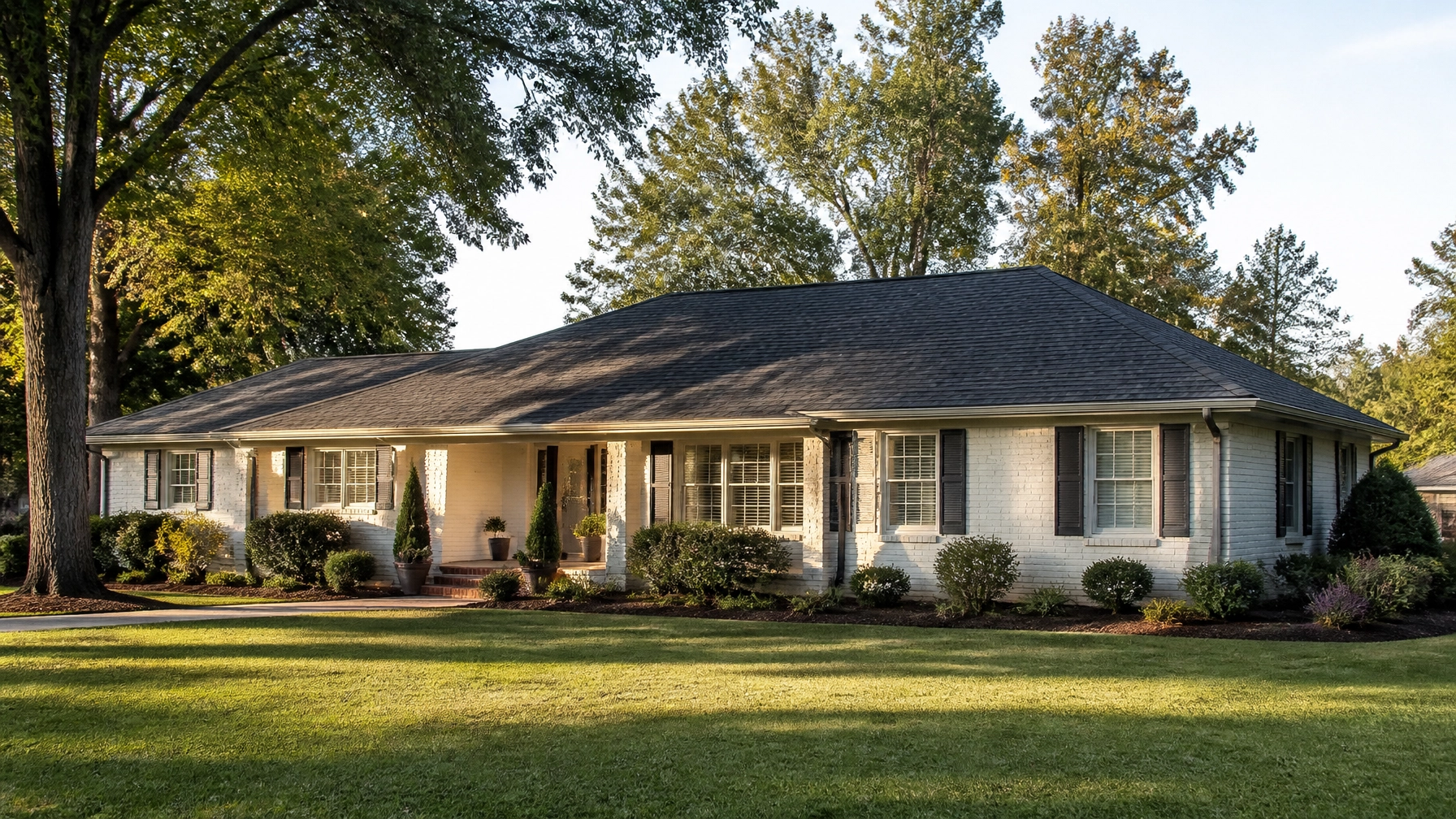
    New architectural shingle roof on a Colonial-style home in Mobile, Alabama

    Why Mobile’s Coastal Environment Affects Roofing Cost

    Salt air can accelerate corrosion on exposed metal components, including:

    • Fasteners
    • Drip edges
    • Flashing
    • Pipe boots
    • Vents
    • Gutters
    • Metal roof trim and panel edges

    The closer a home is to open saltwater, the more important material compatibility becomes. Stainless-steel or other corrosion-resistant fasteners may cost more than standard hardware but can reduce premature rust and failure.

    For coastal homes, ask your contractor:

    1. What metal is being used for flashing and trim?
    2. Are the fasteners rated for salt-air exposure?
    3. Is the roof panel finish designed for coastal conditions?
    4. Are all exposed metals compatible with one another?
    5. What maintenance is recommended after installation?

    Do not compare metal roof bids based on panel price alone. A lower bid may exclude the coastal-grade accessories that Mobile homes need.

    FORTIFIED Roof Upgrades: Add 10%–15%

    The IBHS FORTIFIED Roof standard is designed to help keep the roof attached and reduce water intrusion during high-wind storms. In Mobile, this can be an important upgrade for homeowners concerned about hurricanes and wind uplift.

    A FORTIFIED Roof may include:

    • Enhanced roof-deck attachment
    • Ring-shank nails and a tighter nailing pattern
    • A sealed roof deck
    • Stronger roof-edge detailing
    • Fully adhered starter strips
    • Tested roof vents
    • Improved secondary water protection

    Plan on adding approximately 10%–15% to a standard roof replacement budget for these upgrades. The exact premium depends on the existing roof deck, selected materials, contractor qualifications, evaluator requirements, and the level of documentation needed.

    Homeowners pursuing an official FORTIFIED designation should review the current requirements through the IBHS FORTIFIED program and confirm that the roofing company is qualified for FORTIFIED work.

    Alabama homeowners may also want to review the Strengthen Alabama Homes program for current grant availability, eligibility, and application requirements. Funding rules and availability can change, so verify details directly before including a grant in your project budget.

    Cost Factor: Roof Pitch and Complexity

    Roof size is only one part of the estimate. A steep or complicated roof requires more labor, safety equipment, cutting, flashing, and installation time.

    A steep slope can increase labor costs by approximately 15%–30%, and sometimes more when access is difficult. Cost increases are common when a roof includes:

    • Multiple ridges and valleys
    • Dormers
    • Skylights
    • Chimneys
    • Wall intersections
    • Several roof levels
    • Limited driveway or staging access
    • Two-story sections
    • Attached garages or additions

    A simple gable roof is usually less expensive than a roof with numerous angles and penetrations, even when both have the same measured area.

    Cost Factor: Tear-Off and Existing Roof Layers

    A complete tear-off allows the contractor to inspect the decking and identify hidden problems. It also adds labor, disposal, and landfill costs.

    Typical additional costs may include:

    • One-layer tear-off: Approximately $1–$3 per square foot
    • Second-layer removal: Additional labor and disposal charges
    • Damaged decking: Often priced per sheet or square foot
    • Rot around valleys or penetrations: Additional carpentry and flashing work
    • Heavy debris or difficult access: Higher disposal and labor costs

    Some roofs can legally receive a new layer over an existing layer, but that approach may limit inspection and affect warranties. In Mobile’s storm-prone climate, a full tear-off is often the better way to verify deck condition and install stronger roof-edge and water-protection details.

    New standing-seam metal roof on a modern coastal home near Mobile Bay

    How to Compare Roofing Estimates

    A professional estimate should identify the full roofing system, not just the visible shingles or panels. Compare each proposal for:

    • Measured roof area in square feet and squares
    • Material brand, profile, color, and wind rating
    • Number of tear-off layers
    • Underlayment and ice-and-water protection
    • Drip edge and flashing specifications
    • Ridge and soffit ventilation
    • Decking replacement allowance
    • Permit responsibility
    • Cleanup and disposal
    • Workmanship warranty
    • FORTIFIED installation and evaluator costs, if applicable

    Be cautious with quotes that are dramatically lower than the local range. The contractor may be excluding tear-off, decking repairs, flashing, ventilation, permits, or coastal-grade materials.

    You can also review our metal roofing versus asphalt shingles comparison before choosing between a lower upfront investment and a longer-life roofing system.

    Get an Instant Mobile Roof Estimate in 60 Seconds

    Traditional estimates require multiple phone calls, scheduling, and waiting for contractors to visit your property. Get My Roof Estimate Now gives you a faster starting point.

    Enter your Mobile address and our satellite imagery technology estimates:

    • Roof size
    • Roof pitch
    • Roof complexity
    • Material quantities
    • Regional pricing
    • Low, middle, and high replacement ranges

    Measurements are typically 90%–95% accurate and accurate to within inches for most properties. Results arrive in under 60 seconds, with no contractor visit required upfront.

    The estimate is free, requires no credit card, and does not obligate you to hire anyone. A final contractor inspection is still important for conditions satellites cannot see, such as damaged decking, hidden leaks, ventilation issues, and flashing deterioration.

    Recently completed roof replacement on a two-story Southern home in Mobile, Alabama

    Final Budget for a Typical 2,000-Square-Foot Mobile Roof

    For planning purposes, a typical Mobile homeowner should consider these 2026 ranges:

    • Budget asphalt shingles: $8,800–$13,500
    • Popular architectural shingles: $10,300–$17,500
    • Premium standing-seam metal: $12,750–$25,500+
    • FORTIFIED upgrade: Add approximately 10%–15%
    • Coastal corrosion protection: May move the project toward the upper end of the range
    • Steep slopes, multiple layers, or decking repairs: Additional cost

    The right budget starts with the actual roof: not a generic home-size average.

    Get your instant, free Mobile roof replacement cost estimate today. Enter your address and receive satellite-measured pricing in under 60 seconds, with no credit card and no contractor visit upfront.

    Sources and Further Reading

  • Daily ROI Blitz #211: How a New Roof Boosts Home Value in Lafayette, LA (2026 Data)

    Daily ROI Blitz #211: How a New Roof Boosts Home Value in Lafayette, LA (2026 Data)

    A new roof in Lafayette can do more than stop leaks. In the 2026 market, it can protect resale value, improve buyer confidence, and create an immediate equity bump.

    For Lafayette Parish, a realistic roof replacement budget is approximately $8,800–$14,300, depending on ZIP code, roof size, pitch, accessibility, material, and complexity. A new roof may recoup roughly 65%–79% of its cost at resale, with a regional benchmark near 68%. In practical terms, that can add about $8,300–$10,000 to a home’s resale value.

    A failing roof creates the opposite effect. It can reduce value by $10,000–$20,000, trigger inspection concerns, lead to repair credits, or cause a buyer to walk away entirely.

    If you are researching the 2026 roof replacement cost Lafayette LA homeowners should expect, here is how the numbers connect to home value.

    Lafayette’s 2026 Housing Market: Stable, Not Speculative

    Lafayette Parish remains a comparatively stable housing market in 2026.

    Current benchmarks place the parish median home sale price around $251,000–$257,000, depending on the reporting period and data source. Year-over-year appreciation is approximately 0.7%, indicating a steady market rather than a rapid price surge.

    Homes that are correctly priced and properly presented are typically selling in approximately 25–40 days. That makes first impressions especially important. Buyers have more choices than they did during the most competitive years, and visible deferred maintenance can quickly weaken an offer.

    For homeowners in areas such as:

    • River Ranch
    • The Oil Center
    • Historic Freetown
    • The Saint Streets district
    • Established mid-century neighborhoods throughout Lafayette

    …the roof is a major part of the home’s exterior condition. Buyers may overlook dated paint or older flooring. They are less willing to overlook stains, curling shingles, visible repairs, or a roof near the end of its service life.

    For broader local housing context, review the Lafayette Parish housing market data from Redfin.

    2026 Roof Replacement Cost in Lafayette, Louisiana

    The roof replacement cost Lafayette Louisiana homeowners pay depends on the roof itself: not simply the home’s interior square footage.

    A 2,000-square-foot house does not always have a 2,000-square-foot roof. Roof area increases with pitch, overhangs, attached garages, porches, dormers, valleys, and multiple roof sections.

    Typical Lafayette replacement range

    Project benchmark Approximate 2026 cost
    Lafayette-area replacement range by ZIP $8,800–$14,300
    Architectural shingles About $3–$6 per sq. ft.
    Standing-seam metal About $7–$16 per sq. ft.
    Typical national roof replacement range $9,000–$22,000

    These are planning ranges, not binding contractor bids. Tear-off, deck repairs, ventilation work, flashing, permits, and disposal can materially change the final price.

    You can review general cost factors with the Get My Roof Estimate Now roof cost calculator, but a property-specific measurement is more useful than a broad average.

    Architectural Shingle Roof Cost in Lafayette LA

    Architectural shingles remain the most practical value choice for many Lafayette homeowners.

    The architectural shingle roof cost Lafayette LA homeowners should plan for is roughly $3–$6 per square foot for many standard projects. Premium, impact-resistant, or highly complex installations can run higher.

    Architectural shingles are popular because they offer:

    • A dimensional appearance that improves curb appeal
    • More durability than basic 3-tab shingles
    • Broad color and style selection
    • Easier repairs than many premium materials
    • Strong buyer familiarity
    • Lower upfront cost than metal

    In Lafayette’s humid subtropical climate, consider algae-resistant shingles. Dark algae streaks are common in wet Southern environments, especially on shaded or north-facing slopes. Algae-resistant products can help maintain a cleaner appearance and reduce the cosmetic deterioration buyers notice during showings.

    For added storm protection, consider Class 4 impact-resistant shingles. They are designed to perform better against hail and impact damage and may qualify for insurance benefits, depending on your carrier and policy.

    See the asphalt shingles guide for a breakdown of shingle types, lifespans, and price ranges.

    New architectural shingle roof on a Lafayette-style Louisiana home

    Metal Roof Cost in Lafayette LA

    The metal roof cost Lafayette LA homeowners face is higher at installation, but the system can offer longer service life and strong weather performance.

    Standing-seam metal roofing generally costs about $7–$16 per square foot installed, with premium systems often landing toward the upper end. A 2,000-square-foot roof could therefore require a broad planning budget of approximately $14,000–$32,000, before unusual structural repairs or complex design details.

    Metal can be a strong fit for Lafayette because it offers:

    • Long service life, often 40–70 years with proper installation
    • Resistance to rot, algae, and insect damage
    • Strong wind performance when properly fastened
    • Reflective qualities that can reduce heat gain
    • A clean appearance for modern, high-end, or traditional homes

    For South Louisiana, ask about corrosion-resistant galvalume or another coating appropriate for humid conditions. Correctly specified fasteners, protected cut edges, compatible metals, durable underlayment, and carefully sealed penetrations are essential.

    Standing seam is not automatically the best choice for every house. It costs more, requires specialized installation, and may not produce a full dollar-for-dollar return if the material is out of character with the surrounding neighborhood.

    Compare the options in the metal roofing guide or review metal versus shingles.

    Standing-seam galvalume metal roof on a modern Lafayette home

    How a New Roof Creates ROI

    Roof ROI has two parts: the value a new roof adds and the losses it prevents.

    1. Direct resale value

    A Lafayette replacement may add approximately $8,300–$10,000 to resale value, depending on material, workmanship, roof age, appearance, and the condition of the rest of the home.

    That represents an estimated 65%–79% return on many local replacement projects. The widely referenced regional benchmark is close to 68%, although the result for one property can be higher or lower.

    The highest returns usually occur when the old roof is visibly failing or near the end of its expected life. Buyers are more likely to value a roof that removes an immediate expense than one that simply upgrades an already-new roof.

    2. Immediate equity improvement

    A new roof can also create an immediate 3%–5% equity bump by improving the property’s condition and reducing perceived risk.

    This does not mean an appraiser will automatically add exactly 3%–5% to the valuation. Rather, the improvement can support:

    • Better buyer perception
    • Fewer inspection objections
    • Stronger appraisal condition ratings
    • Reduced negotiation over repairs
    • Faster showings and cleaner offers
    • Better protection of the home’s existing market value

    Why a Failing Roof Costs More Than the Repair

    A worn roof can damage value in several ways.

    Buyers discount the price

    If buyers expect a $12,000 replacement shortly after closing, they may reduce their offer by more than $12,000 to account for uncertainty, inconvenience, and potential hidden damage.

    Inspections expose defects

    Leaks, soft decking, deteriorated flashing, poor ventilation, and storm damage often appear during inspection. Once documented, these issues become negotiation points.

    Lenders and insurers may become involved

    An older or visibly damaged roof can create insurance complications. Some buyers may need repairs completed before closing, while others may ask for a substantial credit.

    The sale can fail

    If the roof has active leaks or serious structural concerns, a buyer may cancel the transaction. In a market where homes can sell within 25–40 days, losing a qualified buyer can be expensive.

    New roof on a character-rich historic Lafayette, Louisiana cottage

    Lafayette Roof Features That Protect Value

    Lafayette roofs face intense summer heat, high humidity, thunderstorms, hail, wind-driven rain, hurricane-season exposure from June 1 through November 30, and occasional tornado risk.

    When replacing a roof, prioritize the complete roofing system: not just the visible top layer.

    Recommended features include:

    • Algae-resistant shingles for humid conditions
    • Class 4 impact-resistant shingles where hail exposure is a concern
    • Corrosion-resistant galvalume metal for premium metal installations
    • Proper flashing at chimneys, walls, valleys, skylights, and roof penetrations
    • High-quality underlayment for added water protection
    • Balanced attic ventilation with adequate intake and exhaust
    • Correct fastening patterns for local wind conditions
    • Storm-rated installation practices where available

    Ice dam protection is not a major Lafayette concern. Moisture control, wind uplift, heat management, and storm-driven rain matter more.

    Should You Replace Before Selling?

    Replacing before listing can make sense when the roof is:

    • More than 15–20 years old
    • Showing widespread algae streaking or granule loss
    • Missing, lifted, cracked, or curling shingles
    • Leaking around flashing or penetrations
    • Damaged by hail or wind
    • Likely to be flagged by an inspection

    If the roof is still performing well, a replacement may not be necessary. A professional inspection and property-specific estimate can help you compare the cost of replacement against likely buyer concessions.

    Do not assume a premium metal roof will produce the best resale return on every Lafayette property. The strongest ROI usually comes from a roof that is durable, attractive, code-compliant, and appropriate for the home and neighborhood.

    Get an Instant Lafayette Roof Estimate

    The fastest way to understand your potential roof ROI is to start with an accurate replacement cost.

    Get My Roof Estimate Now uses satellite imagery to measure your roof’s size, pitch, and complexity. In about 60 seconds, you can receive a free estimate with no credit card required.

    The estimate can help you compare:

    • Architectural shingles
    • Metal roofing
    • Different roof sizes and configurations
    • Low, middle, and high price ranges
    • Material costs and local pricing factors
    • Replacement planning before listing or storm season

    A new roof is not a guaranteed profit. It is a risk-management decision that can protect your home’s value, strengthen buyer confidence, and reduce costly surprises.

    For Lafayette homeowners, the right roof replacement can be one of the clearest ways to improve marketability while preparing for the weather conditions unique to Acadiana.

  • Daily FAQ Blitz – Slot 3: AEO FAQ Quick Answers for New Orleans, LA Homeowners (2026)

    Daily FAQ Blitz – Slot 3: AEO FAQ Quick Answers for New Orleans, LA Homeowners (2026)

    If you own a home in New Orleans, LA, roof replacement planning starts with one question: How much will it cost?

    In 2026, a typical New Orleans roof replacement generally falls between $9,000 and $25,000. A standard architectural shingle roof on a roughly 2,000-square-foot home often lands near $15,000, while a basic asphalt project may cost less and a premium metal or hurricane-focused system may cost more.

    Your actual price depends on your roof’s measured size, pitch, shape, material, accessibility, tear-off requirements, ventilation, flashing, and storm-resistance upgrades.

    Below are quick, direct answers to the roofing questions New Orleans homeowners ask most.

    New Orleans Roofing Costs at a Glance

    For initial 2026 budgeting, use these planning ranges:

    • Basic asphalt shingles (Budget): About $8,000–$12,000
    • Architectural shingles (Popular): About $9,000–$16,000
    • Impact-rated or premium shingles (Storm-ready): Often $14,000–$22,000+
    • Standing-seam metal roofing (Premium): About $18,000–$30,000+
    • Complex, historic, or heavily damaged roofs: Potentially $25,000 or more

    These are planning ranges, not final contractor bids. A roof with multiple slopes, valleys, dormers, skylights, or damaged decking will usually cost more than a simple roof of the same home size.

    Roofing contractors commonly measure roofs in squares. One roofing square equals 100 square feet of roof area.

    New Orleans raised cottage with a new standing-seam metal roof

    FAQ 1: How much does a new roof cost in New Orleans, LA, in 2026?

    A full roof replacement in New Orleans, LA, typically costs $9,000–$25,000. Many homeowners pay around $15,000 for architectural shingles on an average-size home.

    The most important pricing factors are:

    • Total roof area
    • Roof pitch and complexity
    • Material selection
    • Number of existing roof layers
    • Decking or structural damage
    • Flashing, ventilation, and drainage work
    • Hurricane and wind-resistance upgrades
    • Permit and disposal costs

    For a local starting point, see the New Orleans roof estimate page.

    FAQ 2: What is the cheapest roofing material for a New Orleans home?

    Three-tab asphalt shingles are usually the Budget option. They have the lowest upfront cost, but they generally offer a shorter service life and fewer style options than architectural shingles.

    Architectural shingles are often the better value for New Orleans homeowners because they provide:

    • Improved appearance
    • Better dimensional construction
    • More color choices
    • Longer expected service life
    • Stronger performance than entry-level three-tab products

    However, the lowest price is not always the lowest long-term cost. New Orleans roofs face intense sun, humidity, heavy rain, and tropical-storm conditions. Ask contractors about wind ratings, underlayment, flashing, and installation standards, not just shingle price.

    FAQ 3: Are metal roofs a good choice for New Orleans weather?

    Yes. Metal roofing can be a strong Premium choice for New Orleans, LA, homes.

    A properly installed metal roof can last roughly 40–70 years, compared with approximately 15–30 years for many asphalt shingle systems. Metal roofing can also reflect more solar heat and require less routine maintenance.

    The tradeoff is a higher initial price. For a roof near 2,000 square feet, standing-seam metal commonly falls in the $18,000–$30,000+ range, depending on the metal type, finish, roof design, and storm-resistance details.

    Metal is worth considering if you:

    • Plan to stay in your New Orleans home for 10 or more years
    • Want a long service life
    • Prefer lower maintenance
    • Are concerned about heat gain
    • Want a modern or distinctive appearance

    Compare the two main options with Metal Roofing vs. Asphalt Shingles.

    FAQ 4: What roofing material is best for New Orleans hurricanes and storms?

    There is no single best material for every New Orleans home. The right choice depends on the complete roof system, including the deck attachment, underlayment, flashing, edge protection, fasteners, and installation quality.

    For storm performance, homeowners commonly consider:

    • Impact-rated architectural shingles (Storm-ready): A practical balance of cost and protection
    • Standing-seam metal (Premium): Long-lasting and highly durable when properly specified and installed
    • FORTIFIED roof upgrades (Enhanced protection): May include stronger roof-to-wall connections, improved fastening, and secondary water-resistance measures

    Ask your contractor whether the proposed system meets current Louisiana and New Orleans requirements. You can also review the Louisiana Fortify Homes Program for information about eligible wind-mitigation upgrades and program requirements.

    New Orleans ranch home with a cool-toned architectural shingle roof

    FAQ 5: Do I need a permit to replace my roof in New Orleans?

    A full roof replacement generally requires a permit in New Orleans, LA.

    The city’s residential re-roofing guidance identifies permit requirements for replacing 50% or more of the roof covering. In practice, a complete roof replacement should be planned as a permitted project.

    Start with the City of New Orleans residential re-roofing permit information. Your contractor should explain:

    • Which permit applies
    • Who will submit the application
    • What documentation is required
    • How inspections or photo documentation will be handled
    • Whether historic-district review is necessary

    Homes in areas overseen by the Historic District Landmarks Commission or Vieux Carré Commission may require additional approvals before roofing work begins.

    FAQ 6: How long does a roof replacement take in New Orleans?

    Most standard roof replacements take approximately one to three days once work begins. Larger homes, complex rooflines, multiple layers, decking repairs, historic-district requirements, or bad weather can extend the schedule.

    New Orleans weather can affect timing because roofing crews may need to pause for:

    • Heavy rain
    • Lightning
    • High winds
    • Tropical storms
    • Wet roof decking
    • Extreme heat

    A reliable contractor should provide a written schedule and explain how weather delays will be handled.

    FAQ 7: How can I tell whether my New Orleans roof needs repair or replacement?

    A repair may be appropriate when the roof is relatively young and the damage is isolated. Replacement is more likely when problems are widespread or the roof is near the end of its expected life.

    Look for:

    • Missing, cracked, or curling shingles
    • Granules collecting in gutters
    • Repeated leaks
    • Sagging roof sections
    • Water stains on ceilings or walls
    • Damaged flashing around vents and chimneys
    • Daylight visible through the attic deck
    • Mold or moisture problems in the attic
    • A roof that is 20 years old or older

    Do not climb onto the roof to inspect storm damage yourself. Take photos from the ground and arrange a professional inspection.

    A practical rule of thumb is to compare repair costs with replacement costs. If repairs are extensive, recurring, or approach a significant portion of a new roof’s cost, replacement may provide better long-term value.

    FAQ 8: Can I get a roof estimate in New Orleans without a contractor visit?

    Yes. Get My Roof Estimate Now provides a free, satellite-powered roof replacement estimate in about 60 seconds.

    Enter your New Orleans address, and the system uses satellite imagery to estimate your roof’s size, pitch, and complexity. It then provides a low-to-high pricing range based on materials and regional costs.

    The estimate is:

    • Free
    • Available without a credit card
    • Delivered in about 60 seconds
    • Based on your property’s roof measurements
    • Useful for early budgeting and planning

    Satellite measurements are designed to be approximately 90–95% accurate, but they do not replace an in-person inspection when a contractor needs to verify decking, flashing, ventilation, hidden leaks, or structural conditions.

    Use the free roof estimate tool before scheduling multiple contractor visits.

    Historic-inspired New Orleans home with a new weather-resistant roof

    FAQ 9: What should I ask a New Orleans roofing contractor?

    Before signing a contract, ask:

    • Are you licensed to perform roofing work in Louisiana?
    • Can you provide current liability and workers’ compensation insurance documents?
    • Will you obtain the required New Orleans permit?
    • Is the price for a full tear-off or an overlay?
    • What type of underlayment and flashing are included?
    • What wind rating applies to the roofing materials?
    • How will hidden decking damage be priced?
    • What material and workmanship warranties are included?
    • Will you provide a detailed, written scope of work?
    • Do you have experience with New Orleans historic homes or local permitting?

    Compare at least two or three detailed proposals. The lowest bid may exclude ventilation, flashing, disposal, permit work, or necessary deck repairs.

    FAQ 10: Is a satellite estimate the same as a contractor quote?

    No. A satellite estimate is a fast, useful planning range. A contractor quote is based on a closer review of the roof and project conditions.

    A satellite estimate can help you:

    • Set a realistic 2026 budget
    • Compare asphalt and metal options
    • Decide whether to repair or replace
    • Screen contractor proposals
    • Avoid wasting time on visits before knowing the likely price

    Once you are ready to move forward, connect with a verified, licensed, and insured local contractor for a complete inspection and written proposal.

    Get Your New Orleans Roof Estimate in 60 Seconds

    Whether your New Orleans roof has storm damage, is more than 15 years old, or you are preparing to sell your home, start with a clear price range.

    Enter your address into the free Get My Roof Estimate Now tool and receive a satellite-measured estimate in about 60 seconds: no appointment, no credit card, and no obligation.

    Have another New Orleans roofing question? Ask for more information or contact the team to learn more about roof materials, storm upgrades, permits, and local replacement costs.

  • 2026 Roof Replacement Cost in Charlotte, NC: Complete Price Guide for Queen City Homeowners

    2026 Roof Replacement Cost in Charlotte, NC: Complete Price Guide for Queen City Homeowners

    For most Charlotte homeowners, the 2026 roof replacement cost falls between $9,000 and $20,000 for architectural shingles. Standing seam metal roofing typically costs about $19,000 to $60,000 or more.

    These are installed project ranges for local homes. Your final price depends on the roof’s measured area, pitch, design complexity, material selection, tear-off requirements, and current Charlotte labor rates.

    2026 Charlotte Roof Replacement Costs at a Glance

    Roofing option Typical installed cost Approximate cost per square foot Best for
    Architectural shingles (Popular) $9,000–$20,000 $4.50–$10 Most homeowners
    Standing seam metal (Premium) $19,000–$60,000+ $8–$16 Long-term ownership
    Synthetic roofing (Premium) Varies by product Often above standard shingles Slate or shake appearance
    Reflective roof coating (Budget/maintenance) Varies by roof condition Project-specific Extending certain roof systems

    A roofing contractor may quote by the square, which equals 100 square feet of roof area. A 2,000-square-foot roof contains approximately 20 roofing squares, although roof pitch and waste allowances can increase the measured area.

    Architectural shingles being installed on a residential roof

    What Drives Roof Replacement Cost in Charlotte?

    Roof size and pitch

    A larger roof requires more materials, labor, underlayment, and disposal. Steep roofs also cost more because crews need additional fall protection and work more slowly.

    Roof complexity

    Multiple ridges, valleys, dormers, skylights, chimneys, and separate roof sections increase installation time. A simple ranch roof generally costs less than a complex Colonial or multi-level home.

    Tear-off and decking repairs

    Removing multiple layers of old shingles adds labor and disposal costs. If moisture has damaged the roof deck, those sections must be replaced before new roofing is installed.

    Hail and storm damage

    Charlotte’s spring storms, high winds, and occasional hail can shorten roof life. If an insurer approves storm damage, coverage often applies to a comparable replacement minus your deductible. Upgrades, such as metal or Class 4 impact-resistant shingles, may require additional out-of-pocket spending.

    Local labor and access

    Charlotte’s growing housing market keeps demand for qualified roofing crews high. Tight lots, limited driveway access, landscaping, and multi-story homes can also affect labor pricing.

    Choosing the Right Roofing Material

    Architectural shingles (Popular)

    Architectural shingles offer strong curb appeal, broad color selection, and a lower upfront cost. They are a practical choice for most Charlotte single-family homes and typically last 25–30 years with proper installation and maintenance.

    Standing seam metal (Premium)

    Metal roofing costs more initially but can last 40–70 years. It offers excellent durability, low maintenance, and potential energy benefits. Compare the long-term value of both options with this metal roofing versus asphalt shingles guide.

    Modern Charlotte-style home with a standing seam metal roof

    Synthetic roofing (Premium)

    Synthetic slate and shake products can deliver a high-end appearance with less weight than natural materials. Pricing varies significantly by product, installation method, and roof design.

    Roof coatings (Maintenance option)

    Reflective coatings may help extend the life of certain low-slope roofing systems. They are not a substitute for full replacement when shingles, decking, or structural components have failed.

    Charlotte Contractors to Research

    Homeowners can use companies such as Roof Medic, Triumph Roofing Charlotte, HS Roofing, Southern Star Roofing, and Charlotte Ace Roofing as starting points for comparison.

    Before signing, verify current licensing where applicable, general liability and workers’ compensation insurance, written warranty terms, references, and detailed line-item pricing. These companies are examples to research, not a substitute for independent due diligence.

    Ways to Reduce Your Roofing Cost

    • Compare at least three written estimates.
    • Ask whether the quote includes tear-off, disposal, flashing, ventilation, and decking repairs.
    • Schedule before peak storm-season demand when possible.
    • Ask your insurer about Class 4 impact-resistant shingle discounts.
    • Avoid choosing solely on the lowest bid; incomplete scopes often lead to change orders.

    Satellite imagery measuring a residential roof for an estimate

    Get a Charlotte Roof Estimate in 60 Seconds

    You do not need to wait for several contractor visits to understand your likely budget. Enter your address into Get My Roof Estimate Now, and satellite imagery measures your roof’s size, pitch, and complexity.

    In about 60 seconds, you receive a free, transparent low-to-high estimate for materials such as architectural shingles and metal roofing. There is no credit card requirement, no upfront contractor visit, and no hidden fee.

    Start with an instant Charlotte roof replacement estimate before requesting final contractor bids.

  • Daily Tech Blitz – Slot 7: Raleigh’s Satellite Tech Edge Is Bringing Orbital Precision to North Carolina Roofs

    Daily Tech Blitz – Slot 7: Raleigh’s Satellite Tech Edge Is Bringing Orbital Precision to North Carolina Roofs

    Raleigh is becoming a practical proving ground for satellite technology.

    The impact goes beyond rockets and research labs. Satellite systems now support business communications, emergency response, education, public services, rural broadband, and even roof replacement planning.

    For North Carolina homeowners, that last application is especially useful. Satellite-powered measurement technology can analyze a home’s roof and provide a replacement cost estimate in under 60 seconds: without requiring an initial contractor visit.

    The result is faster information, better budgeting, and a more efficient way to plan a major home improvement project.

    Raleigh’s satellite advantage starts with a strong technology base

    The Raleigh-Durham-Chapel Hill region already has the workforce and infrastructure needed to apply satellite data in practical ways.

    According to the Research Triangle Regional Partnership, the Triangle is home to:

    • Approximately 3,916 technology companies
    • Nearly 59,900 technology employees
    • About $14.6 billion in technology-related gross regional product

    The region’s technology sector includes telecommunications, analytics, hardware, photonics, Internet of Things systems, and advanced manufacturing. These fields overlap directly with satellite operations.

    Raleigh is also home to companies working with satellite communications and remote connectivity. Microspace Communications operates a major satellite-based network and manages its services from Raleigh. Its applications include business communications, remote connectivity, critical messaging, broadcasting, and Internet of Things monitoring.

    That matters because satellite technology is no longer limited to specialized government or aerospace projects. It is becoming part of the everyday technology stack used by companies, schools, public agencies, and homeowners.

    North Carolina’s connectivity gap is driving satellite adoption

    North Carolina has made significant progress expanding broadband access. However, the state still faces a major geographic challenge.

    The state has a large rural population, mountainous terrain in the west, and difficult coastal areas where traditional broadband infrastructure can be expensive or slow to build.

    According to the North Carolina Department of Information Technology’s broadband statement:

    • Roughly 344,000 homes and businesses are unserved or underserved
    • Those locations represent about 8% of the state’s more than 4.3 million serviceable locations
    • Approximately 93,138 locations have been identified for additional BEAD support
    • About 30% of those BEAD locations: roughly 28,000: are planned for Low Earth Orbit satellite service

    Low Earth Orbit, or LEO, satellites operate much closer to Earth than traditional geostationary satellites. That shorter distance can support lower latency and faster deployment, particularly in areas where fiber, cable, or cellular infrastructure is difficult to install.

    North Carolina has also contracted with SpaceX to supply Starlink kits for emergency resiliency and rural broadband deserts. These systems can help maintain communications when storms, flooding, or infrastructure failures disrupt terrestrial networks.

    The state’s use of satellite technology reflects a practical approach:

    • Fiber remains the preferred high-capacity solution where construction is feasible
    • Fixed wireless can serve some lower-density areas
    • LEO satellite can reach difficult locations quickly
    • Portable satellite kits can provide emergency backup when local infrastructure fails

    North Carolina’s GIS and broadband mapping work shows why detailed location data is so important. The same principle applies to roof measurement: better geographic data leads to better decisions.

    How satellite technology is shaping Raleigh businesses

    Raleigh businesses use satellite and geospatial technology in several ways.

    1. Business continuity (Resiliency)

    Companies increasingly need connectivity that continues working when local infrastructure goes down.

    Satellite links can serve as a primary connection for remote facilities or a backup connection for offices, warehouses, retailers, healthcare providers, and public agencies.

    During a storm or power outage, an emergency satellite terminal can help organizations maintain:

    • Voice and video communications
    • Cloud software access
    • Payment and point-of-sale systems
    • Security monitoring
    • Logistics and fleet coordination
    • Employee and customer communications

    For technology companies in the Research Triangle, reliable connectivity is not a luxury. It is part of operational planning.

    2. Data and analytics (Precision)

    Satellite imagery supports mapping, agriculture, infrastructure planning, environmental monitoring, insurance, and construction.

    Raleigh’s concentration of software developers, engineers, analysts, and hardware companies creates a natural environment for turning satellite imagery into usable information.

    That includes identifying structures, measuring land, monitoring changes, and analyzing physical assets without sending a person to every location.

    3. Remote operations (Efficiency)

    Satellite connectivity can connect rural equipment, job sites, utility assets, and mobile teams.

    In these settings, the value is straightforward: less travel, faster reporting, and better visibility into remote locations.

    Education is building the next satellite workforce

    Satellite technology is also influencing education across the Triangle.

    Raleigh’s higher-education ecosystem supports computer science, engineering, geospatial analysis, communications, robotics, and data science. Students can work with real-world applications such as:

    • Mapping and geographic information systems
    • Artificial intelligence and image analysis
    • Wireless and satellite communications
    • Remote sensing
    • Drone and autonomous systems
    • Climate and environmental monitoring

    This creates a useful connection between classroom learning and local employment.

    Students do not have to view satellite technology as a distant aerospace concept. They can apply the same skills to transportation, construction, emergency management, agriculture, telecommunications, and residential services.

    The workforce pipeline is important because satellite systems are only as useful as the people who can interpret the data and build practical tools around it.

    Aerial view of a Raleigh ranch home with a newly installed architectural shingle roof

    Public services are using satellites for emergency resilience

    Natural disasters expose the weaknesses of ground-based communications.

    Flooding, fallen trees, damaged towers, power outages, and broken fiber routes can disconnect communities when communication is most important.

    North Carolina’s deployment of Starlink kits is part of a broader emergency-resilience strategy. The Starlink emergency response program describes portable satellite systems that can be deployed quickly to support first responders, emergency operations, shelters, and affected residents.

    For Raleigh and Wake County, satellite connectivity can support:

    • Emergency operations centers
    • Public safety coordination
    • Shelter communications
    • Damage assessment
    • Field crews and utility teams
    • Reunification and public information services

    Satellite technology does not replace local infrastructure. It adds another layer of resilience when traditional systems are unavailable.

    That layered approach is becoming standard across public services, businesses, and critical facilities.

    The same orbital data can measure a Raleigh roof

    Satellite imagery is now helping homeowners make faster roofing decisions.

    Get My Roof Estimate Now uses satellite-powered measurements to analyze a property’s:

    • Roof size
    • Roof planes
    • Pitch
    • Complexity
    • Regional pricing factors

    The system measures the roof in squares, with one square equal to 100 square feet. It then calculates low, middle, and high replacement ranges for common materials.

    For most visible residential roofs, the service provides measurements typically accurate within the company’s 90–95% range. That makes it useful for early budgeting and contractor comparisons.

    The process takes about 60 seconds:

    1. Enter your Raleigh-area address
    2. Confirm the property
    3. Let the system analyze the roof
    4. Review replacement prices for multiple materials

    You do not need a credit card, and there is no upfront contractor visit.

    What does a Raleigh roof replacement cost in 2026?

    Use these benchmarks as planning ranges, not final contract prices:

    • Architectural shingles (Popular): Approximately $9,000–$13,000 for a typical 2,000-square-foot roof
    • Metal roofing (Premium): Approximately $20,000–$28,000
    • Roof coatings (Budget, when appropriate): Approximately $6,000–$7,500
    • Most full replacements: Roughly $8,000–$25,000, depending on size, pitch, material, access, tear-off, and roof complexity

    Raleigh pricing can vary based on labor demand, material availability, home design, and storm-related scheduling pressure.

    A steep roof, multiple dormers, valleys, skylights, or a two-story layout can increase labor costs. A satellite estimate accounts for visible geometry, but it cannot identify hidden decking damage, rot, flashing problems, ventilation issues, or the number of existing shingle layers.

    That is why an instant estimate is best used as a strong planning baseline. A contractor should verify concealed conditions before finalizing a contract or ordering materials.

    Modern Raleigh home with a standing-seam metal roof and clean geometric roofline

    Shingles or metal? Let the data guide the decision

    The right material depends on your budget, timeline, and long-term plans.

    Architectural shingles (Popular)

    • Lower upfront cost
    • Broad range of colors and styles
    • Easier to repair
    • Typical lifespan of roughly 15–30 years

    Metal roofing (Premium)

    • Higher initial investment
    • Typical lifespan of roughly 40–70 years
    • Strong durability and low maintenance
    • Potential energy and insurance advantages

    Use the metal roofing versus asphalt shingles comparison to review the tradeoffs before requesting pricing.

    Raleigh homeowners can plan smarter with satellite precision

    Raleigh’s satellite technology advantage is not limited to space companies.

    It appears in emergency communications, business continuity, education, public-service planning, broadband expansion, and residential construction.

    The same city that is building advanced communication systems is also making home improvement estimates faster and more transparent.

    If your roof is 15–30 years old, has storm damage, or may need replacement before selling your home, start with accurate information. Enter your address into Get My Roof Estimate Now and receive a free, satellite-measured replacement estimate in under 60 seconds.

    Two-story Raleigh home with premium dark architectural shingles after roof replacement

  • Daily Tech Blitz – Slot 6: Louisville’s Satellite Tech Edge Is Bringing Orbital Precision to Derby City Roofs

    Daily Tech Blitz – Slot 6: Louisville’s Satellite Tech Edge Is Bringing Orbital Precision to Derby City Roofs

    Louisville homeowners replacing a roof in 2026 are generally budgeting $8,500–$18,000 for a standard asphalt shingle replacement. Larger, steeper, or more complex roofs can reach $25,000 or more, especially when homeowners choose premium materials.

    The first step is no longer waiting days for three contractors to visit your property.

    Satellite imagery, geospatial data, and automated roof analysis now allow homeowners to receive an address-specific replacement estimate in about 60 seconds: without a ladder, appointment, credit card, or sales presentation.

    From the Highlands to St. Matthews and Prospect, this technology is changing how Louisville homeowners plan one of their largest home improvement investments.

    Louisville Roof Replacement Costs in 2026

    A typical Louisville single-family home with a 1,700- to 2,000-square-foot roof often falls within these planning ranges:

    • Architectural shingles (Popular): Approximately $9,000–$14,000
    • Premium or designer shingles (Premium): Approximately $15,000–$24,000
    • Standing-seam metal (Premium): Approximately $20,000–$36,000
    • Synthetic roofing (Premium): Approximately $16,000–$32,000
    • Roof coatings (Budget, where appropriate): Approximately $6,000–$7,500

    These are planning ranges, not final contractor bids. The final price depends on the roof’s measured surface area, pitch, number of roof sections, tear-off requirements, flashing, ventilation, decking condition, labor, and local material pricing.

    A useful benchmark is installed cost per square foot:

    Material Louisville Planning Range Category
    3-tab asphalt shingles $3.50–$4.50 per sq. ft. Budget
    Architectural shingles $4.50–$7.00 per sq. ft. Popular
    Premium shingles $7.50–$12.00 per sq. ft. Premium
    Standing-seam metal $10.00–$18.00 per sq. ft. Premium

    A roofing “square” equals 100 square feet of roof surface. That distinction matters. A home with 2,000 square feet of living space may have a roof larger than 2,000 square feet once pitch, overhangs, attached garages, dormers, and multiple sections are included.

    Why Satellite Imagery Improves the Starting Estimate

    Traditional roof estimating often begins with a contractor visit. That process can be useful for a final inspection, but it creates delays during the budgeting stage.

    The contractor must:

    1. Receive the homeowner’s call or online request.
    2. Schedule a convenient appointment.
    3. Travel to the property.
    4. Measure the roof manually or with field equipment.
    5. Prepare and deliver the estimate.

    During Louisville’s busy spring and fall roofing seasons, that process can take several days or longer.

    Satellite-powered estimating removes the scheduling bottleneck. When a homeowner enters an address, the platform uses high-resolution aerial imagery and geospatial analysis to identify the property and map its roof structure.

    The system can calculate:

    • Total roof surface area
    • Roof perimeter
    • Roof sections and facets
    • Ridge, hip, valley, rake, and eave lines
    • Estimated pitch
    • Roof complexity
    • Approximate number of roofing squares

    With 90–95% accuracy and measurements accurate within inches for many homes, the result gives homeowners a reliable starting point before arranging an on-site inspection.

    Satellite roof measurement showing roof area, pitch, facets, ridges, hips, valleys, and perimeter

    Geospatial Data Turns a Roof Into a Pricing Model

    Satellite imagery provides the visual foundation. Geospatial data turns that image into usable measurements.

    The technology analyzes the property’s location, roof geometry, and regional pricing conditions. It then applies cost assumptions for materials and labor in the Louisville market.

    This matters because roof replacement costs are not determined by square footage alone.

    For example, two homes with similar footprints may have very different project costs:

    • A simple gable roof has fewer transitions and is generally easier to install.
    • A hip roof may require more precise cuts and additional materials.
    • Dormers, skylights, chimneys, and intersecting rooflines add flashing and labor.
    • A steep roof requires additional safety equipment and may increase installation costs.
    • Multiple existing shingle layers increase tear-off and disposal costs.
    • Older homes may require decking repairs after the roof is opened.

    In neighborhoods such as the Highlands, older and architecturally distinctive homes may have more complicated rooflines, dormers, additions, or steep sections. In St. Matthews and Prospect, larger suburban homes may have expansive roofs, attached garages, and multiple roof planes.

    Satellite analysis identifies much of that complexity before a contractor ever arrives.

    The Louisville Homeowner’s 60-Second Workflow

    The process is designed for planning, not pressure.

    1. Enter the Property Address

    Start with your Louisville address. The system locates the property and matches it with available aerial imagery.

    You do not need to create a complicated account, provide a credit card, or schedule a contractor visit.

    2. Review the Roof Measurements

    The platform analyzes the roof’s size, pitch, and structure. It measures the roof in squares and identifies the geometry that influences installation time and material quantities.

    3. Compare Material Options

    You receive pricing ranges for multiple roofing systems, such as:

    • Architectural shingles
    • Premium shingles
    • Metal roofing
    • Synthetic roofing
    • Coatings, where suitable

    The estimate separates low, middle, and high ranges, allowing you to compare a basic replacement with a longer-lasting premium system.

    4. Decide Whether to Move Forward

    The estimate is free and there is no obligation to hire a contractor. If you want an in-person inspection or detailed proposal, you can connect with a verified, licensed, and insured local roofing professional afterward.

    Start with a free Louisville roof estimate.

    Architectural Shingles vs. Metal Roofing

    Material choice is usually the largest controllable factor in the project price.

    Architectural Shingles (Popular)

    Architectural shingles remain the most common choice for Louisville homeowners because they balance price, appearance, availability, and service life.

    They typically offer:

    • A dimensional appearance
    • Broad color and style selection
    • Installed pricing around $4.50–$7.00 per square foot
    • An expected service life of approximately 25–30 years
    • Straightforward repairs and replacement

    They are a practical fit for homeowners who want dependable performance without the higher upfront investment of metal.

    Standing-Seam Metal (Premium)

    Metal roofing requires a larger initial budget but may provide a longer service life and lower maintenance requirements.

    Typical characteristics include:

    • Installed pricing around $10.00–$18.00 per square foot
    • A service life of approximately 40–70 years
    • Strong wind and fire performance
    • Low routine maintenance
    • Potential energy benefits from reflective finishes

    The right choice depends on how long you plan to stay in the home, your budget, appearance preferences, and long-term maintenance goals. Use the metal roofing versus shingles comparison to review the tradeoffs.

    Modern Louisville-style home with a matte black standing-seam metal roof

    What Satellite Estimating Cannot See

    Satellite technology is highly useful, but it does not replace a final physical inspection.

    Aerial imagery generally cannot confirm:

    • Hidden decking rot
    • Soft spots beneath the existing shingles
    • Attic ventilation problems
    • Water damage under flashing
    • The precise number of existing roofing layers
    • Small hail impacts or granule loss
    • Interior leaks and insulation damage

    That is why the best workflow uses technology for the initial estimate and a qualified contractor for final verification.

    The satellite estimate gives you a strong budget benchmark. The contractor’s inspection confirms the roof’s condition and identifies any work required beyond the visible roof geometry.

    How to Use an Instant Estimate Effectively

    An estimate becomes more valuable when you use it as a comparison tool.

    Before hiring a roofer, ask each contractor to provide:

    • A written, itemized proposal
    • The exact shingle or metal system being installed
    • Tear-off and disposal details
    • Underlayment and ice-and-water protection specifications
    • Flashing and ventilation work
    • Decking replacement pricing
    • Permit responsibility
    • Workmanship and manufacturer warranty information
    • Proof of licensing and insurance

    Compare the contractor’s measurements with the satellite estimate. A difference does not automatically indicate a problem; a contractor may identify hidden conditions or include additional areas. However, a large unexplained difference deserves a clear explanation.

    Also be cautious of estimates that are dramatically lower than the local range. A low price may exclude tear-off, ventilation, disposal, permits, or necessary repairs.

    Close-up of architectural shingles around a dormer, valley, and flashing detail

    Why Timing Matters in Louisville

    Louisville’s spring storms, heavy rain, summer heat, and freeze-thaw cycles can accelerate roof wear. A roof that is already 15–20 years old deserves a proactive evaluation, even if the ceiling is not leaking.

    Look for:

    • Curling, cracked, or missing shingles
    • Granules collecting in gutters
    • Dark streaks or algae growth
    • Damaged flashing around chimneys and vents
    • Sagging roof sections
    • Water stains on ceilings or attic materials
    • Daylight visible through roof decking
    • Repeated repairs in the same area

    Getting a satellite estimate before an emergency gives you time to compare materials, plan financing, and schedule work around contractor availability.

    Orbital Precision Without the Traditional Hassle

    For Louisville homeowners, satellite-powered estimating changes the first conversation about roof replacement.

    Instead of asking, “When can someone come measure my roof?” you can begin with better questions:

    • How large is my roof?
    • How many roofing squares does it contain?
    • What would architectural shingles cost?
    • How much more would metal roofing require?
    • Does the project fit my budget this year?
    • Should I repair, replace, or continue monitoring?

    Get My Roof Estimate Now provides those answers in under a minute using satellite imagery and automated measurements. The service is free, requires no credit card, and shows transparent low-middle-high pricing with no hidden fees.

    Whether your home is in the Highlands, St. Matthews, Prospect, Old Louisville, or elsewhere in Jefferson County, start with the numbers before you schedule the sales visits.

    Get your free satellite-measured roof estimate.

    Frequently Asked Questions

    How accurate is the Louisville satellite roof estimate?

    The measurement technology is typically 90–95% accurate, with dimensions accurate within inches for many properties. A final contractor inspection may adjust the estimate for hidden damage, decking, ventilation, or other site conditions.

    Is the estimate really free?

    Yes. There is no cost to receive the instant estimate, no credit card requirement, and no obligation to hire a contractor.

    How long does the process take?

    Most homeowners receive an initial price range in approximately 60 seconds after entering their address.

    Can I compare shingles and metal roofing?

    Yes. The estimate can show pricing for different roofing materials, including architectural shingles, metal, synthetic systems, and other available options.

    Do I still need a contractor visit?

    A contractor visit is recommended before signing a final replacement contract. The satellite estimate is designed to eliminate the delay during the initial budgeting stage, not to replace a final inspection.

    What should I do next?

    Use the Louisville roof replacement estimate tool, review your measurements and price ranges, then compare detailed proposals from licensed and insured local contractors.

  • Daily ROI Blitz #203: How a New Roof Boosts Home Value in Louisville, KY (2026 Data)

    Daily ROI Blitz #203: How a New Roof Boosts Home Value in Louisville, KY (2026 Data)

    A new roof is one of the most practical exterior investments a Louisville homeowner can make in 2026.

    For a typical Louisville single-family home, a full roof replacement generally costs $7,000–$18,500, with many architectural shingle projects landing near $11,500. Broader local estimates place the common range closer to $8,500–$18,000, depending on roof size, pitch, complexity, material, and hidden deck damage.

    The potential resale return is also meaningful. National remodeling benchmarks commonly place asphalt shingle roof replacement ROI around 60%–70%, with the 2025 Cost vs. Value Report showing approximately 68% of project cost recouped at resale for its national asphalt-shingle benchmark.

    For Louisville property owners, the value is not just resale math. A new roof can improve curb appeal, reduce buyer objections, protect the home from storm damage, and make the property easier to market in a more balanced 2026 housing market.

    Louisville Roof Replacement Costs in 2026

    The most useful starting point is a realistic local price range.

    Roof option Typical installed cost Context
    3-tab asphalt shingles (Budget) $3.50–$4.50 per sq. ft. Lowest upfront cost; shorter expected lifespan
    Architectural shingles (Popular) $4.50–$7.00 per sq. ft. Common Louisville choice; strong curb appeal and durability
    Premium or designer shingles (Premium) $7.50–$12.00 per sq. ft. Higher-end appearance and upgraded performance
    Standing-seam metal (Premium) $10.00–$18.00 per sq. ft. Long service life and strong weather performance

    For a roof area of approximately 1,800–2,200 square feet, homeowners may see these total project ranges:

    • Architectural asphalt shingles: approximately $8,500–$16,000
    • Standing-seam metal roofing: approximately $18,000–$34,000
    • Typical Louisville replacement average: approximately $11,500 for architectural shingles on a standard 2,000-square-foot roof

    These numbers are planning ranges, not guaranteed quotes. Roofing is measured by roof area, not living space, and one roofing “square” equals 100 square feet.

    Close-up of dimensional asphalt shingles installed around a dormer and valley

    What Changes the Final Price?

    Two homes with similar interior square footage can have very different roofing costs. The main variables include:

    • Roof size: More squares require more shingles, underlayment, flashing, and labor.
    • Pitch: Steep roofs require additional safety equipment and slower installation.
    • Complexity: Dormers, valleys, skylights, chimneys, and multiple roof sections increase labor and flashing requirements.
    • Tear-off: Removing one or more existing layers adds disposal and labor costs.
    • Deck condition: Rotted or water-damaged decking must be replaced before new roofing is installed.
    • Ventilation: Ridge vents, intake vents, and attic improvements can affect the project total.
    • Material and warranty level: Impact-resistant shingles and premium metal systems cost more upfront.

    A satellite-powered estimate can provide a useful starting point by measuring roof size, pitch, and complexity before scheduling contractor visits. Get My Roof Estimate Now provides a free, no-credit-card estimate in about 60 seconds.

    Louisville’s 2026 Housing Market Makes Condition More Important

    Louisville’s housing market is active but more balanced than the extremely competitive markets of recent years.

    Recent 2026 market snapshots show:

    • Median sale prices generally ranging from approximately $275,000 to $295,000, depending on the source and geographic area
    • Year-over-year price growth generally in the 3%–5% range
    • Roughly 3,000 or more active listings in some citywide reports
    • Typical market time clustering around 30–40 days, with some broader local measures closer to 48–50 days
    • Inventory up meaningfully compared with 2025

    Redfin’s Louisville market page is one useful source for current market conditions: Louisville housing market data.

    The practical takeaway is simple: buyers have more time to compare homes and negotiate. A property with an aging roof may attract lower offers, inspection requests, or demands for a seller credit. A home with a newer roof gives buyers one less major expense to worry about.

    How a New Roof Creates Value

    A roof replacement can improve a Louisville home’s financial position in several ways.

    1. It protects the sale price

    The roof is a major system, not a cosmetic accessory. If buyers see curling shingles, visible staining, missing granules, or evidence of past leaks, they may assume other problems exist.

    A new roof can reduce those concerns and help protect the asking price. It does not guarantee that a home will sell for the full cost of the project, but it can prevent a larger discount caused by deferred maintenance.

    2. It improves buyer confidence

    Many buyers do not want to purchase a home and immediately spend $10,000 or more on roofing. A recent replacement with transferable warranties can make the property feel more move-in ready.

    That matters especially in a market where buyers can compare multiple listings. A newer roof can become a clear point of differentiation against similar homes.

    3. It improves curb appeal

    The roof is one of the largest visible surfaces on a home. Architectural shingles add texture and dimension, while metal roofing can create a clean, modern profile.

    The strongest resale choice is usually a material and color that fits the home’s architecture and surrounding neighborhood. A classic dark architectural shingle often works well on Louisville colonials, ranch homes, and traditional brick properties.

    Modern residential home with a matte black standing-seam metal roof

    4. It reduces near-term maintenance risk

    Louisville roofs face hot summers, heavy rain, humidity, thunderstorms, hail, wind, and winter freeze-thaw cycles. A properly installed replacement roof with sound flashing, ventilation, and underlayment can reduce the likelihood of immediate leak repairs.

    That protection has value even if you are not selling soon.

    Louisville Roof ROI: What Should Homeowners Expect?

    The 60%–70% ROI range is a reasonable planning benchmark for a standard asphalt shingle replacement. The 2025 Zonda Cost vs. Value Report emphasizes that exterior replacement projects continue to perform well relative to many discretionary interior renovations.

    However, ROI is not the same as receiving a direct dollar-for-dollar reimbursement. A $12,000 roof replacement with a 68% resale recovery benchmark would represent approximately $8,160 in value retained at resale.

    The actual result depends on:

    • Whether the old roof was visibly failing
    • The neighborhood’s price range
    • The quality of installation
    • Material selection
    • Local buyer expectations
    • The timing of the sale
    • Whether the roof comes with clear documentation and warranties

    A roof that prevents a failed inspection or a $15,000 buyer credit may deliver more practical value than a simple appraisal calculation suggests.

    Best Roofing Materials for Louisville Homeowners

    Architectural Shingles (Popular)

    Architectural shingles are the most practical choice for many Louisville properties. They provide strong curb appeal, broad color selection, and a typical lifespan of approximately 25–30 years when properly installed.

    Look for:

    • High wind ratings
    • Algae-resistant construction
    • Manufacturer-compliant installation
    • Proper ice-and-water protection
    • Strong ventilation and flashing details

    You can review more information in the asphalt shingles guide.

    Metal Roofing (Premium)

    Metal roofing generally costs more upfront but can last 40–70 years, depending on the system and installation quality. It may be a strong choice for homeowners planning to stay in the property for at least 10 years.

    Metal can also offer:

    • Long service life
    • Low routine maintenance
    • Strong wind performance
    • Reflective energy benefits
    • Potential insurance savings, depending on the policy

    Compare the two systems in Metal Roofing vs. Asphalt Shingles.

    Use Satellite Measurements Before Calling Contractors

    Before collecting bids, get a clear estimate of the roof’s actual size and complexity.

    Satellite-based roof measurement showing roof area, pitch, valleys, and facets in Louisville

    The process is straightforward:

    1. Enter your Louisville property address.
    2. Review satellite-measured roof specifications.
    3. Compare Budget, Popular, and Premium material ranges.
    4. Use the estimate to evaluate contractor proposals.
    5. Confirm final details with a licensed, insured roofing professional.

    Satellite measurements are typically accurate within approximately 90%–95%, but they do not replace an on-site inspection for deck damage, flashing conditions, ventilation problems, or active leaks.

    Louisville Homeowner Checklist

    Before approving a roof replacement, ask for:

    • A written scope of work
    • Roof area measured in squares
    • Material brand, type, and color
    • Tear-off and disposal details
    • Deck repair pricing or an allowance
    • Underlayment and ice-and-water protection
    • Ventilation specifications
    • Permit responsibility
    • Workmanship and manufacturer warranties
    • Proof of licensing and insurance
    • Payment schedule and project timeline

    Avoid contractors who demand full payment upfront, refuse to provide insurance documentation, or pressure you to sign immediately after a storm.

    Bottom Line: Is a New Roof a Smart Louisville Investment?

    For many Louisville property owners, yes.

    A new roof typically costs $7,000–$18,500, with many standard architectural shingle projects near $11,500. A realistic resale recovery benchmark is approximately 60%–70%, while the remaining value comes through stronger buyer confidence, better curb appeal, fewer inspection concerns, and reduced risk of emergency repairs.

    The best investment is not necessarily the most expensive roof. It is the roof that matches your home, neighborhood, budget, ownership timeline, and Louisville’s weather conditions.

    Start with an instant, free estimate for your address using Get My Roof Estimate Now. You can see your projected roof cost in about 60 seconds: without a contractor visit or credit card.

    Sources

  • 2026 Roof Replacement Cost in Huntsville, AL: Complete Price Guide for Rocket City Homeowners

    2026 Roof Replacement Cost in Huntsville, AL: Complete Price Guide for Rocket City Homeowners

    If you are researching roof replacement cost in Huntsville, Alabama, a realistic 2026 planning range is $8,500–$17,000 for a typical asphalt shingle replacement. Larger, steeper, more complex homes can exceed that range.

    For premium materials, costs rise quickly:

    • Architectural asphalt shingles (Popular): about $4–$10 per square foot installed
    • Common architectural shingle benchmark: approximately $385–$425 per roofing square
    • Standing seam metal (Premium): about $9–$16 per square foot installed
    • Typical standing seam metal projects: approximately $24,000–$48,000

    A roofing square equals 100 square feet of actual roof area. That is important because your roof may be larger than your home’s floor plan due to pitch, overhangs, porches, garages, and multiple roof sections.

    The fastest way to replace general pricing with an address-specific number is to use Get My Roof Estimate Now. The free satellite-powered tool measures your roof and produces low, middle, and high replacement ranges in about 60 seconds: with no credit card and no contractor visit required upfront.

    Huntsville Roof Replacement Costs at a Glance

    Roofing option 2026 Huntsville planning range Best fit
    3-tab asphalt shingles $3–$5 per sq. ft. Budget projects and rentals
    Architectural asphalt shingles $4–$10 per sq. ft. Most homeowners
    Impact-resistant shingles $5–$8 per sq. ft. Hail-prone properties
    Standing seam metal $9–$16 per sq. ft. Long-term ownership and durability
    Premium metal project $24,000–$48,000 Large or complex homes

    For many Rocket City homeowners, the practical budget is $10,000–$17,000 for a full architectural shingle replacement, including tear-off and standard installation. Your final quote may be lower or higher depending on roof size, access, decking, ventilation, and material selection.

    What Drives the 2026 Roof Replacement Cost in Huntsville?

    Roofing prices are based on the roof itself: not simply the square footage of the house. These factors have the greatest effect on your price.

    1. Roof size and pitch

    Roofers measure in squares. A 2,000-square-foot home does not necessarily have a 2,000-square-foot roof.

    A steep roof has more surface area and requires additional safety equipment, staging, and labor. A complex roof with several ridges, valleys, dormers, skylights, and roof-to-wall intersections also takes longer to install.

    Expect labor costs to rise when your roof has:

    • A steep or walkable pitch
    • Multiple stories
    • Limited driveway or yard access
    • Several valleys and roof planes
    • Dormers, skylights, chimneys, or complex flashing
    • Detached garages or connected additions

    2. Tear-off and disposal

    A complete tear-off removes the existing roofing before the new system is installed. This usually adds labor, disposal, and landfill fees, but it allows the contractor to inspect the roof deck properly.

    A quote should clearly state whether it includes:

    • Removal of one or more existing roof layers
    • Disposal and dumpster fees
    • Replacement of damaged decking
    • New underlayment
    • Ice and water protection in vulnerable areas
    • Flashing replacement or reuse

    An overlay may appear less expensive, but it is not appropriate for every roof. Local code, existing roof condition, manufacturer requirements, and the number of existing layers all matter.

    3. Roofing material

    Asphalt remains the most common choice because it offers a strong balance of cost, appearance, availability, and repairability.

    For a deeper comparison, review the 2026 Asphalt Shingles Guide and the company’s metal roofing versus shingles comparison.

    Asphalt Shingles: The Most Popular Huntsville Option

    Architectural shingles typically cost $4–$10 per square foot installed in Huntsville, depending on product quality, roof complexity, tear-off requirements, and contractor pricing.

    A useful local benchmark for standard architectural shingles is approximately $385–$425 per square. Premium products, impact-resistant shingles, complex installation, and additional roof repairs can push the installed cost above that figure.

    Architectural shingles (Popular)

    Architectural shingles use multiple layers to create a dimensional appearance. They generally last 25–30 years with proper ventilation and installation.

    Advantages include:

    • Lower upfront cost than metal
    • Wide range of colors and styles
    • Easy access to qualified installers
    • Straightforward repairs
    • Good curb appeal for resale
    • Manufacturer warranties that may extend to lifetime limited coverage

    Impact-resistant shingles (Storm-ready)

    Huntsville sits in the Tennessee Valley, where severe thunderstorms, hail, damaging winds, and tornadoes are recurring concerns. Class 4 impact-resistant shingles may provide better hail performance than standard products and could qualify for insurance savings, depending on your carrier.

    They are not tornado-proof, but they can be a sensible upgrade for homeowners who want additional protection from common storm-related damage.

    New architectural shingle roof on a two-story Colonial home in Huntsville

    Standing Seam Metal Roofing: Higher Upfront Cost

    Standing seam metal roofing generally runs $9–$16 per square foot installed. Total project costs can reach $24,000–$48,000, especially for larger homes, complex roof designs, premium gauges, specialty finishes, and full tear-off work.

    Metal costs more initially because it requires:

    • More expensive panels and trim
    • Specialized fabrication
    • Detailed flashing work
    • More precise installation
    • Skilled labor and layout

    The tradeoff is a potential service life of 40–70 years, depending on the system, finish, installation quality, and maintenance.

    Metal may be worth considering if you:

    • Plan to stay in your home for 10 or more years
    • Want fewer replacement cycles
    • Prefer low-maintenance roofing
    • Want strong wind and fire performance
    • Are interested in reflective roofing that may reduce summer heat gain

    Metal is not automatically the best choice for every home. Compare the upfront cost, expected ownership period, insurance considerations, and neighborhood appearance before deciding.

    Modern Huntsville home with a newly installed standing seam metal roof

    How Huntsville Weather Affects Roofing Decisions

    Huntsville’s hot summers expose roofing materials to intense ultraviolet light and repeated heat cycles. High attic temperatures can also increase the strain on shingles when ventilation is inadequate.

    The area’s severe-weather profile adds other concerns:

    • Hail can bruise or fracture shingle surfaces
    • Strong winds can lift tabs and damage flashing
    • Tornadoes can cause major structural roof loss
    • Heavy rain can expose weak valleys and penetrations
    • Humidity can contribute to algae growth and moisture problems

    After a major storm, inspect your property from the ground. Look for missing shingles, dents in gutters or vents, exposed underlayment, fallen branches, and ceiling stains. Do not climb onto the roof after a storm.

    For current local alerts and storm information, use the National Weather Service Huntsville severe weather page. If you suspect storm damage, document it with photos and contact your insurer and a qualified roofing professional.

    Educational close-up of storm-related shingle damage on a North Alabama home

    Other Costs That May Appear on Your Estimate

    A professional quote should separate the base roof replacement from possible allowances or upgrades.

    Common additional costs include:

    • Roof decking: Replacement where wood is rotten or structurally weak
    • Flashing: New metal around chimneys, walls, skylights, and valleys
    • Ventilation: Ridge vents, soffit improvements, or intake corrections
    • Gutters: Replacement or repairs if storm damage is present
    • Moss or algae treatment: More common on shaded, damp roof sections
    • Permit and inspection fees: Confirm requirements with Huntsville’s permitting authority
    • Structural repairs: Needed when sagging, framing damage, or long-term leaks are found
    • Upgraded underlayment: Useful in high-exposure areas

    Do not compare estimates by total price alone. Compare the material brand, shingle type, tear-off scope, decking allowance, ventilation plan, warranty, cleanup, and payment schedule.

    How to Get a More Accurate Huntsville Estimate

    Traditional estimates often begin with multiple contractor visits. That can take days or weeks, especially during storm season or a busy construction market.

    Get My Roof Estimate Now provides a faster starting point:

    1. Enter your Huntsville address.
    2. Confirm the property using satellite imagery.
    3. Review roof measurements, including size, pitch, and complexity.
    4. Compare low, middle, and high pricing for different materials.
    5. Choose whether to connect with verified local contractors.

    The satellite measurement is typically 90–95% accurate, with final pricing subject to an in-person inspection for conditions satellites cannot see: such as hidden decking damage, flashing deterioration, or attic ventilation problems.

    Start with a free Huntsville roof estimate. It takes about 60 seconds, requires no credit card, and creates a useful budget benchmark before you schedule contractor appointments.

    Final Takeaway

    For most Huntsville homeowners, the 2026 roof replacement cost will fall near $8,500–$17,000 for architectural asphalt shingles. Standing seam metal is a longer-lasting premium option, with many projects ranging from $24,000–$48,000.

    Your actual price depends on the roof’s measured area, pitch, complexity, material, tear-off requirements, decking condition, and local labor. Getting a satellite-based estimate first gives you a faster, clearer starting point: and helps you evaluate contractor quotes with more confidence.

    Frequently Asked Questions

    How much does a roof replacement cost in Huntsville, Alabama, in 2026?

    A typical full replacement costs approximately $8,500–$17,000 for architectural asphalt shingles. Larger or more complex roofs may cost more. Standing seam metal projects commonly range from $24,000–$48,000.

    Is $385–$425 per square a realistic shingle price?

    It can be a useful benchmark for standard architectural shingles in Huntsville. The final installed price may increase with steep pitches, complex layouts, tear-off, decking repairs, premium shingles, and upgraded ventilation.

    Is metal roofing worth the cost in Huntsville?

    Metal may be worthwhile for homeowners planning long-term ownership who value durability, low maintenance, and fewer replacement cycles. Asphalt shingles usually make more sense when upfront budget is the primary concern.

    How accurate is an instant satellite roof estimate?

    Get My Roof Estimate Now reports typical measurement accuracy of approximately 90–95%. A contractor inspection is still necessary before signing a final replacement contract.

    Is the estimate free?

    Yes. The estimate is free, requires no credit card, and is available in approximately 60 seconds.