Category: Uncategorized

  • Daily FAQ Blitz – Slot 6: AEO FAQ Quick Answers for Winston-Salem, NC Homeowners (2026)

    Daily FAQ Blitz – Slot 6: AEO FAQ Quick Answers for Winston-Salem, NC Homeowners (2026)

    Winston-Salem homeowners face a practical roofing mix: humid summers, heavy rain, strong thunderstorms, occasional hail, and a wide variety of homes, from historic properties near Old Salem and West End to newer suburban homes in Lewisville, Clemmons, and Kernersville.

    For 2026 planning, a typical Winston-Salem roof replacement generally falls between $7,000 and $20,000. Many homeowners with an average-sized roof pay about $12,000 for architectural shingles, but your actual price depends on roof size, pitch, design complexity, materials, tear-off requirements, and hidden decking damage.

    The fastest way to understand your own project is to get a free Winston-Salem roof estimate. Enter your address and receive a satellite-measured estimate in about 60 seconds, without a contractor visit or credit card.

    Winston-Salem Roofing Quick Answers

    • Typical replacement range: $7,000–$20,000
    • Common architectural shingle project: About $12,000
    • Most popular materials: Architectural shingles, metal roofing, and slate
    • Common local concerns: Storm damage, hail, humidity, algae growth, and aging roofs
    • Estimate speed: About 60 seconds using satellite imagery
    • Estimate cost: Free, with no credit card required

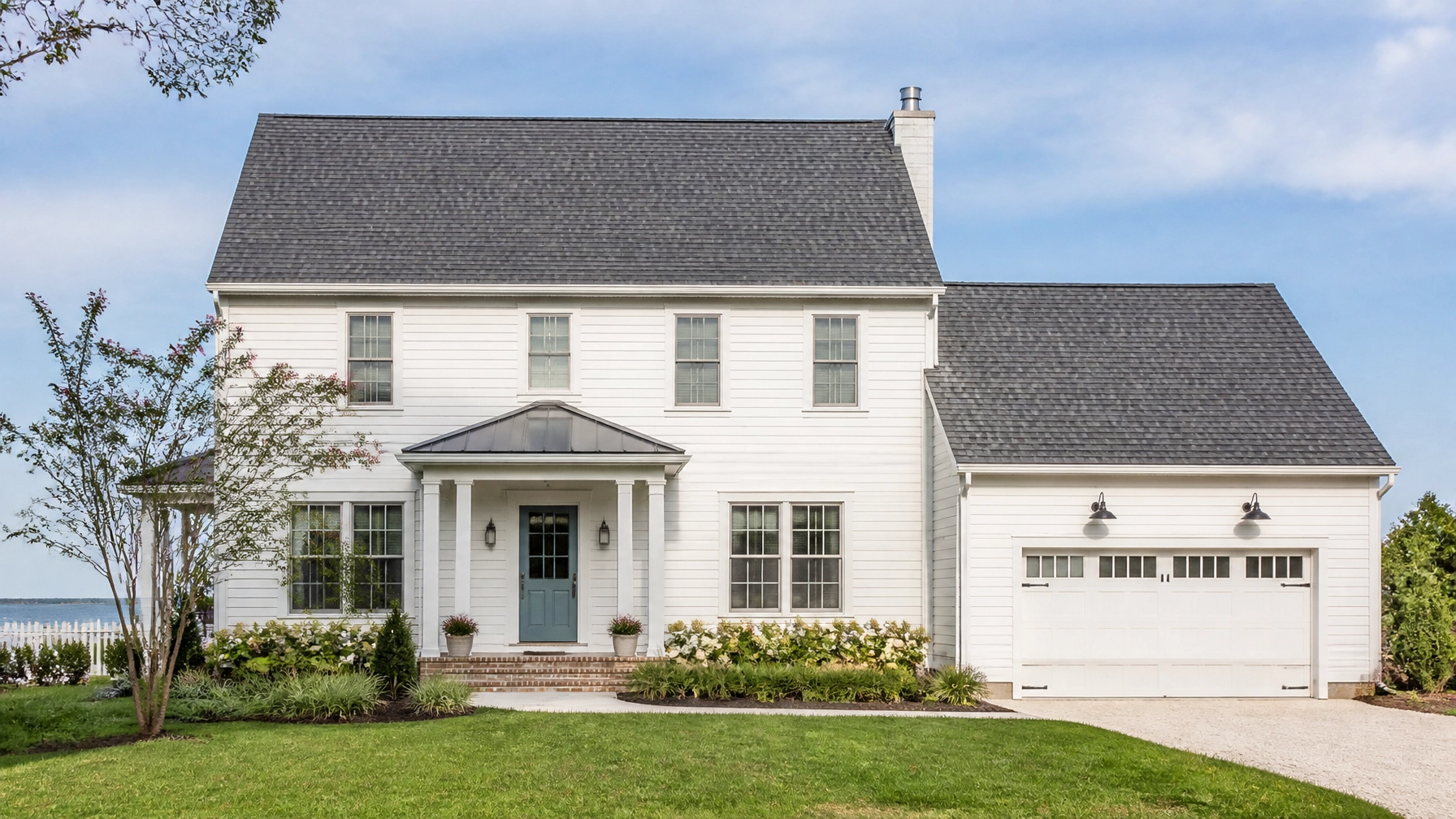
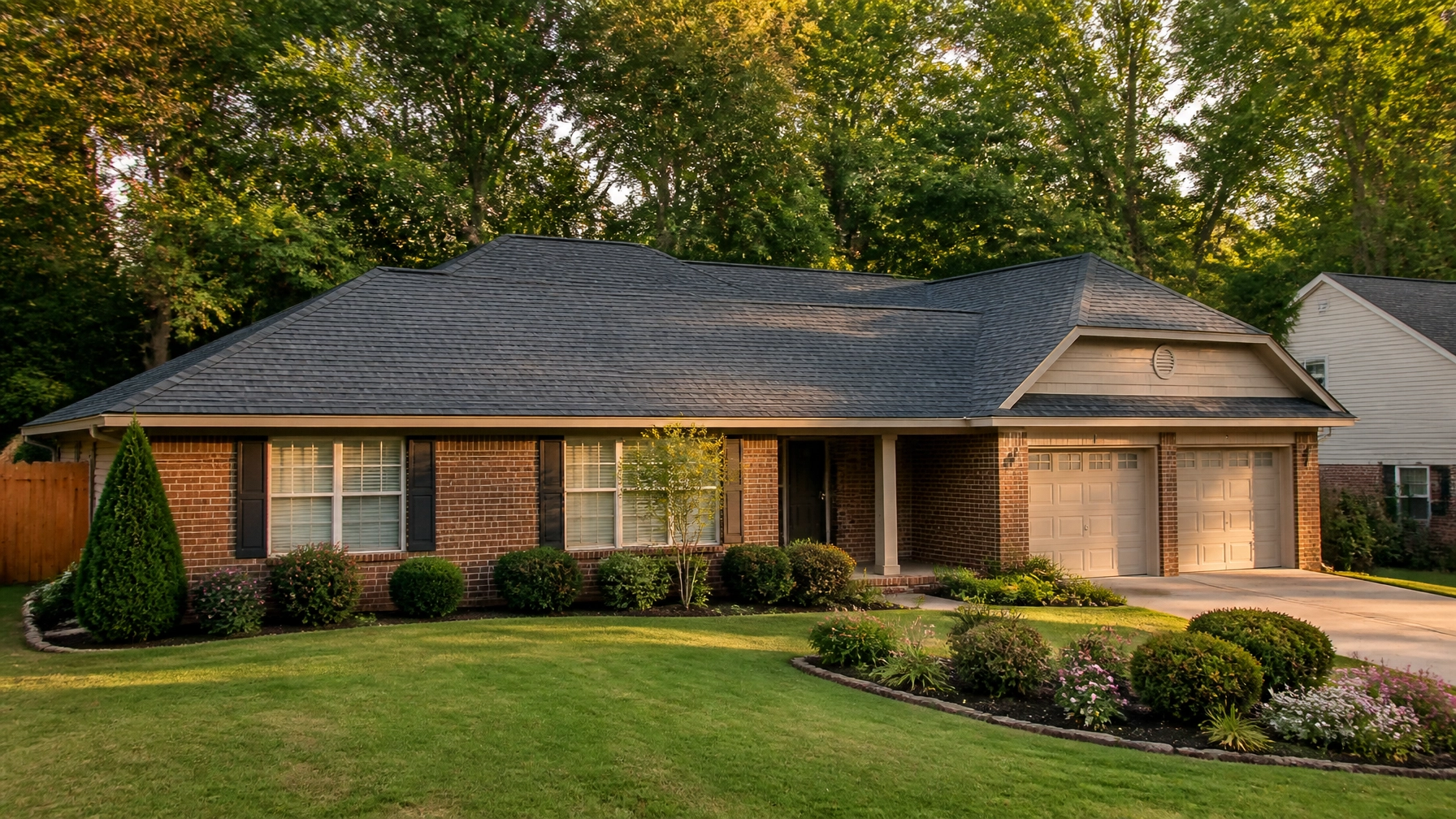
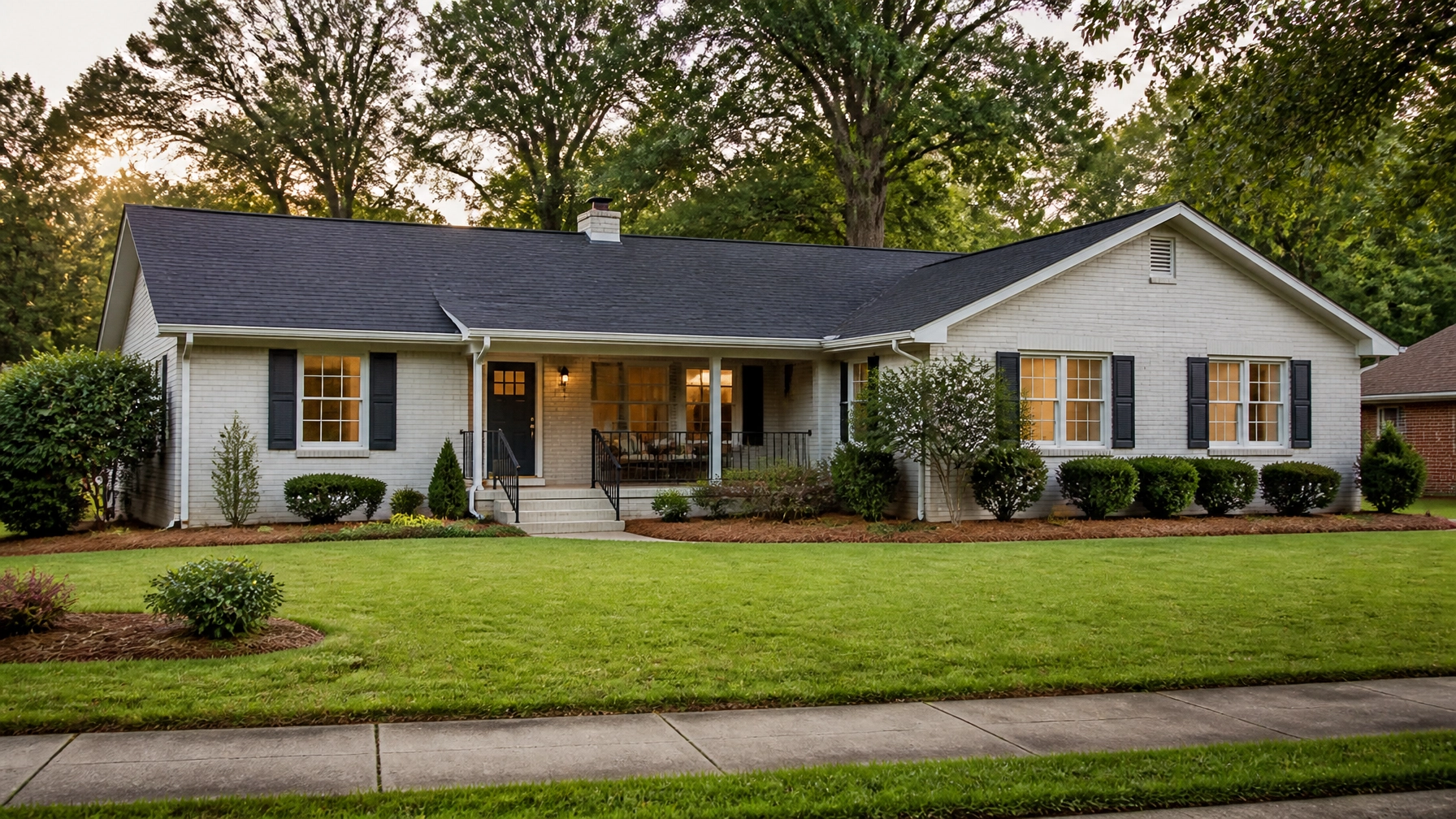
    Colonial home in Winston-Salem with a new dimensional shingle roof

    How much does a new roof cost in Winston-Salem, NC, in 2026?

    A new roof in Winston-Salem typically costs $7,000–$20,000. A basic roof may fall near the lower end, while a large, steep, or complex roof with premium materials can exceed the upper end.

    Typical planning ranges include:

    • Budget: $7,000–$10,000 for a smaller, simple roof with basic shingles
    • Popular: $10,000–$15,000 for architectural shingles on an average home
    • Premium: $16,000–$20,000 or more for metal, slate, designer shingles, or complex rooflines

    These are planning ranges, not final bids. A satellite estimate can provide a more property-specific starting point.

    What factors affect the price of a Winston-Salem roof replacement?

    The biggest cost factors are:

    • Roof size: Roofers measure in squares. One roofing square equals 100 square feet.
    • Pitch: Steep roofs require additional safety equipment and labor.
    • Complexity: Dormers, valleys, chimneys, skylights, and multiple roof sections add time.
    • Material choice: Architectural shingles usually cost less than metal or slate.
    • Tear-off: Removing one or more existing roof layers increases labor and disposal costs.
    • Decking condition: Rotted or damaged wood under the shingles may need replacement.
    • Ventilation and flashing: Ridge vents, pipe boots, chimney flashing, and upgraded underlayment affect the total.

    Your home’s living area is not the same as its roof area. A 2,000-square-foot house may have a roof larger or smaller than 2,000 square feet depending on the number of floors, overhangs, and roof design.

    What is the best roofing material for Winston-Salem weather?

    Architectural shingles are the most common choice for Winston-Salem homes because they balance cost, appearance, and performance. Metal roofing and slate are also suitable but usually require a larger initial investment.

    Architectural shingles (Popular)

    • Broad selection of colors and styles
    • Typical service life of about 25–30 years
    • Lower upfront cost than metal or slate
    • Suitable for many ranch, Colonial, and traditional Piedmont homes

    Metal roofing (Premium)

    • Often lasts 40–70 years with proper installation
    • Resists fire, moisture, and many forms of storm wear
    • Reflective finishes may help reduce summer heat gain
    • Higher material and installation cost

    Slate roofing (Premium)

    • Long service life, often 50 years or more
    • Strong match for some historic or high-end homes
    • Requires specialized installation and structural consideration
    • Significantly more expensive than asphalt shingles

    For homes exposed to frequent hail or severe thunderstorms, ask contractors about impact-resistant shingles, wind-rated systems, correct fastening, and manufacturer installation requirements.

    How does Winston-Salem’s climate affect roofing?

    The Piedmont Triad’s heat, humidity, rain, and thunderstorms can accelerate roof wear when ventilation and drainage are inadequate.

    Local roofing concerns include:

    • Granule loss from age and weather exposure
    • Algae staining on shaded or damp roof sections
    • Wind-lifted or missing shingles after thunderstorms
    • Hail bruising that may not be visible from the ground
    • Moisture damage around chimneys, valleys, and roof penetrations
    • Attic heat and moisture caused by poor ventilation

    After a storm, inspect from the ground for missing shingles, damaged gutters, exposed underlayment, dents in metal vents, and ceiling stains. Do not climb onto the roof yourself. A professional inspection is safer and more reliable.

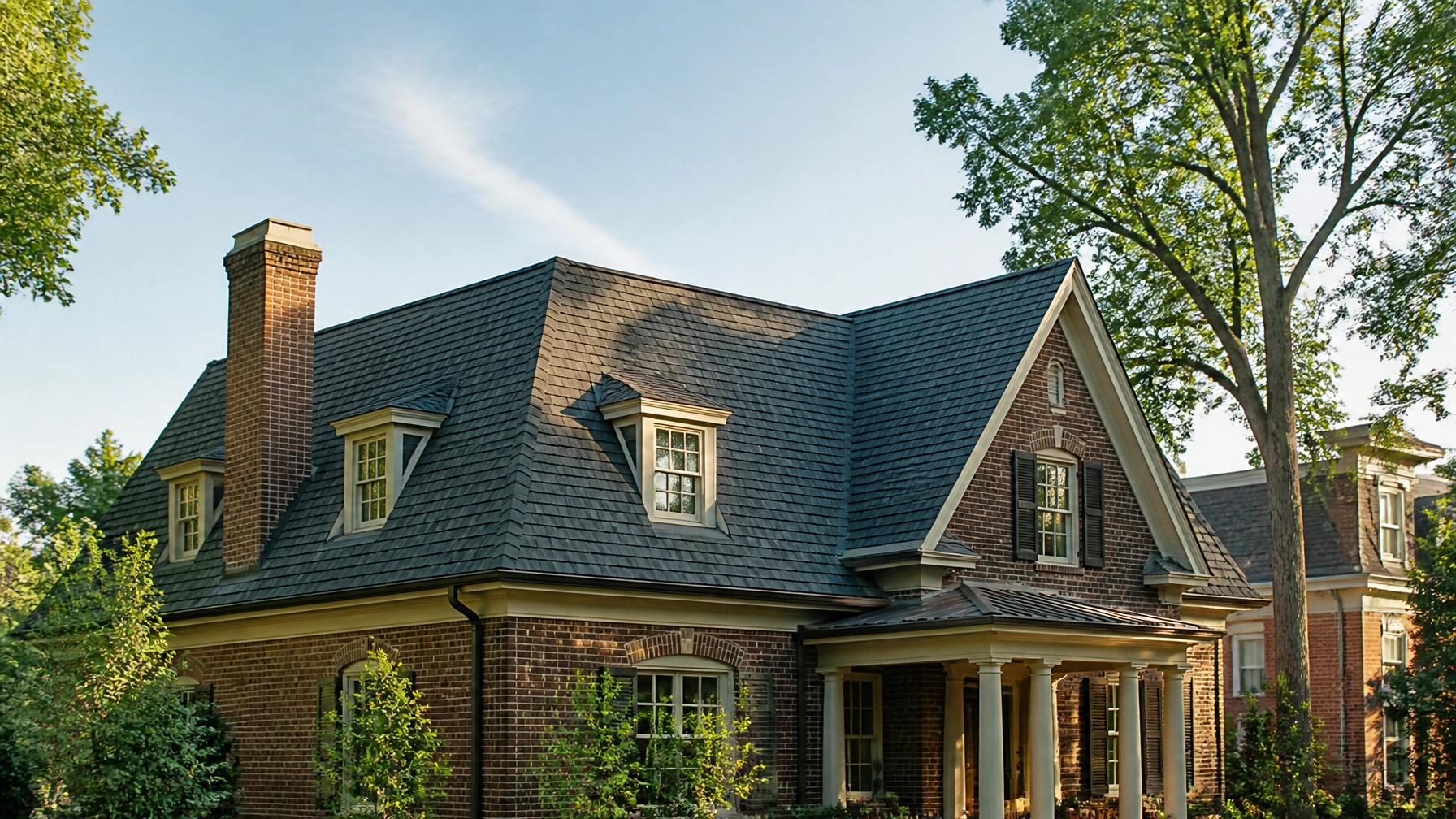
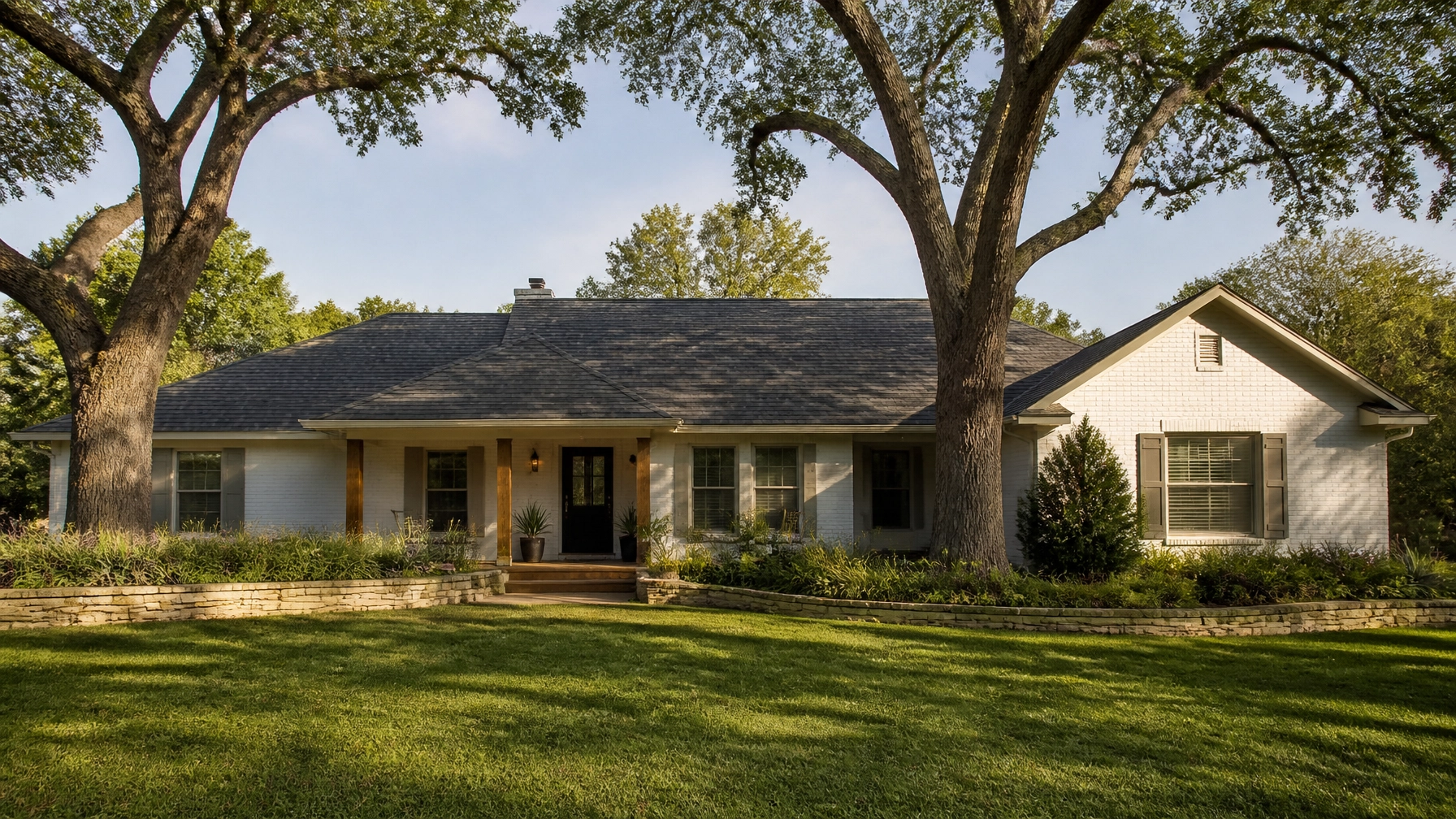
    Modern Piedmont Triad home with a standing-seam metal roof

    Do I need a permit to replace my roof in Winston-Salem?

    Most full roof replacements should be treated as permit-required projects, but the exact answer depends on the project cost, material, and scope.

    The City of Winston-Salem’s current guidance includes a limited exemption for certain single-family residential work costing $5,000 or less, provided the work does not involve structural changes or other excluded work. A typical full roof replacement usually exceeds that amount.

    A permit may clearly be required when:

    • The project exceeds the applicable cost threshold
    • Rafters, trusses, beams, or other structural components are changed
    • Roof decking repairs affect structural performance
    • The roofing design or fire-resistance classification changes
    • The work involves more than a simple like-for-like replacement

    Confirm requirements with the City of Winston-Salem Construction and Permits division before work begins. Ask your contractor whether permit applications and inspections are included in the written proposal.

    How long does a roof replacement take in Winston-Salem?

    Most standard asphalt shingle replacements take one to three working days. Larger homes, steep roofs, complex designs, slate work, and decking repairs can take longer.

    Weather can also affect scheduling. Spring and fall often provide comfortable installation conditions, but reputable roofing companies work throughout the year when temperatures and weather allow.

    The installation timeline usually includes:

    1. Material delivery and site preparation
    2. Tear-off and inspection of the roof deck
    3. Underlayment, flashing, and ventilation installation
    4. Shingle or roofing-panel installation
    5. Cleanup and final inspection

    Should I repair or replace my roof?

    Repair may make sense when the damage is limited and the roof is relatively young. Replacement is usually more practical when the roof is old, failing in multiple areas, or requires repeated repairs.

    Replacement deserves serious consideration when you notice:

    • A roof age near or beyond its expected service life
    • Widespread granule loss
    • Repeated leaks
    • Sagging roof sections
    • Multiple areas of missing or damaged shingles
    • Extensive algae or moisture-related deterioration
    • Repair costs approaching a meaningful portion of replacement cost

    A professional inspection can identify whether the issue is isolated or systemic. Start by measuring your roof and reviewing a realistic replacement range with the instant estimate tool.

    Will homeowners insurance pay for a new roof in Winston-Salem?

    Homeowners insurance may cover sudden storm damage from wind or hail, but it generally does not cover normal aging or deferred maintenance.

    Coverage depends on your policy, deductible, exclusions, roof age, and the documented cause of damage. If you suspect storm damage:

    • Photograph visible damage from the ground
    • Record the storm date and affected areas
    • Prevent additional interior damage if it is safe to do so
    • Contact your insurance company
    • Ask for a qualified roofing inspection
    • Keep copies of estimates, photos, and inspection reports

    Do not authorize unnecessary work or sign an assignment of benefits without understanding the agreement.

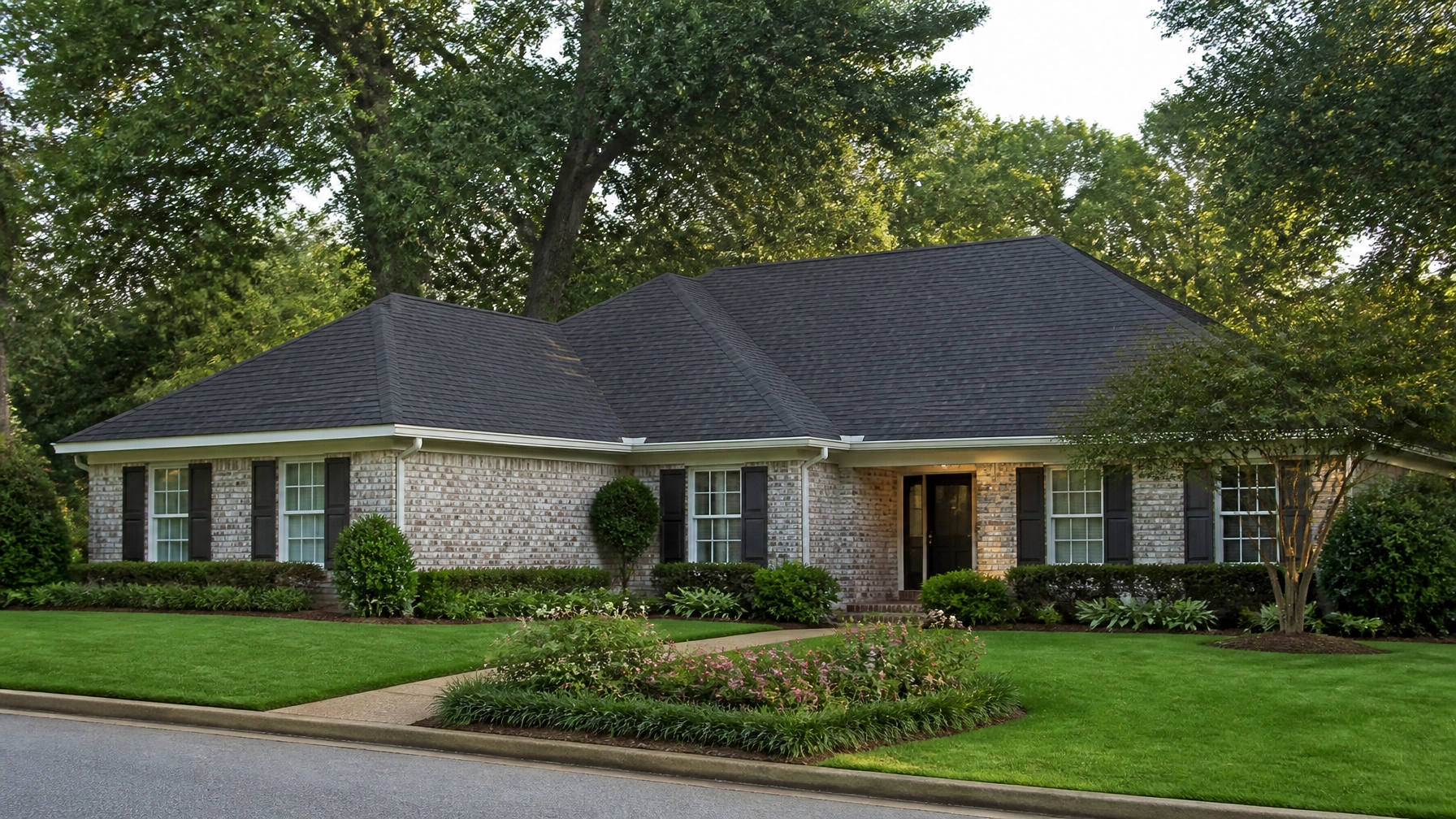
    Ground-level view of a Winston-Salem roof after a spring thunderstorm

    How can I find a reliable Winston-Salem roofer?

    Look for a contractor who can provide:

    • Proof of liability and workers’ compensation insurance
    • A detailed written estimate
    • Local references and recent reviews
    • Clear material specifications
    • Workmanship and manufacturer warranty information
    • A plan for permits and inspections
    • A written process for unexpected decking damage

    You can also review local options through Get My Roof Estimate Now’s Winston-Salem roofing contractor guide.

    Avoid contractors who pressure you to sign immediately, refuse to provide insurance documentation, or offer a price far below every other quote without explaining why.

    Can I get a roof estimate without scheduling a contractor visit?

    Yes. Get My Roof Estimate Now uses satellite imagery to measure your roof and generate a free estimate in about 60 seconds.

    The estimate considers roof size, pitch, complexity, material options, and regional pricing. It is useful for:

    • Budgeting for a future replacement
    • Comparing architectural shingles with metal or synthetic materials
    • Planning after storm damage
    • Preparing to sell a home
    • Deciding whether to request detailed contractor bids

    It is not a substitute for a final on-site inspection. Hidden decking damage, ventilation issues, and flashing conditions can only be confirmed in person. However, it gives you a fast, objective price range before you begin scheduling appointments.

    What should Winston-Salem homeowners do next?

    Use this simple process:

    1. Check your roof’s age and visible condition.
    2. Get a satellite-based estimate for your exact address.
    3. Compare material categories: Budget, Popular, and Premium.
    4. Ask whether permits are required.
    5. Request detailed written bids from licensed and insured contractors.
    6. Compare warranties, scope, materials, and cleanup: not just price.

    Start with your free Winston-Salem satellite roof estimate. There is no credit card requirement, no appointment needed upfront, and no obligation to proceed.

    WordPress Categories

    • Roofing Costs
    • Winston-Salem, NC
    • Roof Replacement
    • Home Improvement
    • Roofing FAQs

    WordPress Tags

    Winston-Salem roofing, Winston-Salem roof replacement cost, roofing estimate Winston-Salem NC, Piedmont Triad roofing, Camel City roofing, NC roof replacement 2026, roof storm damage, hail damage roofing, architectural shingles, metal roofing, satellite roof estimate, roofing permits Winston-Salem
  • Austin Roof Replacement ROI: How a New Roof Boosts Your Home Value in 2026

    Austin Roof Replacement ROI: How a New Roof Boosts Your Home Value in 2026

    If you are researching Austin roof replacement ROI, the 2026 numbers point to a practical conclusion: a new roof may not recover every dollar at resale, but it can protect your home’s value, improve buyer confidence, reduce negotiation pressure, and help your property compete in a more selective market.

    A typical Austin roof replacement costs approximately:

    • Architectural asphalt shingles (Popular): $10,000–$20,000
    • Impact-resistant shingles (Storm-ready): $11,000–$22,000+
    • Standing-seam metal roofing (Premium): $20,000–$40,000+

    A reasonable planning benchmark for direct resale recovery is approximately 60%–70% of the project cost, depending on material, installation quality, roof condition, neighborhood expectations, and timing. A $15,000 replacement could therefore contribute roughly $9,000–$10,500 in direct resale value: while also making the home easier to market.

    That is the financial side. The practical side is just as important: buyers in Austin increasingly want move-in-ready homes without immediate repair projects.

    Austin’s 2026 housing market makes condition more important

    Austin’s market has moved away from the rapid appreciation of 2020–2022. According to Zillow’s Austin housing data, the typical Austin home value was approximately $507,622 as of June 30, 2026, down 5% over the previous year. Zillow also reported a median of about 39 days to pending, a median sale-to-list ratio of 0.979, and 67.2% of sales closing below list price.

    The broader Austin–Round Rock–San Marcos market has also become more balanced. Unlock MLS market statistics, reported through Austin-area market updates, showed a mid-2026 median price around $450,000 and approximately 4.4 months of inventory.

    These conditions create a simple advantage for sellers who complete important exterior work before listing:

    • Buyers have more choices.
    • Inspections carry more weight.
    • Price negotiations are common.
    • Visible deferred maintenance can lead to repair requests or seller credits.
    • Move-in-ready homes can stand out from competing listings.

    In this environment, a new roof is not only an improvement. It is evidence that one of the home’s most important systems has already been addressed.

    Why a new roof can increase home value in Austin, TX

    A roof affects value in several ways. The first is direct resale value. The second is risk reduction.

    An older roof can make buyers think about:

    • Leaks and interior water damage
    • Hail-related repairs
    • Insurance eligibility and premiums
    • Future replacement costs
    • Poor attic ventilation
    • Problems discovered during inspection
    • Delays after closing

    A new roof removes much of that uncertainty. Buyers may not pay the full replacement cost dollar for dollar, but they are less likely to discount the property heavily or demand a large concession.

    This is especially important in Austin, where intense summer heat, ultraviolet exposure, wind, and hail can accelerate roof wear. A professionally installed replacement with appropriate underlayment, flashing, ventilation, and impact resistance provides a stronger ownership story than a roof that is simply described as “serviceable.”

    Neighborhood context: Hyde Park and Tarrytown

    Hyde Park (Move-in-ready appeal)

    In historic central neighborhoods such as Hyde Park, buyers often compare roof condition with the overall level of renovation. A well-maintained bungalow with a clean roofline, preserved architectural details, updated systems, and attractive landscaping can compete more effectively than a similar home with visible roof aging.

    Review current neighborhood conditions through Redfin’s Hyde Park housing market data.

    For a Hyde Park homeowner, the best ROI usually comes from choosing a roof that fits the home:

    • Dimensional shingles that complement the historic exterior
    • A neutral color that works with brick, siding, or painted wood
    • Carefully finished flashing around dormers and chimneys
    • Clean gutters and repaired fascia
    • Ventilation improvements that are not visually distracting

    The goal is not to over-improve the property. It is to eliminate a major objection while preserving the home’s character.

    Renovated Hyde Park Austin bungalow with a new dimensional shingle roof

    Tarrytown (Premium exterior standards)

    Tarrytown and nearby West Austin neighborhoods operate at a higher price point, and buyers often expect a complete exterior presentation. A roof nearing the end of its useful life can become a major negotiation issue on a high-value home: even when the roof is not actively leaking.

    See neighborhood context through Zillow’s Tarrytown home value page.

    In a premium market, roofing ROI depends on consistency. A modest roof installed with quality materials may be the right choice for one property, while a larger luxury home may justify:

    • Standing-seam metal roofing
    • Premium architectural shingles
    • Custom flashing and trim details
    • High-performance ventilation
    • Impact-resistant materials
    • A transferable manufacturer or installer warranty

    The correct material is the one that matches the home’s design, buyer expectations, and long-term ownership plan.

    How much resale value can you expect?

    The 2025 Cost vs. Value Report from Zonda confirms that exterior replacement projects continue to perform strongly because buyers respond to curb appeal and reduced maintenance risk. Its national report does not guarantee a specific Austin roof return, but it supports the broader principle that exterior improvements often outperform highly personalized interior upgrades at resale.

    For Austin planning purposes, use this framework:

    Project profile Example cost Possible direct value recovery
    Architectural shingle roof $12,000 Approximately $7,200–$8,400
    Impact-resistant shingle roof $16,000 Approximately $9,600–$11,200
    Standing-seam metal roof $28,000 Approximately $16,800–$19,600

    These are planning ranges, not an appraisal or guaranteed selling-price increase. The actual result depends on roof size, pitch, complexity, material selection, local labor rates, and the condition of the rest of the property.

    A new roof may also deliver indirect value through:

    • Fewer inspection objections
    • Faster buyer decision-making
    • Better listing photography
    • Reduced need for seller credits
    • Stronger insurance positioning
    • Improved buyer perception of overall maintenance

    Choose the roof material for ROI: not just appearance

    Architectural shingles (Popular)

    Architectural shingles are the most common balance of cost, appearance, and performance for Austin homeowners. They work well on ranch homes, bungalows, colonials, and many traditional properties.

    Choose them when you want:

    • Broad buyer appeal
    • A moderate project cost
    • Strong curb appeal
    • Easy color coordination
    • A familiar material for future buyers

    Class 3 or Class 4 impact-resistant shingles (Storm-ready)

    Impact-resistant shingles generally cost more, but they can make sense in hail-prone parts of Central Texas. Ask your insurance provider whether your policy offers a discount for an approved impact-resistant roofing system. Discounts vary by carrier and policy, so confirm before using savings in your ROI calculation.

    Metal roofing (Premium)

    Metal roofing has a higher upfront cost but can offer a long service life, strong heat performance, and a distinctive appearance. It is often a better fit for modern homes, high-end properties, and homeowners planning to remain in the house for many years.

    Do not choose metal solely because it has a longer lifespan. Compare its cost with the likely resale timeline and the expectations of your neighborhood.

    Upscale Tarrytown home with a new standing-seam metal roof and mature oak landscaping

    Five ways to improve your Austin roof replacement ROI

    1. Measure the actual roof before budgeting.
      Roof area is measured in squares, with one square equal to 100 square feet. Aerial measurements are more useful than estimating from interior living space.

    2. Fix the complete roofing system.
      Include flashing, ventilation, underlayment, pipe boots, drip edge, and damaged decking in the scope. A new roof with old problem areas can create future inspection concerns.

    3. Match the material to the neighborhood.
      A practical architectural shingle system may be ideal in one part of Austin. A premium Tarrytown property may need a higher-end finish to look consistent with surrounding homes.

    4. Document the work.
      Keep the contract, product information, permit records, warranty documents, photographs, and final invoice. Give the next buyer clear evidence of what was installed and when.

    5. Plan before listing.
      If the roof is more than 15–20 years old, get a budget before putting the home on the market. You can then decide whether to replace it, adjust the asking price, or offer a clearly documented credit.

    New impact-resistant roof on a modern Austin home with clean rooflines and Central Texas sky

    Get an Austin roof replacement estimate in 60 seconds

    A reliable ROI calculation starts with a realistic project cost. Online averages can be useful, but they cannot account for your roof’s actual size, pitch, valleys, dormers, material choice, or complexity.

    Get a free roof replacement estimate from Get My Roof Estimate Now using satellite imagery. The tool measures your roof and provides location-based pricing in about 60 seconds: with no contractor visit upfront, no credit card, and no obligation.

    You can also review general pricing factors with the roof cost calculator. Use the result to compare materials, plan your budget, and decide whether a replacement makes sense before requesting bids from verified local contractors.

    A new roof will not guarantee a specific increase in home value. But in Austin’s 2026 market, a properly matched and professionally installed roof can protect buyer confidence, reduce negotiation risk, and help your home present as move-in ready: the foundation of strong Austin roof replacement ROI and a better chance to increase home value in Austin, TX.

  • Daily FAQ Blitz – Slot 2: AEO FAQ Quick Answers for Virginia Beach, VA Homeowners (2026)

    Daily FAQ Blitz – Slot 2: AEO FAQ Quick Answers for Virginia Beach, VA Homeowners (2026)

    Virginia Beach homeowners face a demanding roofing environment. Coastal salt air, high humidity, intense summer sun, nor’easters, and hurricane-season storms can shorten roof life and increase replacement costs.

    For 2026 planning, a full roof replacement in Virginia Beach generally falls between $8,500 and $23,000 from budget to premium options. A typical architectural asphalt shingle project is more likely to land around $10,000–$18,000, depending on roof size, pitch, complexity, materials, and labor.

    This quick-answer FAQ is designed for homeowners in Virginia Beach and the broader Hampton Roads market, including Norfolk, Chesapeake, and nearby communities.

    Virginia Beach Roof Replacement Cost Snapshot for 2026

    For a standard single-family home with approximately 1,800–2,200 square feet of roof area:

    • Budget asphalt shingles: $8,500–$11,000
    • Architectural shingles (Popular): $10,000–$18,000
    • High-end asphalt or complex roof: $15,000–$23,000+
    • Metal roofing (Premium): $18,000–$40,000+
    • Synthetic or specialty roofing: $22,000–$40,000+
    • Flat or low-slope roof coating: $4,000–$9,000, when appropriate for the roof system

    Local cost references, including Virginia Beach roof replacement estimates and Virginia roofing cost data, show why a property-specific estimate is more useful than a national average.

    Virginia Beach Homeowner Roofing FAQs

    1. How much does a new roof cost in Virginia Beach in 2026?

    Quick answer: Most full roof replacements cost $10,000–$18,000 for a typical home using asphalt or architectural shingles. The broader local range is approximately $8,500–$23,000.

    Your final price depends on:

    • Roof size, measured in roofing squares
    • Roof pitch and accessibility
    • Number of valleys, dormers, and roof sections
    • Shingle or metal roofing selection
    • Decking, flashing, ventilation, and underlayment needs
    • Hampton Roads labor and disposal costs

    A simple ranch roof may fall near the lower end. A steep colonial roof with multiple sections and storm-related repairs can reach the upper end.

    2. What is the average roofing cost per square foot?

    Quick answer: Virginia Beach homeowners can generally plan on approximately $5–$11 per square foot installed for common asphalt roofing systems.

    Roofers typically price materials in squares, with one roofing square equal to 100 square feet of roof surface. A 2,000-square-foot roof therefore contains about 20 roofing squares before waste and installation adjustments.

    Per-square-foot pricing is only a starting point. A small, complicated roof may cost more per square foot than a large, simple roof because setup, safety, flashing, and labor are spread across less area.

    3. Why can roofing cost more near the Virginia Beach coast?

    Quick answer: Salt air, humidity, wind, and storm exposure create additional material and installation requirements.

    Coastal conditions can contribute to:

    • Corrosion around exposed metal components
    • Algae and moisture growth on shingles
    • Faster wear from wind and airborne debris
    • Deteriorated flashing and fasteners
    • Moisture damage in roof decking
    • Higher demand after tropical storms or nor’easters

    A Virginia Beach roofing project may require corrosion-resistant fasteners, upgraded flashing, improved ventilation, heavier underlayment, or shingles with stronger wind ratings. These details can increase the initial price but may help protect the roof over time.

    The Hampton Roads market can also experience seasonal labor demand. Scheduling before the busiest storm-repair periods may provide more contractor availability.

    New dimensional shingle roof on a Virginia Beach ranch-style home

    4. Which roofing material is best for Virginia Beach weather?

    Quick answer: Architectural asphalt shingles are the most common value choice, while metal roofing is a durable premium option.

    Architectural asphalt shingles (Popular)

    • Typical range: $10,000–$18,000
    • Broad style and color selection
    • Lower initial cost than metal or specialty systems
    • Available in higher-wind-rated designs
    • Suitable for many ranch, colonial, and traditional homes

    Metal roofing (Premium)

    • Typical range: $18,000–$40,000+
    • Long service life when properly installed
    • Strong resistance to wind, moisture, and sun
    • Higher material and installation cost
    • Requires careful attention to coastal corrosion protection

    Synthetic roofing (High-End)

    • Typical range: $22,000–$40,000+
    • Can replicate slate, shake, or tile appearances
    • Useful for homeowners prioritizing appearance and longevity
    • Prices vary significantly by product and roof complexity

    The right choice depends on your budget, home style, insurance requirements, expected ownership period, and exposure to coastal weather. Review options with a licensed and insured contractor after establishing your property-specific budget.

    5. How long does a roof last in Virginia Beach?

    Quick answer: Standard asphalt shingles may last approximately 15–25 years, but coastal exposure can make the lower part of that range more realistic.

    Roof life is affected by:

    • Wind and storm frequency
    • Salt-air exposure
    • Installation quality
    • Attic ventilation
    • Roof slope and sun exposure
    • Moisture and algae growth
    • Maintenance and prompt repairs

    Architectural shingles may last approximately 25–30 years under favorable conditions. Properly installed metal roofing can last 40–70 years, depending on the product, coating, fasteners, and maintenance.

    If your roof is 15–20 years old and shows curling shingles, exposed nails, granule loss, staining, or repeated leaks, replacement planning is reasonable even if the roof has not reached its advertised lifespan.

    6. Can homeowners get an accurate roof estimate without a contractor visit?

    Quick answer: Yes. Get My Roof Estimate Now uses satellite imagery to measure your roof’s size, pitch, and complexity before an onsite contractor appointment.

    The process is simple:

    1. Enter your Virginia Beach property address.
    2. Let the satellite-powered system analyze the roof.
    3. Receive a low-middle-high replacement price range in under 60 seconds.

    The measurements are designed to be approximately 90–95% accurate, often within inches, giving you a practical budget benchmark before you schedule multiple contractor visits.

    The estimate is:

    • Free
    • Instant
    • Available without a credit card
    • Transparent, with no hidden fees
    • Based on your property rather than a generic city average

    Start with the Virginia Beach instant roof estimate to see how your home compares with local 2026 benchmarks.

    Modern Virginia Beach home with a coastal-ready standing-seam metal roof

    7. Will homeowners insurance pay for a Virginia Beach roof replacement?

    Quick answer: Insurance may cover sudden storm or wind damage, but it typically does not cover normal aging, algae, or deferred maintenance.

    Virginia Beach homeowners should review:

    • Wind and hurricane deductibles
    • Roof-age limitations
    • Actual cash value versus replacement-cost coverage
    • Exclusions for wear and tear
    • Requirements for documenting storm damage
    • Whether temporary repairs are required to prevent further damage

    If you suspect hurricane or wind damage, photograph the roof and interior damage, document the storm date, and contact your insurer before authorizing major work. Avoid signing a repair agreement before understanding your coverage and deductible.

    A free estimate can help you understand the potential replacement cost, but it does not replace an insurance adjuster’s decision or a contractor’s onsite inspection.

    What Should Virginia Beach Homeowners Do Next?

    Use these benchmarks to build a realistic 2026 budget, then verify the number for your specific property. Roof size and complexity can change the price substantially, even between homes in the same neighborhood.

    Before selecting a contractor, ask for:

    • Virginia licensing and proof of insurance
    • A written scope of work
    • Material and wind-rating details
    • Flashing and ventilation plans
    • Decking replacement costs, if needed
    • Workmanship and manufacturer warranties
    • Permit and debris-removal responsibilities

    For a faster starting point, get your free roof estimate from Get My Roof Estimate Now. Enter your address and receive a satellite-powered price range in about 60 seconds. Once you understand your budget, you can connect with verified, licensed, and insured local roofing contractors for a detailed onsite quote.

  • Daily Weather Blitz – Slot 1: Richmond, VA ,  August 11, 2026: First Alert Day, Severe Storm Risk & How Virginia Heat Tests Your Roof

    Daily Weather Blitz – Slot 1: Richmond, VA , August 11, 2026: First Alert Day, Severe Storm Risk & How Virginia Heat Tests Your Roof

    Richmond homeowners should prepare for a hot, humid Tuesday with a risk of strong afternoon and evening thunderstorms. Forecast highs are near 90°F to 93°F, with dew points in the low 70s and a heat index that may reach or exceed 100°F.

    The rain chance is approximately 30% at a given location, but isolated storms can become locally intense. The primary concern is not an all-day washout. It is a fast-developing storm capable of producing damaging wind gusts, heavy rain, lightning, and short-term drainage problems.

    That is why Tuesday, August 11, is being treated as a First Alert Weather Day in Richmond.

    For homeowners, the timing is important. A roof that appears serviceable under calm conditions can show weaknesses when heat, humidity, wind uplift, and sudden downpours arrive together.

    Richmond Weather Outlook for August 11, 2026

    The National Weather Service expects morning clouds followed by periods of afternoon sun and increasing instability. Storms developing across the Ohio Valley and Appalachia may move east or southeast toward central Virginia later in the day.

    Key benchmarks for Richmond include:

    • High: Near 90°F to 93°F
    • Overnight low: Around 72°F to 74°F
    • Humidity: High, with dew points in the low 70s
    • Rain chance: Approximately 30% locally, with scattered coverage
    • Main storm window: Afternoon through evening
    • Primary severe threat: Strong to damaging wind gusts
    • Secondary threats: Heavy downpours, lightning, and localized flooding

    The National Weather Service Richmond forecast and the NWS Wakefield hazardous weather outlook provide the latest local updates. The Storm Prediction Center outlook should also be checked if storms strengthen during the day.

    A 30% rain chance does not mean the risk is insignificant. It means conditions will vary across the metro area. One neighborhood may remain dry while another experiences a concentrated downpour and powerful wind gusts.

    How Virginia Heat and Humidity Stress a Roof

    Richmond’s humid, four-season climate exposes roofing systems to repeated expansion, contraction, moisture, and storm activity. During a hot August afternoon, roof surface temperatures can rise well above the air temperature.

    That heat affects several components:

    • Asphalt shingles can become more flexible and vulnerable to scuffing.
    • Sealants around vents and flashing can dry, shrink, or lose adhesion.
    • Attic temperatures can rise sharply if ventilation is blocked.
    • Trapped moisture can contribute to decking deterioration and mold.
    • Repeated thermal movement can loosen vulnerable flashing or fasteners.

    Humidity adds another layer of risk. Moisture does not always enter through a dramatic roof opening. It can work through aging pipe boots, lifted shingle edges, small flashing gaps, clogged gutters, or poorly ventilated attic spaces.

    The result is often delayed damage. A roof may look acceptable from the street but still have weak points that become visible only after the next major storm.

    Storm-Ready Roofing Checklist for Richmond Homeowners

    1. Check wind uplift resistance (Structural protection)

    Thunderstorm winds do not need to reach hurricane strength to damage an aging roof. Wind can lift shingle edges, loosen ridge caps, tear away improperly fastened sections, and expose the underlayment.

    When planning a replacement, ask the contractor about:

    • Shingle wind-resistance classifications
    • Manufacturer fastening requirements
    • Nail placement and quantity
    • Ridge-cap installation
    • Roof-deck condition
    • Rafter or truss connections
    • Local code requirements for your property

    Virginia roofing requirements are based on the state’s adopted construction codes, including standards for roof assemblies and wind resistance. The Virginia Construction Code resources and Virginia Residential Code roof provisions are useful references.

    A contractor should not simply quote a shingle brand. The installation method matters just as much as the product label.

    2. Consider hail impact ratings (Optional upgrade)

    Virginia does not generally require impact-rated shingles statewide. However, homeowners concerned about hail can ask about products tested under UL 2218, including Class 3 or Class 4 impact ratings.

    Impact-resistant shingles may help reduce damage from hail, but they are not hail-proof. They can be a practical upgrade when:

    • Your neighborhood has experienced recent hail
    • You are replacing an older roof
    • You want additional protection for a long-term home
    • Your insurer offers a discount for qualifying materials

    Ask your insurance company whether a specific impact rating qualifies for a premium reduction. Do not assume every “impact-resistant” product receives the same treatment.

    Richmond Virginia ranch home with an intact architectural shingle roof, clean gutters, and storm-ready landscaping

    3. Inspect flashing, pipe boots, and sealants

    Flashing protects the areas where roofing materials meet chimneys, walls, skylights, vents, and other penetrations. These are common leak locations because they involve multiple materials and changing angles.

    Before a storm, look for:

    • Rusted or displaced metal flashing
    • Cracked sealant around vents
    • Brittle rubber pipe boots
    • Lifted shingles near walls or chimneys
    • Stains on ceilings or upper walls
    • Damp insulation or dark attic decking

    Do not climb onto a wet or steep roof. From the ground, binoculars can help identify obvious concerns. For a closer inspection, hire a qualified roofing professional.

    Close-up of architectural shingles, chimney flashing, sealed pipe boot, and clean gutter edge on a Virginia residential roof

    4. Clear gutters and downspouts

    Heavy rain exposes drainage problems quickly. A clogged gutter can overflow against fascia boards, siding, windows, and foundations. Water can also back up beneath the roof edge if the system is blocked or sagging.

    Before Tuesday’s storm window:

    • Remove leaves, sediment, and shingle granules.
    • Confirm that downspouts are connected and unobstructed.
    • Direct extensions away from the foundation.
    • Check for sagging sections or separated joints.
    • Make sure splash blocks and drainage paths are clear.

    Gutter maintenance is simple, but it prevents many avoidable moisture problems during Richmond’s summer storms.

    5. Protect materials and outdoor equipment

    If roofing work is underway, secure loose tools, insulation, underlayment, tarps, and panels before afternoon storms develop. Wind can turn lightweight construction materials into dangerous debris.

    Roofing work should stop immediately when:

    • Thunder is audible
    • Lightning is visible
    • Wind begins shifting or strengthening
    • Rain makes the roof surface slippery
    • A storm warning is issued for the area

    Heat creates a separate safety issue. Roof surfaces can be significantly hotter than the air. Crews should schedule strenuous work earlier, take regular breaks, hydrate, and monitor for dizziness, confusion, headache, or unusual fatigue.

    What to Do After a Severe Storm

    Wait until conditions are safe before inspecting the property. Never walk on the roof to check for damage after lightning, heavy rain, or high winds.

    From the ground, look for:

    • Missing or visibly lifted shingles
    • Exposed underlayment
    • Damaged ridge caps
    • Fallen branches
    • Dented gutters or metal vents
    • New ceiling stains
    • Water in the attic
    • Granules collecting near downspouts

    Take photographs before making temporary repairs. If water is entering the home, use a qualified professional for emergency protection and contact your insurer promptly.

    A post-storm inspection is especially important for older roofs. Small wind damage may not create an immediate leak, but exposed materials can deteriorate quickly under additional heat and rainfall.

    Use Roofing Technology 2026 to Get a Faster Budget

    Traditional roof estimates often begin with multiple contractor appointments. That process can take days, especially after a regional storm when roofing companies are handling emergency calls.

    Modern roofing technology 2026 offers a faster starting point. Get My Roof Estimate Now uses satellite imagery to measure your roof’s:

    • Approximate size in roofing squares
    • Pitch and slope
    • Roofline complexity
    • Valleys, sections, and adjoining surfaces
    • Regional pricing factors

    Homeowners can enter their address and receive an instant, free roof replacement estimate in about 60 seconds. The service requires no credit card, and the satellite-powered measurements are designed to be accurate within inches, generally achieving approximately 90% to 95% accuracy.

    For Richmond homeowners, a typical 2,000-square-foot roof replacement benchmark in 2026 is approximately:

    • Architectural shingles (Popular): $10,000–$17,000
    • Designer shingles (Premium): $16,000–$24,000
    • Standing-seam metal (Premium): $24,000–$36,000

    Actual pricing depends on roof size, pitch, complexity, tear-off requirements, decking repairs, material selection, and local labor. Use the Richmond roof estimate page or the roof cost calculator to establish a data-backed range before scheduling contractor visits.

    The estimate is not a substitute for an onsite inspection when damage or structural problems are suspected. It is a fast way to understand your likely budget and compare options before making decisions.

    The Bottom Line for Richmond on August 11

    Tuesday’s First Alert setup is a reminder that roof readiness is measured before the storm, not after it.

    With temperatures near 90°F, high humidity, and afternoon storms capable of damaging wind gusts, Richmond homeowners should:

    1. Clear gutters and downspouts.
    2. Check visible flashing, pipe boots, and sealants.
    3. Secure loose outdoor and roofing materials.
    4. Avoid roof access during storms.
    5. Inspect safely after severe weather.
    6. Use satellite measurement technology to understand replacement costs quickly.

    If your roof is 15 to 30 years old, has visible wear, or suffered previous storm damage, get the numbers now. A free satellite-powered estimate takes about 60 seconds and gives you a clearer starting point before the next weather system arrives.

    Frequently Asked Questions

    Is a 30% storm chance enough to worry about my roof?

    Yes, if your roof has existing weaknesses. A 30% chance means storms will not affect every location, but isolated cells can still produce strong winds and heavy rain.

    Should I replace my roof before a storm?

    Not automatically. First, determine the roof’s age, condition, and visible damage. An instant estimate can help you understand the likely replacement cost, while a professional inspection can identify structural or storm-related problems.

    Are Class 4 shingles required in Richmond?

    No. Impact-rated shingles are generally an optional upgrade in Virginia. Ask your contractor and insurance company whether they are appropriate for your home and whether any premium discount applies.

    How accurate is a satellite roof estimate?

    Get My Roof Estimate Now’s satellite measurements are designed to be accurate within inches, typically around 90% to 95% accuracy. A contractor should still verify conditions onsite before signing a final replacement contract.

  • Daily Tech Blitz – Slot 5: Richmond’s Satellite Tech Edge Is Bringing Space Down to the James River

    Daily Tech Blitz – Slot 5: Richmond’s Satellite Tech Edge Is Bringing Space Down to the James River

    Richmond homeowners can now benefit from the same technology helping government agencies map large regions, utilities inspect power lines, and aerospace companies build smarter satellites.

    Across Virginia, satellite imaging, geospatial data, and artificial intelligence are moving from specialized industries into everyday decisions. For a homeowner near the James River, that can mean a faster answer to a simple but expensive question:

    What will it cost to replace my roof?

    In Richmond, a typical roof replacement costs approximately $7,500 to $20,000, with many homeowners paying around $12,500 for architectural shingles on a 2,000-square-foot roof. Your actual price depends on roof size, pitch, complexity, materials, labor, and hidden damage.

    With Get My Roof Estimate Now’s Richmond roof estimator, homeowners can receive a free, satellite-measured estimate in about 60 seconds, without scheduling a contractor visit first.

    Virginia’s Satellite Technology Cluster Is Expanding

    Northern Virginia has long been associated with federal technology and defense. It is now becoming a major center for commercial satellite systems, remote sensing, geospatial software, and AI.

    Several recent developments show how quickly the sector is growing.

    BlackSky’s AROS expansion in Herndon

    Herndon-based BlackSky received a contract modification from the National Reconnaissance Office in June 2026 to accelerate development of its AROS broad-area collection satellites.

    According to BlackSky’s announcement, the system is intended to support:

    • Large-area, multispectral mapping
    • Country-scale digital maps
    • Navigation and maritime awareness
    • 3D digital twin applications
    • AI-ready geospatial data and analytics

    The planned AROS system is expected to provide flight-ready foundation imagery capabilities in 2028. In simple terms, it is designed to help organizations understand what is happening across very large areas and identify important changes quickly.

    That same basic idea, using aerial data to understand physical structures, has a practical residential application. A roof does not need to be climbed or manually measured before a homeowner can receive a reliable starting estimate.

    Umbra invests in a new Reston facility

    Remote-sensing company Umbra announced a $6.75 million investment in a new 20,000-square-foot facility in Reston. The project is expected to create more than 100 high-tech jobs and support the company’s remote-sensing data and custom satellite systems divisions.

    The Virginia Economic Development Partnership described the investment as another sign of Virginia’s growing advanced satellite and space-technology ecosystem.

    Scout Space expands sensor manufacturing

    Scout Space, headquartered in Reston, is expanding satellite sensor manufacturing with a new facility in Merrifield.

    The project represents more than $1 million in investment and is expected to create 31 new jobs. The facility will support aerospace optical sensors, payload manufacturing, assembly, integration, testing, and production.

    This matters beyond the space industry. Better sensors and faster data processing improve the quality of images used for mapping, asset management, and change detection, including the aerial data used to evaluate residential properties.

    Spatial Front adds 450 Arlington jobs

    Geospatial and AI services company Spatial Front is relocating its headquarters to Arlington’s National Landing area. The company plans to invest $6 million and create 450 new Virginia jobs.

    The Virginia Governor’s Office announcement identifies Spatial Front’s core capabilities as including geospatial technology, artificial intelligence, machine learning, systems integration, and digital modernization.

    Together, these projects show that Virginia is building more than satellites. It is developing the full chain:

    1. Sensors collect data.
    2. Satellites and aircraft capture imagery.
    3. GIS platforms organize locations and structures.
    4. AI identifies patterns and changes.
    5. Software turns the results into useful decisions.

    That chain is becoming increasingly useful for homeowners.

    Dominion Energy Shows What Visual AI Can Do

    Dominion Energy, based in Richmond, is applying a similar data-driven approach to power transmission inspections.

    The company has used GIS-integrated visual AI to analyze aerial and thermal imagery of transmission structures. The system can identify potential issues, connect images to specific towers or poles, and help prioritize maintenance.

    The Esri case study on Dominion Energy reports that visual AI reduced inspection analysis time from months to hours in certain workflows.

    The lesson is straightforward: imagery becomes far more useful when it is connected to accurate measurements, location data, and automated analysis.

    Roof measurement works on the same principle. A satellite view provides the property perspective. Measurement software analyzes roof planes and dimensions. Pricing data then converts the measurements into a practical replacement range.

    What Satellite Roof Measurement Can Tell You

    Satellite-powered roof measurement is not a replacement for every type of inspection. It is a faster way to establish a reliable starting point.

    For a Richmond property, satellite imagery can help estimate:

    • Total roof area
    • Roof size in squares
    • Major roof sections and planes
    • Approximate pitch
    • Roof shape and complexity
    • Material quantities
    • Regional pricing factors

    One roofing square equals 100 square feet of roof area. Estimating by squares is more useful than relying only on the home’s interior floor area because roof size changes with pitch, overhangs, dormers, garages, porches, and additions.

    Get My Roof Estimate Now uses satellite imagery technology to measure roofs with reported accuracy in the 90% to 95% range, often within inches of actual dimensions. The result includes low, middle, and high price ranges based on material options and project variables.

    Richmond-area ranch home with a new gray architectural shingle roof and clearly defined rooflines

    Why Richmond’s Older Homes Need Better Roof Data

    Richmond’s housing stock includes everything from postwar ranch homes to brick Colonials, row houses, and historic properties with slate, steep pitches, chimneys, dormers, and multiple roof additions.

    Homes near Monument Avenue and other older neighborhoods often present more complex roofing conditions than a simple modern ranch.

    Common cost factors include:

    • Multiple roof sections
    • Steep or irregular roof pitches
    • Dormers and valleys
    • Chimney flashing
    • Older slate or specialty materials
    • Attached porches and additions
    • Mature tree cover
    • Limited access for crews and materials
    • Historic appearance requirements

    Satellite measurement helps account for the visible geometry before a contractor arrives. That gives homeowners a more realistic budget range and makes it easier to compare material options.

    For example:

    Budget: Basic shingles

    Approximately $7,500 and up for a straightforward Richmond roof using basic materials and a simple design.

    Popular: Architectural shingles

    Approximately $12,500 for a typical 2,000-square-foot roof, although complex historic homes may cost more.

    Premium: Designer shingles, metal, or slate

    Costs can approach or exceed $20,000, depending on the material, structural requirements, roof access, and installation complexity.

    These are planning ranges: not final contractor bids. An in-person professional still needs to evaluate decking, flashing, ventilation, gutters, underlayment, and hidden moisture damage.

    Satellite Imagery Also Helps After Richmond Storms

    Richmond experiences heavy rain, wind, hail, and seasonal thunderstorms. Storm damage is not always obvious from the ground.

    After a storm, look for:

    • Missing or lifted shingles
    • Exposed underlayment
    • Granules collecting in gutters
    • Damaged flashing
    • Sagging roof sections
    • Water stains on ceilings
    • Fallen branches or impact marks
    • Leaks around chimneys and roof penetrations

    Do not climb onto the roof to inspect it yourself. Take ground-level photos, contact your insurer if damage appears likely, and arrange a professional inspection when needed.

    A satellite-based estimate can help you understand the potential replacement cost before discussing the project with contractors. It can also help distinguish between a minor repair discussion and a larger replacement budget.

    How to Get a Richmond Roof Estimate in 60 Seconds

    The process is simple:

    1. Visit the Richmond roof replacement estimate page.
    2. Enter your home address.
    3. Allow the system to identify and measure the roof.
    4. Review the estimated roof size and replacement price range.
    5. Compare material options.
    6. Connect with verified, licensed, and insured local contractors if you want a detailed quote.

    There is no cost, no credit card requirement, and no contractor visit needed upfront.

    The estimate is useful whether your roof is 15 years old, recently damaged, or simply part of a future selling or renovation plan.

    Richmond colonial home with a new dark standing-seam metal roof, brick facade, and mature trees

    The Bottom Line for Richmond Homeowners

    Virginia’s satellite and geospatial technology boom may be centered in Herndon, Reston, Merrifield, and Arlington, but its benefits are reaching homes across Richmond.

    BlackSky is developing broad-area mapping systems. Umbra is expanding remote-sensing operations. Scout Space is increasing sensor manufacturing. Spatial Front is growing Virginia’s geospatial and AI workforce. Dominion Energy is applying visual AI and GIS to real-world infrastructure.

    For homeowners, the practical takeaway is simple:

    Better imagery and smarter software make roof planning faster, clearer, and more transparent.

    If you are considering a roof replacement in Richmond, start with accurate information. Get a free satellite-powered estimate in about 60 seconds at GetMyRoofEstimateNow.com. Then use the estimate to plan your budget, compare materials, and decide when to bring in a local roofing professional.

  • Daily Tech Blitz – Slot 3: Montgomery’s Satellite Tech Edge Is Bringing Orbital Precision to Capital City Roofs

    Daily Tech Blitz – Slot 3: Montgomery’s Satellite Tech Edge Is Bringing Orbital Precision to Capital City Roofs

    A typical Montgomery roof replacement costs $6,500–$18,000 based on local market benchmarks. For many 1,600–2,400 square-foot homes, a realistic 2026 planning range is approximately $8,000–$20,000 or more, depending on roof complexity, material selection, storm damage, and structural repairs.

    Architectural shingles remain the most common choice, with a typical 2,000-square-foot Montgomery home often near $11,000 for a quality replacement. Metal roofing usually costs more upfront but can provide a longer service life and improved heat reflection.

    The faster way to establish a starting budget is now available. Get My Roof Estimate Now uses satellite imagery to measure your roof and generate pricing in about 60 seconds: without a contractor visit or credit card.

    Montgomery’s Technology Advantage Starts Above the Roofline

    Montgomery is not traditionally described as a satellite-technology city. However, the region has a significant connection to the systems that make modern geospatial technology possible.

    The Maxwell–Gunter complex supports Air Force education, information technology, communications, and cyberspace operations. Gunter Annex is also associated with network operations that support Air Force and Space Force missions.

    That distinction matters. Maxwell–Gunter is not the location of every satellite-control mission, and homeowners should not assume that consumer roofing estimates use military satellite feeds. The connection is more practical:

    • Satellite systems depend on reliable data networks.
    • Geospatial intelligence depends on accurate location data.
    • Cybersecurity protects the systems that collect, transfer, and process imagery.
    • Mapping technology turns overhead images into usable measurements.

    The same broad technology category now helps Montgomery homeowners understand the size and likely cost of a roof replacement before scheduling multiple contractor appointments.

    The U.S. Air Force Space Systems Operations overview describes how trained specialists track satellites, maintain orbital parameters, and support space operations. Roofing estimates do not require that level of mission complexity, but they use the same basic concept: observe from above, analyze spatial information, and convert data into an actionable result.

    What Satellite Roof Measurement Actually Does

    A satellite-powered estimate begins with the property address. The system identifies the home and analyzes overhead imagery to calculate the roof’s footprint.

    It looks at factors such as:

    • Overall roof area
    • Individual roof planes
    • Hips, ridges, and valleys
    • Roof pitch and slope changes
    • Roof geometry and complexity
    • Approximate material requirements
    • Regional labor and material pricing

    Roofing professionals typically measure roof area in squares. One roofing square equals 100 square feet of roof surface. A home that appears to have 2,000 square feet of living space may have substantially more roof area after pitch, overhangs, garages, porches, and multiple roof sections are considered.

    That is why a simple online square-footage guess is not enough.

    Get My Roof Estimate Now uses satellite-powered measurements designed to be accurate to within inches, with typical overall measurement accuracy in the 90–95% range. The result is not a final construction contract. It is a fast, data-driven planning estimate that helps homeowners understand the likely investment before meeting with a roofer.

    Local Geospatial Data Has Real Value Along the Alabama River

    Montgomery sits in the Alabama River region, where mapping and remote sensing have applications beyond roofing.

    State and federal GIS resources help analyze:

    • Watershed boundaries
    • Flood risk
    • Land cover
    • Water quality
    • Drainage patterns
    • Infrastructure and development
    • Environmental changes over time

    The Alabama Department of Environmental Management’s e-Maps Portal provides public GIS resources related to water programs and environmental mapping. NASA has also published satellite imagery showing the Bends of the Alabama River, illustrating how overhead imagery can reveal river patterns and surrounding landscapes.

    For homeowners, this broader geospatial trend has a direct practical lesson: location-specific data is more useful than generic assumptions.

    Montgomery homes do not all face the same conditions. A house near mature trees, a property with complex drainage, and a newer subdivision home with a simple gable roof may have very different replacement requirements. Satellite measurement provides a property-specific starting point.

    Montgomery Colonial home with a new deep-gray architectural shingle roof

    Montgomery Roof Costs: Budget, Popular, and Premium

    A useful 2026 planning structure is to group roof options into three categories.

    Budget: approximately $8,000–$10,000+

    This range may apply to a smaller or simpler home using basic asphalt shingles, assuming limited tear-off and no major decking repairs.

    Potential limitations include:

    • Shorter expected service life
    • Fewer style and color options
    • Less resistance to severe weather
    • Lower long-term upgrade potential

    Popular: approximately $10,000–$15,000

    Architectural shingles are the most common middle-market option for Montgomery homeowners. They provide better appearance and durability than basic three-tab shingles without reaching the initial cost of metal or premium designer systems.

    This category is often appropriate for:

    • Typical ranch homes
    • Suburban single-family properties
    • Homeowners replacing an aging 15–30-year-old roof
    • Sellers preparing a home for market
    • Storm-damaged roofs requiring a full replacement

    Premium: approximately $15,000–$20,000+

    Premium architectural shingles, impact-resistant products, metal roofing, complex roof layouts, steep slopes, and extensive underlayment or decking work can push the project above $20,000.

    Your price can increase when the roof includes:

    • Multiple valleys and dormers
    • Steep or difficult-to-access sections
    • Several existing shingle layers
    • Rotted roof decking
    • Damaged flashing
    • Chimneys or skylights
    • Detached garages or large additions

    The Montgomery roof estimate page provides local pricing context and city-specific roofing information.

    Architectural Shingles or Metal Roofing?

    Material selection should account for Montgomery’s heat, humidity, rainfall, and severe-storm exposure.

    Architectural shingles (Popular)

    Architectural shingles are widely used because they balance appearance, cost, and installation availability.

    Advantages include:

    • Broad color selection
    • Familiar installation methods
    • Strong curb appeal
    • Lower initial cost than metal
    • Typical service life of roughly 25–30 years, depending on conditions and maintenance

    Impact-resistant versions may be worth considering in areas exposed to frequent hail or high winds. Ask the contractor whether the selected product has an appropriate impact rating and whether it may affect insurance considerations.

    Metal roofing (Premium)

    Metal roofing generally requires a higher initial investment, but it can last substantially longer: often 40–70 years, depending on the system, coating, installation quality, and maintenance.

    Potential benefits include:

    • Long service life
    • Reflective options for hot summers
    • Resistance to wind and weather exposure
    • Reduced need for replacement over time
    • Modern appearance for contemporary homes

    A metal roof is not automatically the best choice for every property. Confirm the roof’s structural requirements, fastening system, ventilation design, finish warranty, and compatibility with the home’s architecture.

    Modern Montgomery Alabama home with a new dark bronze standing-seam metal roof

    Why Storm Preparation Makes Early Estimates Important

    Montgomery homeowners face severe thunderstorms, high winds, hail, heavy rain, and seasonal tornado risk. Storm activity can create two problems at once:

    1. It can damage an already aging roof.
    2. It can make local roofing contractors harder to schedule.

    If your roof is already 15–20 years old, waiting until a major storm creates an emergency can limit your options. An instant estimate lets you establish a baseline before damage occurs.

    After a storm:

    • Photograph visible damage from the ground.
    • Do not climb onto the roof.
    • Check ceilings and attic areas for signs of water intrusion.
    • Contact your insurance carrier promptly.
    • Request a professional inspection.
    • Compare written estimates.
    • Confirm licensing, insurance, warranties, and scope of work.

    Satellite imagery can help estimate the roof’s size, but it cannot identify every hidden defect. It will not replace an in-person inspection for lifted shingles, soft decking, attic moisture, flashing failure, or storm-related damage.

    Brick ranch home in Montgomery with a new weather-resistant architectural shingle roof

    How to Get a Montgomery Roof Estimate in 60 Seconds

    The process is straightforward:

    1. Visit Get My Roof Estimate Now.
    2. Enter your Montgomery property address.
    3. Allow the system to analyze the roof using satellite imagery.
    4. Review the estimated low, middle, and high price ranges.
    5. Compare architectural shingles, metal, synthetic, coating, or other available options.
    6. Use the estimate to plan an inspection and request detailed contractor quotes.

    There is no credit card requirement, no upfront charge, and no need to schedule a contractor visit just to receive a ballpark figure. If you choose to move forward, the platform can help connect you with verified, licensed, and insured local contractors.

    The Practical Meaning of Montgomery’s Satellite Tech Edge

    Montgomery’s connection to cyber operations, aerospace innovation, GIS, and remote sensing reflects a larger shift: complex technology is becoming useful in ordinary household decisions.

    Homeowners do not need to understand orbital mechanics or geospatial intelligence to benefit from the result. They need a reliable measurement, a transparent price range, and enough information to make a sound decision.

    For a Montgomery home with an aging or storm-exposed roof, that process can now begin in less than a minute.

    Get your free Montgomery roof replacement estimate today: measured from satellite imagery, with no contractor visit required upfront.

    Sources and further reading

  • 2026 Roof Replacement Cost in Atlanta, GA: Projected Prices & Smart Planning Tips for Peach State Homeowners

    2026 Roof Replacement Cost in Atlanta, GA: Projected Prices & Smart Planning Tips for Peach State Homeowners

    Planning a roof replacement in Atlanta in 2026? A typical architectural asphalt shingle project is likely to cost about $8,500–$18,000 for an average single-family home. Installed pricing generally falls between $5.50 and $10 per square foot, depending on roof size, pitch, materials, access, and required repairs.

    This outlook accounts for an estimated 4%–8% increase in roofing costs compared with earlier pricing. Material increases, labor costs, storm-related demand, and local permitting can all affect the final number.

    For a fast, property-specific starting point, use Get My Roof Estimate Now’s Atlanta roofing estimate. The tool uses satellite imagery to measure your roof and provides a free price range in about 60 seconds.

    Atlanta Roof Replacement Cost: 2026 Price Snapshot

    Here is a practical planning guide for Atlanta homeowners:

    Project category Typical 2026 planning range What it usually includes
    Budget $8,500–$11,000 Smaller or simple roof with standard materials
    Popular $11,000–$15,000 Architectural shingles on an average home
    Premium $15,000–$18,000+ Larger, steeper, or more complex roof
    High-complexity $18,000–$25,000+ Extensive decking, difficult access, premium materials, or multiple roof sections

    These are planning ranges, not fixed quotes. A roof with dormers, valleys, skylights, chimneys, or multiple levels can cost more than a simple ranch-style roof with the same home size.

    Architectural Shingle Pricing in Atlanta

    Architectural shingles remain the most popular replacement option in Metro Atlanta because they provide a balance of appearance, durability, and cost.

    For 2026, plan on approximately:

    • $5.50–$7.50 per square foot: straightforward architectural shingle replacement
    • $7.50–$10 per square foot: premium shingles, steep slopes, complex layouts, or added roofing work
    • $550–$1,000 per roofing square: installed pricing, where one square equals 100 square feet

    A 2,000-square-foot roof area at $5.50 per square foot would start around $11,000. At $10 per square foot, the same roof could approach $20,000.

    However, roof area is not the same as the home’s interior square footage. A 2,000-square-foot house may have a roof area above or below 2,000 square feet depending on the pitch, overhangs, attached garages, and roof design.

    How the 4%–8% Cost Increase Affects Your Budget

    Roofing prices in 2026 are expected to reflect continued increases in material and installation costs. A 4%–8% planning adjustment can make a meaningful difference on a large project.

    For example:

    • A previous $10,000 estimate may become approximately $10,400–$10,800
    • A previous $13,500 estimate may become approximately $14,040–$14,580
    • A previous $16,000 estimate may become approximately $16,640–$17,280

    The entire increase does not necessarily come from shingles. Roofing materials, labor, disposal, transportation, permits, and contractor overhead can all change at different rates.

    The safest approach is to build a 10%–15% reserve beyond your expected replacement cost. This protects your budget if the contractor discovers damaged decking, inadequate ventilation, or deteriorated flashing after removing the old roof.

    What Drives Atlanta Roof Replacement Prices?

    Two homes on the same street can receive very different estimates. These are the main cost factors.

    1. Roof size

    Larger roofs require more shingles, underlayment, flashing, labor, and disposal. Roofers measure in squares:

    • 1 roofing square = 100 square feet
    • 20 squares = 2,000 square feet of roof area
    • 25 squares = 2,500 square feet of roof area

    Satellite measurement can provide a useful starting estimate before an in-person inspection.

    2. Roof pitch

    Steep roofs require additional safety equipment, slower installation, and more careful material handling. A steep roof may add roughly 10%–25% compared with a simple, low-slope roof.

    Pitch also affects the total roof area. A steeper roof has more surface area than the footprint of the home suggests.

    3. Roof complexity

    The following features can increase labor and material requirements:

    • Multiple roof planes
    • Dormers
    • Skylights
    • Chimneys
    • Valleys
    • Wall intersections
    • Attached garages
    • Limited access for trucks or debris removal

    Complexity is one reason a per-square-foot estimate near the top of the range may be reasonable.

    4. Tear-off and disposal

    Removing old shingles, felt, fasteners, and damaged materials adds labor and landfill costs. Atlanta-area homes with multiple existing roof layers may require a complete tear-off before the new roof can be installed.

    Ask whether your quote includes:

    • Removal of existing roofing
    • Hauling and disposal
    • Magnetic cleanup for loose nails
    • Protection for landscaping and siding

    5. Decking repairs

    The roof deck supports the shingles and underlayment. Water intrusion can cause sections of plywood or other decking to rot.

    A professional should identify a reasonable allowance for deck replacement in the contract. The exact amount may not be known until the old roof is removed, but the pricing method should be clear before work begins.

    6. Ventilation and flashing

    Poor attic ventilation can trap heat and moisture, which may shorten shingle life in Atlanta’s humid, hot climate. Old or damaged flashing around chimneys, walls, skylights, and valleys can also become a source of future leaks.

    A complete replacement should address the full roofing system: not just the visible shingles.

    Fresh architectural shingles on a classic Atlanta Colonial home

    Atlanta Weather and Local Roofing Considerations

    Atlanta roofs face a combination of heat, humidity, heavy rainfall, and severe thunderstorms. The area receives roughly 50 inches of rain per year, and spring and summer storms can bring wind, hail, and falling branches.

    When planning a 2026 replacement, consider materials and installation details designed for:

    • High summer temperatures and UV exposure
    • Heavy, wind-driven rain
    • Humidity and algae growth
    • Hail and severe thunderstorms
    • Seasonal temperature changes
    • Tree debris and clogged drainage

    Architectural shingles with algae-resistant features are a practical choice for many Atlanta homes. Homeowners in areas with frequent hail exposure may also want to compare impact-resistant shingles. These products can cost more upfront but may offer added durability and, in some cases, insurance savings.

    Metal roofing is another option. It generally costs more than asphalt shingles but can provide a longer service life and strong resistance to wind, rain, and heat.

    Modern Atlanta home with a new standing-seam metal roof

    Permits, Contractors, and Written Estimates

    Full roof replacements generally require a permit in the Atlanta area. Requirements and fees can vary by jurisdiction, including the City of Atlanta, Fulton County, DeKalb County, Cobb County, and surrounding municipalities.

    Before signing a contract, confirm:

    • Who will pull the permit
    • Whether the contractor is properly licensed
    • Proof of general liability insurance
    • Proof of workers’ compensation coverage
    • The expected project timeline
    • Cleanup and disposal responsibilities
    • Material and workmanship warranties
    • The process for handling hidden decking damage

    A written estimate should separate materials, labor, tear-off, disposal, ventilation, flashing, permits, and potential repairs. Be cautious of a quote that offers only one total price without explaining what is included.

    Smart Planning Tips for Atlanta Homeowners

    Start before the roof becomes an emergency

    Storm damage and active leaks can force you into a rushed decision. If your roof is 15–20 years old, start researching costs before visible failure occurs.

    Get a property-specific estimate

    National averages are useful for general planning, but your roof’s actual size and design matter more. Get My Roof Estimate Now uses satellite imagery to estimate roof measurements, pitch, and complexity without an initial contractor visit.

    You receive:

    • A free estimate
    • Low, middle, and high pricing ranges
    • Material comparisons
    • Results in approximately 60 seconds
    • No credit card requirement

    The estimate is a budgeting tool. A licensed contractor should still inspect the roof before work begins and provide a final written proposal.

    Compare materials by total value

    Do not compare shingles by price alone. Review:

    • Expected service life
    • Wind and impact ratings
    • Algae resistance
    • Warranty terms
    • Energy performance
    • Color and neighborhood restrictions
    • Installation requirements

    Architectural shingles may be the best fit for a budget-conscious homeowner. Metal or premium shingles may make sense when long-term durability, appearance, or energy performance is a priority.

    Schedule strategically

    Spring and fall often provide comfortable installation conditions in Atlanta. Summer storms can cause delays, while post-storm demand can make contractor availability limited.

    Planning several weeks or months ahead gives you more time to compare estimates and choose materials without pressure.

    Frequently Asked Questions

    What is the average 2026 roof replacement cost in Atlanta?

    Most average-size Atlanta homes should budget approximately $8,500–$18,000 for a full replacement with architectural shingles. The midpoint depends on roof size, pitch, complexity, and condition.

    Is $10 per square foot expensive for roofing in Atlanta?

    It is near the high end for architectural shingles. It may be justified by a steep or complex roof, premium products, extensive tear-off, decking repairs, or difficult site access. Ask for an itemized explanation.

    How much does a 2,000-square-foot roof cost?

    At the 2026 planning range of $5.50–$10 per square foot, a 2,000-square-foot roof area could cost approximately $11,000–$20,000 before unusual structural repairs or premium upgrades.

    Can I get an Atlanta roof estimate without a contractor visit?

    Yes. A satellite-powered estimate can provide a fast starting range based on your address and roof measurements. For a final proposal, an in-person inspection is still recommended.

    Should I repair or replace my Atlanta roof?

    Repair may make sense when the roof is relatively young and the damage is isolated. Replacement is often more practical when the roof is older, has widespread granule loss, repeated leaks, sagging, or damage across multiple areas.

    Plan Your 2026 Atlanta Roof Replacement With Better Information

    A realistic 2026 roof replacement budget in Atlanta is usually $8,500–$18,000 for an average architectural shingle project, with broader pricing of $5.50–$10 per square foot. Include a 4%–8% cost increase in your planning and keep an additional reserve for hidden repairs.

    Start with an instant, free estimate based on your actual address, then use written contractor proposals to confirm materials, permits, warranties, and installation details. That process gives you a clearer budget before you commit to a major home improvement project.

  • Insurance Masterclass: How New Orleans LA Homeowners Can Get Their Roof Replacement Covered in 2026

    Insurance Masterclass: How New Orleans LA Homeowners Can Get Their Roof Replacement Covered in 2026

    A full roof replacement in New Orleans typically costs $10,000–$15,000 for architectural asphalt shingles in 2026. Premium standing-seam metal commonly runs $18,000–$30,000 or more in 2026, especially when coastal wind-resistance upgrades, complex rooflines, historic-district requirements, or extensive decking work are involved.

    Insurance may cover the replacement when a covered hurricane, wind, hail, or falling-object event caused the damage. It generally does not cover ordinary wear, age-related deterioration, algae, or deferred maintenance.

    Your first practical step is to establish the roof’s size and replacement range before discussing settlement. Get My Roof Estimate Now provides a free satellite-powered estimate in about 60 seconds in 2026, with measurements accurate to within inches and no contractor visit required upfront.

    Step 1: Confirm the damage is insurance-related

    New Orleans homeowners continue to face storm-related claim disputes, roof-age questions, and non-renewal concerns following major storms such as Ida. In 2026, insurers typically separate:

    • Covered damage: Wind-lifted shingles, hail strikes, punctures from debris, and storm-created openings.
    • Maintenance issues: Granule loss from age, brittle shingles, algae, ponding water, and long-term leaks.
    • Pre-existing damage: Conditions documented before the reported storm.
    • Code-related upgrades: Improvements required by current building codes may require ordinance-or-law coverage.

    Document the roof before temporary repairs:

    • Take wide and close-up photographs.
    • Save storm dates, weather reports, and repair invoices.
    • Photograph interior water stains and damaged belongings.
    • Keep receipts for tarping and emergency mitigation.
    • Do not permanently repair storm damage before the insurer has a reasonable opportunity to inspect.

    A satellite estimate cannot prove causation. It can, however, establish a fast and objective benchmark for roof area, roof complexity, and likely replacement cost before the claim process begins.

    Step 2: Know your Louisiana claim deadlines in 2026

    Louisiana homeowners should distinguish between reporting a claim, submitting a proof of loss, and filing a lawsuit.

    Report the claim promptly

    In 2026, your policy’s “Duties After Loss” section controls the required reporting period. Depending on the policy, the deadline may be 180 days, one year, or another specified period in 2026.

    Do not wait for a visible interior leak. Storm damage can remain hidden beneath shingles or underlayment. Notify the insurer as soon as you have a reasonable basis to believe a covered loss occurred.

    Understand insurer response timelines

    Under Louisiana’s 2026 claims-handling rules:

    • For an ordinary property claim, the insurer generally must begin adjustment within 14 days of notice in 2026.
    • For a catastrophic loss, the adjustment period is generally 30 days in 2026, subject to emergency-related extensions.
    • The insurer generally must pay a claim due within 30 days after satisfactory proof of loss in 2026.
    • For qualifying catastrophic residential losses, the payment period may be 60 days after satisfactory written proof of loss in 2026.

    These deadlines run from legally meaningful events, such as notification or satisfactory proof of loss. A vague phone call may not provide the same documentation as a written claim supported by photographs, estimates, and repair records.

    The two-year lawsuit deadline

    Many Louisiana residential property policies use a two-year prescriptive or suit-limitation period measured from the date of loss in 2026. Treat that date as the starting point unless a Louisiana attorney confirms a different rule applies.

    Do not assume that an inspection, partial payment, reopened claim, or demand letter automatically extends the deadline. Louisiana’s 2026 rules regarding payments and prescription are technical and may depend on the policy, date of loss, payment date, and applicable legislation.

    If a claim is denied, underpaid, or unresolved as the two-year date approaches, consult a Louisiana-licensed insurance attorney immediately.

    Step 3: Determine whether the roof is ACV or RCV

    RCV (Replacement Cost Value : Popular)

    RCV coverage is designed to pay the cost of replacing damaged property with comparable new materials, subject to the policy limit and deductible.

    In a typical 2026 RCV claim:

    1. The insurer issues an initial payment, often based on ACV.
    2. You complete the covered replacement.
    3. You submit the final invoice, photographs, and proof of payment.
    4. The insurer releases eligible recoverable depreciation.

    Louisiana’s 2026 law permits an insurer to require reasonable proof that the deductible was paid before releasing withheld depreciation under a replacement-cost policy.

    ACV (Actual Cash Value : Budget)

    ACV subtracts depreciation for age and condition. The basic calculation is:

    Replacement cost − depreciation − deductible = approximate ACV payment

    A newer roof may have modest depreciation. An older roof can have substantial depreciation, reducing the insurance payment even when the replacement itself costs the same.

    Important Louisiana correction

    Louisiana law in 2026 does not provide a blanket rule requiring insurers to pay RCV on every roof under 10 years old or on every siding claim. Coverage depends on the policy, declarations page, and endorsements.

    Review these phrases in your 2026 policy:

    • “Actual cash value”
    • “Replacement cost”
    • “Roof surfacing payment schedule”
    • “Wind or hail loss settlement”
    • “Cosmetic damage exclusion”
    • “Siding matching”
    • “Ordinance or law coverage”

    Many Louisiana carriers use roof-age schedules or ACV endorsements in 2026, particularly for older roofs. Ask the insurer to explain the depreciation calculation in writing. Louisiana law requires depreciation to be reasonable and requires a written explanation when depreciation is applied to damaged property.

    New Orleans home with architectural asphalt shingles and visible roof-edge details

    Step 4: Calculate the deductible before estimating your payout

    New Orleans policies in 2026 may include more than one deductible:

    • Standard deductible (Budget): A fixed dollar amount for many covered losses.
    • Wind or hail deductible (Popular): A separate deductible that may apply to wind and hail claims.
    • Named-storm or hurricane deductible (Premium-risk exposure): Often 2%–5% of the insured dwelling value in 2026, not 2%–5% of the roof cost.

    For example, a home insured for $300,000 with a 2% named-storm deductible could have a $6,000 deductible in 2026. A 5% deductible would be $15,000 in 2026.

    That deductible may consume much of a smaller roof claim. Confirm which trigger applies before authorizing work.

    Also remember: Louisiana’s 2026 contractor rules prohibit deductible waivers, rebates, gift cards, cash, or similar inducements offered in exchange for a roof inspection or insurance claim. You are responsible for paying the deductible.

    Step 5: Avoid AOB and storm-claim pressure tactics

    Assignment of Benefits, or AOB, can allow a contractor or service provider to seek payment directly from the insurer. Louisiana’s current 2026 law broadly prohibits the solicitation or acceptance of post-loss assignments of residential property insurance benefits in many circumstances.

    An assignment agreement may attempt to transfer:

    • The right to insurance proceeds.
    • The right to communicate with the insurer.
    • The right to bring an action.
    • Control over settlement decisions.

    Read every document before signing. Do not sign a form that gives away claim rights simply because a contractor says it is “standard.”

    A clarification is important here: some online summaries attribute a 30-day AOB cancellation window and an attorney-fee cap to Act 373 of 2018. Those summaries should not be treated as a complete statement of Louisiana’s 2026 law. Current rules distinguish between:

    • AOB restrictions under Louisiana property-insurance law.
    • The 30-day advance notice generally associated with policy cancellation under Louisiana law.
    • A 30-day contract-voiding remedy that may apply when a contractor fails to include required notices.
    • A separate, limited attorney-fee rule in certain 2026 property-claim cure procedures.

    The current AOB statute does not create a universal attorney-fee percentage cap for every roofing dispute. Have an attorney review any assignment, representation agreement, or demand package.

    Step 6: Account for New Orleans permits and wind requirements

    For a single-family or two-family home, New Orleans requires a residential re-roofing permit when replacement affects 50% or more of the roof in 2026.

    The City’s 2026 process runs through the One Stop App. The application generally requires:

    • A geotagged exterior photograph.
    • A signed estimate or contract.
    • Additional review for HDLC or Vieux Carré properties.

    The City’s 2026 re-roofing process also requires geotagged photos from four construction stages:

    1. Removal of existing roofing.
    2. Water-intrusion-resistant underlayment.
    3. Drip edge and flashing.
    4. Shingles or metal panels.

    That means 16 inspection photos in 2026: four directions for each of the four stages.

    If your property is in a FEMA-designated 100-year floodplain, ask the City whether the project triggers floodplain, substantial-improvement, or elevation documentation. A roof-only project is often treated as maintenance in 2026, but the answer depends on the property, scope, and permit review.

    Hip-roof geometry, sealed roof decks, enhanced edge fastening, and elevated gable detailing can improve wind performance in 2026. They are not automatically required for every New Orleans roof. Discuss them with the contractor and confirm whether your insurer, grant program, or permit scope requires specific FORTIFIED details. Review the Louisiana Fortify Homes Program for current eligibility and technical requirements.

    Premium standing-seam metal roof on a modern New Orleans residence

    New Orleans 2026 replacement-cost benchmarks

    Use these figures as planning ranges: not a settlement guarantee:

    • Architectural asphalt shingles (Popular): $9,000–$18,000 in 2026
    • Standing-seam metal (Premium): $15,000–$30,000 or more in 2026
    • FORTIFIED or wind-upgraded installations: Pricing varies with decking, underlayment, edge details, evaluator requirements, and roof complexity in 2026.

    A satellite estimate helps establish your roof’s measured area and complexity before a contractor estimate arrives. That gives you a comparison point when reviewing the insurer’s scope, depreciation, deductible, and replacement-cost holdback.

    Your 2026 insurance-claim checklist

    Before accepting a settlement or signing a roofing contract:

    • Confirm the date of loss and policy reporting deadline.
    • Request the complete policy and all roof-related endorsements.
    • Identify ACV, RCV, depreciation, and deductible terms.
    • Obtain a free satellite roof estimate in 60 seconds.
    • Photograph all storm damage and temporary repairs.
    • Request the insurer’s field-adjuster report in writing.
    • Compare the insurer’s scope with a detailed contractor estimate.
    • Confirm whether a New Orleans re-roofing permit is required.
    • Reject deductible-waiver offers and suspicious inducements.
    • Avoid signing an AOB or broad authorization without legal review.
    • Track the two-year lawsuit deadline from the 2026 date of loss.

    Insurance coverage is policy-specific. The fastest way to make an informed decision is to combine your policy documents, storm evidence, permit requirements, and an accurate roof measurement before work begins.

    Roof measurement planning beside a storm-ready New Orleans home

    This article is general educational information for New Orleans homeowners in 2026. It is not legal, insurance, engineering, or construction advice. For a coverage dispute, deadline question, AOB, or demand letter, consult the Louisiana Department of Insurance or a Louisiana-licensed attorney.

  • Daily Weather Blitz – Birmingham, AL : August 10, 2026: Lower 90s Heat, Afternoon Storms & Magic City Roof Resilience

    Daily Weather Blitz – Birmingham, AL : August 10, 2026: Lower 90s Heat, Afternoon Storms & Magic City Roof Resilience

    Birmingham’s August 10, 2026 forecast brings a familiar Magic City combination: lower-90s temperatures, heat indexes around or above 100°F, high humidity, and scattered afternoon thunderstorms.

    That weather is uncomfortable for people: and demanding for roofing systems. Repeated exposure to intense sun, high surface temperatures, moisture, wind, and occasional hail can shorten the useful life of an aging roof.

    For Birmingham homeowners considering replacement, a practical 2026 budget benchmark is approximately $8,000–$22,000, depending on roof size, pitch, material, complexity, tear-off requirements, and hidden deck or flashing repairs.

    The first step is knowing what your specific roof may cost. With Get My Roof Estimate Now, you can receive satellite-powered roof measurements and replacement pricing in under 60 seconds: free, with no credit card required.

    Birmingham Weather Today: Heat, Humidity, and Storm Potential

    The National Weather Service forecast for Birmingham calls for:

    • High temperatures in the lower 90s
    • Afternoon showers and thunderstorms
    • High humidity and uncomfortable heat
    • Heat index readings near or above 100°F
    • Storm risks that may include gusty winds, lightning, heavy rain, and localized hail

    The heat index measures how hot conditions feel when humidity is included. Your roof does not experience the heat index directly, but the same hot, moist air mass affects the entire roof assembly.

    Roof surfaces exposed to direct summer sun can become significantly hotter than the surrounding air. Dark asphalt shingles may reach temperatures well above 140°F during peak afternoon exposure. Then, after sunset or a passing storm, the surface cools rapidly.

    That daily cycle creates long-term stress.

    How Birmingham’s Climate Affects Roof Durability

    Birmingham has a humid subtropical climate. Roofs must handle hot summers, frequent thunderstorms, high moisture levels, and severe weather events throughout the year.

    1. Thermal Expansion and Contraction

    Roofing materials expand when heated and contract as they cool. This movement is normal, but repeated cycling can gradually stress:

    • Shingles and their adhesive seals
    • Metal panels and fasteners
    • Flashing around chimneys and wall intersections
    • Pipe boots and roof penetrations
    • Sealants around skylights and dormers
    • The roof deck and underlayment

    An older roof may become less flexible over time. Small cracks, lifted edges, or failed sealant can then create entry points for water during heavy rain.

    Proper installation, sound flashing, and adequate attic ventilation help reduce the impact of these repeated temperature changes.

    2. UV Degradation and Brittle Shingles

    Strong sunlight exposes roofing materials to ultraviolet radiation. Over time, UV exposure can:

    • Dry out asphalt binders
    • Fade shingle color
    • Reduce flexibility
    • Weaken exposed sealants
    • Accelerate surface erosion
    • Make older shingles more vulnerable to wind

    This is one reason a roof that looks acceptable from the ground may still be nearing the end of its service life. Age, surface wear, and material quality all matter.

    If your roof is 15 to 20 years old, inspect it carefully before another season of intense heat and storms.

    3. Granule Loss

    Granules protect asphalt shingles from sunlight and weather. When granules loosen or wash away, the underlying asphalt becomes more exposed.

    Look for:

    • Granules collecting in gutters or downspouts
    • Bald or visibly thin patches on shingles
    • Dark vertical streaks where water repeatedly flows
    • Exposed fiberglass matting
    • Excessive granules around roof valleys and downspout outlets

    Some granule loss is normal on a new roof, especially after installation. Significant or increasing loss on an older roof may indicate accelerated wear, hail impact, or shingle deterioration.

    Close-up of architectural asphalt shingles and carefully detailed roof flashing

    4. Afternoon Storms and Wind-Driven Rain

    Scattered storms can develop quickly during Birmingham’s summer heat. Even when a storm is brief, it may produce intense rainfall and sudden wind.

    Common storm-related roof problems include:

    • Lifted or missing shingles
    • Creased shingles
    • Damaged ridge caps
    • Torn pipe boots
    • Loose flashing
    • Clogged gutters
    • Water intrusion around valleys and roof-to-wall transitions

    Heavy rain also tests the roof’s drainage system. Leaves, pine needles, and debris can block gutters and downspouts, allowing water to back up beneath the roofing or overflow near siding and foundations.

    5. Hail and Impact Damage

    Hail does not always leave obvious holes. It can bruise the shingle mat beneath the surface, loosen granules, and reduce the roof’s resistance to future weather.

    After a severe storm, check your property for:

    • Dented metal vents or gutters
    • Fresh granule piles
    • Exposed or chipped shingle areas
    • Damage to siding, windowsills, air-conditioning units, or outdoor furniture

    Do not climb onto the roof yourself after a storm. A qualified professional can inspect elevated areas safely.

    2026 Birmingham Roof Replacement Cost Benchmarks

    For many Birmingham-area single-family homes, a full replacement in 2026 may fall between $8,000 and $22,000.

    These figures are planning benchmarks, not contractor quotes. Your actual price depends on the roof itself: not simply the home’s interior square footage.

    Roofing option Cost context Best fit
    3-tab or basic shingles (Budget) Approximately $8,000–$11,000 Simple, smaller roofs with limited repairs
    Architectural shingles (Popular) Approximately $11,000–$16,000 Most Birmingham homes seeking durability and curb appeal
    Impact-resistant shingles (Premium) Approximately $15,000–$22,000 Homes prioritizing hail and severe-weather resistance
    Metal roofing (Premium) Approximately $16,000–$22,000 or more Long service life, modern appearance, and strong weather performance

    A 2,000-square-foot house may have substantially more than 2,000 square feet of actual roof area once pitch, overhangs, garages, porches, dormers, and multiple roof planes are included.

    Roofers measure roofing materials in squares. One roofing square equals 100 square feet of roof surface.

    What Can Push a Quote Higher?

    Expect pricing to increase when a project includes:

    • A steep or complex roof
    • Multiple valleys and dormers
    • More than one layer of existing shingles
    • Damaged decking
    • Chimney or skylight flashing repairs
    • Improved attic ventilation
    • Premium underlayment
    • Ice and water protection in vulnerable areas
    • Class 4 impact-resistant shingles
    • Standing-seam metal or specialty metal details
    • Difficult access or extensive cleanup

    A low quote is not automatically the best quote. Compare the material grade, installation scope, ventilation work, warranties, permits, and disposal costs.

    Choosing a Roof for Birmingham’s Weather

    Architectural Shingles (Popular)

    Architectural asphalt shingles are the standard choice for many Birmingham homeowners. They provide dimensional appearance, broad color selection, and a practical balance of price and performance.

    For this climate, consider:

    • Algae-resistant shingles
    • Strong wind ratings
    • Manufacturer-compliant installation
    • Reflective or lighter colors where appropriate
    • Enhanced underlayment and flashing details

    Impact-Resistant Shingles (Premium)

    Impact-resistant shingles may be worth considering if your area has recurring hail exposure or if you want additional protection from severe storms.

    Ask your insurer whether a qualifying roof system may affect your policy or premium. Discounts vary by carrier, roof classification, and local underwriting rules.

    Metal Roofing (Premium)

    Metal roofing sheds rain efficiently and can provide a long service life when properly installed. It is also available in modern profiles that complement contemporary Birmingham homes.

    Modern Birmingham-style home with a charcoal metal roof, clean rooflines, and humid-climate landscaping

    Metal expands and contracts as temperatures change, so fastener selection, panel detailing, ventilation, and installation quality are critical. A metal roof is not maintenance-free, but it can be a strong long-term option for homeowners planning to stay in the property.

    Practical Roof Resilience Tips for Birmingham Homeowners

    Use this checklist before and after the summer storm season:

    1. Inspect gutters and downspouts. Remove leaves and confirm that water drains away from the home.
    2. Check the attic. Look for damp insulation, daylight, musty odors, or dark staining on the roof deck.
    3. Review roof penetrations. Plumbing vents, chimneys, skylights, and dormers are common leak points.
    4. Trim overhanging branches. This reduces abrasion, fallen-limb damage, and debris buildup.
    5. Schedule a post-storm inspection. Especially after high winds, hail, or unusually heavy rainfall.
    6. Maintain attic ventilation. Balanced intake and exhaust ventilation helps manage heat and moisture.
    7. Do not pressure-wash shingles. Aggressive cleaning can strip protective granules.
    8. Document storm damage. Take ground-level photographs and contact your insurance carrier promptly if damage is suspected.
    9. Know the roof’s age. A roof approaching 20 years may need replacement planning even if it is not actively leaking.
    10. Get measurements before requesting contractor bids. Accurate dimensions make it easier to compare proposals.

    Traditional Birmingham-area colonial home with a clean roofline and mature landscaping

    Get a Birmingham Roof Estimate in 60 Seconds

    You do not need to schedule multiple contractor visits just to learn whether a roof replacement fits your budget.

    Get My Roof Estimate Now uses satellite imagery to measure your roof’s size, pitch, and complexity. The system provides pricing ranges for common materials and accounts for regional cost differences.

    The estimate is:

    • Free
    • Available in under 60 seconds
    • Based on your address
    • Transparent, with no hidden fees
    • Available without a credit card
    • Useful for comparing asphalt, metal, synthetic, and coating options

    Measurements are designed to be accurate to within inches, with typical overall accuracy in the 90%–95% range. A contractor should still verify field conditions, decking, flashing, and storm damage before finalizing a project.

    Start with the Birmingham roof estimate page, then use the estimate to plan your next conversation with a verified, licensed, and insured local contractor.

    The Bottom Line

    Birmingham’s August 10 weather is a clear reminder of what local roofs must withstand: lower-90s heat, heat indexes over 100°F, intense UV exposure, humidity, heavy rain, and fast-forming thunderstorms.

    A resilient roof begins with accurate measurements, appropriate materials, sound ventilation, and professional installation. For 2026 planning, use $8,000–$22,000 as a realistic replacement benchmark, then get a property-specific estimate before making decisions.

    Your roof price is only a few clicks away: and the results can arrive in less than a minute.

  • Daily ROI Blitz #180: How a New Roof Boosts Home Value in Grand Rapids, MI (2026 Data)

    Daily ROI Blitz #180: How a New Roof Boosts Home Value in Grand Rapids, MI (2026 Data)

    A new roof can protect more than your home. In Grand Rapids, it can also support resale value, reduce buyer objections, and improve your home’s immediate market position.

    For 2026, a typical Grand Rapids-area home is worth roughly $300,000–$340,000, depending on the neighborhood, property size, condition, and whether the data reflects the city proper or the wider Kent County market. Recent figures from Redfin, Zillow, and Realtor.com generally place the city near the low-$300,000 range.

    Against that backdrop, typical 2026 roof replacement costs are:

    • Architectural shingles (Popular): $8,000–$16,000
    • Standing seam metal roofing (Premium): $16,000–$30,000
    • Potential resale cost recovery: approximately 60%–80%
    • Potential immediate equity increase: approximately 3%–5%

    These figures are planning benchmarks, not guaranteed appraised values. Your roof’s size, pitch, complexity, decking condition, material selection, and local labor rates will determine the final number.

    Why a New Roof Matters in Grand Rapids

    Grand Rapids homeowners face a demanding roofing environment. Michigan weather can compress years of normal wear into a shorter period.

    The primary challenges include:

    • Repeated winter freeze-thaw cycles
    • Heavy lake-effect snow loads
    • Ice dams along eaves and valleys
    • Spring rain, wind, and hail
    • Summer thunderstorms and moisture exposure
    • Rapid temperature changes that stress flashing and sealants

    A roof that appears serviceable in October may show leaks, lifted shingles, or damaged flashing after a difficult winter. That risk matters to buyers. When a roof is near the end of its useful life, purchasers often account for the expected replacement cost in their offer: or request a credit after inspection.

    A new roof removes much of that uncertainty.

    Instead of selling a home with a major capital expense approaching, you can present a property with a documented, current roofing system. That does not always add the full replacement cost to the sale price, but it can help preserve the home’s market value and reduce negotiation pressure.

    2026 Grand Rapids Roof Replacement Costs

    Roof pricing is based on roofing squares. One square equals 100 square feet of roof surface. The roof surface is usually larger than the home’s interior floor area because of pitch, overhangs, garages, porches, and multiple roof facets.

    For a common Grand Rapids single-family home, the following ranges are reasonable starting points.

    Architectural Shingles (Popular)

    Estimated installed cost: $8,000–$16,000

    Architectural shingles remain the most practical choice for many Grand Rapids homeowners. They provide dimensional curb appeal without the premium cost of metal.

    The final price may include:

    • Tear-off and disposal of old roofing
    • New architectural shingles
    • Synthetic underlayment
    • Ice-and-water shield
    • Flashing around chimneys, skylights, and walls
    • Ridge vents and ventilation improvements
    • Drip edge and starter strips
    • Limited decking replacement, if needed
    • Labor and cleanup

    Architectural shingles are especially attractive for homeowners planning to sell within the next five to ten years. They are familiar to buyers, widely available, and generally align with the expectations of mid-priced Grand Rapids neighborhoods.

    A quality installation should include proper eave protection. Michigan guidance recommends ice-and-water protection extending at least 24 inches inside the interior wall line in areas vulnerable to ice dams. The State of Michigan’s ice-dam guidance also emphasizes clean gutters, sufficient insulation, and proper attic ventilation.

    Michigan ranch home with a new architectural shingle roof

    Standing Seam Metal Roofing (Premium)

    Estimated installed cost: $16,000–$30,000

    Standing seam metal roofing is a long-life upgrade. It uses concealed fasteners and continuous vertical panels, creating a clean appearance with fewer exposed attachment points.

    Potential advantages include:

    • Expected service life of 40–50 years or more
    • Strong resistance to freeze-thaw exposure
    • Reduced snow retention compared with many shingle profiles
    • Low routine maintenance
    • Modern, premium curb appeal
    • Strong performance on homes with suitable roof geometry

    Metal roofing can be a good fit for a modern home, farmhouse-style property, custom build, or higher-value residence. It may also make sense when you plan to remain in the home for 15–30 years.

    However, metal does not automatically produce a dollar-for-dollar resale return. On a $300,000–$340,000 home, a $16,000–$30,000 metal roof represents a substantial investment. Buyers may appreciate the durability, but they may not pay the entire premium unless comparable nearby properties support that value.

    Architectural Shingles vs. Standing Seam Metal

    Factor Architectural Shingles (Popular) Standing Seam Metal (Premium)
    Typical Grand Rapids cost $8,000–$16,000 $16,000–$30,000
    Typical service life About 20–30 years in Michigan conditions Often 40–50+ years
    Buyer familiarity Very high Moderate to high
    Short-term resale ROI Usually stronger percentage recovery Depends heavily on local comps
    Snow shedding Moderate Typically strong
    Curb appeal Traditional and versatile Distinctive and modern
    Best fit Most mid-market homes Long-term owners and premium properties

    For many homeowners, architectural shingles offer the best cost-to-value balance. Standing seam metal offers better long-term durability, but the financial benefit is often measured over decades rather than at the next sale.

    How Much Value Can a New Roof Add?

    A new roof can influence home value in two related ways.

    1. Direct Equity Improvement

    A current, professionally installed roof may support an immediate equity increase of approximately 3%–5%, depending on the home’s condition and the quality of the replacement.

    On a $300,000 Grand Rapids home:

    • 3% increase: approximately $9,000
    • 5% increase: approximately $15,000

    On a $340,000 home:

    • 3% increase: approximately $10,200
    • 5% increase: approximately $17,000

    This is not a guaranteed premium. It is a practical planning range for the improved condition, marketability, and buyer confidence associated with a new roof.

    2. Avoided Negotiation Losses

    The second benefit is often more important: avoiding a discount.

    If an inspection identifies an aging roof, buyers may request:

    • A price reduction
    • A closing-cost credit
    • A replacement before closing
    • A repair escrow
    • Proof of insurance eligibility
    • Additional inspections

    Suppose you install an architectural shingle roof for $12,000. A 60%–80% recovery range would equal approximately $7,200–$9,600 in resale value. But the practical benefit may be larger if the old roof would have triggered a $10,000 or $15,000 concession.

    In that situation, the roof is not only adding value. It is protecting your selling price.

    Michigan suburban home with a premium standing seam metal roof

    How Grand Rapids Weather Affects ROI

    Freeze-Thaw Cycles

    Water can enter small openings around flashing, fasteners, or damaged shingles. When temperatures drop, that moisture freezes and expands. Repeated cycles can accelerate cracking, lifting, and deterioration.

    A new roof should include careful flashing work and properly sealed penetrations. Ventilation and attic insulation also matter because warm attic air can contribute to uneven roof temperatures.

    Lake-Effect Snow Loads

    Heavy snow adds weight to the roof structure and can increase stress on vulnerable areas. Metal panels generally shed snow more readily, while shingles may hold snow in place longer.

    The roof structure: not just the surface material: must be evaluated for local snow conditions. A new roof does not correct structural issues unless those issues are identified and addressed during the project.

    Ice Dams

    Ice dams form when warm roof areas melt snow and the water refreezes near colder eaves. The resulting ice can push water beneath roofing materials.

    Important prevention measures include:

    • Clear gutters and downspouts
    • Adequate attic insulation
    • Balanced soffit and ridge ventilation
    • Ice-and-water shield at vulnerable eaves and valleys
    • Proper air sealing around attic penetrations

    A metal roof may shed snow more easily, but it does not eliminate ice dams by itself. Attic performance remains critical.

    Spring and Summer Storms

    Spring rain, high winds, hail, and summer thunderstorms can expose weak flashing, missing granules, and damaged ridge caps. A newer roof gives buyers greater confidence that the home is prepared for the next season.

    Which Roof Is Best for Your Grand Rapids Home?

    Choose architectural shingles (Popular) when:

    • You plan to sell within five to ten years
    • Your home is in the $300,000–$340,000 market range
    • You want strong buyer acceptance
    • You need to control the upfront investment
    • Nearby homes primarily use asphalt shingles

    Choose standing seam metal (Premium) when:

    • You plan to stay for 15 years or longer
    • Your home has a modern, farmhouse, or custom design
    • Long service life matters more than short-term resale recovery
    • You want improved snow-shedding performance
    • Local comparable homes support premium roofing upgrades

    Before choosing, compare the roof’s condition, the home’s value, your ownership timeline, and the expected cost of attic and ventilation improvements.

    Get a Grand Rapids Roof Estimate in 60 Seconds

    You do not need to schedule several contractor visits just to get a starting price.

    With Get My Roof Estimate Now, you can enter your address and receive a free roof replacement estimate using satellite imagery. The system evaluates roof size, pitch, and complexity, then provides a low-to-middle-to-high pricing range for material options.

    The estimate is:

    • Free
    • Available in about 60 seconds
    • Based on satellite-powered measurements
    • Approximately 90%–95% accurate
    • Available without a credit card
    • Provided without an upfront contractor visit

    Start with the numbers before discussing materials, financing, or resale strategy. Visit the instant roof cost calculator to estimate your Grand Rapids roof replacement cost now.

    Grand Rapids-style Michigan home with a new roof after winter weather

    Frequently Asked Questions

    Does a new roof increase home value in Grand Rapids?

    It can. A new roof may support a potential immediate equity increase of about 3%–5% and may recover approximately 60%–80% of its cost at resale. Actual results depend on the home, neighborhood, roof material, installation quality, and comparable sales.

    Are architectural shingles or metal roofing better for resale?

    Architectural shingles usually provide the stronger percentage ROI for a typical Grand Rapids home because the upfront cost is lower and buyers are familiar with the material. Metal roofing can be more valuable for long-term owners or premium properties.

    How much does a new roof cost in Grand Rapids in 2026?

    A typical architectural shingle replacement costs approximately $8,000–$16,000. Standing seam metal roofing generally costs about $16,000–$30,000. Complex roofs, structural repairs, and premium materials may increase the total.

    Can satellite imagery accurately measure my roof?

    Satellite technology can measure roof size, pitch, and complexity without an initial site visit. Get My Roof Estimate Now reports approximately 90%–95% accuracy, giving homeowners a fast planning range before connecting with a verified local contractor.

    Should I replace my roof before selling?

    If the roof is near the end of its useful life, replacement may help protect your asking price and reduce inspection negotiations. Get an instant estimate first so you can compare the expected investment with your home’s likely resale strategy.