Category: Uncategorized

  • 2026 Roof Replacement Cost in Lexington, KY: Complete Price Guide for Horse Capital Homeowners

    2026 Roof Replacement Cost in Lexington, KY: Complete Price Guide for Horse Capital Homeowners

    A full roof replacement in Lexington, KY typically costs $10,000–$16,000 for a 2,000-square-foot roof with architectural shingles in 2026. Smaller, simpler roofs may cost less, while steep, heavily detailed, or storm-damaged roofs can exceed $20,000.

    Typical installed price ranges include labor, standard underlayment, roofing materials, tear-off, disposal, and basic flashing work:

    • Architectural shingles (Popular): $10,000–$16,000 for approximately 2,000 square feet
    • Metal roofing (Premium): $14,000–$30,000+
    • Synthetic or composite roofing (Premium): $20,000–$40,000+
    • Basic asphalt shingles (Budget): approximately $7,000–$12,000

    Your actual cost depends on the roof’s measured area: not simply the home’s interior square footage: along with pitch, complexity, existing layers, material choice, and local labor conditions.

    For a fast starting point, get an instant roof estimate from Get My Roof Estimate Now. The satellite-powered system measures your roof and provides a price range in under 60 seconds, with no credit card and no sales visit required.

    Lexington Roof Replacement Cost by Roof Size

    Roofing contractors price work in squares. One roofing square equals 100 square feet of roof surface.

    The following planning ranges reflect common Lexington-area pricing for architectural shingles:

    Approximate Roof Area Estimated 2026 Cost
    1,500 square feet $8,000–$13,000
    2,000 square feet $10,000–$16,000
    2,500 square feet $13,000–$20,000
    3,000 square feet $16,000–$24,000+

    These are budgeting ranges, not formal contractor quotes. A 2,000-square-foot roof with several valleys, dormers, chimneys, and a steep pitch may cost more than a larger but simple ranch roof.

    What Is Included in a Typical Estimate?

    A complete written estimate should identify whether it includes:

    • Removal and disposal of existing roofing
    • New shingles, metal panels, or synthetic roofing
    • Synthetic or felt underlayment
    • Ice and water protection where required
    • Ridge and soffit ventilation
    • Drip edge and flashing
    • Ridge caps and pipe boots
    • Permit fees
    • Replacement of damaged roof decking
    • Cleanup and magnetic nail sweep
    • Manufacturer and workmanship warranties

    Ask contractors to separate included work from potential allowances. This makes competing estimates easier to compare.

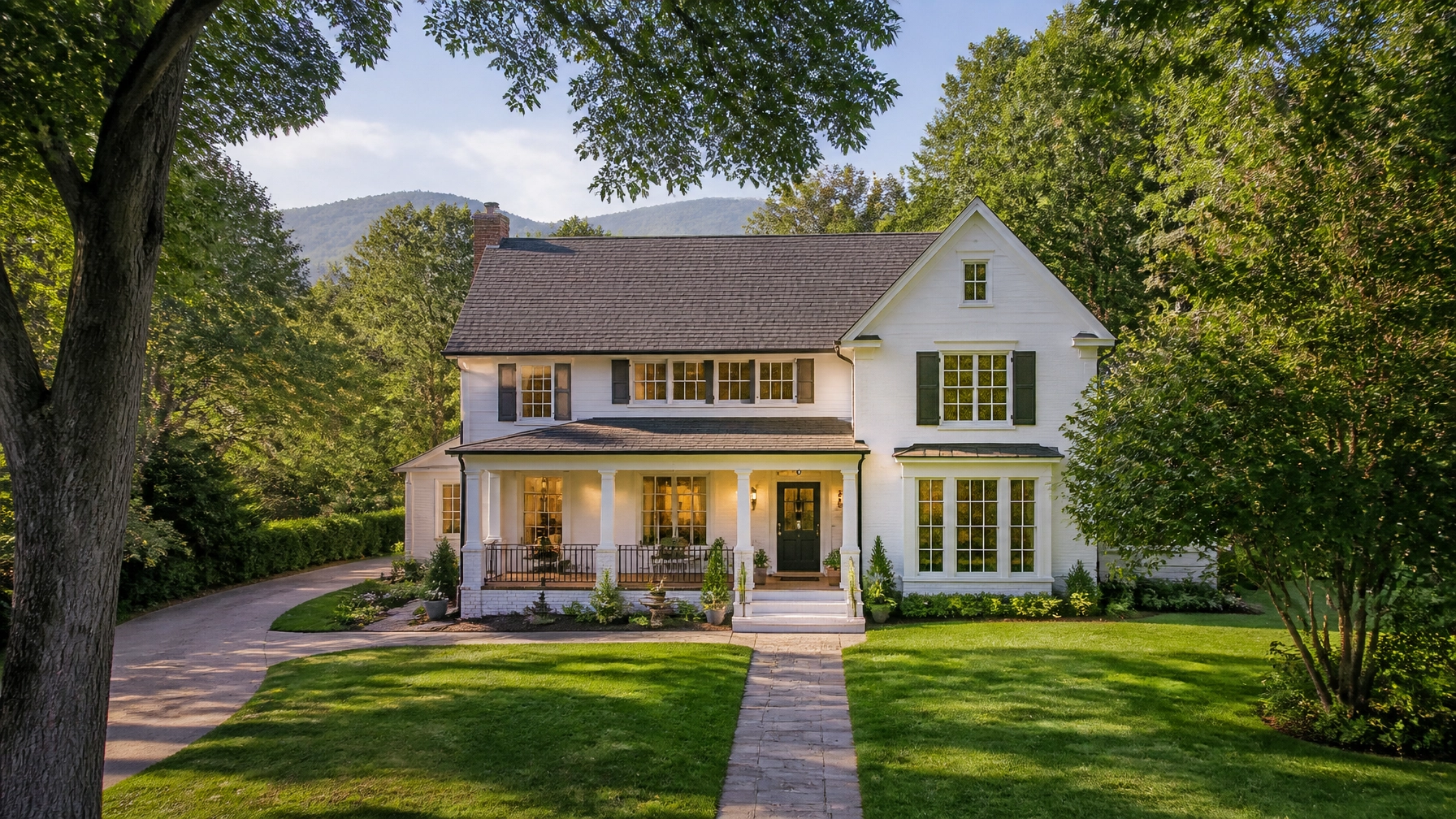
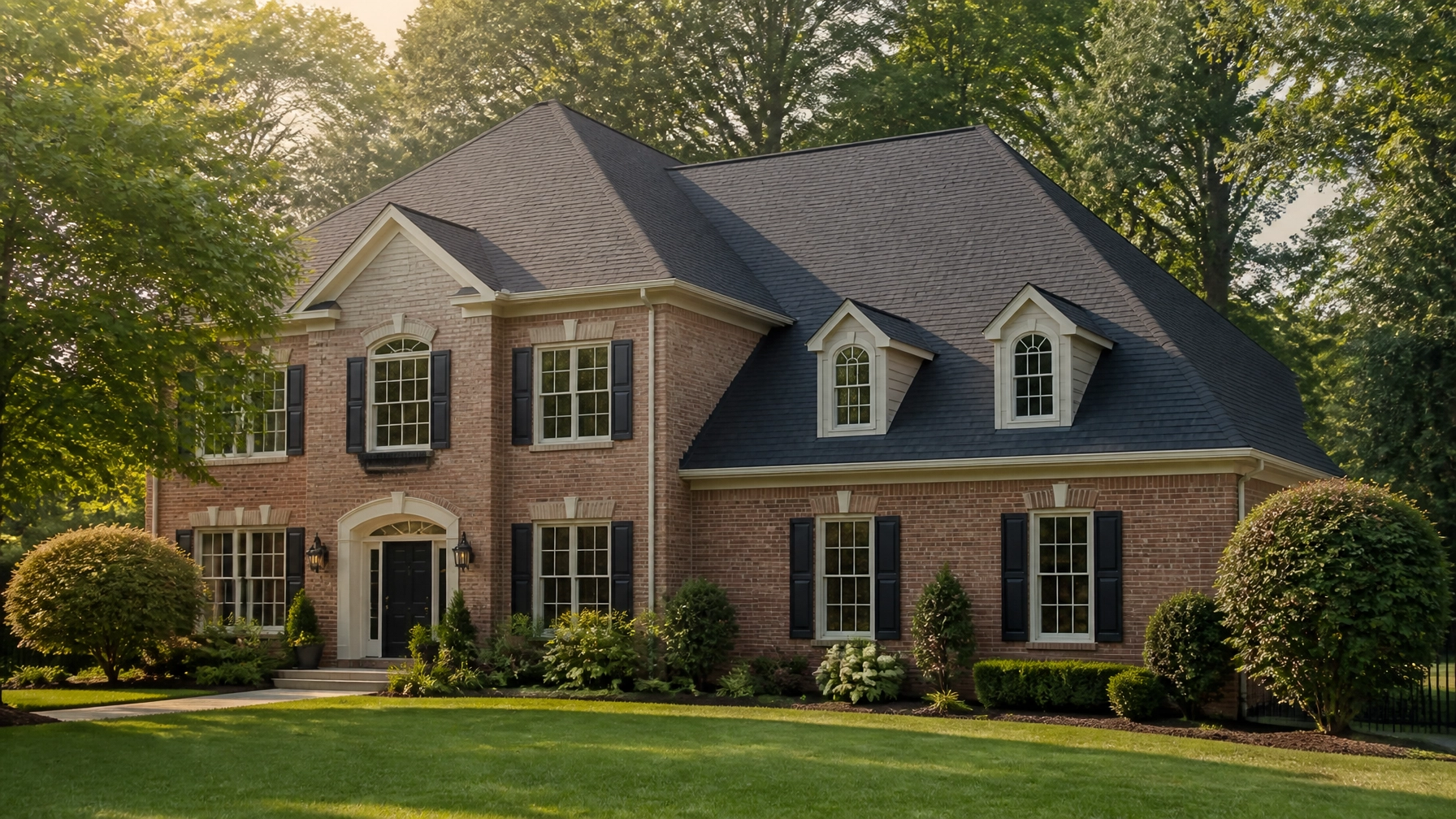
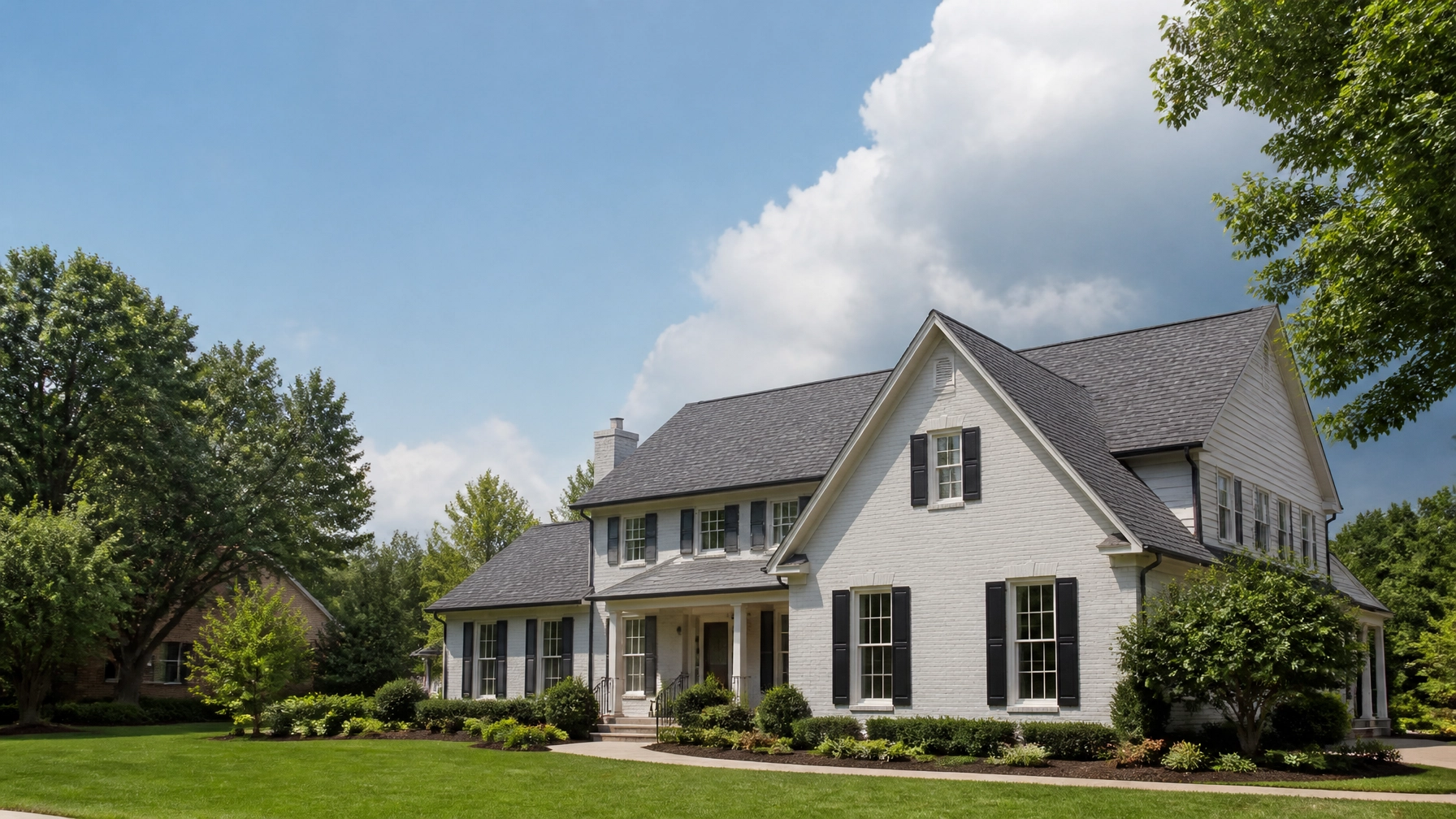
    Traditional Lexington Kentucky Colonial home with a new architectural shingle roof

    Material Options for Lexington Homes

    Architectural Asphalt Shingles (Popular)

    Architectural shingles are the most common choice for Lexington homeowners because they balance appearance, cost, availability, and performance.

    Typical installed cost: $10,000–$16,000 for a 2,000-square-foot roof.

    Advantages include:

    • Broad selection of colors and profiles
    • Good curb appeal for ranch, Colonial, and traditional homes
    • Lower upfront cost than metal or synthetic roofing
    • Typical service life of approximately 20–30 years with proper installation
    • Straightforward repairs and replacement

    For Kentucky’s hail and wind exposure, consider heavier shingles with higher wind ratings or Class 4 impact resistance when available. These upgrades may add to the initial cost but can improve durability and may affect insurance pricing. Confirm eligibility with your insurer.

    Metal Roofing (Premium)

    Metal roofing is increasingly popular on modern homes, rural properties, and houses with long-term ownership plans.

    Typical installed cost:

    • Exposed-fastener metal: approximately $14,000–$26,000
    • Standing-seam metal: approximately $20,000–$35,000+

    Metal roofs can last 40–70 years depending on the system, coating, installation quality, and maintenance. They also handle rain, temperature changes, and wind well.

    The main drawbacks are the higher upfront price and the importance of skilled installation. Poorly detailed penetrations, exposed fasteners, or incompatible metals can create avoidable maintenance problems.

    Synthetic or Composite Roofing (Premium)

    Synthetic roofing can imitate slate, wood shakes, or tile without the weight and maintenance demands of some traditional materials.

    Typical installed cost: $20,000–$40,000+ for approximately 2,000 square feet.

    Synthetic systems may suit homeowners who want a distinctive appearance, long service life, or better weight management than natural slate or tile. However, product quality varies. Review the manufacturer’s fire rating, impact rating, warranty terms, fastening requirements, and local installer experience before selecting a system.

    Why Lexington’s Climate Affects Roof Pricing

    According to National Weather Service climate information for Lexington, the area has approximately:

    • 49.84 inches of annual precipitation
    • 14.5 inches of average annual snowfall
    • Average July highs near 87°F
    • Average January lows near 25°F

    That combination creates several roofing concerns.

    Seasonal Storm Risks

    Spring and summer thunderstorms can bring hail, strong straight-line winds, heavy rain, and occasional tornado activity across central Kentucky. Storm damage may loosen shingles, expose underlayment, damage flashing, or allow water behind siding and wall assemblies.

    After a major storm:

    1. Photograph visible damage from the ground.
    2. Avoid climbing onto the roof.
    3. Check ceilings and attic areas for moisture.
    4. Use temporary protection if water is entering.
    5. Request a professional inspection and written estimate.

    Storm-related work can increase contractor demand and scheduling delays. It can also require additional decking, flashing, or interior repair.

    Freeze-Thaw and Temperature Swings

    Lexington roofs repeatedly move through freezing nights, warm afternoons, summer heat, and rapid weather changes. Over time, this can stress sealants, flashing, pipe boots, underlayment, and shingle bonds.

    A reliable replacement should include:

    • Correct nail placement and fastening
    • Proper attic ventilation
    • Durable flashing around chimneys and walls
    • Adequate underlayment
    • Properly sealed roof penetrations
    • Replacement of deteriorated decking

    Humidity, Rain, and Algae

    Moisture and shade can encourage algae growth and accelerate the appearance of roof staining. Algae-resistant shingles, clean gutters, balanced attic ventilation, and trimmed branches can help protect the roof system.

    Key Factors That Change a Lexington Roof Quote

    Roof Size and Measured Geometry

    Satellite measurements provide a more useful starting point than guessing from the home’s living area. The roof may be significantly larger because of overhangs, attached garages, porches, and multiple elevations.

    Pitch and Access

    Steep roofs require additional fall protection, slower installation, and specialized equipment. Limited driveway access, landscaping, fencing, or detached structures may also affect labor and material handling.

    Roof Complexity

    Expect higher pricing for roofs with:

    • Multiple valleys
    • Dormers
    • Skylights
    • Chimneys
    • Several ridgelines
    • Low-slope transitions
    • Complex flashing details

    Tear-Off and Hidden Damage

    Removing two or more existing layers requires more labor and disposal. Once the roof is open, contractors may find rotten decking, damaged rafters, inadequate ventilation, or deteriorated flashing.

    A practical budget should reserve 10%–15% for unforeseen conditions, especially on older Lexington homes.

    Material and Labor Market Conditions

    Regional supplier pricing, fuel costs, crew availability, seasonal demand, and material lead times all influence the final estimate. Lexington pricing can also differ from nearby rural communities, where travel and material delivery may affect the job total.

    New standing-seam metal roof on a modern Kentucky home

    Lexington Building Regulations and Permits

    A full roof replacement should be reviewed with the Lexington-Fayette Urban County Government Division of Building Inspection before work begins.

    The city states that Building Inspection enforces the Kentucky Building Code and provides information for residential permits. Full reroofing generally requires a permit, while minor, nonstructural repairs may be treated differently.

    Important points for homeowners:

    • Confirm whether your project is a full replacement, recover, or repair.
    • Ask who will obtain the permit.
    • Verify that the contractor is registered with Lexington-Fayette County.
    • Confirm the current code edition and roofing requirements.
    • Check whether historic or neighborhood overlays apply.
    • Ask about required inspections.
    • Keep permit and final inspection records for future resale.

    Lexington’s official Building Inspection contact is (859) 258-3770, with offices at 101 E. Vine Street. Kentucky’s statewide building standards are administered through the Kentucky Department of Housing, Buildings and Construction.

    A reputable contractor should not discourage permitting or suggest skipping required inspections.

    Practical Ways to Budget for a New Roof in 2026

    Use these steps to build a realistic project budget:

    • Start with your roof’s measured area in squares.
    • Compare at least three written estimates.
    • Request the same material grade from each contractor.
    • Separate replacement cost from optional upgrades.
    • Ask how damaged decking will be priced.
    • Confirm disposal, flashing, ventilation, and permit costs.
    • Review workmanship and manufacturer warranties.
    • Avoid choosing solely on the lowest bid.
    • Schedule before peak storm-repair demand when possible.
    • Keep a 10%–15% contingency for hidden damage.

    Before arranging multiple in-home appointments, you can check your roof replacement price online using satellite imagery. The estimate is free, requires no credit card, and typically returns in under one minute.

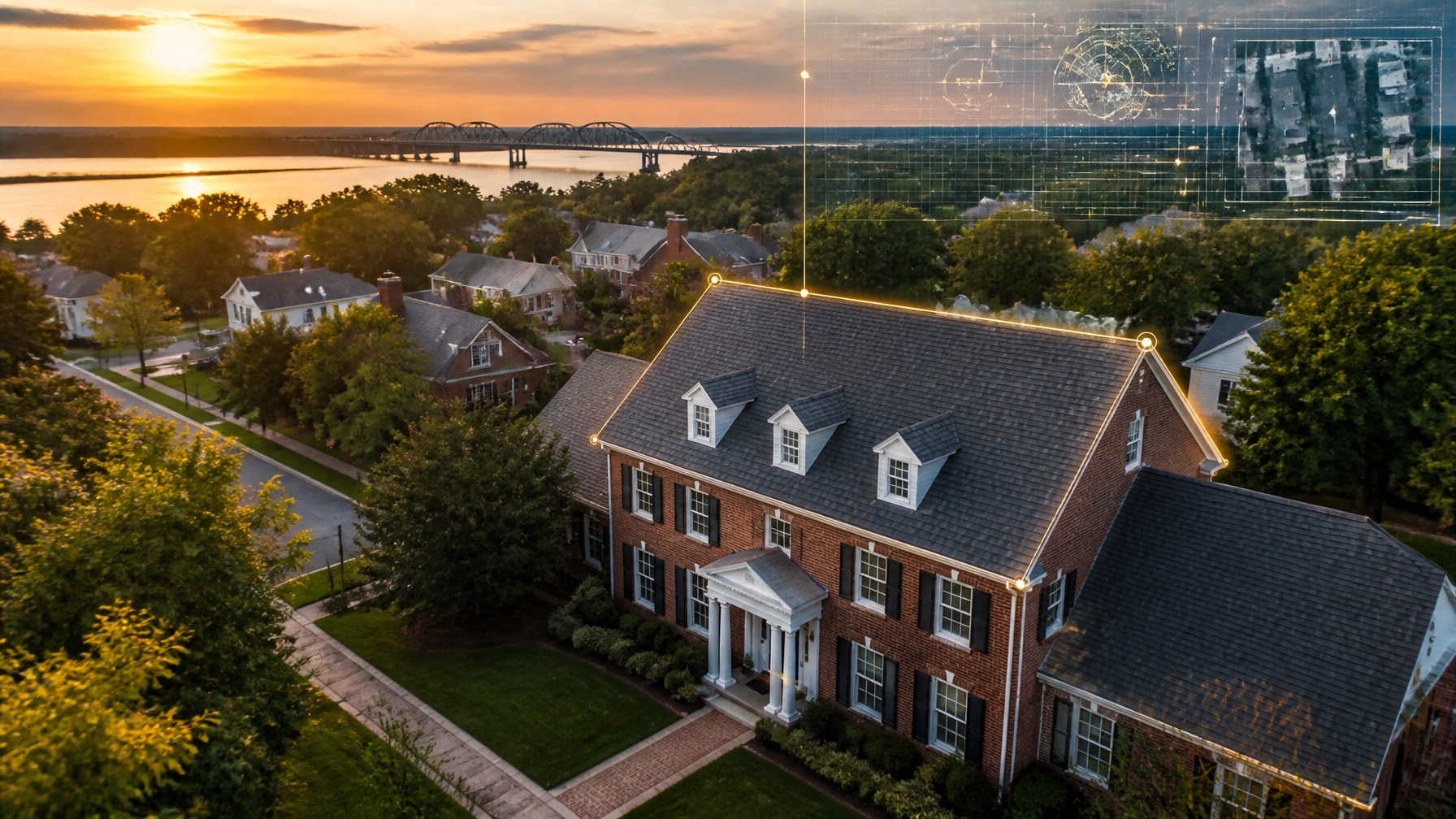
    Aerial view of a complex Lexington residential roof with premium synthetic roofing

    Frequently Asked Questions

    How much does a new roof cost in Lexington, KY, in 2026?

    Most 2,000-square-foot Lexington homes cost approximately $10,000–$16,000 for architectural shingles. Metal roofing commonly costs $14,000–$30,000+, while synthetic systems may reach $20,000–$40,000+.

    Is roof replacement based on home square footage?

    No. Roofing is priced by the actual roof surface area. Pitch, overhangs, garages, valleys, dormers, and waste allowances all affect the measured total.

    What is the best roofing material for Lexington weather?

    Architectural shingles are the most practical choice for many homeowners. Impact-resistant shingles and metal roofing may be worth considering where hail, wind exposure, or long-term durability is a priority.

    Do I need a permit to replace my roof in Lexington?

    A full roof replacement generally requires review and permitting. Requirements can vary based on the scope, existing layers, structural work, and property location. Confirm details with Lexington’s Division of Building Inspection.

    Can I get a roof estimate without a contractor visit?

    Yes. Get My Roof Estimate Now uses satellite-powered measurements to estimate roof size, pitch, and complexity. Homeowners can receive a free price range in approximately 60 seconds without scheduling a sales visit.

    Get Your Lexington Roof Estimate in 60 Seconds

    Whether you live near Chevy Chase, Beaumont, Hamburg, Bryan Station, or a surrounding Fayette County community, your roof’s size and design determine the project cost.

    Get a clear starting range before comparing contractors. Enter your Lexington address for a free satellite-powered roof replacement estimate. There is no credit card, no obligation, and no upfront sales appointment.
  • Daily Weather Blitz – Charlotte, NC : August 10, 2026: Mid-90s Heat, Afternoon Storm Risks & Queen City Roof Resilience

    Daily Weather Blitz – Charlotte, NC : August 10, 2026: Mid-90s Heat, Afternoon Storm Risks & Queen City Roof Resilience

    Charlotte starts Monday, August 10, with the familiar Queen City combination of heat, humidity, and storm potential.

    Morning temperatures are expected to sit in the low-to-mid 70s with high humidity. By afternoon, temperatures should climb into the low-to-mid 90s, while the heat index reaches approximately 101°F. Storm chances remain isolated, but any afternoon thunderstorm could bring a quick burst of heavy rain, gusty wind, and lightning.

    For homeowners, today is a useful reminder: Charlotte roofs face more than simple summer heat. Intense ultraviolet exposure, sudden downpours, humidity, and rapid temperature changes gradually test shingles, flashing, gutters, and attic ventilation.

    Charlotte Weather Snapshot for August 10

    According to the National Weather Service Charlotte forecast, today’s pattern includes:

    • Morning: Humid, mostly partly cloudy, with temperatures in the 70s
    • Afternoon: Hot and sticky, with temperatures near 93–95°F
    • Heat index: Around 100–102°F, near 101°F at peak heating
    • Storm risk: Isolated afternoon thunderstorms
    • Storm concerns: Brief heavy rain, gusty winds, lightning, and localized runoff
    • Evening: Gradually cooler, but still humid

    This is not necessarily a widespread washout. However, isolated storms can still affect individual neighborhoods differently. A home in Ballantyne may stay dry while a short, intense storm moves across Dilworth, Matthews, or University City.

    That uneven pattern makes routine roof monitoring important. Damage does not require a region-wide severe weather event.

    Why Mid-90s Heat Matters for Your Roof

    A roof absorbs direct sunlight for hours before afternoon clouds or rain arrive. Dark asphalt shingles can become substantially hotter than the surrounding air. That heat accelerates the aging process, especially on older roofs.

    1. UV degradation (Long-term wear)

    Ultraviolet radiation gradually breaks down the binders and surface protection in asphalt shingles. Over time, homeowners may notice:

    • Granules collecting in gutters
    • Shingles becoming brittle
    • Curling or cracked edges
    • Faded or uneven color
    • Exposed fiberglass matting
    • Small areas that appear thin or worn

    Granule loss is not always an emergency, but it is a useful warning sign. Granules protect the shingle surface from sunlight and weather. As they disappear, the roof becomes more vulnerable to heat, moisture, and impact.

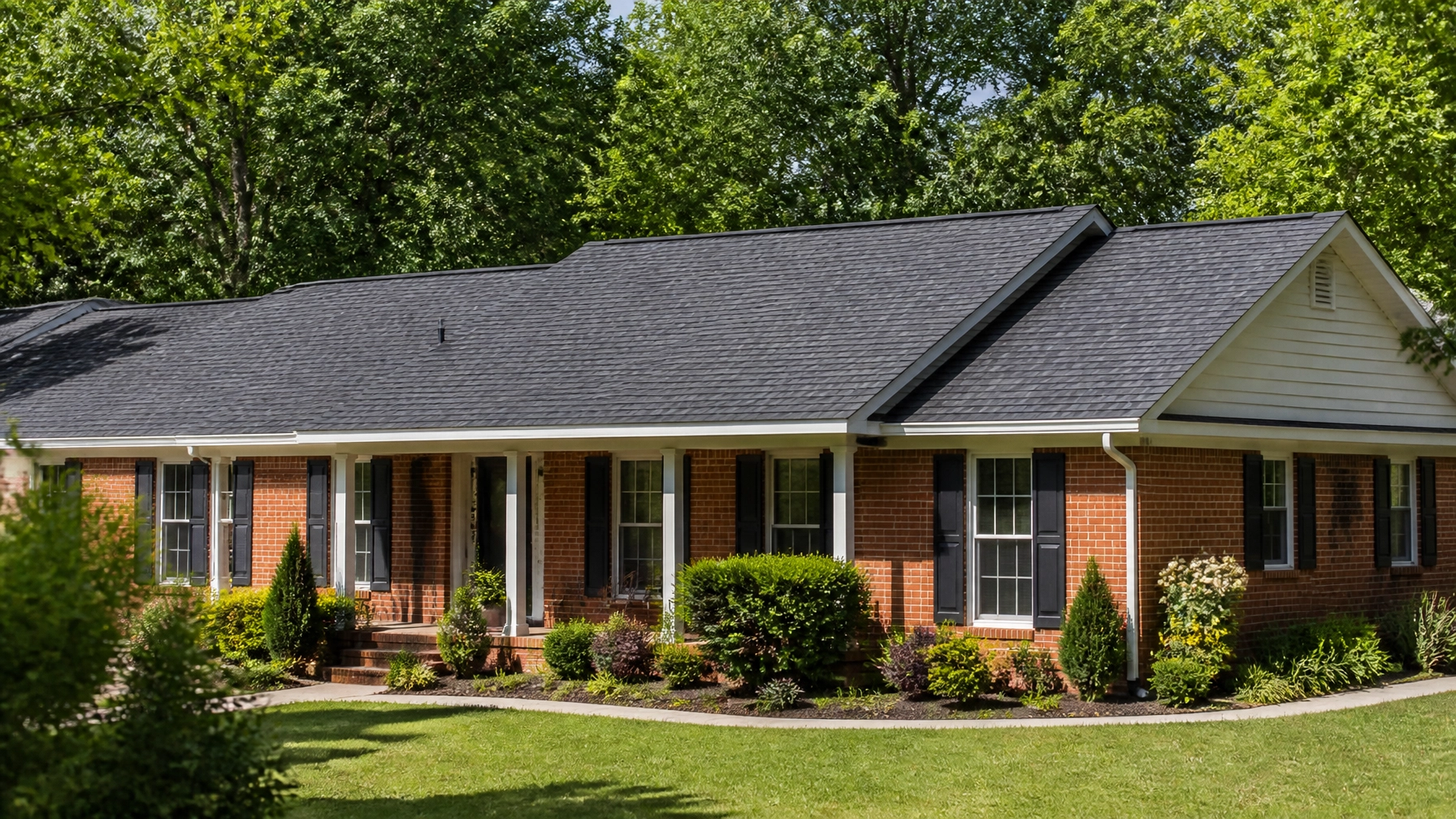
    Charlotte ranch home with a new architectural shingle roof exposed to intense summer sunlight

    2. Thermal shock (Fast temperature changes)

    Charlotte roofs can heat up significantly during the afternoon and then cool quickly when a thunderstorm moves through.

    That rapid change creates expansion and contraction across roofing materials. Repeated cycles can place stress on:

    • Shingle seals
    • Flashing around chimneys and walls
    • Pipe boots and roof vents
    • Metal fasteners
    • Valleys and roof transitions
    • Sealants around penetrations

    Thermal shock usually causes gradual deterioration rather than one obvious failure. A small gap may not leak during a light shower. A sudden downpour, however, can force water into weaknesses that were previously hidden.

    Heavy Downpours Can Find Small Defects

    Charlotte receives roughly 43 inches of rain in a typical year, and summer thunderstorms can deliver a large amount of water in a short period.

    The roof surface is only one part of the drainage system. Water must move quickly from the shingles into the gutters, through the downspouts, and away from the foundation.

    A heavy storm can expose problems such as:

    • Clogged gutters
    • Loose or separated downspouts
    • Overflowing valleys
    • Damaged flashing
    • Blocked gutter guards
    • Sagging fascia
    • Poor drainage near roof additions

    Water stains inside the home may not appear directly below the roof defect. Water can travel along decking, rafters, insulation, or wall cavities before becoming visible.

    If you see a ceiling stain after today’s storms, do not assume the problem is minor simply because the stain is small. The visible mark may represent a larger moisture path above it.

    Afternoon Storm-Readiness Checklist

    Use the morning hours to complete a quick inspection from the ground. Avoid climbing onto a hot or wet roof.

    Before storms arrive

    • Clear leaves, pine needles, and debris from accessible gutters.
    • Confirm that downspouts discharge several feet away from the foundation.
    • Look for visibly missing, lifted, or curled shingles.
    • Check for loose flashing around vents, skylights, chimneys, and roof-to-wall joints.
    • Trim dead or weak branches near the roofline.
    • Secure patio furniture, umbrellas, and lightweight outdoor items.
    • Confirm that attic vents are not blocked.
    • Make sure you know where water shutoffs and emergency supplies are located.

    If your roof is difficult to see from the ground, use binoculars or take photos from a safe location. Do not walk on shingles during extreme heat, rain, or high wind.

    After a storm passes

    Wait until lightning has cleared and surfaces are dry. Then check for:

    • Shingles in the yard
    • New granules around downspouts
    • Dented metal vents or flashing
    • Damaged gutters
    • Fallen branches
    • Attic moisture or new ceiling stains
    • Daylight visible through attic roof decking

    If a tree hits the roof or water is actively entering the home, contact a licensed roofing professional promptly. Do not climb up to place a tarp yourself. Temporary protection is safest when installed by someone with the proper equipment and training.

    Modern Charlotte-area home with a dark metal roof under building afternoon thunderstorm clouds

    When Repair Makes Sense: and When to Plan Replacement

    A newer roof with isolated damage may only need a targeted repair. Replacement becomes more likely when several conditions occur together:

    • The roof is approximately 20 years old or more.
    • Shingles are curling, cracking, or losing large amounts of granules.
    • Leaks are recurring in multiple areas.
    • The roof has widespread storm or hail damage.
    • The decking or ventilation system is deteriorating.
    • Repair costs are becoming a substantial portion of replacement cost.

    Charlotte roof replacement pricing typically ranges from approximately $6,000 to $22,000, depending on roof size, pitch, complexity, material, removal requirements, and local labor conditions. A typical 2,000-square-foot home with architectural shingles may fall near the middle of that range, but every property is different.

    Common material categories include:

    • Architectural shingles (Popular): A practical balance of cost, appearance, and durability
    • Impact-resistant shingles (Storm-focused): Designed to better withstand hail impacts
    • Metal roofing (Long-term): Reflects more sunlight and can provide a longer service life
    • Slate (Premium): Durable and distinctive, but heavier and more expensive

    A price range is useful before speaking with contractors because it helps you budget without committing to a project prematurely.

    Get a Charlotte Roof Estimate in Under 60 Seconds

    You do not need to schedule several contractor visits just to understand the likely cost of replacement.

    Get My Roof Estimate Now uses satellite imagery to measure your roof’s size, pitch, and layout. Enter your Charlotte address and receive an instant estimate in under 60 seconds.

    The estimate is:

    • Free
    • Available without a credit card
    • Based on your property’s satellite-measured roof
    • Organized into low, middle, and high price ranges
    • Useful for comparing materials and planning next steps

    The result is a budgeting tool, not a substitute for a final in-person inspection. A contractor still needs to verify decking, flashing, ventilation, and storm damage before creating a final written proposal.

    For local pricing details, review the Charlotte, NC roofing estimate guide or learn how to compare Charlotte roofing companies.

    Charlotte colonial home after a summer downpour with intact shingles, clean gutters, and wet landscaping

    The Bottom Line for Queen City Homeowners

    Today’s heat index near 101°F and isolated afternoon storm risk are normal for Charlotte in August: but normal weather can still accelerate roof wear.

    The most important actions are simple:

    1. Keep gutters and downspouts clear.
    2. Watch for granule loss, curled shingles, and damaged flashing.
    3. Trim weak branches near the roof.
    4. Check the attic and ceilings after heavy rain.
    5. Photograph storm damage from the ground.
    6. Get a price range early if your roof is aging.

    If replacement may be approaching, use satellite-powered measurements to understand your likely budget before scheduling a contractor visit. In less than a minute, you can get a free Charlotte roof estimate and move forward with better information.

  • Daily Tech Blitz – Slot 1: Wilmington’s Satellite Tech Edge Is Bringing Coastal Precision to Roof Estimates

    Daily Tech Blitz – Slot 1: Wilmington’s Satellite Tech Edge Is Bringing Coastal Precision to Roof Estimates

    Wilmington is becoming a stronger center for coastal mapping, remote sensing, and storm intelligence. That matters to homeowners because the same data systems used to study shorelines, flooding, ports, and hurricanes are changing how residential properties are measured.

    For Wilmington homeowners planning a roof replacement in 2026, satellite-powered estimating offers a faster starting point:

    • Typical roof replacement range: $8,000–$20,000+, depending on size, pitch, complexity, and materials
    • Architectural shingles: $4.20–$6.00 per square foot; approximately $8,000–$15,000 for many homes
    • Standing-seam metal roofing: $8.00–$18.55 per square foot; approximately $18,000–$40,000 for many larger or more complex projects
    • Estimate delivery: About 60 seconds
    • Measurement accuracy: Approximately 90–95%
    • Cost: Free, with no credit card required

    The result is practical property intelligence before a contractor visit is scheduled.

    Wilmington’s Coastal Technology Advantage

    Wilmington’s location between the Cape Fear River, Atlantic Ocean, barrier islands, and growing residential areas makes it a natural test environment for coastal geospatial technology.

    Several data programs are contributing to this regional technology ecosystem.

    NOAA Coastal Mapping Program

    NOAA’s Coastal Mapping Program creates accurate shoreline and coastal mapping products for navigation, resource management, planning, and storm analysis. NOAA explains that its shoreline mapping uses tide-coordinated aerial photography, GPS control, and photogrammetry to produce consistent digital coastal data.

    The Port of Wilmington has already been associated with NOAA shoreline mapping through project NC1501-CS-N. The newer NC2402-CS-N reference is expected to represent a more recent project or update connected to the Wilmington area. However, public NOAA metadata currently provides clearer confirmation for the completed NC1501-CS-N baseline than for a released NC2402-CS-N dataset.

    That distinction is important. Good geospatial work depends on knowing whether data is completed, planned, or still awaiting publication.

    Regardless of the project stage, the broader benefit is clear: Wilmington has access to increasingly detailed coastal reference data that supports better mapping, planning, and change detection.

    SECOORA’s 2026 Hurricane-Season Network

    The Southeast Coastal Ocean Observing Regional Association is preparing a regional observing network for the 2026 hurricane season. Its tools combine:

    • Offshore moorings
    • Water-level sensors
    • Coastal cameras
    • Weather stations
    • Buoys and other marine observations
    • Flood and surge mapping resources

    SECOORA also supports the Southeast Water Level Network, which includes Wilmington-area monitoring locations. Sensors along Burnt Mill Creek and other sites can help document rising water levels and urban flooding.

    This network does not inspect individual residential roofs. Its value is broader. It creates better environmental context around a property: storm intensity, flood exposure, water levels, and post-storm conditions. That information can help homeowners decide when to inspect a roof, whether damage may be storm-related, and how urgently to begin budgeting.

    UNCW’s Coastal UAS Observatory

    The UNCW Coastal UAS Observatory uses uncrewed aircraft systems, commonly called drones, to collect high-resolution coastal data.

    Its equipment and research applications include:

    • Multispectral imaging
    • Topographic LiDAR
    • Topographic-bathymetric LiDAR
    • Hyperspectral sensing
    • High-accuracy GPS positioning
    • Coastal vegetation and flood mapping

    Researchers use these tools to study barrier islands, wetlands, flooding, shoreline change, and coastal infrastructure. Drone imagery can capture details that are difficult to see in lower-resolution data.

    For property analysis, this represents an important shift. A roof is no longer evaluated only through a ladder inspection or a quick visual estimate from the street. It can be measured as part of a larger digital property model.

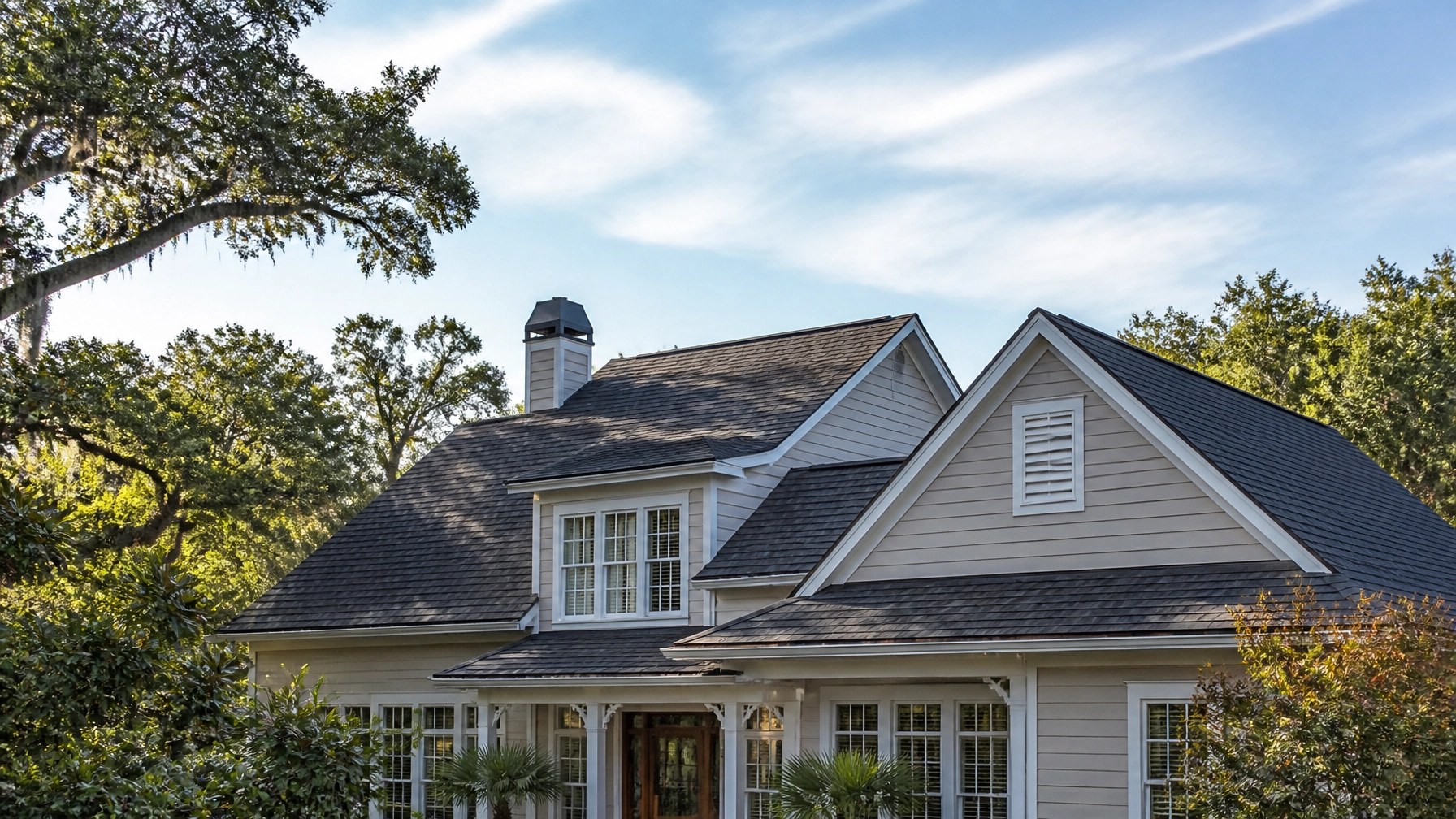
    Aerial view of a Wilmington-area ranch home showing its full roof geometry

    How Aerial and Satellite Data Transform Roof Inspections

    Traditional roof estimating often starts with a contractor visit. That visit is useful for detailed inspection, but it may take days to schedule. Homeowners may need several appointments just to understand the likely project cost.

    Satellite and aerial data improve the first step by identifying the property’s measurable characteristics before an on-site appointment.
    A technology-based roof estimate can evaluate:

    • Roof length and width
    • Total roof area
    • Roof sections and planes
    • Pitch or slope
    • Valleys, hips, and ridges
    • Dormers and attached structures
    • Estimated material quantities
    • Regional pricing conditions

    Roof size is commonly expressed in squares. One roofing square equals 100 square feet of roof surface. A home with 2,000 square feet of living space may have a larger roof area depending on pitch, overhangs, garages, porches, and architectural design.

    That is why square-footage estimates based only on a home’s floor plan can be misleading. Measuring the actual roof geometry produces a more useful starting number.

    Satellite imagery also reduces unnecessary site visits during the early budgeting stage. Homeowners can get an initial range, compare materials, and decide whether to proceed with a physical inspection.

    Instant Roof Estimates for Wilmington Homeowners

    Get My Roof Estimate Now uses satellite imagery technology to analyze a specific property.

    The process is simple:

    1. Enter the Wilmington property address.
    2. Allow the system to analyze the roof’s size, pitch, and complexity.
    3. Receive an estimated replacement range in about 60 seconds.
    4. Review material options and likely project costs.
    5. Use the estimate to plan a contractor conversation.

    There is no initial contractor visit required, no credit card, and no charge for the estimate.

    The system is designed to provide approximately 90–95% measurement accuracy, including detailed roof dimensions based on available imagery. The estimate is a planning tool: not a replacement for a final contractor inspection. A qualified roofer still needs to verify decking, flashing, ventilation, hidden moisture, code requirements, and storm damage on-site.

    That combination is more efficient than choosing between “no information” and “schedule a full inspection.” Homeowners can begin with reliable budget data and bring contractors in when the project is ready for detailed evaluation.

    Wilmington Roof Replacement Cost Benchmarks for 2026

    Wilmington prices vary by neighborhood, roof design, contractor availability, labor conditions, and exposure to coastal weather. For 2026, many homeowners should plan around the following broad benchmarks:

    Roof type Price benchmark Typical total
    Architectural shingles (Popular) $4.20–$6.00 per sq. ft. $8,000–$15,000
    Standing-seam metal roofing (Premium) $8.00–$18.55 per sq. ft. $18,000–$40,000
    Mixed or complex replacement Varies by design and condition $8,000–$20,000+

    These ranges are not fixed bids. A smaller, simple ranch roof may fall near the lower end. A steep two-story home with multiple roof sections, extensive tear-off, or premium detailing may exceed the typical range.

    Key cost drivers include:

    • Roof area: More squares require more materials and labor.
    • Pitch: Steeper roofs require additional safety equipment and installation time.
    • Complexity: Valleys, dormers, chimneys, skylights, and multiple ridgelines increase labor.
    • Tear-off: Removing old roofing adds disposal and labor costs.
    • Decking: Rotten or water-damaged sheathing may require replacement.
    • Material selection: Metal roofing can cost substantially more upfront than shingles.
    • Coastal conditions: Wind requirements, corrosion concerns, and local installation standards may affect material and labor decisions.

    Southern Colonial home in coastal North Carolina with a standing-seam metal roof

    Architectural Shingles or Standing-Seam Metal?

    Architectural Shingles (Popular)

    Architectural shingles remain the most common choice for Wilmington homeowners because they offer a balance of cost, appearance, and availability.

    Typical advantages include:

    • Lower initial cost
    • Many colors and profiles
    • Straightforward replacement process
    • Broad contractor availability
    • Good curb appeal for ranch, cottage, and Colonial homes

    For many standard Wilmington homes, a total project range of $8,000–$15,000 is a reasonable planning benchmark before site-specific adjustments.

    Standing-Seam Metal Roofing (Premium)

    Standing-seam metal roofing is a higher-cost option with a clean, modern appearance. It is often selected for long-term durability, contemporary design, and low-maintenance performance.

    Typical planning figures are:

    • $8.00–$18.55 per square foot
    • Approximately $18,000–$40,000 for many residential installations

    The final price depends heavily on roof geometry, metal gauge, finish, underlayment, trim details, penetrations, and installation requirements.

    Three Practical Wilmington Use Cases

    1. Prepare Before Hurricane Season

    A satellite estimate gives homeowners a baseline before a storm arrives. If a roof is already 15–30 years old, knowing its likely replacement cost can help with emergency planning, insurance discussions, and household budgeting.

    After a storm, a physical inspection remains essential. Satellite-based information can still help compare the property’s condition, organize documentation, and identify whether a full replacement may be financially realistic.

    2. Evaluate Aging Roofs in Salt-Air Conditions

    Wilmington’s coastal environment exposes homes to humidity, wind, heavy rain, and salt-laden air. These conditions can accelerate deterioration of roofing components, especially flashing, fasteners, metal accessories, and exposed edges.

    A roof does not need to show an active leak to be approaching replacement age. A preliminary estimate helps homeowners understand the financial timeline before a minor issue becomes an emergency.

    3. Budget Before Inviting Contractors

    Homeowners can enter contractor conversations with a realistic range rather than an unknown price. That makes it easier to compare bids, evaluate material upgrades, and identify unusually high or low proposals.

    Start with the Wilmington roof estimate page, then request detailed on-site proposals from licensed and insured contractors.

    The Bottom Line

    Wilmington’s coastal technology infrastructure is improving how the region understands shorelines, flooding, storms, and property conditions. NOAA mapping, SECOORA sensors, and UNCW aerial research all point toward a more data-driven approach to coastal decision-making.

    Roof replacement planning is part of that shift.

    For Wilmington homeowners, an instant satellite roof estimate provides a fast, free, and transparent starting point. In approximately 60 seconds, you can review your roof’s measured characteristics, compare material benchmarks, and plan the next step: without scheduling an initial contractor visit or providing a credit card.

    That is coastal precision applied to a practical home decision.

    Coastal North Carolina cottage with a clean, well-maintained architectural shingle roof

    Research Sources

  • Daily ROI Blitz #185: How a New Roof Boosts Home Value in Knoxville, TN (2026 Data)

    Daily ROI Blitz #185: How a New Roof Boosts Home Value in Knoxville, TN (2026 Data)

    A new roof in Knoxville typically costs $10,000–$18,000 for architectural asphalt shingles and $18,000–$30,000+ for metal roofing in 2026. National remodeling data indicates that a midrange asphalt shingle replacement recoups approximately 68% of its cost at resale.

    For a $14,000 Knoxville roof, that benchmark equals roughly $9,520 in resale value recovered. The financial benefit can be higher when the replacement prevents buyer concessions, insurance concerns, inspection failures, or extended time on the market.

    This edition of the Daily ROI Blitz examines Knoxville’s 2026 housing conditions, local roof replacement costs, resale impact, and practical homeowner strategies.

    Knoxville’s 2026 Real Estate Market: Stable, But Buyers Are Selective

    Knoxville remains a desirable Tennessee market, but the rapid appreciation of 2021–2023 has cooled. The latest Realtor.com Knoxville market data reports:

    • $444,000 median listing price
    • $400,000 median sold price
    • 3,032 active listings
    • 47 median days on market
    • 100% average sale-to-list price ratio
    • 1.88% year-over-year growth in median listing price
    • 7.85% year-over-year growth in active listings

    The takeaway is straightforward: Knoxville is still competitive, but buyers have more choices and more time to evaluate property condition.

    That makes the roof a critical selling feature. A home with a new, documented roof can stand out from comparable listings with aging shingles, visible repairs, or uncertain remaining life.

    Local pricing also varies significantly. Recent Realtor.com snapshots show median listing prices around:

    • $385,000 in ZIP code 37918
    • $420,000 in ZIP code 37920
    • $620,000 in ZIP code 37932
    • $849,900 in ZIP code 37922

    A new roof will not add the same dollar amount to every property. However, it can help protect market value across Knoxville’s different neighborhoods by removing a major source of buyer concern.

    Why a New Roof Adds More Than Curb Appeal

    Roof replacement creates value in several ways. The most visible benefit is appearance, but resale impact usually comes from a combination of financial and practical advantages.

    1. It reduces buyer negotiation leverage

    A roof that is 18, 20, or 25 years old gives buyers a reason to request:

    • A price reduction
    • A seller-paid repair credit
    • A replacement before closing
    • A home warranty
    • Additional inspection conditions

    If buyers expect to spend $15,000 on a roof shortly after closing, they may subtract that amount from their offer: or more to account for uncertainty.

    A new roof changes the conversation. Instead of negotiating around an immediate capital expense, buyers can focus on the home’s layout, location, lot, and finishes.

    2. It improves inspection results

    Roof condition is one of the first exterior items inspectors review. They may document:

    • Missing or lifted shingles
    • Granule loss
    • Exposed fasteners
    • Damaged flashing
    • Sagging decking
    • Moss or algae growth
    • Improper ventilation
    • Signs of water intrusion

    A roof replacement completed with proper flashing, underlayment, ventilation, and installation records creates a stronger inspection package.

    3. It supports buyer financing and insurance

    Lenders and insurers do not treat roof age the same way in every transaction. An older roof can create underwriting questions, especially when visible storm damage or deferred maintenance is present.

    A newer, code-compliant roof may make the property easier to insure and finance. It can also give buyers more confidence that they will not face immediate repair costs after closing.

    4. It improves first impressions

    Knoxville buyers often compare homes online before scheduling a showing. A clean, uniform roof improves listing photography and the home’s exterior presentation.

    This matters in neighborhoods such as Fountain City, South Knoxville, West Hills, and the 37920 and 37918 ZIP codes, where older homes may compete directly with renovated properties and newer construction.

    Two-story Knoxville colonial home with a new architectural shingle roof

    2026 Knoxville Roof Replacement Costs

    The roof area is usually larger than the home’s interior footprint because of pitch, overhangs, valleys, dormers, and attached structures. A 2,000-square-foot home may have approximately 2,200–2,500 square feet of actual roof surface.

    Here are practical 2026 Knoxville planning ranges:

    Roofing system Typical installed price Approximate cost for a 2,200–2,500 sq. ft. roof
    3-tab shingles (Budget) $3.50–$5 per sq. ft. $8,000–$12,500
    Architectural shingles (Popular) $4–$7 per sq. ft. $10,000–$18,000
    Impact-resistant shingles (Storm-ready) $5–$8 per sq. ft. $12,000–$20,000
    Exposed-fastener metal (Durable) $6–$9 per sq. ft. $14,000–$22,500
    Standing-seam metal (Premium) $8–$14+ per sq. ft. $18,000–$35,000+

    These ranges can increase when the project includes steep slopes, multiple roof sections, chimney flashing, skylights, decking repairs, multiple tear-off layers, or difficult access.

    To understand how roof size and complexity affect your own budget, use the instant roof cost calculator.

    Which Roofing Material Delivers the Best ROI?

    Architectural asphalt shingles (Popular)

    Architectural shingles are usually the strongest resale choice for Knoxville homeowners who want a balance of cost, appearance, and buyer appeal.

    Advantages include:

    • Broad compatibility with Knoxville home styles
    • Lower upfront cost than metal
    • Attractive dimensional appearance
    • Typical service life of roughly 20–30 years
    • Easier replacement and repair
    • Strong availability among local contractors

    For most homeowners planning to sell within several years, architectural shingles offer the clearest value proposition. Learn more about asphalt shingle roofing.

    Impact-resistant shingles (Storm-ready)

    Knoxville experiences heavy rain, strong winds, hail, and occasional severe storms. Impact-resistant shingles may be worth considering when the roof has significant exposure or the homeowner plans to remain in the property for the long term.

    Ask contractors about:

    • UL 2218 impact ratings
    • Wind warranties
    • Manufacturer installation requirements
    • Possible insurance documentation
    • Proper valley and flashing installation

    Do not assume an impact-resistant roof automatically qualifies for an insurance discount. Confirm eligibility directly with your insurance carrier.

    Standing-seam metal (Premium)

    Standing-seam metal roofing generally costs more upfront but can provide a longer service life and strong architectural appeal. It may be a practical choice for a forever home, a modern property, or a high-value home in areas such as West Knoxville or ZIP code 37932.

    Modern Knoxville home with a new standing-seam metal roof

    Metal roofing can deliver:

    • A 40–60 year expected service life, depending on the system
    • Low routine maintenance
    • Strong resistance to rain and wind
    • Energy benefits from reflective finishes
    • Distinctive curb appeal

    However, premium materials do not always return their full cost at resale. If you are selling soon, choose a material that fits the neighborhood and comparable homes rather than automatically selecting the most expensive system.

    Knoxville Weather Makes Maintenance Part of ROI

    A roof’s value depends on installation quality and upkeep. Knoxville roofs face:

    • Humid summers
    • Heavy rainfall
    • Spring and summer thunderstorms
    • Hail and wind exposure
    • Temperature swings and freeze-thaw cycles
    • Leaf and debris accumulation beneath mature trees

    These conditions can accelerate granule loss, flashing deterioration, algae growth, and ventilation problems.

    Residential roof replacement project with clean roof geometry and ridge ventilation

    Use this maintenance checklist:

    • Inspect the roof after major hail or wind events.
    • Check ceilings and attic spaces for water stains.
    • Keep gutters and downspouts clear.
    • Trim branches away from the roof.
    • Watch for missing, curled, or lifted shingles.
    • Save invoices, permits, warranties, and inspection reports.
    • Schedule a professional inspection before listing the home.

    Never climb onto the roof after a storm. A ground-level review can identify obvious problems, but a qualified professional should assess suspected damage.

    How to Maximize Your Roof Replacement ROI

    1. Measure before requesting quotes

    Contractors may estimate roof size differently. An address-based satellite measurement gives you a useful baseline for comparing proposals.

    Get My Roof Estimate Now measures roof size, pitch, and complexity using satellite imagery. Homeowners receive a free price range in about 60 seconds, with no credit card required.

    2. Compare complete scopes of work

    Do not compare material prices alone. Ask whether each quote includes:

    • Tear-off and disposal
    • Underlayment
    • Ice and water protection where appropriate
    • Drip edge
    • Flashing replacement
    • Ridge ventilation
    • Decking allowance
    • Cleanup and magnetic nail sweep
    • Permit and warranty details

    3. Match the roof to the property

    A standard architectural shingle roof may be the most sensible choice for a mid-priced ranch in North Knoxville. A standing-seam metal roof may make more sense for a modern or high-value property.

    The best ROI is not always the longest-lasting material. It is the improvement that fits local buyer expectations, the home’s value, and your ownership timeline.

    4. Replace before an emergency

    Emergency replacement often limits your choices and increases stress. If your roof is 15–30 years old, begin budgeting before active leaks appear.

    A planned replacement lets you compare materials, verify contractors, address decking, and schedule work around weather conditions.

    The Bottom Line for Knoxville Homeowners

    A new roof can improve Knoxville home value through direct resale recovery, stronger buyer confidence, fewer inspection objections, better insurability, and improved curb appeal.

    For 2026 planning:

    • Budget $10,000–$18,000 for a typical architectural shingle roof.
    • Expect roughly 68% national cost recovery as a resale benchmark, not a guarantee.
    • Consider impact-resistant shingles for additional storm protection.
    • Choose metal roofing when long-term durability and design justify the premium.
    • Document every part of the installation.
    • Get an instant, address-specific estimate before scheduling contractor visits.

    Start with accurate numbers for your property using a free satellite-powered roof estimate. It takes less than 60 seconds and helps you plan your next step with clearer information.

  • Daily ROI Blitz #183: How a New Roof Boosts Home Value in Chattanooga, TN (2026 Data)

    Daily ROI Blitz #183: How a New Roof Boosts Home Value in Chattanooga, TN (2026 Data)

    A new roof can add more than curb appeal to a Chattanooga home. In the 2026 market, it can reduce buyer hesitation, support a stronger asking price, and help a property stand out while local inventory is rising.

    Current Chattanooga housing data places typical home values around $325,000 to $340,000, while recent median sold prices range from approximately $340,000 to $360,000. Redfin reported a median sale price near $359,804 for the three months ending in June 2026. Median list prices have recently reached approximately $379,000 to $399,900, depending on the source and area measured.

    At the same time, inventory is up roughly 23% year over year in parts of the Chattanooga market. Buyers have more choices and more negotiating leverage. That makes visible maintenance issues: especially an aging roof: more expensive for sellers.

    The 2026 Chattanooga roof replacement ROI outlook

    A practical resale ROI range for a professionally installed roof replacement is approximately 65% to 80%, depending on the material, roof complexity, neighborhood, and overall condition of the home.

    For a Chattanooga roof replacement costing $7,500 to $20,000, that could translate into an estimated value recovery of:

    • $4,875 to $16,000 at resale
    • Better buyer confidence and fewer inspection objections
    • A possible 3% to 5% immediate value bump when the replacement removes a major deferred-maintenance concern
    • Less pressure to reduce the sale price after a buyer’s inspection

    These are planning benchmarks: not guaranteed returns. A roof rarely adds its full invoice price to a home’s value. Its strongest financial benefit is often avoiding a discount.

    For example, a home listed at $350,000 with an aging roof may attract an offer below asking after inspection. A buyer may request a replacement, a large credit, or a price reduction. A new roof can help the seller preserve negotiating power before those objections appear.

    Why a new roof matters in North Shore, St. Elmo, and beyond

    Roof value is closely tied to the neighborhood and buyer expectations.

    North Shore

    North Shore buyers often compare updated homes with strong exterior presentation. A clean architectural roof can complement renovated siding, brick, and landscaping while reducing concerns about near-term ownership costs.

    St. Elmo

    Older homes in St. Elmo may have more complex rooflines, additions, dormers, and flashing details. These features can increase replacement costs, but they also make a documented, professionally completed roof more valuable during resale.

    Highland Park

    Highland Park properties frequently combine historic character with modern upgrades. A roof replacement should preserve the home’s appearance while meeting current installation and ventilation requirements.

    East Brainerd

    East Brainerd’s larger suburban homes may have more roof area, multiple slopes, and higher material volume. Accurate roof measurements are especially useful when comparing architectural shingles, impact-resistant products, and metal systems.

    Signal Mountain and Ringgold

    Homes near Signal Mountain and Ringgold can face different exposure, slope, and access considerations. Local pricing may also vary based on labor availability, material logistics, roof pitch, and the distance to the project.

    Brick Chattanooga-area colonial home with a new dimensional architectural shingle roof

    Chattanooga roof replacement costs in 2026

    A typical 1,800- to 2,000-square-foot home may have a roof measuring approximately 18 to 20 squares. One roofing square equals 100 square feet of roof surface.

    Current planning ranges include:

    Roofing system Typical Chattanooga planning range
    Architectural shingles (Popular) $8,000–$17,500
    Full replacement average $7,500–$20,000
    Class 4 impact-resistant shingles $16,000–$22,000
    Metal roofing $18,000–$30,000+

    Actual pricing depends on the roof: not simply the home’s living area. Roof pitch, valleys, penetrations, decking condition, tear-off requirements, ventilation, flashing, and labor all affect the final number.

    Architectural shingles (Popular)

    Architectural shingles remain the most common resale choice. Installed costs often fall around $4.50 to $7.50 per square foot, with higher-end systems exceeding that range.

    They offer:

    • Broad buyer familiarity
    • Strong curb appeal
    • Straightforward repairs
    • Many color and profile options
    • A practical balance between cost and expected service life

    For many Chattanooga homeowners, this is the most predictable option for resale ROI.

    Metal roofing (Long-term)

    Metal roofing may cost more upfront but can provide a longer service life, strong wind performance, and a distinctive appearance. Standing seam, exposed-fastener panels, and metal shingles have different price points and performance characteristics.

    Metal can be a good fit for homeowners who plan to remain in the property for many years. However, the higher project cost does not always produce a proportionally higher resale return.

    Chattanooga-area ranch home with a new dark metal roof and clean landscaping

    Class 4 impact-resistant shingles (Storm-focused)

    Class 4 shingles are designed and tested for improved impact resistance. They may be worth considering after a hail event or for homeowners who want a stronger storm-resistance story when selling.

    Ask for documentation showing the product’s actual rating. “Impact-resistant” marketing language is not the same as verified Class 4 classification.

    Algae-resistant shingles (Appearance-focused)

    Chattanooga’s humid climate can contribute to dark roof streaks and algae growth. Algae-resistant shingles can help maintain a cleaner appearance, which is useful for curb appeal and listing photographs.

    The upgrade may be relatively modest compared with the total project, but it can make the roof look newer for longer.

    Recent storm activity makes roof documentation more important

    Severe weather is a timely concern for Chattanooga homeowners. Reports from August 7 and 8, 2026 referenced hail around the one-inch range in the broader Chattanooga region, along with intense storms, flooding concerns, power outages, and a reported structural collapse near Rossville Boulevard.

    Because storm reports can vary by exact location, homeowners should verify damage through their insurer, a qualified roofing professional, or official weather records before filing a claim. Do not assume that every roof with no visible indoor leak is undamaged.

    After a storm, check for:

    • Missing or lifted shingles
    • Bruised or circular marks on shingles
    • Damaged ridge caps
    • Exposed underlayment
    • Bent flashing or dented metal
    • Granules collecting in gutters
    • Leaks around skylights, chimneys, and vents

    A satellite roof inspection can provide a useful first look at roof size, slope, and visible roof-plane conditions. It does not replace an on-site inspection when hail damage, decking problems, or structural concerns are suspected.

    Insurance discounts: verify before choosing materials

    Some insurance carriers offer discounts for impact-resistant roofing, but the rules differ by carrier and policy. Potential credits may apply to the wind or hail portion of coverage rather than the entire premium.

    Before upgrading, ask your insurer:

    1. Does my Chattanooga ZIP code qualify for a Class 4 roof discount?
    2. Which products and documentation are accepted?
    3. Does the roof need a specific installation certificate?
    4. What is the actual annual savings?
    5. Are impact-rated metal systems eligible?

    A $1,000 to $3,000 upgrade may make sense if the insurance savings, storm protection, and resale appeal justify the additional cost. Get the answer in writing before signing a contract.

    Chattanooga permits and code considerations

    Inside Chattanooga city limits, a full reroof generally requires a residential modification or repair-replace permit. Homes in unincorporated Hamilton County may fall under Hamilton County Building Inspections.

    A complete replacement should normally be treated as permit-required, especially when the work involves:

    • Removing existing roofing down to the deck
    • Replacing damaged decking
    • Changing roof materials
    • Altering roof structure or slope
    • Replacing more than a minor repair area

    Chattanooga projects must follow applicable Tennessee Residential Code requirements and local amendments. Asphalt shingles also need to meet applicable wind-resistance standards. Historic districts may require additional approval, such as a Certificate of Appropriateness.

    Useful starting points:

    Confirm requirements before work begins. Permit responsibilities should be clearly stated in the contractor agreement.

    Close architectural view of impact-resistant shingles on a Tennessee home after a summer storm

    The future of roof inspection is faster and more data-driven

    The roofing industry is moving beyond rough visual guesses. Modern satellite technology roofing platforms can measure roof dimensions, estimate squares, identify roof planes, and account for pitch and complexity before a contractor visits the property.

    This is part of the broader future of roof inspection. Homeowners can now begin with:

    • Satellite imagery roof analysis
    • Digital roof measurements
    • Material-based cost comparisons
    • Regional labor and pricing adjustments
    • Low-middle-high replacement ranges

    Roofing technology 2026 is not about replacing professional contractors. It is about giving homeowners better information before they schedule estimates, compare bids, or plan a sale.

    With an estimated 90% to 95% measurement accuracy, satellite-based tools can provide a useful budgeting baseline. An in-person contractor should still confirm the roof’s physical condition, ventilation, flashing, and decking.

    Get a Chattanooga roof estimate in under 60 seconds

    Whether you own a bungalow in St. Elmo, a brick home in North Shore, or a larger property near Signal Mountain, start with a clear number.

    Get My Roof Estimate Now uses satellite imagery and roof measurement technology to provide a free replacement estimate based on your roof’s size, pitch, and complexity.

    You can compare material options, including:

    • Architectural shingles
    • Metal roofing
    • Synthetic roofing
    • Protective coatings
    • Impact-resistant systems

    The estimate is:

    • Free
    • Available in under 60 seconds
    • Based on your property address
    • Provided with low-middle-high pricing
    • Available with no credit card required

    A new roof may be one of the largest improvements you make to your Chattanooga home. Start with accurate information, understand the likely ROI, and choose a roofing system that supports both your budget and your home’s future value.

    Sources and market references

  • Daily Tech Blitz – Slot 4: Memphis’s Satellite Tech Edge Is Mapping the Bluff City From Space

    Daily Tech Blitz – Slot 4: Memphis’s Satellite Tech Edge Is Mapping the Bluff City From Space

    Memphis is becoming a stronger center for satellite, aerial, and geospatial technology. The city’s research institutions, logistics companies, mapping providers, and public agencies are using data from above to understand land, water, buildings, transportation, and risk.

    That same technology now helps Memphis homeowners answer a practical question:

    What will it cost to replace my roof?

    A satellite-powered roof estimate can measure a home’s roof size, pitch, and complexity without an initial contractor visit. For homeowners planning around storm damage, an aging roof, or a future sale, the result is a fast starting point for budgeting.

    Memphis Roof Replacement Costs in 2026

    A reasonable planning range for a Memphis roof replacement is:

    • Overall replacement range: $6,800–$20,000
    • Typical asphalt-shingle project: approximately $9,425
    • Shelby County permit planning range: $100–$500

    These are benchmarks, not guaranteed bids. Roof size, steepness, valleys, dormers, flashing, decking damage, labor, material selection, and disposal costs can move the final price significantly.

    For a standard single-family home, the main material choices include:

    • Architectural shingles (Budget/Popular): The most common choice for Memphis homeowners. They offer a practical balance of cost, appearance, and weather resistance.
    • Metal roofing (Premium): Higher upfront cost, but long service life, strong durability, and a distinctive appearance.
    • Synthetic or specialty systems (Premium): Designed to replicate slate, tile, or other high-end materials while reducing structural weight.

    A satellite estimate helps you compare these options using the measured roof area rather than a rough guess based only on the home’s floor plan.

    Memphis ranch-style home with a new architectural shingle roof

    Why Memphis Has a Satellite Technology Edge

    Memphis already uses remote sensing and mapping for challenges that are more complex than a residential roof.

    University of Memphis CAESER

    The University of Memphis’s Center for Applied Earth Science and Engineering Research (CAESER) supports Mid-South work involving water resources, GIS, aerial sensing, remote sensing, LiDAR, and geographic data analysis.

    Those capabilities matter locally because Memphis sits beside the Mississippi River and includes a mix of bluffs, low-lying areas, developed neighborhoods, industrial sites, and flood-prone corridors.

    CAESER-related geospatial work can support:

    • Flood monitoring and water-resource research
    • Urban planning and infrastructure analysis
    • Elevation and terrain modeling
    • Environmental database development
    • GIS-based mapping and geographic data management

    The practical lesson is simple: a city that can map flood risk and terrain from above can also use overhead imagery to understand a roof’s measurable characteristics.

    Skytec LLC: Satellite Data Plus Drones

    Skytec LLC demonstrates another part of Memphis’s broader geospatial ecosystem. Its environmental intelligence work combines satellite imagery, GeoAI, GIS platforms, change detection, and drone operations.

    That combination is useful for asset management. Satellite imagery provides broad coverage and repeat monitoring. Drone imagery adds closer, more detailed views when a specific location needs additional documentation.

    For commercial properties, logistics facilities, utilities, and large land areas, this approach can help identify changes without sending a team to inspect every location manually.

    Residential roof estimating uses a narrower version of the same principle:

    1. Locate the property.
    2. Analyze the roof footprint.
    3. Identify roof planes and features.
    4. Calculate roof squares.
    5. Apply regional material and labor benchmarks.
    6. Produce a low-to-high replacement range.

    This is the foundation of modern satellite technology roofing.

    Memphis Aerial and The Future 3D

    Aerial mapping services such as Memphis Aerial show how local providers use overhead photography and mapping to document buildings, sites, and infrastructure.

    The Future 3D’s Memphis LiDAR and drone mapping service provides another example. Its published Memphis service information references aerial LiDAR, topographic mapping, corridor surveys, vegetation penetration, and 3D data products.

    These services are designed primarily for commercial, engineering, construction, and environmental projects. They are not the same as a consumer roof estimate. However, the underlying concept is similar: capture measurable information from above, convert it into a digital model, and use that model to make a better decision.

    The Mississippi River Makes Elevation Data Important

    Flooding is one of Memphis’s clearest reasons for investing in satellite and geospatial monitoring.

    Homeowners can review:

    Satellite imagery can show regional flood extent and changes across the Mississippi River floodplain. LiDAR and elevation data help model terrain. FEMA maps remain the regulatory reference for flood zones, insurance, and permitting.

    For a homeowner, this matters because water exposure can affect roof planning. Homes in storm-prone or flood-sensitive areas may need closer attention to:

    • Roof drainage and gutter performance
    • Flashing around chimneys and wall intersections
    • Roof-to-wall transitions
    • Attic ventilation and moisture
    • Storm-related shingle loss
    • Water damage beneath the roof covering

    A satellite estimate can measure the roof from above, but it does not replace a physical inspection for hidden leaks, rotten decking, ventilation defects, or interior water damage.

    What the FedEx World Hub Teaches About Visibility

    Memphis is also home to the FedEx World Hub, one of the world’s major logistics operations. FedEx’s systems depend on location, timing, routing, tracking, and rapid decisions.

    That same “visibility first” mindset is spreading into property maintenance.

    FedEx even operates Space Solutions, which supports high-value and time-sensitive shipments connected to the space industry. Its services emphasize monitoring, tracking, secure transport, and fast intervention when conditions change.

    Roof estimating is not package tracking, but the connection is clear: better data reduces uncertainty.

    Instead of scheduling several contractor visits just to learn whether a replacement may cost $10,000 or $20,000, a homeowner can begin with a satellite imagery roof analysis and receive a useful price range in about 60 seconds.

    How Satellite Roof Estimating Works

    A modern roof estimate typically follows five steps:

    1. Enter the property address

    The system identifies the home and matches it with available overhead imagery.

    2. Measure the roof

    The platform analyzes roof planes, footprint, approximate pitch, ridges, hips, valleys, and other visible features.

    3. Calculate roof squares

    Roofing contractors price materials in squares. One square equals 100 square feet of roof area.

    4. Apply local pricing

    The estimate factors in Memphis-area labor conditions, material categories, project complexity, and regional price differences.

    5. Show a transparent range

    You receive low, middle, and high pricing instead of a single unexplained number.

    At Get My Roof Estimate Now, the process is free, requires no credit card, and produces an estimate in under a minute. Measurements are designed to be approximately 90–95% accurate, often within inches for visible roof dimensions.

    Aerial view of a Memphis home with a premium metal roof and digital measurement lines

    What AI Roof Damage Detection Can (and Cannot) Do

    Searches for AI roof damage detection, roof inspection satellite, and satellite roof inspection are increasing in 2026. The technology is useful, but homeowners should understand its limits.

    Satellite and aerial systems may help identify visible indicators such as:

    • Missing or displaced shingles
    • Large areas of discoloration
    • Debris accumulation
    • Changes between older and newer imagery
    • Roof geometry and drainage features

    However, imagery may not confirm:

    • Hidden hail bruising
    • Soft or rotten decking
    • Active leaks below the shingles
    • Attic moisture
    • Structural movement
    • Damage concealed by trees or shadows

    Use satellite analysis as an efficient first step. If the roof has storm damage or signs of leakage, follow up with a qualified roofing professional and, when appropriate, your insurance carrier.

    A Practical Memphis Roofing Checklist

    Before requesting contractor bids:

    • Check whether the roof is 15–30 years old.
    • Look for missing shingles, granules in gutters, sagging, or ceiling stains.
    • Review flood-zone and drainage information for your property.
    • Get a satellite estimate before scheduling multiple appointments.
    • Compare architectural shingles with metal roofing.
    • Confirm whether the contractor includes permit fees, tear-off, disposal, flashing, and decking.
    • Ask for proof of licensing and insurance.
    • Use the estimate as a benchmark, not a substitute for a final contract.

    Memphis brick bungalow with a new roof after storm season

    The Bottom Line

    Memphis is using satellite, LiDAR, drones, GIS, and real-time monitoring to map the city more intelligently: from Mississippi River floodplains to logistics facilities near the FedEx World Hub.

    Homeowners can apply the same data-driven approach to roof planning.

    Start with an instant satellite roof inspection and a transparent local benchmark. Then use the information to compare materials, plan for permits, and speak with verified, licensed, and insured contractors from a position of knowledge.

    Get your free Memphis roof estimate in about 60 seconds.

  • Louisville Roof Durability in Summer Heat: What August 2026 Weather Means for Your Home

    Louisville Roof Durability in Summer Heat: What August 2026 Weather Means for Your Home

    Daily Weather Blitz: Louisville’s August 10, 2026 Roof Risk

    Louisville is facing a classic mid-August pattern today: lower-90s temperatures, heat index readings around 100–105°F, high humidity, and mostly dry conditions with a stray afternoon shower or thunderstorm possible.

    For homeowners, one hot day will not destroy a sound roof. The concern is cumulative exposure. Repeated cycles of strong ultraviolet radiation, high roof-surface temperatures, humidity, wind, and sudden downpours gradually reduce the durability of roofing and other exterior building materials.

    The National Weather Service Louisville point forecast reflects the broader pattern: hot summer conditions followed by periodic chances for showers and thunderstorms.

    Today’s conditions at a glance

    • Air temperature: Lower 90s
    • Heat index: Approximately 100–105°F
    • Humidity: High, with muggy dew points
    • Rain: Mostly dry overall, but a pop-up shower or thunderstorm may develop
    • Primary roof stresses: UV exposure, heat, thermal cycling, humidity, wind, heavy rain, and possible hail

    These conditions are a useful reminder to check your roof before a small weakness becomes an interior leak.

    How Louisville Heat Accelerates Roof Wear

    1. UV exposure causes gradual granule loss

    Asphalt shingles rely on mineral granules for more than appearance. Granules shield the asphalt surface from ultraviolet radiation and help regulate heat absorption.

    Over time, strong summer UV exposure can:

    • Break down the asphalt binder
    • Reduce the shingle’s flexibility
    • Loosen granules
    • Expose bare asphalt
    • Increase the rate of cracking, curling, and surface aging

    A few granules in your gutters after installation may be normal. However, heavy or increasing granule accumulation on an older roof deserves attention. Look for bald spots, dark exposed areas, or inconsistent patches across south- and west-facing slopes.

    Close-up of architectural asphalt shingles showing clean granule coverage on a Louisville residential roof

    2. Thermal cycling stresses shingles, flashing, and metal

    Roof surfaces can become much hotter than the outdoor air during direct afternoon sun. Then, a passing storm or evening temperature drop can cool those surfaces quickly.

    This repeated expansion and contraction is called thermal cycling. Over many seasons, it can contribute to:

    • Shingle edge lifting or curling
    • Micro-cracks in aging asphalt
    • Deteriorated sealant around roof penetrations
    • Movement at flashing transitions
    • Fastener stress
    • Metal panel and seam movement

    Metal roofing is durable, but it is not immune to thermal movement. Standing seam panels need properly designed clips, seams, and flashing so the system can expand and contract without creating stress points.

    3. Humidity raises attic moisture and mold risk

    Louisville’s summer humidity affects more than comfort and energy bills. If warm, moist air enters an attic and cannot escape, moisture can accumulate on the underside of the roof deck.

    Poor attic ventilation may contribute to:

    • Mold or mildew growth
    • Damp or deteriorating roof decking
    • Rust around fasteners
    • Reduced shingle life
    • Higher attic temperatures
    • Premature failure of insulation and wood components

    A balanced ventilation system typically includes adequate soffit intake and ridge, gable, or other exhaust ventilation. More vents are not automatically better. The system must be properly balanced, and insulation should not block the intake path.

    Clean Louisville residential attic with visible ridge and soffit ventilation components

    Everyday Building Materials Also Take a Beating

    Your roof is the first line of defense, but summer weather affects the entire exterior envelope of your home.

    Wood decking and trim

    Moisture swings cause wood to expand and contract. If a roof has a small flashing defect, repeated wetting can lead to deck discoloration, soft spots, or rot. Fascia and trim can also deteriorate where gutters overflow or sealants fail.

    Gutters and downspouts

    Heavy downpours quickly expose clogged or poorly pitched gutters. Water backing up under the roof edge can damage fascia, soffits, and attic insulation.

    Check that:

    • Gutters are clear of leaves and shingle debris
    • Downspouts discharge water away from the foundation
    • Gutters are firmly attached
    • No sections are sagging or pulling away from the fascia

    Sealants and flashing

    Heat and UV radiation can dry out exposed sealants around chimneys, plumbing vents, skylights, and wall transitions. Once a sealant bead cracks or separates, stormwater can enter through a small opening.

    These details are often more important than the broad field of shingles. A roof can look attractive from the street while still having a vulnerable valley or flashing transition.

    Louisville’s Storm History Supports a Proactive Approach

    Louisville homeowners should not dismiss occasional summer storms. The region has a documented history of damaging hail and wind.

    The National Weather Service’s Louisville hail history records the May 3, 1996 Pre-Derby Hailstorm, when golf-ball- to baseball-size hail caused approximately $20 million in property damage in Jefferson County. The NWS reported that shingles, siding, and windows were among the most damaged home components.

    More recently, NOAA’s Storm Events Database recorded quarter-size hail near Louisville on June 25, 2023, along with larger hail reports elsewhere in Jefferson County.

    The takeaway is practical: hail does not need to damage every home in a neighborhood to damage yours. Older shingles, weathered granules, weak ridge caps, and exposed flashing are more vulnerable.

    What to Check After a Pop-Up Storm

    Do not climb onto a wet roof. From the ground, or with help from a qualified professional, check for:

    • Missing, lifted, or cracked shingles
    • New dark spots or exposed asphalt
    • Excessive granules in gutters or downspouts
    • Dented gutters, vents, or metal flashing
    • Loose ridge caps
    • Fallen branches or debris
    • Water stains on ceilings or attic decking
    • Damp insulation or musty attic odors
    • New leaks around chimneys, skylights, and plumbing vents

    If hail is reported, photograph visible exterior damage and document the storm date. A professional inspection may be appropriate, especially if your roof is more than 15 years old.

    Should Louisville Homeowners Consider Class 4 Shingles?

    Class 4 impact-resistant shingles (Premium) are designed to provide greater resistance to impact damage than standard products. They may be worth considering for Louisville homes exposed to recurring hail and severe thunderstorms.

    Benefits can include:

    • Improved resistance to hail-related bruising
    • Reduced impact-driven granule loss
    • Better long-term protection of the asphalt surface
    • Potential insurance considerations, depending on your policy and insurer

    Class 4 shingles are not hailproof. Installation quality still matters. Properly fastened shingles, reinforced valleys, sound flashing, and good ventilation remain essential.

    When comparing products, ask for the exact impact-resistance rating and manufacturer documentation. Do not assume that every “heavy-duty” or “premium” shingle is Class 4 rated.

    Louisville Roof Replacement Costs in 2026

    For a typical Louisville single-family home, a reasonable 2026 planning range is approximately $9,000–$18,000 for roof replacement. Your actual price depends on roof size, pitch, complexity, tear-off requirements, decking repairs, ventilation, material selection, and labor.

    Typical installed price ranges

    Roofing material 2026 Louisville estimate Category
    Architectural shingles $4.50–$6.50 per sq. ft. Popular
    Standing seam metal $8.50–$18.00 per sq. ft. Premium

    Architectural shingles remain the most common choice because they balance cost, appearance, wind performance, and service life. You can learn more about asphalt shingle roofing before comparing estimates.

    Standing seam metal has a higher upfront cost but can offer long service life, strong weather performance, and reflective qualities that may help reduce roof heat gain. Review metal roofing options if you are planning a long-term replacement.

    How Roofing Technology 2026 Helps You Plan

    Modern tools make the first step faster and more objective.

    A satellite roof inspection can use high-resolution aerial imagery to estimate roof dimensions, pitch, planes, and complexity without an initial contractor visit. At Get My Roof Estimate Now, satellite technology roofing measurements are typically accurate within approximately 90–95%, helping homeowners establish a realistic budget before scheduling in-person bids.

    This is where AI roof damage detection and smart roofing technology can add value: but with an important limitation. Satellite imagery can measure roof geometry and identify visible patterns. It cannot confirm every hidden leak, soft decking area, or underlayment problem. A qualified contractor should complete the final physical inspection before installation.

    Still, roofing technology 2026 gives homeowners a faster starting point:

    1. Enter your property address.
    2. Receive satellite-based roof measurements.
    3. Compare Budget, Popular, and Premium material ranges.
    4. Plan contractor conversations with better information.
    5. Connect with verified, licensed, and insured local professionals if needed.

    Final Louisville Roof Durability Checklist

    Before the next hot spell or thunderstorm:

    • Check attic ventilation and confirm soffit intakes are not blocked.
    • Look for mold, mildew, damp decking, or musty odors in the attic.
    • Inspect gutters for granules and roof debris.
    • Check flashing and sealants from a safe location.
    • Photograph storm-related exterior damage.
    • Consider Class 4 shingles for a future replacement.
    • Get a current estimate if your roof is approaching 15–20 years old.
    • Do not wait for an interior leak to begin planning.

    Louisville’s August heat is a durability test, not an automatic disaster. With regular maintenance, proper ventilation, storm inspections, and accurate cost information, homeowners can make better decisions before emergency repairs become necessary.

    Get Your Free Louisville Roof Estimate in 60 Seconds

    Use Get My Roof Estimate Now for a free instant satellite roof estimate. Enter your address to receive transparent pricing based on your roof’s size, pitch, and complexity: no credit card and no contractor visit required upfront.

    Get your free estimate today and see what your Louisville roof replacement could cost in under a minute.

  • Atlanta, GA Roof Replacement FAQ (2026): Instant Satellite Roof Estimates for Homeowners

    Atlanta, GA Roof Replacement FAQ (2026): Instant Satellite Roof Estimates for Homeowners

    Atlanta homeowners planning a roof replacement in 2026 should budget approximately $8,500–$22,000 for a typical home. Architectural shingles commonly fall near $12,500–$18,000, while premium metal systems may cost $20,000–$36,000 or more. In Atlanta, your final price usually comes down to roof size, pitch, complexity, material choice, tear-off needs, and neighborhood-specific labor and permit factors. The fastest way to get a city-specific starting point is with modern satellite roofing technology, which measures the roof remotely and delivers an instant estimate before you schedule contractor visits.

    Atlanta Roofing FAQ: Fast, City-Specific Answers for 2026

    How much does a roof replacement cost in Atlanta?

    For a typical Atlanta-area roof of about 2,000 square feet, most homeowners should expect:

    • Budget: $8,500–$11,000 for basic 3-tab or entry-level shingle systems
    • Popular: $12,500–$18,000 for architectural shingles
    • Premium: $20,000–$36,000+ for metal roofing

    Atlanta pricing can shift based on steep roof sections, multi-level designs, decking repairs, chimney and flashing details, and local permit or disposal costs. Homes in neighborhoods across Fulton County, DeKalb County, Cobb County, and Gwinnett County often vary because access, roof complexity, and labor conditions differ from property to property.

    Instead of waiting days for ballpark quotes, use our Atlanta roof replacement estimate tool. It uses satellite imagery technology to measure roof size, calculate roof squares, and produce a fast, property-specific price range in about 60 seconds.

    Is hail damage common in Atlanta and Georgia?

    Yes. Atlanta sees strong thunderstorms, wind-driven rain, and periodic hail, especially during spring and summer storm season. Even when hailstones are small, they can loosen granules, bruise asphalt shingles, dent soft metals, damage flashing, and shorten roof life over time.

    Review storm information from the National Weather Service Atlanta office and document visible issues from the ground. If you want a fast first look before calling contractors, satellite-based roof measurement technology can help you understand your roof layout and budgeting needs, but you should still avoid climbing onto the roof after a storm.

    Colonial Atlanta-area home with a new dark shingle roof

    Will homeowners insurance cover hail damage?

    Many homeowners policies cover sudden, storm-related hail or wind damage. Coverage usually depends on:

    • Your policy exclusions
    • The roof’s age and condition
    • Whether damage is functional or cosmetic
    • Your standard or wind/hail deductible
    • Whether the policy pays actual cash value or replacement cost

    Insurance generally does not cover normal aging, neglect, or maintenance issues. Read your declarations page and contact your insurer before authorizing major work. This hail and roof insurance guide explains common coverage distinctions.

    Is metal roofing a good choice for hot Georgia summers?

    Metal roofing can be a strong fit for Atlanta’s hot, humid climate. Reflective metal panels can reduce solar heat absorption, and properly installed systems may last 40–70 years.

    Metal does cost more upfront than shingles, and some systems can show cosmetic dents after hail. In Atlanta, ask about impact ratings, coatings, attic ventilation, underlayment, fastener systems, and warranty coverage. If you are comparing options, satellite roof measurement tools make it easier to price both shingles and metal quickly because they calculate roof area and complexity before an in-person visit.

    What is satellite roof inspection technology?

    A satellite roof inspection uses aerial imagery and digital measurement tools to estimate roof dimensions without requiring an initial contractor visit. In Atlanta, this technology can identify roof sections, calculate approximate pitch, estimate roof squares, and account for complexity factors like hips, valleys, ridges, and attached structures.

    With Get My Roof Estimate Now, Atlanta homeowners enter an address and receive a free estimate in about 60 seconds, with no credit card required. It is a modern way to start budgeting for roof replacement in a city where labor, materials, and roof designs can vary widely by home.

    Modern Atlanta home with a standing-seam metal roof

    Can AI detect roof damage from satellite imagery?

    AI roof damage detection and smart roofing technology are improving quickly. In a market like Atlanta, AI can help flag missing shingles, discoloration, storm impact patterns, and roof sections that may need closer review after severe weather.

    However, imagery is not a substitute for an on-site inspection. Use satellite and AI roofing technology for fast budgeting, remote measurement, and storm triage, then have a licensed, insured Atlanta roofer verify damage before repairs or an insurance claim.

    What does the future of roof inspection look like?

    The future of roof inspection in Atlanta will combine satellite imagery, AI analysis, digital measurements, drone photography, and contractor verification. For homeowners in Fulton, DeKalb, Cobb, and Gwinnett counties, this roofing technology in 2026 makes it easier to compare materials, understand roof size, and narrow down realistic budget ranges without waiting on multiple site visits.

    Start with a free estimate, then request a detailed written proposal before signing a contract.

    Categories: Atlanta Roofing, Roof Replacement, Roofing Technology, Homeowner FAQs
    Tags: satellite roof inspection, AI roof damage detection, satellite imagery roof analysis, roofing technology 2026, smart roofing technology, future of roof inspection, Atlanta GA roofing, Fulton County roofing, DeKalb County roofing, Cobb County roofing, Gwinnett County roofing

  • Daily Weather Blitz: Charleston, SC – Surviving Extreme Heat & Summer Storms

    Daily Weather Blitz: Charleston, SC – Surviving Extreme Heat & Summer Storms

    Charleston homeowners are facing a demanding August weather pattern. On August 10, 2026, temperatures are reaching the mid-to-upper 90s, while heat index values frequently climb between 105 and 111 degrees. At the same time, Charleston’s familiar summer storm cycle continues, with scattered afternoon and evening thunderstorms capable of producing gusty winds, lightning, and heavy rainfall.

    This combination is hard on people: and hard on roofing systems.

    A roof that is already 15 to 30 years old may show its weaknesses quickly during extreme heat and repeated storms. For Charleston homeowners planning a replacement, current 2026 project costs generally fall between $8,000 and $23,000, depending on roof size, pitch, complexity, and material.

    Charleston’s August Weather Creates Multiple Roofing Risks

    Extreme heat and summer storms damage roofs in different ways.

    Heat and ultraviolet exposure

    High temperatures accelerate aging in asphalt-based roofing materials. Repeated expansion and contraction can contribute to:

    • Curling or cracked shingles
    • Loss of protective granules
    • Deteriorated seal strips
    • Brittle flashing and pipe boots
    • Excessive attic temperatures
    • Premature failure of underlayment

    Dark roof surfaces can become substantially hotter than the surrounding air. That means a roof exposed to a 95-degree afternoon may experience much higher surface temperatures.

    Poor attic ventilation makes the problem worse. When hot, humid air remains trapped beneath the roof deck, it can increase moisture levels, weaken wood components, and reduce shingle life.

    Afternoon thunderstorms

    Charleston’s daily storm pattern is also a concern. Storms can develop quickly as daytime heating combines with coastal humidity and sea-breeze boundaries.

    Common roofing threats include:

    • Sudden wind gusts and downbursts
    • Wind-driven rain
    • Hail in stronger cells
    • Fallen tree limbs
    • Clogged gutters and downspouts
    • Water intrusion around vents, chimneys, and flashing

    After a storm, inspect from the ground for missing shingles, lifted edges, loose metal, and new ceiling stains. Do not climb onto a wet or damaged roof. A professional should handle close inspection.

    For current local heat and hazard information, homeowners can monitor the National Weather Service Charleston heat decision-support page and the office’s local tropical weather resources.

    Charleston colonial home with a clean, newly replaced architectural shingle roof

    When Should Charleston Homeowners Replace a Roof?

    A roof does not need to be actively leaking to require replacement. Age and visible deterioration are important indicators.

    Consider planning for replacement if your roof has:

    • More than 20 years of service
    • Widespread granule loss
    • Shingles that are cracked, curled, or missing
    • Sagging areas or soft decking
    • Repeated repairs in the same locations
    • Stains or moisture in the attic
    • Rusted flashing or exposed fasteners
    • Moss or algae growth across large areas

    A roof approaching the end of its expected life may still appear acceptable from the yard. However, high heat and storm winds can expose weak areas rapidly.

    Roofing work itself also requires careful scheduling during a Charleston heat blitz. Licensed contractors should monitor heat index conditions, move strenuous work to cooler morning hours, provide water and rest breaks, and stop when lightning or dangerous winds approach.

    2026 Charleston Roof Replacement Cost Benchmarks

    For planning purposes, Charleston roof replacement projects commonly range from $8,000 to $23,000 in 2026.

    These are budgetary benchmarks, not final contractor bids. Your actual project may vary based on the roof’s measured area, slope, accessibility, decking condition, disposal requirements, permits, and selected materials.

    Architectural shingles (Popular)

    Typical planning range: $8,000–$15,000

    Architectural asphalt shingles remain the most common choice for Charleston single-family homes. They provide a practical balance of appearance, performance, and cost.

    They are often appropriate for homeowners who want:

    • A familiar, widely available roofing system
    • Multiple color and profile options
    • Straightforward installation
    • A moderate replacement budget
    • Good performance when properly installed and ventilated

    A larger or more complex roof may exceed this range, especially if it has multiple valleys, dormers, steep sections, or damaged decking.

    Metal roofing (Premium durability)

    Typical planning range: $15,000–$23,000

    Metal roofing has a higher initial cost but can offer a longer service life and strong resistance to heat, rain, and coastal weather when the system is correctly specified and installed.

    Standing-seam metal is generally more expensive than exposed-fastener panels. Important considerations include:

    • Site-specific wind design
    • Corrosion resistance in coastal air
    • Proper flashing and edge details
    • Fastener quality and installation
    • Compatibility with existing roof geometry

    Metal is not automatically hurricane-proof. The entire roof assembly: including decking, fasteners, edges, and connections: matters.

    Tile roofing (Premium appearance)

    Typical planning range: $18,000–$23,000 or more

    Tile can deliver a distinctive look and long service life, but the roof structure must be able to support its weight. Tile repairs can also be more specialized.

    Before selecting tile, confirm:

    • Structural suitability
    • Wind-rating requirements
    • Underlayment specifications
    • Availability of replacement tiles
    • Flashing and ventilation details

    The $23,000 upper benchmark may be realistic for a medium-size or complex tile or premium metal project. Larger roofs and extensive structural repairs can exceed it.

    Make Hurricane Preparedness Part of the Roofing Plan

    South Carolina’s hurricane season is not limited to direct landfalls. Charleston can experience damaging wind, wind-driven rain, flooding, and extended power outages from storms that pass nearby.

    When replacing a roof, ask whether the project can be designed around the IBHS FORTIFIED Roof standard.

    FORTIFIED focuses on the roof areas most likely to fail during severe weather, including:

    • Enhanced roof-deck attachment: Stronger ring-shank nails and tighter fastening patterns help keep the deck connected.
    • Sealed roof deck: A sealed deck helps reduce water intrusion if the outer roof covering is damaged.
    • Stronger roof edges: Improved drip-edge and starter-strip details help resist wind uplift.
    • Wind- and rain-resistant vents: Properly tested vents reduce pathways for wind-driven rain.
    • Tested roof coverings: Shingles, metal, and tile must meet applicable performance requirements.

    IBHS states that the updated 2025 FORTIFIED standards apply to current FORTIFIED projects, including stronger requirements for roof-deck attachment and roof-mounted vents. Homeowners should work with qualified professionals and arrange the required evaluation and documentation early in the project.

    FORTIFIED is a voluntary, beyond-code standard. It may also affect insurance options, so ask your carrier whether a certified roof could qualify for discounts or other benefits.

    What about the SC Safe Home grant program?

    The South Carolina Department of Insurance SC Safe Home Mitigation Grant Program is designed to help eligible homeowners reduce wind-related property risk. The program has partnered with the FORTIFIED approach for certain mitigation work.

    However, application windows, funding, eligibility, and program availability can change. Before signing a roofing contract, check the official SCDOI page or contact the program directly to confirm the current 2026 status.

    Do not assume a grant will pay for work already started. Confirm requirements before purchasing materials or beginning construction.

    Charleston-area ranch home with a storm-ready standing-seam metal roof

    Get a Roof Budget Before Scheduling Contractor Visits

    The first question most homeowners ask is simple: What will my roof replacement cost?

    You can get a useful starting point without waiting for several contractors to visit.

    Get My Roof Estimate Now uses satellite imagery technology to measure your roof and estimate replacement pricing based on:

    • Roof size, measured in roofing squares
    • Roof pitch
    • Roof complexity
    • Regional Charleston pricing
    • Material selection
    • Low, middle, and high project ranges

    The service is:

    • Free
    • Available without a credit card
    • Completed in under 60 seconds
    • Satellite-powered
    • Accurate within inches, typically around 90–95%

    Your result is a planning estimate, not a binding contractor proposal. A contractor still needs to verify decking, flashing, ventilation, code requirements, and hidden damage. The estimate gives you a practical budget before you commit to appointments.

    You can also review the company’s Charleston, SC roof estimate page for local replacement-cost information.

    Charleston Roof Readiness Checklist

    Use this checklist before the next major storm:

    • Check the roof from the ground for missing or lifted shingles.
    • Clear leaves and debris from gutters and downspouts.
    • Trim branches that overhang the roof.
    • Secure patio furniture, planters, and loose outdoor items.
    • Check attic insulation and ventilation.
    • Photograph existing roof conditions for your records.
    • Review your insurance policy and deductible.
    • Identify a licensed, insured roofing contractor.
    • Ask about FORTIFIED installation and evaluation requirements.
    • Get a roof replacement cost estimate before storm demand peaks.

    The Bottom Line

    Charleston’s August 2026 weather brings two clear roofing challenges: extreme heat and fast-forming summer storms. A roof that is aging, poorly ventilated, or already showing damage can deteriorate quickly under these conditions.

    For most homeowners, a realistic 2026 replacement budget is $8,000 to $23,000:

    • Architectural shingles (Popular): approximately $8,000–$15,000
    • Metal roofing (Premium durability): approximately $15,000–$23,000
    • Tile roofing (Premium appearance): approximately $18,000–$23,000 or more

    Start with accurate information. Enter your Charleston address at getmyroofestimatenow.com and receive a free, satellite-powered estimate in less than 60 seconds: before the next heat wave or storm makes the decision more urgent.

    Charleston-area home with a premium tile roof after a summer rain

  • 2026 Roof Replacement Cost in Nashville, TN: Complete Price Guide for Music City Homeowners

    2026 Roof Replacement Cost in Nashville, TN: Complete Price Guide for Music City Homeowners

    For most Nashville homeowners, a full roof replacement in 2026 costs approximately $7,500–$20,000 for a typical home. Architectural shingles, the most common choice, often cost around $10,000–$18,000, while premium materials can push the project well above $30,000.

    Your final price depends on the roof’s measured area, pitch, complexity, material, tear-off requirements, and any hidden decking damage. Get a property-specific starting point with Get My Roof Estimate Now’s Nashville roofing estimate tool.

    Nashville Roof Replacement Cost by Material

    The following are practical 2026 planning ranges for a typical 2,000–2,200-square-foot roof. Installed pricing generally includes materials, labor, underlayment, flashing, ventilation, tear-off, and disposal.

    • Architectural shingles (Popular): $10,000–$18,000
      Dimensional shingles offer strong curb appeal, broad color selection, and an expected service life of roughly 25–30 years. Impact-resistant options may cost more but can be useful in Middle Tennessee’s storm-prone climate.

    • Metal roofing (Durable): $18,000–$40,000
      Exposed-fastener systems typically cost less than standing-seam metal. Metal can last 40–70 years and handles rain, wind, and temperature changes well, but installation requires specialized labor.

    • Synthetic composite roofing (Premium): $30,000–$60,000+
      Synthetic materials can replicate slate or cedar while reducing maintenance. They are a premium investment best suited to homeowners prioritizing longevity, appearance, and resale appeal.

    One roofing square equals 100 square feet. A home’s roof area is usually larger than its heated living area because of slopes, overhangs, valleys, and gables.

    New standing-seam metal roof on a Nashville-style colonial home

    Factors That Influence Nashville Roofing Prices

    Roof size and pitch

    A larger or steeper roof requires more materials, labor, safety equipment, and installation time. A simple ranch roof usually costs less than a multi-level home with several dormers, hips, valleys, and chimney penetrations.

    Tear-off and decking

    Removing multiple layers of old roofing increases labor and disposal costs. Once the roof is opened, contractors may find water-damaged or rotted decking. Ask whether your quote includes a decking allowance and how additional repairs will be priced.

    Nashville weather and ventilation

    Nashville’s humid summers, heavy rainfall, hail, high winds, and seasonal temperature swings can accelerate roof wear. Proper ridge ventilation, intake ventilation, flashing, and leak barriers are important: not optional upgrades to overlook.

    Permits and local requirements

    For major roof work, confirm requirements with Metro Nashville Codes and Building Safety. Your contractor should explain whether a permit is required, handle the application when appropriate, and include related fees in the written estimate.

    How to Choose a Reputable Nashville Contractor

    Before signing, request at least three written proposals. A reputable roofing contractor should provide:

    • Proof of Tennessee licensing, liability insurance, and workers’ compensation
    • A detailed scope covering tear-off, underlayment, flashing, ventilation, cleanup, and warranties
    • Recent Nashville-area references
    • A clear change-order process for hidden decking damage
    • Confirmation that required permits and inspections will be handled

    Avoid contractors who demand immediate payment, refuse to provide insurance documentation, or offer a price far below every other bid.

    Modern Nashville home with a new synthetic composite slate-style roof

    Cost-Saving Tips for Nashville Homeowners

    • Compare materials by total service life, not only initial price.
    • Schedule before peak storm-repair demand when possible.
    • Trim branches near the roof before installation.
    • Ask whether tear-off, disposal, permits, and ventilation are included.
    • Check your insurance policy after documented wind or hail damage. Coverage depends on the cause of loss, policy terms, deductible, and any upgrades you select.
    • Use a satellite measurement to compare contractor quotes against the actual roof size.

    Get an Instant Nashville Roof Estimate

    You do not need to wait for several contractor visits just to establish a budget. Get My Roof Estimate Now uses satellite imagery to measure your roof’s size, pitch, and complexity with approximately 90–95% accuracy. Enter your address and receive free low-middle-high replacement pricing in under 60 seconds.

    There is no credit card, no obligation, and no contractor visit required upfront. When you are ready, you can connect with verified, licensed, and insured local roofing professionals.

    New architectural shingle roof on a Nashville-area two-story home