Category: Uncategorized

  • Daily ROI Blitz #177: How a New Roof Boosts Home Value in Huntsville, AL (2026 Data)

    Daily ROI Blitz #177: How a New Roof Boosts Home Value in Huntsville, AL (2026 Data)

    Updated August 2026

    A new roof can add meaningful value to a Huntsville home, especially when the existing roof is 15–25 years old, shows storm damage, or is likely to raise inspection concerns.

    For 2026 planning purposes:

    • Typical Huntsville home value: Approximately $310,000–$350,000
    • Typical roof replacement cost: Approximately $7,500–$17,500
    • Estimated direct resale ROI: Approximately 65%–78%
    • Most popular upgrade: Algae-resistant architectural shingles
    • Best storm-focused upgrade: Class 4 impact-resistant shingles
    • Fastest way to establish a budget: A free, satellite-powered estimate in about 60 seconds

    A roof is not usually a dollar-for-dollar investment. However, it can protect saleability, reduce inspection objections, improve curb appeal, and help buyers feel confident about purchasing the property.

    Huntsville’s 2026 Housing Market Supports Roof Investment

    Huntsville continues to benefit from a strong aerospace, defense, engineering, and technology economy. Growth connected to Redstone Arsenal, Cummings Research Park, defense contractors, and technology employers continues to support housing demand across North Alabama.

    Market reports vary based on the property types and time periods measured, but 2026 estimates generally place Huntsville-area median home prices in the $310,000–$350,000 range.

    For additional market context, homeowners can review:

    This matters because a new roof is more likely to produce a strong return in a market where buyers are actively comparing well-maintained homes.

    A roof replacement may be especially valuable for homes near:

    • Redstone Arsenal
    • Research Park
    • Downtown Huntsville
    • Madison
    • Hampton Cove
    • Meridianville
    • South Huntsville

    In these areas, buyers often compare roof age, maintenance history, energy efficiency, and storm resistance before making an offer.

    2026 Huntsville Roof Replacement Costs

    A typical Huntsville roof replacement falls between $7,500 and $17,500. The final cost depends on roof size, pitch, material, complexity, tear-off requirements, and hidden decking damage.

    Budget: $7,500–$10,000

    This range may apply to:

    • Smaller or simpler roofs
    • Basic asphalt shingles
    • Minimal tear-off work
    • Easy roof access
    • Limited flashing or decking repairs

    Popular: $10,000–$14,000

    This is the common planning range for a typical Huntsville home using quality architectural shingles.

    It may include:

    • Algae-resistant architectural shingles
    • Standard underlayment
    • New flashing in problem areas
    • Ridge vents and ventilation improvements
    • Removal of one existing roof layer

    Premium: $14,000–$17,500+

    This range may apply to:

    • Larger homes
    • Steep or complex rooflines
    • Class 4 impact-resistant shingles
    • Extensive valleys, dormers, and penetrations
    • Multiple layers of old roofing
    • Decking or structural repairs

    The Get My Roof Estimate Now Huntsville roofing page provides a local planning range of approximately $7,000–$19,000, depending on the property and selected materials.

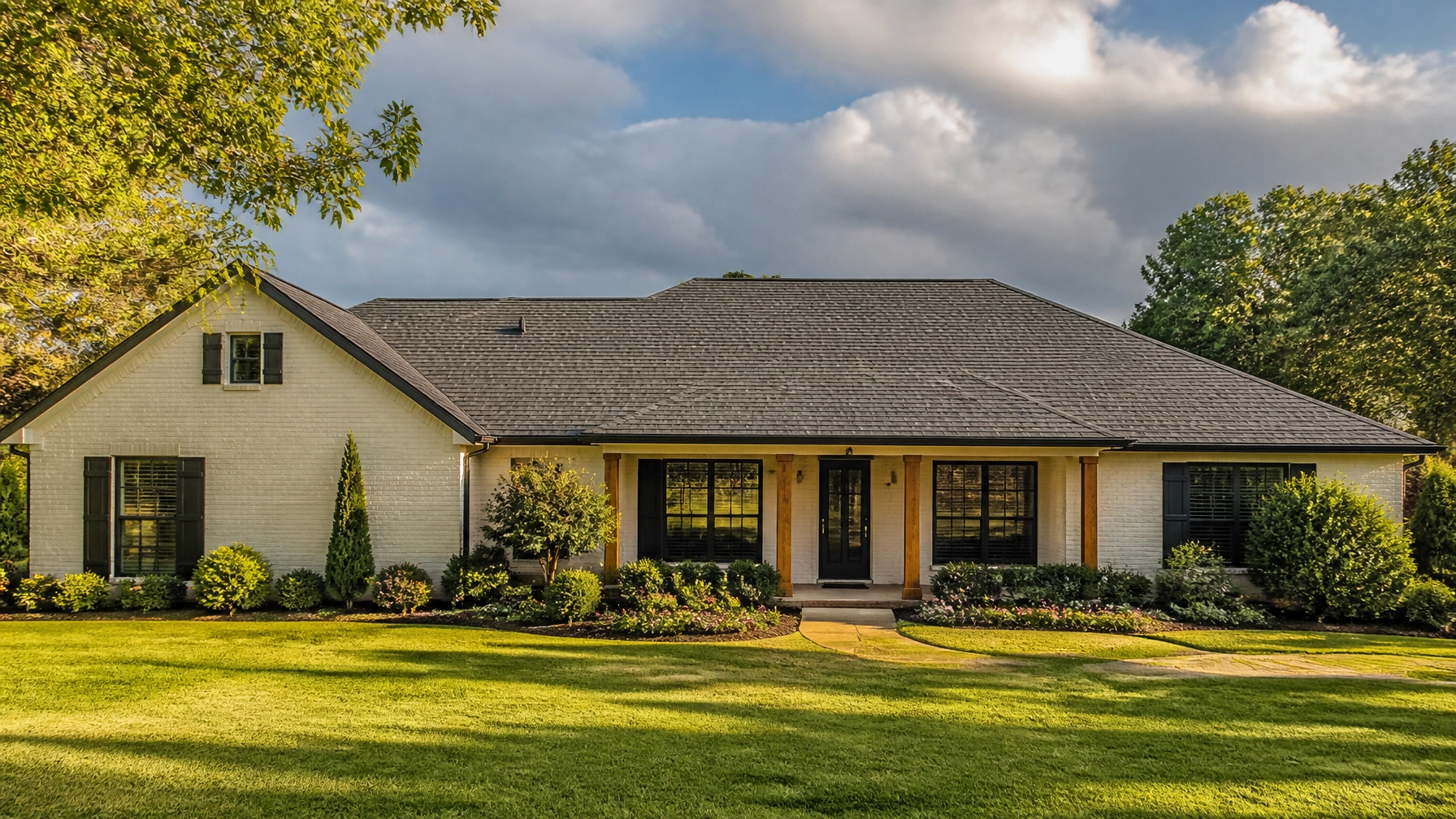
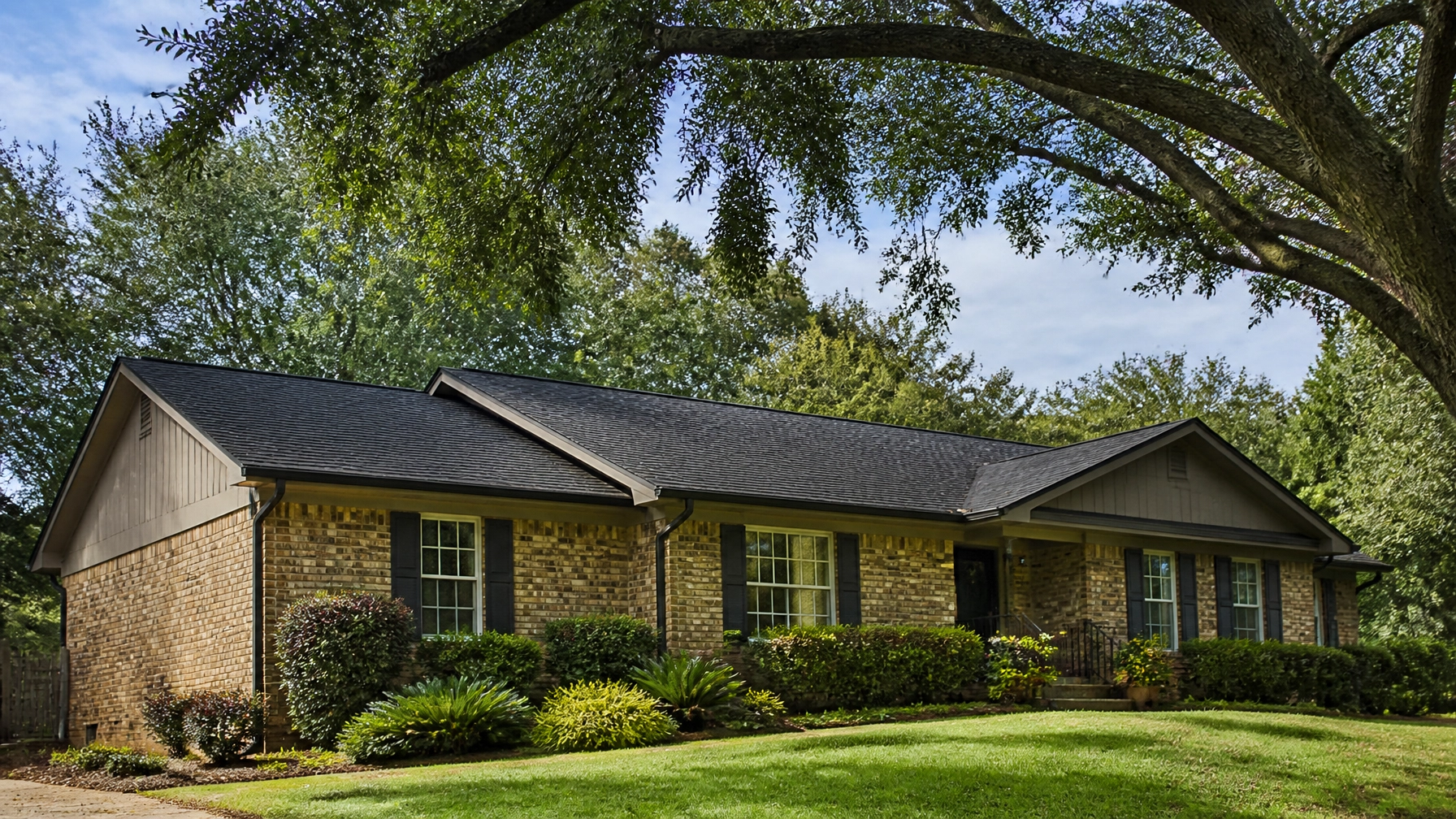
    New algae-resistant architectural shingle roof on a Huntsville ranch home

    How a New Roof Produces 65%–78% Direct ROI

    The estimated 65%–78% direct ROI represents the portion of the roof investment that may be reflected in resale value. It is not a guarantee, and the result depends on the home’s condition, neighborhood, roof material, buyer demand, and the quality of installation.

    Here is a simple example:

    • Roof replacement cost: $12,000
    • Estimated direct ROI: 65%–78%
    • Potential value recovered at resale: $7,800–$9,360

    For a premium $17,500 roof:

    • Estimated value recovered at 65%: $11,375
    • Estimated value recovered at 78%: $13,650

    The remaining value often appears indirectly through:

    • Fewer buyer repair requests
    • Lower inspection-related concessions
    • Faster listing preparation
    • Better buyer confidence
    • Reduced risk of a delayed closing
    • Stronger curb appeal

    A home with a visibly worn roof may sell for less than expected even when the rest of the property is in good condition. Buyers may also price in the cost and inconvenience of replacing the roof soon after closing.

    Why Roof Condition Matters During Appraisal and Inspection

    A new roof can help at two important stages: the appraisal and the home inspection.

    Appraisal advantages (Value support)

    An appraiser considers the overall condition and marketability of the property. A recently replaced roof may support the home’s condition rating and make comparisons with other well-maintained homes more favorable.

    A new roof does not automatically increase appraised value by its full cost. However, it can help demonstrate that the home has received a major capital improvement.

    Inspection advantages (Fewer objections)

    Home inspectors commonly review:

    • Shingle condition
    • Missing or damaged shingles
    • Flashing
    • Roof penetrations
    • Gutters and drainage
    • Attic ventilation
    • Signs of leaks or moisture
    • Visible sagging or structural concerns

    A new roof with clear documentation can reduce uncertainty. Keep copies of:

    • The contractor’s written estimate
    • The final invoice
    • Material details
    • Warranty information
    • Permit records
    • Before-and-after photos
    • Proof of licensed and insured installation

    These records can make the roof easier to explain to future buyers.

    North Alabama Storms Make Material Selection Important

    Huntsville has a humid subtropical climate with hot summers, heavy rainfall, high humidity, hail, and severe thunderstorms. North Alabama can also experience high winds and tornado-related weather.

    That makes material selection more than a cosmetic decision.

    Class 4 impact-resistant shingles (Storm protection)

    Class 4 shingles are designed to provide stronger resistance to impact than standard shingles. They can be a practical option for homeowners concerned about hail and severe weather.

    Potential benefits include:

    • Improved resistance to hail impacts
    • Lower risk of premature shingle damage
    • Better long-term roof durability
    • Possible insurance credits, depending on the carrier and policy
    • Stronger marketing appeal when selling the home

    Insurance discounts are not automatic. Ask your carrier whether Class 4 materials qualify for a wind or hail premium reduction, and confirm what documentation is required.

    Algae-resistant architectural shingles (Popular)

    Algae-resistant shingles are a strong fit for Huntsville’s humidity and rainfall. They help reduce the dark streaking that can appear on roof surfaces over time.

    Benefits include:

    • Cleaner long-term appearance
    • Better curb appeal
    • Broad color and style selection
    • Good balance of price and durability
    • Compatibility with many ranch, colonial, and modern home designs

    Storm-ready new roof on a Huntsville modern home

    Is a Class 4 Roof Worth the Extra Cost?

    Class 4 shingles may cost more than standard architectural shingles. The upgrade is most compelling when you plan to remain in the home for several years or want additional protection during North Alabama storm season.

    Evaluate the upgrade using three categories:

    1. Resale value: Buyers may respond positively to documented impact resistance, although the added cost may not be recovered dollar for dollar.
    2. Insurance savings: Some carriers offer discounts, but terms vary by policy.
    3. Avoided damage: Preventing one major hail-related repair, deductible, or interior leak can improve the long-term financial result.

    For a homeowner selling within two years, a standard high-quality architectural roof may provide the strongest resale value relative to cost. For a long-term owner, Class 4 shingles can offer greater durability and risk protection.

    How to Estimate Your Huntsville Roof ROI Before Calling Contractors

    Start with the actual roof size rather than the home’s floor area. Roofing contractors measure in squares, with one roofing square equal to 100 square feet of roof surface.

    Your estimate should account for:

    • Roof size
    • Pitch or steepness
    • Roof shape and complexity
    • Material selection
    • Tear-off requirements
    • Ventilation
    • Flashing
    • Local labor
    • Decking repairs
    • Permits and disposal

    The roof cost calculator can provide a general planning range. For a more property-specific result, use the satellite-based estimate tool.

    Get a Free Huntsville Roof Estimate in 60 Seconds

    You do not need to wait days for a contractor visit just to get a preliminary budget.

    With Get My Roof Estimate Now, enter your Huntsville address and receive a free estimate based on satellite imagery. The system measures your roof and considers size, pitch, complexity, material options, and regional pricing.

    You receive:

    • Instant results in approximately 60 seconds
    • No cost
    • No credit card requirement
    • Low, middle, and high price ranges
    • Material options for architectural shingles, metal, synthetic products, and coatings
    • A starting point for comparing verified local contractors

    Satellite measurements are typically designed to be approximately 90%–95% accurate, but a final contractor inspection may identify decking damage, ventilation issues, or other conditions that cannot be confirmed from above.

    Bottom Line: A New Roof Is a Practical Huntsville Investment

    For a Huntsville home valued around $310,000–$350,000, a $7,500–$17,500 roof replacement can provide an estimated 65%–78% direct resale ROI when the roof is near the end of its service life.

    The strongest value usually comes from combining:

    • Quality architectural shingles
    • Algae resistance
    • Proper ventilation
    • Professional flashing
    • Storm-conscious installation
    • Clear warranty and permit documentation

    Start with an instant satellite-powered estimate, understand your likely range, and then compare written proposals from licensed and insured local contractors.

    Get your free Huntsville roof estimate now, and see your roof replacement budget in about 60 seconds.

    Frequently Asked Questions

    Does a new roof increase home value in Huntsville?

    Yes. A new roof can improve resale appeal, reduce inspection concerns, and support a portion of the investment through higher value or fewer buyer concessions. A planning range of 65%–78% direct ROI is reasonable, but actual results vary.

    How much does a roof replacement cost in Huntsville in 2026?

    Most homeowners should plan for approximately $7,500–$17,500. Simple roofs with basic materials may cost less, while large, steep, complex, or Class 4 roofs may cost more.

    Are Class 4 shingles worth considering in North Alabama?

    Yes, especially for homeowners concerned about hail and high-wind storms or those planning to stay in the home long term. Check with your insurance carrier about available discounts.

    Can I get a Huntsville roof estimate without a contractor visit?

    Yes. The satellite-powered tool from Get My Roof Estimate Now provides a free preliminary estimate in about 60 seconds. A contractor visit may still be needed for a final quote.
  • 2026 Roof Replacement Cost in Columbia, SC: Complete Price Guide for Midlands Homeowners

    2026 Roof Replacement Cost in Columbia, SC: Complete Price Guide for Midlands Homeowners

    Updated August 9, 2026

    A roof replacement in Columbia, SC, typically costs $3–$10 per square foot installed in 2026. For a roof measuring approximately 2,000 square feet, that means a broad project range of about $6,000–$20,000, before accounting for material type, roof complexity, decking repairs, and premium upgrades.

    Most Midlands homeowners choosing architectural asphalt shingles should budget $9,000–$18,000. A standing seam metal roof for a similar home commonly costs $22,000–$40,000 or more.

    Columbia’s hot summers, humidity, intense UV exposure, thunderstorms, hail, and occasional inland wind damage make accurate pricing and material selection especially important.

    Columbia, SC Roof Replacement Prices for 2026

    The following ranges reflect installed roofing costs in the Columbia and Midlands market. Roof size refers to the actual roof surface: not the home’s interior living area.

    Roofing material Installed cost per sq. ft. Approximate cost for a 2,000 sq. ft. roof Category
    Architectural asphalt shingles $4.50–$7.50 $9,000–$18,000 Popular
    Exposed-fastener metal $7–$11 $14,000–$22,000 Value metal
    Standing seam metal $10–$18 $22,000–$40,000+ Premium
    General replacement range $3–$10 $6,000–$20,000 Broad market range

    These figures generally assume a standard replacement with removal of the existing roofing. Structural repairs, difficult access, multiple roof layers, and premium ventilation systems can increase the final price.

    What Is a Roofing “Square”?

    Roofers measure in squares, not just square feet.

    • 1 roofing square = 100 square feet
    • A 2,000-square-foot roof equals approximately 20 squares
    • A 2,500-square-foot roof equals approximately 25 squares

    Your home’s floor plan may be 2,000 square feet, but the roof can be larger because of pitch, overhangs, porches, garages, and multiple roof sections.

    Why Architectural Shingles Are Columbia’s Regional Standard

    Architectural, or dimensional, shingles are the most common replacement choice across Columbia, Richland County, Lexington County, and surrounding Midlands communities.

    They typically offer:

    • Better wind resistance than basic 3-tab shingles
    • More dimensional curb appeal
    • A typical service life of roughly 25–30 years
    • Broad color and style selection
    • Lower upfront cost than metal roofing

    Three-tab shingles may have a lower initial price, but they are less favored for many Midlands replacement projects because of their thinner construction and lower wind-resistance profile. Severe thunderstorms, hail, and tropical systems affecting the South Carolina coast can still bring damaging winds inland.

    For homeowners seeking a longer service life, standing seam metal offers a premium alternative. It can last 40–70 years when properly installed, but the initial investment is often two to three times higher than architectural asphalt.

    Southern Colonial home in the Midlands with a new standing seam metal roof

    What Affects Roof Replacement Cost in Columbia?

    1. Humidity, UV Exposure, and Storm Conditions

    Columbia has a humid subtropical climate. Long, hot summers expose roofing materials to:

    • Strong ultraviolet radiation
    • Repeated expansion and contraction
    • Moisture and algae growth
    • Heavy thunderstorms
    • Occasional hail
    • Wind from tropical storms and hurricanes moving inland

    A low-cost material may not always provide the best long-term value. Homeowners should compare the warranty, wind rating, impact rating, ventilation requirements, and expected service life: not just the price per square foot.

    2. Roof Pitch and Safety Requirements

    A steep roof takes longer to install and requires additional fall protection, staging, and labor. A steep pitch can push a project toward the upper end of the local price range.

    The same applies to roofs with:

    • Multiple levels
    • Limited access
    • Two-story elevations
    • High wall sections
    • Attached garages or porches
    • Difficult landscaping around the home

    3. Valleys, Dormers, and Complex Rooflines

    Roof complexity is a major pricing factor in Columbia.

    A simple ranch roof with broad, uninterrupted sections is generally less expensive than a cut-up Craftsman, Colonial, or modern home with multiple valleys and dormers.

    Complex features require additional:

    • Flashing
    • Underlayment
    • Cutting and fitting
    • Water-management details
    • Labor time
    • Inspection and cleanup

    Older homes in Shandon, Rosewood, and Earlewood often have mature landscaping and roof designs that require careful access planning. Newer developments in Northeast Columbia and Lexington may have more modern rooflines, multiple slopes, and architectural features that increase material and labor requirements.

    New architectural shingle roof on a Columbia-area Craftsman bungalow

    4. Tear-Off and Decking Repairs

    A complete replacement usually includes removing the old shingles and underlayment. During tear-off, the contractor may find damaged decking, deteriorated flashing, or inadequate ventilation.

    Potential additional costs include:

    • Rotten roof decking
    • Chimney or wall flashing replacement
    • New drip edge
    • Pipe boot replacement
    • Ridge vents or intake vents
    • Multiple layers of old roofing
    • Disposal and dumpster fees

    Ask whether the estimate includes a specific allowance for decking repairs. A transparent quote should explain how extra sheathing is priced if hidden damage is discovered.

    5. Material Price Changes

    Manufacturers raised roofing prices by approximately 6–10% in 2025, and material costs remain an important part of 2026 estimates. Steel and aluminum tariffs have also placed upward pressure on metal roofing prices.

    That is one reason two estimates for the same Columbia home can differ substantially. Contractors may be working with different supplier pricing, inventory, labor rates, and warranty packages.

    How to Get the Most Accurate Columbia Roof Estimate

    A contractor visit is useful for identifying visible damage, but you do not need to wait for an appointment to establish a realistic budget.

    A modern satellite roof inspection can provide an initial measurement of your property in about 60 seconds. Get My Roof Estimate Now uses satellite imagery to analyze:

    • Roof dimensions
    • Roof sections and squares
    • Approximate pitch
    • Roof complexity
    • Local pricing conditions
    • Material-specific replacement costs

    This type of satellite imagery roof analysis is useful for planning, comparing materials, and deciding whether a full inspection is worth scheduling.

    Aerial-style view of a modern Columbia-area home with a complex new roof

    How Satellite Technology Roofing Works

    The process is simple:

    1. Enter your Columbia-area property address.
    2. Confirm the correct property view.
    3. Let the system measure the roof.
    4. Review low, middle, and high replacement ranges.
    5. Compare architectural shingles, metal, and other available materials.

    The measurements are designed to be approximately 90–95% accurate for most homes. However, satellite technology cannot see every concealed condition. A final contractor quote may change after an in-person inspection identifies damaged decking, hidden leaks, or flashing problems.

    Emerging tools such as AI roof damage detection and smart roofing technology may help identify missing shingles, worn sections, and storm-related patterns from aerial imagery. These systems support the future of roof inspection, but they should complement: not replace: professional verification when safety, insurance, or structural damage is involved.

    Columbia Roofing and Contractor Licensing

    South Carolina homeowners should verify contractor credentials before signing a replacement agreement.

    For residential roofing work, the South Carolina Department of Labor, Licensing and Regulation (LLR) regulates the Residential Specialty Contractor: Roofing classification through the South Carolina Residential Builders Commission.

    Before hiring, ask for:

    • Current South Carolina registration
    • General liability insurance
    • Workers’ compensation coverage
    • Written warranty terms
    • Permit responsibility
    • Itemized material and labor pricing
    • Local references

    You can also use the official LLR licensing resources to verify registration information.

    Avoid contractors who demand full payment upfront, refuse to provide insurance documentation, or pressure you to sign immediately after a storm.

    Regional Tips for Midlands Homeowners

    Schedule Before the Busy Season

    Summer storms can quickly increase demand for roof inspections and repairs. If your roof is 15–20 years old, obtain pricing before a major leak or storm event forces a rushed decision.

    Check Your Roof After Severe Weather

    After hail or high winds, look for:

    • Missing or lifted shingles
    • Exposed underlayment
    • Damaged flashing
    • Granules collecting in gutters
    • Ceiling stains
    • Attic moisture or daylight

    Do not climb onto the roof yourself. Use ground-level observations, satellite imagery, or a qualified inspection.

    Compare the Full Roof System

    Do not compare shingle prices alone. Ask each contractor to specify:

    • Shingle brand and model
    • Underlayment
    • Ice and water protection where applicable
    • Flashing
    • Ventilation
    • Drip edge
    • Cleanup
    • Warranty
    • Decking repair rates

    A slightly higher estimate may include better ventilation or more complete flashing work, which can improve the roof’s performance in Columbia’s moisture-heavy climate.

    Get a Free Columbia Roof Estimate in 60 Seconds

    The fastest way to establish a realistic project budget is to measure your actual roof instead of relying on a national average.

    Use the free roof cost calculator for general planning, or get a property-specific estimate through Get My Roof Estimate Now.

    Enter your address and receive a free, satellite-measured price range in about 60 seconds: no credit card, no contractor visit required upfront, and no obligation to hire.

    Frequently Asked Questions

    How much does a new roof cost in Columbia, SC, in 2026?

    Most architectural asphalt shingle replacements cost approximately $9,000–$18,000 for a typical 2,000-square-foot roof. Standing seam metal commonly costs $22,000–$40,000 or more.

    Is metal roofing worth the extra cost in Columbia?

    Metal roofing can make sense for homeowners planning to stay in the property long term. It offers a longer service life and strong performance in sun and storms, but its upfront cost is substantially higher than architectural shingles.

    Can satellite imagery determine my exact roof replacement cost?

    Satellite measurements can provide a highly useful initial estimate, typically within approximately 90–95% accuracy for many properties. A contractor inspection is still needed to confirm concealed damage, decking conditions, and final installation details.

    Do I need a licensed roofer in South Carolina?

    Residential roofing contractors should hold the appropriate South Carolina LLR registration for residential specialty roofing work. Verify the contractor’s current credentials before signing a contract.

  • Daily ROI Blitz #163: How a New Roof Boosts Home Value in Asheville, NC (2026 Data)

    Daily ROI Blitz #163: How a New Roof Boosts Home Value in Asheville, NC (2026 Data)

    A new roof can recover 60%–70% of its cost with architectural shingles and up to 85% with metal roofing when the project matches the home and neighborhood.

    For Asheville homeowners, the return is not only about resale price. A new roof can also:

    • Reduce inspection objections
    • Improve insurance eligibility
    • Help a home stand out in a slower market
    • Protect against mountain weather
    • Reduce the need for buyer credits and price negotiations
    • Help a property sell faster

    That matters in 2026. Zillow places Asheville’s typical home value near $464,000 as of June 2026, with values down approximately 5.2% year over year. Recent market reporting also shows homes taking roughly 88 days to sell, giving buyers more time and leverage.

    In this environment, a documented new roof can remove one of the biggest objections buyers have.

    Asheville New Roof ROI: The 2026 Numbers

    Here is the practical cost-and-value breakdown for a typical Asheville home.

    Roofing material Typical cost per sq. ft. Estimated cost for 2,000–2,500 sq. ft. of roof Potential resale ROI
    Architectural shingles (Popular) $4.25–$5.75 $8,500–$14,375 60%–70%
    Metal roofing (Premium) $7.50–$12.50 $15,000–$31,250 Up to 85%

    A 2,000-square-foot home does not always have a 2,000-square-foot roof. Roof pitch, overhangs, dormers, valleys, and attached garages can increase the actual surface area.

    Most Asheville homes in this size range have approximately 20–25 roofing squares. One roofing square equals 100 square feet.

    What the ROI Could Mean in Dollars

    For architectural shingles:

    • Project cost: $8,500–$14,375
    • Potential value recovered at 60%–70%: approximately $5,100–$10,063

    For metal roofing:

    • Project cost: $15,000–$31,250
    • Potential value recovered at up to 85%: approximately $12,750–$26,563

    These figures are planning benchmarks, not guaranteed appraisals. Your actual return depends on roof condition, neighborhood expectations, installation quality, documentation, and the material used on comparable homes.

    Why a New Roof Matters More in Asheville’s 2026 Market

    Asheville’s post-Helene housing market is rebalancing. Inventory is expanding, and buyers have more negotiating power than they did during the most competitive years of the market.

    That changes how buyers evaluate a home.

    When buyers have fewer choices, they may overlook an aging roof. When inventory grows, they can compare:

    • Roof age
    • Visible wear
    • Storm damage
    • Insurance concerns
    • Remaining useful life
    • Whether the seller will provide a credit

    A home with a 20-year-old roof may compete directly against a similar home with a new roof. The home with the newer roof gives buyers fewer reasons to negotiate.

    That is why the financial return is broader than the resale price alone. A new roof may help you:

    • Avoid a $10,000–$25,000 buyer concession
    • Reduce days on market
    • Prevent a contract from falling apart after inspection
    • Support a stronger list price
    • Improve buyer confidence before the first showing

    Recent Asheville market data from Zillow and the Canopy Asheville Region report show a market with more supply, longer marketing timelines, and increased buyer scrutiny.

    Asheville ranch home with new impact-resistant architectural shingle roof

    Storm Damage Makes Roof Condition a Selling Point

    Asheville homeowners saw a serious reminder of mountain weather risk in late July and early August 2026.

    On July 28, Asheville experienced its first tornado warning within city limits since 2009. Severe storms brought straight-line winds, hail, downed trees, and more than 13,000 power outages across the area.

    Storm activity continued during the August 4–6 period, including pea-sized hail and gusty winds.

    Even when hail does not create an obvious leak, it can damage shingle granules and shorten the roof’s service life. Wind can loosen shingles, damage flashing, and expose vulnerable roof edges.

    For homeowners preparing to sell, storm history increases the importance of having clear documentation. Buyers may ask:

    • Was the roof inspected after the storm?
    • Were damaged shingles replaced?
    • Is there evidence of hail impact?
    • Is the roof still insurable?
    • Does the replacement include a transferable warranty?

    A new roof with permits, invoices, warranty details, and before-and-after photos gives buyers a clear answer.

    Best Roofing Materials for Asheville’s Mountain Climate

    Asheville roofs face more than ordinary rain. The area’s mountain climate creates several specific challenges:

    • Freeze-thaw cycles
    • Heavy rain
    • Occasional snow
    • Ice dams at higher elevations
    • Strong wind events
    • Hail
    • Falling branches
    • Rapid temperature changes

    Architectural Shingles (Popular)

    Architectural shingles are usually the best ROI choice for a mainstream Asheville home.

    They offer:

    • Lower upfront cost
    • Broad buyer acceptance
    • Good curb appeal
    • Straightforward repairs
    • Many color and profile options
    • Easier matching with surrounding homes

    For mountain properties, consider Class 4 impact-resistant shingles where available. They are designed to provide greater resistance to hail and impact damage than standard products.

    Metal Roofing (Premium)

    Metal roofing costs more but can make sense for:

    • Mountain cabins
    • Higher-end homes
    • Steep-slope properties
    • Homes exposed to heavy snow or wind
    • Properties where long service life is a priority

    Standing-seam metal roofing can provide a clean, modern appearance and strong weather performance. It may also appeal to buyers who prioritize durability and reduced maintenance.

    However, metal roofing does not automatically produce an 85% return on every Asheville property. The material should fit the home’s architecture, neighborhood, and price range.

    Modern Asheville mountain home with a new standing-seam metal roof

    NC Ice Barrier Requirements for Mountain Roofs

    Ice dams can form when snow melts on a warmer section of the roof and refreezes near the colder eaves. The resulting water backup can damage shingles, underlayment, insulation, and interior ceilings.

    North Carolina’s residential building code includes ice-barrier requirements in designated colder areas. In mountain jurisdictions where the requirement applies, an ice-and-water barrier is installed along the eaves and extended inside the exterior wall line.

    The requirement is especially important for:

    • Higher-elevation homes
    • Steep roofs
    • Homes with recurring snow or ice
    • Roofs with poor attic ventilation
    • Properties prone to ice dams

    The North Carolina code provisions for ice barriers should be confirmed with the local building department for your specific address.

    When reviewing contractor estimates, ask whether the proposal includes:

    • Ice-and-water shield
    • Proper eave coverage
    • New flashing
    • Valley protection
    • Attic ventilation review
    • Permit and inspection requirements

    Use Satellite Technology Before Scheduling Contractor Visits

    You do not need to schedule multiple contractor appointments just to learn whether your roof is 20 squares or 25 squares.

    A satellite roof inspection can provide an initial estimate using high-resolution property imagery. A satellite imagery roof analysis can evaluate:

    • Roof dimensions
    • Roof planes
    • Pitch
    • Valleys
    • Dormers
    • Attached structures
    • Estimated roofing squares
    • Material-based replacement costs

    A roof inspection satellite tool is not a substitute for an on-site inspection when structural damage or hidden moisture is suspected. However, it is an efficient first step for budgeting and planning.

    At Get My Roof Estimate Now, satellite measurements are used to provide a property-specific estimate in about 60 seconds. The process is free, requires no credit card, and provides low-to-middle-to-high pricing ranges.

    AI roof damage detection and satellite analysis can also help identify areas that deserve closer review after wind or hail. A licensed roofing contractor should verify any suspected damage before repairs or insurance claims.

    Aerial view of an Asheville home showing roof planes, valleys, and dormers

    How to Maximize Your Roof’s Resale Return

    If resale is part of your plan, focus on value buyers and appraisers can recognize.

    Choose a material that fits the neighborhood

    Architectural shingles are generally the ROI sweet spot for homes near Asheville’s median value range. Use metal roofing when it fits the property’s architecture and buyer expectations.

    Replace the full system when needed

    A new roof should not stop at visible shingles. Ask about:

    • Underlayment
    • Flashing
    • Drip edge
    • Ventilation
    • Ice barrier
    • Valleys
    • Pipe boots
    • Decking condition

    Keep a complete project file

    Save:

    • Contractor license and insurance information
    • Permit records
    • Material specifications
    • Manufacturer warranty
    • Workmanship warranty
    • Paid invoices
    • Before-and-after photos
    • Storm inspection records

    Avoid over-improving

    A premium roof on a modest home may not return as much as a high-quality architectural shingle system. Match the investment to the home’s value, location, and surrounding sales.

    Final ROI Takeaway for Asheville Homeowners

    A new roof rarely adds its full cost to a home’s resale price. But in Asheville’s 2026 market, it can still be a strong investment.

    Expect architectural shingles to recover roughly 60%–70% of the project cost, while a well-matched metal roof may recover up to 85%. The additional benefits include faster marketability, fewer objections, stronger insurance confidence, and reduced negotiation pressure.

    If your roof is aging, storm-damaged, or difficult to price, start with accurate measurements.

    Get your free satellite roof estimate now. Enter your Asheville address and receive a transparent roof replacement cost range in about 60 seconds: before scheduling a contractor visit.

    Sources and Further Reading

  • 2026 Roof Replacement Cost in Grand Rapids, MI: Complete Price Guide for West Michigan Homeowners

    2026 Roof Replacement Cost in Grand Rapids, MI: Complete Price Guide for West Michigan Homeowners

    Replacing a roof in Grand Rapids typically costs $9,000–$18,000 for architectural asphalt shingles on a standard 2,000-square-foot home in 2026. Most mid-range projects fall between $12,000 and $16,000, depending on roof complexity, tear-off requirements, decking condition, ventilation, and material selection.

    West Michigan labor rates are slightly below the national average, but roofing materials generally track national pricing. Grand Rapids homeowners also need to account for freeze-thaw cycles, lake-effect snow, ice dams, snow loads, and local permit requirements.

    This guide explains the current costs, code considerations, and practical steps to plan a replacement.

    Grand Rapids Roof Replacement Cost at a Glance

    For a standard roof with approximately 2,000 square feet of roof area: about 20 roofing squares: use these 2026 planning ranges:

    • Architectural asphalt shingles (Popular): $9,000–$18,000 installed
    • Typical mid-range asphalt project: $12,000–$16,000
    • Architectural shingles per square: $450–$900 installed
    • Metal roofing: $8.50–$18.00+ per square foot
    • Roofing permit and related fees: Budget approximately $100–$400
    • Additional project reserve: Set aside 10%–15% for decking repairs, permits, disposal, and unforeseen work

    One roofing square equals 100 square feet of roof surface. Your home’s living area and roof area are not always the same. A 2,000-square-foot home may have more than 2,000 square feet of roofing after accounting for pitch, overhangs, dormers, and attached structures.

    2026 Cost Per Square in West Michigan

    Pricing per square is useful for comparing materials, but the final project price also includes tear-off, labor, flashing, ventilation, underlayment, disposal, and permits.

    Architectural Asphalt Shingles (Popular)

    Architectural shingles generally cost $450–$900 per square installed in the Grand Rapids area.

    They are the most common choice for homeowners because they offer:

    • Good resistance to wind and winter weather
    • A wide range of colors and profiles
    • Lower installation cost than metal or designer roofing
    • A typical service life of approximately 25–30 years, depending on product and maintenance
    • Easier repairs and replacement of individual sections

    For a 20-square roof, this material range produces a basic planning calculation of approximately $9,000–$18,000 before unusual structural repairs or major upgrades.

    Metal Roofing (Premium)

    Metal roofing generally costs $8.50–$18.00 or more per square foot installed. Standing-seam systems, complex roof designs, premium finishes, and difficult access can push pricing higher.

    A metal roof may be appropriate when you want:

    • A longer expected service life
    • Strong snow-shedding performance
    • A modern or distinctive appearance
    • Reduced maintenance over time
    • A roofing system that can sometimes be installed over an existing roof, where code and structure allow

    Metal roofing requires careful detailing around valleys, chimneys, skylights, sidewalls, and penetrations. The lowest bid is not always the best value if it excludes proper underlayment, snow guards, flashing, or thermal movement details.

    Grand Rapids ranch home with a new charcoal architectural shingle roof

    What Drives Roof Replacement Costs in Grand Rapids?

    Roof Size and Pitch

    A steep roof requires more safety equipment, slower installation, and additional labor. A simple ranch roof may cost less than a Colonial or older home with multiple dormers, valleys, and intersecting rooflines.

    Roof Complexity

    Expect higher pricing for roofs with:

    • Multiple valleys
    • Dormers and intersecting sections
    • Skylights
    • Chimneys
    • Difficult-to-access rear slopes
    • Low-slope areas
    • Extensive flashing
    • Limited space for dumpsters or material delivery

    Tear-Off and Disposal

    Removing one or more existing roof layers adds labor and disposal costs. The current Michigan Residential Code also limits when new roofing can be installed over existing materials. A complete tear-off may be required when the existing roof is deteriorated, water-soaked, or already has multiple layers.

    Decking Repairs

    Roof decking is the wood surface beneath the underlayment and shingles. Water intrusion, long-term ice dams, or inadequate ventilation may cause rot or soft areas.

    Budget 10%–15% above the initial estimate for:

    • Damaged decking
    • Additional flashing repairs
    • Permit fees
    • Disposal charges
    • Rebuilding chimney or wall flashing
    • Minor ventilation improvements

    A contractor should clearly identify the per-sheet or per-square-foot charge for decking replacement rather than leaving the allowance undefined.

    Grand Rapids Winter Roofing Requirements

    Grand Rapids roofs must handle more than rain. Freeze-thaw cycles, ice dams, lake-effect snow, and repeated snow accumulation all affect the roof assembly.

    Ice-and-Water Shield

    Michigan roofing requirements call for an ice barrier in areas with a history of ice forming along the eaves. The barrier must extend from the lowest roof edges to at least 24 inches inside the exterior wall line.

    The City of Grand Rapids roof assembly guidance describes the use of a self-adhering polymer-modified bitumen membrane or an approved equivalent. You can review the Michigan roof assembly requirements before reviewing contractor proposals.

    This detail is important because warm air escaping into the attic can melt snow on the upper roof. Water then refreezes near the colder eaves, creating an ice dam. The dam can force water beneath shingles and into the roof deck or walls.

    Ask each contractor:

    • How far will the ice-and-water shield extend?
    • Will valleys, sidewalls, and roof penetrations receive additional membrane?
    • Is full-roof ice-and-water coverage recommended for this roof?
    • Will attic ventilation be inspected during the replacement?

    Snow Load and Ventilation

    Snow load affects the roof structure and the installation process. A roofing contractor should inspect for sagging, damaged rafters, deteriorated decking, and signs of chronic moisture.

    Proper intake and exhaust ventilation also matters. Without balanced airflow, attic heat and moisture can contribute to:

    • Ice dams
    • Mold or mildew
    • Premature shingle aging
    • Condensation
    • Higher winter heating costs

    115 MPH Wind-Speed Compliance

    Grand Rapids roofing work should be installed to meet the applicable 115 mph design wind-speed requirement for the area, subject to current local code and project conditions.

    Compliance depends on more than the shingle label. It may require:

    • Correct nail placement
    • Manufacturer-approved fastening patterns
    • Proper starter strips
    • Secure rake and eave edges
    • Approved underlayment
    • Installation according to the product’s warranty requirements

    Ask for the specific shingle product, wind rating, and fastening method in writing.

    Standing-seam metal roof on a modern West Michigan residence

    Grand Rapids Roofing Permits and Historic District Rules

    A residential roof replacement in Grand Rapids requires a building permit. The city’s residential re-roofing permit page explains the application process, required plans, and contractor requirements.

    Plan for approximately $100–$400 in permit and related fees, although a straightforward project may fall near the lower end. Verify the current fee using the city’s building permit fee calculator.

    If a contractor is applying for the permit, they must hold the appropriate Michigan residential builder or maintenance and alteration contractor license. Confirm the license before signing a contract.

    Historic District Homes

    Homes in Grand Rapids historic districts may require a Certificate of Appropriateness before exterior roof changes are approved.

    This may apply when you change:

    • Roofing material
    • Shingle color
    • Visible roof profile
    • Roof accessories
    • Metal roofing style
    • Other street-facing exterior details

    A like-for-like replacement may receive different treatment than a major visible design change. Confirm requirements with the city’s Development Center or Historic Preservation staff before ordering materials.

    Use Satellite Roof Inspection Technology Before Calling Contractors

    Traditional estimates require scheduling several contractor visits just to learn whether your project might cost $10,000 or $20,000. Roofing technology in 2026 offers a faster starting point.

    A satellite roof inspection can measure roof planes, estimate roof size, identify pitch and complexity, and create an initial price range without an upfront site visit. This type of roof inspection satellite data is especially useful when you are:

    • Planning ahead for an aging roof
    • Comparing asphalt and metal options
    • Preparing to sell your home
    • Assessing possible storm damage
    • Building a renovation budget
    • Deciding how many contractor consultations are necessary

    Satellite measurements are not a substitute for a final contractor inspection. They provide a practical first estimate so you can understand the likely investment before scheduling onsite work.

    Aerial view showing roof planes, valleys, dormers, and architectural shingles in West Michigan

    How to Get a More Accurate Grand Rapids Roof Estimate

    Start with a property-specific measurement rather than relying only on your home’s square footage.

    You can use the roof cost calculator for a general planning range. For a faster, property-specific result, use the free satellite estimate from Get My Roof Estimate Now.

    You will receive an estimate based on factors such as:

    • Roof size in squares
    • Roof pitch
    • Roof complexity
    • Material selection
    • Regional pricing
    • Tear-off assumptions
    • Low, middle, and high project ranges

    The process takes about 60 seconds, costs nothing, and does not require a credit card.

    Final Takeaway

    For a typical 2,000-square-foot roof in Grand Rapids, budget $9,000–$18,000 for architectural asphalt shingles, with many mid-range projects landing between $12,000 and $16,000. Metal roofing starts at a higher price point, generally $8.50–$18.00+ per square foot.

    Before accepting a quote, confirm that it includes:

    • Ice-and-water shield extending 24 inches inside the exterior wall line
    • Proper flashing and ventilation
    • Permit responsibilities
    • State-licensed contractor information
    • Wind-speed compliance
    • Decking repair pricing
    • Tear-off and disposal
    • Final inspection and cleanup

    Get your free satellite roof estimate at getmyroofestimatenow.com and see your likely 2026 replacement cost before scheduling contractor visits.

  • Daily FAQ Blitz – Slot 1: Roof Replacement FAQs for Tampa, FL Homeowners (2026)

    Daily FAQ Blitz – Slot 1: Roof Replacement FAQs for Tampa, FL Homeowners (2026)

    Replacing a roof in Tampa is a major investment. In 2026, homeowners should budget based on material, roof size, hurricane requirements, roof pitch, accessibility, and the condition of the decking and flashing.

    This quick-answer guide covers the most common roof replacement questions Tampa homeowners ask.

    1. How much does a roof replacement cost in Tampa in 2026?

    Roofing contractors price projects by the square. One roofing square equals 100 square feet of roof area.

    Typical Tampa 2026 installed price ranges are:

    Roofing material Estimated cost per square General category
    Architectural shingles $425–$850 per square Budget to Popular
    Metal roofing $1,000–$1,800 per square Premium
    Concrete or clay tile $800–$2,000 per square Popular to Premium

    These prices can include tear-off, underlayment, standard flashing, labor, and basic permitting. Your final quote may be higher if the roof requires structural repairs, upgraded hurricane protection, specialty materials, or extensive flashing work.

    Estimated total for a 2,000–2,500 square-foot home

    The home’s living area is not the same as the roof area. A pitched roof may measure approximately 22–32 squares after accounting for pitch, overhangs, garages, porches, and roof complexity.

    As a broad planning range:

    • Architectural shingles: Approximately $10,000–$25,000
    • Metal roofing: Approximately $22,000–$50,000
    • Concrete or clay tile: Approximately $18,000–$55,000 or more

    A simple ranch home with one roof plane may cost less. A multi-level home with valleys, dormers, skylights, multiple penetrations, or steep sections will typically cost more.

    For a fast starting point, use the Get My Roof Estimate Now roof cost calculator.

    New architectural shingle roof with clean flashing on a Florida ranch home

    2. What factors affect Tampa roof replacement pricing?

    The material is only one part of the estimate. Tampa pricing also depends on:

    • Roof size: Larger roofs require more labor and materials.
    • Roof pitch: Steeper roofs take longer and require additional safety equipment.
    • Roof complexity: Valleys, hips, dormers, skylights, chimneys, and multiple roof sections increase labor.
    • Tear-off requirements: Removing multiple old roofing layers adds disposal and labor costs.
    • Roof deck condition: Rotten or water-damaged decking must be replaced.
    • Hurricane upgrades: Enhanced fastening, secondary water barriers, and roof-to-wall connection work may increase the total.
    • Coastal exposure: Homes near Tampa Bay or the Gulf may need corrosion-resistant fasteners, flashing, and metal coatings.
    • Material availability: Tile colors, specialty metal profiles, and approved Florida roofing systems may have different lead times and prices.

    Concrete tile is especially popular in Florida because it offers a long service life and strong curb appeal. However, it is heavy. Your contractor should confirm that the home’s framing can support the selected tile system.

    3. Do I need a permit for a roof replacement in Tampa?

    Yes. Inside the City of Tampa, a permit is generally required for a new roof covering, reroof, recover, or repair work involving more than 500 square feet.

    Permits are handled through City of Tampa Construction Services.

    The city’s roofing permit process includes:

    1. Permit application
    2. Applicable fees
    3. Required inspections
    4. Final permit closure

    Roofing inspections may include checks of the underlayment, flashing, deck fastening, roof-to-wall connections, and final roof installation.

    Tampa also uses remote inspection procedures, including the Vu-Spex system for eligible virtual inspections. Availability can depend on the project, inspection type, and current city procedures, so confirm the process with your contractor or Construction Services before work begins.

    Important jurisdiction note

    The City of Tampa, unincorporated Hillsborough County, and nearby municipalities can have different procedures. If your property is outside Tampa city limits, verify requirements with the correct building department.

    Do not assume a contractor will handle permitting correctly. Ask for:

    • The permit number
    • The name of the permitting contractor
    • The expected inspection schedule
    • Confirmation that the permit will be closed after final approval

    4. What are Tampa’s unique roofing requirements?

    Tampa roofs must be designed and installed for Florida’s demanding weather conditions. Your roofing system should comply with the Florida Building Code, local requirements, and the product’s approved installation instructions.

    Florida Product Approval

    Roofing products used in permitted Florida projects generally need a valid Florida Product Approval or another accepted approval, such as a Miami-Dade Notice of Acceptance where applicable.

    Ask your contractor for the approval information for:

    • Shingles
    • Underlayment
    • Metal panels
    • Tile
    • Flashing systems
    • Roof vents
    • Fasteners and related components

    Product approval confirms that the system has been tested for performance requirements such as wind uplift and weather exposure.

    High-wind shingle fastening

    In high-wind applications, shingles may require an enhanced fastening pattern, commonly six nails per shingle when specified by the product approval, manufacturer, or applicable code requirements.

    The exact nail count and placement depend on:

    • The shingle product
    • Roof slope
    • Wind design requirements
    • Manufacturer instructions
    • Florida Product Approval documentation

    Do not accept a generic statement that “Florida shingles are all installed the same way.” The approved system controls the details.

    Roof-to-wall strapping

    Roof-to-wall connections, also called hurricane straps or ties, help transfer wind forces from the roof structure into the walls. During reroofing, these connections may need to be inspected or upgraded depending on the home and the scope of work.

    Ask whether the estimate includes:

    • Roof-to-wall connection inspection
    • Accessible strap or tie upgrades
    • Additional labor for structural fastening
    • Documentation needed for insurance mitigation credits

    Flashing and moisture protection

    Tampa’s heavy rain and hurricane conditions make flashing especially important. A complete roof replacement should address:

    • Wall flashing
    • Valleys
    • Pipe penetrations
    • Chimneys
    • Skylights
    • Drip edge
    • Eaves and roof transitions

    Replacing shingles without correcting failed flashing can leave the home vulnerable to leaks.

    New Tampa-area standing-seam metal roof on a modern Florida home

    5. Can a new roof reduce my homeowners insurance cost?

    Possibly. Florida insurers may offer wind mitigation discounts when a home has qualifying roof features and documented improvements.

    Potentially relevant features include:

    • A newer roof system
    • Approved high-wind materials
    • Enhanced roof-deck attachment
    • Hurricane straps or clips
    • Secondary water resistance
    • Proper roof-to-wall connections
    • Impact-resistant or approved openings, depending on the policy

    The discount is not automatic. Insurance companies usually require documentation, and some require a completed wind mitigation inspection.

    Before installation, ask your insurance company:

    • Which roof improvements qualify?
    • Is a wind mitigation inspection required?
    • What documentation should the contractor provide?
    • Does the selected roofing product meet the insurer’s criteria?

    6. How does salt air affect Tampa roofing materials?

    Salt air can accelerate corrosion, particularly for homes close to Tampa Bay, the Gulf, or other coastal areas.

    For coastal or high-exposure properties, ask about:

    • Stainless steel or corrosion-resistant fasteners
    • Coastal-rated metal roof coatings
    • Compatible flashing materials
    • Corrosion-resistant vents and accessories
    • Proper separation between dissimilar metals
    • Manufacturer-approved installation near saltwater environments

    Metal roofing can perform very well in Tampa, but the finish, fasteners, and accessories matter. A premium metal panel installed with unsuitable hardware may experience premature corrosion.

    Shingle and tile systems also require corrosion-resistant nails and flashing. Coastal exposure should be part of the material discussion, not an afterthought.

    7. How do I choose a roofer in Tampa?

    Florida homeowners should verify that the contractor holds an active Certified Roofing Contractor license, commonly identified by a CCC license number.

    Use the official Florida DBPR license search to check:

    • License type
    • Active status
    • Expiration date
    • Business name
    • Qualifying individual
    • Disciplinary history

    Also confirm that the contractor carries:

    • General liability insurance
    • Workers’ compensation coverage
    • Written warranty terms
    • Proper permitting experience
    • References from comparable Tampa projects

    Be cautious of contractors who:

    • Ask you to pull the permit yourself
    • Cannot provide a CCC license number
    • Pressure you to sign immediately
    • Offer a cash-only arrangement
    • Recommend skipping inspections
    • Promise insurance approval
    • Provide a quote without measuring the roof

    A licensed contractor should be able to explain the proposed roofing assembly, Florida Product Approval information, fastening pattern, flashing scope, and inspection plan.

    New concrete tile roof on a Florida home with tropical landscaping

    8. How does satellite roof estimation work for Tampa homes?

    A satellite roof estimate gives you a fast starting point before scheduling contractor visits.

    With Get My Roof Estimate Now, you enter your Tampa property address. Satellite imagery technology analyzes the roof and estimates:

    • Roof size
    • Roof pitch
    • Roof sections
    • Roof complexity
    • Approximate material quantities
    • Regional pricing factors

    The system typically provides results in about 60 seconds, with satellite-powered measurements designed to be approximately 90–95% accurate.

    The estimate is:

    • Free
    • Instant
    • Available without a credit card
    • Transparent about low, middle, and high price ranges
    • Useful for comparing architectural shingles, metal, synthetic materials, and coatings

    A satellite estimate is not a substitute for a final contractor inspection. Hidden decking damage, structural issues, ventilation problems, and concealed flashing failures may not be visible from above. It is, however, a practical way to understand your likely budget before inviting contractors to your home.

    Tampa roof replacement: the quick takeaway

    For 2026, Tampa homeowners should focus on five priorities:

    1. Start with a realistic material budget: Architectural shingles, metal, and tile have significantly different installed costs.
    2. Confirm the permit requirement: Roof work over 500 square feet generally requires a City of Tampa permit.
    3. Use Florida-approved materials: Ask for Florida Product Approval information and the correct high-wind fastening pattern.
    4. Verify the roofer: Check for an active Florida Certified Roofing Contractor license beginning with CCC.
    5. Get an instant baseline estimate: Use satellite measurements to understand your roof size and likely replacement range in 60 seconds.

    Getting the numbers early makes the rest of the process easier. You can compare written proposals more effectively, identify unrealistic bids, and plan for hurricane-season protection without rushing into a decision.

    Official resources

  • Daily FAQ Blitz – Slot 8: AEO FAQ Quick Answers for San Antonio Homeowners

    Daily FAQ Blitz – Slot 8: AEO FAQ Quick Answers for San Antonio Homeowners

    San Antonio homeowners can expect a 2026 roof replacement estimate of approximately $7,500–$19,500, depending on roof size, pitch, material, complexity, and tear-off requirements. These quick answers cover the most common roofing questions in San Antonio and Bexar County.

    How much does a new roof cost in San Antonio?

    For a typical single-family home, current replacement ranges are:

    • Basic asphalt shingles (Budget): $7,500–$11,000
    • Architectural shingles (Popular): $9,000–$16,000
    • Impact-resistant shingles (Storm-ready): $14,000–$23,500
    • Standing-seam metal (Premium): $16,000–$30,000+

    Large, steep, or complex roofs may cost more. Review the San Antonio roof estimate page for local pricing benchmarks.

    What causes the most roof damage in San Antonio?

    San Antonio roofs commonly face:

    • Spring and summer hail
    • High heat and intense UV exposure
    • Strong thunderstorms and wind
    • Rapid temperature changes
    • Poor attic ventilation

    Hail can bruise shingles, remove protective granules, dent vents, and damage gutters. Heat can dry out sealants and accelerate shingle aging.

    San Antonio home with a new impact-resistant shingle roof

    Are impact-resistant shingles worth it in Bexar County?

    They can be a smart upgrade for homeowners concerned about recurring hail. Class 4 impact-resistant shingles generally cost more than standard architectural shingles, but they are designed to withstand greater impact.

    Some insurance companies may offer discounts for qualifying materials. Ask your insurer about eligibility, documentation, and deductibles before choosing an upgraded roof.

    Does homeowners insurance cover hail damage?

    Many policies cover sudden hail and wind damage, but coverage depends on your policy, exclusions, roof age, and deductible. After a storm:

    1. Photograph visible damage from the ground.
    2. Record the storm date.
    3. Contact your insurer.
    4. Schedule an inspection with a qualified roofing professional.

    Do not sign an assignment-of-benefits agreement or large contract before reviewing the terms carefully.

    Is metal roofing good for San Antonio heat?

    Metal roofing can perform well in hot climates, especially when paired with reflective finishes and proper attic ventilation. It also offers a long service life.

    The tradeoff is higher upfront cost. Standing-seam metal is usually a Premium option and may require a larger initial budget than asphalt shingles.

    Modern San Antonio home with a standing-seam metal roof

    Should I repair or replace my roof?

    A repair may be appropriate when damage is isolated and the roof is relatively young. Replacement is more likely when:

    • Damage affects multiple roof slopes
    • The roof is 15–30 years old
    • Leaks continue after repairs
    • Shingles are curling, brittle, or losing granules
    • Repair costs are becoming frequent

    A satellite-based estimate can provide a fast starting point before arranging contractor visits.

    How can I get a roof estimate without a contractor visit?

    Enter your property address into Get My Roof Estimate Now. Satellite imagery measures your roof’s size, pitch, and complexity, then provides an estimate in about 60 seconds.

    The estimate is free, requires no credit card, and helps you compare materials and plan your next step.

    Residential roof inspection after a San Antonio hailstorm

    Categories: Roofing FAQ, San Antonio Roofing, Roof Replacement
    Tags: San Antonio roof replacement, Bexar County roofing, hail damage, Texas roofing costs, roof estimate, impact-resistant shingles, metal roofing

  • Daily Weather Blitz – Slot 4: Charleston, SC

    Daily Weather Blitz – Slot 4: Charleston, SC

    Charleston’s weather on August 9, 2026, is a clear reminder that Lowcountry roofs face more than occasional rain. Today brings partly sunny skies, temperatures near 88–90°F, overnight lows around 76–79°F, high humidity, and a 30–50% chance of showers or thunderstorms. Winds are light and variable, becoming southerly at roughly 5–9 mph.

    That is a normal summer pattern for Charleston. It is also a daily stress test for roofing materials.

    Salt air, moisture, intense ultraviolet exposure, and hurricane-season wind can quietly reduce a roof’s service life. Homeowners in the Charleston peninsula, West Ashley, Mount Pleasant, James Island, and nearby barrier-island communities should treat roof durability as a year-round priority: not a project to consider only after a leak appears.

    For changing conditions, check the National Weather Service Charleston office.

    Charleston’s August Weather Creates Multiple Roofing Stresses

    A roof does not experience weather one factor at a time. In Charleston, heat, humidity, salt, rain, and wind work together.

    Today’s conditions include:

    • High temperature: Approximately 88–90°F
    • Overnight low: Approximately 76–79°F
    • Rain and storm chance: 30–50%
    • Humidity: High, with limited overnight drying
    • Wind: Light and variable, becoming south at 5–9 mph
    • Seasonal concern: Tropical storms and hurricanes remain a possibility during the Atlantic hurricane season

    Light winds today do not mean a roof is prepared for a hurricane. The more important question is whether the roof’s installation, fastening, flashing, and drainage systems can withstand the occasional severe event after years of coastal exposure.

    How Salt Air Causes Roof Damage

    Charleston’s coastal air carries salt particles inland. Homes near the Atlantic, Charleston Harbor, the Intracoastal Waterway, tidal creeks, and open marsh areas may receive more salt exposure than homes farther inland.

    Salt air roof damage commonly begins with exposed metal components, including:

    • Roofing nails and screws
    • Drip edge and flashing
    • Gutter fasteners
    • Chimney caps
    • Roof vents
    • Metal valleys
    • Skylight components
    • HVAC supports and other rooftop equipment

    Salt does not need to create visible rust immediately to cause concern. Corrosion can weaken fasteners, stain roof surfaces, and reduce the holding power of metal components over time. Once a fastener loses strength, wind-driven rain has an easier path beneath shingles or flashing.

    For coastal roofing projects, ask the contractor which fasteners and accessories are appropriate for your property’s distance from salt or brackish water. Stainless steel or high-quality corrosion-resistant fasteners are often preferred in more exposed locations.

    A roof near Sullivan’s Island or Isle of Palms may require a more aggressive corrosion-resistance strategy than a roof several miles inland. The correct specification depends on the home’s location, exposure, roof design, and applicable building requirements.

    High Humidity Keeps Roofs Wet Longer

    Charleston’s humidity affects both the roof covering and the materials beneath it.

    Warm, humid nights can leave roof surfaces, flashing, gutters, and attic components damp for extended periods. Repeated wetting and drying can contribute to:

    • Wood deck deterioration
    • Mold or mildew growth in poorly ventilated attic spaces
    • Rust on exposed metal
    • Softened or failed sealants
    • Algae and staining on shaded roof slopes
    • Water intrusion around penetrations and flashing
    • Reduced performance of aging underlayment

    Humidity also makes attic ventilation important. A properly designed ventilation system helps release heat and moisture from the attic. However, ventilation should not be treated as a substitute for a sound roof deck, sealed penetrations, and correctly installed flashing.

    If you notice musty attic odors, darkened roof sheathing, damp insulation, or condensation around nails, schedule an inspection. These signs may appear before water reaches the ceiling below.

    Professional roof inspection on a well-maintained Charleston Lowcountry home

    Intense UV Exposure Accelerates Roof Aging

    Charleston roofs receive strong sunlight for much of the year. Even on partly cloudy days, ultraviolet exposure continues to affect asphalt shingles, membranes, sealants, and painted metal surfaces.

    UV exposure can lead to:

    • Granule loss on asphalt shingles
    • Faded or uneven roof color
    • Brittle sealant and flashing compounds
    • Loss of shingle flexibility
    • Premature deterioration on south- and west-facing slopes
    • Faster aging of exposed synthetic roofing components

    A roof that looks acceptable from the driveway may still have aging seal strips, weakened ridge caps, or deteriorating flashing. During an inspection, the contractor should evaluate the roof’s overall condition: not just look for missing shingles.

    Light-colored or reflective roofing materials may reduce heat absorption, but the best choice depends on roof pitch, attic design, appearance goals, budget, and local installation requirements.

    Thunderstorms Are Small-Scale Wind and Water Tests

    Today’s afternoon and evening shower risk may produce only routine summer storms. Still, thunderstorms can expose weak points in a Charleston roof.

    Wind-driven rain can enter through:

    • Loose or missing shingles
    • Unsealed pipe boots
    • Worn chimney flashing
    • Open valleys
    • Damaged ridge vents
    • Poorly secured gutters
    • Deteriorated roof-to-wall connections

    Overhanging tree limbs create another local concern. Live oaks and mature landscaping add character to Charleston neighborhoods, but branches can scrape shingles, drop heavy limbs, and clog drainage systems.

    After a storm, inspect the ground for shingle granules, roofing fragments, or damaged metal. Do not climb onto the roof yourself. Use binoculars from the ground and arrange a professional inspection if anything looks different.

    Coastal Roofing Materials That Fit the Lowcountry

    No single material is perfect for every Charleston home. The right choice depends on the roof’s structure, slope, exposure, design, insurance considerations, and installation quality.

    Standing Seam Metal (Premium)

    Standing seam metal roofing offers strong performance against sun, rain, and wind when properly specified and installed.

    Advantages include:

    • Long service life
    • Strong resistance to wind uplift when engineered correctly
    • Fewer exposed fasteners than screw-through metal panels
    • Good performance on modern and coastal-style homes
    • Reflective finishes that can reduce solar heat gain

    Coastal homeowners should verify the panel coating, substrate, flashing, and fastener specifications. Standard hardware may corrode faster in salt air. Metal roofing also requires careful detailing around chimneys, valleys, skylights, and roof edges.

    Class 4 Impact-Rated Shingles (Popular)

    Class 4 impact-rated asphalt shingles are designed to perform better during impact testing than lower-rated products. They may be a practical option for homeowners who want a familiar appearance and a stronger shingle system.

    Important distinction: A Class 4 impact rating does not automatically mean a roof is hurricane-proof. Impact resistance and wind resistance are separate performance considerations. Confirm the product’s wind rating, installation requirements, warranty terms, and compatibility with local conditions.

    For a Charleston replacement, high-wind installation details matter as much as the shingle label.

    Standing seam metal roof on a modern coastal Charleston home

    FORTIFIED Roof Standards (Resilience Upgrade)

    The IBHS FORTIFIED construction standards focus on strengthening the roof system against severe wind and rain.

    Depending on the designation and home, FORTIFIED details may address:

    • Roof deck attachment
    • Sealed roof decks
    • Enhanced edge fastening
    • Underlayment installation
    • Roof covering attachment
    • Corrosion-resistant fasteners
    • Documentation and verification

    A FORTIFIED approach is particularly relevant for Charleston homeowners planning to remain in the home long term or rebuilding after storm damage. It is not a shortcut or a product type. It is a system of installation and verification requirements.

    Ask a contractor whether the proposed work can meet the current FORTIFIED requirements and whether an approved evaluator is needed.

    Installation Details That Matter in Charleston

    Roof durability often comes down to details that are invisible once the project is complete.

    Use the Correct Fasteners

    In coastal areas, request corrosion-resistant fasteners suited to salt or brackish-water exposure. Stainless steel may be appropriate for highly exposed locations. The contractor should also use compatible fasteners for flashing, drip edge, ridge caps, and accessories.

    Confirm the Six-Nail Pattern

    Many high-wind asphalt shingles require a six-nail pattern. Nails must be placed inside the manufacturer’s specified nailing zone and driven flush: not overdriven or underdriven.

    Do not assume every roof is installed the same way. The contractor must follow the shingle manufacturer’s high-wind instructions and applicable FORTIFIED requirements.

    Inspect the Roof Deck

    A new roof should not simply cover damaged or questionable decking. Water-damaged sheathing should be evaluated and replaced where necessary. If the existing deck attachment is inadequate, additional fastening or replacement may be required for a resilient installation.

    Seal the Roof Deck

    A sealed roof deck can reduce water intrusion if portions of the roof covering are damaged or lost during a severe storm. This is one of the most important hurricane roof prep measures because it addresses the layer beneath the shingles or metal panels.

    Close-up of coastal roofing materials, impact-rated shingles, stainless steel fasteners, and metal drip edge

    Maintenance Schedule for Lowcountry Homeowners

    Use a consistent inspection schedule rather than waiting for a ceiling stain.

    Every Spring

    Schedule an annual spring roof inspection before Charleston enters its hottest and most storm-active period. The inspection should include:

    • Shingles or metal panels
    • Flashing and roof penetrations
    • Ridge vents and other ventilation
    • Drip edge
    • Gutters and downspouts
    • Attic moisture and wood decking
    • Tree limbs near the roof
    • Signs of corrosion or salt air roof damage

    After Major Storms

    Arrange an inspection after strong thunderstorms, tropical weather, or nearby hurricane conditions. Hidden damage may not leak immediately.

    Keep Gutters Clear

    Lowcountry rain can overwhelm clogged gutters. Remove leaves, pine needles, and debris, especially under live oaks. Confirm that downspouts discharge water away from the foundation and do not create erosion near the home.

    Quick Action Steps for This Week

    Charleston homeowners can improve roof readiness without starting a full replacement project immediately:

    1. Walk the property from the ground and look for missing shingles, lifted edges, rust, or damaged flashing.
    2. Clear gutters and downspouts before the next round of thunderstorms.
    3. Trim branches that touch or overhang the roof.
    4. Check the attic for damp insulation, musty odors, daylight, or stained decking.
    5. Photograph existing conditions for your records and insurance file.
    6. Schedule a spring or summer inspection with a licensed, insured roofing professional.
    7. If replacement is likely, get an instant roof estimate before calling multiple contractors. Get My Roof Estimate Now uses satellite-powered measurements to provide a free starting price in about 60 seconds.

    Charleston’s coastal climate is demanding, but a properly selected and correctly installed roof can handle the Lowcountry’s heat, humidity, salt air, and seasonal storms. The most effective strategy is straightforward: inspect early, specify corrosion-resistant materials, strengthen the roof system, and address small defects before the next major weather event.

  • 2026 Roof Replacement Cost in Fort Worth, TX: Complete Price Guide for Cowtown Homeowners

    2026 Roof Replacement Cost in Fort Worth, TX: Complete Price Guide for Cowtown Homeowners

    A 2026 roof replacement in Fort Worth typically costs $9,900–$17,600 for architectural shingles on a standard 2,200-square-foot roof. Most complete architectural shingle proposals fall between $12,659 and $17,126 after accounting for installation, underlayment, flashing, tear-off, and normal project requirements.

    Premium materials cost more:

    • 3-tab asphalt shingles (Budget): $6,600–$12,100
    • Architectural shingles (Popular): $9,900–$17,600
    • Exposed-fastener metal: $15,400–$24,200
    • Standing seam metal (Premium): $22,000–$39,600+

    These are installed-cost planning ranges for a standard 2,200-square-foot roof, or 22 roofing squares. Your actual price depends on roof pitch, complexity, storm damage, decking condition, labor, material choice, and the number of existing roof layers.

    Fort Worth’s roofing market is competitive, with approximately 142 active roofing contractors serving a growing city of about 1,049,355 residents. Population growth is running near 2.07% annually, while Tarrant County has approximately 2.28 million residents. Pricing has begun to normalize, with median quotes shifting down about 3.2%, although material costs remain higher than they were several years ago.

    2026 Fort Worth Roof Replacement Price Comparison

    Roofing material Installed cost per sq. ft. Estimated cost for 2,200 sq. ft. Best fit
    3-tab asphalt shingles $3.00–$5.50 $6,600–$12,100 Budget replacement
    Architectural asphalt shingles $4.50–$8.00 $9,900–$17,600 Most Fort Worth homes
    Exposed-fastener metal $7.00–$11.00 $15,400–$24,200 Durable mid-range upgrade
    Standing seam metal $10.00–$18.00 $22,000–$39,600+ Long-term premium roof

    For additional planning, use the Fort Worth roof estimate page or the company’s roof cost calculator.

    What Is a Roofing Square?

    Roofing contractors do not price roofs using living-area square footage alone. They use squares.

    One roofing square equals 100 square feet of roof surface. A 2,200-square-foot roof is therefore a 22-square roof.

    The roof surface is usually larger than the home’s interior floor area because of:

    • Roof pitch
    • Eaves and overhangs
    • Multiple roof sections
    • Valleys and hips
    • Dormers and covered additions
    • Attached garages

    A Fort Worth home with approximately 2,331 square feet of living space may have a roof surface between 2,200 and 2,600 square feet. That difference can substantially affect the final estimate.

    Why Architectural Shingles Are Fort Worth’s Standard

    Architectural asphalt shingles are the most common choice for Fort Worth homeowners because they balance cost, appearance, availability, and performance.

    They typically offer:

    • Better wind resistance than basic 3-tab shingles
    • More attractive dimensional profiles
    • Many color options for brick, stone, and siding
    • Typical North Texas service life of about 18–25 years
    • Lower upfront cost than metal roofing

    For Fort Worth’s hail exposure, many homeowners choose Class 4 impact-resistant shingles. These cost more than standard architectural shingles, but they are designed to withstand greater impact and may qualify for insurance discounts. Always confirm available discounts with your insurer because eligibility depends on the policy and product certification.

    New charcoal architectural shingle roof on a traditional Fort Worth home

    Fort Worth Climate Factors That Raise Roofing Costs

    Fort Worth sits in a high-activity hail corridor and experiences six or more significant hail events in a typical year. The primary severe weather season runs from March through May, bringing hail, tornadoes, high winds, and heavy rain.

    Notable 2026 events included:

    • A severe weather outbreak in late April
    • A June 6 hail storm

    The city’s climate also creates long-term thermal stress. Summers regularly reach 100°F or higher, while winter freezes can produce sharp temperature changes. Roofing materials expand and contract throughout the year, placing stress on seams, fasteners, flashing, and older shingles.

    Many Texas insurance policies now use percentage-based wind and hail deductibles instead of flat deductibles. Before replacing a storm-damaged roof, review your policy carefully and document damage from the ground. Avoid signing an assignment of benefits or storm-related agreement without understanding the terms.

    What Affects Your Roof Replacement Cost?

    Roof pitch

    A steep roof requires additional fall protection, slower installation, and more labor. A low-slope ranch roof is usually less expensive than a steep roof with multiple levels.

    Roof complexity

    Simple rooflines are faster to install. Costs increase with:

    • Dormers
    • Skylights
    • Chimneys
    • Multiple valleys
    • Decorative ridges
    • Numerous penetrations
    • Difficult access

    Older homes in Near Southside, Fairmount, and Ryan Place often have more complex roof designs. These neighborhoods may also have hidden decking problems caused by age, previous repairs, or repeated storm exposure.

    Tear-off and existing layers

    Removing an old roof adds labor and disposal costs. Multiple layers take longer to remove and may reveal damaged underlayment or deteriorated wood.

    Decking repairs

    North Texas storms frequently damage roof decking. If the contractor finds soft, warped, or broken sheathing, those sections must be replaced before new roofing is installed.

    Decking repairs are one of the most common reasons a final invoice differs from an initial estimate. Ask contractors to show damaged areas and provide a per-sheet or per-square-foot repair price before proceeding.

    Ventilation

    Proper ventilation is important during Fort Worth summers. Ridge vents, soffit vents, and balanced attic airflow help reduce heat buildup and moisture problems.

    A ventilation upgrade may add to the project cost, but it can help protect shingles and improve attic performance. A new roof installed over inadequate ventilation may not deliver its expected service life.

    Material inflation

    Asphalt roofing prices are approximately 12%–18% higher than in 2023. Overall 2026 pricing reflects an estimated 6%–8% increase over 2025, depending on the product, supplier, and contractor.

    How Satellite Roof Estimation Improves Planning

    A traditional roofing estimate often starts with scheduling a contractor visit. That can take days, especially after a major hail event.

    A modern alternative is a satellite roof inspection. Using satellite imagery roof analysis, technology can measure roof planes, estimate surface area, identify pitch, and account for roof complexity before an onsite appointment.

    Get My Roof Estimate Now uses satellite technology roofing to provide a property-specific estimate in about 60 seconds. The estimate is free, requires no credit card, and provides low-middle-high pricing based on:

    • Roof size in squares
    • Roof pitch
    • Roof shape and complexity
    • Regional Fort Worth labor costs
    • Material selection
    • Estimated tear-off requirements

    This type of AI roof damage detection and roof measurement is not a substitute for a final contractor inspection. It is a faster way to establish a realistic budget before inviting contractors to your property.

    It represents the future of roof inspection: fast satellite imagery, transparent preliminary pricing, and a more informed homeowner.

    Satellite-imagery-inspired view of a residential roof in Fort Worth

    Fort Worth Permits and Contractor Requirements

    For a shingle-only replacement, Fort Worth does not require a building permit when the work does not involve decking, sheathing, rafters, or ridge boards.

    A permit is required when the project includes structural or decking work, including replacement of:

    • Roof decking or sheathing
    • Rafters
    • Ridge boards
    • Other structural components

    When a permit is required, the contractor must meet City of Fort Worth contractor registration requirements. Review the city’s contractor registration information and residential permitting guidance before work begins.

    The 2026 requirements provided for this market also call for roofers to register with the Texas Department of Licensing and Regulation (TDLR). Homeowners should verify current registration, insurance, and trade requirements directly through TDLR and Fort Worth Development Services.

    A homeowner may self-perform qualifying work on a primary residence when the property has a homestead exemption and the project meets the applicable requirements.

    Neighborhood-Specific Roofing Tips

    • Near Southside, Fairmount, and Ryan Place: Budget for complex rooflines, older decking, historic details, and difficult access.
    • Alliance and Circle T Ranch: Newer homes often have simpler rooflines, but HOA requirements may limit colors or materials.
    • Walsh Ranch: New construction generally has modern roof systems, but confirm builder warranties before replacing or modifying the roof.
    • Benbrook Lake area: Greater wind exposure makes fastening, flashing, and impact-resistant materials especially important.

    Modern Fort Worth home with a newly installed standing seam metal roof

    Frequently Asked Questions

    How much does a roof replacement cost in Fort Worth in 2026?

    For a standard 2,200-square-foot roof, expect approximately $9,900–$17,600 for architectural shingles. A typical complete proposal often falls between $12,659 and $17,126. Metal roofing can range from approximately $15,400 to more than $39,600, depending on the system.

    Are Class 4 shingles worth the extra cost?

    They can be. Class 4 shingles are designed for improved impact resistance, which is valuable in North Texas hail country. They may also qualify for insurance discounts, but homeowners should confirm the discount and documentation requirements with their carrier.

    Does Fort Worth require a roof replacement permit?

    Not for shingle-only replacement. A permit is required when the work includes decking, sheathing, rafters, ridge boards, or other structural components.

    How long does a Fort Worth roof replacement take?

    A straightforward roof replacement commonly takes one to three days. Larger, steeper, or more complex roofs: and projects involving decking repairs: can take longer. Severe weather and material availability may also affect scheduling.

    Can I get an estimate without a contractor visit?

    Yes. A satellite roof inspection can provide a fast preliminary estimate based on your actual property. Enter your address into the free Fort Worth estimate tool to receive pricing in about 60 seconds.

    Get Your Fort Worth Roof Estimate in 60 Seconds

    Do not wait for multiple contractor appointments just to learn whether your roof project fits your budget.

    Get a free, satellite-measured estimate for your Fort Worth home with:

    • No credit card
    • No upfront cost
    • No contractor visit required
    • Low-middle-high pricing
    • Material options for shingles and metal
    • Connection to verified local contractors

    Get your free Fort Worth roof replacement estimate now.

  • 2026 Roof Replacement Cost in Knoxville, TN: Complete Price Guide for East Tennessee Homeowners

    2026 Roof Replacement Cost in Knoxville, TN: Complete Price Guide for East Tennessee Homeowners

    Replacing a roof in Knoxville typically costs $8,000–$18,000 for architectural shingles or $18,000–$35,000 for standing seam metal on a typical 20–35-square home in 2026.

    For quick budgeting:

    • Architectural shingles: About $8 per square foot installed
    • Standing seam metal: About $12–$16 per square foot installed
    • Typical Knoxville roof size: 20–35 squares, or approximately 2,000–3,500 square feet
    • Knoxville pricing: Approximately 13% below the national average, although individual projects can vary significantly
    • Instant estimate: Get an address-specific price range in about 60 seconds at Get My Roof Estimate Now

    These figures include typical materials, labor, tear-off, underlayment, flashing, and standard installation. Your final quote depends on roof size, pitch, complexity, material quality, storm damage, and structural repairs.

    Knoxville Roof Replacement Cost at a Glance

    Roofing material Installed price per square foot Typical Knoxville project
    Architectural shingles (Popular) Approximately $8 $8,000–$18,000
    Standing seam metal (Premium) $12–$16 $18,000–$35,000

    Roofers measure roofs in squares. One roofing square equals 100 square feet of roof surface.

    A 20-square roof has approximately 2,000 square feet of roof area. A 35-square roof has approximately 3,500 square feet. The roof surface is usually larger than the home’s interior floor area because of pitch, overhangs, garages, porches, and multiple roof sections.

    Low, Mid, and High Price Scenarios

    Low-Cost Scenario (Simple Roof)

    Estimated cost: $8,000–$11,000 for architectural shingles

    This range generally applies to:

    • A 20–24-square roof
    • One-story ranch-style homes
    • Moderate roof pitch
    • Easy driveway and material access
    • Limited valleys, dormers, and penetrations
    • No major decking or ventilation repairs
    • Standard architectural shingles

    A simple roof with one layer of aging shingles can often be replaced efficiently. However, a low quote should still include proper underlayment, drip edge, flashing, ventilation, cleanup, and disposal.

    Mid-Range Scenario (Typical Knoxville Home)

    Estimated cost: $11,000–$15,000 for architectural shingles

    This is a realistic planning range for many Knoxville homeowners with:

    • A 25–30-square roof
    • Moderate pitch
    • Several valleys or roof sections
    • A detached garage or covered porch
    • Full tear-off of the existing roof
    • Improved ventilation and moisture protection
    • Mid-grade architectural shingles

    For standing seam metal, the same type of home may cost approximately $24,000–$30,000, depending on panel gauge, trim details, roof geometry, and installation requirements.

    High-Cost Scenario (Large or Complex Roof)

    Estimated cost: $15,000–$18,000 for architectural shingles

    A higher-end architectural shingle project may include:

    • A 30–35-square roof
    • Steep slopes
    • Multiple dormers, hips, and valleys
    • Difficult access or a two-story layout
    • Multiple layers of old roofing
    • Widespread decking replacement
    • Premium impact-resistant shingles
    • Extensive chimney, skylight, or wall flashing

    A complex standing seam metal roof can reach $30,000–$35,000 or more. Metal installation requires careful field measurement, custom trim, and precise fastening. Cut-up roof designs generally cost more than simple gable roofs.

    Colonial home in Knoxville with a new architectural shingle roof

    What Drives 2026 Roof Replacement Cost in Knoxville?

    1. Roof Size and Number of Squares

    Size is the first pricing variable. A larger roof requires more:

    • Shingles or metal panels
    • Underlayment
    • Ice and water protection
    • Ridge caps
    • Flashing
    • Labor and disposal capacity

    A roof estimate based only on the home’s living area can be inaccurate. A 2,000-square-foot home may have a 2,400-square-foot roof surface after accounting for pitch and attached structures.

    2. Roof Pitch

    Steeper roofs take longer to install and require additional fall protection. A steep roof may increase labor costs because crews need more safety equipment and must work more slowly.

    Low- to moderate-pitch roofs are generally less expensive. A roof with an 8/12 pitch or higher typically requires more labor than a simple 4/12 roof.

    3. Roof Complexity

    Roof complexity includes the number of:

    • Valleys
    • Ridges
    • Hips
    • Dormers
    • Skylights
    • Chimneys
    • Plumbing vents
    • Wall intersections
    • Attached porches and garages

    These areas require additional flashing and cutting. They are also common locations for leaks if installation is poor.

    4. Tear-Off and Decking

    Removing existing shingles typically adds labor, disposal, and dumpster costs. Once the old roof is removed, the installer can inspect the roof deck.

    Damaged plywood or oriented strand board may need replacement. Decking repairs are usually priced separately, often by the sheet or square foot. Ask whether your estimate includes a specific allowance for deck repairs.

    5. Material Selection

    Architectural shingles remain Knoxville’s most common replacement choice because they offer a balance of cost, appearance, and durability.

    Standing seam metal costs more upfront but can last 40–60 years or longer with proper installation. It may be a better long-term fit for homeowners who plan to remain in the property for decades.

    Architectural Shingles vs. Standing Seam Metal

    Architectural Shingles (Popular)

    Typical installed cost: Approximately $8 per square foot
    Typical Knoxville project: $8,000–$18,000

    Advantages include:

    • Lower upfront cost
    • Broad selection of colors and styles
    • Easier repairs
    • Familiar installation methods
    • Good performance when properly installed
    • Impact-resistant and algae-resistant product options

    For Knoxville’s humid climate, consider shingles with algae-resistant technology. Dark streaking and organic growth are common concerns in areas with moisture and shade.

    Standing Seam Metal (Premium)

    Typical installed cost: $12–$16 per square foot
    Typical Knoxville project: $18,000–$35,000

    Advantages include:

    • Long service life
    • Strong resistance to wind-driven rain
    • Concealed fasteners
    • Low routine maintenance
    • Improved resistance to fire and severe weather
    • Modern appearance and strong curb appeal

    Standing seam metal can handle East Tennessee weather well, but installation quality is critical. Ask how the contractor will address valleys, pipe penetrations, wall transitions, snow or rain runoff, and thermal movement.

    Modern Knoxville home with a new standing seam metal roof

    Knoxville’s Humid Climate and Storm Exposure

    Knoxville’s humid subtropical climate creates several roof maintenance concerns:

    • Moisture buildup in attic spaces
    • Algae and organic growth
    • Wind-driven rain
    • Heavy thunderstorms
    • Occasional hail
    • Fallen branches
    • Wind damage to shingles and flashing

    Proper attic ventilation is important. A new roof cannot solve moisture problems caused by inadequate intake or exhaust ventilation.

    After a severe storm, look for:

    • Missing or lifted shingles
    • Exposed underlayment
    • Dented or cracked vents
    • Damaged flashing
    • Granules in gutters
    • Ceiling stains
    • Water in the attic

    Avoid climbing onto the roof after a storm. A professional inspection is safer, especially on steep or wet surfaces.

    Tennessee’s Matching Rule for Hail and Wind Claims

    Tennessee homeowners may have additional protection when an insured hail or wind loss creates a visible mismatch between new and existing roofing materials.

    Tennessee insurance regulations generally require replacement-cost claims to produce a reasonably uniform appearance when replacement materials do not match in quality, color, or size. The rule does not automatically guarantee a full-roof replacement. Coverage depends on:

    • Your policy language
    • Replacement-cost versus actual-cash-value coverage
    • Whether the damage is covered
    • Whether comparable materials are available
    • How visible the mismatch is
    • Applicable deductibles and endorsements

    Before filing a claim, photograph the roof from the street and other common viewpoints. Ask your insurer how the policy handles matching. For complex disputes, review Tennessee matching-rule guidance and consider advice from a licensed insurance professional.

    Knox County and Knoxville Roofing Permits

    Full roof replacements usually require a permit, but the exact process depends on your property’s jurisdiction.

    A full tear-off and replacement should not be treated as an informal maintenance project. Ask your contractor:

    • Who pulls the permit?
    • Is the permit fee included?
    • What inspections are required?
    • Will the permit be closed after final inspection?
    • Are structural or ventilation upgrades needed for code compliance?

    Permit costs are usually a small portion of the total replacement price, but missing permits can create problems when you sell or refinance your home.

    How Satellite Roof Inspection Technology Helps

    Traditional estimates often begin with multiple contractor appointments. New roofing technology allows homeowners to start with a property-specific estimate before scheduling an in-person visit.

    A satellite roof inspection can identify:

    • Approximate roof size
    • Roof planes
    • Pitch and slope
    • Valleys and ridges
    • Attached roof sections
    • Overall roof complexity

    A roof inspection satellite estimate is not a substitute for a close visual inspection of flashing, decking, or hidden damage. It is a fast planning tool that helps you understand whether your project may fall near $10,000, $20,000, or $35,000.

    Modern satellite imagery roof analysis can measure many homes to approximately 90–95% accuracy. The result is a useful starting point for comparing contractor bids and setting a realistic budget.

    This is one of the most practical applications of roofing technology 2026: homeowners can receive local, material-specific pricing before arranging an on-site appointment.

    Satellite imagery roof analysis of a Knoxville residential property

    Get a Knoxville Roof Estimate in 60 Seconds

    Before contacting contractors, get a property-specific starting range based on your address, roof size, pitch, and material preference.

    Use the free roof estimate tool from Get My Roof Estimate Now. You can also compare general material pricing with the roof cost calculator.

    The service is:

    • Free
    • No credit card required
    • Satellite-measured
    • Completed in about 60 seconds
    • Based on low, middle, and high price ranges
    • Designed to connect homeowners with verified, licensed, and insured local contractors

    An instant estimate will not replace a final contractor proposal. It gives you the information needed to budget, compare bids, and plan your Knoxville roof replacement with fewer surprises.

    Frequently Asked Questions

    How much does a roof replacement cost in Knoxville in 2026?

    Most typical Knoxville homes cost approximately $8,000–$18,000 for architectural shingles or $18,000–$35,000 for standing seam metal. Roof size, pitch, complexity, and decking repairs can change the final price.

    How much does a 30-square roof cost?

    A 30-square roof may cost approximately $11,000–$15,000 for architectural shingles and $24,000–$30,000 for standing seam metal, depending on installation details.

    Is Knoxville cheaper than the national average?

    Knoxville is approximately 13% below the national average for general roof replacement pricing. Local labor, material availability, roof complexity, and storm demand still affect each project.

    Can satellite imagery measure my roof accurately?

    Satellite-based estimates are typically approximately 90–95% accurate for roof dimensions. A contractor should still complete an in-person inspection before finalizing the scope of work.

    Do I need a permit for a roof replacement in Knoxville?

    A full roof replacement generally requires a permit. Confirm requirements with the City of Knoxville or Knox County Codes Administration, depending on your property’s location.

  • How Satellite Tech Is Bridging the Digital Divide in Nashville and Across Tennessee

    How Satellite Tech Is Bridging the Digital Divide in Nashville and Across Tennessee

    Featured image suggestion: Use a Nashville skyline at dusk with subtle low-Earth-orbit satellite connections to represent the relationship between urban infrastructure and statewide broadband access.

    Satellite technology is moving from the margins of telecommunications into Tennessee’s mainstream connectivity strategy.

    In 2026, Tennessee approved $202 million in Broadband Equity, Access, and Deployment (BEAD) funding for 128 projects across 74 counties. The effort is designed to reach more than 43,000 previously unserved or underserved locations. Providers are contributing an additional $200 million, bringing the total broadband investment above $402 million.

    The important shift is technological flexibility. Fiber remains the preferred foundation, but low-Earth-orbit (LEO) satellite systems: including Starlink and Amazon Leo, the service formerly known as Project Kuiper: are now part of the state’s broadband toolkit.

    Tennessee’s BEAD Strategy: Fiber Where Possible, LEO Where Practical

    Tennessee’s broadband expansion is not replacing fiber with satellites. It is matching the technology to the geography.

    Dense communities and major business corridors benefit from fiber’s high capacity, low latency, and long-term scalability. Rural homes, farms, and remote facilities can be far more expensive to connect when construction requires miles of trenching, new poles, or difficult rights-of-way.

    LEO satellites address that last-mile problem.

    Unlike traditional geostationary satellites, LEO systems operate much closer to Earth. That reduces latency and makes satellite broadband more practical for video calls, cloud applications, remote work, online education, and public safety operations.

    The state’s 2026 awards include:

    • $2.44 million for Amazon Leo, serving locations across dozens of Tennessee counties.
    • $1.27 million for Space Exploration Technologies Corp., the company behind Starlink.
    • A project completion target of December 2028.

    Tennessee’s official broadband announcement also provides a state broadband accessibility map for checking awarded providers by location.

    Rural Tennessee landscape with satellite broadband equipment supporting remote connectivity

    Anderson County Shows the Emergency-Response Advantage

    One of the clearest examples of satellite technology’s value is not a household broadband connection. It is the ability to stay operational when conventional networks fail.

    The Anderson County Emergency Management Agency is upgrading its emergency management fleet with Starlink terminals, multi-carrier LTE routing, and tri-band public safety radios.

    The system monitors network conditions and can shift critical data traffic from cellular networks to Starlink if towers are damaged or unavailable. That creates an active-active connectivity model rather than relying on a single communications path.

    In the field, responders can use the system to:

    • Stream drone video and telemetry.
    • Access GIS mapping and incident-management tools.
    • Maintain a secure link to the Emergency Operations Center.
    • Coordinate across VHF, UHF, 700/800 MHz, and Tennessee’s TACN radio network.
    • Create a localized Wi-Fi “data bubble” for mutual-aid agencies.

    This is particularly useful during tornadoes, flash floods, severe storms, and prolonged outages. Satellite is not merely an internet alternative in these situations. It becomes a resilience layer for command, coordination, and real-time decision-making.

    Tennessee emergency management vehicle using satellite connectivity during a field response

    Nashville’s Smart-City Future Is Hybrid by Design

    Nashville’s documented smart-city strategy remains primarily terrestrial. The city’s Connected Nashville initiative emphasizes Metro-owned fiber, public Wi-Fi, cellular networks, connected streetlights, sensors, open data, and high-capacity communications.

    That fiber-first approach makes sense for Nashville. Smart traffic systems, public safety platforms, connected lighting, environmental sensors, and civic applications generate continuous data. Fiber provides the capacity and reliability required by dense urban deployments.

    Satellite can strengthen that foundation rather than replace it.

    A future Nashville fiber-satellite hybrid could use:

    • Fiber for everyday high-volume traffic.
    • 5G and Wi-Fi for mobile and neighborhood access.
    • LEO satellite as backup connectivity for critical facilities and field operations.
    • Satellite links for temporary sites, festivals, construction zones, mobile clinics, and remote sensors.
    • Satellite backhaul during disasters when terrestrial infrastructure is damaged.

    Nashville’s existing fiber assets and smart-city standards create the platform for that kind of layered architecture. The city does not need to choose between fiber and satellite. It can use each where it performs best.

    Nashville smart-city street infrastructure with connected signals, fiber, and satellite resilience

    The Bigger Satellite Tech Edge

    The digital divide is not one problem with one solution.

    In rural Tennessee, the central challenge may be physical access. In Nashville, affordability, device ownership, digital skills, and network resilience can matter just as much as coverage. LEO satellites help address the geographic gap, while fiber, public Wi-Fi, digital inclusion programs, and community training address the urban adoption gap.

    That is the real satellite tech edge: flexibility.

    Satellite systems can reach difficult locations, support emergency operations, and add redundancy to increasingly connected cities. Combined with Tennessee’s BEAD investments and Nashville’s fiber-centered smart-city planning, they are helping create a more resilient communications network: one that is less dependent on a single road, tower, cable, or infrastructure route.

    Satellite technology is also changing other industries through remote measurement. For example, Get My Roof Estimate Now uses satellite imagery to help homeowners receive roof replacement pricing in about 60 seconds, without an initial contractor visit.