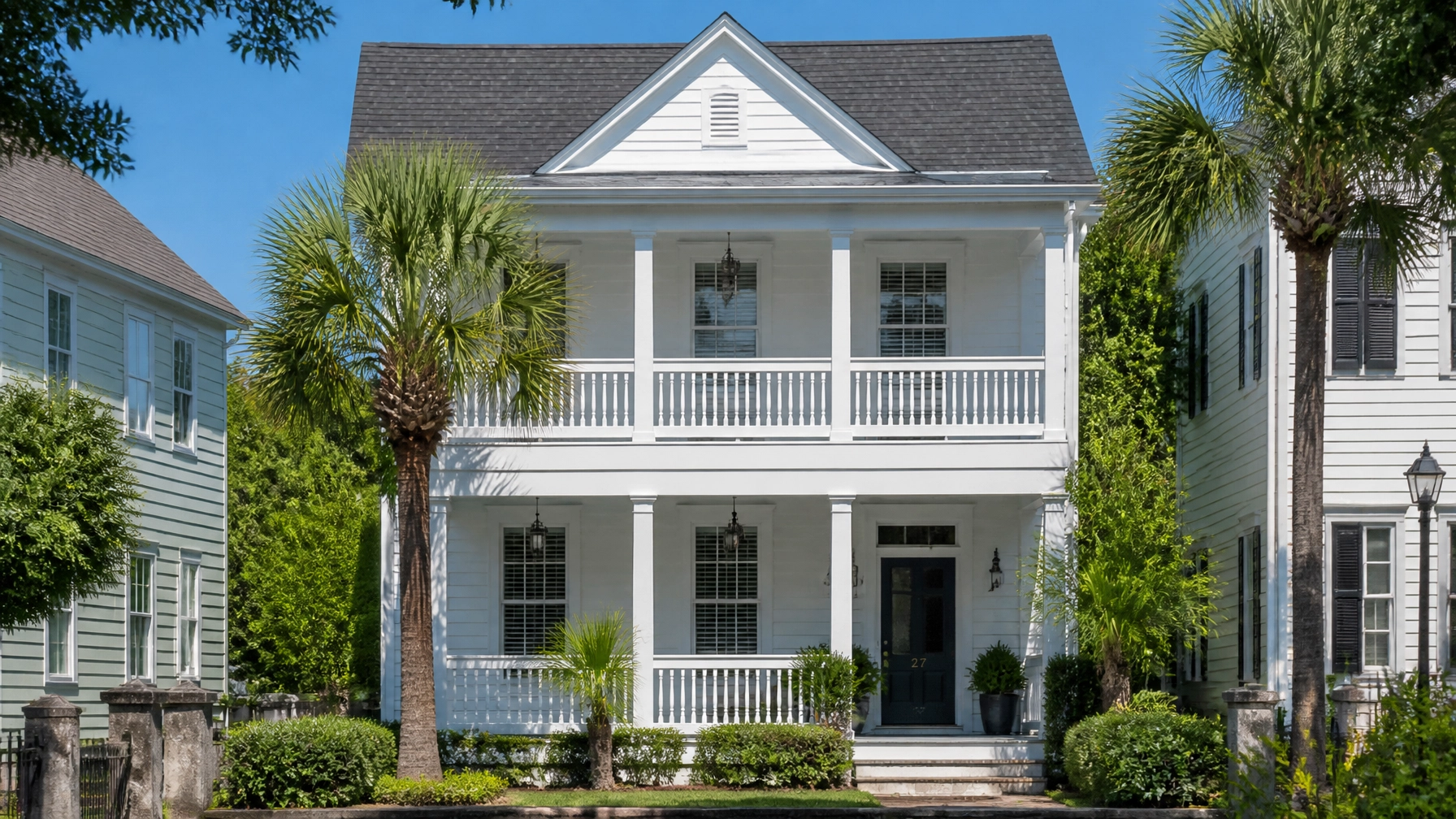
Owning a home in Charleston, South Carolina, comes with a specific set of challenges. Between the salt air of the Battery, the humidity of West Ashley, and the constant looming threat of the Atlantic hurricane season, your roof is your first line of defense. But when a storm finally does hit: whether it’s a named hurricane or a severe Lowcountry thunderstorm: getting your insurance company to pay for a replacement can feel like an uphill battle.
If you’ve recently filed a claim or are preparing to, you need to know that the deck is often stacked against you. Insurance adjusters are trained to minimize "loss," which in homeowner-speak means "paying you as little as possible for your roof."
At Get My Roof Estimate Now, we’ve seen thousands of satellite-verified estimates across Charleston zip codes like 29401, 29407, and 29464. We know the numbers, we know the local building codes, and we know exactly what adjusters try to hide. Here is your masterclass on Charleston roof insurance secrets.
The "Wear and Tear" Trap: The Adjuster’s Favorite Weapon
One of the most common secrets adjusters won't tell you is how they categorize storm damage. In South Carolina, insurers are only required to pay for damage caused by a "sudden and accidental" event: like a 70mph wind gust or a hailstorm.
The secret? Adjusters are incentivized to find any reason to label your damage as "Normal Wear and Tear" (Maintenance) or "Pre-existing Condition."

How they do it:
- Granule Loss: They’ll claim the granules in your gutters are just from an aging roof, even if a hailstorm just blasted them off.
- Creased Shingles: High winds in Charleston often "lift" shingles, breaking the seal and creating a permanent crease. Adjusters often call these "thermal cracks" caused by our 100-degree summer days rather than wind damage.
- The Age Factor: If your roof is over 15 years old, they will look at it through the lens of "it was time to replace it anyway," regardless of whether the storm was the actual cause of the failure.
The Counter-Move: Never let an adjuster inspect your roof alone. Having a detailed roof cost estimate and a local professional on-site ensures that "wear and tear" isn't used as a catch-all excuse to deny a valid claim.
Secret #2: The Difference Between RCV and ACV (And the Hurricane Deductible)
Many Charleston homeowners in areas like Mount Pleasant and James Island don't realize their policy may have shifted.
RCV (Replacement Cost Value) – [Premium]
This is what you want. RCV covers the full cost to replace your roof today, minus your deductible. If a new roof costs $18,000, they pay $18,000 (after the deductible is met).
ACV (Actual Cash Value) – [Budget]
This is the "secret" many homeowners miss in their renewal paperwork. An ACV policy only pays what your roof is worth today. If your 20-year-old roof is at the end of its life, the insurer might only cut you a check for $2,000 on an $18,000 job.
The Charleston Hurricane Deductible
In coastal South Carolina, most policies have a separate "Hurricane" or "Wind/Hail" deductible. While your standard deductible might be $1,000, your hurricane deductible is often a percentage of your home’s total insured value (usually 1%, 2%, or 5%).
- Example: If your home is insured for $500,000 and you have a 2% hurricane deductible, you are responsible for the first $10,000 of the roof replacement. Adjusters often "forget" to explain this clearly until the check arrives much smaller than expected.
Secret #3: Satellite Imagery Doesn't Lie (But Adjusters Can)
Traditionally, an adjuster climbs a ladder, walks around for 15 minutes, and hand-measures your roof. This process is prone to human error and: more importantly: conservative estimates.
The secret? Adjusters often miss "line items" like drip edges, flashing, and ridge vents to keep the payout low. They might measure your roof at 28 "squares" (a 10×10 area) when it’s actually 31. On a standard Charleston ranch, that 3-square discrepancy can cost you $1,500 in materials and labor.

At Get My Roof Estimate Now, we use satellite-powered technology accurate to within inches. When you walk into a claim with a satellite report showing the exact square footage, pitch, and complexity of your roof, it becomes very difficult for an insurance company to "lowball" the measurements.
Secret #4: The "Partial Repair" Strategy
In South Carolina, insurance companies will often try to pay for a "spot repair" instead of a full replacement. They might offer to pay for 50 shingles on the south-facing slope of your roof.
What they don't want you to know:
- Matching Laws: While SC doesn't have a strict "matching law" like some other states, if the shingles are no longer manufactured or the color has faded so significantly that a repair would devalue your home, you have a strong case for a full replacement.
- Brittle Test: If a roofer attempts to replace one shingle and the surrounding shingles crack because they are too brittle (a common issue in the Charleston sun), the roof is officially "unrepairable." If it can't be repaired, it must be replaced.
Your Charleston Insurance Masterclass: 5 Steps to a Fair Payout
If you suspect storm damage in the Lowcountry, follow this exact protocol to ensure you aren't one of the homeowners who gets underpaid.
1. Get an Instant Baseline Estimate
Before calling your insurance company, use our 60-second roof estimate tool. You need to know the fair market value of your roof replacement in Charleston before the insurance company tells you what they think it's worth. Our tool factors in local material costs for architectural shingles, metal, and synthetic options.
2. Document the "Date of Loss"
Insurance companies will try to deny claims if you can't point to a specific storm. Check local weather records for high-wind events or hailstorms in your specific Charleston zip code. Note the date.
3. Take Your Own Photos (Safely)
Don't wait for the adjuster. Take photos of:
- Granule piles at the bottom of downspouts.
- Missing or lifted shingles.
- Water spots on your interior ceilings (this proves the "envelope" of the home has been breached).
4. Demand a "Line-Item" Estimate
Never accept a lump sum check. Demand an Xactimate or similar line-item report. This report should include:
- Tear-off and disposal fees.
- Underlayment (Ice and Water shield is a must in coastal areas).
- Starter shingles and ridge caps.
- Local Charleston building code requirements.
5. Invoke the Appraisal Clause
If you and the insurance company are far apart on the price, check your policy for an "Appraisal Clause." This is a secret weapon that allows you to hire an independent appraiser to settle the value dispute, bypassing the adjuster entirely.

Why Local Knowledge Matters in Charleston
Roofing in Charleston isn't like roofing in the Midwest. We have specific wind-zone requirements. If you live on the coast, your roof might require "six-nail" fastening patterns rather than the standard four.
If your adjuster's estimate doesn't include these local code upgrades, you’re essentially being asked to install a roof that isn't legal or safe for the next hurricane. Our blog frequently updates homeowners on these changing regulations across the Southeast.
Conclusion: Take Control of Your Estimate
The biggest secret of all? Knowledge is your greatest leverage. Most homeowners accept the first check they receive because they don't have the data to argue otherwise.
Don't let an insurance adjuster dictate the value of your home's most important asset. Get your accurate, satellite-powered estimate in under 60 seconds and go into your claim with the facts.
Ready to see what your Charleston roof is actually worth?
Get Your Free Instant Estimate Now →
Leave a Reply