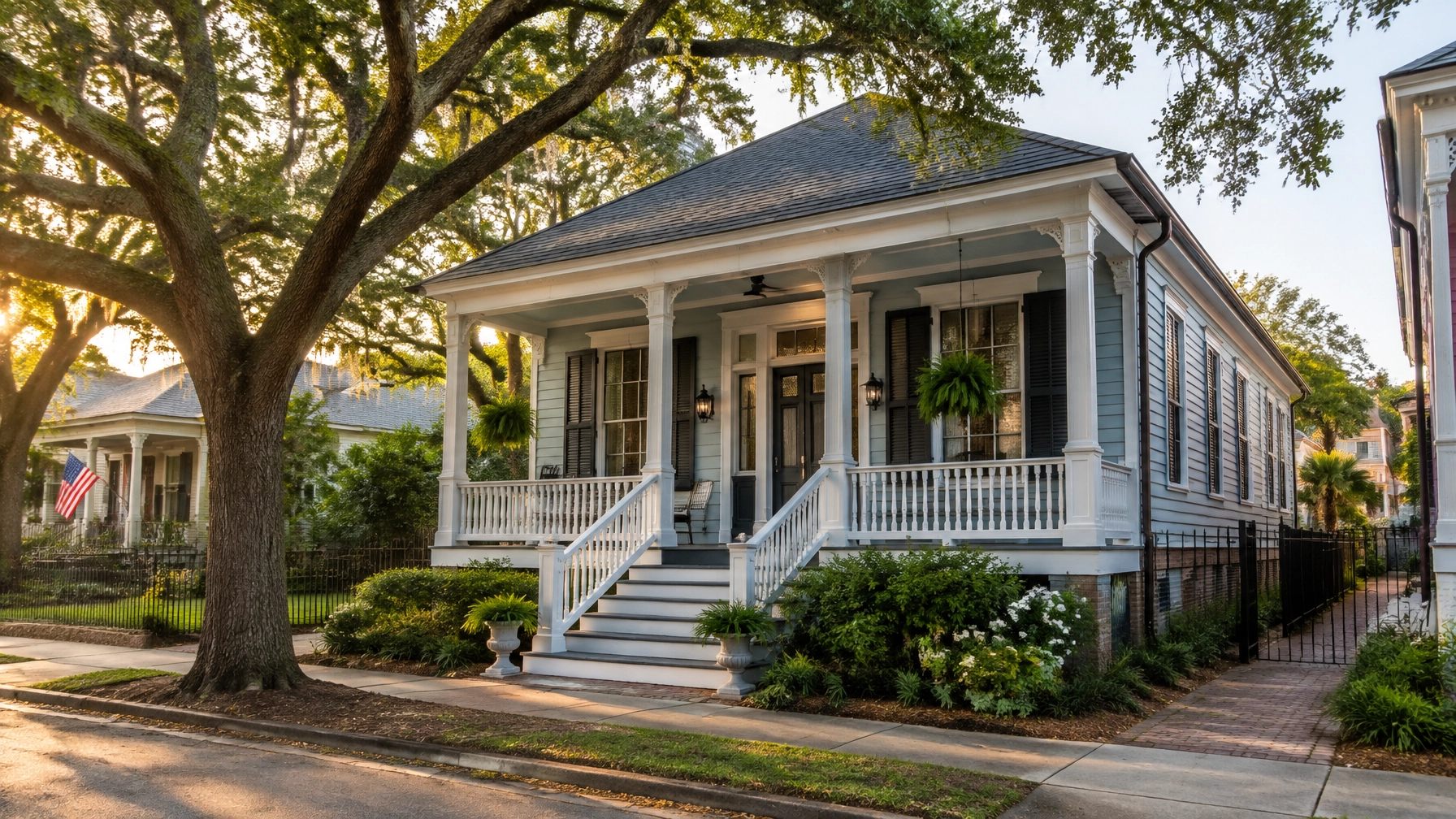
New Orleans homeowners may encounter “AEO” while researching roofing materials, contractors, or supply-chain claims. Here is the short answer: AEO does not mean a roofer is licensed, certified, or approved to work on your home.
This 2026 FAQ also covers New Orleans permits, historic districts, hurricane wind requirements, insurance rules, storm damage, local ZIP codes, and fast roof pricing.
What does AEO mean?
AEO means Authorized Economic Operator.
It is a global customs and supply-chain designation developed under the World Customs Organization’s SAFE Framework. An AEO is generally a company that has demonstrated secure, compliant international trade practices.
In the United States, the closest equivalent is the U.S. Customs and Border Protection Customs-Trade Partnership Against Terrorism (C-TPAT) program.
What AEO does not mean
AEO is not:
- A Louisiana roofing license
- A contractor classification
- Proof of insurance
- A building permit
- A roofing-material quality rating
- Permission to perform work in New Orleans
For a roofing project, verify the contractor through the Louisiana State Licensing Board for Contractors and check the company’s insurance, contract, references, and permit responsibilities.
Does a Louisiana roofer need a special license in 2026?
Yes, for residential roofing work valued at $7,500 or more.
Beginning January 1, 2026, the Louisiana State Licensing Board for Contractors requires covered residential roofing work to be performed by a contractor holding either:
- Residential Roofing, or
- Residential Construction
The rule applies to roofing work on residential structures containing up to four dwelling units when the project value is $7,500 or more.
Before signing, use the LSLBC license lookup to verify:
- The license is active.
- The contractor’s legal name matches the contract.
- The classification includes Residential Roofing or Residential Construction.
- The contractor is properly licensed for the scope of work.
A contractor describing itself as “AEO-approved” does not satisfy this Louisiana requirement.
When does New Orleans require a re-roofing permit?
For a one- or two-family dwelling, New Orleans requires a separate residential re-roofing permit when the project replaces 50% or more of the roof.
The city’s residential re-roofing guidance says minor roofing work involving less than 50% replacement is generally exempt from this specific permit, unless another rule triggers a permit.
Apply through the New Orleans One Stop App. The application requires:
- A geotagged exterior photo of the house
- A signed estimate or contract with homeowner and contractor signatures
Commercial properties, buildings with three or more family units, and business properties cannot use the residential re-roofing permit. They generally need a standard structural or non-structural renovation permit.

How does the New Orleans roof inspection process work?
New Orleans uses a photo-based process for residential re-roofing permits instead of a scheduled in-person inspection in many cases.
You must submit 16 geotagged inspection photos:
| Installation stage | Required photos |
|---|---|
| Existing roof material removed | 4 |
| Water-intrusion-resistant underlayment installed | 4 |
| Drip edge and flashing installed | 4 |
| Shingles or metal panels installed | 4 |
| Total | 16 |
For each stage, take one clear, wide-angle photo from the front, left, right, and rear of the home. Upload the photos to the permit record in the One Stop App, then email the permit number to the city inspection department for review.
Keep copies of all photos, approvals, contracts, and material records.
Do historic New Orleans homes need extra approval?
Usually, yes.
Exterior work in a local historic district generally requires an HDLC Certificate of Appropriateness. The Historic District Landmarks Commission states that exterior work must be reviewed before work begins.
The French Quarter is overseen by the Vieux Carré Commission (VCC) rather than the HDLC.
An in-kind replacement may qualify for staff-level approval when the new roof matches the existing material, profile, color, and visible details. For example, replacing slate with matching slate is different from replacing slate with asphalt shingles.
Practical steps:
- Confirm whether the property is in an HDLC district, landmark area, or Vieux Carré jurisdiction.
- State clearly that the proposed work is an in-kind replacement when applicable.
- Submit the permit and historic review materials through the city process.
- Do not begin work before the required approval is issued.
This matters for classic Creole cottages, shotgun houses, French Quarter buildings, and other properties where roof materials and visible rooflines affect historic character.
What wind requirements apply to New Orleans roofs?
New Orleans is in a hurricane-prone, high-wind region. A residential roof should be designed and installed for the applicable local wind speed under the 2021 Louisiana code framework.
Common high-wind requirements and specifications include:
- Approximately 130 mph design wind speed, depending on the exact design basis and location
- Six-nail fastening where required by the shingle manufacturer and local code practice
- Asphalt shingles rated ASTM D7158 Class H or ASTM D3161 Class F, when required for the project
- Self-adhering underlayment or other approved secondary water-barrier details
- Corrosion-resistant metal drip edge
- Proper flashing at walls, valleys, chimneys, and penetrations
- Manufacturer-approved installation methods
An engineer’s seal may be needed for certain roof designs, structural changes, elevated-risk conditions, or permit submissions. Confirm the exact requirement with the permitting authority and project professional.
FORTIFIED upgrades can add stronger roof-deck attachment, sealed-deck details, enhanced edge protection, and improved resistance to wind-driven rain. They may also support insurance premium reductions, but savings depend on the insurer, policy, documentation, and certification.

How much does a New Orleans roof replacement cost in 2026?
For architectural shingles, a practical 2026 planning range is approximately $5–$8 per square foot installed.
For a 2,000-square-foot roof, that equals roughly:
- Budget: $10,000
- Popular: $12,000–$16,000
- Premium or complex: Up to approximately $24,500
The actual roof surface, not the home’s interior floor area, is what matters. Costs rise with steep pitches, valleys, dormers, multiple layers of tear-off, decking repairs, difficult access, ventilation work, historic materials, and FORTIFIED upgrades.
Use the Get My Roof Estimate Now roof cost calculator for a general benchmark. For a property-specific estimate, the company’s free satellite estimate tool measures roof size, pitch, and complexity and returns low-middle-high pricing ranges in about 60 seconds.
Can a Louisiana contractor waive my insurance deductible?
No.
Under La. R.S. 51:451, a contractor generally cannot pay, waive, absorb, rebate, or offset a homeowner’s insurance deductible without insurer consent.
Be cautious of offers such as:
- “We will cover your deductible.”
- “You will have no out-of-pocket cost.”
- “We will inflate the insurance invoice and credit the difference.”
For insurance-funded contracts of $1,000 or more, Louisiana law also requires a specific deductible notice in the contract. Ask questions if the notice is missing.
What should I do after storm damage?
New Orleans homeowners should inspect roofs after severe weather, especially during hurricane season from June through November.
The August 21, 2026 storm event brought severe weather to the New Orleans region, including approximately 1-inch hail reports and damaging winds. Regional reports referenced gusts up to 76 mph, while New Orleans Lakefront Airport recorded a lower verified gust during the event. Either way, wind and hail can damage shingles, flashing, vents, gutters, and roof decking.
After a storm:
- Photograph visible damage from the ground.
- Do not climb onto the roof.
- Protect interior leaks with temporary measures.
- Notify your insurer within the policy’s required period, commonly 30–90 days.
- Arrange a professional roof inspection.
- Avoid signing an insurance assignment or repair contract under pressure.

Which ZIP codes does this New Orleans roofing guide cover?
This guidance is relevant to homeowners in:
- New Orleans: 70112–70131
- Metairie: 70001–70006
- Kenner: 70062–70065
- Gretna: 70053
- Marrero: 70072
- Chalmette: 70043
- Slidell: 70458–70461
- Mandeville: 70448
- Covington: 70433
Local permit, historic-review, insurance, labor, and material costs may vary by address.
New Orleans roofing FAQ recap
| Question | Quick answer |
|---|---|
| What is AEO? | Authorized Economic Operator, a global customs and supply-chain designation. |
| Is AEO a roofing credential? | No. It does not replace a Louisiana contractor license. |
| What license is needed for $7,500+ residential roofing? | Residential Roofing or Residential Construction through LSLBC, effective January 1, 2026. |
| When is a New Orleans re-roofing permit required? | When replacing 50% or more of a roof on a one- or two-family dwelling. |
| How many inspection photos are required? | Sixteen geotagged photos covering four installation stages. |
| What about the French Quarter? | VCC review is required; in-kind work may qualify for staff approval. |
| What wind details matter? | High-wind-rated shingles, six-nail fastening where required, underlayment, flashing, and metal drip edge. |
| What is a 2026 planning range? | About $5–$8 per square foot for architectural shingles; complex projects can cost more. |
| Can a contractor waive my deductible? | Generally no. Louisiana law prohibits deductible waivers and rebates. |
| How fast is a satellite estimate? | About 60 seconds, free, with no credit card required and 90–95% measurement accuracy. |
Start with a free satellite-powered roof estimate before scheduling contractor visits. You can review a realistic low-middle-high range, then use that information to compare licensed New Orleans roofing contractors.
Leave a Reply