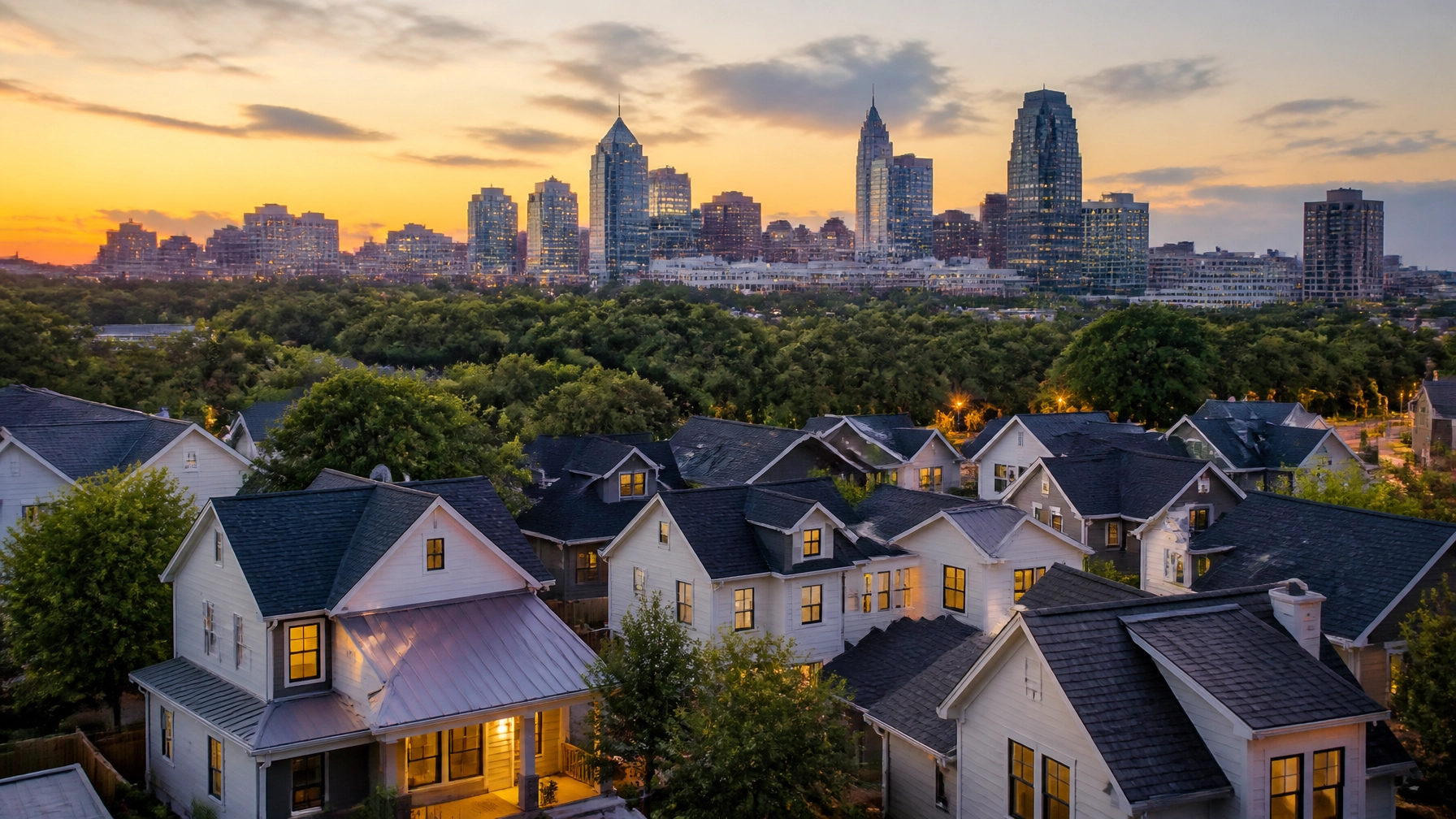
Raleigh, North Carolina, has long been celebrated as the "City of Oaks," but in 2026, it’s gaining a much more high-tech reputation. As the capital of North Carolina and a primary anchor of the Research Triangle, Raleigh’s population has surged to approximately 515,000 residents. It is currently one of the fastest-growing cities in the United States, serving as a critical economic hub where academia, government, and private industry collide.
While the city's ground-level growth is visible in every new construction crane, its most significant competitive edge is actually coming from 300 miles above. Raleigh is rapidly becoming a national leader in satellite technology, leveraging space-based data to revolutionize everything from municipal traffic management to how homeowners calculate a 2026 roof replacement cost in Raleigh, NC.
The Research Triangle's Orbital Expansion
The innovation isn't just happening within Raleigh's city limits; the entire Research Triangle region is fueling a new space race. Nearby Durham and the surrounding metro area are home to a cluster of aerospace and microelectronics firms that are redefining the capabilities of small-satellite technology.
Extellis: The SAR Powerhouse
Leading the charge is Extellis, a high-profile spinout from Duke University located in nearby Durham. Extellis is developing cutting-edge metamaterial-based Synthetic Aperture Radar (SAR) satellite antenna technology. Unlike traditional optical satellites that require clear skies and daylight, SAR can "see" through clouds, smoke, and total darkness.
Backed by over $7 million in funding from heavy hitters like Shell Ventures and DARPA, Extellis is creating antennas that are lighter, more efficient, and significantly more powerful than legacy systems. This allows for near-constant monitoring of Earth's surface: a capability that is essential for both national security and precision property assessments.

Nuvotronics and Spacefleet
Further solidifying the region's dominance is Nuvotronics, a Durham-based firm specializing in the manufacture of microelectronics for space. Their PolyStrata technology allows for the creation of ultra-compact, high-frequency RF components that are vital for the next generation of communication satellites. Meanwhile, Spacefleet in Raleigh is making waves in aerospace and satellite communication, ensuring that the massive amounts of data being collected in orbit can be transmitted back to Earth with minimal latency.
Raleigh in Motion: A 2026 Smart City Success Story
Raleigh’s commitment to technology isn't just about supporting private startups; it’s about integrating that tech into the fabric of the city. In 2026, the city was honored with the IDC Smart Cities North America Award for its groundbreaking "Raleigh in Motion" project.
This initiative uses a sophisticated blend of AI and computer vision on traffic cameras to optimize the flow of one of the nation's most congested growing cities. By partnering with tech giants like NVIDIA, Esri, and Microsoft, Raleigh has created a "digital twin" of its infrastructure.
Smart Infrastructure and Connectivity
The Smart Raleigh initiative utilizes GIS (Geographic Information Systems) and high-resolution satellite data for:
- Urban Heat Mapping: Identifying "heat islands" to strategically plant trees and improve energy efficiency.
- Infrastructure Planning: Using satellite imagery to monitor road wear and tear and plan future expansions.
- Public Wi-Fi: Installing smart streetlights in underserved neighborhoods that provide public Wi-Fi, bridging the digital divide using a combination of fiber and LEO (Low Earth Orbit) satellite backhaul.

Practical Implications for Raleigh Homeowners
While "smart streetlights" and "SAR satellites" might sound like science fiction, the practical implications for residents are immediate and tangible. The same technology that helps the city plan its roads is now helping homeowners manage their most significant asset: their home.
1. Precision Property Assessments
Satellite imagery now provides property data that is accurate to within inches. This eliminates the guesswork in insurance claims, property tax assessments, and urban planning.
2. High-Speed LEO Broadband
For those living on the outskirts of the Raleigh-Durham metro area where fiber optics haven't yet reached, LEO satellite constellations (supported by the local communications tech from firms like Spacefleet) are providing gigabit-speed internet, ensuring no Raleigh resident is left in a digital dead zone.
3. Instant Home Services (The Roofing Revolution)
Perhaps the most direct impact is felt when it’s time for home maintenance. Traditionally, getting a roof replacement in Raleigh, NC required scheduling multiple appointments with contractors, waiting for them to climb on your roof with a tape measure, and receiving a quote days later.
In 2026, satellite technology has rendered that process obsolete.
2026 Roof Replacement Cost Raleigh, NC: A Data-Driven Breakdown
Because of the high-resolution satellite data available in the Research Triangle, homeowners can now access precise pricing without the "contractor dance." If you are budgeting for a project this year, here is what the market looks like for Raleigh, NC roofing prices in 2026:
| Factor | Budget Option (3-Tab) | Popular Choice (Architectural) | Premium Option (Metal/Synthetic) |
|---|---|---|---|
| Price per Square | $400 – $550 | $600 – $850 | $1,200 – $1,800+ |
| Typical 2,500 sq ft Home | $10,000 – $13,750 | $15,000 – $21,250 | $30,000 – $45,000+ |
| Longevity | 15-20 Years | 25-30 Years | 50+ Years |
| Accuracy Gap | High | Low | Minimal |
Factors like your roof’s pitch (steepness), complexity (dormers/valleys), and the current cost of labor in North Carolina significantly impact these ranges. However, with modern technology, you don't have to guess.

How "Get My Roof Estimate Now" Uses Raleigh's Tech Edge
At Get My Roof Estimate Now, we’ve integrated the very satellite technology being developed in the Research Triangle to benefit you. Our platform uses high-resolution satellite imagery to provide an instant roof estimate for Raleigh homeowners in under 60 seconds.
- No Onsite Visits: We measure your roof's size, pitch, and complexity from orbit.
- 90-95% Accuracy: Our measurements are precise to within inches, matching the accuracy of a manual measurement.
- Transparent Pricing: We factor in the specific new roof cost in Raleigh, North Carolina, including local material prices and labor rates.
- Zero Pressure: Get your estimate, budget your project, and then connect with verified, licensed, and insured roofing contractors in Raleigh, NC when you're ready.

Conclusion: A Future Built on Precision
Raleigh’s ascent as a satellite technology powerhouse is more than just a win for the local economy: it’s a win for efficiency and transparency. Whether it's the city using AI to clear traffic on Wade Avenue or a homeowner using our Roof Cost Calculator to plan a renovation, the message is clear: data-driven decisions are the new standard in North Carolina's capital.
Don't let your home maintenance stay in the dark ages. Leverage the same tech that won Raleigh the 2026 Smart City Award to find your instant roof estimate today.
FAQ: Raleigh Roofing & Tech
What is the average roof replacement cost in Raleigh, NC in 2026?
The typical cost for a standard 2,500 sq ft home ranges from $15,000 to $22,000 for architectural shingles. Premium materials like metal or synthetic slate can range from $30,000 to $50,000.
How accurate are satellite roof estimates?
Our technology provides 90-95% accuracy by using high-resolution imagery to calculate the square footage, pitch, and complexity of your roof.
Do I need a contractor to visit my home for an estimate?
With Get My Roof Estimate Now, you do not need an upfront visit. You can receive a transparent, data-driven estimate in 60 seconds using our satellite-powered tool.
Why is satellite tech better for Raleigh city planning?
It allows for "Digital Twin" modeling, helping the city manage traffic flow via the "Raleigh in Motion" project and combat urban heat through precise GIS mapping.
Leave a Reply